Are Softgels Better Than Tablets for Your Supplements
The Short Answer Most Sites Won't Give You
You grabbed a bottle of vitamin D off the shelf, but did you notice whether it was a softgel or a tablet? That single detail could determine how much of the nutrient your body actually uses. So, are softgels better than tablets? The honest answer is: it depends entirely on what you are taking.
Softgels are the better choice for fat-soluble nutrients (vitamins A, D, E, K), omega-3 fish oil, and lipophilic compounds like CoQ10, because the oil-based liquid fill enhances absorption. Tablets are the better choice for high-dose water-soluble vitamins (vitamin C, B-complex), minerals, and budget-conscious shoppers, because compressed powder delivers more active ingredient per unit at a lower cost.
That distinction matters more than most supplement labels let on. A softgel delivers its contents already dissolved in a liquid carrier, which means your digestive system can get to work absorbing the active ingredient almost immediately. A tablet, on the other hand, must first break apart and dissolve before anything reaches your bloodstream. For oil-based ingredients, that extra step can significantly reduce how much you actually absorb.
Yet softgels are not universally superior. When you need 500 mg or more of a water-soluble compound, tablets pack a higher dose into a single unit without requiring an oil carrier that adds no absorption benefit. They are also easier to score for dose splitting, more shelf-stable in warm climates, and generally friendlier on your wallet.
Why the Form of Your Supplement Actually Matters
Most articles comparing softgels vs tablets read like manufacturing brochures. They list technical specs without telling you which form to pick for your specific vitamin or mineral. That gap leaves consumers guessing, and guessing can mean wasting money on a format that underdelivers.
When people ask are capsules or tablets better, or wonder whether are tablets or capsules better for a particular nutrient, the real question hiding underneath is about bioavailability. Bioavailability is simply the percentage of an ingredient that makes it into your bloodstream where it can do its job. The dosage form you choose, softgel vs tablet, directly influences that percentage for certain types of nutrients.
Think of it this way: are liquid gels better than tablets for fish oil? Absolutely, because the omega-3 fatty acids are already in oil form and absorb faster from a liquid fill. But capsules vs tablets which is better for a basic magnesium supplement? A well-made tablet works just fine and costs less per serving.
The framework ahead breaks this down supplement by supplement. You will learn exactly how absorption differs between the two forms, which specific vitamins and minerals belong in each format, and when paying extra for a softgel is justified versus when a tablet delivers the same results for less. No filler, no manufacturer jargon, just the practical guidance you need to stop wasting your dose.
Understanding Softgels and Tablets at a Glance
Before you can decide which format suits a given supplement, you need a clear picture of what you are actually swallowing. The terms get tossed around loosely on labels, so let's pin down exactly what separates one form from another.
What Exactly Is a Softgel
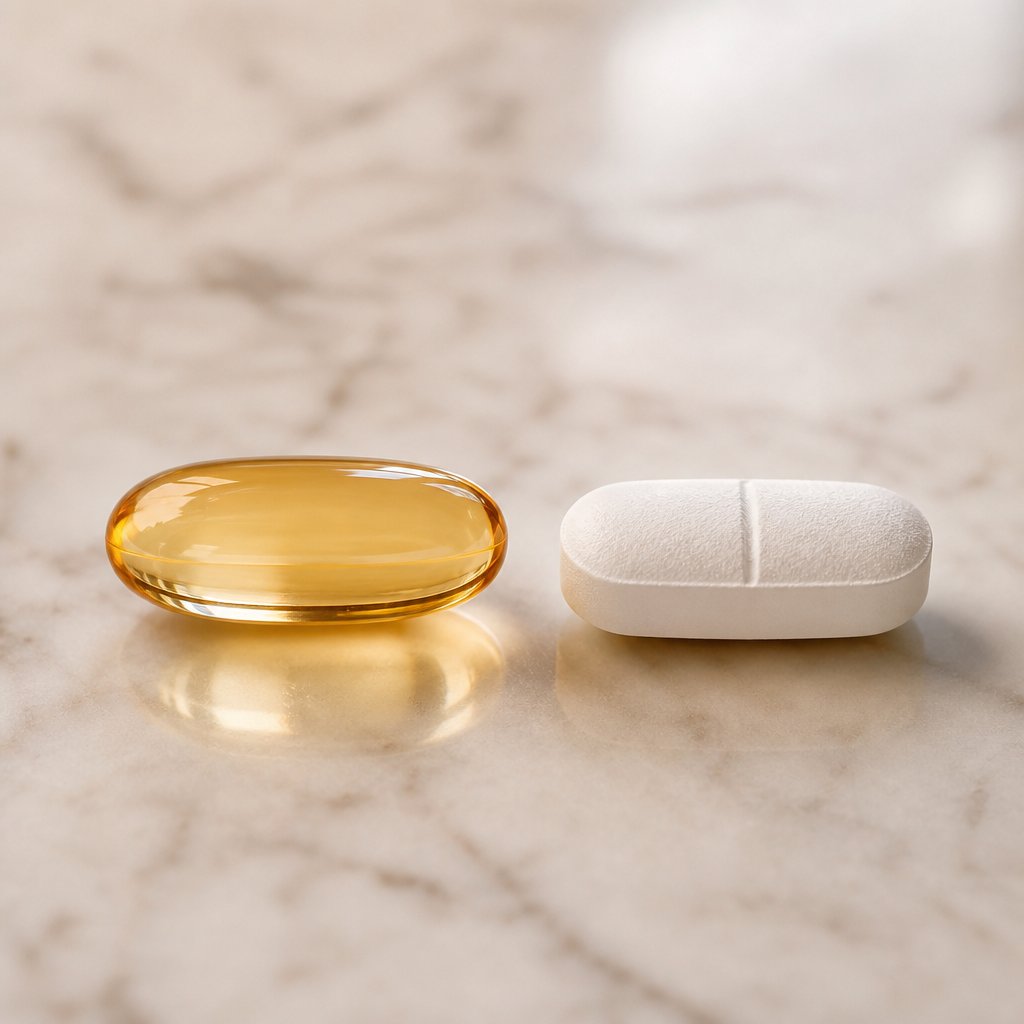
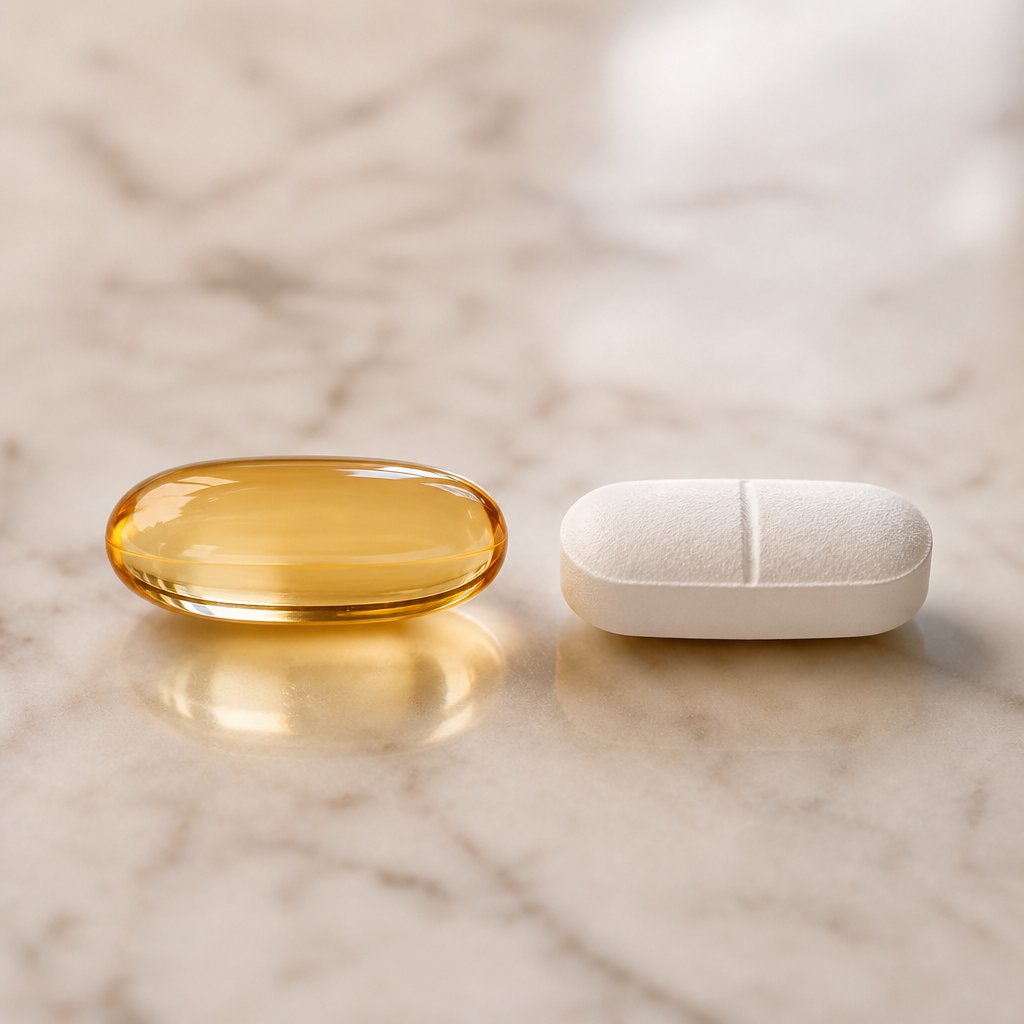
So what are softgels? A softgel is a one-piece, hermetically sealed capsule made from a flexible gelatin shell that encases a liquid or semi-solid fill. Picture two thin ribbons of warm gelatin pressed together around a measured dose of oil or liquid concentrate, then sealed and cut into individual units. The result is a smooth, airtight pocket, typically oval or oblong, that protects the ingredient inside from air and moisture.
What is a softgel at the ingredient level? The shell is usually derived from bovine or porcine gelatin combined with a plasticizer like glycerin, which gives it that characteristic flexibility. Inside, you will find the active ingredient dissolved or suspended in a carrier oil, often soybean oil, medium-chain triglycerides, or sunflower oil. Because the fill is already in liquid form, there is no need for the binders and compression agents that tablets rely on.
How Tablets Are Made and What They Contain
The tablet meaning in supplement terms is straightforward: a tablet is a solid, compressed unit made by pressing powdered ingredients together under high mechanical pressure. The process, whether through wet granulation, dry granulation, or direct compression, blends the active ingredient with excipients like binders, disintegrants, lubricants, and flow agents to create a uniform, hard pill.
Imagine taking a fine powder, mixing it with just enough binding material to hold it together, and then squeezing it in a press at thousands of pounds of force. That compressed disc is your tablet. It may then receive a thin coating to improve swallowability, mask taste, or protect the contents from moisture. Unlike gel capsules, tablets contain no liquid fill and rely entirely on your digestive fluids to break them apart before absorption can begin.
Softgels vs Hard Capsules vs Gel Caps
Here is where the confusion usually starts. What are capsules in the broader sense? The capsule definition covers any dosage form where an outer shell encloses the active ingredient, but the category includes several distinct types. A hard capsule (sometimes called a two-piece capsule) is made from two rigid gelatin halves fitted together around a powdered or granulated fill. A gel cap, meanwhile, is simply a tablet coated with a thin layer of gelatin to make it easier to swallow. It is not the same as a softgel, even though the names sound similar.
The table below breaks down the key differences so you can identify each form the next time you compare bottles on the shelf.
| Form | Shell Material | Fill Type | Typical Shape | Common Uses |
|---|---|---|---|---|
| Softgel | Flexible gelatin (one piece, sealed) | Liquid or semi-solid | Oval, oblong, round | Fish oil, vitamin D, CoQ10, vitamin E |
| Tablet | No shell (compressed powder, may have coating) | Dry powder with binders and fillers | Round, oblong, caplet-shaped | Vitamin C, B-complex, iron, calcium |
| Hard Capsule | Rigid gelatin or HPMC (two-piece) | Powder, granules, or pellets | Cylindrical with rounded ends | Herbal extracts, probiotics, multi-ingredient blends |
| Caplet | No shell (compressed powder with smooth coating) | Dry powder with binders and fillers | Elongated oval (tablet-capsule hybrid) | Pain relievers, multivitamins, high-dose minerals |
Notice that softgels are the only form delivering ingredients in a pre-dissolved liquid state. That structural difference is exactly what drives the absorption gap for certain nutrients, a topic that becomes much clearer once you understand how your body actually processes each form.
Absorption and Bioavailability Explained Simply
You know what a softgel looks like and how a tablet is made. But what happens after you swallow one? The journey from your mouth to your bloodstream is where the real differences between these two formats show up, and it is the reason capsule vs tablet absorption is not just a technical footnote but a practical concern for anyone spending money on supplements.
How Your Body Absorbs a Softgel vs a Tablet
Imagine dropping a sugar cube into hot water versus pouring in a spoonful of simple syrup. The syrup disperses almost instantly because it is already dissolved. The sugar cube needs time to break apart and then dissolve before it becomes part of the liquid. That is essentially the difference between how your body handles a softgel and a tablet.
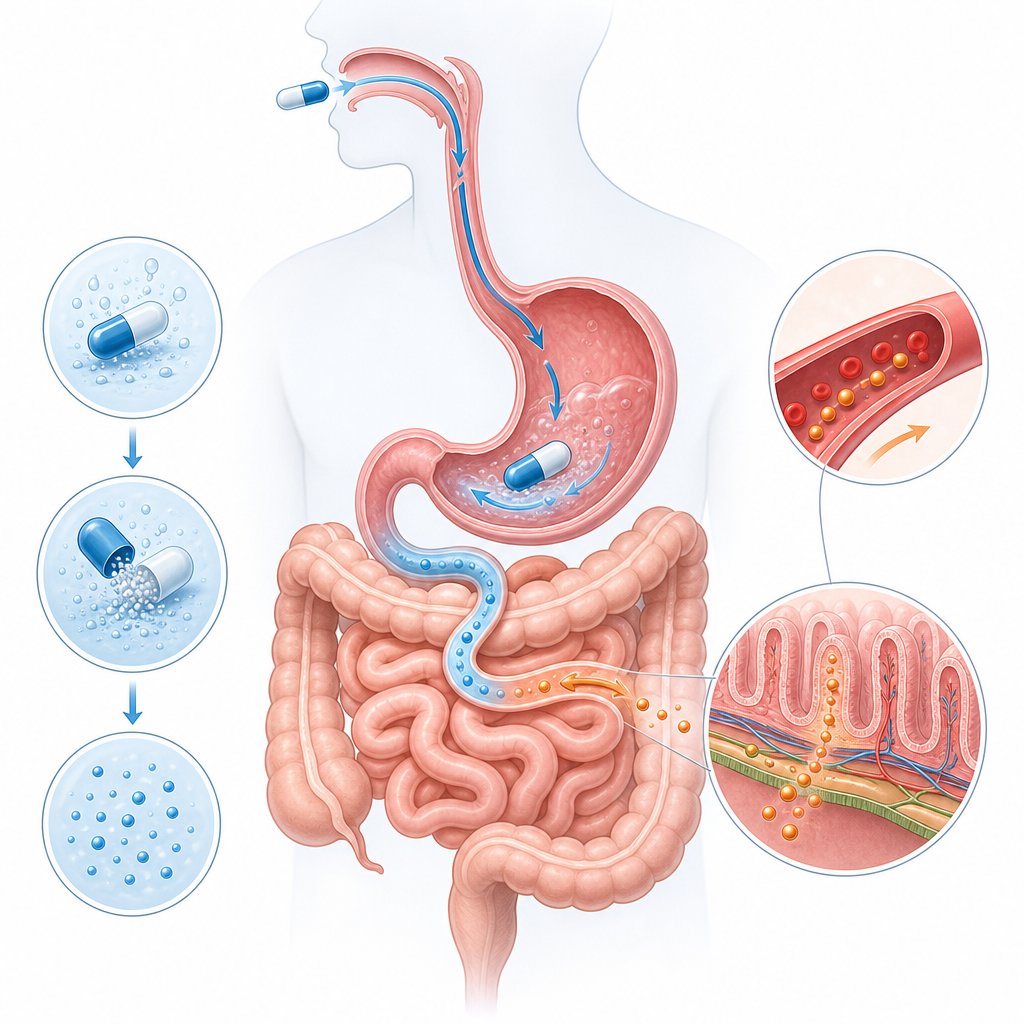
A softgel arrives in your stomach with its active ingredient already dissolved in an oil or liquid carrier. Once gastric fluids rupture the thin gelatin shell, the contents release as a ready-to-absorb liquid. For fat-soluble compounds, this liquid fill interacts directly with bile salts and lipase enzymes in your small intestine, forming tiny droplets called micelles that shuttle the nutrient across the intestinal wall and into your bloodstream.
A tablet takes a longer route. The compressed powder must first disintegrate, breaking apart into smaller granules. Those granules then need to dissolve in your gastrointestinal fluid before the active ingredient is free to cross the intestinal lining. Each additional step introduces a potential delay or loss in the total amount that reaches systemic circulation.
Here is how the stages compare side by side:
- Softgel absorption pathway: Shell ruptures in stomach → liquid fill disperses → active ingredient (already dissolved) interacts with intestinal fluids → absorption through intestinal wall
- Tablet absorption pathway: Tablet disintegrates into granules → granules dissolve in GI fluid → dissolved ingredient becomes available → absorption through intestinal wall
The softgel essentially skips the first two hurdles that a tablet must clear. For lipophilic (fat-loving) ingredients, this shortcut is significant because these compounds resist dissolving in the watery environment of your gut. The oil carrier inside a softgel keeps them solubilized throughout the process, which is exactly why lipid-based formulations are a proven strategy for improving the oral bioavailability of fat-soluble compounds.
The Dissolution Step That Slows Tablets Down
Tablet vs capsule absorption differences come down to one critical bottleneck: dissolution. Dissolution is the process where a solid dosage form breaks down and releases its active ingredient into solution. For a tablet, this involves two distinct phases. First, the tablet must disintegrate, meaning the compressed structure physically breaks apart into smaller particles. Then those particles must dissolve, meaning the active ingredient transitions from solid form into the surrounding gastrointestinal fluid.
The United States Pharmacopeia (USP) sets standardized dissolution testing requirements under General Chapter 711 to ensure that tablets and capsules release their contents within an acceptable timeframe. These tests use specific apparatus, paddle or basket methods, to simulate conditions in your digestive tract and measure how quickly a dosage form releases its active ingredient. For consumers, this means that any reputable supplement tablet has been tested to confirm it dissolves properly under controlled conditions.
The role of disintegrants, specialized excipients added to tablet formulations, is to promote the penetration of liquid into the tablet matrix and initiate the breakup process. Research published in the Journal of Drug Delivery Science and Technology confirms that disintegration is the first stage in the bioavailability cascade, and for immediate-release tablets, disintegration and dissolution are highly correlated. In plain terms: if a tablet does not break apart efficiently, the active ingredient cannot dissolve, and what does not dissolve cannot be absorbed.
Do liquid gels work faster than tablets? In most cases, yes, because gel caps vs tablets differ at this exact stage. Liquid gels bypass disintegration entirely. The gelatin shell ruptures, and the pre-dissolved contents are immediately available. Tablets vs gel caps is not a matter of one being "bad" but rather a question of how many steps stand between swallowing and absorbing.
When Absorption Differences Are Negligible
Here is where the nuance matters. The absorption advantage of softgels is most pronounced for lipophilic compounds, nutrients that dissolve poorly in water but readily in fats. Think omega-3 fatty acids, vitamin D, vitamin E, and CoQ10. These ingredients genuinely benefit from being pre-dissolved in an oil matrix because their poor water solubility makes the tablet dissolution step a real barrier.
For water-soluble nutrients like vitamin C, B vitamins, and most mineral salts, the story changes. These compounds dissolve easily in the aqueous environment of your GI tract regardless of whether they start as a compressed powder or a liquid fill. A well-formulated tablet containing vitamin C will disintegrate and dissolve quickly enough that the absorption difference compared to a gelcaps vs tablets format is minimal, often clinically insignificant.
What about the myth that tablets pass through your body undigested? You may have heard stories about whole tablets found intact. While this makes for alarming anecdotes, it is rare and almost always tied to poorly manufactured products that fail USP dissolution standards, or to extended-release formulations whose "ghost tablets" are actually empty shells designed to pass through after releasing their contents. A quality immediate-release tablet from a reputable brand will disintegrate within the timeframe required by pharmacopeial standards.
The practical takeaway: tablet vs capsule absorption is not a universal contest with a single winner. The format that delivers more of your supplement into your bloodstream depends on the chemical nature of the ingredient itself. Fat-soluble compounds gain a real, measurable advantage from the liquid gels vs tablets comparison. Water-soluble compounds perform similarly in either format, making cost, dose size, and personal preference the deciding factors instead.
Understanding this chemistry-driven distinction is what allows you to match specific supplements to their ideal dosage form, rather than defaulting to one format for everything in your cabinet.
Which Supplements Are Best in Softgel vs Tablet Form
Knowing that fat-soluble compounds absorb better from a liquid carrier and water-soluble ones dissolve just fine from compressed powder is useful in theory. But when you are standing in the supplement aisle staring at ten different bottles of the same nutrient, you need specifics. Which supplements actually belong in soft gels, and which ones perform equally well, or even better, as tablets?
Fat-Soluble Vitamins and Omega-3s Belong in Softgels
Vitamins A, D, E, and K share a common trait: they dissolve in fat, not water. When these nutrients are delivered inside softgel capsules filled with a carrier oil like soybean oil or medium-chain triglycerides, they arrive in your small intestine already solubilized and ready to form micelles with bile salts. That means faster, more complete absorption compared to a dry tablet that must first disintegrate and then find a way to dissolve in an aqueous environment it naturally resists.
Omega-3 fish oil is perhaps the most obvious candidate for soft gelatin capsules. The oil is the active ingredient itself, so encapsulating it in a sealed one-piece shell prevents oxidation, masks the fishy taste, and eliminates the unpleasant burping that loose oils can cause. A compressed tablet simply cannot hold a meaningful dose of liquid fish oil.
CoQ10 and curcumin follow the same logic. Both are highly lipophilic, meaning they resist dissolving in your gut fluid. Research on CoQ10 bioavailability shows that the formulation matters enormously. When CoQ10 is dissolved in a carrier oil with proper crystal dispersion inside a softgel, bioavailability can be up to 75% higher than when the same compound is delivered as undissolved crystalline powder. That is not a marginal difference; it is the gap between a supplement that works and one that largely passes through you.
Water-Soluble Nutrients That Work Fine as Tablets
Vitamin C and B-complex vitamins dissolve readily in the watery environment of your digestive tract. They do not need an oil carrier to become bioavailable, which makes tablets a practical and cost-effective choice. A single tablet can pack 500 mg to 1,000 mg of vitamin C into one unit, something that would require an impractically large softgel filled mostly with unnecessary oil. If you see vitamin C softgels or vitamin C gel caps on the shelf, know that they are not harmful, but the oil carrier adds cost without a meaningful absorption advantage for this water-soluble nutrient. Putting vitamin C in gel capsules is more of a marketing choice than a scientific one.
Iron and magnesium supplements also perform well as tablets. These minerals are typically formulated as salts (ferrous sulfate, magnesium citrate, magnesium glycinate) that dissolve efficiently in gastric acid. Tablets allow precise dosing, easy scoring for half-doses, and long-term stability in powder form without the risk of oil rancidity.
Supplements Where the Form Makes No Real Difference
Probiotics are a special case. They need protection from stomach acid rather than an oil carrier, so the ideal format is a delayed-release hard capsule with an enteric or acid-resistant coating, not a standard softgel or a basic tablet. The delivery challenge here is survival, not solubility.
Herbal extracts fall on both sides of the line. Oil-soluble extracts like oregano oil or certain cannabis-derived compounds benefit from soft gels. Water-soluble standardized extracts, such as milk thistle or green tea catechins, work perfectly well in tablet or hard capsule form. The deciding factor is always the solubility profile of the active compound, not a blanket preference for gel tablets or gel pills.
The table below maps common supplements to their recommended format with a brief explanation of why.
| Supplement | Recommended Form | Reason |
|---|---|---|
| Omega-3 Fish Oil | Softgel | Oil-based ingredient; sealed shell prevents oxidation and fishy taste |
| Vitamin D | Softgel | Fat-soluble; oil carrier enhances micelle formation and absorption |
| Vitamin E | Softgel | Fat-soluble; naturally occurs in oil form, ideal for liquid fill |
| CoQ10 | Softgel | Lipophilic; requires oil matrix and crystal dispersion for bioavailability |
| Curcumin | Softgel | Poorly water-soluble; lipid-based delivery significantly improves uptake |
| Vitamin C | Tablet | Water-soluble; high-dose friendly, no oil carrier needed |
| B-Complex | Tablet | Water-soluble; dissolves easily in GI fluid, cost-effective at high doses |
| Iron | Tablet | Mineral salt dissolves in stomach acid; precise dosing, stable in powder |
| Magnesium | Tablet | Water-soluble salt forms; allows high doses and easy dose splitting |
| Probiotics | Delayed-release capsule | Needs acid protection, not oil; enteric coating ensures survival to intestine |
| Oregano Oil | Softgel | Oil-based extract; liquid fill preserves volatile compounds |
| Green Tea Extract | Tablet or hard capsule | Water-soluble catechins; no benefit from oil carrier |
This supplement-by-supplement breakdown gives you a decision shortcut. But what about the situations where tablets are not just acceptable but genuinely superior? Cost, dose capacity, dietary restrictions, and individual health factors can all tip the balance back toward compressed powder, even for people who default to softgels for everything.
When Tablets Are Genuinely the Better Choice
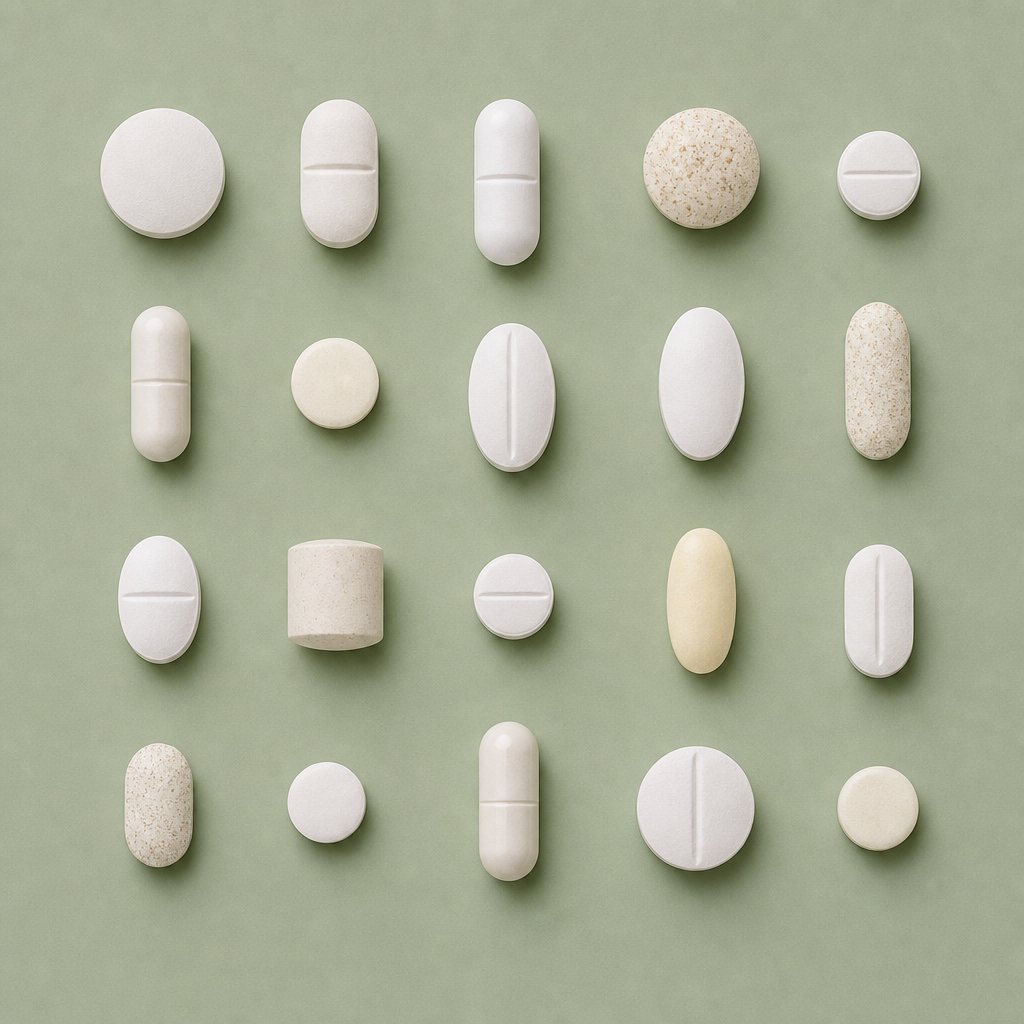
Softgels get a lot of love online, and for fat-soluble nutrients that praise is well earned. But the tablets vs capsules conversation has another side that most articles gloss over. There are real, practical scenarios where a compressed tablet outperforms a softgel, and choosing the wrong format can mean swallowing more pills than necessary, spending more money, or compromising your dietary values.
High-Dose Supplements That Need Tablet Format
When you need 500 mg or more of an active ingredient in a single unit, tablets have a clear structural advantage. Compression technology can pack a large volume of powdered material into a dense, compact form. A softgel, by contrast, must suspend the active ingredient in a liquid carrier that takes up space inside the shell, limiting how much active compound fits in each unit. That is why high-dose vitamin C (1,000 mg), calcium (600 mg), and magnesium (400 mg) almost always come as tablets. You would need two or three oversized softgels to match what one tablet delivers.
Beyond raw dose capacity, tablets offer formulation advantages that softgels simply cannot replicate:
- Scored tablets allow dose splitting — a single tablet can be broken in half for flexible dosing, something impossible with a sealed liquid-filled capsule
- Extended-release and sustained-release profiles — layered compression and matrix technologies control how quickly the active ingredient enters your bloodstream over hours, critical for medications and certain supplements like iron that cause stomach upset in large boluses
- Multi-ingredient combination formulas — tablets can blend five, ten, or more active ingredients in precise ratios within one unit, which is why most multivitamins are tablets or caplets rather than softgels
- Lower cost per serving — tablet manufacturing uses simpler equipment and cheaper raw materials, savings that typically pass through to the retail price
- Superior shelf stability — compressed powder resists heat and humidity better than liquid-filled gelatin shells, making tablets more forgiving in less-than-ideal storage conditions
When people compare caplets vs tablets, the difference between caplet and tablet is mostly cosmetic. A caplet is simply a tablet compressed into an elongated, capsule-like shape with a smooth coating for easier swallowing. The tablet vs caplet distinction does not affect absorption or dose capacity; it is purely about the physical form factor and throat comfort.
Vegan and Plant-Based Considerations
Most traditional softgels use shells derived from bovine or porcine gelatin. If you follow a vegan, vegetarian, halal, or kosher diet, that is a dealbreaker for a large portion of the softgel market. Plant-based softgel alternatives do exist, using materials like modified starch, carrageenan, or HPMC, but they remain less common and typically carry a price premium.
Tablets, on the other hand, are inherently plant-friendly. The compressed powder format uses cellulose-based binders and coatings that align with virtually any dietary restriction. When choosing between tablets or capsules for ethical or religious reasons, a standard tablet eliminates the guesswork about animal-derived shell ingredients entirely.
Individual Health Factors That Influence Your Choice
Your personal physiology matters in the tablet or capsule decision. Swallowing difficulty is one of the most commonly reported problems with dietary supplements. FDA adverse event data from 2006 to 2015 found that 19.1% of dietary supplement adverse event reports involved swallowing problems, with choking accounting for 86% of those cases. The ten most commonly reported products all exceeded 17 mm in length, and 76.8% of affected individuals were adults aged 65 or older.
Softgels are generally easier to swallow thanks to their smooth, slick shell and rounded shape. But large softgels, like those containing fish oil, can still be problematic for older adults or anyone with dysphagia. In those cases, smaller scored tablets that can be halved, or mini-tablets taken in multiple units, may actually be safer than a single large capsule.
Digestive sensitivity is another factor. Softgels tend to be gentler on the stomach because they contain fewer binders and fillers. If you experience nausea or irritation from tablets vs pills in general, the liquid fill of a softgel disperses more evenly and may reduce localized irritation. However, for people sensitive to oils or with gallbladder issues, the oil carrier inside a softgel could trigger discomfort, making a dry tablet the better option.
The bottom line on capsules or tablets: neither format wins across the board. Your ideal choice depends on the ingredient's chemistry, the dose you need, your dietary values, your budget, and how your body responds. Recognizing when tablets are the right call is just as important as knowing when softgels shine, and it can save you from overpaying for a format that adds no real benefit to your specific supplement.
Shelf Life and Stability Differences That Affect You
Choosing the right format is only half the equation. A softgel that degrades on your bathroom shelf or a tablet that crumbles in humid summer air delivers less than its label promises, regardless of how well it was formulated. Understanding how each form ages helps you protect the investment you have already made.
How to Tell If Your Softgels Have Gone Bad
Softgels are uniquely vulnerable to their environment. The gelatin shell behaves almost like a sponge, absorbing moisture from humid air until it reaches equilibrium with its surroundings. That moisture uptake can soften the shell, cause capsules to stick together, and accelerate chemical degradation of the active ingredient inside. Heat compounds the problem. Standard gelatin-based shells become physically unstable at temperatures above 40 degrees Celsius, which means a bottle left in a hot car or near a stove is at real risk.
The most common instability in softgels is a phenomenon called cross-linking. Over time, or under stress from heat and humidity, the gelatin molecules form new chemical bonds that harden the shell and delay dissolution. A cross-linked softgel may look fine on the outside but fail to rupture properly in your stomach, meaning the active ingredient never fully releases. Pharmaceutical stability research confirms that dissolution delay, rather than loss of active ingredient potency, is often the actual limiting factor for softgel shelf life.
Watch for these warning signs that your softgels have degraded:
- Capsules sticking together or clumping in the bottle
- Shell becoming cloudy, discolored, or developing dark spots
- Visible leaking or oily residue on the capsule surface
- An unusually strong or rancid odor when you open the bottle
- Shell feeling excessively hard or brittle compared to when you first opened the product
For optimal stability, store softgels in a cool, dry place away from direct sunlight. Bathroom medicine cabinets are one of the worst locations because of the frequent temperature and humidity swings from showers. A bedroom drawer or a kitchen cabinet away from the stove is a better choice. Always keep them in the original container, which is specifically designed with moisture-barrier materials to protect the contents.
Tablet Stability and Proper Storage Tips
Tablets are generally more forgiving. Compressed powder does not melt in moderate heat, and the solid matrix is less reactive to short-term humidity exposure than a gelatin shell. That said, tablets are not immune to degradation. Moisture-sensitive active ingredients like probiotics, certain vitamins, and botanical extracts can undergo hydrolysis and accelerated oxidation when exposed to humidity, reducing potency over time.
Physical signs of tablet degradation include crumbling or chipping edges, discoloration or dark spots on the surface, a chalky or unusual smell, and powder residue accumulating at the bottom of the bottle. If your tablets are breaking apart before you even take them out of the container, moisture has likely compromised the binder system holding them together.
One advantage tablets hold in the capsule vs softgel stability comparison: oxidative degradation of the active ingredient is actually easier to manage in softgels than in tablets. The liquid fill inside a softgel can be processed under inert gas atmospheres, creating a protective environment that compressed powders cannot easily replicate. So while the softgel shell itself is more fragile, the contents inside may actually be better protected from oxidation than the same ingredient in tablet form.
For tablets, the storage rules are simpler but still matter. Keep them sealed in their original packaging, avoid humid environments, and do not transfer them to decorative pill organizers for extended periods since those containers lack moisture barriers. If you live in a tropical or high-humidity climate, consider storing sensitive supplements in a sealed container with a desiccant packet.
Plant-Based Softgel Alternatives Worth Knowing About
The softgel vs capsule conversation increasingly includes a sustainability dimension. Traditional gelatin sourcing raises concerns for consumers who care about animal welfare, environmental impact, or dietary restrictions. Bovine and porcine gelatin production is tied to the meat industry supply chain, and for vegan, vegetarian, halal, or kosher consumers, standard softgels are simply off the table.
Plant-based soft gel technologies have advanced significantly. Industry data shows the number of capsules making plant-based claims grew at a compound annual growth rate of 34% over the past five years, far outpacing the 14% growth rate of all new capsules combined. Modern vegi capsules use shell formers derived from seaweed (carrageenan), modified starch (tapioca or pea starch), pectin, or gellan gum produced through fermentation.
These plant-based alternatives also address some of gelatin's formulation limitations. Gelatin is prone to cross-linking with certain fill ingredients, and its low melting point restricts the temperature at which high-viscosity fills can be processed. Carrageenan-based systems combined with modified starch have been commercially available since the late 1990s and can achieve quality attributes comparable to gelatin when properly optimized.
When evaluating capsule vs gel cap options on the shelf, check the label for terms like "vegetarian shell," "plant-based capsule," or specific ingredients such as modified food starch and carrageenan in the shell description. These indicate a gelatin-free alternative that sidesteps both the ethical concerns and some of the cross-linking stability issues associated with traditional gelatin softgels.
Stability, storage, and shell composition all influence whether your supplement delivers what the label promises months after purchase. But there is another layer of information hiding on that label, one that tells you exactly what is inside beyond the active ingredient, and knowing how to read it puts you in control of every purchase decision.
How to Read Supplement Labels Like a Pro
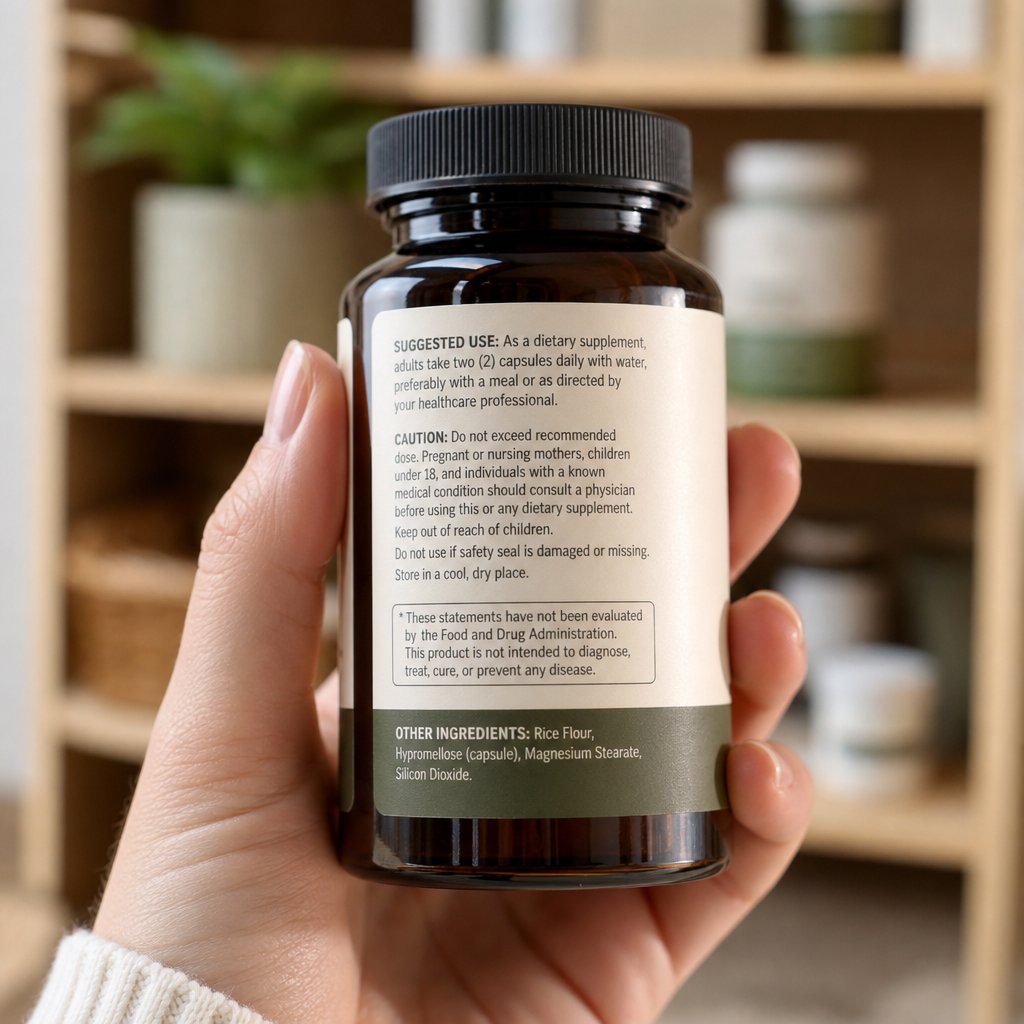
The Supplement Facts panel and the "Other Ingredients" list printed beneath it contain everything you need to judge whether a product's dosage form is working for or against you. Yet most shoppers skip straight past this section. Once you know what to look for, a quick glance at the back of any bottle reveals the capsule and tablet difference in real, practical terms, not just marketing language on the front label.
Decoding the Other Ingredients List
Every supplement label has two distinct ingredient sections. The Supplement Facts panel lists the pharmacologically active compounds and their doses per serving. Below that, the "Other Ingredients" section discloses everything else: the structural and functional materials that hold the product together, help it flow through manufacturing equipment, and protect it during storage.
This is where the capsule tablet difference becomes visible at a glance. If you see terms like "gelatin, glycerin, soybean oil, purified water" in the shell and fill description, you are looking at a softgel with a liquid carrier, a sign that the active ingredient benefits from lipid-based delivery. If you see "microcrystalline cellulose, croscarmellose sodium, magnesium stearate, silicon dioxide," you are holding a compressed tablet built from dry powder and functional excipients.
For capsule medicine products, the shell description also tells you whether the capsule is animal-derived (gelatin) or plant-based (hypromellose, modified starch, or carrageenan). That single line answers dietary restriction questions instantly.
Common Fillers and Binders Demystified
The inactive ingredients in your medicine capsules and tablets are not random. Each one serves a specific manufacturing purpose. Here is what the most common ones actually do:
Typical tablet inactive ingredients:
- Microcrystalline cellulose — a plant-derived filler and binder that gives the tablet its bulk and structural integrity; considered safe and inert
- Magnesium stearate — a lubricant that prevents powder from sticking to manufacturing equipment; the FDA recognizes it as safe at levels well below what any supplement contains
- Silicon dioxide — a flow agent that keeps powdered ingredients from clumping, ensuring uniform dose distribution across every tablet in the batch
- Croscarmellose sodium — a disintegrant that helps the tablet break apart quickly in your stomach so the active ingredient can dissolve
- Titanium dioxide — a whitening agent used in some coatings; under regulatory review in the EU, where EFSA concluded it can no longer be considered safe as a food additive
Typical softgel inactive ingredients:
- Medium-chain triglycerides (MCT oil) — a carrier oil that keeps fat-soluble ingredients dissolved and bioavailable; derived from coconut or palm kernel oil
- Soybean oil — another common carrier oil for fat-soluble vitamins; note this is an allergen for some consumers
- Lecithin — an emulsifier that helps oil-based fills disperse evenly in your digestive tract, supporting absorption
- Glycerin — a plasticizer added to the gelatin shell to keep it flexible and easy to swallow
- Beeswax or yellow wax — used to thicken the fill and prevent ingredient separation inside the capsule
A longer "Other Ingredients" list does not automatically signal a lower-quality product. A medical tablet containing six or seven excipients may simply reflect a well-engineered formulation designed to disintegrate at the right speed, flow uniformly through production, and remain stable on the shelf. What matters is which ingredients appear, not how many. A short list with titanium dioxide or artificial dyes is arguably more concerning than a longer list composed entirely of cellulose, silicon dioxide, and plant-based coatings.
Red Flags to Watch for on Any Supplement Label
So what is the difference between capsules and tablets that should actually worry you? It is not the format itself but the transparency of the label. Independent analyses have found that a substantial proportion of dietary supplements do not match their label claims, with some products containing unlisted ingredients or missing declared ones entirely.
Watch for these warning signs regardless of whether you are evaluating what are tablets, softgels, or hard capsules:
- Proprietary blends without individual doses — if you cannot see how much of each ingredient is in the formula, you cannot evaluate whether the dose is effective
- No third-party certification — seals from organizations like USP, NSF, or Informed Sport indicate independent verification of label accuracy
- Disease claims — any label stating a supplement "cures," "prevents," or "reverses" a condition is non-compliant with FDA regulations and should be avoided
- Unspecified ingredient forms — a label that says "Vitamin B3" without specifying niacin, niacinamide, or nicotinamide riboside leaves you guessing about what you are actually taking
- Artificial colors in the shell or coating — these serve no functional purpose and exist purely for visual appeal
Reading labels this way takes about thirty seconds once you know the pattern. Check the active ingredient dose against what research supports, scan the "Other Ingredients" for anything you want to avoid, and confirm whether the dosage form matches the ingredient's solubility profile. That quick habit puts you ahead of most supplement buyers and ensures you are not paying a premium for a format that adds no real value to your specific product.
Label literacy also reveals something else: how manufacturing choices affect what you pay at the register. The excipients, shell materials, and production methods behind each format carry different costs, and those costs flow directly into the retail price on the shelf.
Cost Comparison and What You Actually Pay More For
You have probably noticed that the softgel version of a supplement often costs a few dollars more than the tablet equivalent sitting right next to it on the shelf. That price gap is not arbitrary. It reflects real differences in how each format is manufactured, and understanding those differences helps you decide when the premium is worth paying and when you are just funding a fancier shell.
Why Softgels Usually Cost More at Retail
The short explanation for why are capsules cheaper than tablets in most cases comes down to manufacturing complexity. Tablet production is relatively straightforward: blend powdered ingredients, compress them under pressure, apply a coating if needed, and package. The equipment is widely available, the raw materials (powders, binders, fillers) are inexpensive, and the process runs at high speed with minimal waste.
Softgel manufacturing is a different story. It requires specialized rotary die encapsulation machines that simultaneously form the gelatin shell and inject the liquid fill in a single continuous operation. The fill itself must be formulated as a stable liquid or semi-solid suspension, which often means dissolving or dispersing the active ingredient in a carrier oil and adding emulsifiers or antioxidants to prevent degradation. According to industry manufacturing cost data, softgel production typically runs $2.00 to $5.50 per bottle at scale, compared to $1.50 to $4.00 for capsules and tablets. That 30% to 40% cost premium at the manufacturing level flows directly into what you pay at the register.
Caplets fall somewhere in between. The caplet vs tablet manufacturing process is nearly identical since caplets are simply tablets compressed into an elongated shape with a smoother coating. The cost difference between caplets and standard round tablets is negligible, which is why caplets vs gel caps comparisons almost always favor caplets on price when the active ingredient is water-soluble.
Calculating True Value Beyond Price Per Bottle
Price per bottle is a misleading metric. A $12 bottle of vitamin D tablets with 200 servings costs $0.06 per day. A $18 bottle of vitamin D softgels with 120 servings costs $0.15 per day. The softgel is 2.5 times more expensive per serving, but if the oil-based delivery means you absorb significantly more of the vitamin, the effective cost per unit of absorbed nutrient may actually favor the softgel.
Here is a practical framework: paying more for softgels is justified when the ingredient is fat-soluble and the absorption difference is clinically meaningful. For omega-3s, vitamin D, CoQ10, and curcumin, the bioavailability advantage of a liquid-fill format can be substantial enough that a cheaper tablet delivering half the absorbed dose is actually the worse deal. For water-soluble compounds like vitamin C, B vitamins, and mineral salts, the caplet vs capsule or tablet vs softgel price gap buys you nothing extra in terms of absorption. A well-made tablet delivers the same result for less.
| Supplement | Tablet/Caplet (typical price per 60-day supply) | Softgel (typical price per 60-day supply) | Is the Softgel Premium Justified? |
|---|---|---|---|
| Omega-3 Fish Oil (1,000 mg) | Not typically available as tablet | $12 - $25 | Yes — oil-based ingredient requires liquid fill |
| Vitamin D3 (2,000 IU) | $6 - $10 | $9 - $15 | Yes — fat-soluble, meaningful absorption gain |
| CoQ10 (100 mg) | $12 - $20 | $18 - $30 | Yes — lipophilic compound, up to 75% better bioavailability |
| Vitamin C (1,000 mg) | $7 - $12 | $12 - $18 | No — water-soluble, no absorption advantage from oil carrier |
| Magnesium (400 mg) | $8 - $14 | $14 - $22 | No — mineral salt dissolves readily, tablet allows higher dose |
| Curcumin (500 mg) | $15 - $25 | $20 - $35 | Yes — poorly water-soluble, lipid delivery improves uptake significantly |
How Manufacturing Partners Keep Costs Competitive
If softgels cost more to produce, why do some brands manage to offer them at prices close to tablets? The answer lies in manufacturing scale and production flexibility. Brands that work with full-service OEM manufacturers capable of producing multiple formats, softgels, tablets, capsules, and powders, on the same production campus avoid the overhead of maintaining separate supplier relationships and logistics chains for each format.
Flexible contract manufacturers like ZhuFeng produce both soft capsules and tablets with customized formulations under one roof, which means brands can match each product in their line to its ideal dosage form without paying the premium that comes from sourcing each format from a different specialized facility. That consolidated approach, combined with scalable production volumes, is one reason consumers increasingly find quality softgels priced competitively with capsules vs caplets alternatives.
Ingredient sourcing also plays a role. Manufacturers with established supply chains for carrier oils, gelatin (or plant-based shell materials), and bulk active ingredients negotiate volume pricing that smaller operations cannot access. Those savings compound across thousands of units and ultimately determine whether the softgel on your shelf costs $3 more or $8 more than the tablet version.
The cost question, like every other factor in the softgels vs tablets decision, circles back to one principle: match the format to the ingredient. When you do, even the higher-priced option delivers better value per dollar absorbed. When you do not, you are paying a premium for packaging that adds nothing to your health outcomes. The final step is putting all of these factors, absorption, stability, label quality, and cost, into a simple decision framework you can use for any supplement purchase.
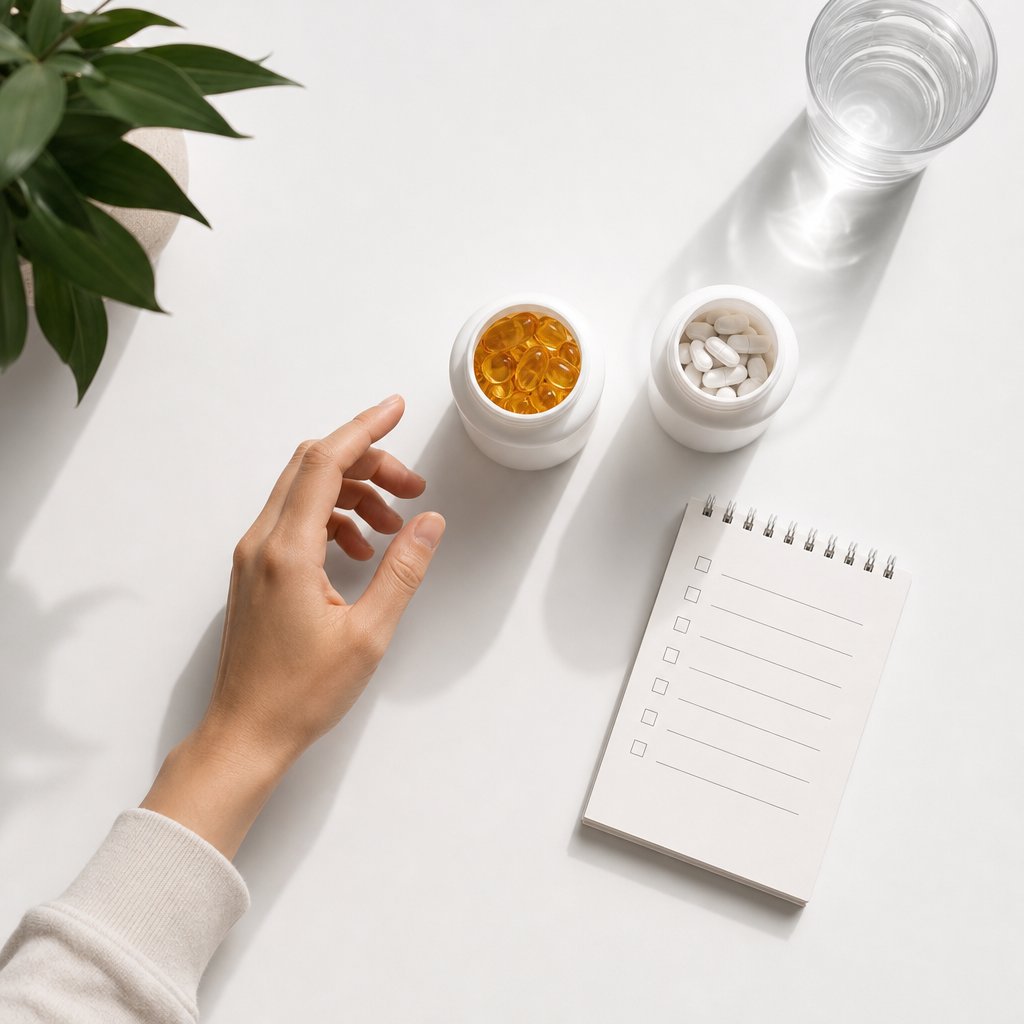
Making Your Final Decision with Confidence
Every factor covered in this article, absorption chemistry, dose capacity, stability, label transparency, and cost, points to the same conclusion: the difference between tablet and capsule formats is not about one being universally better. It is about matching the right delivery system to the right ingredient for your specific situation.
A Three-Question Framework for Any Supplement Purchase
You do not need to memorize bioavailability charts or manufacturing specs. The next time you are comparing capsule vs tablet options online or in-store, run through these three questions:
- Is the active ingredient fat-soluble or water-soluble? Fat-soluble nutrients (vitamins A, D, E, K, omega-3s, CoQ10, curcumin) absorb meaningfully better from a softgel's oil-based fill. Water-soluble compounds (vitamin C, B vitamins, mineral salts) perform equally well in tablet form.
- Do I need a high dose, dose splitting, or a vegan-friendly format? If you need 500 mg or more per unit, require half-dose flexibility, or avoid animal-derived gelatin, tablets win on practicality. The difference between capsule and tablet construction makes tablets inherently more accommodating for these needs.
- Does the price premium reflect a real absorption advantage for this specific ingredient? If the answer to question one is "fat-soluble," the softgel premium is likely justified. If the ingredient is water-soluble, you are paying extra for packaging, not performance.
Your Personal Softgel vs Tablet Decision Checklist
Beyond the three core questions, factor in your personal circumstances. Storage environment matters if you live somewhere hot and humid. Swallowing comfort matters if large pills are difficult for you. Budget matters if you take multiple supplements daily and costs add up. The tablets versus capsules debate resolves differently for a 25-year-old athlete than for a 70-year-old managing multiple nutrient deficiencies.
Neither softgels nor tablets are universally superior. The best supplement format is the one that matches your ingredient's solubility profile, fits your dose requirements, aligns with your dietary values, and stays stable in your storage conditions. Every other difference is secondary.
The supplement industry continues to innovate beyond these two traditional formats. Effervescent tablets, orally disintegrating quick-melts, liposomal liquids, and delayed-release capsules are expanding the options available to consumers. Non-pill formats now command 63% of the supplement market share, signaling that delivery format diversity will only grow. The capsule vs pill or pill vs capsule question may soon include five or six viable answers instead of two.
For brands looking to offer consumers the right format for each product in their line, full-service OEM manufacturers like ZhuFeng produce softgels, tablets, capsules, powders, gummies, and oral liquids with customized formulations, making it possible to match every SKU to its ideal delivery system under one production partnership.
Your job as a consumer is simpler: ask the three questions, check the label, and let the ingredient's chemistry guide your choice. That single habit ensures you stop wasting your dose and start getting what you actually paid for.
Frequently Asked Questions About Softgels vs Tablets
1. Do softgels absorb faster than tablets?
Softgels generally absorb faster for fat-soluble ingredients because the active compound is already dissolved in a liquid carrier oil. When the gelatin shell ruptures in your stomach, the contents disperse immediately without needing to disintegrate or dissolve first. Tablets must break apart into granules and then dissolve in gastrointestinal fluid before absorption begins, adding extra steps that delay uptake. However, for water-soluble nutrients like vitamin C or B vitamins, the speed difference is minimal since these compounds dissolve readily in your gut regardless of starting format.
2. Are softgels or tablets better for vitamin D?
Softgels are the better choice for vitamin D because it is a fat-soluble vitamin that absorbs more efficiently when delivered in an oil-based carrier. The liquid fill inside a softgel keeps vitamin D solubilized and ready to form micelles with bile salts in your small intestine, which is the mechanism your body uses to transport fat-soluble nutrients across the intestinal wall. While vitamin D tablets are not ineffective, the oil matrix in a softgel provides a measurable bioavailability advantage that justifies the slightly higher price point.
3. Why are softgels more expensive than tablets?
Softgels cost more due to specialized manufacturing requirements. Production uses rotary die encapsulation machines that simultaneously form the gelatin shell and inject a precisely formulated liquid fill. The fill itself requires dissolving or suspending active ingredients in carrier oils with added emulsifiers for stability. Industry data shows softgel production runs approximately $2.00 to $5.50 per bottle versus $1.50 to $4.00 for tablets. Brands working with flexible OEM manufacturers like ZhuFeng that produce multiple formats under one roof can reduce this gap by eliminating separate supplier logistics for each dosage form.
4. Can vegans take softgels?
Most traditional softgels use bovine or porcine gelatin shells, making them unsuitable for vegans. However, plant-based softgel alternatives now exist using modified starch, carrageenan, pectin, or gellan gum as shell formers. Look for labels stating "vegetarian shell" or "plant-based capsule." If plant-based softgels are unavailable for your supplement, standard tablets are inherently vegan-friendly since they use cellulose-based binders and coatings. The plant-based softgel segment is growing rapidly, with capsules making plant-based claims increasing at a 34% compound annual growth rate.
5. How do I know if my softgels have expired or gone bad?
Check for these physical warning signs: capsules sticking together or clumping, the shell turning cloudy or developing dark spots, visible leaking or oily residue on the surface, an unusually strong or rancid odor, and the shell feeling excessively hard or brittle. These indicate cross-linking or moisture damage that can prevent proper dissolution in your stomach. Store softgels in a cool, dry place away from direct sunlight and humidity. Avoid bathroom medicine cabinets where temperature and moisture fluctuate from showers. Always keep them in the original container designed with moisture-barrier materials.