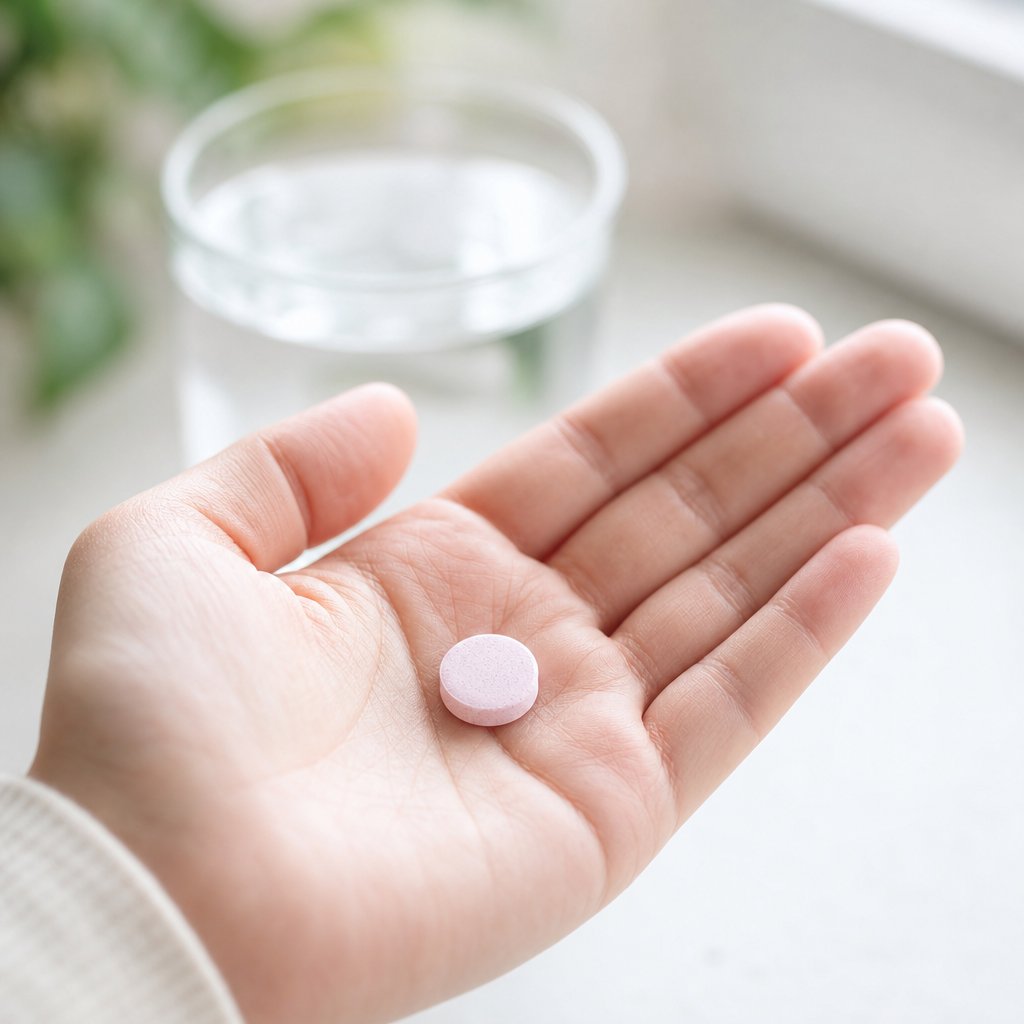
You Swallowed a Chewable Tablet Whole
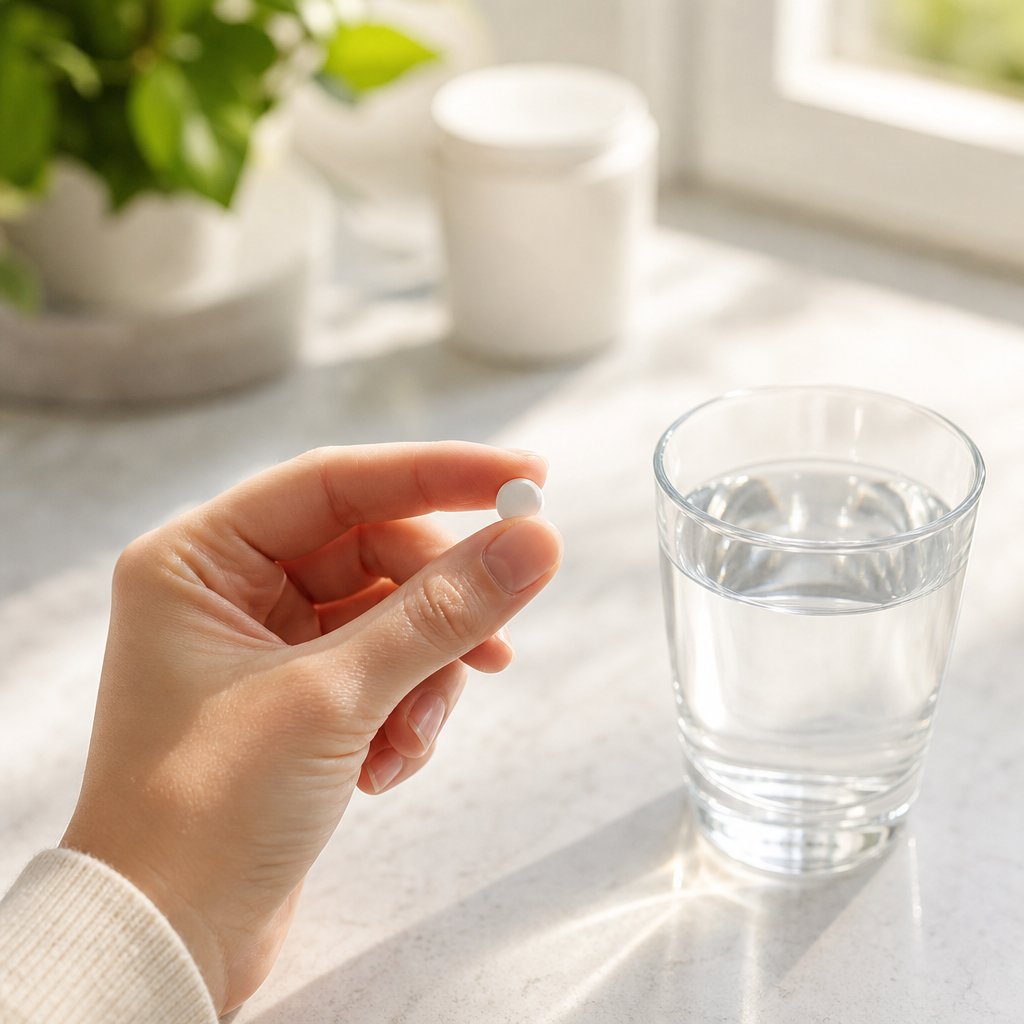
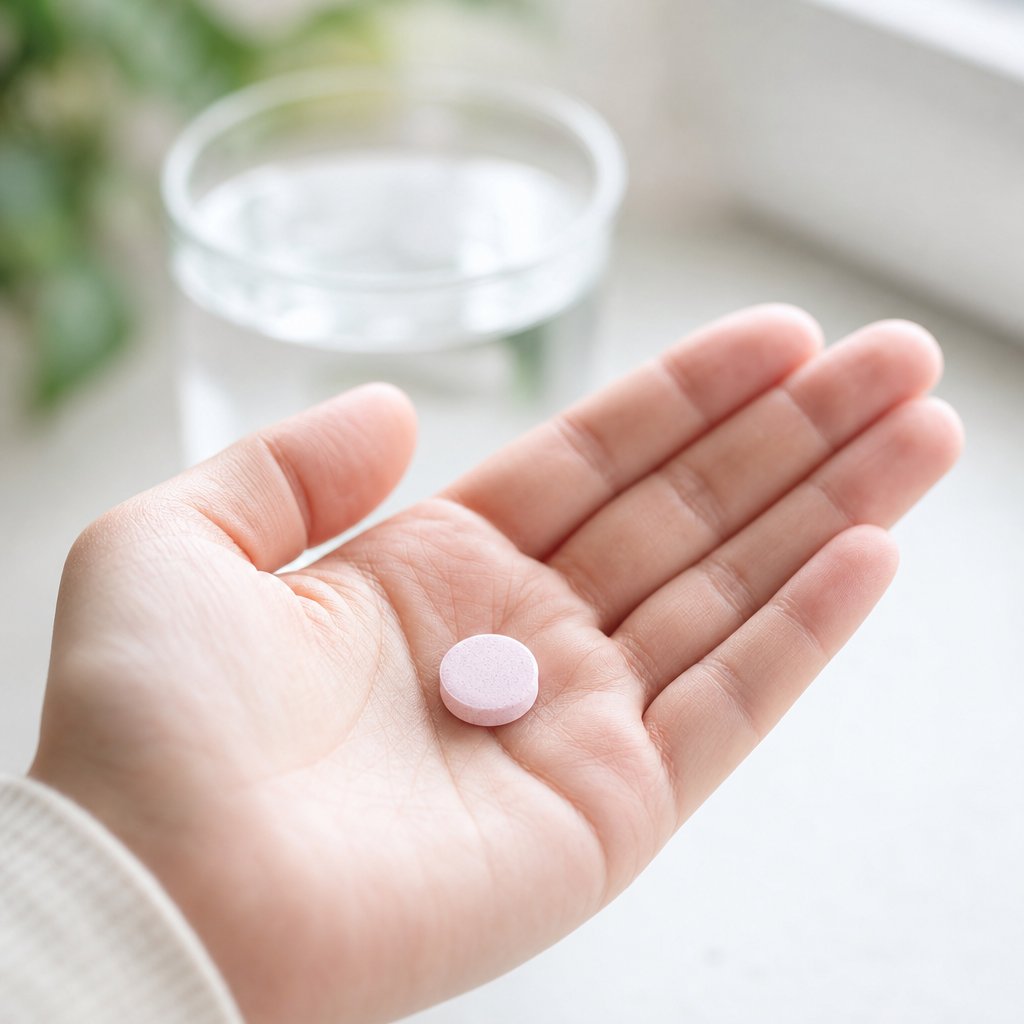
You just gulped down a chewable tablet without chewing it. Maybe you were distracted, maybe you were in a rush, or maybe you simply forgot it was a chewable. Now you're wondering: what happens if you swallow chewable tablets whole? Take a breath. You're almost certainly fine.
The Short Answer for Worried Readers
In most cases, swallowing a chewable tablet whole is not dangerous. Your stomach acid will still dissolve it. The main difference is that it may take slightly longer for the medication to break down and start working compared to a properly chewed tablet.
Think of it like dropping a whole sugar cube into a glass of water versus stirring in a spoonful of granulated sugar. Both dissolve completely, but the granulated sugar disappears much faster because it has more surface area exposed to the liquid. A chewed tablet works the same way — it's already broken into smaller pieces, so your stomach acid can get to work immediately. A whole tablet just needs a bit more time to erode from the outside in.
So can you swallow chewable tablets without serious consequences? According to Dr. Brian Staiger, PharmD, the vast majority of chewable tablets can be swallowed intact with no problems. The acid in your stomach will dissolve them, and they will be absorbed as usual. The real questions to ask yourself are two: "Is it safe?" and "Will it still work?" For most chewable medications, the answer to both is yes — though the speed of action may differ.
Why This Question Matters More Than You Think
If you've ever wondered "can I swallow chewable tablets instead of chewing them?" — you're far from alone. A nationwide survey conducted by Harris Interactive found that 40 percent of American adults have experienced difficulty swallowing pills. That's nearly half the adult population dealing with this challenge on a regular basis. Some people have a hypersensitive gag reflex, others deal with texture aversions, and many simply find chewable tablets too sweet or chalky to chew comfortably.
This is exactly why the question "what if you swallow a chewable tablet" gets searched so frequently. Whether you accidentally swallowed one whole or you're wondering if you can you swallow chewable pills on purpose to avoid the taste, the concern is legitimate. The good news is that the answer is straightforward for the vast majority of chewable products on the market.
That said, not every chewable medication behaves the same way once it hits your stomach unchewed. The type of drug, its intended speed of action, and even the tablet's physical size all play a role in determining whether swallowing whole is a trivial non-issue or something worth paying attention to.
The Science Behind Chewable Tablet Formulations
Understanding why a chewable tablet exists in the first place helps explain what happens when you skip the chewing step. These aren't just regular pills with better flavor. Chewable medicine is engineered from the ground up with a specific delivery mechanism in mind: your teeth.
Why Certain Medications Are Formulated as Chewables
Pharmaceutical companies don't make chewable pills just for fun. There are concrete clinical and practical reasons behind the choice. Each one ties back to either how the drug works or who needs to take it.
- Faster onset of action — Antacids like calcium carbonate need to neutralize stomach acid quickly. Chewing the tablet breaks it into fine particles that begin working almost immediately upon reaching the stomach, rather than waiting for a whole tablet to dissolve.
- Patient compliance — Children and elderly patients often struggle to swallow conventional tablets. A chewing tablet that tastes pleasant and breaks apart easily in the mouth removes a major barrier to taking medication consistently.
- Local action in the mouth or esophagus — Some medications are designed to coat or treat tissues in the oral cavity and throat. The act of chewing distributes the active ingredient exactly where it's needed.
- Taste-masking of bitter compounds — Certain drugs taste terrible. Formulating them as chewables allows manufacturers to blend in sweeteners and flavors that make the experience tolerable, especially for pediatric patients who might otherwise refuse the medication entirely.
According to the United States Pharmacopoeia (USP), chewable tablets are oral dosage forms intended to be chewed and then swallowed rather than swallowed whole. The USP even distinguishes between tablets that may be chewed for convenience and those that must be chewed or crushed before swallowing to ensure proper drug release or prevent choking.
Key Ingredients That Make Chewable Tablets Different
When you compare a standard compressed tablet to a chewable one, the differences go deeper than taste. The internal recipe is fundamentally different. A review published in Pharmaceutical Technology highlights several key excipient categories that set chewable formulations apart:
- Binders and bulking agents — Polyols like mannitol and sorbitol serve double duty. They hold the tablet together while also providing sweetness and a pleasant cooling sensation in the mouth.
- Disintegrants — These ingredients help the tablet break apart when exposed to moisture. Chewable tablets often contain higher levels of disintegrants than standard pills, ensuring they fragment quickly once chewed and swallowed into the digestive tract.
- Sweeteners — Combinations of bulk sweeteners (sugars or polyols) with high-intensity sweeteners (like aspartame) mask unpleasant drug flavors. Blending multiple sweeteners creates synergistic effects that improve the overall taste profile.
- Flavoring agents — Mint and peppermint are common in antacid tablets, while fruit and bubblegum flavors dominate pediatric products. These are typically added as dry powders to prevent loss of volatile aromatic compounds during manufacturing.
The mechanical properties matter too. The FDA recommends a breaking force upper limit of 12 kiloponds for chewable tablets — meaning they're compressed more softly than standard pills. This softer compression is intentional. It ensures the tablet crumbles easily under the force of chewing pills between your molars without risking damage to teeth or dentures. Many chewable products also skip the hard outer coating found on conventional tablets, which further reduces the barrier to mechanical breakdown.
Here's the key insight: because these tablets are designed to be broken apart by chewing rather than dissolved solely by stomach acid, many formulations don't contain disintegrants or super-disintegrants at all. That means if you swallow one whole, it may take noticeably longer to dissolve in your stomach compared to a standard immediate-release tablet that was specifically engineered for gastric dissolution. The tablet isn't defective — it simply wasn't designed for that route of breakdown.
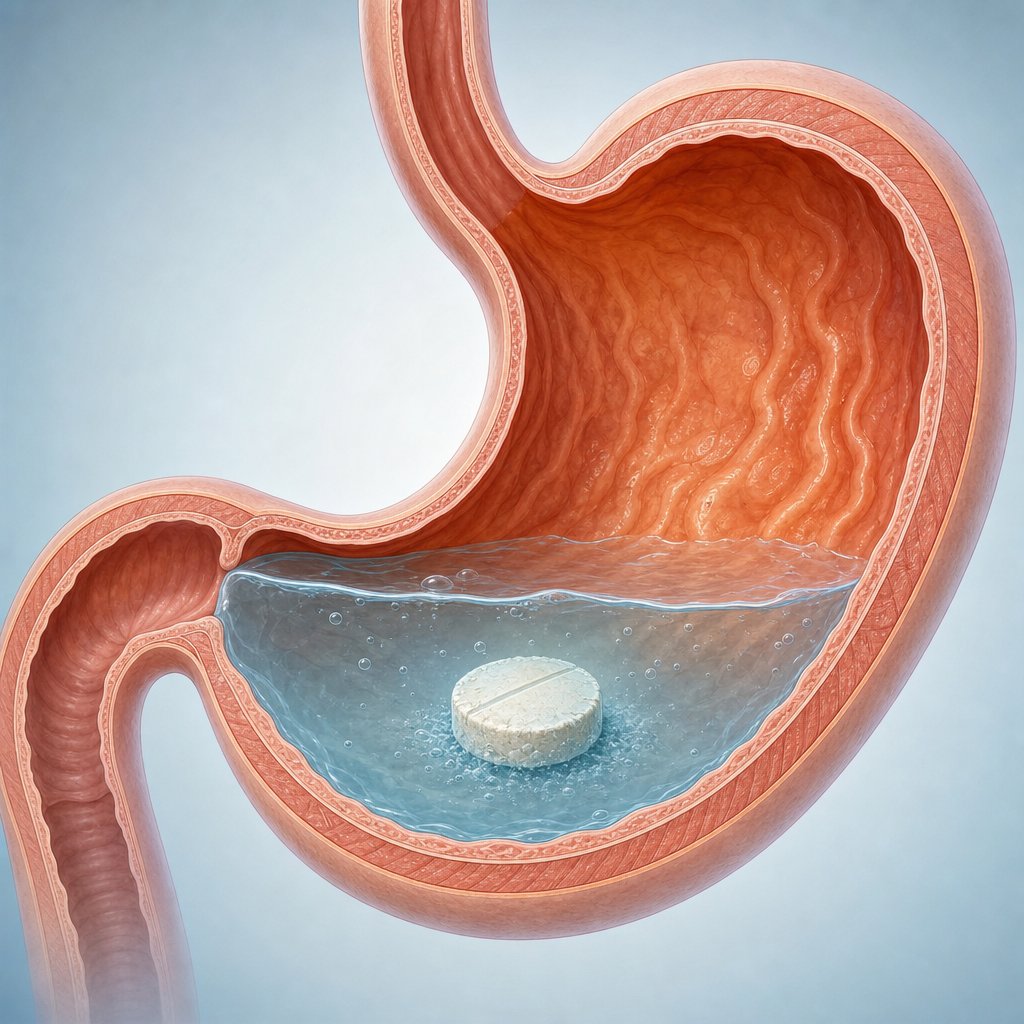
What Happens If You Swallow a Chewable Tablet Whole
So the tablet is designed to crumble between your teeth — but you swallowed it intact. What actually happens once it lands in your stomach? The short version: your digestive system picks up the slack, but it works harder and slower than it would with pre-chewed fragments. Let's trace the journey.
How Your Stomach Handles an Unchewed Tablet
When you swallow a chewable tablet whole, it arrives in your stomach as a single solid mass. Your gastric fluid — a mix of hydrochloric acid, pepsin, and water — immediately begins attacking the tablet's outer surface. But here's the catch: it can only dissolve what it can reach. The acid works from the outside in, peeling away layer after layer while the core remains temporarily shielded.
A pharmacokinetic study published in Antimicrobial Agents and Chemotherapy demonstrated this vividly. When intact tablets were placed in acidic dissolution media (pH 1.0, simulating stomach acid), less than 10% of the drug was released after two full hours. Crushed tablets — mimicking what happens after chewing — dissolved completely within 15 minutes in neutral media. That's a dramatic difference in dissolution speed.
The stomach also has a mechanical component. Muscular contractions churn and grind contents, but a solid tablet larger than 4-7 mm doesn't pass easily through the pyloric sphincter into the small intestine. It may sit in the stomach for a variable period — anywhere from minutes to over two hours — depending on whether you've eaten recently. In a fasted state, strong "housekeeper waves" sweep the stomach contents forward roughly every two hours. In a fed state, the tablet could linger even longer.
Absorption Rate vs. Total Absorption
Here's where things get nuanced. When people ask "what happens if you swallow chewable pills," they usually want to know: will the medication still work? The answer involves two distinct pharmacokinetic concepts:
- Cmax — the peak concentration of drug in your bloodstream
- Tmax — how long it takes to reach that peak
The same raltegravir study found that patients who chewed their tablets reached a median Tmax of 60 minutes, while those who swallowed whole didn't peak until 180 minutes — three times longer. Peak drug concentration (Cmax) was also 73% higher in the chewing group (5,404 vs. 3,128 ng/ml). Yet the total 12-hour drug exposure (AUC 0-12) showed a smaller, non-significant difference.
What does this mean practically? Swallowing chewable tablets whole often delivers a similar total amount of medication to your system, but the delivery is slower and the peak is lower. For a daily vitamin, that's irrelevant. For an antacid you need working in five minutes, it matters quite a bit.
Can chewable pills be swallowed and still provide therapeutic benefit? In most cases, yes. The drug still gets absorbed. But the timing profile shifts, and for time-sensitive medications, that shift can be the difference between fast relief and waiting uncomfortably.
Why Surface Area Changes Everything
Remember the sugar cube analogy from earlier? This is where it really clicks. A single chewable tablet might measure 12-15 mm across. Chewing it breaks it into dozens of fragments, each with its own exposed surface. The total surface area available for dissolution increases exponentially.
Pharmacokinetic modeling research confirms that dissolution rate is one of the most sensitive variables affecting peak plasma concentration. The higher the drug's intestinal permeability, the more dramatically a slower dissolution rate reduces Cmax. Gastric emptying time and intestinal transit add further variability — but dissolution remains the rate-limiting step for an intact tablet sitting in stomach acid.
What happens if you chew tablets as directed? You essentially bypass the dissolution bottleneck entirely. The fragments are small enough to pass through the pylorus quickly, and their massive combined surface area means the drug dissolves almost immediately upon contact with intestinal fluid.
| Factor | Chewed Tablet | Swallowed Whole |
|---|---|---|
| Surface area exposed to gastric fluid | High (many small fragments) | Low (single intact mass) |
| Dissolution time in stomach | Minutes | 30 minutes to 2+ hours |
| Time to peak blood concentration (Tmax) | ~60 minutes | ~180 minutes |
| Peak concentration (Cmax) | Higher | Lower (up to 40-70% reduction) |
| Total drug absorbed (AUC) | Baseline | Similar or slightly reduced |
| Absorption variability between doses | Low and predictable | High and erratic |
One additional finding worth noting: the raltegravir study showed that swallowing whole didn't just slow absorption — it made absorption unpredictable. The coefficient of variation for Cmax was 83% in the swallowing group versus 56% in the chewing group. That means if you swallowed a chewable pill whole on two different days, you might get very different blood levels each time. Chewing produces a more consistent, reliable result.
This variability matters most for medications with a narrow therapeutic window — drugs where too little means no effect and too much means side effects. For everyday supplements and antacids, the inconsistency is a minor footnote. But it explains why pharmacists consistently recommend following the "chew before swallowing" instruction on the label.
Common Chewable Medications and What Swallowing Them Means
The pharmacokinetic theory is useful, but what you really want to know is: does it matter for my specific tablet? The answer depends entirely on which medication you swallowed. Some chewable products are perfectly forgiving. Others carry real consequences when taken whole. Here's a category-by-category breakdown.
Antacids and Digestive Chewables
Can you swallow Tums whole without any issues? Technically, the tablet will still dissolve in your stomach. But Drugs.com's medical review notes that swallowing chewable Tums prevents them from working quickly and from having a direct effect on the stomach. Because Tums relies on calcium carbonate to neutralize acid on contact, a whole tablet sitting intact delays that neutralization by the time it takes to erode. You'll still get relief — just 15 to 30 minutes later than you'd like.
The same logic applies if you're wondering whether you can you swallow Pepto-Bismol chewables. Bismuth subsalicylate coats and soothes the stomach lining, so faster breakdown means faster coating action. Swallowing whole isn't dangerous, but it defeats the purpose of choosing a chewable over a liquid in the first place. If speed doesn't matter to you, there's no safety concern.
Chewable Vitamins and Supplements
Can you swallow chewable vitamins without chewing them? This is probably the lowest-stakes scenario. Vitamins and minerals don't need to hit your bloodstream at a specific time to be effective. Whether your multivitamin absorbs over 30 minutes or 90 minutes makes zero clinical difference. Your body stores fat-soluble vitamins (A, D, E, K) and uses water-soluble ones (B vitamins, vitamin C) gradually throughout the day regardless of absorption speed.
The only practical concern is size. Children's chewable vitamins are small enough to swallow easily, but adult chewable multivitamins can be quite large — sometimes 20 mm or more across. Swallowing something that big without water could be uncomfortable or pose a mild choking risk. If you prefer not to chew, take it with a full glass of water.
Chewable Pain Relief and Aspirin
This is where the stakes change dramatically. Can you swallow a chewable aspirin and still get the same benefit? During routine use for a headache, the delay is merely inconvenient. During a suspected heart attack, it could be medically significant.
A crossover study published in the Western Journal of Emergency Medicine compared three aspirin formulations in human volunteers. The results were striking: all subjects who took the chewable aspirin formulation had measurable blood levels at 45 minutes, while 6 out of 14 subjects who swallowed solid tablets whole had no detectable levels even at 60 minutes. The chewable formulation also achieved statistically higher peak concentrations and greater total absorption over three hours.
Both the American Heart Association and the American College of Cardiology recommend chewing aspirin during a cardiac event to accelerate platelet inhibition. Previous research shows that chewing achieves greater than 90% platelet inhibition within 10 to 14 minutes, compared to 25 to 26 minutes when swallowed whole. In a heart attack, those extra minutes matter.
Motion Sickness and Anti-Nausea Chewables
Do you chew or swallow Dramamine? Interestingly, Cleveland Clinic's prescribing information for dimenhydrinate chewable tablets states that you can "chew it completely before swallowing or swallow the tablets whole." This makes Dramamine one of the more flexible chewable medications — the manufacturer explicitly permits either method.
That said, if you're already feeling nauseous and need relief quickly, chewing will get the active ingredient into your system faster. Do you chew Dramamine for best results? Chewing is ideal when you're trying to catch up with symptoms that have already started. If you're taking it preventively 30 to 60 minutes before travel, swallowing whole is unlikely to make a meaningful difference since you have a time buffer built in.
Chewable antibiotics like amoxicillin fall into yet another category. Total absorption matters far more than speed for antibiotics — you need the full dose to reach therapeutic levels and maintain them. Since swallowing whole typically preserves total absorption (just delays it), the clinical impact is minimal for most antibiotic courses.
| Medication Category | Consequence of Swallowing Whole | Risk Level |
|---|---|---|
| Antacids (Tums, Pepto-Bismol chewables) | Delayed heartburn relief by 15-30 minutes; no safety concern | Low |
| Chewable vitamins and supplements | Slightly slower absorption; no clinical difference | Low |
| Chewable antibiotics (amoxicillin) | Delayed but complete absorption; therapeutic effect preserved | Low |
| Chewable Dramamine (dimenhydrinate) | Slower onset of anti-nausea effects; manufacturer permits swallowing whole | Low to Medium |
| Chewable aspirin (cardiac emergency use) | Delayed platelet inhibition by 10-15 minutes; potentially critical during heart attack | High |
The pattern is clear: for most everyday chewable medications, swallowing whole is a minor inconvenience at worst. The one glaring exception is chewable aspirin during a cardiac event, where speed of absorption directly correlates with clinical outcomes. Outside of that scenario, you're dealing with delayed comfort rather than delayed safety.
When Swallowing a Chewable Tablet Actually Matters
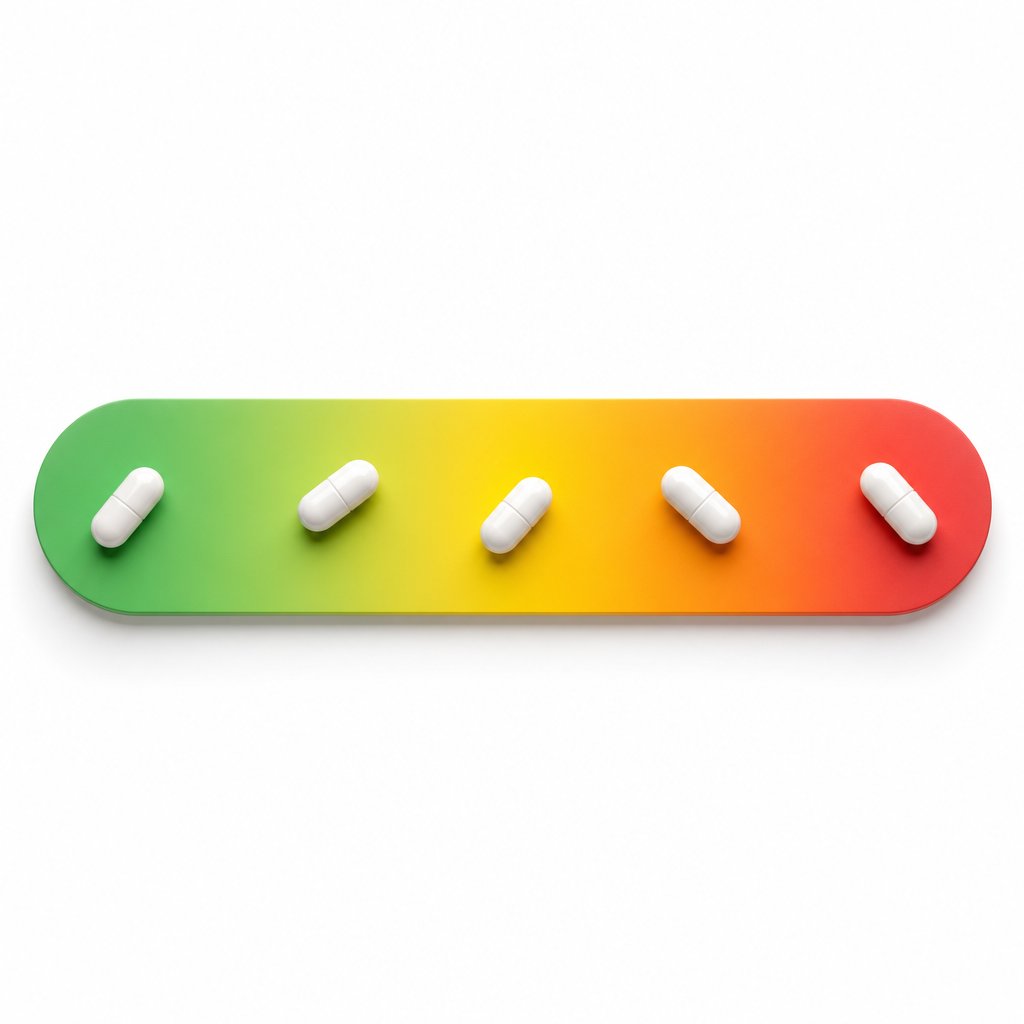
Most chewable medications fall into the "no big deal" category when swallowed whole. But "most" isn't "all." The real question isn't whether swallowing a chewable tablet is universally safe — it's whether your specific situation falls on the harmless end of the spectrum or the concerning end. Let's map that spectrum clearly.
The Risk Spectrum From Harmless to Concerning
Not all consequences are created equal. Is it bad to chew pills that aren't meant to be chewed? That depends on the formulation. Conversely, is it bad to dry swallow pills — including chewables — without water? The risks vary widely based on what you're taking and why.
Here's how the spectrum breaks down:
- Negligible risk — Chewable vitamins, mineral supplements, and routine multivitamins. Absorption timing is clinically irrelevant. Swallowing whole changes nothing meaningful about the outcome.
- Minor inconvenience — Antacids and digestive chewables. You'll wait longer for relief, but the medication still works. No safety issue exists.
- Moderate concern — Medications where onset speed affects symptom management (anti-nausea tablets, some pain relievers). You may experience prolonged discomfort while waiting for the drug to dissolve and absorb.
- Serious concern — Medications where rapid absorption is medically critical, such as chewable aspirin during a suspected cardiac event. Delayed absorption could affect clinical outcomes.
- Physical hazard — Large chewable tablets swallowed without water. Choking or esophageal obstruction becomes a real possibility, regardless of the drug itself.
That last point deserves emphasis. Chewable tablets are often significantly larger than standard swallowable pills. Antacid tablets frequently exceed 1,000 mg in total weight, and formulation research confirms that because chewable tablets are meant to be orally reduced into particles, manufacturers don't limit their size the way they would for conventional swallow tablets. Trying to gulp down a tablet that large — especially dry — creates a choking risk that has nothing to do with the drug's pharmacology. Clinical pharmacists at Banner Health note that pill esophagitis occurs when tablets get stuck in the esophagus, causing pain, irritation, and in severe cases, tissue damage. Taking pills without adequate water is a primary risk factor.
Dose-Dumping and Whether It Applies to Chewables
You may have encountered warnings about "dose-dumping" — the sudden, uncontrolled release of a drug's entire payload at once. It sounds alarming, and some online sources mention it in the context of chewing or crushing tablets. But here's a critical distinction that often gets lost: dose-dumping is a concern with modified-release formulations, not standard chewable tablets.
What happens if you chew a pill that's designed as extended-release or enteric-coated? You destroy the controlled-release mechanism. A 12-hour sustained-release tablet, for example, contains the full 12-hour dose behind a barrier that meters it out gradually. Crushing or chewing that barrier dumps the entire dose into your system at once — potentially causing toxicity. The QuilliChew ER product (a chewable extended-release methylphenidate) even carries a specific label warning about dose-dumping in the presence of alcohol.
Standard chewable tablets, however, are immediate-release formulations. They contain a single dose meant to be absorbed all at once anyway. There's no controlled-release barrier to breach. Swallowing one whole doesn't cause dose-dumping — it causes the opposite: slower release than intended. The drug trickles out as the tablet erodes rather than flooding in all at once.
So why can't you chew pills that are extended-release? Because you'd bypass the time-release engineering. But chewable tablets are explicitly designed to be destroyed by chewing. The two situations are pharmacological opposites. Conflating them — as some sources do — creates unnecessary fear.
When Rapid Absorption Is Medically Critical
Does chewing a pill make it work faster? For chewable formulations, absolutely. And in one specific clinical scenario, that speed difference is potentially life-saving.
Do you have to chew chewable aspirin during a suspected heart attack? Both the American Heart Association and the American College of Cardiology say yes. Their guidelines explicitly recommend chewing aspirin to accelerate absorption and platelet inhibition during acute coronary syndrome.
During a suspected heart attack, chewing aspirin achieves greater than 90% platelet inhibition within 10 to 14 minutes. Swallowing the same tablet whole delays that effect to 25 to 26 minutes — a gap that can influence outcomes when every minute of blood flow matters.
A prospective crossover study in the Western Journal of Emergency Medicine demonstrated that chewable aspirin formulations achieved more rapid and more complete absorption than solid tablets swallowed whole. Nine out of fourteen subjects in the chewable group had measurable salicylate levels at just 15 minutes, compared to only two subjects in the solid-swallowed group. The researchers concluded that a chewable aspirin formulation may be preferable to solid tablets — either chewed or swallowed — in the treatment of acute coronary syndrome.
What happens if you swallow a chewable aspirin whole during a cardiac event? You lose precious minutes of platelet inhibition. The tablet still works eventually, but "eventually" isn't good enough when a coronary artery is occluded. This is the one scenario where the chewing instruction isn't about comfort or convenience — it's about clinical urgency.
Outside of cardiac emergencies, the speed difference between chewing and swallowing is a matter of comfort, not safety. A delayed antacid is annoying. A delayed aspirin during chest pain is medically significant. Knowing which situation you're in makes all the difference in how seriously you should take the "chew before swallowing" label.
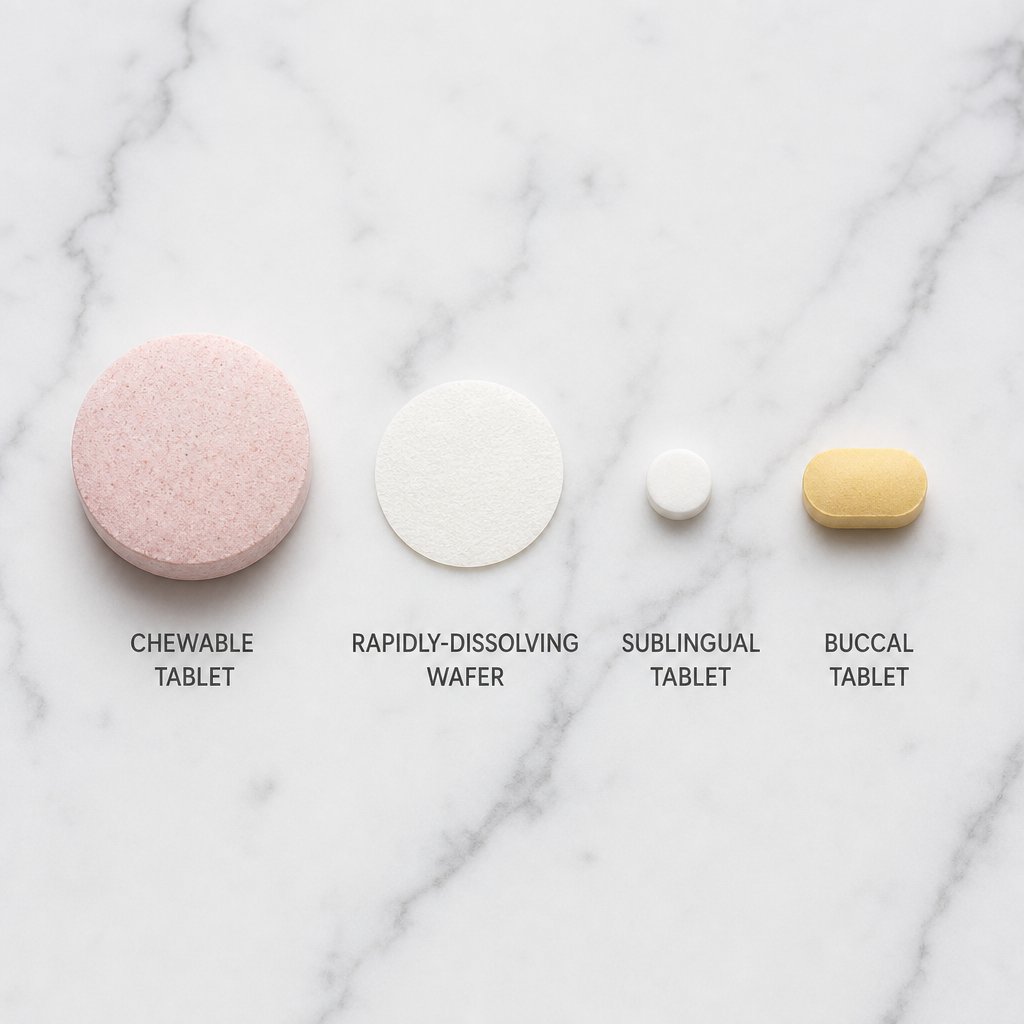
Chewable vs. Dissolvable vs. Buccal Tablets Explained
The distinction between "chew it," "let it dissolve," and "hold it in your cheek" confuses a lot of people — and understandably so. All three instructions involve your mouth, but the underlying pharmacology is completely different. Knowing which type of tablet you're dealing with determines whether swallowing whole is a minor delay, a non-issue, or a genuine problem.
Chewable Tablets vs. Orally Disintegrating Tablets
Orally disintegrating tablets (ODTs) look similar to chewable tablets, but they work on an entirely different principle. An ODT is designed to disintegrate within seconds when placed on the tongue — no chewing, no water required. Once the tablet breaks apart in your saliva, you simply swallow the residue. The drug then absorbs through the gastrointestinal tract, just like any oral medication.
Here's the key difference: ODTs are engineered to self-destruct on contact with moisture. Chewable tablets require mechanical force from your teeth. So can you swallow dissolvable pills like ODTs without letting them dissolve first? According to SA Health's pharmaceutical guidance, ODTs may alternatively be swallowed whole — they'll simply dissolve in your stomach instead of on your tongue. The absorption route is the same either way: through the GI tract.
Common ODT medications include ondansetron (Zofran ODT), mirtazapine, and risperidone. If you're wondering "can I swallow Zofran instead of letting it dissolve?" — the answer is generally yes, because the drug still reaches your bloodstream via gastrointestinal absorption regardless of where the tablet physically disintegrates. The ODT format exists primarily for convenience and for patients who have difficulty swallowing, not because oral dissolution is pharmacologically necessary.
Is chewing a pill the same as swallowing when it comes to ODTs? Not exactly. You don't need to chew an ODT — it falls apart on its own. And swallowing it intact doesn't meaningfully change the outcome because the tablet's ultra-rapid disintegration technology works just as well in gastric fluid as it does in saliva.
Buccal and Sublingual Tablets — Why Swallowing Defeats the Purpose
Buccal and sublingual tablets operate on a fundamentally different absorption pathway. Instead of relying on your digestive system, these formulations are designed to pass directly through the mucous membranes in your mouth and into your bloodstream. Sublingual tablets dissolve under the tongue. Buccal tablets dissolve between the gum and cheek.
Why does this matter? Because these drugs bypass the liver's "first-pass metabolism" — a process that breaks down and reduces the potency of many medications before they reach systemic circulation. Drugs formulated for mucosal absorption are often dosed specifically for that direct-to-bloodstream route. If you swallow them instead, the drug passes through your digestive system and liver, potentially reducing its effectiveness dramatically or rendering it inactive altogether.
Can you swallow dissolve tablets that are meant for buccal or sublingual use? You physically can, but you may not get the therapeutic effect. Nitroglycerin sublingual tablets for chest pain, for example, must dissolve under the tongue for rapid absorption. Swallowing them sends the drug through first-pass metabolism, which destroys most of the active compound before it ever reaches your heart.
Can I swallow dissolvable tablets designed for sublingual use and still expect them to work? In most cases, no — or at least not reliably. The dosing assumes mucosal absorption. Swallowing changes the pharmacokinetic equation entirely.
How to Identify Your Tablet Type
Confused about what you're holding? Check the packaging. Labels will typically state "chewable tablet," "orally disintegrating tablet," "sublingual tablet," or "buccal tablet" explicitly. If you see instructions like "place under tongue" or "place between cheek and gum," you're dealing with a mucosal-absorption product — and swallowing it whole would defeat its purpose. If the label says "chew thoroughly before swallowing," it's a standard chewable that relies on GI absorption. And if it says "place on tongue and allow to dissolve," you likely have an ODT that can also be swallowed if needed.
| Tablet Type | Design Intent | What Happens If Swallowed Whole | Risk Level |
|---|---|---|---|
| Chewable tablet | Mechanically broken down by teeth, then absorbed via GI tract | Delayed dissolution and slower absorption; drug still works | Low (usually) |
| Orally disintegrating tablet (ODT) | Dissolves on tongue without water; absorbed via GI tract after swallowing | Dissolves in stomach instead; same absorption pathway | Negligible |
| Sublingual tablet | Dissolves under tongue; absorbed through oral mucosa directly into bloodstream | Drug undergoes first-pass metabolism; may be significantly less effective or inactive | High |
| Buccal tablet | Dissolves between cheek and gum; absorbed through oral mucosa | Drug undergoes first-pass metabolism; therapeutic effect may be lost | High |
The practical takeaway: if you accidentally swallowed a chewable tablet or an ODT whole, you're almost certainly fine. If you swallowed a sublingual or buccal tablet, contact your pharmacist — you may need to take another dose using the correct technique. The mouth is involved in all four scenarios, but only two of these tablet types actually depend on oral mucosal absorption to function properly.
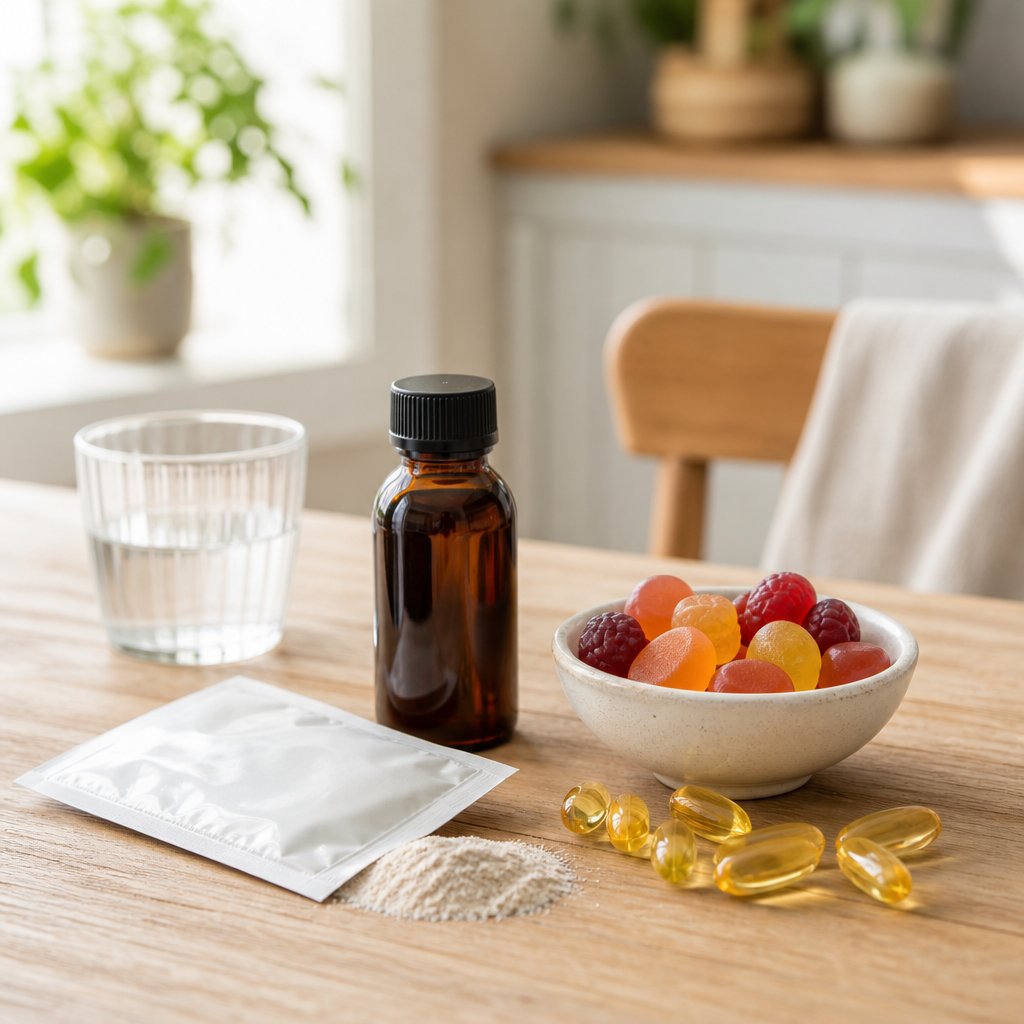
Practical Alternatives If You Struggle With Chewing Tablets
Knowing the difference between tablet types is helpful, but it doesn't solve the underlying problem for people who consistently dislike or cannot chew their medications. Maybe you have sensitive teeth, dental work that makes chewing uncomfortable, or a texture aversion that turns chalky tablets into a daily ordeal. Do you have to chew chewable tablets every single time, or are there workarounds?
The good news: you have more options than you might think.
Safe Ways to Take Chewable Medications Without Chewing
If you're wondering "can I swallow chewable tablets with water instead of chewing them?" — for most products, yes. Taking a chewable tablet with a full glass of water helps it dissolve faster in your stomach than dry-swallowing would. The water provides additional fluid for the tablet to break down in, partially compensating for the lack of mechanical chewing.
Another option: crushing the tablet yourself before taking it. The NHS Specialist Pharmacy Service provides detailed guidance on safely crushing tablets for patients with swallowing difficulties. Their recommended approach involves crushing the tablet to a fine powder using a pestle and mortar or tablet crusher, then mixing it with 10-20 ml of water in an oral syringe. You administer the mixture and rinse the container to ensure you receive the full dose.
A few important caveats: only crush tablets immediately before taking them, crush one medication at a time (never mix different medications together), and always confirm with your pharmacist that your specific tablet is safe to crush. Most standard chewable tablets can be crushed without issue, but some formulations may have stability concerns once the tablet structure is destroyed.
Can you just swallow chewable tablets whole if you take them with plenty of water? For routine supplements and most OTC medications, this is perfectly acceptable — you'll just experience the slightly delayed absorption discussed earlier. Do you have to chew chewable pills, or is swallowing a valid alternative? For vitamins and non-time-sensitive medications, swallowing whole with water is a reasonable compromise.
Alternative Supplement Formats Worth Considering
If chewing tablets is a persistent struggle rather than a one-time accident, switching formats entirely may be the better long-term solution. Modern supplement manufacturing offers a wide range of delivery systems designed specifically for people who find traditional tablets difficult.
- Liquid formulations — Pre-dissolved nutrients that require no breakdown at all. Absorption is typically the fastest of any oral format. Downside: shorter shelf life, less portable, and some have unpleasant taste without flavoring.
- Powder and granule formats — Mix into water, juice, or smoothies for easy consumption. Offer rapid dissolution similar to pre-chewed tablets. Downside: requires measuring and preparation, and some powders clump or have gritty texture.
- Soft gel capsules — Smooth, easy-to-swallow shells containing liquid or oil-based formulas. Particularly effective for fat-soluble vitamins (D, E, K) and omega-3 fatty acids. Downside: not suitable for all ingredients, and gelatin-based versions aren't vegan-friendly.
- Gummy supplements — Can you swallow gummy vitamins without chewing? Technically yes, but gummies are designed to be pleasant to chew, making them a good alternative for people who dislike chalky tablet textures. Downside: often contain added sugars, limited nutrient capacity per serving, and are more sensitive to heat and moisture.
- Oral liquid sachets — Single-serve liquid doses in tear-open packets. No measuring needed, highly portable, and bypass all chewing or swallowing concerns. Downside: higher cost per serving and limited flavor options for some nutrients.
Can you chew pills instead of swallowing them if they're designed as standard capsules or tablets? Generally no — conventional tablets may have coatings or controlled-release mechanisms that shouldn't be disrupted. But the reverse problem (not wanting to chew a chewable) is easily solved by choosing a different format altogether.
How Manufacturers Design for Easier Consumption
The reason so many format options exist today comes down to a manufacturing industry that has evolved to prioritize patient compliance. Industry analysis shows that the global gummy supplement market alone was valued at over $21 billion in 2022, growing at nearly 12% annually — driven largely by consumers seeking alternatives to traditional pills and chewable tablets.
Supplement brands increasingly work with flexible OEM/ODM manufacturers who can produce the same nutritional formula across multiple delivery systems — hard capsules, soft gels, powders, gummies, and oral liquids — all from a single production partner. Companies like ZhuFeng specialize in this kind of multi-format health food manufacturing, enabling nutrition brands and private label sellers to offer their customers genuine choice rather than a one-size-fits-all chewable tablet. This manufacturing flexibility is what allows a single vitamin brand to offer the same formulation as a gummy, a powder sachet, and a soft capsule simultaneously.
For consumers, this means the question shifts from "do I have to chew chewable tablets?" to "which format actually suits my preferences?" The answer no longer requires compromise. If chewable textures bother you, a powder mixed into your morning smoothie delivers the same nutrients without any chewing at all. If swallowing large capsules is the issue, a gummy or oral liquid eliminates that barrier entirely.
The practical lesson: don't force yourself to use a format that creates friction in your daily routine. Consistency matters more than format. A supplement you actually take every day — in whatever form works for you — beats a chewable tablet that sits untouched in your medicine cabinet because you dread the texture.
When to Contact Your Doctor or Pharmacist
Choosing the right format solves the long-term problem, but what about right now? If you've already swallowed a chewable tablet whole and you're reading this with a knot in your stomach (figuratively or literally), you need clear guidance on whether to act or simply move on with your day.
Red Flags That Require Medical Attention
Most situations don't require any intervention at all. But a handful of symptoms after swallowing a tablet whole — chewable or otherwise — warrant prompt attention. Seek medical help if you experience any of the following:
- Difficulty breathing or a choking sensation — If the tablet feels lodged in your throat or airway, this is a physical obstruction issue that needs immediate attention. Chewable tablets are often larger than standard pills and can get stuck in the esophagus, especially when taken without water.
- Persistent throat or chest pain — A feeling of something stuck that doesn't resolve within 30 minutes may indicate pill esophagitis, where the tablet irritates or damages the esophageal lining. Clinical pharmacist Dr. Rose Colucci notes that this condition can cause pain, irritation, and in severe cases, tissue damage.
- Pain or difficulty swallowing that worsens over hours — Mid-chest pain that feels like heartburn, combined with a sensation of something being stuck, are hallmark symptoms of esophageal irritation that may need medical evaluation.
- The medication has a narrow therapeutic window — Drugs like warfarin, certain antiarrhythmics, or antiepileptics require precise blood levels to work safely. If your chewable medication falls into this category and you're concerned about altered absorption, contact your prescriber. Research published in the European Journal of Clinical Pharmacology confirms that narrow therapeutic index drugs can produce serious consequences from even small variations in plasma concentration.
- You swallowed chewable aspirin whole during a suspected cardiac event — Call emergency services immediately. As discussed earlier, delayed platelet inhibition during a heart attack is clinically significant. If you can, chew another dose as directed by the 911 dispatcher.
When You Can Simply Wait It Out
Can you just swallow a chewable tablet and forget about it? In the following situations, the answer is a confident yes:
- Chewable vitamins or mineral supplements — Absorption timing is irrelevant for daily nutritional supplementation. Your body will process the nutrients regardless of dissolution speed.
- Routine antacids for mild heartburn — You'll wait a bit longer for relief, but the calcium carbonate will still neutralize acid once it dissolves. No safety concern exists.
- Children's chewable medications taken by adults — These are small enough to pass easily and contain standard immediate-release formulations.
- Any chewable tablet where you feel no physical discomfort — If it went down smoothly with water and you have no throat pain, chest pressure, or breathing difficulty, the tablet is in your stomach doing its job. It just needs a little extra time.
- Medications where the manufacturer permits swallowing whole — Some chewable products (like Dramamine) explicitly state on the label that swallowing whole is acceptable.
Can you swallow a chewable tablet and expect it to work normally? For the vast majority of OTC chewables and supplements, yes. The drug still absorbs. The total amount reaching your bloodstream remains largely the same. You simply traded speed for convenience — and for non-urgent medications, that's a perfectly acceptable trade.
Your Pharmacist Is Your Best Resource
If you're ever unsure whether your specific medication is safe to swallow whole, your pharmacist is the fastest and most accessible resource available. Pharmacists can tell you whether a particular chewable can be swallowed intact, whether it can be safely crushed, or whether you should switch to a different formulation entirely. This consultation is free at any community pharmacy and doesn't require an appointment.
Can you swallow a chewable pill without consequences? Your pharmacist can answer that question for your exact product in under a minute. They have access to formulation databases, manufacturer guidelines, and clinical references that cover every commercially available tablet. Research on medication administration in hospital settings consistently shows that pharmacist involvement reduces medication errors — particularly for patients with swallowing difficulties — and the same principle applies to your questions at the retail counter.
For patients with chronic swallowing difficulties (dysphagia), pharmacists can also coordinate with prescribers to identify alternative formulations. As the research notes, patients with dysphagia are three times more likely to experience medication administration errors than those without swallowing problems. A proactive conversation with your pharmacist prevents these errors before they happen.
For nutrition brands and supplement businesses looking to reduce these consumer pain points at the product level, working with OEM/ODM manufacturing partners like ZhuFeng — who offer customized formulation across gummies, powders, oral liquids, and soft capsules — means giving end users genuine format choices that eliminate the "can I swallow this whole?" question entirely. Format innovation at the manufacturing stage is ultimately what prevents these situations from arising in the first place.
Frequently Asked Questions About Swallowing Chewable Tablets
1. Is it dangerous to swallow a chewable tablet without chewing it?
For most chewable medications, swallowing whole is not dangerous. Your stomach acid will still dissolve the tablet, but the process takes longer than if you had chewed it first. The main consequence is delayed absorption rather than a safety hazard. However, large chewable tablets taken without water can pose a choking or esophageal obstruction risk due to their size, so always drink a full glass of water if you swallow one intact.
2. Will a chewable tablet still work if I swallow it whole?
Yes, the medication will still work. Pharmacokinetic research shows that the total amount of drug absorbed (bioavailability) remains largely similar whether you chew or swallow whole. The difference lies in timing: a chewed tablet may reach peak blood concentration in about 60 minutes, while a whole tablet can take up to 180 minutes. For daily vitamins and routine supplements, this delay is clinically irrelevant. For time-sensitive medications like aspirin during a cardiac event, the delay matters significantly.
3. Can I crush a chewable tablet and mix it with water instead of chewing it?
Most standard chewable tablets can be safely crushed and mixed with a small amount of water or soft food. The NHS Specialist Pharmacy Service recommends crushing to a fine powder and mixing with 10-20 ml of water for patients with swallowing difficulties. Always crush immediately before taking, handle one medication at a time, and confirm with your pharmacist that your specific product is safe to crush. For those who regularly struggle with chewable formats, alternative delivery systems like powders, gummies, soft gel capsules, and oral liquids from OEM/ODM manufacturers such as ZhuFeng offer purpose-built solutions.
4. What is the difference between a chewable tablet and a dissolvable tablet?
Chewable tablets require mechanical force from your teeth to break apart and are absorbed through the gastrointestinal tract after swallowing. Orally disintegrating tablets (ODTs) self-dissolve on your tongue within seconds without water and also absorb via the GI tract. Sublingual and buccal tablets dissolve under the tongue or against the cheek and absorb directly through oral mucosa into the bloodstream, bypassing the liver. Swallowing a chewable or ODT whole is generally fine, but swallowing a sublingual or buccal tablet can render it ineffective because it undergoes first-pass metabolism.
5. Should I chew aspirin during a heart attack or can I swallow it whole?
During a suspected heart attack, you should always chew aspirin as recommended by the American Heart Association. Chewing achieves greater than 90% platelet inhibition within 10 to 14 minutes, while swallowing whole delays that effect to 25-26 minutes. Clinical studies show that some patients who swallowed solid aspirin tablets had no detectable blood levels even at 60 minutes. In a cardiac emergency where every minute of blood flow matters, those extra minutes of delayed platelet inhibition can influence outcomes.