Your Collagen Powder Has a Date on It
The Moment You Find Old Collagen in Your Cabinet
You're reorganizing the pantry or digging through the back of a kitchen cabinet, and there it is: a tub of collagen powder you bought months ago with the best of intentions. Maybe life got busy, or you switched routines. Either way, you flip it over, spot a date stamped on the bottom, and pause. Does collagen powder expire? Is this stuff still safe to mix into your morning coffee, or should it go straight into the trash?
You're not alone in this moment of hesitation. Collagen supplements have a shelf life of roughly 1 to 2 years when stored properly, but that printed date doesn't tell the whole story. The real question isn't just whether your expired collagen powder is "bad" in the way spoiled milk is bad. It's whether the product still delivers the benefits you paid for — or whether you'd be scooping something that looks and dissolves just fine but does next to nothing for your skin, joints, or gut.
This guide breaks down exactly what you need to know: how to tell if your collagen powder has actually gone bad, the difference between a safety concern and simple potency loss, and storage strategies that keep your supplement effective for as long as possible.
Why Expiration Dates on Supplements Aren't What You Think
Here's something most people don't realize: the FDA does not require supplement manufacturers to print expiration dates on their products. Unlike prescription medications, dietary supplements — including collagen powder — follow a different regulatory framework. When a brand does include a date, it's a voluntary commitment backed by stability testing data. That date represents the manufacturer's guarantee that the product retains its labeled potency up to that point, not a hard safety cutoff.
Expiration dates on collagen powder typically indicate potency guarantees, not safety cutoffs. Your supplement doesn't become dangerous overnight — it gradually becomes less effective.
This distinction matters. Does collagen powder go bad in the sense that it becomes toxic or harmful? Rarely, unless it shows clear signs of contamination like mold or a rancid smell. Research on expired supplements and medications suggests that most remain safe well beyond their printed dates, even if their potency has declined. The real risk isn't poisoning yourself — it's wasting your time on a product that no longer delivers meaningful results.
Understanding this framing changes how you evaluate that old tub in your cabinet. Instead of a binary safe-or-unsafe decision, you're looking at a spectrum — and the following sections will give you the tools to figure out exactly where your product falls on it.
Decoding the Dates on Your Collagen Label
That spectrum between "perfectly potent" and "time to toss it" starts with one practical skill: reading the date on your label correctly. Not all dates mean the same thing, and the terminology manufacturers use carries very different implications for both safety and effectiveness. When you're wondering whether your collagen peptides expire based on what's printed on the container, the type of date matters just as much as how far past it you are.
Expiration Date vs. Best-By Date vs. Use-By Date
You'll typically find one of three date formats on collagen supplements. Each one communicates something different about the product inside, and confusing them leads to either unnecessary waste or misplaced confidence.
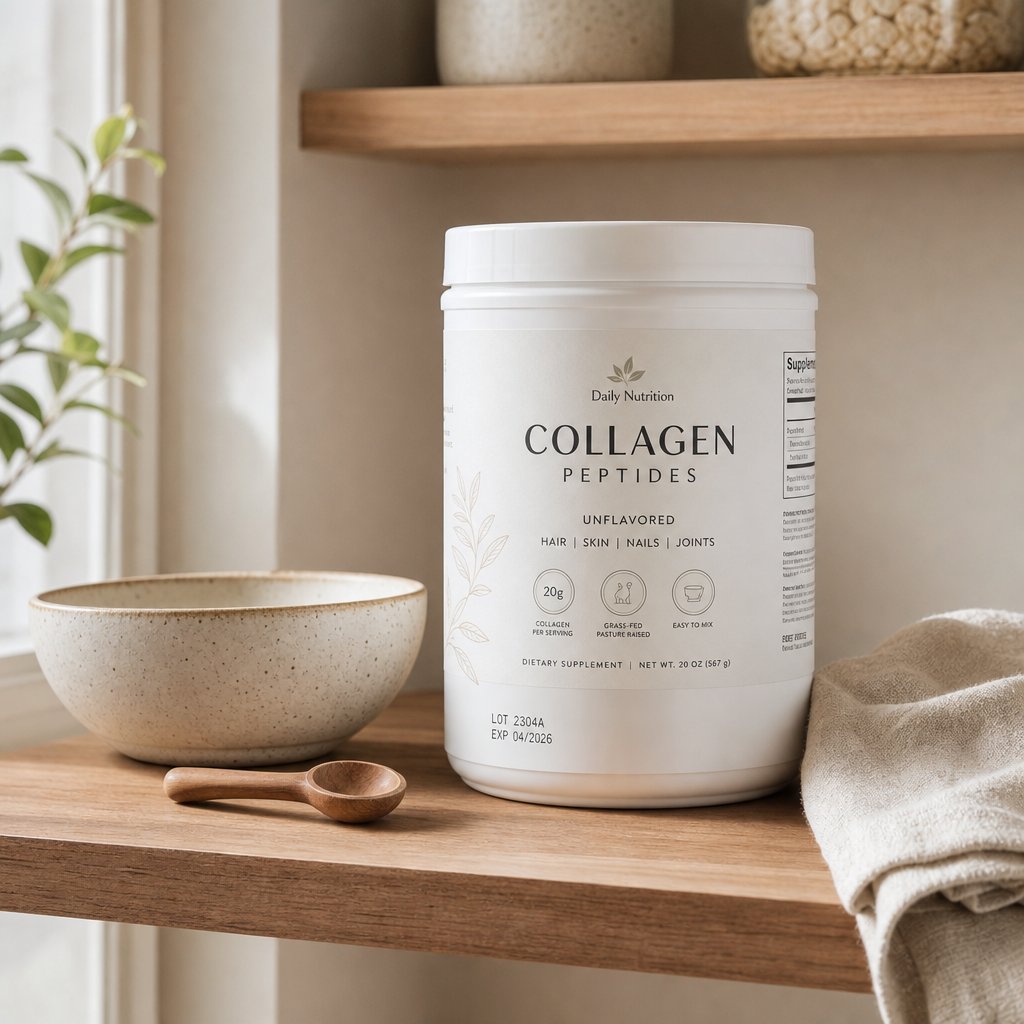
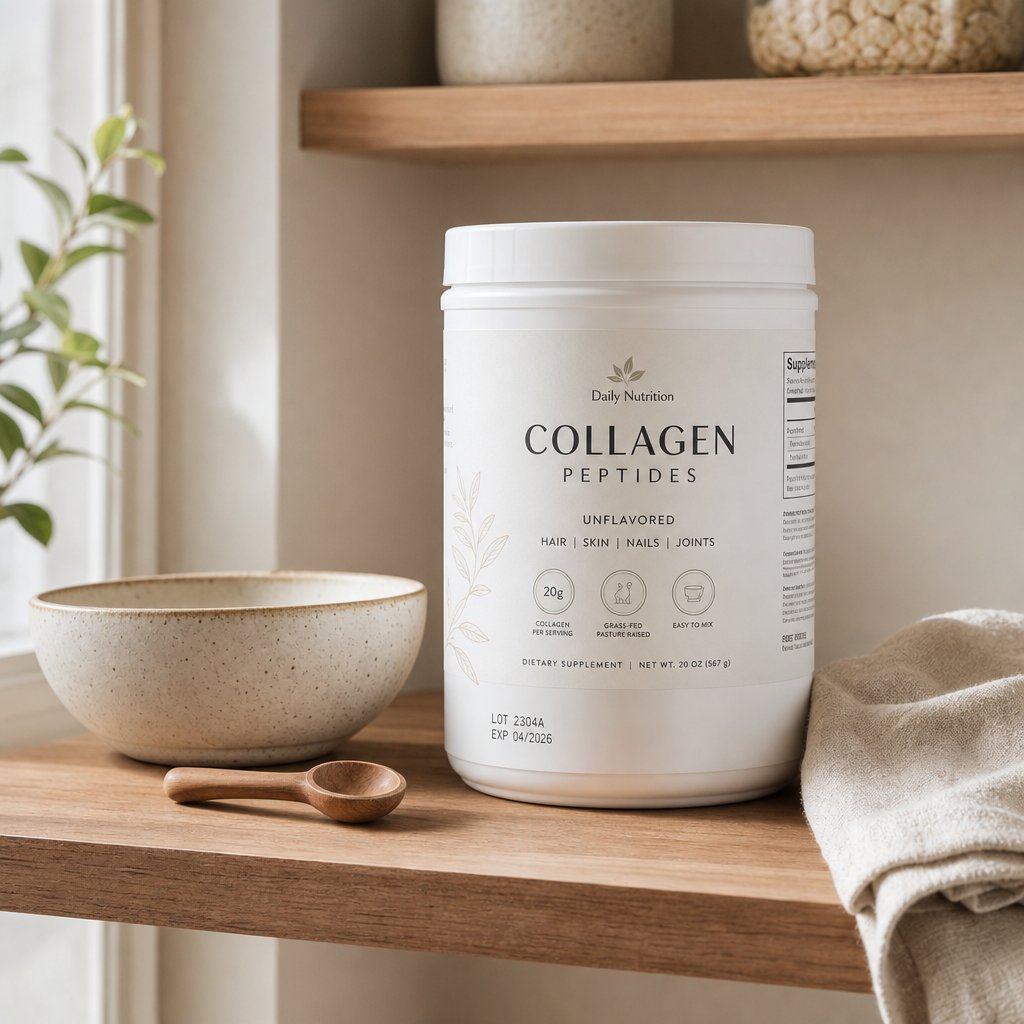
An expiration date (often labeled "EXP") is the most rigorous of the three. It represents a manufacturer's tested guarantee that the product meets its full label claims — meaning every ingredient remains at the stated potency — through that specific date. Brands that print expiration dates are required to back them with stability testing data under FDA regulations (21 CFR Part 111). Without that data, including an expiration date on a supplement label is considered misbranding.
A best-by date is softer. It suggests peak quality rather than a hard potency cutoff. Think of it as the manufacturer saying, "We're confident this product performs optimally up to this point." Some brands base this on internal accelerated stability data without conducting full real-time testing. The product doesn't suddenly fail after this date — it may simply begin a gradual decline in effectiveness.
A use-by date is the least common on collagen powders but occasionally appears on liquid collagen or collagen blended with perishable ingredients. This date carries the strongest implication that the product should not be consumed afterward, often because the formulation includes components more susceptible to microbial growth or rapid degradation.
Here's how these three date types compare when applied specifically to collagen supplements:
| Date Type | What It Means | Safety Implication | Potency Implication |
|---|---|---|---|
| Expiration Date (EXP) | Tested guarantee that labeled potency is maintained through this date | Low risk shortly after; product was validated for stability | Potency confirmed up to this date; gradual decline expected afterward |
| Best-By Date | Manufacturer's estimate of peak quality and performance | Minimal safety concern; not a safety-based cutoff | Optimal effectiveness before this date; may still be useful beyond it |
| Use-By Date | Recommended final consumption date, often for formulas with sensitive ingredients | Higher caution warranted after this date, especially for liquids or blends | Significant potency loss likely; formulation may degrade faster |
So does collagen expire in a meaningful way on the exact date printed? Not really — unless you're dealing with a use-by date on a liquid formula. For standard collagen peptides in powder form, that printed date is a quality marker, not a cliff edge.
What Stability Testing Actually Tells You
Behind every legitimate date on a collagen label sits a process called stability testing. This is how manufacturers determine how long their product holds up — and it's more involved than most consumers realize.
The process typically follows two tracks. Accelerated stability testing exposes the product to elevated temperature and humidity conditions (commonly 40 degrees Celsius at 75% relative humidity) to simulate months or years of aging in a compressed timeframe. This gives brands a preliminary shelf life estimate within 6 to 12 weeks. Real-time stability testing stores the product under normal conditions and checks potency at set intervals over 12 to 24 months, confirming whether the accelerated predictions hold true.
Both methods measure specific markers: active ingredient potency, microbial contamination levels, moisture content, and physical characteristics like color and solubility. For collagen powder specifically, testers verify that the amino acid profile remains intact and that peptide molecular weight stays within the expected range.
Here's the key insight for you as a consumer: brands that invest in this testing are making a data-backed promise. Brands that skip it — which is entirely legal if they only print a manufacture date — aren't necessarily selling an inferior product, but they're not giving you a validated timeline either. When you see only an "MFG" date on your collagen tub, the manufacturer is telling you when it was made and leaving shelf life interpretation up to general guidelines rather than product-specific data.
The regulatory distinction is important too. Unlike food products governed by USDA guidelines with stricter date labeling expectations, dietary supplements fall under FDA oversight with no mandatory expiration dating requirement. The International Alliance of Dietary/Food Supplement Associations (IADSA) has published technical guidance specifically for supplement stability studies, but compliance remains voluntary in most markets. This means the collagen powder industry operates with significant variation in how — and whether — shelf life claims are substantiated.
What does this mean practically? If your collagen peptides carry a proper expiration date, you can trust that the manufacturer tested and validated that timeline. If it only shows a manufacture date, a general rule of 1 to 2 years of full potency applies for properly stored powder — but that's an industry average, not a guarantee specific to your product.
How Long Collagen Powder Actually Lasts
Knowing what the date on your label means is one thing. Knowing how long your specific collagen powder remains effective — based on its source, form, and whether you've cracked the seal — is where the practical value lives. The general "1 to 2 years" guideline you'll find on most packaging is a reasonable starting point, but it glosses over real differences that affect how long does collagen powder last in your particular situation.
Not all collagen powders degrade at the same rate. A marine collagen hydrolysate and a bovine gelatin powder sitting side by side on your shelf will age differently, even under identical storage conditions. The source animal, the degree of processing, and the collagen type all influence stability timelines.
Unopened Collagen Powder Shelf Life by Source
When collagen powder remains sealed in its original packaging — protected from air, moisture, and light — it holds up remarkably well. Manufacturers design packaging specifically to minimize oxygen exposure and keep humidity out, which are the two biggest enemies of protein stability.
Unopened collagen powder typically lasts 2 to 3 years without meaningful potency loss when stored in a cool, dry environment. That said, the source material creates some variation:
- Bovine collagen (from cowhide and bones) tends to be the most shelf-stable in powder form. Its higher proline and hydroxyproline content contributes to a more thermally stable peptide structure, which translates to slower degradation at room temperature. Expect 2 to 3 years unopened with full potency.
- Marine collagen (from fish skin, scales, and bones) has a slightly shorter optimal window. Research published in Clinical, Cosmetic and Investigational Dermatology notes that marine collagen contains fewer proline and hydroxyproline residues than bovine collagen, resulting in lower thermal stability. In powder form, this means marine collagen is more sensitive to temperature fluctuations. Expect 1.5 to 2.5 years unopened under ideal conditions.
- Chicken collagen (typically sourced from sternum cartilage) occupies a middle ground. It's rich in Type II collagen rather than the Type I dominant in bovine and marine sources, and its stability profile falls between the two — roughly 2 years unopened.
These timelines assume proper storage. A sealed tub sitting in a hot garage or a humid bathroom cabinet will degrade faster regardless of source.
How Long Opened Collagen Powder Stays Effective
The moment you break the seal, the clock accelerates. Every time you open the container, you introduce fresh oxygen and ambient moisture. How long is collagen powder good for after that first scoop? The answer depends on how disciplined your storage habits are — but here are realistic timelines.
Opened collagen powder generally remains effective for 1 to 2 years when stored in an airtight container in a dry location. You'll notice that the gap between opened and unopened shelf life isn't dramatic for powder forms — unlike liquid collagen, which degrades much faster once exposed to air. The low moisture content of collagen powder (typically under 10%) works in its favor, giving bacteria and mold very little to work with.
Still, a few factors shorten that window:
- Using a wet spoon or damp scoop introduces moisture directly into the powder, creating localized pockets where degradation accelerates.
- Leaving the lid off for extended periods — even a few minutes while you prepare your drink — exposes the entire surface to humidity.
- Storing the container near a heat source (stove, dishwasher, sunny windowsill) raises the internal temperature and speeds oxidation.
If you're wondering how long do peptides last in powder form under less-than-ideal conditions — say, a container that doesn't seal tightly or a kitchen with poor ventilation — cut those timelines by 30 to 50 percent. A marine collagen powder left loosely closed in a humid climate might show early degradation signs within 6 to 8 months.
Why Marine and Bovine Collagen Degrade Differently
The stability gap between marine and bovine collagen isn't arbitrary. It comes down to molecular structure and amino acid composition.
Bovine collagen is richer in the imino acids proline and hydroxyproline — amino acids that create tight, rigid kinks in the collagen triple helix. These structural features make the protein more resistant to thermal unfolding and oxidative attack. Think of it as a tightly wound rope versus a loosely braided one: the tighter structure holds together longer under stress.
Marine collagen, by contrast, evolved in cold-water environments where extreme thermal stability wasn't necessary. Fish collagen has a lower denaturation temperature (around 25-30 degrees Celsius for cold-water species versus 39-40 degrees for bovine), which means it begins to lose structural integrity at lower temperatures. In a sealed, climate-controlled pantry, this difference is minimal. In a warm kitchen or during summer months without air conditioning, it becomes meaningful.
The form of processing also matters significantly:
| Source Type | Unopened Shelf Life | Opened Shelf Life | Key Degradation Factor |
|---|---|---|---|
| Bovine (hydrolyzed peptides) | 2-3 years | 1-2 years | Oxidation of peptide bonds; slow process due to high imino acid content |
| Marine (hydrolyzed peptides) | 1.5-2.5 years | 1-1.5 years | Thermal sensitivity and faster oxidation from lower proline/hydroxyproline levels |
| Chicken (Type II, hydrolyzed) | ~2 years | 1-1.5 years | Cartilage-derived matrix components may attract moisture more readily |
| Bovine gelatin (partially hydrolyzed) | 2-3 years | 1-2 years | Larger molecular fragments are more prone to moisture-induced clumping |
| Undenatured collagen (Type II, UC-II) | 1.5-2 years | ~1 year | Intact triple-helix structure is more fragile; sensitive to heat and humidity |
Notice the pattern: the more processed (hydrolyzed) the collagen, the more stable it tends to be in powder form. Hydrolyzed collagen peptides have already been broken into small, stable fragments that resist further breakdown. Gelatin — which is only partially broken down — retains larger molecular structures that are more susceptible to moisture absorption and clumping. Undenatured collagen, which preserves the native triple-helix structure for immune-modulating benefits, is the most fragile because that intact structure is precisely what degrades first under environmental stress.
Collagen type adds another layer. Type I collagen (dominant in bovine and marine sources, primarily supporting skin and bones) and Type III collagen (found alongside Type I in bovine sources, supporting skin and blood vessels) share similar stability profiles because of their structural similarities. Type II collagen (found in chicken and some marine cartilage sources, targeting joint health) degrades somewhat faster due to its different cross-linking patterns and the presence of glycosaminoglycans in the source material that can attract moisture.
The practical takeaway? If shelf stability is a priority — say you buy in bulk or travel frequently — bovine hydrolyzed collagen peptides give you the longest effective window. If you prefer marine collagen for its superior bioavailability and skin benefits, just be more attentive to storage conditions and consider smaller container sizes that you'll finish faster.
These timelines tell you how long your collagen should last under reasonable conditions. But what happens at the molecular level when those conditions aren't met — when heat, humidity, or oxygen start breaking things down before the calendar says they should?
The Science Behind Collagen Powder Degradation
Collagen powder doesn't spoil the way fresh food does. There's no dramatic moment where it "goes bad." Instead, degradation is a slow, chemical process — one that chips away at the peptides' structure and bioactivity long before you notice anything wrong with the powder itself. Understanding how this works helps you grasp why do collagen peptides go bad even when they still look, smell, and dissolve perfectly fine.
Three primary chemical pathways drive collagen powder degradation during storage. Each one operates independently, but they often overlap and accelerate each other:
- Oxidation: Oxygen reacts with amino acid side chains in collagen peptides, forming carbonyl compounds and cross-linked structures that reduce bioactivity. Amino acids like methionine, lysine, and arginine are especially vulnerable to oxidative attack.
- Hydrolysis from moisture absorption: Even small amounts of ambient humidity can break peptide bonds over time, fragmenting collagen into smaller pieces that may lack the specific sequences responsible for biological benefits.
- Maillard reactions (in flavored or blended formulas): When reducing sugars or other reactive carbonyl compounds are present — common in flavored, sweetened, or vitamin-enriched collagen products — they react with amino groups on the peptides, forming advanced glycation end-products that permanently alter the protein's structure.
Each of these pathways deserves a closer look, because they explain why how long does collagen last depends so heavily on storage conditions and product formulation.
Oxidation and Peptide Bond Breakdown Explained
Imagine your collagen peptides as short chains of amino acids, each link contributing to the supplement's biological activity. Oxidation is like rust forming on those links — it doesn't snap the chain immediately, but it changes the shape and chemistry of individual amino acids until they can no longer do their job.
Research published in Foods demonstrated this process in detail using fish skin collagen hydrolysates. The study found that oxidation proceeds in distinct stages. Early on, carbonyl content in collagen peptides increased rapidly — rising from 2.32 to 3.72 micromoles per gram — and this correlated strongly with declining antioxidant activity (r = -0.947) and ACE-inhibitory activity (r = -0.911). In later stages, more advanced oxidation products like Schiff bases and dityrosine accumulated, further reducing bioactivity.
What makes this relevant to your collagen powder at home? The same oxidative chemistry occurs whenever oxygen contacts the peptides — just much more slowly at room temperature than in accelerated lab conditions. Every time you open the container, fresh oxygen enters. Over weeks and months, it reacts with susceptible amino acids:
- Methionine oxidizes first, forming methionine sulfoxide — a modification that alters how the peptide interacts with your body's receptors.
- Lysine and arginine undergo carbonylation, producing aldehyde groups that can then cross-link with neighboring peptides, creating larger, less bioavailable aggregates.
- Tyrosine forms dityrosine bridges between peptide chains, essentially gluing them together in ways that reduce digestibility and absorption.
The critical finding from that research: the antioxidant and ACE-inhibitory activities of collagen peptides decreased by over 15% during oxidative storage, with a highly significant correlation between oxidation markers and lost bioactivity. Your collagen doesn't need to smell off or change color for this to happen. The damage is molecular.
The Silent Degradation Problem — When Collagen Looks Fine But Isn't
This is the part that catches most people off guard. Collagen powder can lose a meaningful percentage of its bioavailability without any visible, tactile, or olfactory change. The powder still dissolves cleanly in your coffee. It still tastes neutral. It still looks like a fine white or off-white powder. But at the molecular level, the peptide sequences responsible for stimulating collagen synthesis in your skin, supporting joint cartilage, or promoting gut lining repair have been chemically altered.
Why is this "silent" degradation so hard to detect? Because the changes happen at the amino acid side-chain level — not at the level of gross physical properties. A carbonylated lysine residue doesn't make the powder clump. A cross-linked dityrosine bond doesn't change the taste. The peptide fragments are still protein, still dissolve in water, and still register as "collagen" on a basic amino acid analysis. But their specific bioactive sequences — the particular arrangements of amino acids that trigger cellular responses — have been disrupted.
Environmental factors accelerate this silent breakdown considerably:
- Heat increases the rate of all chemical reactions, including oxidation and hydrolysis. Storing collagen powder near a stove, in a sun-facing cabinet, or in a car during summer can compress months of degradation into weeks.
- Humidity provides the water molecules needed for hydrolytic cleavage of peptide bonds. It also increases molecular mobility within the powder, allowing reactive species to find each other more easily. The Maillard reaction peaks at water activity levels around 0.6 to 0.7 — a range that flavored collagen powders with added sugars can approach in humid environments.
- UV light generates free radicals directly within the powder, initiating oxidation chains that propagate even after the light source is removed. Clear or translucent containers offer no protection against this.
The combination of these factors is worse than any single one alone. A collagen powder stored in a clear container on a kitchen counter near a window in a humid climate faces all three simultaneously — and how long can collagen survive under those conditions drops dramatically compared to the same product kept sealed in a dark, cool pantry.
Why Flavored and Blended Formulas Degrade Faster
Pure, unflavored collagen powder has one major advantage when it comes to shelf stability: simplicity. With nothing but hydrolyzed collagen peptides in the container, the only reactive partners available are oxygen and trace moisture. Remove those (through proper sealing and desiccant packets), and degradation slows to a crawl.
Flavored, sweetened, or vitamin-enriched collagen formulas introduce additional reactive compounds that create entirely new degradation pathways. The Maillard reaction — the same chemistry responsible for browning bread and caramelizing sugar — becomes a real concern when reducing sugars sit in direct contact with collagen peptides during storage.
Research on the Maillard reaction mechanism confirms that amino groups on lysine residues (abundant in collagen) readily react with reducing sugars like glucose and fructose, even at room temperature over extended periods. The reaction doesn't require cooking-level heat — it proceeds slowly but continuously in any product where these ingredients coexist. The result is glycated peptides with altered structure and reduced biological function.
Here's what this means practically for different collagen product types:
- Pure unflavored collagen powder: Lowest degradation risk. Only oxidation and moisture-driven hydrolysis apply. Shelf life aligns with the timelines discussed in the previous section.
- Flavored collagen with added sugars or fruit extracts: Moderate to high risk. Reducing sugars from sweeteners or natural fruit powders react with collagen's lysine and arginine residues via the Maillard pathway. You may notice subtle yellowing or browning over time — a visible sign of this reaction.
- Collagen blended with vitamin C (ascorbic acid): Paradoxically risky despite vitamin C's antioxidant reputation. Ascorbic acid is structurally a reducing carbohydrate and participates directly in Maillard-type reactions with amino groups. While it may initially protect against oxidation, over time it becomes a reactant that modifies the collagen peptides themselves.
- Collagen with added fats or MCT oil powder: Lipid oxidation generates reactive aldehydes (like malondialdehyde) that attack collagen peptides aggressively. The fish skin collagen study found that lipid-induced oxidation increased carbonyl content by 47.5% over the storage period and reduced antioxidant activity by over 15% compared to controls without lipid exposure.
The takeaway is straightforward: the more ingredients in your collagen formula, the more potential degradation pathways exist, and the shorter the realistic shelf life becomes — regardless of what the printed date says. A multi-ingredient collagen blend that's technically within its best-by date may have undergone more potency loss than a pure collagen powder that's a few months past its date.
These molecular changes are invisible to the naked eye in their early stages. But as degradation progresses, it eventually crosses a threshold where physical signs emerge — changes you can see, smell, and feel that tell you the chemistry has gone far enough to matter.
Clear Signs Your Collagen Powder Has Gone Bad
Those invisible molecular changes discussed above don't stay invisible forever. At some point, degradation accumulates enough that your senses can detect it — and knowing exactly what to look for separates a confident "still good" from a risky guess. So does collagen go bad in ways you can actually identify without a lab? Yes. You just need to know which signals matter and how to interpret the subtle ones that fall between "perfectly fresh" and "obviously spoiled."
Most people only check for dramatic red flags like mold or a terrible smell. But can collagen powder go bad in quieter ways? Absolutely. The early warning signs are easy to miss if you're not paying attention — and by the time obvious spoilage appears, the product has likely been underperforming for weeks or months already.
Visual Changes to Watch For
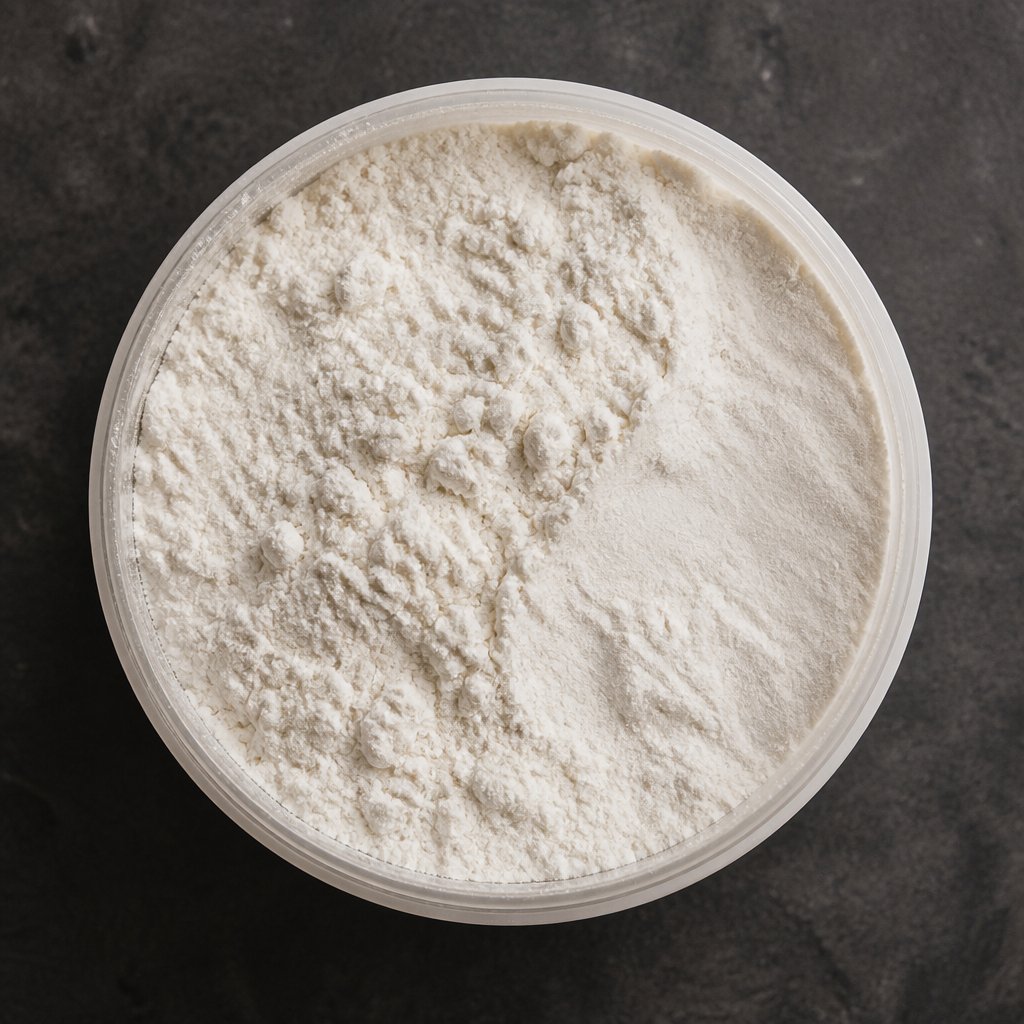
Your eyes catch degradation first if you know what baseline "normal" looks like for your specific product. Fresh collagen powder is typically white to very light cream in color with a fine, free-flowing consistency. Watch for these shifts:
- Yellowing or browning: This is a hallmark of Maillard reactions or advanced oxidation. Even a slight shift from white toward yellow suggests chemical changes at the peptide level. Flavored formulas are especially prone to this.
- Darkening in patches: Uneven discoloration — darker spots within otherwise normal-looking powder — often indicates localized moisture exposure that triggered accelerated degradation in specific areas.
- Visible clumping: Small, soft clumps that break apart easily with a spoon are common and usually harmless (just minor moisture contact). Hard, compacted clumps that resist breaking signal significant moisture infiltration and potential microbial activity.
- Any sign of mold or foreign particles: Green, black, or fuzzy spots mean the product is contaminated. Discard immediately — no exceptions.
Smell and Taste Warning Signs
Fresh collagen powder — especially unflavored varieties — should smell nearly neutral. Some people detect a faint, mild protein scent, but it shouldn't be strong or unpleasant. Does powdered collagen go bad in ways your nose can catch? Definitely. Smell is often the most reliable early indicator because volatile degradation compounds become detectable before visual changes appear.
- Rancid or "off" odor: A stale, paint-like, or oily smell indicates lipid oxidation — particularly relevant for marine collagen, which retains trace fish oils even after processing.
- Fishy smell (in non-marine collagen): If your bovine or chicken collagen develops a fishy odor, that's trimethylamine or similar compounds forming from amino acid breakdown. It's a clear degradation signal.
- Chemical or ammonia-like scent: This suggests advanced protein decomposition and is a strong indicator that the product is well past useful.
- Bitter or sour taste: If the powder passes the smell test but tastes noticeably bitter, metallic, or sour when dissolved, peptide degradation has progressed enough to alter the flavor profile. Trust your palate here.
Texture and Solubility Red Flags
How your collagen powder feels and behaves when mixed tells you a lot about its structural integrity. Hydrolyzed collagen peptides are designed to dissolve quickly and completely in both hot and cold liquids. Changes in that behavior point to molecular-level problems.
- Hardening or caking: Powder that has solidified into a dense mass — not just surface clumps but deep, rock-hard sections — has absorbed substantial moisture. The peptides may have cross-linked into larger, less bioavailable structures.
- Excessive stickiness or moisture: Powder that feels damp, sticky, or clumps to the sides of the container has been compromised by humidity. This environment also supports bacterial growth.
- Poor solubility: If your collagen used to dissolve in seconds and now leaves gritty residue, floats on the surface, or forms gel-like clumps in liquid, the peptide structure has changed. Cross-linking from oxidation or Maillard reactions creates larger molecules that don't dissolve as readily.
- Crystalline or grainy texture: Tiny crystalline formations on the powder surface can indicate mineral precipitation or sugar crystallization in flavored formulas — both signs of chemical instability.
If any two sensory categories show changes simultaneously — for example, yellowing plus a rancid smell, or clumping plus poor solubility — discard the product regardless of the printed date.
A single minor change in isolation (slight clumping from a humid day, for instance) might not mean your collagen is useless. But when degradation shows up across multiple senses at once, it confirms that the underlying chemistry has shifted enough to compromise both safety and effectiveness. At that point, no expiration date — whether past or still current — overrides what your senses are telling you.
The trickier question comes when your collagen passes all these sensory checks but the date has already come and gone. Is it still safe to take? And what actually happens inside your body if you do?
What Actually Happens If You Take Expired Collagen
Your collagen passed the sensory checks — no weird smell, no clumping, no discoloration — but the date says it expired three months ago. Or maybe six months. Maybe a year. So what happens if you take expired collagen? Is expired collagen powder safe to consume, or are you rolling the dice with your digestive system?
The honest answer is more nuanced than a simple yes or no. Safety and efficacy are two separate questions, and most people conflate them. Let's separate them clearly.
Safety Risks of Expired Collagen — What Research Suggests
Collagen powder is a low-moisture, shelf-stable protein product. That matters because low-moisture foods are significantly less prone to bacterial growth than their liquid or high-moisture counterparts. Unlike expired dairy or meat, expired collagen powder doesn't typically harbor dangerous pathogens — assuming it was stored reasonably well.
Research on expired supplements and medications supports this. A military-funded study found that 90% of over 100 medications remained suitable for use even 15 years past their expiration dates. While collagen supplements weren't specifically tested in that study, the principle applies: dry, stable formulations don't suddenly become toxic when a calendar date passes.
The real safety concern isn't the date itself — it's what happened to the product during storage. Expired collagen that was kept sealed in a cool, dry pantry carries a very different risk profile than expired collagen that sat open in a humid bathroom for months. The former is almost certainly fine. The latter may have developed enough moisture to support microbial growth, regardless of what the date says.
Potential adverse effects from truly degraded collagen are mild but real:
- Digestive discomfort: Heavily oxidized or cross-linked peptides are harder for your body to break down. Some people report bloating, gas, or mild nausea after consuming visibly degraded collagen.
- Reduced absorption: Altered peptide structures may pass through your digestive tract without being efficiently absorbed, meaning you're consuming calories without receiving proportional benefits.
- Allergic-type reactions: In rare cases, advanced degradation products (particularly from Maillard reactions in flavored formulas) can trigger sensitivities in people prone to food intolerances.
What you won't experience from expired collagen powder: food poisoning, toxic reactions, or serious illness. The risk profile is fundamentally different from expired perishable foods. You're looking at diminished returns and possible mild gut irritation — not a trip to the emergency room.
When Expired Collagen Is Likely Still Fine
Is it ok to use expired collagen powder? In many cases, yes — particularly when the following conditions are met:
- The product is only weeks to a few months past a best-by date (not a use-by date)
- It was stored sealed or tightly closed in a cool, dry location
- It passes all sensory checks: neutral smell, normal color, fine texture, dissolves cleanly
- It's a pure, unflavored formula without added sugars, vitamins, or fats that accelerate degradation
Under these circumstances, your collagen is almost certainly safe. The trade-off is potency — you may be getting 80% or 90% of the labeled amino acid content rather than the full amount. For most people supplementing as part of a general wellness routine, that's an acceptable margin. If you're wondering how long does collagen stay in your system after you take it, the answer is the same whether the product is fresh or slightly past date: collagen peptides are typically digested, absorbed, and utilized within 24 to 96 hours, with amino acids distributed to tissues that need them most.
The situation changes when collagen is significantly past its date — say, a year or more — or when storage conditions were poor. At that point, even if the powder looks acceptable, the cumulative potency loss may mean you're getting so little bioactive peptide per serving that supplementation becomes pointless. You're not in danger, but you're not getting results either.
What to Do With Collagen You Decide Not to Consume
Found a tub that's clearly past its prime? Before you toss it, run through this decision framework:
- Check the date type. Is it an expiration date, best-by date, or use-by date? A best-by date gives you more leeway than a use-by date. Review the distinctions covered earlier in this article to calibrate your expectations.
- Perform a sensory assessment. Open the container and evaluate across all three categories: visual appearance, smell, and texture. Use a small amount dissolved in water to check solubility and taste. If everything seems normal, proceed to step three.
- Consider time past date. A few months past a best-by date with good storage? Likely fine with reduced potency. Six months to a year past? Potency loss is meaningful. More than a year past an expiration date? The risk-to-benefit ratio tips toward replacement.
- Make your go/no-go decision. If the product passes sensory checks and is only modestly past date, use it — but don't expect full results. If it fails any sensory test or is significantly expired, replace it.
For collagen you decide not to consume, you have options beyond the trash can. Expired collagen powder that isn't visibly spoiled can be repurposed: mix it into homemade face masks or hair treatments where topical application doesn't require the same bioavailability standards as oral supplementation. Some people add it to garden compost as a nitrogen source. If the product shows signs of mold or contamination, dispose of it in sealed packaging with household waste.
One more consideration worth noting: how long does collagen stay in your system is a question that only matters if the collagen you're taking is bioactive enough to be absorbed in the first place. Fresh, properly stored collagen delivers peptides that your body can use within hours of ingestion. Heavily degraded collagen may pass through with minimal uptake — meaning you're not building the tissue-level reserves that produce visible results over weeks of consistent use.
The bottom line? Expired collagen powder is rarely dangerous, but it can be wasteful. If you're investing time and money in a supplement routine, using a product with confirmed potency makes more sense than gambling on diminished returns from an old tub. And if you do decide to keep using it, proper storage from this point forward becomes even more critical to preserve whatever potency remains.

Storage Strategies That Actually Extend Shelf Life
Knowing that proper storage matters is one thing. Knowing exactly where in your home to put that tub — and why some seemingly logical spots are quietly destroying your collagen — is where you actually protect your investment. "Store in a cool, dry place" is the advice printed on every supplement label, but it doesn't tell you whether your kitchen cabinet qualifies, whether your bathroom shelf is a problem, or what to do if you live somewhere that's 85 degrees and humid for half the year.
How long does collagen powder last after opening depends less on the product itself and more on the environment you expose it to every single day. Let's get specific.
Room-by-Room Storage Assessment
Every room in your home has a different temperature and humidity profile. Some are obvious problems. Others seem fine but create conditions that silently accelerate degradation.
| Location | Temperature Risk | Humidity Risk | Verdict |
|---|---|---|---|
| Kitchen pantry (away from stove) | Low — typically stable at 68-75°F | Low — enclosed, dry environment | Ideal. Best everyday storage spot for most homes. |
| Kitchen counter near stove or dishwasher | High — heat spikes during cooking can reach 90°F+ in the immediate area | Moderate to high — steam from cooking and dishwasher cycles | Avoid. Repeated heat and moisture exposure shortens shelf life significantly. |
| Bathroom cabinet | Low to moderate — generally room temperature | High — shower steam raises humidity to 80-100% regularly | Avoid. Humidity from showers degrades supplements over time, even inside closed cabinets. |
| Bedroom dresser or nightstand drawer | Low — stable, climate-controlled | Low — minimal moisture sources | Good alternative. Dark, dry, and temperature-stable. |
| Garage or car | Extreme — can exceed 120°F in summer | Variable — condensation cycles from temperature swings | Never. Temperature extremes destroy potency within weeks. |
| Refrigerator | Low — consistently cold | High — refrigerators maintain 30-50% relative humidity internally | Not recommended. Condensation risk outweighs cooling benefit. |
The pattern is clear: you want a spot that stays below 77°F with relative humidity under 65%. A 2016 study in the Journal of Dairy Science found that protein powder stored at 95°F had to be removed from testing within a year due to visible degradation — and samples stored in sealed bags at that temperature only lasted about nine months. Your kitchen pantry at 70°F with 35% humidity? That's the benchmark for a full 18-month shelf life.
One scenario people rarely think about: travel. If you carry collagen in your gym bag or car during summer, even a few hours of heat exposure won't ruin the product. But repeated daily exposure — leaving a container in a hot car for weeks — creates cumulative damage. For travel, single-serve sachets solve this problem entirely because you only expose one serving at a time.
Climate-Specific Storage Strategies
Where you live changes the equation. A reader in Phoenix faces different challenges than someone in Miami or Seattle.
Hot, dry climates (desert Southwest, inland areas): Temperature is your primary enemy. Interior cabinets stay cooler than exterior walls, so store collagen in a pantry or closet on an interior wall rather than a cabinet mounted on a sun-facing exterior wall. The low ambient humidity actually works in your favor — moisture-driven degradation is minimal. How long is collagen powder good after expiration date in these climates? Potentially longer than average, provided you keep it away from heat sources.
Hot, humid climates (Southeast US, Gulf Coast, tropical regions): You're fighting both temperature and moisture simultaneously. Air conditioning is your best friend — keep collagen in a climate-controlled room, never in a garage or outdoor storage area. Consider adding a food-grade desiccant packet to the container if your home regularly exceeds 60% indoor humidity. Silica gel packets (the kind that come in shoe boxes and electronics packaging) work perfectly for this.
Temperate, humid climates (Pacific Northwest, coastal Northeast): Temperature is rarely a problem, but persistent dampness is. A dehumidifier in your storage area helps, and keeping the container tightly sealed between uses matters more here than in dry climates. Does powder bone broth expire faster in these conditions? Yes — any protein powder, whether collagen peptides or bone broth powder, absorbs ambient moisture more readily in consistently humid environments.
Cold climates with heating systems: Forced-air heating creates very dry indoor air during winter (sometimes below 20% humidity), which is actually excellent for collagen storage. The risk comes from temperature fluctuations near heating vents or radiators. Keep containers away from direct heat output and you'll have near-ideal conditions for most of the year.
The Refrigeration Debate — Why Cold Isn't Always Better
It seems intuitive: cold slows chemical reactions, so refrigerating collagen should extend its life. The logic isn't wrong in principle — lower temperatures do slow oxidation and hydrolysis. But in practice, refrigeration introduces problems that outweigh the temperature benefit.
The core issue is condensation. Every time you pull a cold container out of the fridge, warm ambient air contacts the cold surfaces and deposits moisture — both on the outside of the container and, if you open it, directly onto the powder. This happens in seconds. Close the lid and put it back, and you've just sealed moisture inside with your collagen. Repeat this daily, and you're actively introducing the very thing that drives hydrolytic degradation.
Refrigerators also maintain higher internal humidity than most people realize. The vegetable crisper runs at 80-95% humidity, and even the main compartment sits around 30-50%. Compare that to a dry pantry at 20-40% humidity, and the fridge is actually a more moisture-rich environment for a powder that needs to stay dry.
Temperature fluctuations compound the problem. Every time the fridge door opens, the internal temperature spikes briefly before the compressor brings it back down. These cycles create micro-condensation events inside containers that aren't perfectly sealed.
What about freezing? The same condensation problem applies — arguably worse, because the temperature differential when you remove the container is even greater. Unless you're storing a bulk supply that you won't touch for months (portioned into single-use bags that you thaw once and never refreeze), freezing creates more risk than it prevents.
The exception: if you live in an extremely hot climate without air conditioning and your home regularly exceeds 85°F, refrigeration may be the lesser evil. In that case, minimize condensation by letting the container reach room temperature before opening it, and keep it in the fridge for no more than a few minutes after scooping before resealing and returning it.
Container Format and Exposure Profiles
How your collagen is packaged affects how much environmental exposure it gets — and not all formats are equal.
Large tubs (250g-1kg): The most common format and the most vulnerable to repeated exposure. Every time you open a large tub, the entire surface area of powder contacts fresh air and ambient humidity. If you take one scoop daily from a 500g container, that's 30+ openings per month — 30 opportunities for oxygen and moisture to enter. The powder at the top degrades faster than the powder at the bottom simply because of proximity to the opening.
Single-serve sachets (5-15g packets): The gold standard for shelf stability. Each serving remains sealed until the moment you use it, meaning zero cumulative exposure from repeated openings. The trade-off is cost — single-serve formats typically run 20-40% more expensive per gram than bulk tubs. But if you travel frequently, live in a humid climate, or tend to use collagen inconsistently (a few times per week rather than daily), sachets protect potency far better than a tub that sits half-open on your counter.
Resealable pouches: A middle ground. They expose less surface area than wide-mouth tubs when opened, and quality pouches with zip-lock closures create a reasonably airtight seal. The risk is that zip seals don't always close completely — a small gap you don't notice can let humidity in continuously.
For large tubs, one practical strategy: transfer a week's worth of servings into a smaller airtight container and keep the main tub sealed. This limits how often you expose the bulk supply to air. It adds a step to your routine, but it meaningfully extends how long the product at the bottom of that tub stays potent.
Storage is the variable you control most directly. But there's another factor that determines shelf life before the product even reaches your cabinet — the manufacturing and packaging decisions made long before you placed your order.
How Packaging and Manufacturing Affect Collagen Shelf Life
Your storage habits matter — but they can only preserve what the manufacturer built into the product from the start. Whether does powder collagen expire in 12 months or 30 months depends heavily on decisions made during production and packaging, long before the tub lands on your shelf. Two identical collagen formulas packaged differently can have dramatically different real-world shelf lives, even under the same storage conditions.
Think of it this way: storage is defense, but packaging is the first line of protection. If the manufacturing process leaves collagen exposed to oxygen, moisture, or light before it's sealed, degradation begins on day one — and no amount of careful pantry placement can undo that head start.
Packaging Technologies That Protect Potency
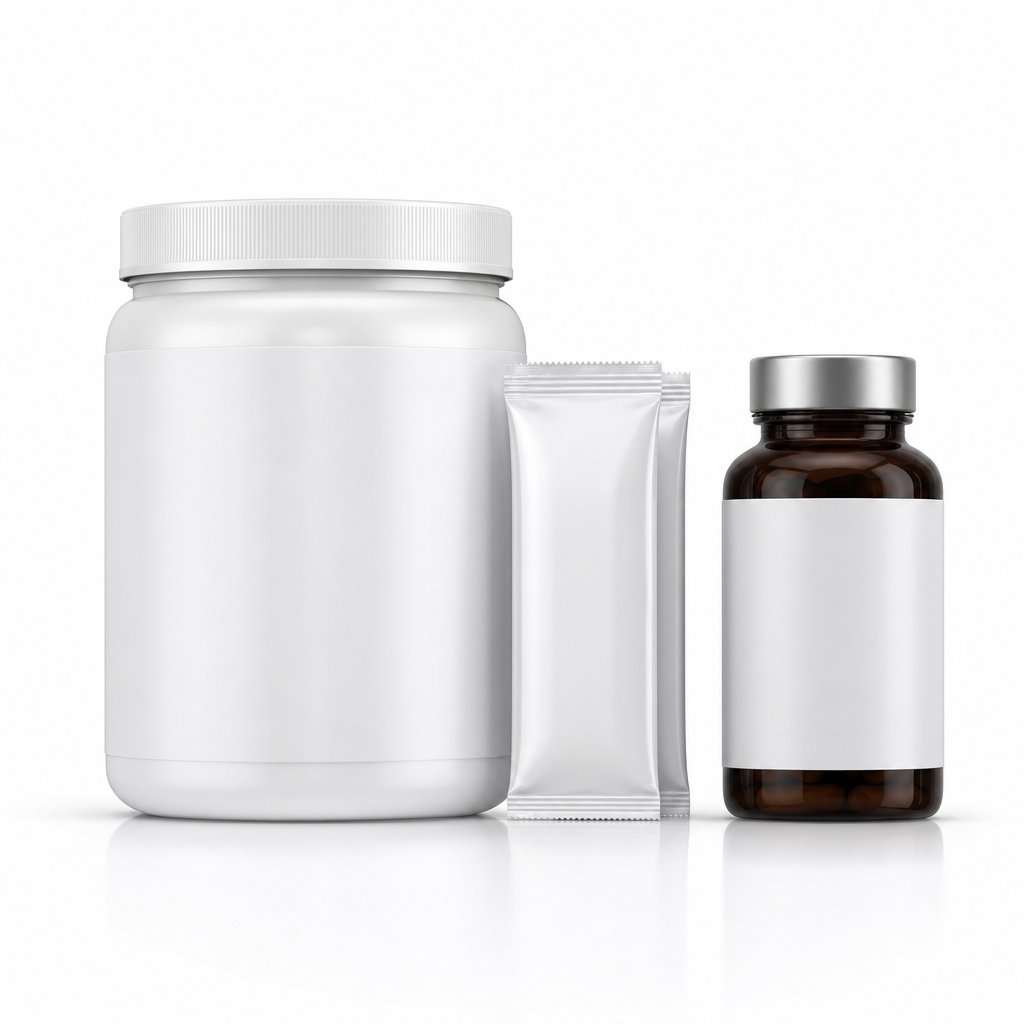
Not all collagen containers are created equal. The packaging technologies used during production directly determine how much oxygen, moisture, and light reach the peptides inside. Here are the features that meaningfully extend shelf life:
- Nitrogen flushing: Filling packaging with 99% nitrogen gas displaces oxygen before sealing. With no oxygen present, oxidation — the primary degradation pathway for collagen peptides — essentially stops until the consumer breaks the seal. This is the single most impactful preservation method for dry protein powders.
- Desiccant packets: Those small silica gel sachets inside your collagen container aren't filler. They actively absorb ambient moisture that enters during manufacturing, shipping, and brief openings. Products packaged without desiccants rely entirely on the container seal to keep humidity out — a single imperfect closure can compromise the entire batch.
- Opaque or UV-blocking containers: Foil pouches and opaque packaging block ultraviolet radiation that would otherwise oxidize and degrade organic compounds. Clear plastic tubs or transparent bags offer zero UV protection, meaning collagen stored under fluorescent lights or near windows degrades faster from the moment it's packaged.
- Foil-lined sachets and sealed pouches: Individual serving packets create a multi-layer barrier — typically foil laminated with food-grade plastic — that blocks oxygen, moisture, and light simultaneously. Each serving stays factory-fresh until the moment you tear it open.
- Airtight induction seals: The foil seal beneath the cap on quality collagen tubs provides a secondary barrier beyond the screw-top lid. Once removed, you're relying solely on the lid's seal quality — which is why products with induction seals maintain potency better during the pre-opening period.
When you're shopping for collagen, these packaging details tell you as much about expected shelf life as the printed date does. A product in a nitrogen-flushed foil pouch with a desiccant will outlast the same formula in a clear plastic jar with just a screw cap — potentially by 6 to 12 months.
Why Product Format Matters for Shelf Stability
The format you choose — powder, capsule, liquid, or gummy — carries inherent stability trade-offs that determine whether your collagen stays potent or degrades prematurely.
Powders and granules offer the best stability profile among collagen formats. Their low moisture content (typically under 10%) starves bacteria and slows hydrolytic degradation. Powders generally exhibit better stability than liquids and allow for higher collagen doses per serving — typically 5 to 15 grams versus the 1 to 2.5 grams practical in capsule form.
Hard capsules and tablets provide good stability as well, with the added benefit of pre-measured doses sealed inside a protective shell. Gelatin capsules create a moisture barrier around the collagen inside, though they can themselves absorb humidity and swell in poor storage conditions. Tablets, compressed under high pressure, have minimal surface area exposed to air relative to their mass.
Liquid collagen presents the greatest stability challenge. Does liquid collagen expire faster than powder? Significantly. Water-based formulas are ideal growth media for bacteria, require preservatives to remain safe, and expose collagen peptides to continuous hydrolysis from the surrounding liquid. Can i drink expired collagen liquid? The risk is higher than with expired powder because microbial contamination is a genuine concern in liquid formats past their use-by date — not just potency loss.
Gummies and chewables fall somewhere in between. Their sugar content and moisture levels (higher than powder, lower than liquid) create conditions where Maillard reactions can proceed during storage, gradually reducing peptide bioactivity.
Choosing Collagen Built to Last
If you're a consumer buying collagen for personal use, look for products that combine nitrogen-flushed packaging, included desiccants, opaque containers, and induction seals. These features signal a manufacturer that invested in shelf stability — not just label claims.
For nutrition brands, supplement importers, and private label sellers, the manufacturing partner you choose determines these outcomes at scale. Production decisions like nitrogen flushing protocols, climate-controlled bulk storage immediately after manufacturing, and packaging material selection all happen upstream — and they directly shape whether your customers' collagen maintains potency throughout its labeled shelf life.
OEM/ODM manufacturers like ZhuFeng offer collagen production across multiple formats — powder/granules, hard capsules, soft capsules, tablets, and oral liquids — with customized formulation that can incorporate stability-enhancing packaging and production methods tailored to each format's specific vulnerabilities. For brands building collagen product lines, this kind of format flexibility paired with scalable production means you can match the delivery format to your target market's preferences without sacrificing shelf stability.
The manufacturing stage is where shelf life is won or lost. Consumers benefit from understanding these upstream choices because they explain why two collagen powders at the same price point can perform so differently over time. And for businesses developing collagen products, partnering with manufacturers who prioritize stability at every production stage is what separates a product that delivers results from one that degrades on the shelf before customers finish the container.
Smart Decisions for Fresh, Effective Collagen
Everything covered so far — date types, degradation science, sensory checks, storage strategies, and packaging quality — boils down to one practical question: what should you actually do right now with the collagen sitting in your cabinet? Whether you're evaluating an old tub or buying your next one, a clear decision framework saves you from both unnecessary waste and wasted effort on a product that's no longer pulling its weight.
Do collagen powder expire? Yes — in terms of potency. Rarely in terms of safety. That distinction is the thread running through every section of this guide, and it should anchor every decision you make going forward.
Collagen powder loses effectiveness gradually over time, but properly stored product rarely becomes unsafe. Your real enemy isn't the calendar date — it's poor storage, repeated exposure, and ignoring what your senses tell you.
Your Quick-Reference Collagen Shelf Life Checklist
Next time you're standing in front of your cabinet wondering whether to scoop or toss, run through this sequence. It takes less than two minutes and gives you a confident answer.
- Identify the date type on your label. Is it an expiration date (EXP), best-by date, or use-by date? Best-by dates give you the most leeway. Use-by dates on liquid formulas warrant the most caution.
- Calculate how far past the date you are. A few months past a best-by date with good storage? Almost certainly fine with minor potency loss. Six months to a year past? Meaningful decline. More than a year past an expiration date? Replace it.
- Run the three-sense check. Look for discoloration, yellowing, or hard clumps. Smell for rancid, fishy, or chemical odors. Dissolve a small amount and check for poor solubility, grittiness, or off-taste. If two or more categories show changes, discard regardless of date.
- Assess your storage history. Was the product kept sealed in a cool, dry spot? Or did it sit open near the stove, in a humid bathroom, or in a hot car? Poor storage accelerates degradation far beyond what the date predicts.
- Decide: use, repurpose, or replace. If it passes sensory checks and is only modestly past date, use it. If it fails any test, repurpose it for topical use or compost, and buy fresh.
- Commit to better storage going forward. Interior pantry shelf, tightly sealed, away from heat and humidity. Consider transferring bulk tubs into smaller weekly containers to limit air exposure.
Can you use expired collagen powder? Often, yes — if it passes these checks. But if you're supplementing consistently and expecting results, fresh product with confirmed potency delivers better value for your time and money.
Making Smarter Collagen Choices Going Forward
Beyond evaluating what you already own, a few forward-looking decisions help you avoid the expired-collagen dilemma entirely.
Buy the right quantity for your routine. If you take collagen daily, a large tub makes sense — you'll finish it well within its shelf life. If you use it a few times per week or travel often, single-serve sachets or smaller containers prevent the half-full tub that lingers for a year. Match your purchase size to your actual consumption rate.
Prioritize packaging quality over price per gram. Nitrogen-flushed, opaque containers with desiccants and induction seals protect potency far longer than bargain products in clear plastic jars. The cheapest collagen per serving isn't a deal if half the container degrades before you finish it.
Choose the right format for your lifestyle. Powder remains the most shelf-stable option with the highest dose flexibility. If you prefer capsules or gummies for convenience, just be aware of their shorter effective windows and store accordingly.
Set a realistic timeline for results. People often ask how long does collagen powder take to work — and the answer shapes how you approach shelf life planning. Most research points to 8 to 12 weeks of consistent daily use before visible improvements in skin, hair, or joint comfort emerge. That means you need a product that stays potent throughout that entire window. If you're scooping from a tub that's been open and degrading for months before you even start a consistent routine, you may never reach the threshold where benefits become noticeable. How long before collagen powder works depends partly on the product's condition when you take it — not just the dose on the label.
For supplement brand owners, importers, and private label sellers reading this with a business lens: shelf stability isn't just a consumer concern — it's a product quality differentiator. Brands seeking to develop collagen products with optimized shelf life across formats (powder, capsules, gummies, or liquids) can explore OEM/ODM manufacturing partners like ZhuFeng, who offer scalable production with customized formulation designed to maintain potency from production through end-of-shelf-life. Getting these upstream decisions right means fewer customer complaints, stronger repeat purchase rates, and a product that actually delivers what the label promises.
What to do with expired collagen powder you've decided to replace? Don't just throw it away reflexively. If it's not visibly spoiled, use it in DIY hair masks, add it to garden compost, or mix it into homemade pet treats. The amino acids still have value even when oral bioavailability has declined.
The core takeaway is simple: collagen powder is a stable, forgiving product that gives you plenty of margin — but it's not immortal. Treat it with basic respect (proper storage, reasonable timelines, sensory awareness), and you'll never waste money on a scoop that does nothing. Skip those basics, and even a product well within its date can underperform. Fresh collagen, stored well, taken consistently — that's the formula that actually works.
Frequently Asked Questions About Collagen Powder Expiration
1. Is it safe to take collagen powder after the expiration date?
In most cases, collagen powder that has passed its best-by or expiration date remains safe to consume, provided it was stored properly in a cool, dry place and shows no signs of spoilage like off-odors, discoloration, or hard clumping. The printed date typically represents a potency guarantee rather than a safety cutoff. However, the product may deliver reduced benefits due to gradual peptide degradation. If the collagen passes a visual, smell, and solubility check and is only a few months past date, it is generally fine to use with the understanding that effectiveness may be diminished.
2. How can you tell if collagen powder has gone bad?
Check three sensory categories: visual appearance (yellowing, browning, mold, or hard clumps), smell (rancid, fishy, chemical, or ammonia-like odors), and texture/solubility (hardening, stickiness, poor dissolving, or gritty residue in liquid). A single minor change like soft clumps may be harmless, but if two or more categories show simultaneous changes, the product should be discarded regardless of the printed date. Fresh collagen powder should be white to light cream, nearly odorless, and dissolve quickly in water.
3. Does collagen powder need to be refrigerated after opening?
Refrigeration is generally not recommended for collagen powder. While cold temperatures slow chemical reactions, removing a cold container from the fridge causes condensation that introduces moisture directly into the powder, accelerating degradation. Refrigerators also maintain higher internal humidity (30-50%) than a dry pantry (20-40%). The best storage location is an interior pantry shelf or drawer away from heat sources, kept below 77 degrees Fahrenheit with humidity under 65%. The exception is extremely hot climates without air conditioning, where refrigeration may be the lesser risk.
4. How long does collagen powder last after opening?
Opened collagen powder typically remains effective for 1 to 2 years when stored in an airtight container in a dry location. Bovine collagen tends to last longest (1-2 years opened), while marine collagen has a slightly shorter window (1-1.5 years) due to lower thermal stability. Factors that shorten this timeline include using wet scoops, leaving the lid off, storing near heat sources, and living in humid climates. Flavored or blended formulas with added sugars or vitamins degrade faster than pure unflavored collagen due to additional chemical reactions during storage.
5. Does the type of collagen affect how quickly it expires?
Yes, collagen source and processing level significantly influence shelf stability. Bovine hydrolyzed collagen peptides are the most shelf-stable due to higher proline and hydroxyproline content that resists oxidation. Marine collagen degrades slightly faster because of lower thermal stability from its cold-water origin. Undenatured collagen (UC-II) is the most fragile since its intact triple-helix structure is sensitive to heat and humidity. Additionally, the more hydrolyzed (broken down) the collagen, the more stable it tends to be in powder form, as smaller peptide fragments resist further breakdown better than larger molecular structures.