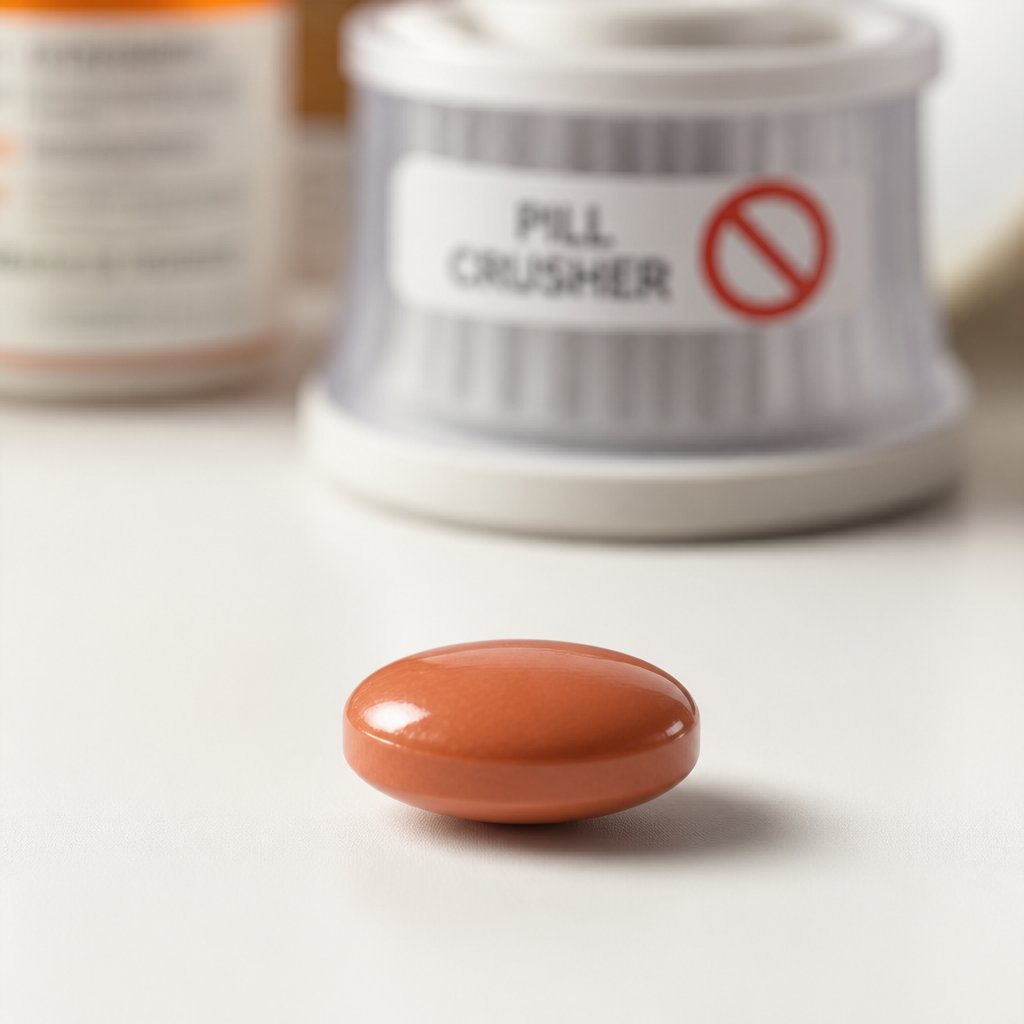
Can Enteric Coated Tablets Be Crushed Safely
The Short Answer About Crushing Enteric Coated Tablets
No, enteric coated tablets should never be crushed. The protective coating on these medications exists for a specific medical reason, and destroying it can cause stomach irritation, reduce the drug's effectiveness, or both. If you crush an enteric coated pill, you remove the very mechanism that makes it safe and functional.
Crushing enteric coated tablets destroys their protective mechanism and can cause direct harm to your stomach lining or render the medication ineffective. These medications carry a firm "do not crush" designation for patient safety.
Maybe you're asking this question because swallowing large pills feels impossible. Or you're a caregiver preparing medications for an elderly parent who struggles with solid tablets. Perhaps you're figuring out pediatric dosing for a child, or you need to administer medication through a feeding tube. These are all valid, common situations, and you deserve a clear answer along with practical solutions.
Why This Question Matters for Patient Safety
The reason this question comes up so often is that crushing pills seems like a simple fix. And for many standard tablets, it is. But enteric coated tablets are fundamentally different. They belong on every pharmacist's do not crush list alongside extended-release and hazardous medications. According to the NHS Specialist Pharmacy Service, enteric-coated and gastro-resistant tablets are not suitable for crushing because the coating prevents stomach acid from destroying the drug, and damaging it means the medication may not work.
Can you crush enteric coated tablets if you mix them with food afterward? Still no. Can you crush enteric coated pills just a little, or split them in half? The answer remains the same. Even partial damage to the coating compromises its function. There are 5 drugs that should never be crushed that patients commonly ask about, including enteric coated aspirin, bisacodyl, and omeprazole, and the reasoning applies equally to all of them.
This article walks you through the science of how enteric coating works inside your body, the real physiological risks of crushing these tablets, a reference list of common enteric coated medications, how to identify whether your specific pill is coated, and safe alternatives that solve the swallowing problem without compromising your treatment.
What Enteric Coating Actually Does Inside Your Body
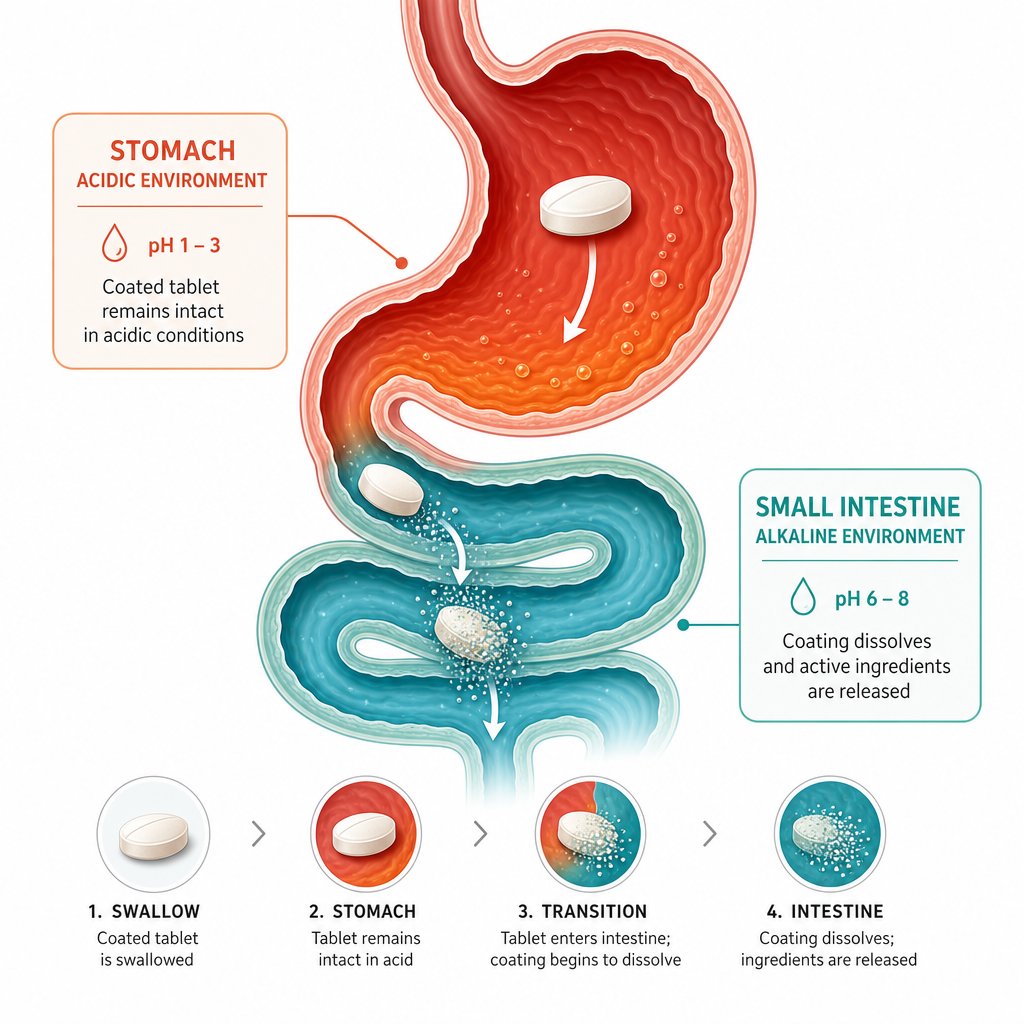
So what does enteric coated mean in practical terms? Imagine wrapping a letter in a waterproof envelope before sending it through a rainstorm. The envelope stays sealed in the rain but opens easily once it reaches a dry mailbox. Enteric coating works on the same principle, except instead of responding to moisture, it responds to pH levels inside your digestive tract.
The coating of tablets with enteric polymers creates a pH-sensitive shield around the medication. This shield stays completely intact while passing through the harsh, acidic environment of your stomach. Only when it reaches the more alkaline conditions of your small intestine does it begin to dissolve and release the drug inside.
How Enteric Coating Works in Your Body
Your stomach maintains a highly acidic environment, typically between pH 1 and 3.5. This acidity is essential for digestion, but it can destroy certain medications or allow irritating drugs to damage your stomach lining. Enteric coated tablets are designed to pass through this acidic zone untouched.
Once the tablet moves into your duodenum (the first section of the small intestine), the pH rises to around 5.5 to 7. At this higher pH, the enteric coating begins to dissolve, exposing the tablet core and releasing the active ingredient exactly where it needs to be absorbed. According to Colorcon's pharmaceutical research, enteric coatings prevent the tablet from dissolving in the stomach by resisting acidic pH, then trigger drug release as the dosage form enters the duodenum where pH rises above 5.5.
The pH-Sensitive Mechanism Explained
What makes this possible? The polymers used in coating pills with enteric materials contain special chemical groups, primarily carboxylic acid groups, that behave differently depending on acidity. In acidic conditions, these groups stay tightly bound together, keeping the coating solid and impermeable. When the pH rises in the intestine, these same groups ionize and repel each other, causing the polymer to swell, break apart, and dissolve.
The most common materials used for enteric coatings include:
- Methacrylic acid copolymers (sold under brand names like Eudragit) — synthetic polymers with carboxylic acid groups that ionize at pH 5 to 7
- Cellulose acetate phthalate (CAP) — a modified cellulose polymer that resists acid but dissolves at intestinal pH
- Hydroxypropyl methylcellulose phthalate (HPMCP) — another cellulose-based option offering similar pH-dependent behavior
These aren't exotic chemicals. They're well-studied pharmaceutical polymers that have been used in enteric coating drugs for decades. The amount of polymer applied to an enteric coated tablet is typically double or triple the amount used in a standard pill coating, which is why the protective layer is robust enough to survive stomach acid for extended periods.
Enteric Coating vs Other Pill Coatings
Not all coated tablets are enteric coated. When you pick up a bottle of film coated tablets from the pharmacy, those pills have a thin polymer layer designed mainly to make them easier to swallow, mask bitter taste, or protect the tablet from moisture. That coating dissolves immediately in your stomach. Sugar coating, an older technique, builds thick layers of sucrose syrup around the tablet for taste masking and a glossy appearance, but it also dissolves in the stomach.
The critical difference? Only enteric coating is engineered to survive stomach acid. This is why crushing matters so much for enteric coated tablets specifically, while crushing a standard film coated tablet is often acceptable.
| Coating Type | Purpose | Dissolves Where | Can Be Crushed |
|---|---|---|---|
| Enteric Coating | Protects drug from stomach acid or protects stomach from drug; enables targeted intestinal release | Small intestine (pH 5.5-7) | No — destroys the protective mechanism entirely |
| Film Coating | Improves swallowability, masks mild taste, protects from moisture and light | Stomach (immediate release) | Usually yes — check with pharmacist |
| Sugar Coating | Strong taste masking, glossy appearance, physical protection | Stomach (immediate release) | Usually yes — check with pharmacist |
This distinction explains why the answer to whether enteric coated tablets can be crushed is always no. The coating isn't cosmetic. It's a functional drug delivery system that determines where, when, and how safely the medication works inside your body. Remove it, and you fundamentally change what the drug does to you and what your stomach does to the drug.
Two Critical Reasons Enteric Coatings Exist
That pH-sensitive mechanism serves two very different purposes depending on the medication inside. This is a distinction most people never hear about, but it changes how you think about every enteric coated drug in your medicine cabinet. Some pills wear that protective layer to shield your stomach. Others wear it to shield themselves. The direction of protection matters because it determines exactly what goes wrong when the coating is destroyed.
Every enteric coating medication falls into one of these two categories, and understanding which one applies to your prescription helps explain why crushing is never an option for either group.
Medications Coated to Protect Your Stomach Lining
Certain drugs are inherently irritating to gastric tissue. When released directly in the stomach, they can erode the mucosal lining, trigger inflammation, and over time cause ulcers or bleeding. The enteric coating acts as a bypass system, carrying the drug past the vulnerable stomach and releasing it in the intestine where it causes far less damage.
The most common example of an enteric coated tablet in this category is aspirin. Research shows that up to 27% of people report stomach irritation from standard aspirin, and enteric-coated versions significantly reduce this risk. Between 15% and 30% of long-term NSAID users develop stomach ulcers, making the coating a genuine safety feature rather than a convenience.
Common enteric coated tablets examples in this category include:
- Aspirin EC (Ecotrin) — long-term cardiovascular or anti-inflammatory use
- Naproxen EC (EC-Naprosyn) — chronic pain and arthritis management
- Diclofenac (Arthrotec) — anti-inflammatory for joint and musculoskeletal conditions
- Sulfasalazine (Azulfidine EN-tabs) — inflammatory bowel disease and rheumatoid arthritis
- Bisacodyl (Alophen) — stimulant laxative that irritates gastric tissue if released too early
- Mycophenolic acid (Myfortic) — immunosuppressant for transplant patients, coated to reduce GI side effects
Think of these as medications your stomach needs protection from. The drug itself works fine in acidic conditions, but your gastric lining pays the price if it makes direct contact. A medication that coats stomach-irritating drugs in this protective layer is essentially rerouting delivery to a safer location.
Medications Coated to Survive Stomach Acid
The second category flips the relationship entirely. Here, the drug is fragile, not dangerous. Stomach acid would break down or deactivate the active ingredient before it ever reaches the intestine for absorption. Without enteric protection, these medications simply stop working.
A clear example of an enteric coated tablet in this group is omeprazole. This proton pump inhibitor is acid-labile, meaning gastric acid destroys its chemical structure. The enteric coating keeps it intact until it reaches the intestine, where it can be absorbed and travel to the stomach's acid-producing cells from the bloodstream. Over 50% of prescription proton pump inhibitors use enteric coating for this reason.
Enteric coated medications in this category include:
- Omeprazole (Prilosec) — proton pump inhibitor for GERD and ulcers
- Pantoprazole (Protonix) — enteric-coated PPI tablet
- Esomeprazole (Nexium) — enteric coated capsule containing delayed-release granules
- Lansoprazole (Prevacid) — enteric coated capsule with sprinkle-ready granules inside
- Rabeprazole (Aciphex) — enteric-coated delayed-release tablet
- Pancrelipase (Creon, Zenpep) — digestive enzymes destroyed by gastric acid
- Erythromycin (delayed-release) — antibiotic degraded in acidic environments
- Budesonide (Entocort EC) — corticosteroid for Crohn's disease requiring intestinal delivery
For this group, crushing doesn't just risk stomach irritation. It renders the enteric coated drug therapeutically useless. The active ingredient gets destroyed before it can do its job, meaning you absorb little to none of the intended dose. You experience the inconvenience of taking a medication with zero clinical benefit.
Both categories lead to the same conclusion: whether the coating protects you from the drug or protects the drug from you, removing that barrier through crushing creates a problem. But the specific consequences differ, and those consequences become far more concrete when you look at what actually happens inside your body the moment that coating is gone.
What Happens When You Crush Enteric Coated Tablets
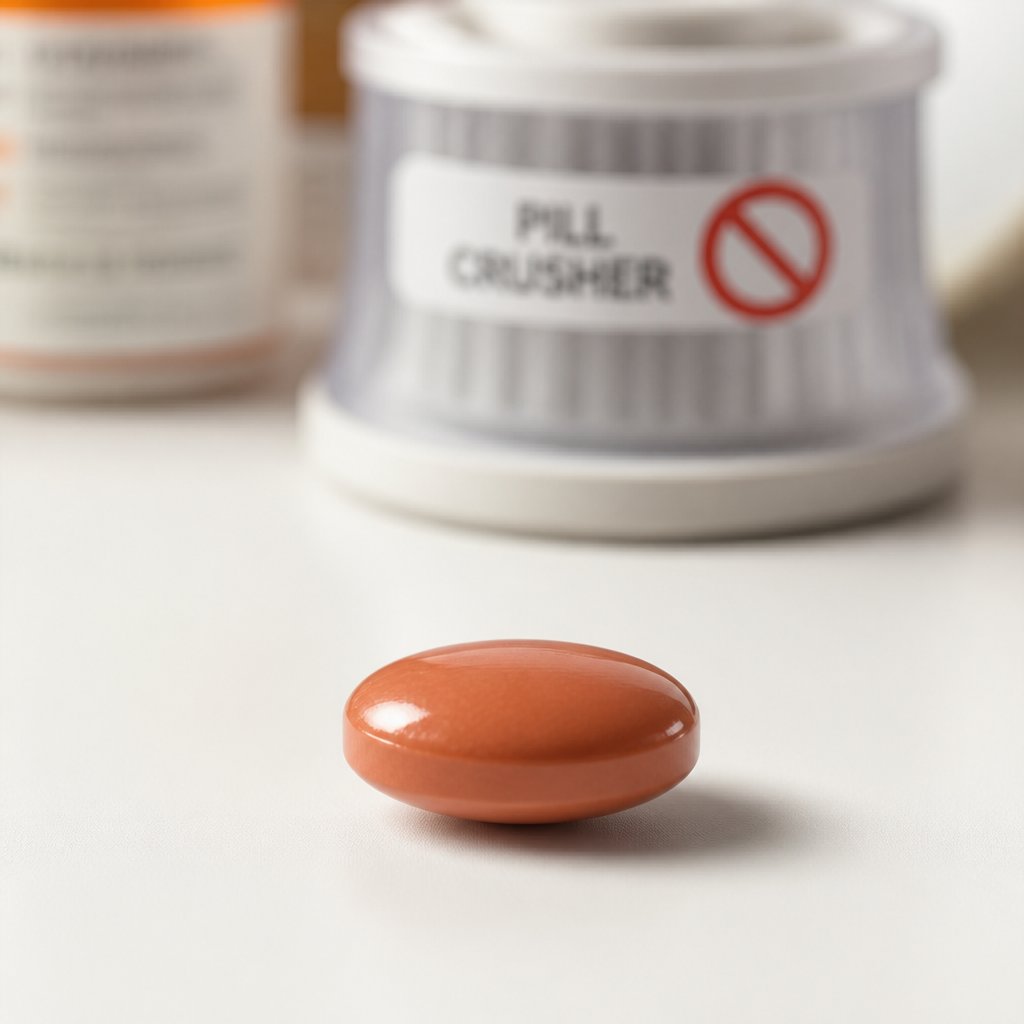
So what happens if you chew a pill that was designed to survive your stomach intact? Or what happens if you chew tablets, grind them in a pill crusher, or dissolve them before swallowing? The consequences are not hypothetical. They are well-documented physiological events that range from uncomfortable to clinically dangerous, depending on the medication involved.
Understanding why enteric coated tablets can't be crushed comes down to four specific outcomes, listed here in order of clinical significance:
- Dose dumping and potential toxicity — the entire drug payload hits your system at once
- Stomach lining irritation and ulceration — direct chemical damage to gastric tissue
- Premature drug degradation — stomach acid destroys the active ingredient before absorption
- Loss of targeted intestinal delivery — the drug never reaches its intended site of action
The Dose Dumping Danger
Imagine a time-release sprinkler system that's supposed to water your garden slowly over eight hours. Now picture cutting all the pipes at once. Every drop floods out in seconds. That's dose dumping.
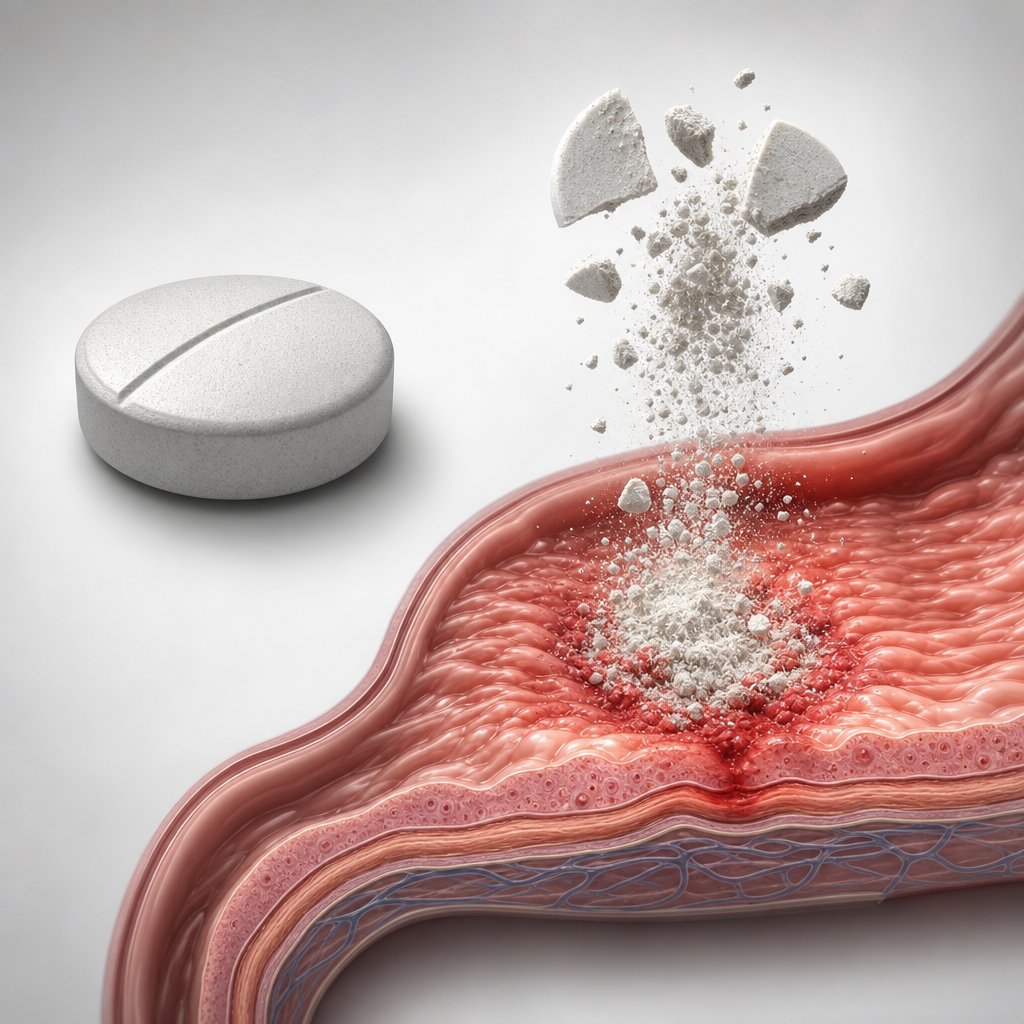
When you crush an enteric coated tablet, the full dose becomes immediately available in your stomach rather than releasing gradually in the intestine. For medications like enteric-coated aspirin or diclofenac, this means your gastric lining absorbs a concentrated hit of an irritating substance all at once. For modified-release formulations that also carry enteric coatings, the Institute for Safe Medication Practices warns that manipulating these forms can lead to dose dumping and increased toxicity. In extreme cases involving opioid medications with protective coatings, this can be fatal.
Some people wonder: do pills dissolve in water safely as an alternative to crushing? For enteric coated medications, dissolving tablets in water creates the same problem. The coating is designed to resist liquid environments at acidic pH. Placing the tablet in plain water may cause it to swell or partially break down unpredictably, but it won't replicate the controlled intestinal release the coating was engineered to provide.
Immediate Risks of Crushing Enteric Coated Pills
For drugs in the stomach-protection category (aspirin EC, naproxen EC, bisacodyl), crushing exposes your gastric mucosa directly to the irritant. The consequences include:
- Acute gastric irritation — nausea, burning pain, and inflammation within hours
- Mucosal erosion — repeated exposure can damage the protective mucus layer
- Ulcer formation — chronic misuse may lead to gastric or duodenal ulcers
- GI bleeding — in severe cases, particularly with NSAIDs in vulnerable patients
Research published in Clinical and Translational Science confirms that crushing enteric coated formulations destroys the functional gastro-resistant layer, which can result in irritation of the stomach, decomposition of the drug by stomach acid, or failure to reach the proper site of action.
Crushing can turn a safe, well-tolerated medication into one that damages your stomach lining or delivers zero therapeutic benefit. The same pill that helps you when swallowed whole can harm you when crushed.
How Crushing Reduces Drug Effectiveness
For acid-sensitive medications like omeprazole or pancrelipase, the story is different but equally problematic. Once the protective barrier is gone, gastric acid immediately begins breaking down the active ingredient. The tablet may dissolve in your stomach, but the drug it contained is already deactivated by the time absorption could occur.
This is why a pill not dissolving in your stomach is actually the intended behavior for enteric coated medications. The coating is doing its job. If you notice an enteric coated tablet passing through seemingly intact, that's a separate issue worth discussing with your doctor, but it doesn't mean you should crush it to "help" it work.
The practical result of chewing pills or crushing enteric coated medications is a lose-lose scenario. Either you get too much drug too fast in the wrong place, or you get too little drug because acid destroyed it. Neither outcome resembles what your prescriber intended when they wrote the prescription.
Knowing these risks raises an obvious next question: which specific medications carry enteric coatings, and how can you tell whether your particular prescription belongs on the do-not-crush list?
Enteric Coated Medications and the Do Not Crush List
Every hospital pharmacy maintains a do not crush list, and enteric coated medications occupy a significant portion of it. The most widely referenced version comes from the Institute for Safe Medication Practices (ISMP), which publishes a comprehensive do not crush medication list covering hundreds of oral dosage forms that should never be altered. Many healthcare facilities print their own version as a do not crush list PDF for nursing staff and caregivers to reference at the bedside.
But enteric coated drugs are only one category on that list. Understanding the full landscape helps you recognize why your specific medication might carry a "do not crush" warning, even if it isn't technically enteric coated.
Common Enteric Coated Medications by Category
Below is a structured reference of frequently prescribed enteric coated medications, organized by therapeutic use. If you take any of these, they belong on your personal list of medications that cannot be split, crushed, or chewed.
Pain and Anti-Inflammatory
- Aspirin EC (Ecotrin) — cardiovascular protection and pain relief
- Naproxen EC (EC-Naprosyn, Naprelan) — arthritis and chronic pain
- Diclofenac/misoprostol (Arthrotec) — anti-inflammatory with gastric protection
- Sulfasalazine (Azulfidine EN-tabs) — rheumatoid arthritis and inflammatory bowel disease
- Indomethacin ER — extended-release NSAID for joint inflammation
Gastrointestinal
- Omeprazole (Prilosec OTC) — proton pump inhibitor for acid reflux and ulcers
- Pantoprazole (Protonix) — PPI for erosive esophagitis
- Esomeprazole (Nexium) — PPI with enteric coated granules
- Lansoprazole (Prevacid) — PPI for GERD and H. pylori treatment
- Dexlansoprazole (Dexilant) — dual delayed-release PPI
- Rabeprazole (Aciphex) — delayed-release enteric coated tablet
- Mesalamine (Delzicol, Lialda, Pentasa) — targeted intestinal delivery for ulcerative colitis
- Budesonide (Entocort EC, Uceris) — corticosteroid for Crohn's disease
- Bisacodyl (Dulcolax) — stimulant laxative with gastric-irritant properties
Digestive Enzymes
- Pancrelipase (Creon, Pancreaze, Pertzye, Zenpep) — pancreatic enzyme replacement destroyed by stomach acid
Antibiotics and Other Medications
- Erythromycin delayed-release (Ery-Tab) — acid-sensitive antibiotic
- Mycophenolic acid (Myfortic) — immunosuppressant for transplant patients
- Divalproex sodium (Depakote) — anticonvulsant and mood stabilizer
- Duloxetine (Cymbalta) — SNRI antidepressant with enteric coated pellets
This medication do not crush list is not exhaustive. New enteric coated formulations enter the market regularly, and generic versions of these drugs carry the same coating restrictions as their brand-name counterparts. When in doubt, the ISMP do not crush reference is the gold standard resource for healthcare professionals verifying whether a specific formulation can be altered.
Other Tablet Types You Should Never Crush
Enteric coated medications share the do not crush list with several other formulation types. Each uses a different mechanism to control drug release, and each is damaged by crushing for different reasons. You'll notice that many of these carry telltale abbreviations in their names.
How do slow release tablets work compared to enteric coated ones? While enteric coatings delay release until the drug reaches the intestine, sustained-release and extended-release formulations use matrix systems or membrane-controlled technology to meter out the drug gradually over 12 to 24 hours. Time release capsules contain coated beads or pellets designed to dissolve at staggered intervals, maintaining steady blood levels throughout the day. Crushing any of these destroys the rate-controlling mechanism.
| Formulation Type | Abbreviations | Why Not Crush | Examples |
|---|---|---|---|
| Enteric Coated (Delayed-Release) | EC, EN, DR | Destroys pH-sensitive coating; causes stomach irritation or drug degradation in gastric acid | Ecotrin (aspirin EC), Protonix (pantoprazole), Delzicol (mesalamine) |
| Sustained-Release / Extended-Release | SR, ER, XR, XL, LA, CR, CD | Releases full dose at once (dose dumping); risk of toxicity or fatal overdose with potent drugs | OxyContin (oxycodone ER), Toprol-XL (metoprolol), Wellbutrin XL (bupropion) |
| Sublingual / Buccal | SL, ODT | Designed for absorption through oral mucosa; swallowing or crushing bypasses rapid delivery route | Nitrostat (nitroglycerin SL), Belbuca (buprenorphine film), Zubsolv (buprenorphine/naloxone) |
| Hazardous / Cytotoxic | None standard | Crushing aerosolizes toxic particles; exposure risk to caregivers and patients | Methotrexate, Cyclophosphamide, Finasteride, Tamoxifen |
The EMPR Do Not Crush or Chew chart categorizes these formulations and notes that crushing modified-release tablets can lead to a large dose being released at once, while crushing delayed-release forms alters the mechanism intended to protect the drug against gastric acids or prevent gastric mucosal irritation.
A few important exceptions exist. Some long-acting capsules, like Kadian (morphine) and certain methylphenidate formulations (Metadate CD, Ritalin LA), can be opened and their intact granules sprinkled on soft food without crushing. The granules themselves carry the enteric or sustained-release coating, so as long as they aren't chewed or ground, the delivery mechanism stays intact. Your pharmacist can confirm whether your specific capsule falls into this category.
Having a reference list is useful, but it only helps if you can identify whether the tablet sitting in your palm right now actually carries an enteric coating. Visual cues, label markings, and packaging details all offer clues, and knowing where to look can prevent a costly mistake before it happens.
How to Tell If Your Tablet Is Enteric Coated
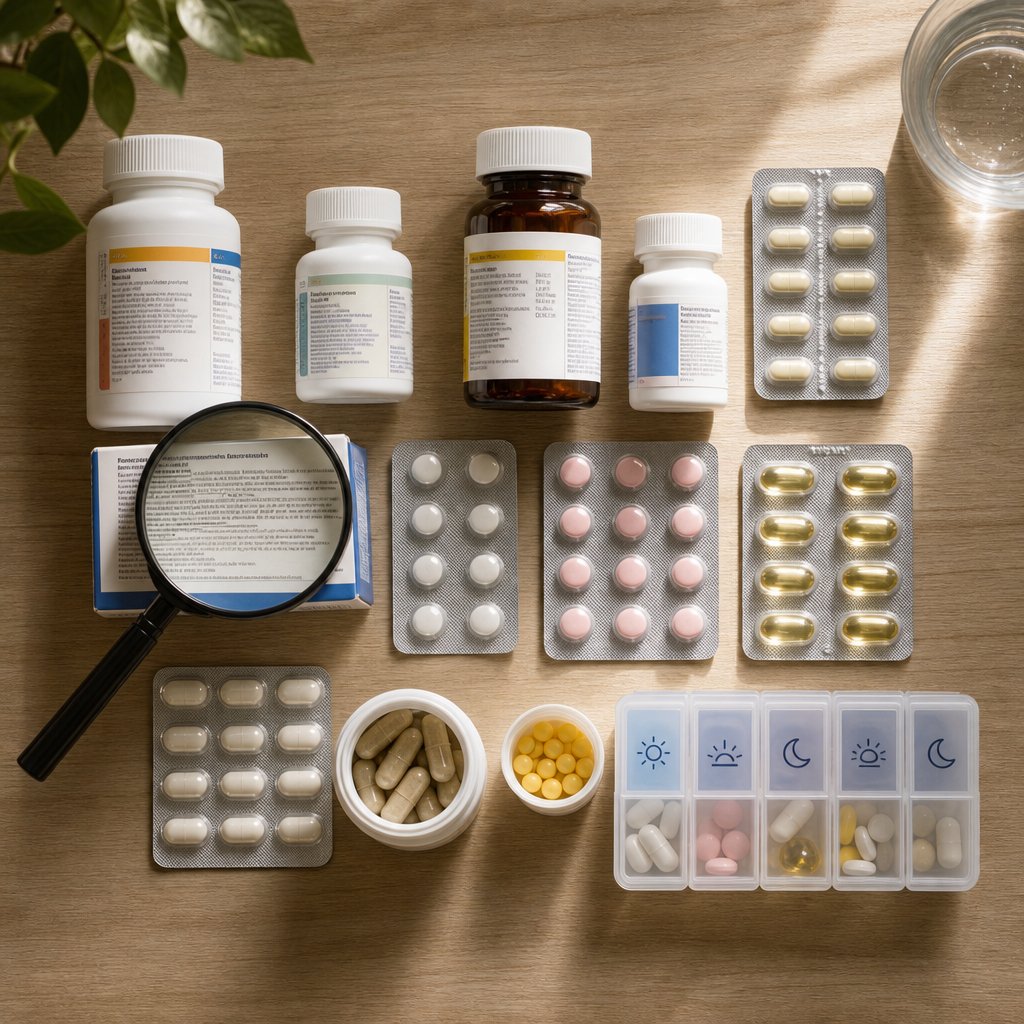
You're standing at the kitchen counter with a pill crusher in one hand and a handful of tablets in the other. Some can be crushed safely. Others absolutely cannot. The challenge is telling them apart, especially when you're managing multiple medications for yourself or someone in your care. Identifying an enteric coated pill before you attempt to alter it is the single most important step in avoiding the risks outlined above.
Visual Clues That a Tablet Is Enteric Coated
Enteric coating pills tend to share certain physical characteristics, though no visual inspection is 100% reliable on its own. Here's what to look for when examining tablets in medicine cabinets or weekly pill organizers:
- A smooth, glossy finish — enteric coated tablets often have a noticeably polished, waxy appearance that feels slightly slick between your fingers
- A thicker coating layer — compared to standard film-coated tablets, enteric pills typically have a visibly thicker shell, sometimes giving the tablet a slightly rounded or bulky profile
- Distinct coloring — many manufacturers use specific colors (often yellow, brown, or reddish tones) for their enteric coated formulations to differentiate them from immediate-release versions of the same drug
- No score line — most enteric coated tablets lack a dividing line because they are not designed to be split. If a tablet has no score mark, treat that as a caution signal
- Resistance to scratching — gently running a fingernail across the surface of an enteric coated tablet reveals a hard, resistant layer that doesn't flake or chip easily
Keep in mind that visual inspection alone cannot confirm what is an enteric coated tablet versus a standard film-coated one. Some film coatings look nearly identical. The visual check narrows your suspicion, but it shouldn't be your only verification step.
Packaging and Label Indicators to Check
The most reliable tablet information comes from the packaging itself. Manufacturers are required to indicate special formulation types, and these markings appear in predictable places. Before opening medicine bottles or blister packs, look for these indicators:
- "EC" after the drug name — this abbreviation stands for enteric coated (e.g., Aspirin EC, EC-Naprosyn)
- "DR" or "Delayed-Release" — another common designation for enteric coated formulations
- "EN" or "EN-tabs" — used by some brands (e.g., Azulfidine EN-tabs)
- "Gastro-resistant" — the European/UK term for enteric coated, commonly seen on imported medications
- "Do not crush or chew" — printed directly on the label or patient information leaflet
- Section 4.2 of the Summary of Product Characteristics (SmPC) — for healthcare professionals, this section covers method of administration and will state if a tablet is enteric coated
Your pharmacy label may also include special instructions. Many pharmacies flag enteric coated and modified-release medications with auxiliary stickers reading "Swallow whole" or "Do not crush." If your label carries either warning, respect it even if you aren't sure why.
For medication capsules like Cymbalta (duloxetine) or Creon (pancrelipase), the enteric coating is applied to the granules inside the capsule rather than the capsule shell itself. The packaging will typically note "delayed-release capsule" or "enteric coated pellets," indicating that even if the capsule can be opened, the contents inside must not be chewed or crushed.
When You Are Unsure About Your Medication
Real-world medication management is rarely straightforward. Elderly patients juggling eight or ten prescriptions may have tablets from different pharmacies with inconsistent labeling. Caregivers preparing doses for patients with dysphagia or nasogastric tubes face time pressure and unfamiliar medications. Pediatric situations add another layer of complexity when adult formulations need to be adapted for children.
If you cannot confirm whether a tablet is enteric coated, follow this decision process:
- Check the original packaging first — look for EC, DR, EN, or gastro-resistant designations
- Read the patient information leaflet — the "How to take" section will state if the tablet must be swallowed whole
- Search the drug name online — manufacturer websites and resources like the NHS Specialist Pharmacy Service provide detailed guidance on which formulations can be altered
- Call your pharmacist — this is the fastest, most reliable option. Pharmacists have access to comprehensive databases and can confirm in seconds whether your specific brand and formulation is safe to crush
- Do not guess — if you cannot verify, swallow the tablet whole or contact your prescriber for an alternative formulation
The NHS SPS specifically recommends that carers should only crush tablets or open capsules on the direction of the prescriber, with instructions included in the patient's medicines administration record and care plan. This applies in care homes, home care settings, and hospital wards alike.
Identifying the coating is the critical first step. But for patients who genuinely cannot swallow tablets whole, identification alone doesn't solve the problem. It simply confirms that crushing isn't the answer, which means the real solution lies in finding alternative dosage forms that deliver the same medication safely.
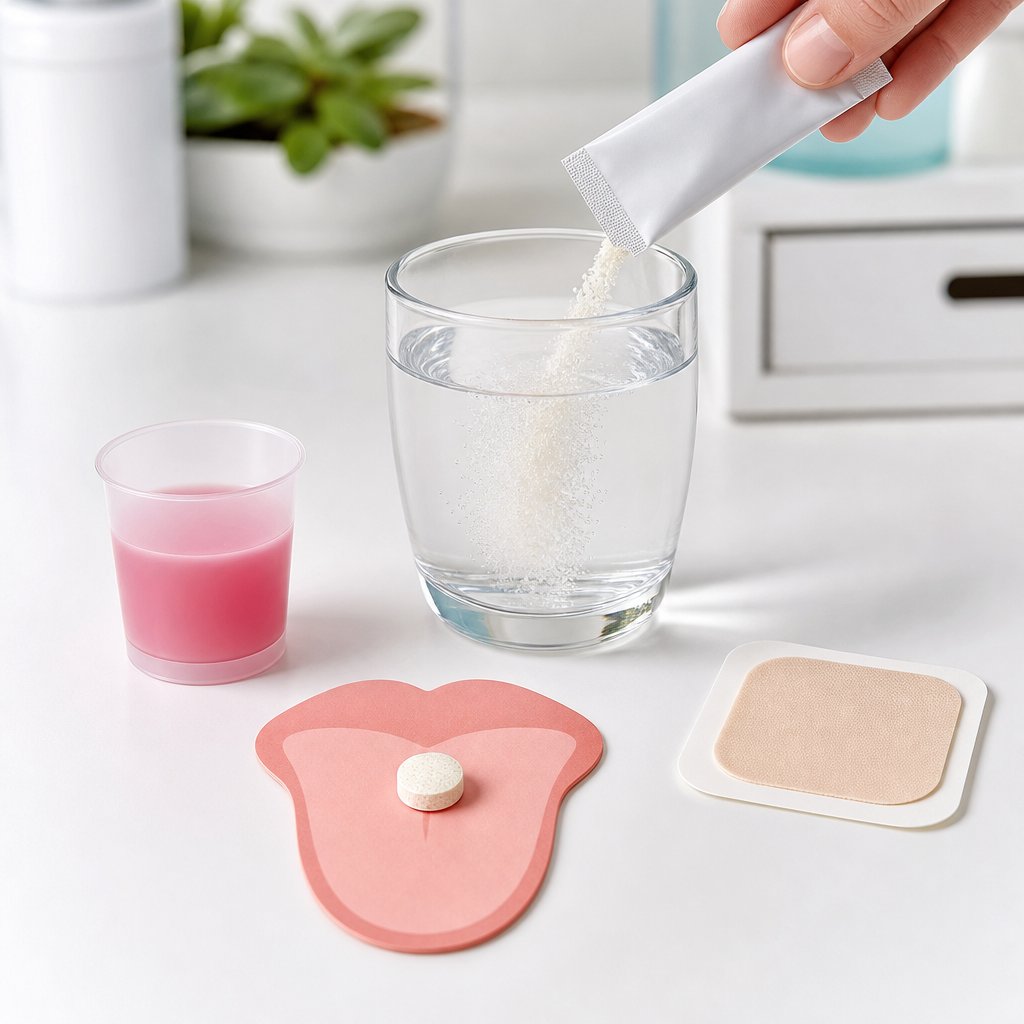
Safe Alternatives When You Cannot Swallow Tablets Whole
Confirming that your medication is enteric coated tells you what you cannot do. It doesn't solve the underlying problem: you still need to get that drug into your body safely. The good news is that nearly every enteric coated medication has at least one alternative delivery method available. The key is matching the right alternative to your specific situation.
Rather than listing every possible formulation in the abstract, let's organize solutions by the real-world scenarios that bring people to this question in the first place.
Alternative Dosage Forms for Patients Who Cannot Swallow
Your options depend on why swallowing is difficult, what medication you're taking, and what your healthcare team can access. Here's a breakdown by patient scenario:
For adults with dysphagia (swallowing difficulty)
- Oral liquid or suspension forms — many enteric coated drugs have liquid equivalents. Proton pump inhibitors like omeprazole are available as oral granule sachets that can be mixed with water. The Australian Don't Rush to Crush Handbook recommends oral liquids as a primary alternative when solid dosage forms cannot be swallowed whole.
- Dispersible tablets — a dispersible tablet is designed to break apart in a small amount of water before swallowing, creating a drinkable suspension. Sulfasalazine, for example, is available in both enteric coated and plain tablet forms, with the plain version suitable for dispersing.
- Orally disintegrating tablets (ODTs) — these dissolve on the tongue within seconds without water. If you're wondering how to take orally disintegrating tablets, simply place one on your tongue and let saliva do the work. Olanzapine wafers are a well-known example, and the technology is expanding to more drug classes.
- Medication lubricant sprays — products that coat a tablet in a slippery gel can help some patients swallow pills they otherwise couldn't manage
For pediatric patients
- Granule-in-capsule formulations — some enteric coated capsules contain individually coated granules inside. Lansoprazole (Prevacid SoluTab) and esomeprazole granules can be sprinkled on soft food like applesauce without crushing the granules themselves. Can cephalexin capsules be opened and sprinkled on food? Yes, cephalexin is one example of a non-enteric capsule whose contents can be mixed with food, though you should always verify with your pharmacist whether the specific capsule in question contains coated or uncoated granules.
- Extemporaneously compounded liquids — a compounding pharmacy can prepare liquid versions of many medications using evidence-based formulations with verified stability data
- Age-appropriate commercial liquids — many pediatric medications already come in liquid form, though availability varies by country and drug class
For elderly patients managing polypharmacy
- Therapeutic substitution — ask your prescriber if a different drug in the same class comes in a crushable format. The Society of Hospital Pharmacists of Australia notes that metformin extended-release (which cannot be crushed) can be switched to plain metformin 500 mg tablets. Similarly, paracetamol controlled-release can be replaced with standard 500 mg tablets or dissolvable tablets taken more frequently.
- Transdermal patches — for pain management, fentanyl patches bypass the GI tract entirely. Rivastigmine patches replace oral capsules for dementia patients. These eliminate swallowing concerns altogether.
- Medication regimen simplification — sometimes the best alternative is stopping unnecessary medicines entirely. Research shows that older adults take 50% of all prescribed medicines, and a medication review may reveal drugs that are no longer needed.
For enteral feeding tube administration
- Liquid formulations designed for tube delivery — the NHS Specialist Pharmacy Service recommends a stepwise approach: first check if a licensed liquid form exists, then consider whether the tube type and termination site are compatible with the drug's absorption requirements.
- Dispersible tablets dissolved in water — some non-enteric tablets can be dispersed in water and administered via syringe through the tube. The disintegrating tablet how to take method for tube patients involves dissolving the tablet fully, then flushing it through with adequate water to prevent blockage.
- Injectable formulations given enterally — in select cases, injectable solutions can be administered through feeding tubes when no oral alternative exists, though this requires pharmacist assessment of excipients and osmolality
- Alternative route medications — suppositories, transdermal patches, subcutaneous injections, or buccal films may replace oral drugs entirely for tube-fed patients
Dispersible and Orally Disintegrating Options
Dissolvable tablets and orally disintegrating formulations deserve special attention because they solve the swallowing problem at the design level. Instead of modifying a tablet after manufacturing, these products are engineered from the start to work without intact swallowing.
How to use orally disintegrating tablets is straightforward: place the tablet on your tongue with dry hands, allow it to disintegrate (usually within 15 to 30 seconds), and swallow the resulting granules with saliva. No water is required, though you can take a sip afterward if preferred. These are particularly valuable for patients with limited water access, those prone to aspiration, or anyone who experiences anxiety around pill-swallowing.
Common examples of dispersible tablets and ODTs that replace enteric coated equivalents include:
- Omeprazole MUPS (Multiple Unit Pellet System) — dispersible in water, with individually enteric coated micro-pellets that maintain their protective coating even when the tablet matrix dissolves
- Lansoprazole SoluTab — orally disintegrating tablet containing enteric coated granules
- Prevacid oral granules — sachets for mixing with water or apple juice
- Pantoprazole oral granule suspension — delayed-release granules in packet form
The critical point with these alternatives: the enteric coating still exists, but it's applied to tiny individual granules rather than a single large tablet. You don't need to swallow a whole pill because the granules are small enough to go down easily in liquid or soft food. The protective mechanism remains intact at the micro-level.
Working With Manufacturers Who Offer Flexible Formats
The pharmaceutical and health supplement industry has shifted significantly toward patient-friendly dosage forms in recent years. This trend reflects a growing recognition that one-size-fits-all tablets don't serve populations with swallowing difficulties, and that format flexibility should be built into product development from the start rather than addressed as an afterthought.
For prescription medications, this means more drugs are launching with multiple format options simultaneously: tablets, capsules, oral suspensions, and granule sachets available from day one. For the supplement and functional food space, OEM/ODM manufacturers like ZhuFeng now offer brands the ability to develop products across formats including powder and granules, oral liquids, soft capsules, and gummy formulations. This kind of manufacturing flexibility means nutrition brands can design products that never require crushing in the first place, addressing accessibility for elderly consumers, children, and anyone who struggles with traditional tablets.
The list of capsules that can be opened continues to grow as manufacturers adopt multi-particulate systems, sprinkle capsules, and mini-tablet technologies. These innovations reflect a broader industry commitment to making medications and supplements accessible regardless of a patient's swallowing ability.
Whether you're a patient seeking alternatives or a caregiver managing complex medication regimens, the solution almost always exists. It just requires the right conversation with the right healthcare professional to find it.
Talking to Your Pharmacist and Next Steps
Alternatives exist for nearly every situation, but finding the right one starts with a single conversation. Your pharmacist is the most accessible medication expert in the healthcare system, and they can answer questions like "can metformin be crushed" or "can ibuprofen be crushed" in seconds by checking formulation databases you don't have access to at home. You don't need an appointment. You just need the right questions.
Questions to Ask Your Pharmacist About Alternatives
Next time you pick up a prescription or call your pharmacy, use this framework to guide the conversation. These questions follow established crushing medication guidelines and help your pharmacist identify the best path forward quickly:
- Is my specific tablet enteric coated, extended-release, or otherwise on the do-not-crush list?
- Is this medication available in a liquid, suspension, or oral granule form?
- Can you crush any version of this drug, or does every formulation carry restrictions?
- Is there a dispersible or orally disintegrating alternative I can switch to?
- Can my doctor prescribe a different medication in the same therapeutic class that comes in a crushable tablet?
- If I'm administering through a feeding tube, what's the safest preparation method?
- How do you take tablets like these if swallowing whole isn't possible — are there pill-swallowing aids that might help?
People often search for how to crush pills at home, hoping for a workaround. But the real workaround is asking these questions and getting a solution that doesn't compromise your treatment. Can you crush Tylenol (acetaminophen)? Standard immediate-release Tylenol, yes. Tylenol Extended Relief (ER), absolutely not. Can you crush antibiotics? Some, like amoxicillin tablets, are fine. Others, like erythromycin delayed-release, are enteric coated and cannot be altered. The answer always depends on the specific formulation, which is exactly why your pharmacist's input matters.
Key Takeaways for Medication Safety
This entire article comes down to a few core principles. Enteric coated tablets should never be crushed, chewed, or dissolved. The coating exists either to protect your stomach from the drug or to protect the drug from your stomach acid. Removing it causes harm in both directions. But difficulty swallowing is a real, common problem that affects up to 50% of adults at some point, and solutions are available for every patient and every medication.
Never crush an enteric coated tablet. Always ask your pharmacist first. A safe alternative exists for virtually every situation — you just need to ask for it.
For supplement and nutrition brands developing new products, this entire discussion reinforces why choosing patient-friendly formats from the start matters. Flexible OEM/ODM manufacturers like ZhuFeng, which offer powder, granule, liquid, and gummy production options, allow brands to design products that never put consumers in the position of needing to crush a tablet. Building accessibility into formulation decisions upfront is smarter than solving swallowing problems after the fact.
Whether you're a patient, caregiver, or brand owner, the principle is the same: respect the formulation, ask the right questions, and choose formats that work for the people who actually need to take them.
Frequently Asked Questions About Crushing Enteric Coated Tablets
1. What happens if you accidentally crush an enteric coated tablet?
Crushing an enteric coated tablet exposes your stomach lining to irritating drugs or allows gastric acid to destroy acid-sensitive medications. Depending on the drug, you may experience stomach pain, nausea, or ulceration from direct contact, or the medication may lose its effectiveness entirely because stomach acid degrades the active ingredient before absorption. If you have already crushed and taken an enteric coated tablet, monitor for stomach discomfort and contact your pharmacist or doctor for guidance on whether you need a replacement dose or medical attention.
2. How can you tell the difference between enteric coated and film coated tablets?
Enteric coated tablets typically have a thicker, glossier coating and often lack a score line for splitting. The most reliable way to distinguish them is checking the packaging for abbreviations like EC, DR, or EN, or looking for phrases such as delayed-release or gastro-resistant. Film coated tablets dissolve immediately in the stomach and are generally safe to crush, while enteric coated versions must remain intact to function properly. When visual inspection leaves you uncertain, your pharmacist can confirm the coating type within seconds using formulation databases.
3. Can you split enteric coated tablets in half instead of crushing them?
No, splitting enteric coated tablets is not safe either. Even cutting a tablet in half breaks the continuous protective coating, exposing the inner drug core to stomach acid at the cut edges. This partially defeats the coating's purpose and can cause localized stomach irritation or premature drug degradation. Unlike scored immediate-release tablets designed for splitting, enteric coated formulations are engineered as a complete sealed unit. If you need a lower dose, ask your pharmacist about available lower-strength formulations or liquid alternatives rather than attempting to divide the tablet.
4. What are the safest alternatives for someone who cannot swallow enteric coated pills?
Several alternatives exist depending on your situation. Oral liquid or suspension forms are available for many enteric coated drugs, including omeprazole granule sachets. Some capsules like lansoprazole contain individually coated granules that can be sprinkled on soft food without crushing. Orally disintegrating tablets dissolve on the tongue within seconds. Transdermal patches bypass swallowing entirely for certain medications. Your prescriber may also switch you to a different drug in the same therapeutic class that comes in a crushable format. OEM/ODM supplement manufacturers now offer flexible formats like powders, gummies, and oral liquids specifically to address swallowing difficulties.
5. Is it safe to dissolve enteric coated tablets in water before swallowing?
No, dissolving enteric coated tablets in water does not replicate their intended release mechanism. The coating is designed to resist dissolution in liquid environments at acidic pH levels similar to your stomach. Placing the tablet in plain water may cause unpredictable swelling or partial breakdown, but it will not provide the controlled intestinal release the coating was engineered to deliver. Instead, ask your pharmacist about specially formulated dispersible versions like omeprazole MUPS tablets, which contain micro-pellets that maintain their individual enteric coatings even when the tablet matrix dissolves in water.