What Are Effervescent Tablets and Why They Matter
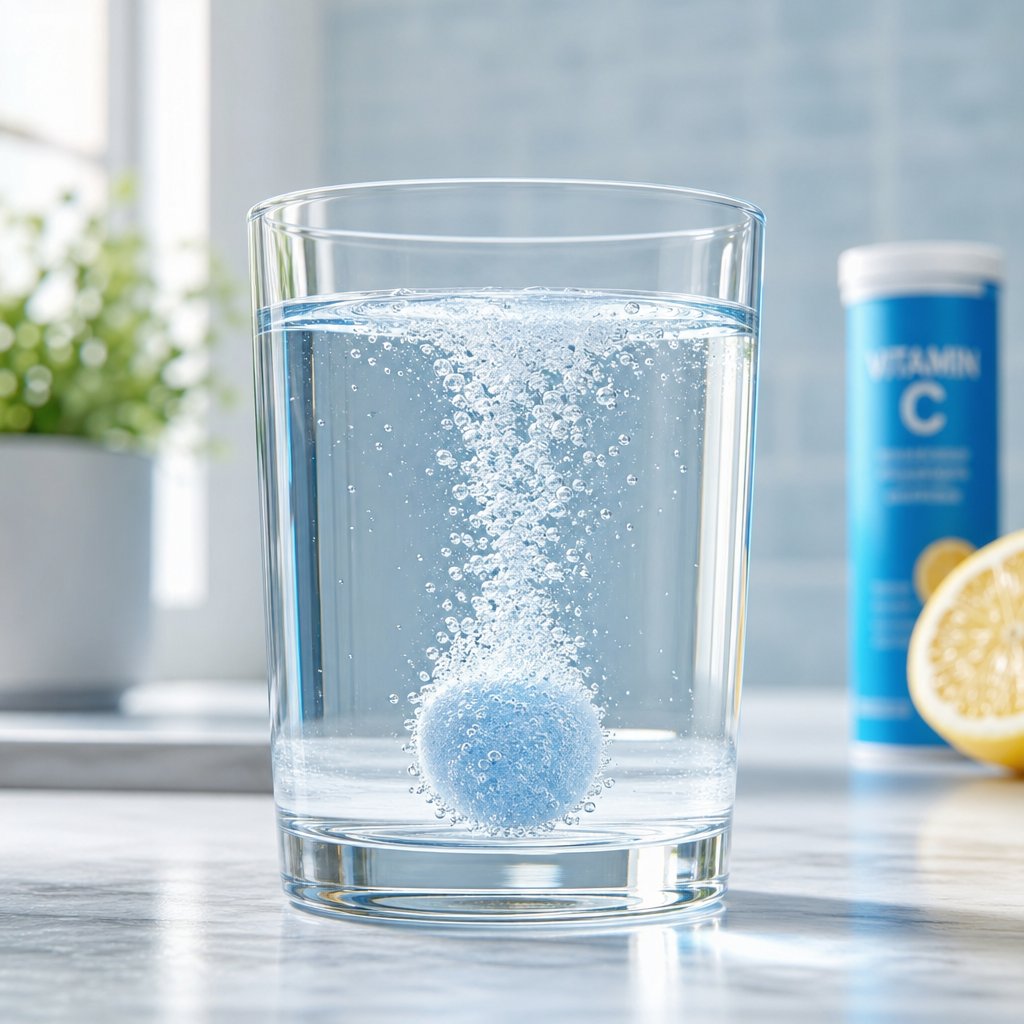
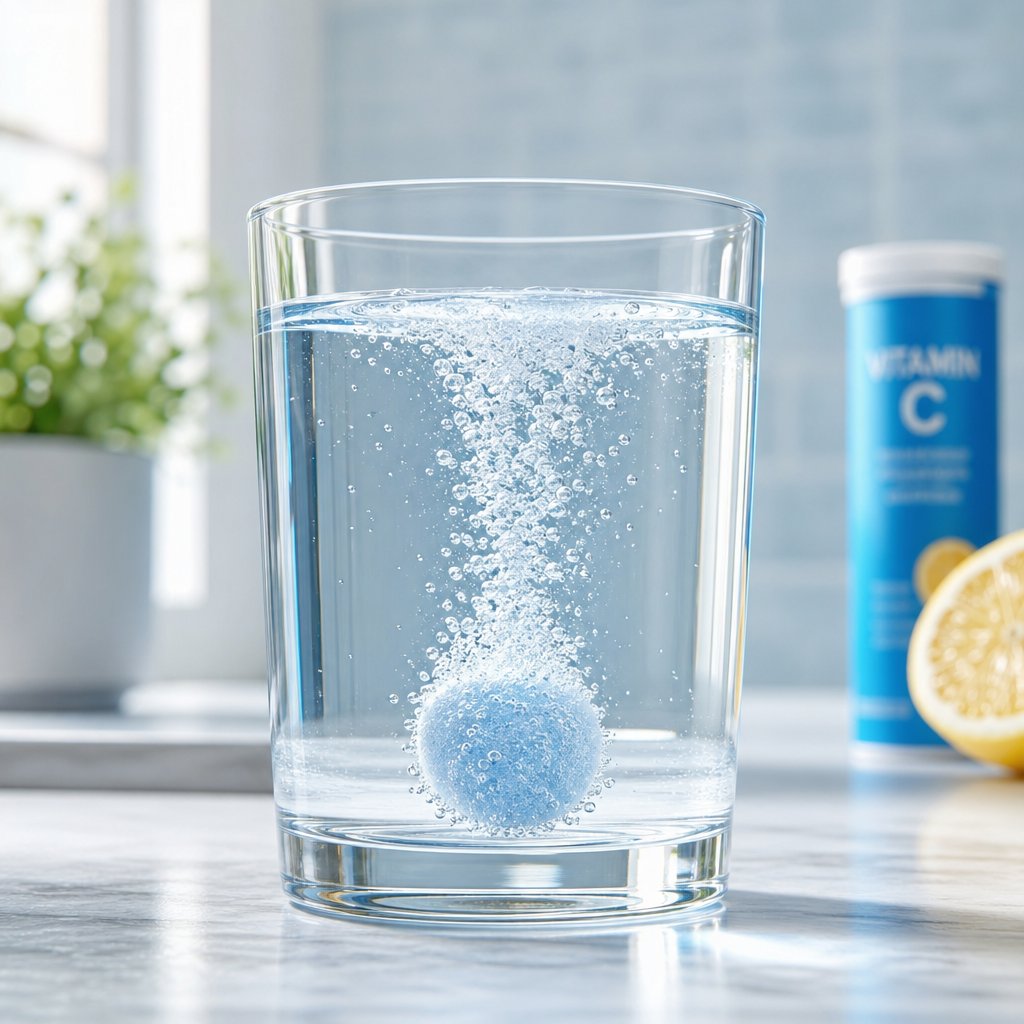
You drop a tablet into a glass of water, and within seconds it starts fizzing, bubbling, and dissolving into a flavored drink. No swallowing a dry pill. No chalky aftertaste. Just a ready-to-drink solution loaded with vitamins, minerals, or medication. That is the basic idea behind effervescent tablets, and it is a delivery format that has been gaining serious traction among consumers and healthcare professionals alike.
A Simple Definition of Effervescent Tablets
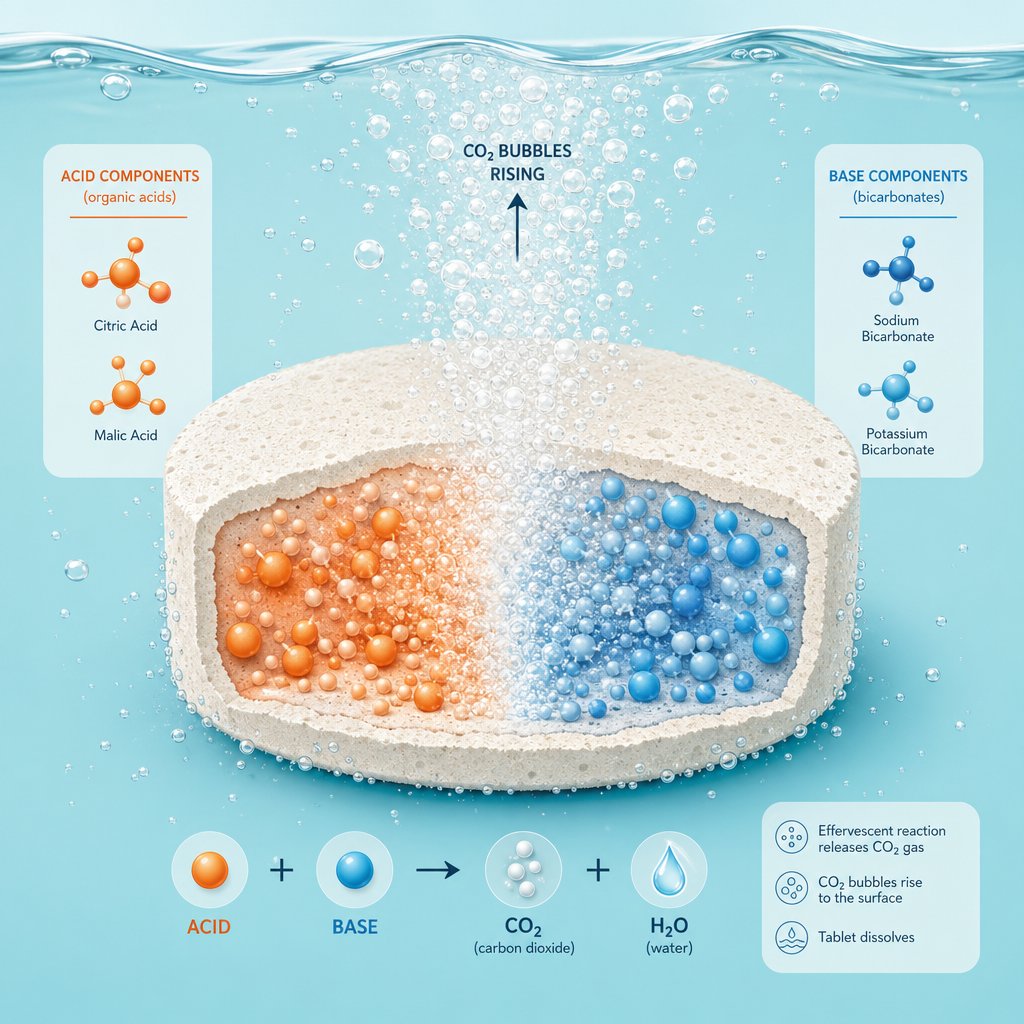
So what is an effervescent tablet, exactly? At its core, it is a compressed tablet formulated with two reactive ingredients: an organic acid (typically citric acid or tartaric acid) and a carbonate or bicarbonate base (usually sodium bicarbonate). When the tablet contacts water, these two components react to produce carbon dioxide gas, which creates the characteristic fizz and rapidly breaks the tablet apart. The active ingredients, whether a vitamin, mineral, or drug, dissolve uniformly into the liquid, producing a drinkable solution ready for consumption.
An effervescent tablet is a solid dosage form containing an acid and a bicarbonate base that react in water to release carbon dioxide gas, rapidly dissolving the tablet and its active ingredients into a drinkable solution.
The effervescent meaning, in a pharmaceutical context, refers to this specific gas-releasing reaction that drives rapid disintegration and dissolution. It is a mechanism that has been used in both supplements and medications since the 1960s, and the underlying chemistry remains elegantly simple.
Why Effervescent Delivery Is Different From Standard Tablets
Imagine swallowing a standard compressed tablet. It travels to your stomach intact, where digestive fluids slowly break it down before the active ingredient can be absorbed. Chewable tablets speed things up slightly by letting you crush the tablet with your teeth, but you are still swallowing solid particles. Effervescent tablets skip that entire process. By the time you drink the solution, the active ingredient is already fully dissolved in liquid, which means your body can begin absorbing it without waiting for a solid to disintegrate internally.
This distinction matters for a few practical reasons. The dissolved format is gentler on the stomach lining because the active ingredient is distributed evenly throughout the liquid rather than concentrating in one spot. It also eliminates the need to swallow a large pill, a real barrier for many people. Research suggests that as many as 40% of Americans report difficulty swallowing pills, making effervescent tablets a practical alternative for a significant portion of the population.
Who Searches for This Topic and What They Need to Know
People searching for what are effervescent tablets typically fall into a few groups: consumers curious about the fizzy supplement they spotted at a pharmacy, health-conscious individuals comparing delivery formats, caregivers looking for easier options for elderly family members, and even nutrition entrepreneurs exploring product formats. Regardless of the reason, the need is the same: clear, honest, and complete information.
This guide is built to be that single resource. In the sections ahead, you will find a plain-language breakdown of the science behind the fizz, a detailed comparison against capsules, gummies, and liquids, practical usage tips, honest coverage of both benefits and drawbacks, and insight into how these tablets are manufactured and stored. The goal is not to sell you on effervescent tablets but to give you everything you need to decide whether they are the right fit for your needs.
The Science Behind the Fizz
That dramatic fizzing you see when a tablet hits water is not just for show. It is a controlled chemical reaction doing real work, and you do not need a chemistry degree to understand how it functions.
The Acid-Base Reaction Explained in Plain English
At its simplest, effervescence chemistry comes down to one principle: when an acid meets a base in water, they react and produce a gas. In this case, the gas is carbon dioxide, the same CO2 found in sparkling water and soda. The reaction starts the instant the tablet touches liquid and continues until both reactive ingredients are fully consumed. Think of it like a tiny, self-powered engine that tears the tablet apart from the inside out, releasing everything packed within it into your glass.
Here is exactly what happens, step by step:
- The tablet contacts water, and moisture reaches the acid and base components compressed inside.
- The acid (typically citric acid) and the base (sodium bicarbonate) dissolve and begin reacting with each other.
- This reaction generates carbon dioxide gas, which forms the visible bubbles rising through the liquid.
- The rapid gas production physically breaks the tablet apart, accelerating its disintegration.
- As the tablet fragments, the active ingredient (a vitamin, mineral, or drug) dissolves uniformly into the surrounding water.
- Within one to three minutes, you are left with a clear or lightly colored solution ready to drink.
The entire process is essentially a self-disintegrating mechanism. Unlike a standard pill sitting in your stomach waiting for digestive acids to slowly erode it, this reaction does the heavy lifting before you take a single sip.
Key Ingredients Inside Every Effervescent Tablet
Every effervescent tablet relies on three core components working together:
- An acid source — Citric acid is the most common choice. Some formulations use tartaric acid, fumaric acid, or malic acid instead. This ingredient provides the hydrogen ions that drive the reaction.
- A base source — Sodium bicarbonate (ordinary baking soda) is the standard. When it meets the acid in water, it releases carbon dioxide. A 2025 review in RSC Pharmaceutics confirms that the reaction between an acid and an alkali carbonate or bicarbonate in an aqueous environment is the main mechanism behind drug release and dissolution in these tablets.
- The active ingredient — This is the payload: vitamin C, a B-complex blend, calcium, aspirin, paracetamol, or any other substance the tablet is designed to deliver. It rides along as the fizzing reaction tears the tablet apart and dissolves into solution.
Beyond these three, most formulations include minor additions like sweeteners for taste, flavoring agents, and sometimes lubricants or binders that help during manufacturing. But the acid, the base, and the active ingredient are the functional core of every co2 tablet on the market.
What the Fizz Actually Does for Absorption
So why does any of this matter to you as a consumer? Because the format changes how your body receives the active ingredient. When you drink an effervescent solution, the vitamin or drug is already fully dissolved in liquid. Your digestive system does not need to break down a solid first. The dissolved active ingredient is distributed evenly across a large volume of fluid, which means it contacts a wider area of your stomach and intestinal lining rather than concentrating in a single spot.
This is where the concept of bioavailability becomes relevant. Bioavailability refers to the proportion of an active ingredient that actually enters your bloodstream and becomes available for your body to use. Some brands market effervescent formats as a kind of co2 pill with "100% bioavailability," but that claim deserves scrutiny. While pre-dissolving an ingredient can improve its absorption rate compared to a compressed tablet that disintegrates slowly, the actual bioavailability depends on the specific ingredient, your individual gut health, whether you have eaten recently, and other physiological factors. Paracetamol in effervescent form, for example, has shown a faster pharmacokinetic profile compared to conventional tablets. But "faster" is not the same as "complete," and results vary across different active substances.
The honest takeaway: effervescent delivery gives your body a head start by presenting the active ingredient in an already-dissolved, evenly distributed form. For certain ingredients and certain people, that translates into quicker onset and potentially better uptake. It does not, however, guarantee perfect absorption across the board. What is effervescence really doing for you? Removing a mechanical barrier, the slow breakdown of a solid tablet, so your body can get to work sooner.
The chemistry is straightforward, but the range of products built on this simple reaction is surprisingly broad. Vitamins, pain relievers, antacids, electrolytes — each category takes advantage of the effervescent format for slightly different reasons.
Common Types of Effervescent Tablets Organized by Use Case
The same acid-base reaction powers every effervescent tablet, but the reasons for choosing the fizzy format over a standard pill vary quite a bit depending on what is inside. Some active ingredients genuinely absorb better from a liquid solution. Others simply become more practical or palatable when dissolved in water. Here is a breakdown of the most common categories, along with the specific advantage the effervescent format brings to each one.
Vitamin and Mineral Effervescent Supplements
This is the largest and most familiar category. Walk into any pharmacy or health store and you will find effervescent vitamin tablets lining the shelves in slim tubes. Each type leverages the dissolved format for a slightly different reason.
- Vitamin C and immune support tablets — Vitamin C effervescent tablets are among the most popular effervescent vitamin supplements worldwide. The format works especially well here because effective immune-support doses (500 mg to 1,000 mg) would require swallowing a large, chalky pill. Dissolving that dose into a citrus-flavored drink makes it far more palatable and easier to take daily. Many formulations pair vitamin C with zinc, vitamin D3, or elderberry extract for broader immune coverage.
- Multivitamin and mineral blends — Packing a full spectrum of vitamins and minerals into a single traditional tablet creates a notoriously large pill that many people dread swallowing. Effervescent multivitamin tablets solve this by dissolving everything into one glass of water, delivering a broad nutrient profile without the size problem. This makes them a practical daily option for people who want comprehensive coverage in a single dose.
- Calcium and magnesium supplements — Minerals like calcium and magnesium can be difficult for the body to absorb from solid tablets because they need to be dissolved before uptake can begin. The effervescent format handles that dissolution step before you drink, which can improve the bioavailability of these minerals compared to swallowing a dense compressed tablet. For people supplementing bone health, that head start on solubility matters.
Electrolyte and Rehydration Tablets
If there is one category where the effervescent format feels like a natural fit, it is hydration. Rehydration already requires drinking water, so dissolving electrolytes directly into that water is an obvious pairing.
- Electrolyte and rehydration tablets — These contain a blend of sodium, potassium, magnesium, and sometimes calcium, designed to replace minerals lost through sweat, illness, or heat exposure. Athletes, travelers, and anyone recovering from a stomach bug reach for these because they turn a plain glass of water into a balanced rehydration drink in under two minutes. Some formulations add B vitamins or a small amount of glucose for energy support during recovery.
The portability factor is a bonus here too. A slim tube of effervescent tabs takes up far less space in a gym bag or carry-on than a bottle of premixed sports drink, and there is no risk of spills.
Over-the-Counter Medications in Effervescent Form
Effervescent delivery is not limited to supplements. Several common OTC medications use the format for faster onset and easier dosing. These are some of the most well-known effervescent tablets examples in the pharmaceutical space.
- Pain relievers and aspirin formulations — Aspirin and paracetamol (acetaminophen) are both available in effervescent form. The key advantage is speed: because the active ingredient is already dissolved when it reaches your stomach, it can be absorbed into the bloodstream faster than a solid tablet that needs to disintegrate first. For headaches or acute pain where quick relief matters, that time difference is meaningful.
- Antacid tablets — This is a category where the effervescent format does double duty. The sodium bicarbonate that drives the fizzing reaction is itself an antacid, meaning it actively neutralizes stomach acid while also serving as the tablet's base component. You get the effervescent delivery mechanism and the therapeutic effect from the same ingredient, which is an efficient bit of formulation design.
- Cold and flu relief tablets — Effervescent tablets for cold relief typically combine a pain reliever or fever reducer with a decongestant and sometimes an antihistamine. Common formulations include aspirin with chlorpheniramine and phenylephrine. Dissolving these into a warm drink can soothe a sore throat while delivering the medication, and the liquid format is easier to manage when swallowing pills feels uncomfortable during illness.
Across all of these categories, a pattern emerges: the effervescent format tends to shine when the active ingredient benefits from pre-dissolution, when the dose would otherwise require a large pill, or when the act of drinking water is itself part of the benefit. That said, not every format suits every person equally. Differences in cost, portability, sodium content, and ingredient stability start to matter when you are choosing between an effervescent tablet and a capsule, gummy, or liquid alternative.
Effervescent Tablets vs Capsules, Gummies, and Liquid Supplements
Cost, portability, sodium content, ingredient stability — these are the tradeoffs that actually determine whether effervescent pills are the right choice for you or whether a different format makes more sense. Knowing what each type of supplement does well (and where it falls short) saves you from buying something that does not fit your routine.
How Effervescent Tablets Compare Across Key Dimensions
The supplement market offers a wide range of delivery formats, and each one handles the basics differently. Traditional compressed tablets, hard capsules, soft gel capsules, effervescent powder sachets, liquid supplements, and gummy vitamins all deliver nutrients, but the experience and practical considerations vary significantly. The table below puts them side by side across the dimensions that matter most when you are standing in the pharmacy aisle trying to decide.
| Dimension | Effervescent Tablets | Compressed Tablets | Hard Capsules | Soft Gel Capsules | Liquid Supplements | Gummy Supplements |
|---|---|---|---|---|---|---|
| Dissolution Speed | Fast (1-3 min in water before drinking) | Slow (30-60 min to disintegrate in stomach) | Moderate (20-30 min in stomach) | Moderate (20-30 min in stomach) | Immediate (already in liquid form) | Moderate (requires chewing and digestion) |
| Ease of Swallowing | Excellent (drink a flavored liquid) | Difficult for many (large, dry, no coating) | Moderate (smooth shell helps) | Good (smooth, flexible shell) | Excellent (no swallowing required) | Excellent (chewable, candy-like) |
| Stomach Gentleness | High (active ingredient pre-dissolved, evenly distributed) | Lower (concentrated solid contacts stomach lining) | Moderate | Moderate to good | High (already in solution) | Moderate (contains sugars, gelatin) |
| Taste Experience | Pleasant (flavored fizzy drink) | Neutral to unpleasant (chalky, bitter coating) | Neutral (tasteless shell) | Neutral (tasteless shell) | Varies (can be strong or oily) | Very pleasant (candy-like flavors) |
| Portability | Moderate (tube is compact, but requires water and a glass) | High (small, no prep needed) | High (small, no prep needed) | High (small, no prep needed) | Low (bulky bottles, risk of spills) | High (grab and chew anywhere) |
| Typical Cost per Dose | Higher | Low | Low to moderate | Moderate to higher | Moderate to higher | Moderate to higher |
| Storage Requirements | Strict (moisture-sensitive, must stay sealed) | Standard (cool, dry place) | Standard (cool, dry place) | Moderate (heat-sensitive) | Moderate (refrigeration sometimes needed) | Moderate (heat and humidity sensitive) |
| Ingredient Flexibility | Moderate (must be compatible with acid-base matrix) | High (wide range of actives) | High (powders, blends, herbs) | Best for oils and fat-soluble nutrients | High (easy to combine multiple ingredients) | Limited (some nutrients degrade in gummy matrix) |
| Built-in Hydration | Yes (requires a full glass of water) | Minimal | Minimal | Minimal | Partial | None |
| Sodium Content | Notable (sodium bicarbonate is a core ingredient) | Typically negligible | Typically negligible | Typically negligible | Varies | Typically low |
Where Effervescent Tablets Excel and Where They Fall Short
The comparison reveals a clear pattern. Fizzy tablets genuinely outperform most other formats in three areas: ease of swallowing, stomach gentleness, and taste. If you struggle with pills, care for an elderly parent, or simply dislike the experience of choking down a large capsule, dissolvable tablets remove that barrier entirely. The pre-dissolved format also means the active ingredient is distributed across a full glass of liquid rather than sitting as a concentrated lump in your stomach, which is why many users report less nausea and irritation.
The taste advantage is real too. A flavored, carbonated drink is a fundamentally different experience from swallowing a dry tablet, and that enjoyment factor can improve long-term compliance — you are more likely to stick with a supplement routine you actually look forward to.
The weak spots are just as clear. Portability takes a hit because you need water and a glass every time, which makes effervescent formats less convenient for travel or on-the-go dosing compared to a capsule you can toss back anywhere. Moisture sensitivity demands careful storage — leave the tube open in a humid bathroom and the tablets will start reacting before they ever reach your glass. Cost per dose tends to run higher than traditional compressed tablets, and the sodium bicarbonate base adds meaningful sodium to every serving, a genuine concern for anyone on a sodium-restricted diet.
Ingredient flexibility is another limitation. Not every active ingredient plays well with the acid-base matrix required for effervescence. Fat-soluble vitamins like D3 and E, for example, are often better suited to soft gel capsules where they can be delivered in an oil base. Dispersible tablets and effervescent powder formats share some of these same tradeoffs, though powders offer slightly more flexibility in dosing since you can adjust the amount you scoop.
Which Format Fits Your Lifestyle
There is no single best format among these types of tablets — only the best fit for your situation. If you have a consistent morning routine at home and value taste, stomach comfort, and hydration, effervescent tablets are a strong match. If you travel frequently, need to take supplements at the office, or prefer zero-prep dosing, capsules or gummies will serve you better. Liquid supplements offer the fastest delivery but sacrifice portability. Gummies win on convenience and flavor but often contain added sugars and a more limited nutrient profile.
The right question is not "which format is best?" but "which format will I actually use consistently?" A supplement only works if you take it, and the format that fits your daily habits is the one that delivers results over time.
Of course, choosing the right format is only half the equation. How you actually use an effervescent tablet — the water temperature, the volume, the timing — directly affects whether you get the full benefit from each dose.
How to Use Effervescent Tablets the Right Way
Water temperature, glass size, timing — these small details sound trivial, but they directly influence how well an effervescent tablet works. Get them wrong and you end up with uneven dosing, a half-dissolved lump at the bottom of your glass, or unnecessary stomach discomfort. The good news: proper tablets usage is simple once you know the basics.
Step-by-Step Instructions for Proper Use
Most product labels keep their directions brief, sometimes too brief. Here is a more thorough walkthrough of how an effervescent tablet is actually administered, from opening the tube to finishing the drink.
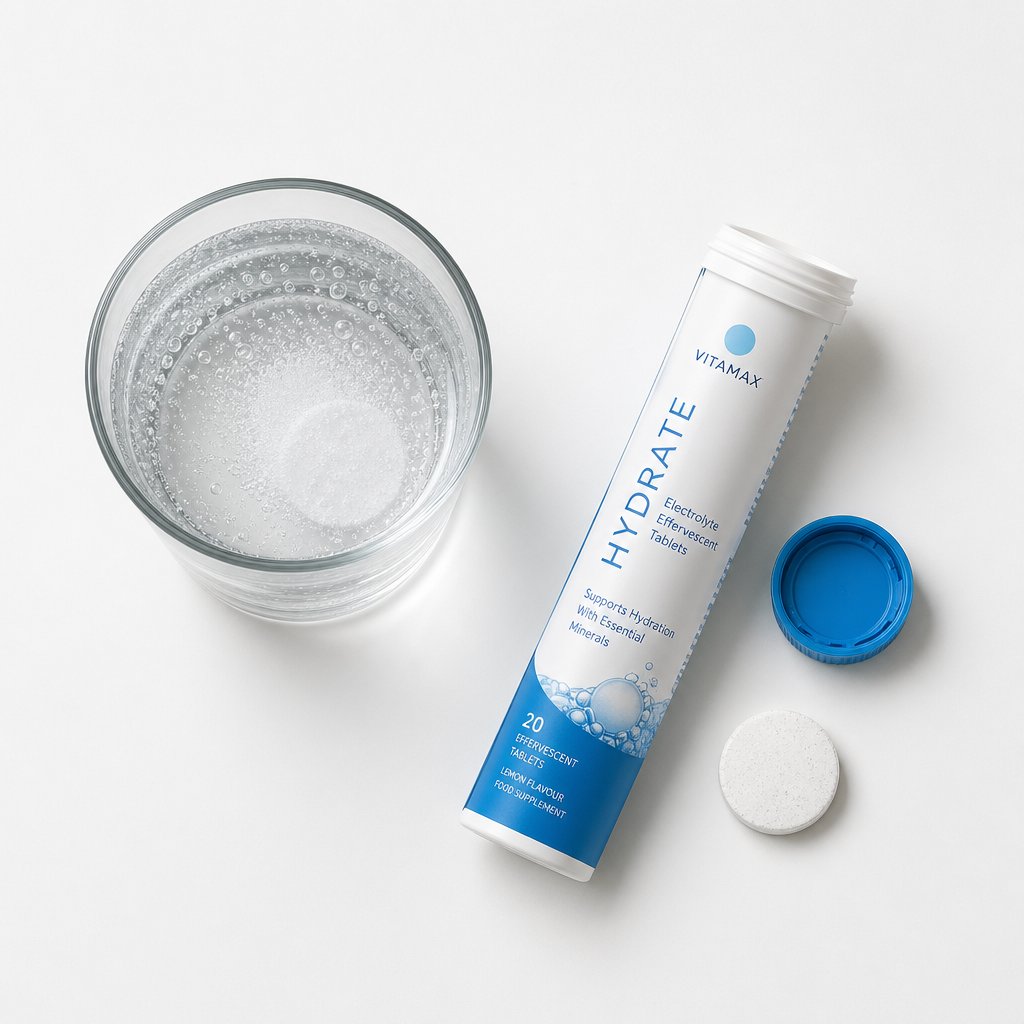
- Start with a clean, dry glass. A standard drinking glass or tumbler works fine. Avoid narrow-necked bottles — the fizzing reaction produces enough gas that a restricted opening can cause the liquid to overflow.
- Pour 150 to 200 mL (roughly 6 to 8 oz) of water into the glass. This is the typical recommended volume, but always check your product label since some formulations call for a full 250 mL. Too little water can leave you with an overly concentrated, sour-tasting solution. Too much dilutes the flavor.
- Drop one tablet into the water. Use only one tablet per glass unless the label specifically directs otherwise. Doubling up does not speed things along — it just doubles the dose.
- Wait for the tablet to dissolve completely. You will see vigorous bubbling that gradually slows and stops. Most tablets finish dissolving in one to three minutes. Resist the urge to start sipping early.
- Give the solution a gentle stir if needed. Occasionally a small amount of residue settles at the bottom. A quick swirl with a spoon ensures everything is evenly distributed. In most cases, though, the fizzing action handles this on its own.
- Drink the entire solution promptly. Once dissolved, the active ingredients are suspended in the liquid. Letting it sit for extended periods can reduce potency for certain heat- or light-sensitive vitamins. Aim to finish the glass within 15 to 20 minutes.
That is the full process. Six steps, under five minutes, no special equipment. The key point people miss is step four — waiting for complete dissolution before drinking.
Water Temperature, Volume, and Timing Tips
You might not think water temperature matters much when dissolving tablets in water, but it has a noticeable effect on both the speed and the quality of the result.
Room temperature or cool water is the sweet spot for most effervescent products. The acid-base reaction proceeds efficiently at this range, and tablets dissolving in water at around 15 to 25 degrees Celsius (59 to 77 degrees Fahrenheit) typically finish within one to three minutes. That answers the common question of how long tablets dissolve — under normal conditions, it is faster than most people expect.
Very cold water slows the chemical reaction down. If you use ice water straight from the fridge, you will notice the tablet fizzing more sluggishly and taking noticeably longer to break apart. It will still dissolve eventually, but patience is required.
Hot water is the one to avoid. While heat accelerates the reaction (sometimes dramatically, causing rapid foaming), it can degrade heat-sensitive active ingredients like vitamin C and certain B vitamins. If you are taking an effervescent vitamin supplement, hot water may reduce the very nutrient you are trying to get. For effervescent pain relievers or antacids where heat sensitivity is less of a concern, warm water is generally acceptable, but check the product packaging to be sure.
As for timing relative to meals, it depends on what is in the tablet. Mineral supplements like calcium and magnesium are often better absorbed with food. Vitamin C can be taken with or without meals, though taking it alongside food may reduce the mild stomach acidity some people experience. Pain relievers like aspirin are typically gentler on the stomach when taken after eating. When in doubt, the product label or your pharmacist is the most reliable guide.
What Happens If You Swallow a Tablet Without Dissolving It
This is a question that comes up surprisingly often, and the answer is important: never swallow an effervescent tablet whole like a regular pill. These tablets are not designed for that, and doing so can cause real problems.
When an effervescent tablet contacts moisture, it immediately begins producing carbon dioxide gas. If that reaction happens inside your throat or stomach instead of in a glass of water, the rapid gas production can cause significant discomfort, bloating, and in serious cases, a choking hazard. The tablet expands and fizzes in a confined space rather than in an open glass, and the volume of gas released can create painful pressure. For anyone with swallowing difficulties or esophageal conditions — the very people who might be tempted to just gulp the tablet down — this risk is especially serious. Pill esophagitis, where a pill gets stuck and irritates the esophagus, is already a known concern with standard tablets. An effervescent tablet lodged in the food pipe would add gas production on top of that irritation.
The same logic applies to letting a tablet dissolve directly on your tongue or in your mouth. The concentrated acid-base reaction can irritate oral tissues, and the gas release is uncomfortable at best.
What if a tablet does not fully dissolve? Occasionally you will notice a small grainy residue at the bottom of the glass after the fizzing stops. This can happen with older tablets, tablets exposed to humidity, or formulations with less soluble mineral compounds. A gentle stir usually takes care of it. If a tablet barely fizzes or leaves a large undissolved chunk, it may have degraded from moisture exposure — discard it and use a fresh one from a properly sealed tube.
Proper technique ensures you get the full dose evenly distributed in a drinkable solution. But even with perfect usage, the format itself carries certain advantages and limitations that are worth understanding before you commit to making effervescent tablets a daily habit.
Health Benefits and Real Advantages of Effervescent Tablets
Proper technique gets you a fully dissolved, evenly distributed dose. But the real question behind all of this is practical: are effervescent tablets healthy, and do they offer genuine advantages over other formats? The answer is yes, with some important caveats. Several benefits are well supported by evidence, while others depend heavily on the specific ingredient and the individual taking it. Here is an honest look at what the effervescent format actually delivers.
Easier to Swallow and Gentler on the Stomach
This is the single most significant and well-documented advantage, and it is not a minor one. Difficulty swallowing pills, known clinically as dysphagia or simply pill anxiety, affects a surprisingly large portion of the population. Elderly adults, young children, post-surgical patients, and people with conditions affecting the throat or esophagus all face this barrier daily. A 2025 review published in RSC Pharmaceutics specifically highlights that effervescent tablets are favored for dysphagic patients and special populations such as the elderly because they eliminate the need to swallow a solid dosage form entirely.
You are not swallowing a pill. You are drinking a glass of flavored liquid. That distinction removes a real psychological and physical barrier for millions of people who would otherwise skip doses or avoid supplements altogether.
The stomach gentleness claim is equally grounded. When you swallow a traditional compressed tablet, it lands in your stomach as a concentrated solid. As it slowly disintegrates, the active ingredient releases in a localized area, which can irritate the stomach lining, especially with ingredients like aspirin or high-dose vitamin C. Effervescent supplements deliver the same active ingredient already dissolved and evenly distributed across a full glass of water. The same review notes that effervescent formulations show good stomach and intestinal tolerance and cause fewer adverse effects such as gastrointestinal irritation compared to conventional solid oral forms. If you have ever felt nauseous after swallowing a large multivitamin on an empty stomach, this difference is immediately relatable.
The Built-In Hydration Advantage
This benefit hides in plain sight, and most people overlook it. Every effervescent tablet requires a full glass of water to dissolve, typically 150 to 200 mL. That means each dose automatically contributes to your daily fluid intake. It sounds simple, but consider the math: if you take an effervescent vitamin every morning, you are guaranteed at least one full glass of water before you have even thought about hydration for the day.
For populations that tend to under-hydrate, this built-in mechanism matters more than it might seem. Older adults, who are already the primary audience for effervescent vitamins due to swallowing difficulties, are also among the most likely to be chronically under-hydrated. The same applies to busy professionals who skip water throughout the morning or athletes using fizzy tablets for water-based electrolyte replenishment during training. The tablet becomes a prompt, a reason to drink a full glass rather than just a sip to wash down a capsule.
No other supplement format forces this behavior. Capsules and compressed tablets require only a small swallow of liquid. Gummies need no water at all. Effervescent medication, by design, ties supplementation directly to fluid intake, turning a health habit into two habits at once.
Better Taste, Better Compliance
Compliance, the likelihood that someone actually takes their supplement consistently over time, is arguably the most important factor in whether a supplement works. A product sitting untouched in a medicine cabinet delivers zero benefit regardless of its bioavailability profile. This is where taste becomes a genuine health advantage rather than just a nice-to-have feature.
Effervescent tablets are formulated with flavoring agents and sweeteners that transform the dissolved solution into something that resembles a soft drink more than a medical dose. Orange, berry, tropical fruit, and lemon flavors are standard. Research on the sensory properties of effervescent nutritional supplements confirms that fruity flavoring can enhance sweet and sour perceptions while masking negative sensory attributes like bitterness and metallic taste, which are common in vitamin and mineral formulations. The study found that certain fruity notes significantly reduced the perception of bitterness during tasting, a direct contributor to consumer acceptance.
The practical result: people look forward to their fizzy morning drink in a way they never look forward to swallowing a handful of pills. That positive association drives consistency, and consistency drives results.
Here is a summary of the core advantages, with an honest note on the strength of evidence behind each:
- Easier to swallow — Strong evidence. Eliminates the need to swallow a solid pill, directly benefiting elderly users, children of appropriate age, and anyone with dysphagia or pill anxiety.
- Gentler on the stomach — Well supported. Pre-dissolved active ingredients distribute evenly in liquid rather than concentrating on the stomach lining, reducing localized irritation.
- Built-in hydration — Mechanistically certain. Requiring a full glass of water per dose inherently supports daily fluid intake. No clinical trials needed to confirm this one.
- Improved taste and compliance — Supported by sensory research. Flavored effervescent drinks are more palatable than pills, and better taste correlates with better long-term adherence to supplement routines.
- Potentially faster onset — Ingredient-dependent. For certain effervescent medications like paracetamol and aspirin, the pre-dissolved format has shown faster absorption compared to conventional tablets. However, this does not apply universally across all active ingredients, and "faster" does not automatically mean "more complete."
These advantages are real, but they do not tell the whole story. Effervescent tablets also carry specific drawbacks, from sodium content to sweetener additives, that deserve the same level of honest scrutiny.
Potential Drawbacks and Who Should Avoid Effervescent Tablets
Every supplement format comes with tradeoffs, and effervescent medicine is no exception. The benefits covered above are genuine, but so are the downsides. Glossing over them would not help you make a good decision, so here is a straightforward look at the limitations and risks you should weigh before making effervescent tablets a regular part of your routine.
Sodium Content and Dietary Restrictions
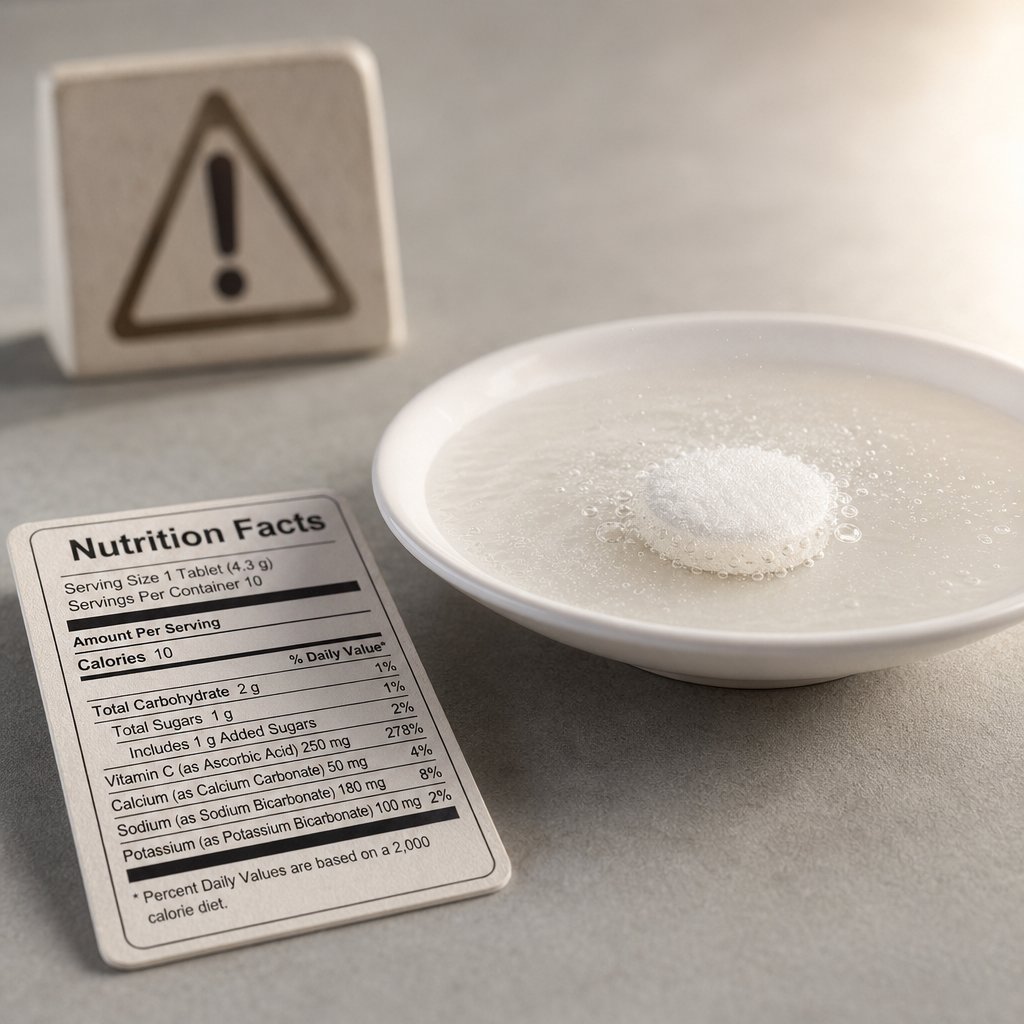
This is the single biggest concern, and it is one that most consumers are completely unaware of. Sodium bicarbonate is a core ingredient in virtually every effervescent tablet, and it contributes a meaningful amount of sodium per dose. A 2023 cross-sectional study published in BMJ Open measured the sodium content of 39 dietary supplement effervescent tablets available in Germany and found an average of 283.9 mg of sodium per tablet, equivalent to roughly 14% of the WHO's maximum recommended daily sodium intake of 2,000 mg. Vitamin products were the worst offenders, averaging 378.3 mg per tablet, with some individual products exceeding 500 mg in a single dose.
Over-the-counter effervescent drugs showed even more striking numbers. Pain and cold relief formulations had a median sodium content of 452.1 mg per tablet. The same study found that taking the maximum recommended daily dose of Alka-Seltzer effervescent classic (eight tablets) would deliver 3,560 mg of sodium — 178% of the entire daily recommended limit from that one product alone. Even a single Alka-Seltzer effervescent tablet contains 445 mg of sodium, roughly 22% of the daily cap.
For a healthy adult with normal blood pressure, one effervescent supplement per day is unlikely to cause problems on its own. But for anyone managing hypertension, heart failure, kidney disease, or following a sodium-restricted diet, these hidden amounts add up fast on top of dietary sodium from food. The study's authors noted that the majority of consumers and even many healthcare professionals are unaware of the sodium content in these products, partly because only about 13% of the dietary supplements they examined actually declared sodium on the packaging.
Sweeteners, Additives, and Hidden Ingredients
Flip an effervescent tube around and read the ingredients tablet listing carefully. Beyond the acid, base, and active ingredient, you will typically find sweeteners, flavoring agents, colorants, and sometimes anti-caking compounds. These additions make the drink taste pleasant, but they introduce considerations that certain people need to take seriously.
- Aspartame — A common artificial sweetener in effervescent formulations. The FDA considers aspartame safe for the general population under approved conditions of use. However, people with phenylketonuria (PKU), a rare genetic disorder affecting phenylalanine metabolism, must avoid it entirely. Products containing aspartame are required to carry a phenylalanine warning on the label.
- Sugar and sugar alcohols — Some effervescent tablets use sucrose, glucose, or sugar alcohols like sorbitol for sweetness. For people managing diabetes, these added sugars can affect blood glucose levels and should be factored into daily carbohydrate tracking. Sugar alcohols, while lower in calories, can cause bloating or digestive discomfort in sensitive individuals.
- Acesulfame potassium (Ace-K) and sucralose — Other frequently used sweeteners in effervescent formulations. Both are FDA-approved and widely considered safe, but consumers who prefer to minimize artificial additive intake should check labels and choose accordingly.
- Colorants and flavoring agents — These are generally present in small amounts, but individuals with specific sensitivities or allergies should review the full ingredient list before use.
The broader point is that an effervescent drug or supplement is never just its headline active ingredient. The supporting cast of additives matters, especially for people with metabolic conditions, allergies, or dietary restrictions.
Other Practical Drawbacks Worth Knowing
Beyond sodium and sweeteners, a few additional limitations round out the picture:
- Higher cost per dose — Effervescent tablets generally cost more per serving than traditional compressed tablets containing the same active ingredient. The specialized manufacturing process and moisture-sensitive packaging contribute to the price difference.
- Moisture sensitivity — The same acid-base chemistry that makes these tablets work also makes them vulnerable. Exposure to humidity triggers a premature reaction, degrading the tablet before it ever reaches your glass. Careful storage in sealed tubes is not optional — it is essential.
- Acid reflux and GERD — The carbonation and acidic components in the dissolved solution can aggravate symptoms in people with gastroesophageal reflux disease or chronic heartburn. The very fizz that makes the format appealing can trigger discomfort for sensitive stomachs.
- Environmental packaging — Most effervescent tablets come in individual plastic tubes with desiccant caps, generating more packaging waste per dose than a single bottle of 60 or 90 capsules. For environmentally conscious consumers, this is a real consideration.
- Age restrictions — Effervescent soluble medications are generally not recommended for very young children. The risk is not the dissolved drink itself but the possibility of a child placing an undissolved soda tablet in their mouth, where the rapid gas production could pose a choking hazard.
Who Should Consult a Doctor Before Using Effervescent Tablets
Most healthy adults can use effervescent tablets without concern. But certain groups should talk to a healthcare provider before starting, specifically because of the sodium content and additive profile:
- People with hypertension or those on blood pressure medication
- Individuals with heart failure or a history of cardiovascular events
- Anyone with chronic kidney disease or impaired renal function
- People on a sodium-restricted diet for any medical reason
- Individuals with phenylketonuria (PKU) — must avoid aspartame-containing products
- People managing diabetes who need to monitor sugar and carbohydrate intake from all sources
- Anyone with GERD or chronic acid reflux that is aggravated by carbonated beverages
- Pregnant or breastfeeding women who should verify ingredient safety with their provider
None of this means effervescent tablets are unsafe. It means they are not universally suitable, and the specific formulation details — sodium per tablet, sweetener type, additive profile — matter more than most people realize. Reading the label is not just good practice; for some groups, it is a medical necessity.
Understanding what goes into these tablets naturally raises a related question: how are they actually made, and why does manufacturing quality affect what ends up in your glass?
How Effervescent Tablets Are Made From Formulation to Finished Product
The ingredient list on the back of an effervescent tube tells you what is inside. It does not tell you how those ingredients were selected, balanced, and compressed into a tablet that fizzes on cue, dissolves cleanly, tastes pleasant, and delivers a consistent dose every time. That process, the formulation and manufacturing behind the scenes, directly shapes the product you experience in your glass. A well-made tablet dissolves in under two minutes and leaves a clear, evenly flavored solution. A poorly made one crumbles in the tube, fizzes weakly, leaves gritty residue, or delivers an inconsistent amount of the active ingredient from tablet to tablet.
Whether you are a consumer trying to understand quality differences between brands or a nutrition entrepreneur exploring how to bring an effervescent product to market, the manufacturing process matters more than most people realize.
How Effervescent Tablets Are Formulated
Formulating an effervescent tablet is not as simple as mixing an acid, a base, and a vitamin together and pressing them into a disc. Every ingredient must be carefully selected and balanced to work within the effervescent matrix without triggering premature reactions, degrading the active ingredient, or producing an unpleasant taste.
The process starts with choosing the right acid-base pair. Citric acid is the most widely used acid component because it reacts vigorously with sodium bicarbonate, dissolves cleanly in water, and contributes a pleasant tart flavor. Some formulations use tartaric acid, fumaric acid, or malic acid instead, depending on the desired reaction speed and taste profile. On the base side, sodium bicarbonate remains the standard due to its high solubility, strong reaction, and low cost. The stoichiometric ratio between acid and base must be precisely calibrated. Too much acid leaves the solution overly sour with a low pH. Too much base produces a flat, salty taste and a higher pH that can affect ingredient stability.
The active ingredient, whether vitamin C, a mineral complex, or a pharmaceutical compound, must be compatible with this reactive environment. Some active ingredients are sensitive to the acidic conditions inside the tablet matrix, while others may interfere with the effervescent reaction itself. Formulators test multiple combinations to find a balance where the active ingredient remains stable during storage but dissolves fully and uniformly when the tablet hits water.
Beyond the core trio, several supporting ingredients round out the formula:
- Binders — These hold the compressed tablet together so it does not crumble during shipping and handling. Unlike conventional tablets that can use water-insoluble binders like magnesium stearate, effervescent formulations require water-soluble alternatives such as polyethylene glycol (PEG) or polyvinylpyrrolidone (PVP). Insoluble binders would leave cloudy residue in your glass.
- Lubricants — During compression, the powder mixture needs to release cleanly from the tablet press without sticking. Sodium benzoate and PEG serve this role in effervescent production, again chosen specifically because they dissolve in water rather than leaving particles behind.
- Sweeteners and flavoring agents — These transform what would otherwise be a sour, salty liquid into something you actually want to drink. Orange, lemon, berry, and tropical fruit flavors are common. Sweeteners range from sucrose and aspartame to sucralose, depending on the target market and dietary considerations.
- Anti-caking agents — Silicon dioxide or magnesium carbonate may be added in small amounts to keep the powder mixture free-flowing during manufacturing and to absorb trace moisture.
Every one of these choices affects the final consumer experience. The wrong binder leaves residue. The wrong acid-base ratio produces a drink that tastes off. An incompatible active ingredient degrades before you open the tube. Formulation is where quality is either built in or compromised.
Why Manufacturing Quality Affects the Consumer Experience
Even a perfectly designed formula can fail if the manufacturing process does not match. Effervescent tablet production is significantly more demanding than standard tablet manufacturing, and the reason comes down to one word: moisture.
The acid and base components inside an effervescent tablet are designed to react when they contact water. That means any moisture exposure during production, even humidity in the air, can trigger a premature reaction that ruins the batch. Production facilities typically maintain relative humidity between 10% and 25% at cool temperatures, with raw materials handled in closed systems using dry nitrogen or filtered air. This level of environmental control sets effervescent manufacturing apart from conventional tablet lines and can raise production costs by 30% to 60% compared to standard operations.
Two primary methods are used to prepare the powder mixture before compression:
- Direct compression — The simplest approach. All dry ingredients are blended together and fed directly into a tablet press. This method works when the raw materials have excellent flow properties and uniform particle sizes. It avoids introducing any moisture, which is a major advantage. The tradeoff is that directly compressed effervescent tablets sometimes have lower hardness, making them more fragile during transport and handling.
- Wet granulation — A more involved process where a binding solution (typically PVP dissolved in ethanol rather than water, to minimize premature reaction) is added to the powder mixture to form granules. These granules are then dried, sieved, and compressed. Research published in Advanced Pharmaceutical Bulletin found that wet granulation produced tablets with roughly three times the hardness of directly compressed tablets, along with better flow properties and more consistent content uniformity. The resulting tablets are sturdier and dissolve more reliably, but the process requires specialized equipment and careful solvent handling.
After granulation, the blend is fed into high-speed rotary tablet presses. Effervescent tablets are typically much larger than conventional pills, often 20 to 30 mm in diameter, because they contain the acid-base agents in addition to the active ingredient. Compression forces are optimized so the tablet is hard enough to survive packaging and shipping but still porous enough to dissolve rapidly in water. Bicarb soda tablets that are over-compressed dissolve sluggishly. Under-compressed ones crumble in the tube.
Packaging happens immediately after compression. Tablets are sealed into moisture-proof aluminum tubes, blister packs, or screw-cap containers, often with a desiccant cap or packet inside. This step is not an afterthought — it is as critical as the formulation itself. A perfectly manufactured tablet exposed to ambient humidity on a packaging line will begin degrading before it ever reaches a store shelf.
The difference between a premium effervescent product and a mediocre one often traces back to these manufacturing details. Tablets that dissolve incompletely, taste inconsistent from one tablet to the next, or arrive crumbled in the tube are usually symptoms of inadequate humidity control, poor granulation, or rushed packaging rather than a bad formula on paper.
The Role of Contract Manufacturers in Effervescent Production
Given the specialized equipment, climate-controlled facilities, and technical expertise required, most supplement brands do not manufacture effervescent tablets in-house. Instead, they partner with an effervescent tablet contract manufacturer that already has the infrastructure and know-how in place. This is standard practice across the industry, from small startups launching their first product to established brands expanding into new formats.
A capable effervescent tablet manufacturer handles the full production chain: formulation development, raw material sourcing, granulation, compression, quality testing, and moisture-proof packaging. Many also produce effervescent granules for brands that prefer a sachet or stick-pack format rather than a compressed tablet. The best partners offer OEM/ODM services, meaning they can either produce a brand's existing formula or help develop a custom formulation from scratch.
For nutrition brands, supplement importers, and private label sellers evaluating manufacturing partners, a few factors separate reliable effervescent tablet manufacturers from the rest:
- Humidity-controlled production environment — Non-negotiable. Ask about specific RH levels maintained on the production floor.
- Format flexibility — The ability to produce multiple supplement formats (tablets, capsules, powders, gummies, liquids) under one roof simplifies supply chain management and allows brands to expand their product lines without switching partners.
- Quality certifications — GMP compliance, ISO certifications, and third-party testing capabilities are baseline indicators of manufacturing rigor.
- Scalability — A manufacturer that can handle small initial runs and scale up as demand grows gives emerging brands room to test the market without overcommitting.
Companies like ZhuFeng, for example, offer OEM/ODM health food manufacturing services that span multiple product formats, including effervescent tablets, hard capsules, powder and granules, soft capsules, gummy candy, and oral liquids. For brands exploring the effervescent space alongside other supplement categories, working with a manufacturer that covers the full range of formats can streamline development and reduce the complexity of managing multiple production partners.
The manufacturing process determines whether a well-designed formula actually translates into a consistent, enjoyable product in the consumer's glass. But production quality is only half the equation once the tablet leaves the factory. How you store, handle, and evaluate effervescent products at home has just as much influence on whether each tablet delivers what it promises.
Storage, Shelf Life, and Smart Buying Tips
A perfectly manufactured effervescent tablet can still fail you at home if it is stored carelessly. Unlike a bottle of capsules that tolerates a fair amount of neglect, effervescent tabs are chemically primed to react the moment moisture reaches them. That sensitivity does not end when the product leaves the factory — it follows the tablet all the way into your kitchen cabinet, and it directly affects whether the fizzy tablet in your glass performs the way it should.
Why Moisture Is the Enemy of Effervescent Tablets
You already know the acid-base reaction inside these tablets is triggered by water. The problem is that water does not have to come from your glass. Humidity in the air, condensation on a countertop, even the moisture on your fingertips when you reach into a tube — any of these can start the reaction prematurely, long before the tablet is supposed to dissolve.
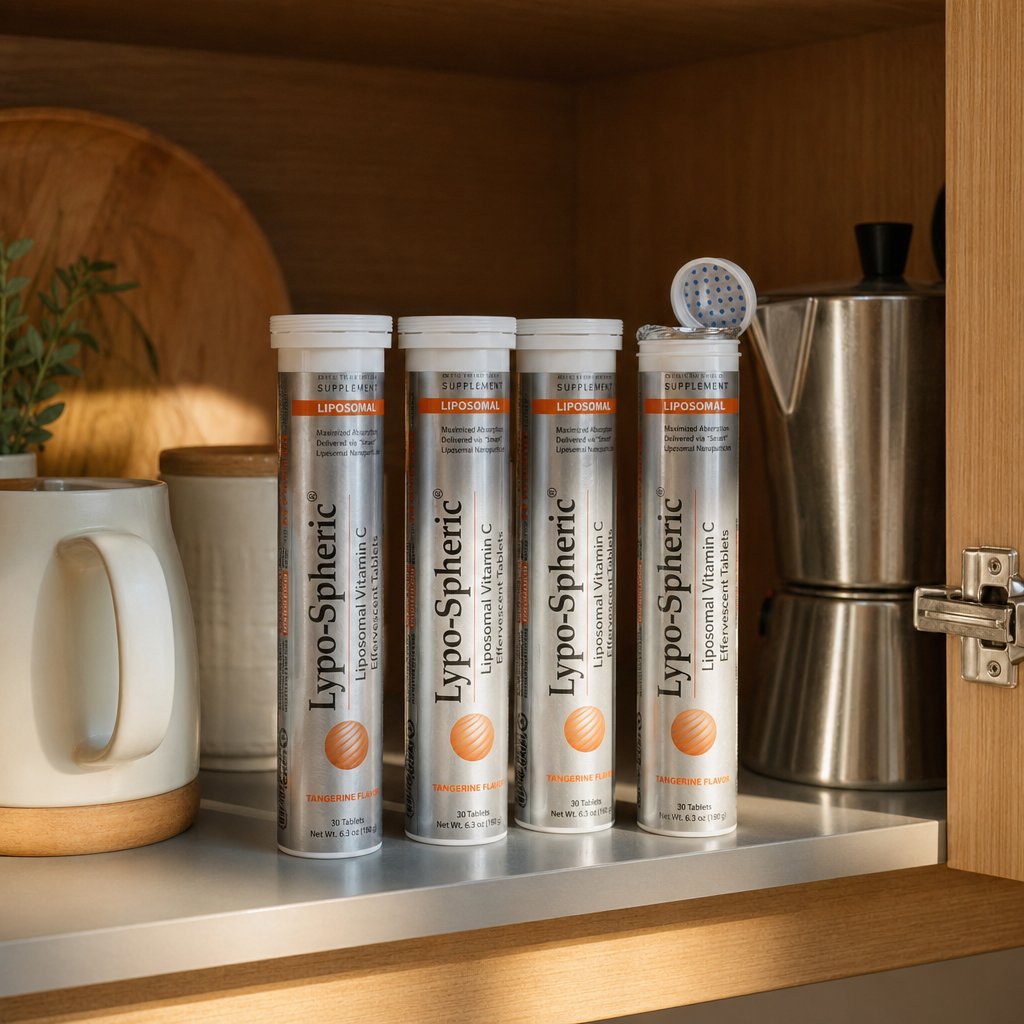
This is exactly why effervescent tablets come packaged in sealed aluminum tubes with tight-fitting caps rather than the wide-mouth bottles or simple blister packs used for standard supplements. The tube format creates a moisture barrier that keeps the acid and base components stable and unreacted. Many tubes also include a desiccant cap, a small built-in compartment filled with a moisture-absorbing material like silica gel. That cap is not decorative packaging — it actively scavenges any trace humidity that enters the tube each time you open it. Throwing it away and replacing it with a generic cap removes a layer of protection the product was specifically designed to have.
When moisture does get in, the consequences are predictable. The acid and base begin reacting inside the tube, consuming the very ingredients responsible for the fizz. The result is a tablet that has partially spent its effervescent charge before you ever drop it into water. As manufacturing experts note, even modest moisture exposure can cause tablets to lose fizz strength, dissolve unevenly, develop cracks, or leave heavy residue — all signs that the water effervescent reaction has already been partially triggered during storage.
Proper Storage and Signs of a Degraded Tablet
Keeping your fizzing tablets in good condition does not require anything elaborate, but it does require consistency. Here are the storage basics that protect your investment:
- Keep tablets in the original tube. Do not transfer them to pill organizers, open bowls, or zip-lock bags. The original packaging is engineered for moisture protection.
- Reseal the tube tightly after every use. Press the cap down firmly until it clicks or seats fully. Every second the tube sits open, ambient humidity is creeping in.
- Store in a cool, dry place. A kitchen cabinet or bedroom drawer works well. Avoid the bathroom — the steam and humidity from showers create exactly the conditions these tablets cannot tolerate.
- Do not discard the desiccant cap. If your tube has one, it is working quietly in the background to absorb moisture between uses. Replacing it with a standard cap removes that protection.
- Avoid temperature extremes. Excessive heat can accelerate degradation of both the effervescent agents and heat-sensitive active ingredients like vitamin C. A consistently cool environment extends shelf life.
Even with careful storage, fizz tablets do not last forever. Most products carry a shelf life of 18 to 24 months from the date of manufacture when kept sealed and stored properly. Once you open the tube, that timeline shortens because each opening introduces a small amount of ambient moisture. In humid climates — tropical regions, coastal areas, or anywhere with consistently high relative humidity — degradation happens faster, and you may notice reduced performance well before the printed expiration date.
Knowing the signs of a degraded tablet saves you from taking a compromised dose:
- Crumbling or powdery residue in the tube — The tablet structure has weakened, usually from moisture-triggered partial reaction.
- Tablets stuck together — Surface moisture has caused adjacent tablets to bond. Pulling them apart often reveals soft, chalky spots.
- Weak or sluggish fizz — If a tablet barely bubbles when dropped in water, much of the acid-base charge has already been spent.
- Off taste or unusual color — Chemical degradation can alter both flavor and appearance. A water effervescent solution that tastes flat, overly salty, or bitter compared to a fresh tablet is a clear signal.
- Large undissolved residue — A healthy tablet dissolves almost completely. Significant gritty sediment at the bottom of the glass suggests structural or chemical breakdown.
If you notice any of these signs, discard the affected tablets and start with a fresh, properly sealed tube. Taking a degraded tablet is not dangerous in most cases, but you are likely getting an inconsistent or reduced dose of the active ingredient.
What to Look for When Choosing Quality Effervescent Products
Storage habits protect the tablets you already own. Smart buying habits ensure you are starting with a quality product in the first place. Whether you are a consumer picking up a tube at the pharmacy or a brand owner sourcing products for your line, a few label details and quality indicators separate reliable effervescent products from mediocre ones.
For consumers, check these details before purchasing:
| Label Detail | What to Look For | Why It Matters |
|---|---|---|
| Active ingredient dosage | Clear mg or mcg per tablet | Confirms you are getting a meaningful dose, not a token amount |
| Sodium content per tablet | Listed in mg, ideally below 300 mg | Critical for anyone monitoring sodium intake — many brands omit this |
| Sweetener type | Aspartame, sucralose, sucrose, or sugar alcohols | Relevant for PKU, diabetes, or personal dietary preferences |
| Suggested use instructions | Water volume, temperature, and frequency | Proper dissolution depends on following the right preparation method |
| Expiration date | Clearly printed and not approaching | Effervescent tablets degrade faster than standard pills — freshness matters more |
| Packaging integrity | Sealed tube with intact cap, no visible damage | A compromised seal means moisture may have already reached the tablets |
Pay particular attention to sodium content. As covered earlier in this guide, many effervescent products contain several hundred milligrams of sodium per tablet, yet only a small percentage actually declare it prominently on the label. If sodium is not listed, that is itself a red flag about the brand's transparency.
For brands and supplement businesses evaluating manufacturing partners, the quality indicators shift toward production capabilities and certifications. Look for manufacturers that maintain humidity-controlled production environments (10% to 25% RH), hold GMP and ISO certifications, and can demonstrate consistent batch-to-batch quality through third-party testing. Scalability matters too — a partner that handles small pilot runs and scales to full production gives you flexibility as demand grows. Manufacturers like ZhuFeng, which offer scalable OEM/ODM production across multiple supplement formats with established quality certifications, provide a practical starting point for businesses evaluating their options in the effervescent space.
Whether you are buying a single tube for personal use or sourcing thousands of units for a product launch, the same principle applies: the quality of an effervescent tablet is only as good as the formulation behind it, the manufacturing process that produced it, and the storage conditions that preserved it. Get all three right, and every tablet delivers exactly what the label promises — a clean fizz, a consistent dose, and a drink worth looking forward to.
Frequently Asked Questions About Effervescent Tablets
1. Are effervescent tablets better than regular tablets?
Effervescent tablets offer specific advantages over regular tablets, including easier swallowing since you drink a liquid instead of a solid pill, gentler stomach absorption because the active ingredient is pre-dissolved and evenly distributed, and potentially faster onset for certain medications like paracetamol and aspirin. However, they are not universally better. Regular tablets are more portable, cost less per dose, contain negligible sodium, and do not require water or a glass for preparation. The best format depends on your priorities: if you struggle with pills or experience stomach irritation, effervescent tablets are a strong choice. If convenience and cost matter most, traditional tablets may serve you better.
2. Can you swallow an effervescent tablet without water?
No, you should never swallow an effervescent tablet whole like a regular pill. These tablets are designed to react with water and produce carbon dioxide gas. If that reaction occurs inside your throat or stomach, the rapid gas production can cause significant bloating, discomfort, and in serious cases, a choking hazard. The tablet expands and fizzes in a confined space, creating painful pressure. Always dissolve the tablet completely in 150 to 200 mL of room-temperature water and wait until the fizzing stops before drinking the solution.
3. How much sodium is in effervescent tablets?
Effervescent tablets contain notable sodium levels because sodium bicarbonate is a core reactive ingredient. Research measuring 39 dietary supplement effervescent tablets found an average of 283.9 mg of sodium per tablet, roughly 14% of the WHO's recommended daily maximum. Vitamin formulations averaged even higher at 378.3 mg per tablet. OTC pain and cold relief effervescent products can exceed 450 mg per tablet. People with hypertension, heart failure, kidney disease, or those on sodium-restricted diets should consult a doctor before regular use and check labels carefully, as many brands do not prominently declare sodium content.
4. How long does it take for an effervescent tablet to dissolve?
Most effervescent tablets dissolve completely within one to three minutes in room-temperature water (15 to 25 degrees Celsius or 59 to 77 degrees Fahrenheit). Very cold water slows the chemical reaction and can extend dissolution time noticeably. Hot water speeds the reaction but may degrade heat-sensitive ingredients like vitamin C and B vitamins. For optimal results, use cool or room-temperature water in a standard glass, and wait until all fizzing has stopped and the solution appears clear before drinking.
5. How should effervescent tablets be stored to maintain quality?
Store effervescent tablets in their original sealed tube in a cool, dry place away from bathrooms or humid environments. Reseal the cap tightly after every use and never discard the desiccant cap, as it actively absorbs trace moisture between openings. Avoid transferring tablets to pill organizers or open containers. Signs of degraded tablets include crumbling, tablets stuck together, weak fizz, off taste, or heavy undissolved residue. Most products maintain a shelf life of 18 to 24 months when sealed, but humid climates can shorten this. Once opened, use the tube within a reasonable timeframe as each opening introduces ambient moisture.