
Garam Masala and Curry Powder Are Not the Same Blend
Is garam masala the same as curry powder? No. They are two distinct spice blends with different origins, ingredients, and culinary purposes. Swapping one for the other without adjustment can throw an entire dish off balance.
The Short Answer Every Home Cook Needs
Garam masala is a traditional Indian blend rooted in Ayurvedic principles. The name itself tells the story: "garam" means "hot" or "warming" in Hindi, and "masala" means "spices." But "hot" here does not refer to chili heat. In Ayurveda, these spices are believed to raise the body's internal temperature and stimulate metabolism. Cardamom, cinnamon, cloves, and black pepper form the aromatic backbone of this blend, and every household across India has its own version passed down through generations.
Curry powder, on the other hand, is a British-colonial invention from the 18th century. It was designed to give Western home cooks a single-jar shortcut to approximate the complex flavors of Indian cuisine. Turmeric gives it that signature golden-yellow color, and the blend tends to be more uniform and earthy compared to the layered warmth of garam masala.
Garam masala is a warming aromatic blend native to Indian kitchens; curry powder is a standardized Western interpretation of Indian spice flavors. They share a few overlapping ingredients but differ in philosophy, composition, and how they behave in your cooking.
Why the Confusion Exists
The mix-up between curry powder vs garam masala is understandable. Both sit in the same spice aisle, both appear in recipes labeled "curry," and both contain cumin and coriander. If you have ever grabbed the wrong jar mid-recipe, you are far from alone.
The confusion traces back to colonial history. British officials in India encountered hundreds of regional dishes, each built on freshly ground spice combinations. Rather than learning the nuances, they lumped everything under the umbrella term "curry" and commercialized a single powder to replicate it all. Garam masala, meanwhile, continued evolving in Indian homes as a finishing spice with deep cultural significance.
Understanding the difference between curry powder and garam masala is not just trivia. It changes how you cook, when you add each blend, and what your final dish tastes like. Whether you are a beginner stocking your first spice rack or an experienced cook refining your technique, the garam masala vs curry distinction shapes every decision from ingredient prep to the final sprinkle before serving.
The real differences become clear once you look at what is actually inside each jar.
Every Ingredient Compared Side by Side
So what is in curry powder versus garam masala? Both blends draw from the same pantry of Indian whole spices, yet they pull in very different directions. A side-by-side look at the curry powder ingredients and garam masala components reveals exactly where the two part ways and where they share common ground.
Complete Spice-by-Spice Breakdown
The table below covers every spice you are likely to encounter in either blend. You will notice that what is in masala leans heavily toward aromatic warming spices, while what is curry spice made of centers on earthy, pungent ingredients anchored by turmeric.
| Spice Name | Found in Garam Masala | Found in Curry Powder | Notes |
|---|---|---|---|
| Cumin | Yes | Yes | Shared foundation spice in both blends; adds earthy depth |
| Coriander | Yes | Yes | Provides body and mild citrus sweetness in both |
| Black Pepper | Yes | Yes | Delivers heat; used more generously in garam masala |
| Cardamom | Yes | Rarely | Signature garam masala spice; adds sweet floral aroma |
| Cinnamon | Yes | Sometimes | Core warming element in garam masala; minor role in curry powder |
| Cloves | Yes | Rarely | Intense and pungent; defines garam masala's warmth |
| Nutmeg | Yes | No | Adds delicate sweetness; common in North Indian garam masala |
| Mace | Yes | No | Outer covering of nutmeg; boosts aroma in garam masala |
| Bay Leaves | Yes | No | Indian bay leaf (tej patta) used in many garam masala recipes |
| Turmeric | No | Yes | The defining curry powder ingredient; gives golden color |
| Fenugreek | No | Yes | Slightly bitter, maple-like flavor unique to curry powder |
| Mustard Seed | No | Yes | Adds pungent sharpness; absent from traditional garam masala |
| Curry Leaves | No | No | Despite the name, rarely included in commercial curry powder |
One surprise for many cooks: curry leaves are not actually a standard curry powder ingredient. The name "curry powder" refers to the British term for Indian-style dishes, not to the aromatic leaf itself.
Where the Two Blends Overlap
Cumin, coriander, and black pepper appear in both blends, which is exactly why they can seem interchangeable at a glance. These three spices form a shared base that gives both mixtures their savory, slightly warm undertone.
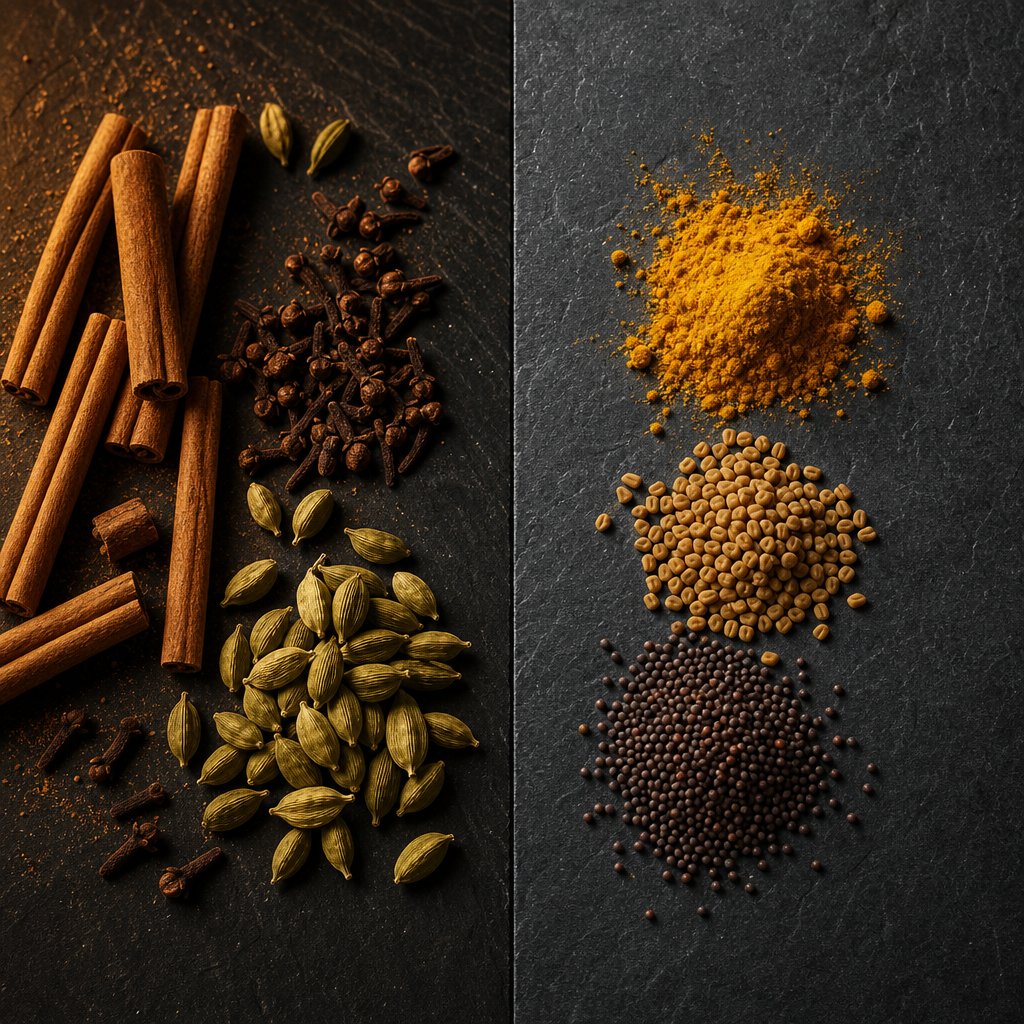
The critical split happens beyond that shared base. Garam masala builds upward with cardamom, cinnamon, cloves, nutmeg, and mace, creating layers of sweet-warm complexity. Curry powder branches in the opposite direction, leaning on turmeric for color, fenugreek for bitterness, and mustard seed for sharpness. Knowing whats in curry powder versus what is in masala makes it clear why a straight swap changes a dish so dramatically.
Turmeric is the single biggest differentiator. It dominates curry powder both visually and in flavor, yet it is absent from virtually every traditional garam masala recipe across India. Meanwhile, cardamom and cinnamon, the heart of garam masala, play only a minor supporting role in most spices in Indian curry powder blends sold commercially.
These ingredient differences do more than change the look of your spice jar. They create entirely different flavor experiences on the palate, which is where the real impact shows up in your cooking.
The Flavor Philosophy That Sets Them Apart
Ingredients tell you what is in the jar. Flavor philosophy tells you why those spices were chosen in the first place. The difference between curry and masala goes deeper than a list of components. It comes down to two fundamentally different goals on the palate.
Warming Spices vs Earthy Spices Explained
Garam masala is built around warming spices: cinnamon, cloves, cardamom, and black pepper. These ingredients were selected centuries ago based on the Ayurvedic idea that certain spices raise internal body heat and support digestion. The result is a blend that feels aromatic and enveloping, almost perfume-like in its complexity.
Curry powder takes the opposite approach. Its foundation rests on earthy, pungent spices like turmeric, fenugreek, and mustard seed. These create a savory base designed to coat proteins and vegetables with a uniform, grounding flavor. Where garam masala lifts a dish with fragrance, curry powder anchors it with depth.
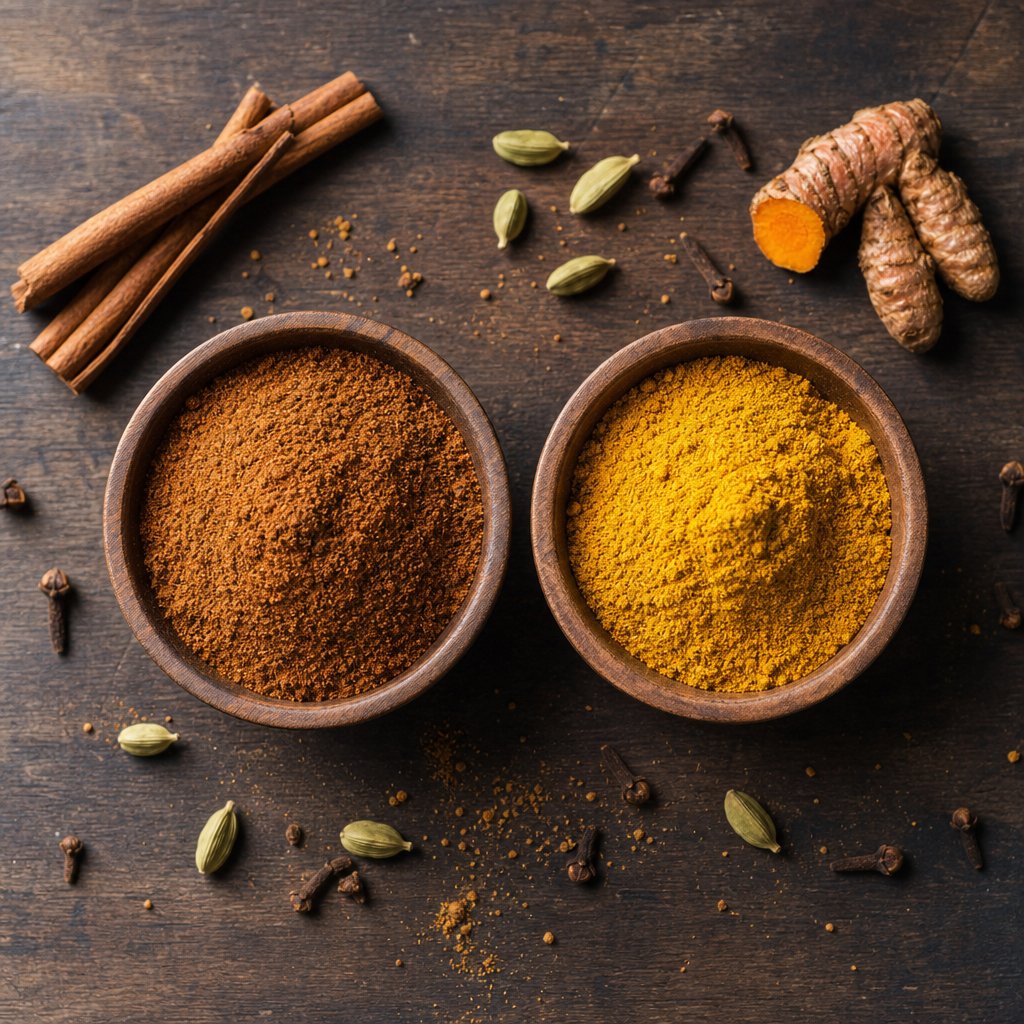
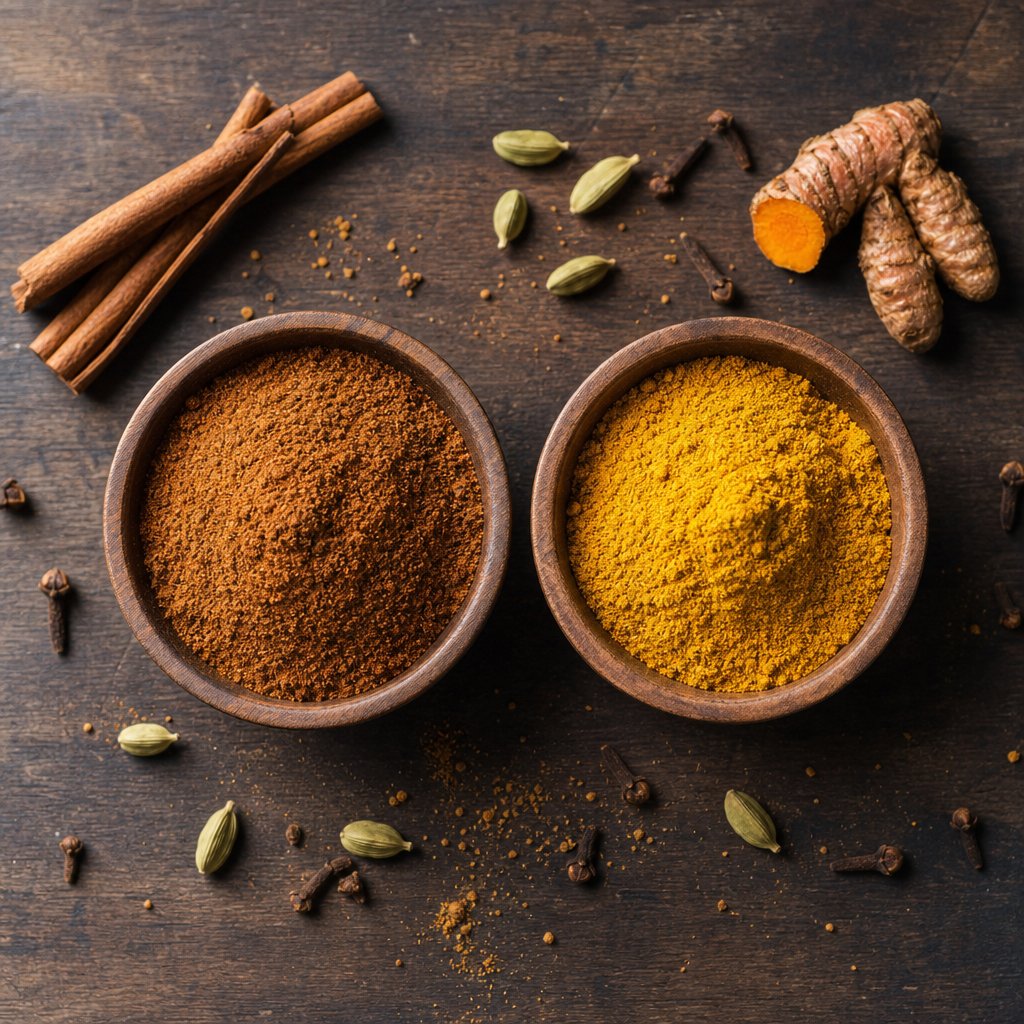
You can even see the difference before tasting anything. Curry powder is golden-yellow, sometimes bordering on bright marigold, thanks to turmeric's powerful pigment. Garam masala ranges from warm brown to reddish-tan, reflecting its cinnamon and clove-heavy composition. If your spice blend stains everything yellow, you are looking at curry powder.
What Each Blend Tastes Like in Your Food
So what does curry powder taste like compared to garam masala in a finished dish? Imagine two completely different sensory experiences.
Garam masala delivers:
- Sweet warmth from cinnamon and cardamom
- Floral, almost perfumed top notes
- A gentle peppery heat that builds slowly
- Aromatic complexity that lingers after each bite
Curry powder delivers:
- Earthy, slightly bitter undertones from turmeric
- A savory, uniform flavor that blends into sauces
- Mild pungency from mustard and fenugreek
- Warm but not particularly aromatic finish
Is curry powder spicy? Not in the chili-heat sense. It registers as warm and savory rather than fiery. Garam masala is not spicy either, though its black pepper content can add a sharper bite depending on the recipe.
When comparing masala vs curry in practical cooking terms, think of it this way: curry powder is the workhorse that builds your sauce from the ground up, while garam masala is the finishing touch that adds aromatic dimension on top. One creates the body of a dish. The other gives it soul.
This flavor distinction is not fixed across India, though. Regional cooks have been rewriting the garam masala formula for generations, and those variations shift the flavor profile in surprising directions.
Regional Variations You Should Know About
Here is something that surprises many Western cooks: there is no single garam masala recipe. Ask ten Indian households and you will get ten different blends. Each region across India has developed its own version over centuries, shaped by local ingredients, climate, and culinary traditions. Curry powder, by contrast, remains relatively standardized no matter where you buy it. That uniformity is part of its colonial design. Garam masala resists standardization because it was never meant to be a one-size-fits-all product.
Regional Garam Masala Styles Across India
So what are masala spices in practice? That depends entirely on where in India you are cooking. Here are the major regional styles and their signature ingredients:
- Punjabi Garam Masala - Bold and robust. Heavy on cinnamon, cloves, green and black cardamom, with mace, nutmeg, and bay leaves rounding out the blend. This is the version most familiar to Western palates, built for rich dishes like butter chicken and paneer tikka.
- Kashmiri Garam Masala - More delicate and aromatic. Features black cumin seeds (shahi jeera), fennel seeds, and dried ginger alongside the classic cardamom and cinnamon. Designed for fragrant dishes like Rogan Josh where subtlety matters.
- South Indian (Kerala) Garam Masala - Adds fennel seeds, star anise, and dried red chilies to the base spices. Some Maharashtrian variations include desiccated coconut and black stone flower (kalpasi), giving the blend an earthy, slightly sweet character unique to the region.
- Bengali Garam Masala (Garam Mashla) - Strikingly minimalist. Just three spices: cinnamon, green cardamom, and cloves. Used sparingly in light fish curries and vegetable dishes where a whisper of warmth is all that is needed.
This diversity is exactly why the question "is garam masala the same as curry powder" misses the bigger picture. Garam masala is not even the same as itself from one kitchen to the next.
How Garam Masala Differs from Tandoori and Chaat Masala
Garam masala is not the only masala blend in the Indian spice cabinet, and confusing them creates its own set of problems.
When comparing garam masala vs tandoori masala, the key difference is purpose. Tandoori masala is a marinade blend built around Kashmiri red chili powder, dried fenugreek leaves, and garlic powder. It is designed to coat proteins before high-heat cooking in a tandoor oven. Garam masala, by contrast, is a finishing spice meant to add aromatic warmth at the end of cooking. The tikka masala vs garam masala distinction follows a similar logic: tikka masala seasoning includes yogurt-friendly spices for marinating, while garam masala works as a final aromatic layer.
The chaat masala vs garam masala comparison is even more straightforward. Chaat masala is a tangy, salty blend dominated by amchur (dried mango powder), black salt, and cumin. It is sprinkled over street food, fruit, and salads for a sour punch. Garam masala would taste completely out of place in those applications because it brings warmth and sweetness rather than tartness.
Each of these blends occupies a specific role in Indian cooking. Garam masala handles aromatic finishing. Tandoori masala handles high-heat marinades. Chaat masala handles cold, tangy applications. Understanding where each one belongs in the cooking process is what separates a good dish from a great one.
Cooking Techniques That Unlock Each Blend
Knowing which spices are in each blend only gets you halfway. The real difference between garam masala and curry powder shows up in how and when you add them to the pan. Timing changes everything. Use the right blend at the wrong moment and you lose the very qualities that make it special.
When to Add Each Blend During Cooking
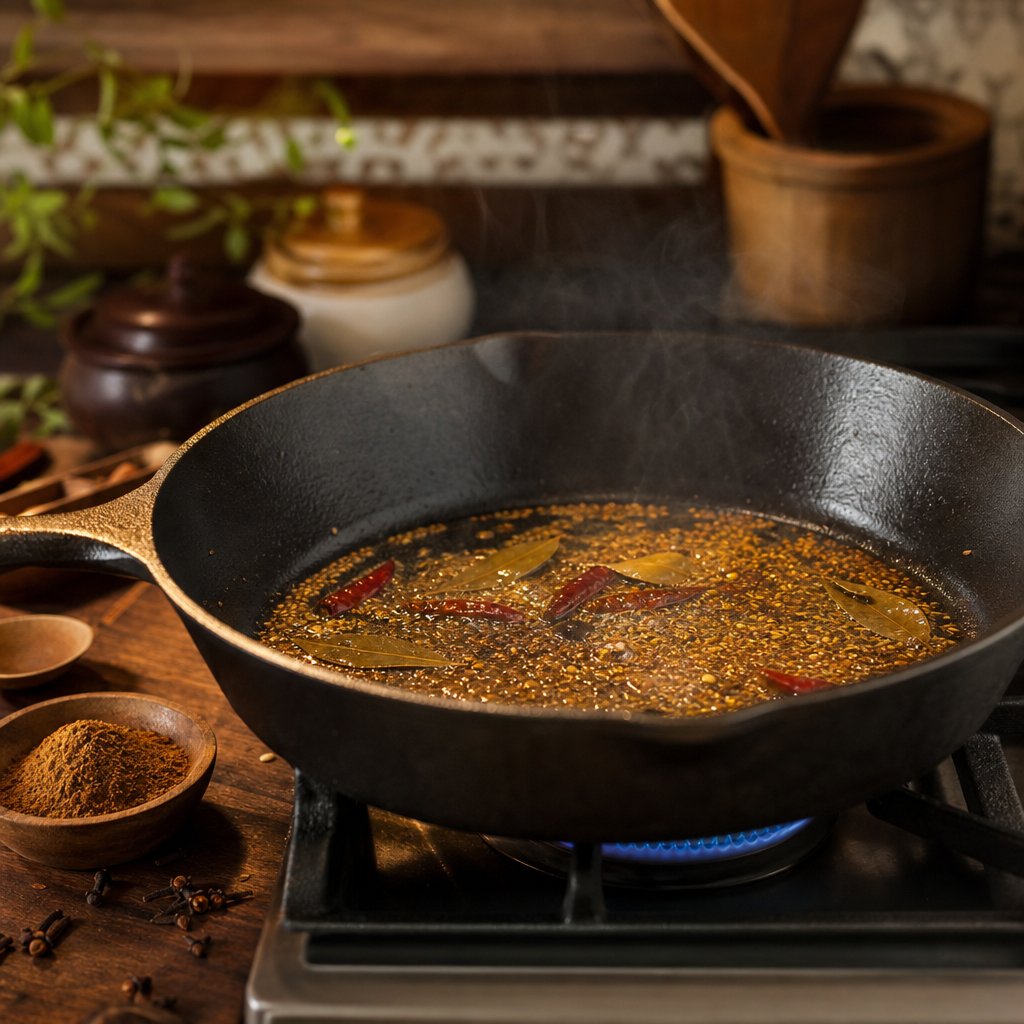
Curry powder needs heat and fat to reach its full potential. The technique is called blooming: you fry ground spices in hot oil for about 30 seconds, which releases fat-soluble flavor compounds and distributes them evenly throughout the dish. Turmeric, fenugreek, and mustard all benefit from this early exposure to heat. Adding curry powder to liquid without blooming it first leaves those flavors locked inside the spice particles, resulting in a flatter, less integrated taste. Aim to add curry powder within the first few minutes of cooking, right after your aromatics soften.
Garam masala works on the opposite principle. Its volatile aromatic compounds, the ones responsible for that sweet cardamom-cinnamon fragrance, break down quickly under sustained heat. That is why Indian cooks treat it as a finishing spice, stirring in just 1/4 to 1/2 teaspoon once the dish is fully cooked. You will notice the aroma hits immediately when garam masala meets residual heat without being destroyed by prolonged cooking. Think of it like fresh herbs: added at the end to preserve brightness.
Using Both Blends Together in One Dish
Here is something many Western recipes miss: experienced Indian cooks regularly use curry and garam masala in the same dish. It is not an either-or decision. The technique is called spice layering, and it follows a specific sequence:
- Start with whole spices (cumin seeds, bay leaf, cinnamon stick) bloomed in hot oil or ghee to build the aromatic foundation.
- Add ground base spices like turmeric, coriander, and chili powder once your onions or tomatoes are cooking. These need time to mellow and integrate.
- Finish with garam masala after turning off the heat, letting residual warmth release its fragrance without burning the delicate compounds.
When making a garam masala curry, say a classic chicken curry, you might use a tablespoon of curry-powder-style base spices early on and then sprinkle half a teaspoon of garam masala for chicken curry right before serving. The base spices create depth and body. The garam masala adds that final aromatic dimension that makes the dish smell complex and layered.
How to Fix a Dish If You Used the Wrong One
Accidentally dumped garam masala and curry powder into the wrong stage? Do not panic. Here is how to recover:
- If you added garam masala too early: The aromatic top notes will fade, leaving the dish tasting slightly flat. Fix it by adding another small pinch (1/4 teaspoon) of garam masala at the very end, just before serving.
- If you added curry powder too late: The turmeric and fenugreek will taste raw and slightly bitter. Let the dish simmer for an additional 10 to 15 minutes to cook out that harshness, or stir the powder into a small amount of hot oil in a separate pan and fold it back in.
- If you used curry powder instead of garam masala entirely: Your dish will lack aromatic warmth. Add a pinch of ground cinnamon and a pinch of ground cardamom at the end to approximate the missing fragrance.
- If you used garam masala instead of curry powder entirely: You will be missing the earthy base and golden color. Stir in a small amount of turmeric for color and a pinch of ground coriander for body. Simmer briefly to integrate.
The masala and curry relationship in Indian cooking is collaborative, not competitive. One builds the foundation, the other crowns the dish. Once you internalize that timing principle, choosing the right masala for curry becomes intuitive rather than stressful.
Of course, not everyone has both blends on hand when a recipe calls for one or the other. That is where smart substitution ratios come in.
Smart Substitution Ratios That Actually Work
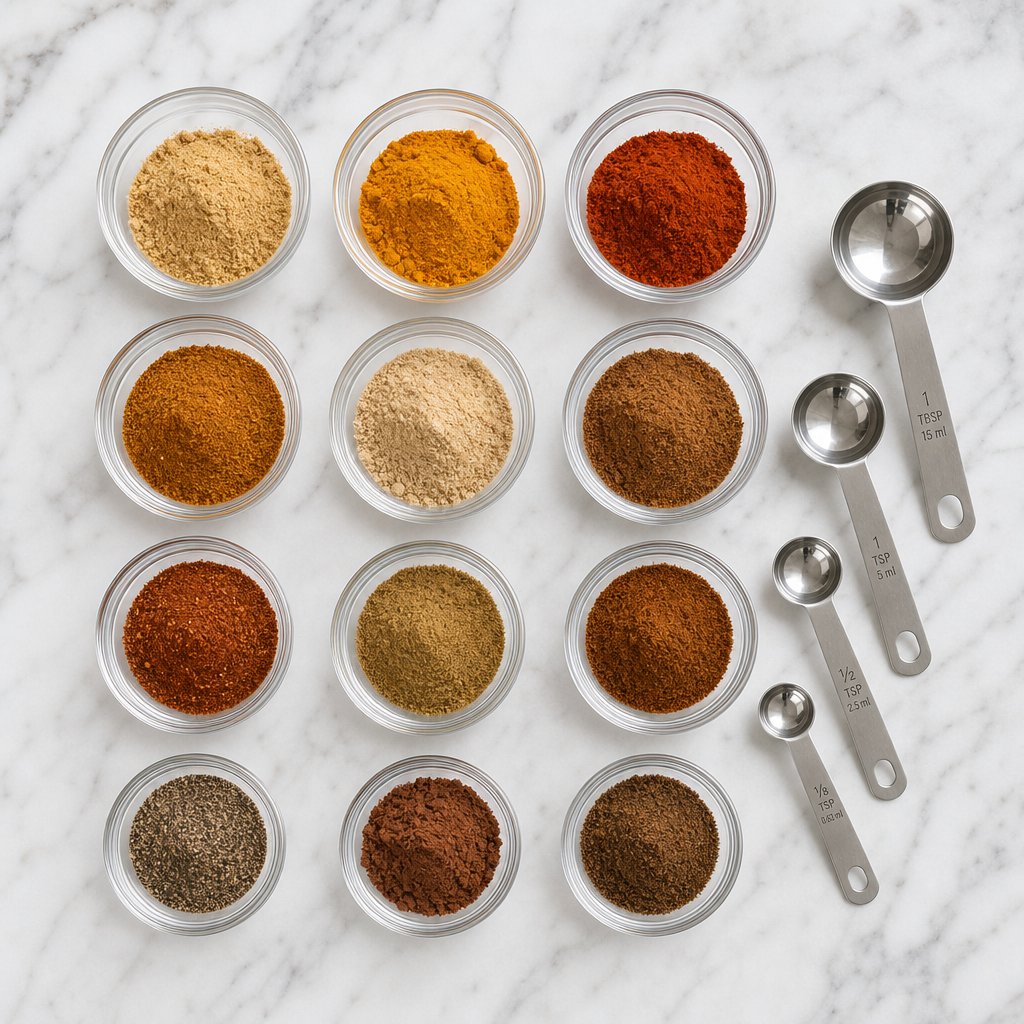
You are mid-recipe, the sauce is simmering, and you realize the jar you need is empty. Whether you are hunting for a garam masala substitute or an alternative to curry powder, the good news is that each blend can stand in for the other with the right ratio and a small flavor adjustment. The bad news? A straight 1:1 swap without correction is exactly how dishes end up tasting off.
Substituting Garam Masala for Curry Powder
Garam masala is more concentrated and aromatic than curry powder. Its intense warming spices can overwhelm a dish that expects the milder, earthier profile of curry powder. The fix is simple: use less, and compensate for the missing color and earthiness.
- Use roughly 3/4 the amount of garam masala in place of curry powder (a 0.75:1 ratio).
- Add 1/4 teaspoon of turmeric per teaspoon of garam masala used to restore the golden color.
- Consider a pinch of ground coriander to bring back some of the earthy body curry powder provides.
This garam masala replacement works particularly well in soups, stews, and roasted vegetable dishes where the warming spices complement rather than dominate. Just remember to add it earlier in the cooking process than you normally would with garam masala, since it needs to function as a base spice here.
Substituting Curry Powder for Garam Masala
Going the other direction is easier because curry powder is milder. You can use it at a 1:1 ratio as a substitute for garam masala, but the dish will lack that signature aromatic warmth unless you boost it.
- Use equal amounts of curry powder in place of garam masala.
- Add 1/4 teaspoon ground cinnamon and 1/8 teaspoon ground cardamom per tablespoon of curry powder to approximate the missing fragrance.
- A tiny pinch of ground cloves (less than 1/8 teaspoon) deepens the warmth further.
Keep in mind that curry powder contains turmeric, so your dish will take on a yellowish tint that would not normally be there. In a rich gravy or dark-colored curry, this barely matters. In a light-colored biryani or delicate rice dish, it will be noticeable.
Other Spice Alternatives When You Have Neither
What if both jars are empty? Individual spices from your rack can fill the gap. A blend of cumin and allspice is one of the closest single-swap options. As Spice Cravings recommends, mixing 1 part ground cumin with 1/4 part ground allspice creates a quick alternative for garam masala that captures its savory warmth. For curry powder, combining equal parts turmeric and cumin delivers the earthy color and flavor foundation you need.
The table below gives you a quick-reference guide for every common scenario:
| If You Need | Substitute With | Ratio | Flavor Adjustment Needed |
|---|---|---|---|
| Garam masala | Curry powder | 1:1 | Add cinnamon + cardamom for warmth |
| Garam masala | Cumin + allspice | 1 tsp cumin + 1/4 tsp allspice per 1 tbsp needed | None; closest two-spice match |
| Garam masala | Coriander + cumin + black pepper + cardamom | 1:1 combined | Toast whole spices first for best results |
| Curry powder | Garam masala | 0.75:1 | Add turmeric for color + coriander for body |
| Curry powder | Turmeric + cumin (50/50 blend) | 1:1 | Add chili powder for heat if desired |
| Curry powder | Tandoori masala | 0.5:1 | More savory; reduce salt in dish |
A few practical tips to keep these swaps from going sideways:
- Always taste and adjust midway through cooking. Ratios are starting points, not absolutes.
- When using a masala substitute made from individual spices, add it at the beginning of cooking so the raw spice flavors have time to mellow and integrate.
- If your replacement for garam masala lacks aromatic punch, a final pinch of ground cardamom right before serving recovers much of the lost fragrance.
No spice substitute for curry powder or garam masala will be a perfect replica. These blends are complex by design. But with the right ratio and a small correction, you can land close enough that your dish still tastes intentional rather than accidental.
Flavor is one reason to care about which blend you reach for. Health benefits are another, and the two blends deliver surprisingly different nutritional profiles based on their dominant spices.
Health Benefits and Nutritional Properties Worth Knowing
Garam masala and curry powder do more than flavor your food. Each blend carries a distinct set of bioactive compounds that have attracted serious scientific attention. The health profile of each blend maps directly to its dominant spices, which means choosing one over the other is not just a flavor decision. It is a nutritional one.
A common question worth clearing up first: is turmeric the same as curry powder? No. Turmeric is a single spice, while curry powder is a multi-spice blend that happens to contain turmeric as its most prominent ingredient. Thinking of them as identical leads people to overestimate how much curcumin they are actually consuming when they sprinkle curry powder on a dish.
Key Health Compounds in Each Blend
Curry powder's headline compound is curcumin, the biologically active molecule in turmeric. A Harvard Health review notes that turmeric has been associated with anti-inflammatory, antioxidant, anticancer, and antidiabetic properties. The Arthritis Foundation recommends 500 mg of curcumin extract twice daily for managing osteoarthritis symptoms. However, turmeric spice typically contains only 2% to 9% curcumin, so the amount in a teaspoon of curry powder is modest compared to concentrated supplements.
Garam masala brings a different set of benefits to the table:
- Cardamom - Supports digestive function and may help reduce blood pressure. Its volatile oils stimulate gastric secretion and ease bloating.
- Cinnamon - Rich in polyphenol antioxidants. Research links regular cinnamon intake to improved insulin sensitivity and lower fasting blood sugar levels.
- Cloves - Among the highest antioxidant-rated spices measured by ORAC value. Eugenol, the primary compound in cloves, has demonstrated anti-inflammatory and antimicrobial activity.
- Black pepper - Contains piperine, which enhances nutrient absorption and has its own anti-inflammatory properties.
Is curry powder same as turmeric from a health standpoint? Not at all. Curry powder dilutes turmeric's curcumin content across multiple spices, while also adding fenugreek (linked to blood sugar regulation) and mustard seed (a source of selenium and omega-3 fatty acids). Each blend delivers a broader nutritional package than any single spice alone.
Here is where things get interesting for anyone who uses both blends together. Black pepper in garam masala contains piperine, which research has shown can increase curcumin bioavailability by up to 20-fold. Curcumin on its own has notoriously poor absorption. When you layer garam masala on top of a curry-powder-based dish, the piperine from the black pepper helps your body actually absorb the curcumin from the turmeric. Traditional Indian cooking stumbled onto this synergy long before modern pharmacology confirmed it.
From an Ayurvedic perspective, garam masala's warming spices are believed to stoke "agni" (digestive fire), supporting metabolism and circulation. Cinnamon and cloves increase peripheral blood flow, while cardamom and black pepper stimulate digestive enzymes. This is not just folk wisdom. Modern research on thermogenic spices supports the idea that compounds like cinnamaldehyde and piperine can modestly increase metabolic rate.
From Kitchen Spices to Functional Nutrition
The growing body of evidence around spice-derived compounds has fueled a booming market for functional nutrition products. Turmeric capsules, curcumin-with-piperine formulations, and cinnamon extract supplements now line pharmacy shelves worldwide. What is curry powder good for beyond cooking? Its individual components, particularly curcumin, have become some of the most studied natural compounds in supplement science.
Is turmeric the same as curry powder in supplement form? The distinction matters even more here. Supplement-grade curcumin extracts contain up to 95% curcuminoids, compared to the 2-9% found in culinary turmeric powder. That concentration gap is why the supplement industry has grown around isolated compounds rather than whole spice blends.
For nutrition brands, supplement importers, and private label sellers looking to develop spice-based health products, the formulation challenge lies in bioavailability and delivery format. OEM/ODM manufacturers like ZhuFeng offer customized formulation across formats including hard capsules, tablets, powder/granules, and soft capsules, helping businesses translate traditional spice knowledge into market-ready functional nutrition products with scalable production.
Whether you are cooking with these blends for flavor or paying attention to their health properties, the nutritional case for keeping both in your kitchen is strong. Curry powder delivers curcumin and earthy antioxidants. Garam masala delivers piperine, eugenol, and cinnamaldehyde. Together, they create a synergy that neither achieves alone.
Of course, getting the most from these compounds starts with freshness. And freshness depends on how you source, store, and prepare your spices, which brings us to making your own blends from scratch.
Make Your Own Curry Masala Powder from Scratch
Store-bought blends lose potency the moment they are ground. The essential oils in spices oxidize over time, which is why that jar of masala powder sitting in your cabinet for a year smells like a shadow of what it once was. Making your own blends at home takes about 15 minutes and delivers an aroma that no pre-packaged product can match.
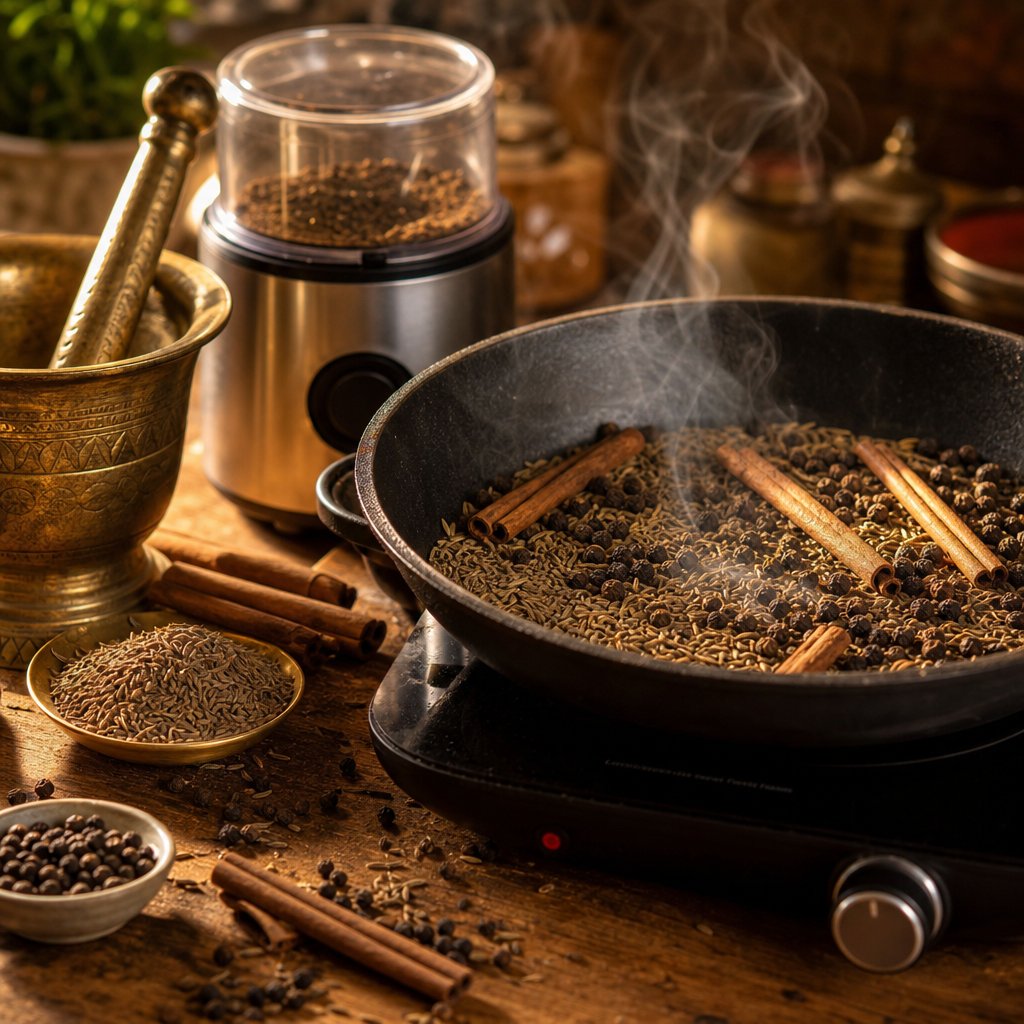
Both recipes below use whole spices that you dry-roast before grinding. This single step transforms the flavor profile entirely. Roasting drives off residual moisture, crisps the spice structure for easier grinding, and activates volatile oils that give each blend its signature fragrance.
Homemade Garam Masala Recipe
This recipe produces a well-balanced powdered masala with warm, aromatic depth. It yields roughly 1/3 cup of finished blend.
Ingredients:
- 2 tablespoons cumin seeds
- 2 tablespoons coriander seeds
- 1 tablespoon black peppercorns
- 1 teaspoon cardamom seeds (removed from pods)
- 1 cinnamon stick (about 3 inches, preferably Ceylon)
- 5 whole cloves
- 1/2 teaspoon freshly grated nutmeg
Instructions:
- Pick through your whole spices and discard any stones, debris, or discolored pieces. Break open the cinnamon stick into smaller fragments so it roasts evenly.
- Heat a heavy-bottomed skillet or cast iron pan over low heat. Add the cumin seeds, coriander seeds, peppercorns, cardamom seeds, cinnamon pieces, and cloves.
- Stir constantly for 3 to 4 minutes. You will notice the spices darkening slightly and releasing a strong, fragrant aroma. The moment they smell toasty and look a shade deeper, pull them off the heat. Do not walk away from the pan. Burnt spices taste acrid and bitter.
- Transfer the roasted spices to a plate and spread them out to cool completely. This takes about 10 minutes. Grinding warm spices traps moisture and creates clumps.
- Add the cooled spices and the nutmeg to a spice grinder or high-powered blender. Grind in 30 to 40 second pulses until you reach a fine, uniform powder. Scrape down the sides between pulses.
- Sieve the powder if needed. Any coarse bits that remain can go back into the grinder for a second pass.
- Store in an airtight glass jar away from direct sunlight. Use within 3 to 4 months for peak flavor.
A quick tip from Indian Healthy Recipes: chilling your roasted spices in the freezer for 1 to 2 hours before grinding speeds up the process and produces a finer powder with less heat buildup in the grinder.
Homemade Curry Powder Recipe
So what is curry powder made from when you build it yourself? The same core spices in curry that define the commercial versions, but fresher and fully customizable. This recipe yields about 1/3 cup of curry powder seasoning with a mild, earthy profile.
Ingredients:
- 2 tablespoons coriander seeds (or 3 tablespoons ground coriander)
- 1 tablespoon cumin seeds (or 1.5 tablespoons ground cumin)
- 1 tablespoon ground turmeric
- 1 teaspoon fenugreek seeds
- 1 teaspoon yellow mustard seeds
- 1/2 tablespoon ground ginger
- 1/2 teaspoon ground black pepper
Instructions:
- Add the coriander seeds, cumin seeds, fenugreek seeds, and mustard seeds to a dry skillet over low heat.
- Toast for 2 to 3 minutes, stirring frequently, until the seeds darken slightly and become fragrant. Fenugreek can turn bitter if over-roasted, so keep the heat gentle.
- Transfer to a plate and cool completely.
- Grind the toasted seeds in a spice grinder until finely powdered.
- Combine the freshly ground spices with the turmeric, ginger, and black pepper in a bowl. Stir thoroughly until the color is uniform throughout.
- Store in an airtight container. This blend keeps well for up to 6 months, though the aroma will be strongest in the first 2 to 3 months.
Notice that turmeric and ginger go in as pre-ground powders rather than whole spices. Turmeric root is extremely hard and difficult to grind at home without industrial equipment, and dried ginger grinds unevenly. Using quality ground versions of these two is perfectly acceptable.
Tips for Customizing Your Blends
These base recipes are starting points. The beauty of homemade spice blends is that you can adjust them to match your palate and cooking style. Among the many types of curry powder you can create, here are a few directions to explore:
- For more heat: Add 1 to 2 teaspoons of cayenne pepper or dried red chili flakes to either blend. In garam masala, extra black peppercorns also increase the bite without adding chili flavor.
- For sweeter, more aromatic garam masala: Increase the cardamom to 1.5 teaspoons and add 2 to 3 star anise. Fennel seeds (1 teaspoon) also push the blend toward a sweeter, more Kashmiri-style profile.
- For a deeper curry powder: Add 1/2 teaspoon of ground cinnamon and 1/4 teaspoon of ground cloves. This bridges the gap between standard curry powder and garam masala, creating a more complex all-purpose blend.
- For milder versions: Reduce black pepper by half in either recipe. In curry powder, swap chili powder for sweet paprika to keep color without heat.
One final consideration: always label your jars with the date you made the blend. Ground spices lose roughly 25% of their aromatic potency every month after grinding. Making smaller batches more frequently beats storing a large batch that fades before you finish it.
With fresh blends in your pantry, the next question becomes practical: which one should you actually keep on hand, and how do you store it to preserve that freshly ground quality as long as possible?
Your Pantry Decision Framework and Storage Guide
Fresh blends are only as good as the care you give them after grinding. Whether you made your own masala & curry blends from scratch or bought them off the shelf, storage habits determine how long those flavors last and when it is time to replace them.
Shelf Life and Storage Best Practices
Ground spice blends lose potency faster than most cooks realize. According to WebstaurantStore's shelf life guide, whole spices retain most of their flavor for 3 to 4 years, while ground spices and spice blends stay at peak quality for only 2 to 3 years. In practice, homemade blends without commercial preservatives or vacuum sealing start fading noticeably after 6 to 12 months.
A few rules keep your blends potent longer:
- Store in airtight glass jars, not plastic bags or open containers. Oxygen is the primary enemy of volatile oils.
- Keep jars in a cool, dark cabinet away from the stove. Heat and light accelerate oxidation.
- Never shake spices directly over a steaming pot. The moisture that enters the jar causes clumping and speeds flavor breakdown.
- Label every container with the date you ground or opened it. This removes guesswork months later.
How do you know when a blend has lost its edge? Three quick tests tell you everything:
- Color test - Fresh curry powder is vibrant golden-yellow; faded or dull color signals depleted turmeric oils. Garam masala should look warm brown, not ashy gray.
- Rub test - Pinch a small amount between your fingers and rub. Fresh blends release an immediate, strong aroma. If you have to bring your hand to your nose and still barely smell anything, the essential oils have evaporated.
- Taste test - A tiny amount on your tongue should deliver clear flavor. Stale blends taste flat and papery rather than warm or earthy.
For entrepreneurs or small food business owners exploring private label spice blends or spice-based supplements at scale, shelf stability becomes a formulation challenge. Working with an experienced OEM/ODM partner like ZhuFeng ensures consistent formulation quality and proper packaging, including nitrogen-flushed pouches and moisture-barrier containers, that extend shelf life well beyond what home storage achieves.
Which Blend to Stock Based on Your Cooking Style
So what is curry powder used for versus what is masala best suited to? The answer depends on what you cook most often. Both blends earn their place in a well-stocked kitchen, but if you are choosing just one, your cooking style should guide the decision.
Think of it this way: what is curry seasoning at its core? A versatile, earthy base that works across multiple global cuisines. What is masala? A concentrated aromatic finisher designed specifically for Indian and South Asian dishes. Is curry a spice? No, it is a blend, and its broad flavor profile makes it adaptable to dishes far beyond Indian cooking.
Whether you reach for curry paste or powder depends on the dish format. Pastes work better in wet curries and stir-fries where you want concentrated flavor without grittiness. Powders integrate more easily into dry rubs, soups, and grain dishes. If you stock only one dry blend, the table below helps you decide which one matches your kitchen habits.
| If You Cook This Cuisine | Stock This Blend | Best Protein Pairings |
|---|---|---|
| North Indian (dal, biryani, paneer dishes) | Garam masala | Chicken, lamb, paneer, chickpeas |
| South Indian (sambar, rasam) | Both (regional masala + curry powder base) | Lentils, fish, shrimp, vegetables |
| Thai and Southeast Asian | Curry powder | Chicken, tofu, shrimp, pork |
| Caribbean (Jamaican, Trinidadian) | Curry powder | Goat, chicken, chickpeas, potatoes |
| British and fusion comfort food | Curry powder | Eggs, chicken, cauliflower, lentils |
| Middle Eastern-influenced dishes | Garam masala | Lamb, beef, eggplant, rice |
| Frequent home cooking across styles | Both | Any protein; layer for complexity |
If you cook Indian food more than twice a week, stock garam masala as your priority. Its aromatic finishing power is irreplaceable in dishes like butter chicken, chana masala, and biryani. If your cooking spans Thai curries, Caribbean stews, and weeknight stir-fries, curry powder gives you broader mileage from a single jar. And if you cook frequently across multiple cuisines, keeping both on hand lets you layer them for the kind of depth that single-blend cooking cannot achieve.
The bottom line: these two blends are not interchangeable, but they are complementary. Stock what matches your habits, store it properly, and replace it before it fades. Your food will tell you the difference.
Frequently Asked Questions About Garam Masala and Curry Powder
1. Can I use garam masala instead of curry powder in a recipe?
You can, but use about 3/4 the amount since garam masala is more concentrated. Add a pinch of turmeric to restore the golden color and a pinch of ground coriander for earthiness. Keep in mind that garam masala will give your dish a sweeter, more aromatic profile rather than the earthy, savory base that curry powder provides.
2. Why does curry powder contain turmeric but garam masala does not?
Curry powder was created as a British-colonial shortcut to replicate Indian flavors, and turmeric was included for its distinctive golden color and earthy taste that Westerners associated with Indian food. Garam masala follows Ayurvedic principles focused on warming spices like cardamom, cinnamon, and cloves that raise internal body heat. Turmeric does not fit that warming philosophy, so it was never part of traditional garam masala recipes.
3. Is garam masala spicier than curry powder?
Neither blend is particularly spicy in the chili-heat sense. Garam masala contains more black pepper, which can add a sharper bite, but its dominant sensation is aromatic warmth from cinnamon and cardamom. Curry powder registers as warm and savory rather than fiery. The heat level in both depends on the specific recipe and whether chili powder has been added to the blend.
4. When should I add garam masala versus curry powder during cooking?
Add curry powder early in the cooking process by blooming it in hot oil for about 30 seconds to activate turmeric and mellow raw spice flavors. Add garam masala at the very end of cooking or after turning off the heat, as its volatile aromatic compounds break down quickly under sustained heat. Many Indian cooks use both in the same dish, layering curry-style base spices early and finishing with garam masala for complexity.
5. Do garam masala and curry powder offer different health benefits?
Yes. Curry powder delivers curcumin from turmeric, known for anti-inflammatory properties, plus fenugreek for blood sugar regulation. Garam masala provides piperine from black pepper, which boosts curcumin absorption by up to 20-fold, along with eugenol from cloves and cinnamaldehyde from cinnamon, both potent antioxidants. Using both blends together creates a nutritional synergy that neither achieves alone. This spice synergy has also driven growth in functional nutrition products, with OEM/ODM manufacturers like ZhuFeng helping brands develop curcumin-piperine supplements in capsule and powder formats.