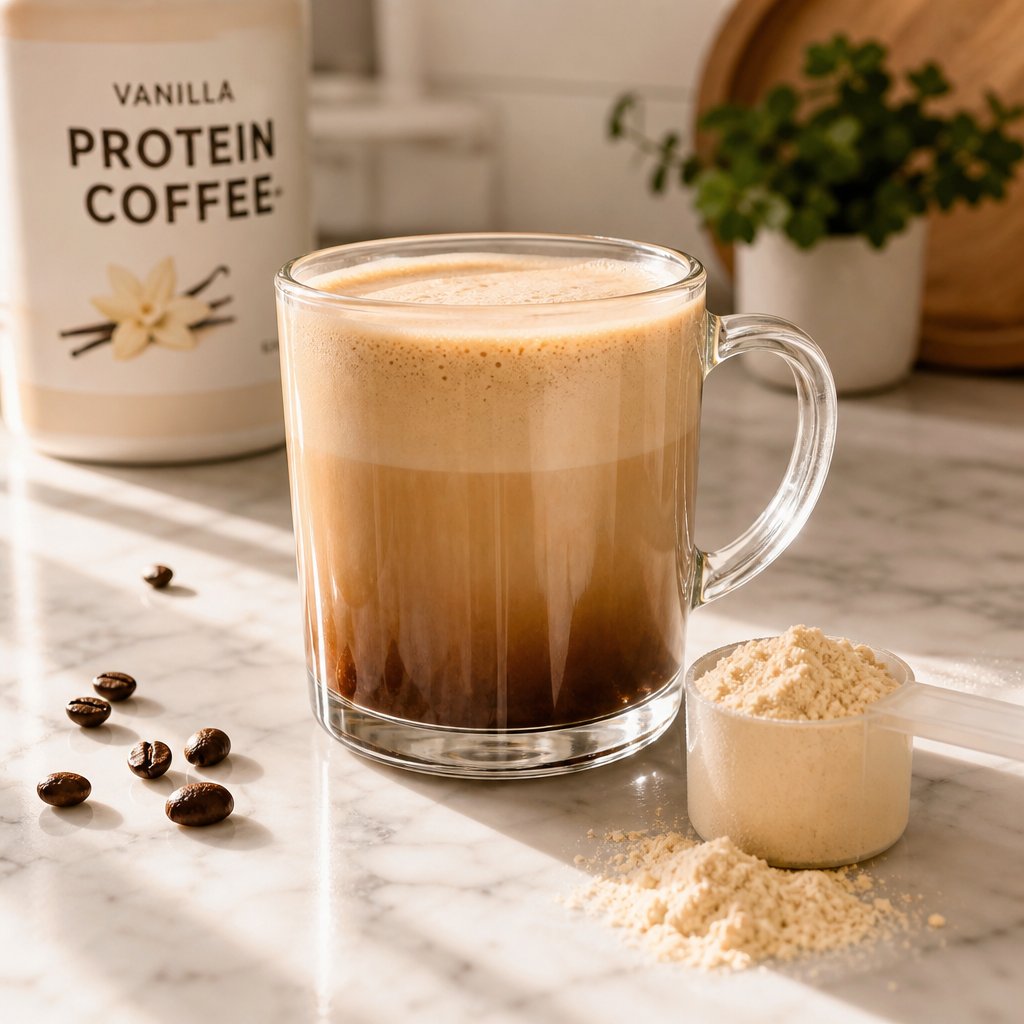
Protein Powder in Coffee Actually Works When You Do It Right
The Short Answer to Mixing Protein Powder and Coffee
Can you put protein powder in coffee? Absolutely. Adding protein powder to your morning brew is not only safe but has become a daily ritual for millions of people looking to streamline their nutrition. A single scoop adds roughly 25 to 30 grams of protein to a drink that otherwise contains almost none, turning your cup into a functional meal component rather than just a caffeine delivery system.
The real question most people are asking isn't whether it's possible. It's whether the result will taste good, mix smoothly, and still deliver the protein your body can use. The answer to all three is yes, but technique matters more than you might expect.
Protein powder is completely safe to add to coffee and retains its full nutritional value regardless of temperature. However, how you mix it determines whether you get a smooth, latte-like drink or a clumpy, gritty mess.
Why This Combination Has Gained Popularity
So what is protein coffee, exactly? Often called "proffee," it's simply brewed coffee combined with protein powder or a pre-made protein shake. The concept gained traction in the early 2020s through TikTok and Instagram, where users shared quick recipes that merged two morning staples into one efficient drink. The appeal is straightforward: you're already drinking coffee, so why not make it work harder for you?
Protein coffee fits naturally into busy routines. Instead of preparing a separate shake and brewing a separate cup, you combine them. The caffeine supports alertness and exercise performance while the protein promotes satiety and muscle maintenance. For people tracking macros or trying to hit higher daily protein targets, it's a practical shortcut that doesn't require extra time or dishes.
Is it ok to put protein powder in coffee if you're concerned about health? Registered dietitians confirm the combination is safe for most people, though they recommend choosing unsweetened powders and being mindful of your total daily protein intake. This guide walks you through the science of how protein behaves in hot and cold coffee, which powder types dissolve best, step-by-step mixing methods, and the common mistakes that lead to disappointing results.

The Science Behind Protein Powder and Hot Coffee
The biggest fear people have about putting protein powder in hot coffee is that heat will somehow "destroy" the protein. This concern makes intuitive sense. You've probably seen what happens when you crack an egg into a hot pan. The clear, liquid white turns solid and opaque in seconds. Something similar happens when protein powder meets hot coffee, but the nutritional outcome is completely different from what most people assume.
What Happens to Protein Molecules in Hot Liquid
Proteins are long chains of amino acids folded into precise three-dimensional shapes. These shapes are held together by weak bonds, including hydrogen bonds and hydrophobic interactions. When you add protein powder to hot coffee, heat energy causes those weak bonds to break. The protein chains unfold from their compact structure into loose, tangled strands. Scientists call this process denaturation.
Think of it like unraveling a ball of yarn. The yarn itself hasn't been cut or damaged. It's the same material, just in a different arrangement. The amino acids that make up the protein remain fully intact. Their peptide bonds, the strong covalent links holding the chain together, don't break at coffee temperatures.
The clumping you see when protein powder hits hot liquid? That's what happens next. Once unfolded, those protein strands expose sticky regions that were previously hidden inside the folded structure. Research published in Frontiers in Nutrition found that heat treatment increases surface hydrophobicity by up to 44% at 95 degrees Celsius (203 degrees Fahrenheit), meaning the unfolded proteins become much more attracted to each other. They bond together through disulfide bridges and hydrophobic interactions, forming visible aggregates. Those aggregates are the clumps floating in your cup.
Does Heat Destroy Protein's Nutritional Value
Here's the part that surprises most people: denaturation does not reduce the nutritional value of protein. Not even slightly. Your body breaks protein down into individual amino acids during digestion anyway. Stomach acid and digestive enzymes unfold and disassemble every protein you eat, regardless of whether it arrived in your gut in its original folded shape or already denatured.
When you put protein powder in hot coffee, you're essentially doing a small portion of your stomach's job in advance. The amino acid content, the part your muscles actually use for repair and growth, remains completely unchanged. A denatured whey protein still contains the same leucine, the same essential amino acids, and the same caloric value as an undenatured one.
Can you put protein powder in hot coffee without losing its benefits? Yes. The texture might suffer if your technique is off, but the nutrition stays the same whether your coffee is ice cold or steaming hot.
Temperature Thresholds That Matter
Not all heat levels affect protein equally. Understanding the temperature ranges helps you figure out how to mix protein powder in hot coffee without creating a lumpy disaster. The key whey proteins, beta-lactoglobulin and alpha-lactalbumin, begin denaturing at temperatures above 70 to 75 degrees Celsius (158 to 167 degrees Fahrenheit). Minor whey proteins like BSA and lactoferrin start unfolding even earlier, around 65 degrees Celsius (149 degrees Fahrenheit).
Here's a practical temperature framework for protein powder in hot coffee:
| Coffee Temperature | What Happens to Protein | Clumping Risk | Best Approach |
|---|---|---|---|
| ~200 degrees F (just brewed) | Rapid, aggressive denaturation | Very high | Never add powder directly |
| ~160 degrees F (cooled 2-3 min) | Moderate denaturation | Moderate | Pre-mix slurry technique required |
| ~130 degrees F (warm) | Minimal denaturation | Low | Direct mixing works with stirring |
| Below 70 degrees F (iced) | No denaturation | Very low | Shake or blend directly |
The research confirms that protein denaturation in the 55 to 65 degrees Celsius range is actually reversible, meaning the proteins can refold. Above 75 degrees Celsius, the structural changes become permanent and aggregation accelerates significantly. At 85 to 95 degrees Celsius, scanning electron microscopy shows large protein clusters forming rapidly, which is exactly what you experience as clumps in freshly brewed hot protein coffee.
This is why timing matters so much. Letting your coffee cool for just two to three minutes can drop the temperature from the danger zone into a range where protein powder for hot coffee dissolves far more cooperatively.
Coffee Acidity: A Separate Problem
Heat isn't the only factor working against smooth mixing. Coffee is naturally acidic, typically sitting between pH 4.5 and pH 5.5 depending on the roast and brewing method. This acidity creates a distinct problem that's separate from heat-induced denaturation.
Proteins carry electrical charges that help keep them dispersed in liquid. When the pH drops toward a protein's isoelectric point, those charges neutralize, and the proteins lose their ability to repel each other. They clump together and precipitate out of solution. This is curdling, and it's the same reason soy milk curdles in acidic coffee more readily than dairy milk.
Lighter roast coffees tend to be more acidic than darker roasts, which means they're more likely to cause curdling with certain protein types. Casein-based proteins are particularly vulnerable because their isoelectric point sits right in coffee's pH range. Whey proteins tolerate coffee's acidity better, which is one reason whey isolate remains the most popular choice for hot protein coffee.
The combination of heat and acidity together is worse than either factor alone. Hot, acidic coffee creates the most challenging environment for protein powder. Understanding this dual mechanism is what separates a smooth cup from a grainy one, and it's why choosing the right protein type for your preferred coffee style makes such a significant difference.
Which Protein Powder Types Work Best in Coffee
Not every protein powder behaves the same way in your cup. Some dissolve cleanly into a smooth, latte-like drink. Others turn into a chunky, gritty mess no matter how hard you stir. The difference comes down to protein structure, fat content, and how each type reacts to coffee's heat and acidity. Choosing the best protein powder for coffee means matching the powder's chemistry to your brewing style.
Whey Isolate and Concentrate in Coffee
Whey protein dominates the protein coffee space for good reason. It tolerates coffee's acidic pH better than most alternatives and dissolves relatively well in both hot and cold liquids. But there's a meaningful gap between whey isolate and whey concentrate when it comes to coffee mixing.
Whey protein isolate contains at least 90% protein with minimal fat and less than 1 gram of lactose per 100 grams. That purity translates directly into better solubility. Less fat means fewer greasy surface films. Less lactose means less material competing with protein for dissolution. Whey isolate also has better heat resistance, meaning it doesn't break down as easily when it hits hot coffee. If you're looking for a reliable whey protein coffee powder that performs consistently, isolate is the safer bet.
Whey concentrate, by contrast, contains roughly 80% protein along with 4 to 10 grams of lactose and 4 to 8% fat per 100 grams. That extra fat and lactose create a creamier taste, which some people prefer, but they also increase the likelihood of clumping in hot liquid. The fat globules can separate and create an oily film on the surface, while the lactose adds sweetness that may clash with darker roasts. Concentrate works fine in iced coffee or blended drinks where temperature isn't fighting against you, but it requires more careful technique in hot preparations.
For whey protein isolate coffee applications, the higher processing cost pays off in smoother results. The extra filtration steps that remove fat and lactose also produce finer particles that hydrate faster in liquid.
Collagen and Casein Protein Behavior
Collagen peptides are arguably the easiest protein to add to coffee. Unlike whey or casein, collagen supplements are already hydrolyzed, meaning they've been broken into smaller peptide chains during manufacturing. Research confirms that collagen peptides remain stable at coffee brewing temperatures of 195 to 205 degrees Fahrenheit (90 to 96 degrees Celsius), well below the 302 degrees Fahrenheit (150 degrees Celsius) threshold where degradation begins.
Collagen protein powder for coffee dissolves almost invisibly. It doesn't change the color, barely affects the taste when unflavored, and creates no clumps in either hot or cold beverages. The trade-off? Collagen isn't a complete protein. It lacks tryptophan entirely and is low in several essential amino acids, so it won't replace whey or plant protein for muscle-building purposes. It's best suited for people targeting skin, joint, or gut health benefits alongside their morning caffeine.
Casein tells a very different story. This slow-digesting milk protein is notorious for curdling in coffee. The problem is chemical: casein's isoelectric point sits around pH 4.6, which overlaps directly with coffee's natural acidity range. When casein proteins hit that pH zone, they lose their electrical charge, clump together, and precipitate out of solution. You'll see white curds floating in your cup, and no amount of stirring fixes it.
Heat makes casein's behavior even worse. The combination of high temperature and low pH accelerates aggregation dramatically. If you want to use casein in coffee, your only reliable option is cold brew with a higher pH (less acidic) or adding enough milk to buffer the acidity. For most people, casein simply isn't worth the hassle as a coffee protein powder.
Plant-Based Protein Options for Coffee
Plant-based proteins vary wildly in their coffee compatibility. Unlike whey, which comes from a single source with predictable behavior, plant proteins span dozens of ingredients with different particle sizes, fiber contents, and solubility profiles.
Pea protein isolate is the most common plant option. It mixes reasonably well in cold coffee, but pea protein can bring starches that swell and feel powdery if the formula isn't well-balanced. In hot coffee, pea protein's earthy flavor becomes more pronounced, and the larger particle size compared to whey isolate means you'll often notice grittiness at the bottom of your cup.
Pea and rice protein blends perform better than either source alone. Rice protein softens pea's earthy notes and improves the overall mouthfeel. These blends tend to dissolve more evenly, though they still can't match whey isolate's smoothness in hot liquid.
Hemp protein is the riskiest choice for coffee. It's naturally high in fiber, which adds body and thickness that reads as chalkiness. If texture is your priority, hemp-forward blends are usually a poor match for any coffee application.
Soy protein isolate dissolves well but carries the same curdling risk as casein in acidic coffee. Its isoelectric point is close to coffee's pH, which means lighter roasts with higher acidity can cause visible separation.
Protein Type Comparison for Coffee
The table below breaks down how each protein type performs across the factors that matter most when choosing the best protein powders for coffee. Use it to match your preferred coffee style with the right powder.
| Protein Type | Solubility in Hot Coffee | Solubility in Iced Coffee | Clumping Tendency | Taste Compatibility | Best Preparation Method |
|---|---|---|---|---|---|
| Whey Isolate | High (with technique) | Very High | Low to Moderate | Excellent, mild and neutral | Pre-mix slurry, then add to warm coffee |
| Whey Concentrate | Moderate | High | Moderate to High | Good, slightly creamy/sweet | Blend or shake vigorously; avoid boiling temps |
| Collagen Peptides | Very High | Very High | Very Low | Excellent, nearly invisible | Stir directly into any temperature coffee |
| Casein | Very Low | Low to Moderate | Very High (curdles) | Poor in black coffee | Cold brew only, with milk to buffer acidity |
| Pea Protein Isolate | Low to Moderate | Moderate | Moderate | Fair, earthy undertone | Blend with ice; avoid hot applications |
| Pea + Rice Blend | Moderate | Moderate to High | Moderate | Good, milder than pea alone | Blender or shaker bottle with cold brew |
| Hemp Protein | Low | Low | High | Poor, fibrous and gritty | Smoothie blender only; not recommended for coffee |
| Soy Protein Isolate | Low (curdles in acidic coffee) | Moderate | High in acidic brews | Fair, can taste beany | Dark roast cold brew to reduce acidity |
The pattern is clear: the best coffee protein powder for hot applications is either whey isolate or collagen peptides. Whey isolate wins if your goal is muscle protein synthesis and complete amino acid coverage. Collagen wins if you want zero texture change and are focused on skin or joint support. For iced coffee, your options open up considerably since cold temperatures prevent denaturation entirely, making even plant-based proteins workable with proper blending.
Coffee's acidity at roughly pH 5 is the hidden variable most people overlook. Casein and soy curdle in that range. Whey tolerates it. Collagen ignores it entirely. Matching your protein type to your coffee's chemistry is what separates a drink you look forward to from one you force down. And once you've identified the right powder, the next step is nailing the preparation method for your preferred temperature.
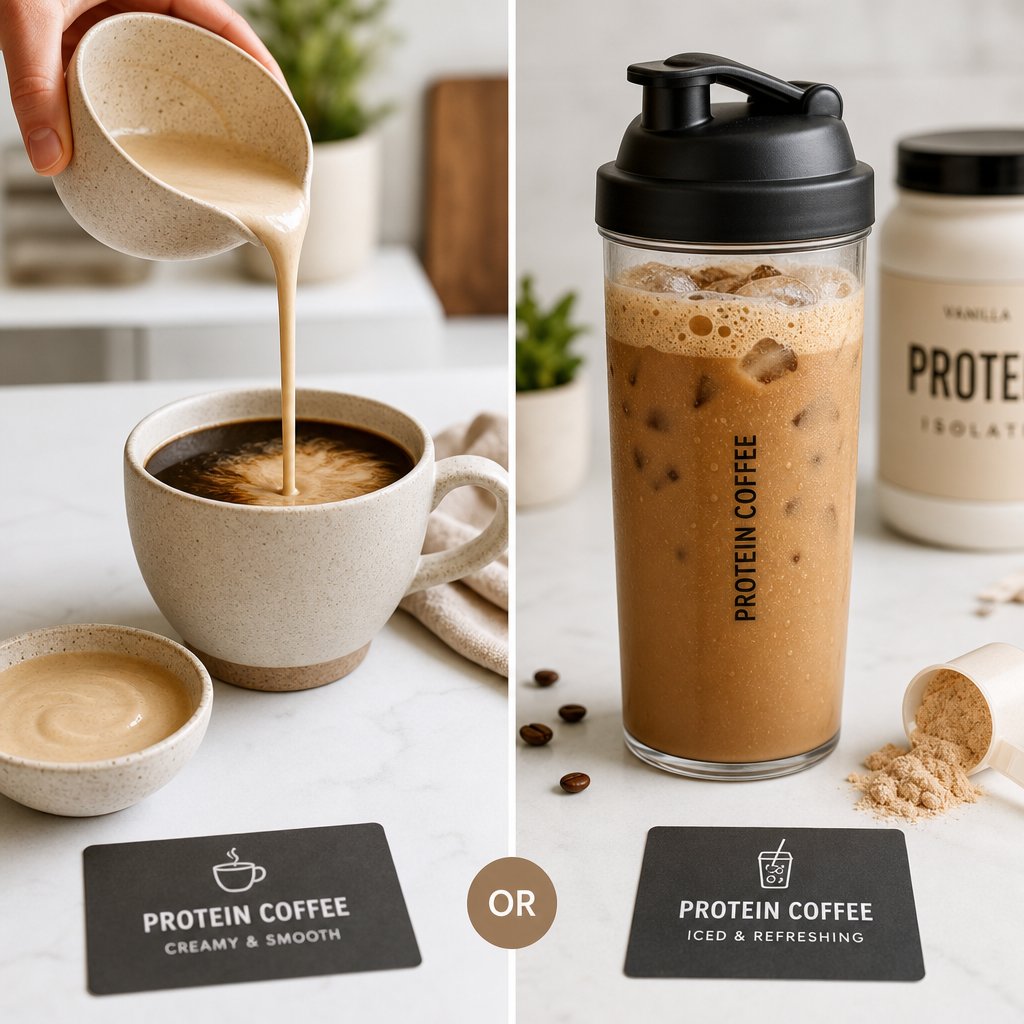
Hot Coffee vs Iced Coffee Preparation Methods
Knowing which protein type works best is only half the equation. The other half is how you actually combine them. Temperature changes everything about how protein powder behaves in your cup, and the preparation method that works perfectly for iced coffee will fail completely with a fresh hot brew. Mixing protein powder with coffee requires a different approach depending on whether your drink is steaming, warm, or cold.
The good news? Each temperature range has a reliable method. Once you learn the right technique for your preferred style, adding protein powder to coffee becomes a 60-second routine rather than a frustrating experiment.
Mixing Protein Powder Into Hot Coffee Without Clumps
Hot coffee is where most people run into trouble. You pour in a scoop of powder, stir frantically, and end up with a lumpy mess stuck to your spoon. The fix isn't stirring harder. It's controlling the temperature and using a slurry technique that protects the protein from sudden heat shock.
Here's how to add protein powder to coffee when it's hot:
- Brew your coffee as usual and let it sit for 2 to 3 minutes. This drops the temperature from around 200 degrees Fahrenheit down to roughly 160 degrees, which significantly reduces clumping risk.
- While the coffee cools, add one scoop of protein powder (20 to 25 grams) to a separate cup or shaker.
- Pour 2 to 3 tablespoons of room-temperature water or milk over the powder and stir or whisk until you have a smooth, paste-like slurry with no dry clumps.
- Slowly pour the slurry into your coffee in a thin stream while stirring continuously with a spoon or milk frother.
- Continue stirring for 15 to 20 seconds until the drink looks uniform and creamy.
The slurry step is the key. Pre-mixing protein with a small amount of cool liquid coats each particle evenly, preventing the instant aggregation that happens when dry powder hits hot liquid directly. Think of it like making a roux before adding it to a sauce. The intermediate step creates a smooth base that integrates without seizing.
A handheld milk frother makes this even easier. Ten seconds of frothing after combining the slurry with coffee produces a velvety texture that rivals a cafe latte. If you don't have a frother, vigorous stirring with a fork works in a pinch.
Iced Coffee and Cold Brew Protein Methods
If hot coffee is hard mode, iced coffee is the beginner-friendly path. Cold temperatures prevent protein denaturation entirely, which means no clumping, no curdling, and no need for careful timing. Protein powder in iced coffee dissolves predictably because the molecules stay folded and stable rather than unraveling and sticking together.
The simplest method for iced coffee protein powder preparation:
- Brew coffee and chill it in the refrigerator, or use pre-made cold brew concentrate diluted to your preferred strength.
- Add one scoop of protein powder (20 to 25 grams) to a shaker bottle or blender.
- Pour in 8 to 12 ounces of chilled coffee.
- Add a handful of ice cubes if using a blender, or seal the shaker bottle tightly.
- Shake vigorously for 30 to 60 seconds, or blend on high for 15 to 20 seconds.
- Pour into a glass over fresh ice and enjoy immediately.
Cold brew works especially well here because it's naturally less acidic than hot-brewed coffee, reducing any chance of curdling with sensitive protein types. The sealed shaker bottle method is popular for a reason: it's fast, portable, and produces a frothy, milkshake-like consistency that tastes more like a treat than a supplement. You can mix protein powder with coffee this way in under a minute with zero cleanup beyond rinsing the bottle.
The Warm Coffee Sweet Spot Technique
There's a middle ground that combines the warmth of hot coffee with the easy mixing of cold. By bringing your coffee to approximately 130 degrees Fahrenheit, you land in a temperature zone where protein powder dissolves smoothly without needing the slurry step, yet the drink still feels warm and satisfying.
- Brew your coffee at full strength.
- Immediately add 2 to 3 ice cubes directly to the hot coffee. This rapidly drops the temperature to the 120 to 140 degree Fahrenheit range.
- Add one scoop of protein powder directly to the warm coffee.
- Stir briskly with a spoon or use a frother for 15 seconds until fully dissolved.
- Taste and adjust. Add a splash of milk if you prefer a thinner consistency.
This technique is ideal for people who want a warm drink but don't want to fuss with a separate slurry cup. The ice cubes melt quickly, adding only a small amount of water (roughly one ounce) while pulling the temperature below the threshold where aggressive denaturation occurs. You'll notice the powder integrates much more cooperatively at this temperature compared to straight-from-the-brewer hot coffee.
Ratio Guidance for Any Method
Regardless of which temperature method you choose, the ratio of powder to liquid determines whether your drink feels like a smooth coffee or a thick sludge. Start with one scoop (20 to 25 grams) per 8 to 12 ounces of coffee. This produces a drink with noticeable body and creaminess without becoming overly thick.
If you prefer a lighter texture closer to black coffee, use 10 to 12 ounces of liquid per scoop. If you want something richer and more filling, closer to a meal replacement, reduce the liquid to 6 to 8 ounces or add a second half-scoop. Too little liquid relative to powder creates a paste-like consistency that's hard to drink and coats your mouth unpleasantly.
Volume also affects flavor intensity. More coffee dilutes the protein powder's taste, letting the coffee flavor dominate. Less coffee lets the protein's flavor come through more strongly, which works well with vanilla or mocha-flavored powders but can taste chalky with unflavored options. Finding your personal sweet spot usually takes two or three attempts, so start conservative and adjust from there.
When to Drink Protein Coffee for Maximum Results
You've got the right powder and the right mixing technique. The next variable that shapes your results is timing. When you drink your coffee and protein shake combination matters because your body's needs shift throughout the day. A morning meal replacement calls for a different approach than a pre-workout boost or an afternoon pick-me-up. Each scenario changes the ideal protein dose, preparation style, and what you pair alongside it.
Is protein coffee good for you? The answer depends largely on how it fits into your overall nutrition pattern. A well-timed protein coffee can support muscle maintenance, curb hunger, and deliver sustained energy. A poorly timed one might leave you jittery on an empty stomach or interfere with your sleep. Let's break down the four main timing windows and how to optimize each one.
Morning Meal Replacement Protein Coffee
Imagine this: you wake up, you're short on time, and cooking breakfast isn't happening. This is where protein coffee shines brightest. Registered dietitian Kate Patton of Cleveland Clinic notes that proffee is "a good alternative to just skipping breakfast," making it a practical option when a full meal isn't realistic.
For a true meal replacement, you'll want more protein than a standard single scoop provides. Aim for 30 to 40 grams of protein, which means using 1.5 to 2 scoops depending on your powder's serving size. This higher dose better mimics the satiety effect of a whole-food breakfast. Research shows that a protein-rich breakfast helps you stay fuller throughout the day and reduces evening snacking, particularly for people who typically skip their morning meal.
To make it more filling and sustaining, add a source of healthy fat:
- One tablespoon of MCT oil or coconut oil for sustained energy without heaviness
- A tablespoon of nut butter blended in for creaminess and extra calories
- A splash of full-fat coconut milk for those avoiding dairy
The fat slows digestion, keeping you satisfied for three to four hours rather than the one to two hours you'd get from protein alone. This combination transforms a simple coffee with protein shake into a 300 to 400 calorie mini-meal with balanced macronutrients. It won't replace the micronutrient density of whole foods like eggs and vegetables, but it bridges the gap on mornings when the alternative is eating nothing at all.
Pre-Workout and Post-Workout Timing
For gym-goers, combining caffeine and protein shake ingredients into one drink before training offers a compelling two-for-one benefit. Caffeine improves exercise performance at doses of roughly 3 to 6 milligrams per kilogram of body weight, taken about 60 minutes before your session. A standard 8-ounce cup of coffee delivers approximately 80 to 100 milligrams of caffeine, while a 12-ounce cup pushes closer to 120 to 150 milligrams. For a 180-pound (82 kg) person, that's within the lower effective range.
The protein component primes your muscles for the work ahead. Consuming 20 to 25 grams of protein before training ensures amino acids are circulating in your bloodstream during the session, ready for immediate use in muscle repair once the stimulus occurs. You don't need a massive dose here. One scoop is sufficient for pre-workout purposes.
A common concern: does caffeine interfere with protein absorption or muscle building? The short answer is no. A study published in Applied Physiology, Nutrition, and Metabolism investigated whether caffeine impairs skeletal muscle anabolic signaling through the mTOR pathway, which is the primary driver of muscle protein synthesis. The researchers found that caffeine administration did not inhibit mTOR signaling, did not reduce protein synthesis, and did not impair muscle hypertrophy. The conclusion was clear: caffeine and protein work independently without negative interaction.
This means your post workout coffee with protein is equally effective. If you prefer training fasted and drinking your protein coffee afterward, the caffeine won't blunt the muscle-building response to your workout. The protein still stimulates muscle protein synthesis at the same rate whether caffeine is present or not. For post-workout timing, consume your protein coffee within one to two hours after training to capitalize on the elevated muscle sensitivity to amino acids.
Does protein powder have caffeine on its own? Standard protein powders do not contain caffeine unless specifically formulated as a pre-workout blend. The caffeine in your protein coffee comes entirely from the coffee itself, which gives you full control over the dose. If you train in the evening, you can still use protein powder in a decaf brew and get the muscle-supporting benefits without the stimulant effect that might disrupt sleep.
Afternoon Energy and Protein Boost
The 2 to 3 PM energy dip is real, and reaching for a sugary snack or a plain coffee only patches the problem temporarily. An afternoon protein coffee addresses both the energy slump and the protein gap that many people accumulate by mid-day.
Most people front-load carbohydrates at breakfast and lunch while falling short on protein until dinner. Research suggests that spreading protein intake across three or more meals, aiming for 20 to 30 grams per sitting, stimulates muscle protein synthesis more effectively than cramming most of your daily protein into a single evening meal. An afternoon coffee and protein shake fills that mid-day gap without requiring meal prep or a trip to the kitchen.
For afternoon use, keep the dose moderate: one scoop (20 to 25 grams of protein) in 8 to 10 ounces of coffee. This adds roughly 100 to 120 calories to what would otherwise be a near-zero-calorie drink. That modest caloric bump provides enough substance to carry you through to dinner without the blood sugar crash that comes from vending machine snacks.
One timing consideration: caffeine has a half-life of approximately five to six hours. If you're sensitive to its effects on sleep, keep your afternoon protein coffee before 2 PM, or switch to half-caff or decaf after that point. The protein benefits remain identical regardless of caffeine content.
Caloric Context and Dietary Fit
Understanding the numbers helps you fit protein coffee into whatever dietary framework you follow. Here's what changes when you add protein powder with caffeine from your coffee:
| Drink | Calories | Protein | Carbs | Fat |
|---|---|---|---|---|
| Black coffee (8 oz) | ~2 | 0g | 0g | 0g |
| Black coffee + 1 scoop whey isolate | ~102-122 | 20-25g | 1-2g | 0.5-1g |
| Black coffee + 1 scoop whey + 1 tbsp MCT oil | ~220-240 | 20-25g | 1-2g | 14-15g |
| Black coffee + 2 scoops whey (meal replacement) | ~200-240 | 40-50g | 2-4g | 1-2g |
For people in a calorie deficit aiming to lose weight, a single-scoop protein coffee at 100 to 120 calories is remarkably efficient. You get substantial protein to preserve muscle mass during fat loss, caffeine to support energy and workout performance, and enough satiety to delay your next meal by a few hours. Compare that to a flavored latte from a coffee shop, which often runs 250 to 400 calories with minimal protein and significant sugar.
For those on high-protein diets targeting 1 gram per pound of body weight, protein coffee becomes a convenient tool to hit daily totals without adding another full meal. Two protein coffees per day, one in the morning and one in the afternoon, contribute 40 to 50 grams toward your target with minimal planning.
The flexibility is what makes this combination practical across different goals. Whether you're building muscle, cutting fat, or simply trying to eat better without overhauling your routine, the timing and dose can be adjusted to match. And once you've dialed in when and how much to drink, the next consideration is making it taste good enough that you actually look forward to it every day.
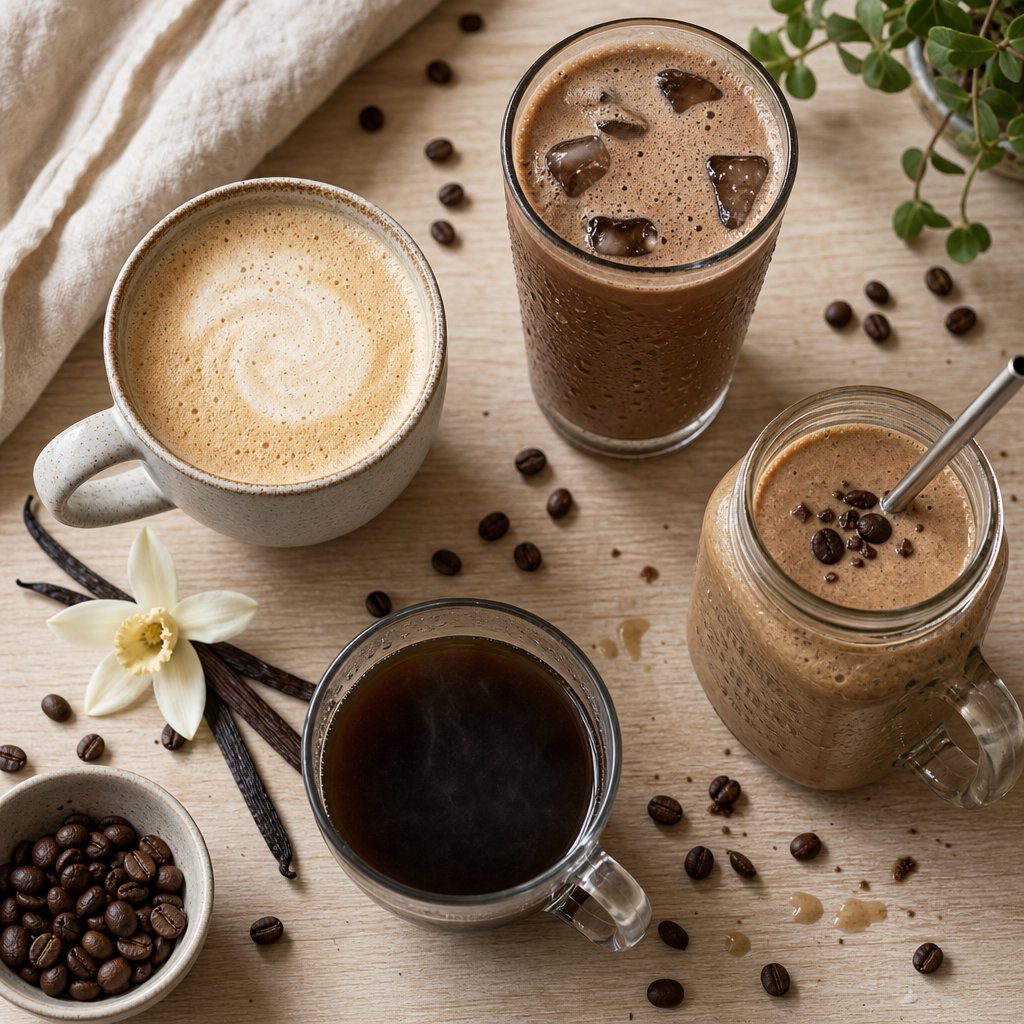
Flavor Pairings and Protein Coffee Recipes
Getting the technique right is one thing. Making your protein coffee taste like something you genuinely crave every morning is another. The flavor dimension is where most people either fall in love with this routine or abandon it after a few uninspiring attempts. The secret? Treating your protein powder like a flavor ingredient, not just a nutritional add-on, and pairing it intentionally with the right coffee profile.
Best Flavor Pairings With Coffee Roasts
Coffee roasts vary dramatically in flavor, from bright and fruity light roasts to deep, chocolatey dark roasts. Your protein powder flavor should complement those notes rather than clash with them. Here's how the most common protein flavors interact with different roast profiles:
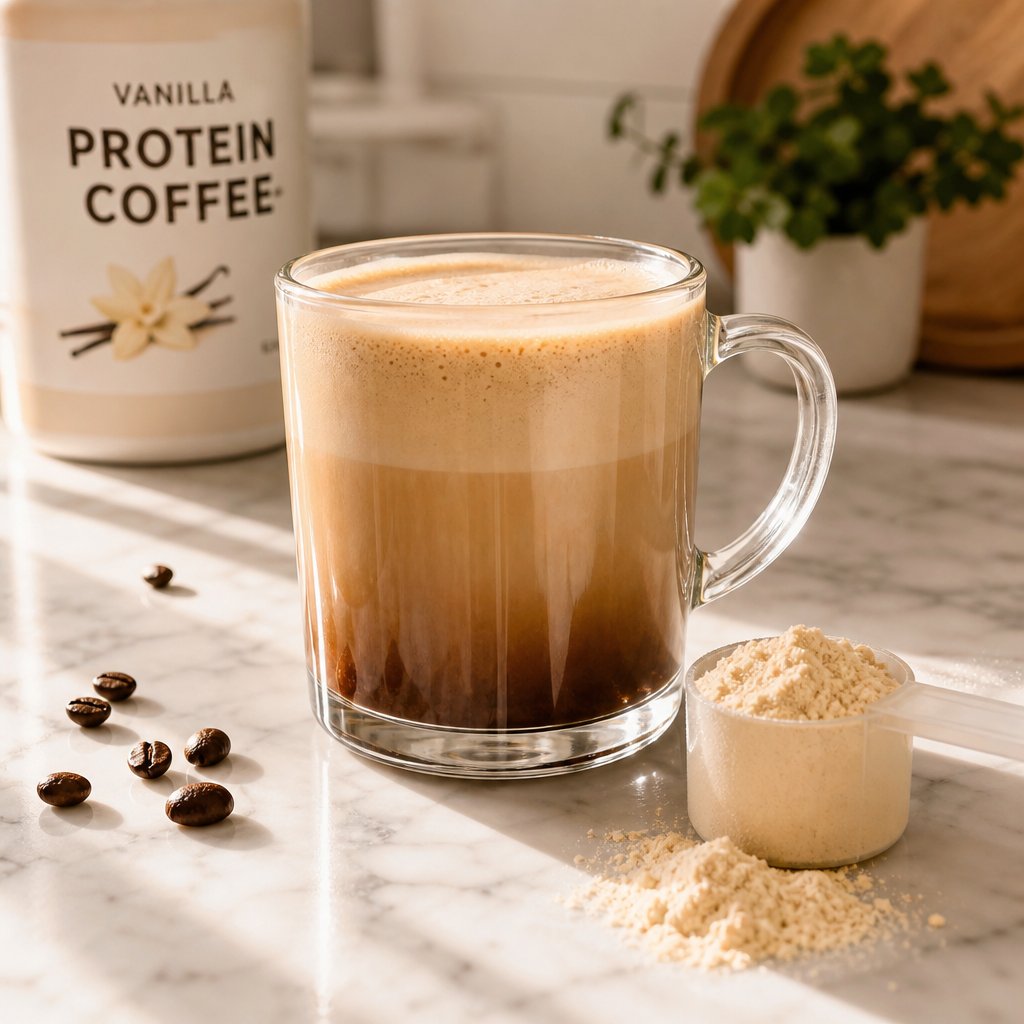
Vanilla protein + medium roast creates the most universally appealing combination. Medium roasts carry balanced caramel and nutty undertones that blend seamlessly with vanilla's sweetness, producing a drink that tastes remarkably close to a vanilla latte. Can you put vanilla protein powder in coffee and get cafe-quality flavor? With a medium roast as your base, absolutely. The vanilla smooths out any bitterness without masking the coffee character.
Chocolate protein + dark roast leans into the natural cocoa and roasted notes already present in darker beans. The result is rich and dessert-like without added sugar. Think of it as a mocha without the syrup. Dark roasts also tend to be less acidic, which means less risk of off-flavors from protein-acid interactions.
Unflavored protein + any roast works universally but shines brightest with flavored coffees or single-origin beans where you want the coffee's natural tasting notes to remain front and center. If you've invested in a quality Ethiopian or Colombian single-origin, unflavored collagen or whey isolate adds body and nutrition without competing with those delicate fruit or floral notes.
Mocha-flavored protein + any roast creates the richest, most indulgent option. Since mocha protein already contains both chocolate and coffee flavoring, it amplifies whatever roast you pair it with. This combination works especially well as a coffee flavored protein powder base for blended drinks and smoothies where you want bold, unmistakable coffee-chocolate flavor.
One pairing to avoid: fruity or berry-flavored proteins with dark roasts. The bright, acidic fruit notes fight against the smoky, bitter coffee profile and produce a muddled, unpleasant taste that satisfies neither craving.
Simple Protein Coffee Recipes to Try
Once you understand the flavor logic, building recipes becomes intuitive. These four protein powder coffee recipe options cover different preferences and preparation styles, from a quick weekday morning drink to a more indulgent weekend treat.
- Vanilla Protein Latte: Combine one scoop of vanilla whey isolate with 8 ounces of medium roast coffee (cooled to warm) and a 2-ounce splash of milk or oat milk. Use the slurry method or a frother to blend until creamy. This vanilla protein latte delivers roughly 22 to 27 grams of protein with a smooth, sweet flavor that needs no added sugar. It's the closest thing to a coffeehouse latte you can make in under two minutes.
- Mocha Protein Shake: Add one scoop of chocolate whey protein to 8 ounces of cold brew concentrate (diluted to taste), a handful of ice, and blend for 20 seconds. The cold brew's natural sweetness pairs with the chocolate protein to create a drink that tastes like a frozen mocha. Add a teaspoon of cocoa powder if you want deeper chocolate intensity.
- Protein Coffee Smoothie: Blend one scoop of vanilla or unflavored protein with 6 ounces of chilled coffee, half a frozen banana, a handful of ice, and a tablespoon of peanut butter. This protein coffee smoothie works as a full breakfast replacement at roughly 350 calories with 25 to 30 grams of protein, healthy fats, and natural sweetness from the banana. The frozen fruit gives it a thick, milkshake-like body.
- Protein Creamer Replacement: Stir one scoop of unflavored collagen peptides directly into your hot coffee. That's it. No slurry needed, no blender required. Collagen dissolves invisibly and adds 10 to 11 grams of protein per scoop while giving your coffee a slightly richer mouthfeel. Using protein powder as creamer this way eliminates the sugar, artificial flavors, and inflammatory seed oils found in many commercial creamers. For people who use whey protein coffee creamer alternatives, vanilla whey isolate frothed into warm coffee mimics the sweetness and body of flavored creamers at a fraction of the sugar content.
Each recipe scales easily. Double the protein for a meal replacement. Halve it for a lighter afternoon drink. Swap dairy milk for almond or oat milk to keep it plant-based. The framework stays the same: match your protein flavor to your coffee roast, choose the right temperature method from the previous section, and adjust ratios to your preferred thickness.
Digestive Considerations Worth Knowing
Some people dive into protein coffee enthusiastically and then deal with bloating, cramping, or urgent bathroom trips. This isn't necessarily a sign that the combination is wrong for you. It usually means one of three factors is at play.
First, coffee itself stimulates gastric acid secretion and has a mild laxative effect through its action on the colon's motility. Adding a concentrated dose of protein, especially whey concentrate with its lactose content, to an already stimulating beverage can overwhelm a sensitive digestive system. If you're lactose-intolerant or lactose-sensitive, coffee creamer protein powder made from whey isolate (which contains less than 1% lactose) or collagen peptides will be far gentler than concentrate.
Second, drinking protein coffee on a completely empty stomach amplifies both caffeine's stimulant effect and the osmotic load of dissolved protein in your gut. Starting with half a scoop to assess your tolerance is a smart move before committing to a full serving. Many people find that pairing their protein coffee with even a small amount of solid food, like a handful of nuts or a piece of toast, eliminates discomfort entirely.
Third, artificial sweeteners commonly found in flavored protein powders (sucralose, acesulfame potassium, sugar alcohols) can cause gastrointestinal distress in some individuals, particularly at higher doses. If bloating is an issue, try switching to a naturally sweetened or unsweetened powder before blaming the coffee-protein combination itself.
The digestive adjustment period typically lasts a few days to a week. Your gut adapts to new dietary patterns, and most people who start conservatively find they can work up to a full scoop without issues. If problems persist beyond two weeks, the specific protein type rather than the concept of protein coffee is likely the culprit, and switching sources usually resolves it.
Flavor and comfort are what turn a one-time experiment into a lasting daily habit. But even with the perfect recipe dialed in, certain preparation mistakes can still sabotage your results, wasting both your protein powder and your patience.
Common Mistakes That Ruin Your Protein Coffee
So should you mix protein powder with coffee? Absolutely. But knowing the right technique and actually executing it are two different things. Most people who give up on protein coffee do so because of avoidable errors that turn a promising drink into a gritty, clumpy disappointment. Here's what goes wrong and how to fix each issue.
Why Your Protein Coffee Tastes Gritty or Clumpy
Clumps form when protein particles bond together before they have a chance to dissolve individually. Grittiness happens when powder doesn't fully hydrate in the liquid. Both problems trace back to the same root causes: too much heat too fast, wrong protein type for the application, or poor mixing mechanics. Can protein powder be mixed with coffee smoothly every time? Yes, once you eliminate these specific mistakes.
Mistakes That Waste Your Protein Powder
- Dumping powder directly into boiling coffee. This causes instant denaturation and clumping before particles can separate. The fix: let coffee cool for 2 to 3 minutes, or pre-mix your powder into a slurry with room-temperature liquid first.
- Using casein in black acidic coffee. Casein curdles at coffee's pH level regardless of your technique. The fix: switch to whey isolate or collagen for black coffee, or buffer casein with milk and use cold brew only.
- Skipping the pre-mix step. Putting protein powder in coffee without a slurry leaves dry pockets that resist dissolving. The fix: always dissolve powder in 2 to 3 tablespoons of cool liquid before combining with hot coffee.
- Using too much powder relative to liquid. More than 25 grams per 8 ounces creates a sludgy, paste-like texture. The fix: use at least 10 ounces of liquid per scoop, or split larger doses across two drinks.
- Stirring with a spoon instead of frothing or blending. A spoon can't generate enough shear force to break apart protein aggregates. The fix: use a handheld milk frother for 5 to 10 seconds. It's the single cheapest upgrade that makes the biggest difference.
- Choosing plant proteins with coarse particle sizes for hot drinks. Hemp and some pea proteins have fibrous textures that no amount of mixing coffee and protein powder together will smooth out in hot liquid. The fix: reserve gritty plant proteins for blended iced drinks where ice and blending speed mask the texture.
- Ignoring the cooling window. Adding powder the instant coffee finishes brewing means hitting it at 200 degrees Fahrenheit, the worst possible temperature. The fix: two to three minutes of patience, or toss in a couple of ice cubes to drop the temperature quickly.
Is protein powder good in coffee from a digestive standpoint? For most people, yes. But some experience bloating or stomach discomfort that they blame on the combination itself. The real culprit is usually consuming caffeine on an empty stomach alongside a concentrated protein dose. Caffeine stimulates gastric acid production while a large protein bolus increases osmotic load in the gut. Together, they can overwhelm a sensitive system.
The side effects of protein powder in coffee are rarely about the pairing being inherently problematic. They're about context. If you experience cramping or urgency, try eating a small handful of nuts or a piece of toast alongside your protein shake in coffee. Even a modest amount of solid food buffers the stomach and slows absorption enough to eliminate discomfort for most people. Alternatively, start with half a scoop and build up over a week as your digestive system adapts.
These fixes are simple, but they require the right protein powder to begin with. A powder formulated for smooth dissolution in beverages will always outperform one designed for thick smoothies, no matter how perfect your technique is.
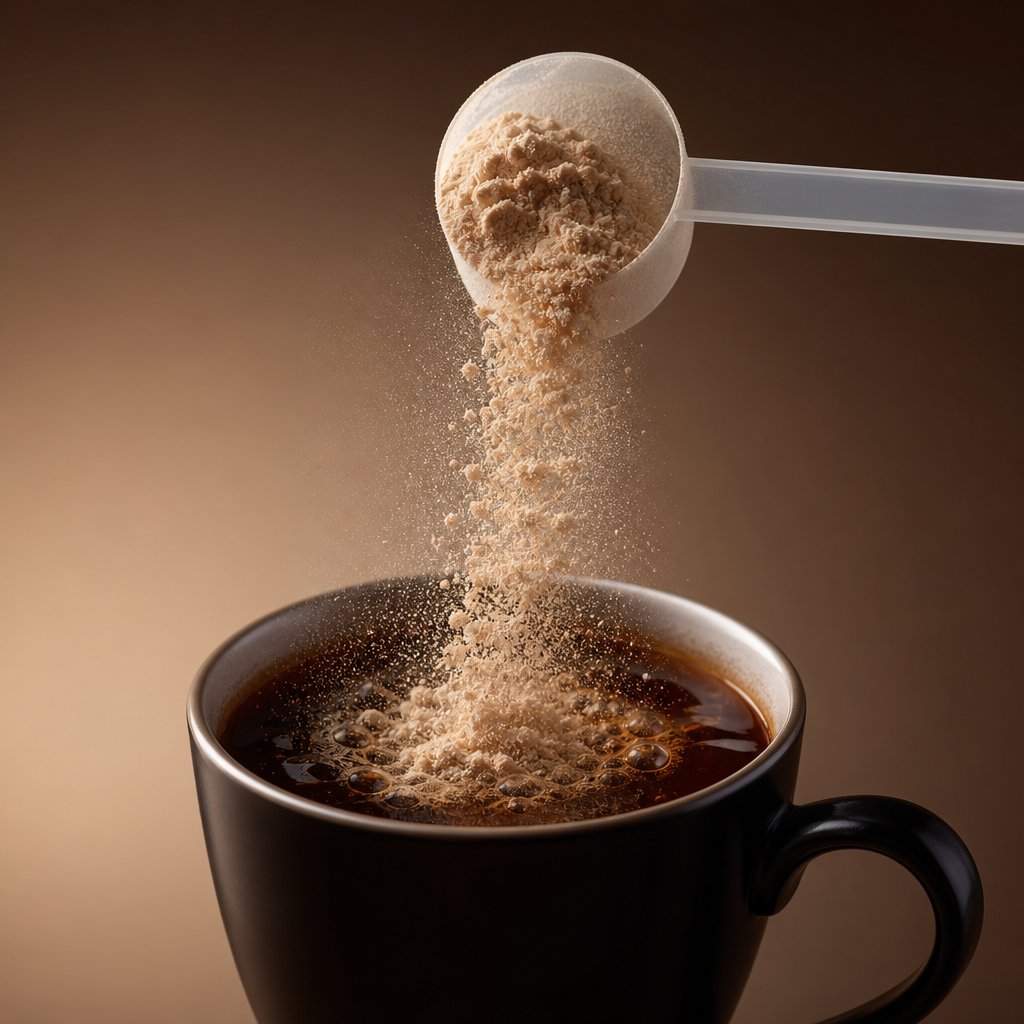
How to Choose a Quality Protein Powder for Coffee
The difference between a protein powder that vanishes into your coffee and one that turns it into a chunky mess often has nothing to do with your technique. It comes down to how the powder was manufactured. Two whey isolates can share the same protein percentage on the label yet behave completely differently in hot liquid because of processing decisions made during production. If you want the best protein powder to mix with coffee, you need to look beyond the nutrition facts panel and understand what makes a formula coffee-friendly at the manufacturing level.
What Makes a Protein Powder Coffee-Friendly
The single biggest factor separating a smooth coffee protein drink from a clumpy one is whether the powder has been instantized. Instantization is a processing step that modifies protein particles so they disperse rapidly in liquid rather than floating on the surface and forming lumps. Non-instantized whey protein tends to clump on contact with water because the fine, hydrophobic particles resist wetting. Instantized versions dissolve in seconds, even with just a spoon.
Here's what separates a high-quality protein powder for coffee from one that fights you every morning:
- Lecithin coating for emulsification. Lecithin, a naturally occurring phospholipid, is applied to protein particles during manufacturing. It reduces surface tension between the powder and liquid, prevents particles from sticking together, and allows even dispersion throughout your cup. Both soy lecithin and sunflower lecithin serve this function, though sunflower lecithin is increasingly preferred for allergen-free and clean-label formulations.
- Fine particle size. Smaller particles hydrate faster because they have more surface area relative to their volume. Protein powders milled to a finer consistency dissolve more completely in coffee, leaving less gritty residue at the bottom of your cup. Coarser grinds require blending or aggressive shaking to fully incorporate.
- Microfiltration or cross-flow filtration processing. These gentle filtration methods separate whey protein from fat and lactose without using harsh chemicals or excessive heat. The result is a protein that retains its natural solubility characteristics rather than being partially denatured during manufacturing, which would make it more prone to clumping when it meets your hot coffee.
- Minimal fillers and thickeners. Some protein powders bulk up their serving size with gums, maltodextrin, or fiber additives. These ingredients can thicken unpredictably in hot liquid, turning your coffee protein powder into a gelatinous mess. Cleaner formulations with fewer non-protein ingredients tend to mix more predictably across different temperatures.
- Agglomeration. This process binds protein particles into larger, more porous granules that allow liquid to penetrate quickly. Agglomerated powders sink and dissolve rather than floating on the surface, which is exactly what you want when stirring protein to add to coffee.
When shopping for the best protein for coffee, check the ingredient list for lecithin (soy or sunflower) as a strong indicator that the powder has been instantized. Products labeled "instant" or "easily mixable" have typically undergone this processing. If the label doesn't mention lecithin or instantization, expect to need a blender rather than a spoon.
Understanding Protein Powder Quality and Manufacturing
Beyond solubility, the overall quality of a protein powder depends on decisions made long before it reaches your kitchen. Protein density is one of the most overlooked indicators. A high-quality whey isolate should contain at least 80 to 90 percent protein by weight. If a product uses a 40-gram scoop to deliver only 20 grams of protein, nearly half of what you're consuming is non-protein filler, flavoring, or sweetener. That extra material doesn't just dilute your protein intake. It can also interfere with how cleanly the powder dissolves in coffee.
Third-party testing and certifications matter too. Look for products that carry GMP (Good Manufacturing Practices) compliance, FDA registration, or independent testing certifications like NSF or Informed Sport. These indicate that the manufacturer follows standardized quality control processes, from raw ingredient sourcing through final packaging. Protein infused coffee products are only as good as the powder going into them, and manufacturing shortcuts show up as inconsistent texture, off-flavors, or poor dissolution batch to batch.
For brands and entrepreneurs looking to enter the growing protein coffee market, the manufacturing partner you choose determines your end product's performance. OEM/ODM manufacturers like ZhuFeng offer customized formulation services with powder and granule formats specifically engineered for solubility and taste compatibility in hot and cold beverages. Their flexible production capabilities span multiple product formats, including the fine-milled, instantized powder formulations that dissolve smoothly in coffee applications. Private label sellers can work with such manufacturers to develop coffee-optimized protein products with scalable production, custom flavoring, and the precise particle engineering that separates a premium coffee protein powder from a generic supplement that clumps on contact.
Whether you're a consumer choosing your next tub or a brand owner developing a new product line, the manufacturing process is where quality is built or lost. The best protein coffee powder dissolves effortlessly not because of marketing claims, but because someone made deliberate decisions about filtration methods, particle size, lecithin application, and formulation balance during production. Those invisible choices are what you're really paying for when you invest in a protein powder that actually works in your morning cup.
Start Your Protein Coffee Routine Today
Your Protein Coffee Quick-Start Checklist
You've got the science, the techniques, and the troubleshooting knowledge. All that's left is putting it into action. Is it okay to put protein powder in coffee? Completely. The research is clear that protein in coffee retains its full amino acid profile, mixes smoothly with the right approach, and fits into virtually any dietary goal. Here's your step-by-step sequence to get started:
- Choose your protein type. Refer to the comparison table above. Whey isolate or collagen peptides work best for hot coffee. Plant blends and whey concentrate perform well in iced or blended preparations.
- Decide hot or iced. Iced coffee is the easiest entry point since cold temperatures eliminate clumping entirely. Hot coffee works perfectly with the slurry method or the warm sweet-spot technique.
- Start with the recommended ratio. One scoop (20 to 25 grams) per 8 to 12 ounces of coffee. Adjust thickness up or down after your first few attempts.
- Match flavor to roast. Vanilla pairs with medium roasts, chocolate complements dark roasts, and unflavored works universally.
- Time it to your goals. Morning meal replacement, pre-workout fuel, or afternoon protein boost. Each scenario calls for slightly different dosing and preparation.
Is coffee with protein powder good for you? When you choose a quality powder, keep caffeine within moderate daily limits, and use it to complement whole-food nutrition rather than replace it, the answer is a confident yes. You can mix protein powder with coffee daily as part of a balanced routine without any negative impact on protein absorption or muscle-building outcomes.
How to get protein in your coffee doesn't need to be complicated. Pick one method from this guide, try it tomorrow morning, and refine from there. Most people land on their ideal recipe within three attempts.
The best protein coffee is the one you'll actually drink consistently. A perfect formula you skip isn't better than a simple recipe you enjoy every day.
For entrepreneurs and brand owners watching the protein coffee market grow, the opportunity is substantial. The high-protein coffee segment is projected to reach $16.5 billion by 2035, driven by consumer demand for functional beverages that deliver more than just caffeine. Partnering with experienced OEM manufacturers like ZhuFeng enables launching custom protein coffee products with optimized formulations for solubility, taste, and scalable production, turning a growing trend into a market-ready product line.
Whether you're a consumer looking to add protein to your morning cup or a business ready to capitalize on this category, the fundamentals are the same: quality ingredients, smart formulation, and the right technique make all the difference. Can you use protein powder in coffee and get great results? Every single day.
Frequently Asked Questions About Protein Powder in Coffee
1. Does putting protein powder in hot coffee destroy the protein?
No. Heat causes protein denaturation, which unfolds the molecular structure but does not break down amino acids or reduce nutritional value. Your body denatures protein during digestion anyway, so pre-denaturing it in hot coffee simply means your stomach does slightly less work. The amino acid content, including leucine and other essential amino acids, remains completely intact regardless of coffee temperature.
2. What is the best type of protein powder to mix with coffee?
Whey protein isolate and collagen peptides perform best in coffee. Whey isolate contains over 90% protein with minimal fat and lactose, giving it superior solubility in hot liquid. Collagen peptides dissolve almost invisibly at any temperature without affecting taste or texture. Casein should be avoided in black coffee because it curdles at coffee's acidic pH level. Plant-based options like pea-rice blends work well in iced or blended preparations.
3. How do I prevent protein powder from clumping in my coffee?
The most effective method is the slurry technique: mix your protein powder with 2-3 tablespoons of room-temperature water first to create a smooth paste, then slowly pour it into coffee that has cooled for 2-3 minutes. Using a handheld milk frother for 5-10 seconds after combining also eliminates clumps. Alternatively, switching to iced coffee bypasses clumping entirely since cold temperatures prevent the protein denaturation that causes aggregation.
4. When is the best time to drink protein coffee?
The ideal timing depends on your goal. As a morning meal replacement, use 30-40g of protein with added healthy fats for sustained satiety. For pre-workout fuel, drink it 60 minutes before training to combine caffeine's performance benefits with circulating amino acids. Post-workout consumption within 1-2 hours supports muscle recovery. For an afternoon boost, one scoop before 2 PM helps hit daily protein targets without disrupting sleep from caffeine.
5. Can protein coffee cause stomach problems or side effects?
Some people experience bloating or discomfort, but this typically stems from drinking caffeine on an empty stomach combined with a concentrated protein dose, not from the combination being inherently harmful. Starting with half a scoop, eating a small amount of solid food alongside it, and choosing whey isolate or collagen over lactose-containing concentrate usually resolves digestive issues. Artificial sweeteners in flavored powders can also contribute to gut discomfort in sensitive individuals.