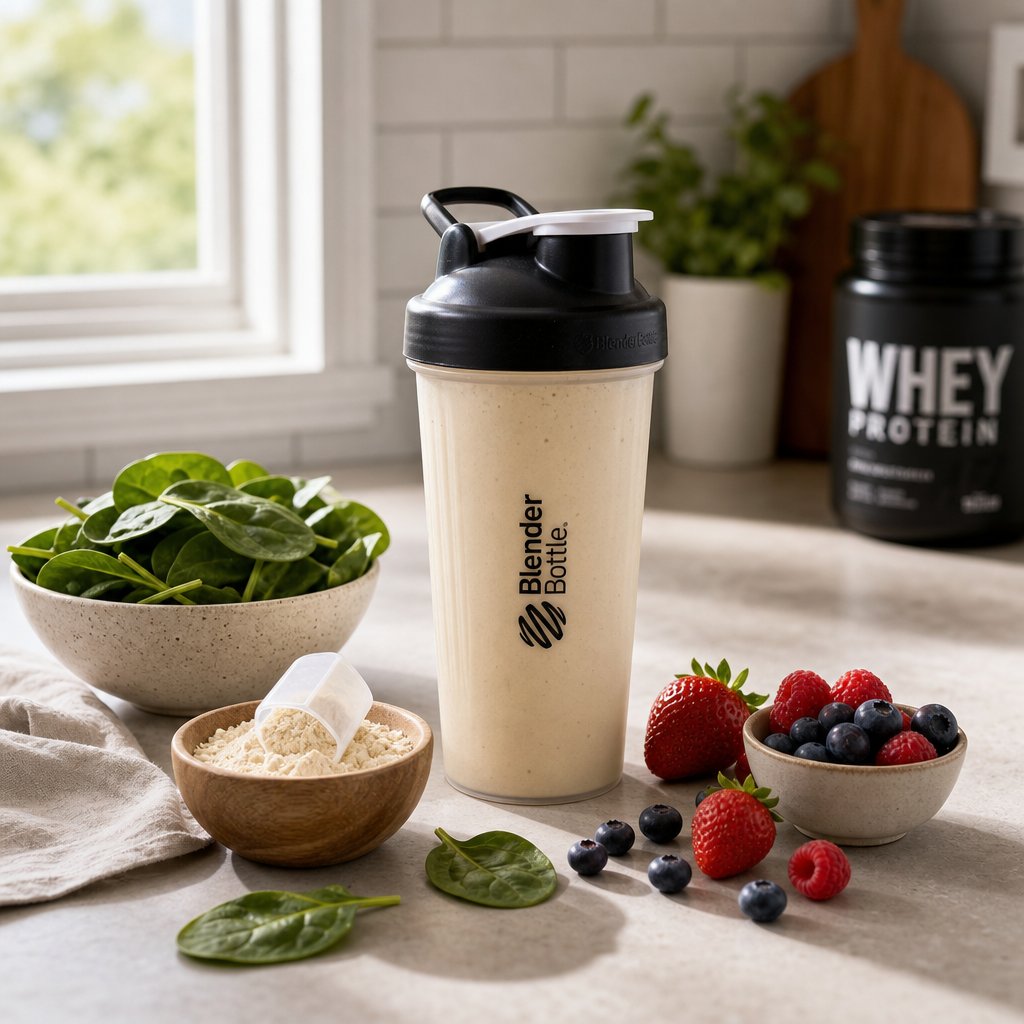
Step 1 - Understand How Protein Powder Actually Drives Fat Loss
You already know whole foods should form the foundation of any fat loss diet. Chicken breast, eggs, Greek yogurt - these are staples for a reason. But here is the reality: hitting your protein targets consistently while staying in a calorie deficit is hard. Life gets busy, meals get skipped, and suddenly you are 40 grams short at 9 PM with no appetite for another chicken breast. That is exactly where protein powder earns its place.
So, is protein powder good for weight loss? Yes, but not because it contains some magic fat-burning ingredient. It works because it delivers concentrated protein with minimal extra calories, making it easier to stay in a deficit while keeping your body in a muscle-preserving, appetite-controlled state. Understanding the mechanisms behind this gives you the power to use protein shakes for weight loss strategically rather than blindly.
Why Protein Powder Works for Fat Loss
Protein drives fat loss through three distinct pathways, and each one has a direct impact on your daily results.
First, appetite suppression. When you consume protein, your gut releases satiety hormones like GLP-1, cholecystokinin (CCK), and peptide YY while simultaneously suppressing ghrelin, the hormone that makes you hungry. A meta-analysis of 49 randomized controlled trials found that protein intake significantly decreased hunger, reduced desire to eat, and increased fullness. It also decreased ghrelin by 20 pg/ml while boosting CCK and GLP-1. In practical terms, a protein shake between lunch and dinner can eliminate the late-afternoon cravings that lead to overeating.
Second, the thermic effect. Your body burns more calories digesting protein than any other macronutrient. The diet-induced thermogenesis (DIT) of protein sits at 20-30% of calories consumed, compared to just 5-10% for carbohydrates and 0-3% for fat. That means if you drink a shake with 25 grams of protein (100 calories from protein alone), your body spends 20-30 of those calories just processing it. Over weeks and months, this adds up.
Third, muscle preservation. Losing weight without adequate protein means losing muscle alongside fat. Less muscle means a lower resting metabolic rate, which makes continued fat loss harder. A meta-analysis of 24 RCTs showed that higher protein intake during energy restriction preserved fat-free mass (an increase of 0.43 kg compared to standard protein groups) while also maintaining resting energy expenditure by roughly 142 kcal/day. Protein powder makes hitting these protective protein levels realistic even on your busiest days.
When Protein Powder Beats Whole Foods
Do protein shakes help you lose weight better than whole food sources? Not inherently. But there are specific scenarios where powder becomes the smarter choice:
- You need 25-50g of protein in under 2 minutes with minimal prep
- You are trying to hit protein targets without exceeding your calorie budget (a shake can deliver 25g protein for 100-130 calories, while equivalent whole foods often carry more fat or carbs)
- You need fast-absorbing protein post-workout to support muscle recovery during a deficit
- You want to replace a high-calorie meal or snack with something that keeps you full on fewer calories
Can protein shakes help you lose weight on their own? No. And this distinction matters more than anything else in this guide.
Protein powder is a tool that works within a calorie deficit - not a supplement that creates one. Without controlling total daily intake, no amount of shakes will produce fat loss.
The research on whey protein and weight loss reinforces this point. A 2022 meta-analysis of 35 RCTs involving 1,902 participants found that whey protein supplementation improved body composition indicators including BMI, body fat mass, and waist circumference, but the greatest benefits appeared when combined with resistance training and a reduction in overall calorie consumption.
Knowing how protein powder drives fat loss is the foundation. The next question becomes personal: how much do you actually need, and how does it fit within your specific calorie budget?
Step 2 - Calculate Your Protein Needs and Calorie Budget
Here is where most people go wrong with protein powder: they start scooping without knowing their numbers. How many protein shakes a day should you drink? One? Two? Three? The answer depends entirely on your body weight, activity level, and how much protein you are already getting from food. Without this math, you are guessing, and guessing in a calorie deficit leads to either undereating protein (losing muscle) or overeating total calories (stalling fat loss).
Calculate Your Personal Protein Target
Your daily protein target during a calorie deficit is higher than what sedentary guidelines suggest. The standard recommendation of 0.8g per kilogram of body weight is a minimum to prevent deficiency, not an optimal target for someone actively losing fat. Research-backed guidelines for a deficit look like this:
- Sedentary or lightly active individuals: 1.2-1.6g of protein per kg of body weight per day
- Moderately active individuals (exercising 3-4 times per week): 1.6-2.0g per kg per day
- Resistance-trained or highly active individuals: 1.6-2.2g per kg per day
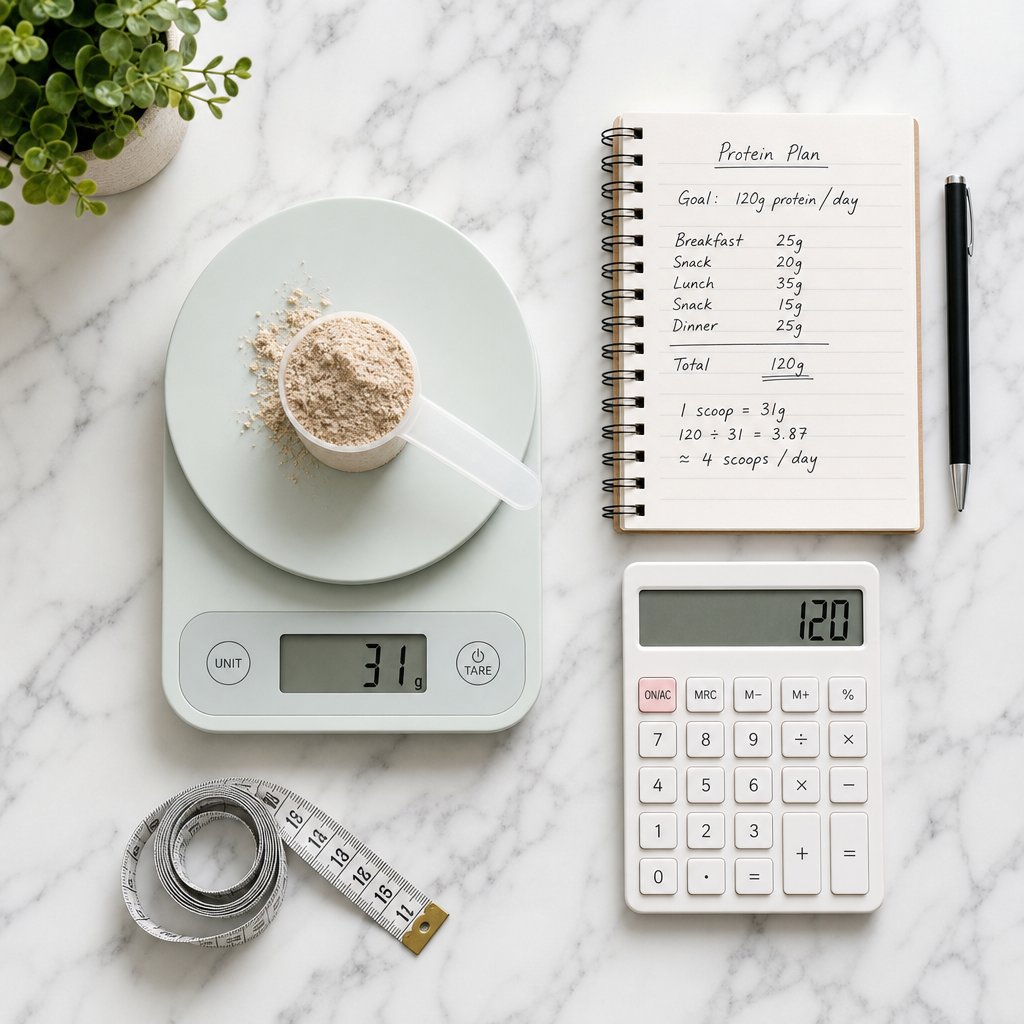
Imagine you weigh 75 kg and exercise regularly with a mix of cardio and strength training. Your daily protein target falls between 120g and 165g. That is a lot of chicken breasts. If your whole food meals realistically deliver 80-120g of protein, you have a gap of 25-50g that a protein shake for weight loss can fill perfectly with just one to two scoops.
A practical rule: aim to get roughly 70-80% of your protein from whole foods (meat, fish, eggs, dairy, legumes) and use protein powder to cover the remaining 20-30%. This keeps your diet nutrient-dense while giving you the flexibility to hit targets consistently. For most people, that translates to one to two servings of protein powder daily, each providing 25-30g of protein.
If you have a higher BMI, using your actual body weight may overestimate your needs. In that case, calculate based on your goal body weight or lean body mass instead. A registered dietitian can help you dial in the most appropriate number for your situation.
Map Protein Powder Into Your Calorie Deficit
This is the critical distinction that separates people who get results from those who wonder why the scale is not moving: protein powder calories count. Every scoop you add to your day must fit within your total calorie budget, not sit on top of it.
A moderate calorie deficit of 500-600 calories below your total daily energy expenditure (TDEE) is widely supported as safe and sustainable, typically producing around 0.5 kg of fat loss per week. Your protein shake for weight loss needs to live inside that reduced calorie budget. Think of it as replacing calories from less satiating foods rather than adding new ones.
For example, if your deficit target is 1,800 calories per day and you drink a shake with 130 calories, those 130 calories replace a snack or part of a meal. You are not eating 1,800 calories of food plus a 130-calorie shake. This substitution mindset is what makes meal replacement shakes for weight loss effective. You swap a 350-calorie muffin for a 130-calorie protein shake and save 220 calories while getting more protein and greater satiety.
The table below maps out how protein powder fits into different scenarios. Use it as a starting reference, then adjust based on your results over two to four weeks.
| Body Weight | Activity Level | Daily Protein Target | Protein from Whole Foods | Protein Powder Servings | Shake Calories to Budget |
|---|---|---|---|---|---|
| 60 kg (132 lb) | Sedentary / Light | 72-96g | 55-70g | 1 scoop (25g protein) | ~110-130 kcal |
| 70 kg (154 lb) | Moderate (3-4x/week) | 112-140g | 85-110g | 1-2 scoops (25-50g protein) | ~110-260 kcal |
| 80 kg (176 lb) | Moderate (3-4x/week) | 128-160g | 100-130g | 1-2 scoops (25-50g protein) | ~110-260 kcal |
| 90 kg (198 lb) | High (5-6x/week) | 144-198g | 110-150g | 2 scoops (50g protein) | ~220-260 kcal |
| 100 kg (220 lb) | High (5-6x/week) | 160-220g | 130-170g | 2 scoops (50g protein) | ~220-260 kcal |
Notice the pattern: even at higher body weights with intense training, you rarely need more than two scoops per day. Replacing meals with protein shakes entirely is not the goal here. The best meal replacement shakes work because they substitute one eating occasion, not because they eliminate real food from your diet. Whole foods provide fiber, micronutrients, and chewing satisfaction that powder simply cannot replicate.
The bottom line is straightforward. Whether you are using meal replacement protein powder for weight loss or simply plugging a protein gap between meals, the strategy is substitution, not addition. Count those shake calories. Budget them into your deficit. Treat protein powder as a precision tool for hitting your numbers, and you will avoid the most common reason people stall: accidentally eating in a surplus while thinking they are doing everything right.
With your numbers locked in, the next decision becomes which protein powder actually deserves a spot in your calorie budget, because not all products are created equal.
Step 3 - Choose the Right Protein Powder for Weight Loss
Not every tub on the shelf deserves those carefully budgeted calories. Some protein powders deliver 25 grams of protein for 100 calories. Others pack 500+ calories per serving because they are designed for bulking, not cutting. Picking the wrong product can quietly erase your entire calorie deficit without you realizing it. So which protein powder is best for weight loss? The answer comes down to one metric: how much protein you get per calorie spent.
Protein Powder Types Ranked for Fat Loss
Six protein powder types dominate the market, and each performs differently when your goal is fat loss. The table below ranks them based on what matters most during a deficit: protein density, calorie efficiency, and practical use case.
| Protein Type | Calories per Serving | Protein per Serving | Sugar Content | Ideal Use Case for Weight Loss | Fat Loss Suitability |
|---|---|---|---|---|---|
| Whey Isolate | 100-120 kcal | 25-30g | 0-1g | Post-workout recovery, meal replacement, calorie-tight days | Excellent |
| Whey Concentrate | 120-150 kcal | 20-25g | 1-3g | General daily use, budget-friendly protein boost | Good |
| Casein | 110-140 kcal | 20-25g | 0-2g | Evening shake for overnight satiety, appetite control | Good |
| Pea Protein | 110-130 kcal | 20-24g | 0-1g | Plant-based alternative, dairy-free diets | Good |
| Soy Protein | 100-130 kcal | 20-25g | 0-2g | Plant-based complete protein, budget option | Moderate |
| Collagen | 70-110 kcal | 10-20g | 0-1g | Skin and joint support (not ideal as primary protein source) | Low |
Whey isolate sits at the top for a reason. The extra filtration process strips away most fats, carbs, and lactose, leaving you with 90% or more protein by weight and often under 1 gram of fat per serving. Research on whey protein isolate and weight loss supports this ranking: a randomized controlled trial found that whey isolate spiked muscle protein synthesis more effectively than slower-digesting proteins, with participants showing a 20% boost in post-exercise recovery markers.
If you are searching for the best protein powder for weight loss and muscle gain, whey isolate gives you the highest protein-to-calorie ratio while supporting muscle preservation during a deficit. Whey concentrate remains a solid runner-up, especially if budget is a concern, though it carries slightly more calories from residual fats and carbs. Casein earns its spot for a different reason: its slow-digesting micellar structure releases amino acids over 6-8 hours, making it ideal for curbing late-night hunger.
Collagen ranks lowest because it is an incomplete protein, lacking the leucine content needed to effectively stimulate muscle protein synthesis. You need at least 2.5-3 grams of leucine per serving for optimal recovery, and collagen falls short.
For women specifically, the best protein powder for women weight loss follows the same logic: prioritize protein density over marketing. Products labeled "for women" often contain the same ingredients at lower doses with a higher price tag. Focus on the numbers, not the packaging.
How to Read Labels Like a Pro
Here is a quick evaluation tool that cuts through marketing noise: divide the total calories per serving by the grams of protein. This gives you the calorie cost per gram of protein.
- Under 5 calories per gram of protein: Excellent for fat loss (most whey isolates hit this mark)
- 5-6 calories per gram: Good, typical of quality concentrates and plant proteins
- 7+ calories per gram: Likely contains significant fillers, fats, or sugars that eat into your calorie budget
Beyond this metric, watch for red flags. A serving size that is double the protein output signals dilution. For example, a 45-gram scoop delivering only 20 grams of protein means over half the serving is non-protein material like fillers, sweeteners, or thickeners. The best protein supplements for weight loss keep their protein percentage at 75-80% or higher by weight.
Also check for proprietary blends that obscure how much of each protein type you are actually getting. A label that says "protein blend" without specifying ratios could be mostly cheap collagen with a dusting of whey. Transparent labeling that specifies whether the protein is a concentrate, isolate, or hydrolysate is a sign of a trustworthy product.
The protein powder with least calories per serving is not always the best choice either. Context matters. A powder delivering 10 grams of protein for 50 calories is less useful than one delivering 27 grams for 110 calories. Always evaluate protein yield relative to calorie cost, not just raw calorie count.
Product formats have also expanded beyond traditional powder and granules. You will find ready-to-drink shakes for grab-and-go convenience, protein gummies for those who dislike shakes entirely, and even capsule-based amino acid supplements. Each format has trade-offs in protein density and calorie efficiency, but powder remains the most versatile and cost-effective option for the best protein powder for losing weight during a structured deficit.
What Quality Manufacturing Looks Like
A protein powder can have perfect macros on the label and still underdeliver if the manufacturing behind it lacks rigor. The FDA does not approve dietary supplements for safety and efficacy before they hit the market. Instead, it is up to individual companies to ensure their products, facilities, and production methods meet safety standards. This gap means contamination, label inaccuracy, and lower-quality ingredients can slip through without consumers knowing.
Three markers separate reliable products from questionable ones:
- GMP (Good Manufacturing Practice) certification: Facilities must prove cleanliness, sanitation, and consistent production standards. This is the baseline.
- Third-party testing: Certifications like NSF Certified for Sport (screens for 270+ banned substances) or Informed Sport (screens for 200+ banned substances with random batch testing) verify that what is on the label matches what is in the tub.
- Transparent ingredient sourcing: Brands that publish amino acid profiles and specify protein sources (grass-fed whey, non-GMO pea, etc.) tend to produce higher-quality products because transparency invites scrutiny.
Behind the scenes, quality protein powders come from manufacturers that invest in customized formulations and rigorous quality control at every stage. Companies like ZhuFeng, which provides OEM/ODM health food manufacturing services, demonstrate what this looks like in practice: GMP-certified facilities, flexible product formats spanning powder and granules to gummy candy and oral liquids, and scalable production with customized formulations tailored to specific nutritional goals. This type of manufacturing infrastructure is what enables brands to deliver consistent protein density and purity batch after batch.
For you as a consumer, the takeaway is practical: look for at least one third-party certification on any protein powder you buy. If a product has no testing verification, no GMP badge, and no transparency about sourcing, it is a gamble with your calorie budget and your health. The best protein supplements for weight loss earn your trust through verifiable quality, not just attractive packaging.
Choosing the right powder locks in your product. The next piece of the puzzle is when you actually drink it, because timing determines whether your shake supports muscle preservation or just adds calories at a random point in your day.
Step 4 - Time Your Protein Shakes for Maximum Fat Burning
You have the right powder and the right dose. But drinking it at a random time is like filling your car with premium fuel and leaving it parked in the driveway. When you consume your shake relative to workouts and meals directly influences whether that protein supports muscle preservation or simply gets burned as energy. Timing will not make or break your results on its own, but it can sharpen them, especially when you are already in a calorie deficit and every gram of muscle matters.
Pre-Workout and Post-Workout Timing
You have probably heard of the "anabolic window" - the idea that you must chug a shake within 30 minutes of your last rep or lose all your gains. The reality is less dramatic but still meaningful. Research published in Frontiers in Nutrition confirms that consuming protein pre- and/or post-workout induces a significant rise in muscle protein synthesis (MPS), and that peri-exercise protein plays a useful role in optimizing performance and recovery. The practical window is wider than gym culture suggests: consuming 20-40 grams of protein within 1-2 hours after training supports MPS effectively during a deficit.
What about before training? If you exercise fasted, say first thing in the morning, a light workout protein drink 30-60 minutes beforehand prevents your body from breaking down muscle tissue for fuel. A simple shake with 20-25 grams of whey gives you circulating amino acids without the heaviness of a full meal. For those who ate a protein-rich meal within 2-3 hours before training, a pre-workout shake is less critical since amino acids are still available from that meal.
The key insight for protein shakes and working out: total daily protein intake matters more than precise timing. But when you are in a deficit and trying to use protein powder for muscle gain and fat loss simultaneously, the peri-workout period represents your highest-leverage feeding opportunity. Your muscles are sensitized to amino acids for up to 24 hours post-exercise, so consuming nothing after training offers no advantage and potentially a disadvantage.
Meal Replacement vs. Supplement Timing
These are fundamentally different strategies, and confusing them is a common reason people stall. When you use a protein shake as a meal replacement, you are swapping an entire eating occasion, typically breakfast or an afternoon snack, for a lower-calorie, high-protein alternative. The goal is reducing total daily calories while maintaining protein intake. This works well for whey protein shakes and weight loss because a 130-calorie shake replacing a 400-calorie meal creates an instant 270-calorie savings.
When you use a shake as a supplement, you are adding it between meals to hit your protein target without replacing food. This approach suits people who eat enough calories from whole foods but fall short on protein. The shake fills a nutritional gap rather than a caloric one.
Wondering when to drink protein shakes for weight loss female or male? The answer depends on which strategy you are using. Here are the optimal timing scenarios ranked by impact:
- Morning meal replacement: Swap a high-calorie breakfast for a protein shake on busy days. You save calories early and set a high-protein tone for the rest of the day.
- Post-workout within 60 minutes: Capitalize on elevated MPS rates. Building muscle with protein shakes during this window helps preserve lean mass even in a deficit.
- Mid-afternoon (between lunch and dinner): A shake here prevents the energy crash and evening overeating that derails many fat loss efforts. This is where protein shakes for muscle gain and satiety overlap perfectly.
- Evening casein before bed: A systematic review found that 24-48 grams of casein consumed 30 minutes before sleep supports overnight muscle protein synthesis without increasing fat mass in active individuals. Casein's slow digestion rate sustains amino acid delivery over 6-8 hours, making it ideal for overnight satiety and recovery.
For most people aiming to use protein shakes to lose weight and build muscle, the simplest approach is this: place your shake at the point in your day where you are most likely to either skip protein or overeat junk. That single strategic placement often delivers more results than obsessing over exact minute-by-minute timing protocols.
Timing tells you when to drink your shake. But what goes into that shake determines whether it stays under your calorie ceiling or quietly balloons into a 600-calorie smoothie disguised as a diet food.
Step 5 - Build Low-Calorie Shake Recipes That Satisfy
A perfectly timed shake made with the right powder can still wreck your deficit if you throw in the wrong ingredients. One tablespoon of peanut butter here, a splash of juice there, and suddenly your "diet shake" carries more calories than the meal it was supposed to replace. The difference between protein shake recipes for weight loss and accidental weight gain shakes comes down to ingredient control. These formulations keep things simple, satisfying, and calorie-accountable.
Snack Replacement Shakes Under 250 Calories
When you need something between meals that kills hunger without eating into your calorie budget, these low calorie protein shakes deliver 20-30 grams of protein while staying lean on extras.
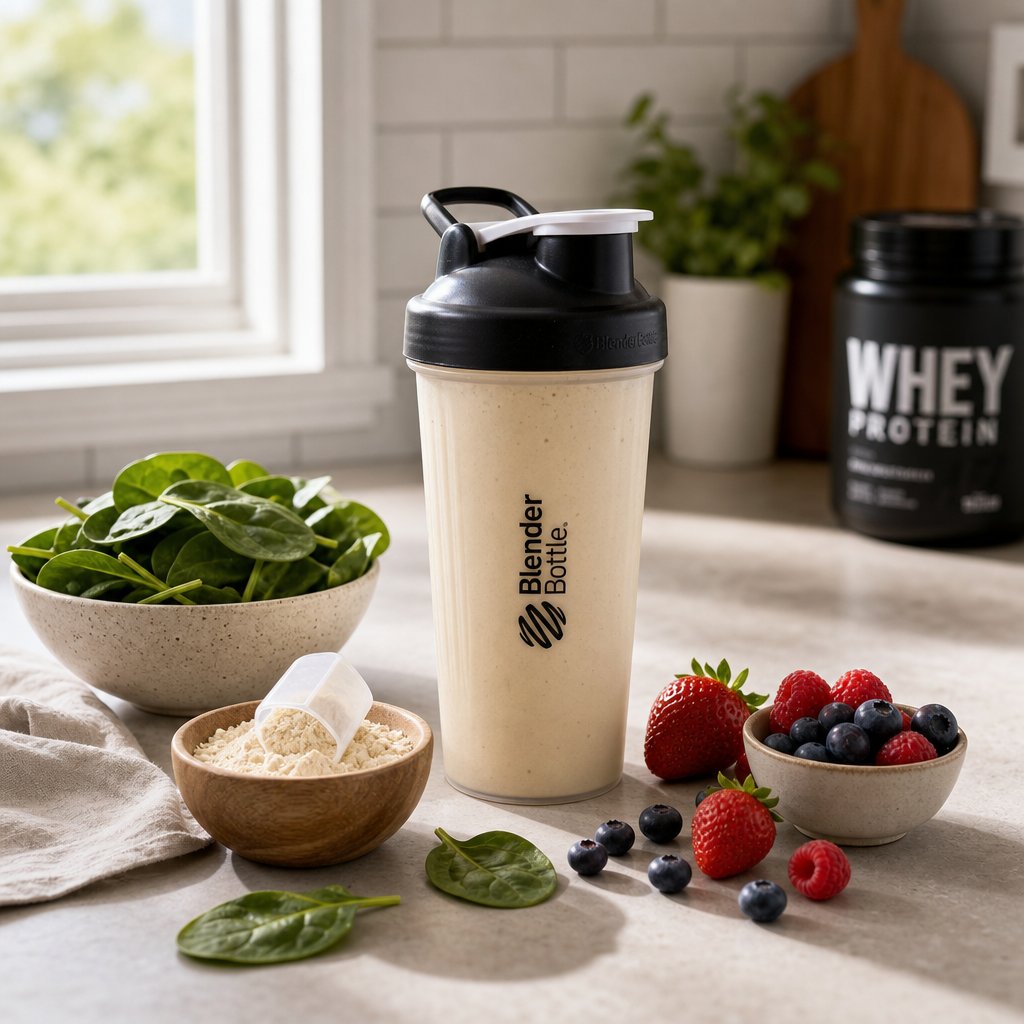
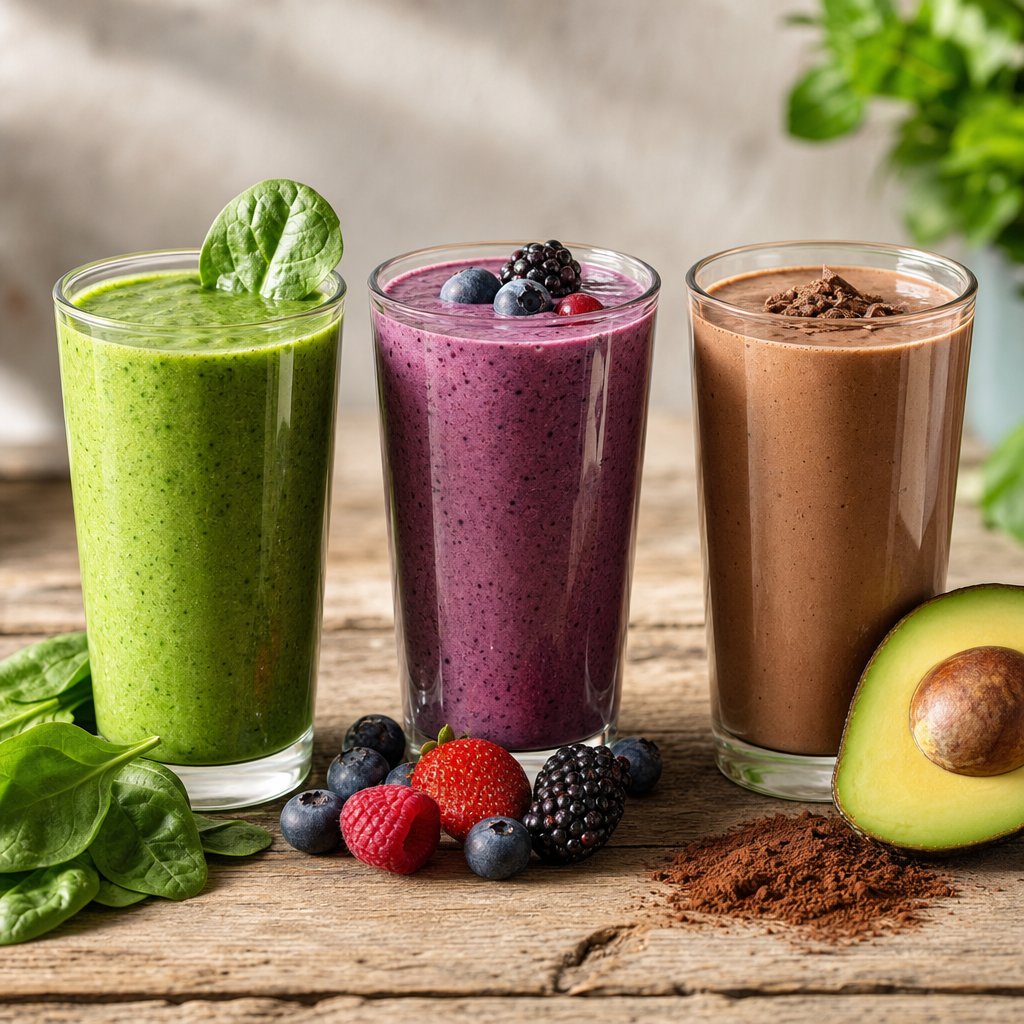
Green Protein Smoothie (approximately 140-170 calories)
- 1 scoop whey isolate or plant protein (25g protein)
- 1 cup fresh spinach
- 1 cup unsweetened almond milk
- 4-5 ice cubes
Spinach adds volume and micronutrients with virtually zero caloric impact. You get a full blender cup of shake for under 170 calories. The mild flavor disappears behind the protein powder, so even spinach skeptics will not notice it.
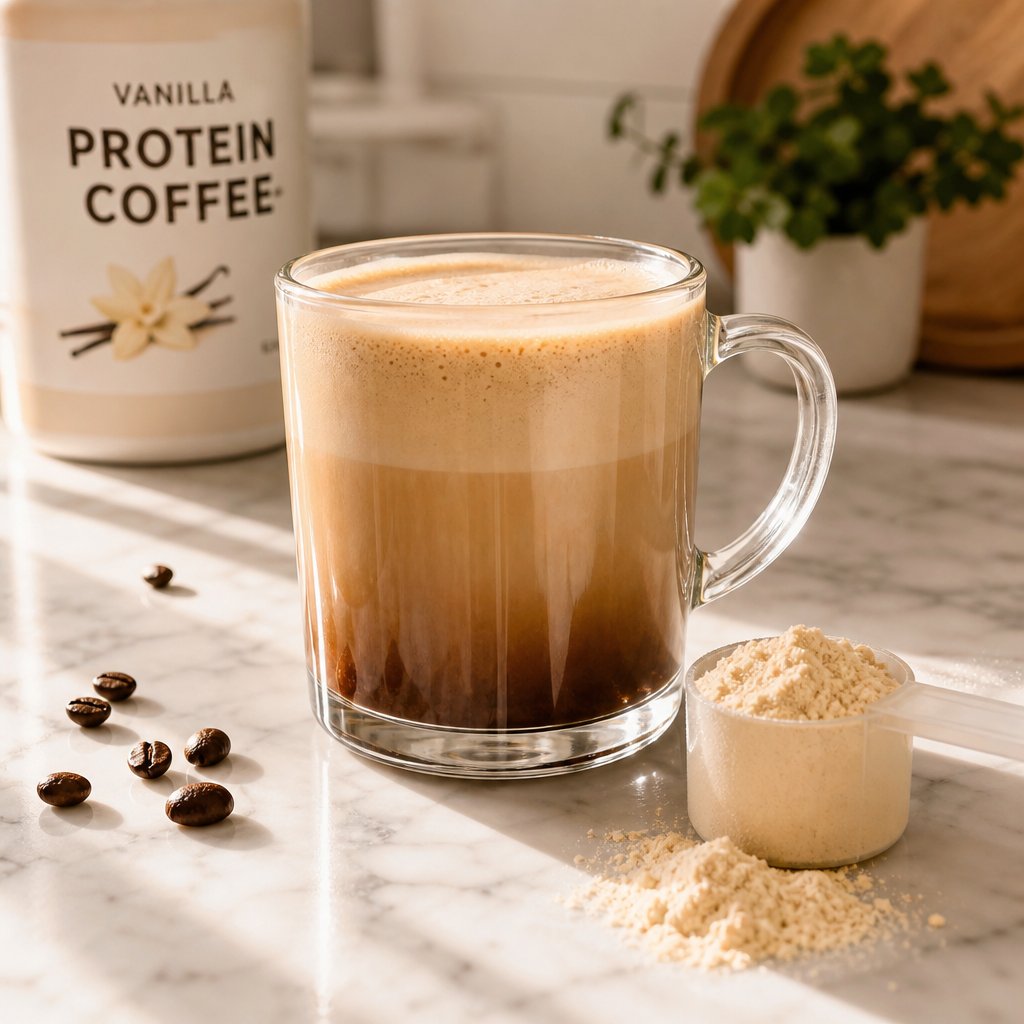
Coffee Protein Shake (approximately 130-150 calories)
- 1 scoop vanilla or chocolate whey isolate (25g protein)
- 1 cup cold brew coffee (unsweetened)
- 4-5 ice cubes
This is the ultimate low calorie protein drink for mornings or mid-afternoon energy dips. Cold brew provides caffeine without calories, and blending it with protein powder creates a creamy iced latte texture. No sweetener needed if your powder has a decent flavor profile.
Berry Blend (approximately 160-190 calories)
- 1 scoop whey isolate (25g protein)
- 1/2 cup frozen mixed berries (blueberries, strawberries, raspberries)
- 1 cup water or unsweetened almond milk
Frozen berries add natural sweetness, fiber, and antioxidants while keeping calories minimal. A half cup of mixed berries contributes roughly 35-40 calories, making this one of the best protein shake recipes for fat loss when you want something that tastes like a treat.
Meal Replacement Shakes Under 400 Calories
A weight loss shake that replaces a full meal needs more substance. Adding healthy fats and fiber keeps you full for 3-4 hours and prevents the blood sugar crash that sends you hunting for snacks. These formulations balance satiety with calorie control.
Peanut Butter Banana (approximately 340-380 calories)
- 1 scoop protein powder (25g protein)
- 1 small banana (frozen for thickness)
- 1 tablespoon natural peanut butter
- 1 cup oat milk
The banana provides potassium and natural creaminess. One tablespoon of peanut butter, not two, adds healthy fats and flavor without blowing the calorie ceiling. Oat milk contributes fiber and body that water simply cannot match.
Chocolate Avocado (approximately 310-360 calories)
- 1 scoop chocolate protein powder (25g protein)
- 1/4 avocado
- 1 teaspoon cocoa powder
- 1 cup unsweetened almond milk
Avocado creates a thick, mousse-like texture while delivering monounsaturated fats that support hormone production during a deficit. A quarter avocado adds roughly 80 calories and 7 grams of healthy fat, enough to slow digestion and extend satiety without excess.
Oats and Berries Power Shake (approximately 350-390 calories)
- 1 scoop protein powder (25g protein)
- 1/4 cup rolled oats
- 1/2 cup frozen berries
- 1/3 cup plain Greek yogurt
- 3/4 cup water
This is the most meal-like option. Oats provide slow-digesting carbohydrates and fiber, Greek yogurt adds an extra 5-7 grams of protein plus probiotics, and berries round out the flavor. Blend the oats first with water for 10 seconds before adding other ingredients to avoid a gritty texture.
What to Mix With and What to Avoid
Your choice of liquid base can double a shake's calories without adding meaningful nutrition. Here is every common mixing liquid ranked from lowest to highest calorie impact per cup:
- Water - 0 calories. Zero impact on your budget. Best for low calorie protein drinks when every calorie counts.
- Unsweetened almond milk - 30-40 calories. Adds slight creaminess with minimal caloric cost. Research confirms it is the lightest plant-based option for calorie-controlled plans.
- Skim milk - 80-90 calories. Adds 8g of extra protein but nearly doubles the shake's base calories.
- Oat milk - 80-100 calories. Creamier texture and more fiber, but carries 16g of carbs per cup.
- Whole milk - 150 calories. Drinking protein with milk adds richness and extra protein, but at 150 calories per cup, it turns a lean shake into a calorie-dense one fast.
- Fruit juice - 110-140 calories. All sugar, no fiber, no protein. The worst choice for a fat loss shake.
The pattern is clear: the creamier and sweeter the liquid, the more calories it smuggles in. For a dedicated low calorie protein shake, water or unsweetened almond milk should be your default. Save whole milk or oat milk for meal replacement shakes where you have the calorie room to spare.
Common calorie traps that turn a weight loss shake into a 600+ calorie bomb:
- Using fruit juice as a base instead of water (adds 110-140 empty calories)
- Adding 2-3 tablespoons of nut butter instead of one (each extra tablespoon adds ~95 calories)
- Pouring sweetened flavored milk or sweetened almond milk (adds 60-90 calories of pure sugar)
- Tossing in a full banana plus other fruits (a large banana alone is 120 calories)
- Using granola or honey as a topping (50-100+ calories with minimal protein benefit)
The fix is simple: measure everything the first few times you make a shake. Once you know what a tablespoon of peanut butter actually looks like versus what you pour by instinct, you will understand why so many people unknowingly sabotage their deficit at the blender.
Recipes give you the building blocks. But how these shakes fit into your broader eating strategy, whether that is intermittent fasting, keto, or straightforward calorie counting, determines whether they work with your plan or against it.
Step 6 - Fit Protein Powder Into Your Chosen Diet Plan
A protein shake diet does not exist in a vacuum. Whether you follow intermittent fasting, count every calorie in an app, or keep carbs under 30 grams a day, your protein powder needs to work within those rules, not against them. The same scoop of whey isolate can be perfectly timed or completely counterproductive depending on the dietary framework surrounding it. Here is how to adapt your approach based on the plan you actually follow.
Protein Powder With Intermittent Fasting
This is the most common point of confusion: does a protein shake break your fast? Yes. All protein powders contain a significant amount of calories, and consuming them triggers an insulin response that ends the fasted state. As registered dietitian Matt Mazzino explains, if you follow intermittent fasting strictly, your protein powder must fall within your eating window.
For a typical 16:8 protocol (eating between noon and 8 PM), the smartest play is using a shake as your first meal to break the fast. You flood your system with 25-30 grams of protein at moderate calories, kickstarting muscle protein synthesis after the overnight fast without the prep time of cooking. Then eat whole food meals for the remainder of your window. This approach works especially well for protein powder for weight loss female protocols, where hitting 100-130 grams of daily protein inside a compressed eating window can feel like a race against the clock.
Protein Powder With Calorie Counting
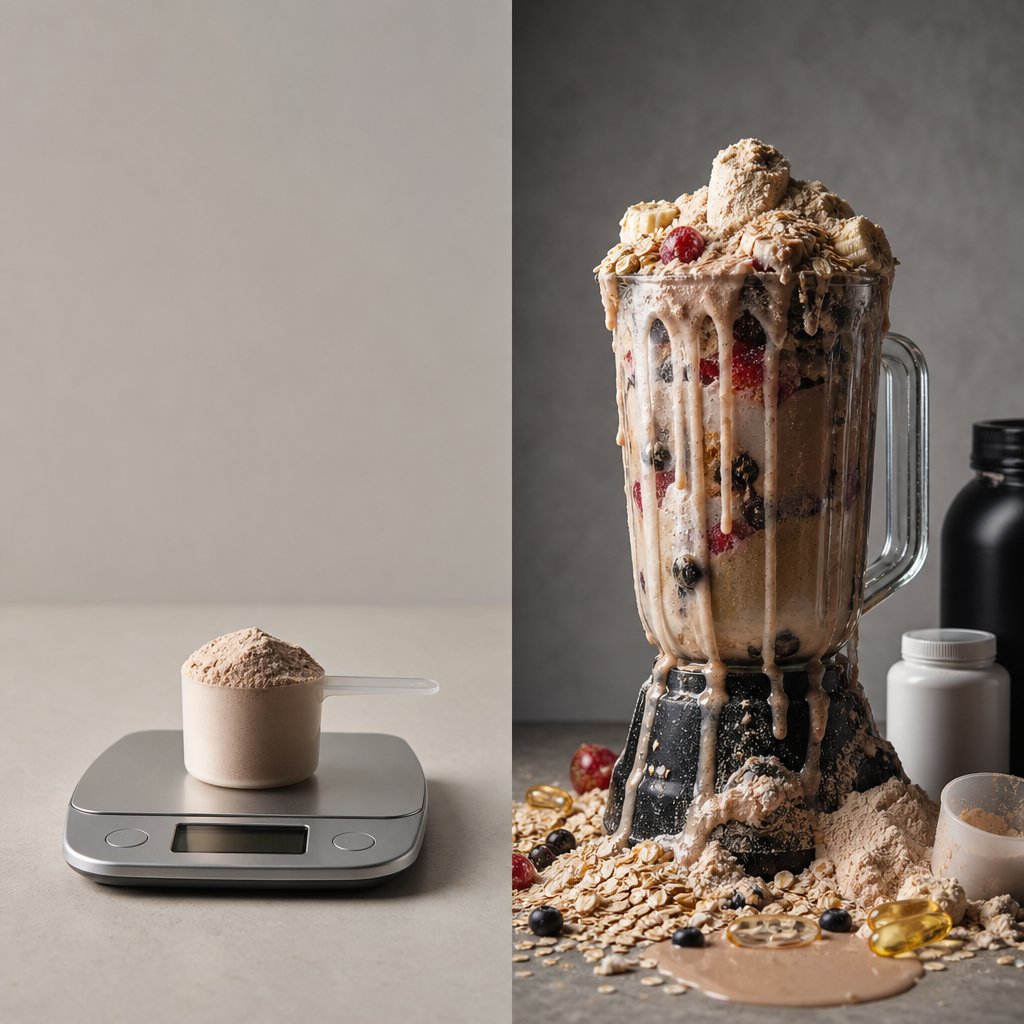
Calorie counting only works when the numbers are accurate, and protein powder is one of the easiest places to introduce error. The fix starts with your scoop. A "level scoop" can vary by 5-10 grams depending on how you dig into the tub. Weighing your protein powder on a digital kitchen scale eliminates this guesswork entirely. Most scoops claim 30-35 grams but often deliver 28 or 38 depending on how packed they are.
Three rules for accurate logging:
- Weigh the powder in grams rather than trusting scoop counts, then log the exact weight in your tracking app
- Account for every mix-in separately: that splash of oat milk, the half banana, the tablespoon of peanut butter all carry calories that add up
- Pre-plan your shake into your daily calorie budget the night before or morning of, so it is a fixed line item rather than an afterthought
Are protein powders good for weight loss when you track this precisely? Absolutely. They become one of the most predictable items in your food log because the nutrition label is exact, unlike restaurant meals or home-cooked dishes where portions drift.
Protein Powder on Keto or Low-Carb
Keto demands that every gram of carbohydrate earns its place. Most whey isolate powders contain under 2 grams of carbs per serving, making them a natural fit. Soy protein isolate can hit zero carbs per serving, and unflavored casein typically stays under 1 gram. The problem arises with flavored varieties and plant-based options. Pea protein and rice protein blends sometimes carry 4-9 grams of carbs per scoop, which can consume a significant chunk of a 20-30 gram daily carb limit.
For keto-friendly mixing, swap almond milk or water for the base and add a teaspoon of MCT oil or a tablespoon of heavy cream. This boosts fat content to align with keto macros while keeping carbs near zero. Avoid oat milk entirely on keto since it carries 16 grams of carbs per cup.
The table below maps the best weight loss protein powder choices and mixing strategies to each popular diet framework:
| Diet Approach | Best Protein Type | Ideal Mixing Strategy | Timing Recommendation | Key Consideration |
|---|---|---|---|---|
| Intermittent Fasting | Whey isolate or plant blend | Water or unsweetened almond milk | First meal of eating window | Must consume within eating window only |
| Calorie Counting | Any type (weigh for accuracy) | Any liquid pre-logged in tracker | Wherever it fits your daily budget | Weigh scoops, log all mix-ins separately |
| Keto / Low-Carb | Whey isolate or soy isolate (<2g carbs) | Water, MCT oil, or heavy cream | Between meals for satiety | Avoid plant blends with 4+ grams carbs |
| Mediterranean | Whey concentrate or pea protein | Greek yogurt base, berries, nuts | Post-workout or as a snack | Pair with whole food fats and fiber |
Notice that no single protein powder type wins across every framework. A weight loss muscle gain protein powder strategy on keto looks completely different from one built around intermittent fasting or Mediterranean eating. The protein drinks weight loss approach that works is the one tailored to the rules you are already following, not a generic recommendation pulled from a label.
If you are pursuing a protein diet for belly fat reduction specifically, the framework matters less than the deficit. No diet structure targets abdominal fat selectively. What these frameworks do is give you a structure that makes sustaining a deficit easier, and protein powder slots into each one as a compliance tool that keeps you consistent.
Fitting protein powder into your plan correctly sets you up for progress. But even the best protocol falls apart when common mistakes creep in, and some of them are so subtle you will not notice until weeks of stalled results force you to look closer.
Step 7 - Avoid the Mistakes That Stall Your Progress
You can pick the perfect powder, time it flawlessly, and build a recipe that tastes like dessert for 150 calories. None of it matters if you are making one of the mistakes below. These are the silent saboteurs that keep people stuck, wondering why the scale refuses to move despite "doing everything right." Each one is fixable, but only if you recognize it first.
Adding Calories Instead of Substituting
This is the number one reason protein shakes backfire for fat loss. You eat your normal breakfast, lunch, dinner, and snacks, then layer a shake on top because you read that protein helps you lose weight. It does, but not when it pushes you into a calorie surplus. A single shake adds 120-250+ calories depending on the powder and mix-ins. Do that daily without reducing food elsewhere, and you have added 840-1,750 extra calories per week. That is enough to erase a deficit entirely or even create a surplus.
Does protein make you gain weight? Not inherently. Protein itself supports fat loss through satiety and thermogenesis. But calories from protein still count. If your maintenance level is 2,200 calories and your deficit target is 1,700, drinking a 200-calorie shake on top of 1,700 calories of food puts you at 1,900. You have just cut your deficit in half without realizing it.
The fix: every shake must replace something. Swap your afternoon granola bar for a shake. Replace your sugary cereal breakfast with a protein smoothie. Subtract before you add. This substitution mindset is the single most important habit separating people who get results from those who wonder why protein powder seems to "not work."
Choosing the Wrong Product
Will protein shakes make you gain weight if you pick the wrong product? They absolutely can. Mass gainers are the biggest offender here. These products are designed for people who need 300-500+ calories per serving to support weight gain, packed with carbohydrates (80-120 grams per serving) and moderate protein. They are marketed with muscular physiques on the label, which leads beginners to grab them thinking they are standard protein powder. One serving of a mass gainer can contain more calories than an entire meal you are trying to replace.
Beyond mass gainers, watch for these product pitfalls:
- Protein powders with 10+ grams of added sugar per serving (some contain as much as 23 grams, turning a glass of milk into a 1,200+ calorie drink)
- "Protein blends" where the primary ingredient is maltodextrin or dextrose rather than actual protein
- Products with a protein-to-calorie ratio above 7 calories per gram of protein, signaling heavy filler content
- Flavored varieties loaded with artificial creamers and fat-based flavor systems that double the calorie count compared to unflavored versions
The fix: flip the tub around before you buy. Check the calories per serving, grams of protein per serving, and sugar content. If the product delivers fewer than 20 grams of protein per serving while carrying 200+ calories, it is not designed for fat loss. A quality whey isolate delivers 25-30 grams of protein for 100-120 calories. That is your benchmark.
Overconsumption and Digestive Issues
Can protein shakes make you gain weight even when you pick the right product? Yes, if you drink too many. Three shakes a day at 130 calories each adds 390 calories. If only one of those shakes is genuinely replacing a meal or snack, the other two are surplus calories dressed up as healthy choices. More protein does not automatically mean more fat loss. Your body can only utilize a certain amount for muscle protein synthesis per sitting (roughly 25-40 grams depending on body size and training status). Excess beyond that gets oxidized for energy or, in a surplus, stored.
Do protein shakes make you fat? Only when total calorie intake exceeds what you burn. The powder itself is not fattening. The overconsumption pattern is.
Digestive problems compound the issue. Do protein shakes cause constipation, bloating, or gas? They can, especially at high doses. Whey concentrate contains lactose that triggers discomfort in sensitive individuals. Consuming more than 2-3 servings daily concentrates artificial sweeteners like sucralose or stevia in your gut, which can disrupt digestive comfort. And replacing too many whole food meals with liquid protein removes the fiber your digestive system needs to function properly.
The fix: cap your intake at 1-2 shakes daily for most people. If you experience bloating or constipation, try switching to whey isolate (lower lactose), reducing serving size, or spacing shakes further apart. Ensure you are still eating fiber-rich whole foods like vegetables, fruits, and legumes alongside your shakes.
Here is a complete list of common mistakes paired with their fixes:
- Not tracking shake calories: Log every shake in your food tracker, including the liquid base and any add-ins. Treat it like any other meal.
- Using too much powder per serving: Weigh your scoop on a kitchen scale. A heaping scoop can contain 40-45 grams of powder when the label assumes 30-33 grams.
- Blending in high-calorie additions unconsciously: Measure nut butters, seeds, and milk rather than pouring by feel. One extra tablespoon of almond butter adds 95 calories.
- Relying solely on shakes without whole foods: Protein powder lacks the fiber, micronutrients, and chewing satisfaction of real food. Shakes should supplement your diet, never replace it entirely.
- Expecting results without exercise: Protein preserves muscle during a deficit, but only if you give those muscles a reason to stick around. Resistance training is non-negotiable for body composition changes.
- Ignoring overall diet quality: A protein shake cannot offset a day of processed food, excess sugar, and inadequate vegetables. It is one tool within a broader nutrition strategy, not a correction for poor eating habits.
Do protein shakes make you gain weight when used correctly? No. Can protein powder make you gain weight when these mistakes stack up? Easily. The difference is awareness. Track your intake, choose the right product, keep servings reasonable, and maintain a whole-food foundation underneath your supplementation.
Avoiding these pitfalls keeps your deficit intact. The final piece is knowing how to start, what to expect week by week, and how to transition from active fat loss into a sustainable long-term strategy that does not depend on shakes forever.
Step 8 - Track Results and Maintain Your Progress Long-Term
Starting strong is easy. Sustaining results over months requires a system. Most people either go all-in from day one (three shakes, new recipes, rigid timing) and burn out within two weeks, or they never establish a consistent routine and wonder why protein powder and weight loss never clicked for them. A phased approach solves both problems. You build the habit gradually, measure what matters, and adjust based on real data rather than guesswork.
Your First Four Weeks Protocol
Weeks 1-2: Establish the baseline. Start with one shake daily, replacing a snack or low-protein meal. Pick the same time each day so it becomes automatic. Track your body weight every morning under consistent conditions (after waking, before eating) and note your energy levels throughout the day. Do not change anything else about your diet yet. You are gathering data: does protein powder help you lose weight at this dose? How does your appetite respond? Are you experiencing any digestive discomfort?
Weeks 3-4: Optimize and refine. Based on your first two weeks of data, make one adjustment at a time. If hunger is still high in the afternoon, move your shake to that window. If your weight is trending down 0.5-1 lb per week, your current approach is working. If the scale has not moved, audit your total calorie intake because the shake may be adding to your day rather than substituting. This is also the time to experiment with recipes and find two or three formulations you genuinely enjoy. Consistency depends on not dreading your shake.
Week 5 and beyond: Scale based on results. If fat loss is progressing steadily, maintain your current protocol. If you have hit a plateau lasting more than two weeks despite accurate tracking, consider adding a second shake to replace another high-calorie eating occasion, or reduce calories slightly elsewhere. Emphasize body composition tracking over scale weight alone. Measurements, progress photos, and how your clothes fit tell a more complete story than a number that fluctuates with water retention and digestive contents.
When to Adjust or Reduce Intake
Protein powder for losing weight is not a permanent crutch. It is a tool you lean on heavily during active fat loss and then scale back as your habits and food choices mature. Watch for these signals that your intake needs modification:
- Plateau beyond two weeks: If weight and measurements have stalled despite consistent tracking, reassess your total calorie budget. Your TDEE decreases as you lose weight, so the deficit that worked at 85 kg may no longer exist at 78 kg.
- Digestive discomfort: Persistent bloating, gas, or constipation after several weeks suggests you may need to switch protein types (isolate over concentrate), reduce serving size, or increase whole food fiber intake.
- Reaching your goal weight: Transition gradually. Replace one shake per week with a whole food protein source, like swapping your morning shake for eggs and vegetables. Keep one shake for convenience on busy days, but let real food carry the majority of your protein needs during maintenance.
Can protein powder help you lose weight during maintenance? Yes, but the role shifts. During active fat loss, protein powder for fat loss fills a calorie-controlled gap in a tight budget. During maintenance, it becomes a convenience tool that prevents you from sliding back into low-protein habits when life gets hectic. A review published in the American Journal of Clinical Nutrition found that higher-protein diets containing 1.2-1.6g per kg per day improved long-term weight maintenance, with dietary compliance being the primary factor separating those who kept weight off from those who regained it.
Building a Sustainable Protein Strategy
Your long-term relationship with protein supplementation should feel effortless, not forced. The goal is a flexible system where protein powder is good for weight loss maintenance because it removes friction on days when whole food prep is not realistic, not because you depend on it for every gram of protein.
The supplement industry continues to innovate with formats beyond traditional powder, giving consumers more flexibility than ever. Protein gummies offer a portable, no-blender-required option for travel days. Ready-to-drink shakes eliminate prep entirely for commuters. Capsule-based amino acid supplements provide targeted recovery support without the volume of a full shake. According to SPINS market data, protein supplements now reach nearly 50% of U.S. households, with three-quarters of purchases coming from repeat buyers, a signal that consumers are finding sustainable ways to integrate these products into daily life.
This format diversity is driven by manufacturers who specialize in customized formulations for specific nutritional goals. Companies like ZhuFeng, an OEM/ODM health food manufacturer, enable brands to develop specialized weight-management protein products across multiple formats including powder and granules, gummy candy, and oral liquids with tailored formulations and scalable production. For entrepreneurs or brands looking to create custom protein products for the weight loss market, this type of manufacturing flexibility means consumers will continue to see increasingly personalized options on shelves.
Do protein powders help you lose weight long-term? The evidence says yes, provided you treat them as one component of a broader strategy that includes resistance training, adequate whole food nutrition, and consistent calorie awareness. Protein powder and fat loss have a strong relationship when the fundamentals are in place. Without those fundamentals, no supplement format, no matter how innovative, will deliver lasting results.
Build the habit in weeks one through four. Refine it through months two and three. Then let it settle into a sustainable rhythm that supports the body composition you have worked to achieve, without requiring the rigid tracking and constant attention that got you there.
Frequently Asked Questions About Using Protein Powder for Weight Loss
1. How many protein shakes should I drink a day to lose weight?
Most people benefit from one to two protein shakes per day during a calorie deficit. One shake typically covers 25-30g of protein and should replace a snack or part of a meal rather than being added on top of your existing food intake. Going beyond two shakes daily rarely provides additional fat loss benefits and may lead to caloric surplus or digestive discomfort. The exact number depends on how much protein you already get from whole foods and how large your daily calorie gap is.
2. Can I replace all my meals with protein shakes to lose weight faster?
Replacing all meals with protein shakes is not recommended for sustainable weight loss. Whole foods provide essential fiber, micronutrients, and chewing satisfaction that liquid protein cannot replicate. A more effective approach is replacing one meal or snack with a protein shake while eating balanced whole food meals for the rest of the day. This creates a manageable calorie deficit without sacrificing nutritional quality or long-term dietary adherence.
3. Does the type of protein powder matter for fat loss?
Yes, protein type significantly impacts fat loss results. Whey isolate offers the best protein-to-calorie ratio at 25-30g protein for 100-120 calories with minimal sugar and fat. Mass gainers, often mistaken for standard protein powder, can contain 300-500+ calories per serving and will sabotage your deficit. When evaluating any product, divide total calories by grams of protein. Anything under 5 calories per gram of protein is excellent for weight loss purposes.
4. When is the best time to drink a protein shake for weight loss?
The best time depends on your specific goal. For meal replacement, a morning shake saves calories early in the day. Post-workout within 60 minutes supports muscle preservation during a deficit. A mid-afternoon shake prevents evening overeating by controlling hunger hormones. Casein protein before bed sustains amino acid delivery overnight. The most impactful placement is at the point in your day where you are most likely to skip protein or overeat calorie-dense foods.
5. Why am I not losing weight even though I drink protein shakes?
The most common reason is adding shake calories on top of your normal diet instead of substituting them. A 130-250 calorie shake consumed daily without reducing food elsewhere adds 910-1,750 extra calories per week, potentially erasing your entire deficit. Other culprits include high-calorie mix-ins like excess nut butter or sweetened milk, choosing mass gainers instead of isolates, and not weighing scoops accurately. Track your total daily intake including shakes to confirm you remain in a true calorie deficit.