

Can You Take Iron Tablets at Night and Still Absorb Them
The Short Answer About Nighttime Iron
If you have been wondering whether you can take iron tablets at night, the answer is yes. Nighttime dosing is safe, and for many people it turns out to be the most practical option. Some research shows no significant difference in absorption whether iron is taken in the morning or evening, and your body will still put that iron to work while you sleep.
Taking iron at night actually comes with a couple of real-world perks. The most common complaints about iron supplements are stomach cramps, nausea, and general GI discomfort. When you take your dose in the evening and head to bed shortly after, you are far less likely to notice those side effects. It is also easier to maintain an empty stomach window at night, since you have likely finished dinner a couple of hours earlier. And if mornings are already packed with other medications or a rushed routine, an evening dose is simply easier to remember.
Taking iron at night is generally safe, but the best approach depends on your supplement form, dose, and individual tolerance.
Why Timing Your Iron Supplement Matters
So is it ok to take iron at night every single time? It depends on a few factors. Timing influences how much iron your gut actually absorbs, and it also affects how well you tolerate the supplement day after day. Your body's hormonal rhythms, what you ate for dinner, other supplements in your nighttime routine, and even the type of iron you choose all play a role.
Throughout this guide, you will learn exactly how absorption works around the clock, which supplement forms are gentlest for bedtime use, how taking iron supplements at night interacts with sleep quality and restless legs, how to stack evening supplements without blocking absorption, and what to do if nighttime dosing causes problems. Whether you can take iron pills at night comfortably or need to adjust your approach, the details ahead will help you find a routine that sticks.
The Science Behind Iron Absorption and Your Body Clock
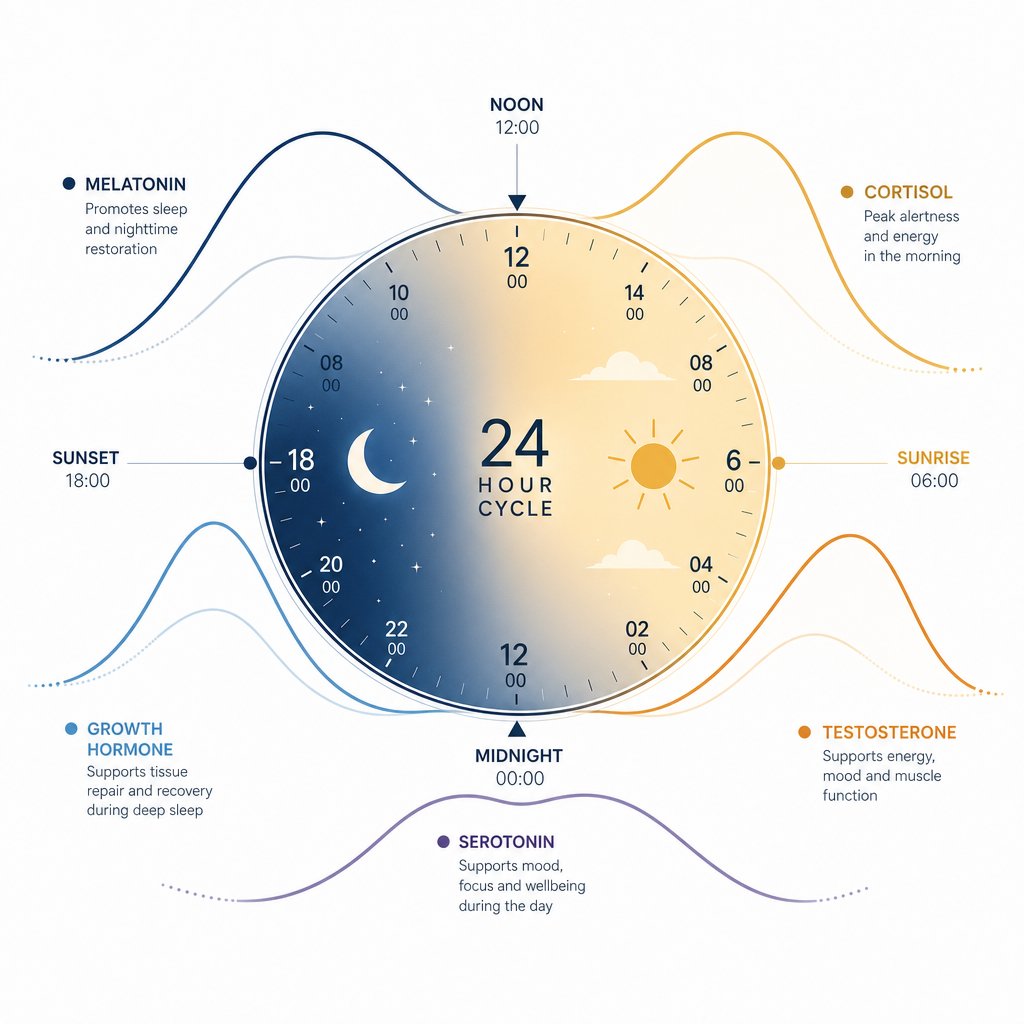
Your body does not absorb iron the same way at every hour of the day. A single hormone largely controls how much iron passes from your gut into your bloodstream, and understanding how it works helps explain why nighttime dosing can still be effective, even if it is not theoretically "peak" absorption time.
What Hepcidin Does to Iron Absorption
Think of hepcidin as a gatekeeper. Produced by the liver, this small peptide hormone decides how much iron your intestinal cells are allowed to release into circulation. When hepcidin levels are high, it binds to ferroportin, the only known iron exporter on your gut cells, and triggers its degradation. The result: less iron gets through. When hepcidin is low, ferroportin stays intact and iron flows more freely into your blood.
Here is where timing comes in. Hepcidin follows a natural circadian rhythm. Levels tend to be lowest in the early morning and gradually rise throughout the day. A study in iron-deficient women found that serum hepcidin was significantly higher in the afternoon compared to the morning, and fractional iron absorption was 37% lower in the afternoon versus the morning. That pattern theoretically favors a morning dose when you are asking what time of day should you take iron for maximum absorption.
But here is the part that often gets overlooked: the circadian hepcidin shift is only one piece of the puzzle. Taking iron on an empty stomach, pairing it with vitamin C, and choosing the right supplement form each have a larger practical impact on iron tablet absorption than the clock on your wall. For someone who cannot tolerate a morning dose, or who takes thyroid medication first thing, the modest circadian advantage of morning dosing is easily outweighed by the benefits of actually taking the supplement consistently at night.
Why Every-Other-Day Dosing May Improve Results
Beyond the daily circadian pattern, hepcidin responds acutely to each iron dose you swallow. A single dose of oral iron triggers a sharp rise in hepcidin that persists for roughly 24 hours before returning to baseline by 48 hours. That means if you take iron today and again tomorrow, the second dose runs straight into elevated hepcidin levels, and your body absorbs significantly less of it.
Research from ETH Zurich demonstrated this clearly in women with iron deficiency anemia. When given 100 mg or 200 mg of ferrous sulfate, fractional iron absorption on consecutive days was 40-50% lower than on alternate days. Hepcidin was significantly higher the morning after a dose (day 3) compared to both the initial dose (day 2) and the alternate-day dose (day 5), with no significant difference between days 2 and 5. In practical terms, skipping a day lets hepcidin reset, so your gut is ready to absorb iron efficiently again.
Guidelines from the American College of Gastroenterology and the European Hematology Association now recommend alternate-day dosing as a strategy to improve tolerability and adherence without compromising hematologic response. A 2025 meta-analysis of 11 randomized trials found that pooled hemoglobin outcomes were similar between daily and alternate-day regimens, while gastrointestinal side effects, particularly metallic taste, were less frequent with alternate-day dosing.
This strategy pairs naturally with nighttime timing. If you are wondering when best to take iron supplement doses on an alternate-day schedule, an evening routine can make it easier to remember which days are "on" and which are "off." You take your iron with a small glass of orange juice a couple of hours after dinner on dosing days, skip the next evening, and repeat. How long does it take iron to be absorbed after each dose? Most absorption happens within two to four hours in the upper small intestine, so the process is well underway before you wake up the next morning.
The bottom line: your body clock does influence iron absorption, but the hepcidin spike from each individual dose matters more than the time of day. Choosing an every-other-day schedule, taking iron on an empty stomach, and adding vitamin C are the highest-impact moves you can make, regardless of whether you dose in the morning or at night. How long does an iron supplement stay in your system depends on the form and your iron status, but the acute hepcidin response resets within about 48 hours, making alternate-day dosing a reliable rhythm for most people.
Best Time to Take Iron Tablets Morning or Night
Hepcidin rhythms and every-other-day dosing explain how much iron your body can absorb at a given moment. The next practical question is when that moment should be. Should you take iron in the morning or at night? The honest answer is that each timing window has trade-offs, and the best time to take iron pills is the time that keeps you consistent week after week.
Morning Dosing Pros and Cons
Morning is the most commonly recommended window, and there is good science behind it. Hepcidin levels sit at their lowest point after an overnight fast, which means ferroportin channels on your gut cells are wide open and ready to move iron into your bloodstream. Taking iron before or after breakfast by about 30 minutes takes advantage of that natural dip, and the empty stomach further boosts absorption since food, especially calcium-rich dairy and tannin-containing beverages, can interfere.
Pros
- Highest theoretical absorption due to low circadian hepcidin
- Easy to pair with a consistent wake-up routine
- Plenty of time to manage any GI discomfort before bed
Cons
- Nausea and stomach cramps on an empty stomach can be intense, especially at higher doses
- Conflicts with morning thyroid medication, antacids, or calcium supplements that need their own absorption window
- People who skip breakfast or rush out the door often forget the dose entirely
For someone with a strong stomach and a predictable morning schedule, this window is hard to beat on paper. But when to take iron morning or night really comes down to whether you can tolerate that early empty-stomach dose day after day. A supplement you skip three times a week because it makes you nauseous absorbs far less iron over time than one you take reliably every other evening.
Why Nighttime Dosing Works for Many People
Nighttime dosing carries a slightly lower theoretical absorption ceiling because hepcidin levels are naturally higher in the evening. In practice, though, that gap is modest, and the real-world advantages often tip the scale. When you take iron two to three hours after dinner, your stomach is largely empty again, creating a favorable absorption environment without the discomfort of a fully fasted morning gut.
The biggest win is tolerability. GI side effects like nausea and cramping are the top reason people quit iron supplements, and sleeping through those symptoms makes a real difference in long-term compliance. Nighttime dosing also sidesteps medication conflicts. If you take levothyroxine, antacids, or calcium in the morning, spacing iron by the recommended two to four hours becomes effortless when you simply move it to the evening. Pregnant women dealing with morning nausea, people with acid reflux who can stay upright for 30 minutes after their dose, and anyone who anchors their health routine to bedtime all tend to do well with this approach.
Should you take iron in the morning or at night if absorption is your only concern? Morning has a slight edge. But if sticking with the routine matters, and it almost always does, nighttime is a strong contender.
Comparison Table of All Three Timing Windows
The table below lays out the key differences across morning, afternoon, and nighttime dosing so you can match the best time to take iron supplements morning or night, or even midday, to your own lifestyle.
| Timing Window | Absorption Potential | Common Side Effects | Best-Fit Population | Key Considerations |
|---|---|---|---|---|
| Morning (6-8 AM) | Highest. Hepcidin is at its circadian low after overnight fasting, and an empty stomach maximizes uptake. | Nausea, stomach cramps, and acid irritation are most noticeable because you are awake and active on an empty stomach. | People with strong stomachs, consistent morning routines, and no conflicting morning medications. | Separate from calcium, dairy, coffee, and tea by at least 1-2 hours. Pair with vitamin C for a further absorption boost. |
| Afternoon (12-3 PM) | Moderate. Hepcidin has risen from its morning low, and a recent meal may still be digesting, which can reduce absorption. | Generally milder than morning fasting doses, but food interactions are harder to control around lunch. | Shift workers, people who skip breakfast, or those whose mornings are blocked by other medications. | Easiest window to forget. Set a phone reminder. Wait at least 2 hours after a calcium-rich lunch before dosing. |
| Nighttime (7-10 PM) | Slightly lower than morning due to higher evening hepcidin, but still effective, especially on an empty stomach 2-3 hours after dinner. | GI discomfort is less noticeable because you sleep through it. Acid reflux risk if you lie down too soon after dosing. | Pregnant women with morning nausea, people on morning thyroid meds, acid reflux patients who stay upright 30 min, evening-routine people. | Avoid lying flat for at least 30 minutes. Pair with a small vitamin C source. Separate from bedtime calcium or magnesium by 1-2 hours. |
When is the best time to take iron pills for you specifically? Look at the "Best-Fit Population" column and find where your situation lands. If you see yourself in more than one row, lean toward the window where you are most likely to take the supplement consistently. A crossover study in iron-deficient anemic women showed that fractional iron absorption was 40-50% higher on alternate days compared to consecutive days, regardless of the time those doses were given. That finding reinforces a key point: how often you dose and whether your stomach is empty matter at least as much as the hour on the clock.
The best time to take iron is the time you will actually take it. Consistency and an empty stomach outweigh the modest circadian advantage of any single dosing window.
When to take iron supplements morning or night is ultimately a personal equation. Weigh your tolerance, your medication schedule, and your daily habits. The marginal absorption difference between morning and evening pales in comparison to the iron you lose by skipping doses. Pick the window that fits your life, pair it with vitamin C, keep your stomach relatively empty, and you will be well on your way to replenishing your iron stores.
Of course, choosing the right time is only half the equation. The form of iron you swallow plays an equally important role in whether nighttime dosing feels comfortable or keeps you up with stomach cramps.
Which Iron Supplement Forms Are Best Tolerated at Night
Not all iron supplements are created equal, and the form you choose can make or break your experience with nighttime dosing. You might have the perfect timing, an empty stomach, and a vitamin C chaser, but if the iron compound itself is harsh on your gut, you will still end up tossing and turning. Picking the right form is often the single most effective strategy for making an iron supplement at night work comfortably.
Iron supplements differ in three key ways: the amount of elemental iron per dose, how efficiently the body absorbs that iron, and how much gastrointestinal distress they cause. Some forms release free iron directly into the stomach lining, triggering oxidative irritation. Others shield the iron inside amino acid bonds or specialized coatings that reduce direct contact with your gut. When you are lying down a short while after swallowing a pill, that distinction matters even more.
Ferrous Sulfate and Why It Can Be Tough at Night
Ferrous sulfate is the most widely prescribed iron supplement in the world, and for good reason. A standard 325 mg ferrous sulfate tablet delivers about 65 mg of elemental iron, one of the highest amounts per dose of any oral form. It is inexpensive, well-studied, and effective at raising hemoglobin and ferritin levels. If your doctor hands you a generic iron prescription, this is almost certainly what you are getting.
The trade-off is tolerability. Conventional oral iron salts like ferrous sulfate have a poor tolerability profile, with gastrointestinal side effects reported by up to 50% of patients. Nausea, stomach cramps, constipation, and a metallic taste are the most frequent complaints. These side effects stem from the way ferrous sulfate dissociates in the stomach, releasing free ferrous ions that generate hydroxyl radicals on contact with the gastric mucosa.
When ferrous sulfate is taken at night, those GI effects become especially relevant. Nausea can delay sleep onset, and stomach cramps may wake you in the middle of the night. Some people wonder whether ferrous sulfate makes you sleepy, but the compound itself has no sedative properties. Any drowsiness you feel is more likely related to the underlying iron deficiency than to the pill. The real nighttime concern is the opposite: GI discomfort keeping you awake.
If you currently take ferrous sulfate and want to know when to take ferrous sulfate at night with the least trouble, aim for at least two to three hours after dinner on an empty stomach, stay upright for 30 minutes, and consider switching to every-other-day dosing to reduce the cumulative GI burden. But if side effects persist, the smarter move may be switching forms entirely.
Chelated Iron and Gentler Alternatives for Bedtime Dosing
Chelated iron, specifically ferrous bisglycinate, is where nighttime tolerability improves dramatically. In this form, a ferrous iron atom is bonded to two glycine molecules, creating a stable chelate that passes through the stomach without releasing free iron onto the mucosal lining. That chemical shielding translates directly into fewer side effects.
A randomized controlled trial comparing ferrous sulfate and iron bisglycinate chelate in schoolchildren found that both compounds effectively raised ferritin levels after 90 days of supplementation at 30 mg of elemental iron per day. Notably, the bisglycinate chelate group maintained higher ferritin concentrations six months after supplementation ended, with a statistically significant difference of 6.04 micrograms per liter over the ferrous sulfate group. Side effects were minimal in both groups at this low dose, but the chelated form's structural advantage becomes more pronounced at higher doses commonly used in adults.
A tolerability study by Coplin et al. found that side effects were significantly higher with ferrous sulfate (37%) compared to iron bisglycinate (21%) at equivalent 50 mg doses. That nearly halved side-effect rate makes bisglycinate the strongest candidate for anyone asking can I take Slow Fe at night or looking for a bedtime-friendly iron option. Slow Fe uses a slow-release ferrous sulfate matrix, which helps somewhat, but chelated iron addresses the root cause of irritation rather than just slowing its delivery.
Beyond bisglycinate, several other forms offer improved nighttime tolerability. Here is how each option stacks up:
- Ferrous bisglycinate (chelated iron) - Nighttime tolerability: Excellent. Fewer GI side effects due to amino acid chelation. Well-absorbed even with food. The top choice for bedtime dosing.
- Ferrous gluconate - Nighttime tolerability: Good. Contains about 12% elemental iron per dose (lower than sulfate), which means less free iron irritating the stomach. Gentler, but you may need more tablets to reach the same elemental dose.
- Ferrous fumarate - Nighttime tolerability: Moderate. High elemental iron content (about 33% by weight), similar to sulfate. Clinical data show ferrous fumarate is associated with the highest rate of gastrointestinal side effects among conventional iron salts, with 30.77% of patients reporting issues in one comparative study. Not ideal for sensitive stomachs at night.
- Polysaccharide iron complex (PIC) - Nighttime tolerability: Good. Uses ferric iron wrapped in a polysaccharide shell, which reduces direct mucosal contact. Gentle on the stomach, but absorption rates tend to be lower than ferrous forms.
- Heme iron polypeptide - Nighttime tolerability: Very good. Derived from animal hemoglobin, this form is absorbed through a different intestinal pathway than non-heme iron, largely bypassing the inhibitors and irritants that cause GI distress. Minimal stomach upset, though it is typically more expensive and not suitable for vegetarians.
- Sucrosomial iron - Nighttime tolerability: Excellent. A newer formulation where ferric pyrophosphate is encased in a phospholipid and sucrester membrane. A retrospective clinical study found that only 9.23% of patients on Sucrosomial iron reported GI side effects, compared to 30.77% for ferrous fumarate, 23.07% for ferrous bisglycinate, and 16.92% for ferrous ascorbate. Its gastro-resistant coating makes it a strong nighttime option.
Liquid Iron as a Flexible Nighttime Option
Can you drink iron at night instead of swallowing a tablet? Absolutely, and for some people it is the better path. Liquid iron formulations, often based on ferrous gluconate, iron protein succinylate, or herbal iron tonics, allow you to fine-tune your dose in a way that tablets and capsules cannot. If a full dose causes stomach upset, you can start with half and gradually increase over a week or two until your body adjusts.
Liquid iron also tends to be easier on the stomach because it disperses more evenly across the GI tract rather than dissolving in a concentrated spot the way a tablet does. The downside is that some liquid formulations can stain teeth and leave a strong metallic taste, so rinsing your mouth or drinking through a straw helps. For nighttime use, take the liquid two to three hours after dinner, follow it with a small sip of orange juice for the vitamin C boost, and brush your teeth before bed.
For nutrition brands and supplement businesses developing iron products, the choice of form directly impacts consumer experience and long-term compliance. A product that causes nausea or cramping at night will generate returns and negative reviews, no matter how well it absorbs on paper. OEM/ODM manufacturers like ZhuFeng offer flexible product formats, including tablets, hard capsules, soft capsules, and oral liquids, allowing brands to develop iron supplements in forms optimized for nighttime tolerability and specific consumer needs through customized formulation.
The bottom line: if you have been struggling with ferrous sulfate taken at night, do not assume that all iron supplements will treat you the same way. Switching to a chelated, sucrosomial, or liquid form can transform your nighttime routine from an ordeal into something you barely notice. And that consistency, taking your iron regularly without dreading it, is what actually moves the needle on your ferritin levels over time.
Choosing a gentler form solves the tolerability side of the equation. But even with the friendliest iron on the market, a lingering question remains: does taking iron at night affect your actual sleep?
How Nighttime Iron Affects Your Sleep and Restless Legs
You have picked the right form and the right timing window. But a worry still nags: will this pill keep me awake? It is one of the most common concerns people have about taking iron at night, and the short answer is reassuring. Iron is not a stimulant. It does not act on your central nervous system the way caffeine or B vitamins can. There is no pharmacological mechanism by which an iron tablet triggers wakefulness or delays sleep onset. So can iron supplements cause insomnia on their own? No. But the story does not end there, because the side effects iron causes in your gut absolutely can.
Why Iron Does Not Directly Cause Insomnia
Iron's job in your body is to help form hemoglobin, support oxygen transport, and assist in producing neurotransmitters like serotonin and dopamine. None of those functions involve stimulating alertness the way a cup of coffee does. When people ask whether does taking iron at night keep you awake, they are usually conflating the supplement itself with the discomfort it sometimes causes. The Sleep Foundation notes that sleep problems are not usually listed as a side effect of iron supplements. The real culprits are gastrointestinal, and understanding each one helps you prevent them.
GI Side Effects That Actually Disrupt Sleep
Imagine swallowing your iron tablet, brushing your teeth, and climbing into bed, only to feel a wave of nausea 20 minutes later. That scenario is not caused by iron acting on your brain. It is caused by free iron ions irritating your stomach lining. Each GI side effect interacts with nighttime dosing in a specific way, and some are more disruptive than others.
- Nausea. This is the most immediate sleep disruptor. Nausea tends to peak within 30 to 60 minutes of taking iron on an empty stomach, which is exactly the window when you are trying to fall asleep. The fix: take your dose earlier in the evening, at least one to two hours before you plan to lie down, so the worst of the nausea passes while you are still upright and distracted.
- Acid reflux. This is the side effect that deserves far more attention than it gets. Iron supplements can relax the lower esophageal sphincter and increase gastric acid production. When you lie flat, gravity no longer keeps stomach acid where it belongs, and the result is heartburn or a burning sensation in your throat. If you already deal with GERD, this risk is amplified. The critical rule: stay upright for at least 30 minutes after taking iron. Sit on the couch, read, or do light stretching. Do not go straight from swallowing the pill to lying in bed.
- Stomach cramps. Cramping from iron tends to be dull and persistent rather than sharp. It can make it hard to find a comfortable sleeping position and may wake you during lighter sleep stages. Chelated forms and liquid iron cause significantly less cramping than ferrous sulfate, as covered in the previous section.
- Constipation. Unlike nausea and reflux, constipation does not hit the same night you take your dose. It builds over days and weeks of supplementation, creating a background level of abdominal discomfort and bloating that gradually erodes sleep quality. Increasing water and fiber intake, or switching to a gentler iron form, can keep this from becoming a chronic issue.
The pattern is clear: can iron tablets cause insomnia directly? No. But can the GI fallout from iron tablets make it harder to fall asleep or stay asleep? Absolutely. The good news is that every one of these side effects is manageable with the right form, dose, and timing adjustments.
Low Iron, Restless Legs, and Sleep Quality
Here is the twist that most people do not expect. While iron supplements can cause temporary stomach discomfort at night, iron deficiency itself is a far bigger threat to your sleep over the long term. The relationship between low iron and sleep is well documented. A scoping review published in Sleep Medicine Reviews examined 93 studies and found a statistically supported positive association between iron deficiency and multiple sleep disorders, including restless legs syndrome, periodic limb movements in sleep, sleep-disordered breathing, and general sleep disturbances. Iron supplementation was beneficial in the vast majority of treatment studies reviewed.
Low iron and insomnia are connected through several pathways. Iron is essential for synthesizing dopamine and serotonin, two neurotransmitters that regulate sleep-wake cycles. When iron stores drop, production of these chemicals can falter, contributing to low iron sleeplessness that feels like an inability to settle into deep, restorative sleep. Research cited by the Sleep Foundation suggests that people with iron-deficiency anemia tend to sleep less, not more, and that the fatigue caused by anemia can paradoxically worsen sleep by reducing physical activity and outdoor light exposure during the day.
The most striking connection involves restless legs syndrome. RLS affects an estimated 2.5% of Americans and causes an overwhelming urge to move the legs, particularly at night or when falling asleep. Harvard Health highlights that people with iron deficiency are much more likely to experience RLS, and that the link may involve low iron levels in the brain specifically, which can exist even when blood iron levels appear normal. The best diagnostic marker is ferritin: when levels fall at or below 50 micrograms per liter, oral iron supplementation relieves RLS symptoms substantially in about half of cases.
For someone dealing with can low iron cause insomnia alongside restless legs, iron supplements for sleep improvement are not just a side benefit. They may be a frontline treatment. The standard approach recommended by Harvard Health is 325 mg of ferrous sulfate taken on an empty stomach or with vitamin C, with every-other-day dosing often sufficient to replenish iron stores and reduce RLS symptoms. It may take about a month before ferritin levels rise enough for noticeable improvement, but the payoff is significant: less leg discomfort, fewer nighttime awakenings, and deeper sleep overall.
This creates an interesting dynamic for nighttime dosing. The very act of correcting your iron deficiency can improve the sleep quality that the deficiency was undermining. Short-term GI discomfort from the supplement is a temporary trade-off. Over weeks and months, as your ferritin climbs and your body's iron-dependent processes normalize, you are likely to sleep better than you did before you started supplementing, regardless of whether you take your dose in the morning or at night.
Of course, iron is rarely the only supplement sitting on your nightstand. Calcium for bones, magnesium for relaxation, melatonin for sleep onset: many people stack several pills into their evening routine. The question is whether those other supplements play nicely with iron, or quietly sabotage its absorption.
Nighttime Supplement Stacking and What to Take with Iron
If your nightstand looks like a small pharmacy, you are not alone. Calcium for bone health, magnesium for relaxation, zinc for immunity, melatonin for sleep onset: evening is when many people consolidate their supplement routine. The problem is that several of these minerals compete directly with iron for absorption, and swallowing them all at once can quietly cancel out the benefits of each. Knowing what to take with iron supplements, and what to separate, is the difference between a routine that works and one that wastes your money.
Iron and Calcium at Night - Why Spacing Matters
Calcium is iron's biggest absorption rival. Both minerals use overlapping transport pathways in the small intestine, and when they arrive at the same time, calcium wins. Research has shown that calcium can reduce iron absorption by up to 50% when the two are taken together. That is not a minor dip. It is half your dose effectively going to waste.
This conflict is especially relevant at night because many people take calcium before bed, either as a standalone supplement for bone density or as part of an antacid like Tums. If you are also trying to take iron in the evening, you need a clear buffer between the two. The best way to take iron when calcium is also in your routine is to separate them by at least two hours. Take your iron earlier in the evening and save calcium for right before bed, or vice versa.
The same competitive dynamic applies to other minerals you might stack into your evening:
- Magnesium. A popular nighttime supplement for sleep and muscle relaxation, magnesium also competes with iron for absorption. GoodRx notes that calcium and magnesium can block each other's absorption as well, so spacing all three minerals apart is ideal. Separate magnesium from iron by one to two hours. If you take magnesium glycinate for sleep, it naturally fits into the later bedtime slot while iron goes earlier.
- Zinc. At higher doses, zinc and iron compete for the same intestinal transporter. Taking 25 mg or more of iron can decrease zinc levels, and the reverse is also true. If you take both, space them by at least two hours. Many people find it easier to move zinc to a different meal entirely, such as lunch, to avoid the evening traffic jam.
- Melatonin. Unlike the minerals above, melatonin does not directly interfere with iron absorption. It works on entirely different receptors. However, if iron is already causing mild nausea, adding melatonin on top of an unsettled stomach can compound that queasy feeling and make it harder to fall asleep. Take melatonin 30 to 60 minutes before bed, well after your iron dose has had time to settle.
What Dinner Does to Your Evening Iron Dose
Supplement interactions are only half the picture. What you ate for dinner also shapes how well your body absorbs that evening iron dose. Several common dinner foods and beverages contain compounds that bind to iron in the gut and drag absorption down significantly.
A clinical trial in iron-deficient women measured the impact directly: coffee decreased fractional iron absorption by 54%, and a full breakfast with coffee reduced it by 66%, even when the meal included orange juice containing roughly 90 mg of ascorbic acid. The tannins in tea have a similar inhibitory effect. Dairy products deliver a double hit, combining calcium's competitive absorption with casein proteins that further bind iron.
The practical takeaway for nighttime dosing: wait two to three hours after dinner before taking your iron. That gap lets your stomach clear most food residue, especially if dinner included dairy, coffee, or tea. If you eat dinner at 6:30 PM, an iron dose around 8:30 to 9:00 PM hits a relatively empty stomach without pushing too close to bedtime.
On the enhancer side, the best way to take iron supplement doses in the evening is with vitamin C. The same clinical trial found that 80 mg of ascorbic acid increased fractional iron absorption by 30% compared to water alone. You do not need a megadose. A small glass of orange juice, a few strawberries, or a 100 mg vitamin C tablet alongside your iron is enough to make a meaningful difference. Pairing iron with vitamin C is one of the simplest and most evidence-backed strategies for how to take iron supplements effectively, regardless of the time of day.
Building a Nighttime Supplement Schedule
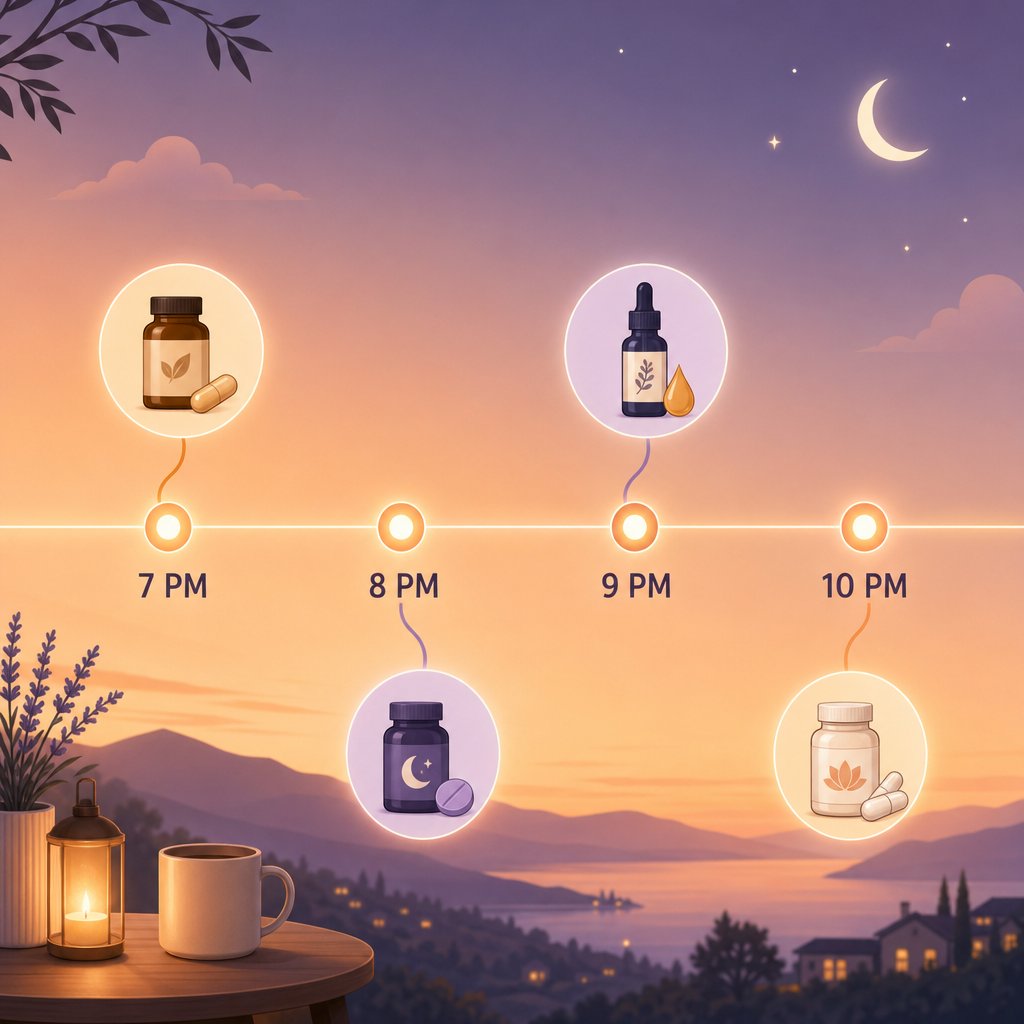
When you are juggling iron, calcium, magnesium, and possibly melatonin in a single evening, the key is creating two distinct windows separated by enough time to avoid absorption conflicts. Here is a sample schedule that keeps everything spaced properly:
- 7:00 - 8:00 PM (Window 1): Take your iron supplement with a small glass of orange juice or a vitamin C tablet. This should be at least two hours after dinner. Stay upright for 30 minutes afterward.
- 9:00 - 10:00 PM (Window 2): Take calcium, magnesium glycinate, and fish oil. These do not compete with each other at typical supplement doses and can be taken together with a light snack if needed.
- 30 to 60 minutes before bed: Take melatonin if you use it. By this point, your iron dose is well past the nausea window, and your stomach has settled.
This two-window approach, adapted from supplement timing research, avoids every major mineral conflict while keeping the routine simple enough to actually follow. You do not need four separate alarms. Two evening time slots, roughly 90 minutes apart, cover everything.
A few additional tips for making this schedule stick:
- Take iron with or without food depending on your tolerance. An empty stomach is ideal for absorption, but a small vitamin C-rich snack is perfectly fine if a fully empty stomach causes nausea.
- If you take a multivitamin that contains calcium or zinc, treat it the same way you would a standalone calcium supplement and keep it in Window 2, away from your iron dose.
- What to take with iron tablets for the best results comes down to two things: vitamin C as a companion and nothing else competing for the same absorption slot.
The best way to take iron at night is simple: pair it with vitamin C, separate it from calcium and magnesium by at least two hours, and give your stomach 30 minutes to settle before lying down.
Spacing supplements correctly solves the absorption puzzle for most people. But not everyone fits neatly into a standard evening routine. Pregnant women, shift workers, people on thyroid medication, and those with digestive conditions each face unique challenges that call for a more tailored approach.
Who Benefits Most from Taking Iron at Night
A standard evening iron routine works well for the average healthy adult. But certain groups face specific obstacles, from medication conflicts to impaired absorption to unpredictable schedules, that make nighttime dosing not just convenient but sometimes the only realistic option. If you fall into one of the categories below, the general advice from earlier chapters still applies, but these tailored details will help you fine-tune when should I take iron pills and how often should you take iron supplements for your particular situation.
Pregnant Women and Evening Iron Dosing
Pregnancy dramatically increases iron demand. Your total blood volume nearly doubles over the course of nine months, and the developing placenta and fetus claim roughly half of every milligram you absorb. UT Southwestern Medical Center recommends that most pregnant women need at least 30 mg of elemental iron per day, with higher doses for those who started pregnancy with low iron, are carrying multiples, or began supplementation late.
The challenge is that first-trimester morning nausea makes early-day iron dosing miserable for many women. UT Southwestern's own guidance acknowledges this directly: if iron worsens nausea and vomiting, it is reasonable to pause supplementation until morning sickness subsides and then resume in the second or third trimester. For women who want to keep supplementing through the first trimester, evening dosing sidesteps the worst of the nausea window entirely.
Practical tips for pregnant women taking iron at night:
- Take iron two to three hours after dinner with a small glass of orange juice for the vitamin C absorption boost.
- Choose ferrous bisglycinate or a liquid formulation if ferrous sulfate causes constipation, which is already a common pregnancy complaint on its own.
- If prenatal vitamins contain iron, check the elemental iron amount on the label. You may not need a separate iron tablet unless your provider has flagged low ferritin or anemia.
- Should i take iron on my period during pregnancy does not apply in the typical sense, since menstruation stops. But postpartum, iron supplementation remains important to replace blood lost during delivery, especially after a cesarean section where losses can reach two pints.
Shift Workers, Thyroid Patients, and Other Special Cases
Pregnancy is the most common reason people shift iron to the evening, but several other groups benefit just as much from nighttime timing.
People with acid reflux or GERD. Iron supplements can increase gastric acid production and relax the lower esophageal sphincter, both of which worsen reflux. Nighttime dosing is still viable, but the rules are stricter. Stay upright for at least 30 minutes after your dose, no exceptions. Take iron earlier in the evening rather than right before bed. Chelated forms like ferrous bisglycinate cause less stomach irritation than ferrous sulfate, reducing the acid rebound that triggers heartburn. If reflux persists despite these adjustments, morning dosing with a two-hour gap before lying down may be the safer call.
People taking thyroid medication. Levothyroxine is one of the most commonly prescribed medications in the country, and it has a well-documented interaction with iron. Iron binds to levothyroxine in the stomach and intestines, forming a complex too large for the body to absorb. The result is reduced thyroid hormone uptake, which can leave you feeling tired, cold, and sluggish even though you are technically taking your medication. The required separation is at least four hours. Since most people take levothyroxine first thing in the morning on an empty stomach, nighttime iron becomes the logical solution. A dose at 7 or 8 PM gives you well over the four-hour buffer without any scheduling gymnastics.
Shift workers. Rotating or overnight schedules make traditional morning dosing unreliable. If your wake-up time shifts by six hours every few days, anchoring iron to a clock time is pointless. Instead, anchor it to a consistent meal gap. Take your iron two to three hours after your last meal before your longest sleep period, regardless of whether that meal happens at 6 PM or 3 AM. The key variable is an empty stomach, not the position of the sun. When should you take iron supplements on an irregular schedule? Whenever you can reliably maintain a two-hour food gap and a 30-minute upright window before lying down.
Elderly individuals. Aging slows GI motility, which means iron sits in the stomach longer and has more time to cause irritation. Older adults are also more likely to take multiple medications, including proton pump inhibitors, calcium for osteoporosis, and blood pressure drugs, that can interact with iron. Gentle forms like polysaccharide iron complex, chelated iron, or liquid iron are especially important for this group. Spacing iron away from other evening medications by at least one to two hours prevents absorption conflicts. Every-other-day dosing, as recommended by the American Gastroenterological Association's clinical practice update, is particularly well-suited here because it reduces cumulative GI side effects while maintaining similar iron absorption rates.
People with IBD or celiac disease. Inflammatory bowel disease and celiac disease both impair iron absorption in the small intestine, the exact location where oral iron needs to be taken up. The AGA's guidance emphasizes that active inflammation should be treated effectively to enhance iron absorption, and that intravenous iron may be necessary when oral forms fail. For those who can tolerate oral iron, form selection becomes even more critical. Liquid iron and chelated forms are preferable because they cause less direct mucosal irritation in an already compromised gut. People with celiac disease should also confirm that their iron supplement is gluten-free, as some tablet coatings and fillers contain trace gluten. Nighttime dosing works well for this group as long as the supplement is taken on an empty stomach to maximize what limited absorption capacity the gut can offer.
Across all of these populations, one theme holds: the best time to take iron for anemia is the time that accounts for your specific constraints and keeps you consistent. A pregnant woman fighting nausea, a thyroid patient juggling medication windows, and a shift worker with no fixed schedule all arrive at the same conclusion through different paths. Evening dosing is not a compromise. For these groups, it is often the most practical and effective choice.
Even with the right timing and the right population-specific adjustments, some people still run into trouble. Nausea that will not quit, reflux that flares despite staying upright, or constipation that builds week after week. The next step is knowing exactly how to troubleshoot those problems, and when it makes sense to switch strategies altogether.

Troubleshooting Problems with Nighttime Iron Supplements
You have chosen the right form, spaced your supplements properly, and committed to an every-other-day evening routine. Yet something still feels off. Maybe nausea creeps in just as you turn out the lights, or constipation has been building quietly for weeks. These problems do not mean nighttime dosing is wrong for you. They usually mean one variable needs adjusting. Below is a practical problem-solution guide for the most common issues people face when taking iron at night, along with clear signs iron pills are working so you know when to stay the course and when to pivot.
Fixing Nausea, Reflux, and Constipation from Nighttime Iron
Each GI side effect has a distinct cause and a distinct fix. Treating them all the same way, like simply lowering the dose, misses the point. Here is how to target each one individually.
- Nausea at night. This is the number-one reason people abandon evening iron. The free iron ions in conventional supplements irritate the gastric lining, and the nausea tends to peak 30 to 60 minutes after swallowing the pill, right when you are trying to drift off. Solutions: try taking iron with a small snack like a few crackers or a slice of apple. Yes, food slightly reduces absorption, but a dose you actually keep down absorbs infinitely more than one that makes you miserable enough to skip tomorrow. If a snack is not enough, switch to chelated iron (ferrous bisglycinate) or a liquid iron formulation, both of which cause significantly less gastric irritation. You can also cut your dose in half and move to every-other-day dosing, which research shows produces comparable hemoglobin outcomes with fewer side effects.
- Acid reflux after your nighttime dose. Iron can increase gastric acid production and relax the lower esophageal sphincter, a combination that spells trouble when you lie flat. The fix is not to stop nighttime dosing but to respect gravity. Stay upright for at least 30 minutes after taking your pill. Move the dose earlier in the evening, say 7 PM instead of 9:30 PM, so your stomach has time to settle well before bed. When you do lie down, avoid the right side, since sleeping on your left keeps the gastroesophageal junction above the level of gastric acid. If reflux persists, a chelated or sucrosomial form produces less acid rebound than ferrous sulfate.
- Constipation building over days. Unlike nausea, constipation is a slow-burn problem. It does not announce itself the first night. Instead, it accumulates over one to two weeks of consistent supplementation until bloating and abdominal pressure start interfering with comfort and sleep. Increase water intake to at least eight glasses a day and add fiber-rich foods like oats, flaxseed, and cooked vegetables to your diet. If that is not enough, consider switching to ferrous bisglycinate, which causes less constipation than ferrous sulfate. Liquid iron is another option, as it tends to produce softer stools. MedlinePlus also suggests adding a stool softener like docusate sodium if constipation becomes persistent.
- Dark or black stools. This one is not actually a problem, but it alarms people enough to deserve a mention. Iron supplements commonly turn stools dark green to black. That color change is harmless and simply reflects unabsorbed iron passing through your digestive tract. However, if stools appear tarry and sticky or contain red streaks, contact your healthcare provider, as that can indicate GI bleeding unrelated to the supplement.
When to Switch Away from Nighttime Dosing
Nighttime iron is a tool, not a mandate. If you have tried the adjustments above, switched to a gentler form, moved your dose earlier in the evening, and still find that sleep quality suffers, it is perfectly reasonable to move iron to the morning or afternoon. Some people simply have more reactive stomachs in the evening, and no amount of form-switching will change that.
- Sleep disruption that persists. If you have moved the dose to two to three hours before bed and still wake up with stomach discomfort, first confirm that the iron is actually the cause. Try skipping a dose for two nights and see if sleep improves. If it does, morning dosing on an empty stomach may suit your body better. If sleep does not improve, the issue may be unrelated to iron entirely, and it is worth discussing with your doctor.
- Feeling more tired after taking iron supplements. This catches people off guard. You start supplementing to fight fatigue, and for the first week or two you feel even more drained. This can happen as your body adjusts to increased iron availability and ramps up red blood cell production. It is not a sign the supplement is failing. Think of it like the soreness after a first workout: your body is responding, not rejecting. If the extra fatigue lasts beyond three to four weeks, though, check in with your provider. There may be an absorption issue, a dosing problem, or an underlying condition that iron alone cannot address.
- Persistent nausea despite form changes. If chelated iron, liquid iron, and every-other-day dosing all still cause nausea at night, your GI tract may simply tolerate iron better earlier in the day when gastric motility is higher and you are upright and active for hours afterward. Switch to a morning dose 30 minutes before breakfast and reassess after two weeks.
If nighttime dosing does not work for you, morning or afternoon dosing is equally valid. The best time to take iron is the time you will consistently take it.
The supplement industry has recognized that tolerability is the single biggest barrier to iron compliance, which is why iron now comes in far more formats than the traditional tablet. Gummy candy formulations, powder sachets, soft capsules, and flavored oral liquids all aim to reduce the GI friction that makes people quit. Manufacturers like ZhuFeng support nutrition brands and private label sellers in developing iron supplements across these diverse product formats, including tablets, powder and granules, soft capsules, gummy candy, and oral liquids, with customized formulation and scalable production to help bring better-tolerated iron products to market. For consumers, this expanding range of options means you are more likely than ever to find a format that fits your body and your bedtime routine.
Signs Your Iron Supplement Is Working
Troubleshooting side effects is important, but so is knowing when things are going right. How long do iron supplements take to work? The timeline depends on the severity of your deficiency and the form you are taking, but most people follow a fairly predictable arc.
Results can appear as early as 14 days, though two to four weeks is a more common window for noticeable changes. How quickly do iron supplements work in terms of lab values? Healthcare providers typically order a follow-up blood test at six to eight weeks to check whether hemoglobin and ferritin are trending upward. Full replenishment of iron stores, the deep reserves your bone marrow draws on, takes longer. MedlinePlus recommends continuing supplementation for six to twelve months after blood counts normalize to rebuild those stores completely.
Here are the signs iron pills are working that you are most likely to notice at home, roughly in the order they tend to appear:
- Improved energy (weeks 2-4). This is the change people notice first. The persistent, heavy fatigue that made even simple tasks feel exhausting starts to lift. You may find yourself getting through the afternoon without that familiar crash.
- Better sleep quality (weeks 3-6). As iron supports dopamine and serotonin production, sleep architecture can improve. If restless legs syndrome was part of your picture, you may notice fewer leg movements and less urge to shift positions at night.
- Reduced shortness of breath (weeks 4-8). With more hemoglobin carrying oxygen to your muscles and organs, activities like climbing stairs or walking briskly feel less winding.
- Healthier skin, nails, and hair (months 2-4). Pale skin gradually regains color. Brittle nails may become stronger. These cosmetic changes take longer because they depend on sustained iron availability over multiple growth cycles.
- Improved concentration and mood (months 1-3). Iron's role in neurotransmitter synthesis means that cognitive fog and irritability often improve as stores rebuild, though these changes can be subtle and gradual.
How long before iron supplements work well enough to feel "normal" again? For most people with moderate iron deficiency anemia, the answer is roughly two to three months of consistent supplementation. How fast will iron supplements work if your deficiency is severe? It may take closer to four to six months, and your provider might consider intravenous iron if oral supplements are not raising levels quickly enough.
How long does it take for iron pills to work if you do not have noticeable symptoms? You may not feel any different at all, and that is fine. Many people with iron deficiency are asymptomatic, so the only reliable way to confirm progress is through blood testing. A rising ferritin level on your lab report is the clearest sign that your supplement is doing its job, even if you cannot feel the difference day to day.
One final point worth remembering: how long does it take iron supplements to work is partly a question about patience. Iron replenishment is a slow, steady process, not an overnight fix. Whether you dose in the morning, afternoon, or evening, the path to healthy iron stores runs through months of consistent, well-tolerated supplementation. Pick the timing and the form that let you show up every dose day without dreading it, and your body will handle the rest.
Frequently Asked Questions About Taking Iron Tablets at Night
1. Does taking iron at night keep you awake or cause insomnia?
Iron is not a stimulant and has no pharmacological mechanism that triggers wakefulness. It does not act on your central nervous system the way caffeine does. However, gastrointestinal side effects like nausea, stomach cramps, and acid reflux can indirectly disrupt sleep if you lie down too soon after your dose. To avoid this, take iron at least one to two hours before bed, stay upright for 30 minutes after swallowing the pill, and consider switching to a chelated form like ferrous bisglycinate if GI discomfort persists. Ironically, correcting iron deficiency over time often improves sleep quality by supporting dopamine and serotonin production.
2. Can I take iron and magnesium at the same time before bed?
Taking iron and magnesium together is not recommended because they compete for overlapping absorption pathways in the small intestine. When both arrive simultaneously, neither is absorbed optimally. The solution is to separate them by at least one to two hours. A practical evening schedule is to take iron with vitamin C around 7 to 8 PM, then take magnesium glycinate at 9 to 10 PM closer to bedtime. This spacing eliminates the absorption conflict while letting you keep both supplements in your nighttime routine.
3. How long does it take for iron supplements to work if I take them at night?
The timing of your dose does not significantly change how quickly iron supplements produce results. Most people notice improved energy within two to four weeks regardless of whether they dose in the morning or evening. Lab values like hemoglobin typically show measurable improvement at six to eight weeks. Full iron store replenishment takes three to six months of consistent supplementation. The key factor is adherence rather than clock time, so if nighttime dosing helps you take iron more consistently, you may actually see results faster than someone who frequently skips a morning dose.
4. What is the best form of iron to take at night without stomach upset?
Ferrous bisglycinate, also called chelated iron, is widely considered the best-tolerated form for nighttime use. Its amino acid chelation shields free iron from direct contact with the stomach lining, reducing nausea and cramping by nearly half compared to ferrous sulfate. Sucrosomial iron is another excellent nighttime option, with clinical data showing only about 9% of users reporting GI side effects. Liquid iron formulations also work well because they allow flexible dose adjustments and disperse more evenly across the digestive tract. For brands developing consumer-friendly iron products, OEM/ODM manufacturers like ZhuFeng offer customized formulation across multiple formats including tablets, soft capsules, and oral liquids optimized for tolerability.
5. Should I take iron on an empty stomach at night or with food?
An empty stomach maximizes iron absorption because food components like calcium, tannins, and phytates can reduce uptake by 50% or more. The ideal approach is to wait two to three hours after dinner before taking your nighttime iron dose. However, if an empty stomach causes nausea that disrupts your sleep, taking iron with a small vitamin C-rich snack like a few orange slices is a reasonable compromise. The slight reduction in absorption is far outweighed by the benefit of actually tolerating and consistently taking your supplement night after night.