How Much Moringa Powder You Actually Need Per Day
You searched for how much moringa powder per day, and you deserve a straight answer before wading through paragraphs of backstory. Clinical research and safety data point to a practical daily range that works for most adults.
The Evidence-Based Daily Range
Most studies support consuming 1 to 3 teaspoons (approximately 3-10 grams) of moringa powder per day for general wellness in healthy adults.
This range is not pulled from a product label. It reflects doses tested in human trials, including a clinical study that administered 3 grams twice daily (6 grams total) to evaluate respiratory benefits over three weeks. Safety research further confirms that moringa leaf powder remains well-tolerated at these levels, with toxicity assessments placing the upper ceiling far higher, around 70 grams of fresh leaf equivalent per day, though no one needs to approach that threshold for everyday use.
So how much moringa should you take a day? For most people starting out, 1 to 2 teaspoons is the sweet spot. Those with specific health goals may work up toward 3 teaspoons under guidance.
Why Getting the Dose Right Matters
Moringa powder is remarkably nutrient-dense. A look at moringa powder nutrition facts reveals meaningful amounts of iron, calcium, potassium, vitamin A, vitamin C, vitamin E, and plant-based protein packed into a small serving. That concentration is exactly why dosage matters. Take too little, half a teaspoon indefinitely, and you may not reach the threshold where benefits become noticeable. Take too much too quickly, and the high fiber and bioactive compound load can trigger bloating, nausea, or loose stools.
How much moringa should you take daily depends on several personal factors: whether you use loose powder or capsules, what health outcome you are targeting, your body weight, and even the quality of the product itself. A shade-dried organic powder from Moringa oleifera leaves delivers different potency than a sun-bleached, low-grade alternative.
The moringa dosage per day that works for your neighbor may not suit you. Understanding the variables behind that number, from measurement formats to timing and titration, makes the difference between a supplement that delivers results and one that collects dust in your pantry.
Moringa Dosage in Every Measurement Format
Knowing the ideal range is one thing. Actually measuring it in your kitchen is another. Not everyone owns a digital scale, and moringa powder has a light, fluffy texture that makes eyeballing unreliable. Whether you scoop with a teaspoon, shake capsules from a bottle, or level off a tablespoon, you need clear conversions to stay within that 3-10 gram daily window.
Teaspoons and Tablespoons Explained
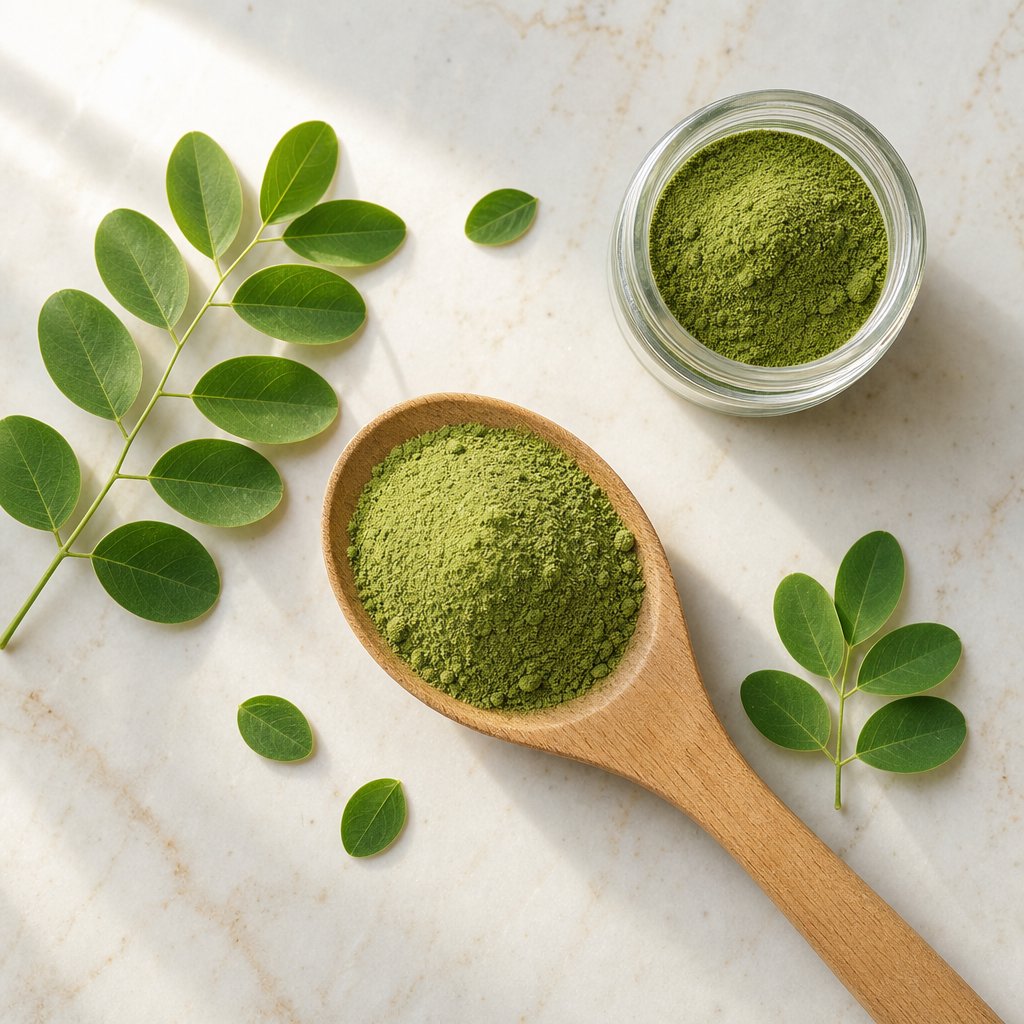
When you ask how many grams in a teaspoon of powder, the answer depends on the powder's density. Moringa leaf powder is finely milled and relatively light. One level teaspoon weighs approximately 2 to 3 grams. That means the recommended 1 to 3 teaspoons per day delivers roughly 3 to 9 grams total, landing squarely in the evidence-based range.
A level tablespoon holds about 5 to 7 grams of moringa powder. If you prefer fewer scoops, a single tablespoon gets you to a moderate daily dose in one go. Two tablespoons would push you toward 10-14 grams, which exceeds what most people need and may cause digestive discomfort. Checking 1 tablespoon of moringa powder nutrition facts on your specific product label helps confirm you are hitting your target, since grind fineness and moisture content vary slightly between brands.
A quick tip: always use a level scoop, not a heaping one. Drag a flat edge like a butter knife across the top of your spoon to remove the excess. A heaping teaspoon can easily double the weight, throwing your dosage off without you realizing it.
Grams and Milligrams for Precision
If you want exact control over how many mg of moringa per day you consume, a small kitchen scale removes all guesswork. Scales that measure in 0.1-gram increments cost under $15 and pay for themselves in accuracy.
Here is the conversion logic: 1 gram equals 1,000 milligrams. So a 5-gram daily dose is the same as 5,000 mg. When supplement labels list milligrams, they are simply expressing grams in a smaller unit to sound more precise. Knowing how many milligrams of moringa should you take a day becomes straightforward once you anchor it to the gram-based range: 3,000 mg to 10,000 mg for most adults, depending on health goals and tolerance.
Capsule Equivalencies
Capsules are convenient, but they require more units to match powder doses. Most moringa capsules contain 400 to 500 mg of powder each. That means reaching a 3-gram daily dose requires 6 to 8 capsules, while a 10-gram dose would demand 20 or more, which is impractical for many people.
The realistic moringa capsule dosage per day for most users falls between 3 and 6 capsules (1,500-3,000 mg), aligning with the lower end of the effective range. If your health goal calls for a higher intake, loose powder mixed into food or drinks is more practical than swallowing a dozen pills. The moringa capsules dosage per day you choose should balance convenience with your target gram amount.
The table below puts all of these conversions side by side for quick reference:
| Measurement | Approximate Weight | Milligrams (mg) | Capsule Equivalent (500 mg each) |
|---|---|---|---|
| 1/2 teaspoon | 1-1.5 g | 1,000-1,500 mg | 2-3 capsules |
| 1 teaspoon | 2-3 g | 2,000-3,000 mg | 4-6 capsules |
| 2 teaspoons | 4-6 g | 4,000-6,000 mg | 8-12 capsules |
| 3 teaspoons (1 tablespoon) | 5-7 g | 5,000-7,000 mg | 10-14 capsules |
| 2 tablespoons | 10-14 g | 10,000-14,000 mg | 20-28 capsules |
Notice how quickly capsule counts climb once you move past a single teaspoon. This is why many daily users prefer loose powder for their primary dose and keep capsules on hand for travel or busy mornings when mixing a drink is not realistic.
With measurement clarity sorted, the next question becomes more personal: does your specific health goal call for the lower end of this range, the upper end, or somewhere in between?

Recommended Dosage by Health Goal
Your reason for taking moringa shapes how much you need. Someone adding it to a smoothie for general nutrition has different requirements than someone targeting blood sugar or inflammation. Clinical trials have tested specific doses for specific outcomes, and those numbers give you a far better starting point than guesswork.
Below is a breakdown of moringa daily dosage ranges organized by health goal. Each range reflects what researchers have actually tested in human subjects, not what a product label suggests.
- General wellness and nutrition: 3-5 g/day (1-2 teaspoons)
- Blood sugar and metabolic support: 4-8 g/day (split into two servings)
- Anti-inflammatory support: 5-8 g/day
- Energy and fatigue: 3-6 g/day (taken in the morning)
- Weight management: 4-8 g/day (combined with a caloric deficit)
Keep in mind: moringa is not a medication. These ranges come from research settings, not prescriptions. If you are managing a diagnosed condition, consult your healthcare provider before using moringa therapeutically.
General Wellness Dosage
For everyday nutritional support, 3 to 5 grams per day covers most adults. This amount delivers a meaningful dose of vitamins, minerals, and antioxidants without pushing into territory where digestive side effects become likely. A 2021 RCT in Spain gave prediabetic adults just 2.4 grams per day for 12 weeks and still observed significant improvements in fasting blood glucose and inflammatory markers. That tells you even the lower end of this range can produce measurable effects when taken consistently.
Moringa powder for digestion also fits within this bracket. The fiber content in 3-5 grams supports regularity without overwhelming the gut, especially once your body adjusts over the first week.
Blood Sugar and Metabolic Support
Research on moringa and glycemic control has tested doses ranging from 2.4 grams up to 8 grams daily. A randomized placebo-controlled trial at Siriraj Hospital administered 8 grams per day (4 grams before breakfast and 4 grams before dinner) to therapy-naive type 2 diabetes patients for four weeks. While that study did not find statistically significant glucose reductions in the short timeframe, it confirmed the dose was safe and well-tolerated, with no adverse effects on liver or kidney function.
Longer-duration trials paint a more encouraging picture. The Spanish RCT using 2.4 grams daily for 12 weeks achieved a 0.3% reduction in HbA1c and a 5.6 mg/dL drop in fasting blood glucose among prediabetic subjects. The takeaway: moderate doses sustained over months appear more effective for metabolic support than high doses taken briefly. A moringa dosage in the 4-7 gram range, split between morning and evening meals, aligns with what the research has explored.
Weight Management and Energy Goals
Does moringa help with weight loss? The short answer is that it can support weight management as part of a broader strategy, but it is not a standalone fat burner. A 12-week clinical trial gave overweight, hyperlipidemic subjects just 1 gram of moringa leaf powder daily alongside moderate physical activity. The moringa group experienced significant reductions in body weight, BMI, and waist circumference compared to controls. Researchers attributed part of this effect to moringa's satiety-enhancing properties, noting that the treatment group also consumed less energy overall.
Does moringa help you lose weight at higher doses? Likely yes, within reason. The moringa powder dosage for weight loss tested in various studies ranges from 1 to 8 grams daily, but the consistent finding is that moringa for fat loss works best when paired with a caloric deficit and regular movement. Moringa is not magic. Its bioactive compounds, particularly isothiocyanates and chlorogenic acid, may support lipid metabolism and reduce appetite, but they cannot override a caloric surplus.
For energy and fatigue, 3 to 6 grams taken in the morning provides a nutrient-dense boost without caffeine. The iron, B-vitamins, and protein in moringa support sustained energy production throughout the day, making it a practical addition to a pre-breakfast smoothie or warm drink.
These goal-specific ranges give you a target, but hitting that target effectively depends on something most people overlook: when you actually take your dose during the day.
Best Time to Take Moringa for Maximum Absorption
Timing does not make or break moringa's benefits, but it can sharpen them. The best time to take moringa powder depends on what you want it to do for you, whether that is sustained energy, blood sugar stability, or overnight recovery support.
Morning vs Evening Intake
Should i take moringa in the morning or at night? Both work, but they serve different purposes.
Morning intake, taken with or shortly before breakfast, supports energy levels and helps regulate blood sugar throughout the day. Moringa's iron, protein, and B-vitamins contribute to steady energy production without the crash that comes from caffeine. If your goal is focus, metabolism, or weight management, morning is the stronger choice. This is also the best time to drink moringa tea if you use it as a warm morning ritual, since the energizing nutrient profile complements your body's natural cortisol rhythm.
Evening intake shifts the emphasis toward recovery. Moringa's anti-inflammatory compounds, including quercetin and chlorogenic acid, support cellular repair processes that ramp up during sleep. If you are using moringa primarily for joint comfort, muscle recovery, or immune support, an evening dose taken with dinner makes sense. Unlike caffeine-containing supplements, moringa does not interfere with sleep for most people.
Split Doses or All at Once
When should you take moringa if your target dose is on the higher end, say 6 to 8 grams per day? Splitting it into two servings, one in the morning and one in the afternoon or early evening, offers two advantages. First, smaller individual doses reduce the likelihood of digestive discomfort like bloating or loose stools. Second, spreading intake across the day maintains a more consistent level of moringa's water-soluble nutrients in your bloodstream, since your body cannot store them for later use.
If your daily dose is 3 to 4 grams, taking it all at once is perfectly fine. The split approach becomes more valuable as you move above 5 grams. The best time to take moringa capsules follows the same logic: lower capsule counts can go in one sitting, while higher counts benefit from a morning-afternoon split.
With Food or On an Empty Stomach
This is where when is the best time to take moringa intersects with how you take it. Moringa contains both water-soluble and fat-soluble nutrients, and each type absorbs differently.
Moringa is rich in fat-soluble vitamins A, E, and K, which require dietary fat for proper absorption. Taking your dose alongside a meal that includes healthy fats like avocado, nuts, olive oil, or eggs significantly improves how much of these nutrients your body actually uses.
This principle is well-established in nutrition science. Research on vitamin absorption confirms that fat-soluble vitamins should be paired with fat-containing meals for optimal uptake. Moringa's water-soluble components, like vitamin C and B-vitamins, absorb fine on an empty stomach, but taking moringa with food also reduces the chance of nausea or stomach upset, especially at higher doses.
Can you take moringa on an empty stomach? Yes, and many people do so without issues. But if you want maximum nutrient value from every teaspoon, pairing it with a fat-containing meal is the smarter play. A breakfast smoothie with nut butter, oatmeal drizzled with olive oil, or eggs with avocado all create ideal absorption conditions.
Timing and food pairing optimize what your body extracts from each dose. But even perfect timing cannot compensate for jumping straight to a full dose on day one. Building up gradually is what separates people who stick with moringa from those who quit after a week of stomach trouble.
How to Start Low and Build Your Ideal Dose
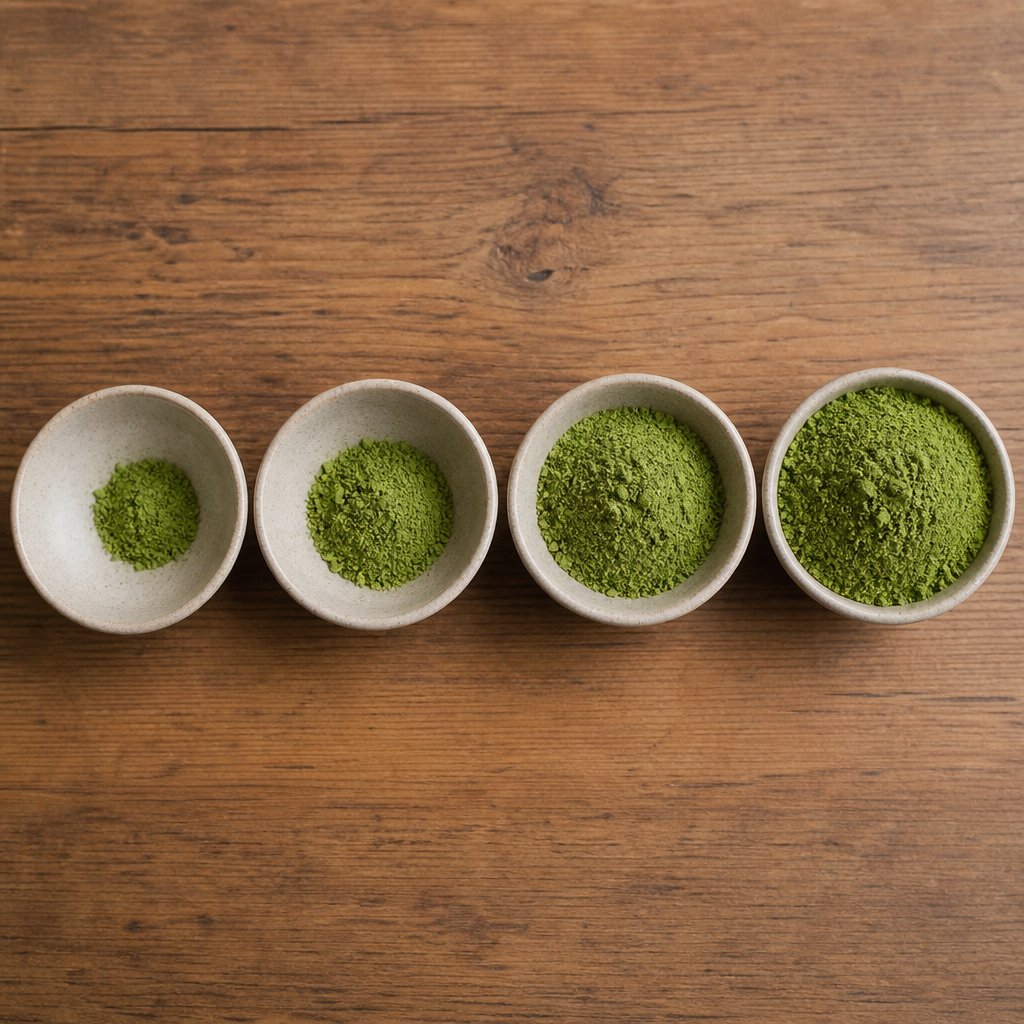
Imagine buying a new pair of running shoes and immediately sprinting a marathon. That is essentially what happens when someone scoops a full tablespoon of moringa into their smoothie on day one. Your digestive system needs time to adapt to the fiber, bioactive compounds, and concentrated nutrients in moringa leaf powder. A gradual ramp-up, sometimes called titration, lets you find the moringa powder dosage that delivers benefits without side effects.
A Week-by-Week Titration Schedule
How much moringa to take on your first day is not the same as what you will take a month from now. The goal is to start below your target dose and increase in small, predictable steps. Here is a practical schedule based on the ramp-up protocols used in clinical acceptability research and practitioner recommendations:
- Days 1-5: Take 1/2 teaspoon (approximately 1-1.5 g) once daily, preferably with a morning meal. This lets your gut adjust to moringa's fiber and plant compounds with minimal disruption.
- Days 6-12: Increase to 1 full teaspoon (approximately 2-3 g) per day. If you experienced no bloating or discomfort during the first phase, your body is ready for this step.
- Days 13-19: Move to 1.5 teaspoons (approximately 3-4.5 g) daily. You can split this into two servings if preferred, one in the morning and one in the afternoon.
- Days 20-28: Reach your target moringa leaf powder dosage, typically 2 to 3 teaspoons (4-9 g) depending on your health goal. Hold here and assess how you feel over the following weeks.
If digestive discomfort appears at any step, drop back to the previous level for another 5-7 days before trying again. A 2023 acceptability study enrolling 52 participants found that doses between 2.4 g and 7.2 g per day were well-tolerated, but mild gastrointestinal effects like loose stools and bloating were more common at the higher end, particularly when introduced too quickly. Patience during the ramp-up phase prevents the discomfort that causes most people to abandon moringa entirely.
Signs Your Dose Is Working
How long does it take moringa to work? The honest answer is that benefits build cumulatively rather than appearing overnight. Moringa is not caffeine. You will not feel a jolt thirty minutes after your first spoonful. Instead, look for gradual shifts over days and weeks:
- Days 4-7: Improved morning energy and less afternoon fatigue. This is often the first noticeable change, driven by moringa's iron and B-vitamin content beginning to correct subtle nutrient gaps.
- Weeks 2-4: Better digestion, reduced bloating, more stable mood, and early improvements in skin clarity. Anti-inflammatory compounds like quercetin and isothiocyanates reach measurable activity levels during this window.
- Months 2-3: Deeper systemic changes including improved sleep quality, reduced joint stiffness, and more stable blood sugar. A 12-week human trial on prediabetic subjects showed significant HbA1c reductions only after sustained daily use at 2,400 mg, confirming that metabolic benefits require months of consistency.
On the flip side, watch for signals that your moringa powder dosage per day is too high or that you ramped up too fast:
- Persistent bloating or gas that does not resolve within 3-4 days
- Nausea, especially when taken on an empty stomach
- Loose stools or diarrhea
- Headaches in the first few days (sometimes linked to detox-like responses at high initial doses)
Any of these signs means you should reduce your dose by half a teaspoon and hold steady until symptoms clear before attempting another increase.
Long-Term Use and Cycling Considerations
Once you reach your target moringa dosage, a common question surfaces: do you need to take breaks? The concept of cycling, alternating periods of use with periods off, is common in the supplement world. With moringa, the evidence suggests it is unnecessary for most people.
Clinical trials have evaluated moringa leaf products for up to six months with no adverse effects reported. Beyond formal trials, populations across Africa and South Asia have consumed moringa as a daily food for generations without documented harm at food-level amounts. The supplemental doses used in research, typically 2-8 grams per day, fall well below any established toxicity threshold.
That said, some practitioners recommend a brief pause of 5-7 days every 3-4 months. The reasoning is not safety-based but practical: periodic breaks can help you reassess whether moringa is still contributing to how you feel, since cumulative benefits sometimes become invisible once they are your new baseline. Taking a short break and noticing the difference, less energy, more stiffness, poorer digestion, confirms the supplement is still earning its place in your routine.
The key principle across all of this is consistency over quantity. Two grams every single day produces better long-term outcomes than 8 grams taken sporadically. Moringa's effects on inflammation, nutrient status, and metabolic markers compound over time, much like interest in a savings account. Skipping days resets the accumulation process.
With your dose dialed in and your timeline expectations set, the next variable worth understanding is how the form of moringa you choose, whether loose powder, capsules, or tea, changes what your body actually absorbs from each serving.
Dosage Differences Between Powder, Capsules, and Tea
Not all moringa formats deliver the same amount of nutrition per serving. The form you choose, whether loose moringa leaf powder, moringa powder capsules, steeped tea, or compressed moringa tablets, directly affects how much of the plant's nutrients actually reach your bloodstream. That gap between what you swallow and what your body absorbs is the reason two people taking "the same dose" can get very different results.
Loose Powder vs Capsules vs Tea
Loose moringa leaf powder offers the highest bioavailability of any format. When you stir it into a smoothie or mix it into yogurt, the full spectrum of nutrients, fiber, protein, vitamins, and antioxidants, enters your digestive system without barriers. Nothing stands between the powder and your gut lining except the food matrix itself. This makes loose powder the gold standard for flexible, high-absorption dosing.
Moringa pills and capsules trade some of that absorption efficiency for convenience. Each capsule delivers a pre-measured 400-500 mg dose, eliminating the need for scoops or scales. The tradeoff? Gelatin or plant-based capsule shells add a dissolution step. Your stomach must break down the casing before the powder inside becomes available. For most people this delay is minor, maybe 10-15 minutes, but at higher doses the sheer number of capsules required (10-20 per day to match 5-10 grams of powder) makes this format impractical as a primary delivery method.
Moringa tablets face a similar limitation, compounded by the binders and fillers used during compression. These additives hold the tablet together but can slow disintegration in the stomach, reducing how quickly nutrients become available. Moringa tablets work well for travel or office use, but they are not ideal when precise, high-dose intake is the goal.
Moringa tea, whether brewed from dried leaves or stirred from powder, delivers a gentler nutrient profile. When you steep moringa in hot water, only the water-soluble compounds dissolve fully. Fat-soluble vitamins like A, E, and K remain largely trapped in the leaf material or powder sediment. Estimates suggest roughly 50-70% of total nutrients transfer into the liquid, depending on steep time and temperature. So what is moringa tea good for? The moringa tea benefits lean toward hydration, antioxidant support from polyphenols, and a calming ritual rather than full-spectrum nutrition. If you rely on tea as your sole moringa source, you may need to steep more powder or drink multiple cups to approach the nutrient delivery of a single teaspoon mixed directly into food. The moringa tea health benefits are real, just less concentrated per serving.
The table below compares each format across the factors that matter most for dosing decisions:
| Format | Typical Serving Size | Bioavailability Estimate | Convenience | Dosing Flexibility |
|---|---|---|---|---|
| Loose Powder | 1-3 teaspoons (3-9 g) | High (near 100% delivery) | Moderate (requires mixing) | Very high (adjustable by fraction of a teaspoon) |
| Capsules | 2-6 capsules (1-3 g) | Moderate-High (85-95%) | High (no prep needed) | Low (fixed increments of 400-500 mg) |
| Tablets | 2-4 tablets (1-2 g) | Moderate (75-90%) | High (portable, no prep) | Low (fixed dose per tablet) |
| Tea (steeped) | 1-2 cups (1-2 g powder equivalent) | Low-Moderate (50-70%) | Moderate (requires brewing) | Moderate (adjustable steep time and amount) |
How Processing Quality Affects Your Dose
Two bags of moringa powder can look identical on the shelf yet deliver wildly different potency. The reason comes down to how the leaves were processed before they reached you.
Shade-dried moringa leaf powder retains significantly more vitamins than sun-dried alternatives. Research from India comparing drying methods found that shade drying preserved the highest levels of both vitamin A and vitamin C, while sun drying reduced vitamin A by roughly 9% and oven drying at 60 degrees Celsius cut vitamin C by up to 60%. The color tells the story: vibrant, deep green powder signals proper shade drying and high chlorophyll retention. Pale, yellowish-green powder suggests UV degradation or excessive heat during processing.
Leaf-only powder also outperforms whole-branch powder that includes petiole (stem) tissue. Nutrients concentrate in the leaflets themselves, and fibrous stem material dilutes the overall potency per gram. A laboratory analysis of Moringa oleifera leaf flour found 29.45% crude protein and 307 kcal per 100 grams in properly processed leaf powder, numbers that drop when stem material is included.
What does this mean for your daily dose? If you are using a high-quality, shade-dried moringa leaf powder made exclusively from leaflets, the standard 3-5 gram range delivers its full intended nutrient load. A lower-quality product, one that is sun-bleached, includes stems, or has been stored past its 6-month shelf life, may require 30-50% more powder to achieve the same nutritional impact. Rather than compensating with higher doses, which increases the risk of digestive discomfort, investing in properly processed powder is the more effective strategy.
Quality differences also explain why some people feel moringa "does not work" while others notice clear benefits at the same dose. The powder itself may be the variable, not the person. Choosing a product with bright green color, a fresh grassy aroma, and fine texture, ideally with third-party testing for contaminants, ensures your measured teaspoon actually delivers what the research promises.
Format and quality set the ceiling on what each dose can do. The next consideration is what happens when you push past that ceiling, specifically the safety limits, side effects, and drug interactions that define how much is too much.

Safety Limits, Side Effects, and Who Should Be Careful
More is not better. That principle applies to nearly every supplement, and moringa is no exception. While moringa leaf powder is broadly safe for healthy adults at recommended doses, pushing past certain thresholds introduces real risks, particularly for people on medication or in specific life stages. Understanding where the safety ceiling sits helps you stay in the benefit zone without tipping into discomfort or harm.
Upper Safety Limits and Overdose Signs
Is moringa safe to take every day? For most healthy adults, yes, at doses within the 3-10 gram range. Problems emerge when intake climbs above 10-12 grams per day. At that level, the concentrated fiber, oxalates, and bioactive compounds in moringa leaf powder can overwhelm your digestive system.
The most common drumstick side effects at excessive doses include:
- Nausea, especially on an empty stomach
- Diarrhea or loose, frequent stools
- Heartburn and acid reflux
- Abdominal cramping and bloating
- Headaches during the first few days of high-dose use
Clinical trials have administered doses up to 8 grams per day for 40 days without serious adverse events. A separate 12-week trial using 2.4 grams daily reported no significant differences in liver function, renal function, or gut microbiome markers between the moringa and placebo groups. These findings confirm that moderate, consistent doses are well-tolerated. The trouble starts when people assume that doubling or tripling the dose will accelerate results.
Drumstick leaves side effects are dose-dependent, meaning they scale with how much you take. If you experience persistent GI distress, the fix is simple: reduce your dose by half and hold there until symptoms resolve. Rare but documented toxic reactions to moringa powder include one case of Stevens-Johnson syndrome and one case of cutaneous toxicity with respiratory distress, though these appear to be idiosyncratic allergic responses rather than dose-related toxicity.
Drug Interactions at Higher Doses
Any moringa supplement becomes a more serious consideration when you take prescription medications. Moringa's bioactive compounds interact with several drug classes, and these interactions become more pronounced at higher daily intakes.
The interactions worth discussing with your doctor:
- Diabetes medications (metformin, glibenclamide, insulin): Moringa may lower blood sugar independently. Combined with antidiabetic drugs, particularly at moringa doses above 5 grams per day, the additive effect could cause hypoglycemia, blood sugar dropping dangerously low. Monitor glucose closely when starting moringa alongside these medications.
- Blood pressure medications (ACE inhibitors, beta blockers, amlodipine): Moringa has documented blood pressure-lowering properties. Adding it to antihypertensive therapy may cause blood pressure to drop too low, leading to dizziness, fatigue, or fainting.
- Anticoagulants (warfarin, heparin): Moringa contains vitamin K, which can reduce warfarin's effectiveness. Simultaneously, moringa's influence on CYP3A4 and P-glycoprotein may alter how anticoagulants are metabolized. If you take blood thinners, have your INR monitored when starting or stopping moringa.
- Levothyroxine (thyroid medication): Animal studies suggest moringa may inhibit conversion of T4 to T3, the active thyroid hormone. Moringa may also decrease levothyroxine absorption if taken simultaneously. Space moringa and thyroid medication by at least 2-4 hours.
- CYP3A4 substrate drugs: Moringa components may inhibit this liver enzyme, potentially increasing blood levels of drugs metabolized through this pathway. Check with your pharmacist if you take regular prescription medications.
- Nevirapine (HIV medication): Moringa may slow nevirapine breakdown, increasing drug levels in the body.
None of these interactions mean moringa is off-limits. They mean medical supervision is necessary, especially at doses above 4-5 grams per day where the pharmacological effects become more pronounced.
Special Populations and Contraindications
Certain groups need extra caution regardless of dose.
Pregnant women should avoid moringa root, bark, and flowers entirely. These plant parts contain compounds with documented abortifacient effects in animal studies. Moringa leaves are considered possibly safe during the second and third trimesters, but first-trimester safety data remains limited. The safest approach: consult your OB-GYN before using any moringa product during pregnancy.
Breastfeeding mothers have slightly more flexibility. Moringa leaf is possibly safe during lactation for up to 4 months based on available evidence, and some trials suggest it may modestly increase milk production. Still, consult your healthcare provider before starting, particularly if your infant has health sensitivities. Among the moringa powder benefits for females, lactation support is one of the most traditionally cited, though clinical evidence remains mixed.
Children under three should not take moringa supplements without pediatrician guidance. Older children may use moringa leaf products for up to 2 months with apparent safety, but doses must be scaled significantly lower than adult amounts, typically proportional to body weight. A 30 kg child would need roughly one-third to one-half of an adult dose.
People with thyroid conditions should approach moringa cautiously. The benefits of moringa for woman dealing with hypothyroidism are not established, and some animal research suggests moringa may worsen this condition by interfering with thyroid hormone conversion.
Pre-surgery patients should stop moringa at least two weeks before any scheduled procedure. Its mild effects on blood pressure and clotting parameters could complicate anesthesia and surgical outcomes.
The bottom line: moringa leaf powder is remarkably safe within the 3-10 gram daily range for healthy adults not on chronic medication. Outside that profile, the question shifts from "is moringa safe to take" to "is moringa safe to take for me, at this dose, with my specific medications and health status." That question deserves a conversation with your doctor, not a guess based on internet advice.
Safety boundaries define the upper limit of your dosing range. Within those limits, the practical question becomes simpler: how do you actually get your daily moringa into meals and drinks you enjoy?
Easy Ways to Take Your Daily Moringa Dose
You know how much to take, when to take it, and what form works best. The remaining hurdle is purely practical: how do you take moringa powder in a way that fits your routine and does not make you grimace? Moringa has an earthy, slightly bitter, grassy flavor profile similar to matcha. Some people enjoy it. Others need a strategy to get it down without a fight.
The best way to take moringa powder is whichever method you will actually repeat every day. Consistency matters more than creativity. Below are proven approaches ranked by how effectively they mask the taste while preserving nutrients.
Simple Daily Recipes and Methods
How do you take moringa powder without dreading it? Pair it with strong flavors, creamy textures, or naturally sweet ingredients that overpower the bitterness. Here are the most practical options:
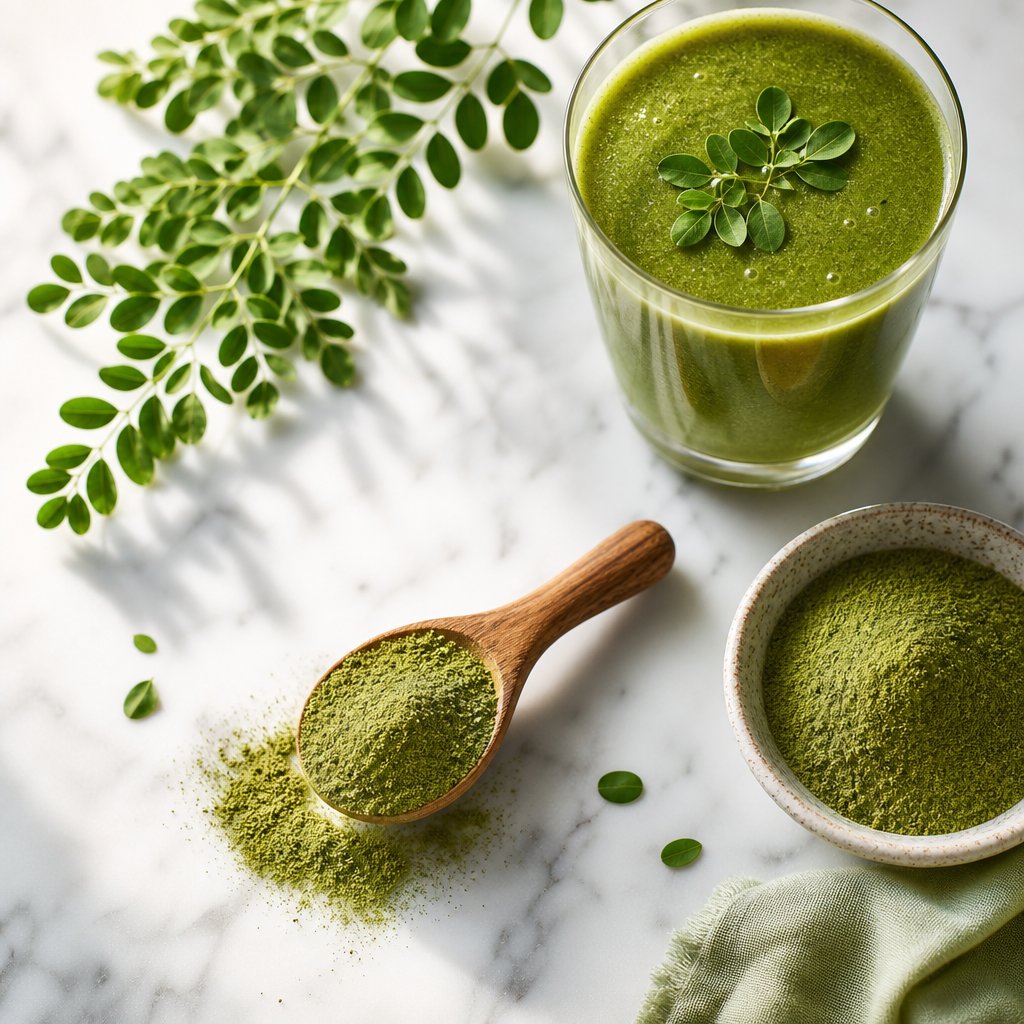
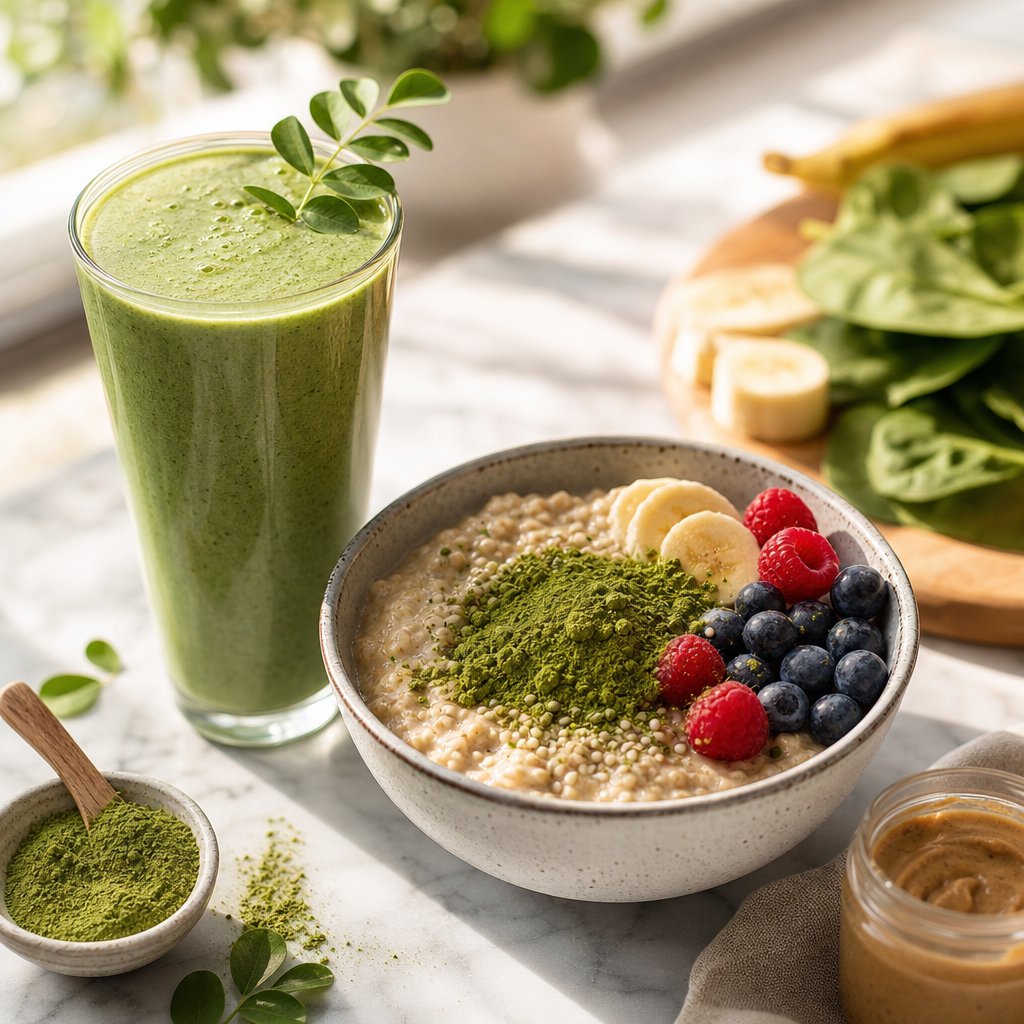
- Smoothies: Blend 1-2 teaspoons of moringa into a smoothie with ripe banana, frozen berries, nut butter, and your preferred milk. The fruit sweetness and thick texture make moringa nearly undetectable. This is the single most popular method for good reason.
- Warm water with lemon and honey: Stir 1 teaspoon into warm (not boiling) water, add fresh lemon juice and a drizzle of honey. This is the simplest way to drink moringa powder if you want a quick morning ritual without a blender.
- Yogurt or oatmeal: Fold moringa powder into Greek yogurt with granola, or stir it into oatmeal during the last minute of cooking. The creamy base absorbs the earthiness, and toppings like cinnamon, berries, or maple syrup handle the rest.
- Salad dressings: Whisk 1/2 to 1 teaspoon into olive oil-based vinaigrettes. The oil improves fat-soluble vitamin absorption while the vinegar and herbs mask the green flavor entirely.
- Energy balls and baked goods: Mix moringa into no-bake energy balls made with dates, oats, and cocoa powder. For baked goods like muffins or pancakes, add 1 tablespoon to the batter. The other ingredients dominate the flavor profile.
- Moringa latte: Whisk 1 teaspoon with a splash of hot water until smooth, then add steamed oat or almond milk and a pinch of cinnamon. Think of it as a caffeine-free matcha latte with more nutrients.
If you are still wondering how do i use moringa powder without tasting it at all, strong-flavored additions like cocoa powder, ginger, vanilla extract, and tropical fruits are your best allies. Start with smaller amounts and increase as your palate adjusts.
Temperature and Preparation Tips for Nutrient Retention
Understanding moringa powder how to use it without destroying its nutrients comes down to one rule: avoid high heat. Research on drying temperatures shows that vitamin C degrades significantly above 60 degrees Celsius, with oven processing at that threshold reducing vitamin C content by up to 60% compared to shade drying. Boiling water sits at 100 degrees Celsius, nearly double the safe limit for heat-sensitive compounds.
Practical guidelines for how to eat moringa powder while keeping nutrients intact:
- Add moringa to smoothies, cold drinks, and room-temperature foods freely, no nutrient loss occurs.
- For warm drinks, let boiled water cool for 3-5 minutes before stirring in moringa. Target a drinkable warmth, not scalding heat.
- When cooking soups, oatmeal, or sauces, stir moringa in after removing the pot from heat rather than during active cooking.
- For baked goods, accept that some vitamin C will be lost during baking, but minerals like iron and calcium remain stable at oven temperatures.
Minerals and protein in moringa are heat-stable, so cooked applications still deliver meaningful nutrition. The loss primarily affects vitamin C and certain antioxidants. If maximizing every micronutrient matters to you, cold or warm preparations are the way to go. If convenience matters more, adding moringa to cooked dishes still provides substantial benefits, just with a modest trade-off on one vitamin.
How to take moringa powder ultimately depends on your lifestyle. A busy morning might call for capsules or a quick stir into water. A relaxed weekend allows for smoothie bowls and moringa pancakes. The format that gets you to your target dose consistently, day after day, is the right one. And once your daily habit is locked in, the final piece worth considering is whether the powder you are using actually delivers what it promises, and how brands can ensure that consistency at scale.
Choosing Quality Moringa and Building Your Own Product Line
Your daily dose only delivers what the powder itself contains. A perfectly measured teaspoon of degraded, improperly processed moringa gives you a fraction of the nutrients you expect. Conversely, a high-quality organic moringa powder made from properly handled leaves delivers the full potency that clinical research is based on. Knowing what separates good powder from mediocre product protects both your health investment and, for businesses, your brand reputation.
Quality Indicators That Affect Dosage Accuracy
What is moringa oleifera, exactly? It is a fast-growing tropical tree whose leaves contain one of the most nutrient-dense profiles in the plant kingdom. The standard supplement form uses dried moringa leaves from this species, ground into a fine powder. But the journey from tree to jar introduces multiple points where quality can degrade, and each one affects how much nutrition your measured teaspoon actually delivers.
When evaluating any moringa oleifera powder, look for these indicators:
- Vibrant green color: Deep, rich green signals that leaves were shade-dried at low temperatures, preserving chlorophyll and heat-sensitive vitamins. Pale, yellowish, or brownish powder indicates sun exposure or excessive heat during processing, both of which reduce vitamin A by roughly 9% and vitamin C by up to 60% compared to shade-dried alternatives.
- Fresh, grassy aroma: Quality moringa smells like freshly cut greens with a mild earthy note. A musty, stale, or hay-like smell suggests oxidation from prolonged storage or poor packaging. Oxidized powder has diminished antioxidant capacity.
- Fine, uniform texture: Properly milled powder feels silky between your fingers and dissolves smoothly in liquid. Gritty or coarse texture often means stem material was included, which dilutes nutrient concentration per gram and reduces bioavailability.
- Third-party testing: Reputable brands test for heavy metals (lead, arsenic, cadmium), microbial contamination, and pesticide residues. Look for a Certificate of Analysis (COA) or mention of independent lab verification on the label. Without testing, you cannot confirm that your organic moringa powder is free from contaminants that accumulate in soil.
- Leaf-only sourcing: The best moringa powder uses only leaflets, not petioles or stems. Leaf tissue contains the highest concentration of protein, vitamins, and minerals. Stem material adds bulk without proportional nutrition.
These indicators matter because they directly affect dosage accuracy. If your powder retains only 50-70% of its original nutrient content due to poor processing, you would need to take significantly more to reach the same benefit threshold, pushing you closer to doses that cause digestive discomfort. Investing in properly processed dried moringa leaves, ground fresh and stored in opaque, airtight packaging, means your 3-5 gram daily dose actually delivers 3-5 grams worth of nutrition.
From Raw Powder to Market-Ready Products
For consumers, quality selection is straightforward: check color, smell, texture, and testing credentials. For nutrition brands, supplement importers, and private label sellers, the challenge scales up considerably. Creating a moringa product with consistent potency across hundreds or thousands of units requires manufacturing infrastructure that most startups do not have in-house.
The core challenge is standardization. When you sell a capsule labeled "500 mg moringa leaf powder," every capsule in every bottle needs to contain exactly that amount with consistent nutrient density. Pre-portioned powder sachets need uniform weight and potency. Tablets need reliable disintegration profiles. Achieving this across production runs of thousands of units demands precision equipment, quality control protocols, and batch testing that verify each lot meets specification.
This is where working with an experienced OEM/ODM manufacturer becomes practical. Companies like ZhuFeng offer health food manufacturing services across multiple product formats, including hard capsules, tablets, powder and granules, soft capsules, gummy candy, and oral liquids. For brands wanting to launch moringa supplements with accurate, consumer-friendly dosing, this kind of flexible formulation capability means you can develop capsules with precise milligram counts, pre-portioned powder sachets for single servings, or compressed tablets with consistent potency, all produced at scale without building your own facility.
The best moringa powder on the market comes from brands that control or closely oversee every step: sourcing organic moringa leaves from verified farms, shade-drying under controlled conditions, milling to uniform particle size, testing each batch for contaminants, and packaging in materials that block light and moisture. Whether you are a consumer choosing your next bag or a business developing your first moringa SKU, quality at the source determines whether the recommended daily dose delivers real results or just green-colored filler.
Frequently Asked Questions About Daily Moringa Powder Dosage
1. Can you take too much moringa powder in a day?
Yes. Doses above 10-12 grams per day are generally considered excessive and may cause nausea, diarrhea, heartburn, and abdominal cramping. Clinical trials have safely administered up to 8 grams daily for 40 days without serious adverse events, but pushing beyond that threshold increases the risk of gastrointestinal distress. If you experience persistent digestive issues, reduce your intake by half a teaspoon and hold steady until symptoms resolve before increasing again.
2. How long does it take for moringa powder to show results?
Moringa's benefits build cumulatively rather than appearing overnight. Most people notice improved energy and reduced afternoon fatigue within the first week. Digestive improvements, mood stability, and skin clarity typically emerge during weeks 2-4. Deeper metabolic changes like blood sugar stabilization and reduced inflammation markers require 2-3 months of consistent daily use at the recommended 3-10 gram range.
3. Is it better to take moringa powder or capsules?
Loose powder offers higher bioavailability (near 100% nutrient delivery) and flexible dosing since you can adjust by fractions of a teaspoon. Capsules provide convenience and consistent pre-measured doses but require 6-20 pills daily to match powder amounts of 3-10 grams. Many regular users prefer powder as their primary format and keep capsules for travel or busy days when mixing a drink is impractical.
4. Should I take moringa on an empty stomach or with food?
Taking moringa with a meal containing healthy fats like avocado, nuts, or olive oil significantly improves absorption of its fat-soluble vitamins A, E, and K. While moringa can be taken on an empty stomach without harm for most people, pairing it with food also reduces the chance of nausea or stomach upset, especially at doses above 3 grams. For maximum nutrient extraction, a fat-containing meal is the optimal choice.
5. Can pregnant or breastfeeding women take moringa powder?
Pregnant women should avoid moringa root, bark, and flowers entirely due to compounds with documented abortifacient effects in animal studies. Moringa leaves are considered possibly safe during the second and third trimesters, but first-trimester safety data is limited. Breastfeeding mothers have slightly more flexibility, with some evidence suggesting moringa may modestly support milk production for up to 4 months. In both cases, consulting a healthcare provider before starting is essential.