
Yes, Iron Tablets Can Cause Palpitations
If you started taking iron tablets and suddenly noticed your heart racing, fluttering, or pounding in your chest, you are not imagining things. Can iron tablets cause palpitations? Yes, they can. This is a recognized cardiovascular response that appears in the adverse reaction profiles of common oral iron formulations, yet it rarely gets the attention it deserves in patient information leaflets or casual doctor-patient conversations.
You are likely reading this because you are already supplementing iron, perhaps for anemia or low ferritin, and the heart symptoms caught you off guard. That alarm is understandable. The good news is that iron-related palpitations have identifiable causes and, in most cases, manageable solutions.
The Short Answer About Iron and Palpitations
Can iron supplements cause heart palpitations? The short answer is yes, through more than one mechanism. Iron supplement side effects typically focus on gastrointestinal complaints like nausea, constipation, and stomach cramps. Cardiac symptoms, including palpitations, tend to fly under the radar because they are less common and harder for patients to connect directly to a pill they swallowed hours earlier. Yet the link is real, documented, and physiologically explainable.
Why This Side Effect Is Under-Reported
Palpitations as an iron supplement side effect often go unreported for a simple reason: patients and clinicians alike attribute the symptom to anxiety, caffeine, or unrelated cardiac issues rather than the supplement itself. The timing can be confusing too. Palpitations may appear immediately after a dose, weeks into therapy, or even persist from the underlying deficiency that prompted supplementation in the first place. This variability makes the cause-and-effect relationship easy to miss.
Three Pathways That Connect Iron Tablets to Heart Symptoms
Research into iron deficiency and cardiovascular function reveals that the relationship between iron and heart rhythm is not a single straight line. Three distinct pathways explain why can iron supplements cause palpitations:
- Direct pharmacological response - The iron itself, particularly at higher elemental doses, can trigger a cardiovascular reaction or provoke a vagal response through gastrointestinal irritation.
- Iron overload and oxidative stress - Excess iron accumulation generates reactive oxygen species in cardiac tissue, potentially disrupting the electrical conduction system of the heart.
- Unresolved underlying deficiency - Paradoxically, the very iron deficiency you are treating may still be causing palpitations while your body catches up. Low iron reduces oxygen-carrying capacity, forcing the heart to compensate with faster or irregular beats.
Palpitations while taking iron tablets are not uncommon and have identifiable causes. Understanding which pathway is driving your symptoms is the key to knowing whether to adjust your dose, switch formulations, or seek medical evaluation.
The rest of this article provides a clear decision framework. You will learn how to distinguish between harmless transient symptoms and patterns that warrant urgent attention, how different formulations compare in their cardiac side effect profiles, and exactly what to tell your doctor if palpitations persist. The goal is not to alarm you further but to give you the information you need to respond with confidence.
The Paradox of Iron Deficiency and Iron Excess
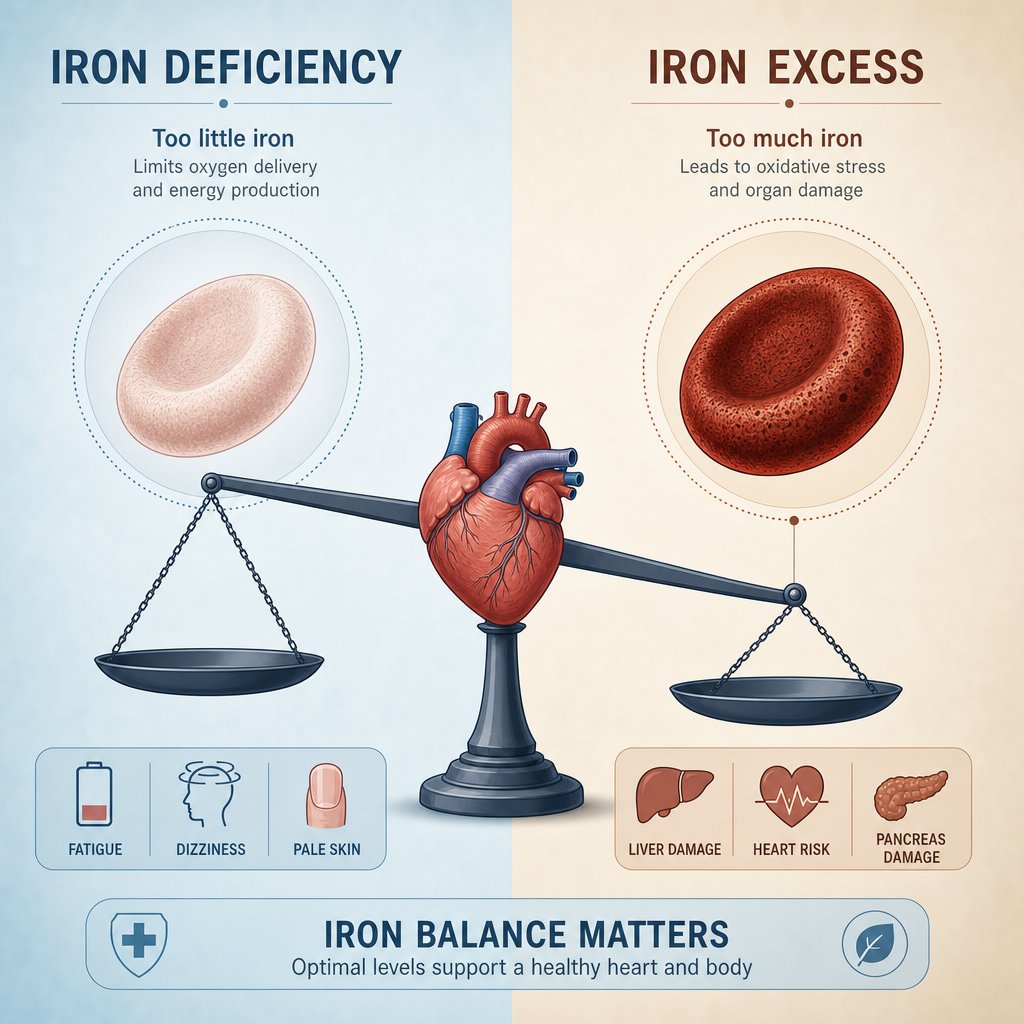
Here is what makes iron-related palpitations so confusing: both too little and too much iron can cause your heart to misbehave. This means you might experience cardiac symptoms before you start supplementing, during the early weeks of treatment, or after months of consistent use. The mechanism is entirely different at each end of the spectrum, but the sensation in your chest can feel remarkably similar.
How Iron Deficiency Triggers Palpitations
Can low iron cause heart palpitations? Absolutely. Iron is essential for producing hemoglobin, the protein inside red blood cells that ferries oxygen to every tissue in your body. When iron stores drop, hemoglobin production falls, and your blood carries less oxygen per trip. Your heart responds the only way it can: it beats faster and harder to push the reduced oxygen supply around more quickly.
This compensatory tachycardia is a hallmark of anaemia palpitations. Research published in BMJ Open Gastroenterology confirms that shortness of breath, fatigue, palpitations, and tachycardia all result from the reduced blood oxygen levels characteristic of iron deficiency anaemia. Does low iron make you tired? Yes, and for the same oxygen-delivery reason that drives the heart to race. The fatigue and the palpitations share a single root cause.
Can anaemia cause heart palpitations even after you start treatment? It can. Iron stores do not rebuild overnight, and until hemoglobin normalizes, the heart may continue compensating. Many people wonder whether can anemia go away quickly once supplements begin. The reality is that correction typically takes weeks to months, and palpitations from deficiency may linger during that window.
How Iron Overload Affects Cardiac Rhythm
The opposite end of the spectrum is equally concerning. When iron accumulates beyond what the body needs, the surplus does not sit quietly. Excess iron catalyzes the formation of reactive oxygen species, generating oxidative stress that damages cells, including cardiomyocytes.
A study from the National Heart, Lung, and Blood Institute found a significant correlation between plasma malondialdehyde (a biomarker of oxidative stress) and supraventricular arrhythmia activity in subjects with iron overload. Notably, the arrhythmias correlated with oxidative stress markers rather than with iron load alone, suggesting that it is the oxidative damage, not simply the presence of extra iron, that disrupts the heart's electrical system. Baptist Health lists arrhythmias and heart failure among the potential health consequences of chronic iron excess.
Why Palpitations Can Occur at Any Stage of Supplementation
This dual mechanism creates a frustrating reality: palpitations can appear whether your iron is climbing from too low or tipping into too high. The table below breaks down how each pathway differs in mechanism, timing, and symptoms.
| Factor | Iron Deficiency | Iron Overload |
|---|---|---|
| Cause | Insufficient hemoglobin and reduced oxygen transport | Excess free iron generating reactive oxygen species |
| Mechanism | Heart compensates for low oxygen by increasing rate and output | Oxidative stress damages cardiac tissue and disrupts electrical conduction |
| Typical Timing | Before or early in supplementation, while stores are still low | After prolonged or excessive supplementation without monitoring |
| Key Symptoms | Racing heart, fatigue, breathlessness, dizziness | Irregular rhythm, skipped beats, exercise intolerance, joint pain |
Understanding which side of this paradox you are on changes everything about the correct response. Deficiency-driven palpitations call for continued (or adjusted) supplementation. Overload-driven palpitations demand the opposite: reducing or stopping iron intake and getting blood work done. The next section explores how the specific iron formulation you take influences which side of this equation you are more likely to encounter.
How Different Iron Formulations Affect Your Heart
Not all iron tablets deliver the same punch. The formulation printed on your supplement bottle determines how much elemental iron actually reaches your bloodstream, how aggressively it irritates your gut, and ultimately, how likely it is to trigger cardiac symptoms. If you have been experiencing palpitations on iron, the specific salt you are taking may be a bigger factor than you realize.
Ferrous Sulfate and Its Side Effect Profile
Ferrous sulfate is the most commonly prescribed and least expensive oral iron option. A standard ferrous sulfate 325 mg tablet delivers approximately 65 mg of elemental iron, which represents about 360% of the daily value recommended by the NIH. That concentrated dose is effective at rebuilding iron stores, but it comes with a trade-off: iron sulfate side effects tend to be more pronounced than those of gentler formulations.
The side effects of iron tablets containing ferrous sulfate include nausea, constipation, stomach cramps, and diarrhea. What many people do not connect is that severe GI distress can activate a vagal response, a reflex where irritation of the digestive tract sends signals through the vagus nerve that slow or irregularly pace the heart. You feel this as palpitations, skipped beats, or a sudden awareness of your heartbeat. The higher the elemental iron content per dose, the greater the GI irritation, and the more likely this vagal pathway becomes relevant.
Clinical guidance from HCPLive notes that up to 10% of patients on oral iron therapy experience gastrointestinal side effects significant enough to affect adherence. That figure matters because GI-mediated cardiac symptoms often go unrecognized as part of the same chain reaction.
Ferrous Fumarate and Gluconate Compared
Imagine two tablets sitting side by side, both labeled 300 mg. One is ferrous fumarate (fumarato ferroso in some markets), the other is ferrous gluconate. They look similar, but the elemental iron they deliver is dramatically different:
- Ferrous fumarate (300 mg) - Contains approximately 90-100 mg of elemental iron. Highest elemental iron per tablet among common formulations. More likely to cause GI distress and associated vagal-mediated palpitations.
- Ferrous sulfate (300 mg) - Contains approximately 60 mg of elemental iron. The standard first-line choice due to cost and availability. Moderate side effect profile.
- Ferrous gluconate (300 mg) - Contains approximately 30-35 mg of elemental iron. Lower elemental iron means fewer side effects but potentially slower correction of deficiency.
- Chelated iron (iron bisglycinate) - Elemental iron varies by product but is typically lower per dose. Designed for improved absorption at lower concentrations, reducing GI irritation.
- Liquid iron formulations (such as Floradix iron) - Deliver smaller, more controlled doses. Often better tolerated because the iron is already dissolved and distributed more evenly across the GI tract.
The pattern is straightforward: more elemental iron per dose equals more side effects of iron supplements, including the GI-to-cardiac chain that produces palpitations. Ferrous gluconate, with roughly one-third the elemental iron of fumarate, tends to be the gentlest conventional option. Products like Floradix iron take a different approach entirely, using liquid delivery and lower concentrations to minimize the GI burden that triggers downstream cardiac symptoms.
Why Tablet Format and Formulation Science Matter
Beyond the iron salt itself, the physical format of a supplement influences tolerability. Modified-release tablets and enteric-coated capsules attempt to reduce stomach irritation by delaying iron release until it reaches the small intestine. However, clinical evidence suggests delayed-release capsules may actually reduce absorption because the body needs to encounter iron earlier in the digestive process.
This creates a formulation challenge: how do you deliver iron gently enough to avoid GI distress and vagal-mediated palpitations while still ensuring adequate absorption? The answer increasingly lies in diversifying delivery formats. Soft capsules, oral liquids, and powder-based formulations each interact with the GI tract differently, offering options for people who cannot tolerate standard tablets.
For nutrition brands and supplement companies developing iron products, this tolerability gap represents both a challenge and an opportunity. Supplement manufacturers working with experienced OEM partners like ZhuFeng can develop gentler iron formulations across multiple delivery formats — tablets, soft capsules, oral liquids — that optimize absorption while minimizing cardiovascular side effects. The ability to customize formulation science at scale means brands can bring iron supplements to market that address the very problem this article describes: palpitations driven by poor tolerability of conventional iron tablets.
The key takeaway is practical. If your current iron formulation is causing palpitations, the solution may not be stopping iron entirely. It may be switching to a formulation with lower elemental iron per dose, choosing a different salt, or moving to a liquid or soft capsule format that distributes iron more gently across your digestive system. The timing of when those palpitations appear relative to your dose offers the clearest clue about which adjustment will help most.
When Palpitations Appear After Starting Iron
Timing tells you almost everything. When you notice palpitations relative to your iron dose, and how far into your supplementation journey they first appeared, narrows down the likely cause faster than any other single clue. Most people asking how long do iron pills take to work are focused on when they will feel better. But tracking when you feel worse is equally valuable information.
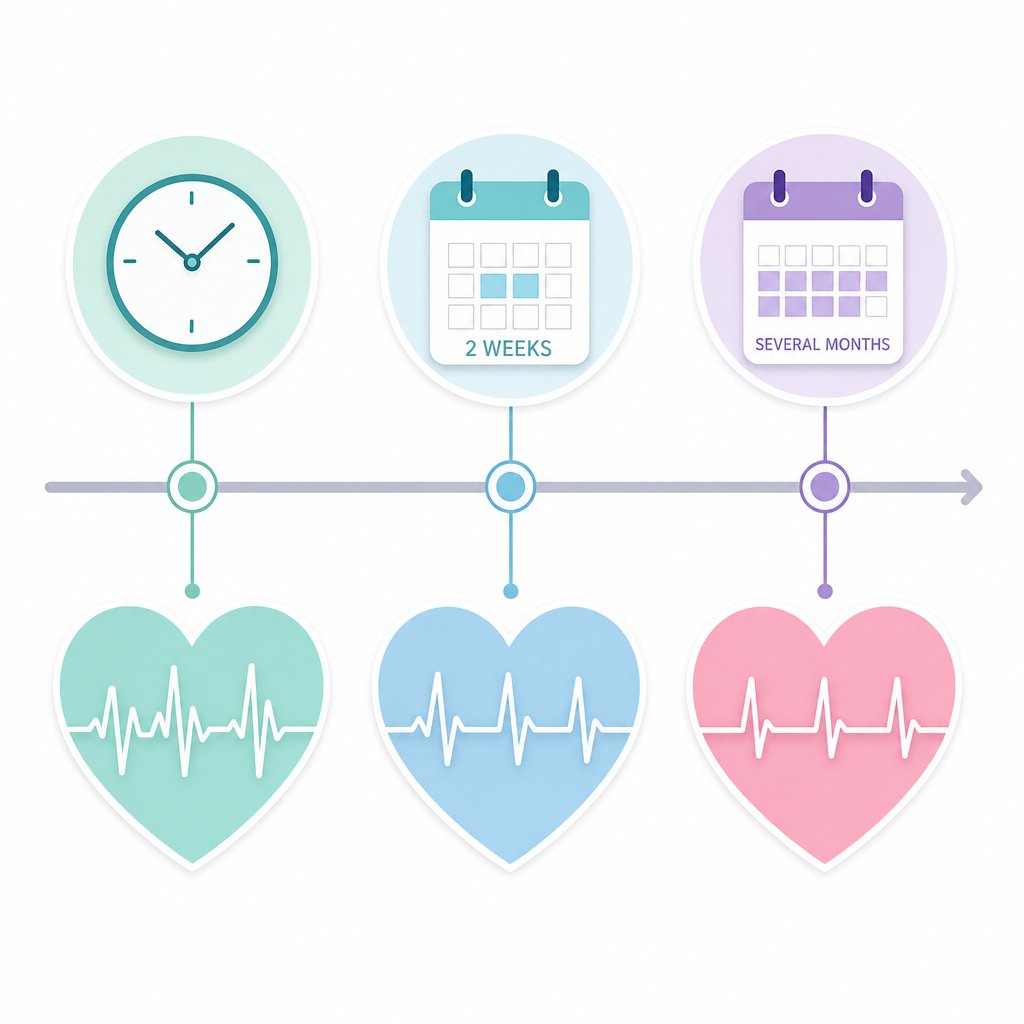
Three distinct timing patterns emerge in people who develop cardiac symptoms on iron therapy. Each points toward a different mechanism and calls for a different response.
Palpitations Within Hours of Taking Iron
- Within hours of a dose (acute response)
If your heart starts racing or fluttering within 30 minutes to a few hours after swallowing your iron tablet, you are likely experiencing either a direct pharmacological reaction or a GI-mediated vagal response. The iron is irritating your stomach or upper intestine, triggering nerve signals that temporarily disrupt your heart rhythm. This pattern tends to be dose-dependent: the higher the elemental iron content, the more pronounced the reaction. It often resolves on its own within a few hours and may improve by taking iron with a small snack or switching to a lower-dose formulation.
Palpitations in the First Two Weeks
- Within the first one to two weeks (early accumulation)
Palpitations that develop days into your regimen rather than immediately after a single dose suggest your body is adjusting to a sustained increase in circulating iron. How long does it take for iron pills to work? Research indicates that iron pills typically start working within 3 to 7 days, with hemoglobin levels rising over 2 to 4 weeks. During this early window, serum iron levels are climbing but your deficiency has not yet resolved. You may be caught between two forces: residual anemia still pushing the heart to compensate, and rising iron levels introducing a new stimulus. This pattern often stabilizes as your body adapts, but it warrants attention if symptoms intensify rather than fade.
Late-Onset Palpitations After Prolonged Use
- After weeks or months of consistent use (late onset)
This is the pattern that raises the most concern. If palpitations appear after you have been taking iron for several weeks or months, especially if they were not present earlier, the question shifts from tolerability to accumulation. How long for iron supplements to work fully? Most providers recommend continuing supplementation for at least 6 months after levels normalize to replenish deep stores. But without periodic blood work, you may overshoot. Late-onset palpitations suggest your iron stores may have crossed from therapeutic into excessive territory, and blood tests for serum ferritin and transferrin saturation become essential.
Among the signs iron pills are working, you would expect fatigue lifting, improved concentration, and better exercise tolerance. Palpitations moving in the opposite direction, getting worse rather than better over time, signals that something needs reassessment. How long does it take for iron supplements to work varies by individual, but cardiac symptoms that escalate rather than resolve after the first month deserve a conversation with your provider.
The single most useful piece of information you can bring to a healthcare appointment is a simple log: when you took your dose, when palpitations appeared, how long they lasted, and whether they are getting better or worse over time.
That timing data helps your doctor distinguish between a benign adjustment period and a pattern that requires dose reduction, formulation change, or further investigation. It also raises a critical follow-up question: at what dosage threshold does the risk of cardiac symptoms increase significantly?
Dosage Thresholds That May Trigger Cardiac Symptoms
The difference between iron that heals and iron that harms often comes down to milligrams. Your iron dosage per day determines whether your body rebuilds hemoglobin efficiently or floods cardiac tissue with oxidative stress. The tricky part? There is no single number that applies to everyone. Body weight, existing iron stores, absorption efficiency, and even gut health all shift the threshold where supplementation crosses from therapeutic into problematic.
Standard Therapeutic Doses for Iron Deficiency
For adults with confirmed iron deficiency anemia, clinicians typically prescribe between 100 and 200 mg of elemental iron per day, often divided into two or three doses. The National Library of Medicine notes that common formulations include ferrous sulfate (20% elemental iron), ferrous gluconate (12% elemental iron), and ferrous fumarate (33% elemental iron). A single 325 mg ferrous sulfate tablet delivers roughly 65 mg of elemental iron, meaning two tablets daily puts you at 130 mg elemental iron, well within the standard therapeutic range.
The European Food Safety Authority (EFSA) set a safe level of total iron intake at 40 mg per day for adults in the general population. This figure applies to people without diagnosed deficiency. Therapeutic doses for anemia intentionally exceed this safe level under medical supervision, which is precisely why monitoring matters.
The table below puts these numbers in context with their associated cardiac risk:
| Intake Level | Elemental Iron (mg/day) | Context | Cardiac Risk |
|---|---|---|---|
| Recommended Daily Allowance | 8-18 mg | Maintenance for healthy adults (8 mg men, 18 mg premenopausal women) | Minimal to none |
| EFSA Safe Level | 40 mg | Upper safe intake for general population without deficiency | Low when short-term |
| Therapeutic Dose | 100-200 mg | Treatment of confirmed iron deficiency anemia under medical guidance | Moderate; GI-mediated palpitations possible |
| Mild-Moderate Toxicity | 20-60 mg/kg body weight | Accidental excess or unsupervised high-dose use | Significant; tachycardia and arrhythmia reported |
| Severe Toxicity | >60 mg/kg body weight | Overdose territory; circulatory collapse possible | Critical; life-threatening cardiac events |
For a 70 kg adult, mild-to-moderate toxicity begins around 1,400 mg of elemental iron in a single exposure. That sounds impossibly high, but chronic low-level excess over months can produce cumulative cardiac stress at far lower daily intakes, particularly in people with efficient absorption or undiagnosed hemochromatosis.
When Supplementation Crosses Into Excess
The most common path to excess is not a dramatic overdose. It is simply continuing a therapeutic dose longer than necessary without blood work to confirm your stores have normalized. When should you take iron supplements? Only as long as your lab values indicate a genuine need. Many people continue supplementing out of habit or fear of relapse, unknowingly pushing ferritin levels into ranges that generate oxidative stress.
Individual variation makes this harder to predict. Someone with celiac disease may absorb only a fraction of their oral dose, while a person with normal gut function absorbs significantly more from the same tablet. How long does it take iron to absorb into blood? Most oral iron enters the bloodstream within 2 to 4 hours of ingestion, with peak serum levels occurring in that window. Those peak spikes are precisely what can stress the cardiovascular system, especially at higher doses.
Hidden Iron Sources That Stack Your Daily Intake
A surprisingly common mistake is doubling or tripling iron intake without realizing it. Consider this scenario: you take a prescribed iron supplement (65 mg elemental iron), eat a fortified breakfast cereal (8-18 mg added iron per serving), and swallow a daily multivitamin containing another 18 mg of iron. That is potentially over 100 mg of elemental iron from sources you may not have mentally connected.
- Fortified cereals and breads - Many contain 25-100% of the daily value per serving
- Multivitamins - Typically include 18 mg elemental iron
- Protein bars and meal replacements - Often fortified with 30-50% daily value
- Red meat and organ meats - Heme iron with high bioavailability that adds to total load
The best way to take iron pills while minimizing cardiac risk involves both dose awareness and timing strategy. Research on alternate-day dosing shows that spacing iron intake every other day reduces hepcidin-mediated absorption suppression and may lower peak serum iron spikes. The American Gastroenterological Association recommends giving oral iron once a day at most, noting that every-other-day dosing may be better tolerated with similar efficacy.
When to take iron supplement doses also matters for peak management. The best time to take iron tablets morning or night depends on your individual response, but morning dosing on an empty stomach produces the highest absorption and the sharpest serum spike. If palpitations correlate with that spike, taking iron with a small amount of food slightly blunts the peak without dramatically reducing total absorption. Splitting a single large dose into two smaller doses spread across the day is another strategy, though evidence suggests this raises hepcidin more and may not improve net absorption.
The core principle is simple: know your total daily iron intake from all sources, not just the supplement bottle. If palpitations appeared after you added a new fortified food or stacked supplements, the fix may be subtraction rather than a formulation switch. And if you have been supplementing for months without updated lab work, a serum ferritin test can tell you whether your stores have crossed from recovery into excess, a distinction that determines whether those palpitations are a signal to continue or a signal to stop.
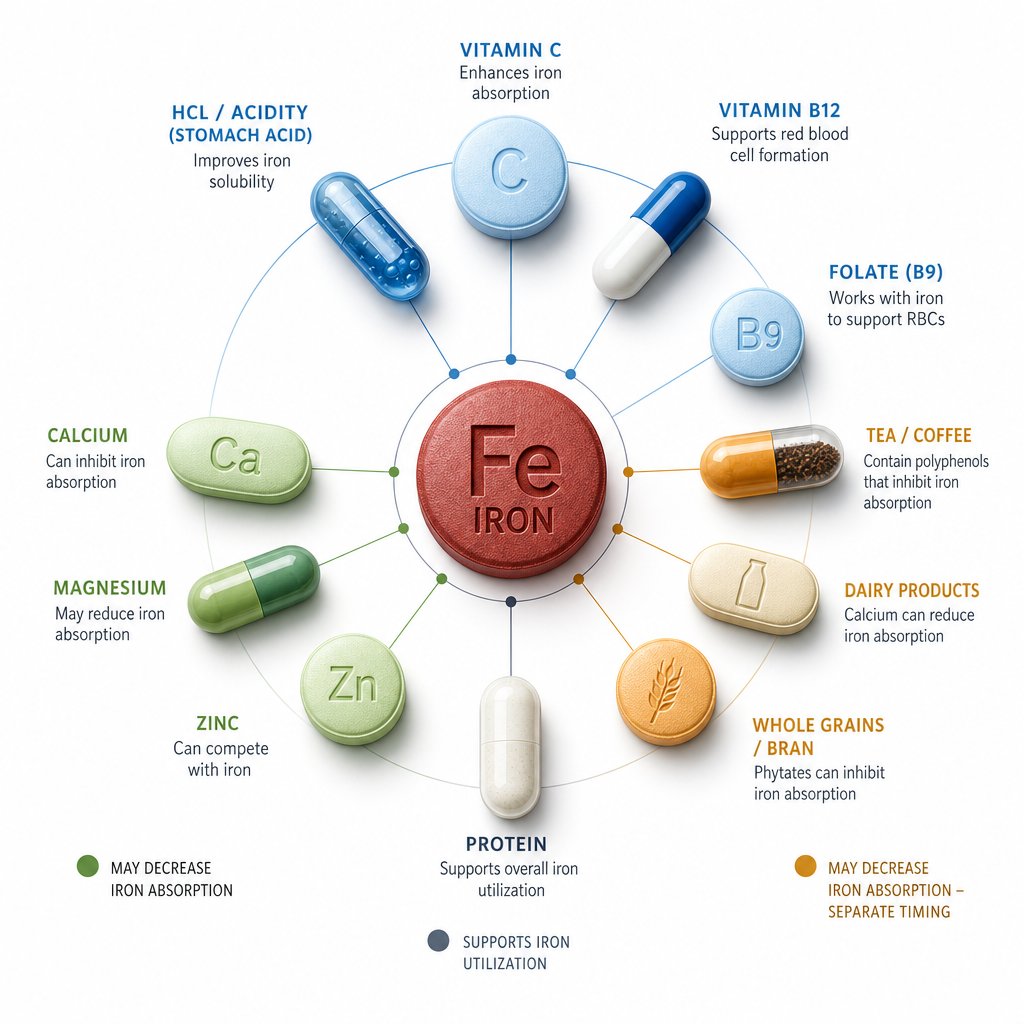
Drug Interactions That Increase Palpitation Risk
Total daily iron intake is only half the equation. The other half is what else you are swallowing alongside those tablets. Several common medications alter how your body absorbs iron, creating erratic serum levels that spike unpredictably or accumulate unevenly. Those fluctuations stress the cardiovascular system in ways a steady, predictable dose would not. If you are wondering how to take iron supplements safely, understanding these interactions is essential.
Iron and Thyroid Medication Interactions
Levothyroxine, the standard treatment for hypothyroidism, is one of the most significant interactions to manage. GoodRx clinical guidance confirms that taking iron supplements too close to your levothyroxine dose lowers how much thyroid medication you absorb. The result is subtherapeutic thyroid levels, which themselves cause tachycardia and palpitations. You end up with cardiac symptoms from two directions: the iron and the poorly controlled thyroid.
The NHS recommends separating levothyroxine from iron by at least 4 hours. For most people, this means taking thyroid medication first thing in the morning and scheduling iron later in the day.
Antibiotics, Antacids, and Absorption Disruption
The interaction list extends well beyond thyroid drugs. Here are the most common medications that interfere with iron absorption or have their own effectiveness reduced when taking iron pills:
- Fluoroquinolone antibiotics (ciprofloxacin, levofloxacin) — Iron binds to these drugs in the gut, reducing both antibiotic effectiveness and iron absorption. Separate by at least 2 hours before or 4 hours after iron.
- Tetracycline antibiotics (doxycycline, minocycline) — Same binding mechanism. Take antibiotics at least 2 hours before or 4 hours after iron.
- Antacids and PPIs (omeprazole, famotidine, calcium carbonate) — These reduce stomach acid, which iron needs for proper absorption. Erratic absorption means unpredictable serum iron spikes on days you skip the antacid and poor uptake on days you take it.
- Bisphosphonates (alendronate, risedronate) — Iron lowers their absorption. Both require empty-stomach dosing, creating a scheduling conflict that forces careful timing.
- Stimulant medications (methylphenidate, amphetamine salts) — These already elevate heart rate. Combined with iron-induced cardiovascular stress, the palpitation risk compounds.
- Caffeine and tea — Polyphenols in coffee and tea bind to iron and reduce absorption. This does not directly cause palpitations, but inconsistent caffeine timing creates day-to-day variability in how much iron you actually absorb.
The cardiovascular concern with all these interactions is the same: inconsistent iron absorption. One day you absorb most of your dose because you happened to skip your antacid. The next day you absorb very little because you took it with coffee and calcium. Those swings produce erratic serum iron levels that your heart responds to with irregular rhythm.
Timing Strategies to Minimize Interaction Risk
When to take iron pills becomes a genuine scheduling puzzle if you are on multiple medications. The best time to take iron supplement doses is typically morning on an empty stomach, but that slot is already claimed by levothyroxine, bisphosphonates, or both in many patients. Can i take iron at night instead? You can, and for people with morning medication conflicts, evening dosing is a practical solution. Does taking iron at night keep you awake? There is no strong evidence that iron itself disrupts sleep, though GI discomfort from a nighttime dose could indirectly affect rest in sensitive individuals.
A practical scheduling framework when to take iron looks like this: take your most time-sensitive medication first (usually levothyroxine or a bisphosphonate), wait at least 4 hours, then take iron on a relatively empty stomach, and hold coffee or tea for another 2 hours after that. If stimulant medications are part of your regimen, note whether palpitations worsen on days you take both the stimulant and iron close together, and discuss adjusted timing with your prescriber.
The underlying principle is straightforward: iron interacts with more medications than most people realize, and those interactions do not just reduce effectiveness. They create the kind of absorption variability that translates into cardiovascular symptoms. Knowing when to take iron pills relative to everything else in your medicine cabinet is a surprisingly powerful lever for reducing palpitation risk. But what happens when timing adjustments alone are not enough, and you need a clear action plan for symptoms that persist?
Your Decision Guide When Palpitations Strike
You have identified the timing, checked your dosage, and reviewed your medication interactions. The palpitations are still there. What do you actually do next? The side effects of iron pills can feel overwhelming when they involve your heart, and the internet offers plenty of vague advice to "talk to your doctor" without telling you what to do in the meantime. This section gives you a structured decision framework you can act on right now.
Immediate Steps When You Notice Palpitations
The first thing to recognize is that not all palpitations require the same response. A brief flutter after your morning dose is a fundamentally different situation from sustained irregular rhythm with dizziness. Your immediate action depends on severity, duration, and accompanying symptoms.
- Step 1: Assess the timing and duration
- Did palpitations start within 1-3 hours of your iron dose? This suggests a direct GI-mediated or pharmacological response. Note the time, sit or lie down, and observe whether symptoms resolve within 30-60 minutes.
- Have palpitations persisted beyond 24 hours or appeared independent of dose timing? This pattern points toward accumulation, overload, or an unresolved deficiency still driving cardiac compensation.
- Step 2: Check for accompanying symptoms
- Iron tablets dizziness, mild nausea, or a brief sensation of your heart "skipping" that resolves quickly is common among iron pill side effects and typically not dangerous.
- Can iron supplements cause headaches alongside palpitations? Yes, and when headache, lightheadedness, and heart fluttering appear together, they often reflect either a dose that is too high or an interaction with another medication.
- Do iron pills cause diarrhea at the same time as your cardiac symptoms? GI distress and palpitations occurring together strongly suggest a vagal response triggered by gut irritation rather than a primary cardiac problem.
- Step 3: Document before you decide
- Write down your exact supplement name, dose, and the time you took it.
- Record when palpitations started, how long they lasted, and what they felt like (racing, skipping, pounding).
- Note anything else you consumed within 2 hours of your dose (food, coffee, other medications).
Reduce, Switch, or Stop — How to Decide
Once you have documented the pattern, you face four options. The right choice depends on the severity and persistence of your symptoms, balanced against the severity of your underlying iron deficiency.
- Continue and monitor — Appropriate when palpitations are mild, brief (under 30 minutes), occur only occasionally, and are improving over time. Many side effects of taking iron tablets, including transient cardiac awareness, settle within the first two weeks as your body adapts. Clinical guidance suggests waiting a maximum of two weeks to see if minor side effects abate.
- Best for: mild, dose-related symptoms that are trending better.
- Reduce dose or frequency — If palpitations are clearly dose-dependent but your deficiency still requires treatment, cutting back is often the safest middle ground. Dropping from daily to every-other-day dosing, or splitting one large tablet into two smaller doses, reduces peak serum iron spikes while maintaining therapeutic progress.
- Best for: moderate symptoms that correlate with dose timing but do not include warning signs.
- Switch formulation — When side effects of taking iron pills persist regardless of dose adjustments, the iron salt or delivery format may be the problem. Moving from ferrous sulfate to ferrous gluconate, or from tablets to a liquid formulation, changes how iron interacts with your GI tract and can eliminate the vagal trigger entirely.
- Best for: persistent GI-mediated palpitations that do not respond to dose reduction.
- Stop and seek medical evaluation — This is the correct response when palpitations are severe, worsening, or accompanied by the emergency signs listed below. However, stopping iron abruptly without medical guidance may not be appropriate if your underlying deficiency is severe. Untreated anemia carries its own cardiac risks, including heart failure in extreme cases. Your provider needs to weigh both sides.
- Best for: escalating symptoms, late-onset palpitations after months of use, or any emergency warning signs.
Emergency Warning Signs That Require Urgent Care
Most iron pill side effects are uncomfortable but not dangerous. Palpitations cross into emergency territory when they appear alongside any of the following:
- Chest pain or pressure that does not resolve within a few minutes
- Shortness of breath at rest or with minimal exertion
- Fainting, near-fainting, or sudden severe dizziness
- Heart rate above 150 bpm that does not slow with rest
- Palpitations lasting more than 30 minutes without any sign of easing
If any of these are present, seek emergency medical care immediately. Do not wait to see if symptoms resolve on their own, and do not assume it is "just" the side effects of taking iron tablets.
One more thing worth acknowledging: health anxiety around palpitations is extremely common, and it is not a sign of weakness. Feeling your heart behave unexpectedly triggers a fear response that can itself worsen the sensation, creating a feedback loop where anxiety amplifies awareness of every heartbeat. If you have ruled out the emergency signs above and your symptoms are mild and transient, it is okay to reassure yourself that what you are experiencing, while unpleasant, is a recognized and manageable response. The decision framework above gives you concrete next steps so you are not left sitting with uncertainty.
Whichever path you choose, the next step involves communicating effectively with your healthcare provider. Knowing exactly what information to bring and what tests to request turns a vague complaint into a productive medical conversation.
What to Tell Your Doctor About Palpitations on Iron
Walking into a medical appointment and saying "my iron pills make my heart feel weird" is unlikely to get you the answers you need. Doctors rely on specific, structured information to distinguish between a benign side effect and something that warrants investigation. The more precise your description, the faster your provider can determine whether to adjust your anemia medication, order testing, or refer you for cardiac evaluation.
What to Document Before Your Appointment
Think of this as building a case file. The goal is to give your doctor enough data to identify the pattern without guesswork. Bring the following to your visit:
- Exact supplement name, formulation, and dose — Not just "iron pills" but the specific product. Is it ferrous sulfate 325 mg? A chelated iron bisglycinate? Ferritin supplements or a combination formula? The formulation matters because each delivers different amounts of elemental iron.
- Timing of palpitations relative to doses — Do they appear within an hour of taking your tablet, or later in the day? Do they happen every time or only occasionally?
- Duration and frequency of episodes — How long does each episode last? Seconds, minutes, or hours? How many times per day or week?
- Character of the palpitations — Racing, skipping, pounding, or fluttering? Each pattern suggests different mechanisms.
- Associated symptoms — Dizziness, chest tightness, shortness of breath, nausea, or headache occurring alongside the palpitations.
- All other medications and supplements — Include multivitamins, thyroid medication, antacids, antibiotics, and any other iron deficiency medication or low iron medication you may be taking. Drug interactions are a common contributor that providers cannot assess without a complete list.
- Dietary iron sources — Fortified cereals, protein bars, red meat intake. Your doctor needs the full picture of total iron exposure.
- How long you have been supplementing — Whether you started last week or six months ago changes the differential diagnosis entirely.
This checklist transforms a vague complaint into actionable clinical data. Providers at Mayo Clinic specifically recommend that patients write down all vitamins and supplements they are taking, along with symptom timing and severity, before any appointment involving potential iron overload.
Tests Your Doctor May Order
Based on your documented information, your provider will likely order blood work and possibly cardiac testing. Here is what to expect and why each test matters:
- Serum ferritin — Measures stored iron. A value above 200 mcg/L in women or 300 mcg/L in men may indicate your ferritin supplementation has pushed stores beyond what your body needs. This is the primary marker for determining whether you have overshot your target when trying to increase your ferritin levels.
- Transferrin saturation (TSAT) — Measures how much iron is actively circulating bound to its transport protein. A transferrin saturation value above 45% is often considered too high and suggests excess circulating iron that could contribute to cardiac symptoms.
- Complete blood count (CBC) — Confirms whether your anemia has resolved or whether your heart is still compensating for low hemoglobin. If deficiency persists, stopping iron entirely may not be the right move.
- ECG (electrocardiogram) — A quick, non-invasive recording of your heart's electrical activity. This identifies arrhythmias, conduction abnormalities, or structural changes that might explain persistent palpitations independent of iron.
- Serum iron and total iron-binding capacity — Together with ferritin and TSAT, these give a complete picture of iron status and help your doctor decide whether to continue, reduce, or stop supplementation.
The 2021 ESC guidelines on heart failure recommend measuring both ferritin and TSAT simultaneously for accurate iron status assessment, since ferritin alone can be misleadingly elevated by inflammation. This principle applies whether you are managing heart failure or simply trying to figure out why your iron supplements for low ferritin are making your heart race.
Questions to Ask About Continuing Iron Therapy
Your appointment is also your opportunity to get clarity on next steps. Consider asking:
- Based on my current labs, do I still need iron supplementation, or have my stores recovered?
- Would a different formulation or lower dose be appropriate? What are the best iron pills for anemia that also minimize cardiac side effects?
- How often should I recheck ferritin and TSAT while continuing to supplement?
- Could any of my other medications be interacting with iron to worsen palpitations?
- Are my palpitations consistent with a cardiac cause that needs separate investigation, or do they fit the pattern of an iron-related side effect?
- If I need to stop oral iron, is intravenous iron an option for how to increase my ferritin levels without the GI and cardiac side effects?
These questions accomplish two things. They signal to your provider that you have done your homework, and they ensure you leave with a concrete plan rather than a generic "let's wait and see." The MLMIC guidance for physicians emphasizes that productive supplement conversations require both parties to be informed about the specific product, dose, timing, and duration of use — exactly the information your checklist provides.
This is not about replacing your doctor's judgment. It is about arriving prepared so the limited time you have together produces clear answers. Armed with documentation and lab results, you and your provider can make an informed decision about whether to adjust your current approach or explore gentler alternatives that maintain therapeutic benefit without the cardiac cost.

Reducing Palpitation Risk While Meeting Your Iron Needs
Lab results in hand and a plan forming with your provider, the practical question becomes: how do you keep correcting your deficiency without your heart protesting every dose? The answer is not simply "push through it." Do iron supplements cause heart palpitations for everyone? No. But for those who are sensitive, the path forward involves choosing gentler formats, optimizing timing, and paying attention to how your supplement is actually made.
If you originally started iron tablets for tiredness or were prescribed iron supplements for fatigue, you already know the stakes. Stopping entirely means the exhaustion returns. The goal is finding the approach that resolves iron supplements tiredness without trading fatigue for a racing heart.
Gentler Iron Formats With Fewer Side Effects
Not every iron product interacts with your body the same way. The following alternatives are ranked by evidence of reduced iron supplements side effects, starting with the formats most likely to minimize cardiac symptoms:
- Iron bisglycinate (chelated iron) — Bound to amino acids, this form bypasses much of the GI irritation that triggers vagal-mediated palpitations. Research shows it may offer higher bioavailability than conventional iron salts with fewer gastrointestinal side effects, meaning effective correction at lower doses.
- Liposomal iron formulations — Iron encapsulated in lipid layers enters intestinal cells through membrane fusion rather than standard protein-mediated transport. A Caco-2 cell study demonstrated that liposomal iron was absorbed four times more efficiently than ferrous sulfate, suggesting you can achieve therapeutic results with less total iron exposure to the gut.
- Oral liquid iron — Liquid formats deliver smaller, more controlled doses distributed evenly across the GI tract. This avoids the concentrated bolus effect of a single tablet dissolving in one spot, reducing localized irritation.
- Soft capsules with optimized release profiles — These can be engineered to release iron gradually rather than all at once, smoothing out serum iron spikes that stress the cardiovascular system.
- Low-dose ferrous gluconate — At roughly 12% elemental iron content, gluconate delivers less iron per tablet than sulfate or fumarate, making it a conventional option with a milder side effect profile.
- Food-based iron strategies — Pairing heme iron sources (red meat, shellfish) with vitamin C-rich foods provides highly bioavailable iron without the concentrated dose of a supplement. This works best as a maintenance strategy once stores are partially rebuilt.
Can iron pills cause heart palpitations less frequently with these alternatives? The evidence says yes, primarily because they reduce the two main triggers: GI irritation and sharp serum iron peaks.
Split Dosing and Timing Optimization
Beyond switching formats, how you take your iron matters as much as what you take. Iron supplement fatigue often tempts people into taking larger single doses, hoping to speed recovery. This backfires. Higher single doses trigger greater hepcidin release, which actually reduces absorption of subsequent doses for up to 24 hours.
Practical timing strategies that reduce palpitation risk:
- Alternate-day dosing — Taking iron every other day rather than daily allows hepcidin to reset, improving fractional absorption while lowering peak serum spikes.
- Split doses — If your provider prescribes 100 mg elemental iron daily, splitting into two 50 mg doses taken 8 hours apart flattens the absorption curve.
- Pair with a small snack — A modest amount of food slightly blunts peak absorption without dramatically reducing total uptake. This is especially useful if palpitations appear within hours of an empty-stomach dose.
- Avoid stacking with stimulants — Take iron at a different time than caffeine or stimulant medications to prevent compounding cardiovascular effects.
People taking iron tablets for energy often want results fast, but steady, consistent absorption over weeks outperforms aggressive dosing that your body cannot tolerate. Patience with a gentler protocol typically produces better adherence and, ultimately, faster recovery.
How Manufacturing Quality Influences Tolerability
Here is something rarely discussed: two supplements listing identical ingredients on the label can behave very differently in your body. Particle size, coating technology, excipient choices, and release engineering all influence how iron interacts with your GI tract and, by extension, your cardiovascular system. A poorly manufactured tablet that dissolves unevenly can dump its iron load in one concentrated burst, while a well-engineered product distributes it gradually.
This is where formulation science becomes a differentiator. For nutrition brands and supplement companies looking to develop iron products with improved tolerability profiles, partnering with an experienced OEM/ODM manufacturer like ZhuFeng enables customized formulation across multiple delivery formats — soft capsules, oral liquids, gummy candy, powder granules, and tablets — helping bring gentler, better-absorbed iron supplements to market. The ability to engineer release profiles, select optimal iron forms, and scale production across flexible formats means brands can create products specifically designed to minimize the GI irritation and serum spikes that drive cardiac side effects.
For you as a consumer, the takeaway is practical: not all iron supplements are created equal, even when the active ingredient looks the same. If one product causes palpitations, a different brand using the same iron salt but better manufacturing technology may not. Quality of formulation is an underappreciated variable in the conversation about iron supplements side effects.
The best iron supplement is not the one with the highest dose. It is the one you can take consistently without your heart reminding you it exists.
Whether you switch to chelated iron, move to a liquid format, adopt alternate-day dosing, or simply find a better-manufactured product, the principle remains the same: meeting your iron needs should not come at the cost of cardiovascular comfort. Track your response, communicate clearly with your provider, and remember that the goal is sustained correction over weeks and months, not a sprint that your body cannot sustain.
Frequently Asked Questions About Iron Tablets and Palpitations
1. How quickly can iron tablets cause palpitations after taking a dose?
Palpitations from iron tablets can appear within 30 minutes to a few hours of taking a dose. This acute response is typically caused by gastrointestinal irritation triggering a vagal nerve reflex that temporarily disrupts heart rhythm. The reaction tends to be dose-dependent, meaning higher elemental iron content increases the likelihood. Taking iron with a small snack or switching to a lower-dose formulation often reduces this immediate cardiac response. If palpitations consistently appear within hours of every dose, it strongly suggests a GI-mediated mechanism rather than iron overload.
2. Can both iron deficiency and iron overload cause heart palpitations?
Yes, this is the iron-heart paradox. Iron deficiency reduces hemoglobin and oxygen-carrying capacity, forcing the heart to beat faster and harder to compensate, which you feel as palpitations. On the other end, excess iron generates reactive oxygen species that damage cardiac tissue and disrupt electrical conduction, also producing irregular heartbeats. The key difference lies in timing: deficiency-driven palpitations typically occur before or early in supplementation, while overload-driven symptoms appear after prolonged use without monitoring. Blood tests measuring serum ferritin and transferrin saturation help determine which mechanism is at play.
3. What iron formulation is least likely to cause palpitations?
Iron bisglycinate (chelated iron) and liquid iron formulations tend to cause the fewest cardiac side effects. Chelated iron bypasses much of the GI irritation that triggers vagal-mediated palpitations, while liquid formats distribute iron more evenly across the digestive tract, avoiding the concentrated bolus effect of a single tablet. Liposomal iron is another option, with research showing up to four times greater absorption efficiency than ferrous sulfate, meaning therapeutic results at lower doses. Ferrous gluconate, containing only about 12% elemental iron, is the gentlest conventional tablet option. Manufacturers like ZhuFeng offer OEM/ODM services to develop iron supplements in soft capsules, oral liquids, and other gentle delivery formats designed to minimize cardiovascular side effects.
4. When should I see a doctor about palpitations from iron supplements?
Seek emergency care immediately if palpitations are accompanied by chest pain or pressure, shortness of breath at rest, fainting or near-fainting, heart rate above 150 bpm that does not slow with rest, or episodes lasting more than 30 minutes without easing. Schedule a non-urgent appointment if palpitations persist beyond two weeks of starting iron, worsen over time rather than improving, or appear for the first time after months of supplementation. Bring documentation of your exact supplement name and dose, timing of symptoms relative to doses, episode duration and frequency, and a complete list of all other medications and supplements you take.
5. Can alternate-day iron dosing reduce palpitation risk?
Research supports alternate-day dosing as an effective strategy for reducing side effects while maintaining therapeutic benefit. Taking iron every other day allows hepcidin, the hormone that regulates iron absorption, to reset between doses. This improves fractional absorption per dose and lowers peak serum iron spikes that stress the cardiovascular system. The American Gastroenterological Association notes that every-other-day dosing may be better tolerated with similar efficacy to daily dosing. Splitting a single large dose into two smaller doses taken 8 hours apart is another approach that flattens the absorption curve and may reduce palpitation frequency.