Understanding Turmeric Powder's Flavor Before You Cook
You bought a jar of turmeric powder. You sprinkled it into a pot of soup. And the result was... underwhelming. Maybe a faint golden tint, a vaguely dusty aftertaste, and none of the rich warmth you expected. The problem isn't the spice itself. It's how you're using it.
Learning how to cook with turmeric powder starts with understanding what you're actually working with, flavor-wise, and why the method matters far more than the amount.
What Does Turmeric Powder Actually Taste Like
So what does turmeric powder taste like? Picture an earthy base note, similar to mustard seed or dried ginger, layered with mild bitterness and a warm peppery finish that lingers at the back of your throat. It's not a loud spice. It won't hit you the way chili flakes or cayenne do. Is turmeric spicy? Not in the traditional heat sense. Its warmth is subtle and aromatic rather than fiery, closer to black pepper than to hot sauce.
The turmeric flavor in powdered form differs noticeably from fresh turmeric root. Fresh root carries a brighter, almost citrusy zing with a ginger-like sharpness, thanks to volatile compounds that evaporate during the drying process. The powder concentrates the earthy and bitter notes while losing that lively brightness. Think of it like the difference between fresh herbs and dried ones: same family, different personality.
This concentrated turmeric taste means the powder plays a specific role in cooking. It's a background builder, not a solo act. It deepens other flavors, adds warmth without heat, and creates that signature golden color. But only when you handle it correctly.
Why Cooking Technique Changes Everything
Here's what most turmeric guides skip entirely: this spice transforms dramatically depending on how you apply heat. Sprinkle raw powder into a finished dish and you'll get a flat, chalky quality that sits on top of the food rather than integrating into it. But bloom that same powder in warm oil for 30 seconds, and it releases complex warm aromatics that weave through the entire dish.
The difference is night and day. Raw turmeric powder tastes one-dimensional. Properly cooked turmeric develops depth, mellows its bitterness, and amplifies its warm peppery character. This isn't a minor nuance. It's the gap between "I don't get the hype" and "oh, that's what turmeric is supposed to taste like."
Turmeric powder isn't a sprinkle-and-forget spice — it rewards deliberate technique at every stage of cooking.
The steps that follow break down exactly how to handle turmeric at each stage: selecting quality powder, measuring the right amount, blooming it in fat, timing your addition, and pairing it for maximum impact. Each technique builds on the last, moving you along a turmeric intensity scale from subtle golden warmth to bold earthy presence. The goal isn't to use more turmeric. It's to use it better.
Step 1 Select and Store Quality Turmeric Powder
Technique only gets you so far if the turmeric powder in your cabinet has already lost its punch. The difference between a vibrant, aromatic spice and a dull, flavorless dust comes down to two things: quality at purchase and how you store it afterward. Getting both right sets the foundation for everything else in this guide.
How to Identify Fresh vs. Stale Turmeric Powder
Open your jar of ground turmeric right now and take a close look. Fresh, high-quality turmeric powder has a deep gold-orange color, almost like a sunset concentrated into a fine dust. The aroma should hit you immediately when the lid comes off: earthy, warm, slightly musky, with a faint peppery sharpness. If you press a pinch between your fingers, it should feel slightly sticky and leave a vivid stain on your skin.
Stale powdered turmeric tells a different story. The color fades to a pale, washed-out yellow. The scent becomes flat or dusty, like opening an old book rather than a spice jar. When you cook with it, the golden hue barely registers and the flavor contribution is almost nonexistent. You'll find yourself adding more and more without getting the warmth or depth you're after.
A few quality indicators worth checking:
- Vibrant deep gold-orange hue (not pale yellow or brownish)
- Strong earthy scent that's noticeable from arm's length when the jar is opened
- Slightly sticky texture when pressed between thumb and forefinger
- Produces a rich golden color when stirred into a small amount of warm water
- No clumping, no musty smell, no visible moisture
Organic turmeric powder often retains more volatile aromatic compounds because it tends to undergo less aggressive processing. The curcuma plant's natural oils survive better when the root is dried at lower temperatures and ground without chemical treatment. This doesn't mean conventional turmeric is bad, but if you're choosing between two options at similar price points, organic often delivers a more complex flavor profile for cooking.
Storage Methods That Preserve Flavor and Potency
Does turmeric go bad? Not in the way milk spoils or bread molds. It won't make you sick after its best-by date. But it absolutely loses potency, and for cooking purposes, weak turmeric is essentially useless turmeric. The active compound curcumin degrades when exposed to light, heat, and moisture, and the volatile oils responsible for aroma evaporate over time. According to food safety experts, ground spices like turmeric can retain quality for 1 to 3 years under proper conditions, though some chefs recommend replacement within 6 months for peak flavor.
Does turmeric powder go bad faster than whole root? Yes. Grinding exposes far more surface area to air and light, accelerating the breakdown of flavor compounds. Whole dried turmeric root can hold its potency significantly longer because those protective outer layers keep the interior intact.
To keep your turmeric powder cooking-ready for as long as possible, follow these storage practices:
- Transfer to an airtight glass container with a tight-sealing lid (avoid plastic, which can absorb and trap moisture)
- Store in a cool, dark cabinet away from the stove, oven, and any heat sources
- Keep away from direct sunlight, which breaks down curcumin and fades color
- Never dip a wet or damp spoon into the jar
- Replace your ground turmeric every 6 to 12 months for optimal cooking results
- Write the purchase date on the jar so you're not guessing
Sourcing consistent, high-quality turmeric powder matters whether you're cooking at home or formulating turmeric-based health products at scale. For nutrition brands, supplement importers, or functional food businesses exploring turmeric product development, consistency across batches becomes critical. ZhuFeng's OEM/ODM manufacturing services offer powder and granule production capabilities with customized formulations, helping businesses launch market-ready turmeric products without building processing infrastructure from scratch.
For home cooks, the takeaway is simpler: buy in small quantities from reputable sources, store it properly, and replace it regularly. A fresh jar of turmeric powder responds to heat and fat in ways that stale powder simply cannot, and that responsiveness is exactly what the next step depends on: knowing how much to use for each type of dish.
Step 2 Measure the Right Amount for Each Dish Type
Fresh, properly stored turmeric powder is potent stuff. And potent means a little miscalculation can tip your dish from "warm and golden" into "bitter and muddy." The biggest question people have when figuring out how to use turmeric powder in food is simple: how much do I actually add?
Most recipes just say "a pinch" or "to taste," which helps no one. Here's a concrete reference you can use every time you cook.
Turmeric Measurements by Dish Category
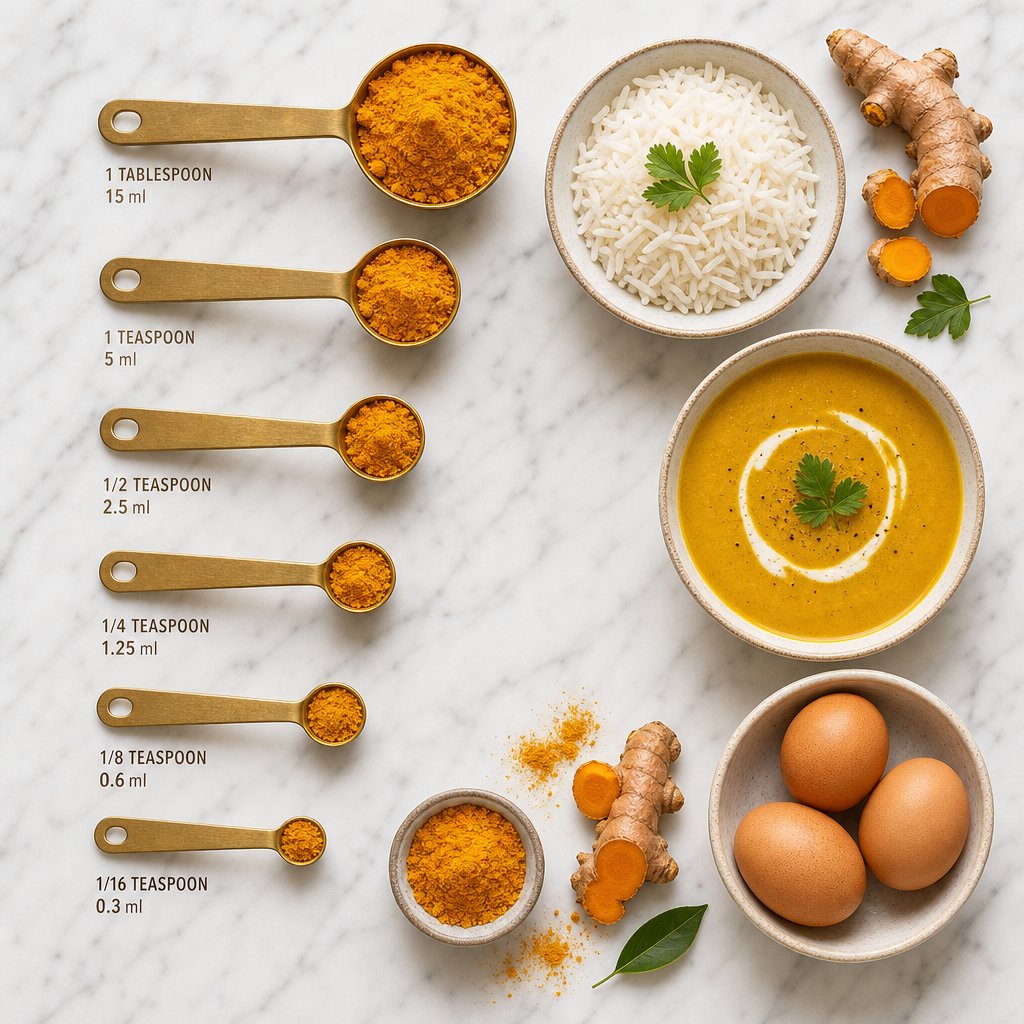
This table breaks down turmeric powder for cooking by dish type, with amounts calibrated per serving so you can scale up or down without guessing.
| Dish Type | Amount Per Serving | Intensity Level | Notes |
|---|---|---|---|
| Rice dishes | 1/4 tsp per cup dry rice | Subtle | Add to cooking liquid before the rice goes in for even color |
| Soups and stews | 1/2 - 1 tsp per 4 servings | Moderate | Bloom in oil at the start; flavor mellows over long simmering |
| Smoothies and beverages | 1/4 - 1/2 tsp per glass | Subtle to moderate | Pair with fat (coconut milk, nut butter) for smoother integration |
| Curries and sauces | 1 - 2 tsp per 4 servings | Bold | Turmeric is a base layer here; other spices balance its earthiness |
| Marinades | 1 tsp per pound of protein | Bold | Mix with oil and acid; let sit at least 1 hour for penetration |
| Scrambled eggs | 1/8 tsp per 2 eggs | Subtle | Whisk into beaten eggs before they hit the pan |
| Baked goods | 1/2 - 1 tsp per batch | Moderate | Fold into batter; pairs well with ginger and cinnamon |
These amounts give you a reliable starting point. You'll notice that turmeric uses in food vary widely depending on whether the spice is a background accent or a defining flavor. A golden rice only needs a whisper. A curry needs turmeric to show up and do real work.
The Turmeric Intensity Scale
Wondering what to use turmeric in and how much to commit? Think of it as three tiers:
- Subtle (1/8 - 1/4 tsp per serving): Golden color with mild warmth. You taste warmth, not turmeric specifically. Ideal for eggs, rice, pasta water, and light dressings.
- Moderate (1/2 - 1 tsp per serving): Noticeable earthy flavor that contributes to the dish's identity without dominating. Good for soups, roasted vegetables, sauces, and baked goods.
- Bold (1 - 2 tsp per serving): Pronounced turmeric presence where the spice is a primary flavor driver. Suited for curries, marinades, and spice-forward stews.
Here's the critical thing: exceeding these ranges doesn't give you "more turmeric flavor." It introduces bitterness. Turmeric has a ceiling. Push past it and the earthy warmth flips into an unpleasant astringent quality that's hard to mask. If you want bolder turmeric in food, the answer isn't more powder. It's better technique, specifically how you apply heat.
How can I use turmeric powder without overdoing it? Stick to these measurements as your baseline, then adjust by small increments (1/8 tsp at a time) once you know how your palate responds. How much turmeric per day in teaspoons is a common health-related question too. Most culinary uses naturally keep you within 1/2 to 1 teaspoon total per meal, which aligns comfortably with general dietary guidance.
The measurements tell you how much. The next piece of the puzzle is what transforms that measured amount from flat powder into something aromatic and alive: blooming it in fat before anything else hits the pan.
Step 3 Bloom Turmeric in Oil for Maximum Flavor
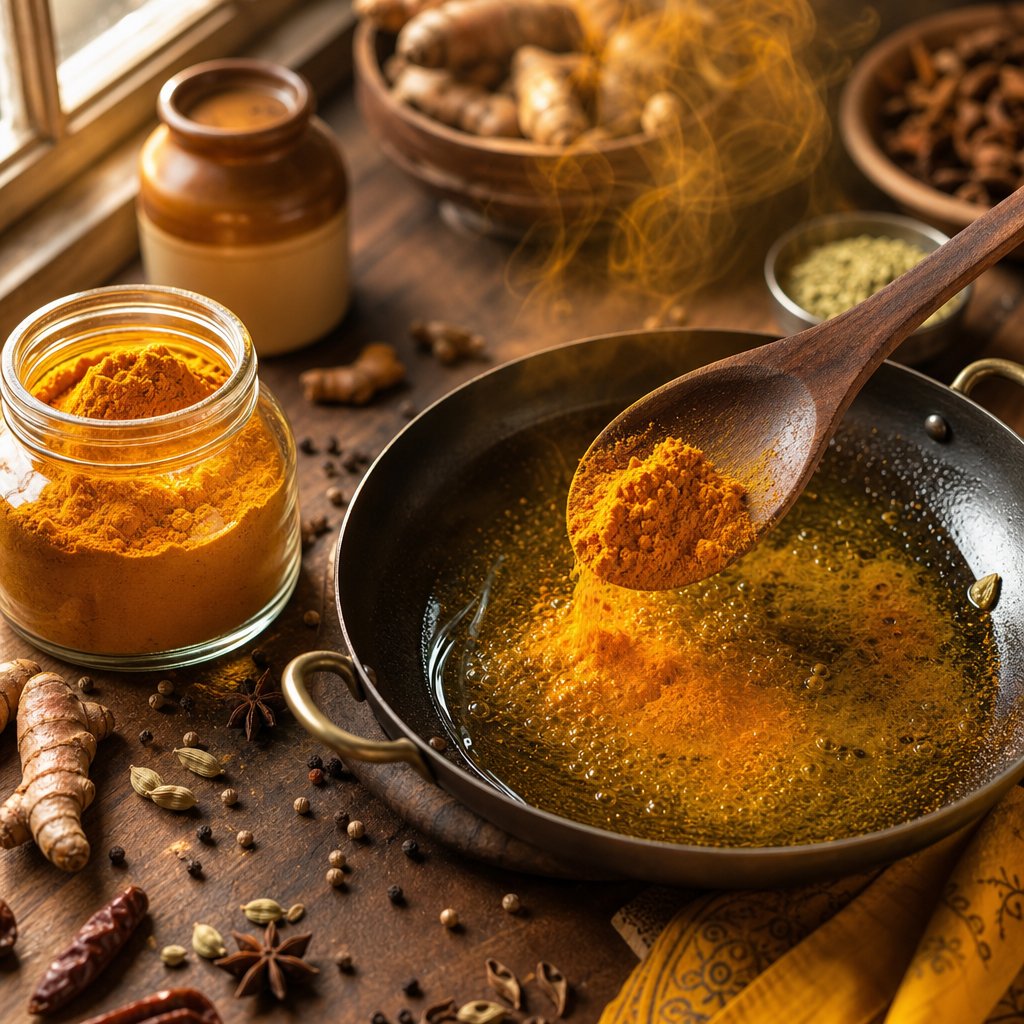
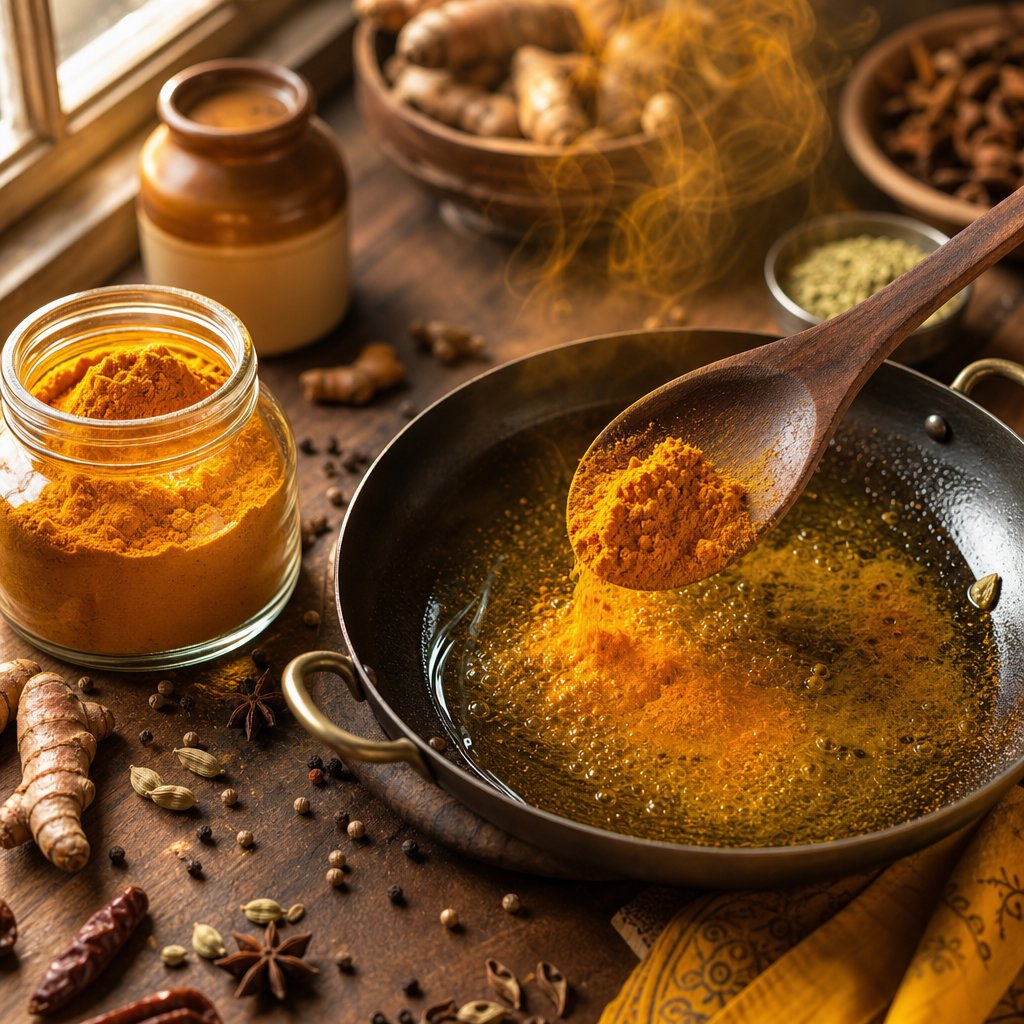
This is the single technique that separates flat, chalky turmeric cooking from the kind that fills your kitchen with warm, complex aroma. Blooming — briefly heating turmeric powder in hot fat — unlocks flavor compounds that water alone can't reach. If you learn one thing about how to use turmeric in cooking, make it this.
How to Bloom Turmeric in Oil Step by Step
The science is straightforward. Turmeric's key flavor and color compounds, including curcumin, are fat-soluble. They dissolve in oil, not water. When you heat turmeric powder in fat, the oil extracts those compounds, carries them throughout your dish, and distributes color and flavor evenly. Skipping this step means those compounds stay locked inside the powder particles, never fully releasing.
Here's exactly how to do it:
- Add 1-2 tablespoons of oil or fat to your pan over medium heat. The surface should shimmer but not smoke.
- Once the oil is warm, sprinkle in your measured turmeric powder.
- Stir constantly for 20-40 seconds. You'll notice the color deepening from dusty yellow to a rich, vibrant gold-orange.
- The moment you smell a warm, earthy fragrance rising from the pan, the bloom is complete.
- Immediately add your next ingredient — onions, garlic, vegetables, or liquid — to stop the cooking and prevent burning.
Which fats work best? Coconut oil, ghee, and olive oil are all excellent choices. Ghee adds its own nutty depth and is traditional in Indian cooking with turmeric. Coconut oil complements turmeric's earthy warmth in Southeast Asian dishes. Olive oil works well for Western applications like roasted vegetables or vinaigrettes. The common thread: you need a fat that can handle medium heat without breaking down.
What Happens When You Skip Blooming
How do you use turmeric in cooking without blooming? Most people just dump the powder into simmering liquid and stir. The result is predictable: uneven color distribution (some bites golden, others pale), a flat raw taste that sits on top of the dish rather than integrating, and a faintly chalky mouthfeel that no amount of stirring fixes.
Bloomed turmeric behaves completely differently. The fat-soluble flavor compounds dissolve into the oil and then disperse uniformly when you add liquid or other ingredients. The color becomes consistent and vibrant. The flavor mellows from raw and slightly harsh into something warm, rounded, and aromatic. This applies whether you're building a curry base, starting a soup, cooking turmeric into rice, or making a simple stir-fry.
One critical warning about how to use turmeric powder in cooking: temperature thresholds matter. Turmeric burns fast above medium-high heat. If your oil is smoking, the powder will turn dark brown within seconds, producing an acrid, bitter taste that cannot be fixed. Keep the heat at medium, stay attentive during those 30 seconds, and have your next ingredient ready to go. Cooking with turmeric rewards patience, not high flames.
The bloom gives you flavor. But when you add turmeric during the cooking process — at the beginning, middle, or end — determines what kind of flavor you get and how deeply it integrates into the finished dish.
Step 4 Know When to Add Turmeric During Cooking
Blooming turmeric in fat is the how. Timing is the when — and it changes the outcome just as dramatically. The same amount of cooked turmeric produces noticeably different flavors depending on whether it enters the pan at the start, midway through, or right before serving. Understanding this timeline gives you control over how turmeric shows up in your food: as a deep foundational note, a balanced middle layer, or a bright finishing accent.
Adding Turmeric at the Beginning vs. Middle vs. End
How do you prepare turmeric for a dish that simmers for an hour versus one that comes together in five minutes? The answer lies in three distinct timing strategies:
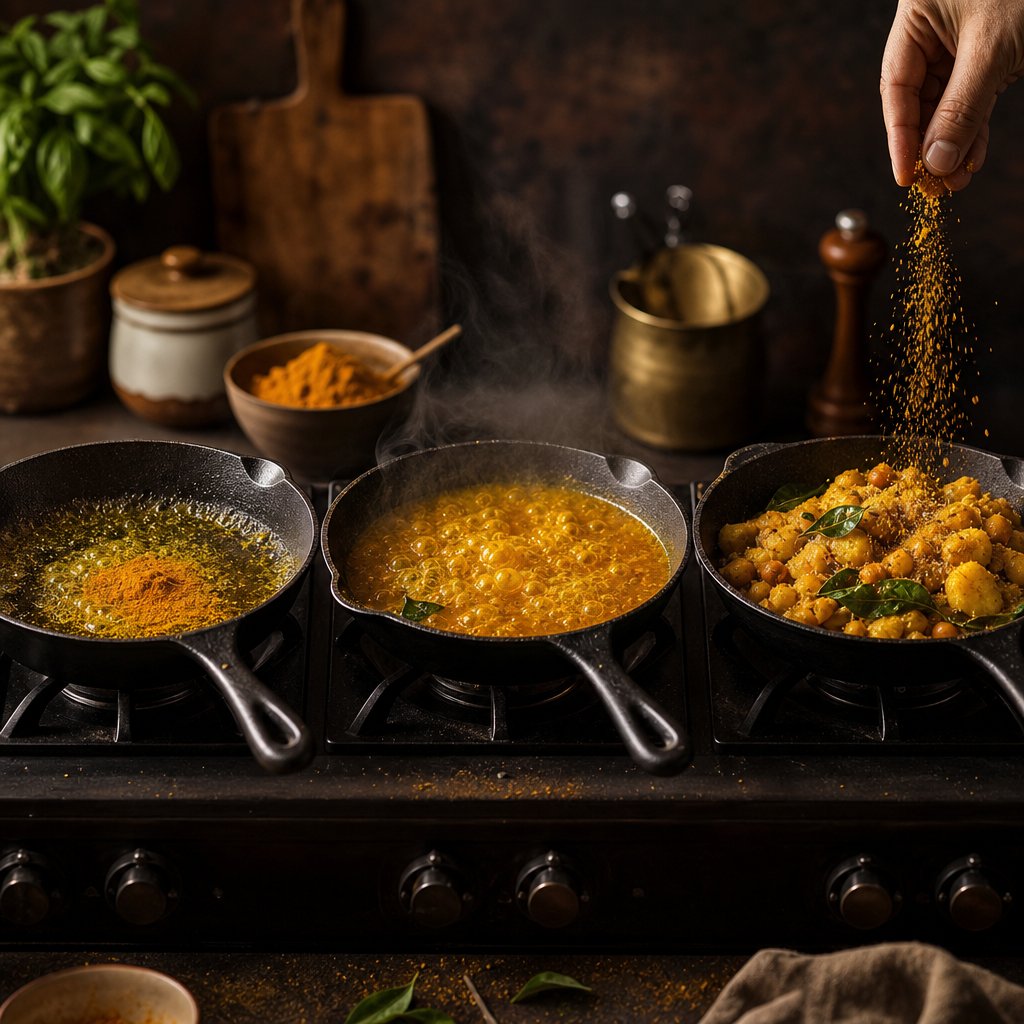
Beginning (bloom in oil as a base layer): This is the classic approach for curries, soups, and braises. You bloom the powder in fat before adding aromatics like onion and garlic. The flavor integrates deeply into every component of the dish, and the golden color permeates uniformly. By the time the dish finishes cooking, turmeric has become part of the foundation rather than sitting on top of it.
Middle (stir into simmering liquid): Adding turmeric 10-15 minutes into cooking gives you moderate integration. The spice dissolves into the liquid, contributes warmth and color, but retains more of its distinct earthy character. This works well for stews and sauces where you want turmeric flavor present but not dominant. It's a practical approach when you're learning how to use turmeric spice in cooking without committing to a fully turmeric-forward dish.
End (sprinkle over finished dishes): A light dusting of turmeric over plated food adds color and mild raw earthiness. This works for garnishing rice, roasted vegetables, or grain bowls. The flavor stays on the surface — noticeable but not integrated. Think of it as a visual and aromatic accent rather than a structural ingredient.
How Heat Duration Transforms Turmeric Flavor
What is turmeric for cooking if not a spice that evolves with time and heat? Its flavor profile shifts at each stage of the cooking process. Here's the timeline of how turmeric behaves as heat duration increases:
- 30 seconds in oil: Volatile aromatics release. This is peak fragrance — the moment your kitchen smells warm and earthy. The powder deepens in color and the raw chalkiness disappears.
- 5 minutes simmering: Bitterness mellows significantly. The warmth deepens and rounds out. Turmeric begins blending with surrounding flavors rather than standing apart from them.
- 15-20 minutes cooking: Earthy notes soften further. Turmeric becomes a supporting player, adding warmth and color without calling attention to itself. This is the sweet spot for most soups and sauces.
- 30+ minutes braising: Turmeric fully integrates into the dish and becomes a background note. Its individual character is barely detectable, but it contributes to overall depth and complexity. The golden color remains even as the distinct flavor recedes.
This timeline matters for how to use turmeric in food when you're balancing flavor goals against health considerations. Research published in Foods found that boiling turmeric for 10 minutes actually increased extractable curcuminoid content compared to raw samples, suggesting that moderate cooking times can be beneficial both for flavor development and nutrient availability. However, extended high-heat methods like prolonged frying at extreme temperatures can degrade certain compounds over time.
The practical takeaway for how to use turmeric spice: if you're cooking primarily for flavor, longer simmering produces a mellower, more integrated result. If you want turmeric's earthy presence to remain identifiable in the finished dish, add it later in the process. And if you're thinking about how do you prepare turmeric to maximize both taste and nutritional value, a middle path works well — bloom it in fat at the start, then let it simmer for 5-15 minutes rather than hours.
Timing and technique handle the flavor side of the equation. But turmeric's fat-soluble nature opens another door: strategic pairing with specific ingredients that amplify both its taste and its absorption in your body.
Step 5 Combine with Black Pepper and Fat for Absorption
You've probably seen the advice a hundred times: "add black pepper to turmeric." Every health blog mentions it. Few explain why it matters in the pan, or how to actually build this pairing into your cooking without it feeling like a chore. The reality is that if you've been following the blooming technique from the previous steps, you're already halfway there. Fat is already part of your process. Black pepper is the missing piece that turns good technique into a complete system.
Why Black Pepper and Fat Make Turmeric Work Harder
Curcumin, the compound responsible for turmeric's golden color and much of its health reputation, has a well-documented absorption problem. On its own, most of it passes through your digestive system without reaching your bloodstream. Two ingredients change that equation dramatically.
Black pepper: It contains piperine, a compound that inhibits a metabolic process called glucuronidation — essentially, your liver's way of tagging curcumin for rapid elimination. A landmark study published in Planta Medica found that piperine increased curcumin bioavailability by up to 2,000% in human subjects. That's not a subtle improvement. A few cracks of black pepper fundamentally change how much curcumin your body actually uses.
Fat: Curcumin is lipophilic — it dissolves in fat, not water. When consumed with dietary fat, curcumin gets incorporated into micelles (tiny fat droplets) during digestion, which transport it across the intestinal barrier far more efficiently. This is why traditional preparations across India and Southeast Asia have always combined turmeric with ghee, coconut milk, or oil. It wasn't a health hack. It was intuitive food science passed down through generations.
Here's what makes this practical rather than academic: if you're already blooming turmeric in oil (Step 3), you've handled the fat requirement automatically. The oil you bloom in becomes the delivery vehicle. Add a few grinds of black pepper at the same time, and you've optimized both flavor extraction and nutrient absorption in a single 30-second step.
Practical Pairings for Every Dish
How can i use turmeric in ways that naturally include both fat and pepper without overthinking it? The key is building these pairings into habits rather than treating them as extra steps. Here are specific combinations that work across different cooking contexts:
- Bloom turmeric + black pepper in ghee or coconut oil — the foundation for any curry, stir-fry, or sauteed vegetable dish. The fat blooms the spice while pepper handles absorption.
- Stir turmeric into full-fat coconut milk with cracked pepper — the base for golden lattes, turmeric smoothies, and creamy soups. The coconut fat and piperine work together without any extra effort.
- Whisk turmeric and pepper into yogurt-based marinades — dairy fat from yogurt plus a generous grind of pepper creates an ideal environment for both flavor penetration into protein and curcumin bioavailability.
- Combine turmeric, olive oil, and pepper in salad dressings — a vinaigrette with turmeric, olive oil, lemon juice, and black pepper delivers the full absorption trio in a raw preparation.
- Add turmeric and pepper to scrambled eggs cooked in butter — the butter provides fat, the pepper provides piperine, and the eggs provide additional lipids. A complete package in under five minutes.
- Toss roasted vegetables with turmeric, oil, and pepper before they hit the oven — the coating oil acts as both a roasting medium and an absorption enhancer.
How do you use turmeric if you're making a beverage rather than a cooked dish? The same principles apply. A turmeric latte made with water will deliver almost no absorbable curcumin. The same latte made with whole milk or coconut cream, plus a pinch of black pepper, becomes a genuinely functional drink. The fat and piperine aren't optional add-ons — they're what make the turmeric worth drinking in the first place.
What foods have turmeric in them already paired with fat and pepper? Traditional Indian curries, Southeast Asian coconut-based soups, Middle Eastern rice pilafs cooked in butter, and golden milk recipes all build these pairings in by default. These cuisines figured out the synergy centuries before modern research confirmed it.
One distinction worth noting: cooking turmeric for flavor and cooking for maximum health benefit aren't always the same goal, but they overlap more than you'd think. The blooming technique that produces the best taste (fat + heat + turmeric) also happens to optimize absorption. Adding black pepper at the bloom stage enhances both the aromatic complexity and the bioavailability. You don't have to choose between a dish that tastes great and one that delivers curcumin effectively. The same technique achieves both.
How do you take turmeric if you want the strongest possible absorption? Bloom it in fat, add black pepper, and keep cooking times moderate rather than extended. How to ingest turmeric for flavor follows the exact same path. The technique is identical — only your priority shifts.
These pairings handle the science. The next question is scope: where else can turmeric go beyond the curries and golden lattes you already know about?
Step 6 Use Turmeric Beyond Curry in Unexpected Dishes
Most people file turmeric under "curry spice" and leave it there. That mental box keeps an incredibly versatile ingredient trapped in a single category. The truth is, turmeric functions beautifully in Western cooking, fusion dishes, baked goods, and preparations you'd never associate with a golden spice rack staple. The techniques from the previous steps — blooming, timing, pairing with fat and pepper — apply everywhere. What changes is context.
Once you start thinking of turmeric as a color-and-warmth tool rather than a "curry ingredient," the list of foods to cook with turmeric expands dramatically.
Turmeric in Western and Fusion Cooking
Each of these applications requires its own handling approach. You can't treat turmeric the same way in scrambled eggs as you would in bread batter. Here are technique-specific instructions for recipes with turmeric powder that go well beyond traditional spice blends:
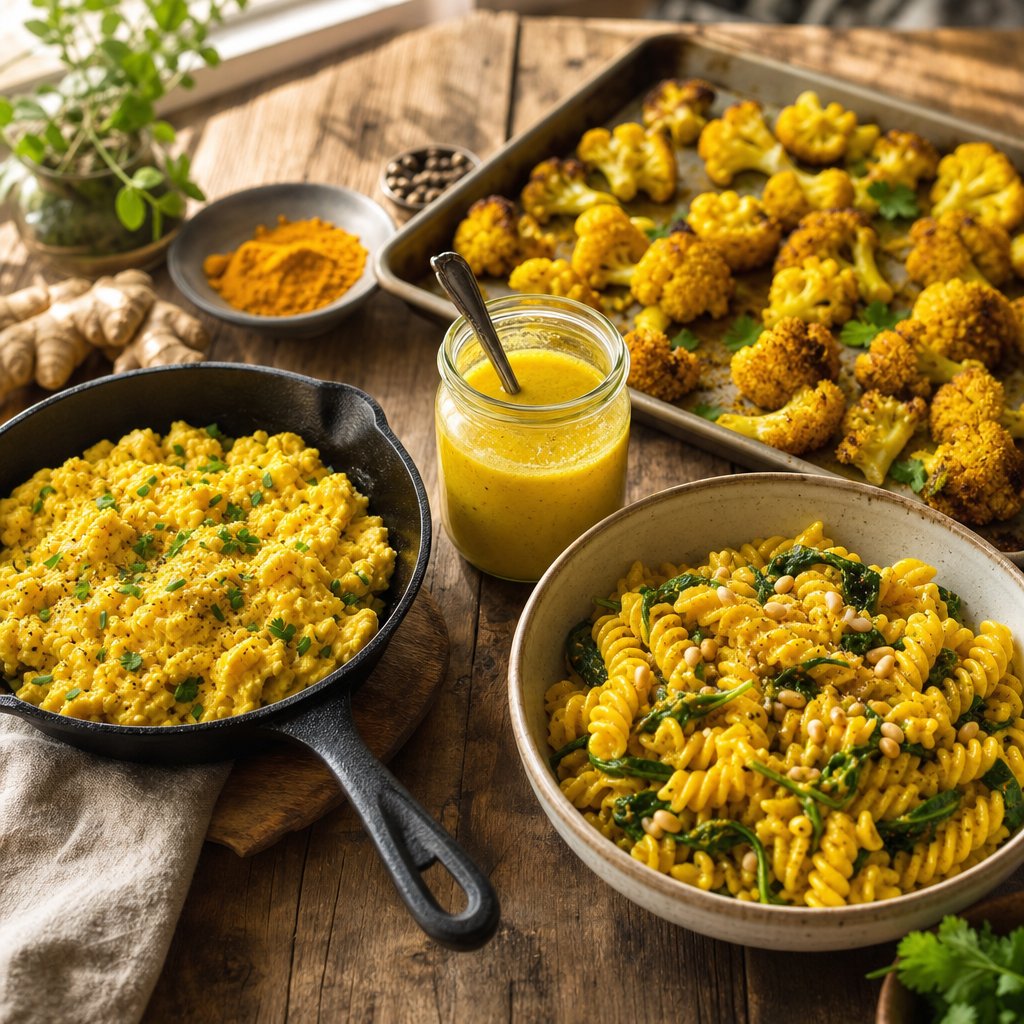
Scrambled eggs: Whisk 1/8 tsp turmeric directly into your beaten eggs before they touch the pan. The egg proteins bind with the turmeric as they cook, producing a vibrant golden color and subtle warmth without any chalkiness. Don't add the powder to the pan separately — whisking it into the liquid egg ensures even distribution. A pinch of black pepper in the egg mixture completes the pairing.
Roasted vegetables: Toss your cut vegetables (cauliflower, sweet potato, carrots, and chickpeas work especially well) with olive oil, 1/2 tsp turmeric, salt, and pepper before spreading them on a sheet pan. Roast at 400°F. The high dry heat caramelizes the turmeric-oil coating, creating golden edges with concentrated flavor. The oil coating acts as both a roasting medium and a blooming agent — the oven heat does the work that stovetop blooming would normally handle.
Pasta water: Add 1/2 tsp turmeric to your boiling pasta water along with the salt. The starch in the pasta absorbs the golden color as it cooks, giving you beautifully tinted noodles without altering the flavor significantly. This works best with lighter pasta shapes — penne, fusilli, or fresh egg noodles — where the color shows clearly. Toss the finished pasta with butter and pepper for a simple golden side dish.
Salad dressings: Whisk 1/4 tsp turmeric into a vinaigrette made with olive oil, lemon juice or apple cider vinegar, honey, and Dijon mustard. The oil in the dressing acts as the fat carrier, and the acid brightens turmeric's earthy notes. This produces a gorgeous golden dressing that works on grain bowls, roasted vegetable salads, or simple greens. Shake or whisk well before each use, as turmeric can settle.
Baked goods: Fold 1/2 to 1 tsp turmeric into muffin, quick bread, or pancake batter for a warm golden crumb and subtle earthy undertone. Turmeric pairs naturally with ginger, cinnamon, and cardamom in baking. It also mimics the golden hue of egg yolks, which is why vegan bakers use it in egg-free tarts and custard-style desserts to achieve that rich yellow color without dairy or eggs.
Each of these turmeric food recipes relies on the same core principle: get the powder into contact with fat or protein early, and let heat do the integration work. The specific vehicle changes — egg protein, olive oil coating, butter in pasta, oil in dressing — but the mechanism stays consistent.
Cuisine-Specific Techniques Around the World
Turmeric shows up in kitchens across the globe, but the technique varies by tradition. Understanding how different cuisines handle this spice gives you a broader toolkit for your own cooking. In most cases, turmeric functions as a base spice within compound seasonings rather than a standalone flavor — it builds depth that other spices layer on top of.
- Indian cooking: Turmeric is bloomed in ghee alongside cumin seeds, mustard seeds, and dried chilies as a "tadka" or tempering. This spiced oil becomes the aromatic foundation for dals, curries, and vegetable dishes. The technique is essentially the blooming method from Step 3, scaled up with companion spices. Turmeric rarely appears alone — it's always part of a spice ensemble.
- Southeast Asian cooking: In Malaysian, Indonesian, and Thai kitchens, turmeric combines with lemongrass, galangal, and coconut milk. It's often pounded into fresh spice pastes or added to coconut-based curries and soups like laksa. The fat from coconut milk handles absorption naturally. Nasi kunyit (turmeric rice) is a staple across the region, cooked with pandan leaves and coconut milk for a fragrant, golden side dish.
- Middle Eastern cooking: Turmeric appears in rice pilafs, meat rubs, and slow-cooked stews. It's typically combined with warm spices like cinnamon, allspice, and black pepper. The approach is subtler than Indian usage — turmeric provides background warmth and golden color to dishes like jeweled rice and lamb kebabs rather than driving the flavor profile forward.
- North African cooking: In Moroccan tagines and Tunisian stews, turmeric pairs with cumin, cinnamon, ginger, and paprika. It's bloomed in olive oil at the start of cooking, then slow-braised with meat, dried fruits, and vegetables. The long cooking time (30-60 minutes) means turmeric fully integrates as a background note, contributing warmth without identifiable presence.
- East Asian cooking: Turmeric appears in Japanese pickles (takuan), where it provides the bright yellow color to daikon radish. In Chinese medicine-influenced cooking, it's added to broths and congee. The usage tends toward color and subtle warmth rather than bold flavor.
What connects all these traditions? Turmeric almost never works alone. It's a team player — a base layer that other spices, aromatics, and fats build upon. Recipes using turmeric across every cuisine share this structural role: the spice provides warmth, color, and depth while letting brighter or bolder flavors take the spotlight.
This "beyond curry" perspective is what transforms turmeric from a single-use spice into something you reach for several times a week. Golden scrambled eggs on Monday. Turmeric-roasted cauliflower on Wednesday. A warm vinaigrette on Friday's grain bowl. The turmeric dishes you can build are limited only by how narrowly you define the spice's role.
Of course, expanding your turmeric repertoire also means you'll occasionally get the balance wrong. Too much in the muffin batter. A burned batch in the roasting pan. A dressing that tastes more medicinal than appetizing. Knowing how to identify and fix these mistakes is what separates confident cooks from hesitant ones.
Step 7 Fix Common Turmeric Cooking Mistakes
You followed the steps, measured carefully, bloomed in oil — and something still went wrong. Maybe the dish tastes aggressively bitter. Maybe there's a harsh, acrid edge you can't place. Or maybe the turmeric powder taste is just... flat. Barely there despite adding what felt like enough.
These problems are common, predictable, and fixable. Understanding why they happen is the fastest path to never repeating them.
Why Your Turmeric Tastes Bitter or Flat
Three mistakes account for nearly every turmeric disappointment. Each one produces a distinct off-flavor, and each has a different cause:
1. Using too much. This is the most frequent issue. Exceeding roughly 1 teaspoon per serving pushes turmeric past its flavor ceiling. Instead of more warmth, you get harsh bitterness that overwhelms everything else in the dish. What does turmeric taste like when you overdo it? Astringent, medicinal, and unpleasantly earthy — nothing like the warm golden character you're after. The tumeric flavor turns from inviting to punishing. Prevention is simple: stick to the measurements from Step 2 and resist the urge to eyeball it.
2. Burning it. Turmeric powder scorches within seconds in smoking-hot oil. The visual cue is unmistakable: the powder turns dark brown instead of vibrant gold, and the smell shifts from warm and earthy to acrid and sharp. Burned turmeric produces a bitter, almost chemical tumeric taste that permeates the entire dish. The fix? Always bloom at medium heat, never high. If your oil is smoking, it's already too hot.
3. Adding it dry to liquid without blooming. Dump raw powder into simmering broth and you'll wonder: does turmeric have a taste at all? The result is flat, chalky, and one-dimensional. The fat-soluble compounds stay trapped in the powder particles rather than dispersing through the dish. The color distributes unevenly and the flavor never develops complexity. This is what makes people ask what does tumeric taste like — because they've only experienced the unbloomed version.
How to Rescue an Over-Turmericed Dish
Mistakes happen. A measuring spoon slips, or you confuse teaspoons with tablespoons. The good news: turmeric bitterness responds to the same balancing techniques that work for other bitter ingredients. Here are your rescue options, ranked by effectiveness:
- Dilute with more base ingredients. The most reliable fix. Add more of everything in the recipe except turmeric — extra broth, rice, vegetables, protein, or coconut milk. If you doubled the turmeric accidentally, try doubling the other components to rebalance. This doesn't remove the excess, but it restores proportion.
- Add acid. Lemon juice, vinegar, tamarind paste, or tomato sauce counteract bitterness directly. Start with a tablespoon of acid per 4 servings and taste. The tartness distracts your palate from the bitter notes and brightens the overall flavor profile.
- Increase fat content. Stir in coconut cream, butter, or a splash of heavy cream. Fat coats the tongue and mutes bitter perception. This works especially well in soups, curries, and sauces where added richness feels natural rather than out of place.
- Add a touch of sweetness. Honey, sugar, or maple syrup in small amounts — just enough to offset bitterness without making the dish taste sweet. A teaspoon at a time, tasting between additions. This works best in dishes that already have some sweetness, like coconut-based curries or roasted vegetable soups.
- Physically remove some liquid. If the turmeric is concentrated in the cooking liquid, ladle out a portion and replace it with fresh broth or water. You'll lose some overall flavor, but you'll reduce the bitter intensity proportionally.
What does curcumin taste like on its own? Intensely bitter and astringent — which is exactly what you're tasting when there's too much turmeric in a dish. The other flavor compounds (the warmth, the earthiness) get drowned out by curcumin's raw bitterness at high concentrations.
One scenario has no fix: burned turmeric. If the powder turned dark brown in the pan and the smell went acrid, no amount of acid, fat, or dilution will remove that scorched quality. The only option is discarding the spice base and starting that layer over. Scrape out the burned oil, wipe the pan, and begin the bloom again with fresh fat and fresh powder. It costs you two minutes and a quarter teaspoon of turmeric. That's far cheaper than serving a dish with a bitter, charred undertone running through every bite.
The turmeric what does it taste like question has a different answer depending on whether you've handled it well or poorly. Done right, it's warm, golden, and gently earthy. Done wrong, it's bitter, flat, or acrid. The gap between those outcomes is entirely technique — and now you know how to stay on the right side of it.
With flavor troubleshooting covered, there's one more practical barrier that keeps people from cooking with turmeric confidently: the bright yellow stains it leaves on hands, countertops, and everything else it touches.
Step 8 Handle Turmeric Without Staining Everything
Turmeric's golden color is gorgeous in a curry. It's less gorgeous on your countertop, your fingernails, and the white t-shirt you forgot to change out of. The same curcumin compound that makes this turmeric spice so valuable in cooking also makes it a remarkably effective dye — one that binds quickly to fibers and surfaces, especially when combined with moisture or fat. This staining reputation is a genuine barrier. People avoid cooking with turmeric not because they dislike the flavor, but because they dread the cleanup.
The good news: staining is entirely manageable with a few proactive habits and some simple science-backed removal methods. Turmeric powder how to use it without redecorating your kitchen in permanent gold? Prevention first, then cleanup.
Preventing Turmeric Stains Before They Happen
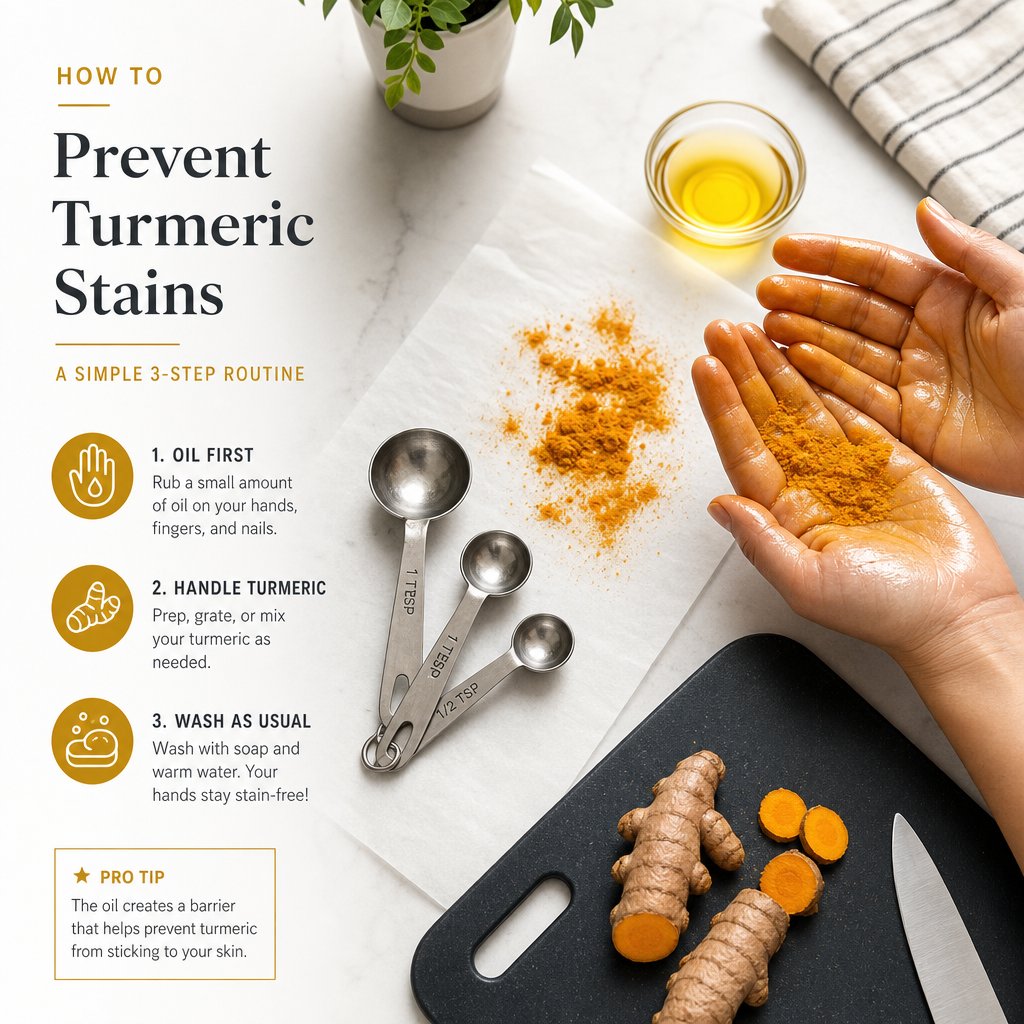
The easiest stain to remove is the one that never lands. A few small adjustments to your workflow eliminate most turmeric mess before it starts:
- Use stainless steel or dark-colored utensils and cutting boards. Turmeric color shows dramatically on white plastic and light wood. Stainless steel doesn't absorb pigment, and dark surfaces hide any residual tint.
- Wear an apron or dark clothing. Turmeric powder becomes airborne easily when you measure and pour. A dark apron catches stray particles before they reach your shirt.
- Coat your hands lightly with cooking oil before handling. A thin layer of oil creates a barrier between curcumin and your skin, making post-cooking cleanup a simple soap-and-water rinse rather than a scrubbing session.
- Line your countertop with parchment paper when measuring. This catches any spills and gets tossed when you're done — zero contact with your actual surface.
- Add turmeric directly to oil in the pan. Rather than transferring measured powder through multiple containers and spoons, bring your jar to the stove and tap the powder straight into the hot fat. Fewer touchpoints means fewer stain opportunities.
- Keep a damp cloth nearby. Wipe up any powder that lands on surfaces immediately. Turmeric stains set quickly, so treating them while fresh makes removal far easier.
These habits take seconds to implement and save minutes of scrubbing later. Once you build them into your routine, you'll find that the uses for turmeric in your cooking expand naturally — you stop hesitating to reach for the jar because the mess factor drops to nearly zero.
Removing Turmeric Stains from Surfaces and Skin
Spills happen despite your best efforts. When they do, the approach depends on what got stained. Curcumin breaks down under specific conditions — UV light, alkaline solutions, and certain solvents — so each surface type has its own optimal fix.
Hands and fingernails: Mix equal parts baking soda and lemon juice into a paste and scrub your hands for 30 seconds. The mild abrasion from baking soda lifts surface pigment while the citric acid helps break down curcumin. For stubborn nail staining, dip a cotton pad in rubbing alcohol and rub each nail as you would with polish remover. Rinse and moisturize afterward. Some residual tint may linger for a day or two — this is normal and fades on its own.
Countertops: Make a paste of baking soda and a small amount of water. Apply it to the stain, let it sit for 15 minutes, then wipe away with a damp cloth. For persistent marks, a few drops of lemon juice or white vinegar added to the paste increases effectiveness. One important caveat: avoid baking soda, lemon, and vinegar on natural stone surfaces like marble or granite, as these can etch the finish. For stone counters, a gentle dish soap solution and immediate wiping is the safer route.
Plastic containers: This is where turmeric is most stubborn — the pigment bonds with oil and sinks into the porous surface of plastic. Fill the stained container with water and place it in direct sunlight for several hours. UV radiation naturally breaks down curcumin molecules, fading the yellow tint without scrubbing. For faster results, soak overnight in a solution of two parts hot water to one part white vinegar with a drop of dish soap.
Clothing and linens: Pre-treat the stain immediately with liquid dish soap, working it into the fabric with your fingers. Rinse with cold water — never hot, which sets the stain permanently. If the mark persists, apply hydrogen peroxide to the area and line-dry in direct sunlight. The combination of peroxide and UV acts as a gentle bleaching agent on white or light fabrics. Avoid this method on dark-colored textiles where fading is a concern.
The underlying science is reassuring: turmeric stains are not permanent on most household surfaces. Curcumin is photosensitive, meaning UV exposure degrades it over time even without intervention. That yellow mark on your cutting board will fade naturally over days of normal kitchen light exposure. The methods above simply accelerate what sunlight would eventually do on its own.
Knowing what foods to use turmeric in shouldn't come with anxiety about your kitchen surfaces. And knowing what food has turmeric — from golden lattes to roasted cauliflower to simple scrambled eggs — shouldn't mean choosing between great flavor and a clean workspace. With the right prevention habits and a baking soda paste on standby, how do you cook with turmeric confidently? The same way you handle any vibrant ingredient: respect its power, prepare your space, and keep a cleanup plan ready. The turmeric seasoning in your cabinet is meant to be used generously, not guarded nervously. A few yellow fingertips are a small price for food that tastes this good.
Frequently Asked Questions About Cooking With Turmeric Powder
1. What is the best way to activate turmeric powder when cooking?
The most effective method is blooming turmeric in warm oil or fat over medium heat for 20-40 seconds. Since curcumin and other key flavor compounds are fat-soluble, heating the powder in oil extracts and disperses them throughout your dish. Use coconut oil, ghee, or olive oil, stir constantly until the color deepens to vibrant gold-orange and a warm earthy aroma rises, then immediately add your next ingredient to prevent burning.
2. How much turmeric powder should I add per serving?
The amount depends on your desired intensity. For subtle golden warmth in eggs or rice, use 1/8 to 1/4 teaspoon per serving. For moderate earthy flavor in soups and sauces, use 1/2 to 1 teaspoon per 4 servings. For bold turmeric presence in curries and marinades, use 1 to 2 teaspoons per 4 servings. Exceeding these ranges introduces bitterness rather than deeper flavor, so increase technique quality rather than quantity for stronger results.
3. Why does my turmeric taste bitter and how can I fix it?
Bitterness typically results from using too much powder, burning it in hot oil, or adding it dry to liquid without blooming first. To rescue an over-turmericed dish, dilute with additional base ingredients like broth or vegetables, add acid such as lemon juice or vinegar, increase fat content with coconut cream or butter, or introduce a small amount of sweetness like honey. If turmeric has burned and turned dark brown, the only solution is discarding the spice base and starting over.
4. Does turmeric powder go bad and how should I store it?
Turmeric powder won't spoil in a way that makes you sick, but it loses potency over time. Light, heat, and moisture degrade curcumin and volatile flavor oils. Store it in an airtight glass container in a cool, dark cabinet away from heat sources. Never use a wet spoon in the jar. Replace ground turmeric every 6 to 12 months for optimal cooking results, and write the purchase date on the container so you can track freshness.
5. Can I use turmeric powder in dishes other than curry?
Turmeric works in a wide range of dishes beyond curry. Whisk it into scrambled eggs for golden color, toss with vegetables before roasting, add to pasta water for tinted noodles, blend into salad dressings, or fold into muffin and bread batter. It also pairs well in golden lattes with coconut milk, yogurt-based marinades, and grain bowls. The key is treating it as a warmth-and-color tool rather than limiting it to a single cuisine category.