Iron Tablets and Hair Growth
You are watching more hair circle the shower drain than usual. You have read somewhere that iron supplements for hair growth might be the fix. So the question lands: can iron tablets actually make your hair grow back?
Here is the honest answer. Iron tablets and hair growth have a real, documented connection, but it is conditional. Supplementation works when your hair loss is driven by low iron levels. It does not function as a universal growth booster for everyone. If your iron stores are already healthy, popping extra tablets will not speed up growth or thicken your strands. Worse, unnecessary iron can be toxic when taken in excess.
That single distinction separates people who see real results from those who waste months on a supplement that was never going to help them.
The Short Answer About Iron and Hair Regrowth
Iron supplementation can reverse hair shedding caused by low iron levels by restoring oxygen delivery to hair follicles. When your body lacks adequate iron, it cannot produce enough hemoglobin, the protein in red blood cells that carries oxygen to every tissue, including the rapidly dividing cells in your hair follicles. Starved of oxygen, follicles prematurely shift into a resting state, and hair falls out without being replaced. Replenishing iron stores through oral supplements allows those follicles to reactivate and resume normal growth.
This type of iron-related shedding is called telogen effluvium, and it presents as diffuse thinning across the entire scalp rather than bald patches or a receding hairline. The good news? Hair loss from iron deficiency is not permanent. Once levels normalize, regrowth follows.
So does iron help hair growth? Yes, but only when deficiency is the root cause. Iron supplements hair regrowth potential is real and well-supported, yet it hinges entirely on your individual blood work.
Why This Distinction Matters for You
Think of it this way. Iron tablets are a targeted solution, not a blanket remedy. Whether they will work for you depends on one thing: is your hair loss actually caused by insufficient iron? If the answer is yes, supplementation can help hair growth noticeably within several months. If the answer is no, you need a different path entirely.
This matters because iron deficiency is surprisingly common, particularly among women of reproductive age, vegetarians, and people with digestive conditions that impair absorption. Many people experiencing iron tablets and hair loss connections do not even realize their iron is low because standard lab results can show "normal" ranges while ferritin, your stored iron, sits too low for healthy follicle function.
Iron tablets can help hair growth, but only when a confirmed deficiency is driving the shedding. Without blood work showing low ferritin, supplementation is unlikely to improve your hair and may carry health risks.
Will iron help hair growth for you specifically? The rest of this article walks you through exactly how to find out, from understanding the biology behind iron and your hair cycle to knowing which blood tests to request and what numbers actually matter for follicle health.
How Iron Fuels Your Hair Growth Cycle
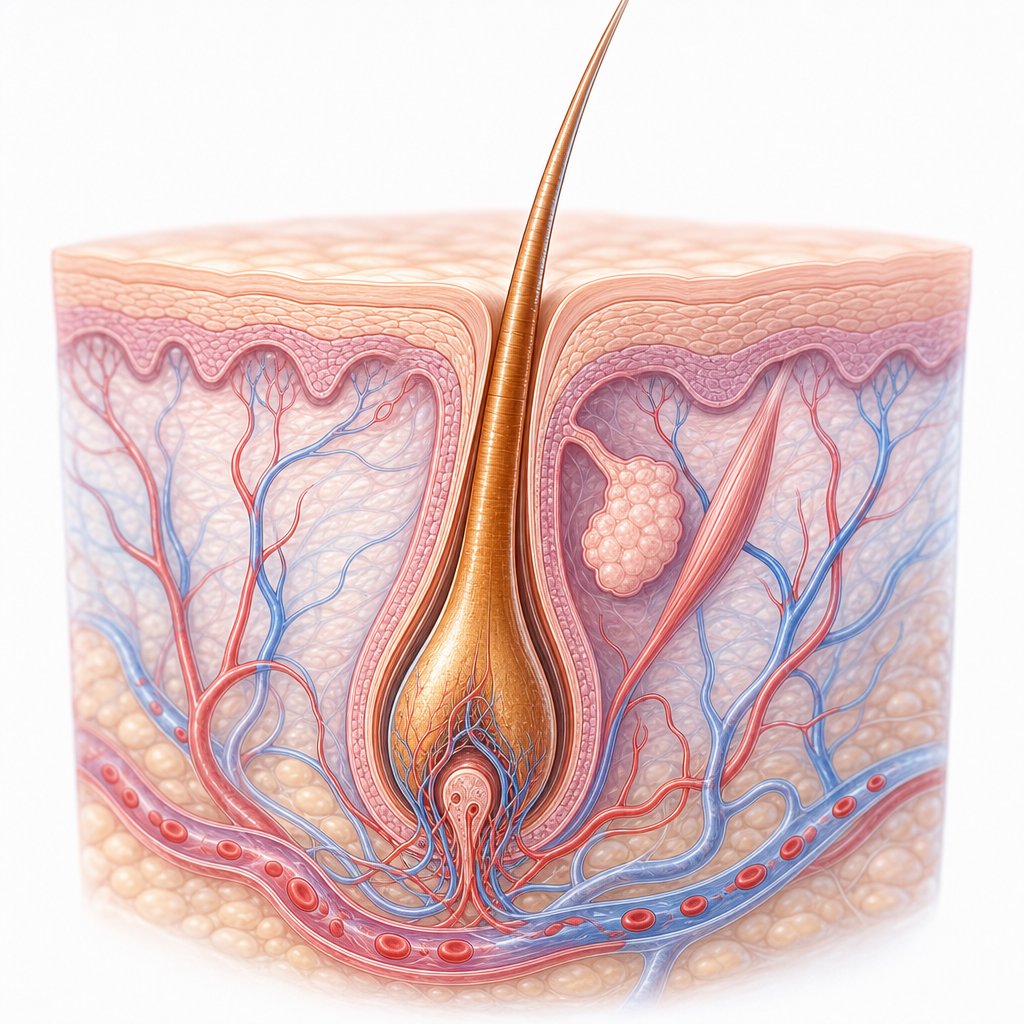
Knowing that iron deficiency triggers hair loss is one thing. Understanding why it happens inside your follicles gives you a much clearer picture of what supplementation actually fixes and how long recovery takes. The relationship between iron and hair growth follows a specific biological chain, and each link matters.
Iron, Ferritin, and Oxygen Delivery to Hair Follicles
Imagine your hair follicle as a tiny factory running at full speed. The cells at its base, called hair matrix keratinocytes, divide faster than almost any other cells in your body. That rapid division demands a constant, heavy supply of oxygen. Here is how iron makes that delivery possible, step by step:
When you consume iron through food or supplements, your body stores the surplus as ferritin, a protein that acts like a reservoir. When demand rises, ferritin releases iron into the bloodstream, where it becomes a building block for hemoglobin, the oxygen-carrying protein packed inside red blood cells. Hemoglobin then transports oxygen from your lungs to every tissue, including the dermal papilla and matrix cells at the root of each hair strand. Once oxygen arrives, it fuels the rapid cell division that physically builds your hair shaft during the active growth phase.
Cut the iron supply, and the entire chain breaks down. Less ferritin means less hemoglobin, which means less oxygen reaching your follicles. Starved of fuel, those matrix cells slow their division, and the follicle shifts prematurely into a resting state. This is the core mechanism behind iron hair growth problems: not damage to the follicle itself, but an energy crisis that forces it offline.
Iron also serves as a cofactor for ribonucleotide reductase, the enzyme that drives DNA replication in rapidly dividing cells. Without enough iron, the follicle's ability to copy genetic material and produce new keratinocytes grinds to a halt. The benefits of iron for hair extend beyond simple oxygen transport into the fundamental machinery of cell growth.
How Iron Deficiency Disrupts the Hair Growth Cycle
Every hair on your head cycles through three distinct phases. When iron stores are adequate, roughly 85-90% of your hairs sit in the active growth phase at any given time. Low ferritin and hair loss become connected when that balance tips, pushing too many follicles into rest simultaneously.
Here is what happens at each stage when iron is insufficient:
- Anagen (growth phase): Normally lasts 2-7 years. Low ferritin shortens this phase because follicles cannot sustain the oxygen-hungry cell division required to keep building the hair shaft. Strands grow for a shorter period, resulting in thinner, weaker hair that never reaches its full potential length.
- Catagen (transition phase): A brief 2-3 week period where the follicle detaches from its blood supply and shrinks. Iron deficiency does not dramatically alter this phase, but follicles enter it prematurely because anagen was cut short.
- Telogen (resting/shedding phase): Lasts about 3 months before the hair falls out and a new strand begins. When ferritin drops, a disproportionate number of follicles get pushed into telogen at the same time. This is telogen effluvium, and it produces the diffuse, all-over thinning characteristic of low ferritin hair loss rather than the patchy or patterned baldness seen in genetic conditions.
The iron benefits for hair become clear when you reverse this process. Restoring ferritin to adequate levels allows follicles to re-enter anagen, resume normal cell division, and begin producing healthy strands again. Your body essentially needs permission, in the form of sufficient iron reserves, to treat hair production as a priority rather than a luxury it cannot afford.
This biological reality also explains why results take months rather than days. Even after iron for hair growth is replenished in your blood, each follicle must complete its current resting phase, re-enter anagen, and physically grow a new strand at roughly one centimeter per month. The fix is happening beneath the surface long before you see it in the mirror.
Is Your Hair Loss Actually Caused by Low Iron
Here is the uncomfortable truth: iron tablets will not help if iron is not your problem. And hair loss has dozens of possible triggers. The biological mechanism is clear, but the real question facing you right now is whether YOUR thinning actually points to an iron issue or something else entirely. Getting this wrong means months of supplementation with zero results.
So how do you tell the difference before spending money on blood work or bottles of supplements? The pattern of your hair loss, the accompanying symptoms, and your personal risk profile all offer strong clues.
Signs Your Hair Loss Points to Iron Deficiency
Iron-deficiency hair loss has a distinct signature. It does not look like every other type of thinning, and recognizing its pattern can save you significant time and frustration. Does iron deficiency cause hair loss that looks a certain way? Yes, and here is what to watch for.
The hallmark is diffuse thinning spread evenly across your entire scalp. You will not see a receding hairline, a widening part concentrated at the crown, or smooth bald patches. Instead, your ponytail feels thinner, your scalp becomes more visible under bright light everywhere, and you notice excessive shedding during washing or brushing, sometimes 150-300 hairs per day rather than the normal 50-100.
Can low iron cause thinning hair that changes texture? Absolutely. Strands often become dry, brittle, and lack their usual shine. You might notice breakage at shorter lengths or hair that refuses to grow past a certain point because shortened anagen phases prevent it from reaching full length.
The strongest indicator, though, is what happens outside your scalp. Iron deficiency rarely shows up as hair loss alone. According to clinical findings reported by GoodRx Health, people with low iron typically experience a cluster of systemic symptoms alongside their shedding:
- Persistent fatigue, feeling run-down or weak even after adequate sleep
- Pale skin, particularly noticeable inside the lower eyelids and nail beds
- Brittle, spoon-shaped, or ridged nails
- Lightheadedness or dizziness, especially when standing quickly
- Feeling cold all the time, particularly in hands and feet
- Shortness of breath during mild exercise
- Restless leg syndrome or unusual cravings for ice or non-food items
If you are checking multiple boxes on that list alongside diffuse hair thinning, could low iron cause hair loss in your case? The probability is high. This is especially true for women of reproductive age, who lose iron monthly through menstruation. A 2022 meta-analysis of 36 studies involving over 10,000 women found that premenopausal women with nonscarring alopecia had significantly lower ferritin levels than healthy controls, with a mean difference of roughly 20 ng/dL. The connection between anemia hair loss and menstruation-related iron depletion is well established in clinical literature.
Men are not immune, but their risk profile differs. Male iron deficiency more commonly stems from gastrointestinal bleeding, poor dietary intake, or chronic conditions rather than menstrual loss. If you are a man experiencing diffuse thinning with fatigue and pallor, iron is still worth investigating, but other causes deserve equal attention.
When Hair Loss Is Probably Not About Iron
Not every type of shedding responds to iron supplementation. If your hair loss follows certain patterns, vitamin deficiency hair loss, including iron, is unlikely to be the primary driver. Recognizing these distinctions prevents you from chasing the wrong solution.
Consider what vitamin deficiency causes hair loss versus what genetics, hormones, or autoimmune conditions cause. The presentation is fundamentally different:
- Androgenetic alopecia (genetic pattern loss): In men, this shows as a receding hairline and thinning at the crown. In women, it appears as a widening part at the top of the scalp with the frontal hairline preserved. It progresses gradually over years, often with a family history. According to the American Academy of Family Physicians, androgenetic alopecia affects 30-50% of men by age 50 and up to 38% of women over 70. Iron tablets alone will not reverse this pattern.
- Alopecia areata (autoimmune patchy loss): Produces smooth, round bald patches that appear suddenly, sometimes overnight. The surrounding scalp looks normal. This is an immune system attack on follicles, not a nutrient deficiency. It affects up to 2% of the population equally across sexes.
- Thyroid-related hair loss: Both hypothyroidism and hyperthyroidism cause diffuse thinning that can mimic iron deficiency. The difference? Thyroid hair loss typically comes with weight changes, temperature sensitivity, mood shifts, or changes in skin dryness rather than the fatigue-pallor-brittle nail cluster of low iron.
- Stress-induced telogen effluvium: A sudden, dramatic shed occurring 2-5 months after a major stressor like surgery, high fever, emotional trauma, or childbirth. While the mechanism is similar to iron-related telogen effluvium, the trigger is identifiable stress rather than nutrient depletion. It typically resolves on its own within 2-6 months once the stressor passes.
Here is where it gets tricky. Hair fall is due to which vitamin deficiency can sometimes overlap with other conditions. You might have mild androgenetic alopecia and low iron making it worse. Thyroid dysfunction can coexist with iron deficiency. This is precisely why guessing is unreliable and blood testing is essential.
Which vitamin deficiency causes hair loss most commonly? Iron tops the list, but deficiencies in vitamin D, B12, folate, and zinc can all contribute to shedding. If your hair loss pattern does not clearly match the iron-deficiency profile described above, or if you lack the accompanying systemic symptoms, the cause may lie elsewhere, and iron tablets will not be your answer.
The only way to move from educated guessing to certainty is through specific blood work. And not just any blood test will do. The standard panels your doctor orders during a routine checkup often miss the early stages of iron depletion that are already affecting your hair.
Blood Tests You Need Before Starting Iron Tablets
A routine blood test at your annual physical probably includes a complete blood count (CBC). You get your results back, hemoglobin looks fine, and your doctor says everything is normal. But here is the problem: your hair could already be starving for iron while your CBC looks perfectly healthy. The disconnect between "clinically normal" and "optimal for hair" is where most people fall through the cracks.
If you suspect hair loss and iron deficiency are connected in your case, you need more than a basic panel. You need a specific set of tests that reveal the full picture of your iron metabolism, not just whether you are anemic.
Which Blood Tests to Request for Hair-Related Iron Status
Walk into your appointment and ask for iron studies, not just a CBC. This panel includes four markers that together tell you exactly where your iron status stands and whether it is adequate for healthy follicle function:
| Test | What It Measures | Why It Matters for Hair |
|---|---|---|
| Serum Ferritin | Iron stored in your body's reserves | The single most important marker for hair-related iron status. Reflects how much iron is actually available for non-essential functions like hair production. |
| Serum Iron | Iron currently circulating in your bloodstream | Shows real-time iron availability but fluctuates throughout the day and after meals. Less reliable alone, but useful in context. |
| TIBC (Total Iron-Binding Capacity) | How much transferrin (iron transport protein) is available to carry iron | High TIBC signals your body is hungry for iron, producing extra transport proteins to grab whatever it can find. Elevated TIBC alongside low ferritin confirms deficiency. |
| Transferrin Saturation % | The percentage of transferrin proteins actually loaded with iron | Low saturation (below 20%) means your transport system is running mostly empty, and tissues including follicles are not receiving adequate supply. |
Why does this matter so much? Because iron deficiency for hair loss develops in stages. Your body prioritizes vital functions first. It will pull iron from storage (dropping ferritin) long before it reduces hemoglobin production. A retrospective study of 155 female alopecia patients found that the corresponding ferritin level for the current definition of female anemia (hemoglobin of 12.0 g/dL) was only 5.1 ng/mL, far below the level needed for healthy hair. In other words, by the time anemia shows up on a standard CBC, your iron stores have been depleted for months or even years.
This is exactly why iron deficiency anemia hair loss represents only the most severe end of the spectrum. Many people experience significant shedding while their hemoglobin remains technically "normal" because their ferritin has quietly dropped into a range that follicles cannot tolerate. If your doctor only checks hemoglobin and declares you fine, the connection between ferritin and hair fall gets missed entirely.
Ferritin Thresholds That Matter for Hair Growth
Here is where things get frustrating. Most labs flag ferritin as "low" only when it drops below 12-15 ng/mL. Your results come back at 20 or 30 ng/mL, the report says "normal," and you assume iron is not your issue. But dermatological research tells a very different story.
A "normal" ferritin level on your lab report does not necessarily mean your ferritin is high enough for healthy hair growth. Clinical normal and follicle-optimal are two different thresholds.
So what does low ferritin cause hair loss at? The evidence points to a range significantly higher than the standard lab cutoff:
- A 2025 cross-sectional study comparing 50 women with telogen effluvium to 50 healthy controls found that TE patients had a mean ferritin of 24.30 ng/mL, while controls averaged 44.78 ng/mL. All controls maintained ferritin above 15 ng/mL, yet the TE group's levels, though technically "normal" in many cases, were clearly insufficient for hair maintenance.
- Research from a tertiary medical center studying 155 female alopecia patients defined iron deficiency as ferritin below 60 ng/mL and found that 70.3% of all female hair loss cases were iron-deficiency related. The researchers suggested redefining the adequate ferritin level for hair growth at 40-60 ng/mL, with a corresponding hemoglobin of 13.0-13.8 g/dL.
- A ferritin cut-off of 41 ng/mL has been shown to yield 98% sensitivity and 98% specificity for detecting iron deficiency, compared to only 59% sensitivity at the traditional 10-15 ng/mL threshold.
What does this mean practically? If you are experiencing diffuse hair shedding and your ferritin sits anywhere below 40-60 ng/mL, iron depletion may be contributing to your hair loss even though your lab report shows no red flags. A ferritin supplement for hair loss becomes relevant at these sub-optimal but technically "normal" levels.
The relationship between anemia and hair loss is well documented, but the more subtle connection, iron depletion without full-blown anemia causing shedding, is what most practitioners overlook. You do not need to be anemic to lose hair from low iron. You just need ferritin below the threshold your follicles require to sustain active growth.
One important caveat: ferritin is also an acute-phase reactant, meaning it rises during inflammation, infection, or liver disease regardless of actual iron stores. If you have an inflammatory condition, your ferritin might read artificially high while your true iron availability remains low. In these cases, your doctor may need to interpret ferritin alongside CRP (C-reactive protein) to get an accurate picture.
Armed with the right test results and an understanding of what the numbers actually mean for your hair, the next decision becomes which form of iron supplement gives you the best chance of raising those levels efficiently without unnecessary side effects.

Comparing Iron Supplement Types for Hair Growth
Your blood work confirms low ferritin. Your doctor agrees supplementation makes sense. You walk into a pharmacy or open an online store and face a wall of options: ferrous sulfate, ferrous gluconate, bisglycinate, heme iron polypeptide, tablets, capsules, liquids, gummies. Which one actually raises your ferritin efficiently enough to support iron supplement hair growth without making you miserable in the process?
Not all iron supplements for hair are created equal. They differ in how much elemental iron they deliver per dose, how well your gut absorbs that iron, and how likely they are to cause the nausea and constipation that make people quit before results appear. Choosing the best iron tablets for hair loss means balancing bioavailability against tolerability for your specific situation.
Ferrous Sulfate vs. Ferrous Gluconate vs. Bisglycinate vs. Heme Iron
The form of iron inside your supplement determines how much actually reaches your bloodstream. A 2024 retrospective clinical study comparing multiple iron forms found that conventional oral iron salts have bioavailability of only 10-15%, with up to 50% of patients reporting gastrointestinal side effects. Newer chelated forms and novel delivery systems aim to improve both numbers.
Here is how the most common iron tablets for hair growth stack up:
| Iron Form | Typical Elemental Iron Per Dose | Relative Bioavailability | Common GI Side Effects | Best Suited For |
|---|---|---|---|---|
| Ferrous Sulfate | 65 mg (from 325 mg tablet) | High (10-15% absorption rate) | Nausea, constipation, stomach cramps, black stools. Reported in ~30% of users. | People who tolerate GI effects well and need rapid, cost-effective repletion. The most studied and widely prescribed form. |
| Ferrous Gluconate | 35-38 mg (from 325 mg tablet) | Moderate (slightly lower than sulfate) | Milder GI effects than sulfate due to lower elemental iron per dose. Better tolerated overall. | People who experienced side effects with ferrous sulfate but still want a conventional, affordable option. |
| Ferrous Bisglycinate (Iron Glycinate) | 25-30 mg per capsule | High (2-4x better absorbed than sulfate at equivalent doses) | Significantly fewer GI complaints. The clinical study reported 23% of bisglycinate patients experienced side effects vs. 31% for fumarate. | People with sensitive stomachs, those who failed other forms, and anyone prioritizing gentle long-term supplementation for hair regrowth. |
| Heme Iron Polypeptide | 12-15 mg per capsule | Very high (absorbed via a different intestinal pathway than non-heme iron, unaffected by food inhibitors) | Minimal. Rarely causes constipation or nausea because it bypasses the oxidative reactions that irritate the gut lining. | People who cannot tolerate any non-heme form, those with inflammatory bowel conditions, or anyone taking medications that interfere with standard iron absorption. |
One of the key benefits of ferrous gluconate is its gentler GI profile compared to sulfate, making it a practical middle ground when cost matters but tolerability is a concern. For iron tablets for hair specifically, though, bisglycinate has gained traction among dermatologists because its chelated structure allows effective ferritin repletion at lower doses, meaning fewer side effects over the months-long supplementation period hair regrowth demands.
Research supports this advantage. Studies have demonstrated therapeutic equivalence between 30 mg of ferrous bisglycinate and 120 mg of ferrous sulfate in preventing iron deficiency anemia, meaning you can achieve similar results with roughly one-quarter the elemental iron and far less gut irritation.
Choosing the Right Format for Your Needs
Beyond the iron form itself, the physical format of your supplement affects absorption, compliance, and ultimately whether you stick with it long enough to see hair results. Here is what each delivery method offers:
- Tablets and hard capsules: The most common and cost-effective format. They typically contain higher concentrations of elemental iron per dose and have a long shelf life. Standard tablets work well for people comfortable swallowing pills daily.
- Delayed-release or enteric-coated capsules: Designed to dissolve further down the digestive tract, reducing stomach irritation. However, some research suggests this may slightly reduce absorption since iron is best absorbed in the upper duodenum.
- Liquid iron: Absorbs faster and allows flexible dosing. Ideal for people who struggle swallowing pills or need precise dose adjustments. The downside? It can stain teeth and often has a metallic taste.
- Soft capsules (softgels): The oil-based matrix can reduce direct contact between iron and the stomach lining, potentially lowering irritation. A good option for those who find standard tablets harsh.
- Gummy formats: Dramatically improve compliance because they are pleasant to take daily. This matters for hair growth, where consistency over 6+ months determines success. The trade-off is that gummies typically contain less elemental iron per serving, so they work better for maintenance than aggressive repletion.
The best iron supplement for hair loss is ultimately the one you will take consistently for half a year or longer. A theoretically superior form that sits unopened in your cabinet because it makes you nauseous is worse than a gentler option you take reliably every day.
For supplement brands and private label sellers developing iron products targeting the hair health market, this diversity of consumer needs creates real opportunity. Working with an experienced OEM/ODM manufacturer like ZhuFeng enables customized formulations across multiple delivery formats, from traditional tablets and bisglycinate capsules to compliance-friendly gummies and oral liquids. The ability to tailor both the iron form and the product format allows brands to differentiate their offerings based on bioavailability research and specific consumer preferences in the growing hair supplement niche.
Whichever form and format you choose, the iron inside your supplement is only as effective as your body's ability to absorb it. And several everyday habits can either double your absorption or block it almost entirely.
Maximizing Iron Absorption for Better Results
You have picked the right iron form, settled on a format you can tolerate, and committed to the long game. But here is something most people never consider: the same 65 mg tablet can deliver vastly different amounts of usable iron depending on what you eat, drink, and take alongside it. Your daily habits either amplify absorption or quietly sabotage it.
When the goal is raising ferritin to support hair regrowth, every percentage point of absorption matters. A balanced diet for hair growth is not just about eating iron-rich foods. It is about creating the right internal environment for that iron to actually reach your bloodstream and, eventually, your follicles.
Nutrients That Boost Iron Absorption
Vitamin C has long been considered the gold standard absorption enhancer for non-heme iron. It works by reducing ferric iron (Fe3+) to ferrous iron (Fe2+), the form your intestinal cells can actually transport. Pairing your iron tablet with a glass of orange juice or a vitamin C supplement is standard advice you will hear from most practitioners.
However, the picture is more nuanced than "always add vitamin C." A 2020 randomized clinical trial of 440 adults with iron deficiency anemia found that oral iron supplements alone were equivalent to iron plus 200 mg of vitamin C in improving hemoglobin recovery and ferritin levels over 8 weeks. The between-group difference in hemoglobin change was just 0.16 g/dL, well within the equivalence margin. This suggests that for people already taking therapeutic iron doses, adding vitamin C may not provide the dramatic boost many expect.
That said, vitamin C still plays a role when you are consuming iron with meals or from plant-based sources, where food-based inhibitors are present. Other strategies that support absorption include:
- Taking iron on an empty stomach (30-60 minutes before a meal) when tolerable, as this maximizes contact with the duodenum without interference from food compounds
- Cooking in cast iron cookware, which can increase the iron content of acidic foods like tomato sauce
- Consuming heme iron sources (meat, poultry, fish) alongside non-heme supplements, since heme iron enhances non-heme absorption through a mechanism called the "meat factor"
- Including vitamin B12 supplements for hair growth and folic acid in your regimen, as these B vitamins support red blood cell production and work synergistically with iron to restore oxygen delivery to follicles
When thinking about what vitamins are good for hair growth alongside iron, the answer is anything that supports healthy red blood cell formation. Folic acid in hair growth plays an indirect but meaningful role by ensuring your body can produce the cells that carry iron-loaded hemoglobin to your scalp. These vitamins that help hair growth do not replace iron, but they ensure the iron you absorb gets put to work efficiently.
What Blocks Iron Absorption and When to Avoid It
Equally important is knowing what to keep away from your iron dose. Certain foods and supplements compete with iron for absorption or bind to it in ways that make it unavailable. According to the Canadian Digestive Health Foundation, non-heme iron absorption can be significantly reduced by common dietary compounds.
Space your iron tablet at least 2 hours away from these absorption blockers:
- Calcium supplements and dairy products — calcium competes directly with iron for the same intestinal transport pathways
- Coffee and tea — tannins and polyphenols bind iron in the gut, forming insoluble complexes that pass through unabsorbed
- Whole grains, bran, and legumes — phytates (phytic acid) chelate iron and reduce its bioavailability
- Antacids and proton pump inhibitors — iron requires an acidic stomach environment to convert to its absorbable ferrous form; reducing stomach acid impairs this conversion
- Zinc supplements — high-dose zinc competes with iron for absorption when taken simultaneously
This does not mean you need to eliminate these foods from your life. It simply means timing matters. Take your iron first thing in the morning on an empty stomach, then have your coffee an hour or two later. Save your calcium supplement or yogurt for a different time of day. These small scheduling adjustments can meaningfully improve how much iron actually enters your system.
Dosage Considerations for Hair-Related Supplementation
Therapeutic doses for correcting iron deficiency typically range from 50 to 200 mg of elemental iron daily, but the right dose for you depends entirely on your blood test results and your doctor's guidance. More is not better with iron. Excess supplementation causes oxidative stress, GI distress, and in severe cases, organ damage.
One emerging strategy worth discussing with your provider is alternate-day dosing. A 2025 meta-analysis of 11 randomized trials (N=1,014) found that alternate-day iron supplementation produced hemoglobin outcomes comparable to daily dosing, with pooled mean hemoglobin values of 12.52 g/dL for alternate-day versus 12.84 g/dL for daily regimens. The rationale? Each iron dose triggers a rise in hepcidin, a hormone that suppresses iron absorption for approximately 24-48 hours. By dosing every other day, you allow hepcidin to return to baseline, potentially absorbing a greater percentage of each dose.
Guidelines from the American College of Gastroenterology and the European Hematology Association both recommend alternate-day dosing when daily iron causes intolerable GI side effects. For hair-related supplementation, where you need months of consistent intake, this approach may improve both tolerability and long-term adherence.
A critical reminder: do not self-prescribe iron without testing. Vitamin supplements for hair growth are widely available over the counter, but iron is not like a multivitamin you can take casually. Your body has no efficient mechanism to excrete excess iron, and supplementing when you do not need it creates real health risks. Get tested, confirm your levels, work with your doctor on dosing, and then commit to the timeline. Speaking of timelines, how long should you actually expect to wait before seeing results in the mirror?

Realistic Timeline for Hair Regrowth With Iron Supplements
You have confirmed low ferritin, chosen your supplement, and optimized your absorption strategy. The hardest part begins now: waiting. Hair regrowth is painfully slow, and without honest expectations, most people abandon supplementation too early or assume it is not working when it actually is.
So how long do iron tablets take to stop hair loss? The short answer is 3 to 6 months before visible improvement, with full density recovery taking up to a year. But the journey has distinct phases, and knowing what to expect at each stage keeps you from quitting at month two when nothing looks different yet.
Month-by-Month Expectations After Starting Iron Tablets
Hair grows approximately 1 cm per month. Even after your follicles reactivate, it takes time for new strands to reach a length where you can actually see them. The iron for hair growth before and after transformation is real, but it unfolds gradually across predictable stages.
Here is what the supplementation journey typically looks like when iron deficiency is confirmed as the cause:
- Weeks 1-4: Internal repair, no visible hair changes. Your energy levels may improve. Fatigue lifts, brain fog clears, and you might notice better exercise tolerance. Blood ferritin levels begin climbing on lab work. However, your hair looks exactly the same because follicles are still completing their current telogen (resting) phase. Continued shedding during this period is completely normal and does not mean supplementation has failed.
- Months 2-3: Shedding begins to slow. This is the first meaningful signal. You notice fewer hairs in the shower drain, less accumulation on your brush, and reduced fallout when running fingers through your hair. Follicles are beginning their transition back into anagen (growth phase), but new strands are still forming beneath the scalp surface. According to Wimpole Clinic, it generally takes 3 to 6 months of consistent iron supplementation before hair growth starts to visibly improve, with the exact timeline depending on deficiency severity and absorption efficiency.
- Months 4-6: New growth becomes visible. Baby hairs appear along your hairline, part line, and temples. Existing strands may feel stronger and less brittle. Your ponytail stops getting thinner. This is when most people first feel reassured that their iron supplement does help hair growth. A London Dermatology Centre review notes that early regrowth typically becomes noticeable within four to six months, with fine new hairs indicating follicles have become active again.
- Months 6-12: Noticeable improvement in density and thickness. If iron deficiency was the primary cause of your shedding, this is where the payoff arrives. Hair volume improves, the scalp becomes less visible, and strand quality returns to its pre-deficiency state. Full density restoration can take nine to twelve months or longer depending on how depleted your stores were and how long the deficiency persisted before treatment.
Will iron supplements help hair growth on a faster timeline? Unfortunately, no. Hair biology cannot be rushed. Each follicle operates on its own internal clock, and even with optimal ferritin levels restored, the physical process of growing a strand from root to visible length takes months. Patience is not optional here; it is the treatment itself.
Signs Your Iron Tablets Are Working
Waiting months for visible regrowth is difficult. The good news? Several early indicators appear well before you see new length in the mirror. These signs iron pills are working for hair growth give you confidence to stay the course:
- Reduced hair fall count: Fewer strands in your brush, on your pillow, and circling the drain. If you were losing 200+ hairs daily and that drops to 80-100, your follicles are responding.
- Improved nail strength: Nails and hair share similar keratin-based growth mechanisms. Stronger, less brittle nails often signal that iron is reaching peripheral tissues, including your scalp.
- Better energy and reduced fatigue: This typically improves within the first few weeks, often before any hair changes. It confirms your body is absorbing and utilizing the supplemental iron.
- Improved hair texture on existing strands: Hair that was dry, dull, and straw-like may regain some shine and flexibility as oxygen delivery to follicles normalizes. New growth emerging from the root will be healthier than the older, iron-starved portions of the same strand.
- Scalp comfort: Some people with iron deficiency report scalp tenderness or sensitivity. As levels normalize, this discomfort often resolves.
Does iron pills help with hair growth if you see these signs but not dramatic regrowth yet? Yes. These markers confirm the biological correction is underway. Visible density follows.
Here is the critical caveat: if you have maintained ferritin levels above 50-70 ng/mL for six consecutive months and see zero reduction in shedding, zero improvement in texture, and no early regrowth signs, iron deficiency is likely not your primary issue. At that point, do iron supplements help hair grow in your specific case? Probably not as a standalone solution. Other causes, whether hormonal, genetic, thyroid-related, or autoimmune, need investigation. A dermatologist or trichologist can help identify what else may be at play.
This timeline also assumes you are taking your supplement consistently, optimizing absorption, and not inadvertently blocking it with calcium or coffee at the wrong times. Gaps in compliance reset the clock. Treat supplementation like a daily non-negotiable for the full duration, not something you remember three days a week.
Knowing when iron tablets work is valuable. Equally important is knowing when they should not be taken at all, because for certain people, supplementing iron without medical need creates serious health risks rather than thicker hair.
Who Should Avoid Iron Tablets and Final Recommendations
Iron tablets are not a risk-free supplement you can take casually "just in case." Unlike water-soluble vitamins that your body flushes out when it has enough, iron accumulates. Your body has no efficient mechanism to excrete excess iron once it is absorbed. This makes unnecessary supplementation genuinely dangerous, not just wasteful. For certain people, the question is not whether do iron supplements help hair growth, but whether taking them could cause organ damage.
When Iron Tablets Can Do More Harm Than Good
Several groups should avoid iron supplementation for hair growth entirely, or only proceed under strict medical supervision. Can iron tablets cause hair loss or other harm? Not directly, but supplementing when you should not creates problems far worse than thinning hair.
Hemochromatosis (hereditary iron overload). This genetic condition causes your body to absorb too much iron from food, even without supplements. Roughly 1 in 200 people of European ancestry are affected, and 10-14% carry relevant genetic mutations. Adding iron tablets on top of already-elevated stores accelerates iron deposition in the liver, heart, and pancreas. Complications include cirrhosis, cardiomyopathy, diabetes, and liver cancer. The Mayo Clinic explicitly advises people with hemochromatosis to avoid iron supplements and iron-containing multivitamins entirely. If you have a family history of hemochromatosis or unexplained high ferritin, genetic testing for HFE mutations should precede any supplementation.
Thalassemia and transfusion-dependent anemias. People receiving regular blood transfusions for conditions like thalassemia or sickle cell disease already accumulate excess iron from the transfused red blood cells. Their treatment often involves iron removal through chelation therapy, not supplementation. Adding iron tablets in this context is counterproductive and harmful.
People with normal or high ferritin who assume iron will boost growth. This is the most common mistake. You read that iron helps hair, so you start supplementing without testing. But if your ferritin is already at 80, 100, or 150 ng/mL, additional iron provides zero hair benefit. Research consistently shows that iron supplementation only reverses shedding caused by deficiency. Can iron pills make your hair grow when your stores are already adequate? No. You are simply loading your body with a mineral it cannot safely eliminate. Over time, excess iron generates reactive oxygen species that damage cells through oxidative stress, a process called ferroptosis.
People on medications that interact with iron. Iron significantly reduces absorption of several common drugs, including levothyroxine (thyroid medication), tetracycline and fluoroquinolone antibiotics, bisphosphonates for osteoporosis, and levodopa for Parkinson's disease. If you take any of these, unsupervised iron supplementation can undermine treatments for conditions far more serious than hair thinning. A minimum four-hour gap between iron and these medications is required, and your prescribing doctor should be involved in the decision.
The bottom line: is iron good for hair growth? Only when your body genuinely needs more of it. Without confirmed deficiency, supplementation carries risk with no upside. Iron overload can damage the liver, heart, pancreas, and endocrine glands, and these effects develop silently over years before symptoms appear.
Your Decision Framework for Iron and Hair Growth
After everything covered in this article, here is the complete decision pathway distilled into five clear steps. Do iron tablets help hair growth for you? Walk through this framework to find out:
- Get tested first. Request a full iron panel including serum ferritin, serum iron, TIBC, and transferrin saturation. Do not rely on a standard CBC alone. A "normal" hemoglobin does not rule out ferritin levels too low for healthy hair.
- Interpret your results correctly. If ferritin is below 40-60 ng/mL and you have diffuse thinning with systemic symptoms (fatigue, pallor, brittle nails), iron deficiency is likely contributing to your hair loss. If ferritin is above 70 ng/mL, iron is almost certainly not your issue, and supplementation will not help.
- If ferritin is low, supplement with the right form. Choose based on your tolerance: ferrous sulfate for cost-effective rapid repletion, bisglycinate for gentler long-term use, or heme iron if you cannot tolerate non-heme forms. Match the format (tablet, capsule, liquid, gummy) to what you will actually take consistently for months.
- Optimize absorption with co-factors. Take iron on an empty stomach when possible. Space it away from calcium, coffee, tea, and antacids by at least two hours. Consider alternate-day dosing if daily intake causes GI distress. Support red blood cell production with adequate B12 and folate.
- Give it 6+ months and retest. Expect reduced shedding by months 2-3, visible new growth by months 4-6, and meaningful density improvement by months 6-12. Recheck ferritin at the 3-month mark to confirm levels are rising. If ferritin reaches optimal range and no improvement occurs after 6 months, investigate other causes with a dermatologist.
Do iron supplements make your hair grow if you follow this framework and deficiency was the cause? The evidence strongly says yes. But the framework only works when you respect the conditional nature of the solution. Iron is not a hair vitamin for everyone. It is a targeted correction for a specific metabolic problem.
Iron tablets are a targeted solution for a specific deficiency, not a universal hair growth hack. Test before you supplement, confirm deficiency before you commit, and investigate other causes if adequate iron levels do not resolve your shedding within six months.
Does iron help with hair growth broadly? The science is clear: it does, but only within the boundaries of deficiency-driven shedding. Can iron help with hair loss from genetics, autoimmune conditions, or hormonal imbalances? Not as a standalone treatment. This distinction is what separates people who see real regrowth from those who spend a year on supplements that were never going to address their actual problem.
For supplement brands and private label sellers developing products in this space, the growing consumer awareness around iron-for-hair creates meaningful market opportunity. Formulations that combine iron with synergistic co-factors like vitamin C, biotin, folic acid, and zinc in a single evidence-based product can address the full nutrient ecosystem hair follicles need. Partnering with a scalable OEM/ODM manufacturer like ZhuFeng, which offers customized formulations across hard capsules, tablets, soft capsules, gummies, and oral liquids, enables brands to bring differentiated iron hair supplements to market efficiently, backed by flexible production that adapts to evolving research on optimal delivery formats and ingredient combinations.
Your hair is telling you something. The answer might be iron, or it might be something else entirely. Either way, the path forward starts with a blood test, not a bottle off the shelf.
Frequently Asked Questions About Iron Tablets and Hair Growth
1. How long does it take for iron tablets to stop hair loss?
Most people notice reduced shedding within 2-3 months of consistent supplementation, with visible new growth appearing around months 4-6. Full density recovery typically takes 6-12 months. The timeline depends on how severe your deficiency was, how well you absorb the supplement, and whether iron deficiency was the primary cause. Early signs that iron is working include improved energy, stronger nails, and fewer hairs in your brush before visible regrowth appears.
2. What ferritin level is needed for healthy hair growth?
While most labs flag ferritin as low only below 12-15 ng/mL, dermatological research suggests hair follicles need ferritin above 40-70 ng/mL to function optimally. A 2025 cross-sectional study found women with telogen effluvium averaged ferritin of 24.30 ng/mL compared to 44.78 ng/mL in healthy controls. If your ferritin falls below 40-60 ng/mL and you have diffuse thinning with fatigue or brittle nails, iron depletion may be contributing to your hair loss even if your lab report says normal.
3. Which type of iron supplement is best for hair loss?
Ferrous bisglycinate is often recommended for hair-related supplementation because it offers high bioavailability (2-4x better than ferrous sulfate at equivalent doses) with significantly fewer gastrointestinal side effects. Since hair regrowth requires 6+ months of consistent use, tolerability matters as much as potency. Ferrous sulfate remains effective and affordable for those who tolerate it well. Heme iron polypeptide suits people with sensitive stomachs or absorption issues. For brands developing iron hair supplements, OEM/ODM manufacturers like ZhuFeng offer customized formulations across tablets, capsules, gummies, and liquids to match different consumer needs.
4. Can taking iron supplements cause hair loss?
Iron supplements themselves do not cause hair loss. However, taking iron when you do not need it poses serious health risks including organ damage from iron overload, since your body cannot efficiently excrete excess iron. If your ferritin is already normal or high, supplementation provides zero hair benefit and only adds toxicity risk. Additionally, some people experience an initial increase in shedding during the first weeks of supplementation as follicles transition phases, which is temporary and not caused by the iron itself.
5. Can men experience hair loss from iron deficiency?
Yes, though it is less common than in women. Male iron deficiency typically stems from gastrointestinal bleeding, poor dietary intake, intense exercise, or chronic conditions rather than menstrual loss. The presentation is the same: diffuse thinning across the entire scalp accompanied by fatigue, pallor, and brittle nails. If a man experiences this pattern rather than the classic receding hairline of androgenetic alopecia, iron studies are worth requesting. The same ferritin thresholds of 40-70 ng/mL apply regardless of sex.