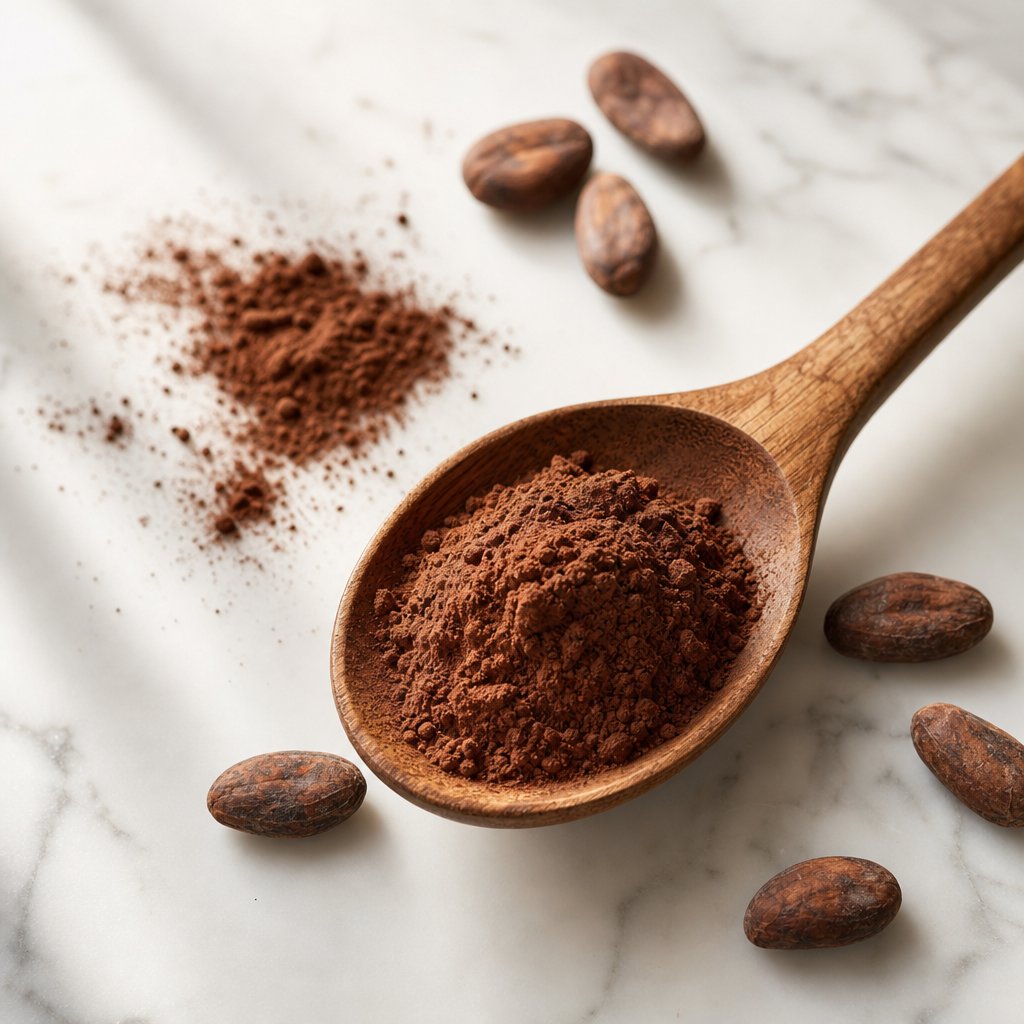
Does Cocoa Powder Have Dairy in It
The Short Answer About Cocoa Powder and Dairy
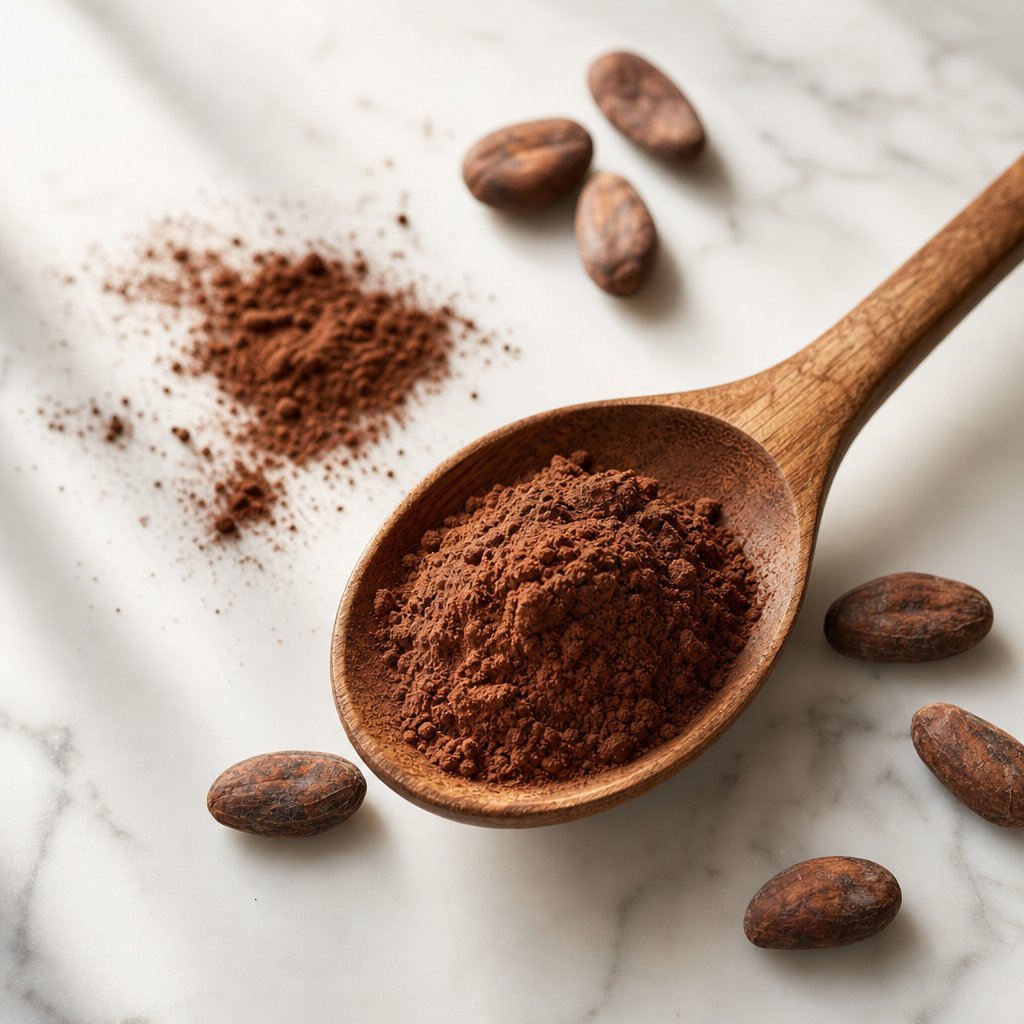
No, pure cocoa powder does not have dairy. It is a single-ingredient plant product made entirely from cacao beans. At a compositional level, unsweetened cocoa powder contains only ground cacao solids — the dry material left after cocoa butter (the fat portion) is pressed out of the bean. There is no milk, no cream, no whey, and no lactose anywhere in the picture. So is cocoa powder dairy free? Absolutely.
Pure, unsweetened cocoa powder is inherently dairy-free — it contains only ground cacao solids with the fat removed.
When you pick up a container of pure cocoa powder and flip it over, the ingredient list should read one item: cocoa. Nothing else. It is not a dairy product, has never been derived from an animal source, and requires zero milk-based inputs during production. Whether you are managing a milk allergy, following a vegan diet, or simply trying to avoid lactose, plain cocoa powder is safe ground.
Why This Question Comes Up So Often
If the answer is that straightforward, why do so many people ask whether cocoa contains dairy? Three common sources of confusion drive this search.
First, hot cocoa mixes sit right next to pure cocoa powder on store shelves, and most of them do contain milk powder, whey, or casein. Shoppers grab what looks like cocoa, scan the label, spot dairy ingredients, and assume all cocoa products are the same. They are not.
Second, the term "cocoa butter" trips people up. Hearing the word "butter" naturally triggers an association with dairy butter. In reality, cocoa butter is a plant fat extracted from cacao beans — it has nothing to do with cow's milk. Yet the name alone is enough to make someone question whether does cocoa contain dairy at some stage of processing.
Third, many finished chocolate products — milk chocolate bars, chocolate-flavored protein powders, chocolate baking chips — do include dairy. When you have spent years reading "contains milk" on chocolate items, it is easy to assume the base ingredient carries that same risk.
This article goes deeper than a simple yes-or-no. You will learn exactly how cocoa powder is manufactured, where dairy could theoretically enter the supply chain through cross-contamination, how to read labels for hidden milk-derived ingredients, and which brands you can trust. If allergen safety matters to you, the details ahead are worth your time.
How Cocoa Powder Is Made and Where Dairy Could Enter
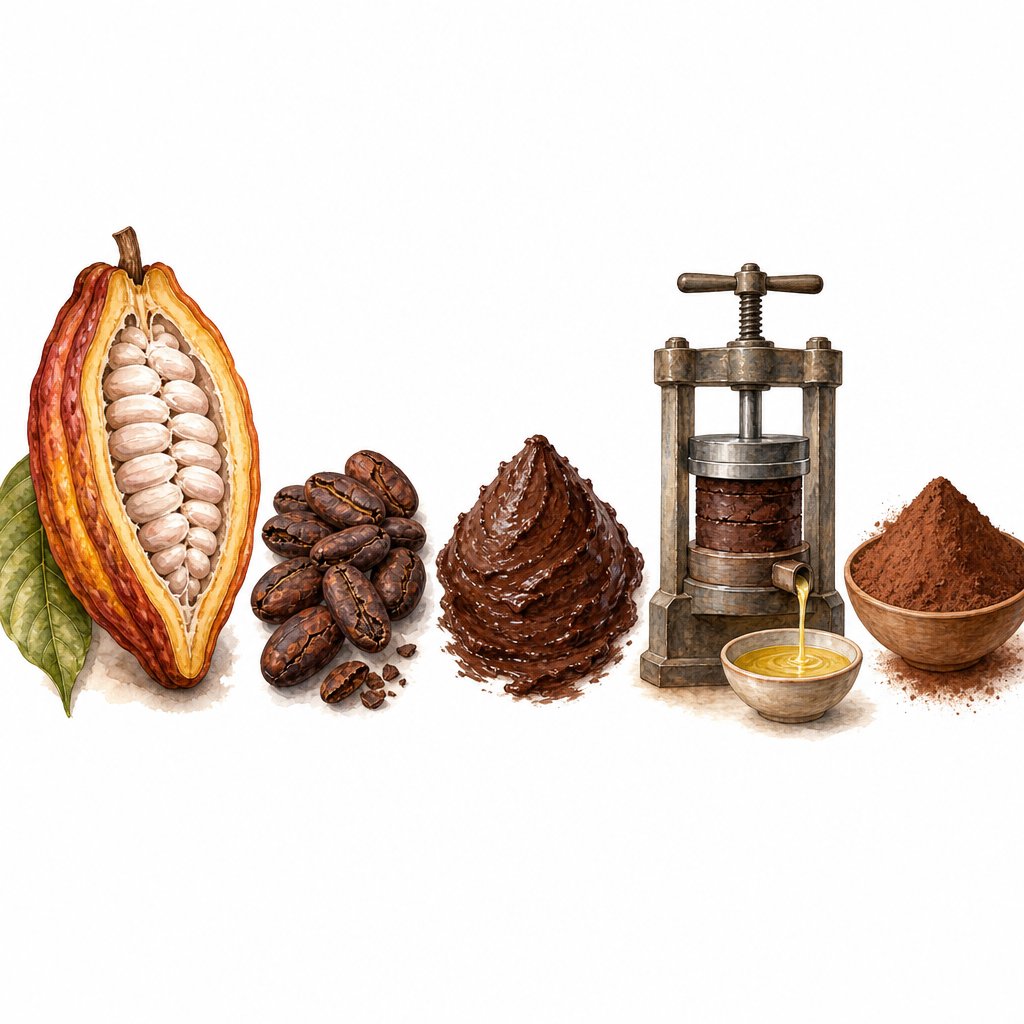
Understanding what is cocoa powder at a molecular level starts with understanding how it is made. The production journey from tropical fruit to fine brown powder involves only heat, pressure, and mechanical force applied to a plant seed. No animal-derived ingredient enters the process at any point. Here is exactly how it works.
From Cacao Bean to Cocoa Powder
Cocoa powder begins its life inside a football-shaped pod growing on a Theobroma cacao tree. Each pod holds 30 to 50 seeds surrounded by sweet, white pulp. The transformation from raw seed to finished powder follows a precise sequence of steps — all of them purely physical or thermal in nature.
- Harvesting and cleaning — Ripe pods are carefully cut from the tree, split open, and the wet beans are scooped out. Foreign material is removed, and the beans are inspected for quality. The International Cocoa Organization (ICCO) notes that the inside of an undamaged cocoa bean is clean in all respects and will remain so with proper storage.
- Fermentation — Beans are piled together (often in wooden boxes or on banana leaves) and left to ferment for 36 to 72 hours. Microbial activity breaks down the surrounding pulp and triggers the chemical precursors of chocolate flavor inside the bean. Only naturally occurring yeasts and bacteria are involved.
- Drying — Moisture content drops from roughly 55% down to about 7.5% through sun-drying or mechanical dryers. This stabilizes the beans for storage and transport.
- Roasting — Dried beans are roasted at carefully controlled temperatures to develop flavor compounds. Think of it like roasting coffee beans — heat transforms the chemistry inside the seed, but nothing is added.
- Winnowing — The thin outer shell is cracked away from the inner meat of the bean, called the nib. This is a purely mechanical separation.
- Grinding into cocoa liquor — Nibs are ground under friction and heat until the cell walls break down, releasing the natural fat (cocoa butter) and forming a thick, dark paste called cocoa liquor. Despite the name, it contains no alcohol — and no dairy.
- Pressing — Cocoa liquor is pumped into a hydraulic press operating at pressures up to 550 bars. This squeezes out the cocoa butter, leaving behind a dry, compressed disc called cocoa cake.
- Pulverizing — The cocoa cake is cooled, broken apart, and milled into a fine powder. The finished product is then tempered (a controlled cooling step) so the remaining traces of cocoa butter crystallize into a stable form, keeping the powder soft and flowable.
That is the complete cocoa ingredients list for what ends up in your pantry: cacao solids, milled to a powder. Every stage involves only the bean itself, heat, and mechanical equipment. No milk, cream, whey, or any other dairy component is introduced. What is unsweetened cocoa powder? It is simply the result of this process — nothing more, nothing less.
Does Dutch Processing Add Dairy
You may have noticed two types of cocoa powder on store shelves: natural and Dutch-processed. The difference raises a fair question — does that extra processing step sneak in any dairy?
It does not. Dutch processing (also called alkalization) involves treating the cocoa material with an alkaline solution to neutralize its natural acidity. Common alkalizing agents include potassium carbonate, calcium carbonate, and sodium hydroxide — all mineral-based compounds, none derived from milk. The process was invented in the Netherlands in the 19th century to produce a milder flavor and darker color, and it remains a purely chemical adjustment to pH.
Natural cocoa powder typically has a pH around 5.0 to 6.0, giving it a sharp, fruity bite. Dutch-processed versions range from pH 7.0 up to 8.0 or higher, resulting in a smoother, more rounded chocolate flavor and colors that span from deep reddish-brown to near-black. The higher the alkalization, the more water the powder absorbs during baking — a useful detail for recipes, but irrelevant to allergen safety.
So what's in cocoa powder after Dutch processing? The same single plant ingredient, just with an adjusted pH. No dairy enters the equation whether you choose natural or alkalized varieties. The cocoa powder ingredients remain identical from an allergen standpoint: ground cacao solids, period.
This purely plant-based manufacturing chain is what makes cocoa powder inherently safe for dairy-free diets. The real risk does not come from how cocoa powder is made — it comes from what gets mixed in afterward, or what shares the production line. Those are different problems entirely.
Cocoa Powder vs Hot Cocoa Mix vs Drinking Chocolate
Imagine you are standing in the grocery aisle, staring at a wall of brown-packaged products. One says "cocoa powder." Another says "hot cocoa mix." A third says "drinking chocolate." They all look like chocolate powder, they all make warm drinks, and they all sit on the same shelf. So what is chocolate powder, really? The answer depends entirely on which of these three products you are holding — and only one of them is guaranteed dairy-free by nature.
Pure Cocoa Powder vs Hot Cocoa Mix
Pure cocoa powder is a single-ingredient product: ground cacao solids. No sugar, no milk, no additives. Does cocoa powder have sugar? Not if it is labeled "unsweetened." It is bitter, intensely chocolatey, and designed to be used as a raw ingredient in recipes or mixed into beverages where you control what else goes in.
Hot cocoa mix is a completely different product dressed in similar packaging. It is a pre-blended convenience powder engineered to dissolve in hot water or milk and taste like a finished drink immediately. The chocolate powder ingredients in a typical hot cocoa mix include powdered milk, whey, sugar, cocoa powder (often listed third or fourth), cornstarch, and sometimes artificial flavors. A standard homemade hot cocoa mix recipe calls for 2.5 cups of powdered milk to just 1 cup of cocoa powder — meaning dairy is the dominant ingredient by volume. Commercial packets from major brands follow the same ratio or lean even heavier on milk solids.
This is where most confusion about whether chocolate powder has dairy originates. People buy a hot cocoa mix, see "milk" on the label, and assume all cocoa products carry the same risk. They do not. The cocoa powder inside that mix is still dairy-free — it is everything else blended around it that introduces milk.
Where Drinking Chocolate Fits In
Drinking chocolate occupies a third category that further muddies the waters. Unlike cocoa powder (which has the fat removed) and unlike hot cocoa mix (which is a pre-sweetened blend), drinking chocolate is made from real, whole chocolate — finely ground or shaved — that still contains its cocoa butter. As Martha Stewart notes, drinking chocolate is designed to be melted into hot milk for a thick, velvety beverage closer to liquid ganache than a light cup of cocoa.
Does drinking chocolate have dairy? It depends on the brand. Some drinking chocolates are made purely from ground dark chocolate and sugar — making them dairy-free. Others add milk powder, cream powder, or milk fat to boost richness and improve dissolvability. You cannot assume either way without reading the label. Is chocolate powder vegan in this category? Only if the specific product uses dairy-free dark chocolate as its base.
The texture difference is notable too. Cocoa powder produces a lighter, thinner drink because it lacks fat. Drinking chocolate creates something thick and indulgent because it retains cocoa butter. Hot cocoa mix lands somewhere in between, relying on powdered milk and sometimes coconut oil for body.
How to Tell Them Apart on Store Shelves
The fastest way to identify what you are looking at is to flip the package over and count the ingredients. One ingredient means pure cocoa powder. Two to three ingredients (typically cocoa and sugar, or chocolate and sugar) usually indicates a dairy free cocoa mix or a simple drinking chocolate. A long list featuring milk powder, whey, non-fat milk solids, or casein means you are holding a hot cocoa mix that does contain dairy.
Here is a side-by-side comparison to make the differences clear:
| Product Type | Typical Ingredients | Contains Dairy? | Common Brands |
|---|---|---|---|
| Pure Cocoa Powder | 100% cacao solids (natural or Dutch-processed) | No — inherently dairy-free | Hershey's Natural Unsweetened, Ghirardelli Premium, Valrhona |
| Hot Cocoa Mix | Sugar, powdered milk, cocoa powder, whey, cornstarch, salt, flavorings | Yes — almost always contains milk derivatives | Swiss Miss, Nestle, Land O'Lakes |
| Drinking Chocolate | Ground whole chocolate (cocoa solids + cocoa butter), sugar; some add milk powder or cream powder | Varies by brand — check label | Jacques Torres, Dandelion Chocolate, Hotel Chocolat |
Is cocoa powder chocolate? Technically, it is one component of chocolate — the lean, fat-free portion. Chocolate itself combines cocoa solids with cocoa butter and usually sugar. That distinction matters because it explains why cocoa powder is always dairy-free at its core, while finished chocolate products and drinking chocolates may or may not be, depending on what the manufacturer adds during formulation.
The takeaway is simple: does chocolate have dairy in it? Only when dairy is deliberately added as an ingredient. Pure cocoa powder never has it. Hot cocoa mixes almost always do. Drinking chocolate falls on a spectrum. Knowing which product you are actually buying is the single most important step in keeping dairy out of your mug — and it all comes down to reading that ingredient list before anything else touches your cart.
The Cocoa Butter and Dairy Butter Confusion Explained
Labels and ingredient lists are one thing. But a surprising number of people never even get that far — they see the words "cocoa butter" on a chocolate bar, mentally connect "butter" with dairy, and walk away assuming the entire product family is off-limits. This single naming quirk likely drives more searches about whether cocoa powder or cocoa products contain dairy than any other factor.
Why Cocoa Butter Is Not Dairy Butter
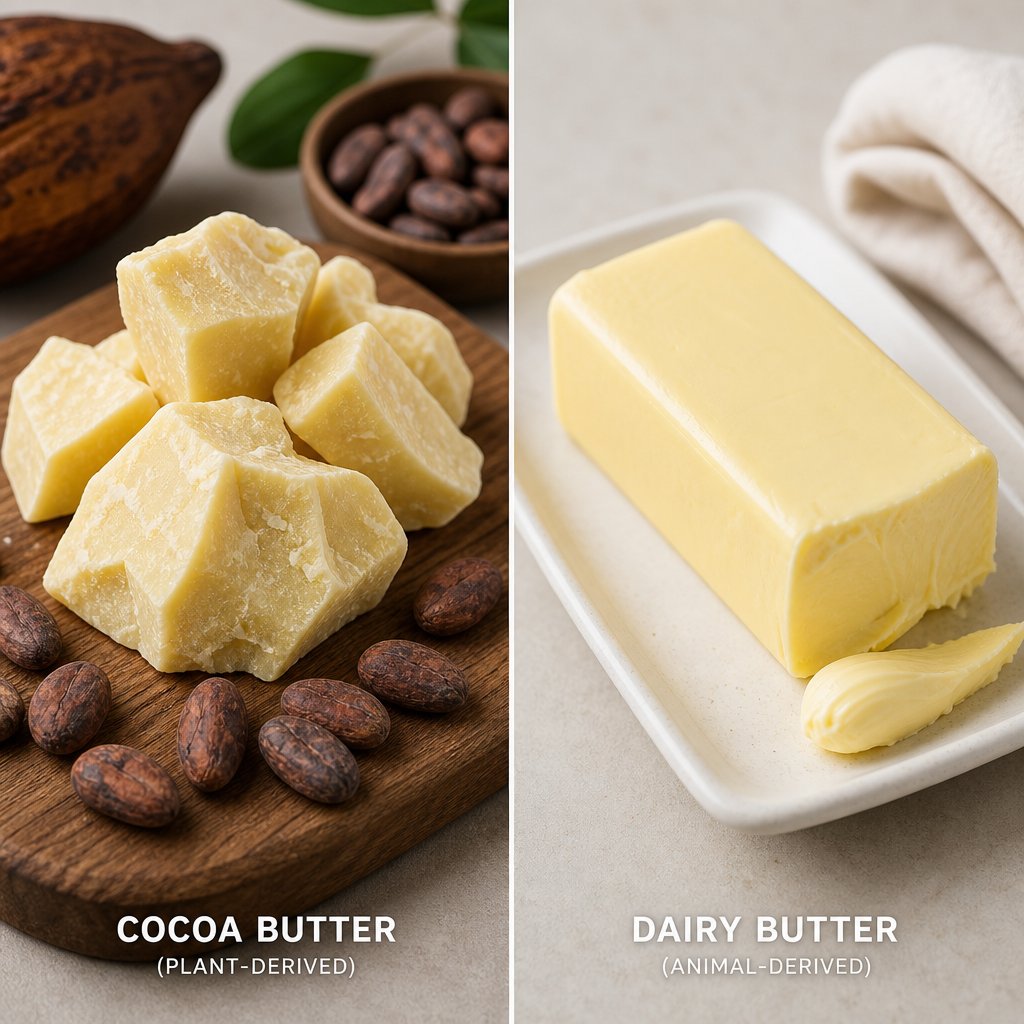
Cocoa butter is the natural fat pressed out of cacao beans during manufacturing — the same pressing step described earlier that separates fat from solids to create cocoa powder. It is a plant-derived lipid, harvested from a tropical fruit seed, with absolutely no biological connection to cow's milk or any other mammalian secretion.
The word "butter" gets applied to many plant fats that share a similar texture: shea butter, mango butter, peanut butter, almond butter. None of these contain dairy. They earn the name because they are rich, spreadable, and solid at room temperature — qualities that remind us of dairy butter without actually being dairy butter.
Cocoa butter is a plant fat extracted from cacao beans. Dairy butter is an animal fat churned from cow's milk cream. They share a name but have zero biological, chemical, or allergenic relationship.
Does cocoa butter have milk in it? No. Does cocoa butter contain milk proteins like casein or whey? Also no. The fat composition of cocoa butter is primarily stearic acid, oleic acid, and palmitic acid — fatty acids synthesized by the cacao plant itself. There is no lactose, no casein, no whey, no lactalbumin, and no milk solids of any kind. As the Australasian Society of Clinical Immunology and Allergy (ASCIA) confirms in its dietary guide for cow's milk allergy, cocoa butter does not contain cow's milk protein and can be eaten by people with confirmed dairy allergy.
Is Cocoa Butter Safe for Dairy Allergies
For anyone managing a milk protein allergy, the answer is clear: pure cocoa butter does not contain dairy products and poses no inherent allergenic risk from milk. Is cocoa butter dairy free? Yes. Is cocoa butter vegan? Also yes — it comes entirely from a plant source with no animal involvement at any stage of extraction or refinement.
That said, context matters. Does cocoa butter have dairy when it appears as an ingredient inside a finished chocolate bar? The cocoa butter itself remains dairy-free, but the product surrounding it may include milk powder, milk fat, or whey. A milk chocolate bar contains cocoa butter and dairy — not because the cocoa butter introduced the milk, but because the manufacturer added milk separately during formulation. The Go Dairy Free resource notes that many chocolatiers add dairy to their formulas for a creamier finish, which is further complicated by shared production lines where cross-contamination can occur.
So when you encounter cocoa butter on an ingredient list, you can confidently cross it off your list of concerns. It is not a dairy ingredient, has never been a dairy ingredient, and the naming convention is purely descriptive of texture. The real questions worth asking are about what else is in that product — and whether the facility where it was made also handles milk. Those are the label-reading skills that actually protect you.
How to Read Cocoa Powder Labels for Hidden Dairy
Knowing that pure cocoa powder is inherently dairy-free is a solid starting point. But standing in a store aisle with a container in your hand, you need more than theory — you need the ability to scan a label quickly and spot anything that should not be there. Does cocoa powder have milk in it? Not if it is truly pure. Yet some products marketed as cocoa powder include additional ingredients, and certain baking cocoa ingredients lists are longer than you might expect. Here is exactly what to look for and what each term on the label actually means.
Dairy Ingredients to Watch For on Labels
Milk shows up in food products under dozens of names. Some are obvious. Others are technical terms that do not sound like dairy at all. When you flip over a cocoa powder container — or any product containing cocoa — scan the ingredient list for these specific terms:
- Casein — The primary protein in cow's milk, making up about 80% of its total protein content. Sometimes listed as "milk protein."
- Caseinate (sodium, calcium, or potassium caseinate) — A processed form of casein used as an emulsifier or texture enhancer in powdered products.
- Whey — The liquid protein fraction left over after milk is curdled. Common in drink mixes and flavored cocoa blends.
- Whey protein concentrate — A more concentrated form of whey, frequently added to protein-enriched cocoa products.
- Milk solids (or non-fat milk solids) — The dry components of milk after water and fat are removed. This is the most common dairy additive in hot cocoa mixes.
- Non-fat milk powder (or skim milk powder) — Dehydrated skim milk, used to add creaminess and body to instant drink products.
- Milk fat (or butterfat) — The fatty portion of milk, sometimes added to cocoa blends for a smoother mouthfeel.
- Lactose — The natural sugar found in milk. It can appear as a filler or flow agent in powdered products.
- Lactalbumin (or lactalbumin phosphate) — A whey protein that can trigger allergic reactions even in small amounts.
- Lactoglobulin — Another whey protein, less commonly listed but still a milk derivative.
- Hydrolysates (casein hydrolysate, whey hydrolysate) — Partially broken-down milk proteins used in specialized formulations.
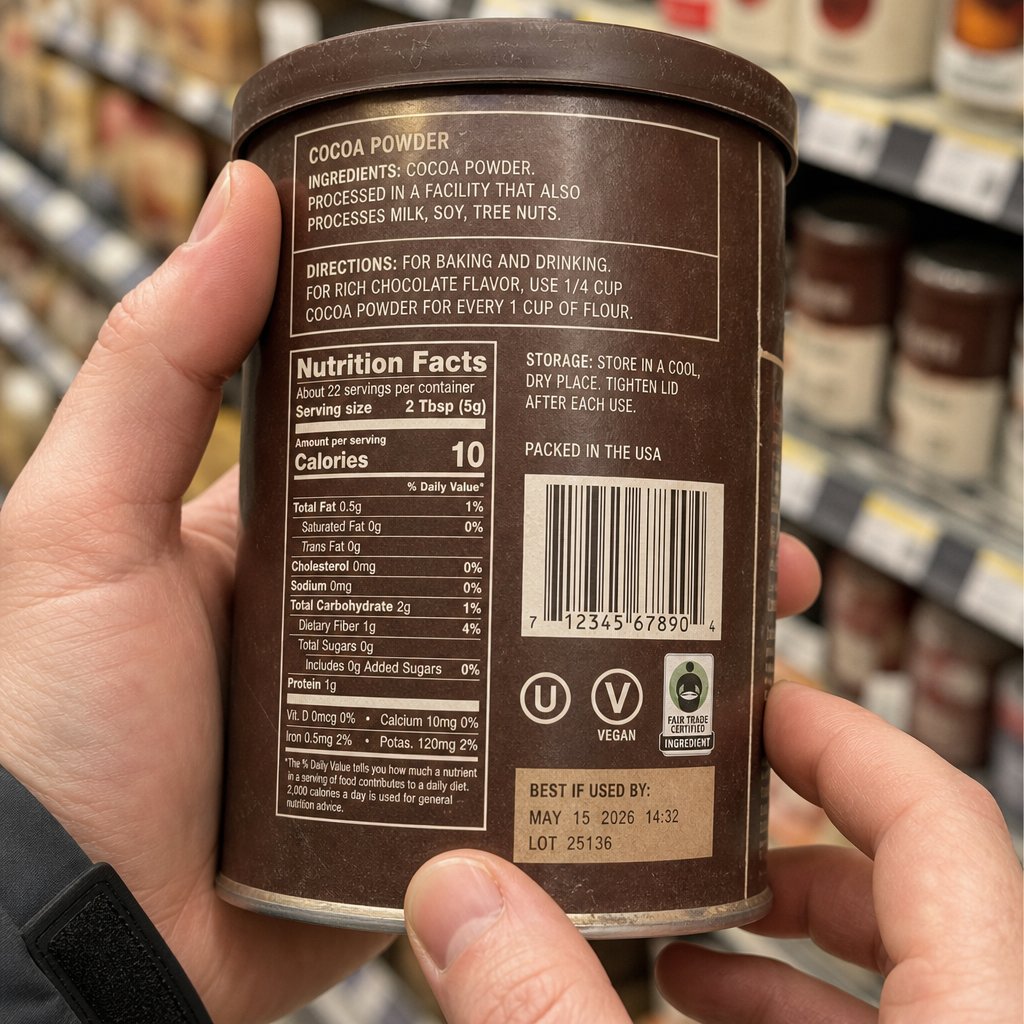
If any of these terms appear on a cocoa powder label, the product is not dairy-free — regardless of what the front of the package claims. A truly pure cocoa powder will list one ingredient: cocoa. Is cocoa powder vegetarian? Yes, and it is vegan too, provided no dairy or other animal-derived additives have been introduced. The ingredient list tells you everything.
What Allergen Advisory Warnings Actually Mean
Beyond the ingredient list itself, you will often find additional statements on cocoa powder packaging that reference milk. These fall into two legally distinct categories, and understanding the difference is critical for anyone asking does cocoa powder contain milk.
The first category is the mandatory allergen declaration. Under the Food Allergen Labeling and Consumer Protection Act (FALCPA), U.S. packaged foods must clearly disclose when they contain any of the nine major food allergens — including milk. This disclosure appears either in parentheses within the ingredient list (for example, "whey (milk)") or as a separate "Contains: Milk" statement immediately following the ingredients. If you see "Contains: Milk" on a cocoa powder label, the product definitively includes a milk-derived ingredient. Put it back on the shelf.
The second category is the voluntary advisory statement. These are phrases like "may contain milk," "produced in a facility that also processes milk," or "made on shared equipment with milk." As Johns Hopkins Medicine notes, advisory statements are not regulated by the FDA — they are voluntary disclosures that manufacturers choose to include when cross-contamination is possible but not certain. There is no legal standard governing when a company must use these warnings, and not all manufacturers include them even when shared equipment is involved.
This creates a gray area. A cocoa powder with no advisory statement might still be processed on shared lines. A cocoa powder with a "may contain" warning might have negligible trace amounts — or none at all. The advisory label signals a possibility, not a certainty. Is cocoa lactose free when it carries one of these warnings? The product itself likely contains no intentional lactose, but trace contamination cannot be ruled out.
Different Risk Levels for Different Dietary Needs
Not everyone reading a cocoa powder label faces the same level of risk. Your response to advisory warnings should match your specific situation.
Dairy allergy (IgE-mediated): If you or your child has a confirmed milk protein allergy, treat advisory statements seriously. Even trace amounts of casein or whey can trigger reactions ranging from hives to anaphylaxis. Johns Hopkins Medicine recommends that people with milk allergies avoid products with advisory cross-contamination warnings unless their allergist advises otherwise. For this group, does cocoa have milk in it becomes a question not just about intentional ingredients but about manufacturing environment. Look for cocoa powders with dedicated allergen-free production lines or certified dairy-free status.
Lactose intolerance: If your issue is lactose digestion rather than immune-mediated allergy, your threshold is higher. Trace cross-contamination from shared equipment is unlikely to contain enough lactose to trigger symptoms. A lactose free cocoa powder is any pure, unsweetened cocoa — the product contains no lactose by nature. Advisory warnings about shared facilities are generally not a concern for this group, though individual sensitivity varies.
Vegan or plant-based diet: If you avoid dairy for ethical or dietary reasons rather than medical ones, focus on the mandatory ingredient declaration and "Contains" statement. A product that lists only cocoa in its ingredients and carries no "Contains: Milk" statement meets vegan standards from an ingredient perspective. Whether you also avoid products with advisory cross-contamination warnings is a personal choice — trace contamination does not make a product non-vegan by most definitions, but some individuals prefer stricter sourcing. Is cocoa powder vegetarian in all cases? Yes, since cocoa is entirely plant-derived. The vegan question only becomes complicated when advisory statements enter the picture.
The practical takeaway: always read the full ingredient list first. If it says only "cocoa" or "cocoa processed with alkali," you are looking at a dairy-free product. Then check for a "Contains" statement — if milk is listed there, the product has dairy regardless of what the front label suggests. Finally, evaluate any advisory warnings based on your personal risk level. For those with severe allergies, the safest path is choosing brands that carry third-party dairy-free certifications or explicitly state they use dedicated production lines — a topic that deserves its own closer look.
Cross-Contamination Risks and How to Verify Dairy-Free Claims
A cocoa powder can list a single ingredient — cocoa — and still carry trace amounts of milk protein. That is not a labeling failure or a manufacturing defect. It is the reality of how modern food production works. Most cocoa powder is processed in facilities that also manufacture milk chocolate, chocolate-coated confections, or flavored cocoa blends containing dairy. The powder itself is dairy-free by composition, but the environment where it is made can introduce contamination that no ingredient list will reveal.
How Cross-Contamination Happens in Cocoa Manufacturing
Picture a large chocolate factory. The same facility might produce dark chocolate bars, milk chocolate bars, cocoa powder, and drinking chocolate — all on equipment that shares conveyors, hoppers, grinders, and packaging lines. When milk chocolate runs through a conching machine or a tempering line, residual milk proteins can cling to metal surfaces, gaskets, and crevices. If cocoa powder is processed or packaged on that same equipment afterward, those residues can transfer into the finished product.
Research on allergens in cocoa powder production identifies several specific points where cross-contact occurs:
- Shared processing equipment — Presses, grinders, and sifters used for both milk chocolate liquor and cocoa powder can harbor residual milk proteins in hard-to-clean areas like valve seats and pipe joints.
- Shared packaging lines — A single packaging line may fill containers of cocoa powder one hour and flavored hot cocoa mix (containing milk solids) the next. Residual powder in the filling mechanism creates direct cross-contact.
- Airborne particulates — Fine powders travel. In facilities where milk powder or whey is handled openly, airborne particles can settle on nearby equipment or open containers of cocoa powder.
- Supply chain vulnerabilities — Raw cocoa beans may be stored or transported alongside dairy-containing ingredients. Each link in the chain, from sourcing to packaging, introduces potential exposure if allergen handling standards are not enforced.
- Inadequate cleaning between runs — Even with cleaning protocols in place, equipment that is not thoroughly sanitized between allergen and non-allergen products can retain enough protein residue to trigger reactions in sensitive individuals.
Is cacao powder dairy free at the ingredient level? Always. Is cacao powder vegan by nature? Yes. But "dairy-free by ingredient" and "dairy-free by manufacturing environment" are two different standards — and for anyone with a serious milk allergy, only the second one provides real safety.
Does Dutch-processed cocoa carry higher cross-contamination risk? Potentially. The alkalization step adds an extra processing stage, which means the product passes through additional equipment. More equipment contact points mean more opportunities for residue transfer, especially if the same alkalization tanks are used for cocoa destined for milk chocolate formulations. This does not make Dutch-processed cocoa inherently unsafe, but it does add one more variable to evaluate when choosing a brand.
Certifications That Guarantee Dairy-Free Status
Reading ingredient lists catches intentional dairy additions. Certifications catch the unintentional ones. When a product carries a third-party certification, it means an independent organization has audited the manufacturing process — not just the recipe — and confirmed that allergen controls meet a defined standard.
Here are the certifications most relevant to verifying that cocoa powder is truly free from dairy contamination:
- Certified Vegan (Vegan Action or Vegan Society) — Confirms no animal-derived ingredients and requires manufacturers to demonstrate that cross-contamination with animal products is minimized. A cacao powder vegan certification means the facility has protocols in place to prevent dairy contact.
- Dairy-Free Certification (GFCO or similar bodies) — Some certifying organizations offer specific dairy-free seals that require testing below a defined threshold (often 5 ppm or less of milk protein).
- Allergen-Free Facility Certification — The strongest guarantee. Go Dairy Free's dedicated facility guide lists brands that produce in environments where dairy never enters the building. Companies like Pascha Chocolate and No Whey Chocolate operate facilities free from all major allergens, including milk.
- Kosher Pareve — A Kosher Pareve designation means the product contains neither meat nor dairy under rabbinical supervision. While not a guarantee against trace contamination, it adds another layer of oversight confirming no dairy ingredients are used.
For consumers also seeking nut free cocoa options, look for brands that operate in facilities free from both dairy and tree nuts. Several allergen-free manufacturers — like those producing in top-8-allergen-free environments — offer nut free cocoa powder alongside their dairy-free guarantees, covering multiple allergy needs simultaneously.
Questions to Ask Manufacturers
Certifications are not universal. Many smaller cocoa powder brands do not carry third-party seals but still maintain excellent allergen controls. Others carry impressive front-of-package claims without the rigor to back them up. When you cannot find clear certification, contacting the manufacturer directly is your best verification tool.
Here are the specific questions worth asking:
- Is your cocoa powder produced on dedicated dairy-free equipment, or does it share lines with products containing milk?
- If shared lines are used, what cleaning protocols are followed between allergen and non-allergen runs? Are those protocols validated through testing?
- Do you conduct allergen testing (ELISA or lateral flow) on finished cocoa powder batches to confirm the absence of milk protein?
- Is your facility entirely dairy-free, or do other products in the building contain milk ingredients?
- Have you had any allergen recalls or cross-contamination incidents in the past five years?
- Do your raw material suppliers provide allergen certificates confirming their cocoa beans were not stored or transported with dairy products?
As the Institute of Food Technologists (IFT) emphasizes, validated cleaning programs should ensure equipment is not only visibly clean but quantifiably clean — verified through ELISA tests for specific allergens. If a manufacturer cannot describe their testing protocol or dismisses the question, that tells you something about their allergen management rigor.
Is cocoa powder vegan and safe for dairy allergies at the same time? It can be — but only when the manufacturing environment matches the ingredient purity. A product made in a dedicated allergen-free facility offers the highest confidence. A product from a shared facility with validated cleaning and regular testing offers reasonable safety for most people. A product with no advisory statement, no certification, and no transparency from the manufacturer? That is a gamble you should not take if your health depends on avoiding milk protein.
The good news: the market for verified dairy-free products is growing, and more cocoa powder brands are investing in dedicated lines or pursuing certifications. Knowing which brands have done that work — and which ones have not — makes your purchasing decisions far simpler.
Dairy-Free Cocoa Powder Brand Comparison
Theory is useful, but what you really need is a clear picture of which brands on store shelves actually meet dairy-free standards — and which ones carry caveats. Not every cocoa powder dairy free by ingredient is also free from cross-contamination risk, and the differences between brands come down to facility practices, certifications, and transparency.
Comparing Popular Cocoa Powder Brands
Is Hershey's cocoa powder dairy free? Based on its labeling, yes. Hershey's Natural Unsweetened Cocoa lists a single ingredient — cocoa — carries no allergen advisory warnings, holds non-GMO certification, and is certified kosher. Ghirardelli's Premium Cocoa Powder also lists only cocoa as its ingredient, but the packaging includes a warning that the product may contain tree nuts, wheat, soy, milk, or egg due to shared facility processing. Same core ingredient, very different allergen profiles.
For anyone seeking a non dairy cocoa powder with the strongest possible guarantees, specialty brands produced in dedicated allergen-free facilities offer the highest confidence. Black Velvet Cacao Powder, for example, is produced in a facility where the top eight allergens are not allowed on site — making it both dairy free cocoa powder and nut free cocoa powder simultaneously. Navitas Organic Cacao Powder carries dairy-free, vegan, kosher, non-GMO, and Fairtrade certifications with USDA organic status.
Here is a comparison of popular options you will encounter at retail:
| Brand | Dairy-Free Confirmed | Advisory Warnings | Certifications | Processing Type |
|---|---|---|---|---|
| Hershey's Natural Unsweetened | Yes | None listed | Non-GMO, Kosher | Natural (labeled as cacao) |
| Ghirardelli Premium Cocoa | Yes (by ingredient) | May contain milk, tree nuts, wheat, soy, egg | None listed | Natural |
| Black Velvet Cacao Powder | Yes (allergen-free facility) | None — top 8 allergens excluded from site | USDA Organic, Vegan, Allergen-Free Facility | Natural |
| Navitas Organic Cacao | Yes | None listed | USDA Organic, Vegan, Kosher, Non-GMO, Fairtrade | Natural |
| Valrhona Cocoa Powder | Yes (by ingredient) | Varies by product — check current label | Kosher | Dutch-processed |
What to Check Before You Buy
Brand formulations and facility practices change. A product that carried no advisory warnings last year might add one after switching co-packers. Always verify the current label rather than relying on past experience or online databases that may be outdated.
For the most up-to-date allergen information, go directly to the manufacturer's website — most major brands maintain FAQ pages or allergen statements under their product listings. If the website does not provide clear answers, call or email customer service and ask the specific questions outlined in the previous section about dedicated lines and testing protocols.
When shopping for nut free cocoa powder alongside dairy-free guarantees, prioritize brands operating in top-8-allergen-free facilities. These environments eliminate not just dairy risk but also tree nut, peanut, wheat, soy, egg, fish, and shellfish contamination in a single purchasing decision — simplifying label reading for households managing multiple allergies.
The bottom line: every brand in the table above sells a product that is dairy-free by ingredient. The difference lies in how much additional assurance you need based on your personal risk level. For casual dairy avoidance, any pure cocoa powder works. For serious milk allergies, certifications and dedicated facilities are worth the extra cost and research.

Using Dairy-Free Cocoa Powder in Recipes and Products
Choosing the right brand is only half the equation. The real payoff comes when that verified dairy-free cocoa powder goes to work in your kitchen — or in a product formulation destined for store shelves. Cocoa powder is one of the most versatile ingredients in any pantry, and its naturally dairy-free status makes it a cornerstone for anyone cooking without milk.
Cooking and Baking With Dairy-Free Cocoa Powder
What is baking cocoa? It is simply unsweetened cocoa powder used as a dry ingredient in baked goods — nothing more. You will sometimes see it labeled "baking cocoa" on the front of the container, but the product inside is identical to what you would stir into a morning smoothie or dust over a dessert. Is cocoa powder the same as baking cocoa? Yes. The terms are interchangeable, and both refer to pure ground cacao solids with the fat removed.
The difference between baking cocoa and cocoa powder is purely a marketing distinction. Some brands label their product "baking cocoa" to signal its intended use in recipes, while others simply say "cocoa powder." Check the ingredient list — if it reads "cocoa" or "cocoa processed with alkali," you are holding the same thing regardless of what the front label calls it.
Cocoa powder for chocolate-flavored baking works beautifully in dairy-free recipes because it delivers intense chocolate flavor without requiring butter or milk to carry it. Consider these applications:
- Brownies — Cocoa-based brownies use oil instead of butter, producing a chewy, rich texture that rivals any traditional recipe. As Cloudy Kitchen demonstrates, combining Dutch process cocoa with a neutral oil and simple pantry staples yields fudgy results with a perfect crinkly top — no mixer required.
- Cakes and cupcakes — Swap butter for oil and cow's milk for oat or almond milk, and cocoa powder performs identically. The powder hydrates and disperses evenly in any liquid base.
- Smoothies and shakes — A tablespoon of cocoa powder adds deep chocolate flavor to blended drinks without introducing dairy, sugar, or extra fat. Pair it with frozen banana, plant milk, and nut butter for a protein-rich breakfast.
- Homemade chocolate — Combine cocoa powder with melted coconut oil and a sweetener, pour into molds, and refrigerate. You control every ingredient, guaranteeing a dairy-free result.
- Savory applications — Cocoa for cooking extends beyond desserts. A spoonful deepens chili, mole sauces, and spice rubs for grilled meats, adding complexity without sweetness.
The key advantage of using baking cocoa and cocoa powder as a standalone ingredient is total control. You decide what fat goes in (coconut oil, olive oil, avocado oil), what liquid hydrates the batter (plant milk, water, coffee), and what sweetener balances the bitterness. No pre-made mix can offer that level of customization — which brings up an important distinction.
Cocoa Powder in Pre-Made Mixes and Supplements
When cocoa powder appears as a standalone ingredient in your pantry, it is dairy-free. When it appears as one component inside a pre-made product, all bets are off. The cocoa itself has not changed, but the formula surrounding it almost certainly includes other ingredients — and dairy is one of the most common additions.
Here is where people get tripped up:
- Boxed brownie and cake mixes — Many contain milk powder or whey to enhance texture and flavor. The cocoa in the mix is still dairy-free, but the finished product is not.
- Chocolate protein powders — Whey protein is the dominant protein source in most chocolate-flavored supplements. Even plant-based protein powders sometimes add casein or milk-derived emulsifiers for mixability.
- Hot chocolate bombs and specialty drinks — These trendy products often combine cocoa with milk powder, cream powder, or white chocolate (which contains milk solids).
- Energy bars and snack bites — Chocolate-flavored bars frequently use milk chocolate chips or whey protein crisps alongside cocoa powder.
Is baking cocoa and cocoa powder the same when it appears inside these products? The cocoa component is identical to what you would buy in a standalone container. The difference is everything else in the formula. If you are buying a pre-made mix or supplement and need it dairy-free, the same label-reading rules from earlier apply: scan for casein, whey, milk solids, and check the "Contains" statement. Do not assume a product is safe just because cocoa powder is listed as an ingredient.
Sourcing Dairy-Free Cocoa for Product Development
For home cooks, choosing a certified dairy-free cocoa powder from the brand comparison above solves the problem. But what about businesses developing their own cocoa-based products — protein powders, supplement blends, functional beverages, or snack bars — where allergen control needs to scale across thousands of units?
Health food brands and supplement companies face a more complex sourcing challenge. They need cocoa powder that is not only dairy-free by ingredient but verified through supply chain documentation, batch testing, and facility audits. The requirements go beyond what a retail label can communicate:
- Supplier certificates of analysis (COA) — Each batch of cocoa powder should come with documentation confirming allergen testing results, typically via ELISA testing for milk protein at thresholds below 5 ppm.
- Facility allergen maps — Manufacturers need to know exactly where dairy is handled in their production environment and demonstrate physical separation or validated cleaning between runs.
- Scalable formulation control — A recipe that works in a test kitchen needs to maintain its allergen-free status when produced at 10,000-unit volumes. This requires manufacturing partners with dedicated allergen-controlled lines.
For nutrition brands, supplement importers, and private label sellers developing dairy-free cocoa-based health products, partnering with an experienced OEM/ODM manufacturer simplifies this process considerably. ZhuFeng's health food manufacturing services, for example, offer customized formulation and scalable production across formats like powder and granule blends, hard capsules, gummy candy, and oral liquids — with the allergen-controlled production environment that dairy-free product lines demand. Their flexible format options allow brands to take a verified dairy-free cocoa base and build it into market-ready supplements, functional beverages, or protein powders without managing facility audits and allergen protocols independently.
Whether you are baking brownies at home or launching a cocoa-based supplement line, the principle remains the same: cocoa powder itself is always dairy-free. Your job is ensuring that nothing in the process — from the recipe you build around it to the facility where it is manufactured — introduces what the ingredient never contained in the first place.
Frequently Asked Questions About Cocoa Powder and Dairy
1. Is Hershey's cocoa powder dairy free?
Hershey's Natural Unsweetened Cocoa lists only one ingredient — cocoa — and carries no allergen advisory warnings on its packaging. It holds Non-GMO and Kosher certifications. However, it does not carry a dedicated dairy-free or vegan certification from a third-party organization. For individuals with mild lactose intolerance or those following a vegan diet, Hershey's is generally considered safe. For those with severe IgE-mediated milk allergies, contacting Hershey's directly about their facility practices and shared equipment protocols is recommended before purchasing.
2. What is the difference between cocoa powder and hot cocoa mix?
Cocoa powder is a single-ingredient product made entirely from ground cacao solids with no sugar, milk, or additives. Hot cocoa mix is a pre-blended convenience product that typically contains powdered milk, whey, sugar, a small amount of cocoa powder, cornstarch, and flavorings. A standard hot cocoa mix uses roughly 2.5 cups of powdered milk for every 1 cup of cocoa, making dairy the dominant ingredient. Always check the ingredient count — one ingredient means pure cocoa powder, while a long list with milk derivatives indicates a hot cocoa mix.
3. Does cocoa butter contain dairy?
No. Cocoa butter is a plant-derived fat extracted from cacao beans during the pressing stage of cocoa production. It shares the word 'butter' with dairy butter purely because of its rich, solid-at-room-temperature texture — similar to how shea butter and peanut butter use the term without any dairy connection. Cocoa butter contains no lactose, casein, whey, or any milk-derived component. It is confirmed safe for people with dairy allergies by organizations like the Australasian Society of Clinical Immunology and Allergy (ASCIA) and is fully vegan.
4. Can cocoa powder be contaminated with dairy during manufacturing?
Yes, cross-contamination is possible even when cocoa powder contains no dairy ingredients. Many cocoa processors share equipment with milk chocolate production lines, and residual milk proteins can transfer through shared grinders, packaging lines, or airborne particulates. To minimize risk, look for brands with certified vegan logos, dairy-free certifications, or those produced in dedicated allergen-free facilities. Products from top-8-allergen-free environments, like Black Velvet Cacao Powder, offer the highest safety guarantee for individuals with severe milk allergies.
5. Is cocoa powder safe for lactose intolerant people?
Pure unsweetened cocoa powder is naturally lactose-free because it contains only ground cacao solids — a plant material with no milk sugar present at any stage of production. For lactose intolerant individuals, even advisory cross-contamination warnings on cocoa powder labels are generally not a concern, since trace amounts from shared equipment are unlikely to contain enough lactose to trigger digestive symptoms. However, always avoid hot cocoa mixes and flavored cocoa blends, which frequently contain milk solids or whey that will cause issues for lactose-sensitive individuals.