Yes You Can Mix Protein Powder with Yogurt and Here Is Why
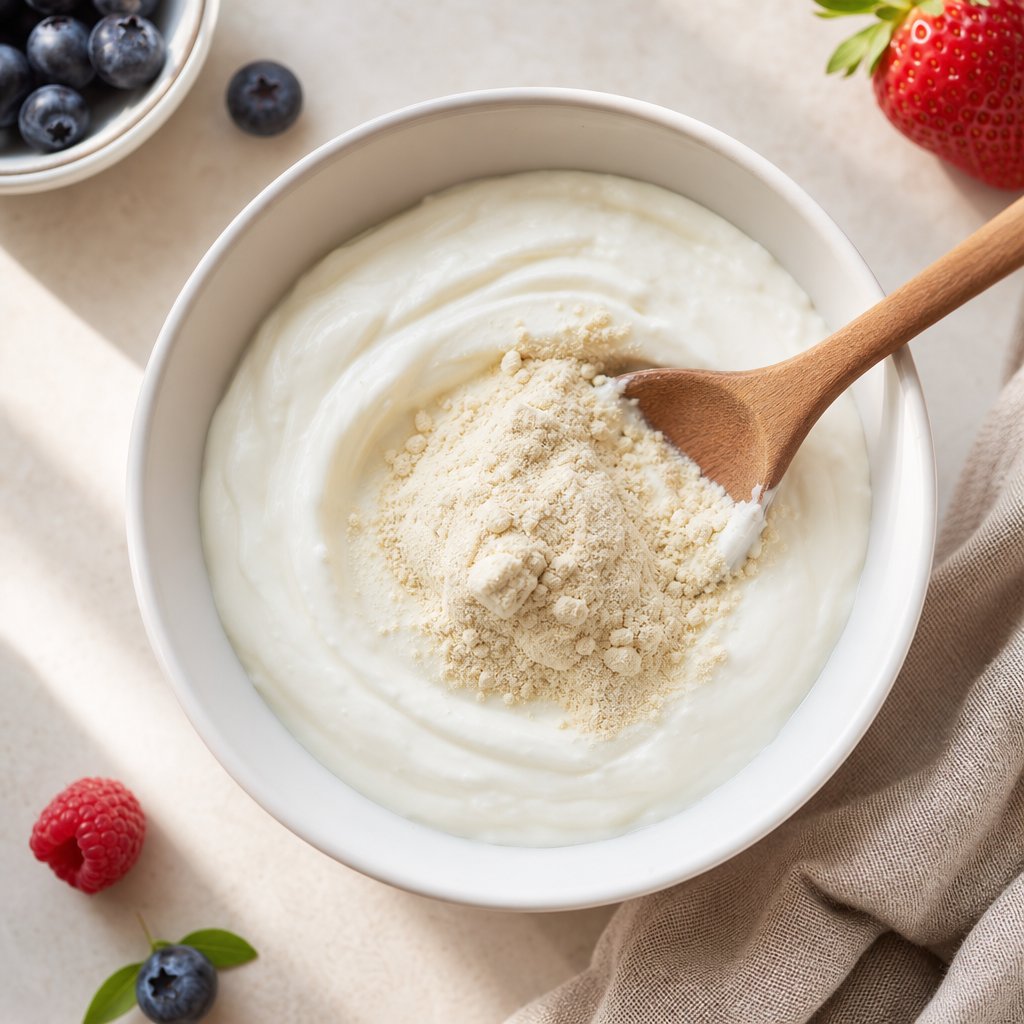
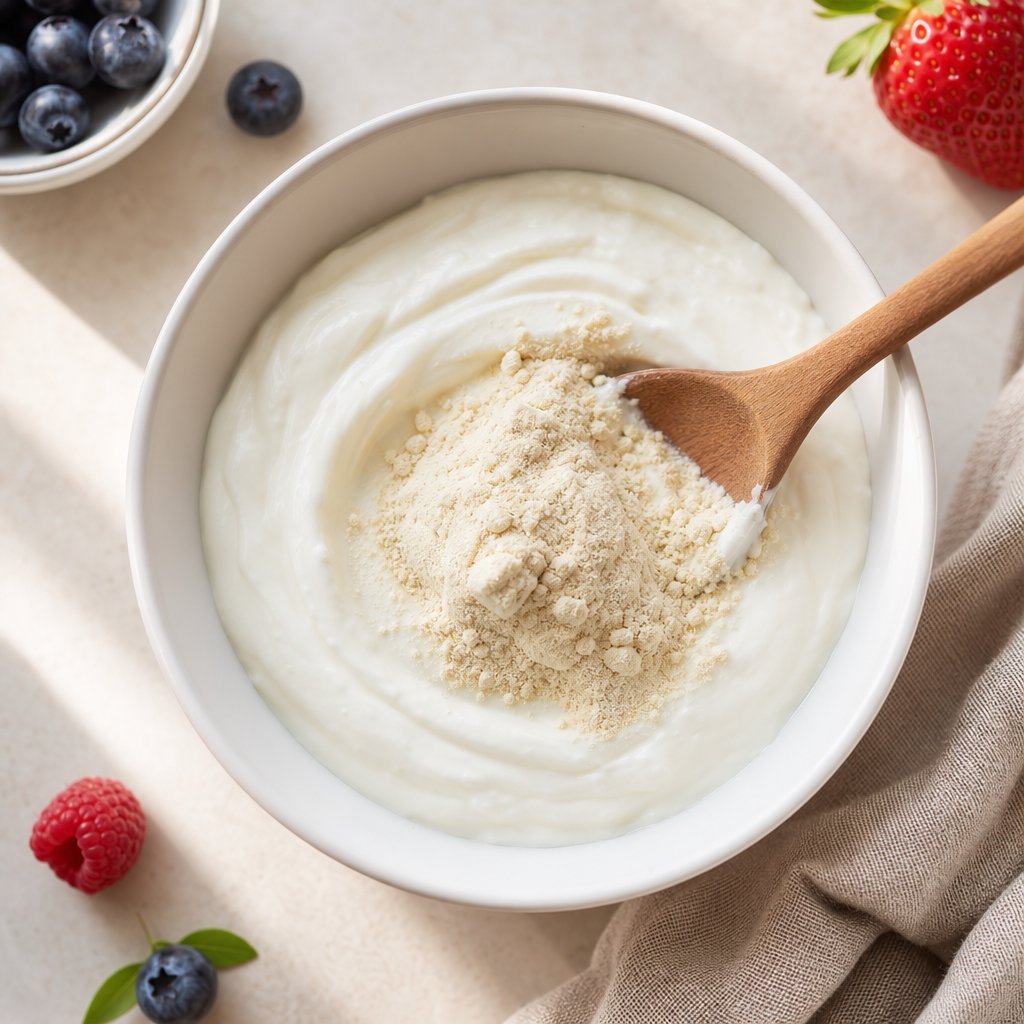
Can you mix protein powder with yogurt? The short answer is yes, and it might be the simplest protein upgrade you have not tried yet. No blender, no shaker bottle, no cleanup hassle. Just a spoon, a bowl, and two ingredients that happen to work incredibly well together.
The Short Answer and Why It Works
When you combine protein powder with yogurt, you are layering a complete protein source on top of a base that already delivers protein naturally. A typical serving of Greek yogurt contains around 10g of protein per 100g, and one scoop of protein powder adds another 20-25g. Depending on your portions, that puts you in the 30-50g protein range from a single snack. That is a meaningful amount for muscle recovery, satiety, or simply hitting your daily target without cooking a full meal.
The nutritional value stays fully intact, too. Can you mix yogurt with protein powder without losing any benefits? Absolutely. The amino acids in your powder are not degraded or diminished by cold mixing. You get the full profile from both sources working together.
Protein powder mixed with yogurt retains its full nutritional value. The amino acids remain intact and bioavailable whether you mix them into liquid, yogurt, or baked goods.
So if you have been wondering "can I put protein powder in yogurt" or "can I add protein powder to yogurt" without ruining the texture or wasting the supplement, the answer is a clear yes on both counts. The real question is how to do it well.
What This Guide Covers
This is not another recipe roundup. It is a practical guide to getting the texture smooth, the flavor right, and the nutrition dialed in every single time you put protein powder in yogurt. Here is what you will find ahead:
- Which yogurt types mix best and why thickness matters more than you think
- How whey, casein, plant-based, and collagen powders each behave differently in yogurt
- A step-by-step mixing technique that eliminates clumps
- Troubleshooting for grittiness, chalky taste, and consistency problems
- Non-dairy alternatives and plant-based pairings
- Goal-based combinations for muscle building, weight loss, and meal prep
- What to look for when choosing a protein powder specifically for food mixing
The type of yogurt you start with changes everything about how your powder dissolves and how the final bowl tastes. Thickness, fat content, and protein density all play a role, and some yogurts handle the job far better than others.
Why Greek Yogurt Is the Ideal Protein Powder Base
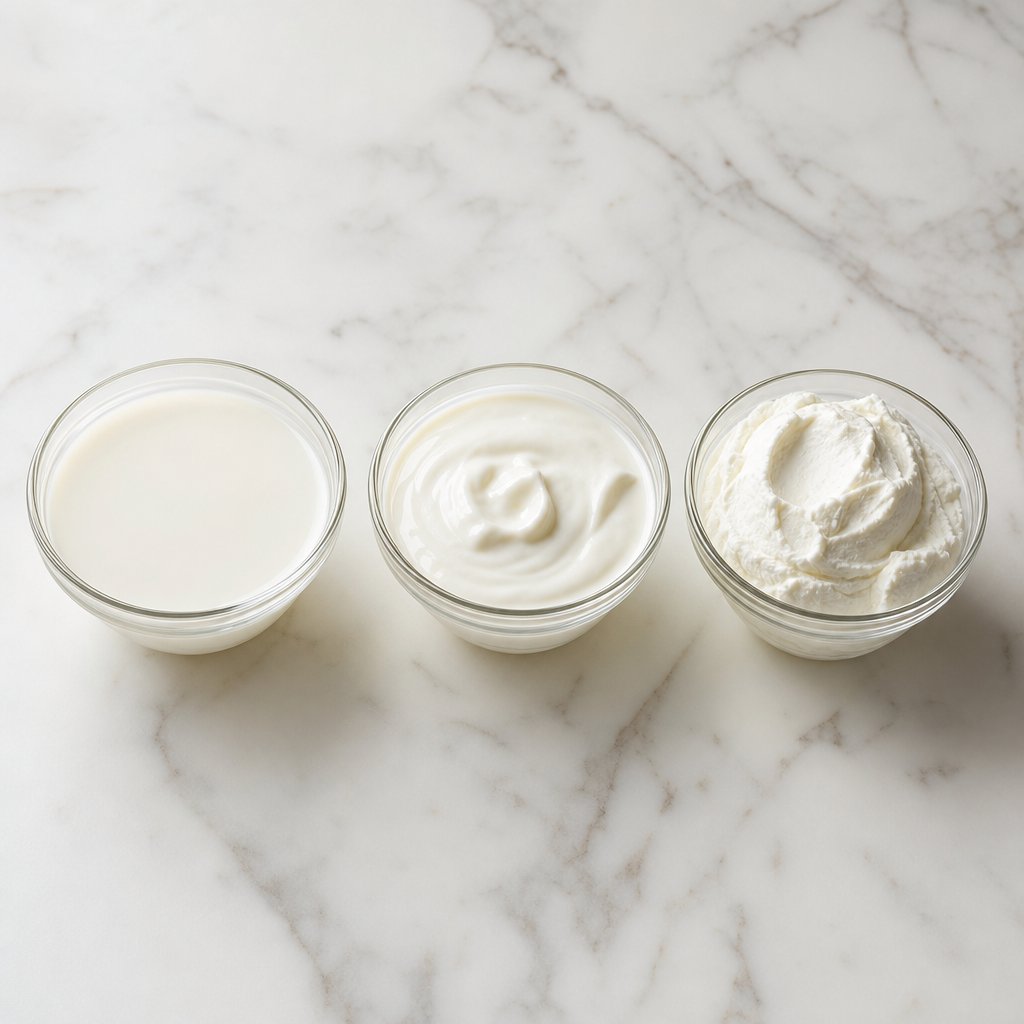
Not all yogurts handle protein powder the same way. Pour a scoop into thin, runny regular yogurt and you will likely end up chasing clumps around the bowl. Use a thick, dense Greek yogurt and the powder practically disappears with a few folds of a spoon. The difference comes down to how Greek yogurt is made and what that straining process does to its structure.
Why Greek Yogurt Outperforms Regular Yogurt for Mixing
Greek yogurt is regular yogurt that has been strained to remove most of the whey, the watery liquid that separates during fermentation. This straining concentrates everything that stays behind: protein, fat, and thickness. A standard cup of plain low-fat Greek yogurt delivers roughly 20g of protein, compared to about 8-9g in the same amount of unstrained yogurt.
That density matters for mixing in three specific ways:
- Protein concentration: Greek yogurt with protein powder creates a genuinely high-protein food, not just a flavored snack. You are stacking 20g from the yogurt plus 20-25g from the powder in a single bowl.
- Thickness suspends powder particles: The dense, semi-solid texture grips powder granules and holds them in place while you fold and stir. Thin yogurt lets particles float, clump together, and resist dissolving.
- Lower sugar content: Straining removes lactose along with the whey. Greek yogurt typically contains around 7g of sugar per serving versus 12-17g in regular sweetened yogurt, giving you more room to use flavored powders without the result tasting overly sweet.
This combination of high protein, thick texture, and moderate sugar is exactly why mixing protein powder with Greek yogurt works so much better than using a standard yogurt cup from the dairy aisle.
Icelandic Skyr and Other Thick Yogurt Options
Greek yogurt is not the only option worth considering. Icelandic skyr is even thicker and more densely concentrated. Traditionally made by heating skim milk and adding specific cultures, skyr is technically classified as a fresh cheese in Iceland rather than a yogurt. The result is a product with more protein per serving, less fat, and less sugar than most Greek yogurts.
Can you mix protein powder with Greek yogurt and get good results? Yes. Can you get even better results with skyr? Often, yes. Its ultra-thick consistency means powder has almost nowhere to clump. You will notice the final texture stays dense and spoonable rather than thinning out, which is ideal if you prefer a pudding-like bowl.
That said, skyr can be harder to find and more expensive depending on your location. Greek yogurt remains the most accessible and reliable base for protein powder and Greek yogurt combinations. Either one outperforms regular yogurt by a wide margin.
| Yogurt Type | Protein per Serving | Thickness Level | Sugar Content | Mixing Ease Rating |
|---|---|---|---|---|
| Regular Yogurt (6 oz) | 5-9g | Thin, pourable | 12-17g | Poor - clumps easily |
| Greek Yogurt (6 oz) | 15-20g | Thick, spoonable | 5-8g | Very good |
| Icelandic Skyr (5.3 oz) | 15-17g | Very thick, dense | 3-6g | Excellent |
Does Yogurt Fat Affect Protein Absorption
A common concern is that full-fat yogurt somehow blocks or slows protein absorption in a harmful way. The reality is more nuanced and actually works in your favor.
Fat does slow gastric emptying, which means the protein in your bowl takes longer to reach your intestines. But slower digestion is not the same as reduced absorption. Registered dietitians note that fat, protein, and fiber take longer to digest, leaving you feeling full for longer periods between meals. For protein yogurt, this translates to a sustained release of amino acids into your bloodstream rather than a single spike.
If your goal is rapid post-workout absorption, non-fat Greek yogurt with whey isolate delivers amino acids faster. If you want a filling snack that keeps you satisfied for hours, full-fat Greek yogurt with casein protein is the better pairing. Neither option wastes protein. You absorb the same total amino acids either way; the timing just shifts.
The fat content you choose should match your goal, not a fear of "blocking" nutrients. With the yogurt base sorted, the next variable that shapes your results is the type of protein powder you stir into it.
How Different Protein Powder Types Behave in Yogurt
Choosing the right yogurt base is only half the equation. The protein powder you stir into it determines whether you end up with a silky dessert bowl or a gritty, chalky mess. Whey, casein, plant-based blends, and collagen each interact with yogurt differently, and understanding those differences saves you from wasted scoops and disappointing textures.
Whey Protein in Yogurt and What to Expect
Whey protein is the most popular choice for a reason: it dissolves quickly and blends into yogurt with minimal effort. When you combine Greek yogurt and whey protein, the result is a smooth, creamy consistency that thins out slightly from the yogurt's original thickness. Think of it as going from a dense spoonable texture to something closer to a thick mousse.
Whey isolate performs best here. Because isolate has been filtered to remove most fat and lactose, the remaining protein particles are finer and more soluble. Whey concentrate still works, but you may notice slightly more graininess due to the residual fat and carbohydrate content in the powder.
Flavor-wise, yogurt with whey takes on whatever flavor the powder carries. Vanilla whey in plain Greek yogurt tastes like a vanilla custard. Chocolate whey creates something close to a chocolate mousse. Unflavored whey adds protein without changing the yogurt's natural tang much at all.
The main trade-off with whey protein yogurt is that it thins the mixture. If you prefer a thick, spoonable bowl, use less liquid whey isolate (about half a scoop) or pair it with an ultra-thick skyr base. Greek yogurt whey protein combinations work best when you want a lighter, smoother snack rather than a dense pudding.
Casein and Plant-Based Powders Compared
Casein behaves almost opposite to whey. Where whey thins yogurt slightly, casein thickens it dramatically. Micellar casein forms a gel-like structure when it absorbs moisture, turning your yogurt into something with the consistency of thick pudding or even cheesecake filling. If you have ever wanted a high-protein dessert that feels indulgent, casein mixed into Greek yogurt is the fastest path there.
This thickening effect means you often need to add a splash of milk or water to reach a spoonable consistency. Start with one scoop of casein per 150-200g of Greek yogurt and adjust from there. The texture continues to thicken over 5-10 minutes after mixing, so give it time before adding more liquid.
Casein also digests more slowly than whey, releasing amino acids gradually over several hours. This makes whey protein Greek yogurt ideal for post-workout recovery, while casein-yogurt bowls work better as an evening snack or between-meal option when you want sustained fullness.
Plant-based powders, including pea, rice, hemp, and multi-source blends, present a different challenge. These powders tend toward grittiness because plant protein particles are less soluble than dairy-derived ones. Pea protein is the thickest of the group and can create a dense, slightly chalky texture. Rice protein is lighter but often leaves a sandy mouthfeel. Hemp adds an earthy flavor that not everyone enjoys in yogurt.
The fix for plant-based grittiness is pairing these powders with the thickest yogurt you can find. Skyr or full-fat Greek yogurt masks the texture better than thinner options. Multi-source blends that combine pea and rice protein tend to dissolve more evenly than single-source plant powders because the different particle sizes fill gaps in the mixture.
Collagen peptides are the stealth option. They dissolve almost completely, add virtually no flavor, and do not change the yogurt's thickness in either direction. The downside is that collagen is not a complete protein. It lacks tryptophan and is low in leucine, so it will not stimulate muscle protein synthesis the way whey or casein does. Use collagen in yogurt when your goal is joint support, skin health, or simply boosting total protein intake without altering taste or texture.
| Protein Powder Type | Texture Result | Dissolution Ease | Flavor Impact | Best Yogurt Pairing |
|---|---|---|---|---|
| Whey Isolate | Smooth, slightly thinner | Excellent | Takes on powder flavor cleanly | Any Greek yogurt or skyr |
| Whey Concentrate | Smooth with mild graininess | Very good | Slightly milky undertone | Full-fat Greek yogurt |
| Micellar Casein | Thick, pudding-like | Moderate (needs time) | Mild, creamy | Low-fat Greek yogurt (offsets thickening) |
| Pea Protein | Dense, slightly chalky | Fair | Earthy, beany notes | Skyr or full-fat Greek yogurt |
| Rice Protein | Sandy, light body | Fair | Mild, slightly nutty | Thick Greek yogurt with mix-ins |
| Plant Blend (pea + rice) | Moderate thickness, smoother than single-source | Good | Neutral to mildly earthy | Any thick yogurt |
| Collagen Peptides | No change to base texture | Excellent | Nearly tasteless | Any yogurt type |
How Powder Formulation Affects Mixability
You might wonder why two whey isolates from different brands dissolve so differently in the same bowl of yogurt. The answer comes down to manufacturing decisions made long before the powder reaches your kitchen.
Particle size is the biggest factor. Finer powders have more surface area exposed to moisture, which means faster wetting and fewer clumps. But extremely fine particles can also create dust and clump on contact with cold yogurt because the outer layer hydrates instantly and forms a barrier that blocks liquid from reaching the center. This is the same lump-formation problem that food scientists address through a process called instantization.
Instantized powders go through additional processing, often lecithination or fluidized bed agglomeration, that makes particle surfaces more hydrophilic and porous. The result is a powder that wets evenly and disperses without intense stirring, even in cold, thick foods like yogurt. If you have ever noticed that some protein powders seem to melt into yogurt while others stubbornly resist mixing, instantization is usually the difference.
Granule size also matters. Larger, porous granules created through agglomeration dissolve more predictably than ultra-fine dust because liquid can penetrate the granule structure through capillary action rather than being blocked by a gel barrier on the surface.
These are not details most consumers think about, but they are active choices made during production. Brands developing protein powders optimized for food mixing, not just shaker bottles, can work with OEM/ODM manufacturers like ZhuFeng who offer customized powder and granule formulations designed for specific end-use applications including food integration. This means a brand can request particle sizes and instantization levels tuned specifically for cold-mixing scenarios like stirring into yogurt.
For you as a consumer, the practical takeaway is this: if a protein powder label says "instantized" or "mixes easily in cold liquids," it is more likely to work well in yogurt. Powders marketed only for shaking with water may clump more in thick, semi-solid foods because they were never formulated for that use case.
Knowing how each powder type behaves gives you control over the outcome. But even the best powder can clump if your mixing technique is off, and temperature plays a bigger role than most people realize.
Step-by-Step Mixing Techniques for Perfect Texture
Temperature is the invisible factor that separates a smooth protein bowl from a lumpy disappointment. You can pick the perfect yogurt and the ideal powder, but if you pull a container straight from the fridge and dump a full scoop on top, you are almost guaranteed to fight clumps. Understanding why this happens, and adjusting your approach by just a few minutes, changes the outcome completely.
Cold vs Room Temperature Yogurt for Mixing
When yogurt is cold, around 4-5 degrees Celsius straight from the refrigerator, its thick structure becomes even more rigid. Protein powder particles that land on this cold surface cannot wet properly. The outermost layer of each particle hydrates and forms a sticky gel barrier while the inside stays dry, creating those stubborn lumps that no amount of stirring will dissolve. This is especially true for whey protein, which denatures on contact with temperature extremes and seals into rubbery clumps.
Room temperature yogurt, on the other hand, is slightly softer and more pliable. The warmer surface allows powder particles to absorb moisture evenly from all sides rather than sealing shut on contact. You do not need to warm it significantly. Just pull your yogurt out of the fridge and let it sit on the counter for about five minutes while you prep other ingredients. That small window is enough to take the rigid chill off and make mixing protein powder with yogurt dramatically easier.
The Fold-and-Stir Technique for Smooth Results
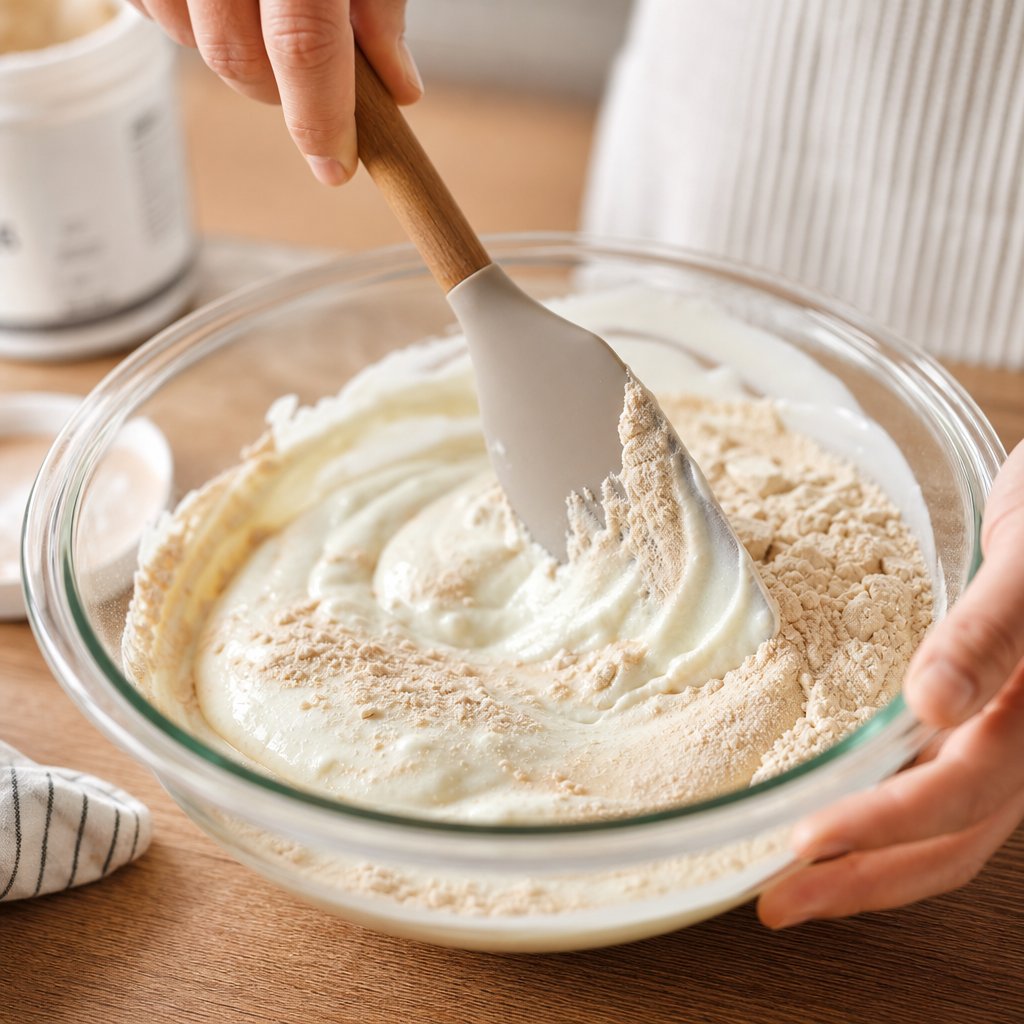
Most people stir protein powder into yogurt the same way they would stir sugar into coffee: fast, circular motions. This actually works against you. Vigorous stirring pushes dry powder into pockets of yogurt where it compresses and clumps rather than dispersing. The better approach is a gentle fold-and-stir method that gives each particle time to hydrate.
Here is how to mix yogurt and protein powder for consistently smooth results:
- Remove yogurt from the fridge and let it sit at room temperature for 5 minutes.
- Scoop your desired amount of yogurt into a bowl, roughly 150-200g for one serving.
- Add about one-third of your protein powder scoop to the surface. Do not dump the full scoop at once.
- Using a spoon or silicone spatula, fold the yogurt over the powder from the edges toward the center. Press gently to break up any small clusters.
- Add the second third of powder and repeat the folding motion.
- Add the final third, fold again, and finish with a few gentle stirs to smooth everything out.
- If the mixture feels too thick to stir comfortably, add a small splash of milk or water, about one tablespoon at a time, until you reach your preferred consistency.
This incremental approach works because each small addition of powder has enough surrounding moisture to hydrate fully before the next layer arrives. When you mix protein powder with yogurt this way, you avoid the dry-center clumps that form when too much powder hits the surface at once.
The ratio sweet spot for most people is one scoop of protein powder (about 25-30g) per 150-200g of Greek yogurt. This keeps the texture thick and spoonable without becoming paste-like. If you are mixing protein powder into Greek yogurt that is already ultra-thick, like skyr, lean toward the higher end of that yogurt range or plan on adding a tablespoon of liquid to loosen things up.
Does Heating Protein Yogurt Reduce Nutritional Value
Maybe you want to use your protein yogurt mixture as a topping for baked oats, stir it into warm porridge, or fold it into a heated recipe. A common worry is that heat destroys the protein you just carefully mixed in. The short answer: it does not.
What heat does is denature the protein, meaning the three-dimensional molecular structure unfolds. But denaturation is not destruction. Research confirms that the amino acids, the actual building blocks your body uses for muscle repair and synthesis, remain completely intact after heating. A cooked egg delivers the same protein as a raw egg; the structure changes, but the nutritional payload does not.
Adding protein powder to yogurt and then heating the mixture, whether in baked oats at 180 degrees or stirred into warm oatmeal, preserves the full amino acid content. Your body absorbs the same nutrients regardless of whether the protein was consumed cold or warm. In fact, pre-denatured protein can be slightly easier for digestive enzymes to break down, since the unfolded structure exposes more peptide bonds.
The one practical consideration is texture. Heated protein yogurt can thicken or firm up, especially if it contains casein. If you plan to bake with it, treat the mixture as you would any protein-enriched batter: keep temperatures moderate and expect a denser result than plain yogurt alone would produce.
With the technique and science covered, the next challenge is knowing what to do when things still do not turn out right. Even with the best method, certain powder and yogurt combinations can produce unexpected results that need a targeted fix.
Troubleshooting Common Protein Yogurt Problems
You followed the technique, picked a thick yogurt, and still ended up with something that looks or tastes off. It happens. Protein powder and yogurt do not always cooperate on the first try, especially when you are experimenting with new brands or powder types. Rather than tossing the bowl and starting over, most issues have a quick, targeted fix.
Fixing Gritty and Clumpy Protein Yogurt
Grittiness and clumping are the two most common texture complaints, but they have different root causes and different solutions.
- Grittiness: This is almost always caused by plant-based protein powders. Pea, hemp, and rice proteins contain insoluble fiber that does not dissolve in water, leaving a sandy or rough mouthfeel no matter how long you stir. The fix is mechanical: use a fork to vigorously whisk the mixture for 30-60 seconds, breaking large particles into smaller ones. If that is not enough, a quick 10-second pulse in a blender smooths things out completely. Alternatively, pairing gritty powders with full-fat yogurt helps because the fat coats particles and creates a creamier mouthfeel that masks the texture.
- Clumping: Clumps form when you add protein powder to yogurt too quickly or into yogurt that is too cold. The outer layer of each powder particle hydrates and seals before moisture can reach the dry center. Fix this by sifting your powder through a fine mesh strainer as you sprinkle it over the yogurt. Add it in three small batches, folding between each addition. If clumps have already formed, press them against the side of the bowl with the back of a spoon to break them apart.
Solving Taste Problems from Sweeteners and Flavoring
Texture might be perfect, but if the taste is wrong, you still will not enjoy the bowl. Two flavor issues come up repeatedly when people add protein powder to yogurt.
- Overly sweet or artificial taste: Flavored protein powders often contain artificial sweeteners like sucralose or acesulfame potassium, which are hundreds of times sweeter than sugar. Combined with yogurt's natural tang, the contrast can taste chemical or cloying. The fix is switching to unflavored protein powder and adding your own sweetness through honey, maple syrup, mashed banana, or a few berries. This gives you full control over the flavor profile. If you prefer flavored powder, try using half a scoop instead of a full one and let the yogurt's natural taste carry more of the flavor.
- Chalky aftertaste: This lingering dryness typically comes from low-quality protein concentrates and isolates that have been stripped of fats and carbs, leaving behind a flat, powdery taste. Hydrolyzed whey dissolves more cleanly and rarely leaves this residue. If switching powders is not an option, stir in a tablespoon of nut butter, which coats your palate with fat and eliminates the chalky sensation. A drizzle of honey or a pinch of salt also helps round out the flavor.
Getting the Right Thickness Every Time
Protein powder mixed with yogurt can land anywhere from soup-thin to cement-thick depending on the powder type and ratio. Here is how to correct both extremes:
- Too thick: Casein and pea protein absorb moisture aggressively, turning yogurt mixed with protein powder into a stiff paste. Add milk one teaspoon at a time, stirring after each addition, until you reach a spoonable consistency. Do not add water in large splashes or you will overshoot and thin it too much. Give casein-based mixtures 5 minutes to settle before adjusting, since they continue thickening after initial mixing.
- Too thin: Whey isolate and collagen can thin out your yogurt noticeably, especially if you are using a lower-fat base. The simplest fix is reducing the powder amount by a quarter scoop. You can also thicken the bowl by stirring in a tablespoon of chia seeds and letting it sit for 10 minutes, or by switching to a thicker yogurt base like skyr. Adding mix-ins such as oats, granola, or sliced fruit also builds body without changing the protein content.
Most problems with mixing yogurt with protein powder come down to a mismatch between powder type, yogurt thickness, and ratio. Once you identify which variable is off, the fix is usually a single adjustment rather than a complete do-over. Keep these solutions in mind as you explore options beyond traditional dairy yogurt, where plant-based alternatives introduce their own set of pairing considerations.
Non-Dairy Yogurt Alternatives and Plant-Based Pairings
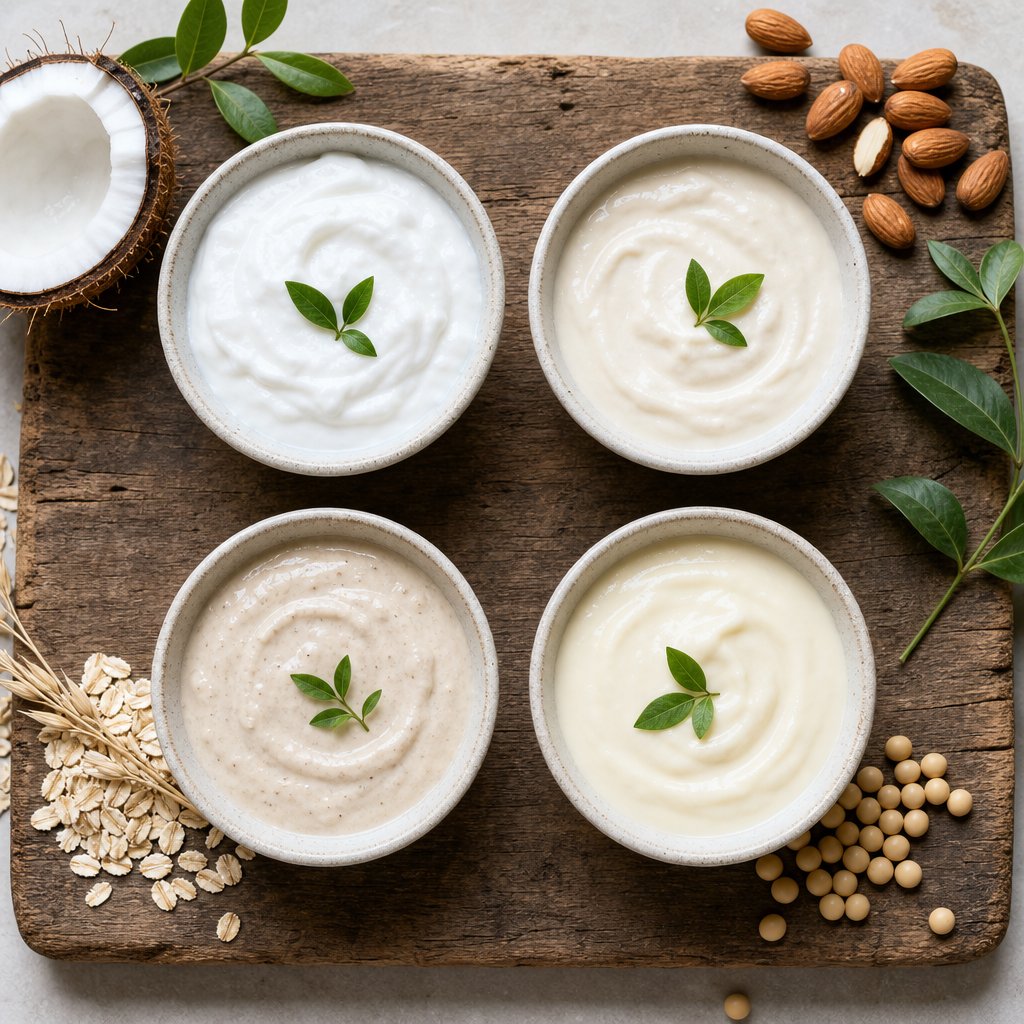
Dairy-free does not mean protein-free, but it does mean rethinking how you pair yogurt with protein powder. Plant-based yogurts vary wildly in thickness, fat content, and baseline protein, which changes how they interact with different powders. If you are vegan, lactose intolerant, or simply prefer non-dairy options, knowing which combinations work saves you from bowls of gritty, thin, or oddly flavored results.
Best Non-Dairy Yogurt and Protein Powder Pairings
Each plant-based yogurt has a distinct personality when it comes to mixing. Here is how the main options behave:
Coconut yogurt is the creamiest non-dairy option thanks to its higher fat content, typically 4-5g per 100g serving. That richness creates a smooth mouthfeel that masks the grittiness of plant-based protein powders well. The trade-off is that coconut yogurt contains virtually no protein on its own, as low as 0-0.2g per 100g. This makes adding protein to yogurt not just helpful but essential if you want any meaningful protein content. Vanilla-flavored plant protein blends pair especially well here because the coconut base carries sweet, tropical flavors naturally.
Almond yogurt runs thinner than coconut and has a lighter body. With only about 0.59g of protein per 100g, it needs serious supplementation. The thin texture means powder can clump or sink rather than suspending evenly. Your best bet is pairing almond yogurt with thickening powders like casein or pea protein, which absorb moisture and build body as they mix. This compensates for the yogurt's lack of structure and gives you a spoonable result rather than a runny one.
Oat yogurt brings natural sweetness from the oat base, with carbohydrate content around 12-13g per 100g. It has a moderate thickness and a mild, slightly cereal-like flavor. Unflavored protein powders work best here because the yogurt already carries enough sweetness on its own. Adding a flavored powder, especially one with artificial sweeteners, can push the taste into overly sweet territory. Oat yogurt also offers a decent starting protein of roughly 3.5g per 100g, making it one of the better non-dairy bases before you even add a scoop.
Soy yogurt is the closest plant-based equivalent to Greek yogurt in terms of behavior. Research shows soy yogurt delivers the highest protein among plant-based options at around 4.0g per 100g, which actually matches or slightly exceeds whole-milk dairy yogurt. Its texture is thicker than almond or oat, and it handles protein powder mixing with minimal clumping. Soy yogurt with protein powder behaves predictably: whey dissolves smoothly, pea protein thickens it nicely, and collagen disappears without a trace. If you want the most Greek-yogurt-like experience without dairy, soy is the answer.
| Non-Dairy Yogurt | Protein per 100g | Best Protein Powder Pairing | Texture Outcome | Flavor Notes |
|---|---|---|---|---|
| Coconut | 0-0.2g | Vanilla plant blend or collagen | Creamy, rich, smooth | Naturally sweet, tropical |
| Almond | 0.5-1g | Casein or pea protein | Thickens to spoonable with right powder | Mild, slightly nutty |
| Oat | 3-3.5g | Unflavored whey or plant blend | Moderate body, smooth | Naturally sweet, cereal-like |
| Soy | 2.6-4g | Any type (most versatile base) | Thick, closest to Greek yogurt | Neutral, slightly beany |
Digestive Issues from Combining Dairy Protein with Dairy Yogurt
Here is something most guides skip entirely: if you experience bloating or gas after eating yogurt with protein powder, the problem might not be the powder or the yogurt individually. It could be lactose stacking.
Regular dairy yogurt contains some residual lactose, and whey protein concentrate also contains lactose. When you combine whey protein and yogurt from dairy sources, you are doubling your lactose load in a single sitting. For people with mild lactose sensitivity who can tolerate one dairy serving at a time, this stacking effect pushes them past their threshold and triggers digestive discomfort.
Switching to plant-based yogurt with plant protein eliminates this issue completely. There is zero lactose in the equation, so your gut never hits that tipping point. This is often the real reason people feel better on a fully plant-based protein bowl, not because dairy is inherently problematic, but because the combined lactose dose was too high.
Lactose-Free Options That Still Taste Great
If you love the thickness and taste of Greek yogurt but suspect lactose is causing issues, you do not have to abandon dairy entirely. Lactose-free Greek yogurt gives you the same protein density, the same thick texture, and the same mixing ease as regular Greek yogurt. The lactose has simply been pre-broken into glucose and galactose using the enzyme lactase, so your body does not have to do that work.
Pairing lactose-free Greek yogurt with whey isolate, which contains negligible lactose due to its filtration process, gives you a high-protein bowl without digestive compromise. This middle-ground approach works well for people wondering what to add to yogurt for more protein without the stomach upset.
For those figuring out how to add protein to yogurt on a fully dairy-free diet, the combination of soy yogurt plus pea protein delivers the highest total protein per bowl among plant-based options, roughly 25-30g when using a full scoop. Coconut yogurt needs the most help since it starts near zero protein, but its creamy fat content makes it the most forgiving base for masking powder texture.
Whichever base you choose, the pairing logic stays the same: match thin yogurts with thickening powders, match naturally sweet yogurts with unflavored powders, and match high-fat yogurts with grittier plant proteins that benefit from fat coating. With your yogurt and powder pairing dialed in, the next consideration is timing your protein bowl to match specific fitness or dietary goals.
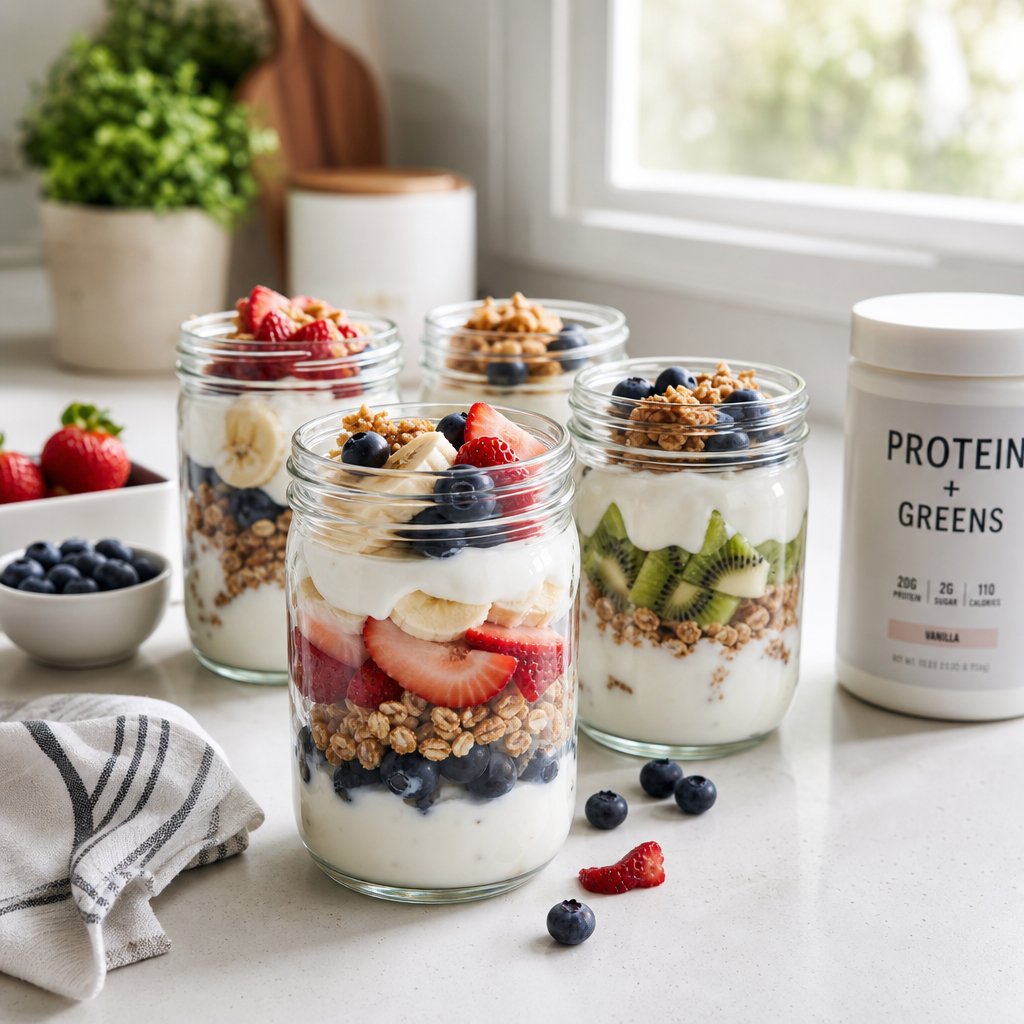
Goal-Based Protein Yogurt Combinations and Meal Timing
Your ideal protein yogurt recipe depends entirely on what you are trying to accomplish. A bowl designed for muscle building looks nothing like one built for weight loss or a late-night dessert craving. The yogurt type, powder choice, ratio, and timing all shift based on your goal. Here is a framework that matches specific combinations to the outcomes you are after.
Combinations for Muscle Building vs Weight Loss
Two people can eat protein yogurt for completely different reasons and need completely different bowls. The variables that matter most are total protein content, calorie density, and how long the food keeps you full.
For muscle building:
- Use full-fat or 2% Greek yogurt (200g) plus one full scoop of whey isolate to hit 40-45g of protein per bowl
- Add a tablespoon of nut butter or granola for extra calories if you are in a surplus phase
- Prioritize whey isolate for its fast absorption and high leucine content, the amino acid that triggers muscle protein synthesis most effectively
- Eat within two hours of resistance training for optimal muscle protein synthesis, though research shows total daily protein intake matters more than precise timing
- A yogurt and protein shake can deliver similar protein, but the yogurt version offers more satiety from its thick texture and slower gastric emptying
For weight loss:
- Use non-fat or low-fat Greek yogurt (200g) plus one scoop of casein protein for maximum fullness with fewer calories
- Casein's slow digestion keeps amino acids circulating for hours, reducing the urge to snack between meals
- Skip calorie-dense toppings like nut butter or chocolate chips. Instead, add volume with berries, sliced cucumber, or a sprinkle of cinnamon
- Use this as a meal replacement for one meal per day, not as an addition on top of your regular eating. A 200g low-fat Greek yogurt bowl with casein delivers roughly 40g protein at only 250-280 calories
- One study found that people who snacked on high-protein yogurt in the afternoon ate 100 fewer calories at dinner compared to those who had crackers or chocolate with the same caloric content
For meal prep and convenience:
- Prepare overnight protein yogurt bowls by mixing Greek yogurt, protein powder, and a splash of milk in mason jars the night before
- Batch 4-5 jars on Sunday evening for grab-and-go breakfasts all week
- Casein works best for overnight prep because it thickens over time rather than thinning out, giving you a better texture the next morning
- Add toppings like oats, chia seeds, or fruit in the morning to keep them fresh and crunchy
- These bowls stay good in the fridge for 3-4 days, making them one of the simplest yogurt and protein powder recipes for busy schedules
For dessert replacement:
- Combine 150g Greek yogurt with one scoop of casein protein for a thick, pudding-like consistency that satisfies sweet cravings
- Stir in a tablespoon of cocoa powder for a chocolate mousse texture, or fold in frozen berries for a fruity cheesecake vibe
- Flavored casein powders in chocolate, vanilla, or salted caramel work especially well here since the goal is indulgence, not neutrality
- This greek yogurt and protein powder recipe delivers 35-40g of protein while tasting like dessert, making it a sustainable swap for ice cream or pudding cups
Meal Timing and When to Eat Protein Yogurt
When you eat your protein yogurt bowl matters less than most fitness content suggests, but it is not irrelevant either. Different times of day favor different powder types and yogurt pairings.
Breakfast: A protein yogurt bowl in the morning provides sustained energy because the combination of protein, fat, and the yogurt's natural carbohydrates digests slowly. Full-fat Greek yogurt with whey or a plant blend keeps blood sugar stable through the morning without the crash you get from cereal or toast alone. This is also a great time for a yogurt and protein powder smoothie if you prefer a drinkable format. Blend your yogurt, powder, frozen fruit, and a handful of spinach for a portable breakfast that still delivers 30g+ protein.
Post-workout: Whey isolate in Greek yogurt is the fastest protein yogurt option for recovery. Whey's rapid absorption delivers amino acids to muscles quickly, and the yogurt adds carbohydrates that help replenish glycogen. You do not need to rush this within a 30-minute window. Recent research shows the anabolic window extends well beyond 30 minutes and may not have a strict cutoff at all. Eating your protein yogurt within two hours of training is more than sufficient.
Evening snack: This is where casein shines. Research on pre-sleep casein intake shows that consuming 40-48g of casein protein approximately 30 minutes before sleep increases plasma amino acid availability overnight, stimulates muscle protein synthesis during rest, and supports recovery from evening training sessions. Greek yogurt already contains casein naturally, so combining it with a casein powder scoop creates a double dose of slow-digesting protein that feeds your muscles through the night. Scientists recommend this approach specifically for those looking to maximize overnight muscle repair and adaptation.
Creative Textures from Pudding to Frozen Bark
Beyond the standard bowl-and-spoon format, protein yogurt lends itself to several creative textures that keep things interesting across the week.
Pudding consistency: One scoop of casein in 150g Greek yogurt, mixed and refrigerated for 15-20 minutes. The casein continues absorbing moisture and thickening, producing a dense, spoonable pudding. Add cocoa powder or peanut butter powder for flavor variety. This is the simplest protein powder greek yogurt recipe that feels like a genuine dessert.
Mousse texture: Half a scoop of whey isolate in 200g of whipped or aerated Greek yogurt, folded gently to preserve air. The whey thins the base just enough to create a light, airy mousse. Top with shaved dark chocolate or crushed freeze-dried raspberries.
Smoothie bowl base: Blend 150g frozen Greek yogurt with one scoop of protein powder and a small handful of frozen fruit. Pour into a bowl and top with granola, seeds, and fresh fruit. The frozen yogurt creates a thick, ice-cream-like base that holds toppings without sinking. Greek yogurt and protein powder recipes in this format work well for warmer months when you want something cold and substantial.
Frozen yogurt bark: Spread a mixture of Greek yogurt and protein powder onto a parchment-lined baking sheet in a thin, even layer. Drizzle with melted dark chocolate, sprinkle with nuts, seeds, or crushed fruit, and freeze for 3-4 hours until firm. Break into shards and store in the freezer for a high-protein snack that feels like candy. Full-fat Greek yogurt works best here because it freezes creamier and avoids the icy texture that low-fat versions produce.
Each of these formats uses the same core pairing of yogurt and protein powder but delivers a completely different eating experience. The variety keeps protein intake interesting, which matters more than most people realize for long-term consistency.
With your goals, timing, and texture preferences sorted, the final piece is choosing a protein powder that is actually designed to perform well in cold, thick foods rather than just shaker bottles.
Choosing the Best Protein Powder for Yogurt Mixing
Most protein powders are formulated for one thing: dissolving in a shaker bottle full of water or milk. That is a very different challenge than integrating smoothly into cold, thick, semi-solid yogurt. If you have been wondering what can you mix protein powder with beyond liquids, yogurt is one of the best answers, but only if the powder itself cooperates. Here is what separates a yogurt-friendly protein powder from one that fights you every time.
What to Look for in a Yogurt-Friendly Protein Powder
When shopping for the best protein powder to mix with yogurt, skip the marketing claims on the front of the tub and look at these specific features instead:
- Instantized processing: Powders labeled "instantized" or "instant mixing" have undergone agglomeration, a process that clusters fine particles into larger, porous granules. These granules wet evenly in cold, thick foods instead of forming gel-coated clumps on contact. This is the single biggest predictor of smooth results with protein powder with yogurt.
- Unflavored or lightly flavored options: Unflavored powder gives you the most versatility. You can pair it with any yogurt flavor, add your own fruit or cocoa, and avoid the artificial sweetener clash that ruins many bowls. If you prefer flavored, look for naturally sweetened versions with stevia or monk fruit rather than sucralose.
- High protein per scoop with minimal fillers: A clean label with 20-25g protein per 30g scoop means less filler material competing for moisture in your yogurt. Powders padded with thickeners, gums, or fiber blends tend to create uneven textures in semi-solid foods.
- Short ingredient list: Fewer ingredients means fewer sources of off-flavors. The best protein powder for mixing with yogurt typically lists protein source, lecithin (for instantization), and maybe a natural flavor. Anything beyond that adds complexity without benefit for food mixing.
- Sunflower lecithin over soy lecithin: Both aid dispersibility, but sunflower lecithin avoids allergen concerns and is now the preferred standard in premium protein products.
Protein powder with Greek yogurt works best when the powder was designed for cold-food scenarios rather than hot liquid dissolution. If a product mixes well in room-temperature water with just a spoon, it will almost certainly perform well in yogurt too.
The Rise of Food-Grade Protein Powder Formats
The supplement industry is shifting. With 70% of Americans actively trying to consume more protein and high-protein diets ranking as the most followed diet plan, consumers are looking beyond shaker bottles. They want protein powders that stir into oatmeal, fold into yogurt, blend into baked goods, and mix into coffee. What can I mix protein powder with is no longer a niche question. It reflects how people actually eat.
This demand is pushing manufacturers toward versatile powder formulations engineered for food applications. Particle size, granule porosity, and surface treatment all get tuned for instant dissolution in cold, viscous foods rather than just warm liquids. Manufacturers like ZhuFeng support nutrition brands and private label sellers with OEM/ODM services offering customized powder and granule formulations, including options engineered for instant dissolution in cold foods like yogurt. Their flexible product formats span powder and granules, hard capsules, gummy candy, and oral liquids, giving brands scalable production for protein products positioned specifically for the food-mixing use case.
For you as a consumer, this trend means better options are arriving on shelves. Look for protein powder for yogurt that explicitly mentions cold-food mixing on the label or in product descriptions. These products have been tested in the scenarios you actually use them in, not just in a shaker cup with 300ml of water. The difference in your morning bowl will be immediate and obvious: smoother texture, cleaner flavor, and zero clumps without any special technique required.
Frequently Asked Questions About Mixing Protein Powder with Yogurt
1. Does mixing protein powder into yogurt reduce its nutritional value?
No. The amino acids in protein powder remain fully intact and bioavailable when mixed into cold yogurt. Denaturation from heat changes the protein's shape but does not destroy its nutritional content. Whether you stir powder into chilled Greek yogurt or warm it in baked oats, your body absorbs the same total amino acids. The only variable that changes is digestion speed, which depends on the fat content of your yogurt base and the type of protein powder you use.
2. How much protein powder should I add to yogurt?
The ideal ratio is one scoop of protein powder (25-30g) per 150-200g of Greek yogurt. This keeps the texture thick and spoonable without becoming paste-like. If you use casein or pea protein, which absorb moisture aggressively, lean toward 200g of yogurt or add a tablespoon of milk to loosen the consistency. For whey isolate, which thins the mixture slightly, 150g of yogurt works well. Adjust based on your protein goals and preferred thickness.
3. Why does my protein powder clump in yogurt?
Clumping happens when powder particles hit cold yogurt and the outer layer hydrates instantly, forming a gel barrier that traps dry powder inside. Two factors cause this: adding too much powder at once and using yogurt straight from the fridge. Fix it by letting yogurt sit at room temperature for five minutes, then adding powder in three small batches while folding gently with a spatula between each addition. Sifting the powder through a fine mesh strainer before adding also prevents initial clump formation.
4. Can I mix protein powder with non-dairy yogurt?
Yes, but the pairing matters more with plant-based yogurts because they vary widely in thickness and protein content. Soy yogurt behaves most like Greek yogurt and handles any powder type well. Coconut yogurt is creamy and masks grittiness from plant proteins but contains almost no protein on its own. Almond yogurt runs thin, so pair it with thickening powders like casein or pea protein. Oat yogurt works best with unflavored powders since it already carries natural sweetness.
5. Which protein powder type works best in yogurt?
Whey isolate dissolves most easily and creates a smooth, slightly thinner consistency ideal for everyday bowls. Casein thickens yogurt into a pudding-like texture perfect for dessert replacements or overnight prep. Plant-based blends combining pea and rice protein dissolve more evenly than single-source options. Collagen peptides disappear completely without changing texture or flavor but lack the muscle-building amino acid profile of whey or casein. Choose based on your texture preference and fitness goals rather than a single best option.