The Real Link Between Protein Powder and Kidney Stones
You blend a scoop of protein powder into your post-workout shake without a second thought. Millions of people do the same thing every single day. But a nagging question keeps surfacing in fitness forums, doctor's offices, and late-night search sessions: can protein powder cause kidney stones?
The honest answer sits somewhere between "relax, you're fine" and "yes, pay attention." Whether or not protein powder poses a real threat to your kidneys depends on a spectrum of factors — the type of protein you choose, how much you consume, how well you hydrate, and your individual health profile. Sports nutritionists and nephrologists rarely see eye to eye on dietary protein, yet both disciplines agree on one thing: context matters far more than blanket statements.
So does protein powder cause kidney stones in every user? No. Can protein shakes cause kidney stones under certain conditions? The science says yes, and the details deserve a closer look.
Why This Question Matters More Than Ever
Protein supplements are no longer reserved for bodybuilders. The global protein supplements market is projected to reach USD 30.3 billion in 2026, fueled by demand from athletes, aging adults managing muscle loss, weight-loss seekers, and everyday wellness consumers. Powder products alone hold over 54% of that market share, and plant-based options are growing at an 8.53% annual rate.
At the same time, kidney stone incidence keeps climbing. Kidney stone pain sends more than half a million Americans to emergency rooms each year, and cases are rising even among children and young adults. Research published in Kidney International Reports identifies warmer ambient temperatures as a driver of stone formation — higher heat means greater fluid loss, more concentrated urine, and increased mineral supersaturation. For anyone mixing protein drinks in a hot climate or sweating through summer workouts, these two trends intersect in a way that demands attention.
Do protein shakes cause kidney stones simply because more people are drinking them? Not exactly. But the collision of surging supplement use and rising stone rates creates a perfect reason to dig into the evidence.
What This Guide Covers
This article bridges sports nutrition research and nephrology science to give you a complete, evidence-based picture. Here is what you will find inside:
- The biological mechanisms that connect excess protein metabolism to stone formation
- How each of the four major kidney stone types responds differently to protein intake
- A type-by-type risk ranking of whey, casein, pea, soy, collagen, and other popular protein powders
- The compounding effect of stacking protein with creatine, BCAAs, and pre-workouts
- Safe protein intake thresholds based on body weight, plus a practical hydration framework
- Myth-busting on common misconceptions about protein and kidney health
- Prevention strategies and kidney-friendly protein formulation guidance
Whether you are someone wondering if your daily can of protein drinks cause kidney stones, a former stone sufferer cautiously eyeing the supplement aisle, or simply a health-conscious consumer who wants the facts — the answers start with understanding exactly what happens inside your body when protein metabolism meets kidney chemistry.
How Excess Protein Triggers Kidney Stone Formation
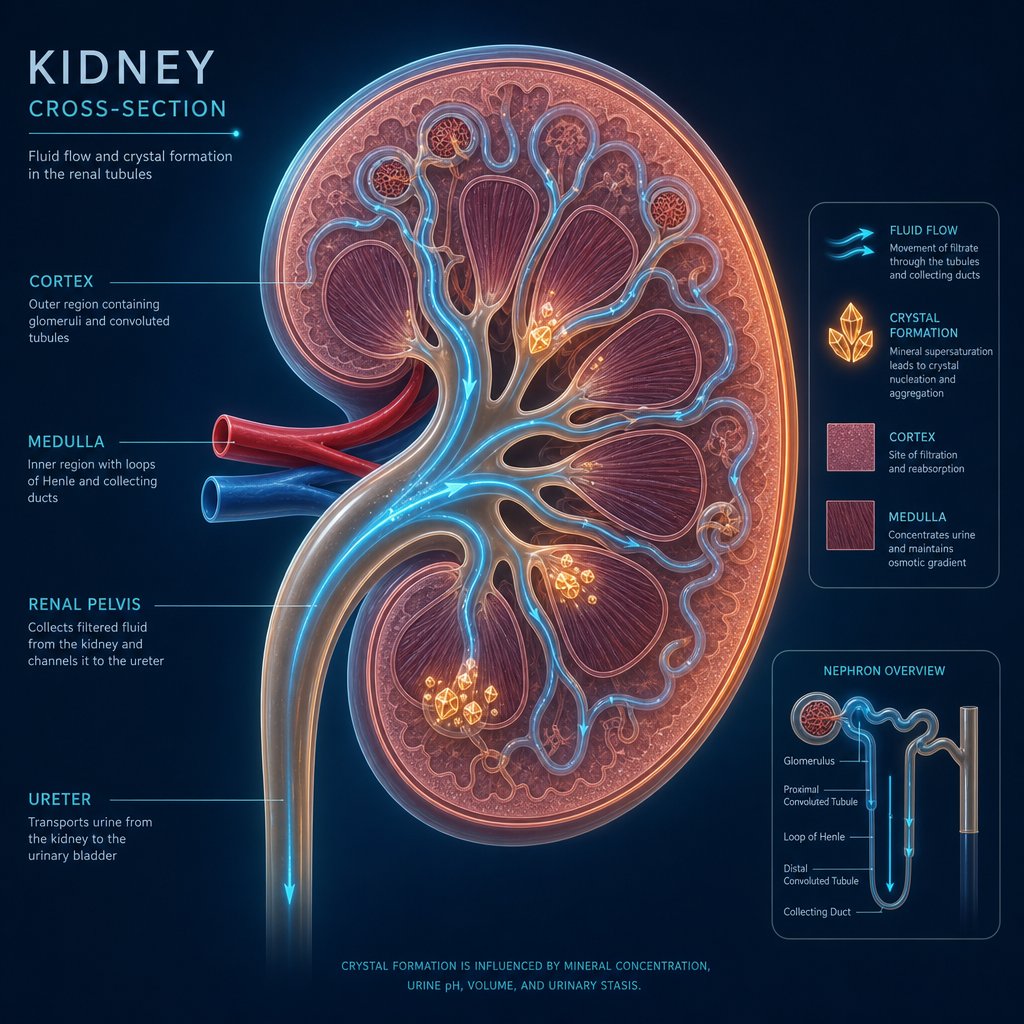
Kidney stones don't appear out of nowhere. They form when dissolved minerals in your urine reach concentrations so high that crystals begin to nucleate, grow, and aggregate inside the kidney. Think of it like dissolving sugar in water — at some point, no more sugar can stay dissolved, and crystals start forming at the bottom of the glass. In your kidneys, that tipping point is called supersaturation, and excess protein metabolism can push your urine chemistry straight toward it through multiple pathways at once.
The Step-by-Step Mechanism of Stone Formation
When you digest protein, your body breaks it down into amino acids. Metabolizing those amino acids — especially sulfur-containing ones like methionine and cysteine — generates acid as a byproduct. Your kidneys handle the job of clearing that acid, and the cascade of effects this triggers is where the trouble begins.
Here is what happens inside your body when protein intake climbs too high:
- Urine becomes more acidic. Excess acid production from protein metabolism lowers your urine pH. Acidic urine is the single biggest risk factor for uric acid stones and can also promote calcium oxalate crystallization.
- Urinary calcium rises. Higher acid loads cause your body to pull calcium from bones to buffer the acidity. That extra calcium gets excreted through the kidneys, elevating one of the most common drivers of stone formation.
- Citrate levels drop. Citrate is your kidneys' natural defense against calcium stones — it binds calcium in urine and prevents crystals from forming. When your body needs citrate to neutralize the acid produced by protein metabolism, less citrate makes it into your urine. The result? One of your strongest built-in stone inhibitors gets quietly depleted.
- Uric acid concentration climbs. Protein metabolism generates purines that break down into uric acid. Combined with the already-lowered urine pH, this creates ideal conditions for uric acid crystals to form.
Each of these shifts alone increases risk. When all four occur simultaneously — which is exactly what happens during periods of chronically high protein intake — the effect compounds dramatically.
Kidney stones are formed from too little liquid or high protein intake creating mineral supersaturation in the urine. When dissolved minerals exceed what your urine can hold in solution, crystallization becomes inevitable.
Research published in the International Journal of Molecular Sciences confirms that this process begins with urine supersaturation, followed by crystal nucleation, growth, aggregation, and retention in the kidney — a multi-step chain where diet plays a modifiable role at the very first stage. Does too much protein cause kidney stones in every person? Not necessarily. But it reliably shifts urine chemistry in directions that favor stone development, particularly in susceptible individuals.
Why Concentrated Protein Powder Differs From Whole Food
You might wonder whether a 30-gram scoop of whey isolate affects your kidneys differently than a chicken breast with the same protein content. The answer is yes — and the distinction matters more than most people realize.
Whole food proteins come packaged with fiber, fats, water, and other nutrients that slow digestion. A grilled chicken breast takes hours to fully break down, releasing amino acids gradually into your bloodstream. Your kidneys process the resulting acid load in a steady, manageable stream.
Protein powder is a different story. Isolated and concentrated supplements — especially fast-absorbing options like whey protein — deliver a large amino acid bolus rapidly. This creates temporary metabolic spikes: a sharper drop in urine pH, a more sudden surge in urinary calcium, and a faster depletion of buffering citrate. Your kidneys handle the same total protein load, but compressed into a much shorter window.
This is where the concept of Potential Renal Acid Load (PRAL) becomes useful. PRAL measures how much acid or alkali a food generates once metabolized. Dietary patterns with a higher acid load are consistently associated with kidney stones. Non-dairy animal proteins rank among the highest PRAL foods, while fruits and vegetables produce alkali that helps neutralize that acid. A chicken breast eaten alongside a salad and roasted vegetables partially offsets its own acid load. A protein shake consumed alone? It delivers the acid hit without the alkaline counterbalance.
Can high protein cause kidney stones even when total daily intake stays moderate? It can, if the delivery method concentrates the metabolic burden into a narrow timeframe. And does excess protein cause kidney stones more readily from supplements than from balanced meals? The evidence suggests that too much protein can cause kidney stones through any source, but the rapid absorption profile of protein powders may amplify the short-term stress on kidney chemistry — a nuance that whole-food comparisons alone do not capture.
Understanding these mechanisms is essential, but they raise an equally important follow-up: does every type of kidney stone respond to protein the same way, or do different stone compositions carry entirely different risk profiles?
Different Kidney Stone Types and How Protein Affects Each
Not all kidney stones are created equal — and neither are their relationships with protein. Four distinct stone types account for virtually every case, yet each one forms under different chemical conditions and responds to dietary protein in its own way. Understanding which stone type you are most at risk for changes the entire conversation about whether a high protein diet causes kidney stones in your specific situation.
Calcium Oxalate Stones and Protein Intake
Calcium oxalate stones are the most common variety, making up the majority of all kidney stone cases. They form when calcium and oxalate bind together in urine that has become supersaturated with these minerals.
Protein powder enters this equation from two directions. First, high animal-based protein intake increases urinary calcium excretion — a well-documented effect of the acid load discussed earlier. Second, certain plant-based protein powders introduce oxalate directly. Soy and especially almond-based supplements can carry significant oxalate concentrations. Research from NYU and the University of Alabama at Birmingham found that almond milk had the highest oxalate content among plant-based milks tested, while oat and rice alternatives compared more favorably with dairy. The same principle applies to protein powders derived from these sources — almond-based formulas deliver oxalate straight into the metabolic pathway that feeds calcium oxalate crystallization.
So when people ask what diet causes kidney stones most frequently, the answer often points to this combination: excess calcium in the urine meeting excess oxalate, with inadequate fluid to keep both dissolved.
Uric Acid Stones and Purine-Rich Proteins
Uric acid stones form through a different mechanism — one driven almost entirely by urine acidity. Johns Hopkins Medicine explains that when urine pH drops below 5.5, uric acid becomes saturated and begins to crystallize. Protein metabolism is one of the most reliable ways to push pH into that danger zone.
Every gram of protein your body processes generates purines as byproducts, which break down into uric acid. Animal-derived protein sources — including whey and casein from dairy — are especially purine-dense. When someone consumes multiple high-protein shakes daily on top of a meat-heavy diet, uric acid production surges while urine pH simultaneously plummets. These two shifts create the perfect storm for uric acid stone formation. Can a high protein diet cause kidney stones of this type specifically? The biochemistry strongly suggests yes, particularly in individuals who are already genetically prone to gout or hyperuricosuria.
Struvite and Cystine Stones
Struvite stones are composed of magnesium, ammonium, and phosphate. They form as a result of urinary tract infections caused by bacteria that produce ammonia, raising urine pH to alkaline levels. Protein intake plays essentially no role here — these stones are infection-driven, not diet-driven.
Cystine stones are equally unrelated to supplementation. They result from cystinuria, an inherited metabolic disorder that causes excessive cystine to leak into the urine. No amount of dietary modification — protein-related or otherwise — causes this genetic condition.
Recognizing that these two stone types sit outside the protein and kidney stones conversation helps you focus your attention where it actually matters: calcium oxalate and uric acid stones, which together represent the overwhelming majority of cases and are directly influenced by what diet causes kidney stones in most people.
| Stone Type | Prevalence | Protein-Related Risk Level | Primary Contributing Factors |
|---|---|---|---|
| Calcium Oxalate | ~70-80% of all stones | Moderate to High | Elevated urinary calcium from excess protein; oxalate from plant-based protein sources (almond, soy); low fluid intake |
| Uric Acid | ~5-10% of all stones | High | Low urine pH from protein acid load; purine metabolism from animal proteins; dehydration |
| Struvite | ~10-15% of all stones | None | Urinary tract infections by ammonia-producing bacteria; not linked to protein intake |
| Cystine | ~1-2% of all stones | None | Inherited cystinuria disorder causing excess cystine in urine; genetic, not dietary |
Does protein cause kidney stones across the board? The table makes it clear: the risk is concentrated in two specific stone types, while the other two remain unaffected by supplementation habits. This distinction is critical because it shapes the next logical question — if calcium oxalate and uric acid stones are the main concerns, how do individual protein powder types compare in terms of the specific risk factors that fuel each one?
Ranking Every Protein Powder Type by Kidney Stone Risk
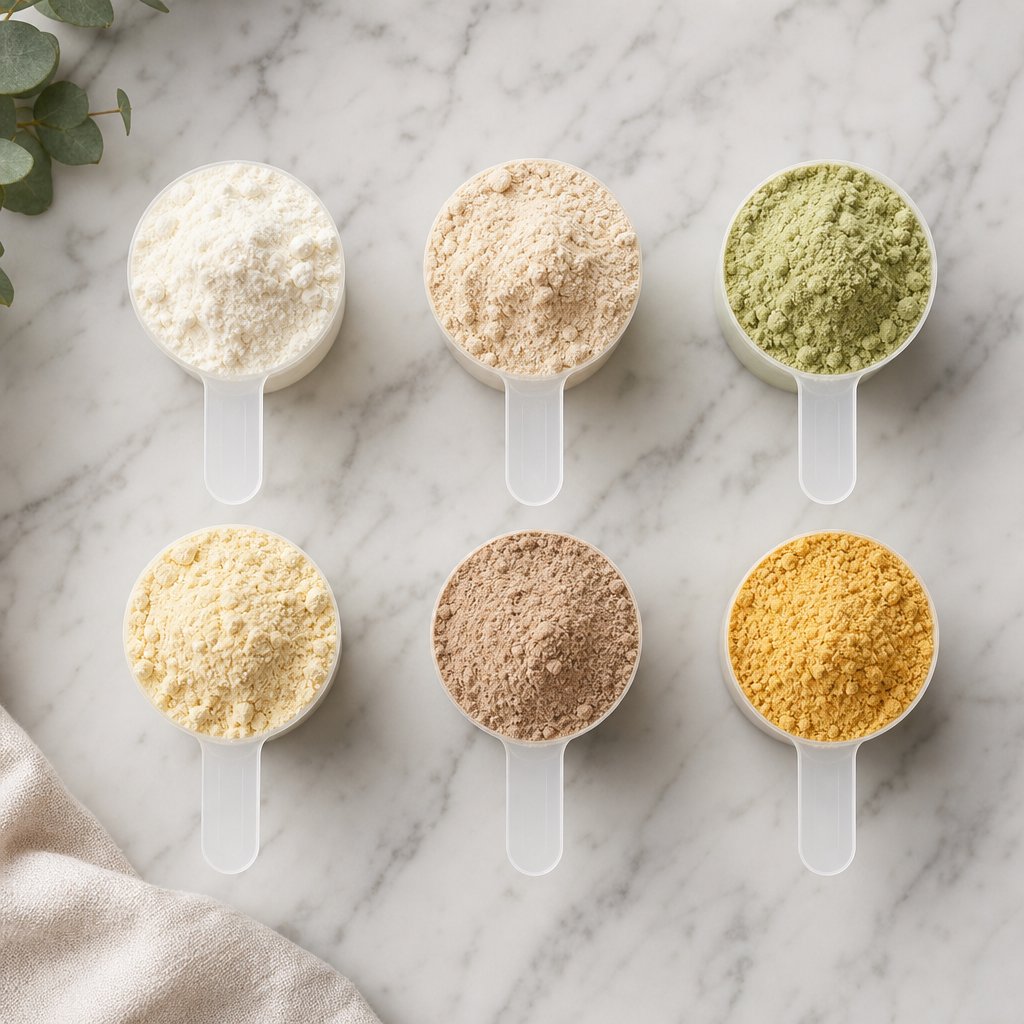
Here is what most people actually want to know: does your specific protein powder put you at risk? The answer varies dramatically depending on the source. A scoop of whey isolate affects your urine chemistry very differently than a scoop of hemp or collagen — yet most discussions about protein and kidney stones treat all powders as interchangeable. They are not.
A comparative crossover study published in Urology (Wong et al., 2026) put this question directly to the test. Researchers at Washington University fed participants identical controlled diets while swapping only the protein isolate source — whey, pea, soy, and rice — across four separate phases. Two 24-hour urine collections during each phase revealed significant differences in stone risk markers depending solely on which protein powder was consumed.
Whey and Casein Protein Risk Profile
Does whey protein cause kidney stones? The Washington University study found that whey protein — along with rice protein — produced the most concerning urinary changes. Both had higher sulfur-containing amino acid content, which resulted in decreased urine pH, increased urinary calcium excretion (calciuria), and elevated uric acid supersaturation compared to pea and soy proteins.
So can whey protein cause kidney stones? It reliably shifts two of the four key risk markers — lower pH and higher calcium — in the wrong direction. For anyone asking whether whey protein side effects kidneys should worry about, the answer is: the risk is real but dose-dependent. Does whey protein have calcium that contributes to stones? Not directly through the powder itself — it is the metabolic processing of whey's sulfur-rich amino acids (methionine, cysteine) that drives calcium out through the kidneys.
Casein carries a similar dairy-derived amino acid profile. However, casein forms gel-like structures in the stomach and digests over 6-8 hours rather than the 1-2 hours typical of whey. This slower absorption may create a less acute metabolic spike, but the overall acid load from a full day's intake remains comparable. Think of casein as spreading the same risk over a longer window rather than eliminating it.
Plant-Based Protein Powders and Hidden Oxalate Risk
Is plant protein powder bad for kidneys? Many consumers assume plant-based options are automatically safer. The research tells a more complicated story.
Pea and soy protein performed better than whey on some metrics — the Washington University study showed significantly lower urinary calcium and higher urine pH with both plant proteins. For anyone prone to uric acid stones, this is genuinely good news: pea and soy protein lowered uric acid supersaturation, creating less favorable conditions for those crystals to form.
But here is the catch. Pea protein produced significantly higher urinary oxalate compared to whey. For calcium oxalate stone formers — the most common stone type by far — that elevated oxalate is a direct threat. Clinical dietitian Dr. Kristina Penniston notes that preformed oxalate in plant foods binds with calcium in urine to create exactly the crystals you want to avoid. Almond-based protein powders pose even greater concern, as almonds are among the highest oxalate foods in the Western diet.
Hemp and rice protein emerge as potentially lower-risk plant options. Hemp protein is low in sulfur-containing amino acids and does not carry the high oxalate burden of pea or soy. Rice protein, while sharing some of whey's pH-lowering effects, produced no significant difference in calcium oxalate supersaturation in the crossover study — though its lower urine pH did elevate uric acid supersaturation.
Collagen, Egg White, and Alternative Proteins
Collagen peptides present an interesting case. Their amino acid profile lacks significant methionine — one of the primary sulfur-containing amino acids that drives acid production and calciuria. This makes collagen potentially less acidogenic than whey or casein. However, Dr. Penniston highlights an important caveat: collagen serves as an oxalate precursor. When metabolized, certain amino acids in collagen can be converted into oxalate within the body. For moderate supplemental doses this may not be clinically significant, but high-dose collagen users should be aware of the tradeoff.
Egg white protein occupies a moderate position. While egg whites are complete proteins, research suggests their unique food matrix contains compounds that reduce their acidogenic potential compared to other animal proteins. Is whey protein bad for kidneys relative to egg whites? The available evidence suggests egg white protein may generate a milder acid load, though direct comparative urinary studies remain limited.
| Protein Type | Kidney Stone Risk Level | Primary Risk Factor | Oxalate Content Level |
|---|---|---|---|
| Whey (isolate/concentrate) | Moderate-High | Increased calciuria, low urine pH, elevated uric acid supersaturation | Very Low |
| Casein | Moderate | Similar acid load to whey but slower absorption; elevated urinary calcium | Very Low |
| Pea | Moderate | Elevated urinary oxalate; increased calcium phosphate supersaturation | Moderate-High |
| Soy | Low-Moderate | Contains oxalate; lower calciuria offset by oxalate contribution | Moderate |
| Hemp | Low | Low sulfur amino acids; minimal oxalate; lower BCAA content limits acid load | Low |
| Rice | Moderate | Higher sulfur amino acids lower pH and increase uric acid supersaturation | Low |
| Collagen | Low-Moderate | Low methionine reduces acid load; acts as oxalate precursor at high doses | None (endogenous oxalate production) |
| Egg White | Low-Moderate | Complete protein with moderate acid load; food matrix may reduce acidogenicity | Very Low |
Notice that no single protein powder is universally "safe" or "dangerous." The risk depends on which stone type you are prone to, how much you consume, and what else accompanies it in your diet. Pea protein protects against uric acid stones while potentially promoting calcium oxalate stones. Whey elevates calciuria but contributes virtually zero dietary oxalate. Every choice involves a tradeoff.
Yet protein powder rarely exists in isolation. Most dedicated gym-goers stack their shakes alongside creatine, BCAAs, pre-workouts, and vitamin supplements — creating a compounding effect that individual supplement studies never capture.
The Gym Stack Effect and Compounding Supplement Risks
Imagine your morning routine: a scoop of whey protein, a serving of creatine, a BCAA capsule, and a pre-workout loaded with caffeine and vitamin C. Each supplement has its own safety data. Each one was probably studied in isolation. But your kidneys don't process them in isolation — they deal with the combined metabolic load of everything you swallow, all at once. This is the gym stack effect, and it is a kidney stone risk factor that virtually no one talks about.
When people ask whether protein supplements kidney stones are connected, they usually focus on protein alone. The reality is that can supplements cause kidney stones depends heavily on what you are taking alongside that protein shake — and the cumulative burden may be far greater than the sum of its parts.
Creatine, BCAAs, and Protein Powder Combined Risk
Creatine monohydrate is one of the most popular sports supplements worldwide, and decades of research have generally supported its safety for healthy kidneys. A case report published in La Tunisie Medicale followed a young athlete with a history of kidney stones who used 5 grams per day of creatine for two months — and no new stones formed 14 months later. A systematic review and meta-analysis also concluded that increases in serum creatinine from creatine supplementation did not indicate kidney damage.
Sounds reassuring? It is — for creatine taken alone, at recommended doses, with adequate hydration. The problem starts when you layer creatine on top of high-dose protein powder and BCAAs. Here is why:
- Creatine increases creatinine load. Your kidneys filter creatinine as a waste product of creatine metabolism. While this does not damage healthy kidneys directly, it adds to the total filtration workload at a time when those same kidneys are already processing a heavy amino acid load from your protein shake.
- BCAAs amplify total amino acid metabolism. Branched-chain amino acids (leucine, isoleucine, valine) are metabolized primarily in muscle, but their byproducts still require renal clearance. Adding 5-10 grams of BCAAs to a 40-50 gram protein shake substantially increases the total nitrogen and acid your kidneys must handle.
- Combined acid load compounds. The potential renal acid load (PRAL) of your overall diet determines how much acid your kidneys must excrete. High-protein diets already push PRAL into positive territory — stacking BCAAs and creatine alongside them amplifies that acid burden further, depressing urinary citrate and lowering urine pH in ways that individual supplement studies simply do not measure.
The critical nuance here is that the case report on creatine and kidney stones involved an athlete consuming creatine alone, without concurrent high-dose protein supplementation or other additives. One case report involving a young weight lifter who experienced acute renal failure was notably taking multiple food supplements simultaneously, including creatine — illustrating how stacking changes the safety equation entirely.
Pre-Workouts, Vitamin C, and Hidden Stone Triggers
Pre-workout formulas are the wild card in most gym stacks. Their ingredient lists often read like a chemistry experiment — and several common components are supplements that can cause kidney stones when taken in combination with protein powder.
What vitamins cause kidney stones? Start with vitamin C. Nebraska Medicine reports that men who took vitamin C supplements at 1,000 mg per day or more had an increased risk of kidney stones. The mechanism is straightforward: ingested vitamin C is partly converted to oxalate and excreted in urine. A metabolic study of 24 individuals found that 2 grams daily of vitamin C increased urinary oxalate excretion by about 22%. Many pre-workout supplements pack 500-1,000 mg of vitamin C per serving — and if you are also taking a daily multivitamin with additional vitamin C, you may be crossing that threshold without realizing it. Can multivitamins cause kidney stones on their own? Probably not at standard doses. But combined with a vitamin C-fortified pre-workout and a high-oxalate plant protein powder, the oxalate load adds up fast.
Caffeine presents another hidden issue. Most pre-workouts contain 150-300 mg of caffeine — a mild diuretic that can promote fluid loss. For someone already under-hydrating relative to their protein intake, that caffeine-driven fluid loss further concentrates urinary minerals. And if you are also drinking energy drinks throughout the day? The dehydrating effect multiplies. Can energy drinks cause kidney stones? The caffeine and sugar content both contribute to dehydration and altered urine chemistry, making them a risk amplifier when paired with high-protein supplementation.
Then there are the supplements people rarely think about in this context:
- Calcium supplements taken alongside protein shakes can directly elevate urinary calcium, particularly when consumed without food
- Vitamin D supplements increase intestinal calcium absorption, which can raise the calcium available for urinary excretion — compounding the calciuria that high-protein metabolism already promotes
- High-dose B6 supplements at excessive levels may increase oxalate production as a metabolic byproduct
- Protein bars with added calcium and vitamin C fortification stack risk factors in a single snack that most people would never consider problematic
Individual supplement safety data does not account for the cumulative effect of a full supplement stack. A protein powder tested alone, creatine tested alone, and vitamin C tested alone may each appear safe — but your kidneys process them together, and the combined metabolic burden can push urine chemistry past the stone-formation threshold.
The gym stack effect highlights a broader truth: asking whether protein powder causes kidney stones is too narrow a question. The real risk lives in the total picture — your protein type, your dosage, every other supplement in your cabinet, your hydration habits, and the gap between what was studied in a lab and what actually happens in your daily routine. Bridging that gap requires specific guidance on how much protein is truly safe and how much water you actually need to offset it.

How Much Protein Is Safe and How Much Water You Need
Knowing which protein powders carry higher risk is only useful if you also know where the dosage line sits. "Too much" is a phrase that appears in nearly every article about protein and kidney health — but almost no one defines it. How much protein is safe for kidneys in practical, real-world terms? And how much water does it actually take to offset the metabolic burden? These two numbers matter more than any supplement label.
Safe Protein Intake Thresholds by Body Weight
General sports nutrition guidelines suggest a range of 1.2 to 2.0 grams of protein per kilogram of body weight per day for physically active adults. For a 180-pound (82 kg) individual, that translates to roughly 98-164 grams daily. Research consistently supports these levels as safe for people with healthy kidney function. A 2024 meta-analysis published in Frontiers in Nutrition — pooling data from over 148,000 participants — actually found that higher dietary protein intake was associated with an 18% reduced risk of chronic kidney disease in individuals without pre-existing renal conditions.
So will too much protein cause kidney stones at these levels? For most healthy adults, moderate-to-high intake within the 1.2-2.0 g/kg range does not appear to threaten kidney health when hydration is adequate. The risk escalates when intake consistently exceeds 2.0 g/kg — a threshold that aggressive supplementation makes surprisingly easy to cross. Imagine someone weighing 75 kg who eats three protein-rich meals, adds two scoops of whey (50 grams), and snacks on a protein bar (25 grams). Their total easily reaches 180-200 grams, pushing well past 2.5 g/kg without feeling excessive.
The picture shifts dramatically for individuals with compromised kidney function. The KDIGO clinical guidelines recommend maintaining intake at 0.8 g/kg/day for people with diabetes and chronic kidney disease not on dialysis. The KDOQI guidelines go further, recommending protein restriction for adults with CKD stages 3-5 who are metabolically stable. For these individuals, standard protein powders designed for athletes are simply too much protein for kidneys that are already working at reduced capacity. Protein powder for renal patients — or anyone with known kidney concerns — requires physician-guided dosing, often well below what supplement labels suggest as a "single serving."
A Practical Hydration Framework for Protein Users
"Drink more water" is the most commonly repeated — and least actionable — advice in kidney stone prevention. How much more? Relative to what? Scaled to which variables? The generic recommendation ignores the reality that someone consuming 150 grams of protein daily generates significantly more metabolic waste than someone eating 80 grams, and their kidneys need proportionally more fluid to keep urine dilute.
UT Southwestern Medical Center recommends that people who have had a kidney stone drink at least 2 liters — and ideally 3 liters — of water daily. Clinical nephrolithiasis guidelines identify 2,500 mL as the optimal 24-hour urinary volume for stone prevention, meaning total fluid intake needs to exceed that figure to account for sweat, respiration, and other losses. For protein powder users, the baseline needs to go even higher.
The framework below scales your water intake to your protein consumption — a practical approach that accounts for the increased renal acid load and mineral excretion that higher protein doses demand:
| Daily Protein Intake Range | Baseline Water Recommendation | Additional Water Suggested |
|---|---|---|
| Under 80 g (low supplementation) | 2.0 - 2.5 liters | None beyond baseline if urine is pale yellow |
| 80 - 120 g (moderate supplementation) | 2.5 - 3.0 liters | +500 mL (approx. 2 extra cups) |
| 120 - 160 g (high supplementation) | 3.0 - 3.5 liters | +750 mL - 1 liter (3-4 extra cups) |
| Over 160 g (very high supplementation) | 3.5 - 4.0 liters | +1 liter or more; monitor urine specific gravity |
A quick self-check: your urine should never appear darker than a very pale yellow. If it does, you are not drinking enough — regardless of what the numbers say. Hot climates, intense training sessions, caffeine intake, and creatine use all increase fluid requirements beyond what this table captures. Adding citrus juice to your water provides natural citrate, which binds to calcium and helps block stone formation — a simple upgrade that turns hydration into active prevention.
Guidance for Previous Kidney Stone Sufferers
If you have already passed a kidney stone, every recommendation above carries double the urgency. UT Southwestern's urology specialists note that once you have had one stone, you face up to a 50% chance of developing another within the next 10 years. That recurrence rate makes proactive management essential — not optional.
The single most important step is getting a 24-hour urine analysis. This test measures calcium, citrate, oxalate, uric acid, sodium, creatinine, pH, and total volume — giving you and your urologist a precise chemical snapshot of your personal stone risk. Without it, any dietary advice is guesswork. A 24-hour urine panel reveals whether your risk comes from high calcium, high oxalate, low citrate, or low volume — and the treatment plan varies drastically depending on the answer.
For former stone formers who want to continue using protein supplements, the path forward looks like this:
- Consult a urologist or nephrologist before reintroducing any protein supplement. Share your stone composition report and 24-hour urine results so your provider can identify which protein types carry the greatest risk for your specific chemistry.
- Start with lower-risk protein sources. If your stones were calcium oxalate, avoid high-oxalate plant proteins and consider egg white or hemp-based options. If your stones were uric acid, plant-based renal protein supplements with lower sulfur amino acid profiles may be a better fit than whey or casein.
- Limit supplemental protein to one serving per day initially, keeping total intake at or below 1.0-1.2 g/kg until follow-up urine testing confirms your chemistry remains stable.
- Hydrate aggressively — aim for the upper end of the table above, targeting at least 3 liters daily. Your goal is to maintain urine output at or above the optimal 2,500 mL threshold recommended for stone prevention.
- Repeat the 24-hour urine test 3 months after reintroducing supplements to confirm that your risk markers have not worsened.
For anyone navigating CKD alongside stone history, protein drinks for renal patients are an entirely different category — typically lower in total protein per serving, controlled for phosphorus and potassium, and formulated under medical supervision. Standard gym-oriented protein powders are not designed with these constraints in mind, and using them without clinical guidance risks pushing already-compromised kidneys further toward mineral overload.
These dosage and hydration numbers provide a practical framework — but numbers alone cannot correct the misconceptions that lead people to make poor supplement choices in the first place. Several deeply held myths about protein and kidney health continue to circulate, and separating fact from fiction is the next step toward genuinely informed decision-making.
Common Myths About Protein Powder and Kidney Health
Misconceptions about protein and kidneys spread faster than peer-reviewed research can correct them. Some of these myths scare people away from supplements they could safely use. Others create a false sense of security that leads to genuinely risky habits. Either way, making smart supplement decisions requires separating what sounds true from what actually holds up under scientific scrutiny.
Let's walk through the most persistent myths — and what the evidence really says.
Myth: All Protein Damages Your Kidneys
This is the big one. You will hear it from well-meaning friends, read it on social media, and occasionally even catch it from healthcare providers who have not reviewed the latest research. The claim is simple: eating a lot of protein harms your kidneys. Period.
The reality is far more nuanced. A systematic review published in Advances in Nutrition examined 26 studies — including 18 randomized controlled trials — comparing protein intakes at or above the US RDA (0.8 g/kg/day) with higher levels up to 2.5 g/kg/day. The conclusion? Higher protein intake within the acceptable macronutrient distribution range was "consistent with normal kidney function in healthy individuals." Glomerular filtration rates remained normal across every included study, and increased protein had little or no effect on blood markers of kidney function.
Healthy kidneys are remarkably adaptable organs. They respond to higher protein loads by increasing filtration rate — a physiological adaptation, not a sign of damage. The concern is primarily about excessive intake, pre-existing kidney conditions, or chronic high-dose supplementation without adequate hydration. Multiple global bodies that set dietary reference intakes have found insufficient evidence to establish an upper limit for protein in healthy populations. Is protein bad for your kidneys when those kidneys are already compromised? Yes — and clinical guidelines exist specifically for that situation. But extending that caution to everyone with functioning kidneys is not supported by the data.
Myth: Plant-Based Protein Is Always Safer for Kidneys
This one sounds logical. Plant proteins generally produce less renal acid load than animal proteins. A 21-year prospective cohort study of nearly 16,000 adults found that vegetable protein was associated with an 11% decreased risk of kidney disease — which sounds like a clear win for the plant-based camp.
But kidney stones and kidney disease are different conditions with different risk profiles. As covered in the protein powder rankings, pea protein generates significantly higher urinary oxalate than whey. Almond-based powders carry some of the highest oxalate loads in the supplement world. And research confirms that people with more oxalate in their urine face increased kidney stone risk — especially when calcium intake is low.
Is plant protein powder bad for kidneys across the board? No. But assuming that "plant-based" automatically means "kidney-safe" can lead someone with calcium oxalate stone history straight into a higher-risk protein source without realizing it. No single protein origin — animal or plant — is universally safe or universally dangerous. The risk depends on dose, hydration, individual stone chemistry, and the specific plant source involved.
Myth: Protein Shakes Directly Cause Kidney Disease
Here is where the conversation often goes off the rails. People conflate kidney stones with kidney disease, treating them as if they are the same condition on a sliding scale. They are not. Kidney stones are crystallized mineral deposits that form in the urinary tract. Chronic kidney disease (CKD) is a progressive loss of kidney function over time, measured by declining glomerular filtration rate. One is a painful event; the other is a degenerative process.
Is protein powder bad for kidneys in the sense that it causes progressive renal disease? The systematic review in Advances in Nutrition found no pattern of abnormality among blood variables suggestive of adverse kidney effects from increased protein intake. Even bodybuilders consuming up to 2.0 g/kg showed all kidney function markers remaining within normal limits during a 30-day observation period. Researchers examining healthy Dutch adults over 15 years found no association between total protein intake and changes in eGFR over time.
Can excessive protein stress the kidneys? Yes — it increases filtration demands, shifts acid-base balance, and can contribute to stone formation. But is too much protein bad for your kidneys in the sense that it causes progressive disease in healthy people? Current evidence does not support that claim. The link between protein powder and kidney disease remains unsupported in individuals with normal renal function, while the link to kidney stones exists along a risk spectrum influenced by dose, type, and hydration.
Here is a scannable summary of what the evidence actually supports:
- Myth: All protein damages your kidneys. Reality: Healthy kidneys handle protein intake within the acceptable macronutrient distribution range without adverse effects. Risk applies primarily to those with pre-existing kidney conditions or chronic excessive intake with poor hydration.
- Myth: Plant-based protein is always safer for kidneys. Reality: Some plant proteins carry high oxalate levels that increase calcium oxalate stone risk. The safest choice depends on your individual stone type, not simply whether the protein is animal or plant-derived.
- Myth: Protein shakes directly cause kidney disease. Reality: Kidney stones and kidney disease are distinct conditions. Current research does not show that protein powder causes progressive kidney disease in healthy individuals, though excessive intake can contribute to stone formation.
- Myth: If you have had a kidney stone, you can never use protein powder again. Reality: With physician guidance, 24-hour urine testing, careful protein type selection, and aggressive hydration, many former stone sufferers can safely reintroduce supplements at appropriate doses.
- Myth: Is protein powder bad for your kidneys at any dose? Reality: Dose determines risk. Moderate intake (1.2-1.6 g/kg/day) with adequate fluid is well-tolerated by healthy kidneys. Risk markers begin to shift at sustained intakes above 2.0 g/kg without sufficient hydration.
Clearing away these myths creates space for what matters most: practical steps you can take right now to protect your kidneys while continuing to use protein supplements. The final piece of this puzzle is a prevention-focused strategy — one that addresses not just what to avoid, but what to actively seek in a kidney-friendly protein routine.
Prevention Strategies and Kidney-Friendly Protein Options
Myths aside, the practical question remains: how do you keep using protein powder without tipping your urine chemistry into the danger zone? The answer is not about eliminating supplements altogether — it is about building a dietary environment around them that actively counteracts the metabolic shifts they create. Think of it like balancing an equation. Protein powder pushes certain variables in one direction; your food choices and formulation preferences can push them right back.
Diet Adjustments That Offset Protein Powder Risks
Every scoop of protein powder generates acid, depletes urinary citrate, and may elevate calcium excretion. Your meals throughout the rest of the day can directly offset each of these effects — if you design them with intention.
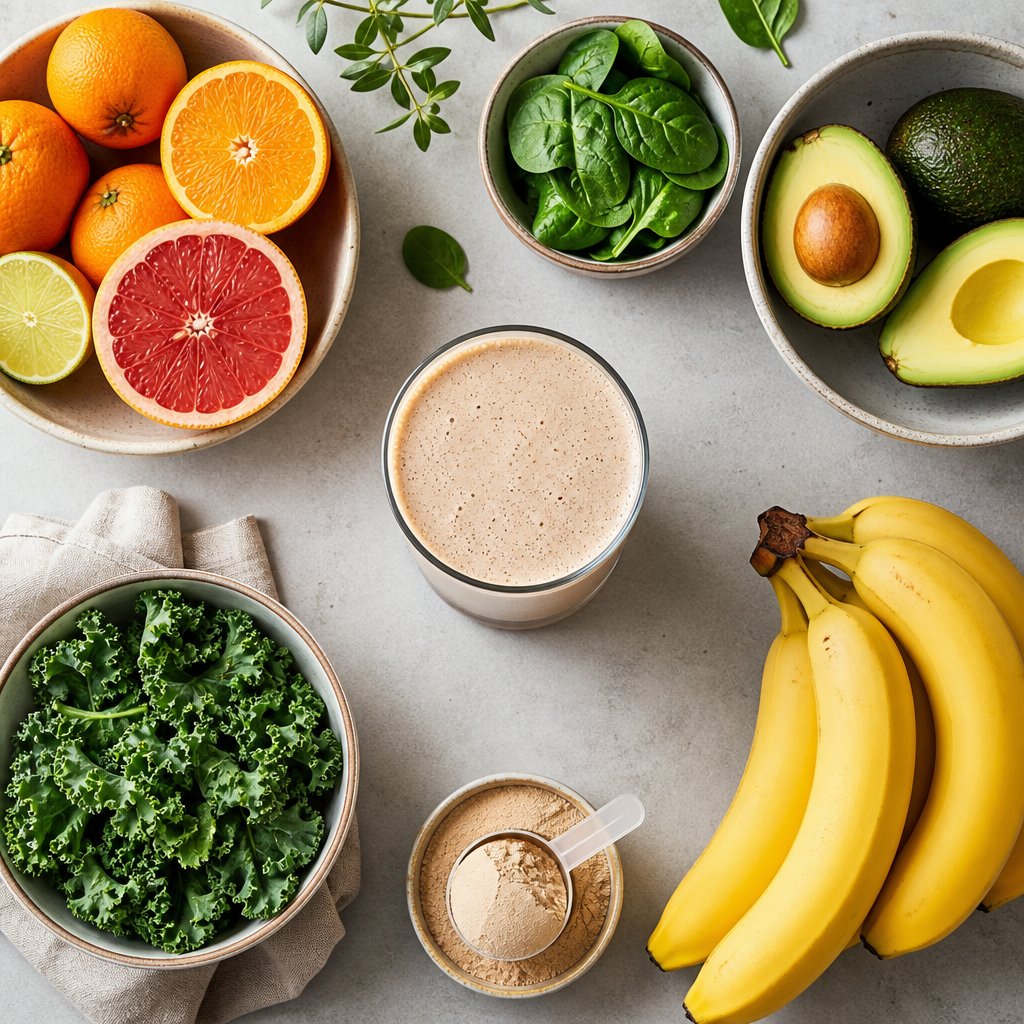
Increase dietary citrate through citrus intake. When protein metabolism reduces urinary citrate — your kidneys' natural crystal inhibitor — replacing it through food is one of the simplest and most effective countermeasures available. Lemon juice, lime juice, and orange juice are all rich in citrate. UT Southwestern Medical Center specifically recommends adding citrus to your daily water intake because citrate binds to calcium in urine and helps block stone formation. Squeezing half a lemon into each liter of water turns passive hydration into active prevention — a negligible effort with measurable protective benefit.
Prioritize potassium-rich foods. Research from the Curhan and Taylor cohort studies — following tens of thousands of participants across decades — found that increasing dietary potassium produced a powerful and progressive reduction in kidney stone risk. Potassium-rich foods supply anions that the body metabolizes into bicarbonate, effectively acting like a natural version of potassium citrate pills. Fruits and vegetables are the primary delivery vehicles: bananas, sweet potatoes, avocados, spinach (though watch oxalate content if you are a calcium oxalate stone former), and cantaloupe all rank among the top sources. The study data showed that reaching approximately 4,000 mg of potassium daily — aligned with the general US dietary recommendation — corresponded with significant stone risk reduction in both men and women.
Balance your plate with alkaline foods. The concept of Potential Renal Acid Load (PRAL) extends beyond your protein shake. A meal built entirely around acidogenic foods — a protein shake, a steak, and white rice — drives urine pH downward and amplifies every stone risk factor. Pairing that same protein shake with a large serving of roasted vegetables, a side of leafy greens, and a citrus-dressed salad creates an alkaline counterbalance that helps neutralize the acid load. You do not need to become vegetarian. You need to ensure that every high-protein meal or shake is accompanied by enough plant-based, alkaline-producing foods to keep your overall PRAL closer to neutral.
A practical rule of thumb: for every scoop of protein powder you consume, aim to eat at least two servings of fruits or vegetables at the same meal or within the same hour. This habit alone addresses multiple stone risk pathways simultaneously — boosting citrate, raising pH, increasing fluid intake from water-rich produce, and adding potassium.
Choosing Kidney-Friendly Protein Formulations
Diet adjustments handle one side of the equation. The other side is the powder itself. Not all formulations are built with kidney health in mind, and knowing what to look for on the label — and what to avoid — can dramatically shift your risk profile.
If you are shopping for the best protein powder for kidney disease management or simply want a kidney friendly protein powder that minimizes stone risk, here are the key attributes to prioritize:
- Low oxalate content. Avoid chocolate-flavored powders, almond-based formulas, and products that include spinach, beetroot, or other high-oxalate greens in their ingredient lists. A true low oxalate protein powder uses sources like whey isolate, egg white, hemp, or pumpkin seed — and skips the superfood add-ins that quietly spike oxalate levels. As kidney stone prevention specialist Jill Harris, LPN, advises: always check your oxalate list against the ingredient panel.
- Minimal artificial additives. Watch for high-dose vitamin C fortification, which converts to oxalate in the body. Many "enhanced" protein powders add 250-500 mg of ascorbic acid per serving — a meaningful oxalate contribution that most users never notice.
- Low sodium and low added sugar. Excess sodium increases urinary calcium excretion, and added sugar drives insulin spikes that can alter kidney mineral handling. The best protein shake for kidney disease risk reduction keeps both to a minimum.
- Appropriate serving sizes. Products that pack 40-50 grams of protein into a single scoop make it easy to overshoot your daily target. Look for formulations offering 20-25 grams per serving — enough to support recovery without creating unnecessary metabolic burden.
- Transparent labeling. If a product does not clearly list its oxalate content, calcium levels, and full additive profile, you are guessing about your risk. Kidney-conscious consumers deserve better transparency than "proprietary blend" disclosures allow.
For individuals managing CKD, low protein shakes for kidney disease require even stricter formulation parameters — reduced phosphorus, controlled potassium, and lower total protein per serving. These specialized products fall outside the standard sports nutrition market and typically need medical-grade formulation oversight.
This growing demand for kidney-conscious supplements is reshaping how nutrition brands approach product development. Increasingly, brands are partnering with experienced OEM/ODM manufacturers who can customize formulations to meet specific health criteria. ZhuFeng, for example, works with supplement brands, private label sellers, and functional food businesses to develop tailored protein products — from powder and granule formats to tablets and ready-to-drink oral liquids — that account for bioavailability, additive safety, and renal-friendly ingredient profiles. This kind of manufacturing flexibility allows brands to create differentiated products that align with the very guidelines outlined above: controlled oxalate content, clean additive profiles, and scalable production across multiple product formats including soft capsules and gummy supplements.
The trend reflects a broader shift in the nutraceutical space. Health-conscious consumers are no longer satisfied with generic formulas. They want products designed around specific conditions — and the brands that deliver those products first will earn their loyalty. Whether you are a consumer reading labels more carefully or a brand looking to fill a genuine market gap, the science is clear: kidney-friendly protein is not a niche — it is a growing necessity.
Smart Supplementation Without the Stone Risk
So, do protein powders cause kidney stones? After examining the biochemistry, the stone types, the powder-by-powder comparisons, and the compounding effects of supplement stacking, the answer lands exactly where the science predicted: it depends. Not a vague "it depends" that leaves you guessing — but a specific, quantifiable set of variables you can assess and control right now.
The relationship between protein powder and kidney stones is not a binary switch. It is a risk spectrum. Your position on that spectrum is determined by choices you make every single day — and most of those choices are entirely within your power to adjust.
Your Personal Risk Assessment Checklist
Walk through these questions honestly. Each one shifts your position on the protein kidney stones risk spectrum:
- What protein type are you using? Whey and rice carry higher acid loads; pea and soy elevate oxalate; hemp and egg white sit at the lower end of the risk scale. Match your choice to your personal stone history.
- What is your daily dosage relative to body weight? Intake below 2.0 g/kg is generally well-tolerated by healthy kidneys. Consistently exceeding that threshold without medical oversight elevates multiple risk markers simultaneously.
- Are you hydrating proportionally to your protein intake? Use the scaled framework from earlier — if your urine is darker than pale yellow, you are under-hydrating regardless of how much water you think you are drinking.
- What else is in your supplement stack? Creatine, BCAAs, vitamin C-fortified pre-workouts, and calcium supplements all compound your kidneys' workload. Audit every product you take daily.
- Do you have a personal or family history of kidney stones? A single prior stone gives you up to a 50% recurrence risk within 10 years. Family history suggests genetic susceptibility that warrants extra caution.
- What is your climate and activity level? Hot environments, heavy sweating, and intense training all increase fluid loss — concentrating the very minerals that form stones. Adjust hydration upward accordingly.
If you answered unfavorably on three or more of these questions, your current routine may be placing you higher on the protein powder kidney stones risk spectrum than you realize. The fix does not require abandoning supplements — it requires recalibrating them.
Building a Smarter Supplement Routine
The core message running through every section of this guide is straightforward: protein powder does not inherently cause kidney stones. Protein shakes kidney stones fears are overblown when intake is moderate, hydration is adequate, and food choices actively counterbalance the acid load. But specific combinations — high dosage, poor hydration, high-oxalate sources, supplement stacking, and genetic predisposition — can elevate risk significantly.
Your action plan boils down to five principles:
- Choose your protein type based on your stone risk profile, not marketing claims
- Scale water intake to protein consumption, not just thirst
- Offset every shake with citrate-rich, potassium-dense whole foods
- Audit your full supplement stack for hidden compounding risks
- Get a 24-hour urine analysis if you have any personal or family stone history
The conversation around protein powder and kidneys is evolving. Consumers are demanding formulations that account for renal safety — not just muscle recovery metrics. For nutrition brands and supplement businesses positioned to meet that demand, partnering with a full-service OEM/ODM manufacturer like ZhuFeng enables customized formulation across formats — from protein powders and granules to soft capsules and gummy supplements — with scalable production that meets market-ready quality standards. The science outlined in this article provides the blueprint; the manufacturing capability to turn it into differentiated, kidney-conscious products already exists.
Protein powder kidney stone risk is not a yes-or-no question — it is a spectrum you control through protein type, dosage, hydration, dietary balance, and stack awareness. Manage the variables, and you manage the risk.
Work with your healthcare provider for personalized guidance. Use the evidence in this guide to ask better questions. And remember: the goal was never to fear protein — it was to use it intelligently.
Frequently Asked Questions About Protein Powder and Kidney Stones
1. How much protein per day is safe for your kidneys?
For healthy adults, research supports 1.2 to 2.0 grams of protein per kilogram of body weight daily without adverse kidney effects. A 2024 meta-analysis of over 148,000 participants found that higher protein intake was actually associated with an 18% reduced risk of chronic kidney disease in people with normal renal function. Risk markers begin to shift when intake consistently exceeds 2.0 g/kg without adequate hydration. For individuals with pre-existing kidney conditions, clinical guidelines recommend limiting intake to 0.8 g/kg/day under physician supervision.
2. Which protein powder is safest for people prone to kidney stones?
Hemp protein and egg white protein rank among the lowest-risk options based on current research. Hemp protein is low in sulfur-containing amino acids and carries minimal oxalate, while egg white protein has a moderate acid load with very low oxalate content. The safest choice depends on your specific stone type — calcium oxalate stone formers should avoid high-oxalate plant proteins like pea and almond, while uric acid stone formers benefit from plant-based options with lower sulfur amino acid profiles. Always match your protein source to your individual stone chemistry rather than relying on general marketing claims.
3. Can you still use protein powder after having a kidney stone?
Yes, many former stone sufferers can safely reintroduce protein supplements with proper medical guidance. The recommended approach includes consulting a urologist, completing a 24-hour urine analysis to identify your specific risk factors, starting with lower-risk protein sources at one serving per day, hydrating aggressively with at least 3 liters daily, and repeating urine testing after 3 months. Your stone composition report determines which protein types carry the greatest risk for your unique chemistry, so personalized testing replaces guesswork.
4. Does plant-based protein powder reduce kidney stone risk compared to whey?
Not necessarily. While plant proteins like pea and soy produce less urinary calcium and higher urine pH than whey — beneficial for uric acid stone prevention — pea protein generates significantly higher urinary oxalate. Since calcium oxalate stones account for 70-80% of all cases, elevated oxalate from plant-based powders can actually increase the most common stone type risk. Almond-based formulas are particularly high in oxalate. The comparison is not straightforward: whey elevates calcium excretion while pea elevates oxalate, representing different risk pathways for different stone types.
5. How does supplement stacking with creatine and pre-workouts affect kidney stone risk?
Combining protein powder with creatine, BCAAs, and pre-workout supplements creates a compounding renal burden that individual supplement safety studies do not capture. Creatine adds to kidney filtration workload, BCAAs amplify total amino acid metabolism, and pre-workouts often contain high-dose vitamin C (which converts to oxalate) plus caffeine (which promotes dehydration). One case report of acute renal failure involved a weight lifter taking multiple supplements simultaneously. The cumulative acid load, dehydration effect, and oxalate contribution from a full stack can push urine chemistry past stone-formation thresholds even when each product appears safe in isolation.