Can You Freeze Protein Powder Safely
The Short Answer to Freezing Protein Powder
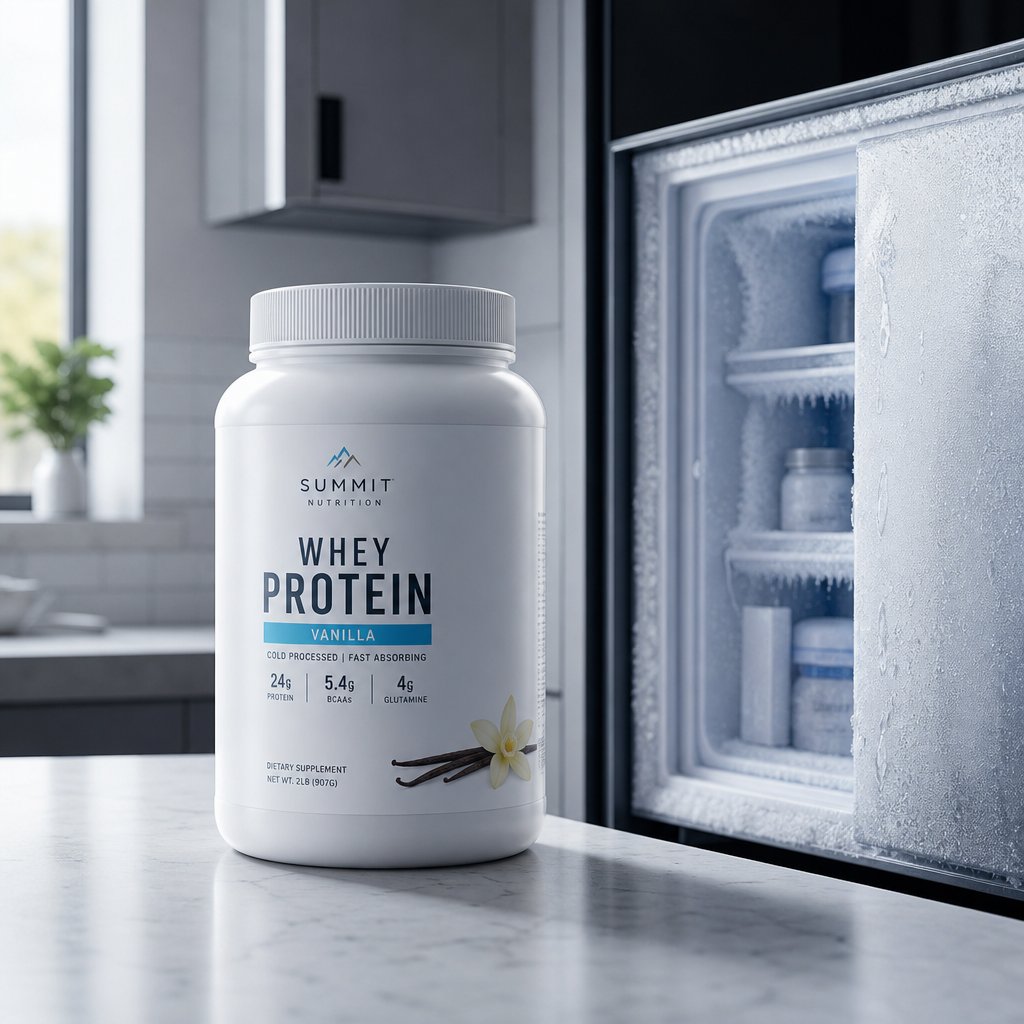
Can you freeze protein powder? Yes, you absolutely can. Freezing protein powder is safe and won't destroy the protein itself. But there's a catch most people miss: the real danger isn't the cold temperature. It's what happens when you take the powder back out.
You can freeze protein powder to extend its shelf life by six months or more. The key caveat is moisture management. Condensation that forms during thawing introduces water into the powder, which can cause clumping, bacterial growth, and spoilage if not handled correctly.
Protein powders are low-moisture foods, which makes them naturally resistant to bacterial growth and relatively stable in cold environments. Freezing slows molecular degradation even further, keeping the amino acid profile intact for longer periods. The protein structure remains unharmed at freezing temperatures, unlike what happens with high heat exposure.
The real question isn't whether freezing protein powder is possible. It's whether you're prepared to handle the thawing process properly. That single step determines whether your powder comes out perfectly fine or turns into a clumpy, moisture-damaged mess.
Why People Consider Freezing Their Supplements
Several real-world situations drive people to search for this answer. You might recognize your own scenario here:
- Bulk purchases: Buying protein in large quantities saves money, but a 10-pound bag takes months to finish. Freezing portions keeps the powder fresh well beyond its typical protein powder shelf life of 1 to 2 years.
- Hot or humid climates: Research shows that storage at elevated temperatures accelerates oxidation and nutrient breakdown. If your pantry regularly exceeds 70 degrees Fahrenheit, freezing protein powder becomes a practical preservation strategy.
- Rescuing powder near expiration: That tub sitting in your cabinet for over a year? Freezing can pause further degradation and buy you extra time before quality drops noticeably.
- Meal prep convenience: Some people freeze prepared protein shakes alongside dry powder, streamlining their weekly nutrition routine.
Each of these scenarios comes with its own set of considerations. This guide covers the full picture, from the science of how freezing affects protein molecules to step-by-step storage protocols for both dry powder and mixed shakes. You'll also learn why the condensation problem during thawing is the single biggest risk nobody warns you about, and exactly how to prevent it.
The Science Behind Freezing and Protein Stability
Most people worry that freezing will somehow "break" the proteins in their powder. This concern makes intuitive sense. After all, if you can cook an egg and watch the protein turn solid and white, couldn't extreme cold do something similar? The short answer is no, and the reason comes down to how protein molecules actually unfold.
How Freezing Temperatures Affect Protein Structure
Proteins maintain their biological function through a specific three-dimensional shape, held together by hydrogen bonds, hydrophobic interactions, and other weak molecular forces. When you ask whether can you freeze whey or any other protein type without damage, you're really asking whether cold temperatures disrupt these structural bonds.
Heat denaturation, the kind that happens when you cook an egg, works by pumping thermal energy into the molecule. That energy vibrates the bonds holding the protein's shape together until they break apart. The protein unfolds, loses its structure, and can't refold properly. This process is largely irreversible at high temperatures.
Freezing works in the opposite direction. Instead of adding energy, you're removing it. Molecular motion slows down. Chemical reactions that cause degradation, like oxidation and Maillard browning, essentially hit pause. For dry protein powder sitting in your freezer at 0 degrees Fahrenheit (-18 degrees Celsius), there's simply not enough molecular activity happening to disrupt the protein's structure.
Research published in Philosophical Transactions of the Royal Society confirms that protein stability is limited at both high and low temperature extremes, but the free energy of stabilization remains positive across a wide range of cold temperatures. In practical terms, your freezer isn't cold enough to threaten the structural integrity of dried protein molecules.
Denaturation vs Degradation at Low Temperatures
There's an important distinction here that most storage guides overlook: denaturation and degradation are two different processes.
Denaturation means the protein loses its folded shape. A phenomenon called "cold denaturation" does exist in biochemistry, where proteins unfold at very low temperatures. However, research from the National Institute for Medical Research shows that for most proteins, cold denaturation occurs at temperatures well below water freezing, often requiring conditions far colder than any household freezer can reach. The researchers note that cold denaturation is "rarely observed in wild type proteins" precisely because it requires such extreme cold.
Degradation, on the other hand, refers to the slow chemical breakdown of protein molecules over time through oxidation, moisture interaction, and microbial activity. This is what actually determines how long does whey last on your shelf. Freezing dramatically slows all of these degradation pathways by reducing molecular kinetic energy and limiting the chemical reactions that break down amino acids.
One nuance worth noting: proteins dissolved in liquid behave differently from dry powder during freezing. A study from the University of Oxford found that proteins in aqueous solutions can experience surface-induced denaturation at ice-liquid interfaces during the freeze-thaw process. Ice crystals form, creating surfaces where dissolved protein molecules can partially unfold. This is relevant for prepared shakes but largely irrelevant for dry powder, where proteins aren't suspended in water and no ice-liquid interface forms.
So when you're wondering how long does whey protein last in frozen storage, the answer is encouraging. The amino acids themselves remain structurally intact. Bioavailability, meaning your body's ability to absorb and use the protein after consumption, stays unchanged because the peptide bonds and amino acid sequences aren't altered by freezing temperatures. Your muscles can't tell the difference between protein that was stored at room temperature and protein that spent six months in the freezer.
The real vulnerability isn't the cold itself. It's what happens at the boundary between cold and warm, when frozen powder returns to room temperature and moisture enters the equation. That transition phase is where most storage failures actually occur.
How Different Protein Types Respond to Freezing
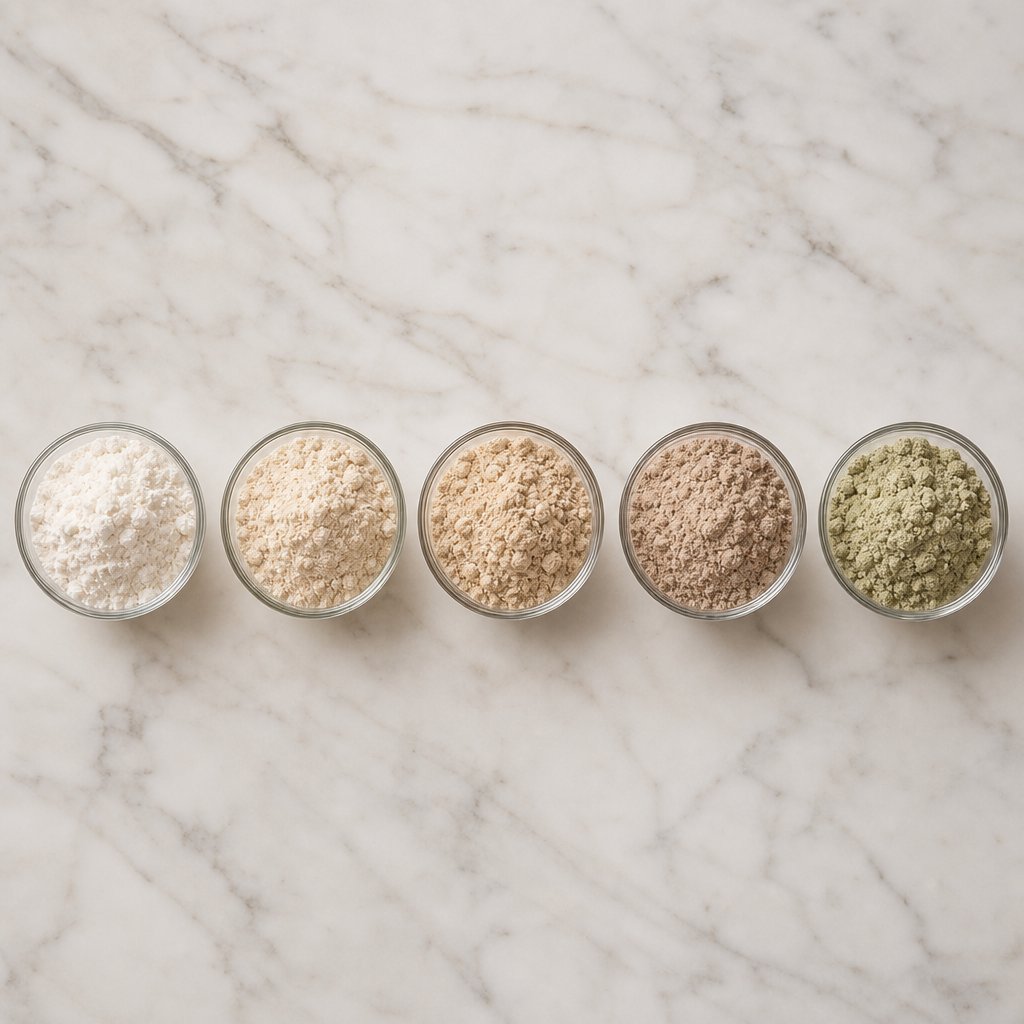
Not all protein powders are created equal, and that matters when you're deciding what goes into the freezer. Each type carries a different composition of fats, fibers, moisture content, and molecular structure. These variables directly influence how predictably the powder behaves during freezing and, more importantly, during thawing.
Imagine two containers side by side in your freezer: one holds a lean whey isolate, the other a fiber-rich hemp protein blend. Six months later, you pull them both out. One thaws cleanly. The other clumps into a stubborn mass. The difference comes down to composition, not temperature.
Whey Protein Isolate and Concentrate in the Freezer
Whey protein is the most commonly frozen supplement, and it splits into two main categories with meaningfully different freezing behavior.
Whey protein isolate (WPI) contains 90% or more protein with less than 1% fat and less than 1% lactose, according to industry formulation data. This ultra-lean profile makes it one of the most freezer-friendly options available. With minimal fat to oxidize and almost no lactose to attract moisture, isolate powders maintain their free-flowing texture through freeze-thaw cycles more reliably than any other type. Hydrolized whey protein isolate, which has been pre-digested into smaller peptides, behaves similarly well due to its low fat and moisture content.
Whey protein concentrate (WPC) tells a slightly different story. Concentrate ranges from 34% to 80% protein content, with the remainder consisting of 1-7% fat, 4-52% lactose, and various minerals. That higher fat content is the key variable. Fats can oxidize over extended frozen storage, potentially developing off-flavors after several months. The lactose component also tends to be more hygroscopic, meaning it attracts and holds moisture more readily during temperature transitions.
For practical purposes, if you're wondering how long is whey protein good for in the freezer, isolate gives you the longest clean window, often 12 months or more without noticeable quality changes. Concentrate remains safe for the same duration, but you may detect subtle flavor shifts after 6 to 9 months due to fat oxidation. Both retain their full amino acid profile and nutritional value regardless.
Casein protein, the other major dairy-derived option, falls somewhere between isolate and concentrate in freezer performance. Micellar casein has a naturally low moisture content and moderate fat levels. It freezes well, though its denser particle structure means any clumps that form during thawing can be harder to break apart than whey clumps. A quick shake or sift usually resolves this.
Plant-Based and Collagen Powders Under Freezing Conditions
Pea protein is the most popular plant-based option, and it handles freezing reasonably well. Its moderate fiber content can cause mild clumping during thawing, but the protein structure itself remains stable. The main consideration is that pea protein powders often have a slightly higher natural moisture content than whey, so airtight packaging becomes even more critical before freezing.
Soy protein isolate behaves similarly to whey isolate in the freezer. Its high protein concentration and low fat content make it a predictable performer. However, soy contains lecithin, a natural emulsifier, which can sometimes cause the powder to compact more densely during long-term frozen storage. This doesn't indicate spoilage. It just means you may need to break up the powder before use.
Hemp protein is the trickiest plant-based option to freeze. It carries a higher fat content, typically 9-12% from omega-3 and omega-6 fatty acids, plus significant fiber. Those healthy fats are more susceptible to oxidation even at low temperatures, and the fiber content creates more surface area for moisture to cling to during thawing. If you freeze hemp protein, keep storage under 6 months and use vacuum-sealed bags for best results.
Collagen peptides are among the most stable options for freezing. As noted by collagen storage research, these supplements already have a long shelf life of 1-2 years when stored in a cool, dry place. Collagen powder consists of short-chain amino acid sequences that are inherently resistant to structural changes at low temperatures. With virtually no fat and very low moisture content, collagen peptides emerge from the freezer essentially unchanged. Most people won't need to freeze collagen at all unless they're storing very large quantities in a hot climate.
| Protein Type | Moisture Sensitivity | Freezing Suitability | Special Considerations |
|---|---|---|---|
| Whey Isolate | Low | Excellent | Less than 1% fat and lactose; minimal oxidation risk |
| Whey Concentrate | Moderate | Good | Higher fat (1-7%) may develop off-flavors after 6-9 months |
| Casein | Low to Moderate | Good | Dense particles may clump; easy to break apart |
| Pea Protein | Moderate | Good | Slightly higher natural moisture; seal tightly |
| Soy Protein Isolate | Low | Good | Lecithin may cause compaction; not a spoilage sign |
| Hemp Protein | High | Fair | 9-12% fat content; limit to 6 months frozen; vacuum seal |
| Collagen Peptides | Very Low | Excellent | Extremely stable; freezing rarely necessary |
The pattern is clear: the leaner and drier the powder, the better it freezes. Fat content is the primary variable that determines how long protein powder lasts in frozen storage without quality loss. Fiber is the secondary factor, influencing clumping behavior during the thaw.
Whichever type you're working with, the composition only tells half the story. Even the most freezer-friendly isolate can be ruined by a single mistake during the transition back to room temperature, where warm air meets a cold powder surface and condensation takes over.
The Condensation Problem Nobody Talks About
Here's the scenario: you pull a container of frozen protein powder out of the freezer, set it on the counter, and open the lid 20 minutes later. Everything looks fine at first. But within hours, you notice damp patches forming on the powder's surface. By the next day, those patches have turned into hard clumps. A week later, the powder smells off. What happened?
Condensation happened. And it's the single biggest reason frozen protein powder goes bad after opening the container post-thaw. The freezing itself is harmless. The thawing is where everything falls apart.
Why Condensation Ruins Frozen Protein Powder
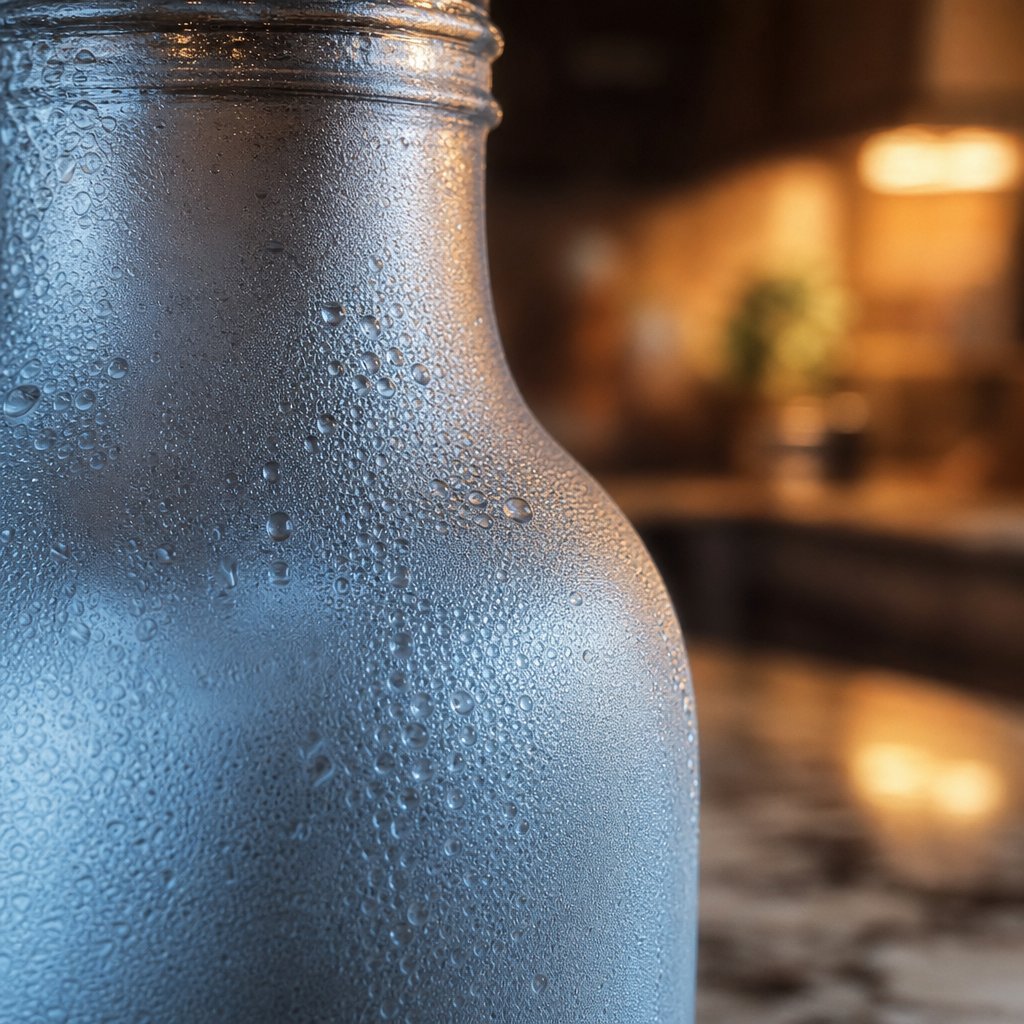
The physics behind this are straightforward. When a cold object enters a warmer environment, the surrounding air cools rapidly at the surface of that object. Cooler air holds less moisture than warm air, so the excess water vapor condenses into liquid droplets directly on the cold surface. You see this every time you pull a cold drink from the fridge and watch water bead up on the glass.
The same process happens inside your protein powder container. Warm, humid kitchen air rushes in when you open the lid. That air meets the still-cold powder surface, and water droplets form directly on and between the powder particles. In food manufacturing environments, condensation is recognized as a serious contamination risk precisely because it introduces uncontrolled moisture into dry products, leading to microbial growth, clumping, and product spoilage.
Protein powder is a low-moisture food by design. That dryness is its primary defense against bacterial contamination. A Canadian Food Inspection Agency study found that pathogens like Salmonella and Bacillus cereus can survive for extended periods in low-moisture protein powders, but they remain dormant without available water. The moment condensation introduces free moisture, those dormant organisms gain the conditions they need to multiply. You've essentially turned a shelf-stable product into a perishable one.
The damage compounds quickly. Moisture causes powder particles to bond together into clumps that won't dissolve properly. If enough water accumulates, mold colonies can establish within days. Even small amounts of condensation accelerate fat oxidation in powders containing any lipid content, producing rancid off-flavors that make the product undrinkable.
Preventing Moisture Damage When Thawing
The good news: condensation damage is entirely preventable if you understand how to store protein powder through the freeze-thaw cycle correctly. Every prevention strategy targets the same goal: keeping warm, moist air away from cold powder surfaces.
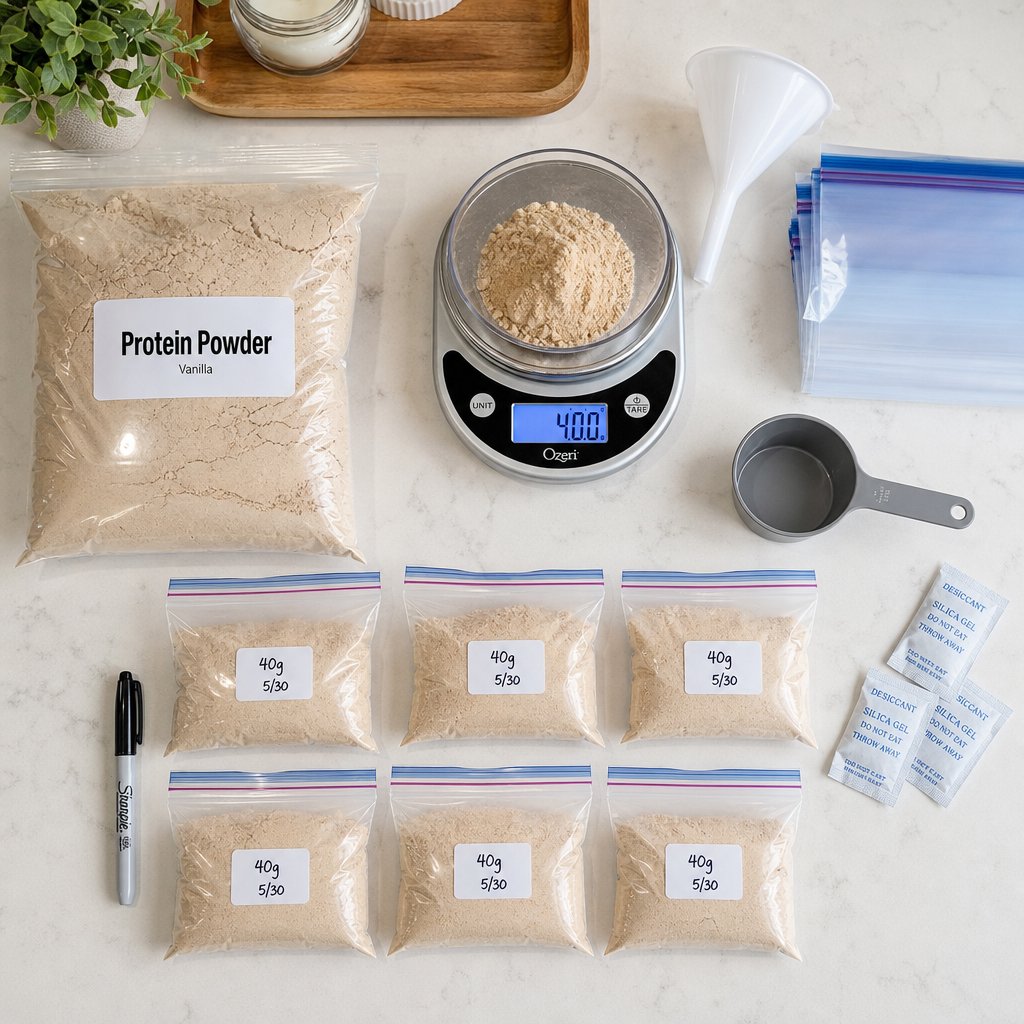
- Portion before freezing, not after. Divide your powder into single-use or weekly-use amounts in individual zip-lock bags or vacuum-sealed pouches before placing them in the freezer. This way, you only thaw what you need and never expose the bulk supply to warm air.
- Squeeze out excess air. Before sealing each bag, press out as much air as possible. Less trapped air means less moisture available to condense on the powder when temperatures shift.
- Include desiccant packets. Toss a food-safe silica gel packet into each bag. These absorb any residual moisture inside the sealed environment, acting as a buffer against minor condensation.
- Thaw in the refrigerator, not on the counter. Moving frozen powder to the fridge (35-40 degrees Fahrenheit) rather than directly to room temperature reduces the temperature differential dramatically. A smaller gap between the powder's temperature and the surrounding air means far less condensation forms. Allow 8 to 12 hours for gradual thawing.
- Keep the container sealed during thawing. Do not open the bag or container until the powder has reached the ambient temperature of its environment. If you thaw in the fridge, let it sit sealed at room temperature for another 30 minutes before opening. This lets the powder surface warm up so incoming air won't condense on it.
- Never refreeze thawed powder. Each freeze-thaw cycle introduces a new round of condensation risk. Once you've brought powder to room temperature, store it in a cool, dry pantry and use it within its normal shelf life window.
The underlying principle for proper storage for protein powder after freezing is simple: minimize temperature differentials and eliminate air exposure during transitions. If you follow these steps, your frozen powder will taste and perform identically to the day you bought it.
Does protein powder go bad after opening if you've frozen and thawed it correctly? Not any faster than it normally would. A properly thawed portion behaves exactly like freshly opened powder and follows the same timeline: use within 3 to 6 months when stored sealed in a cool, dry place.
The condensation trap catches people because it's invisible during the critical window. By the time you notice clumps or smell something off, the damage is already done. Prevention is the only reliable strategy, and it starts before the powder ever enters the freezer.
Dry Powder vs Prepared Shakes in the Freezer
Condensation is the enemy of dry powder, but what about protein that's already mixed with liquid? Freezing protein shakes is an entirely different game with its own rules, timelines, and safety thresholds. The two scenarios, dry powder for long-term preservation and prepared shakes for meal prep, require separate strategies because the food science behind each is fundamentally different.
Freezing Dry Powder for Long-Term Storage
Dry protein powder in the freezer is essentially in suspended animation. With moisture content typically below 5%, there's no free water for bacteria to use, no ice crystals forming between particles, and no chemical reactions progressing at any meaningful rate. This makes frozen dry powder one of the safest long-term storage options available.
The rules are simple. An unopened, factory-sealed container can go directly into the freezer without any repackaging. The original seal keeps air and moisture out during the entire storage period. You can expect 12 to 18 months of frozen storage with zero quality loss beyond what the powder would experience sitting on a shelf.
Opened containers need more attention. Once the factory seal is broken, air and moisture have already entered the package. Before freezing an opened tub, transfer the powder into smaller airtight bags, remove excess air, and add a desiccant packet. This extra step prevents the moisture already inside from causing problems during extended cold storage.
The key distinction: dry powder doesn't spoil in the freezer. It only spoils during the transition out of it, which is why the portioning strategy from the previous section matters so much.
Freezing Prepared Protein Shakes and Smoothies
Can you freeze protein shakes that are already mixed? Yes, and it's a popular meal prep strategy for busy schedules. But a prepared shake is a perishable food, not a shelf-stable powder. The moment you add liquid, you create an environment where bacteria can thrive once temperatures rise above 40 degrees Fahrenheit.
Here's what you need to know about how long is a protein shake good for after mixing: at room temperature, you have a maximum of 2 hours before bacterial growth enters unsafe territory. Refrigerated, a mixed shake stays safe for 24 to 48 hours. Frozen, you can extend that window to up to three months without safety concerns, though texture and flavor quality decline gradually.
Can you freeze premier protein shakes and other ready-to-drink products? The same three-month guideline applies. Unopened RTD shakes that are shelf-stable don't need freezing at all, but once opened, freezing is a valid option if you can't finish them within the refrigerated window.
The liquid base you use changes the equation. Shakes mixed with water freeze and thaw more cleanly than those made with milk, which tends to separate and develop a grainy texture. Shakes containing fruit, yogurt, or nut butters are the most prone to texture changes because fats and fibers behave unpredictably through freeze-thaw cycles.
Follow these food safety guidelines when freezing protein drinks:
- Freeze immediately after blending. Don't let a shake sit at room temperature for an hour before freezing. The faster it reaches 0 degrees Fahrenheit, the fewer bacteria have time to multiply.
- Use freezer-safe containers with headspace. Liquid expands as it freezes. Leave at least half an inch of space at the top to prevent cracked containers and messy spills.
- Label every container with the date. After three months, quality drops noticeably. After six months, discard regardless of appearance.
- Thaw overnight in the refrigerator. Can i leave protein shake in fridge overnight to thaw? That's actually the ideal method. Moving a frozen shake to the fridge the evening before gives it 8 to 12 hours to thaw evenly while staying below 40 degrees Fahrenheit the entire time.
- Re-blend or shake vigorously after thawing. Separation is normal and expected. A quick blend restores most of the original texture, though it rarely feels identical to fresh.
- Consume within 24 hours of thawing. Once a shake returns to liquid form in the fridge, treat it like a freshly mixed shake. The bacterial clock restarts.
- Never refreeze a thawed shake. Each freeze-thaw cycle degrades texture, reduces flavor quality, and increases the risk of bacterial contamination from temperature fluctuations.
One practical tip that saves both time and quality: freeze your shakes in single-serving portions rather than large batches. Individual containers mean you only thaw exactly what you need, avoiding waste and eliminating the temptation to refreeze leftovers.
The bottom line is straightforward. Dry powder freezes for preservation. Prepared shakes freeze for convenience. Both work, but they operate on completely different timelines and carry different risks. Dry powder is forgiving as long as you manage the thaw. Prepared shakes demand stricter food safety discipline because you're dealing with a perishable liquid, not a shelf-stable solid.
With both storage scenarios covered, the natural next question becomes: is freezing even the best option for your situation, or would a simpler storage method accomplish the same goal with less effort?
Storage Method Comparison and Decision Framework
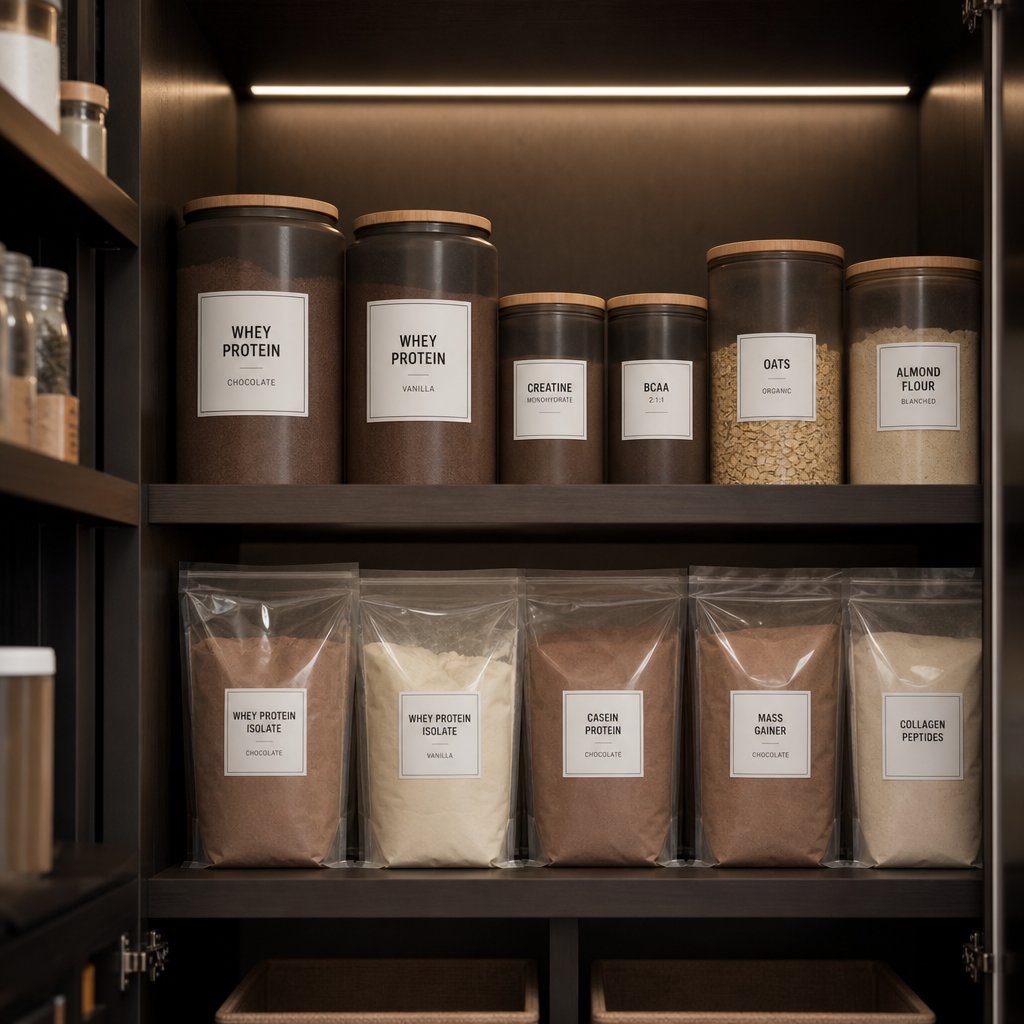
Freezing works, but it introduces complexity that simpler methods avoid entirely. For many people, a cool pantry or a vacuum-sealed container delivers the same shelf life extension without the condensation risk. The right storage method depends on your climate, how quickly you use your powder, and how much effort you're willing to invest.
Let's put every option side by side so you can make a clear decision.
Comparing Storage Methods Side by Side
Each storage method operates within a specific temperature window and carries its own trade-offs. The table below breaks down the five most common approaches for dry protein powder, covering everything from shelf life impact to practical risks.
| Method | Temperature Range | Best For | Shelf Life Impact | Risks | Effort Level |
|---|---|---|---|---|---|
| Freezing | Below 0°C / 32°F | Bulk purchases, hot climates, long-term storage beyond 18 months | Extends 6-12+ months beyond printed date | Condensation during thawing; requires portioning and careful handling | High |
| Refrigeration | 2-8°C / 35-46°F | Prepared shakes, opened RTD products | Maintains quality for 24-48 hours (mixed shakes) | Condensation on dry powder with repeated access; unnecessary for sealed dry powder | Low |
| Cool Pantry | 15-20°C / 59-68°F | Everyday use, moderate climates, standard consumption timelines | Full manufacturer shelf life (12-24 months) | Minimal if kept dry and sealed | Very Low |
| Room Temperature | 20-25°C / 68-77°F | Short-term use within a few months of purchase | Standard shelf life; slight acceleration of oxidation above 21°C | Faster degradation in warm or humid rooms; flavor changes over time | Very Low |
| Vacuum-Sealed | Any (typically room temp or cool pantry) | Bulk portioning, long-term storage without freezing, humid environments | Extends 3-6 months by eliminating oxygen and moisture exposure | Requires vacuum sealer equipment; one-time seal means no partial access | Medium |
A few things stand out immediately. The cool pantry method, which research defines as approximately 70°F with 35% humidity, delivers the full manufacturer shelf life of 18 months or more with virtually zero effort. For most people consuming their powder within a year of purchase, this is all you need.
Refrigeration is often misunderstood. It's excellent for prepared shakes but counterproductive for dry powder. How long does whey last in the fridge as a mixed shake? About 24 to 48 hours safely. But storing dry powder in the fridge creates the same condensation problem as freezing, just on a smaller scale, every time you open and close the container in a warm kitchen. The temperature swing between a 38°F fridge and a 75°F room is enough to generate moisture on the powder surface over repeated cycles.
Vacuum sealing deserves more attention than it typically gets. By removing oxygen and sealing out humidity, you eliminate the two primary degradation pathways without any temperature manipulation. Combine vacuum sealing with cool pantry storage and you've matched most of the shelf life benefits of freezing without the thawing headaches.
Choosing the Right Method for Your Situation
Do protein shakes need to be refrigerated? Only after mixing. Do fairlife protein shakes need to be refrigerated? Yes, once opened, they're perishable dairy products. Do premier protein shakes need to be refrigerated after opening? Same rule. Does muscle milk have to be refrigerated? Only the liquid versions after breaking the seal. Dry powder across all brands follows the same principle: keep it sealed, cool, and dry.
For dry powder specifically, here's how to match your situation to the right method:
- You live in a climate-controlled home and use powder within 6 months: Cool pantry storage in the original sealed container. No extra steps needed.
- Your home regularly exceeds 77°F or humidity stays above 50%: Vacuum seal portions and store in the coolest spot available. Freezing becomes worthwhile if no cool storage exists.
- You bought in bulk and won't finish for 12+ months: Portion into vacuum-sealed or zip-lock bags and freeze. Thaw individual portions in the fridge as needed.
- You meal prep shakes for the week: Refrigerate what you'll drink within 48 hours. Freeze the rest in single-serving containers. How long do protein shakes last in the fridge? Two days maximum for safety.
- You found an old tub nearing expiration: If it still smells and looks normal, vacuum seal or freeze portions immediately to pause further degradation.
The honest truth: most protein powder users don't need to freeze anything. A sealed container in a cool, dark cabinet handles the job for the vast majority of situations. Freezing is a specialized tool for specific circumstances, not a default recommendation. How long does a protein shake last in the fridge matters far more for daily routines than freezer protocols ever will.
Reserve freezing for genuine long-term storage needs or environmental extremes. For everything else, simplicity wins. The less you manipulate temperature, the fewer opportunities moisture has to compromise your powder.
Of course, even with perfect storage, protein products don't last forever. Knowing what spoilage actually looks like, versus harmless cosmetic changes, prevents you from either wasting good powder or consuming something that's genuinely gone off.
Signs Your Frozen Protein Has Gone Bad
You've thawed a bag of protein powder or a frozen shake, and something seems slightly different. Maybe the color shifted a shade, or the powder feels denser than you remember. Does that mean it's spoiled? Not necessarily. The tricky part about evaluating thawed protein products is distinguishing between harmless cosmetic changes caused by the freeze-thaw process and genuine spoilage that makes the product unsafe to consume.
Some changes are completely normal. Slight compaction, minor color variation from batch to batch, and a faint "flat" smell when you first open a sealed bag are all expected after frozen storage. These don't indicate degradation. What you're looking for are specific sensory signals that point to moisture damage, oxidation, or microbial contamination.
Visual and Texture Warning Signs
Your eyes and hands catch the first clues. Here's what to look for, organized by what's harmless versus what warrants concern:
Clumping: This is where most confusion happens. Light, soft clumps that break apart easily when you press them with a spoon are normal settling from storage pressure. They dissolve fine in liquid and pose no safety issue. Problematic clumps are hard, dense, and resist breaking apart. They often feel slightly damp or sticky to the touch, indicating moisture penetration. If you see localized wet-looking patches surrounded by dry powder, condensation reached the product during thawing.
Discoloration: Protein powder that has yellowed noticeably or developed dark spots has likely undergone Maillard browning or oxidation. Research confirms that changes in color are a recognized sign of protein powder spoilage. A uniform slight darkening across the entire batch can happen naturally over many months and isn't always dangerous, but patchy discoloration, especially green, blue, or black spots, signals mold growth and means immediate disposal.
Texture when mixed: Properly stored powder dissolves into a smooth shake with normal mixing. Spoiled powder produces a gritty, chalky texture that won't blend out regardless of how long you shake it. Even worse, if your mixed shake feels slimy or has a mucus-like consistency, bacterial activity has already broken down components of the powder. That's a hard stop.
When to Discard Thawed Protein Products
Beyond visual cues, your nose and taste buds provide the most reliable spoilage detection. Use this checklist to evaluate any thawed protein product systematically:
- Sight: Hard, moisture-fused clumps that won't break apart; yellow or brown discoloration beyond the original shade; any visible mold spots (green, blue, black, or white fuzzy patches); visible insect activity or webbing
- Smell: A rancid, paint-like odor indicating fat oxidation; a sour, yogurt-like smell suggesting bacterial fermentation; a sharp chemical or ammonia-like scent pointing to advanced protein breakdown; any musty or earthy smell indicating mold presence
- Texture: Powder that feels damp, sticky, or won't flow freely; mixed shake with slimy, stringy, or unusually thick consistency; gritty particles that refuse to dissolve
- Taste: Bitter or metallic flavor not present in the original product; sour or acidic taste in what should be a neutral or sweet powder; any "cardboard" or stale flavor indicating advanced oxidation
A critical point: if the smell is off, don't proceed to the taste test. Your nose is a more sensitive detector than your tongue for most spoilage compounds, and there's no reason to ingest something that already failed an earlier check.
How long do protein powders last once opened after being frozen and thawed? The same timeline as any freshly opened container: roughly 3 to 6 months in a cool, dry environment. Freezing doesn't reset the clock. It pauses it. Once thawed, degradation resumes at the normal rate. Does muscle milk spoil faster than other protein products after thawing? Liquid-based products like ready-to-drink shakes always degrade faster than dry powder because the moisture is already present. A thawed liquid shake should be consumed within 24 hours.
One final distinction worth making: cosmetic changes reduce enjoyment but don't necessarily make you sick. A slightly stale-tasting powder that passes the smell and visual tests is safe to consume, just less pleasant. Genuine spoilage, the kind that causes digestive upset, involves microbial contamination or advanced oxidation that produces harmful compounds. When in doubt, the cost of a new container is always less than the cost of food poisoning.
Knowing these warning signs protects you after the fact. But for consumers buying in bulk or brands managing inventory at scale, the smarter play is preventing spoilage from ever reaching this point through proper portioning, packaging, and rotation systems.
Smart Bulk Storage for Consumers and Brands
Buying a whey protein bucket or a multi-pack of plant-based powder saves money per serving, but it also creates a logistics challenge. A 10-pound bag sitting half-open on your counter for eight months is a recipe for stale, clumpy powder long before you reach the bottom. Whether you're a consumer stocking up during a sale or a nutrition brand managing warehouse inventory, a systematic approach to protein storage keeps every scoop as fresh as the first.
Bulk Storage and Portioning Strategies
The core principle is simple: minimize how often your bulk supply contacts air and moisture. Every time you open a large container, you introduce fresh humidity and oxygen. Over weeks and months, those brief exposures compound into noticeable quality loss. Here's a step-by-step protocol that works for both home users and small businesses:
- Divide immediately after purchase. Don't wait until you notice staleness. The day your bulk order arrives, split it into portions sized for one to two weeks of use. For most people, that's 500g to 1kg per bag.
- Choose the right container. Vacuum-sealed bags are ideal for long-term portions. For your active-use portion, a rigid airtight container with a silicone-gasket lid outperforms zip-lock bags because it prevents accidental openings and keeps light out. Avoid clear containers unless stored inside a dark cabinet.
- Add desiccant packets to each portion. Food-grade silica gel packets absorb residual moisture trapped during portioning. One small packet per bag is enough to buffer against humidity fluctuations during storage.
- Label everything. Write the product name, date of portioning, and a "use by" date on each bag. How long protein powder last after opened depends on storage conditions, but a conservative 6-month window from the portioning date gives you a reliable quality benchmark.
- Store portions strategically. Place your active-use container in a cool, accessible spot. Stack remaining sealed portions in the coldest, driest area available, whether that's a basement shelf, a climate-controlled closet, or the freezer for truly long-term needs.
- Rotate stock using FIFO. First in, first out. Always pull the oldest portion forward when you finish your current container. This prevents forgotten bags from sitting for years while newer ones get used first.
For businesses managing larger inventories, the same principles scale up. Packaging research confirms that barrier materials, vacuum sealing, and portion-controlled packaging are the most effective strategies for extending shelf life in commercial settings. Single-serving sachets and stick packs reduce consumer-side exposure to air entirely, eliminating the repeated-opening problem at the retail level.
Why Manufacturing Quality Affects Storage Needs
Here's something most storage guides overlook: how well your powder stores at home depends heavily on how it was manufactured in the first place. A product made with poor moisture control during production starts its shelf life at a disadvantage. Higher initial moisture content means less margin for error during storage, faster degradation, and greater sensitivity to temperature fluctuations.
Stability testing in supplement manufacturing evaluates how a product's quality changes over time under specific packaging and storage conditions. Manufacturers who invest in accelerated stability studies and real-time ambient testing can optimize their formulations for longer shelf life before the product ever ships. This includes selecting appropriate excipients, controlling powder flowability, and ensuring moisture content stays well below critical thresholds during production.
Temperature sensitivity compounds this issue. Research shows that even a 10 degree Celsius increase can significantly accelerate hydrolytic degradation in supplements. Products formulated with proper overages and protective excipients tolerate these fluctuations far better than those manufactured without stability data backing their shelf life claims.
For brands, supplement importers, and private label sellers sourcing protein powder, this means the manufacturing partner you choose directly impacts downstream storage requirements. Working with an experienced OEM/ODM manufacturer like ZhuFeng ensures proper moisture control, quality packaging, and formulation stability from the production stage. Their powder and granule manufacturing services integrate stability-focused processes that reduce the need for extreme storage measures once products reach warehouses or consumer shelves. When the formulation is right from day one, you store protein powder under normal conditions without worrying about premature degradation.
The takeaway for both consumers and businesses: storage is the last line of defense, not the first. A well-manufactured product with proper moisture levels and quality packaging needs nothing more than a cool, dry shelf. Freezing and vacuum sealing are backup strategies for when the product, the environment, or the timeline demands extra protection.
That brings up the final question worth answering: given everything covered so far, do you actually need to freeze your protein powder at all, or is there a simpler path that fits your specific situation?
Should You Freeze It or Skip the Freezer Entirely
You've seen the science, the risks, the protein-type breakdown, and the step-by-step protocols. But here's the honest reality: most people reading this article don't actually need to freeze their protein powder. Freezing is a powerful preservation tool, but it's also the most labor-intensive option with the highest margin for error. For the majority of everyday users, simpler methods accomplish the same goal with far less fuss.
So how do you decide? It comes down to five variables specific to your situation.
Do You Actually Need to Freeze Your Protein Powder
Run through these criteria before committing to a freezer strategy:
- Climate: Does your home regularly exceed 77°F or sit above 50% humidity for extended periods? If yes, freezing or vacuum sealing becomes a meaningful advantage. If your pantry stays below 70°F year-round, standard storage handles the job.
- Purchase volume vs. consumption rate: Will you finish the powder within 12 months? If so, a sealed container in a cool cabinet is all you need. Freezing only makes sense when your supply outpaces your usage by a year or more.
- Container status: Unopened, factory-sealed containers already have excellent shelf stability. Opened containers degrade faster, but proper resealing and desiccant packets extend their life without freezing. How long is whey good for once opened? Roughly 6 to 12 months in a cool, dry environment, no freezer required.
- Protein type: Lean isolates and collagen peptides store well under almost any reasonable condition. High-fat options like hemp protein benefit more from cold storage.
- Your willingness to manage the thaw: If you're not going to portion before freezing and thaw gradually in the fridge, you'll likely introduce condensation damage that defeats the purpose entirely.
If you'll consume your protein powder within 12 months and can store it below 70°F in a sealed container, skip the freezer. Freezing is only worth the effort when your timeline exceeds a year, your environment is consistently hot or humid, or you're managing bulk inventory that won't move quickly.
Final Recommendations for Every Scenario
Here's a quick-reference guide matching common situations to the simplest effective solution:
- Casual user, one tub at a time: Store sealed in a cool pantry. Use within 6 to 12 months after opening. No freezing needed.
- Bulk buyer in a temperate climate: Portion into vacuum-sealed bags. Store in a dark cabinet. Reserve freezing only for portions you won't touch for 12+ months.
- Hot or humid climate, no air conditioning: Freeze portioned bags and thaw one at a time in the refrigerator. This is the scenario where freezing genuinely earns its effort.
- Meal prepper freezing shakes: Freeze single-serving shakes immediately after blending. Thaw overnight in the fridge. How long can a protein shake stay in the fridge after thawing? Consume within 24 hours for safety.
- Rescuing powder near expiration: If it still passes the smell and visual test, vacuum seal or freeze immediately. You're pausing degradation, not reversing it.
- Storing ready-to-drink products: Keep unopened RTD shakes at room temperature per label instructions. Once opened, refrigerate and finish within 24 to 48 hours. Can i freeze protein shakes that are pre-made? Yes, for up to three months, but expect some texture changes after thawing.
A few safety points worth reinforcing: never refreeze thawed powder or shakes, always keep containers sealed during temperature transitions, and trust your senses over printed dates. How long does a protein shake last at room temperature? Two hours maximum before bacterial growth becomes a concern, regardless of whether it was previously frozen.
For businesses developing their own protein supplement lines, many of these consumer-side storage challenges can be minimized at the source. Partnering with manufacturers who prioritize formulation stability, low-moisture processing, and proper barrier packaging, such as ZhuFeng's powder and granule production services, eliminates many storage concerns before products ever reach end users. When the product is engineered for shelf stability from the start, neither you nor your customers need to think about freezers at all.
The bottom line: freezing protein powder is safe, effective, and scientifically sound. But it's a specialized solution, not a universal one. Match your storage method to your actual situation, manage moisture during every temperature transition, and your protein stays fresh, potent, and ready to fuel your goals, whether it spent time in the freezer or never left the pantry shelf.
Frequently Asked Questions About Freezing Protein Powder
1. Does freezing protein powder destroy the protein or reduce its effectiveness?
No. Freezing does not denature or damage protein molecules in dry powder. Denaturation is primarily caused by heat energy disrupting hydrogen bonds, not cold temperatures. At freezer temperatures (0°F / -18°C), molecular activity slows dramatically, preserving the amino acid profile and bioavailability. Your body absorbs and uses previously frozen protein just as effectively as fresh powder. The only risk comes from improper thawing, where condensation introduces moisture that can cause clumping or spoilage.
2. How long can you keep protein powder in the freezer?
Dry protein powder can remain in the freezer for 12 to 18 months beyond its printed shelf life without meaningful quality loss. Lean options like whey isolate and collagen peptides maintain quality the longest, while higher-fat powders like hemp protein should be used within 6 months of freezing to avoid oxidation-related flavor changes. Always portion powder into airtight bags before freezing and include a desiccant packet to absorb residual moisture.
3. What is the best way to thaw frozen protein powder without ruining it?
Move the sealed container from the freezer to the refrigerator and allow 8 to 12 hours for gradual thawing. This minimizes the temperature differential that causes condensation. Keep the bag or container completely sealed until the powder reaches ambient temperature. After fridge thawing, let it sit sealed at room temperature for 30 minutes before opening. Never open a still-cold container in a warm kitchen, as humid air will condense directly onto the cold powder surface.
4. Can you freeze protein shakes that are already mixed?
Yes. Prepared protein shakes can be frozen for up to three months. Freeze them immediately after blending in freezer-safe containers with half an inch of headspace for expansion. Thaw overnight in the refrigerator and consume within 24 hours after thawing. Expect some texture separation, especially in shakes made with milk or containing fruit and nut butters. A quick re-blend restores most of the original consistency. Water-based shakes thaw more cleanly than dairy-based ones.
5. Is it better to vacuum seal protein powder or freeze it?
For most situations, vacuum sealing at room temperature or in a cool pantry is simpler and equally effective. Vacuum sealing removes oxygen and moisture, the two main degradation factors, without introducing condensation risks during thawing. Combine vacuum sealing with cool storage (below 70°F) and you match most freezing benefits with far less effort. Reserve freezing for environments consistently above 77°F, storage timelines exceeding 18 months, or when vacuum sealing equipment is unavailable.