

Step 1 - Understand Why Iron Tablets Cause Constipation
Do iron tablets make you constipated? Short answer: yes, and it happens more often than most people realize. A systematic review of 43 randomized trials found that ferrous sulfate more than doubles the odds of gastrointestinal side effects, with up to 40% of users reporting at least one symptom. Constipation sits right at the top of that list. The good news is that once you understand the iron supplements constipation mechanism, you can take targeted steps to avoid it.
How Unabsorbed Iron Disrupts Your Gut
Here is the core problem: your body can only absorb about 10 to 20% of the elemental iron in a standard tablet. A typical 325 mg ferrous sulfate pill delivers roughly 65 mg of elemental iron, yet the vast majority of that never makes it into your bloodstream. The remaining 80 to 90% stays behind in your intestines, and that leftover iron does not sit quietly.
Think of unabsorbed iron like rust forming inside a pipe. As free iron oxidizes in the gut lumen, it triggers a chemical chain reaction known as the Fenton reaction, generating reactive oxygen species (ROS). These ROS damage the intestinal lining, irritate the mucosal cells, and disrupt the smooth muscle contractions (peristalsis) that push food through your digestive tract. Imagine your colon's natural rhythm slowing to a crawl because the walls are inflamed and irritated. That is essentially what happens.
At the same time, iron absorption creates an extra positive charge inside the gut. To neutralize it, your intestinal lining pulls water out of the lumen and back into surrounding tissue. Less water in the colon means drier, harder stool that is more difficult to pass. It is like trying to move wet sand versus dry sand through a tube: remove the moisture, and everything grinds to a halt.
Unabsorbed iron also shifts the balance of your gut microbiome. Pathogenic bacteria such as E. coli and Salmonella thrive in iron-rich environments, while beneficial species like Lactobacillus and Bifidobacterium decline. This microbial disruption further slows gut motility and contributes to bloating and discomfort alongside constipation.
Most iron-induced constipation traces back to one root cause: the 80 to 90% of each dose your gut cannot absorb oxidizes in the colon, generating reactive oxygen species that slow peristalsis, pull water from stool, and disrupt your microbiome.
Why Pregnant Women and Older Adults Are Hit Hardest
Do prenatal iron pills cause constipation more than regular supplements? The iron itself is the same, but the body receiving it is not. Pregnancy hormones, particularly progesterone, already slow gut motility as a natural part of gestation. Layer a high-dose iron supplement on top of that, and you have two forces working against normal bowel function at once. Many expectant mothers find that constipation becomes one of the most frustrating side effects of their prenatal regimen.
Older adults face a similar compounding effect. Gastric acid production naturally declines with age, which reduces how efficiently the body absorbs iron. Lower absorption means more unabsorbed iron sitting in the colon, fueling the oxidative and microbiome disruptions described above. Slower baseline gut motility in aging digestive systems only amplifies the problem. If you already tend toward infrequent bowel movements, iron supplementation can tip the balance from mild irregularity into genuine constipation.
Understanding how iron affects gut motility is the first step toward solving the problem. The form of iron you choose, the dose you take, and when you take it all influence how much unabsorbed iron ends up irritating your colon, and that is exactly where the real solutions begin.
Step 2 - Recognize the Symptoms and Their Timeline
Knowing why iron causes constipation is one thing. Knowing what to expect and when to expect it is what actually keeps you from panicking three days into a new supplement routine.
When Constipation Starts and How Long It Lasts
So when does iron constipation start? For most people, gut-related symptoms show up within the first two to five days of taking iron tablets. Your colon does not need weeks to react to a flood of unabsorbed iron. It responds quickly.
The natural follow-up question: how long does constipation from iron tablets last? Many people notice their digestive system begins to adapt within one to three weeks. The nausea often fades first, while constipation can linger longer, especially at higher doses. If you are still struggling after three weeks of consistent use and your body has not adjusted, that is a signal to change your approach rather than simply push through.
Worth noting: adaptation is not guaranteed. Some people tolerate iron better over time, but others experience persistent symptoms for as long as they keep taking the same form and dose. Your body is not "failing" if it does not adjust. It just means the current regimen is not the right fit.
Black Stools and Other Normal Side Effects to Expect
Constipation rarely shows up alone. Iron pills commonly bring stomach cramps and nausea along for the ride, particularly when taken on an empty stomach. You might also notice bloating, gas, or a metallic taste in your mouth if you are using a liquid formulation.
Then there is the stool color change that catches almost everyone off guard. Iron supplement side effects include black or dark green stool, and it looks alarming the first time you see it. This happens because unabsorbed iron oxidizes as it moves through the digestive tract, darkening everything in its path. It is cosmetic, not dangerous.
Here is the critical distinction, though. Normal iron-related dark stool is typically firm or formed and simply darker than usual. Melena, the medical term for stool caused by GI bleeding, looks black and tarry with a sticky, almost tar-like consistency and a distinctly foul odor. If dark stools come with dizziness, weakness, or abdominal pain, that is not an iron side effect. That needs medical attention.
Use this quick checklist to sort normal side effects from warning signs:
- Dark or black-colored stool (formed, not sticky) - Normal. Caused by iron oxidation in the gut.
- Mild nausea, especially after taking the tablet - Normal. Usually improves within one to two weeks.
- Stomach cramps or bloating - Normal. Common with higher doses or empty-stomach dosing.
- Mild constipation (less frequent bowel movements, harder stool) - Normal. May improve as your body adjusts.
- Black, tarry, sticky stool with a foul smell - Not normal. Could indicate GI bleeding. Contact your doctor.
- Severe abdominal pain or vomiting - Not normal. Seek medical evaluation promptly.
- Constipation lasting beyond three weeks despite adjustments - Not normal. Time to revisit your iron form, dose, or timing.
Recognizing which symptoms are routine and which are red flags gives you a clear baseline. The next logical question becomes: if the form of iron you are taking drives most of these side effects, is there a form that causes fewer problems in the first place?

Step 3 - Compare Iron Supplement Forms by Constipation Risk
There is. The form of iron inside your tablet matters just as much as the dose printed on the label. Most doctors default to ferrous sulfate because it is cheap and widely available, but it is also the form most likely to leave you backed up. The difference between iron bisglycinate vs ferrous sulfate constipation risk is not subtle. It is dramatic, and understanding why can save you weeks of unnecessary discomfort.
Ferrous Sulfate vs Gluconate vs Fumarate vs Bisglycinate
Four iron forms dominate the supplement market. Each delivers elemental iron to your bloodstream, but they differ sharply in how much iron your body actually absorbs and how much is left behind to wreak havoc in your colon.
Ferrous sulfate is the standard prescription form. It contains about 20% elemental iron, meaning a typical 325 mg tablet delivers roughly 65 mg of actual iron. Absorption is decent when taken on an empty stomach, but a large portion still passes unabsorbed into the lower gut. A systematic review published in PLoS One found that ferrous sulfate causes GI side effects so severe that 40 to 50% of users eventually stop taking it. Constipation, nausea, and cramping are the primary reasons people quit.
Ferrous gluconate is often marketed as a gentler alternative. It has a lower elemental iron percentage (about 12%), which means each tablet delivers a smaller iron payload. Less elemental iron per dose translates to slightly less unabsorbed iron reaching the colon, so GI side effects tend to be milder. The trade-off? You may need more tablets per day to hit the same therapeutic target, and absorption efficiency is comparable to sulfate.
Ferrous fumarate packs the highest elemental iron concentration of any common salt form at roughly 33%. That sounds like an advantage, but it is a double-edged sword. Higher elemental iron per tablet means more unabsorbed iron flooding the colon in a single dose. Ferrous fumarate vs ferrous gluconate side effects reflect this difference clearly: fumarate tends to cause moderate to severe GI symptoms, while gluconate sits in the mild to moderate range. A retrospective clinical study of 260 patients found that 30.77% of those taking ferrous fumarate reported gastrointestinal side effects, the highest rate among all groups tested.
Iron bisglycinate (also called ferrous bisglycinate or chelated iron) works on an entirely different principle, and this is where the constipation story changes. In this form, each iron atom is bonded to two glycine amino acid molecules, creating a stable chelate. Instead of releasing free iron into the gut lumen the way salt forms do, bisglycinate is absorbed as an intact molecule through amino acid transport pathways in the upper small intestine. Think of it like iron traveling in a protective envelope: the glycine shell keeps it from reacting with your gut lining and gets it across the intestinal wall before it ever reaches the colon.
The result? A systematic review and meta-analysis of 17 randomized controlled trials found that ferrous bisglycinate produced significantly fewer GI adverse events compared to other iron supplements in pregnant women (IRR 0.36, meaning roughly 64% fewer reported side effects). Because more iron is absorbed higher up in the digestive tract, far less free iron is left to generate the reactive oxygen species that slow peristalsis and dry out stool. Chelated iron causes less constipation not because it is a weaker form, but because it is a more efficient one.
Which Iron Form Causes the Least Constipation
When you line up all four forms side by side, the pattern is clear. The best form of iron for a sensitive stomach is the one that leaves the least unabsorbed iron in your lower gut. Here is how they compare across the metrics that matter most:
| Iron Form | Typical Dose (Elemental Iron) | Absorption Rate | Constipation Risk | Best For |
|---|---|---|---|---|
| Ferrous Sulfate | 65 mg per tablet | Good (10-15%) | High | Severe deficiency on a tight budget |
| Ferrous Gluconate | 35 mg per tablet | Good (10-15%) | Medium | Mild deficiency, slightly better tolerance than sulfate |
| Ferrous Fumarate | 106 mg per tablet | Good (10-15%) | Medium-High | Moderate to severe deficiency when fewer pills are preferred |
| Iron Bisglycinate (Chelated) | 25-50 mg per capsule | Excellent (2-3x higher than salts) | Low | GI-sensitive individuals, pregnancy, long-term supplementation |
A few things stand out. Ferrous fumarate delivers the most elemental iron per tablet, but that high payload is exactly why it ranks near the top for constipation risk. Ferrous gluconate sits in the middle: lower dose per tablet, slightly fewer side effects, but nothing dramatically different from sulfate in terms of absorption mechanics. All three salt forms share the same fundamental limitation: they release free ionic iron into the gut, and whatever is not absorbed becomes fuel for oxidative damage in the colon.
Iron bisglycinate breaks that pattern. Its chelated structure allows effective doses as low as 25 mg of elemental iron daily, roughly a third of what ferrous sulfate protocols typically prescribe, while still matching or exceeding hemoglobin improvements. Clinical data from trials in pregnant women showed that 15 to 30 mg of bisglycinate daily produced higher hemoglobin concentrations than 40 to 115 mg of ferrous sulfate or fumarate. Less iron needed, more iron absorbed, and far less left behind to cause problems.
Which iron supplement causes the least constipation? Based on the available evidence, iron bisglycinate wins by a wide margin. If you have been struggling with GI side effects from a standard iron salt, switching forms is often more effective than simply lowering your dose or adding fiber. The form determines how much iron your colon has to deal with, and that is the variable that drives constipation in the first place.
Choosing the right form is a major lever, but it is not the only one. How much you take, when you take it, and whether you split the dose throughout the day all influence how your gut responds, and small adjustments in timing can make a surprisingly large difference.
Step 4 - Adjust Your Dosage and Timing to Reduce Iron Constipation
Even the gentlest iron form can cause trouble if you take too much at once or swallow it at the wrong time. Dose size and timing are two levers you can pull right now, without switching products, to cut constipation significantly. The logic is straightforward: the more elemental iron that lands in your gut in a single sitting, the more unabsorbed iron ends up fueling oxidative damage in your colon. Smaller, smarter doses mean less leftover iron and fewer symptoms.
Why Splitting Your Dose Reduces Constipation
Does splitting your iron dose reduce side effects? The clinical evidence says yes. A study of elite runners supplementing with 200 mg of elemental iron daily found that those taking a single nightly dose reported 37% higher GI distress scores during the first two weeks compared to those splitting the same total into two 100 mg doses. The split-dose group experienced noticeably less stomach discomfort from the start.
The reason is simple math. When you take 65 mg of elemental iron in one sitting, your intestines can only absorb roughly 10 to 15% of it. The rest sits in your colon. Split that same amount into two doses of about 30 mg each, and each individual dose overwhelms your gut less. More iron gets absorbed per dose, and less accumulates downstream to slow peristalsis and dry out stool.
There is a nuance worth knowing, though. That same study found the single-dose group achieved slightly better hemoglobin gains overall, and their GI symptoms improved by week three as their bodies adapted. So splitting is not always the permanent answer. It is a practical starting strategy, especially during the first few weeks when side effects peak.
Empty Stomach vs With Food and the Absorption Trade-Off
Should you take your iron tablet with food or on an empty stomach? Iron is best absorbed on an empty stomach, but that is also when it hits your gut lining hardest. Taking iron without food maximizes the amount that enters your bloodstream, yet it also concentrates free iron against an unprotected stomach wall, which is why nausea and cramping spike when you dose on an empty stomach first thing in the morning.
The practical compromise: take your iron with a small, non-dairy snack. A piece of fruit, a few crackers, or a handful of berries provides just enough buffer to reduce irritation without dramatically lowering absorption. Avoid calcium-rich foods, dairy, coffee, and high-fiber meals within two hours of your dose, since these actively block iron uptake. Pairing your tablet with a glass of orange juice or a vitamin C-rich food is the best time to take iron to avoid constipation while still protecting absorption, because vitamin C converts iron into a more absorbable form before it reaches the lower gut.
Alternate-Day Dosing as a Practical Strategy
Here is a strategy most doctors do not mention: taking iron every other day instead of daily. A crossover trial in women with iron-deficiency anemia found that alternate-day dosing produced 40 to 50% higher fractional iron absorption compared to consecutive-day dosing, for both 100 mg and 200 mg doses. The mechanism involves hepcidin, a hormone your liver releases after each iron dose. Hepcidin stays elevated for about 24 hours, actively blocking iron absorption during that window. By the 48-hour mark, it returns to baseline. Dosing every other day lets hepcidin reset completely, so each dose is absorbed as efficiently as possible.
The practical payoff for alternate day iron supplementation and constipation is significant. Higher absorption per dose means less unabsorbed iron reaching the colon. Less colonic iron means fewer reactive oxygen species, less disruption to peristalsis, and softer stool. The same study also noted a trend toward 40% fewer gastrointestinal side effects with the lower dose, though the difference did not reach statistical significance.
If you need to match the total weekly iron intake of a daily 100 mg regimen, you can take 200 mg every other day. The trial data showed that total iron absorbed from 200 mg on alternate days was roughly double that of 100 mg on consecutive days, making it an effective swap without sacrificing results.
Here is a prioritized sequence of dosage adjustments to try, starting with the simplest changes first:
- Take your current dose with a small vitamin C-rich snack instead of on a completely empty stomach. This reduces GI irritation with only a modest absorption trade-off.
- Split your daily dose in half and take one portion in the morning and one in the evening, separated by at least six hours.
- Switch to alternate-day dosing by taking your full dose every 48 hours. This allows hepcidin to reset and maximizes absorption per dose.
- Reduce your total elemental iron per dose if your doctor agrees. Lower single doses leave less unabsorbed iron in the gut, directly reducing constipation severity.
- Combine strategies: take a lower dose of chelated iron every other day with vitamin C. This stacks the benefits of a gentler form, better timing, and enhanced absorption into one approach.
Dosage and timing adjustments can make a real difference, but they work best when your overall diet supports the process. What you eat alongside your iron supplement, and how much water you drink, directly shapes how your gut handles the iron that does reach your colon.
Step 5 - Use Diet and Hydration to Counter Iron Constipation
"Eat more fiber" is the advice you will find on every health website, and it is not wrong. It is just incomplete. The type of fiber you choose, how much you eat, and what you pair it with all determine whether your dietary changes actually move the needle on iron-induced constipation or just add bloating to the list of problems.
Specific Fiber Types and Daily Targets That Actually Help
Fiber comes in two categories, and they work differently in your gut. Soluble fiber dissolves in water to form a gel-like substance that softens stool and helps it slide through the colon. Insoluble fiber adds bulk and speeds transit time. Both have a role, but for constipation caused by iron supplements, soluble fiber is generally the better starting point.
Why? Iron-induced constipation is driven by dry, hard stool and sluggish peristalsis. Soluble fiber directly addresses both by pulling water into the stool and creating a softer, more lubricated mass. Insoluble fiber (think wheat bran, raw vegetables, whole grain skins) adds bulk, which can help, but it can also worsen bloating and gas if your gut is already irritated by unabsorbed iron. A randomized controlled trial published in Alimentary Pharmacology & Therapeutics found that both psyllium (a soluble fiber) and a mixed soluble/insoluble fiber achieved a 75% responder rate in patients with chronic constipation, significantly increasing complete spontaneous bowel movements per week. Notably, the mixed fiber group reported better outcomes for flatulence and bloating, suggesting that a blend of both fiber types may offer the best tolerability.
The practical targets: aim for 25 to 30 grams of total fiber per day, with at least half coming from soluble sources. Most adults fall well short of this, averaging only about 15 grams daily. Here are the soluble fiber sources that pair best with iron supplementation:
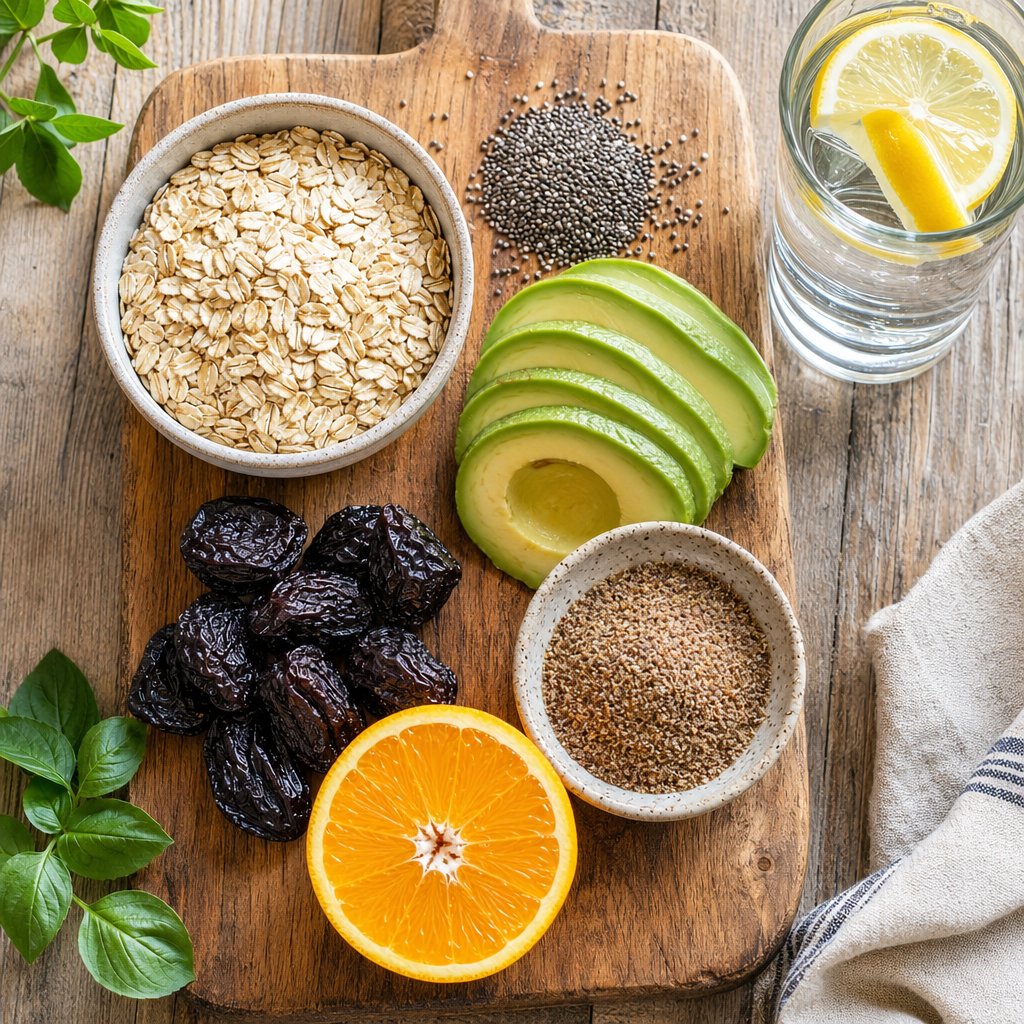
- Psyllium husk - 5 to 10 grams daily, mixed into water or a smoothie. This is the most studied soluble fiber for constipation relief and works as an osmotic agent that draws water into stool.
- Ground flaxseed - 1 to 2 tablespoons daily. Rich in both soluble fiber and omega-3 fatty acids. Stir into oatmeal or yogurt.
- Oats (rolled or steel-cut) - A half-cup serving provides about 2 grams of soluble fiber from beta-glucan, which forms a gel in the digestive tract.
- Chia seeds - 2 tablespoons deliver roughly 5 grams of fiber, mostly soluble. Soak them in water for 10 minutes before eating to maximize the gel-forming effect.
- Prunes (dried plums) - 4 to 5 prunes daily. They contain both soluble fiber and sorbitol, a natural sugar alcohol that draws water into the colon.
- Avocado - Half an avocado provides about 5 grams of fiber with a good soluble-to-insoluble ratio, plus healthy fats that lubricate stool.
One critical detail that most fiber advice ignores: soluble fiber for iron-induced constipation only works if you drink enough water alongside it. Without adequate hydration, soluble fiber can actually thicken and slow things down further. Aim for at least 2 to 2.5 liters (roughly 8 to 10 glasses) of water per day. If you are adding psyllium or chia seeds, increase that by another glass or two, because these fibers absorb significant amounts of water as they expand.
Timing matters here too. Take your fiber supplements or fiber-rich meals at least two hours apart from your iron dose. High-fiber foods can bind to iron in the stomach and reduce absorption, which defeats the purpose of supplementing in the first place.
Does Vitamin C Help Iron Absorption and Constipation?
Vitamin C plays a dual role that makes it one of the most useful dietary tools for anyone taking iron. It enhances iron absorption in the upper small intestine by reducing ferric iron (Fe3+) to ferrous iron (Fe2+), the form your gut cells can actually transport into the bloodstream. It also chelates iron in the stomach, keeping it soluble as it moves into the more alkaline environment of the duodenum. The practical result: more iron gets absorbed higher up in the digestive tract, and less free iron reaches the colon to cause oxidative damage and constipation.
A common concern is whether vitamin C itself causes digestive issues. It does not contribute to constipation. In fact, at higher doses, vitamin C has a mild osmotic laxative effect, which can actually work in your favor when you are dealing with iron-related backup.
You do not need megadoses. Pairing your iron tablet with 100 to 200 mg of vitamin C, roughly the amount in a medium orange or a cup of strawberries, is enough to meaningfully boost absorption. A glass of orange juice alongside your morning iron dose is one of the simplest and most effective strategies available.
Iron-Rich Foods as a Partial Supplement Alternative
For readers who cannot tolerate any oral iron supplement, even gentler forms, food-based iron is a viable path. It will not raise iron levels as quickly as a concentrated tablet, but it avoids the GI side effects entirely and can maintain adequate stores once a deficiency has been corrected.
The key distinction is between heme and non-heme iron. Heme iron, found exclusively in animal products, is significantly more bioavailable than non-heme iron from plant sources. Your body absorbs roughly 15 to 35% of heme iron compared to just 2 to 20% of non-heme iron. If you eat meat, prioritizing heme sources gives you the most iron per serving with the least digestive friction.
Here is a practical grocery list of iron-rich foods that also support constipation relief, organized by iron type:
- Chicken liver (3 oz cooked) - 10.8 mg of heme iron. The single richest common food source.
- Beef liver (3 oz cooked) - 5.2 mg of heme iron. Also packed with B12 and folate.
- Cooked oysters (3 oz) - 6.1 mg of heme iron. An excellent option if you enjoy seafood.
- Sardines (3 oz canned) - About 2 mg of heme iron, plus omega-3s that support gut health.
- Lentils (1 cup cooked) - 6.6 mg of non-heme iron. Pair with a vitamin C source like tomatoes or lemon juice to boost absorption.
- Soybeans (1 cup cooked) - 8.8 mg of non-heme iron. One of the highest plant-based sources available.
- Spinach (1 cup raw) - 3 mg of non-heme iron. Combine with citrus dressing or bell peppers for better uptake.
- Pumpkin seeds (1 oz) - 2.5 mg of non-heme iron. A convenient snack that also provides magnesium, which itself helps with constipation.
Notice the pattern: every plant-based iron source on this list benefits from being paired with vitamin C. A lentil soup with a squeeze of lemon, spinach salad with orange segments, or a stir-fry with bell peppers and tofu are all meals that naturally combine non-heme iron with the vitamin C needed to unlock it. This pairing reduces the amount of unabsorbed iron that would otherwise linger in the colon, addressing the root cause of iron-related constipation through food alone.
Diet and hydration form a strong foundation, but some people need additional support beyond what food and water can provide. That is where targeted complementary supplements, things like magnesium, probiotics, and stool softeners, come in as the next layer of defense.
Step 6 - Add Complementary Supplements That Ease Symptoms
Fiber, hydration, and smart food pairing go a long way, but sometimes your gut needs a more direct assist. Several over-the-counter supplements can actively counteract iron-induced constipation, each through a different physiological mechanism. The trick is knowing which one matches your situation and, just as importantly, when to take it relative to your iron dose so you do not accidentally cancel out the benefits of either.
Magnesium and Probiotics as Constipation Countermeasures
If you are looking for the best supplement to take with iron to prevent constipation, magnesium is the most straightforward option. Two forms stand out for this purpose: magnesium citrate and magnesium oxide. Both function as osmotic agents, meaning they draw water from surrounding tissue into the intestinal lumen. More water in the colon softens stool and stimulates the stretch receptors that trigger peristalsis. Imagine your colon as a dry sponge: magnesium essentially floods it with enough moisture to get things moving again.
Magnesium citrate is considered the strongest osmotic option among magnesium salts and can produce results within 30 minutes to six hours of a single dose. Magnesium oxide is milder and better suited for daily maintenance rather than acute relief. Either form works, but citrate is the go-to if constipation has already set in and you need faster results.
Probiotics take a different approach. Rather than pulling water into the colon, certain bacterial strains support the gut environment that iron disrupts. Earlier research on Bifidobacterium animalis subsp lactis HN019 showed improvements in gut transit time and GI symptoms at doses ranging from 1 to 17 billion CFU per day over two to four weeks. However, a large 2024 randomized clinical trial published in JAMA Network Open found that HN019 at approximately 4.69 billion CFU daily did not outperform placebo for increasing complete spontaneous bowel movements over eight weeks. The probiotic group did show statistically significant reductions in abdominal pain and bloating compared to placebo, which are common complaints alongside iron-induced constipation. The honest takeaway: probiotics to help with iron constipation may ease discomfort and bloating, but the evidence for directly increasing bowel movement frequency is mixed. They are worth trying as part of a broader strategy, not as a standalone fix.
Stool softeners offer a third mechanism. Docusate sodium works as a surfactant, lowering the surface tension of stool so that water and fats can penetrate it more easily. Think of it like adding dish soap to a greasy pan: the stool becomes softer and easier to pass without stimulating the gut wall the way a stimulant laxative would. Can you take a stool softener with iron tablets? Yes. Combination products pairing iron with docusate already exist on the market, specifically designed for people who need iron supplementation but are prone to constipation. Docusate does not interfere with iron absorption, making it a safe daily companion to your iron regimen.
Here is a breakdown of each option with its mechanism, timing, and interaction notes:
- Magnesium citrate - Draws water into the colon via osmosis, softening stool and triggering peristalsis. Take at least two hours apart from your iron dose, because magnesium competes with iron for absorption and can reduce iron uptake if taken together. Typical dose for constipation relief: 150 to 300 mL of liquid solution. Do not use for more than one week without medical guidance.
- Magnesium oxide - Milder osmotic effect than citrate, better for ongoing daily use. Same two-hour separation rule from iron applies. Start with 250 to 400 mg daily and adjust based on response.
- Probiotics (Bifidobacterium and Lactobacillus strains) - May reduce bloating and abdominal discomfort associated with iron supplementation, though direct effects on bowel movement frequency remain uncertain. No timing conflict with iron. Take daily with water before breakfast for consistency.
- Docusate sodium (stool softener) - Acts as a surfactant to let water penetrate stool. Safe to take alongside iron, even in the same dose. Typical dose: 100 to 200 mg daily. Not a laxative, so it will not cause urgency or cramping.
- Vitamin C (ascorbic acid) - A dual-purpose addition. Enhances iron absorption in the upper gut, reducing the amount of free iron that reaches the colon. No timing separation needed. Take 100 to 200 mg at the same time as your iron tablet for maximum benefit.
Timing Supplements to Avoid Absorption Interference
The biggest mistake people make with magnesium for iron supplement constipation is swallowing both pills at the same time. Magnesium and iron compete for the same absorption pathways in the small intestine. Calcium does the same. Taking any of these minerals together means each one reduces the other's uptake, leaving you with less iron in your blood and more unabsorbed iron in your gut, the exact opposite of what you want.
A simple scheduling rule keeps everything working: take your iron dose first thing in the morning (or whenever you normally take it), then wait at least two hours before taking magnesium or any calcium-containing supplement. If you take a multivitamin that contains calcium, that counts too. Vitamin C is the exception. It actively helps iron absorption, so take it at the same time as your iron tablet, not apart from it.
Docusate sodium and probiotics have no known absorption conflicts with iron, so you can take them at whatever time is most convenient. The goal is a staggered schedule that lets each supplement do its job without stepping on the others.
These complementary supplements can meaningfully reduce symptoms, but they are still working around the original problem. If constipation persists despite stacking dietary changes, timing adjustments, and supportive supplements, the next question becomes whether the physical format of your iron supplement, tablet versus liquid versus gummy, is part of the issue.
Step 7 - Switch to a Gentle Iron Supplement That Doesn't Cause Constipation
You have adjusted your dose, staggered your timing, loaded up on soluble fiber, and added magnesium to your routine. If constipation is still hanging around, the issue may not be how much iron you are taking or when you take it. It may be the physical format itself. A standard compressed iron tablet dissolves slowly in the stomach, releasing a concentrated bolus of free iron against a small area of the gastric lining. That localized concentration effect is a known driver of mucosal irritation and downstream GI symptoms. A case study of five IDA patients who underwent upper GI endoscopy after taking iron tablets revealed patchy brown mucosal discolorations, hemorrhage, and gastric erosions, effects that had not been observed in studies using liquid iron formulations.
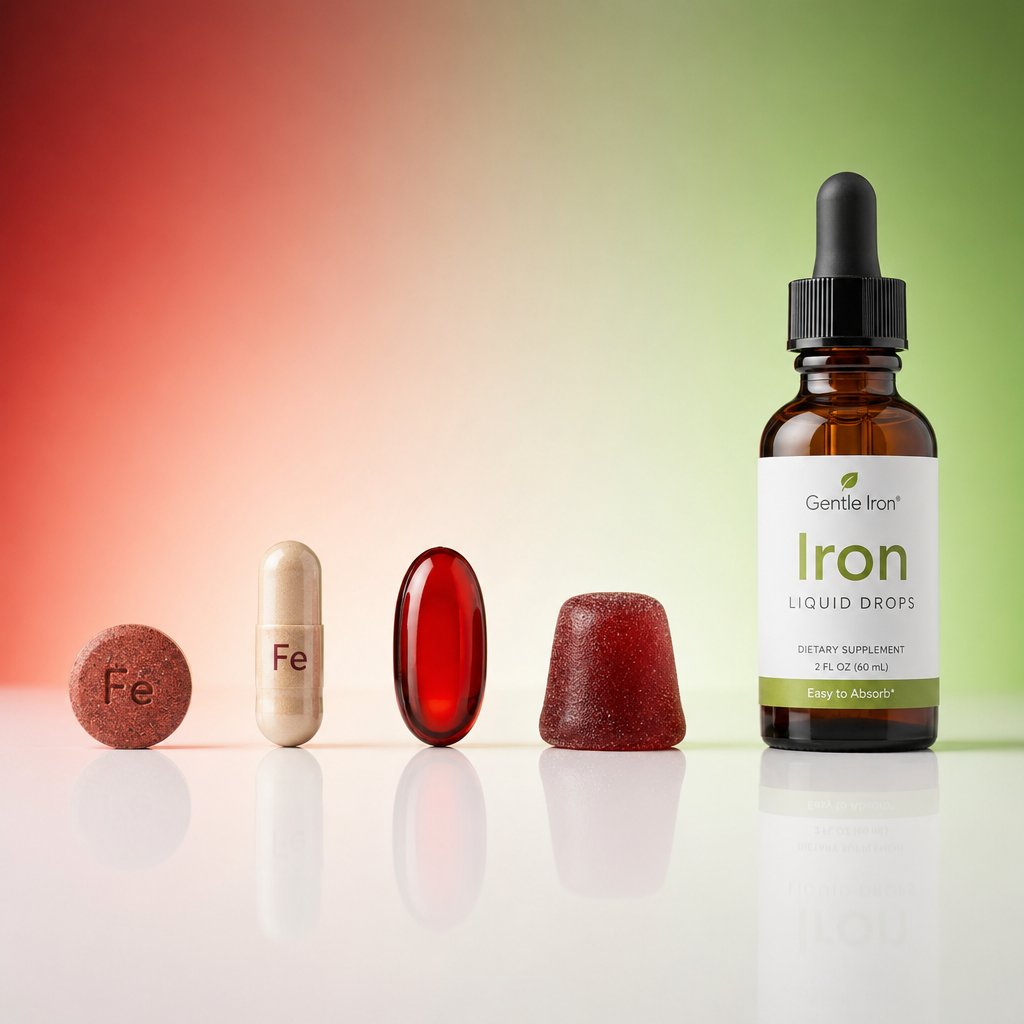
The supplement industry has moved well beyond the single compressed tablet. Iron is now available in hard capsules, tablets, powder and granules, soft capsules, gummy candy, and oral liquids. Each format interacts with your stomach differently, and that difference directly affects how much GI distress you experience. Choosing the right delivery format is often the final piece of the puzzle for people who have tried everything else.
A Decision Tree Based on Your Symptom Severity
Not everyone needs to make the same switch. The best iron supplement format for a sensitive stomach depends on how severe your symptoms are and how long they have persisted. Use this tiered approach to match your next move to your current situation:
- Mild constipation persisting after two weeks of dose and timing adjustments: Switch from a standard ferrous salt tablet to a chelated iron supplement (iron bisglycinate) in capsule form. Chelated iron is absorbed more efficiently in the upper intestine, leaving far less free iron to irritate the colon. Many people find this single change resolves their symptoms entirely. Products using bisglycinate, like those labeled "gentle iron," are widely available and were rated among the top-performing iron supplements in independent testing for both stomach comfort and absorption.
- Moderate constipation that has not responded to a chelated iron capsule after two to three weeks: Try a liquid iron formulation. Liquids disperse evenly across the stomach lining rather than dissolving in one concentrated spot, which eliminates the localized irritation that tablets cause. An extensive systematic review covering over 8,000 patients across 54 studies found that liquid iron (iron protein succinylate) produced comparable hemoglobin and ferritin improvements to tablet formulations, but with more than three times fewer adverse events overall and six times fewer treatment-related adverse events. Liquid formats also allow precise dose titration: you can start with a half dose and increase gradually, giving your gut time to adjust.
- Severe constipation or inability to tolerate any tablet or capsule format: Consider iron gummies or oral liquid sachets. Gummies bypass the tablet dissolution problem entirely because they are chewed and pre-dispersed before reaching the stomach. They also tend to contain lower elemental iron per serving, which reduces the total unabsorbed iron load in the colon. Iron gummies vs tablets for constipation is not a close contest for GI-sensitive individuals: the gummy format wins on tolerability, even if it requires taking two or three pieces to match the elemental iron of a single tablet.
- Constipation accompanied by nausea, vomiting, or complete intolerance of anything swallowed: An oral spray that delivers iron through the inner cheek mucosa sidesteps the digestive tract almost entirely. The dose per spray is lower (typically around 5 to 10 mg of elemental iron), so it is best suited for mild deficiency maintenance rather than aggressive repletion. If your deficiency is severe and no oral format works, this is the point to discuss IV iron infusion with your doctor (covered in the next section).
The pattern across all four tiers is the same: each step moves you toward a format that disperses iron more evenly, delivers it in smaller increments, and reduces the concentrated free-iron exposure that triggers constipation in the first place.
Why Liquid and Gummy Iron Formats Are Easier on Your Gut
What makes a liquid iron supplement cause less constipation than a tablet containing the same amount of elemental iron? It comes down to surface area and dissolution dynamics.
A compressed tablet sits in your stomach as a solid mass. Gastric acid has to break it down layer by layer, and during that process, iron is released in a concentrated burst against a small patch of stomach lining. Picture dropping a sugar cube into a cup of water versus stirring in a teaspoon of loose sugar. The cube dissolves slowly from the outside in, creating a pocket of intense sweetness right where it sits. The loose sugar disperses instantly and evenly. Liquid iron works like the loose sugar: it spreads across the entire gastric surface immediately, so no single area of your stomach lining absorbs a disproportionate hit of free iron.
This even dispersion has two downstream benefits. First, it reduces localized mucosal irritation, which means less nausea and cramping. Second, it allows the iron to reach absorptive sites in the duodenum more uniformly, improving the percentage that actually enters your bloodstream. More absorbed iron means less unabsorbed iron traveling to the colon, and that is the variable that controls constipation severity.
Gummies offer a similar advantage through a different mechanism. Because you chew them, the iron is already partially broken down and mixed with saliva before it ever reaches the stomach. There is no hard tablet core to dissolve. The iron disperses quickly and at a lower concentration per serving, which is gentler on the entire GI tract. The trade-off is that gummies typically contain more additives (sweeteners, gelling agents, flavors) than tablets or capsules, and the elemental iron per gummy is lower, so you may need two or three daily to hit your target dose.
Powder and granule formats split the difference. They dissolve rapidly when mixed into water or juice, offering the dispersion benefits of a liquid with the convenience of a portable single-serve packet. Soft capsules (softgels) contain iron suspended in oil, which can buffer the stomach lining and slow the release of free iron, reducing the sharp concentration spike that hard tablets produce.
For nutrition brands, supplement importers, and private label sellers looking to bring gentler iron products to market, the range of available delivery formats creates a real opportunity. Working with a contract manufacturer that offers customized OEM/ODM formulation across hard capsules, tablets, powder and granules, soft capsules, gummy candy, and oral liquids allows businesses to develop iron supplements specifically engineered for GI tolerability, matching the format to the target consumer's needs rather than defaulting to a one-size-fits-all tablet.
Choosing the right format can eliminate constipation for the vast majority of people. But a small percentage will find that no oral iron product, regardless of form, dose, or timing, works for their body. Knowing where that line is, and recognizing the warning signs that mean it is time to stop troubleshooting and start talking to a doctor, is the final and most important step.

Step 8 - Know When to See a Doctor About Iron Constipation
Most iron-related constipation responds to the strategies covered in this guide: switching forms, adjusting doses, timing your intake, supporting your gut with fiber and magnesium. But there is a line between a manageable side effect and a medical problem, and crossing it without realizing it is the real risk. Knowing when to see a doctor for iron constipation can prevent a minor inconvenience from becoming something serious.
Red-Flag Symptoms That Need Medical Attention
The signs of GI bleeding from iron tablets are easy to miss if you are already expecting dark stool as a normal side effect. Here is the distinction that matters: iron-related stool is dark brown or black-green and holds its normal shape. Melena, the stool caused by upper GI bleeding, is jet-black, sticky, and tar-like in consistency, with a distinctly foul odor that is hard to ignore. If you are unsure which one you are looking at, the texture tells the story. Formed and firm means iron. Sticky and smearable means get to a doctor.
Constipation itself becomes a red flag when it crosses certain duration and severity thresholds. If your iron supplement constipation is not going away after two to three weeks despite switching forms, adjusting your dose, increasing fiber, and adding magnesium, something beyond normal GI irritation is likely at play. Your doctor may need to rule out other causes of slow transit, check whether your iron dose is appropriate, or consider an entirely different route of delivery.
Use this checklist to decide whether your symptoms still fall within the manageable range or whether it is time to pick up the phone:
- No bowel movement for four to five consecutive days despite adequate hydration, fiber, and stool softeners. This level of stasis can lead to fecal impaction and should not be managed at home.
- Severe or worsening abdominal pain that is not relieved by passing gas or changing position. Mild cramping from iron is common; sharp, persistent pain is not.
- Black, tarry, sticky stool accompanied by dizziness, weakness, or lightheadedness - these are classic signs of GI bleeding and require urgent medical evaluation.
- Vomiting blood or material that looks like coffee grounds - this indicates upper GI bleeding and warrants emergency care.
- Bright red blood in stool or on toilet paper - while this may indicate hemorrhoids aggravated by straining, it needs to be assessed to rule out lower GI bleeding.
- Constipation persisting beyond two to three weeks after implementing dose, timing, form, and dietary adjustments from this guide.
- Unintentional weight loss, fever, or symptoms that started before iron therapy - these suggest a cause unrelated to iron supplementation that needs separate investigation.
A special note for pregnant women: do not adjust your prescribed iron dose, switch formulations, or stop taking your prenatal iron without consulting your OB-GYN first. Iron deficiency anemia during pregnancy is linked to increased risk of cesarean delivery, postpartum hemorrhage, and adverse neonatal outcomes, as outlined in clinical research on perinatal iron management. The stakes of undertreating iron deficiency in pregnancy are high enough that any changes to your regimen should be guided by your care provider, even if the constipation feels unbearable.
When IV Iron Becomes the Better Option
For patients who cannot tolerate any oral iron format, IV iron infusion bypasses the GI tract entirely. Iron is delivered directly into the bloodstream through a vein, which means zero unabsorbed iron reaches the colon. No colonic iron, no reactive oxygen species, no constipation. The American Gastroenterological Association recommends IV iron when a patient does not tolerate oral iron, when ferritin levels fail to improve after an adequate oral trial, or when a condition prevents normal intestinal absorption.
Modern IV iron formulations like ferric carboxymaltose and ferric derisomaltose can replace an entire iron deficit in just one or two infusions. True anaphylaxis is very rare. Most reactions are mild infusion-related events that resolve quickly. IV iron is not a first-line choice for everyone, but it is a well-established, safe alternative when oral supplementation has genuinely failed.
Most iron-induced constipation is manageable with the right form, dose, timing, and dietary support. But knowing when to stop troubleshooting and consult a doctor is just as important as knowing how to fix the problem yourself.
Frequently Asked Questions About Iron Tablets and Constipation
1. Why do iron tablets cause constipation?
Your body only absorbs 10-20% of the elemental iron in a standard tablet. The remaining 80-90% stays in your intestines, where it oxidizes and generates reactive oxygen species through the Fenton reaction. These ROS damage the intestinal lining, slow peristalsis, and pull water out of the colon, resulting in drier, harder stool that is difficult to pass. Unabsorbed iron also disrupts your gut microbiome by feeding pathogenic bacteria while reducing beneficial species like Lactobacillus and Bifidobacterium.
2. Which iron supplement form causes the least constipation?
Iron bisglycinate (chelated iron) causes significantly less constipation than ferrous sulfate, gluconate, or fumarate. Its chelated structure allows absorption as an intact molecule through amino acid pathways in the upper small intestine, leaving far less free iron to irritate the colon. Clinical trials in pregnant women showed roughly 64% fewer GI side effects with bisglycinate compared to standard iron salts, while still matching or exceeding hemoglobin improvements at lower doses of 15-30 mg daily.
3. How long does constipation from iron supplements last?
Iron-induced constipation typically begins within two to five days of starting supplementation. Many people notice partial adaptation within one to three weeks, with nausea fading first and constipation lingering longer. However, adaptation is not guaranteed for everyone. If constipation persists beyond three weeks despite adjusting your dose, timing, and diet, it signals that your current iron form or regimen needs to change rather than waiting for your body to adjust on its own.
4. Can you take a stool softener with iron tablets?
Yes, docusate sodium (a stool softener) is safe to take alongside iron tablets and does not interfere with iron absorption. It works as a surfactant that lowers the surface tension of stool, allowing water and fats to penetrate it more easily. Combination products pairing iron with docusate already exist on the market for this exact purpose. Magnesium citrate is another effective option, but it must be taken at least two hours apart from iron to avoid competing for absorption pathways.
5. Are liquid iron supplements better than tablets for avoiding constipation?
Liquid iron formulations generally cause fewer GI side effects than compressed tablets. A systematic review covering over 8,000 patients found that liquid iron produced comparable hemoglobin improvements but with more than three times fewer adverse events overall. The key difference is dispersion: liquids spread evenly across the stomach lining rather than dissolving in one concentrated spot, eliminating localized mucosal irritation. They also allow precise dose titration, so you can start low and increase gradually. For brands developing gentler iron products, manufacturers offering OEM/ODM services across formats like oral liquids, gummies, and soft capsules can create custom formulations optimized for GI tolerability.