Does Baking Powder Actually Tenderize Meat
You grabbed the red canister from the pantry, sprinkled some on your steak, and waited for magic. Nothing happened. If you're wondering does baking powder tenderize meat, the honest answer is: barely. The product you actually want is sitting right next to it on the shelf — baking soda.
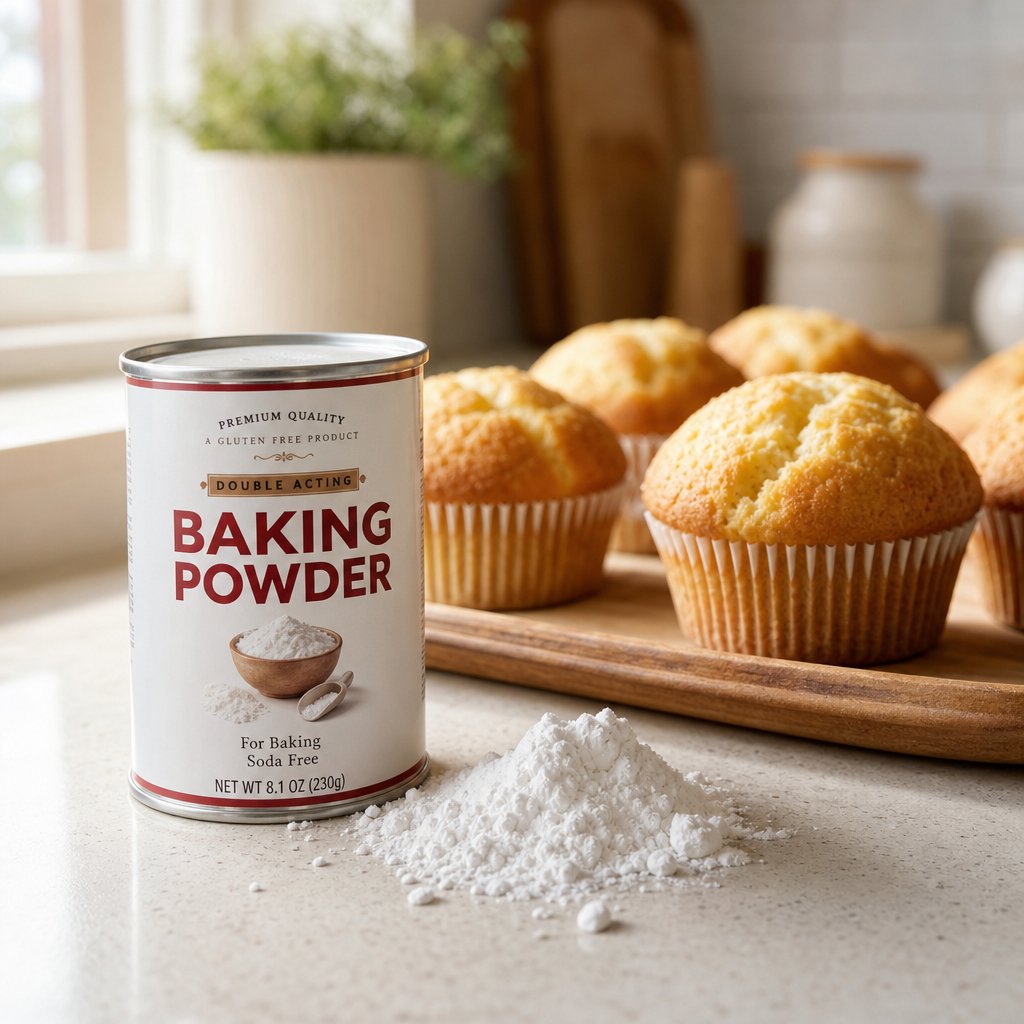
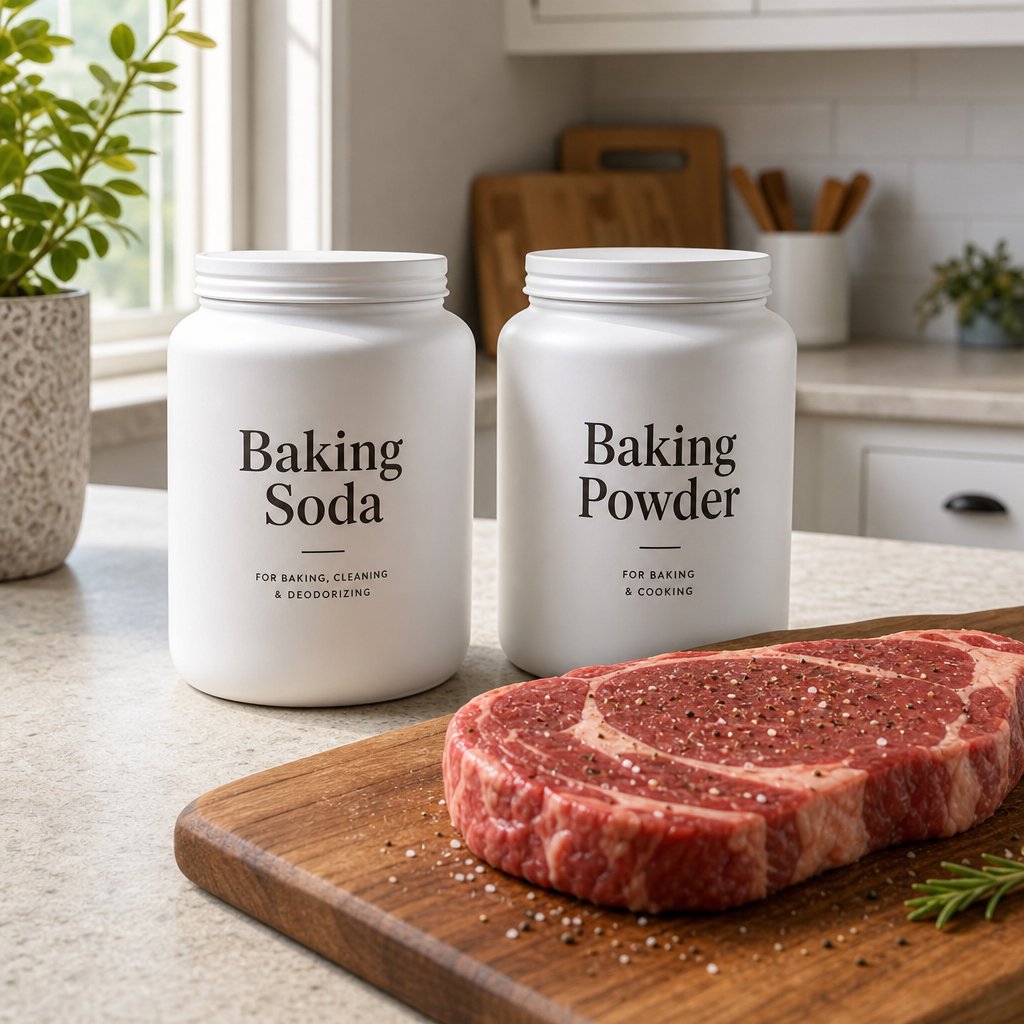
This mix-up happens constantly, and it's easy to see why. The names sound almost identical, the containers look similar, and both are white powders used in the kitchen. But when it comes to tenderizing meat with baking powder, you're working with a diluted, far less effective ingredient.
The Short Answer About Baking Powder and Meat
Baking powder is not a single ingredient. It's a mixture of sodium bicarbonate combined with acids like monocalcium phosphate or sodium aluminum sulfate, plus cornstarch as a buffer. That built-in acid neutralizes much of the alkaline power that makes baking soda effective on protein. Think of it this way: baking powder is designed to be pH-balanced for baking, not to raise the surface pH of meat.
Baking soda, on the other hand, is pure sodium bicarbonate — 100% alkaline compound with nothing working against it. When it contacts meat, it raises the pH on the surface, disrupting protein bonds and keeping muscle fibers from seizing up during cooking. That's the mechanism behind tenderization, and baking powder simply can't deliver it with the same strength.
Baking soda is the effective meat tenderizer, not baking powder. The acid components in baking powder neutralize the very alkaline action that breaks down tough protein fibers.
Why Search Results Show Baking Soda Instead
Ever notice that when you search does baking soda or baking powder tenderize meat, nearly every credible source redirects you to baking soda? That's not a coincidence. Food scientists and culinary professionals consistently recommend baking soda because it works — and baking powder to tenderize meat is essentially a misidentification of the correct product.
Multiple cooking authorities, including Cook's Illustrated, have tested and confirmed that a baking soda solution raises the meat's surface pH, making it more difficult for proteins to bond excessively. The general guideline is 1 teaspoon of baking soda per pound of meat. Baking powder? You'd need far more product for inconsistent, underwhelming results.
The confusion between these two pantry staples is one of the most common kitchen mix-ups — and when it comes to protein, it's a distinction that genuinely matters. Understanding the chemistry behind each product reveals exactly why one transforms tough cuts and the other falls flat.
Baking Powder vs Baking Soda for Meat Tenderization
The labels look nearly identical, but what's inside each container couldn't be more different when it comes to breaking down tough protein fibers. Whether baking powder or baking soda tenderize meat effectively comes down to one thing: alkaline concentration. Let's break that apart.
Chemical Composition Differences
Baking soda is pure sodium bicarbonate — a single compound with a pH around 8 to 9 in solution. Every grain delivers alkaline power directly to the meat's surface. There's no competing ingredient diluting its effect.
Baking powder tells a different story. It's a blend of sodium bicarbonate plus one or more acids (like monocalcium phosphate or sodium aluminum sulfate) and cornstarch as a filler. Those built-in acids exist specifically to neutralize the bicarbonate during baking, creating carbon dioxide for lift. The same neutralization that makes cakes rise also cancels out the alkaline action you need for tenderizing protein.
Imagine pouring water on a fire and then asking that fire to cook your dinner. That's essentially what happens when you use a baking powder meat tenderizer — the acid component puts out the alkaline "fire" before it can do meaningful work on muscle fibers.
| Property | Baking Soda | Baking Powder |
|---|---|---|
| pH Level (in solution) | ~8-9 (strongly alkaline) | ~7-7.5 (near neutral) |
| Active Ingredient Concentration | 100% sodium bicarbonate | ~25-30% sodium bicarbonate |
| Effectiveness on Meat | High — raises surface pH, disrupts protein bonds | Minimal — acid neutralizes alkaline action |
| Recommended Use Case | Meat tenderization, velveting, pH adjustment | Leavening baked goods |
Can You Substitute Baking Powder for Baking Soda on Meat
What if baking powder is all you have on hand? You can try it, but set your expectations low. Since baking powder contains roughly one-quarter to one-third the sodium bicarbonate of pure baking soda, you'd need three to four times the amount to approach similar alkaline levels. Even then, results are inconsistent because the acid in the powder actively works against you.
Using baking powder to tenderize beef means you're also adding cornstarch and acid salts to the meat's surface — ingredients that change texture and flavor in unpredictable ways. The cornstarch can create a gummy coating rather than the clean protein disruption you're after, and the extra volume of powder makes it harder to rinse cleanly.
If you're deciding between baking powder or baking soda to tenderize meat, the practical answer is straightforward: pick up a box of baking soda. It costs less than a dollar, lasts for months, and actually does the job. Using baking soda or powder to tenderize meat isn't really a debate once you understand the chemistry — one is purpose-built for alkaline reactions, and the other is engineered to stay neutral.
The real question isn't which product to grab. It's understanding what happens at the molecular level when that alkaline compound meets raw protein — and why the reaction produces such a dramatic change in texture.
The Science Behind Alkaline Meat Tenderization
You know baking soda works on meat. But why does baking soda tenderize meat in the first place? The answer lives in basic chemistry — specifically, what happens when an alkaline substance meets animal protein at the molecular level.
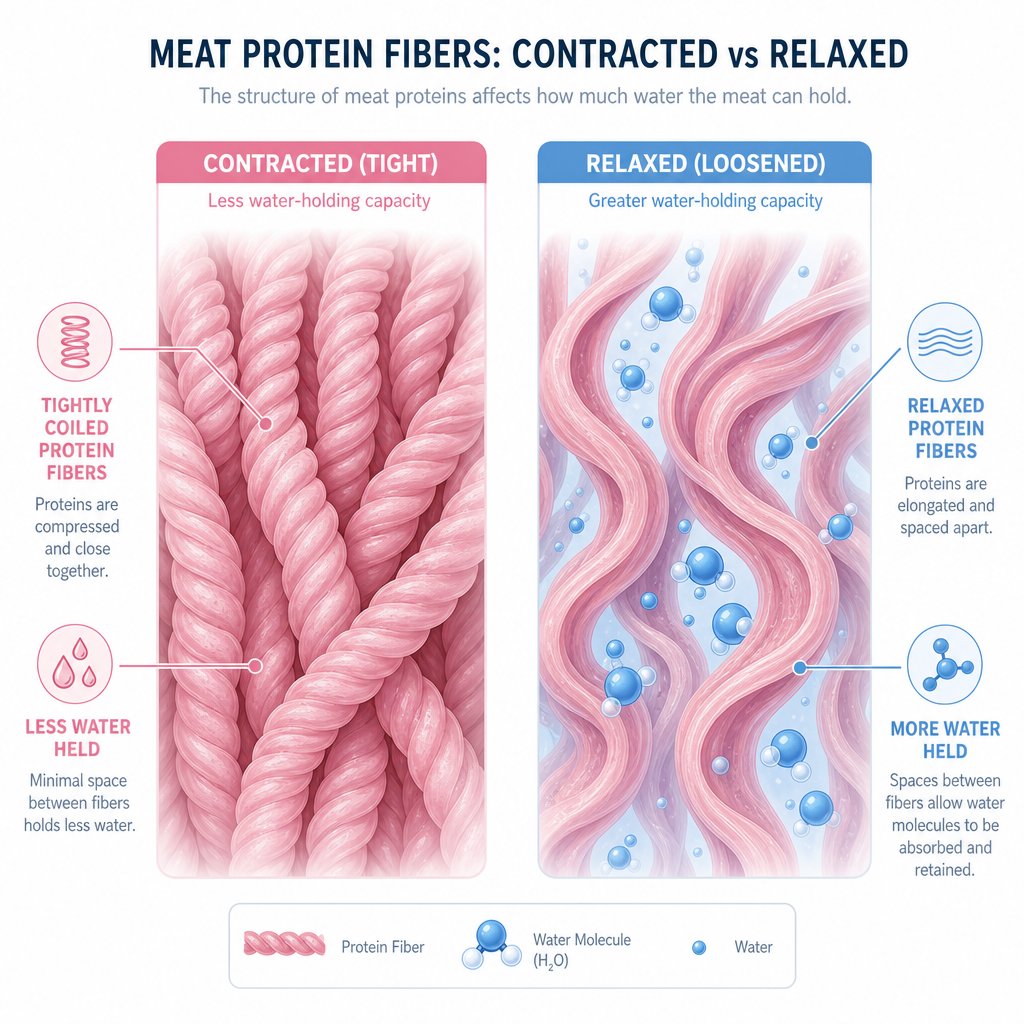
Meat is mostly water and protein. The proteins that matter most here are myosin and actin — the structural fibers that give muscle its shape and, when overcooked, its toughness. These proteins are held together by bonds that tighten when exposed to heat. Picture a coiled spring being squeezed — that's what happens to muscle fibers during cooking. They contract, squeeze out moisture, and the result is a dry, chewy piece of meat.
Baking soda interrupts that process before it starts.
How Alkaline pH Breaks Down Protein Bonds
When sodium bicarbonate contacts raw meat, it raises the surface pH from its natural range of about 5.5 to 6.5 up toward 8 or 9. Research published in CyTA - Journal of Food demonstrates that at pH 9.0, myosin proteins undergo significant structural changes — the tightly wound alpha-helical structures begin to unfold, and the protein's internal hydrophobic groups become exposed. In plain terms, the protein relaxes and opens up.
This unfolding does two critical things. First, it weakens the cross-links between protein molecules, so fibers can't contract as aggressively during cooking. Second, it increases the electrostatic repulsion between protein strands — they literally push each other apart rather than clumping into a dense, tough mass. The same research showed that heat-treated myosin at pH 9.0 maintained significantly higher solubility (90.8%) compared to just 6.8% at neutral pH, confirming that alkaline conditions fundamentally change how proteins behave under heat.
A study from the University of Bologna on sodium bicarbonate marination found that treating broiler breast meat with a bicarbonate solution increased the meat's pH by approximately 0.7 units. This shift was enough to measurably improve tenderness and water retention compared to untreated controls.
Why Treated Meat Retains More Moisture
Tenderness is only half the story. If you've ever cooked a baking soda-treated stir-fry and noticed the meat seemed juicier and plumper, you weren't imagining things. The alkaline environment directly increases the protein's water-holding capacity.
Here's why: proteins carry electrical charges that change depending on pH. At higher pH levels, meat proteins develop a stronger net negative charge. These negative charges repel each other, creating more space between fibers — space that fills with water. The Bologna study confirmed this using low-field nuclear magnetic resonance, showing that bicarbonate treatment caused a remarkable increase in water entrapped within the myofibrillar spaces. The water wasn't just sitting on the surface; it was locked inside the protein structure itself.
This explains why does baking soda tenderize meat so effectively for stir-fry applications. The treated slices lose less weight during high-heat cooking because the water is physically bound within the protein matrix rather than being free to evaporate.
The three main effects of alkaline treatment on meat work together:
- Surface protein disruption — alkaline pH unfolds protein structures and weakens cross-links between muscle fibers, preventing excessive tightening during cooking
- Increased water retention — higher pH increases the net negative charge on proteins, creating more space between fibers that fills with and holds water
- Reduced moisture loss during cooking — because water is bound within the myofibrillar structure rather than sitting freely, less escapes as steam during high-heat cooking
Does baking soda make meat tender? Absolutely — and it does so through a mechanism that simultaneously improves juiciness. The protein disruption and moisture retention aren't separate benefits; they're two outcomes of the same pH shift. That's what makes alkaline tenderization so effective compared to methods that only address one problem at a time.
Knowing the science is useful, but it raises a practical question: how much baking soda do you actually use, and how long should it stay on the meat before you cook it?
How to Tenderize Meat with Baking Soda Step by Step
The chemistry makes sense on paper, but what does the process actually look like in your kitchen? Using baking soda to tenderize meat is straightforward — there are really only two methods, and both take minutes to set up. The key difference is whether you're working with thick cuts or thin slices.
Before you start, one important note: use a non-reactive container for either method. Glass bowls, stainless steel, ceramic, or zip-close bags all work. Avoid aluminum, copper, or cast-iron vessels — the alkaline baking soda can react with these materials and create off-flavors or discoloration.
The Dry Rub Method for Steaks and Thick Cuts
If you're learning how to tenderize steak with baking soda, the dry rub is your go-to approach. It works best on larger, thicker pieces — think steaks, roasts, ribs, or any cut where a liquid soak wouldn't penetrate evenly.
Here's the process:
- Pat the meat dry with paper towels. Surface moisture dilutes the baking soda and creates uneven coverage.
- Sprinkle baking soda evenly over all sides of the meat. The general ratio is approximately 1 teaspoon per pound of meat. For precision, Arm & Hammer recommends using about 1 percent of the meat's weight in baking soda — roughly 3 tablespoons for a 10-pound cut.
- Rub it in gently with your hands, making sure every surface gets contact with the powder.
- Place the meat in a container and refrigerate. For steaks and thick cuts, leave it for 3 to 5 hours. Overnight works too — dry brining with baking soda is forgiving on timing.
- Remove from the refrigerator and rinse thoroughly under cold running water until all visible baking soda is gone.
- Pat completely dry and cook as desired.
This method is ideal when you have time to plan ahead. You can prep your meat in the morning and have it ready for dinner — the extended contact time allows the alkaline to penetrate deeper into thick muscle fibers. It's how to tenderize beef with baking soda when you're working with substantial cuts like chuck roasts or bone-in steaks.
The Wet Soak Method for Thin Slices and Stir-Fry
Thin slices don't need hours of treatment. Because the meat is already cut thin — typically 1/8 to 1/4 inch for stir-fry — the baking soda penetrates quickly. A wet soak is faster, more uniform, and better suited to these smaller pieces.
- Slice your meat against the grain into thin strips or bite-sized pieces.
- Dissolve 1 teaspoon of baking soda in 1/2 cup of water for every 12 ounces of meat. The Woks of Life uses a similar ratio — 1 teaspoon baking soda with 1/4 cup water per pound — then massages the solution into the beef until absorbed.
- Add the sliced meat to the solution and mix with your hands until the liquid is evenly distributed.
- Let it sit for 15 to 20 minutes at room temperature. Some tougher cuts may benefit from up to 30 minutes, but don't exceed that without refrigerating.
- Rinse thoroughly under running water until the water runs completely clear. Use your hands to agitate the pieces during rinsing.
- Drain in a colander and pat dry with paper towels before proceeding with your marinade or cooking.
This wet method is what Chinese restaurants use as the first step in their velveting process. It's the fastest way to tenderize meat with baking soda — you can go from raw slices to ready-to-cook in under 30 minutes. For ground meat, the approach is even simpler: mix about 1/4 teaspoon of baking soda per pound directly into the ground beef before shaping patties or browning. No extended soaking needed.
Rinsing and Preparation After Treatment
This step is non-negotiable. Skipping it — or doing it halfway — is the single most common reason people report bad experiences when tenderizing meat with baking soda.
Residual sodium bicarbonate left on the meat creates a distinctly unpleasant soapy, metallic, or bitter taste that no amount of seasoning can mask. The baking soda has already done its job by the time you rinse. The pH change happened at the protein level, and rinsing doesn't reverse that effect — it only removes the excess alkaline compound sitting on the surface.
Here's what thorough rinsing looks like:
- Hold the meat under cold running water for at least 30 seconds per piece
- For thin slices soaked in solution, stir and agitate the meat under the stream — you'll notice the water starts cloudy and should run clear before you stop
- For thick cuts treated with a dry rub, rub the surface with your fingers under the water to dislodge any powder trapped in crevices or scoring marks
- After rinsing, pat the meat as dry as possible with clean paper towels — excess surface moisture prevents browning and creates steam instead of sear
Once rinsed and dried, your meat is ready for whatever comes next — seasoning, marinating, or going straight into the pan. The baking soda tenderize beef process is complete at this point, and the protein structure has already been modified. You'll notice the difference the moment you cook it: less shrinkage, more juice, and a noticeably softer bite.
These ratios and timings work as general guidelines, but different cuts and thicknesses respond differently. A paper-thin stir-fry slice doesn't need the same treatment as a one-inch stew cube — and getting that balance wrong is where texture problems start.
Cut-by-Cut Tenderizing Guide for Every Thickness
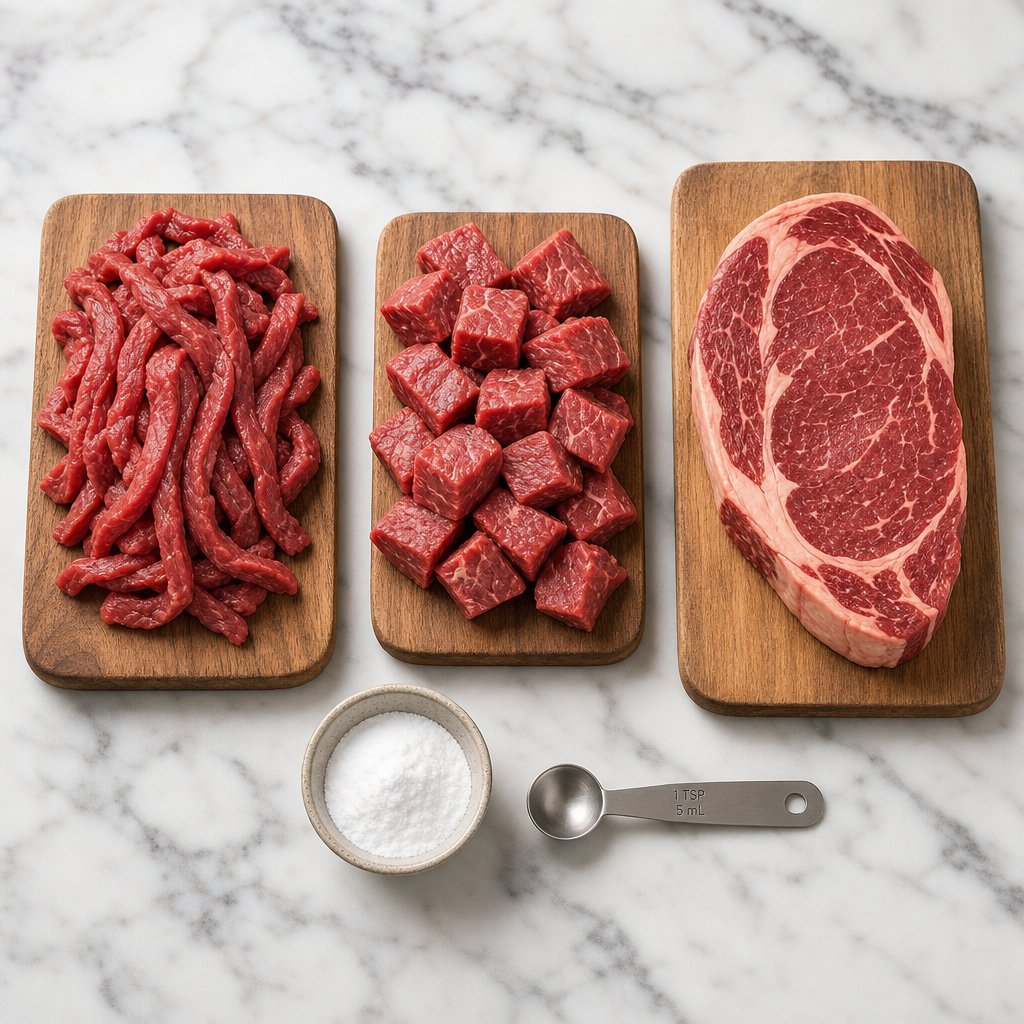
A quarter-inch stir-fry strip and a one-inch stew cube are not the same animal — at least not when it comes to how long baking soda needs to work. Thinner cuts expose more surface area relative to volume, so the alkaline penetrates quickly. Thicker pieces need longer exposure because the pH shift has to travel deeper into dense muscle fiber. Getting this balance wrong is the difference between silky and mushy.
Here's the cut-by-cut breakdown based on practical testing and guidance from sources like RecipeTin Eats and The Woks of Life.
Timing for Stir-Fry Slices and Thin Strips
Steak strips sliced 1/8 to 1/4 inch thick are the fastest to treat. Because the alkaline only needs to travel a millimeter or two, 15 to 20 minutes is the sweet spot. This applies to flank steak, minute steak slices, sirloin strips, or any protein cut thin for the wok.
Go beyond 20 minutes on pieces this thin and you risk crossing into mushy territory — the surface proteins break down too far and the meat loses its structure entirely. If you're using economical cuts like minute steak that are already mechanically tenderized, lean toward the shorter end at 15 minutes.
Timing for Stew Chunks and Beef Cubes
Beef cubes cut for stew or curry — typically 3/4 to 1 inch — need 30 to 45 minutes. The extra mass means the baking soda takes longer to affect the interior fibers. RecipeTin Eats recommends 30 minutes for traditional stewing cuts like chuck, gravy beef, and oyster blade, with tougher cuts like bolar blade benefiting from up to 40 minutes.
For beef cubes, the wet soak method works better than a dry rub because the solution contacts all sides of each piece uniformly. Toss the cubes in the baking soda solution, spread them in a single layer if possible, and set a timer. Don't just eyeball it — over-treated stew meat develops an unsettling, almost gelatinous texture that no amount of braising can fix.
Timing for Whole Steaks and Thick Cuts
When you tenderize steak with baking soda using the dry rub method, thicker cuts like beef eye round, flat iron steaks, or top round can handle 45 minutes to 1 hour of contact time. These are dense, lean cuts with tight muscle fibers that benefit from extended alkaline exposure.
One important caveat: baking soda for tenderizing steaks works best when the steak is later sliced thin for serving — think philly cheesesteak strips or fajita meat. If you plan to serve the steak whole and thick, the exterior can become over-tenderized while the center stays unchanged. RecipeTin Eats specifically notes that this method is suited for sliced or bite-size pieces, not whole steaks meant for grilling intact.
Ground meat is the simplest case. Since the protein is already broken into small particles, a brief mix — about 1/4 teaspoon per pound stirred directly into the meat — is all you need. No resting time required beyond a few minutes of incorporation.
| Cut Type | Thickness | Baking Soda Amount | Treatment Time | Method |
|---|---|---|---|---|
| Stir-fry slices / steak strips | 1/8 - 1/4 inch | 3/4 tsp per 8 oz | 15-20 minutes | Wet soak |
| Stew chunks / beef cubes | 3/4 - 1 inch | 1 tsp per pound | 30-45 minutes | Wet soak |
| Whole steaks (flat iron, eye round, top round) | 3/4 - 1.5 inches | 1 tsp per pound | 45-60 minutes | Dry rub |
| Ground meat | N/A (loose) | 1/4 tsp per pound | 2-5 minutes (mix only) | Direct mix |
The pattern is simple: thinner means shorter, thicker means longer. But every cut has a ceiling. Push past it and you'll trade toughness for an equally unpleasant problem — meat that feels like it's dissolving on your tongue. That mushy failure point, along with the soapy off-flavors from poor rinsing, accounts for nearly every negative experience people report with this technique.
The Velveting Technique Used in Chinese Restaurants
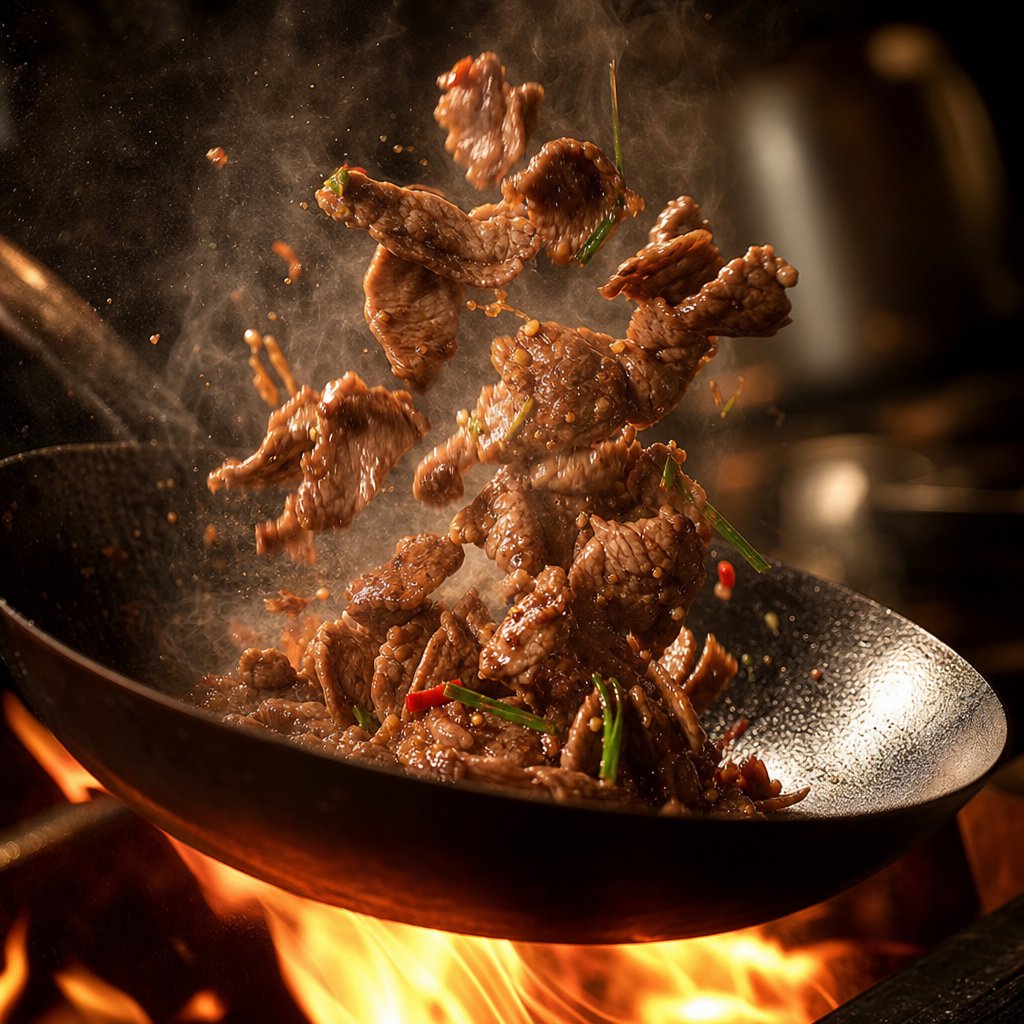
That silky, almost impossibly tender beef you get at your favorite Chinese restaurant? It's not expensive cuts or secret ingredients. It's a technique called velveting — and baking soda is the engine that drives it. This is where baking soda and meat tenderizing come together in their most refined, practical form.
What Velveting Is and Why It Works
Velveting is a Chinese culinary technique that combines alkaline tenderization with a protective starch coating to produce stir-fry meat with a distinctly smooth, juicy texture. The process has two phases: first, baking soda breaks down surface proteins (the tenderizing step you already know). Then, a marinade of cornstarch and oil forms a thin barrier around each piece of meat, shielding it from the intense heat of the wok.
Think about what happens when you throw untreated beef slices into a screaming-hot pan. The proteins seize immediately, squeeze out moisture, and you end up with dry, chewy strips swimming in a puddle of gray liquid. Velveting beef prevents both problems simultaneously — the baking soda keeps fibers relaxed while the cornstarch coating locks juice inside and creates that signature smooth mouthfeel.
This is precisely where baking soda shines over baking powder. The concentrated alkaline action of pure sodium bicarbonate does meaningful work in the short marination window that stir-fry prep allows. Baking powder's neutralized, diluted formula simply can't deliver the same protein disruption in 20 to 30 minutes. As RecipeTin Eats notes directly: "Do not use baking POWDER, not strong enough."
The Woks of Life describes velveting as a technique that involves marinating proteins with a mixture of oil and cornstarch to give them a "velvety" texture after cooking — with baking soda acting as an optional but powerful additional tenderizer for beef specifically. The cornstarch and oil form a barrier that locks in juices and protects the meat from the hot cooking medium.
The result? Velveting meat transforms cheap stewing beef into something that eats like tenderloin in a stir-fry. Your local takeout spot uses this on economical cuts every single day — it's how they keep prices reasonable while delivering that restaurant-quality texture home cooks struggle to replicate.
Basic Velveting Recipe for Beef Stir-Fry
You don't need special equipment or hard-to-find ingredients. Baking soda for velveting meat is the simplest approach — a few pantry staples and 30 minutes of hands-off time. Here's what you need for about one pound of sliced beef:
- 1 pound flank steak or chuck steak, sliced 1/4 inch thick against the grain
- 1 teaspoon baking soda
- 1/4 cup (60 ml) water
- 2 teaspoons cornstarch
- 2 teaspoons vegetable oil
- 2 teaspoons oyster sauce or soy sauce
- 2 teaspoons Shaoxing wine (optional)
And here's the step-by-step process:
- Tenderize first. Add baking soda and water to the sliced beef. Massage with your hands until most of the liquid is absorbed. Let stand 20 to 30 minutes (up to 1-2 hours for the full restaurant method).
- Rinse thoroughly. Run the beef under cold water, stirring with your hands until the water runs completely clear. Drain well in a colander.
- Build the velvet coating. Return the drained beef to a bowl. Add cornstarch, oil, oyster sauce, and Shaoxing wine if using. Mix until every piece is evenly coated.
- Rest the marinade. Set aside for 15 to 30 minutes while you prep your vegetables and sauce.
- Cook hot and fast. Sear the velveted beef in a ripping-hot wok or skillet in small batches — no more than 60 to 90 seconds per batch. Remove, then add back at the end of your stir-fry.
A simplified shortcut exists for weeknight cooking. The Woks of Life recommends using just 1/8 to 1/4 teaspoon of baking soda with 2-3 tablespoons of water per pound, mixed directly into the marinade without a separate rinsing step. You sacrifice a small degree of tenderness but save significant time — and the reduced baking soda amount means no off-flavors even without rinsing.
Some older velveting recipes call for egg whites, soy sauce, and rice wine all mixed together from the start. Experienced practitioners like food writer Brendan McGinley argue this overcomplicates things — the acidic soy sauce partially neutralizes the baking soda if added too early, and separating egg whites adds unnecessary work. The most effective approach keeps it simple: baking soda and water first for tenderization, then add flavor ingredients after rinsing.
The relationship between baking soda and meat tenderizing reaches its peak in velveting because the technique addresses every weakness of quick-cooked beef at once — toughness, dryness, and lack of that smooth restaurant texture. It's a complete system rather than a single trick.
Of course, even the best technique fails when you push it too far. Too much baking soda, too long a soak, or a lazy rinse can turn perfectly good beef into something that tastes like soap and feels like pudding.
Common Mistakes and How to Avoid Ruining Your Meat
Every negative review of baking soda as a meat tenderizer traces back to the same three errors. The technique itself is reliable — it's been used in professional kitchens for decades. But when home cooks get it wrong, the results are memorably bad. We're talking soapy-tasting steak, metallic bitterness that lingers on the tongue, or meat with the texture of baby food. None of that needs to happen.
Is it safe to use baking soda to tenderize meat? Absolutely — sodium bicarbonate is a common food-grade ingredient. The safety concern isn't toxicity; it's palatability. The failures are culinary, not health-related. Here's how to avoid every one of them.
How to Avoid Soapy and Alkaline Off-Flavors
That distinctive soapy or metallic taste people complain about? It comes from residual sodium bicarbonate reacting with fats and acids in the meat during cooking. When baking soda contacts fat at high temperatures, it can produce soap-like compounds — literally the same saponification reaction used in soap-making. Even a small amount of leftover powder creates a noticeable off-flavor that seasoning can't cover.
Three critical mistakes cause this problem, and each has a straightforward fix:
- Using too much product. More baking soda doesn't mean more tenderness — it means more residue to rinse off and a higher chance of alkaline taste surviving the rinse. Stick to the ratios: 3/4 teaspoon per 8 ounces for thin slices, 1 teaspoon per pound for thicker cuts. Southern Living recommends as little as 1/2 teaspoon per pound. Doubling the amount won't double the tenderness — it just doubles your problems.
- Treating for too long. Leaving baking soda on a steak overnight when the cut only needed 30 minutes means the alkaline penetrates far deeper than necessary. The surface becomes over-processed while the interior gets exactly the treatment it needed. Set a timer. For thin stir-fry slices, 15 to 20 minutes is the ceiling. For thicker cuts, cap it at one hour unless you're using the minimal dry-rub method specifically designed for overnight refrigeration.
- Failing to rinse thoroughly. This is the number-one cause of bad experiences. A quick splash under the faucet isn't enough. You need 30 seconds of running water per piece, agitating with your hands, until the water runs completely clear. For thin slices treated in a wet soak, the rinse water will start cloudy — keep going until it's transparent. One commenter on RecipeTin Eats reported they "couldn't get the taste of bi carb out of the meat" — and the community response was immediate: "you didn't rinse it properly or for long enough."
If you've already cooked the meat and notice the soapy flavor, there's no real fix. An acidic sauce (vinegar-based, citrus, or tomato) can partially mask it, but prevention is the only reliable solution. When in doubt, rinse longer than you think necessary. The baking soda tenderize effect has already happened at the protein level — rinsing removes only the excess surface compound, not the tenderness.
Signs You Have Over-Tenderized Your Meat
Texture failure looks different from flavor failure, and it's equally unpleasant. Over-tenderized meat doesn't feel tender — it feels wrong. Instead of a satisfying bite with some give, you get something that dissolves on contact, almost paste-like. The muscle fibers have broken down so completely that there's no structure left to chew.
Here's how to identify the sweet spot. Properly tenderized meat should still have a recognizable "meaty" bite — it just yields more easily and doesn't require aggressive chewing. You'll notice it springs back slightly when pressed with a finger before cooking. Over-tenderized meat feels limp and doesn't spring back at all. If you press raw treated slices and they feel like wet paper, you've gone too far.
Putting baking soda on a steak that's already naturally tender — like a well-marbled ribeye or tenderloin — almost guarantees mushiness. Southern Living specifically warns against using this baking soda tenderizer method on well-marbled or naturally tender cuts, which can become "overly mushy." Reserve the technique for lean, tough, or economical cuts that actually need help: flank, round, chuck, skirt, and similar working muscles.
The sweet spot exists in a narrow window. Too little treatment and you've wasted your time — the meat cooks up just as tough as it would have untreated. Too much and you've traded one texture problem for another. Stick to the timing and ratio guidelines, rinse like your dinner depends on it (because it does), and you'll land in that perfect zone every time.
Baking soda isn't the only path to tender meat, though. Depending on the cut, the cooking method, and how much time you have, a completely different approach might serve you better.
All Meat Tenderization Methods Compared
Baking soda works brilliantly for quick-cooked cuts and stir-fry, but it's one tool in a much larger toolbox. Depending on what you're cooking, how much time you have, and what texture you're after, a different method might be the smarter choice. So how can i tenderize meat without baking soda — or alongside it?
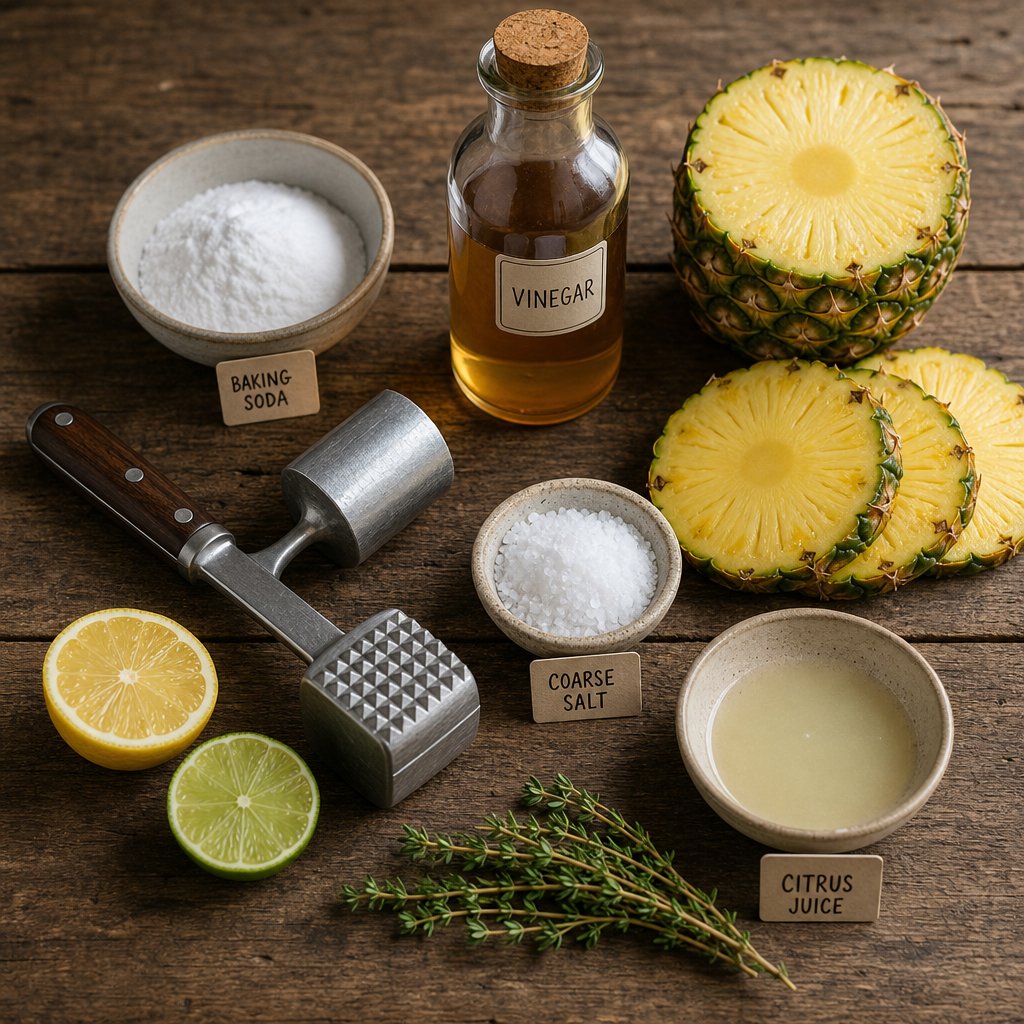
The reality is that meat tenderising falls into a handful of distinct categories, each with its own mechanism, strengths, and trade-offs. Some break fibers physically. Others use chemistry. A few rely on time and heat alone. Understanding what each method actually does helps you pick the right one rather than defaulting to whatever you tried last.
Mechanical vs Chemical Tenderization Methods
Mechanical tenderization is the most intuitive approach — you're physically breaking apart connective tissue and muscle fibers. A meat tenderizer tool like a mallet or a blade-style tenderizer punctures or flattens the meat, creating shorter fiber lengths that require less chewing force. Scoring with a knife works on the same principle at a smaller scale.
Chemical methods, by contrast, work at the molecular level. They alter protein structure, dissolve connective tissue, or change how fibers interact with water — all without physically damaging the meat's surface. This category includes acidic marinades, alkaline treatments (baking soda), enzymatic powders, and salt brines.
Thermal tenderization — slow cooking — is its own category entirely. It uses sustained low heat to convert collagen (the tough connective tissue between muscle fibers) into gelatin, which is soft and silky. This is why a braised beef stew simmered for 90 minutes becomes fork-tender while the same cut grilled for 10 minutes stays chewy.
Here's how each method stacks up:
| Method | How It Works | Best Cuts | Time Needed | Difficulty | Potential Downsides |
|---|---|---|---|---|---|
| Meat mallet / blade tenderizer | Physically breaks muscle fibers and connective tissue | Chicken breasts, thin steaks, cutlets, schnitzel | 2-5 minutes | Easy | Uneven thickness, can tear delicate meat, messy |
| Scoring (knife cuts) | Severs long muscle fibers on the surface | Flank steak, skirt steak, squid | 2-3 minutes | Easy | Only affects surface, limited penetration depth |
| Enzymatic powder (papain/bromelain) | Proteases break down protein chains and collagen | Tough roasts, brisket, stewing beef, game meats | 30-60 minutes | Easy | Over-application creates mushy surface while interior stays tough; can leave bitter taste |
| Acidic marinade (citrus, vinegar, wine) | Denatures surface proteins through low pH | Chicken, pork chops, thin steaks, fish | 30 min - 2 hours | Easy | Only penetrates 1-2mm; over-marinating makes surface mealy and gray |
| Alkaline treatment (baking soda) | Raises pH to disrupt protein bonds and increase water retention | Stir-fry slices, stew chunks, lean tough cuts | 15-60 minutes | Easy | Soapy off-flavor if not rinsed; mushy texture if over-treated |
| Salt brine (wet or dry) | Denatures proteins, increases water absorption through osmosis | Whole poultry, pork chops, thick steaks, roasts | 1-24 hours | Easy | Over-brining makes meat stringy; requires planning ahead |
| Slow cooking (braising, stewing) | Sustained heat converts collagen to gelatin over time | Chuck roast, short ribs, pork shoulder, shanks, brisket | 1.5-8 hours | Easy | Only works on collagen-rich cuts; lean cuts dry out instead of tenderizing |
Which Method Works Best for Your Situation
Choosing how to tenderize meat depends on three variables: what cut you're working with, how you plan to cook it, and how much time you have.
Quick weeknight stir-fry with cheap beef? Baking soda wet soak, 15 to 20 minutes. Nothing else delivers that velvety restaurant texture in such a short window.
Grilling chicken breasts that always dry out? A salt brine for 30 to 60 minutes, or a quick baking soda solution followed by a thorough rinse. Southern Living notes that brining helps meat muscles absorb more water through a process called denaturing, where salt causes proteins to uncoil and link to water molecules.
Preparing cutlets or schnitzel? A meat tenderizer tool — specifically a flat mallet — is the fastest and most effective option. You're not just tenderizing; you're creating uniform thickness for even cooking.
Sunday pot roast from a tough chuck? Slow cooking is your answer. Collagen-rich cuts like chuck, short ribs, and pork shoulder need sustained heat (around 300 degrees F) for 1.5 to 3 hours to convert their abundant connective tissue into silky gelatin. Iowa State University's food science curriculum demonstrates this with braised round steak simmered for approximately 90 minutes until fork-tender — a process that relies entirely on time and moisture to break down collagen.
Dealing with game meat or very tough roasts? A meat softener powder containing papain or bromelain enzymes works well here. These proteases specifically target collagen and connective tissue, breaking them into shorter segments. Apply the powder to a moistened surface, pierce with a fork to help penetration, and let it work for 30 to 60 minutes before cooking. Just be careful with timing — enzymatic tenderizers work aggressively on the surface while barely reaching the interior, creating an unpleasant contrast if left too long.
Want flavor and tenderness together? A tenderising meat marinade built on wine, citrus, or vinegar adds both. The acid denatures surface proteins while herbs, garlic, and oil infuse flavor. Keep it under two hours though — acidic marinades only penetrate a millimeter or two, and extended exposure makes the outer layer mealy rather than tender.
No single tenderization method is universally best. The right choice depends on the cut, the cooking method, and the result you want. Tough collagen-rich cuts need time or enzymes. Lean quick-cook cuts need alkaline or mechanical treatment. And sometimes, the simplest answer is just salt and patience.
You can also combine methods for stubborn cuts. Scoring the surface of a flank steak before applying a tenderising meat marinade lets the acid penetrate deeper than it would on an intact surface. Or treat stew chunks with baking soda for 30 minutes, rinse, then braise low and slow — you get both the alkaline protein disruption and the collagen-to-gelatin conversion working together.
What is meat tenderizer in the broadest sense? It's anything that makes tough protein easier to chew and more pleasant to eat — whether that's a physical tool, a chemical reaction, an enzyme, or simply enough heat applied for long enough. The method matters less than matching it to your specific cut and cooking plan.
One consideration that rarely comes up in technique discussions but matters for many home cooks: the health implications of these treatments. Baking soda adds sodium. Brines add sodium. Even commercial meat softener powder often contains salt as a carrier. If you're watching your intake — or thinking about ingredient quality more broadly — those details deserve attention.
Health Considerations and Food-Grade Ingredient Quality
Sodium is the elephant in the room whenever baking soda enters a recipe. You already know that can baking soda tenderize meat effectively — but should you worry about what it adds to your diet beyond tenderness? For most people, the answer is no. For some, it's worth a closer look.
Sodium Intake Considerations When Using Baking Soda
Baking soda is sodium bicarbonate — and sodium is right there in the name. One teaspoon contains approximately 1,259 mg of sodium, which is over half the American Heart Association's recommended daily limit of 1,500 mg. That sounds alarming until you consider what actually ends up in your food.
When you tenderize beef with baking soda using the wet soak method, most of the sodium bicarbonate stays in the soaking liquid — it doesn't absorb into the meat the way salt does during brining. Then you rinse thoroughly, washing away the vast majority of residual sodium from the surface. The amount that actually penetrates the protein structure and remains after rinsing is minimal — far less than what you'd get from a standard salt-based marinade or a store-bought seasoning blend.
That said, people on sodium-restricted diets — particularly those managing high blood pressure, kidney disease, or heart failure — should be aware of even small additions. The Dietary Guidelines for Americans recommends a daily maximum of 2,300 mg, while the World Health Organization sets the bar at 2,000 mg. If you're already close to those limits from processed foods and restaurant meals (which account for the bulk of most Americans' sodium intake), every source matters.
A few practical adjustments help minimize sodium exposure when using baking soda for meat tenderising:
- Use the minimum effective amount — 1/2 to 3/4 teaspoon per pound is often sufficient for thin slices
- Rinse longer and more aggressively than you think necessary
- Avoid adding additional salt-heavy marinades immediately after treatment
- Consider potassium bicarbonate as a sodium-free alternative — it provides similar alkaline action without the sodium content
For the average home cook preparing a stir-fry once or twice a week, the sodium contribution from baking soda tenderization is negligible in the context of a full diet. It's far less than the sodium in the soy sauce you'll add to the same dish. But awareness matters, especially if your doctor has specifically flagged sodium intake as a concern.
Food-Grade Ingredient Quality and Safety
Not all baking soda is created equal. The box in your pantry likely says "pure baking soda" on the label, but does bicarbonate of soda tenderise meat safely regardless of where it comes from? The answer depends on whether the product meets food-grade standards.
Food-grade sodium bicarbonate must meet strict purity specifications set by the Food Chemicals Codex (FCC) and the U.S. Pharmacopeia (USP). According to industry compliance standards, these require a minimum assay of 99.0-100.5% purity, with strict limits on heavy metal contamination — lead must be below 2 mg/kg, and chloride, sulfate, and moisture levels are all controlled. Industrial-grade sodium bicarbonate, used for cleaning or deodorizing, doesn't meet these thresholds and should never contact food.
When you use baking soda for meat tenderizer purposes, you're applying it directly to raw protein that you'll eat. Any contaminants in the powder — heavy metals, processing residues, or foreign materials — transfer directly to your food. This is why reputable brands manufacture food-grade sodium bicarbonate on dedicated production lines with batch-level testing and certificates of analysis for every lot.
The broader principle here applies to any functional food ingredient: quality and sourcing matter. Whether you're a home cook choosing between brands of baking soda or a nutrition business formulating products with digestive enzymes, protein-supporting compounds, or other bioactive ingredients, the purity of your raw materials determines the safety and efficacy of the final product.
For businesses developing health food products with specific functional ingredients — such as enzyme blends, protein supplements, or digestive support formulations — working with specialized OEM/ODM manufacturers ensures consistent food-grade quality at scale. Companies like ZhuFeng offer customized powder and granule formulations alongside other product formats (capsules, tablets, gummies, and oral liquids), providing nutrition brands and private label sellers with the manufacturing infrastructure to bring functional food products to market with verified ingredient quality.
For everyday kitchen use, the takeaway is simpler: buy baking soda labeled for cooking from a recognized brand, check that it hasn't absorbed odors from your fridge (taste a tiny pinch — it should taste mildly salty and slightly alkaline, not funky), and replace it if it's been open for more than six months. Fresh, food-grade sodium bicarbonate is cheap insurance for both effective tenderization and food safety. When you tenderize beef with baking soda, you want the chemistry working for you — not introducing something questionable into your dinner.
Frequently Asked Questions About Baking Powder and Baking Soda for Meat Tenderization
1. Can I use baking powder instead of baking soda to tenderize meat?
Technically you can, but results will be poor. Baking powder contains only 25-30% sodium bicarbonate mixed with acids and cornstarch. The built-in acid neutralizes the alkaline action needed to break down protein fibers. You would need three to four times the amount of baking powder to approach similar results, and even then the outcome is inconsistent. The cornstarch in baking powder can also create a gummy coating on the meat surface rather than clean protein disruption.
2. How long should you leave baking soda on meat to tenderize it?
Timing depends on thickness. Thin stir-fry slices (1/8 to 1/4 inch) need only 15-20 minutes with a wet soak. Stew chunks cut 3/4 to 1 inch thick require 30-45 minutes. Whole steaks like flat iron or eye round can handle 45-60 minutes with a dry rub. Ground meat needs just 2-5 minutes of mixing. Exceeding these times risks mushy texture because the surface proteins break down too far and lose structural integrity.
3. Why does my meat taste soapy after using baking soda?
Soapy or metallic taste occurs when residual sodium bicarbonate reacts with fats during cooking, creating soap-like compounds through saponification. The three causes are using too much baking soda, leaving it on too long, or not rinsing thoroughly enough. To fix this, rinse meat under cold running water for at least 30 seconds per piece, agitating with your hands until the water runs completely clear. The tenderizing effect has already occurred at the protein level, so thorough rinsing removes only excess surface compound without reversing tenderness.
4. Is it safe to use baking soda as a meat tenderizer?
Yes, food-grade sodium bicarbonate is safe for meat tenderization. The concern is culinary rather than health-related. One teaspoon contains about 1,259 mg of sodium, but most stays in the soaking liquid and is rinsed away. The amount that penetrates the protein and remains after rinsing is minimal. People on sodium-restricted diets should use the minimum effective amount (1/2 teaspoon per pound for thin slices) and rinse aggressively. Always use baking soda labeled for cooking from a recognized brand that meets food-grade purity standards.
5. What is the velveting technique and how does baking soda help?
Velveting is a Chinese culinary technique that combines baking soda tenderization with a protective cornstarch and oil coating. First, baking soda raises the meat's surface pH to relax protein fibers. Then cornstarch and oil form a thin barrier that shields the meat from intense wok heat, locking in moisture. This two-step process is why restaurant stir-fries have that distinctive silky texture. The basic method involves soaking sliced beef in baking soda and water for 20-30 minutes, rinsing thoroughly, then coating with cornstarch, oil, and seasonings before high-heat cooking.