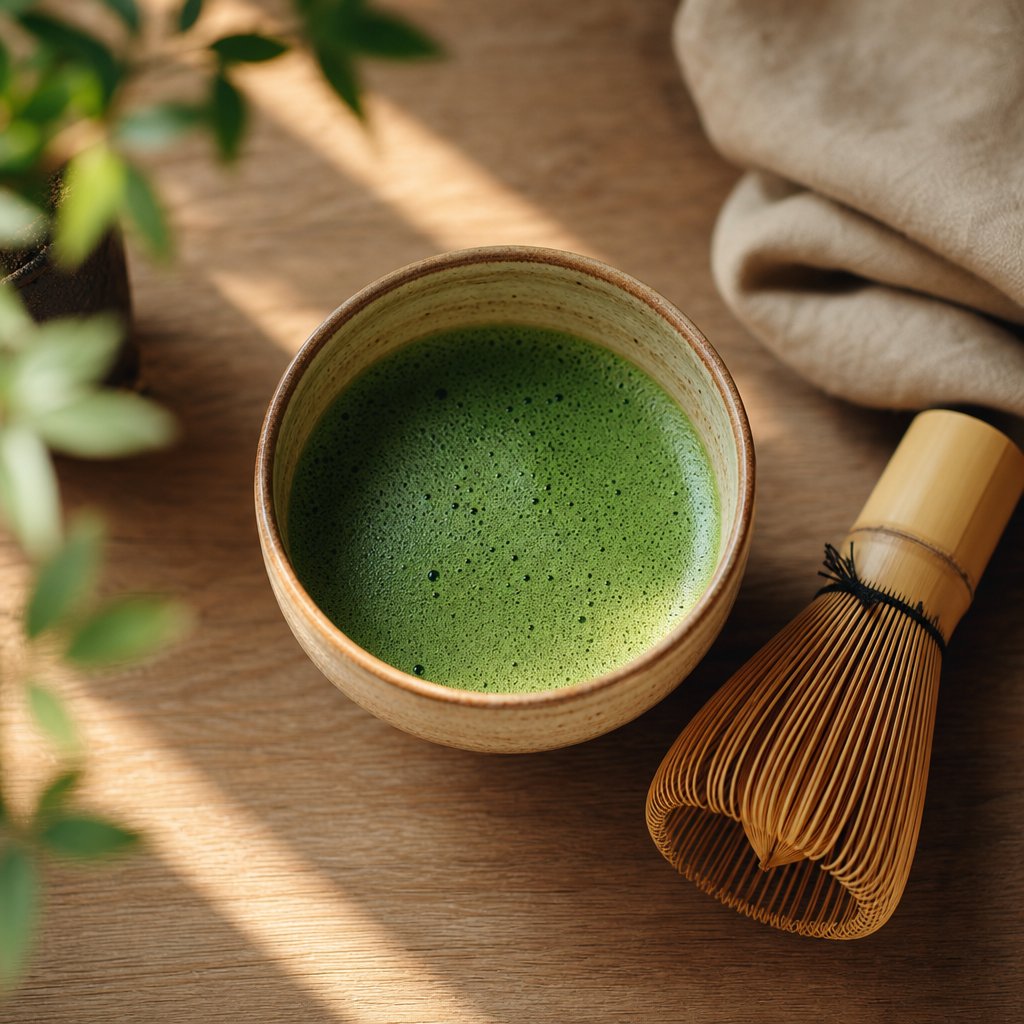
The Short Answer About Matcha and Caffeine
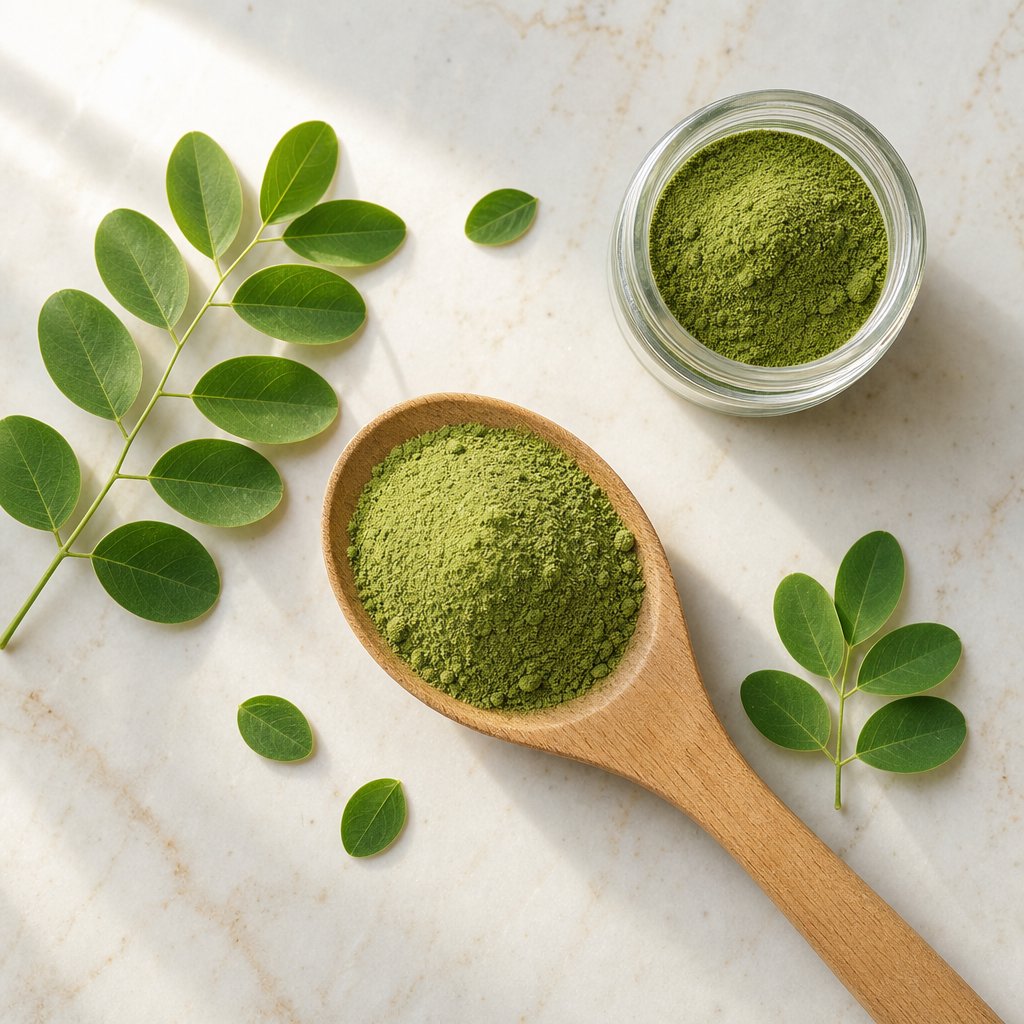
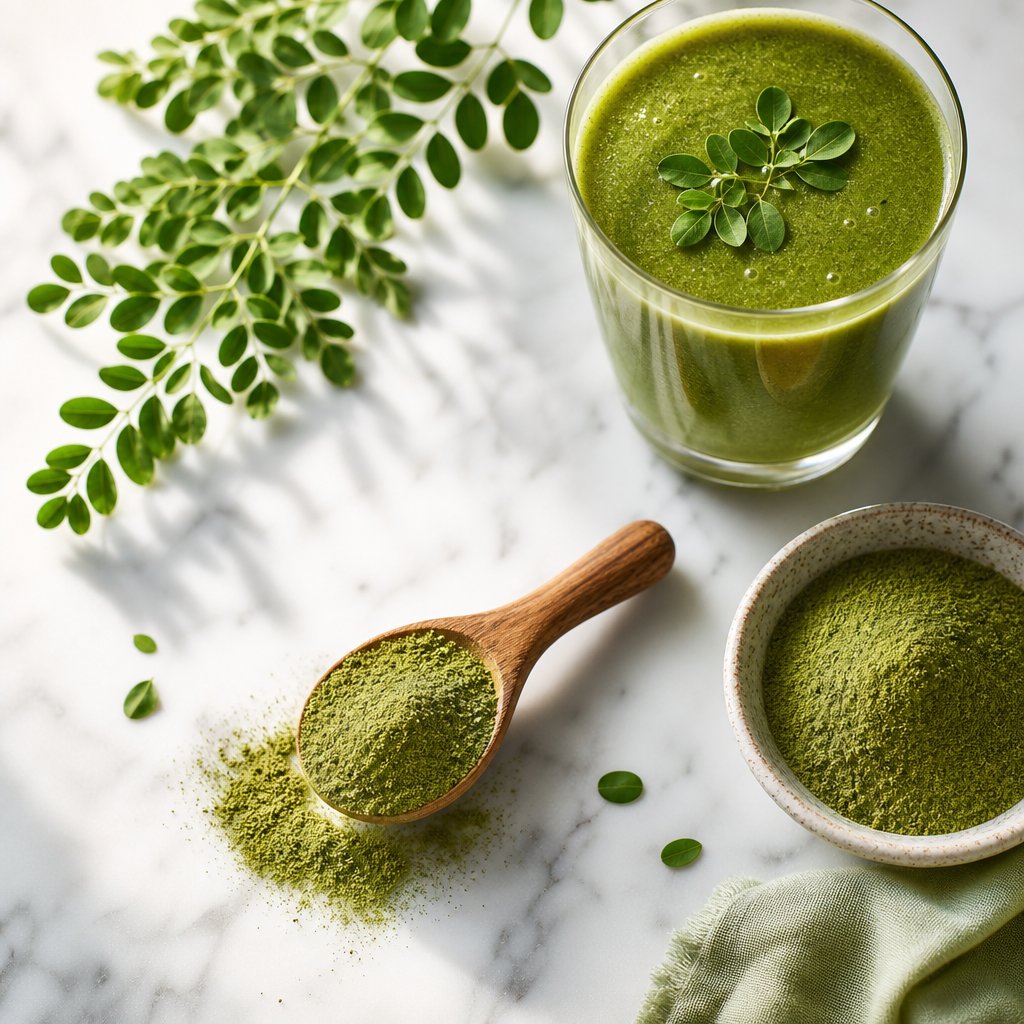
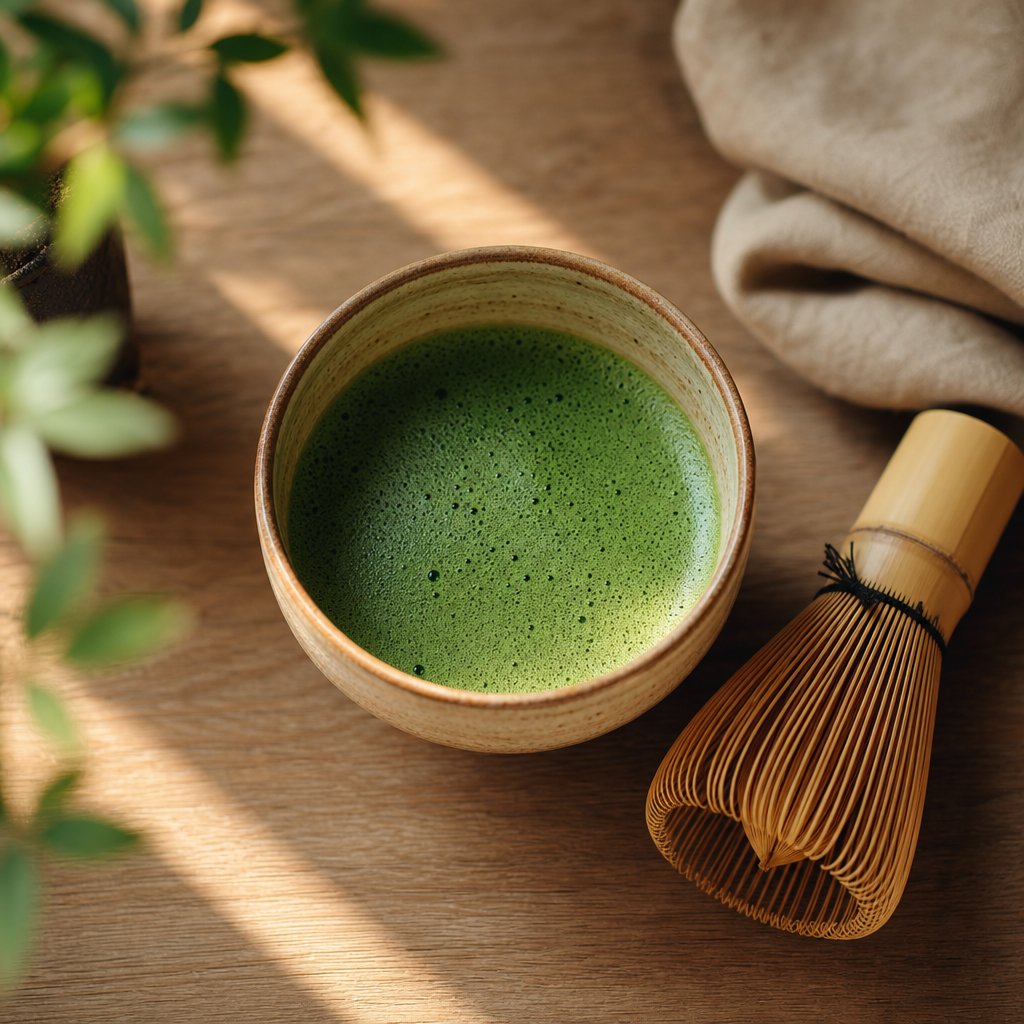
Does matcha have caffeine? Absolutely. Matcha powder contains caffeine, and it ranks among the most caffeine-rich forms of green tea you can drink. Unlike a regular cup of green tea where you steep leaves and toss them out, matcha asks you to consume the entire leaf ground into a fine powder. Every milligram of caffeine that leaf holds ends up in your cup and, ultimately, in your body.
Yes, Matcha Powder Contains Caffeine
If you've been wondering whether matcha powder contains caffeine, the answer is clear. Matcha comes from the same Camellia sinensis plant as all true teas, and caffeine is a natural compound in those leaves. Research shows that one gram of matcha powder delivers roughly 19 to 44 mg of caffeine, with a typical serving using 1 to 2 grams. That puts a standard cup somewhere between 38 and 88 mg, though stronger preparations can push well beyond that range.
Depending on preparation method and grade, matcha delivers roughly 19-75 mg of caffeine per serving, making it significantly stronger than regular steeped green tea but often gentler in effect than a cup of coffee.
Why Whole-Leaf Consumption Changes Everything
When you brew a bag of green tea, you're extracting only a fraction of the caffeine locked inside those leaves. The rest gets thrown away with the spent leaves. Matcha flips that equation. Because you whisk the powdered leaf directly into water and drink the whole thing, there's no caffeine left behind. This is why matcha has caffeine levels that consistently outpace regular brewed green tea, even though both come from the same plant.
Here's where it gets interesting. Does matcha contain caffeine in the same way coffee does? Technically yes, it's the same molecule. But matcha also contains L-theanine, an amino acid that changes how your body experiences that caffeine. Instead of a sharp spike followed by a crash, many people describe matcha energy as smooth, focused, and sustained over several hours. The caffeine is real, but the ride feels different.
This guide is built for caffeine-conscious readers who want more than a yes-or-no answer. You'll learn exactly how much caffeine matcha contains, why those numbers vary so widely between sources, how your preparation choices raise or lower your dose, and how matcha stacks up against coffee and other teas. Whether you're sensitive to stimulants or simply want to dial in your daily intake, understanding these variables puts you in control.
How Much Caffeine Is Actually in Matcha Powder
Knowing matcha contains caffeine is one thing. Knowing exactly how much caffeine is in matcha, gram for gram, is what actually helps you manage your intake. The tricky part? Published numbers vary widely, and most sources don't explain why. Let's break it down so you can calculate your own dose with confidence.
Caffeine Per Gram of Matcha Powder
Research published in peer-reviewed journals places the caffeine content of matcha at 19 to 44 mg per gram of dry powder. One gram is roughly half a teaspoon, which is less than most people use in a single serving. A standard preparation calls for 1 to 2 grams, while a stronger traditional bowl might use up to 4 grams.
A 2024 laboratory analysis of organic Japanese matcha from the Uji region measured caffeine at 2,213 micrograms per gram (approximately 2.2 mg/g in that specific sample), illustrating just how much variation exists between products. Higher-grade matcha from rigorously shaded plants tends to cluster toward the upper end of the 19-44 mg/g range, while lower-quality or less carefully processed powders fall toward the bottom.
Here's what that looks like in practical terms:
| Serving Size | Approximate Weight | Caffeine Range |
|---|---|---|
| 1/2 teaspoon | 1 g | 19-44 mg |
| 1 teaspoon | 2 g | 38-88 mg |
| 2 teaspoons | 4 g | 76-176 mg |
For reference, an 8-ounce cup of drip coffee contains roughly 95 mg of caffeine. So how much caffeine does matcha have compared to your morning brew? A single-teaspoon serving can land anywhere from noticeably less to nearly equivalent, depending on the specific powder you're using. That's a wide window, and it's exactly why understanding the variables matters.
Why Published Numbers Vary So Much
If you've searched for the amount of caffeine in matcha and found conflicting answers, you're not imagining things. The matcha tea caffeine content reported across studies and product labels differs because caffeine concentration in tea leaves isn't fixed. It shifts based on several biological and agricultural factors.
The biggest variables include:
- Tea cultivar: Different genetic varieties of Camellia sinensis naturally produce different baseline levels of caffeine. Japanese cultivars bred specifically for matcha production, like Samidori or Okumidori, tend to have distinct chemical profiles compared to plants grown for sencha or Chinese green teas.
- Shade duration and intensity: Matcha plants are covered with canopies for approximately three weeks before harvest. This shading triggers a stress response that increases both caffeine and theanine production. Research confirms that shading at 85% light reduction significantly boosts caffeine levels compared to open-air cultivation. Longer or more intense shading generally means more caffeine per leaf.
- Growing region: Japanese matcha from established regions like Uji (Kyoto) and Nishio (Aichi) follows strict shading protocols refined over centuries. Matcha produced in regions with less rigorous standards or different climate conditions may yield lower caffeine concentrations.
- Harvest timing: First-harvest leaves (picked in spring) contain more caffeine than second or third-harvest leaves picked later in the season. The youngest buds at the top of the plant accumulate caffeine at higher rates than mature leaves lower on the stem.
There's also a measurement problem that creates confusion across the internet. Some sources report caffeine content matcha per gram of dry powder, others per prepared cup, and still others per "serving" without specifying how much powder that serving contains. When one article says matcha has 70 mg of caffeine and another says 35 mg, they might both be correct but measuring different amounts of powder in different volumes of water.
The amount of caffeine in matcha green tea ultimately depends on what you're holding in your hands. A high-grade, first-harvest, properly shaded Japanese matcha will deliver substantially more caffeine per gram than a budget culinary powder made from later harvests. The 19-44 mg per gram range accounts for this spectrum, but your specific product will land somewhere within it based on how it was grown, when it was picked, and how it was processed.
This variability also explains why matcha grade matters for more than just flavor. The same factors that make ceremonial matcha taste smoother and more complex, younger leaves, longer shading, earlier harvest, also concentrate its caffeine content.
Matcha Grades and Their Caffeine Differences
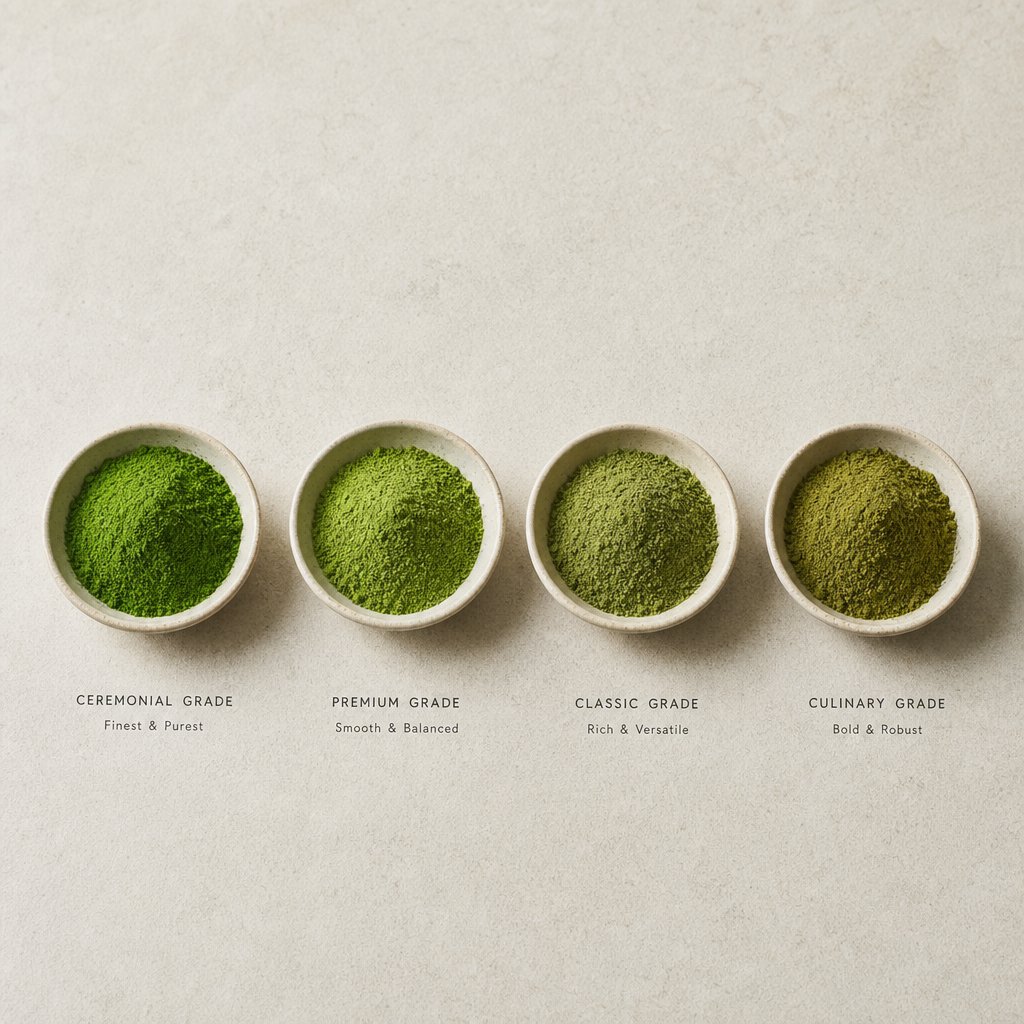
The grade printed on your matcha tin isn't just a marketing label. It reflects real differences in leaf selection, harvest timing, and shading intensity, all of which directly influence how much caffeine ends up in your cup. If you've ever wondered why one matcha powder feels noticeably more energizing than another, grade is often the answer.
Ceremonial Grade vs Culinary Grade Caffeine Levels
A common question people ask is whether matcha and green tea are the same thing. They come from the same plant, yes, but matcha green tea powder caffeine content varies dramatically based on how the leaves are selected and processed. Ceremonial matcha powder uses only the youngest first-flush leaves from the very top of the tea bush. These tender leaves naturally accumulate more caffeine as a defense mechanism against insects. According to Senbird Tea's breakdown of matcha grades, ceremonial grade typically contains 30-40 mg of caffeine per gram, while culinary grade lands around 25-35 mg per gram.
That difference might sound modest on paper, but it compounds with serving size. A traditional ceremonial preparation uses 1-2 grams of powder, while a matcha latte made with culinary grade might use 2-3 grams. You could end up consuming more total caffeine from a culinary-grade latte simply because you're using more powder, even though the per-gram concentration is lower.
Here's how the main grades stack up from highest to lowest typical caffeine content:
- Ceremonial grade (30-40 mg/g): Made exclusively from the youngest first-flush spring leaves harvested from the uppermost tips of shaded tea bushes. Highest in both caffeine and L-theanine. Designed to be whisked with water and enjoyed on its own. Vivid jade green color with a naturally sweet, umami-rich flavor.
- Premium grade (28-38 mg/g): Still sourced from early harvests and young leaves, but with slightly less restrictive selection criteria than ceremonial. Works well for daily drinking and lighter lattes where you want a balance of quality and value.
- Latte grade (26-35 mg/g): A middle-ground option specifically formulated for milk-based drinks. Uses quality leaves but prioritizes a robust flavor that cuts through dairy and sweeteners rather than the delicate subtlety of ceremonial matcha.
- Culinary grade (25-35 mg/g): Produced from slightly older leaves harvested later in the season or from lower positions on the tea bush. More assertive and slightly bitter flavor that holds up in baking, smoothies, and cooking. Often the most affordable option for daily use in recipes.
Is matcha and green tea the same thing? Not quite. While both come from Camellia sinensis, the shading, stone-grinding, and whole-leaf consumption that define matcha create a fundamentally different caffeine and nutrient profile than steeped green tea powder or loose-leaf sencha.
How Harvest Timing Affects Caffeine
Imagine the tea plant as a vertical caffeine gradient. The youngest buds and leaves at the top concentrate more caffeine than the mature leaves lower on the stem. This isn't random. Caffeine functions as a natural insecticide, and tender new growth needs stronger chemical protection because it hasn't yet developed the physical toughness of older leaves.
First-harvest matcha tea leaves, picked in spring (typically April to May in Japan), capture this peak caffeine window. The plant has spent all winter storing nutrients, and those first emerging leaves are packed with both caffeine and amino acids like L-theanine. Second and third harvests later in summer yield leaves that are larger, tougher, and lower in caffeine concentration.
Japanese matcha from renowned regions like Uji in Kyoto and Nishio in Aichi follows strict shading protocols that amplify this effect. Plants are covered with canopies blocking roughly 85-90% of sunlight for 20-30 days before harvest. This extended shade period triggers a stress response in the plant, pushing it to produce even more caffeine and chlorophyll. The result is matcha green tea powder caffeine levels that consistently exceed those of less rigorously produced alternatives from regions without these traditions.
For caffeine-conscious drinkers, the practical takeaway is straightforward. If you want more caffeine per gram, reach for a high-quality ceremonial matcha powder made from first-harvest, shade-grown Japanese leaves. If you prefer a gentler dose, culinary grade from later harvests delivers less caffeine while still providing the full matcha experience in lattes and recipes.
Grade tells you a lot about what's in your cup, but it doesn't tell the whole story. The way you actually prepare that powder, from water temperature to whisking technique, introduces another layer of control over your final caffeine dose.
How Preparation Methods Change Your Caffeine Dose
Here's something most matcha guides skip entirely: the caffeine content of matcha in your cup isn't fixed the moment you open the tin. How you prepare that powder, the water temperature you use, how much you scoop, and even how long you whisk, all shift the final matcha caffeine you actually consume. This means you have real control over your dose every single time you make a cup of matcha.
Water Temperature and Caffeine Extraction
Temperature is the single biggest lever you can pull. Hotter water dissolves and extracts caffeine faster and more completely from matcha particles. Research from Sugimoto Tea Company demonstrates that brewing green tea at boiling (212°F) extracts dramatically more caffeine than cold brewing at 40°F. For matcha specifically, the principle holds: water between 175-185°F (the traditional range for whisked matcha) delivers near-full caffeine extraction, while cold water slows the process considerably.
What does this mean in practice? If you shake matcha into an iced drink without any hot water contact, you'll still consume the caffeine because you're drinking the suspended leaf particles. But the bioavailability and speed of absorption may differ. When you whisk matcha into hot water, the caffeine dissolves fully into solution and hits your system faster. With cold preparations, some caffeine remains bound within undissolved particle clusters, potentially slowing its release.
A traditional usucha (thin tea) preparation uses about 2 grams of matcha whisked into 60-70 ml of water at around 175°F. This delivers efficient caffeine extraction in a concentrated, small-volume drink. Koicha (thick tea), by contrast, uses roughly 4 grams of matcha kneaded into just 30 ml of water, creating a dense paste with four to five times the concentration. The matcha caffeine content per serving in a koicha bowl can easily exceed 130 mg, approaching a double espresso.
Powder Ratio and Whisking Technique
How much caffeine is in 1 tsp of matcha? Roughly 38-88 mg depending on grade. But that number assumes you're actually getting all of it into solution. Sifting your powder before whisking breaks up clumps that would otherwise trap caffeine inside dense pockets, reducing extraction efficiency. A well-sifted matcha disperses evenly, meaning more consistent caffeine delivery sip to sip.
Whisking duration matters too. Vigorous whisking for 15-20 seconds with a bamboo chasen creates a frothy, fully suspended mixture. A quick, lazy stir leaves visible sediment at the bottom of your bowl, and that sediment contains caffeine you won't consume until you tip the cup back at the end. For blended smoothies, the high-speed blender does the work for you, pulverizing any remaining clusters and distributing caffeine evenly throughout the drink.
Baked goods present a different scenario. When matcha goes into a 350°F oven, the caffeine itself remains stable (it doesn't break down until around 460°F), but the matrix of flour, butter, and sugar slows how quickly your body absorbs it after eating. You'll still get the full dose, just spread over a longer digestion window.
Here's how different preparation methods compare in terms of caffeine extraction and delivery:
| Preparation Method | Typical Powder Amount | Caffeine Extraction Efficiency | Onset Speed |
|---|---|---|---|
| Traditional hot whisk (usucha) | 2 g (1 tsp) | Very high (95-100%) | Fast (15-30 min) |
| Koicha (thick tea) | 4 g (2 tsp) | Very high (95-100%) | Fast (15-30 min) |
| Cold shake (mason jar) | 2 g (1 tsp) | High (85-95%) | Moderate (20-40 min) |
| Blended smoothie | 1-2 g | High (90-95%) | Moderate (30-45 min) |
| Baked goods (muffins, cookies) | 2-4 g per batch | High (90-100% retained) | Slow (45-90 min) |
The takeaway? How much caffeine in 1/2 tsp matcha or a full teaspoon isn't just about the powder itself. Your preparation choices act as a dial. Want maximum caffeine impact quickly? Whisk into hot water with sifted powder. Want a gentler, slower release? Blend into a cold smoothie or fold into baked goods. You're not locked into a single caffeine experience just because you chose matcha.
This flexibility becomes especially useful when you start comparing matcha caffeine against other caffeinated beverages, where serving size inconsistencies make the picture murkier than it needs to be.
Matcha Caffeine vs Coffee and Other Teas
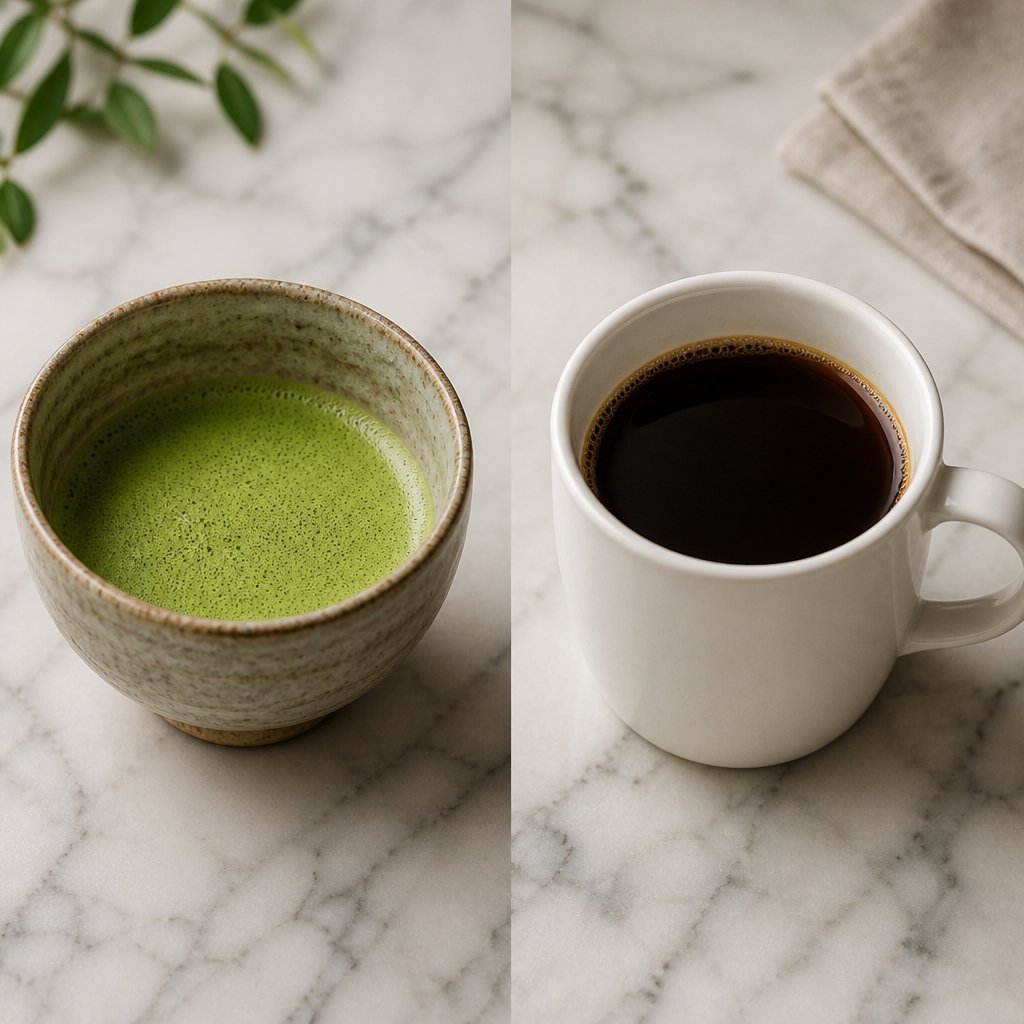
Comparing matcha caffeine vs coffee sounds simple until you realize most articles are comparing apples to watermelons. A standard matcha serving is 1-2 grams of powder whisked into 2-3 ounces of water. A standard cup of coffee is 8 ounces of brewed liquid. Comparing total caffeine across those wildly different volumes without acknowledging the discrepancy creates confusion rather than clarity.
Matcha vs Coffee Side by Side
So does matcha have more caffeine than coffee? In total milligrams per typical serving, usually no. An 8-ounce cup of drip coffee delivers roughly 95-200 mg of caffeine, while a standard matcha serving (1 tsp, about 2 grams) lands between 38-88 mg. Coffee wins on raw volume.
But here's the nuance that changes the picture. That matcha is concentrated into just 2-3 ounces of liquid, giving it roughly 15-35 mg of caffeine per ounce. Drip coffee brewed at a 1:15 to 1:18 ratio delivers about 12-25 mg per ounce. Ounce for ounce, matcha can actually match or exceed coffee's concentration. You're just drinking less of it in a single sitting.
When people ask how much caffeine in matcha vs coffee, the honest answer depends on which metric matters to you. Total dose per serving? Coffee delivers more. Concentration per sip? They're surprisingly close. And stronger matcha preparations like koicha (4 grams in 1 ounce) can surpass even a single-shot espresso in total caffeine.
Commercial matcha lattes complicate the comparison further. A tall matcha latte at a coffee shop typically contains about 3 grams of matcha powder delivering around 45 mg of caffeine, but that's diluted across 12 ounces of steamed milk and ice. The caffeine concentration per ounce drops dramatically compared to a straight whisked bowl. If you're evaluating matcha versus coffee caffeine content for your morning energy needs, a cafe latte delivers roughly half the caffeine of a same-size brewed coffee.
Matcha Compared to Other Teas
Coffee vs matcha gets all the attention, but how does matcha stack up against other teas from the same plant? The differences are significant. Because matcha involves consuming the whole leaf rather than steeping and discarding, it consistently outpaces other green teas in caffeine delivery. A cup of brewed sencha contains 30-40 mg per 8-ounce cup, while the same weight of matcha powder delivers nearly double that amount.
Gyokuro is the closest comparison because it's also shade-grown, pushing its caffeine to 40-50 mg per cup. But you're still only extracting a fraction of the leaf's caffeine through steeping. With matcha, you get everything.
Here's how the full caffeine in matcha vs coffee and other popular beverages breaks down:
| Beverage | Serving Size | Caffeine Range | Onset Speed |
|---|---|---|---|
| Matcha (1 tsp whisked) | 2-3 oz | 38-88 mg | Gradual (30-60 min peak) |
| Espresso (single shot) | 1 oz | 63-75 mg | Fast (15-20 min peak) |
| Drip coffee | 8 oz | 95-200 mg | Fast (15-30 min peak) |
| Black tea | 8 oz | 40-70 mg | Moderate (20-40 min) |
| Green tea (sencha) | 8 oz | 30-40 mg | Moderate (20-40 min) |
| Gyokuro | 8 oz | 40-50 mg | Gradual (30-50 min) |
| Oolong tea | 8 oz | 30-50 mg | Moderate (20-40 min) |
| White tea | 8 oz | 15-30 mg | Gentle (30-50 min) |
| Matcha latte (cafe-style) | 12 oz | 40-55 mg | Gradual (30-60 min) |
Notice the onset speed column. This is where how much caffeine in matcha tea vs coffee becomes less important than how that caffeine behaves. Coffee's caffeine hits fast and peaks sharply because there's no L-theanine to modulate absorption. Matcha's caffeine arrives more gradually, producing a longer plateau of alertness rather than a spike-and-crash pattern. Even when the total milligrams are lower, many people report that matcha's sustained delivery feels more functionally useful throughout a workday.
The matcha vs coffee caffeine debate ultimately isn't about which one "has more." It's about which delivery pattern matches your needs. If you want an immediate jolt, coffee is more efficient. If you want steady focus over several hours without the jittery edge, matcha's combination of moderate caffeine and slow onset makes a compelling case, even at a lower total dose.
Total milligrams only tell part of the story, though. The real reason matcha energy feels so different from coffee has less to do with caffeine quantity and everything to do with a specific amino acid working alongside it at the cellular level.

The L-Theanine and Caffeine Synergy Explained
You've seen the numbers. Matcha green tea caffeine content is moderate compared to coffee. So why do so many people report that matcha gives them better, cleaner energy than a beverage with nearly double the caffeine? The answer isn't marketing. It's biochemistry, and it centers on an amino acid called L-theanine that fundamentally changes how caffeine behaves in your brain.
How L-Theanine Modulates Caffeine at a Cellular Level
So what is in matcha that makes its energy feel so distinct? Beyond caffeine, catechins, and chlorophyll, matcha contains high concentrations of L-theanine, an amino acid found almost exclusively in the Camellia sinensis plant. One gram of matcha delivers approximately 19.5 mg of L-theanine, and because shade-growing preserves this compound by blocking roughly 90% of sunlight before harvest, matcha contains about five times more L-theanine than standard sun-grown green tea.
Here's where it gets interesting at the cellular level. L-theanine is structurally similar to glutamic acid, a major excitatory neurotransmitter. It crosses the blood-brain barrier within 30-50 minutes of ingestion and begins influencing neural activity directly. EEG studies have documented that doses as low as 50 mg of L-theanine promote alpha brain wave activity, the frequency band associated with relaxed alertness, the state you're in during focused meditation or creative flow.
At the neurotransmitter level, animal and in vitro research shows L-theanine increases GABA (your brain's primary calming neurotransmitter), boosts dopamine in a dose-dependent manner, and modulates serotonin levels. It also antagonizes glutamate receptors, reducing excitatory overstimulation. The net effect? L-theanine dials down the anxious, jittery edge of stimulation while preserving, and even enhancing, the focus and alertness that caffeine provides.
When caffeine alone hits your system, it blocks adenosine receptors, increases neuronal firing, and triggers a cortisol response that creates that familiar wired-but-tense feeling. Research from Northumbria University found that combining L-theanine with caffeine at ratios similar to those in matcha tea eliminated the vasoconstrictive effects of caffeine on cerebral blood flow while attenuating its more aggressive physiological impacts. L-theanine essentially smooths caffeine's rough edges without canceling its cognitive benefits.
Why Matcha Energy Feels Different Than Coffee
Does matcha give you energy? Absolutely. But the experience differs from coffee in ways that go beyond subjective preference. When people describe matcha energy as "sustained" or "smooth," they're describing a real physiological phenomenon: a slower caffeine absorption curve combined with anxiolytic effects that prevent the spike-and-crash cycle.
Coffee delivers caffeine in isolation (or with minimal L-theanine). It hits fast, peaks sharply within 15-30 minutes, triggers a cortisol spike, and then drops off, often leaving you reaching for another cup two hours later. Matcha green tea delivers caffeine alongside a substantial dose of L-theanine, which slows absorption and extends the energy plateau to 3 to 6 hours without the crash.
When considering matcha vs coffee health benefits, this synergy is the key differentiator. It's not that matcha has "better" caffeine. The molecule is identical. It's that L-theanine changes the context in which your brain processes that caffeine, promoting calm focus instead of anxious alertness.
The differentiating factor between matcha and coffee isn't caffeine amount. It's the caffeine-to-L-theanine ratio. Matcha delivers roughly equal parts of both compounds, creating a synergy that no other common beverage replicates at the same concentration.
Understanding what is inside matcha, specifically this dual-compound system, explains why many people who feel anxious or jittery on coffee find matcha tea perfectly tolerable. What are the benefits of matcha beyond basic caffeine delivery? This L-theanine synergy is arguably the most significant one: functional energy without the physiological cost that pure stimulants impose.
That said, "tolerable" isn't the same as "safe for everyone." The caffeine in matcha is still real caffeine, and certain populations need to approach it with more caution than others, regardless of how smooth the delivery feels.
Who Should Monitor Their Matcha Caffeine Intake
L-theanine softens the ride, but it doesn't erase the caffeine. Is matcha caffeinated? Yes, every single time. And for certain groups, even a moderate dose delivered smoothly can cause problems. If you fall into one of the categories below, understanding your personal threshold matters more than chasing the "perfect" matcha energy experience.
Sensitive Groups and Matcha Caffeine
Does matcha tea have a lot of caffeine? Relative to other green teas, yes. Relative to coffee, usually less per serving. But "a lot" is subjective and depends entirely on who's drinking it. Here's where specific populations need to pay closer attention:
Pregnant and breastfeeding women. The FDA recommends that pregnant individuals consult their healthcare provider about caffeine limits. Most medical guidelines suggest staying under 200 mg of caffeine per day during pregnancy. A single teaspoon of matcha (38-88 mg) could represent a significant portion of that daily budget, especially if you're also consuming chocolate, tea, or other caffeine sources. Talk to your doctor before making matcha part of your routine.
Children and adolescents. The American Academy of Pediatrics advises against caffeinated beverages for children, citing risks of increased heart rate, anxiety, sleep disruption, and dehydration. Does matcha have a lot of caffeine for a child's smaller body? Absolutely. Even half a teaspoon delivers a dose that could be excessive for a young person weighing 50-80 pounds.
Elderly individuals. Caffeine metabolism slows with age. The same serving that clears your system in 4-5 hours at age 30 might linger for 7-8 hours at age 70. Afternoon matcha could easily interfere with sleep for older adults, even if it never caused issues earlier in life.
People with anxiety disorders. L-theanine helps, but it doesn't fully neutralize caffeine's stimulatory effects on the nervous system. If you're prone to panic attacks or generalized anxiety, even matcha's gentler caffeine curve can trigger symptoms in sensitive individuals.
Those on interacting medications. Caffeine affects how your body processes certain drugs. Harvard Health reports that caffeine can interact with antidepressants like fluvoxamine and escitalopram, blood pressure medications such as verapamil, thyroid drugs like levothyroxine, and even osteoporosis treatments. It can reduce absorption of some medications by roughly one-third. If you take prescription drugs daily, ask your pharmacist whether caffeine timing matters.
Is there a lot of caffeine in matcha compared to an energy drink or large coffee? No. But for these populations, even 40 mg can be too much depending on individual circumstances.
Does Caffeine-Free Matcha Exist
People often ask: is matcha green tea caffeine free in any form? Not naturally. Does all matcha have caffeine? Yes, because caffeine is an inherent compound in Camellia sinensis leaves. You can't grow a matcha plant without it. However, decaffeinated matcha does exist through post-harvest processing.
The most effective method is supercritical carbon dioxide (CO2) extraction. Pressurized CO2 acts as both a liquid and gas simultaneously, selectively binding to caffeine molecules and carrying them away from the tea leaves. When pressure is released, the CO2 evaporates completely, leaving no chemical residue. This method preserves most of matcha's catechins, EGCG, and L-theanine while removing the majority of caffeine.
A second approach, water processing, soaks leaves in hot water to dissolve caffeine, then filters it out. The downside? Water also strips flavor compounds and some beneficial antioxidants, resulting in a milder, less vibrant product.
Is matcha green tea caffeinated after decaffeination? Technically, yes. "Decaf" doesn't mean zero caffeine. Decaffeinated matcha still contains trace amounts, typically 2-5 mg per gram compared to the standard 19-44 mg. For most caffeine-sensitive people, this residual amount is negligible. But if you react strongly to even small doses, be aware that caffeine free matcha in the absolute sense doesn't exist.
The trade-off worth noting: decaffeination, even with the superior CO2 method, slightly alters matcha's chemical profile. You'll retain most antioxidants and L-theanine, but the flavor may be slightly more mellow and the color marginally less vivid than untreated powder of the same grade.
For practical daily planning, here's a general framework based on caffeine tolerance categories. These are starting points, not medical prescriptions. Always consult your healthcare provider for personalized guidance:
- Low tolerance (sensitive to 50+ mg): Limit to 1/2 teaspoon (1 g) of matcha per day, or switch to decaffeinated matcha for afternoon servings. Avoid combining with other caffeine sources. This category includes most pregnant women, children, and individuals with anxiety disorders.
- Moderate tolerance (comfortable with 100-200 mg daily): 1-2 teaspoons (2-4 g) of matcha spread across the morning and early afternoon. Monitor total intake from all sources including chocolate, tea, and soft drinks.
- High tolerance (comfortable with 200-400 mg daily): Up to 3 teaspoons (6 g) of matcha per day, ideally consumed before mid-afternoon to avoid sleep disruption. The FDA's 400 mg daily ceiling for healthy adults still applies as a general upper boundary.
The key insight? Whether matcha's caffeine is a benefit or a concern depends entirely on your individual biology, medications, and life stage. The L-theanine synergy makes matcha more forgiving than coffee for many people, but it doesn't make it universally safe at any dose. Know your category, track your total daily caffeine from all sources, and adjust accordingly.
Individual tolerance is one variable. But there's another factor that dramatically shifts your actual caffeine intake: whether you're drinking pure matcha powder or a commercial matcha product where dilution, sweeteners, and processing change the equation entirely.
Caffeine in Matcha Lattes, Smoothies, and Ready-to-Drink Products
Pure matcha powder gives you a predictable caffeine range. But most people aren't drinking straight whisked matcha every day. They're ordering matcha lattes, grabbing bottled matcha drinks from the fridge section, blending matcha into smoothies, or scooping sweetened matcha mixes into milk. Each of these formats changes your actual caffeine intake in ways that aren't always obvious.
Caffeine in Matcha Lattes and Prepared Drinks
Does a matcha latte have caffeine? Yes, always. The milk doesn't neutralize or reduce the caffeine molecule itself. What milk does is dilute the concentration per ounce without changing the total milligrams in your cup. If a cafe uses 3 grams of matcha powder in your latte, you're getting roughly 60 to 135 mg of caffeine regardless of whether that powder is suspended in 2 ounces of water or 12 ounces of oat milk.
So how much caffeine is in a matcha latte from your local coffee shop? It depends almost entirely on how much powder they use. Most cafes scoop between 2-3 grams (roughly 1 to 1.5 teaspoons), putting the matcha latte caffeine content somewhere between 40-80 mg for a standard 12-ounce drink. That's noticeably less than a same-size brewed coffee but more than a cup of steeped green tea.
The confusion arises because people assume a larger drink means more caffeine. A 16-ounce matcha latte doesn't necessarily contain more matcha than a 12-ounce version. Often, the extra volume is just more milk and ice. You're paying for a bigger cup, not a bigger caffeine dose. If you want to know how much caffeine in matcha latte you're actually consuming, ask the barista how many grams or scoops of powder they use rather than focusing on cup size.
Iced matcha lattes follow the same logic. The ice takes up volume and the cold milk dilutes flavor perception, but the caffeine in matcha latte stays constant. Whether you drink it hot or cold, the total dose is determined at the moment the powder hits the cup.
Commercial Matcha Products vs Pure Powder
Ready-to-drink bottled matcha beverages are a different story. Most contain significantly less matcha powder per serving than you'd use at home. A typical bottled matcha drink uses 1 gram or less of actual matcha, supplemented with green tea extract, sugar, and natural flavors to create the expected taste at a lower cost. The result? Often just 20-40 mg of caffeine per bottle, roughly half what you'd get from a homemade preparation.
Sweetened matcha latte mixes present a similar gap. When you read the ingredients on a matcha latte powder blend, you'll typically find sugar or milk powder listed before matcha itself. That means the majority of each "serving" is filler, not tea. A 10-gram scoop of sweetened mix might contain only 1-2 grams of actual matcha, delivering far less caffeine than the same weight of pure powder.
Matcha in baked goods and energy bars adds another variable: bioavailability. The caffeine survives baking temperatures just fine (it's stable up to around 460°F), but the surrounding food matrix of fats, proteins, and carbohydrates slows absorption. You'll still get the full dose eventually, but it enters your bloodstream more gradually than a liquid matcha drink would. For some people, this slower release is actually preferable.
Here's how caffeine stacks up across common matcha drinks and products:
| Matcha Format | Typical Matcha Amount | Approximate Caffeine | Notes |
|---|---|---|---|
| Pure powder (1 tsp, whisked) | 2 g | 38-88 mg | Full control over dose |
| Cafe matcha latte | 2-3 g | 40-80 mg | Diluted in 10-14 oz milk |
| Bottled matcha drink (RTD) | 0.5-1 g | 20-40 mg | Often supplemented with green tea extract |
| Matcha energy bar | 1-2 g | 19-50 mg | Slower absorption due to food matrix |
| Sweetened matcha mix (1 sachet) | 1-2 g actual matcha | 19-50 mg | Bulk of serving is sugar/milk powder |
The pattern is clear: the further you move from pure matcha powder, the less caffeine you typically get per serving. Commercial matcha drinks prioritize flavor consistency and cost efficiency over caffeine delivery. That's not necessarily bad. If you want a lighter dose, a bottled matcha or sweetened mix gives you that naturally. But if you're relying on a matcha latte for your morning energy and wondering why it doesn't hit like your homemade bowl, the answer is almost always less powder per cup.
For anyone who wants precise control over their caffeine intake, whether that means maximizing it or keeping it minimal, the format you choose matters as much as the grade of matcha inside. And for those thinking beyond personal consumption toward building a matcha product line, format selection becomes even more strategic.
Choosing the Right Matcha Powder Format for Your Needs
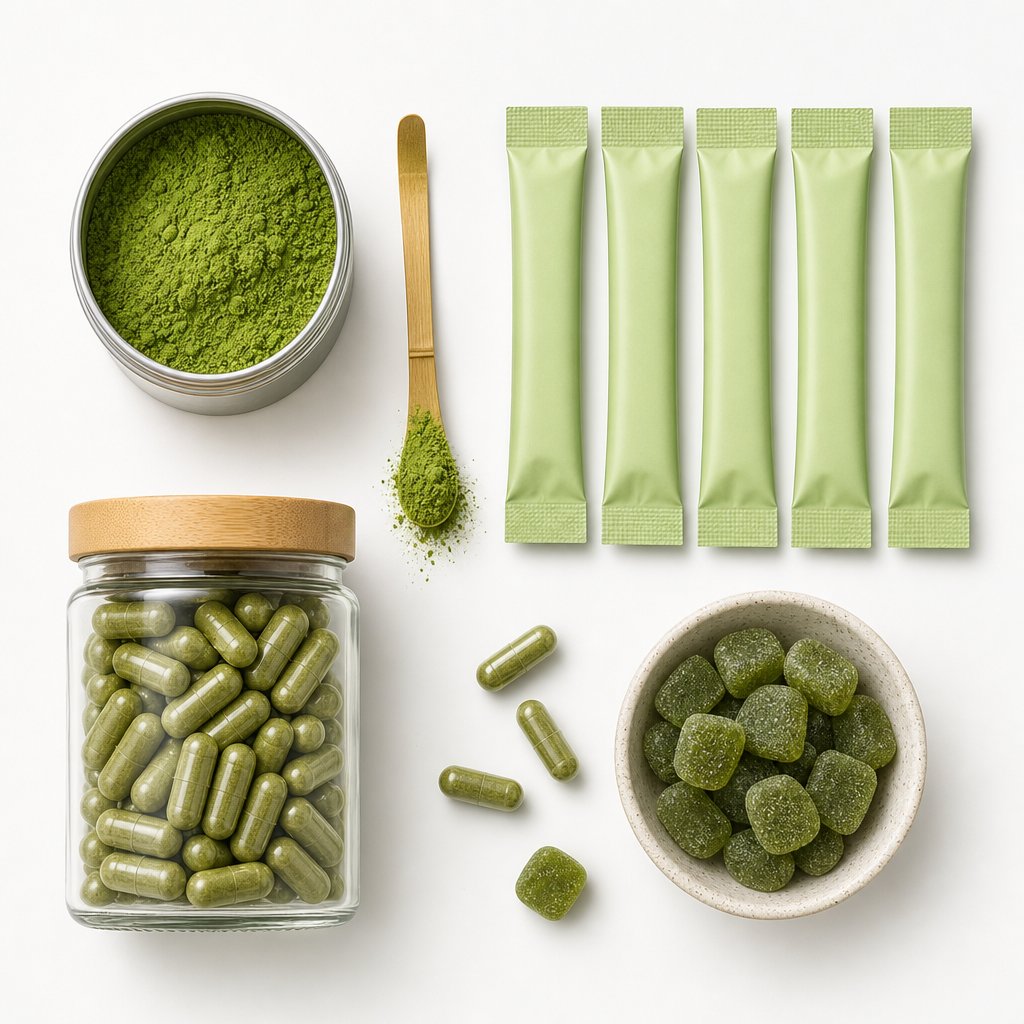
Format isn't just about convenience. Whether you reach for loose matcha powder, a pre-measured sachet, a capsule, or a blended matcha beverage, the delivery system shapes your caffeine experience in practical ways. Choosing the right one depends on whether you prioritize precision, speed, portability, or a specific caffeine target.
Matching Matcha Format to Your Caffeine Goals
Think about how you actually consume matcha day to day. Someone whisking ceremonial green matcha at home has total control over their dose, adjusting by the half-teaspoon. Someone grabbing a matcha chai blend on the way to work is trading precision for convenience. Neither approach is wrong, but they deliver different caffeine outcomes.
Here's how the most common matcha powder tea formats compare in terms of caffeine control:
- Powder/granules (loose): Maximum flexibility. You decide exactly how much powdered green tea goes into each serving, whether that's a gentle 1-gram dose or a robust 4-gram koicha. Best for people who want to dial their caffeine up or down depending on the time of day or their energy needs.
- Capsules: Standardized dosing with zero preparation. Each capsule contains a fixed amount of matcha, typically 500 mg to 1 g, delivering a consistent caffeine dose every time. Ideal for people who want predictable intake without measuring or mixing.
- Single-serve sachets: Pre-portioned convenience that splits the difference between loose powder and capsules. Each sachet contains a set amount (usually 1-2 g), ready to shake into water or milk. Great for travel, office use, or anyone who finds whisking impractical.
- Functional blends (matcha + adaptogens, collagen, or protein): These combine matcha with complementary ingredients, often reducing the matcha percentage per serving. A sweet matcha powder blend or matcha chai mix might contain only 30-50% actual matcha by weight, meaning less caffeine per scoop than pure powder. Useful for people who want a lighter caffeine dose alongside other functional benefits.
- Green tea matcha bags: Tea bags filled with matcha-infused green tea offer the lowest caffeine option in the matcha family. Because you're steeping rather than consuming the full leaf, extraction is partial. These work well for caffeine-sensitive individuals who want matcha flavor without the full dose.
- Gummy candy format: An emerging option for brands targeting consumers who dislike the taste of tea entirely. Gummies deliver a precise, low dose of matcha per piece with predictable caffeine content, though bioavailability differs from liquid preparations.
The right format depends on your lifestyle. If you're a morning ritualist who enjoys the process, loose matcha powder gives you everything. If you're optimizing for consistency across a busy schedule, capsules or sachets remove the guesswork. And if you're building matcha into a broader wellness routine alongside other supplements, functional blends consolidate your stack into fewer steps.
Custom Matcha Formulations for Brands and Businesses
For entrepreneurs and brand owners reading this article with a product idea in mind, the format question takes on a commercial dimension. Creating a matcha-based product with a specific caffeine profile, say a 50 mg-per-serving energy sachet or a low-caffeine matcha gummy, requires more than sourcing good powder. It requires a manufacturing partner who can formulate to your specifications and scale production reliably.
This is where OEM/ODM health food manufacturers become relevant. Companies like ZhuFeng specialize in helping nutrition brands, supplement importers, and private label sellers develop market-ready products across flexible formats including powder/granules, hard capsules, tablets, soft capsules, gummy candy, and oral liquids. For matcha specifically, this means you can work with their formulation team to set precise caffeine levels per serving, combine matcha with complementary ingredients like L-theanine isolate or collagen peptides, and produce at scale without building your own manufacturing infrastructure.
The advantage for matcha beverage brands is clear: rather than being locked into whatever caffeine content a generic powder delivers, custom formulation lets you engineer the exact dose your target customer wants. A calming evening matcha blend might use decaffeinated matcha plus supplemental L-theanine. A pre-workout matcha product might concentrate caffeine with added green tea extract. The format and formulation work together to create a differentiated product that pure commodity powder can't replicate.
Whether you're a consumer choosing between a tin of powdered green tea and a box of capsules, or a brand founder deciding how to bring a matcha product to market, the principle is the same. Format determines experience. Pick the one that matches your caffeine goals, your daily routine, and the level of control you actually need.
Frequently Asked Questions About Matcha and Caffeine
1. How much caffeine is in one teaspoon of matcha powder?
One teaspoon of matcha powder weighs approximately 2 grams and contains between 38-88 mg of caffeine. The wide range depends on the matcha grade, growing conditions, and harvest timing. Ceremonial grade matcha from first-harvest, shade-grown Japanese leaves tends toward the higher end, while culinary grade from later harvests falls lower. For comparison, this puts a single teaspoon of matcha roughly on par with half a cup of drip coffee in total caffeine content.
2. Does matcha have more caffeine than regular green tea?
Yes, matcha consistently delivers more caffeine than regular steeped green tea. A standard cup of brewed sencha contains 30-40 mg of caffeine per 8-ounce serving, while the same weight of matcha powder provides nearly double that amount. The difference comes from whole-leaf consumption — when you drink matcha, you ingest all the caffeine in the leaf rather than extracting only a fraction through steeping and discarding the leaves afterward.
3. Can you get caffeine-free matcha?
Decaffeinated matcha exists but truly caffeine-free matcha does not. The most effective decaffeination method uses supercritical CO2 extraction, which removes most caffeine while preserving catechins, EGCG, and L-theanine. However, decaf matcha still retains trace amounts of caffeine, typically 2-5 mg per gram versus the standard 19-44 mg. The process may also slightly reduce flavor intensity and color vibrancy compared to untreated powder of the same grade.
4. Why does matcha caffeine feel different from coffee caffeine?
Matcha contains high levels of L-theanine, an amino acid that crosses the blood-brain barrier and promotes alpha brain wave activity associated with calm alertness. L-theanine increases GABA, dopamine, and serotonin while reducing the cortisol spike that coffee triggers. This creates a slower caffeine absorption curve with a 3-6 hour energy plateau instead of the sharp spike-and-crash pattern typical of coffee. The caffeine molecule is identical in both beverages — the difference is the biochemical context in which your brain processes it.
5. How much matcha is safe to drink per day?
For healthy adults, up to 3 teaspoons (6 grams) of matcha per day generally stays within the FDA's 400 mg daily caffeine ceiling. However, individual tolerance varies significantly. Caffeine-sensitive individuals, pregnant women, children, and people on certain medications should limit intake to half a teaspoon or less daily. Factors like age, body weight, medication interactions, and anxiety conditions all influence safe consumption levels. Consulting a healthcare provider is recommended for personalized guidance.