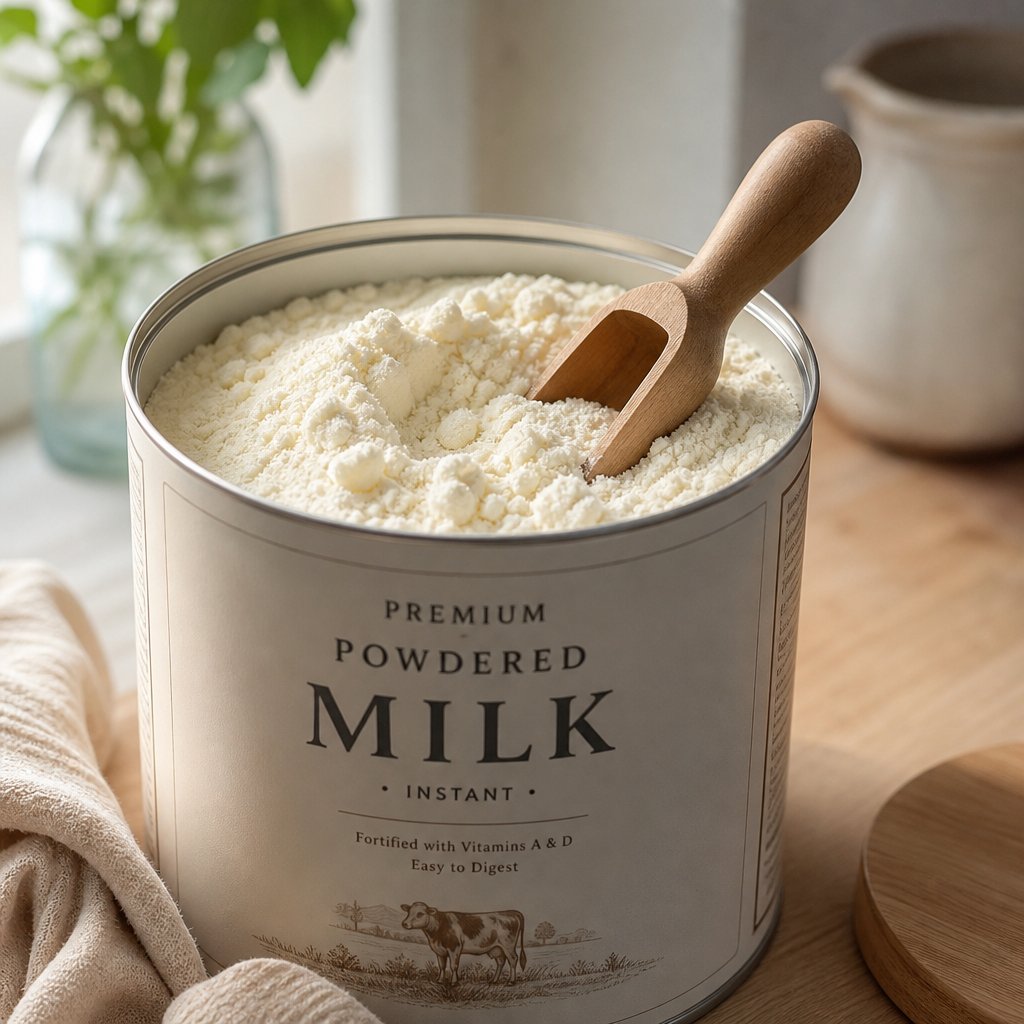
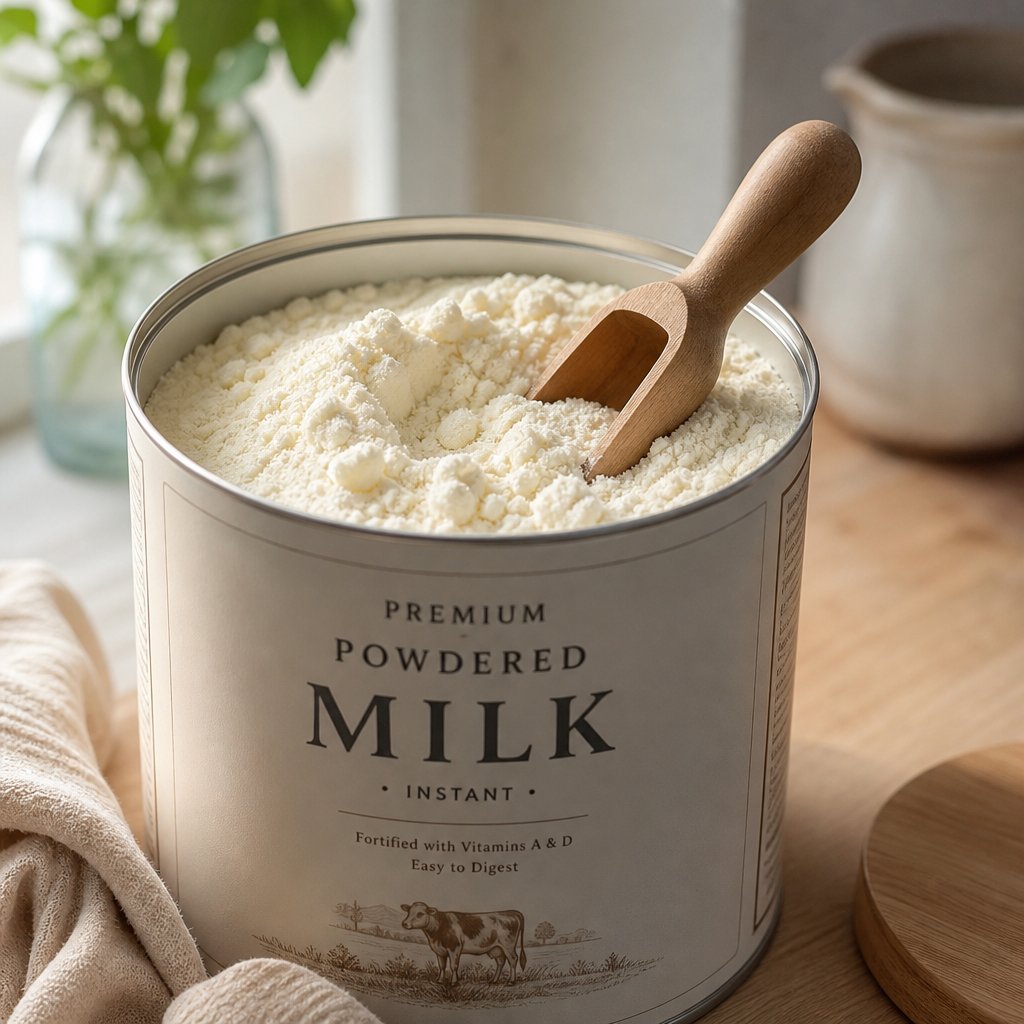
Does Powder Milk Actually Go Bad or Just Lose Quality
You found a container of powdered milk at the back of the pantry. The date printed on the label passed months ago, maybe even years. So does powder milk go bad in the way fresh dairy does, or is something else happening here?
The short answer: it depends on what you mean by "go bad." And that distinction matters more than most people realize.
Safety vs Quality — What Going Bad Really Means
When you ask whether powdered milk expires or spoils, you're really asking two separate questions. The first is about safety: can powdered milk go bad in a way that makes you sick? The second is about quality: does it lose flavor, texture, or nutritional value over time?
Genuine spoilage means mold growth, bacterial contamination, or rancid fats that could cause foodborne illness. This happens when moisture enters the container or when fats oxidize severely. Quality degradation, on the other hand, looks like flat taste, poor dissolving, slight discoloration, or reduced vitamin content. You won't get sick from quality loss alone, but you also won't enjoy the product.
Powdered milk past its best-by date is rarely unsafe — but it may taste flat, dissolve poorly, or lose nutritional value.
Most of the time, does powdered milk go bad in a dangerous way? Not if it has been stored properly. What you're far more likely to encounter is gradual quality decline that makes the powder less pleasant to use.
Why Best-By Dates Are Not Expiration Dates
The milk powder expiry date printed on packaging is almost always a "best by" or "best before" date. The USDA clarifies that these dates indicate peak quality, not a safety cutoff. They tell you when the manufacturer expects optimal flavor and nutrition, not when the product becomes harmful.
In practical terms, this means an unopened package of nonfat dry milk can remain usable for 2 to 10 years past its printed date when stored correctly. The USDA even states that powdered milk can be stored indefinitely under the right conditions. So how long is powdered milk good for after expiration date? Potentially years, though quality will gradually shift.
The real timeline depends on three lifecycle stages: how long the container stays sealed, what happens after you open it, and how quickly you use it once reconstituted with water. Each stage has its own rules, its own risks, and its own clock. Understanding all three is what separates confident pantry management from guesswork.
The factors that drive this degradation are rooted in chemistry, and they affect different types of milk powder at very different rates.
The Science Behind Powder Milk Degradation
Three chemical processes are quietly working against every container of dry milk powder sitting on your shelf. They operate at different speeds depending on storage conditions, but they never fully stop. Understanding them helps you predict when quality will drop and why some types of powdered milk spoil faster than others.
Fat Oxidation and Rancidity
Imagine leaving a stick of butter on the counter for weeks. Eventually it smells off, maybe a little like paint or old cooking oil. That same reaction happens inside your milk powder, just much more slowly.
Milk fat contains unsaturated fatty acids, and these react with oxygen molecules over time. The reaction produces aldehydes and ketones, compounds responsible for that stale, rancid flavor you might notice in older powder. Research on milk powder oxidation confirms that powders with a high percentage of unsaturated fats are especially susceptible to these sensory changes, collectively called oxidative rancidity.
Several factors speed up this process:
- Oxygen concentration inside the package
- Exposure to light, which catalyzes the oxidation reaction
- Higher storage temperatures
- Residual moisture in the powder
This is why whole milk powder, with its higher fat content, does dried milk go bad faster than nonfat varieties. Saturated fatty acids oxidize slowly compared with unsaturated ones. The more unsaturated bonds present in the fat, the greater the chance of oxidation occurring. Whole milk powder contains roughly 26-28% fat, while nonfat dry milk sits below 1.5%. That difference in milk powder ingredients translates directly into shelf life.
Maillard Browning Reactions in Storage
You've seen the Maillard reaction at work every time bread toasts or onions caramelize. A similar version happens inside stored milk powder, just at room temperature and over months rather than minutes.
The Maillard reaction occurs when the carbonyl group of a reducing sugar (lactose, in this case) reacts with the free amino group of a protein. In dry milk powder, lactose and milk proteins are packed tightly together with very little moisture separating them. That concentrated proximity, combined with even mild warmth, allows the reaction to proceed slowly during storage.
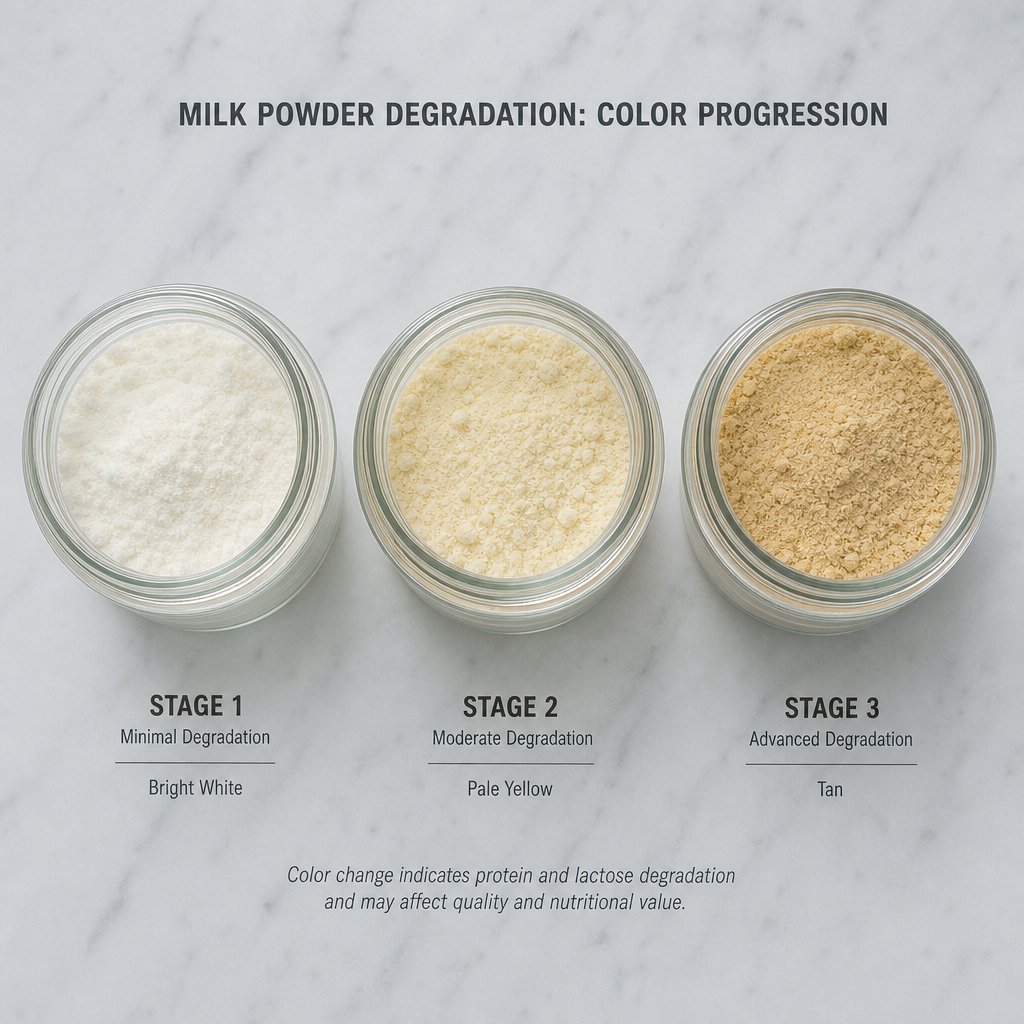
The visible result? Your powder gradually shifts from bright white to a yellowish or tan color. Flavor compounds change too, producing cooked or stale notes that weren't there when the package was fresh. Published research on the Maillard reaction in dairy powders shows that the reaction rate triples or even quadruples with each 10 degrees Celsius increase in temperature. A container stored in a hot garage degrades far faster than one kept in a cool basement.
Beyond flavor and color, the Maillard reaction blocks essential amino acids like lysine, reducing the protein's nutritional value. It also promotes protein cross-linking, which is one reason older powder dissolves poorly and forms stubborn clumps that won't break apart in water.
Moisture Absorption and Microbial Risk
Here's where does powdered milk spoil in the genuinely unsafe sense. Dry milk powder is hygroscopic, meaning it actively pulls moisture from the surrounding air. Every time you open the container, humid air rushes in and gets absorbed by the powder particles.
When moisture content rises above a critical threshold, two things happen:
- The Maillard reaction accelerates dramatically, since water activity between 0.5 and 0.8 creates ideal conditions for browning
- Bacteria and mold gain the water they need to grow and multiply
Most common spoilage bacteria and fungi require oxygen and available moisture for growth. Dry powder, kept below about 3-4% moisture content, simply doesn't provide enough water for microbial colonies to establish. But let humidity creep in through a poorly sealed lid or a torn bag, and you've created a hospitable environment for contamination.
This is also why does dry milk go bad more quickly in tropical or coastal climates. High ambient humidity means more moisture transfer every time the container is opened, and even sealed packaging can slowly transmit water vapor if the barrier isn't robust enough.
The interplay between these three mechanisms explains why fat content is the single biggest predictor of how long any given powder will last. Low-fat varieties resist oxidation, experience slower Maillard browning (fewer lipid oxidation products to feed the reaction), and remain stable at lower moisture levels. That fat content variable is what creates such dramatic shelf life differences between powder types.
Shelf Life Differences by Milk Powder Type
Not all powdered milk ages at the same rate. The fat content inside each variety acts like a built-in countdown timer, and the differences are dramatic. A container of nonfat dry milk and a container of whole milk powder purchased on the same day, stored side by side in identical conditions, will reach the end of their useful life years apart.
Understanding the shelf life of dry milk powder by type helps you make smarter purchasing decisions, especially if you're stocking a pantry for the long haul.
Nonfat Dry Milk Shelf Life
Nonfat dry milk is the longevity champion. With less than 1.5% fat content, there's almost nothing for oxygen to attack. The oxidation reactions that produce rancid off-flavors barely get started, and the Maillard browning proceeds at its slowest possible pace.
A Utah State University Extension study on storing dried milk found that non fat dry milk stored at 50 degrees Fahrenheit preserved its flavor best over extended periods. At around 70 degrees Fahrenheit (typical room temperature), the powder maintained acceptable quality for roughly four years before developing noticeable off-flavors. Stored at 90 degrees Fahrenheit, however, flavor degraded within six months and tasted bad by two years.
Under ideal sealed conditions with cool temperatures, the powdered milk shelf life for nonfat varieties can stretch well beyond the printed date. Some emergency food suppliers sell nonfat dry milk labeled with a 25-year shelf life when packaged with oxygen absorbers in sealed #10 cans. Even in standard manufacturer packaging, an unopened container typically remains usable for 2 to 10 years past its best-by date.
Whole Milk Powder Shelf Life
Whole milk powder tells a different story. At roughly 26-28% fat content, it carries a significant oxidation burden. Those fats begin reacting with any available oxygen almost immediately after packaging, and the process accelerates with heat and light exposure.
The dry milk shelf life for whole milk varieties is considerably shorter. Most manufacturers recommend using it within 6 to 18 months of the printed date when sealed. Once opened, the timeline compresses further because fresh oxygen floods in with every use. You'll notice flavor changes sooner, and the powder may develop a slightly greasy or stale smell that nonfat versions resist for years.
Buttermilk powder falls into a similar category. Its fat content sits between nonfat and whole milk varieties, giving it a moderate shelf life. Expect it to remain at peak quality for roughly 12 to 18 months sealed, with gradual decline after that point.
Why Fat Content Determines Longevity
The relationship is straightforward: more fat means more fuel for oxidation, which means faster degradation. Think of it like a candle. A tiny birthday candle (nonfat) burns out slowly because there's barely any wax. A thick pillar candle (whole milk) has abundant fuel and burns through its lifespan faster under the same conditions.
The shelf life of dry milk also depends on the type of fat present. Whole milk powder contains a higher proportion of unsaturated fatty acids, which are chemically more reactive than saturated ones. Each double bond in an unsaturated fat molecule is a potential site for oxygen to attack. Nonfat dry milk sidesteps this vulnerability almost entirely.
This is why the dehydrated milk shelf life varies so widely depending on what you buy. The table below breaks down the key differences:
| Type | Fat Content Level | Approximate Sealed Shelf Life Range | Primary Degradation Factor |
|---|---|---|---|
| Nonfat Dry Milk | Less than 1.5% | 2-10+ years past best-by date | Maillard browning and moisture absorption |
| Whole Milk Powder | 26-28% | 6-18 months past best-by date | Fat oxidation and rancidity |
| Buttermilk Powder | 5-8% | 12-18 months past best-by date | Fat oxidation (moderate rate) |
The shelf life of powdered milk ultimately comes down to a simple rule: the less fat in the product, the longer it stays stable. If you're choosing between types for any kind of extended storage, nonfat dry milk wins by a wide margin. Whole milk powder works fine for short-term pantry use, but it demands more attention to storage conditions and faster rotation.
These timelines assume the container stays sealed. The moment you break that seal, a completely different set of rules takes over, and the clock resets to a much shorter countdown.
Sealed vs Opened vs Reconstituted Timelines
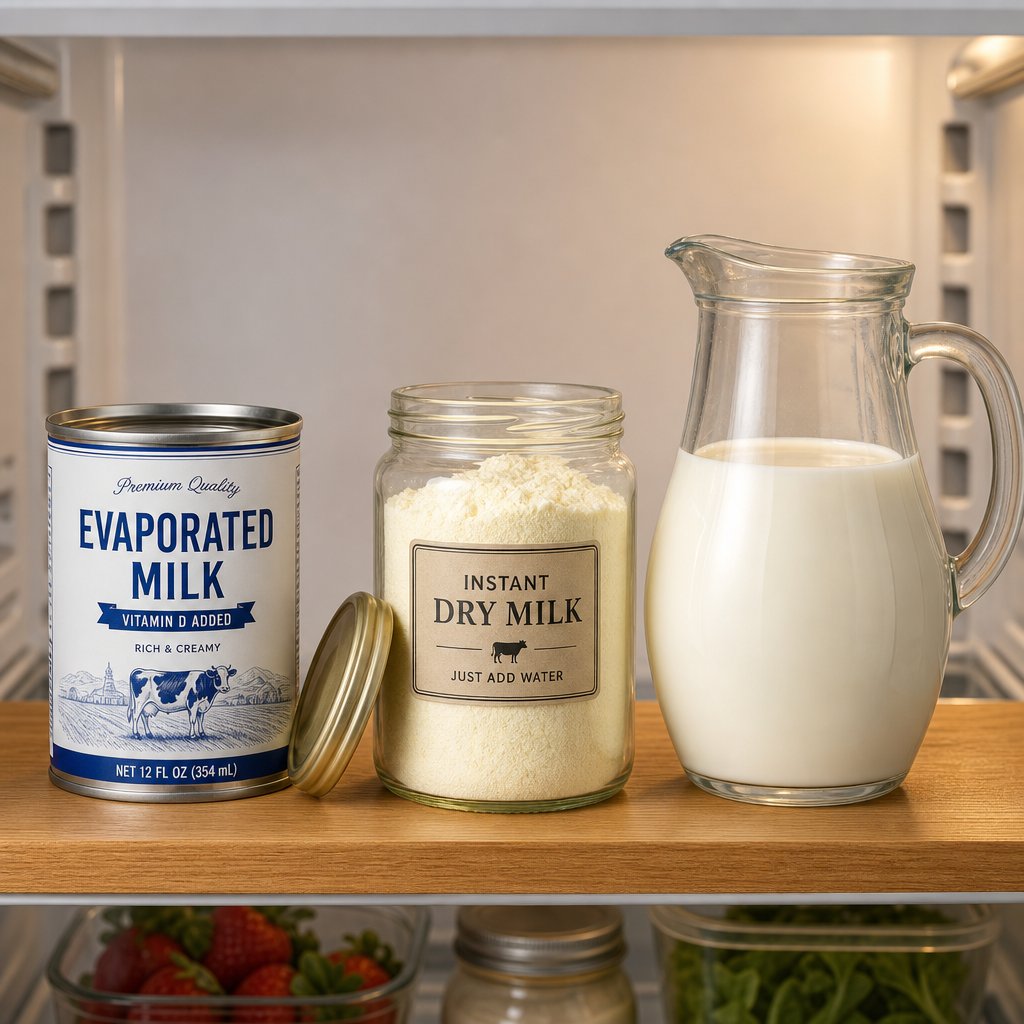
Powder milk doesn't have one shelf life. It has three, and each stage operates under completely different rules. How long does powdered milk last? That depends entirely on whether the container is still factory-sealed, already opened and sitting in your pantry, or mixed with water and waiting in the fridge. Treating all three stages the same is one of the most common mistakes people make with this product.
How Long Sealed Powder Milk Lasts
Factory-sealed containers offer the longest protection because manufacturers control the internal environment before the product ever reaches your shelf. Most commercial powdered milk is packaged using one of two methods: nitrogen flushing or vacuum sealing. Both serve the same purpose — removing oxygen from the container so fat oxidation can't get started.
Nitrogen flushing replaces the air inside the package with inert nitrogen gas. Since nitrogen doesn't react with fats or proteins, the powder sits in a chemically stable atmosphere. Vacuum sealing takes a different approach by physically removing air from the container, collapsing the packaging tightly around the powder. Either method dramatically slows degradation compared to a simple bag or box filled with regular air.
How long does milk powder last in sealed packaging? The USDA states that powdered milk can be stored indefinitely under proper conditions, and an unopened package typically remains usable for 2 to 10 years past the printed best-by date. Nonfat varieties push toward the upper end of that range, while whole milk powder sits closer to the lower end due to its fat content.
- Factory nitrogen-flushed or vacuum-sealed containers provide the longest shelf life
- Unopened nonfat dry milk can remain usable for up to a decade past its printed date
- Whole milk powder in sealed packaging stays at peak quality for roughly 6 to 18 months past the date
- Storage temperature matters even for sealed containers — cool environments (50-70 degrees Fahrenheit) preserve quality far longer than warm ones
- Intact packaging means no oxygen or moisture exchange, keeping both oxidation and microbial growth at bay
After Opening — New Timeline Starts
The moment you break the seal, you introduce two enemies that were previously locked out: oxygen and ambient moisture. Every time you open the container to scoop out powder, fresh air rushes in. That air carries both oxygen molecules ready to attack fats and water vapor ready to be absorbed by the hygroscopic powder.
How long does dry milk last once opened? The general rule is to use opened containers within three months. That timeline assumes you're storing the container properly — sealed tightly between uses, kept in a cool and dark location, and accessed with a dry scoop. If you're less careful, degradation happens faster.
Think of it this way: a sealed container is like a paused clock. Opening it presses play, and the countdown accelerates with every exposure to air. How long does dried milk last in this stage depends heavily on your habits. Leaving the lid off while you cook, storing the container near a stove, or dipping a damp spoon inside all shorten the usable window.
- Use opened powdered milk within three months for best quality
- Reseal the container tightly after every use to limit oxygen and moisture exposure
- Always use a completely dry scoop — even a slightly damp utensil introduces moisture that accelerates spoilage
- Label the container with the date you opened it so you can track the three-month window
- If you won't finish the container within three months, consider dividing it into smaller portions and freezing what you don't need immediately
Reconstituted Powder Milk Safety Window
Here's where the rules change completely. Once you mix powder with water, you no longer have a shelf-stable product. You have milk from milk powder, and it behaves exactly like the fresh liquid version you'd buy from the refrigerated section. The water reactivates all the biological processes that dehydration had paused.
How long does powdered milk last once mixed with water? You're looking at 4 to 5 days in the refrigerator, stored at or below 40 degrees Fahrenheit. That's the same window you'd follow for a carton of fresh milk. Bacteria that couldn't grow in dry powder now have the moisture they need to multiply rapidly at room temperature.
How long is powdered milk good for after reconstitution if left unrefrigerated? Not long at all. Like any dairy product, reconstituted milk left at room temperature enters the bacterial danger zone (40-140 degrees Fahrenheit) and should be discarded after two hours. How long does powdered milk last once made into liquid is governed entirely by refrigeration discipline.
- Refrigerate reconstituted milk immediately after mixing — treat it as fresh milk
- Use within 4 to 5 days of preparation
- Never leave reconstituted milk at room temperature for more than two hours
- Store in a clean, sealed container rather than an open glass or pitcher
- If it develops an off smell, sour taste, or unusual texture, discard it regardless of how many days have passed
The three-stage lifecycle creates a practical framework: years of stability while sealed, months of usability once opened, and days of freshness once reconstituted. Knowing which stage your powder is in tells you exactly how urgently you need to use it — and when something has crossed the line from "still fine" into "time to toss it."
How to Tell If Your Powder Milk Has Gone Bad
Knowing the timelines is useful, but what do you actually do when you pull out a container and aren't sure whether it's still good? Does milk powder go bad in ways you can detect before mixing it into your morning coffee or a batch of pancakes? Yes, and the signs follow a predictable pattern if you know what to look for.
Here's a step-by-step inspection sequence you can follow every time you're uncertain about a container:
- Check the appearance. Fresh powder is uniformly white or off-white with a fine, free-flowing texture. Look for yellowing, tan discoloration, dark specks, or any visible mold (green, black, or white fuzzy patches). Any mold means immediate disposal — no exceptions.
- Smell the powder. Open the container and take a careful sniff. Good milk powder smells mildly sweet and neutral. Rancid powder produces a paint-like, sour, or stale oil odor caused by oxidized fats breaking down into aldehydes. If it smells off, trust your nose.
- Assess the texture. Run a spoon through the powder and check for clumping. This is where most people get confused, because not all clumps mean spoilage.
- Taste a tiny amount (only if steps 1-3 pass). Dissolve a small pinch in warm water. It should taste clean and mildly milky. Any sour, bitter, or chemical flavor confirms the powder has degraded beyond usable quality.
Visual and Smell Indicators of Spoilage
Color changes are your earliest visual warning. The Maillard browning reaction discussed earlier produces a gradual shift from white toward yellow or tan. A slight cream tint in older powder is normal, but pronounced yellowing signals significant chemical change. Dark specks that weren't there originally could indicate mold colonies in early stages or contamination from insects.
Smell is often more reliable than sight. Can dry milk go bad while still looking perfectly white? Absolutely. Fat oxidation produces volatile compounds — particularly hexanal and nonanal — that your nose detects as painty, cardboard-like, or metallic off-flavors long before visible changes appear. If the powder looks fine but smells like old paint or stale cooking oil, the fats have oxidized past the point of pleasant use.
Clumping — When It Is Harmless vs Dangerous
This is the question behind the article's title, and the answer isn't black and white. Clumping happens when powder absorbs moisture from the air, and the severity tells you how far things have progressed.
Soft clumps that crumble easily when pressed with a spoon are usually harmless. They form from minor moisture exposure — maybe the lid wasn't sealed perfectly, or humidity spiked briefly. If the powder passes the smell and visual tests, these soft clumps can be broken apart and the product used normally. Sifting through a fine mesh strainer restores the texture.
Hard clumps that resist pressure and won't break apart signal a more serious moisture problem. The powder has absorbed enough water to trigger protein cross-linking and potentially create conditions where bacteria or mold can grow. Hard, rock-like chunks — especially if they show any discoloration or smell sour — mean the product should be discarded. Does nonfat dry milk expire in this way? It can, particularly if stored in humid environments without proper sealing.
Edge Cases and Borderline Situations
Real life rarely presents clear-cut spoilage. Here are the gray areas people encounter most often:
- Powder looks and smells fine but is years past the date. If it passes all four inspection steps, it's likely safe to consume. Quality may be reduced — expect flatter taste and slower dissolving — but it won't make you sick. Does dry milk expire in a safety sense under these conditions? Generally not, though nutritional value (especially vitamins A and D) declines over time.
- Powder stored in a garage, shed, or attic. Temperature swings and high humidity in these spaces accelerate every degradation mechanism. Even if the container looks sealed, can powder milk go bad faster in these conditions? Significantly. Heat above 90 degrees Fahrenheit can produce noticeable off-flavors within months. Inspect more critically and apply a lower threshold for discarding.
- Powder has minor clumping but no off smell or color change. This is the most common borderline case. If clumps break apart easily and everything else checks out, the powder is almost certainly fine. Use it promptly rather than returning it to long-term storage, since the moisture that caused clumping will continue working against stability.
- Container was left open overnight. A single overnight exposure won't ruin the product in most climates, but it does start the moisture absorption process. Reseal immediately, use within a few weeks, and watch for accelerated clumping.
How to tell if milk powder is bad ultimately comes down to trusting your senses in sequence: eyes first, nose second, fingers third, tongue last. If any step raises a red flag, stop there. Does milk powder get expired to the point of being dangerous? Only when moisture has enabled microbial growth or when fats have gone severely rancid. In most cases, you'll notice quality decline long before safety becomes a concern.
The good news is that proper storage dramatically delays every one of these warning signs. The right container, the right environment, and the right habits can keep powder milk in usable condition far longer than careless storage ever will.
How to Store Powdered Milk for Maximum Shelf Life
Detecting spoilage is important, but preventing it in the first place is far more practical. The right packaging and environment can add years to your powder's usable life, while poor choices can cut that timeline down to months. Knowing how to store dry milk properly is the difference between opening a container of fresh, free-flowing powder and finding a clumpy, off-smelling mess.
Best Packaging Options Explained
Each packaging method protects against a different combination of threats — oxygen, moisture, and light. The best choice depends on how long you plan to store the powder and how often you'll access it.
Mylar bags with oxygen absorbers offer the most comprehensive protection for long-term dry milk storage. The metalized film blocks light completely, prevents oxygen and moisture from passing through the barrier, and creates an inert internal atmosphere when paired with oxygen absorbers. A 300cc oxygen absorber is typically sufficient for a gallon-sized bag of powdered milk. Once heat-sealed, these bags create a near-perfect storage environment that keeps shelf stable powdered milk viable for years.
#10 cans (institutional-size metal cans) provide excellent physical durability alongside oxygen and moisture protection. They're rodent-proof, stackable, and resist punctures that could compromise a flexible bag. Many emergency food suppliers package nonfat dry milk in #10 cans with nitrogen flushing or oxygen absorbers already inside. The downside? Once you open one, you're committed to using a large quantity within the three-month opened window.
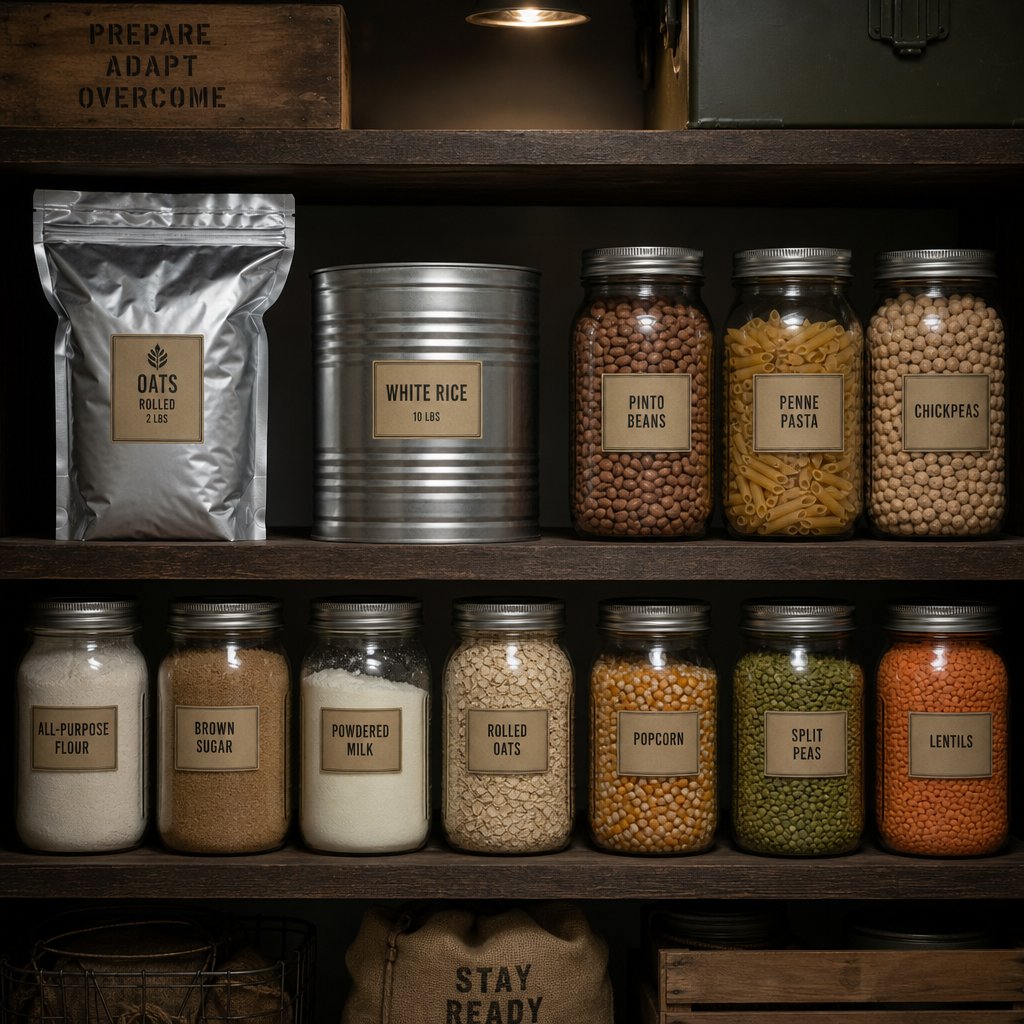
Glass canning jars work well for smaller quantities you plan to rotate through regularly. They're reusable, airtight when properly sealed with new lids, and let you visually inspect the powder without opening the container. Glass doesn't block light, though, so you'll need to store jars in a dark cabinet or pantry. They're ideal for how to store powder milk in everyday kitchen use rather than multi-year storage.
Original manufacturer packaging is adequate for short-to-medium term use. Most commercial powdered milk comes in cardboard boxes with inner plastic bags or in sealed plastic containers. These provide basic moisture and oxygen barriers but aren't designed for extended powdered milk food storage beyond the printed best-by date. If you plan to use the product within a year or two of purchase, the original packaging works fine.
| Method | Oxygen Protection | Moisture Protection | Light Protection | Best Use Case |
|---|---|---|---|---|
| Mylar Bags + Oxygen Absorbers | Excellent | Excellent | Excellent | Long-term storage (5+ years) |
| #10 Cans (nitrogen-flushed) | Excellent | Excellent | Excellent | Long-term storage, physical durability |
| Glass Canning Jars | Good | Good | None (requires dark storage) | Medium-term rotation, smaller quantities |
| Original Manufacturer Packaging | Moderate | Moderate | Varies | Short-term pantry use (1-2 years) |
Ideal Storage Conditions
Even the best packaging can't fully compensate for a bad storage environment. Three environmental factors determine how quickly your milk powder degrades, regardless of the container it sits in.
Temperature is the most impactful variable. The Utah State University Extension research on storing dried milk found that powder stored at 50 degrees Fahrenheit maintained quality far longer than identical powder stored at 70 or 90 degrees. Every 10-degree increase roughly doubles the rate of chemical degradation. A cool basement, interior closet, or climate-controlled pantry is ideal. Aim for 50 to 70 degrees Fahrenheit if possible.
Darkness matters because light — especially UV light — catalyzes fat oxidation. Even nonfat varieties contain trace fats that react under light exposure. Store containers away from windows, fluorescent fixtures, and any direct sunlight. If you're using clear glass jars, keep them inside a closed cabinet.
Low humidity protects against the moisture absorption that triggers both Maillard browning and microbial growth. Relative humidity below 15% is ideal for how to store dried milk long-term. Avoid bathrooms, laundry rooms, or any space where steam or condensation occurs regularly. If your storage area tends toward dampness, a small dehumidifier nearby can make a meaningful difference.
Common Storage Mistakes to Avoid
Knowing how to store milk powder correctly also means recognizing the habits that silently shorten its life. These mistakes are surprisingly common:
- Storing near heat sources. The top of the refrigerator, the cabinet above the stove, or a shelf near a heating vent all expose powder to elevated temperatures. That warmth accelerates every degradation reaction discussed earlier.
- Leaving containers partially open. Even a lid that's loosely placed rather than firmly sealed allows continuous oxygen and moisture exchange. Seal the container completely after every use — every single time.
- Using damp scoops or spoons. A wet utensil introduces moisture directly into the powder. That localized moisture creates clumps and can seed microbial growth in the surrounding area. Always use a completely dry scoop, and never return a used spoon to the container.
- Storing on concrete floors. Concrete wicks moisture and transfers cold unevenly. Place containers on shelving or wooden pallets to maintain consistent temperature and avoid condensation.
- Ignoring the opened timeline. People often open a large container, use a small amount, and then forget about it for months. Mark the opening date on the container and commit to the three-month use window.
The combination of proper packaging and controlled conditions creates a storage system where each element reinforces the others. Mylar blocks oxygen while cool temperatures slow whatever reactions might still occur. Darkness prevents light-catalyzed oxidation while low humidity keeps moisture from undermining the powder's stability.
For everyday pantry users, glass jars in a cool dark cabinet work perfectly well. For anyone thinking about longer timescales — emergency preparedness, bulk buying, or seasonal rotation — the approach needs to shift toward more deliberate planning and specialized packaging.
Powdered Milk Long Term Storage and Emergency Preparedness Planning
Keeping a container of milk powder in the pantry for everyday baking is one thing. Building a supply that needs to remain viable for five, ten, or even twenty years is an entirely different challenge. The packaging and habits that work fine for short-term use fall apart when you're planning for timescales measured in decades rather than months.
Whether you're building an emergency food supply, stocking a rural homestead, or simply buying in bulk to save money over time, the approach to storing dry milk long term requires more deliberate choices at every step.
Long-Term Storage Requirements vs Pantry Storage
Pantry storage assumes you'll rotate through the product within a year or two. The original packaging holds up, room temperature is acceptable, and you don't need to worry much about oxygen exposure because the container won't sit long enough for slow oxidation to matter.
Long-term storage flips those assumptions. You're fighting the same three degradation forces — oxidation, Maillard browning, and moisture absorption — but over a much longer timeline where even tiny reaction rates compound into noticeable quality loss. What is the shelf life of powdered milk under these extended conditions? It depends almost entirely on how well you control the environment.
The key differences between pantry and long-term approaches:
- Packaging must be oxygen-free. Mylar bags with oxygen absorbers or nitrogen-flushed #10 cans are essential, not optional. Standard plastic containers allow slow oxygen permeation that becomes significant over years.
- Temperature control becomes critical. At 70 degrees Fahrenheit, nonfat dry milk develops off-flavors after roughly four years. At 50 degrees, it stays palatable far longer. A cool basement or climate-controlled storage room makes a measurable difference over a decade.
- Light must be completely excluded. Even indirect light catalyzes oxidation reactions that accumulate over years of exposure. Opaque containers stored in dark spaces are non-negotiable for multi-year timelines.
- Humidity must stay consistently low. A single moisture event — a flood, a broken pipe, condensation from temperature swings — can compromise an entire supply. Elevate containers off concrete floors and monitor the storage environment seasonally.
Some emergency food suppliers market powdered milk 25 year shelf life claims on their products. These figures assume ideal conditions: nonfat dry milk, sealed in #10 cans with oxygen absorbers, stored at consistently cool temperatures in a dark and dry environment. Under those precise conditions, the powder can remain safe to consume for decades. But "safe" and "enjoyable" aren't the same thing. Expect gradual flavor flattening, slower dissolving, and reduced vitamin content as years pass, even when everything else is done correctly.
Rotation Strategies for Stored Powder Milk
The smartest long-term storage plan isn't "pack it and forget it." It's a rotation system where older stock gets used and replaced with fresh product on a regular cycle. This way, you're never relying on powder that has sat untouched for a decade or more.
How long will powdered milk last in a rotation system? Indefinitely, because you're consuming and replacing it before significant degradation occurs. The goal is to keep your oldest container no more than 3 to 5 years old for everyday-quality results, or up to 10 years if you're comfortable with some flavor compromise.
A practical rotation approach works like this: store containers with the date clearly marked, place newer purchases behind older ones, and pull from the front when you need milk powder for cooking, baking, or drinking. Every container you use gets replaced with a fresh one at the back of the line. This "first in, first out" method ensures nothing sits long enough to degrade meaningfully.
For families that don't use powdered milk regularly, build rotation into your cooking habits intentionally. Use it in bread recipes, pancake batter, homemade hot chocolate, cream soups, or smoothies. Even using one cup of reconstituted powder per week keeps a modest supply cycling through at a healthy pace.
Choosing the Right Type for Extended Storage
If you're selecting the best powdered milk for long term storage, the choice is clear: nonfat dry milk. Its minimal fat content eliminates the primary degradation pathway that limits whole milk powder to short-term use. The shelf life dry milk achieves in the nonfat form simply can't be matched by higher-fat varieties under any storage conditions.
Whole milk powder has its place in short-term pantry rotation, but it's a poor candidate for multi-year storage. Even in oxygen-free packaging at cool temperatures, the 26-28% fat content provides enough fuel for oxidation to produce rancid flavors within a few years. For long shelf life powdered milk that you can count on in an emergency, nonfat is the only realistic option.
Here's a checklist of long-term storage essentials to keep your supply reliable:
- Choose nonfat dry milk exclusively for any storage beyond two years
- Package in Mylar bags with 300cc oxygen absorbers or purchase pre-sealed #10 cans
- Store at 50 to 70 degrees Fahrenheit — cooler is always better
- Keep containers in complete darkness, away from windows and artificial light
- Elevate off concrete floors using shelving or pallets
- Mark every container with the packaging date and the product's original best-by date
- Implement a first-in, first-out rotation schedule
- Inspect storage conditions at least twice per year for moisture intrusion, temperature changes, or pest activity
- Keep a small working supply separate from your long-term stock so you're not constantly opening sealed containers
The reality of multi-year storage is that quality degrades gradually rather than failing suddenly. A container stored for fifteen years under good conditions won't taste as bright as a fresh one, but it will still dissolve, still provide protein and calcium, and still serve its purpose in an emergency. That slow, predictable decline is manageable when you plan for it with rotation and realistic expectations.
Storage conditions and packaging choices determine how long your powder stays viable. But there's another variable that most consumers overlook entirely: the manufacturing quality of the powder itself. How it was dried, how much residual moisture it contains at packaging, and how tightly those production parameters were controlled all influence whether your milk powder starts its storage life in optimal condition or already compromised.

How Manufacturing Quality Determines Shelf Stability
Two containers of milk powder can sit side by side on the same shelf, stored under identical conditions, and still degrade at completely different rates. The difference isn't the packaging or the temperature. It's what happened at the factory before the powder ever reached you.
Manufacturing quality is the invisible variable that sets the starting point for every shelf life timeline discussed in this article. A powder that leaves the production line with tightly controlled moisture, minimal free fat on particle surfaces, and proper atmospheric packaging begins its storage life in peak condition. A poorly manufactured product starts already compromised.
How Production Quality Affects Shelf Stability
The spray drying process is where shelf stability is either built in or undermined. Three production parameters matter most:
- Inlet and outlet air temperatures. Too-high drying temperatures cause protein denaturation and trigger early Maillard browning before the product even ships. Too-low temperatures leave excess residual moisture, creating conditions for microbial growth and caking during storage. The target for commercial milk powder is 2-4% final moisture content — a narrow window that requires precise temperature control.
- Homogenization quality. During production, homogenization breaks fat globules into smaller, uniform sizes. This reduces the amount of free fat sitting on the surface of powder particles. Surface fat is directly exposed to oxygen and oxidizes first, producing those rancid off-flavors. Well-homogenized dehydrated milk powder has less surface fat and resists oxidation longer.
- Packaging atmosphere. Research published in the Journal of Dairy Science found that nitrogen flushing prevented the development of painty, oxidized flavors in whole milk powder stored for up to one year at both refrigerated and ambient temperatures. Air-stored samples showed significantly higher peroxide values and lipid oxidation compounds. The packaging step alone can double or triple the usable shelf life of the finished product.
The shelf life of milk powder is largely determined before it reaches the consumer — controlled drying, low residual moisture, and oxygen-free packaging at the factory set the ceiling for how long any product can remain stable in storage.
Clean milk powder produced under rigorous quality systems also means fewer contaminants that could accelerate degradation. Trace metals like copper and iron catalyze fat oxidation, so manufacturers with strict sanitation protocols and high-grade stainless steel equipment produce shelf stable milk powder that resists rancidity longer than products from less controlled facilities.
What to Look for in Quality Powder Milk Products
As a consumer, you can't tour the factory. But you can look for signals that indicate careful manufacturing:
- Powdered milk ingredients list. A short, clean ingredient list — ideally just milk — suggests minimal processing additives. Some manufacturers add lecithin for instant dissolving, which is fine, but long lists of stabilizers or anti-caking agents can indicate a product that needed help compensating for suboptimal drying.
- Packaging method disclosure. Products that specify nitrogen flushing or oxygen absorbers on the label are signaling investment in shelf stability. This matters especially for dehydrated milk intended for long-term storage.
- Moisture content specifications. Premium brands sometimes list moisture content on their packaging or spec sheets. Lower is generally better — anything at or below 3.5% indicates tight process control.
- Particle consistency. When you open the container, quality milk powder should be uniformly fine and free-flowing with no pre-existing clumps. Clumping straight out of a new package suggests moisture issues during production or storage before retail.
The powdered milk ingredients and production methods used upstream ripple through the entire product lifecycle. A well-made powder gives you the full shelf life potential that proper home storage can preserve. A poorly made one starts the degradation clock ahead of schedule, no matter how carefully you store it afterward.
Custom Formulation for Brands and Businesses
For nutrition brands, supplement companies, and private label sellers developing their own dehydrated milk products or milk-based nutritional powders, manufacturing quality isn't just a consumer concern — it's a business-critical decision. The production partner you choose determines whether your product maintains its promised shelf life or generates customer complaints about off-flavors and clumping months before the printed date.
OEM/ODM manufacturing partnerships give brands access to controlled formulation environments without building their own facilities. This includes precision spray-drying parameters, moisture content testing at packaging, nitrogen flushing capabilities, and scalable production that maintains consistency across batches. For businesses developing shelf stable milk powder products or nutritional powder blends, these controls directly translate into longer shelf life and fewer quality issues in the field.
Manufacturers like ZhuFeng, which specializes in OEM/ODM health food manufacturing across formats including powder and granule products, offer customized formulation services that let brands optimize their powdered milk ingredients, moisture targets, and packaging specifications for maximum stability. Their flexible production capabilities — spanning powders, granules, capsules, and other formats — make them a relevant resource for functional food businesses looking to launch market-ready nutritional products with built-in shelf life performance.
Whether you're a consumer choosing between brands on a store shelf or a business selecting a manufacturing partner, the principle is the same: quality at the production stage sets the ceiling for everything that follows. No amount of perfect home storage can rescue a product that was poorly made. But a well-manufactured powder, stored correctly, delivers on its full potential — staying fresh, dissolving cleanly, and maintaining nutritional value for years beyond what a carelessly produced alternative could ever achieve.
Frequently Asked Questions About Powder Milk Shelf Life
1. Can you use powdered milk after the expiration date?
Yes, in most cases. The date printed on powdered milk packaging is a best-by date indicating peak quality, not a safety cutoff. Unopened nonfat dry milk can remain usable for 2 to 10 years past its printed date when stored in cool, dark, and dry conditions. Always inspect the powder for off-smells, discoloration, or hard clumps before use. If it passes a visual, smell, and taste check, it is generally safe to consume, though flavor and nutritional value may have declined.
2. How long does powdered milk last once opened?
Once opened, powdered milk should be used within three months for best quality. Opening the container introduces oxygen and ambient moisture, which accelerate fat oxidation and encourage clumping. To maximize this window, reseal the container tightly after every use, store it in a cool and dark location, and always use a completely dry scoop. Labeling the container with the date you opened it helps you track the timeline accurately.
3. How can you tell if powdered milk has gone bad?
Follow a four-step inspection: first check for visual changes like yellowing, dark specks, or mold. Then smell the powder for rancid, paint-like, or sour odors. Next, assess texture by checking whether clumps are soft and crumbly (usually harmless) or hard and resistant (a sign of serious moisture damage). Finally, dissolve a small pinch in warm water and taste it. Any sour, bitter, or chemical flavor means the powder has degraded beyond usable quality.
4. What is the best way to store powdered milk long term?
For long-term storage, package nonfat dry milk in Mylar bags with 300cc oxygen absorbers or purchase pre-sealed nitrogen-flushed #10 cans. Store containers at 50 to 70 degrees Fahrenheit in complete darkness with low humidity. Elevate containers off concrete floors and implement a first-in, first-out rotation schedule. Under these conditions, nonfat dry milk can remain viable for 10 to 25 years, though gradual flavor and nutritional decline will occur over time.
5. Does powdered milk last longer than whole milk powder?
Nonfat dry milk lasts significantly longer than whole milk powder because it contains less than 1.5% fat compared to 26-28% in whole milk varieties. Fat is the primary fuel for oxidation reactions that produce rancid off-flavors. Sealed nonfat dry milk can remain usable for up to a decade past its best-by date, while whole milk powder typically stays at peak quality for only 6 to 18 months past the printed date under the same storage conditions.