
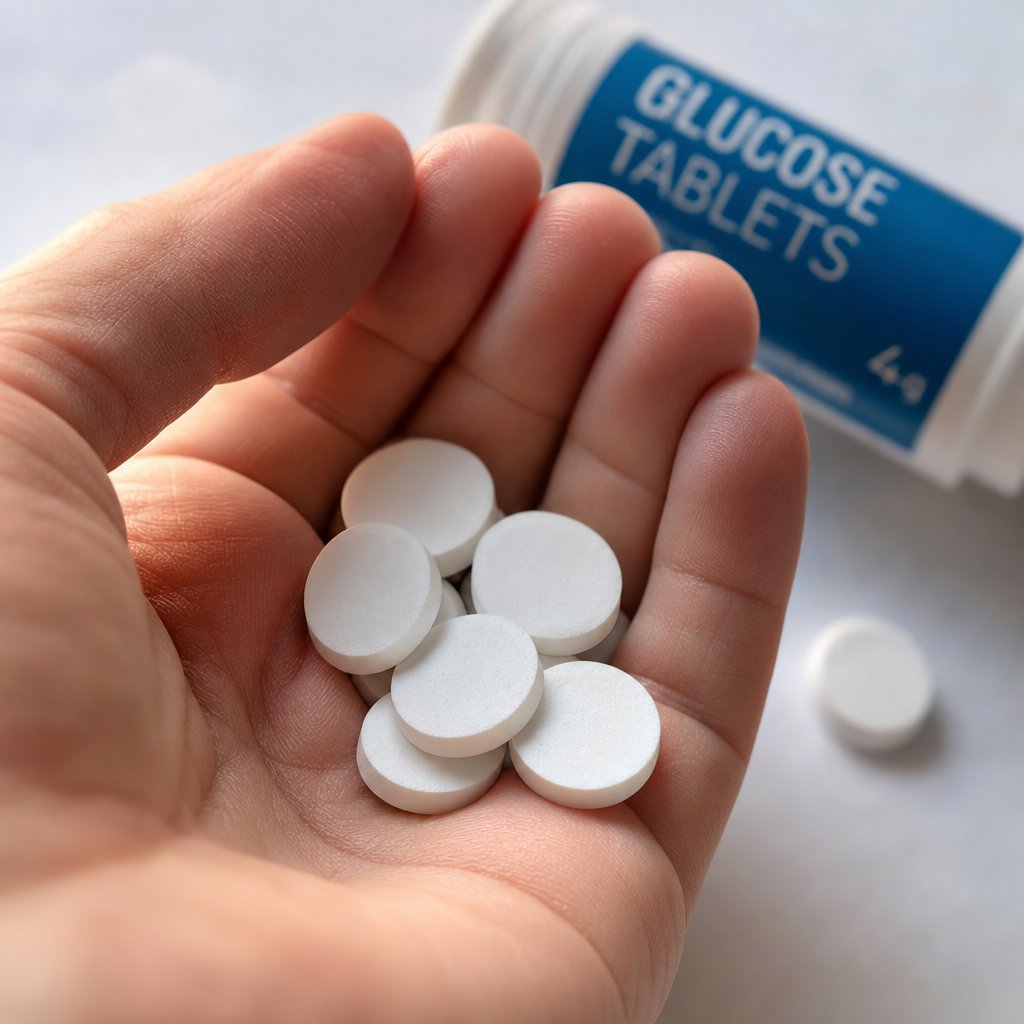
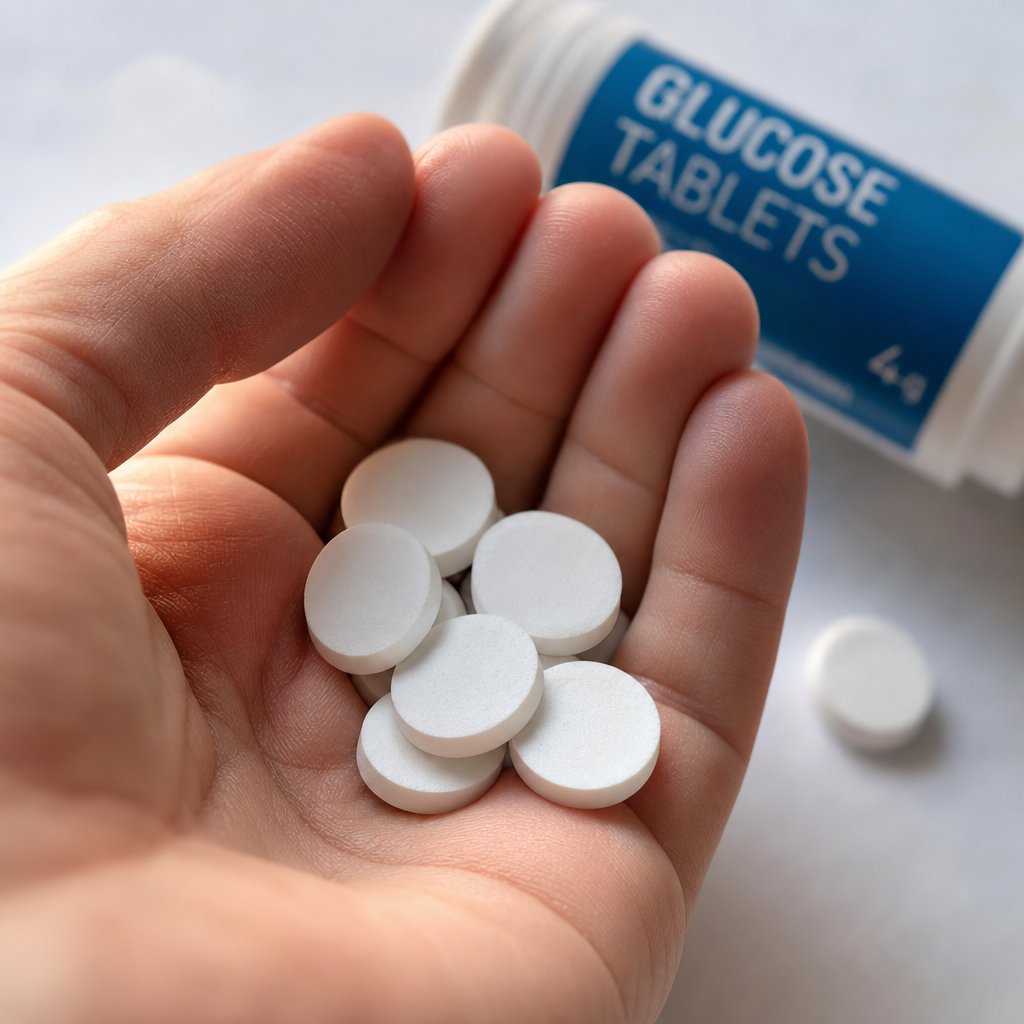
How Fast Glucose Tablets Actually Raise Your Blood Sugar
You're shaky, sweating, and your hands won't stop trembling. You pop a glucose tablet. The question racing through your mind: how fast do glucose tablets work, and when will this feeling stop?
The Short Answer on Glucose Tablet Speed
Glucose tablets typically begin raising your blood sugar within 10 to 15 minutes of chewing and swallowing them. By the 20-minute mark, clinical measurements show a meaningful increase in blood glucose levels. For most people experiencing mild-to-moderate hypoglycemia, 15 grams of glucose produces a blood sugar rise of approximately 2.1 mmol/L (about 38 mg/dL) within that 20-minute window.
Glucose tablets start raising blood sugar in 10-15 minutes, with measurable improvement by 20 minutes. Symptom relief typically follows within 15-20 minutes, though full stabilization may take longer depending on severity.
So what are glucose tablets for, exactly? They deliver pure glucose (dextrose) directly into your system to counteract dangerously low blood sugar. Their purpose is speed and precision, and the clinical data backs that up.
What the Clinical Data Shows
Understanding how long does it take for glucose tablets to work requires separating three distinct milestones that happen in sequence:
- Blood sugar begins rising - detectable at the 10-minute mark in clinical measurements
- Symptoms start to resolve - trembling, confusion, and sweating typically ease between 10 and 20 minutes
- Blood sugar reaches a safe level - full normalization may take 20-45 minutes depending on the starting point and dose
Clinical studies referenced in Diabetes Canada's hypoglycemia guidelines measured blood glucose response at 10, 15, and 20-minute intervals after oral glucose ingestion. The evidence confirms that a standard 15-gram dose of glucose tablets reliably raises blood sugar within 20 minutes for most individuals. A larger 20-gram dose produces an increase of approximately 3.6 mmol/L (about 65 mg/dL) by 45 minutes. A systematic review and meta-analysis published in the Emergency Medicine Journal further found that glucose tablets resolve symptoms at a higher rate than dietary sugars at the 15-minute mark.
These timelines matter because how long do glucose tablets take to work is not a single answer. The moment your blood sugar starts climbing is not the same moment you feel better, and feeling better is not the same as being safe. Treating these as separate milestones helps you avoid the most common mistake during a hypoglycemic episode: taking more glucose too soon because you still feel symptomatic, then overshooting into high blood sugar territory.
The speed advantage of glucose tablets comes down to their molecular structure and how your body processes them, a mechanism that explains why they outperform juice, candy, and other sugar sources in head-to-head comparisons.
The Science Behind Rapid Glucose Absorption
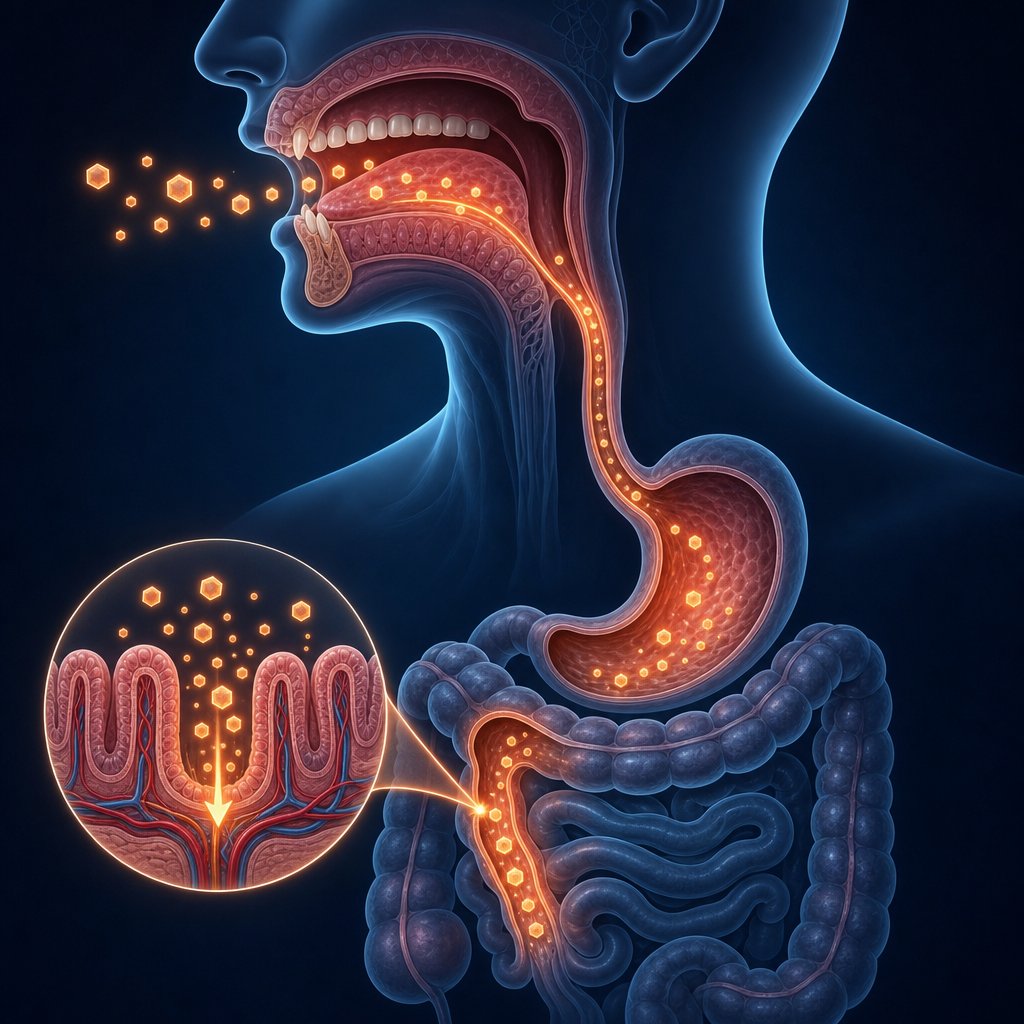
What is a glucose tablet at the molecular level? It's pure dextrose, the pharmaceutical name for D-glucose, a monosaccharide that your body can absorb without any digestive processing. This single structural fact explains how do glucose tablets work so much faster than other sugar sources.
Why Monosaccharides Skip the Digestive Queue
Carbohydrates exist in three structural tiers: monosaccharides (single sugar molecules), disaccharides (two linked sugars), and polysaccharides (long chains of sugars). Your bloodstream only accepts monosaccharides, so every carbohydrate you eat must be broken down to that level before absorption can begin.
When you eat table sugar (sucrose), enzymes like sucrase must first split it into glucose and fructose before either molecule can cross the intestinal wall. Complex carbohydrates like starch require multiple rounds of enzymatic hydrolysis, starting with salivary amylase in the mouth and continuing through pancreatic enzymes in the small intestine. Each step takes time.
Dextrose tablets skip all of this. Because oral glucose is already a monosaccharide, it requires zero enzymatic breakdown. The moment it dissolves, it's ready for absorption. Think of it like arriving at an airport with a boarding pass already in hand while everyone else is still standing in the check-in line.
At the cellular level, glucose enters intestinal enterocytes through the sodium-glucose cotransporter 1 (SGLT1) on the apical membrane, then exits into the bloodstream via GLUT2 transporters on the basolateral side. Fructose, by contrast, uses a different, slower transporter (GLUT5) and must travel to the liver for further processing before it becomes usable blood glucose. This is why even fruit juice, which contains a mix of glucose, fructose, and sucrose, cannot match the speed of pure fast acting glucose in tablet form.
Oral Mucosa vs GI Tract Absorption Pathways
Here's where the speed advantage compounds. Glucose from dextrose tablets doesn't rely on a single absorption route. It uses two pathways simultaneously:
- Buccal and sublingual absorption - When you chew a glucose tablet, dissolved glucose contacts the highly vascularized tissue under your tongue and along your inner cheeks. These areas contain dense capillary networks that allow direct absorption into the bloodstream without passing through the digestive system. This pathway begins working almost immediately.
- Gastrointestinal absorption - The remaining glucose travels to the small intestine, where enterocytes absorb it through SGLT1 transporters and shuttle it into the portal blood supply. This pathway delivers the bulk of the glucose within minutes of swallowing.
The concept behind sublingual glucose tablets mirrors how emergency medications like nitroglycerin are administered under the tongue for rapid effect. The oral mucosa offers a shortcut past the entire GI tract, delivering a portion of the glucose directly into circulation while the rest follows the standard intestinal route.
This dual-pathway mechanism is precisely why chewing matters. A tablet swallowed whole bypasses the buccal absorption window entirely, relying solely on GI processing. Chewing thoroughly and allowing the dissolved glucose to coat your mouth for a few seconds before swallowing activates both pathways and maximizes speed.
Of course, even with this optimized absorption chemistry, real-world response times vary. Several physiological and situational factors can accelerate or delay how quickly that glucose actually reaches your bloodstream.
Factors That Speed Up or Slow Down Glucose Tablet Absorption
The 10-to-15-minute timeline is a reliable average, but your actual experience may land on either side of that range. Several variables determine when to take glucose tablets and how quickly they'll deliver results in any given moment. Understanding these factors helps you optimize your response when seconds feel like hours.
Stomach Contents and Meal Timing
What's already in your stomach has a significant impact on absorption speed. Research published in Physiological Reports demonstrates that gastric emptying rate is a major determinant of the early glycemic response to oral glucose. When your stomach is empty, glucose passes rapidly into the small intestine where absorption happens. When food is present, the pyloric sphincter slows gastric emptying to regulate nutrient delivery, and your glucose tablet gets caught in that queue.
In practical terms, this means a glucose tablet taken two hours after a meal will typically work faster than one taken 20 minutes after eating a high-fat dinner. The difference can be meaningful: nutrients generally enter the small intestine at a rate of 1 to 4 kcal per minute, and a full stomach pushes that rate toward the slower end.
Chewing Technique and Tablet Form
How you consume the tablet matters more than most people realize. What do glucose tablets do differently when chewed thoroughly versus swallowed whole? Two things:
- Increased surface area - Chewing breaks the tablet into fine particles, allowing faster dissolution in saliva and quicker contact with absorptive tissue in the mouth
- Buccal absorption activation - Dissolved glucose held briefly in the mouth can absorb through the oral mucosa, bypassing the GI tract entirely for a portion of the dose
Tablet formulation also plays a role. Some products use harder compression that takes longer to break down, while others are designed to dissolve rapidly on the tongue. Chewable formats with faster disintegration profiles deliver glucose to absorptive surfaces sooner than dense, slow-dissolving tablets.
The actionable takeaway: chew tablets thoroughly, let the dissolved mixture coat your mouth for a few seconds, then swallow. This simple technique activates both absorption pathways discussed earlier.
Individual and Situational Variables
Beyond what you can control in the moment, several personal and medical factors influence how long does glucose tablets stay in your system and how quickly they raise blood sugar:
- Gastroparesis - This condition, where stomach muscles work poorly or not at all, is relatively common in people with longstanding diabetes. The NIDDK reports that delayed gastric emptying affects up to 50% of people with diabetes in some studies. For these individuals, glucose that reaches the stomach empties more slowly into the intestine, potentially adding minutes to the absorption timeline.
- Severity of the hypoglycemic episode - More severe low blood sugar can impair GI motility and reduce blood flow to the gut, slowing absorption at the very moment you need it most. This is one reason why the 15-15 rule builds in a buffer rather than expecting instant results.
- Individual metabolic variation - Insulin sensitivity, residual insulin on board, and personal glucose disposal rates all affect how quickly absorbed glucose translates into a measurable blood sugar rise. Two people taking the same dose may see different response curves.
- Hydration status - Adequate fluid helps dissolve the tablet and supports gastric transit. Taking a glucose tablet with a small sip of water can aid dissolution, especially for drier or harder tablet formulations.
Knowing when to use glucose tablets effectively means accounting for these variables. If you have gastroparesis or recently ate a large meal, you might need to be more patient before retesting, or your healthcare provider may recommend a liquid glucose source that empties from the stomach faster than a solid tablet.
These individual differences also raise a practical question: if glucose tablets are the fastest option, how do they actually compare to juice, candy, and other common treatments people reach for during a low?
Glucose Tablets vs Juice vs Candy vs Gel Speed Comparison
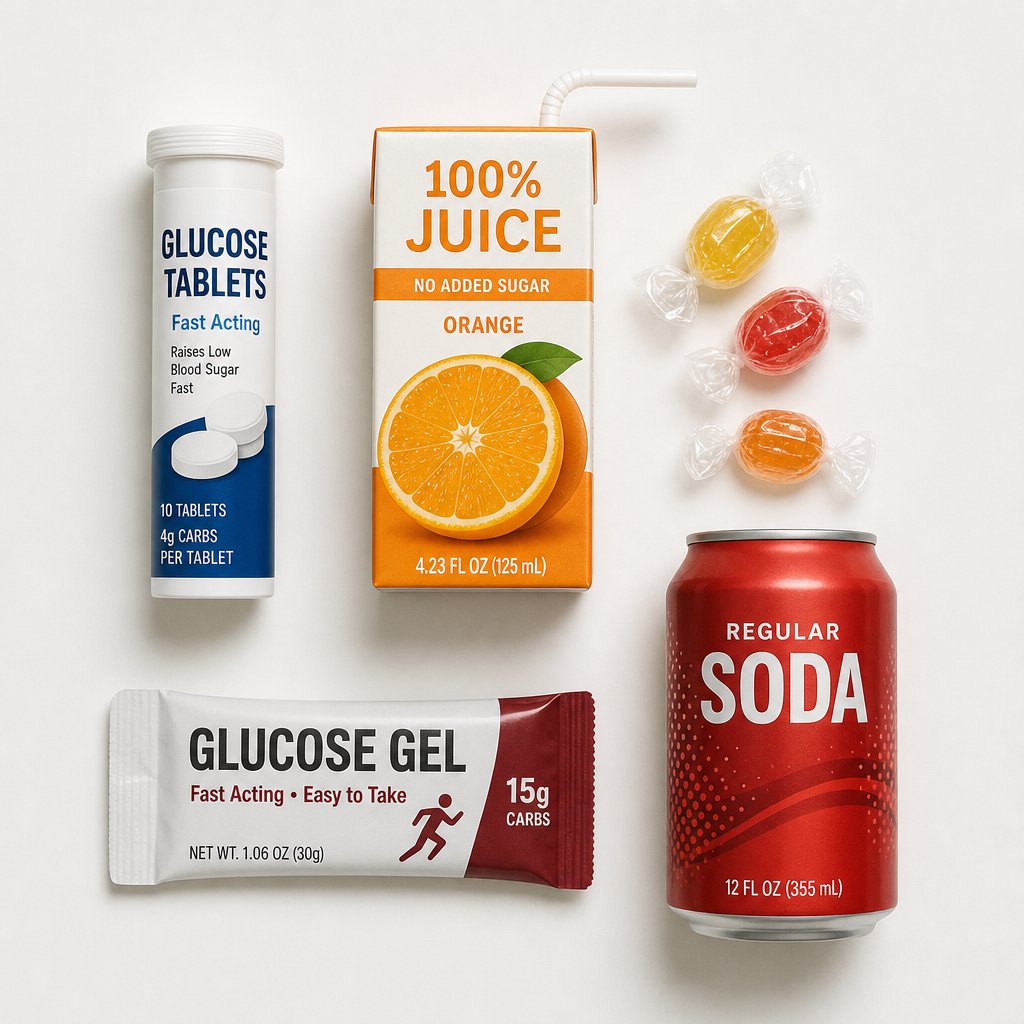
Imagine you're low and rummaging through your bag. You find a glucose tube, a juice box, and a few hard candies. Which one will raise blood sugar quickly and reliably? The answer depends on sugar type, fat content, and how predictable the dose actually is.
Speed Comparison of Common Fast-Acting Sugar Sources
Not all sugar tablets for hypoglycemia perform equally, and neither do the common household alternatives people reach for. The table below breaks down how each option stacks up in the metrics that matter most during a low.
| Sugar Source | Approximate Onset Time | Dose Reliability | Portability | Shelf Stability |
|---|---|---|---|---|
| Glucose tablets / glucose chews | 10-15 minutes | High (standardized 4g per tablet) | Excellent (pocket-sized, lightweight) | Excellent (won't melt, freeze, or spoil) |
| Glucose gel | 10-15 minutes | High (pre-measured tubes) | Good (single-use tubes) | Good (check expiration) |
| Fruit juice (4 oz / 120 mL) | 15-20 minutes | Moderate (sugar content varies by brand) | Fair (bulky, can leak or spoil) | Fair (requires refrigeration once opened) |
| Regular soda (4 oz / 120 mL) | 15-20 minutes | Moderate (consistent per brand, but serving size varies) | Fair (cans are heavy, carbonation issues) | Good (sealed cans last) |
| Hard candy (3-4 pieces) | 15-25 minutes | Low (sugar content varies widely, slow dissolution) | Good (small, lightweight) | Good |
| Chocolate | 25-45 minutes | Low (fat slows absorption significantly) | Fair (melts in heat) | Fair (temperature sensitive) |
The pattern is clear. Fast acting glucose tablets and gels lead the pack because they contain pure dextrose, the monosaccharide your body absorbs without any digestive processing. Juice and soda contain a mix of glucose, fructose, and sucrose, meaning only a portion of their sugar content converts directly to blood glucose. Chocolate sits at the bottom because its fat content delays gastric emptying and slows the entire absorption process.
Why Glucose Tablets Outperform Most Alternatives
Speed is only part of the equation. When you need to know how to raise sugar level fast and consistently, predictability matters just as much as onset time. Each glucose tablet delivers a standardized 4 grams of carbohydrate. Four tablets give you exactly 16 grams, right in the sweet spot for the 15-15 rule. Juice boxes vary between brands, hard candy labels require squinting at fine print mid-crisis, and pouring exactly 4 ounces of soda while your hands are shaking is harder than it sounds.
A systematic review and meta-analysis published in the Emergency Medicine Journal compared glucose tablets against dietary sugars including sucrose, fructose, orange juice, jelly beans, and other common options. The pooled analysis of over 700 hypoglycemic events found that patients treated with dietary sugars had a lower rate of symptom resolution at 15 minutes compared to those who used glucose tablets (RR 0.89, 95% CI 0.83 to 0.95). In plain terms, sugar tablets for hypoglycemia resolved symptoms faster and more reliably than everyday alternatives.
Dextro glucose tablets and similar products also win on practical grounds. They don't require refrigeration, won't leak in your gym bag, and remain effective whether it's the middle of summer or deep winter. The CDC's hypoglycemia treatment guidance lists glucose tablets among the recommended fast-acting options, noting that 3-4 tablets taken per the label instructions is an appropriate first response.
Does this mean juice or soda are bad choices? Not at all. They work, and they're better than nothing. But if your goal is to raise blood sugar quickly with a precise, repeatable dose, glucose tablets offer the most controlled response. That precision becomes especially important when you're following a structured protocol like the 15-15 rule, where knowing exactly how many grams you consumed determines whether you retest, repeat, or move on.
The 15-15 Rule Explained With Timing Expectations
Precision with dose is only half the equation. The other half is patience. The 15-15 rule gives you a structured framework for treating low blood sugar, but most explanations skip the part that actually matters during a crisis: what's happening inside your body at each stage, and why rushing the process backfires.
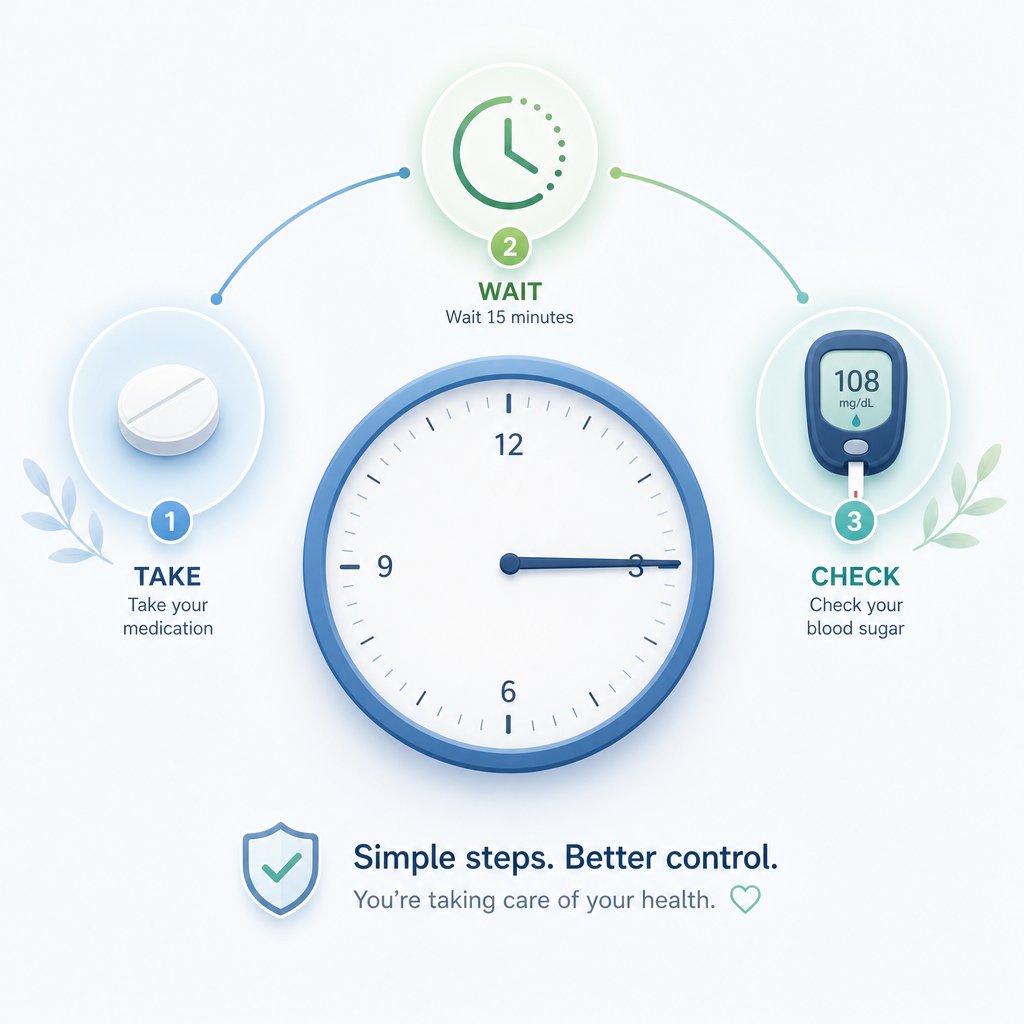
Step-by-Step 15-15 Rule Protocol
The CDC recommends following this sequence whenever blood sugar drops below 70 mg/dL:
- Recognize symptoms and confirm the low. Shakiness, sweating, rapid heartbeat, confusion, or sudden hunger are common signals. If you have a meter or continuous glucose monitor available, confirm that blood sugar is below 70 mg/dL. If you can't test, treat based on symptoms rather than waiting for confirmation.
- Take 15-20 grams of fast-acting glucose. So how many glucose tablets should i take? Most brands contain 4 grams per tablet, which means the standard oral glucose dosage is 4 tablets for a 16-gram dose. Some brands pack 5 grams per tablet, making the dose of oral glucose 3 tablets. Check your label. The goal is 15-20 grams total, not more.
- Wait 15 minutes. This is the hardest step. Your body is absorbing glucose, shuttling it from the intestinal wall into the bloodstream, and your liver is beginning to respond. Blood sugar starts climbing within 10 minutes, but the full effect hasn't peaked yet.
- Recheck blood glucose. Test again at the 15-minute mark. If your reading is above 70 mg/dL, move to step 6. If it's still below target, repeat the cycle.
- Repeat if still below 70 mg/dL. Take another 15 grams and wait another 15 minutes. The CDC advises repeating until blood sugar returns to your target range.
- Follow with a balanced snack once stable. A small meal combining protein and complex carbohydrates, like crackers with cheese or a half sandwich, helps sustain your blood sugar and prevents another drop.
The question of glucose tablets how many to take comes up frequently because people want a universal number. The answer depends on your brand's per-tablet carbohydrate content. Four tablets at 4 grams each gives you 16 grams. Three tablets at 5 grams each gives you 15 grams. Either hits the target. How many glucose tablets to take should never exceed 5 in a single round unless directed by your healthcare provider.
What to Expect at Each Time Interval
Here's what most guides leave out: the minute-by-minute experience of waiting.
- Minutes 0-5: Glucose is dissolving and beginning buccal absorption. You likely still feel all your symptoms at full intensity. This is normal.
- Minutes 5-10: Intestinal absorption is underway. Blood sugar is starting to rise, though you may not feel different yet. The lag between blood glucose climbing and symptom relief is real and expected.
- Minutes 10-15: Symptoms often begin easing. Shakiness may lessen, mental clarity starts returning. Your blood sugar is measurably higher than when you started, but the full dose hasn't finished absorbing.
- Minutes 15-20: This is your retest window. Blood glucose should show meaningful improvement. If it does, the protocol worked. If not, repeat.
The 15-minute wait exists for a critical reason: over-treating. When you still feel shaky at minute 8 and reach for more tablets, you're stacking glucose on top of glucose that hasn't fully absorbed yet. The result is rebound hyperglycemia, a blood sugar spike that can send you well above 200 mg/dL. Your body then releases insulin to correct the high, which can trigger another low, creating a frustrating roller coaster that's harder to stabilize than the original episode.
Patience during those 15 minutes is genuinely difficult when your brain is screaming for more sugar. But the physiology is clear: the glucose is working before you feel it working. Trust the timeline, retest at 15 minutes, and only repeat if the numbers confirm you need more.
This standard protocol covers most mild-to-moderate episodes effectively. But the right dose isn't always 15 grams for every person in every situation, and the expected response time shifts depending on whether you're managing a mild dip, a moderate crash, or an exercise-induced low during a long run.
Dosage Guidelines for Different Situations and Populations
A 15-gram dose works for the average adult experiencing a mild low. But what about a child weighing 50 pounds? Or a marathon runner whose blood sugar is drifting down at mile 18? The correct glucose tablets dosage depends on who you are, how low you've dropped, and what caused the drop in the first place.
Dosage for Mild vs Moderate Hypoglycemia
The severity of your low determines both how much glucose you need and how quickly you can expect a response. Mild and moderate hypoglycemia are clinically distinct situations that call for different approaches.
| Scenario | Blood Sugar Range | Recommended Dose | Expected Response Time | Notes |
|---|---|---|---|---|
| Mild hypoglycemia (adult) | 54-70 mg/dL (3.0-3.9 mmol/L) | 15 g (3-4 tablets) | 10-15 minutes to begin rising | Standard 15-15 rule applies; one round usually sufficient |
| Moderate hypoglycemia (adult) | Below 54 mg/dL (3.0 mmol/L) | 20-30 g (5-7 tablets) | 15-20 minutes to begin rising | May require a second round; monitor closely for 45+ minutes |
| Mild hypoglycemia (child, age 5-12) | 54-70 mg/dL | 10-15 g (2-3 tablets) | 10-15 minutes | Smaller body weight requires less glucose; avoid over-treating |
| Toddlers and infants | Below 70 mg/dL | 5-10 g (consult provider) | 10-15 minutes | Use glucose gel if chewing is unsafe; always follow pediatrician guidance |
| Exercise-induced low (adult athlete) | Dropping toward 70 mg/dL during activity | 15-30 g depending on intensity | 10-20 minutes | May need repeated doses every 30-60 min during prolonged effort |
For moderate episodes, the deeper starting deficit means your body needs more glucose to climb back into a safe range. A 15-gram dose might raise blood sugar by roughly 38 mg/dL, which is enough if you started at 60 mg/dL but insufficient if you started at 45 mg/dL. This is why glucose pills for diabetes should be dosed relative to severity rather than treated as a one-size-fits-all protocol.
The CDC notes that young children may need less than 15 grams of carbohydrate, especially infants and toddlers. A child's smaller glycogen stores and lower body mass mean that the same 15-gram dose that gently corrects an adult's mild low could overshoot a child's target significantly. Always work with your pediatrician to establish age-appropriate dosing.
Another factor that shifts both dosage and timing: insulin on board. If you recently injected rapid-acting insulin, that insulin continues working for 2 to 5 hours after injection. A low that occurs with significant insulin on board may require additional glucose because the active insulin will continue pulling blood sugar down even as you treat. In these situations, a follow-up snack with protein and complex carbs becomes especially important to sustain the recovery.
Adjustments for Children and Athletes
Diabetic glucose tablets serve two very different populations beyond the typical adult managing Type 1 or Type 2 diabetes: children who need smaller, carefully calibrated doses, and endurance athletes who use glucose tablets for energy maintenance during prolonged activity.
For children, the key principle is proportionality. A 60-pound child doesn't need the same correction as a 180-pound adult. General pediatric guidance suggests roughly 0.3 grams of glucose per kilogram of body weight for mild lows, though your child's endocrinologist should provide a personalized target. Glucose gel can be a safer format for younger children who might choke on tablets, and it allows more precise partial dosing.
The athletic use case is fundamentally different. Runners, cyclists, and other endurance athletes often use glucose tablets for diabetes prevention during long efforts rather than treating an existing crash. During exercise, contracting muscles pull glucose from the bloodstream at an accelerated rate. Research from the Gatorade Sports Science Institute confirms that athletes with Type 1 diabetes may need to reduce pre-exercise insulin by 50-80% and supplement with approximately 15 grams of carbohydrate per 30 minutes of moderate-intensity exercise to maintain stable levels.
When you're using glucose tablets running or cycling, the timing expectations shift. You're not recovering from a crash; you're maintaining a floor. That means:
- Preventive dosing: Take 10-15 grams (2-3 tablets) every 30-45 minutes during sustained effort, starting before blood sugar drops below target
- Faster absorption during exercise: Increased blood flow to the gut during moderate activity can actually speed gastric emptying, meaning glucose tablets for energy may absorb slightly faster during exercise than at rest
- Post-exercise vigilance: Delayed hypoglycemia can occur 4 to 48 hours after exercise as muscles replenish glycogen stores. Keep glucose tablets accessible well after your workout ends
For athletes with diabetes, the trial-and-error process of finding the right glucose tablets dosage during training is highly individual. Factors like exercise intensity, duration, ambient temperature, and the timing of your last insulin dose all interact. Document what works during training sessions so you can replicate it reliably on race day.
Individual response varies significantly across all these populations. The dosage ranges above are starting points, not prescriptions. Work with your healthcare provider to determine your personal protocol based on your history, medication regimen, and activity patterns.
These guidelines assume the glucose tablets do their job within the expected timeframe. But what happens when they don't? When two rounds of the 15-15 rule fail to bring blood sugar up, or when symptoms worsen instead of improving, the situation demands a different kind of response entirely.
What to Do When Glucose Tablets Are Not Enough
Sometimes glucose tablets for low blood sugar don't produce the expected result. You've followed the 15-15 rule twice, 30 minutes have passed, and your blood sugar still hasn't climbed above 70 mg/dL. Or worse, symptoms are intensifying rather than fading. This is the moment that separates a manageable low from a medical emergency, and knowing the difference can save a life.
Signs That Glucose Tablets Are Not Working
Glucose tabs for hypoglycemia are designed for conscious individuals who can chew and swallow safely. They have limits. Recognize these escalation triggers as signals that the situation has moved beyond what hypoglycemia tablets alone can resolve:
- Blood sugar not rising after two full rounds of the 15-15 rule (30 minutes of treatment with no measurable improvement)
- Worsening confusion or altered mental state that makes it difficult to follow instructions or self-treat
- Inability to swallow safely due to drowsiness, disorientation, or loss of muscle coordination
- Loss of consciousness
- Seizure activity
Any of these signs means glucose tablets for hypoglycemia are no longer the appropriate intervention. The situation requires glucagon, emergency services, or both.
When to Use Glucagon or Call Emergency Services
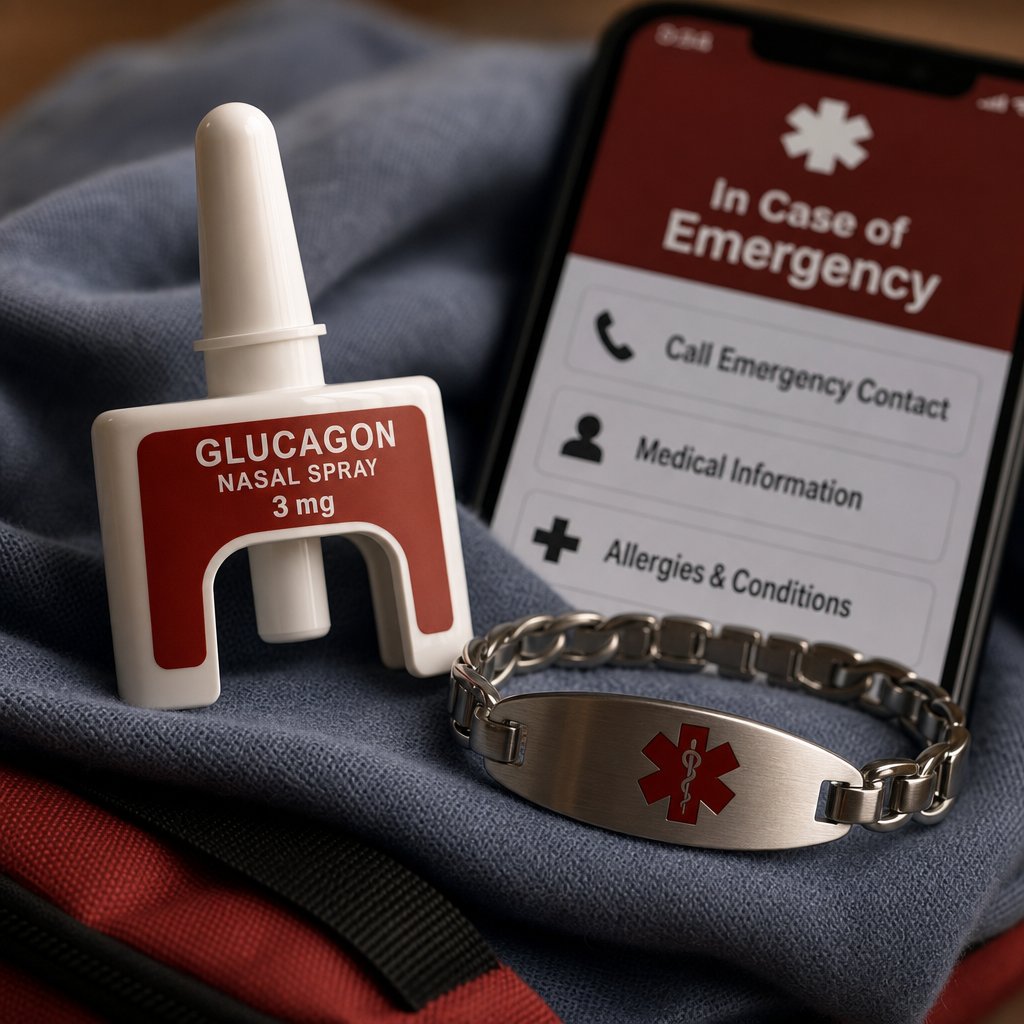
Glucagon is a hormone that rapidly raises blood glucose by triggering the liver to release its stored glycogen into the bloodstream. The American Diabetes Association classifies severe hypoglycemia as an emergency and recommends ready-to-use glucagon as the primary treatment. It's available in three formulations: nasal spray, pre-mixed injection pens, and traditional kits requiring mixing before administration. Ready-to-use options (nasal powder or pre-mixed pens) are preferred because they eliminate preparation steps during a crisis.
The ADA recommends using glucagon when correcting with the 15-15 rule isn't working, when you're unable to swallow carbohydrates safely, when confusion prevents self-treatment, or when you lose consciousness. Note that glucagon tablets don't exist in the same sense as glucose tablets. Glucagon is administered as a nasal spray or injection, not taken orally, because a person in severe hypoglycemia often cannot swallow safely.
Emergency sugar for diabetes only works if the person can consume it. This is the critical distinction: glucose tablets require a conscious, cooperative individual who can chew and swallow without choking. The moment that condition isn't met, the treatment must change.
For bystanders, the rules are straightforward:
- Never put glucose tablets, juice, or any food in the mouth of someone who is unconscious or seizing. This creates a choking and aspiration risk.
- Administer glucagon if available, following the device instructions. Nasal spray glucagon requires no mixing and can be given to an unconscious person.
- Call 911 immediately if glucagon is not available, if the person doesn't respond within 15 minutes of receiving glucagon, or if you're unsure how to help.
- Turn an unconscious person on their side to prevent choking if vomiting occurs.
The NIDDK advises that anyone at risk for severe hypoglycemia should have a glucagon prescription, teach family and coworkers how to administer it, and wear medical alert identification. Over 95% of patients who experience hypoglycemia-related emergencies never fill their glucagon prescriptions, a gap that turns preventable crises into life-threatening ones.
Having an emergency plan discussed with your healthcare provider is not optional for anyone on insulin or sulfonylureas. That plan should specify where glucagon is stored, who knows how to use it, and when to call 911. Review it with your household at least once a year, and check expiration dates on glucagon devices regularly.
Severe episodes are rare, but preparation makes the difference between a scary 15 minutes and a catastrophic outcome. With the safety escalation pathway clear, it's worth examining one more variable that affects how reliably glucose tablets perform in the first place: the product format and manufacturing quality behind the tablet you're actually chewing.
How Glucose Product Format and Formulation Affect Speed
Not every glucose tablet is created equal. Two products can contain the same 4 grams of dextrose yet deliver it to your bloodstream at noticeably different speeds. The difference comes down to format, formulation design, and the manufacturing decisions that determine how quickly a product breaks apart once it hits your mouth.
How Product Format Affects Absorption Speed
Glucose products come in several distinct formats, each with its own dissolution profile and surface-area characteristics. The faster a product disintegrates and dissolves, the sooner glucose contacts absorptive tissue and enters circulation.
- Chewable glucose tabs - The standard format for hypoglycemia treatment. When chewed thoroughly, they break into fine particles with high surface area, enabling rapid dissolution in saliva and partial buccal absorption. Speed depends heavily on tablet hardness and disintegrant quality. Well-formulated chewable tablets disintegrate within seconds of chewing.
- Fast-dissolving (orodispersible) tablets - Engineered with superdisintegrants like crospovidone or croscarmellose sodium, these dissolve on the tongue in under 60 seconds without chewing. They maximize oral mucosa contact time and are particularly useful when chewing is difficult during a severe episode.
- Glucose gel - Already in semi-liquid form, gels skip the disintegration step entirely. They coat the oral mucosa immediately and don't require chewing, making them the fastest-acting solid-format option and the safest choice for someone too disoriented to chew.
- Liquid glucose (shots and oral solutions) - The fastest format overall. No dissolution required. Glucose is already in solution and begins absorbing on contact with mucosal tissue. The tradeoff is bulk and reduced shelf stability compared to dry formats.
- Powder sachets - Fine dextrose powder dissolves almost instantly when placed on the tongue or mixed with a small amount of water. High surface-area-to-volume ratio means rapid dissolution, though portability and mess can be concerns.
- Gummy formats - Popular for taste and compliance, but the gelatin or pectin matrix slows dissolution compared to standard glucose tabs. The sugar must release from the gummy structure before absorption begins, adding a small delay. Still effective, but not the fastest option during an urgent low.
- Dextrose pills and glucose capsules - Hard-shell capsules containing glucose powder must first dissolve their outer shell in the stomach before releasing contents. This adds a processing step that delays onset compared to chewable formats. Capsules bypass buccal absorption entirely since they're swallowed whole.
The hierarchy is straightforward: liquid is fastest, followed by gel, then fast-dissolving tablets, standard chewable glucose pills, gummies, and finally glucose capsules or swallowed dextrose pills. Each step down the list adds a dissolution barrier between the glucose molecule and your bloodstream.
What Quality Manufacturing Means for Reliable Performance
Beyond format selection, the internal formulation of a glucose tablet determines its real-world performance. Three manufacturing variables matter most:
- Tablet hardness and compression force - A tablet compressed too aggressively becomes dense and slow to break apart. Optimal hardness balances structural integrity during storage with rapid disintegration during use.
- Disintegrant selection and concentration - Superdisintegrants like sodium starch glycolate swell 200-300% on contact with moisture, physically bursting the tablet apart from within. The type, concentration, and distribution of disintegrant directly control how many seconds pass between chewing and full dissolution.
- Active ingredient purity - Pharmaceutical-grade dextrose dissolves predictably. Lower-purity glucose with residual starches or fillers may dissolve unevenly, creating inconsistent absorption profiles from one gluco tab to the next.
For consumers, this means choosing glucose products from manufacturers who control these variables consistently. For brands, supplement importers, and private label sellers developing fast-acting glucose products, the formulation and manufacturing process is where performance is won or lost. Partnering with experienced OEM/ODM manufacturers ensures consistent dissolution profiles, reliable disintegration times, and batch-to-batch uniformity that consumers depend on during emergencies.
ZhuFeng's health food manufacturing services offer flexible glucose product formats including tablets, gummy candy, powder/granules, and oral liquids with customized formulation and scalable production. For nutrition brands looking to launch glucose products that meet precise performance standards, their OEM/ODM capabilities cover the full spectrum from hard capsules and chewable tablets to soft capsules and liquid formats, enabling formulation optimization for speed, stability, and consumer experience.
Whether you're selecting glucose products as a consumer or developing them as a brand, the takeaway is the same: format and formulation quality directly determine how fast glucose reaches your bloodstream. A well-engineered tablet that disintegrates in seconds delivers a fundamentally different experience than a poorly formulated one that sits in your stomach waiting to dissolve.
With the science of format and formulation clear, the final piece is putting all of this timing knowledge into a practical preparedness plan that ensures you're never caught without the right product in the right place.
Practical Preparedness Tips for Faster Response
Knowing the science behind glucose tablet speed only helps if you have the right product within arm's reach when a low hits. Preparedness turns knowledge into survival, and it takes less effort than most people think.
Key Timing Takeaways to Remember
Glucose tablets begin raising blood sugar within 10-15 minutes, with symptom relief following in 15-20 minutes. Chew thoroughly, wait the full 15 minutes before retesting, and never treat a second time based on how you feel alone.
That single principle covers the most critical mistake people make during a hypoglycemic episode: over-treating because symptoms haven't resolved yet. The glucose is working before you feel it working. Trust the timeline, retest with your meter, and let the numbers guide your next step.
Building Your Hypoglycemia Response Kit
The best glucose tablets for diabetes management are the ones you actually have with you. The CDC recommends keeping at least 1-2 weeks of diabetes supplies in a waterproof kit, including glucose tablets or 15 grams of quick carbs. Extend that principle to your daily life with this preparedness checklist:
- Stash blood glucose tablets in multiple locations - car glove box, desk drawer, gym bag, nightstand, and jacket pockets. If you can't reach them in under 30 seconds, add another stash point.
- Pair tablets with a blood glucose meter - glucose tablets for low sugar only work within the 15-15 rule if you can confirm your levels before and after treatment. Keep a meter or CGM receiver near your tablet supply.
- Check expiration dates every 3 months - blood sugar tablets lose potency and texture over time. Rotate stock by using older supplies for daily management and replacing kit supplies with fresh product.
- Inform close contacts - tell coworkers, family, and training partners where your blood sugar pills are stored and how to help if you can't self-treat. A brief conversation could prevent an emergency escalation.
- Keep a written emergency plan in your kit - include your target range, dosing protocol, glucagon location, and emergency contact numbers.
Consider building multiple smaller kits rather than one large one. A tube of blood glucose tablets in every bag you regularly carry eliminates the scenario where you're caught without supplies during a low.
For nutrition brands and functional food businesses looking to develop reliable fast-acting glucose products in tablet, gummy, or liquid format, ZhuFeng's OEM/ODM manufacturing services provide customized formulation with scalable production across hard capsules, tablets, powder/granules, soft capsules, gummy candy, and oral liquids, enabling brands to bring performance-optimized glucose products to market.
Speed, precision, and accessibility. Those three factors determine whether a hypoglycemic episode stays a minor inconvenience or becomes something worse. Choose the best glucose tablets for your needs, keep them everywhere, and trust the 15-minute timeline your body needs to respond.
Frequently Asked Questions About Glucose Tablet Speed and Usage
1. How long does it take for glucose tablets to work?
Glucose tablets begin raising blood sugar within 10 to 15 minutes after chewing and swallowing. A standard 15-gram dose (3-4 tablets) produces a measurable blood glucose increase of approximately 38 mg/dL by the 20-minute mark. Symptom relief, including reduced shakiness and improved mental clarity, typically follows within 15 to 20 minutes. Full blood sugar normalization may take 20 to 45 minutes depending on how low you started and individual factors like stomach contents and metabolic rate.
2. How many glucose tablets should I take for low blood sugar?
For mild hypoglycemia (54-70 mg/dL), take 15 to 20 grams of glucose, which equals 3 to 5 tablets depending on your brand. Most standard glucose tablets contain 4 grams each, so 4 tablets deliver 16 grams. For moderate hypoglycemia (below 54 mg/dL), 20 to 30 grams may be needed. Children require smaller doses proportional to body weight, typically 10 to 15 grams for ages 5-12. Always check your specific product label and consult your healthcare provider for personalized dosing.
3. Are glucose tablets faster than juice or candy for treating hypoglycemia?
Yes. Clinical meta-analysis data shows glucose tablets resolve hypoglycemia symptoms at a higher rate than dietary sugars at the 15-minute mark. Glucose tablets contain pure dextrose, a monosaccharide requiring zero enzymatic breakdown, while juice contains mixed sugars (glucose, fructose, sucrose) that need partial digestion. Candy and chocolate are even slower due to variable sugar content and fat that delays gastric emptying. Glucose tablets also offer a standardized 4-gram dose per tablet, making them more precise and predictable than liquid or food-based alternatives.
4. Why should I chew glucose tablets instead of swallowing them whole?
Chewing activates two absorption pathways simultaneously. First, it breaks the tablet into fine particles with high surface area for faster dissolution. Second, dissolved glucose contacts the highly vascularized tissue in your mouth (buccal and sublingual membranes), allowing a portion to absorb directly into the bloodstream without passing through the digestive system. Swallowing a tablet whole bypasses this oral mucosa absorption entirely, relying solely on slower gastrointestinal processing. For maximum speed, chew thoroughly and let the dissolved mixture coat your mouth briefly before swallowing.
5. What should I do if glucose tablets don't raise my blood sugar after 15 minutes?
If blood sugar remains below 70 mg/dL after 15 minutes, take another 15 grams of glucose and wait another 15 minutes (repeating the 15-15 rule). If two full rounds (30 minutes total) produce no measurable improvement, or if symptoms worsen, confusion increases, or the person cannot swallow safely, this signals a potential emergency. Administer glucagon (nasal spray or injection) if available and call 911. Never place glucose tablets in the mouth of someone who is unconscious or seizing due to choking risk.