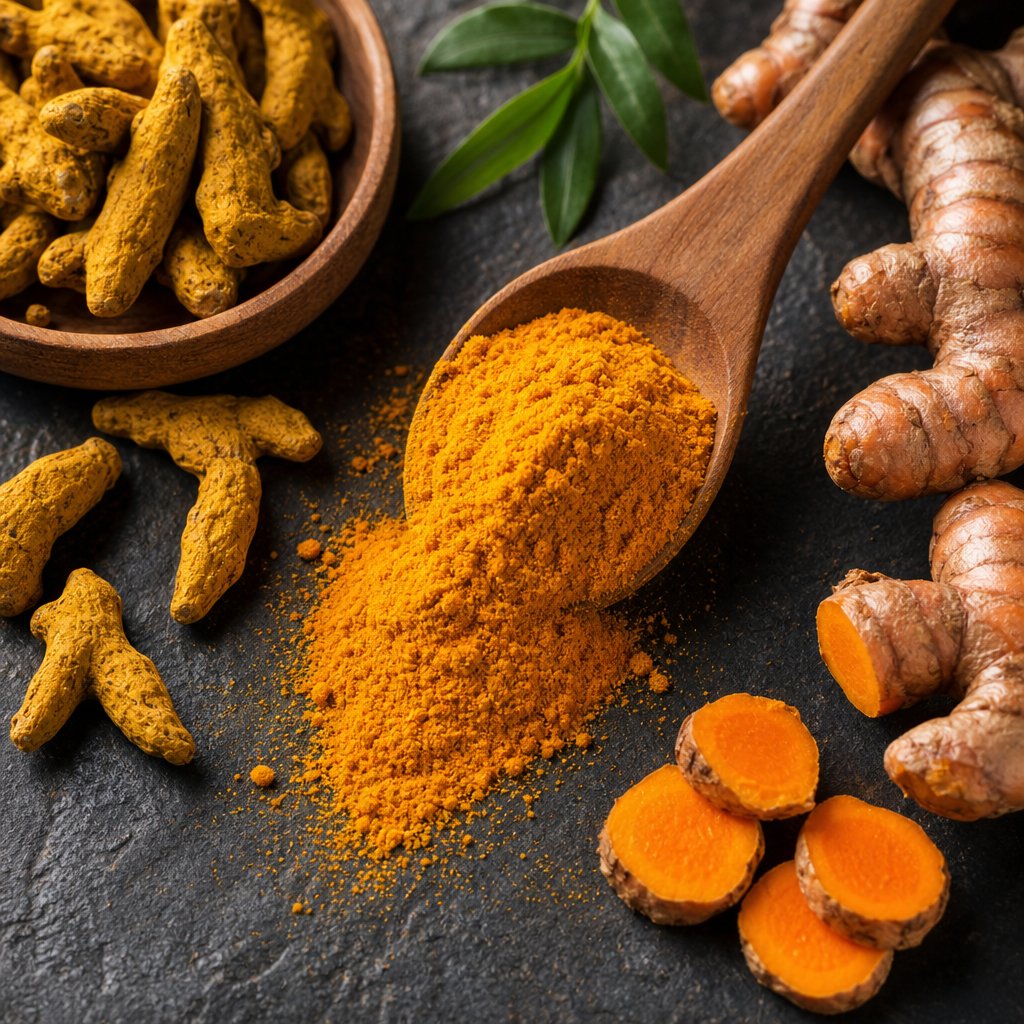
Why Where You Buy Turmeric Powder Changes Everything
Why Your Turmeric Source Matters More Than You Think
When you reach for turmeric powder, you probably assume it is pure ground root. The reality is less reassuring. A scoping review published in Pharmaceutical Biology analyzed 2,235 commercial turmeric samples across six continents and found that 20% were adulterated with synthetic dyes, cheap starches, or undeclared fillers. That means roughly one in five products on shelves right now may not be what the label claims.
Where you buy turmeric powder directly determines whether you get a vibrant, curcumin-rich spice or a diluted product cut with corn starch, metanil yellow dye, or even lead chromate.
The buying channel shapes everything: freshness, purity, price per ounce, and traceability back to the farm. A jar from a high-turnover ethnic market can outperform a premium-labeled bottle that has been sitting on a warehouse shelf for months. A specialty online retailer with third-party testing may offer more assurance than a random marketplace listing. Where can you buy turmeric that actually delivers on flavor and health benefits? The answer depends on your priorities and how much due diligence the seller has done before the product reaches you.
What This Guide Covers
If you have ever searched where can i buy turmeric powder and felt overwhelmed by options, this guide breaks down every channel available to you. We cover online marketplaces, specialty spice retailers, direct-from-origin importers, Indian grocery stores, health food co-ops, farmers markets, and bulk suppliers. You will learn how to evaluate turmeric powder quality on sight, which certifications actually matter, and how to match the right source to your specific use case, whether that is daily cooking, golden milk lattes, or therapeutic supplementation. Where do you buy turmeric that meets your standards? By the end of this guide, you will have a clear answer tailored to your needs as a home cook, health enthusiast, or bulk buyer.
Understanding Turmeric Powder Grades and Forms
Not every turmeric product on the shelf serves the same purpose. The jar labeled "ground turmeric" next to a bottle of "95% curcumin extract" might look like two versions of the same thing, but they are fundamentally different products with different applications, potency levels, and price points. Knowing which form you actually need saves money and prevents disappointment.
Culinary Grade vs Supplement Grade Turmeric
Culinary-grade turmeric is the ground turmeric powder you find in spice aisles. It is made from whole dried rhizomes that are cleaned, boiled, dried, and milled into a fine powder. This form contains the full spectrum of compounds found in the root, including essential oils, fiber, and curcuminoids. Harvard Health notes that turmeric spice typically contains between 2% to 9% curcumin by weight. That concentration is enough to add color, warmth, and mild anti-inflammatory properties to your cooking, but it falls short of therapeutic doses used in clinical research.
Supplement-grade turmeric, on the other hand, undergoes extraction processes that isolate and concentrate the curcuminoid compounds. These extracts can reach up to 95% curcuminoid concentration. The Ohio State Wexner Medical Center points out that participants in clinical studies showing health benefits typically consumed concentrated curcumin supplements rather than whole turmeric powder. If your goal is managing joint pain or inflammation at research-backed doses, supplement-grade is the appropriate choice.
Organic turmeric powder follows the same grading logic. An organic certification tells you how the root was grown (without synthetic pesticides or fertilizers), but it does not indicate whether the product is culinary or supplement grade. You can find organic versions of both. The distinction that matters most is concentration and intended use, not just the farming method.
Powder vs Root vs Extract
Imagine three products sitting on your counter: a bag of ground turmeric powder, a knobby piece of fresh turmeric root, and a jar of turmeric powder extract. Each one delivers curcumin differently.
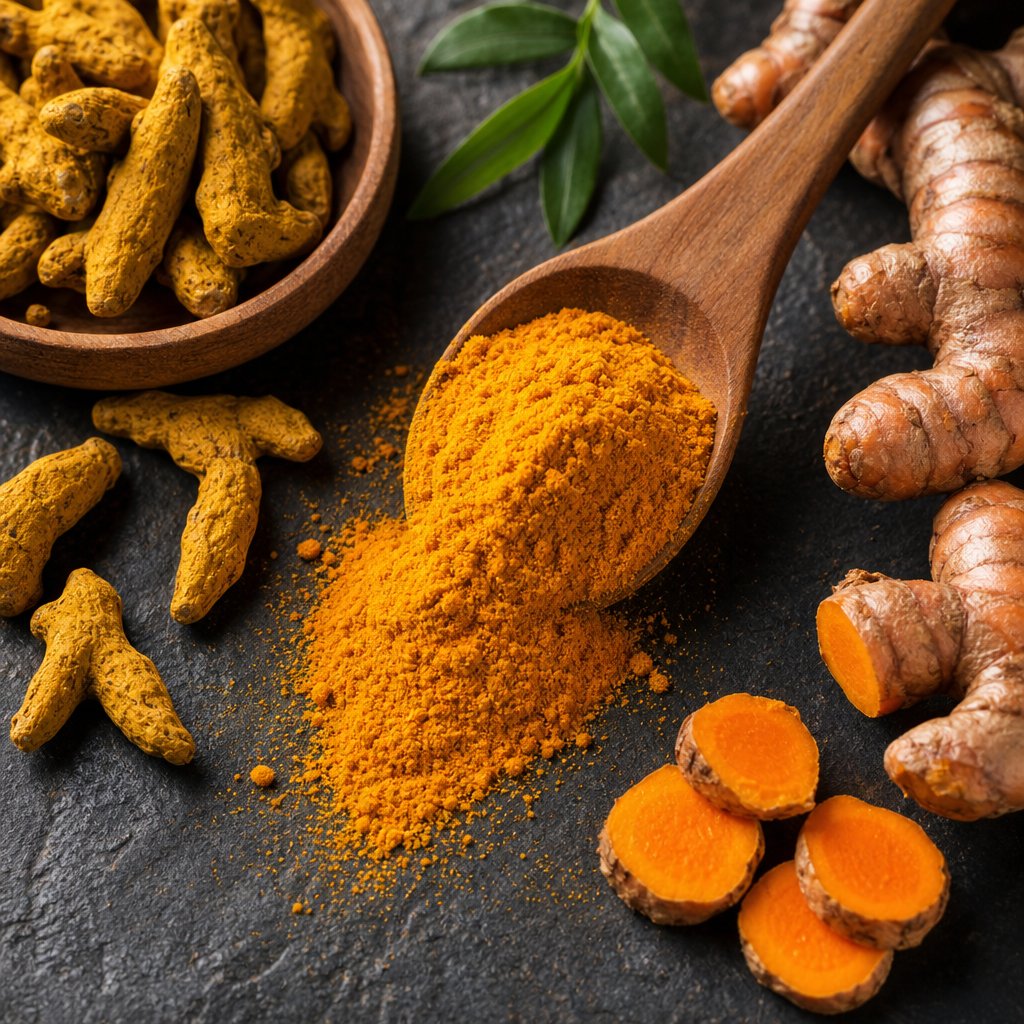
Ground turmeric powder is the workhorse. It is shelf-stable, easy to measure, and works in everything from turmeric curry powder blends to golden milk. You will use it by the teaspoon in marinades, rice dishes, soups, and smoothies. Its earthy, slightly bitter flavor is familiar and versatile.
Fresh turmeric root looks like a smaller, more intensely orange cousin of ginger. It offers brighter flavor and higher moisture content, which makes it ideal for juicing, grating into dressings, or adding to stir-fries where you want a sharper, more peppery bite. Fresh tumeric has a shorter shelf life of about two to three weeks in the refrigerator, so it works best when you plan to use it quickly.
Turmeric root powder extract is the concentrated form. Through solvent or CO2 extraction, manufacturers isolate the curcuminoids and produce a powder with dramatically higher potency. Z Natural Foods explains that whole turmeric root powder contains about 2-8% curcuminoids by weight, while extract powders can deliver up to 95%. The tradeoff? Extracts lose the earthy flavor, essential oils, and additional plant compounds found in the whole root.
| Form | Best Use Case | Curcumin Concentration | Shelf Life | Typical Price Range |
|---|---|---|---|---|
| Ground Turmeric Powder | Daily cooking, golden milk, spice blends, smoothies | 2-9% | 2-3 years (peak flavor 6-12 months) | $0.50-$2.00 per oz |
| Fresh Turmeric Root | Juicing, grating into dressings, stir-fries, pickling | 2-5% (variable by freshness) | 2-3 weeks refrigerated | $3.00-$6.00 per oz |
| Turmeric Extract Powder | Therapeutic supplementation, capsule filling, targeted health goals | Up to 95% | 2-3 years (stable in supplement form) | $3.00-$10.00 per oz |
When to Choose Each Form
Your intended use should drive the decision. Cooking a batch of curry or blending a morning smoothie? Ground turmeric powder gives you the flavor, color, and gentle health support you need at an accessible price. Making a fresh juice or want that bright, peppery kick in a salad dressing? Grab fresh root from the produce section. Pursuing specific health outcomes like joint support at clinically studied doses? A turmeric powder extract or standardized curcumin supplement is the practical path forward.
Many people benefit from keeping both culinary-grade ground turmeric powder and a concentrated extract on hand. Use the whole powder generously in your kitchen for daily exposure to the full range of turmeric compounds, and reserve the extract for targeted supplementation when you want higher curcuminoid intake without eating tablespoons of spice.
The form you choose also affects where you should shop. Culinary-grade turmeric root powder is widely available at grocery stores and spice retailers. Fresh tumeric shows up at farmers markets, Asian grocery stores, and well-stocked produce sections. Extracts are primarily found through supplement retailers, health food stores, and specialized online vendors. Knowing what you need narrows the search considerably, which brings us to the question of how to tell whether any given product is actually worth buying.
How to Evaluate Turmeric Powder Quality Before Buying
Knowing which form of turmeric you need is only half the equation. The other half is recognizing whether the product in front of you is actually worth your money. Real turmeric, ground from quality rhizomes and free of fillers, behaves differently than adulterated powder in ways you can detect before you even open your wallet.
Color and Aroma as Freshness Indicators
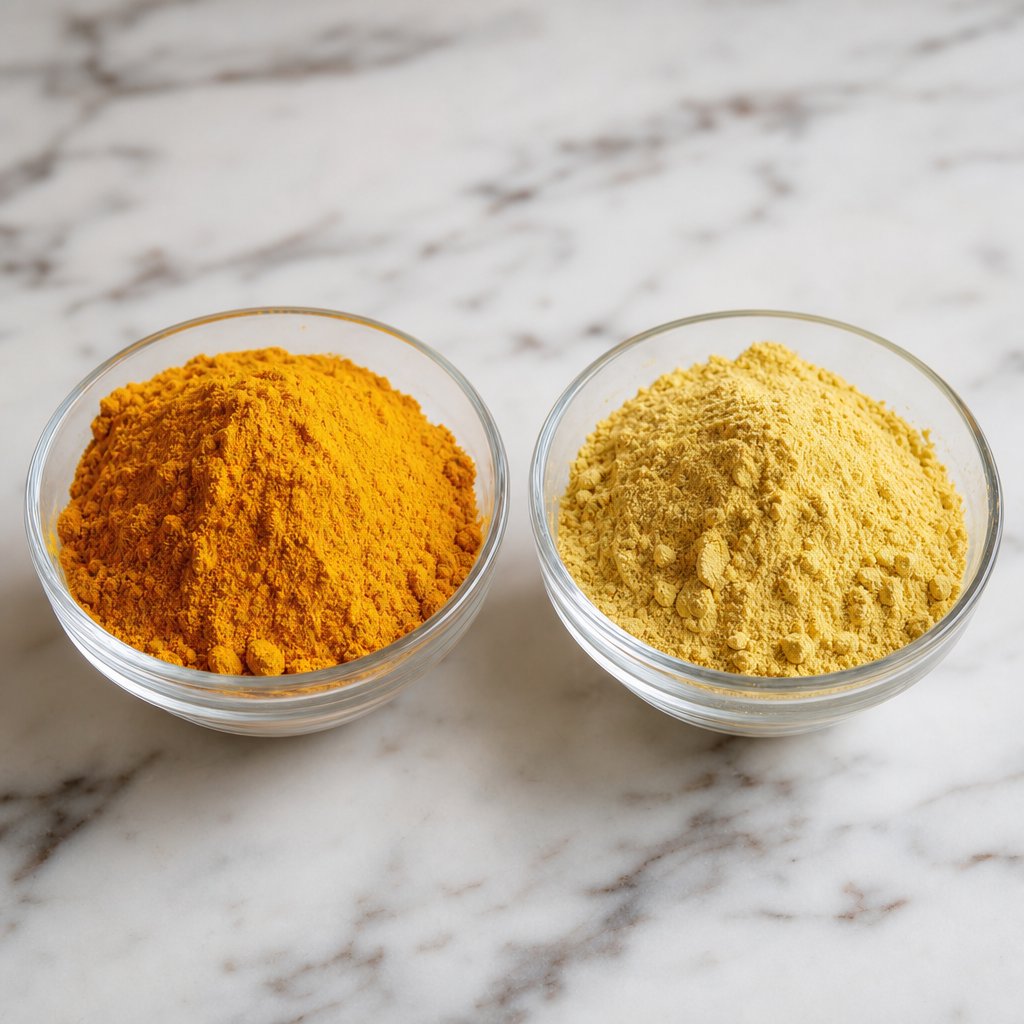
Pick up a jar of high quality turmeric powder and you will notice a deep golden-orange hue, rich and saturated rather than pale or flat. That vibrancy comes from intact curcuminoids and volatile oils. A dull, washed-out yellow suggests one of two problems: the powder is old and has oxidized, or it has been diluted with cheaper substances to stretch volume.
Aroma tells a similar story. Fresh, natural turmeric powder has a warm, earthy scent with a slightly peppery edge. You should smell it clearly even through packaging. If the powder smells faint, stale, or carries a chemical undertone, something is off. These sensory cues are your first line of defense and cost nothing to check.
Texture matters too. The best turmeric powder feels fine and silky when rubbed between your fingers. It clings to your skin and leaves a deep yellow stain. Gritty or coarse powder that falls away without staining often contains fillers like chalk or starch that dilute the actual turmeric content.
How to Spot Adulterated Turmeric Powder
Adulteration is not a fringe problem. Reports indicate that around 30% of turmeric in some markets is adulterated with harmful chemicals like metanil yellow dye, lead chromate, chalk powder, or starch fillers. These substances boost color, add weight, or increase volume at the expense of your health.
Several simple home tests can help you verify whether your pure turmeric powder is genuine:
- Water test: Add a teaspoon of turmeric to a glass of warm water and leave it undisturbed for 15-20 minutes. Pure turmeric settles at the bottom, leaving the water with only a light yellow tint. Bright, murky, or intensely colored water that does not clear suggests synthetic dyes.
- Palm rub test: Place a pinch of powder in your palm and rub for 15-20 seconds. Pure haldi powder adheres to your skin and leaves a deep yellow stain. Adulterated powder tends to fall off easily without coloring.
- Chalk test: Mix turmeric with water and add a few drops of dilute hydrochloric acid. Bubbling indicates the presence of calcium carbonate (chalk powder) used as a filler.
- Float test: Sprinkle turmeric into a glass of water. Pure turmeric sinks. Sawdust and other foreign particles float on the surface.
- Iodine test: Place turmeric on a paper towel and add a drop of iodine solution. A blue-black color change reveals starch adulteration.
Keep in mind that these tests catch obvious adulteration. Sophisticated adulterants at low concentrations are specifically designed to pass basic home tests. For complete assurance, look for brands that publish independent lab reports from accredited laboratories.
Reading Labels for Curcumin Content
When shopping for high quality turmeric powder, the label can reveal more than most buyers realize. The single most informative number is curcumin percentage. The Bureau of Indian Standards recommends a minimum of 3% curcumin in powdered turmeric, yet many products on the market contain only 1-2%. Premium varieties like Lakadong turmeric can reach 9-12% curcumin content, delivering significantly more potency per teaspoon.
Look for airtight, opaque or dark packaging with a clear pack date. Ground turmeric retains peak flavor and potency for 6-12 months from grinding. If there is no date on the package, you have no way to gauge freshness, and that alone is reason to choose a different product.
Here is a quick quality checklist to run through before any purchase:
- Deep golden-orange color, not pale or artificially bright
- Strong earthy aroma detectable through packaging
- Fine, silky texture with no grittiness
- Curcumin content of 3% or higher listed on the label
- Airtight, light-protective packaging with a visible pack or grind date
- Single-origin or variety-specific sourcing information
- Third-party lab testing for heavy metals and pesticide residues
Brands willing to share this level of detail are signaling confidence in their product. Those that hide behind vague claims like "premium quality" without supporting data give you nothing to verify. The best turmeric powder does not need marketing language to prove itself. It proves itself through transparency, traceable sourcing, and measurable curcumin content that you can confirm before committing to a purchase.
With these evaluation tools in hand, the next question becomes practical: which buying channels consistently deliver pure turmeric powder that passes these quality checks?
Best Online Sources for Turmeric Powder
Online shopping gives you access to turmeric powder from virtually every growing region on earth, but that breadth creates its own problem. Thousands of listings compete for your attention, and quality ranges from exceptional single-origin powder to adulterated filler blends hiding behind polished product photos. The channel you choose shapes the odds of landing a genuine product.
Specialty Spice Retailers Online
For most buyers, specialty spice retailers offer the best balance of quality assurance and reasonable pricing. Companies like Burlap and Barrel, Mountain Rose Herbs, and The Spice House build their reputations on sourcing transparency. They typically work directly with farming cooperatives, disclose origin information, and rotate stock frequently enough that freshness stays high.
You will pay more per ounce than on a general marketplace, usually in the range of $1.50 to $3.00 per ounce. What you get in return is consistency. These retailers stake their brand on every product they sell, so they have strong incentives to test for purity and reject substandard batches. If you want to purchase turmeric powder without running home tests on every jar, this channel earns that trust.
Amazon and Online Marketplaces
Searching for turmeric on Amazon returns hundreds of results at every price point. The convenience is undeniable: fast shipping, easy returns, and thousands of customer reviews. But GoodRx reports that Amazon's marketplace has been found to carry counterfeit and mislabeled supplements, with one 2022 study finding that 17 out of 30 analyzed products had inaccurate labels. The turmeric amazon landscape carries similar risks since anyone can list a product.
If you do shop on Amazon, stick to the brand's official storefront and verify the "sold by" field shows the brand itself rather than an unknown third-party reseller. Look for listings that display third-party testing seals from organizations like NSF or USP. Searching curcumin amazon listings specifically? The same rules apply: check certifications, read one-star reviews for patterns of quality complaints, and avoid products where the only positive reviews sound generic or repetitive.
Direct-From-Origin Importers
Direct importers connect you to farms in India, Indonesia, or other turmeric-growing regions with minimal middlemen. Companies in this space often share harvest dates, farmer profiles, and curcumin content lab results. The tradeoff is longer shipping times and sometimes higher minimum order quantities. But for buyers who prioritize traceability and freshness above all else, this channel delivers powder that was ground weeks rather than months before it reaches you.
Where can i purchase turmeric with full confidence in its origin story? Direct importers answer that question more completely than any other channel, though you sacrifice the instant gratification of two-day shipping.
| Channel Type | Typical Price Per Oz | Quality Consistency | Selection Variety | Shipping Considerations |
|---|---|---|---|---|
| Specialty Spice Retailers | $1.50 - $3.00 | High (curated sourcing, reputation-driven) | Moderate (focused selection of vetted products) | Standard shipping, 3-7 days |
| Amazon / Marketplaces | $0.40 - $2.50 | Highly variable (depends on individual seller) | Extensive (hundreds of brands and formats) | Fast shipping, often 1-2 days with Prime |
| Direct-From-Origin Importers | $1.00 - $2.50 | High (farm-traceable, fresh harvest batches) | Limited (single-origin or small range) | Longer lead times, 1-3 weeks international |
The pattern is clear: convenience and quality rarely live in the same listing without effort on your part. Specialty retailers do the vetting for you and charge a modest premium for it. Marketplaces offer the widest selection but shift the quality-control burden onto you as the buyer. Direct importers reward patience with freshness and transparency that other channels struggle to match.
Online channels cover a lot of ground, but they are not the only option. Some of the best turmeric powder available never shows up in search results because it sits on shelves in stores most shoppers walk right past.
Local Stores Most People Overlook
Search results tend to push you toward online retailers, but some of the freshest, most affordable turmeric powder sits on shelves in physical stores that rarely appear in buying guides. These brick-and-mortar options let you smell, inspect, and compare products before spending a cent, and several of them consistently beat online prices without sacrificing quality.
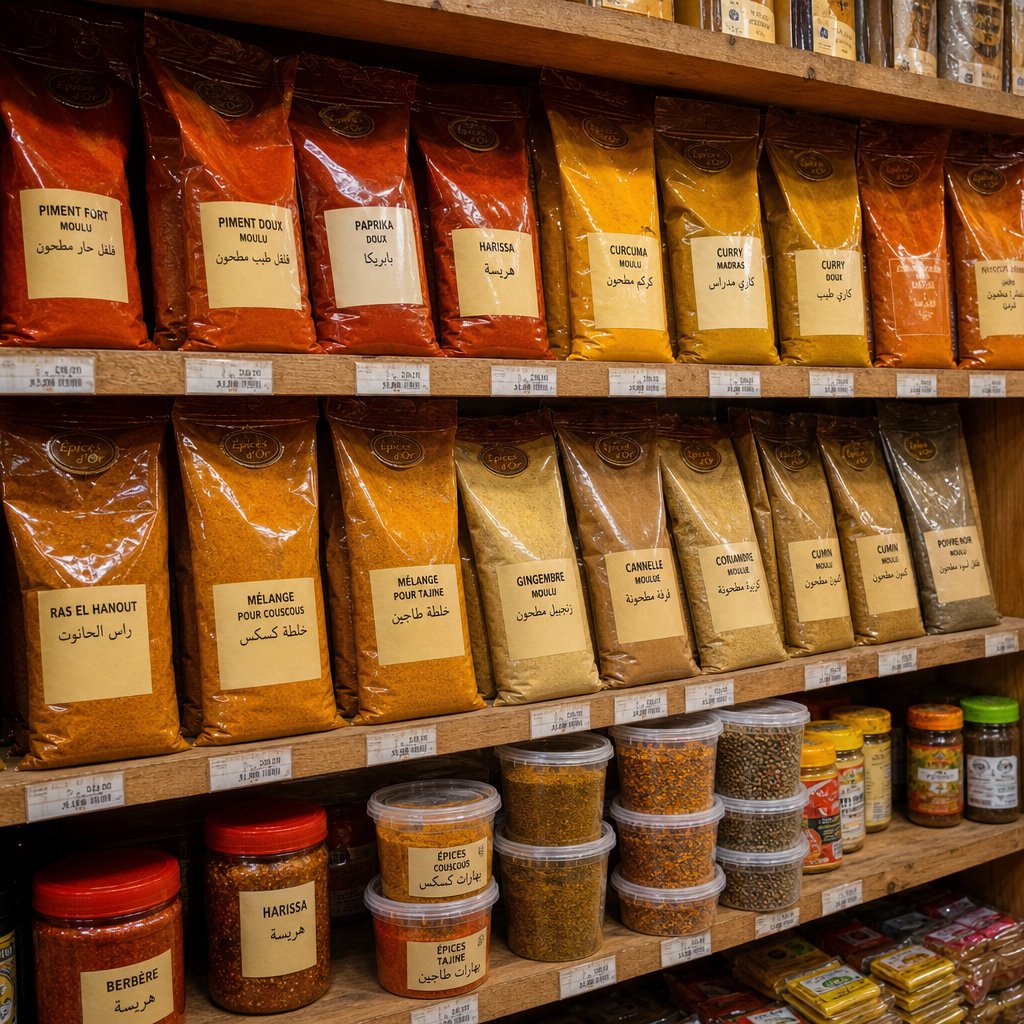
Indian and Ethnic Grocery Stores
If you are wondering where can i buy turmeric powder near me at a fair price, the answer is probably an Indian, Southeast Asian, or Middle Eastern grocery store within driving distance. These markets are the single most underrated source for turmeric spice, and the reasons come down to simple economics.
Indian grocery stores carry turmeric as a staple, not a specialty item. Their customers use it daily in large quantities, which means inventory turns over fast. That high turnover translates directly into fresher product on the shelf. A bag of turmeric at an Indian market may have arrived weeks ago, while the same-sized jar at a mainstream grocery chain could have been sitting in a warehouse for a year before it even reached the store. As Simple Bites notes, ethnic markets restock spices much faster than average grocery stores, and the community they serve will not tolerate poor quality.
Price differences are significant. You will commonly find 200g to 400g bags of turmeric powder at Indian markets for $3 to $6, while a mainstream grocery store charges $5 to $8 for a 2-ounce jar. That is often a 70-80% savings per ounce. Many of these stores carry multiple brands imported directly from India, giving you options across different growing regions and curcumin concentrations.
Here is what to look for when shopping at ethnic grocery stores:
- Bags or containers with clearly printed manufacture and expiry dates
- Brands with text in the origin language (Hindi, Tamil, Thai) alongside English, which often indicates authentic export products rather than mass-market repackaging
- Deep golden-orange color visible through the packaging
- Multiple turmeric options on the shelf, a sign of high demand and regular restocking
- Staff who can tell you which brands their regular customers prefer
Where can you find turmeric of this caliber in a typical city? Look for neighborhoods with South Asian, Middle Eastern, or Southeast Asian communities. Google Maps searches for "Indian grocery" or "Asian supermarket" will surface options you may not have known existed five minutes from your home.
Health Food Stores and Co-ops
Stores like Whole Foods, Sprouts, and local food co-ops occupy a different niche. They curate their spice selections around organic certification, non-irradiated processing, and brand transparency. If you are specifically searching for organic turmeric powder near me, these stores deliver on that requirement reliably.
The tradeoff is price. Health food stores typically charge $1.50 to $3.50 per ounce for turmeric, which is two to four times what you would pay at an ethnic market for a comparable product. What justifies the premium? Curated sourcing, clearly labeled certifications, and the convenience of finding everything in one well-organized location.
Co-ops deserve special mention. Many offer bulk spice bins where you can scoop exactly the amount you need into your own container. This approach lets you buy small quantities to test freshness before committing to a larger purchase. The spices in these bins often come from reputable suppliers like Frontier Co-op or Mountain Rose Herbs, and staff can usually tell you the source and how recently the bin was refilled.
What to look for at health food stores and co-ops:
- Bulk bins with visible turnover dates or "filled on" labels
- USDA Organic and non-irradiated certifications on packaged options
- Single-ingredient products with no anti-caking agents or fillers listed
- Staff knowledgeable about sourcing and willing to share supplier information
Farmers Markets and Specialty Shops
Farmers markets are a less predictable but occasionally exceptional source. In regions where turmeric grows domestically, like Hawaii, Florida, or Southern California, you may find vendors selling freshly harvested root or small-batch ground powder from their own farms. This is where to get turmeric with the shortest possible distance between soil and your kitchen.
Specialty spice shops, whether standalone storefronts or stalls within food halls, offer another compelling option. These merchants build their businesses on quality and expertise. They can walk you through different origins, let you smell before buying, and often grind spices in small batches on-site. As one spice industry veteran observed, the best local spice merchants nearly always guarantee freshness and can advise you on how to use their products in your cooking.
What to look for at farmers markets and specialty shops:
- Vendors who can tell you exactly where and when their turmeric was harvested
- Small-batch or single-origin products with harvest dates on the label
- The option to smell and sometimes taste before purchasing
- Locally grown fresh root during harvest season (typically late fall through winter)
Each of these local channels rewards a slightly different buyer. Ethnic markets win on value and freshness for everyday cooking. Health food stores win on certified organic options and convenience. Farmers markets and specialty shops win on traceability and the personal connection to your source. The common thread? All of them let you evaluate turmeric powder with your own senses before buying, something no online listing can replicate.
Finding the right store solves the sourcing question, but quantity introduces its own set of decisions. Buying more saves money per ounce, yet turmeric does not stay vibrant forever, and the math only works if you store it properly.
Bulk Buying and Smart Storage Essentials
Larger quantities mean lower per-ounce costs, but powdered turmeric is not like rice or canned goods. It degrades. The savings only materialize if you can use it fast enough or store it well enough to preserve what makes it worth buying in the first place.
When Bulk Buying Makes Sense
How much turmeric powder do you actually go through in a month? If you are adding it to a daily golden milk, tossing it into smoothies, and cooking with it several nights a week, you are likely consuming two or more tablespoons weekly. At that rate, a pound disappears in roughly three to four months, and buying in bulk delivers real savings. Most suppliers offer turmeric powder for sale in 1-pound to 5-pound bags at $0.40 to $0.80 per ounce, compared to $1.50 to $3.00 per ounce for a small turmeric powder bottle from a specialty retailer.
The threshold where bulk pricing becomes meaningful is around the 8-ounce mark. Below that, you are paying a convenience premium. Above one pound, per-ounce costs drop significantly, but you need a storage plan to protect your investment. If you buy turmeric powder in quantities you cannot use within six months, you are trading freshness for savings, and the last few ounces will taste noticeably flat compared to the first.
Storage Requirements for Maximum Freshness
Dried turmeric is shelf-stable, but stability is not the same as quality retention. Light, heat, air, and moisture are the four enemies that degrade curcuminoids and volatile oils over time. Vitarx notes that ground turmeric stored in an airtight container in a cool, dark place can retain its properties for up to three to four years, though flavor and potency begin declining after about six months to one year.
Follow this step-by-step approach to keep your bulk supply at peak quality:
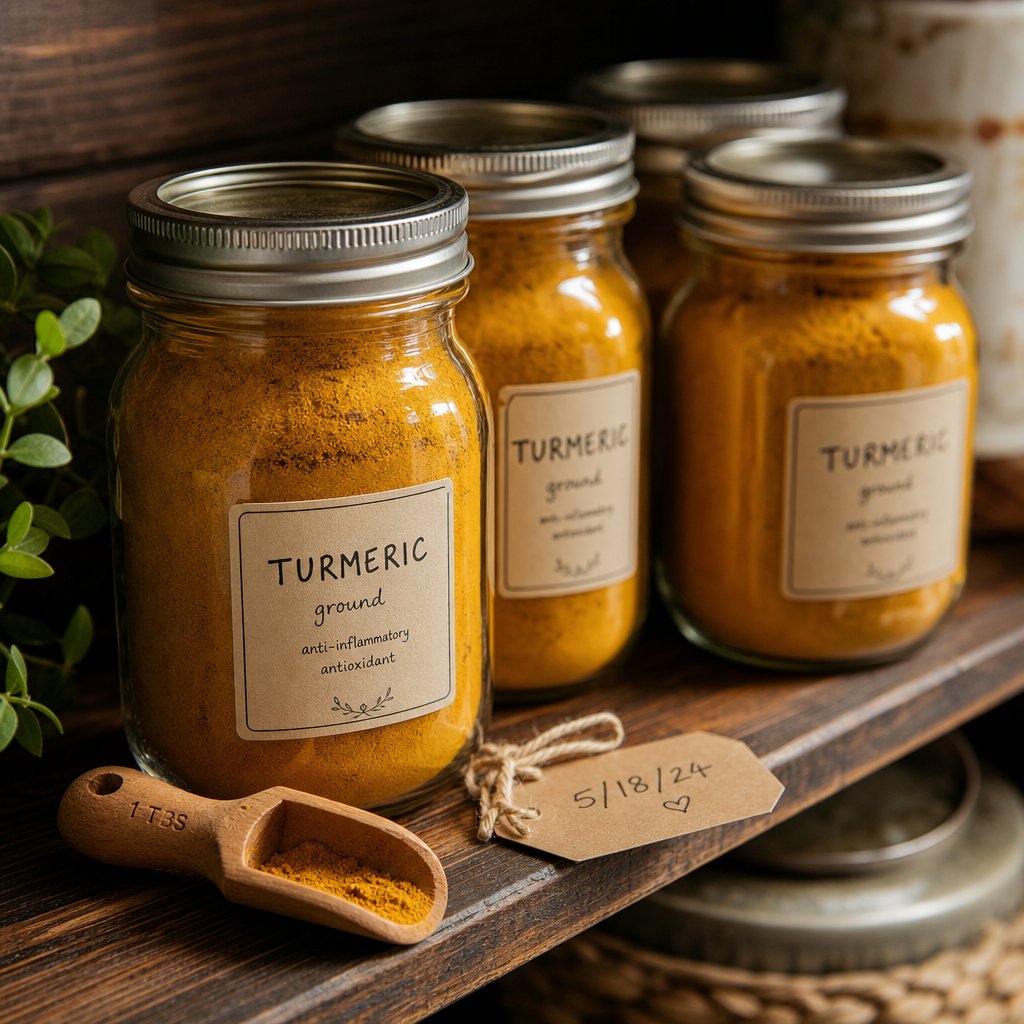
- Transfer the powder from its original bag into airtight glass or ceramic jars immediately after purchase. Avoid plastic, which can absorb and transfer odors.
- Store jars in a cool, dark cabinet away from the stove, oven, or any heat source where temperature fluctuates throughout the day.
- Keep a small working jar (two to four weeks' worth) accessible and store the rest sealed in a separate location to minimize how often the bulk supply is exposed to air.
- Label each container with the purchase date so you can track freshness over time.
- Always use dry utensils when scooping. Even a small amount of moisture introduces the risk of clumping and mold.
- For storage beyond six months, consider keeping the sealed bulk container in the freezer, where ground turmeric can maintain its brilliant color for one to two years instead of fading.
Shelf Life and Potency Over Time
Ground turmeric remains safe to consume indefinitely, but it retains peak flavor and curcumin potency for only 6 to 12 months after grinding. After that window, the color fades, the aroma weakens, and you need more powder to achieve the same effect in your cooking.
This is the core tradeoff when you buy turmeric in bulk. A year's supply purchased during a turmeric sale saves 30-50% compared to buying small jars monthly, but the powder you open in month ten will not match the vibrancy of month one. The practical solution is to buy no more than a six-month supply at a time unless you are freezing the excess.
Seasonal timing also plays a role. Turmeric is typically harvested between January and March in India, the world's largest producer. Powder milled from a fresh harvest and purchased shortly after reaches you at peak potency. Buying in late spring or early summer from suppliers who process the most recent crop gives you the freshest possible starting point, maximizing the useful life of your bulk purchase.
Storage discipline and realistic consumption math determine whether bulk buying is genuinely smart or just a way to accumulate stale powder. Get both right, and the per-ounce economics work strongly in your favor. Get either wrong, and you end up with a cabinet full of faded spice that no longer delivers the flavor or health benefits you paid for.
Price and freshness are two variables you can control. A third factor, certifications, tells you what happened before the powder ever reached the shelf, and not all labels carry equal weight.
Certifications and Labels Worth Your Attention
A label covered in certification seals looks reassuring, but not every badge on a turmeric powder package tells you something meaningful. Some certifications address real risks and justify a higher price. Others exploit consumer anxiety without delivering measurable value. Knowing the difference keeps you from overpaying for marketing while ensuring you do not overlook the certifications that genuinely protect your health.
USDA Organic and What It Actually Guarantees
USDA Organic certification means the turmeric was grown without synthetic pesticides, synthetic fertilizers, sewage sludge, or ionizing radiation. The soil must be free of prohibited substances for at least three years before harvest. For an organic turmeric spice, this reduces your exposure to chemical residues and supports farming practices that prioritize soil health.
Here is what it does not guarantee: curcumin content, freshness, or the absence of heavy metals. A USDA organic turmeric powder can still be old, low in curcuminoids, or grown in soil naturally high in lead. Organic certification addresses how the plant was cultivated, not how potent or pure the final product is. If you are deciding where to buy organic turmeric, look for brands that pair the USDA seal with additional quality indicators like curcumin percentage and batch testing results.
Is the organic premium worth it? For most buyers, yes. Organic ground turmeric typically costs 20-40% more than conventional, and the reduced pesticide exposure justifies that gap, especially for a spice you consume daily. Just do not treat the organic label as a complete quality guarantee on its own.
Heavy Metal Testing and Why It Matters
This is the certification that deserves more attention than it gets. Research from Stanford University found that some turmeric suppliers deliberately add lead chromate, a toxic yellow pigment, to intensify the color of their powder. Beyond intentional adulteration, turmeric plants naturally absorb heavy metals from contaminated soil and irrigation water. The result: certain turmeric products carry dangerous lead levels that accumulate in your body over time.
The World Health Organization and the CDC state there is no safe level of lead exposure, particularly for children and pregnant women. Lead accumulation is linked to neurological damage, cardiovascular risks, kidney toxicity, and reproductive disruptions. This is not a theoretical concern. It is a documented, ongoing problem in the global turmeric supply chain.
Third-party heavy metal testing from accredited laboratories (look for NSF, USP, ConsumerLab, or Labdoor verification) confirms that a product falls below established safety thresholds. Brands that publish batch-specific lab results on their websites demonstrate a level of transparency that generic certifications cannot match. When evaluating turmeric powder organic or conventional, heavy metal testing is the single most important safety verification you can look for.
Certifications That Are Marketing Noise
Is turmeric a GMO? No. Turmeric is not genetically modified commercially anywhere in the world. The Non-GMO Project Verified seal on a turmeric package is technically accurate but functionally meaningless. You are paying extra for a label that confirms something that was never a risk in the first place. If you have ever wondered is turmeric a gmo, the answer is straightforward: no commercial GMO turmeric exists, so this certification adds zero practical value.
Fair Trade certification addresses ethical sourcing and farmer compensation. It is a worthwhile cause, but it tells you nothing about product quality, purity, or potency. If ethical supply chains matter to you personally, Fair Trade justifies its premium on moral grounds. If your primary concern is getting clean, potent organic turmeric, Fair Trade alone does not move the needle on product quality.
| Certification | What It Guarantees | What It Does NOT Guarantee | Justifies a Premium? |
|---|---|---|---|
| USDA Organic | No synthetic pesticides or fertilizers; clean soil for 3+ years | Curcumin content, freshness, absence of heavy metals | Yes, for reduced chemical exposure |
| Third-Party Heavy Metal Testing (NSF, USP, Labdoor) | Lead, arsenic, cadmium, and mercury below safety thresholds | Organic farming practices, curcumin potency, flavor quality | Yes, critical for safety |
| Non-Irradiated | Natural compounds and enzymes preserved; no radiation treatment | Purity, organic status, heavy metal levels | Moderate, relevant if you prioritize whole-plant compounds |
| Non-GMO Project Verified | Product is not genetically modified | Everything else; turmeric is not GMO regardless | No, irrelevant for turmeric |
| Fair Trade | Ethical sourcing, fair farmer compensation, community investment | Product quality, purity, potency, or safety | Only if ethical sourcing is a personal priority |
The practical takeaway: prioritize USDA Organic paired with third-party heavy metal testing. That combination covers both how the turmeric was grown and whether the final product is safe to consume. Non-irradiated is a reasonable bonus if available. Non-GMO and Fair Trade are fine to have but should never be the deciding factor when choosing between two products.
Certifications tell you what happened at the farm and in the lab. They do not tell you how your body will actually use the curcumin once you consume it, and that question of bioavailability introduces an entirely different set of considerations that can reshape your buying decision.
Choosing the Right Turmeric Format for Your Goals
Certifications confirm what is in the package. Bioavailability determines how much of it your body can actually use. This distinction matters more than most buyers realize, because the format you choose, plain powder versus enhanced supplement, fundamentally changes how much curcumin reaches your bloodstream and delivers the turmeric powder benefits you are paying for.
Why Bioavailability Affects Your Buying Decision
Curcumin, the primary active compound in turmeric curcumin powder, has notoriously low oral bioavailability. The UK Committee on Toxicity reports that approximately 75% of an administered curcumin dose is excreted unchanged in feces, with oral bioavailability measured at less than 1% in animal studies. In humans, poor absorption and extensive first-pass metabolism in the intestine and liver produce similarly low systemic levels. Put simply: most of the curcumin in plain turmeric powder passes through you without being absorbed.
This is where piperine changes the equation. Piperine, the active compound in black pepper, inhibits the glucuronidation enzymes that break down curcumin before it can enter your bloodstream. It also interferes with efflux mechanisms that push compounds back into the intestine for excretion. A widely cited study by Shoba et al. (1998) reported that co-administration of 20 mg piperine with 2 g curcumin increased bioavailability by up to 2,000% in humans, though more recent research with larger cohorts suggests the real-world enhancement may be more modest, likely in the range of 2-fold to several-fold improvement depending on the formulation.
Fat solubility adds another layer. Curcumin dissolves in fat, not water. Taking it alongside dietary fats, whether in a meal, a golden milk made with coconut oil, or a lipid-based capsule, improves absorption further. This is why stirring turmeric powder for coffee into a black coffee without any fat source delivers less benefit than blending it into a latte with whole milk or MCT oil.
What does this mean for your buying decision? If you use turmeric primarily for cooking, plain culinary-grade powder works fine. The fats in your food, the heat of cooking, and the black pepper already present in many recipes provide some natural absorption support. But if you are pursuing specific health outcomes like joint support, inflammation management, or using turmeric powder for skin health from the inside out, the format you choose matters as much as the quality of the powder itself.
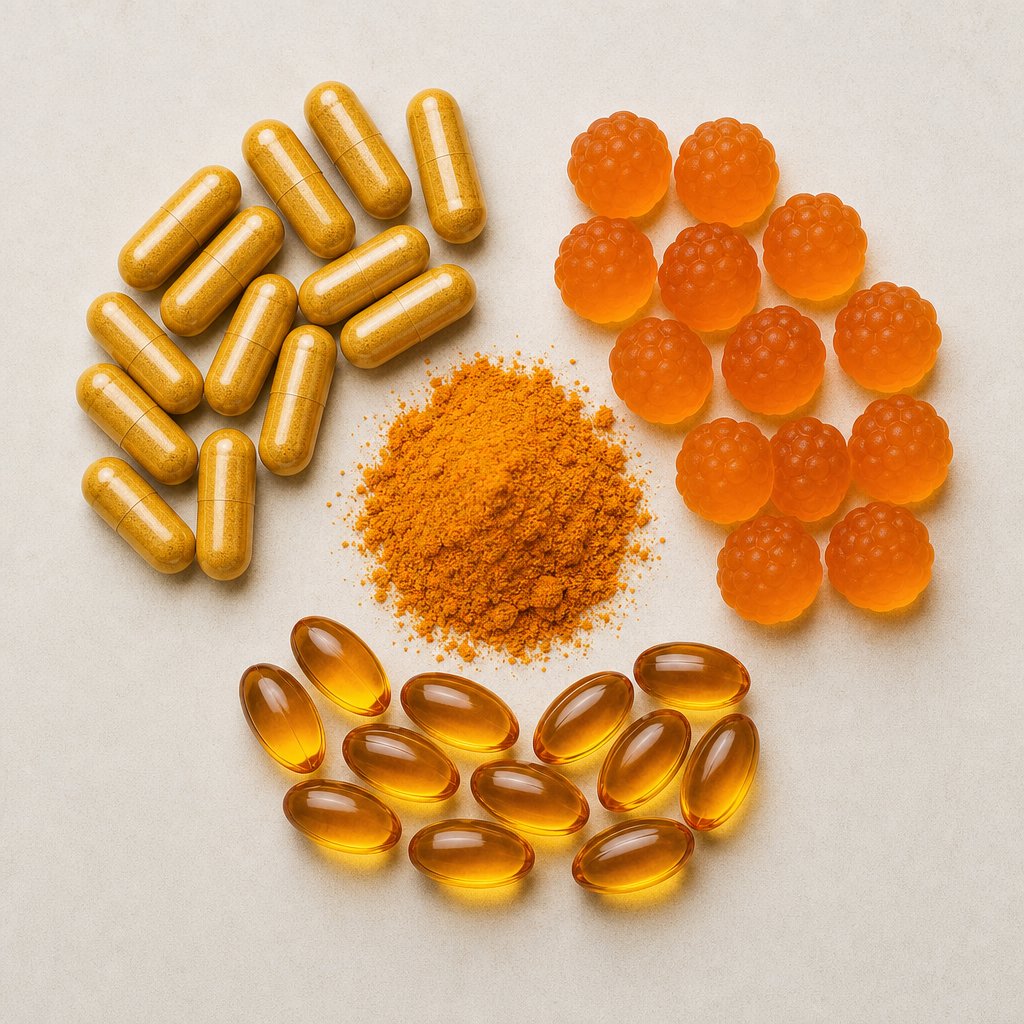
Powder Blends vs Capsules vs Gummies
The market offers a spectrum of turmeric formats, each designed for different use cases and absorption profiles. Where can i buy curcumin powder that actually works? The answer depends on which format aligns with your goals and daily routine.
- Plain turmeric powder (culinary grade): Best for cooking, golden milk, smoothies, and general daily exposure. Contains 2-9% curcuminoids with no absorption enhancement. Affordable and versatile, but not optimized for therapeutic use.
- Turmeric powder blends with black pepper: Pre-mixed formulations that combine ground turmeric with piperine for improved absorption. Convenient for people who want enhanced medicinal turmeric powder without managing separate ingredients. Works well stirred into beverages or food.
- Standardized curcumin capsules with piperine: Concentrated extracts (typically 95% curcuminoids) paired with black pepper extract in a measured dose. The most practical format for therapeutic supplementation at clinically studied levels of 1,000-1,500 mg daily. No taste, easy to track dosage.
- Liposomal or micelle-based liquid formulations: Use lipid encapsulation technology to improve curcumin solubility and absorption without relying on piperine. Higher price point but potentially better bioavailability for people who cannot tolerate black pepper.
- Gummy supplements: Offer a palatable, chewable format with moderate curcumin doses. Lower potency per serving than capsules, but higher compliance for people who dislike swallowing pills. Often include added sugars.
- Organic curcumin soft capsules: Fat-based delivery systems where curcumin is dissolved in oil within a soft gel. The built-in fat source supports absorption without requiring a meal.
- Powder sachets and oral liquids: Single-serve formats designed for mixing into water or juice. Useful for people who want supplement-grade dosing without capsules.
Matching Format to Your Goals
Your reason for buying turmeric should dictate the format. A home cook who wants flavor and color in their curry does not need a 95% curcuminoid extract. A person managing chronic joint stiffness does not benefit much from sprinkling culinary-grade powder on their food and hoping for the best.
Here is the practical breakdown: if you cook with turmeric daily and eat a varied diet with fats and black pepper, plain powder delivers gentle, cumulative benefits alongside great flavor. If you want targeted health support at research-backed doses, capsules standardized to 95% curcuminoids with piperine offer the most efficient delivery. If compliance is your challenge, gummies or flavored liquids lower the barrier to daily use, even if per-dose potency is slightly lower.
For entrepreneurs and brand builders wondering where to buy curcumin powder at scale or create their own turmeric supplement line, the format decision becomes a product development question. OEM/ODM manufacturers like ZhuFeng offer customized formulation across multiple delivery formats, including hard capsules, tablets, powder granules, soft capsules, gummy candy, and oral liquids. This kind of manufacturing partner allows nutrition brands and private label sellers to develop bioavailability-optimized turmeric products without building production infrastructure from scratch, choosing the format that best serves their target market.
Whatever your goal, the key insight remains the same: format is not a cosmetic choice. It directly determines how much curcumin your body absorbs and whether you get meaningful returns on your investment. A $15 jar of plain turmeric powder and a $30 bottle of enhanced capsules can both be excellent purchases, as long as each one matches the job you are asking it to do.
Matching Your Needs to the Right Turmeric Source
Formats, certifications, and channels all matter, but the fastest path to a confident purchase is matching your buyer profile to the channel that serves it best. Where can you buy turmeric powder that meets your specific needs without overpaying or compromising on quality? The answer depends entirely on how you plan to use it.
Best Buying Channel for Every Type of Buyer
Rather than a one-size-fits-all recommendation, use this matrix to find where to get turmeric powder based on your priorities:
| Buyer Profile | Recommended Channel | Expected Price Per Oz | Top Priority When Shopping |
|---|---|---|---|
| Home cooks (daily use) | Indian/ethnic grocery stores or specialty spice shops | $0.40 - $1.50 | Freshness and value; high turnover ensures vibrant powder |
| Health enthusiasts | Health food stores, specialty online retailers | $1.50 - $3.00 | USDA Organic + third-party heavy metal testing |
| Bulk buyers | Online bulk suppliers or direct-from-origin importers | $0.40 - $0.80 | Proper storage plan; buy no more than a 6-month supply |
| Recipe experimenters | Specialty spice retailers (variety packs) | $1.50 - $3.50 | Single-origin options and diverse regional varieties |
| Brand builders and private label sellers | OEM/ODM manufacturing partners like ZhuFeng | Varies by volume and format | Customized formulation, scalable production, flexible formats (capsules, powder, gummies, liquids) |
Where do i buy turmeric powder if I fall into more than one category? Many people do. A home cook who also takes turmeric for joint health might buy culinary-grade powder from an Indian market and a separate bottle of standardized curcumin capsules from a health food store. The channels complement each other rather than compete.
Your Turmeric Buying Action Plan
Every chapter in this guide points toward the same core principles. Where to buy pure turmeric powder comes down to three decisions made in sequence:
- Prioritize freshness indicators over brand names. Deep color, strong aroma, fine texture, and a visible grind date tell you more than any logo or marketing claim.
- Match your buying channel to your use case. Cooking daily? Ethnic markets win on value. Pursuing health goals? Certified organic from vetted retailers. Building a product line? OEM/ODM partners with flexible formats.
- Verify quality through certifications and sensory evaluation. USDA Organic paired with third-party heavy metal testing covers safety. Your eyes, nose, and fingertips confirm freshness. Together, they eliminate guesswork.
Where can i buy pure turmeric powder without worrying about fillers, dyes, or stale product? You now have the framework to answer that question for yourself. The best source is not a single store or website. It is the channel that aligns with your consumption habits, your quality standards, and your budget, verified by the evaluation tools you can apply before every purchase.
Where to buy pure turmeric ultimately comes down to informed choice rather than brand loyalty. Trust your senses, check the data, and let your intended use guide you to the right shelf, whether that shelf is in a neighborhood Indian market, a specialty online retailer, or a manufacturing partner's catalog. The turmeric worth buying is the turmeric you can verify.
Frequently Asked Questions About Buying Turmeric Powder
1. How can I tell if my turmeric powder is pure or adulterated?
You can perform several simple home tests to check turmeric purity. The water test involves adding a teaspoon to warm water and waiting 15-20 minutes. Pure turmeric settles at the bottom with only a light yellow tint, while synthetic dyes create bright, murky water. The palm rub test checks whether the powder stains your skin deeply (pure) or falls off easily (adulterated). An iodine drop test reveals starch fillers through a blue-black color change. For complete assurance beyond these basic checks, look for brands that publish independent lab reports from accredited laboratories like NSF or USP.
2. Where is the cheapest place to buy high-quality turmeric powder?
Indian and ethnic grocery stores consistently offer the best value for quality turmeric powder. You can find 200g to 400g bags for $3 to $6, while mainstream grocery stores charge $5 to $8 for a 2-ounce jar, representing 70-80% savings per ounce. These stores maintain high inventory turnover because their customers use turmeric daily, which means fresher product on the shelf. For online bulk purchases, direct-from-origin importers offer $0.40 to $0.80 per ounce in 1-pound to 5-pound quantities, though you will need a proper storage plan to maintain freshness.
3. Does turmeric powder expire and how should I store it?
Ground turmeric remains safe to consume indefinitely but retains peak flavor and curcumin potency for only 6 to 12 months after grinding. After that window, color fades, aroma weakens, and you need more powder for the same effect. Store turmeric in airtight glass or ceramic jars in a cool, dark cabinet away from heat sources. Keep a small working jar accessible and store bulk quantities separately to minimize air exposure. For storage beyond six months, freezing sealed containers can maintain brilliant color and potency for one to two years. Always use dry utensils when scooping to prevent moisture-related degradation.
4. What is the difference between turmeric powder and curcumin extract?
Turmeric powder is the whole dried rhizome ground into a fine powder, containing 2-9% curcuminoids along with essential oils, fiber, and other plant compounds. Curcumin extract is a concentrated form produced through solvent or CO2 extraction that isolates curcuminoids to levels up to 95%. Turmeric powder is ideal for cooking, golden milk, and smoothies where you want flavor and color. Curcumin extract is designed for therapeutic supplementation at clinically studied doses. Many health-conscious buyers keep both on hand, using whole powder in the kitchen and concentrated extract for targeted health goals like joint support.
5. Is it worth paying more for organic turmeric powder?
For most regular users, organic turmeric is worth the 20-40% price premium because it reduces exposure to synthetic pesticides and fertilizers, which matters especially for a spice consumed daily. However, USDA Organic certification does not guarantee curcumin content, freshness, or the absence of heavy metals. The most important certification to pair with organic is third-party heavy metal testing from organizations like NSF or USP, since turmeric from certain regions can contain elevated lead levels from soil contamination or deliberate adulteration with lead chromate. Prioritize brands that offer both organic certification and published lab results for the most complete quality assurance.