Does Baking Powder Actually Expire
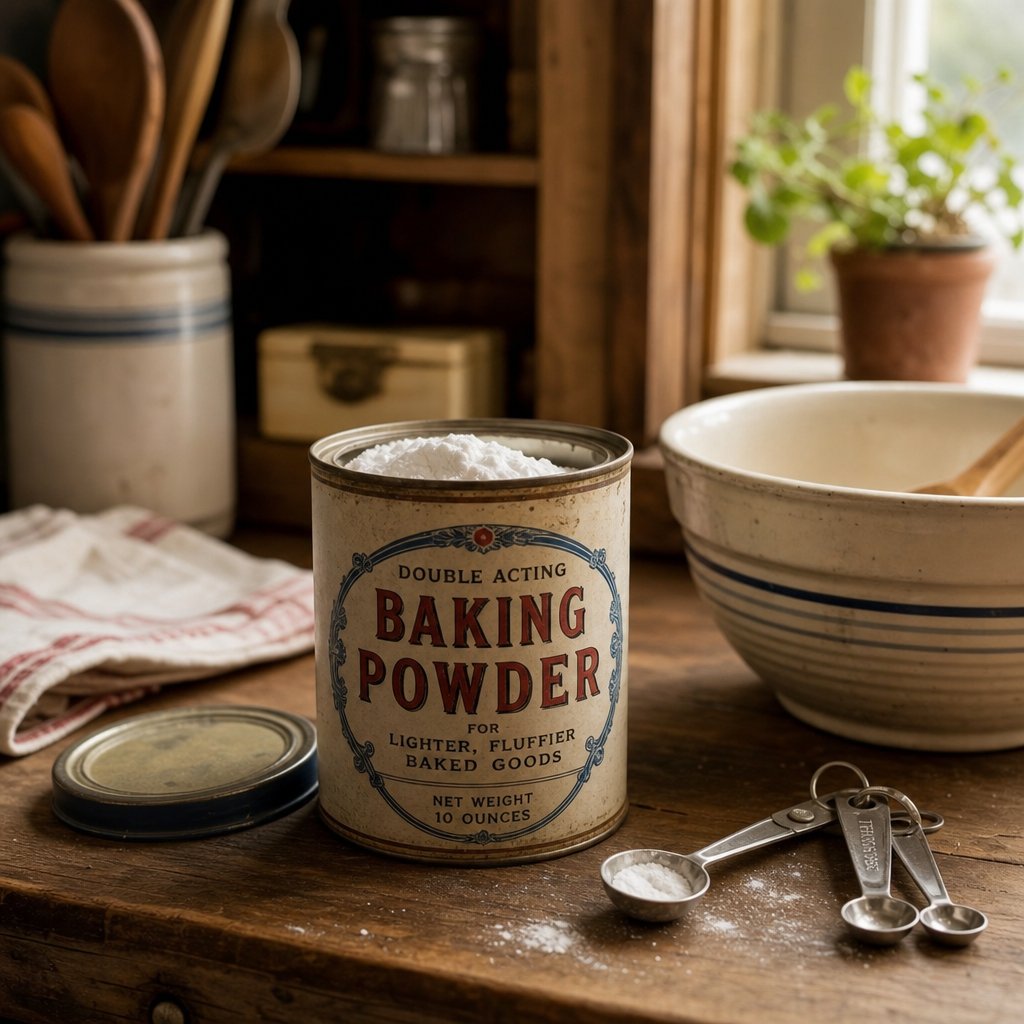
Imagine this: you're halfway through a recipe, reach into the back of the pantry, and pull out a can of baking powder you vaguely remember buying... sometime last year. Maybe longer. The lid is still on, nothing looks or smells off, but a quiet doubt creeps in. Does baking powder go bad? Will it still give your muffins that lift they need?
Here's the reassuring part: expired baking powder won't make you sick. It doesn't spoil the way dairy or meat does. But does baking powder actually expire in terms of performance? Absolutely. Over time, it loses its ability to produce the carbon dioxide gas that makes baked goods rise. Your cakes come out flat, your biscuits turn dense, and you're left wondering what went wrong with the recipe when the real culprit was sitting in that dusty can all along.
Why Baking Powder Shelf Life Matters More Than You Think
Many home bakers treat baking powder like salt or sugar, assuming it lasts indefinitely. But unlike those shelf-stable staples, baking powder contains reactive chemical compounds that degrade with exposure to air and moisture. Controlled testing by Serious Eats found that baking powder begins losing noticeable leavening strength around the six-month mark after opening, producing biscuits that were measurably shorter and less risen. So does baking powder go out of date? Not in the food-safety sense, but in the functional sense, yes, and the decline is more gradual than most people realize.
This is exactly why understanding how long does baking powder last matters. The difference between a towering biscuit and a flat disappointment often comes down to whether your leavener still has enough power to do its job.
The Potency Spectrum Concept
Most people think of expiration as binary: good or bad, fresh or expired. Baking powder doesn't work that way. It exists on what you can think of as a potency spectrum, gradually losing effectiveness over weeks and months rather than failing all at once on a specific date.
Baking powder loses effectiveness gradually rather than failing all at once. Understanding where yours falls on that spectrum determines whether you need to adjust quantities, substitute with a fresh batch, or replace the can entirely.
Does baking powder really expire on the date printed on the can? That date is a manufacturer's estimate of peak performance, not a hard cutoff. Do baking powder expire in a way you can see or smell? Rarely. The decline is silent, which is precisely what makes it tricky. You won't know your baking powder has weakened until your cake refuses to rise or your pancakes come out thin and dense.
In the sections ahead, you'll find exact timelines for opened and unopened containers, a simple test to check potency at home, the chemistry behind why degradation happens, and practical storage strategies to keep your baking powder effective as long as possible. Whether you bake daily or pull that can out once a year for holiday cookies, knowing where your baking powder sits on the potency spectrum saves you from flat, disappointing results.
Exact Shelf Life Timelines for Opened and Unopened Containers
Knowing that baking powder degrades is one thing. Knowing exactly when to worry about it is another. The shelf life of baking powder depends heavily on one variable: whether the container has been opened. Once that seal breaks, the clock starts ticking faster because air and ambient moisture now have direct access to the reactive ingredients inside.
Here's the breakdown you can actually reference the next time you're staring at a can and wondering how long is baking powder good for.
Unopened Baking Powder Timeline
An unopened can of baking powder typically retains full potency for 18 months to 2 years from the manufacture date, not the date you purchased it. This distinction matters because a can might sit on a store shelf for months before you bring it home. Clabber Girl, one of the most widely available brands in the U.S., states that an unopened can lasts up to 18 months. Some manufacturers extend that estimate to three years under ideal conditions, as Real Simple notes.
The factory seal keeps moisture and air out, which prevents the acid and base components from reacting prematurely. As long as that seal remains intact and the can is stored in a cool, dry environment, you can trust the product to perform at or near full strength through the printed date.
So how long does baking powder last after expiration date if it's never been opened? In most cases, a few months past that date won't cause dramatic failure. You'll likely still get decent results, though testing before a critical bake is always smart.
Opened Baking Powder Timeline
Once opened, baking powder shelf life shortens considerably. The general recommendation from manufacturers is six months of reliable performance, with some sources extending that to 12 months under excellent storage conditions. Serious Eats' 10-month controlled testing confirmed that noticeable potency decline begins right around the six-month mark, with biscuits measuring progressively shorter in each subsequent monthly test.
How long is baking powder good for after opening in practical terms? If you store it properly, sealed tightly in a cool, dry cabinet, you can expect solid performance for about six months. Between six and nine months, results become less predictable. Beyond that, you're gambling with your bake.
A useful habit: write the opening date directly on the can with a marker. This removes all guesswork and gives you a clear reference point when you reach for it months later.
Potency Degradation at Key Intervals
The table below maps estimated effectiveness at specific intervals after opening. These figures are general guidelines based on manufacturer recommendations, published testing data, and proper storage conditions. Actual results vary by brand, formulation, and how well you protect the powder from moisture and heat.
| Time After Opening | Estimated Effectiveness | Recommended Action |
|---|---|---|
| Freshly opened | 100% (full potency) | Use normally |
| 3 months | 90-100% (minimal loss) | Use normally |
| 6 months | 75-90% (slight decline) | Use normally for sturdy recipes; test before delicate bakes |
| 9 months | 50-75% (moderate decline) | Increase quantity by 25%; test before using |
| 12 months | 25-50% (significant decline) | Test before using; replace if results are weak |
| 18 months | 0-25% (largely ineffective) | Replace |
How long is baking powder good for after expiration date if the can has been open for a while? By the time you're past 12 months, the powder has likely lost enough strength that even increasing the amount won't reliably compensate. For recipes where rise is critical, replacement is the safer call.
Notice the pattern: degradation isn't linear. The first three months show almost no change, then the decline accelerates. This matches what Serious Eats observed in their biscuit tests, where the six-month mark was the inflection point between "performs well" and "noticeably weaker." By ten months, their test biscuits had lost roughly half their height compared to those made with fresh powder.
These timelines give you a practical framework, but they assume reasonable storage. Expose your baking powder to humidity, heat, or repeated contact with wet measuring spoons, and those numbers compress significantly. The chemistry behind that compression reveals why some cans fail far sooner than expected.
The Chemistry Behind Baking Powder Degradation
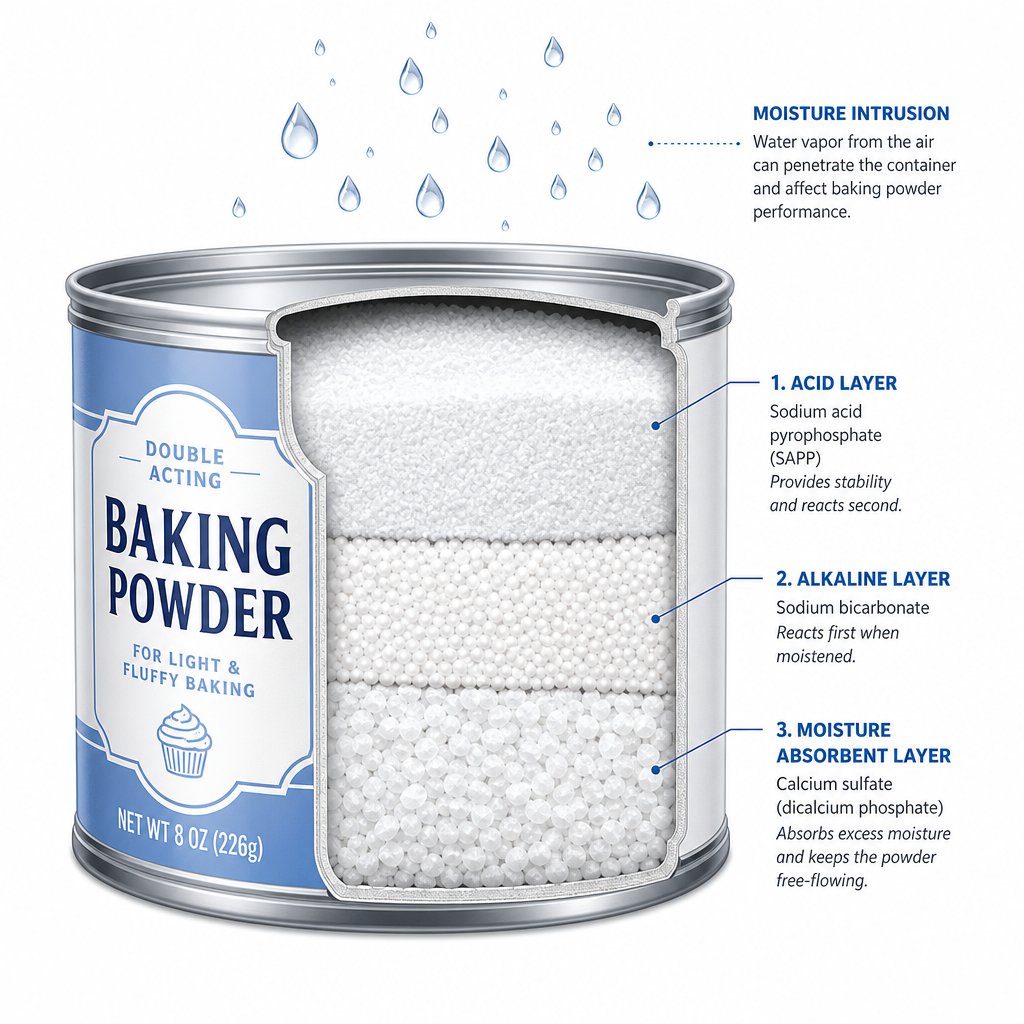
Baking powder what it does seems simple on the surface: it makes things rise. But inside that unassuming can, three distinct ingredients work together in a carefully balanced system. When that balance breaks down, your baking powder has effectively gone bad, even if it looks and smells perfectly fine. Understanding what happens at the chemical level explains why some cans lose their punch months before the printed date.
The Three Components and Their Roles
Every commercial baking powder contains three core ingredients, each with a specific job:
- Sodium bicarbonate (baking soda) - The base component. This is the gas producer. When it reacts with an acid, it releases carbon dioxide (CO2), which creates the bubbles that lift your batter.
- Acid salts - The reaction trigger. Common examples include monocalcium phosphate (fast-acting, reacts at room temperature) and sodium acid pyrophosphate (slow-acting, reacts under heat). These acids neutralize the baking soda and drive CO2 production.
- Cornstarch (or potato starch) - The buffer and moisture shield. It absorbs ambient humidity in the air, preventing the acid and base from encountering water and reacting prematurely inside the can.
This three-part system is why baking powder is self-contained. Unlike baking soda, which needs an external acid source like buttermilk or yogurt, baking powder carries everything it needs to produce gas the moment liquid is added. The starch acts as a bodyguard, keeping the reactive ingredients separated until you intentionally add water during mixing.
How Moisture Triggers Premature Reactions
Here's where things go wrong. Can baking powder go bad just from sitting in your cabinet? Yes, and moisture is almost always the reason.
The acid-base reaction in baking powder requires water as a catalyst. Even tiny amounts of moisture, whether from humid air, a damp measuring spoon, or condensation from temperature swings, can initiate the reaction inside the sealed can. The acid dissolves slightly, contacts the sodium bicarbonate, and CO2 escapes silently into the air. You never see it happen. The gas simply dissipates, and your powder becomes a little weaker each time.
Cornstarch is designed to intercept this moisture before it reaches the reactive ingredients. It works like a sponge, absorbing humidity so the acid and base stay dry. But cornstarch has a saturation point. Once it has absorbed all the moisture it can hold, any additional humidity passes straight through to the active components. From that point forward, the premature reaction accelerates.
In double-acting baking powder, the standard type sold in grocery stores, this matters doubly. Double-acting formulas contain two different acids: a fast-acting acid (like monocalcium phosphate) that reacts when mixed with liquid at room temperature, and a slow-acting acid (like sodium acid pyrophosphate) that reacts only under oven heat. Moisture exposure in storage primarily depletes the fast-acting acid first, since it's designed to react at lower temperatures. The heat-activated acid tends to survive longer, but once enough moisture accumulates, both stages become compromised.
Why Potency Loss Is Irreversible
This is the critical point most people miss: once the acid-base reaction has occurred, it cannot be undone. The CO2 is gone permanently. You can't "recharge" baking powder gone bad by drying it out or storing it better after the fact. The sodium bicarbonate that already reacted has converted into sodium carbonate, water, and carbon dioxide gas. Those original reactive molecules no longer exist in the powder.
Think of it this way. A fresh can contains a fixed amount of potential chemical energy. Every premature reaction spends some of that energy with zero benefit to your baking. Does baking powder get old in the traditional sense? Not exactly. It doesn't rot or decompose. Instead, it slowly exhausts its one-time-use chemical potential through unwanted micro-reactions triggered by environmental moisture.
This irreversibility is also why does baking powder go off without any visible warning signs. There's no color change, no odor, no clumping that reliably indicates how much potency remains. The powder looks identical whether it's at full strength or nearly spent. The only reliable indicator is a physical test, which is why knowing how to check your baking powder before committing to a recipe is so valuable.
Can baking powder expire and still look perfectly normal? Every single time. The reaction products, primarily sodium salts, blend right back into the white powder. This silent failure is exactly what makes baking powder different from ingredients that announce their decline through smell, texture, or appearance. Your nose won't save you here. Only testing will.
How to Test If Your Baking Powder Is Still Good
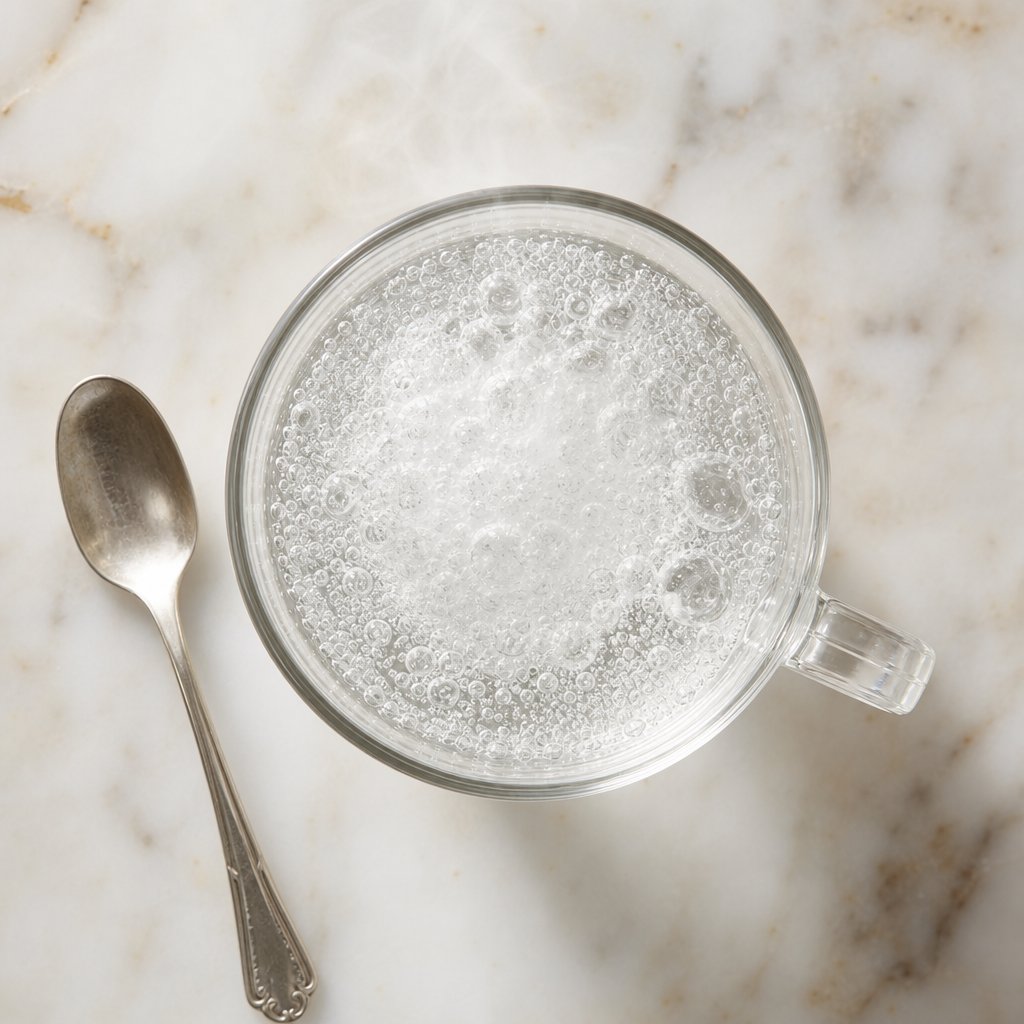
Since degraded baking powder gives no visual or olfactory clues, you need a hands-on test for baking powder freshness before committing ingredients to a recipe. The good news: it takes about 10 seconds and requires nothing more than hot water and a spoon. How do you test baking powder? You trigger the same acid-base reaction it's supposed to perform in your batter, then observe how vigorously it responds.
The Hot Water Test Step by Step
This method works because hot water activates both the fast-acting and heat-activated acids in double-acting powder, giving you a complete picture of remaining potency. King Arthur Baking recommends a simple version of this test as the go-to freshness check for home bakers.
- Boil water or heat it until very hot (near boiling works fine).
- Measure 1/3 cup of hot water into a small bowl or cup.
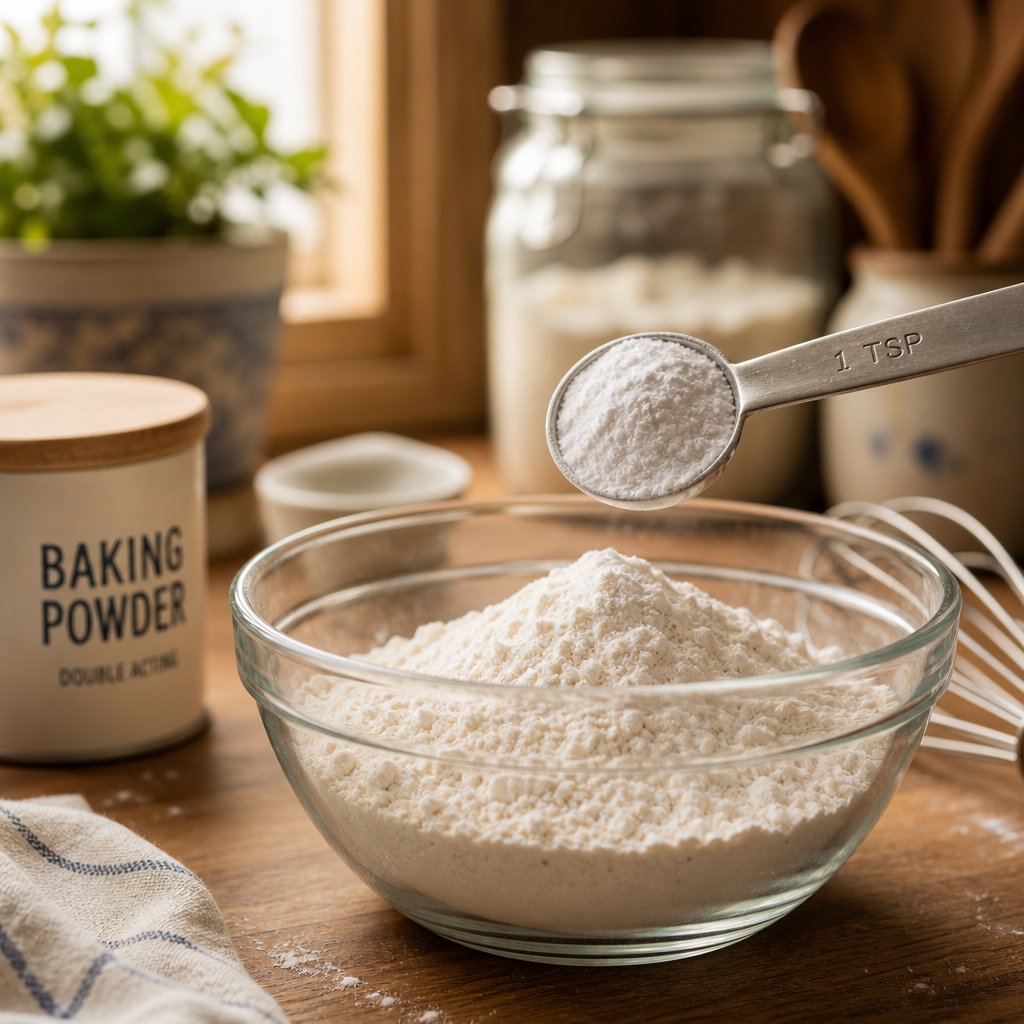
- Add 1 teaspoon of baking powder to the water.
- Watch the reaction immediately. Don't stir; just observe.
- Evaluate the intensity of the bubbling against the potency spectrum below.
That's it. The entire test for baking powder freshness takes seconds, and you'll have a clear answer before you waste flour, eggs, and butter on a recipe that won't rise.
Interpreting Your Results on the Potency Spectrum
How to tell if baking powder is still good isn't a simple yes-or-no question. The reaction you observe falls on a range:
- Vigorous, immediate fizzing - The water erupts with active bubbles and visible foam within seconds. This indicates full or near-full potency. Use the powder normally in any recipe.
- Moderate bubbling - You see definite fizzing and some foam, but it's noticeably less energetic than what fresh powder produces. This signals partial effectiveness, roughly 50-75% strength.
- Minimal or no reaction - A few lazy bubbles or nothing at all. The powder is largely spent and should be replaced.
How can you tell if baking powder is still good enough for a specific recipe? Compare what you see against what RecipeTin Eats describes as "bubbles energetically." If your result looks underwhelming by comparison, you're somewhere in the moderate-to-weak range.
When Partial Bubbling Means You Can Still Bake
Moderate bubbling doesn't automatically mean you need to throw the can away. How to know if baking powder is still good enough depends on what you're making. For sturdy baked goods like muffins, pancakes, and quick breads, you can compensate for reduced potency by increasing the amount by 25-50%. A recipe calling for 2 teaspoons might need 2.5 to 3 teaspoons of partially weakened powder to achieve similar lift.
For delicate recipes where precise leavening is critical, like angel food cake, souffles, or light biscuits, this compensation strategy becomes unreliable. Extra baking powder can introduce a slightly metallic or bitter aftertaste, and the rise pattern may be uneven. In those cases, fresh powder is worth the small investment.
A practical rule of thumb: if you have to test it, and the result is anything less than enthusiastic fizzing, buy a new can before attempting a recipe you care about. Baking powder costs a few dollars. The ingredients for a failed celebration cake cost considerably more.
Knowing your powder's current strength is useful, but it raises a follow-up question: does the type of baking powder you buy affect how quickly it loses that strength in the first place? Single-acting and double-acting formulas behave quite differently on the shelf.
Single-Acting vs Double-Acting Shelf Life Differences
Not all baking powders are built the same. The can in your pantry is almost certainly double-acting, but single-acting formulas exist too, and the distinction has a direct impact on baking powder freshness and how quickly potency fades. This is a detail most shelf-life guides skip entirely, yet it explains why some baking powders hold up better than others under identical storage conditions.
Single-Acting Powder and Its Vulnerability
Single-acting baking powder contains only one acid, typically a fast-reacting compound like cream of tartar (potassium acid tartrate) or monocalcium phosphate. As ThoughtCo explains, this type reacts with water-based ingredients to form bubbles as soon as the ingredients are mixed. All of the CO2 production happens in one burst at room temperature.
From a shelf-life perspective, this single-reaction design creates a vulnerability. Because the only acid present is fast-acting, any trace moisture that enters the container during storage triggers the one and only leavening reaction the powder can perform. There's no backup. Every premature micro-reaction permanently reduces the total gas the powder can produce when you actually need it. If you're making your own baking powder at home using baking soda and cream of tartar, you're creating a single-acting formula, and it should ideally be used immediately or within days.
Does cream of tartar go bad on its own? As a dry, stable acid salt, cream of tartar has a long shelf life when stored properly, often several years. But can cream of tartar go bad if exposed to moisture or heat? It can degrade, though much more slowly than a pre-mixed baking powder where it's already in contact with its reactive partner. Cream of tartar does it expire in the traditional sense? Not quickly, but its effectiveness in a homemade baking powder blend diminishes if the mixture absorbs any humidity at all.
Why Double-Acting Lasts Longer
Double-acting baking powder, the standard type found in virtually every grocery store, contains two different acids. One is fast-acting (typically monocalcium phosphate), reacting when mixed with liquid at room temperature. The second is slow-acting (commonly sodium acid pyrophosphate or sodium aluminum sulfate), activating only under oven heat. According to the American Society of Baking, this dual-acid system means the majority of gas production occurs during baking rather than during mixing.
This two-stage design gives double-acting powder a built-in resilience against storage degradation. Even if ambient moisture depletes some of the fast-acting acid over time, the heat-activated acid remains largely intact because it doesn't react at room temperature. You still lose some first-stage lift, but the oven-spring component survives longer. This is why double-acting baking powders generally maintain usable potency for more months after opening than a single-acting formula would under the same conditions.
It's also why double-acting powder is more forgiving for home bakers. As ThoughtCo notes, it's "harder to overbeat the ingredients and your recipe will be less susceptible to failure" because you're not relying on a single, time-sensitive burst of gas. That same forgiveness extends to shelf stability: the powder has two chances to perform, so partial degradation of one acid doesn't spell total failure.
Brand Formulation Differences That Affect Longevity
The specific acid salts a manufacturer chooses influence how long their baking powder stays fresh. Here's where brand selection actually matters for baking powder freshness:
- Monocalcium phosphate (MCP) - Fast-acting, reacts at room temperature. Found in nearly all double-acting formulas as the first-stage acid. Relatively moisture-sensitive because it's designed to activate with minimal water contact.
- Sodium acid pyrophosphate (SAPP) - Slow-acting, primarily heat-activated. More shelf-stable than MCP because it resists premature reaction at ambient temperatures. Common in aluminum-free baking powders.
- Sodium aluminum sulfate (SAS) - Heat-activated, very slow-reacting. Traditionally paired with MCP in classic double-acting formulas. Degrades slower than MCP in dry conditions but shows higher sensitivity to humidity in some environments.
Rumford baking powder, one of the oldest brands in the U.S. and a popular aluminum-free option, uses monocalcium phosphate as its primary acid. This makes it a good choice for bakers who want to avoid aluminum, but the formulation may behave slightly differently over time compared to SAS-based powders. Research cited by controlled aging trials found that aluminum-free powders showed faster moisture-driven failure in coastal or humid environments, roughly 22% quicker degradation compared to aluminum-containing formulas under the same conditions.
What does this mean practically? The best baking powder for longevity depends partly on where you live. In arid climates, aluminum-free formulations perform comparably to traditional ones. In humid regions, you may notice aluminum-free baking powders losing their edge sooner, making proper storage and more frequent replacement especially important. Regardless of brand, the fundamentals remain the same: keep it sealed, keep it dry, and test before any high-stakes bake.
Brand chemistry and powder type determine the starting point for shelf stability, but your storage environment is what ultimately controls the pace of decline. Temperature swings, humidity levels, and even where you place the can in your kitchen can cut expected shelf life dramatically.
Environmental Factors That Accelerate Baking Powder Degradation
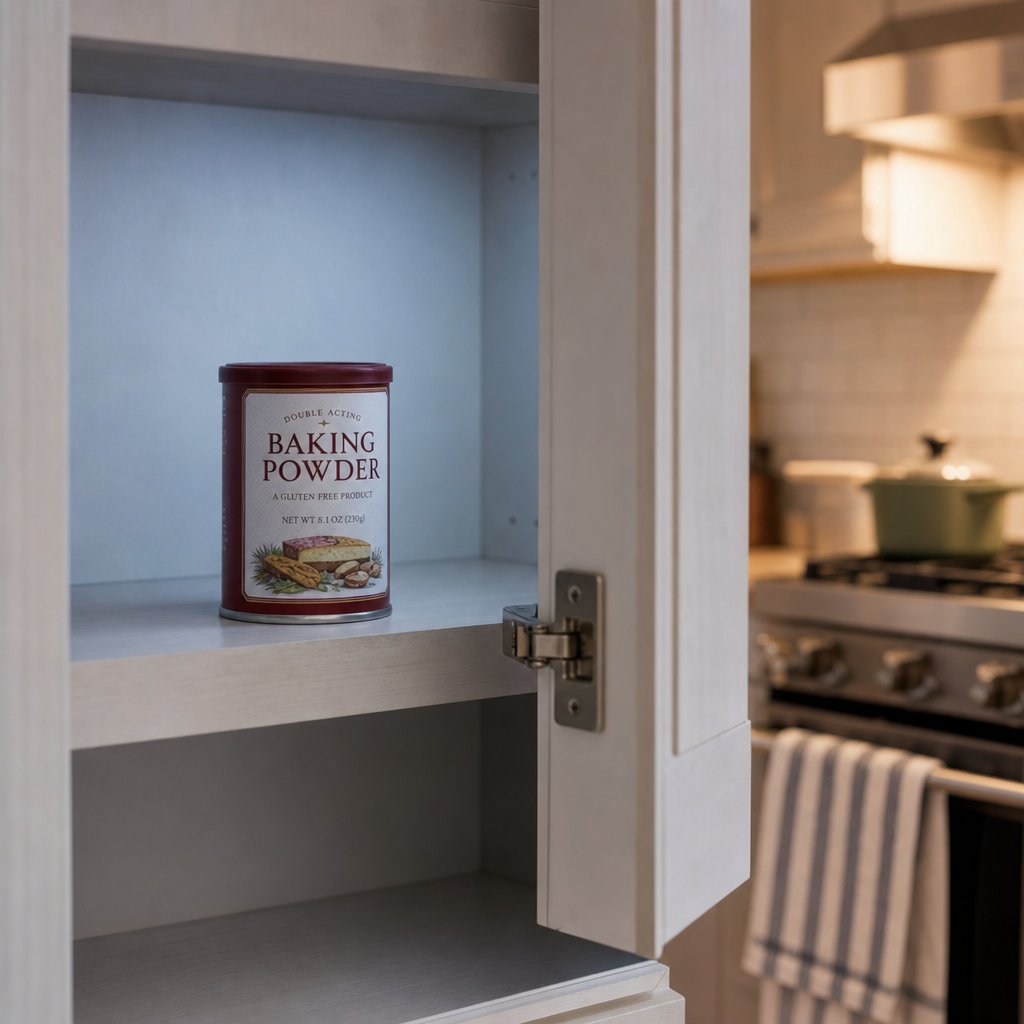
Your baking powder's formulation sets its potential shelf life, but the environment you store it in determines how much of that potential you actually get. Two identical cans purchased on the same day can perform completely differently six months later if one lives in a cool, dry pantry and the other sits above a steamy stove. What is the shelf life of baking powder in your specific kitchen? That depends on three factors most people never consider: humidity, temperature stability, and physical storage location.
Humidity and Its Outsized Impact on Shelf Life
Moisture is the single biggest threat to baking powder storage longevity. As covered in the chemistry section, even microscopic amounts of water vapor initiate the acid-base reaction that produces CO2. In high-humidity environments, like coastal kitchens or homes without air conditioning during summer months, ambient moisture constantly pushes against the cornstarch buffer inside the can.
Once that buffer saturates, every humid day chips away at your powder's remaining potency. Chef Penny Stankiewicz of the Institute of Culinary Education specifically warns against refrigerator storage for this reason: "The powder can pick up humidity from the refrigerator, as well as unwanted food aromas." The fridge feels cold and safe, but it's actually a moisture-rich environment that accelerates degradation rather than slowing it.
If you live in a region where indoor humidity regularly exceeds 60%, expect the shelf life for baking powder to compress by several months compared to the standard timelines. A can that might last 9-12 months in an arid climate could become outdated baking powder in as little as 4-6 months under persistently humid conditions.
Temperature Stability Matters More Than Temperature Itself
You might assume that keeping baking powder cool is the priority. In reality, temperature consistency matters more than the actual number on the thermometer. Stankiewicz recommends storing baking powder at a stable temperature around 70 degrees Fahrenheit. The key word is stable.
When does baking powder expire faster than expected? Often when it's stored near a heat source that cycles on and off. Every time the temperature around the can rises and then drops, the air inside the container expands and contracts. This creates condensation on the interior walls of the can, tiny droplets of water that drip down onto the powder and trigger premature reactions. It's the same principle that fogs up a cold glass on a warm day, except it's happening invisibly inside your sealed container.
A cabinet next to the oven experiences temperature swings of 20-30 degrees every time you bake. Over weeks and months, those repeated cycles generate enough internal condensation to significantly reduce potency, even if you never open the lid with a wet spoon.
Storage Location Mistakes That Cut Shelf Life in Half
Most kitchens have at least one spot that quietly sabotages shelf life baking powder could otherwise maintain. Here are the most common storage mistakes:
- Storing above or directly beside the stove or oven, where heat and steam concentrate
- Keeping the can in a cabinet adjacent to the dishwasher, which vents hot, humid air during cycles
- Leaving the lid loose or improperly sealed after each use
- Dipping wet or damp measuring spoons directly into the can
- Placing the container in direct sunlight near a window, which creates temperature fluctuations
- Storing in a bathroom-adjacent cabinet where shower steam raises ambient humidity
Each of these mistakes introduces either moisture, heat cycling, or both. Combined, they can turn a 12-month shelf life into 4-5 months of usable potency.
Proper baking powder storage is straightforward once you know what to avoid. Keep the can in a cool, dry cabinet away from any heat source or steam. Seal the lid tightly after every use. Always measure with a completely dry spoon. If your original container doesn't seal well, consider transferring the powder to an airtight glass or plastic container with a secure gasket lid. Simply Recipes notes that most baking powder is sold in airtight containers that work fine on their own, but adding a secondary sealed container provides an extra layer of protection in humid climates.
For those at higher altitudes, one additional factor comes into play: reduced atmospheric pressure can affect how tightly sealed containers remain over time. The pressure differential between the sealed interior and the thinner outside air may gradually loosen lids that aren't latched or threaded, allowing slow air exchange that wouldn't occur at sea level. If you bake at altitude, double-check that your container's seal is genuinely airtight rather than just resting in place.
Outdated baking powder often results not from age alone but from storage conditions that silently accelerated its decline. A can stored perfectly might outlast its printed date. A can stored poorly might fail months before it. The environment is the variable you can actually control.
These storage principles apply to baking powder specifically, but they raise a natural question: does its close relative, baking soda, face the same vulnerabilities? The answer reveals why these two products, despite their similar appearance, behave very differently over time.
Baking Powder vs Baking Soda Shelf Life Compared
Baking powder and baking soda sit side by side in most pantries, look nearly identical, and even share a key ingredient. Yet their shelf lives couldn't be more different. If you've ever wondered whether does baking soda go bad the same way baking powder does, the short answer is: not even close. Baking soda is dramatically more shelf-stable, and the reason comes down to one fundamental difference in composition.
Why Baking Soda Outlasts Baking Powder
Baking soda is pure sodium bicarbonate. That's it. One ingredient, no internal reaction partners, no built-in acid waiting to be triggered. It needs an external acid source like buttermilk, yogurt, or vinegar to produce CO2. As WonderHowTo notes, baking soda has an essentially infinite shelf life in theory, though manufacturers typically print a 2-3 year best-by date for quality assurance purposes.
Does baking soda expire in a meaningful way? Only if moisture reaches it. Since there's no acid present in the container, ambient humidity can't trigger a leavening reaction the way it does with baking powder. Water exposure might cause clumping or reduce effectiveness over time, but the degradation rate is dramatically slower. How long does baking soda last under proper storage? Practically speaking, an unopened box kept dry can remain effective for years beyond its printed date.
Baking powder, by contrast, carries its own acid internally. That's what makes it convenient for baking but vulnerable in storage. The acid and base are separated only by a thin cornstarch buffer. Any moisture that overwhelms that buffer initiates the reaction, spending potency you'll never get back. This self-contained design is both baking powder's greatest strength in recipes and its greatest weakness on the shelf.
Testing Methods Compared
The freshness tests for these two products differ because their activation mechanisms differ. You can't test them the same way and get accurate results.
For baking powder, hot water alone does the job. The powder contains its own acid, so water is the only catalyst needed. Drop a teaspoon into 1/3 cup of hot water and watch for fizzing.
For baking soda, you need to supply the acid externally. The standard test calls for adding half a teaspoon of vinegar to a cup of hot water, then stirring in half a teaspoon of baking soda. Vigorous bubbling confirms it's still active. No fizz means the sodium bicarbonate has lost its reactive capacity.
Can baking soda go bad enough to fail this test? Yes, but it typically takes years of poor storage rather than months. A box that's been sitting open in a humid cabinet for three or four years might show weak results. One that's been sealed in a dry pantry for the same period will likely still fizz enthusiastically.
The DIY Substitute and Its Freshness Advantage
Here's where the baking soda shelf life advantage becomes practically useful. If your baking powder has weakened or expired, you can make a fresh substitute on the spot using baking soda and cream of tartar:
1/4 teaspoon baking soda + 1/2 teaspoon cream of tartar = 1 teaspoon baking powder
This creates a single-acting baking powder that reacts immediately when mixed with liquid. McCormick recommends this exact ratio as a reliable substitution when you're out of commercial baking powder. Because you're mixing the ingredients fresh at the moment of use, there's been zero opportunity for premature reaction. Every molecule of acid and base is intact and ready to perform.
When is this DIY approach preferable to using old commercial baking powder? Whenever your hot water test produces moderate or weak bubbling. A freshly mixed substitute from ingredients with long individual shelf lives will outperform a can of baking powder that's been slowly exhausting itself for months.
What about cream of tartar's own shelf life? As FullyHealthy's guide explains, cream of tartar (potassium bitartrate) lasts 3 to 5 years when stored properly in an airtight container away from heat and moisture. Does cream of tartar go bad? Like baking soda, it degrades very slowly because it's a single dry compound with no internal reaction partner. As long as it stays dry, it holds its acidity for years. You can test it by mixing 1/2 teaspoon with 1/4 teaspoon of baking soda in warm water. Fizzing confirms both ingredients are still active.
The table below puts the full comparison in one place:
| Characteristic | Baking Powder | Baking Soda |
|---|---|---|
| Shelf life (unopened) | 18 months to 2 years | Indefinite (manufacturer recommends 2-3 years) |
| Shelf life (opened) | 6-12 months | 1-3 years |
| Testing method | 1 tsp in 1/3 cup hot water | 1/2 tsp in hot water + vinegar |
| Storage sensitivity | High (moisture triggers internal reaction) | Low (no internal acid to react with) |
| Signs of expiration | No visible signs; fails silently | Clumping; weak fizz with acid test |
| Why it degrades | Internal acid reacts with base prematurely | Moisture slowly neutralizes sodium bicarbonate |
| Substitute option | 1/4 tsp baking soda + 1/2 tsp cream of tartar per 1 tsp needed | Use 1/3 the amount of baking powder (less effective) |
Can baking soda expire to the point of being completely useless? Eventually, yes, but you're looking at a timeline measured in years rather than months. How long will baking soda last compared to baking powder under the same storage conditions? Roughly 3-5 times longer, because it lacks the internal vulnerability that makes baking powder self-destruct in the presence of moisture.
This longevity difference is worth remembering the next time you're deciding whether to toss a questionable can of baking powder. If your baking soda is still good, and it almost certainly is, you can mix a fresh substitute in seconds. The real question becomes: what can you still do with that weakened baking powder rather than simply throwing it away?
Using Expired or Partially Effective Baking Powder Safely
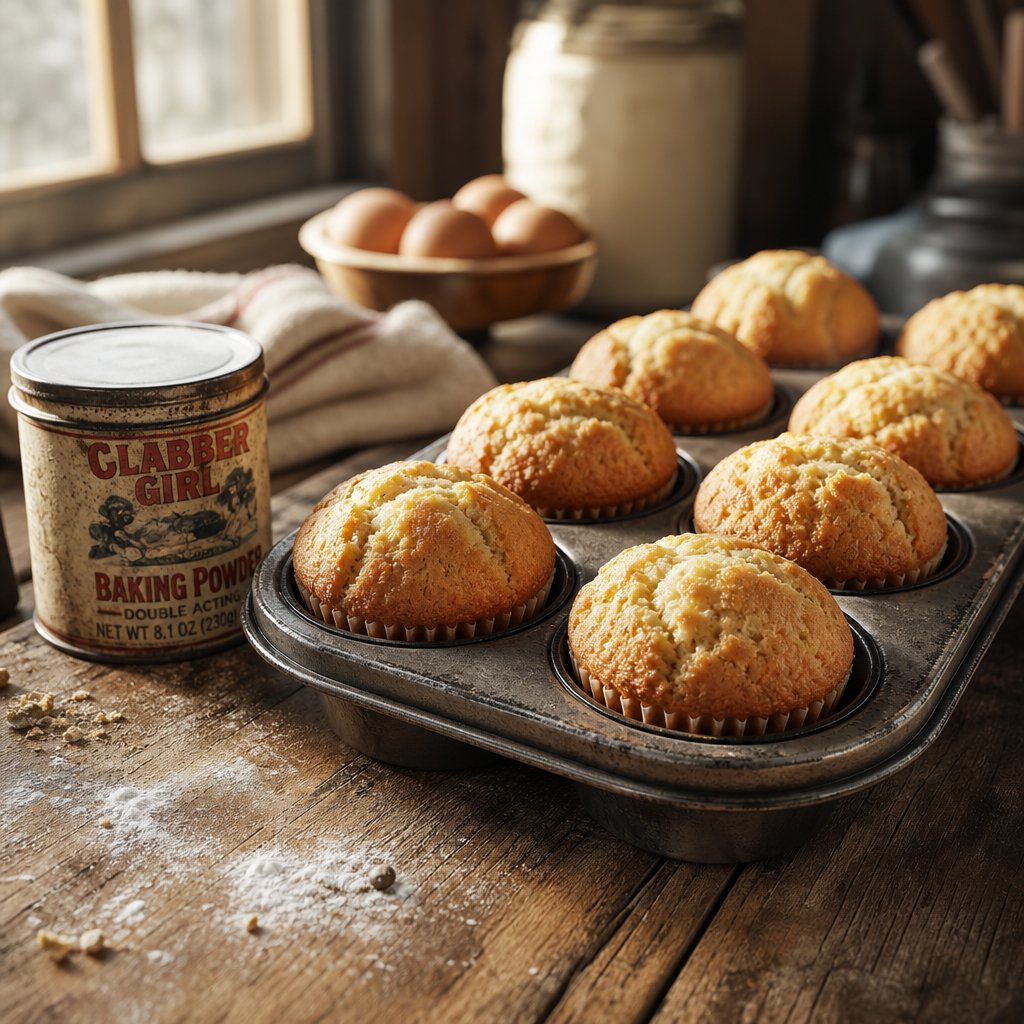
So your hot water test produced moderate fizzing rather than an enthusiastic eruption. Can you use expired baking powder, or does it belong in the trash? The answer depends entirely on what you're planning to bake. Weakened baking powder isn't worthless. It still contains some reactive potential, and for the right recipes, that partial potency is enough to get the job done with a small adjustment.
Recipes Where Expired Baking Powder Still Works
Not every baked good demands peak leavening performance. Sturdy, forgiving recipes can tolerate reduced gas production without catastrophic results. Can you use out of date baking powder for pancakes? Absolutely. The same goes for muffins, quick breads, banana bread, cornbread, and simple coffee cakes. These recipes rely on baking powder for lift, but their dense batters and thick crumb structures don't collapse if the rise is slightly less dramatic.
Where you'll run into trouble is with recipes that depend on precise, maximum leavening to achieve their structure. Souffles, angel food cake, delicate layer cakes, and flaky biscuits all need full-strength powder. What happens if you use expired baking powder in these recipes? You get flat, dense results that no amount of technique can rescue. The batter may taste fine and bake evenly, but it simply won't rise enough to create the light, airy texture these recipes require. If your powder tested weak and you're making something delicate, replace it.
How to Adjust Quantities for Reduced Potency
Can i use out of date baking powder if I just add more? For those sturdy recipes, yes. Increase the amount by 25-50% to compensate for lost effectiveness. A recipe calling for 2 teaspoons would get 2.5 to 3 teaspoons of partially weakened powder. This isn't an exact science, and results may vary slightly from batch to batch, but it's a reliable workaround for everyday baking.
One caution: adding too much baking powder, even weakened powder, can introduce a slightly bitter or metallic aftertaste. If you're already increasing by 50% and the test showed barely any fizz, you've hit the practical limit. Beyond that point, replacement makes more sense than compensation.
Is it ok to use expired baking powder without adjusting the quantity at all? You can, but expect less rise. Your muffins will be denser, your pancakes thinner. It won't harm you, but the texture won't match what the recipe intended.
Here's a useful diagnostic tip: if your baked goods came out flat but the texture and flavor are otherwise correct, baking powder is likely the culprit. The batter mixed properly, the oven temperature was right, but the chemical lift simply wasn't there. If the texture is gummy, dense throughout, or raw in the center, the problem is more likely overmixing, incorrect oven temperature, or measurement errors rather than expired leavener.
Non-Baking Uses for Expired Baking Powder
Can i use expired baking powder for anything once it's completely spent? Plenty. Even fully exhausted baking powder retains its mild abrasive and absorbent properties, making it useful around the house. Can you use outdated baking powder as a cleaning agent? Real Advice Gal recommends several practical expired baking powder uses:
- Gentle scrub for countertops and sinks - Mix with a small amount of water to form a paste and use it on stains, grout, or stovetop residue
- Deodorizer - Place an open container in the fridge, sprinkle in shoes, or dust onto carpets before vacuuming to absorb odors
- Pot and pan soak - Add a tablespoon to hot water in a pan with stuck-on food and let it sit for 30 minutes before scrubbing
- DIY playdough for children - Combine with water and cornstarch for a simple, non-toxic craft material
- Produce wash - A teaspoon dissolved in water can help remove surface residue from fruits and vegetables
As Real Simple points out, expired baking powder works similarly to baking soda for cleaning purposes, though it may be slightly less powerful since it contains both acid and base components that partially neutralize each other. Still, it's far better than throwing it away unused.
The bottom line: can you use expired baking powder? For forgiving recipes with adjusted quantities, yes. For cleaning and household tasks, absolutely. For high-stakes baking where structure depends on full leavening power, invest in a fresh can. A few dollars spent on replacement beats a failed batch every time.
Maximizing Shelf Life Through Smart Storage and Quality Sourcing
How long can baking powder last? As you've seen throughout this guide, the answer ranges from a few months to over two years, and the difference comes down to two things: how you store it and how well it was made in the first place. Whether you're a home baker keeping one can in the pantry or a food entrepreneur developing powder-based products at scale, the same principles apply.
Key Storage Rules for Maximum Shelf Life
Here's your quick-reference checklist for getting the most life out of every can. Follow these consistently and you'll maximize how long you can keep baking powder at usable strength:
- Store in a cool, dry cabinet away from the stove, oven, and dishwasher
- Keep the lid sealed tightly after every use
- Always use completely dry measuring spoons
- Write the opening date on the can with a marker
- Transfer to an airtight container if the original packaging doesn't seal well
- Avoid refrigerator storage, which introduces unwanted moisture
- Test potency with the hot water method before any high-stakes recipe
- Replace opened containers every 6-12 months as a general rule
These habits are simple, but they're the difference between a can that performs reliably for a full year and one that silently fails at six months. How long is baking powder good when you follow every rule on this list? You'll consistently hit the upper end of those shelf-life timelines rather than the lower.
How Manufacturing Quality Affects Powder Product Longevity
Storage is only half the equation. The other half happens before the product ever reaches your kitchen. Formulation precision, moisture-controlled production environments, and proper packaging all determine how long do baking powder last from the moment it leaves the factory. A product manufactured in a humidity-controlled facility with high-quality barrier packaging starts its shelf life with every advantage. One produced in less controlled conditions may already be partially compromised before you open it.
This principle extends well beyond baking powder to all powder-based food and supplement products. As Bratney Companies explains, effective packaging for powdered food ingredients requires strong barriers against moisture, oxygen, and light. Multi-layer films, rigid containers with tamper-evident seals, and resealable designs all play a role in maintaining shelf stability from production through consumer use.
Sourcing Reliable Powder Products for Your Kitchen or Business
For home bakers, the takeaway is straightforward: buy from reputable brands with intact packaging and reasonable best-by dates. Check that seals are unbroken at purchase. The many uses for baking powder in your kitchen, from fluffy pancakes to tender biscuits, all depend on starting with a product that was manufactured and packaged to stay potent.
For food entrepreneurs, supplement brands, or private label sellers developing their own powder-based products, the stakes are higher. Your customers' experience depends on shelf stability that starts at the manufacturing level. Formulation choices, particle size management, moisture control during blending, and packaging selection all determine whether your product delivers consistent results months after production. Companies like ZhuFeng offer OEM/ODM manufacturing services for powder and granule products with customized formulations, moisture-controlled production environments, and scalable packaging options designed to optimize shelf life for health food and supplement brands.
Whether you're evaluating baking powder uses in your home kitchen or developing a commercial powder product line, the lesson is the same: longevity starts with quality manufacturing and ends with smart storage. Control both, and you'll never wonder how long can baking powder last again.
Frequently Asked Questions About Baking Powder Shelf Life
1. Can expired baking powder make you sick?
No, expired baking powder is not a food safety concern. Unlike dairy or meat products, it does not harbor harmful bacteria or produce toxins as it ages. The only consequence of using expired baking powder is reduced leavening performance, meaning your baked goods may come out flat or dense. The powder simply loses its ability to produce carbon dioxide gas over time, but the remaining compounds are inert and safe to consume.
2. How can you tell if baking powder is still good without testing it?
Unfortunately, there are no reliable visual or olfactory indicators of baking powder potency. Unlike spoiled food, degraded baking powder looks, smells, and feels identical to fresh powder. The reaction products blend back into the white powder without any color change or odor. The only dependable method is the hot water test: add 1 teaspoon to 1/3 cup of hot water and observe the bubbling intensity. Vigorous fizzing means full potency, moderate bubbling indicates partial effectiveness, and minimal reaction means it needs replacing.
3. Does storing baking powder in the refrigerator extend its shelf life?
No, refrigerator storage actually shortens baking powder's shelf life. While the cold temperature might seem protective, refrigerators are high-moisture environments. The powder absorbs humidity and unwanted food odors, which triggers premature acid-base reactions inside the container. The best storage location is a cool, dry cabinet away from heat sources like the stove or dishwasher, kept at a stable temperature around 70 degrees Fahrenheit with the lid tightly sealed.
4. What is the difference between baking powder and baking soda shelf life?
Baking soda lasts significantly longer than baking powder because it is pure sodium bicarbonate with no internal acid to react with. An unopened box of baking soda remains effective for years, while baking powder typically lasts 18 months to 2 years unopened and only 6-12 months once opened. The key difference is that baking powder contains both an acid and a base separated by cornstarch. Any moisture that penetrates the buffer triggers a premature reaction, permanently reducing potency. Baking soda lacks this internal vulnerability.
5. Can you substitute homemade baking powder for expired commercial baking powder?
Yes, you can make a fresh single-acting baking powder by combining 1/4 teaspoon baking soda with 1/2 teaspoon cream of tartar to replace 1 teaspoon of commercial baking powder. This DIY substitute is often more effective than using weakened commercial powder because both ingredients are mixed fresh with zero opportunity for premature reaction. Since baking soda and cream of tartar each have shelf lives measured in years, this method gives you reliable leavening even when your commercial can has lost its potency.