

Why Iron Tablets Don't Work Overnight
You have been taking your iron tablets for a week, maybe two, and you still feel drained, foggy, and dizzy. That frustration is real, and it is also completely normal. Iron repletion is one of the slowest recovery processes in human nutrition, and understanding why can help you stay the course instead of giving up too soon.
Why Iron Repletion Takes Time
Your body cannot simply dump iron into the bloodstream and call it a day. Every dose of an iron supplement, whether it is ferrous gluconate, ferrous sulfate, or iron capsules, must pass through a tightly regulated absorption pipeline. First, the iron is reduced from its ferric form to a ferrous state by enzymes in the gut lining. Then, specialized DMT1 transporters in the duodenum pull it into enterocytes. From there, it crosses into the bloodstream, binds to a carrier protein called transferrin, and travels to the bone marrow, where it is finally incorporated into fresh red blood cells. Those new red blood cells have a lifespan of roughly 120 days, so the full turnover of your oxygen-carrying capacity is measured in months, not mornings.
Iron supplement side effects like dark stools or mild nausea can appear within the first few days, which sometimes tricks people into thinking the supplement should be "working" by then. The reality is that biological change and symptom relief operate on very different clocks.
What to Realistically Expect From Day One
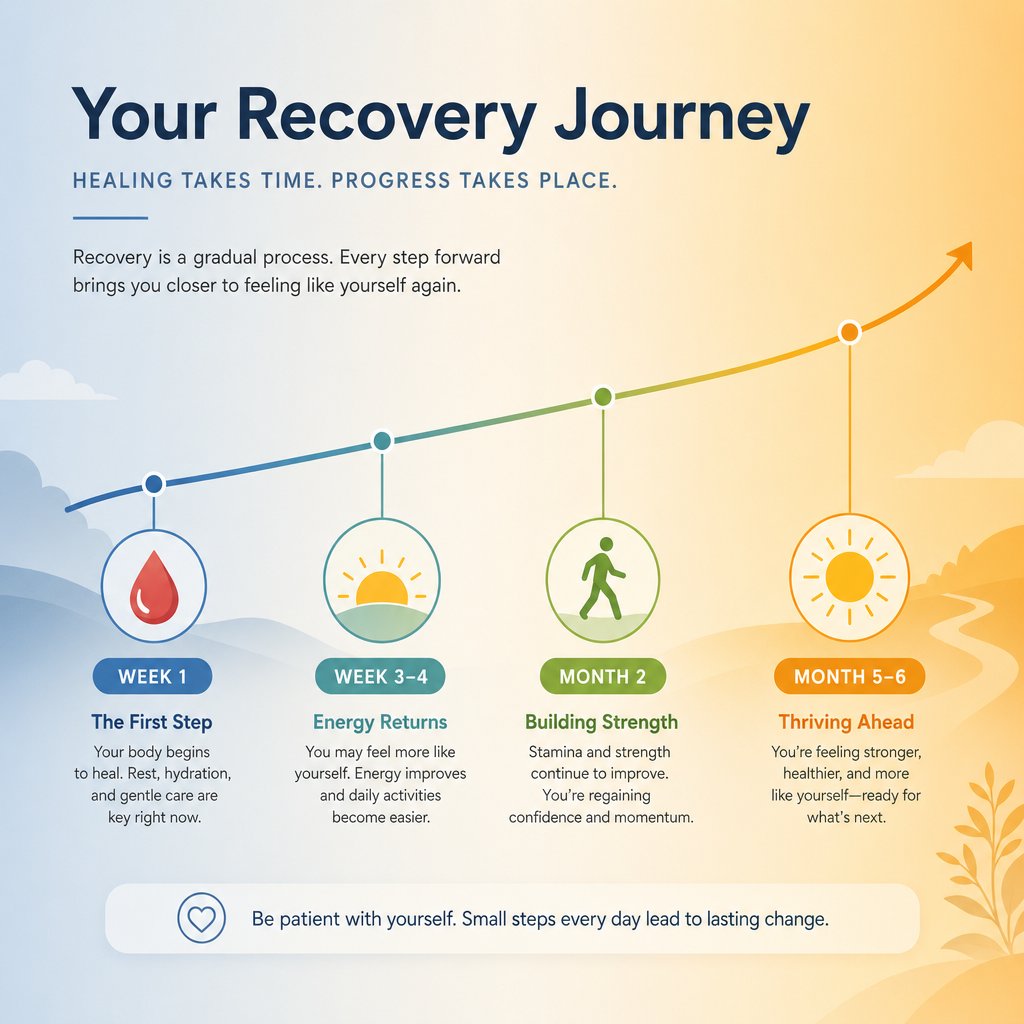
If you are searching for how to increase hemoglobin in a week, the honest answer is that meaningful hemoglobin gains rarely happen that fast. Clinical data shows that the earliest measurable response, a rise in reticulocyte count, typically appears within the first one to two weeks. Noticeable symptom relief, like reduced fatigue and fewer headaches, usually follows around weeks three to four. Full repletion of depleted iron stores can take three to six months of consistent supplementation.
Most people begin feeling better within 2-4 weeks of consistent iron supplementation, but replenishing depleted iron stores typically requires 3-6 months of continued treatment.
These timelines shift depending on how severe your deficiency is, which supplement form you are taking, and whether an underlying condition is working against you. Each of those variables plays a distinct role in determining the signs iron pills are working and how quickly you will notice them.
Your Week-by-Week Iron Supplement Timeline
Knowing that recovery takes time is one thing. Knowing exactly what to expect at each stage is something else entirely. Whether you are taking ferrous fumarate, ferrous sulfate, or another form, the biological sequence your body follows is remarkably consistent. Here is what is actually happening inside you, week by week, and how it translates to the way you feel.
| Timeframe | What's Happening in Your Body | How You Might Feel | Key Lab Changes |
|---|---|---|---|
| Week 1-2 | Bone marrow ramps up red blood cell production; reticulocytes (immature red cells) enter the bloodstream | Likely no noticeable difference yet; dark stools are normal | Reticulocyte count rises within 5-10 days; mean corpuscular hemoglobin may begin increasing |
| Week 3-4 | New red blood cells mature and begin improving oxygen delivery to tissues | Early relief from fatigue, fewer headaches, better concentration | Hemoglobin starts climbing; increases of 0.7-1.0 g/dL per week indicate a good response |
| Month 2 | Red blood cell turnover accelerates; oxygen transport capacity improves significantly | Better exercise tolerance, less breathlessness, hair shedding may slow | Hemoglobin continues rising toward normal range |
| Month 3-4 | Hemoglobin approaches or reaches normal levels; body begins redirecting iron toward storage | Most daily symptoms noticeably improved; energy feels more stable | Hemoglobin nearing target; ferritin levels begin meaningful recovery |
| Month 5-6 | Ferritin stores rebuild toward target levels (generally 50-100+ ng/mL) | Full symptom resolution for most people; hair and nails strengthen | Ferritin approaches optimal range; iron studies normalize |
The First Two Weeks on Iron
This is the phase that tests your patience the most. You are taking iron tablets for fatigue every day, but you feel exactly the same. Maybe even a little worse, thanks to iron pills side effects like constipation, nausea, or an unsettling change in stool color. That dark or black stool is harmless, caused by unabsorbed iron passing through your digestive tract, and it is actually a sign that the supplement is moving through your system.
Behind the scenes, though, your body is already responding. The bone marrow detects the incoming iron and begins producing reticulocytes, immature red blood cells that are the earliest measurable sign of recovery. Clinical data from Children's Hospital of Philadelphia confirms that the reticulocyte count should rise within 3 to 5 days of starting ferrous iron therapy, with hemoglobin improvement following within 7 to 10 days. You will not feel this shift yet, but a simple blood test can confirm it is happening. If your doctor orders labs during this window, a rising reticulocyte count is the clearest early proof that your supplement is being absorbed and used.
When to take iron supplements matters during this phase, too. Morning dosing on an empty stomach gives your duodenal transporters the best shot at absorbing the ferrous iron before food-based inhibitors like calcium or tannins interfere. If the GI discomfort is too much, taking your dose with a small vitamin C-rich snack is a reasonable compromise.
Weeks Three Through Four and Early Relief
This is where most people start to feel a genuine difference. The reticulocytes produced in weeks one and two have matured into functional red blood cells, and your blood's oxygen-carrying capacity is measurably improving. Hemoglobin typically begins climbing at a rate of about 0.7 to 1.0 g/dL per week with adequate supplementation, which means even a modest rise can translate into real symptom relief.
What does that feel like in practice? The crushing afternoon fatigue starts to lift. Headaches become less frequent. You might notice that you can concentrate on a task without your mind drifting into fog every few minutes. These early wins are subtle, and they do not arrive all at once, so tracking your symptoms in a simple journal or app can help you recognize the improvement that gradual change often hides.
If you are wondering how long iron tablets take to stop hair loss, this is still too early. Hair follicles respond to ferritin, your stored iron, rather than circulating hemoglobin. Since ferritin recovery lags well behind hemoglobin, hair-related improvements typically do not appear until month three or later.
Month Two Through Six and Full Recovery
By month two, the gains become harder to ignore. Exercise tolerance improves, stairs feel less punishing, and the breathlessness that used to follow minor exertion starts to fade. Many people describe this phase as feeling like themselves again for the first time in months. Hair shedding often begins to slow as ferritin levels gradually climb.
Months three and four mark a critical transition. Hemoglobin should be approaching or reaching the normal range (above 12 g/dL for women, above 13 g/dL for men, per WHO definitions). This is the point where many people assume they are done and stop taking their supplement. That decision is one of the most common mistakes in iron recovery. Hemoglobin normalization does not mean your iron stores are full. Ferritin, the protein that reflects your body's iron reserves, lags significantly behind hemoglobin and may still be well below target.
Clinical guidelines consistently recommend continuing iron supplementation for three to six months after hemoglobin returns to normal, specifically to rebuild those ferritin stores. A target ferritin of at least 50 to 100 ng/mL, depending on your clinical context, is generally considered adequate for long-term stability. Stopping too early leaves you vulnerable to a relapse that sends you right back to square one.
By months five and six, ferritin stores approach their target for most people. Symptoms that depend on stored iron, like brittle nails, thinning hair, and restless legs, are typically the last to fully resolve. This is also when the question of how long iron tablets take to stop hair loss finally gets a satisfying answer: for many people, visible regrowth begins somewhere in this window, once ferritin has climbed high enough to support healthy follicle cycling.
The full timeline, from first dose to complete repletion, is a marathon rather than a sprint. But every week of consistent supplementation builds on the last. The factors that speed up or slow down this process, from deficiency severity to the specific iron form you are taking, shape your individual path through it.
What Affects How Fast Iron Tablets Work
The week-by-week timeline above is a useful general map, but your actual journey through it depends heavily on two things: how depleted your iron stores are right now, and what caused the deficiency in the first place. Two people can start the same iron sulfate tablet on the same day and have wildly different recovery curves. Understanding why helps you set realistic expectations and avoid the discouragement that leads many people to quit too early.
How Deficiency Severity Changes the Timeline
Think of your body's iron status as a spectrum rather than a single on-off switch. At one end, you have mild iron depletion, where ferritin is low but hemoglobin is still within normal range. At the other end, you have severe iron deficiency anemia, where hemoglobin has dropped significantly and symptoms are debilitating. Where you fall on that spectrum has a direct impact on how long recovery takes.
- Mild iron depletion (low ferritin, normal hemoglobin): Often resolves in 1 to 3 months with consistent oral iron tablets. Because hemoglobin is already adequate, the main goal is rebuilding ferritin stores. Symptoms like fatigue and brain fog, which can occur even without anemia, tend to improve relatively quickly.
- Moderate iron deficiency (low ferritin, borderline or mildly low hemoglobin): Typically requires 3 to 4 months. The body needs to both raise hemoglobin and begin restoring ferritin, which means the recovery clock runs longer.
- Severe iron deficiency anemia (very low hemoglobin, often below 8 g/dL): Can require 4 to 6 months or more. In some cases, oral iron alone is not enough, and IV iron may be necessary to achieve timely repletion.
A retrospective study from the University of Minnesota examining over 13,000 patients with iron deficiency found that only 41.9% achieved resolution (ferritin reaching 50 ng/mL or above) within three years of diagnosis, with a median time to resolution of 1.9 years. That number is sobering, and it reflects the real-world challenges of incomplete treatment, poor follow-up, and the fact that many people stop iron tablets before stores are truly replenished. Patients treated with IV iron had nearly three times the likelihood of resolution compared to those on oral iron alone, highlighting how severity and treatment approach shape outcomes.
Do iron tablets make you constipated? They certainly can, and that side effect is one of the main reasons people with moderate or severe deficiency abandon treatment before reaching their target. If constipation is derailing your progress, switching to a better-tolerated form or adjusting your dose is far better than stopping altogether. We will cover those strategies in detail later.
Why the Underlying Cause Matters
Severity tells you how deep the hole is. The underlying cause tells you whether something is still digging it deeper while you try to fill it back up. Even the best iron supplement cannot outpace ongoing losses or absorption problems.
| Scenario | Expected Timeline | Key Considerations |
|---|---|---|
| Heavy menstruation | 3-6+ months | Ongoing monthly blood loss slows net iron repletion; addressing menstrual management alongside supplementation speeds recovery |
| Dietary insufficiency (vegetarians/vegans) | 2-4 months | Typically responds well to oral iron; pairing with vitamin C and iron-rich plant foods supports absorption |
| Pregnancy | 3-6 months | Higher iron demand from expanding blood volume and fetal development; may require higher doses or IV iron in later trimesters |
| Celiac disease | 4-6+ months | Villous atrophy in the duodenum impairs absorption; strict gluten-free diet must accompany supplementation; up to 20% remain iron deficient despite dietary adherence |
| Inflammatory bowel disease (IBD) | 4-6+ months | Active inflammation reduces oral iron absorption and may cause ongoing GI blood loss; IV iron is often preferred, especially when hemoglobin is below 10 g/dL |
| Chronic disease or inflammation | Variable, often prolonged | Elevated hepcidin blocks iron absorption regardless of dose; treating the underlying inflammation is essential before oral iron can be effective |
Heavy menstruation is one of the most common drivers of iron deficiency in premenopausal women. The challenge is straightforward: you are losing iron every month through blood loss while simultaneously trying to rebuild stores. The University of Minnesota cohort data found that female sex was associated with a significantly lower likelihood of iron deficiency resolution compared to males, partly because ongoing menstrual losses counteract supplementation efforts.
Dietary insufficiency in vegetarians and vegans, on the other hand, tends to respond well to oral iron tablets because the root problem is intake rather than absorption or loss. Products like Mega Foods Blood Builder and similar whole-food-based supplements are popular in this group, though standard ferrous salts remain effective when paired with absorption-enhancing strategies.
GI malabsorption conditions create a fundamentally different problem. In celiac disease, damage to the duodenal lining disrupts the very site where iron is absorbed. An AGA Clinical Practice Update emphasizes that patients with celiac disease should adhere to a strict gluten-free diet to restore intestinal architecture before expecting oral iron to work effectively. For IBD, active inflammation triggers hepcidin release, which degrades ferroportin and blocks iron from entering the bloodstream. The same AGA guidance recommends IV iron as the preferred route for IBD patients with active inflammation and hemoglobin below 10 g/dL.
When comparing ferrous sulphate vs ferrous gluconate for these populations, the choice often comes down to tolerability rather than efficacy. Neither salt-based form has a clear absorption advantage in the presence of active gut inflammation, which is why IV iron frequently becomes the more practical path forward.
Alternate-Day Dosing and Hepcidin Cycling
Here is a counterintuitive finding that is reshaping how clinicians think about iron supplementation: taking iron tablets every other day may actually improve the percentage of iron your body absorbs from each dose.
The mechanism centers on hepcidin, the liver-produced hormone that acts as the master regulator of iron absorption. Each time you take an oral iron dose, hepcidin levels spike and remain elevated for roughly 24 hours, effectively shutting down further iron uptake during that window. If you take another dose the next morning, you are dosing into a period of suppressed absorption. Spacing doses 48 hours apart allows hepcidin to return to baseline, so the next dose meets a more receptive gut.
A 2025 systematic review and meta-analysis of 11 randomized controlled trials involving over 1,000 participants compared daily versus alternate-day oral iron supplementation. The pooled analysis found no clinically meaningful difference in hemoglobin outcomes between the two regimens (mean difference of just 0.28 g/dL favoring daily dosing, which did not reach statistical significance). Ferritin, serum iron, and transferrin saturation were also comparable between groups. Critically, adverse effects were similar overall, but metallic taste was significantly more frequent with daily dosing, and the broader tolerability trend favored alternate-day regimens.
The AGA Clinical Practice Update reflects this evolving evidence, advising clinicians to give oral iron once a day at most and noting that every-other-day dosing may be better tolerated with comparable absorption rates. For people who struggle with GI side effects from daily iron, whether they are using Hema Plex Iron, standard ferrous sulfate, or any other formulation, alternate-day dosing offers a practical way to stay on treatment longer without sacrificing results.
This does not mean alternate-day dosing is universally superior. In cases of severe anemia where rapid hemoglobin correction is medically necessary, daily dosing may still be warranted. The choice should be individualized based on your severity, tolerance, and how your body responds in the first few weeks. What matters most is not the perfect schedule but the consistency to keep going long enough for your iron stores to fully recover.
The type of iron you take plays an equally important role in this equation. Different supplement forms deliver different amounts of elemental iron, come with different side effect profiles, and absorb at different rates, all of which shape how quickly you reach your target.
Iron Supplement Forms Compared
The form of iron you swallow each day is not a minor detail. It directly determines how much elemental iron reaches your bloodstream, how your gut reacts, and ultimately how long the entire recovery process takes. Two people with identical ferritin levels can have dramatically different experiences depending on whether they reach for ferrous sulfate 325mg or iron glycinate. Choosing the right form is one of the few variables you can actually control.
Ferrous Sulfate vs Gluconate vs Fumarate
These three ferrous salts are the traditional workhorses of iron supplementation, and they remain the most commonly prescribed options worldwide. They share the same basic mechanism: delivering ferrous iron to the duodenum for absorption through DMT1 transporters. Where they differ is in elemental iron content per dose and how aggressively they irritate the GI tract.
Ferrous sulfate delivers approximately 65 mg of elemental iron per 325 mg tablet, making it the most studied and most frequently recommended form in clinical guidelines. It is cheap, widely available, and effective. The trade-off is significant: a systematic review and meta-analysis found that 40-50% of adults taking ferrous sulfate report gastrointestinal side effects, including nausea, constipation, and abdominal pain. Those iron sulphate side effects are the single biggest reason people abandon treatment before their stores recover.
Ferrous fumarate packs even more elemental iron, roughly 106 mg per 325 mg tablet, giving it the highest iron density of any common oral form. Clinical data from a retrospective observational study comparing multiple iron forms found that ferrous fumarate was associated with the highest rate of gastrointestinal side effects (30.77% of patients), including gastric irritation, bloating, and nausea. Its potency is a double-edged sword: more iron per dose, but more unabsorbed iron irritating the gut lining.
Ferrous gluconate sits at the gentler end of the salt-based spectrum, providing about 35 mg of elemental iron per 300 mg tablet. The lower elemental iron content means less free iron in the gut, which generally translates to fewer side effects. For people who ask does low iron make you tired but cannot tolerate higher-potency forms, ferrous gluconate offers a middle path, though it may require more doses per day to match the elemental iron delivery of sulfate or fumarate.
Why Chelated Iron Is Gaining Popularity
Iron bisglycinate, also called iron glycinate, represents a fundamentally different approach. Instead of a simple iron salt, the iron atom is bonded to two molecules of the amino acid glycine, creating a chelated complex that behaves differently in the gut. This chelation protects the iron from binding to dietary inhibitors like phytates and tannins, and it allows absorption even when taken with food.
The clinical evidence is compelling. Research shows that ferrous bisglycinate absorbs 2 to 3 times better than ferrous sulfate at equivalent doses, while causing 70-80% fewer GI side effects. A comparative study found that just 30 mg of elemental iron from ferrous bisglycinate produced therapeutic equivalence to 120 mg from ferrous sulfate in preventing iron deficiency anemia. That means you can take less iron, absorb more of it, and feel better doing it.
Does taking iron at night keep you awake? This is a common concern regardless of form, but chelated iron may have a practical advantage here. Because iron glycinate can be taken with food without significant absorption loss, evening dosing with a light meal becomes a viable option for people whose mornings are already crowded with other supplements or medications. There is no strong evidence that iron itself disrupts sleep, though individual responses vary.
For anyone using a slow release iron supplement, it is worth noting that slow-release formulations attempt to solve the tolerability problem by releasing iron gradually along the intestinal tract. However, much of that iron passes beyond the duodenum, where absorption is most efficient, potentially reducing overall uptake. Chelated forms like bisglycinate achieve better tolerability without sacrificing absorption site specificity.
Newer options are also entering the landscape. Ferric maltol, a complex of ferric iron and maltol (a naturally occurring sugar derivative), was rationally designed to optimize absorption while minimizing free iron in the gut. Clinical trials in patients with inflammatory bowel disease showed hemoglobin increases exceeding 2 g/dL by week 12, with tolerability comparable to placebo. Heme iron polypeptide, derived from animal hemoglobin, bypasses the standard non-heme absorption pathway entirely and is particularly useful for people with malabsorption conditions.
| Iron Form | Elemental Iron per Dose | Relative Absorption | Common Side Effects | Tolerability Rating |
|---|---|---|---|---|
| Iron Bisglycinate (chelated) | ~20-25 mg per capsule (varies by product) | Excellent; absorbs well even with food | Minimal GI upset; occasional mild nausea | Excellent |
| Ferric Maltol | 30 mg per capsule | Very good; stable complex until absorption site | Low incidence of GI events; similar to placebo in trials | Very Good |
| Ferrous Sulfate | ~65 mg per 325 mg tablet | Good on empty stomach; reduced by food and inhibitors | Nausea, constipation, abdominal pain, dark stools | Poor to Moderate |
| Ferrous Fumarate | ~106 mg per 325 mg tablet | Good; similar to sulfate | Gastric irritation, bloating, nausea; highest side effect rate | Poor to Moderate |
| Ferrous Gluconate | ~35 mg per 300 mg tablet | Moderate; lower dose means less per sitting | Milder than sulfate/fumarate; still possible GI discomfort | Moderate to Good |
| Heme Iron Polypeptide | ~11-12 mg per capsule | Excellent; uses separate heme absorption pathway | Minimal; bypasses non-heme irritation mechanisms | Very Good |
How Supplement Format Affects Absorption
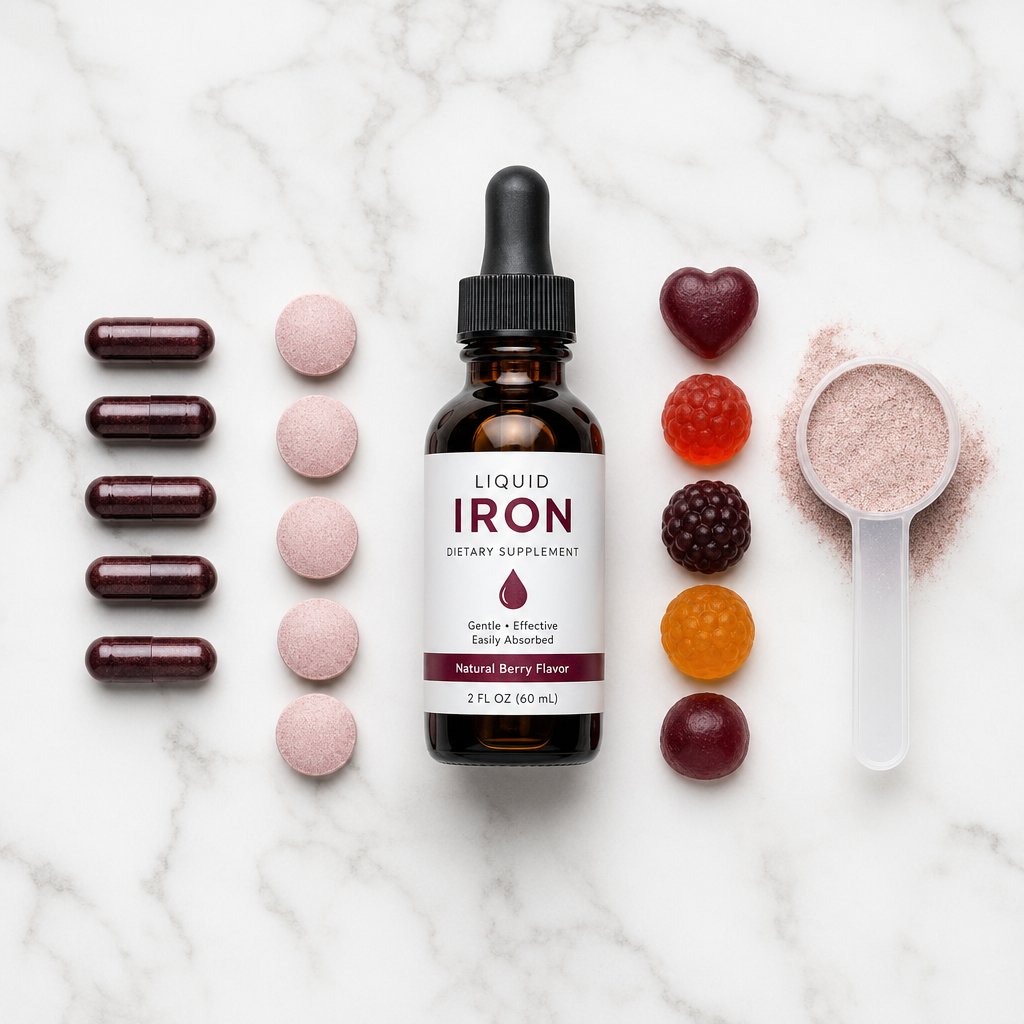
Beyond the iron compound itself, the physical format of the supplement, whether it is a tablet, capsule, liquid, gummy, or powder, introduces another layer of variability. A hard tablet must disintegrate in stomach acid before the iron is even available for absorption. Capsules, particularly those with rapid-dissolving shells, may release their contents more predictably. Liquid iron bypasses disintegration entirely, offering faster availability but often at the cost of metallic taste and tooth staining. Gummy formats appeal to people who struggle with pill swallowing, though they typically contain lower elemental iron per serving and may include sugars or other additives that affect absorption timing.
Powder and granule formats offer flexible dosing and can be mixed into beverages, making them practical for children, elderly patients, or anyone with dysphagia. Soft capsules, often used for oil-based or lipid-encapsulated iron formulations, may provide additional gastric protection.
For nutrition brands, supplement importers, and private label sellers developing iron products, this format diversity is a critical formulation decision. The ideal format balances bioavailability with consumer compliance, because the most bioavailable iron supplement in the world is useless if people stop taking it. Working with an experienced OEM/ODM contract manufacturer like ZhuFeng enables brands to develop iron supplements across all major formats, including hard capsules, tablets, powder/granules, soft capsules, gummy candy, and oral liquids, with customized formulation and scalable production tailored to their target market's tolerability preferences.
The bottom line: your choice of iron form and format shapes both how quickly your levels recover and whether you can stick with treatment long enough to get there. But even the best-absorbed supplement can be undermined, or significantly enhanced, by what you eat and drink alongside it, and when you take your dose relative to meals.
How to Maximize Iron Absorption
You could be taking the right iron form at the right dose and still shortchange your recovery if the wrong foods or habits are blocking absorption. The gap between swallowing an iron tablet and actually getting that iron into your bloodstream is filled with chemical interactions, most of which happen in the first few inches of your small intestine. Controlling what surrounds your iron dose during that critical window can meaningfully shorten the time it takes to rebuild your levels.
What Helps Your Body Absorb More Iron
Your duodenum absorbs iron most efficiently under specific conditions. A few simple habits can tilt those conditions in your favor.
- Vitamin C (ascorbic acid): The single most potent dietary enhancer of non-heme iron absorption. Vitamin C reduces ferric iron to its ferrous state, which is the form your DMT1 transporters actually recognize. Pairing your iron dose with a glass of orange juice or a 200 mg vitamin C tablet can increase uptake from a single meal substantially. Research published in the American Journal of Clinical Nutrition found that vitamin C was a significant positive predictor of non-heme iron absorption, though the effect is more pronounced with isolated doses than across a full day of mixed eating. The practical takeaway: co-ingesting vitamin C with your iron supplement, rather than simply eating more vitamin C-rich foods throughout the day, delivers the strongest benefit.
- Empty stomach: Taking iron without food removes competing nutrients from the equation entirely. Your duodenal enterocytes get first access to the iron without interference from calcium, phytates, or polyphenols. This is why most clinical guidelines recommend dosing 30 to 60 minutes before a meal or two hours after one.
- Acidic environment: Stomach acid helps dissolve iron tablets and keeps iron in its more absorbable ferrous form. Anything that raises gastric pH, like antacids or proton pump inhibitors, works against this process.
- Animal tissue: Meat, poultry, and fish contain a factor sometimes called the "meat factor" that enhances non-heme iron absorption independently of vitamin C. If you eat animal protein, including a small portion at the same meal as your iron dose can provide an additional absorption boost.
Foods and Medications That Block Iron Absorption
The list of inhibitors is longer than most people expect, and some of the biggest offenders are everyday staples.
- Calcium and dairy products: Calcium competes directly with iron for absorption pathways. A glass of milk, a yogurt, or a calcium supplement taken alongside your iron dose can significantly reduce uptake. Separate calcium-rich foods and supplements from your iron by at least two hours.
- Tannins in tea and coffee: Polyphenols in black tea, green tea, and coffee bind to iron in the gut and form insoluble complexes that your body cannot absorb. The Canadian Digestive Health Foundation recommends avoiding tea and coffee within one to two hours of your iron dose. If you are a morning coffee person who also takes iron in the morning, one of those habits needs to shift.
- Phytates in whole grains and legumes: Phytic acid, found in wheat bran, oats, beans, and lentils, is one of the strongest inhibitors of non-heme iron absorption. The same absorption study found that dietary phosphorus, largely reflecting phytate content, was the single strongest negative predictor of iron absorption from a complete diet, accounting for nearly 19% of the variation. That does not mean you should avoid these foods entirely. It means you should not eat them at the same time as your iron supplement.
- Antacids and proton pump inhibitors (PPIs): These medications reduce stomach acid, which iron needs to dissolve and convert to its absorbable form. If you take a PPI daily, talk to your doctor about timing strategies or whether a chelated iron form like iron gluconate or bisglycinate, which is less dependent on gastric acid, might be a better fit.
- Eggs: Egg yolks contain phosvitin, a phosphoprotein that binds iron and reduces its availability. Eating eggs alongside your iron supplement is not ideal, even though eggs themselves contain some iron.
Finding the Best Time of Day for Your Iron Dose
The textbook answer is simple: morning, on an empty stomach, with vitamin C. That combination gives your duodenal transporters maximum access to the iron with minimal interference. For many people, this works perfectly.
For others, it is a recipe for nausea that ruins the first half of the day. If empty-stomach dosing triggers side effects of iron supplements that make you dread your morning routine, taking iron with a small meal is an acceptable compromise. The key is choosing the right meal: a piece of fruit or a few crackers with a splash of citrus juice gives you some gastric buffering plus vitamin C, without introducing major inhibitors. Avoid pairing your dose with cereal and milk, toast with cheese, or anything involving coffee or tea.
Can i take iron at night? Yes. There is no biological rule that restricts iron absorption to morning hours. Your duodenal transporters function around the clock, and evening dosing can work well for people whose mornings are already packed with other medications or who simply tolerate iron better later in the day. The common worry that iron disrupts sleep is not supported by strong evidence. Some people report feeling mildly energized after a dose, but this is anecdotal rather than a consistent pharmacological effect. If nighttime dosing fits your routine and you take it consistently, it is far better than a morning dose you skip three days a week.
For people considering how long do iron infusions take to work compared to oral supplements, absorption optimization is one of the key reasons the timelines differ so dramatically. IV iron bypasses the gut entirely, so none of these dietary interactions apply. Oral iron, by contrast, is at the mercy of everything you eat and drink around it. That is exactly why getting these details right can shave weeks off your recovery.
Even with perfect timing and ideal food pairings, though, side effects remain the biggest threat to your progress. The GI discomfort that iron causes is real, predictable, and manageable, but only if you know which symptoms are normal, which are warning signs, and how to adjust without abandoning treatment.

Dealing with Side Effects Without Giving Up
GI discomfort is not a sign that iron is harming you. In most cases, it is a sign that unabsorbed iron is irritating your digestive tract on its way through, and it is one of the most predictable parts of the entire supplementation process. The problem is not that side effects happen. The problem is that they drive people to quit before their stores recover. A study published in the Pakistan Journal of Medical Sciences found that 40.6% of patients on oral iron therapy did not use their medication regularly or for the recommended duration, with gastrointestinal side effects being the leading reason for discontinuation. That is nearly half of all patients walking away from treatment that was actively working.
Staying on track means learning to tell the difference between discomfort that is normal and symptoms that actually need medical attention.
Normal Side Effects vs Warning Signs
Most side effects from ferrous sulphate iron tablets and other oral iron forms fall into a short, predictable list. GoodRx clinical pharmacists identify the most common ones as nausea, constipation, diarrhea, stomach pain, heartburn, metallic taste, and changes in stool color. These are bothersome, sometimes enough to ruin your morning, but they are not dangerous.
Dark or black stools deserve special attention because they cause the most alarm. When you take iron, unabsorbed iron reacts with digestive enzymes and turns your stool dark green to black. This is expected and harmless. The stool may be darker than usual and slightly firm, but it should have a normal texture and a relatively normal smell.
The warning sign to watch for is melena: stool that is jet black, shiny, sticky or tar-like in texture, and has a strong foul odor. Melena indicates bleeding in the upper gastrointestinal tract, typically from the esophagus, stomach, or duodenum, and it requires prompt medical evaluation. The key differences are texture and smell. Iron-related dark stool is formed and odorless or normal-smelling. Melena is sticky, almost like tar, and distinctly foul. If you also experience dizziness, weakness, abdominal pain, or vomit blood or material that looks like coffee grounds, seek emergency care immediately.
Other red flags that go beyond normal side effects include severe or worsening stomach pain (which could indicate an ulcer forming from prolonged GI irritation), rectal bleeding or bright red blood in stool, and persistent vomiting that prevents you from keeping the supplement down. These warrant a call to your doctor, not just a wait-and-see approach.
Practical Strategies to Manage GI Discomfort
The goal is never to simply endure side effects through willpower. It is to adjust your approach so that treatment remains tolerable for the full 3 to 6 months your body needs. Here are specific strategies matched to each common complaint:
- For constipation: Increase daily water intake to at least 8 glasses and add fiber-rich foods like fruits, vegetables, and legumes (eaten separately from your iron dose). If dietary changes are not enough, an over-the-counter stool softener like docusate sodium can help without interfering with iron absorption. Switching from ferrous sulfate 325 to a chelated form like iron bisglycinate often reduces constipation significantly, since less unabsorbed iron reaches the colon.
- For nausea: Try taking your iron with a small, vitamin C-rich snack instead of on a completely empty stomach. A few strawberries or a small glass of orange juice buffers the stomach while still supporting absorption. Splitting your daily dose into two smaller doses can also reduce the nausea spike. If nausea persists, chelated iron products or extended-release formulations may be gentler on the stomach lining.
- For diarrhea: Reduce your dose temporarily and rebuild gradually. Staying hydrated is essential. Avoid greasy or fried foods, caffeine, and alcohol while your gut adjusts. If diarrhea continues beyond a few days, your doctor may recommend a different iron form or dosing schedule.
- For metallic taste: Chewing sugar-free gum or rinsing with mouthwash immediately after taking your supplement can mask the taste. Liquid iron formulations tend to cause this more than tablets or capsules.
The adherence study also found that concerns about weight gain led 15.6% of patients to stop treatment entirely. Iron supplements do not directly cause weight gain. What can happen is that as anemia improves, appetite returns to normal, which may lead to eating more. Being aware of this pattern helps you manage it proactively rather than blaming the supplement and abandoning it.
Why Many People Quit Too Early
Here is the psychological trap that catches so many people: iron side effects show up within days, but symptom improvement takes weeks. You feel worse before you feel better, and that mismatch creates a powerful urge to stop. If you are wondering how long do iron supplements take to work and you are only two weeks in, the honest answer is that you likely have not given them enough time yet.
Gradual improvement is the other hidden challenge. When fatigue lifts slowly over the course of a month, you may not even notice it happening. You adjust to each small increment of energy without registering it as progress. This is why tracking your symptoms matters. A simple weekly log, rating your energy, brain fog, headaches, and exercise tolerance on a scale of 1 to 10, creates a record you can look back on. The difference between week one and week four is often striking when you see it written down, even if it felt invisible day to day.
Commit to at least 4 to 6 weeks of consistent supplementation before evaluating whether your iron is working. If side effects are the barrier, adjust the form, the dose, or the timing rather than stopping outright. Iron gummies for women, liquid formulations, or alternate-day dosing schedules all offer paths to stay in the game when standard ferrous sulphate iron tablets feel like too much.
Sticking with treatment long enough to see results is half the battle. The other half is knowing what those results actually look like, not just in how you feel, but in the lab values that tell the full story of your recovery.
Connecting Lab Values to How You Actually Feel
Your doctor tracks numbers. You track how you feel getting out of bed. The frustrating part of iron recovery is that these two things do not always move in sync. A blood test might show your hemoglobin climbing steadily while you still feel wiped out by 2 PM. Or your energy might bounce back weeks before your ferritin reaches a level your doctor considers adequate. Understanding which lab markers connect to which symptoms gives you a much clearer picture of where you actually stand, and how long does it take for iron supplements to work in your specific case.
Key Blood Tests to Track During Iron Treatment
When your doctor orders bloodwork to monitor your iron therapy, the results page can feel like alphabet soup. Here is what each marker actually tells you and why it matters for your recovery.
Hemoglobin (Hb) is the headline number. It measures the oxygen-carrying protein inside your red blood cells, and it is the primary marker clinicians use to define anemia and track treatment response. The World Health Organization defines anemia as hemoglobin below 13.0 g/dL in adult men, below 12.0 g/dL in non-pregnant women, and below 11.0 g/dL in pregnant women. When hemoglobin is low, every tissue in your body is starved of oxygen, which is why fatigue, dizziness, and brain fog dominate the symptom picture. As hemoglobin rises during treatment, these oxygen-dependent symptoms are usually the first to improve.
Ferritin reflects your stored iron. Think of it as your body's iron savings account, while hemoglobin is the checking account that funds daily operations. A ferritin level below 30 ng/mL is generally indicative of iron deficiency, though symptoms like hair loss and restless legs can appear at levels well above that threshold. Research on non-anemic iron-deficient women found that recent hair loss was significantly correlated with ferritin at or below 20 mcg/L, while restless legs syndrome was linked to ferritin at or below 50 mcg/L. Ferritin is also an acute phase protein, meaning it rises during inflammation regardless of iron status, so your doctor may check inflammatory markers like CRP alongside it to get an accurate reading.
Serum iron and transferrin saturation (TSAT) provide a snapshot of how much iron is circulating in your blood right now. Transferrin is the transport protein that carries iron from your gut and storage sites to the bone marrow. A transferrin sat below 20% suggests that not enough iron is reaching the places that need it, even if ferritin has not bottomed out yet. These values fluctuate throughout the day and can be affected by a recent meal, so they are best interpreted alongside hemoglobin and ferritin rather than in isolation.
TIBC (total iron-binding capacity) measures how much transferrin is available and waiting to be loaded with iron. When your stores are depleted, your body produces more transferrin to scavenge every available iron molecule, so TIBC rises. As iron stores recover, TIBC gradually falls back toward normal. It is essentially an inverse mirror of your iron status: high TIBC means low iron, and vice versa.
Reticulocyte count is the earliest responder on this list. Reticulocytes are immature red blood cells freshly released from the bone marrow, and their count begins rising within 5 to 10 days of starting iron therapy. You will not feel this change, but it is the first laboratory proof that your body is responding. In a study of anemic patients with chronic inflammatory conditions, the increase in reticulocyte count after just one week of oral iron was one of the strongest predictors of a meaningful hemoglobin response at six weeks.
| Lab Marker | What It Measures | When It Improves | Connected Symptoms |
|---|---|---|---|
| Reticulocyte Count | New red blood cells released from bone marrow | 5-10 days (earliest measurable response) | No direct symptom link yet, but confirms your body is responding to treatment |
| Hemoglobin (Hb) | Oxygen-carrying capacity of your blood | Rises ~1-2 g/dL per month; should increase by 2 g/dL within 4-8 weeks | Fatigue, brain fog, dizziness, headaches, breathlessness, palpitations |
| Serum Iron / Transferrin Saturation | Iron currently circulating and available for use | Begins rising within 1-2 weeks | General energy levels; low TSAT reflects inadequate iron delivery to tissues |
| TIBC | Available transferrin capacity (inversely related to iron stores) | Gradually decreases over weeks to months | No direct symptom link; used to confirm iron stores are rebuilding |
| Ferritin | Stored iron reserves in the body | Lags behind hemoglobin; 3-6 months to reach target (50-100+ ng/mL) | Hair loss, brittle nails, restless legs syndrome, cold intolerance |
Matching Your Lab Results to How You Feel
Here is where the numbers start to mean something personal. Different symptoms respond to different markers, and they recover on different timelines. Knowing which lab value drives which symptom helps you understand why some complaints resolve quickly while others linger for months.
Fatigue and brain fog are hemoglobin-driven. These symptoms often begin improving once hemoglobin crosses a certain threshold, sometimes even before it reaches the official normal range. If your hemoglobin was 8.5 g/dL and it climbs to 10.5 g/dL after a month on 325 mg ferrous sulfate, you will likely notice a meaningful difference in daily energy, even though you are technically still anemic. Clinical guidelines note that hemoglobin should increase by 2 g/dL within 4 to 8 weeks of adequate iron replacement. If it does not, that is a signal to reassess your treatment approach rather than simply wait longer.
Restless legs and palpitations tend to improve relatively early in treatment. Restless legs syndrome is strongly associated with iron status, and many people report relief within the first few weeks as serum iron and transferrin saturation begin climbing. Heart palpitations, often triggered by the cardiovascular system compensating for reduced oxygen delivery, typically ease as hemoglobin recovers. These are encouraging early wins that can help you stay motivated through the longer slog of ferritin recovery.
Hair loss and brittle nails are the slow responders, and they are ferritin-dependent rather than hemoglobin-dependent. Your hair follicles need adequate stored iron to maintain their growth cycle, and nails require sustained nutrient delivery over months to grow out stronger. Because ferritin is the last marker to normalize, often taking 3 to 6 months after hemoglobin has already returned to normal, these symptoms are typically the last to resolve. If you are taking gummy iron supplements or any other form and wondering why your hair is still thinning even though your energy is back, the answer is almost certainly that your ferritin has not caught up yet.
Visible physical changes offer another way to track progress without a blood draw. Pale inner eyelids, a classic sign of anemia, gradually regain their pink color as hemoglobin rises. Nail beds shift from pale or bluish to a healthier pink. Spoon-shaped nails (koilonychia), a sign of severe iron deficiency, slowly flatten and strengthen as ferritin rebuilds. These changes are subtle week to week but noticeable over the course of a few months.
The practical lesson here is that how long does it take for iron pills to work depends entirely on which symptom you are asking about. Fatigue may lift in weeks. Hair loss may take half a year. Both timelines are normal, and both are driven by different biological processes responding to different lab markers. Tracking your bloodwork alongside your symptoms gives you the clearest possible view of whether your treatment is on track, or whether something deeper is preventing your body from responding the way it should.

When Iron Tablets Are Not Enough
Sometimes the lab values and the symptoms tell the same discouraging story: nothing is moving. You have been consistent with your supplement, adjusted your timing, paired it with vitamin C, and avoided coffee and calcium around your dose. Weeks have turned into months, and your hemoglobin is barely budging. At some point, the question shifts from "how long for iron tablets to work" to "are they going to work at all?" Recognizing when oral iron is failing, and understanding why, is the difference between spinning your wheels and getting the help that actually fixes the problem.
Red Flags That Your Iron Tablets Are Not Working
Not every slow recovery means treatment has failed. But certain patterns should prompt a conversation with your doctor rather than another month of waiting.
- No symptom improvement after 4 to 6 weeks: By this point, hemoglobin should be climbing and you should feel at least some reduction in fatigue iron supplements are meant to address. If you feel exactly the same as day one, something is interfering with absorption or utilization.
- Hemoglobin not rising after 2 to 3 months: Clinical guidelines state that hemoglobin should increase by 2 g/dL within 4 to 8 weeks of adequate iron replacement. If your levels are flat or rising far below that benchmark, oral therapy alone may not be sufficient.
- Persistent or worsening side effects that prevent adherence: If GI symptoms are so severe that you cannot take your supplement consistently, the treatment is effectively not happening. Tolerability failure is treatment failure.
- Recurrent anemia after completing a full course: You finished 3 to 6 months of supplementation, your levels normalized, and within weeks or months they dropped again. This strongly suggests an ongoing source of iron loss or an absorption problem that was never identified.
- Transferrin sat remaining below 20% despite months of supplementation: A persistently low transferrin sat indicates that iron is not reaching the bloodstream in meaningful amounts, regardless of how much you are swallowing.
- Unexplained weight changes alongside persistent fatigue: Some patients wonder can low iron cause weight gain, and while iron deficiency itself does not directly add pounds, the fatigue and metabolic disruption it causes can reduce physical activity and alter appetite regulation. If weight changes accompany non-responsive anemia, it may point to a thyroid or inflammatory condition masquerading as simple iron deficiency.
Why Oral Iron Sometimes Fails
When oral iron does not deliver results, the instinct is to blame the supplement. In reality, the problem almost always lies upstream or downstream of the pill itself. Several conditions can quietly sabotage absorption or create losses that outpace repletion.
Undiagnosed malabsorption conditions are among the most common culprits. Celiac disease damages the duodenal villi, the exact tissue responsible for iron uptake, and can render oral supplementation nearly useless until a strict gluten-free diet restores intestinal architecture. H. pylori infection is another frequently overlooked cause. Research shows that H. pylori is a major etiological factor for refractory iron deficiency anemia, with a higher association rate than celiac disease in many populations. The infection causes chronic gastritis, reduces stomach acid needed for iron dissolution, and triggers hepcidin production through IL-6 signaling, all of which block absorption. Inflammatory bowel disease creates a similar hepcidin-driven blockade while simultaneously causing GI blood loss that deepens the deficit.
Ongoing unidentified blood loss is the other major category. Slow GI bleeding from ulcers, polyps, or angiodysplasia can drain iron faster than oral supplements can replace it. Heavy menstruation that has not been formally evaluated or managed creates the same imbalance. If you are losing more iron each month than you are absorbing, no amount of what are ferrous sulphate tablets or any other oral form will close the gap.
Incorrect diagnosis is a possibility that deserves honest consideration. Anemia of chronic disease, driven by inflammation rather than true iron deficiency, does not respond to iron supplementation because the problem is not a lack of iron but rather the body's inability to mobilize it. In this condition, hepcidin overexpression blocks iron release from enterocytes, macrophages, and hepatocytes, making oral iron fundamentally ineffective regardless of dose or form. Distinguishing true iron deficiency from anemia of chronic disease often requires checking the soluble transferrin receptor (sTfR) and the sTfR/log ferritin index, tests that many initial workups skip.
Medication interactions round out the list. Proton pump inhibitors, antacids, certain antibiotics (tetracyclines, fluoroquinolones), and thyroid medications like levothyroxine can all reduce iron absorption when taken in close proximity. If you are on multiple medications, a careful timing review with your pharmacist or doctor may reveal a conflict that is easy to fix.
How IV Iron Compares to Oral Supplements
When oral iron fails or is not feasible, intravenous iron offers a fundamentally different delivery route. Instead of relying on your gut to absorb small amounts of ferrous iron each day, IV iron bypasses the intestinal tract entirely and delivers iron directly into the bloodstream. The difference in speed is dramatic.
With oral supplementation, hemoglobin typically rises by about 1 to 2 g/dL per month. With IV iron, hemoglobin improvements are often visible within one to two weeks, and ferritin recovery can occur within two to four weeks rather than the three to six months oral therapy requires. IV iron also avoids the gastrointestinal side effects that derail so many oral treatment courses, since no free iron passes through the gut lumen.
Modern IV iron formulations like ferric carboxymaltose and ferumoxytol allow high doses to be administered in a single visit, sometimes replacing the entire iron deficit in one or two infusion sessions. The safety profile has improved substantially since older high-molecular-weight iron dextran formulations were phased out. A review of the FDA adverse event database found that the cumulative rate of serious adverse events for non-dextran IV iron formulations is extremely low, less than 1 in 200,000 administrations. Minor infusion reactions, such as flushing, mild headache, or transient muscle aches, can occur but typically resolve by slowing the infusion rate.
IV iron is generally considered when oral iron is poorly tolerated, when absorption is impaired by conditions like celiac disease or IBD, when anemia is severe enough to require rapid correction (such as before surgery or in late pregnancy), or when a patient has simply not responded to an adequate oral trial. It is not reserved for emergencies or worst-case scenarios. As clinicians increasingly recognize, choosing IV iron does not mean the condition is more serious. Many patients opt for it because it works faster, requires fewer months of daily compliance, and fits their life better.
The decision between oral and IV iron should always be made with your healthcare provider, who can weigh your lab results, underlying conditions, and personal preferences. If your ferrous tablets have had a fair trial of two to three months without adequate response, that conversation is not premature. It is overdue.
Whether you continue with oral iron, switch to IV, or combine both approaches, the final piece of the puzzle is choosing the right supplement strategy to match your situation and sticking with it long enough to reach the finish line.
Choosing the Right Iron Supplement for Faster Results
Everything covered so far, the timeline, the absorption strategies, the side effect management, the lab tracking, converges on one practical decision: which iron supplement gives you the best chance of actually finishing the course? The answer is not the same for everyone. Your ideal choice depends on how severe your deficiency is, how sensitive your gut is, and what format you will realistically take every single day for months without skipping.
If you are still wondering how to increase my ferritin levels as efficiently as possible, the decision tree below distills the key factors into a clear framework.
Matching the Right Supplement to Your Situation
Five variables matter most when selecting an iron supplement. Rank them by your personal priorities, and the right product usually becomes obvious.
- Elemental iron content: This is the actual absorbable iron per dose, not the compound weight on the label. A 325 mg ferrous sulfate tablet (FeSO4) delivers only about 65 mg of elemental iron, while a typical iron bisglycinate capsule provides 20 to 36 mg. Higher elemental iron does not always mean faster results if it also means worse side effects and skipped doses.
- Supplement form (chelated vs salt-based): Salt-based forms like ferrous sulfate, fumarate, and gluconate rely exclusively on DMT1 transporters for absorption. Chelated iron bisglycinate can also use the PepT1 peptide transporter, giving it dual-pathway access that reduces the amount of free iron spilling into the colon. Less colonic iron means fewer side effects.
- Product format: Tablets, capsules, liquids, gummies, and powders each have trade-offs. Hard tablets must disintegrate before iron becomes available. Capsules dissolve more predictably. Liquids bypass disintegration entirely but may stain teeth. Gummies appeal to people who hate swallowing pills but typically deliver lower elemental iron per serving.
- Tolerability profile: Does iron cause constipation for you? Does it trigger nausea on an empty stomach? Your history with GI side effects should heavily influence your choice. A supplement you can tolerate daily for six months will always outperform one you abandon after two weeks.
- Absorption enhancers included: Some formulations pair iron with vitamin C to boost the ferric-to-ferrous reduction at the enterocyte surface. Others include B12, folate, and B6 to support downstream red blood cell production. These additions can simplify your routine by eliminating the need for separate supplements.
Here is how to take iron supplements based on your specific scenario:
- Maximum potency needed, GI tolerance is not an issue: Ferrous sulfate or ferrous fumarate tablets remain the most cost-effective workhorses. A standard iron 325 mg ferrous sulfate tablet delivers 65 mg of elemental iron per dose, and products like Ferrex 150 push that even higher. Take on an empty stomach with vitamin C for best absorption. This approach works well for people with moderate to severe anemia who need rapid hemoglobin correction and can handle the GI trade-off.
- Side effects are a barrier: Switch to chelated iron bisglycinate in capsule form. You will absorb more iron per milligram ingested while experiencing significantly fewer GI symptoms. The lower elemental dose (typically 25 to 36 mg) is offset by superior bioavailability, delivering comparable or better net iron to the bloodstream. Alternate-day dosing further improves tolerability by allowing hepcidin levels to reset between doses.
- Children, pregnant women, or pill-averse adults: Gummy and liquid formats provide accessible alternatives. Liquid iron like MegaFood Blood Builder Liquid Iron offers flexible dosing and fast availability, while gummy options make daily compliance easier for anyone who dreads swallowing capsules. Pregnant women should confirm their chosen product meets the recommended 27 mg daily elemental iron intake and does not conflict with their prenatal vitamin's iron content.
- Malabsorption conditions (celiac, IBD, post-bariatric surgery): Chelated forms or heme iron polypeptide are preferred because they are less dependent on gastric acid and standard DMT1 capacity. If oral iron has failed after an adequate trial, IV iron is likely the better path forward, as discussed in the previous section.
Why Consistency Beats Perfection
The single most important predictor of iron recovery is not which form you choose or what time of day you take it. It is whether you take it consistently, day after day, for the full treatment duration. A study on iron supplementation adherence found that nearly 41% of patients failed to use their iron regularly or for the recommended duration. Those patients did not recover, regardless of which product they were prescribed.
Perfection is not the standard. You do not need to hit an empty stomach every single morning or pair every dose with exactly 200 mg of vitamin C. What you need is a supplement that fits your life well enough that you will not skip it. If that means taking iron glycinate with dinner instead of ferrous sulfate on an empty stomach at 6 AM, the dinner option wins every time, because it is the one that actually happens.
Does iron cause constipation that makes you dread your daily dose? Switch forms. Does the metallic taste of liquid iron make you gag? Try a capsule or gummy. Does your morning routine already include four other pills and a cup of coffee? Move your iron to the evening, two hours after your last meal. Every adjustment that keeps you on track is worth making.
The math is simple: a 25 mg chelated iron dose taken consistently for five months delivers far more total iron to your bloodstream than a 65 mg ferrous sulfate dose taken sporadically for six weeks before you give up. How to take iron supplements effectively is less about optimizing each individual dose and more about protecting the habit over the long haul.
A Note for Brands Developing Iron Supplements
For nutrition brands, supplement importers, and private label sellers, the clinical evidence points clearly toward a market opportunity: consumers need iron products that balance bioavailability with real-world compliance. The high discontinuation rates associated with traditional ferrous salts represent both a health problem and a product design problem. Formats that reduce GI exposure, whether through chelation, controlled release, or alternative delivery systems, directly address the tolerability gap that causes nearly half of patients to abandon treatment.
Developing iron supplements across multiple formats allows brands to serve different consumer segments with the same core formulation. An experienced OEM/ODM manufacturer like ZhuFeng enables customized iron supplement development across all major product formats, including hard capsules, tablets, gummies, powders, soft capsules, and oral liquids, with scalable production designed to bring market-ready products to consumers who need effective, well-tolerated iron supplementation. That flexibility lets brands match their product line to the specific tolerability preferences and compliance patterns of their target audience, rather than forcing a one-size-fits-all approach that clinical data shows does not work.
Whether you are a consumer choosing your next bottle of iron or a brand formulating one, the principle is the same: the best iron supplement is the one that gets taken every day, for as long as it takes, until the job is done.
Frequently Asked Questions About Iron Tablets
1. How do I know if my iron tablets are working?
The earliest measurable sign is a rise in reticulocyte count within 5-10 days, detectable through a blood test. Physically, you may notice reduced fatigue, fewer headaches, and better concentration around weeks 3-4. Dark stools appearing within the first few days confirm the supplement is passing through your system, though this alone does not indicate absorption. Hemoglobin should increase by approximately 1-2 g/dL per month. If you see no symptom improvement after 4-6 weeks, consult your doctor to rule out absorption issues or an underlying condition.
2. Why do I still feel tired after taking iron supplements for two weeks?
Two weeks is still very early in the iron recovery process. During this phase, your bone marrow is producing new reticulocytes (immature red blood cells), but these have not yet matured enough to meaningfully improve oxygen delivery to your tissues. Most people begin noticing reduced fatigue around weeks 3-4, when hemoglobin starts climbing measurably. Full energy recovery often takes 2-3 months. If fatigue persists beyond 6 weeks of consistent supplementation, your doctor may need to check for malabsorption conditions, ongoing blood loss, or medication interactions that could be blocking absorption.
3. Should I take iron tablets every day or every other day?
Recent research shows that alternate-day dosing may improve the percentage of iron absorbed from each dose. This happens because hepcidin, the hormone regulating iron absorption, spikes after each dose and stays elevated for about 24 hours, suppressing absorption of the next dose. A 2025 meta-analysis of 11 trials found no significant difference in hemoglobin outcomes between daily and alternate-day regimens, while alternate-day dosing was generally better tolerated. For severe anemia requiring rapid correction, daily dosing may still be preferred. Discuss with your healthcare provider which schedule suits your severity and tolerance.
4. How long should I continue taking iron tablets after my hemoglobin returns to normal?
Clinical guidelines recommend continuing iron supplementation for 3-6 months after hemoglobin normalizes. This is because hemoglobin recovery and ferritin (stored iron) recovery operate on different timelines. Your hemoglobin may reach normal range within 2-3 months, but ferritin often lags significantly behind. Stopping too early leaves your iron reserves depleted, making you vulnerable to relapse. The target is generally a ferritin level of 50-100 ng/mL or above, depending on your clinical context. Your doctor can confirm through bloodwork when your stores are adequately replenished.
5. What is the best form of iron supplement for fewer side effects?
Iron bisglycinate (chelated iron) consistently shows the fewest gastrointestinal side effects in clinical studies, with 70-80% fewer GI complaints compared to ferrous sulfate. It absorbs 2-3 times better at equivalent doses and can be taken with food without significant absorption loss. Ferrous gluconate is a milder salt-based alternative if chelated forms are unavailable. For brands developing consumer-friendly iron products, manufacturers like ZhuFeng (https://en.ahzfsw.com/service.html) offer OEM/ODM production across multiple formats including capsules, gummies, and liquids, enabling formulations that prioritize both bioavailability and tolerability.