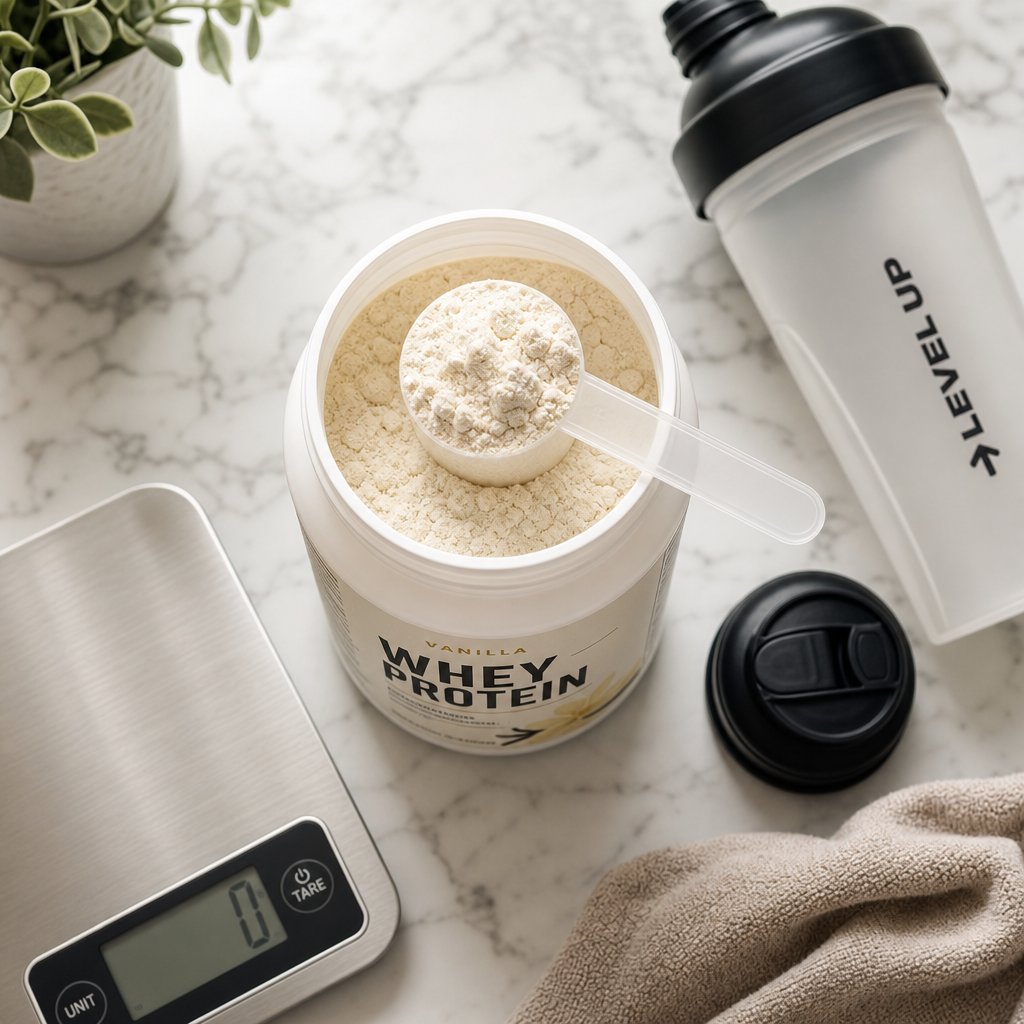
How Much Protein Is Really in One Scoop
You grabbed a tub of protein powder, scooped out a heaping serving, and tossed it into your shaker. But how much protein in a scoop of protein powder are you actually getting? The answer is not as straightforward as the front label suggests.
The Quick Answer to Protein Per Scoop
A single scoop of protein powder typically delivers between 20 and 30 grams of protein. That range covers most whey, casein, and plant-based options on the market. However, outliers exist on both ends of the spectrum.
Most protein powders provide 20-30g of protein per scoop. Budget blends and hemp proteins can dip as low as 10-15g, while mass gainers with oversized scoops may exceed 50g.
Here is the detail that trips people up: the total weight of powder in your scoop is not the same as the protein content. A standard scoop holds roughly 30 grams of powder, yet only about 24 grams of that may be actual protein. The remaining 6 grams? That is a mix of sweeteners, flavoring agents, emulsifiers, and thickeners taking up space in your serving.
So when you ask how much protein is in a scoop of protein powder, the real answer depends on what else the manufacturer packed into that formula.
Why One Number Does Not Fit All Brands
Imagine two products sitting side by side on a shelf. Both use a 30g scoop. One delivers 27g of protein because it relies on a pure whey isolate with minimal additives. The other provides only 20g because it uses whey concentrate blended with maltodextrin, gums, and artificial creamers. Same scoop weight, very different protein yield.
Several factors drive this variation:
- Protein type (isolate vs. concentrate vs. plant blend)
- Flavoring systems that displace protein content
- Fillers like maltodextrin or tapioca starch that bulk up volume without adding nutritional value
- Scoop size itself, which ranges from 25g for lean isolates to over 100g for mass gainers
How much protein in one scoop of protein powder ultimately comes down to one metric: the protein percentage relative to total scoop weight. A quality whey isolate hits 85-90%, meaning nearly every gram in that scoop is working protein. A heavily flavored concentrate might land closer to 65-70%.
This guide breaks down every protein type, compares popular brands by actual protein density, and teaches you how to spot label tricks like amino spiking. Whether you are tracking macros for a cut or simply trying to hit your daily protein target, knowing how much protein is in 1 scoop of protein powder puts you in control of what goes into your body.
Scoop Size vs Actual Protein Content Explained
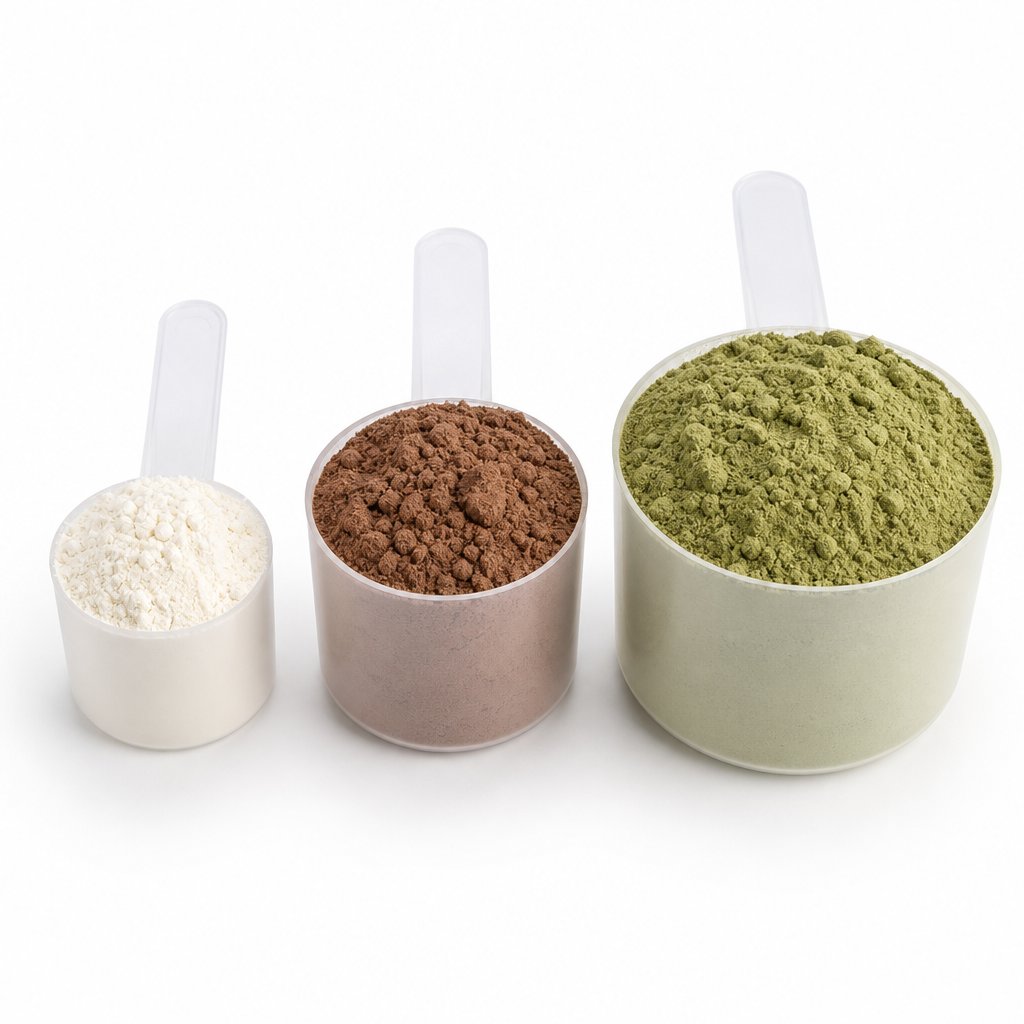
That plastic scooper buried inside your protein tub is not a universal measurement. The size of protein powder scoop varies dramatically between products, and a bigger scoop does not guarantee more protein. It often just means more fillers, carbs, or fat riding along for the trip.
So how much is a scoop of protein powder in actual weight? The industry standard sits around 30 grams of total powder for most whey-based products. Plant proteins tend to use larger scoops in the 35-45g range because plant sources are less protein-dense by nature. Mass gainers push well past 100g per scoop to pack in extra carbohydrates and calories. The protein scoop size is a design choice driven by formulation, not a reflection of protein quality.
Standard Scoop Sizes by Protein Type
When you wonder how many grams in a scoop of protein powder, the answer depends entirely on what type you are using. Here is how the major categories compare:
| Protein Type | Typical Scoop Weight (g) | Typical Protein Per Scoop (g) | Protein Percentage |
|---|---|---|---|
| Whey Isolate | 30-32g | 25-27g | 83-90% |
| Whey Concentrate | 32-35g | 22-25g | 65-75% |
| Plant Blend (Pea + Rice) | 35-45g | 20-25g | 55-70% |
| Casein | 33-36g | 24-26g | 70-78% |
| Mass Gainer | 100-170g | 30-50g | 25-35% |
| Collagen | 10-20g | 9-18g | 85-95% |
Notice the pattern: a plant blend scoop weighing 40g might deliver the same 24g of protein as a whey isolate scoop weighing only 30g. The extra 10 grams in that plant scoop come from fiber, natural starches, and flavoring compounds. How much is in a protein powder scoop depends far more on formulation than on physical scoop volume.
How to Measure Without a Scoop
Lost your scooper? It happens more often than brands would like to admit. You have a few reliable options:
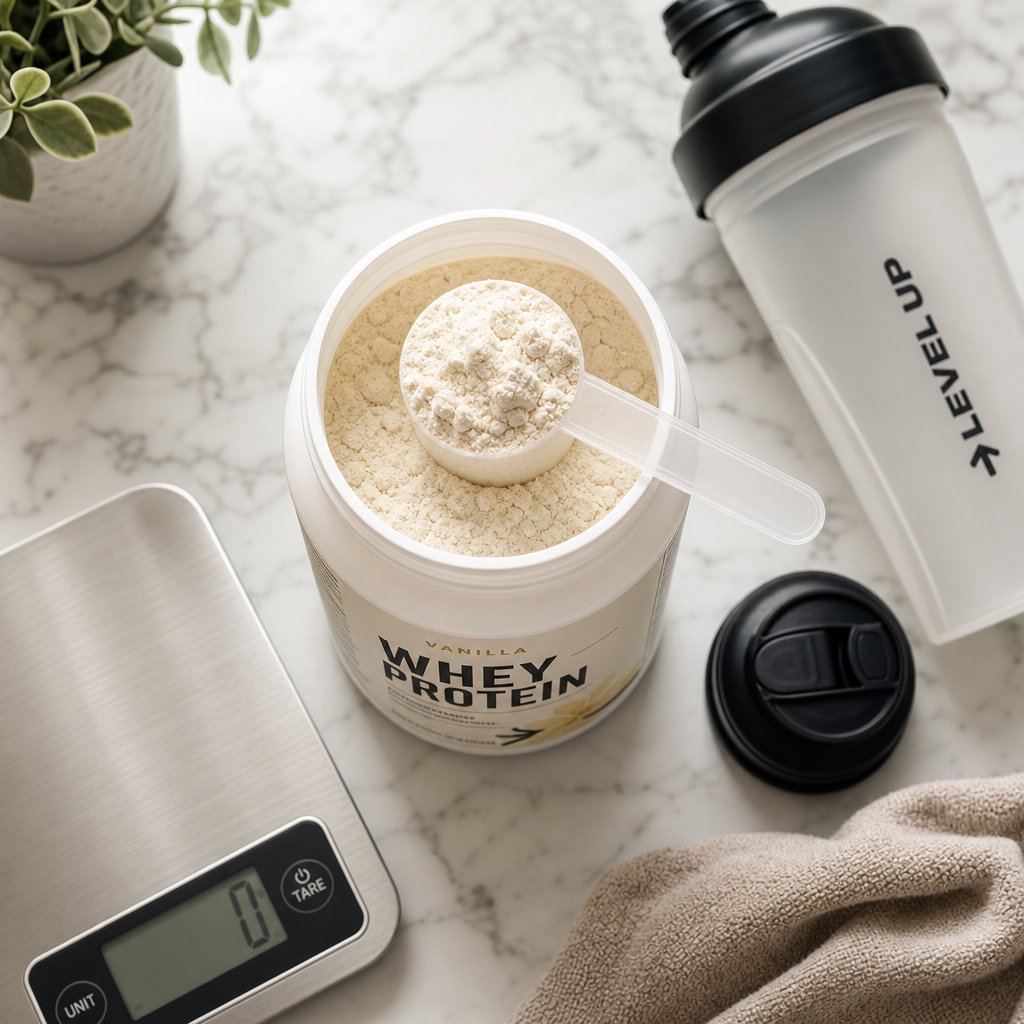
- A kitchen scale is the most accurate method. Weigh out the serving size listed in grams on your nutrition label.
- A standard 30g scoop is roughly equivalent to 2 level tablespoons of most whey powders.
- For plant proteins with larger serving sizes (40-45g), plan on closer to 3 tablespoons.
- Teaspoon conversions work too: one tablespoon equals 3 teaspoons, so a 30g serving is approximately 6 level teaspoons.
Keep in mind that density varies between products. A fluffy, airy powder will fill a tablespoon differently than a dense, finely milled isolate. When precision matters for your macros, a digital kitchen scale removes all guesswork.
For international readers working in imperial measurements, remember that protein labels always list serving size in grams regardless of where the product is sold. One ounce equals roughly 28 grams, so a typical whey scoop is just over one ounce of powder. How much is in a scoop of protein powder stays consistent whether you are reading the label in New York or London, but the tablespoon shortcut works best with standard US measuring spoons (15 mL capacity).
The real takeaway here is simple: protein powder scoop size tells you how much total powder you are consuming, not how much usable protein lands in your shake. That distinction becomes even more important when you compare specific protein types side by side and see just how wide the gap between scoop weight and actual protein content can get.
Protein Per Scoop Across Every Protein Type
The gap between scoop weight and actual protein content shifts dramatically depending on the protein source itself. Each type of protein powder carries a unique protein density, amino acid profile, and digestibility score that determines how much of that label number your body can actually use. Here is the full breakdown you will not find in one place anywhere else.
Whey Protein Variants and Their Protein Density
Whey remains the gold standard for protein supplementation, but not all whey is created equal. The processing method determines how much protein is in one scoop of whey protein you end up with.
Whey Concentrate undergoes minimal processing, resulting in a powder that is up to 80% protein by weight. A typical 32g scoop delivers around 22-25g of protein. The remaining weight comes from lactose, fat, and moisture. It is the most affordable option and retains more naturally occurring growth factors and immunoglobulins.
Whey Isolate goes through additional filtration steps that strip away most fat and carbohydrates, pushing protein content to 90% or more by weight. A 30g scoop typically yields 25-27g of protein. The amino acid types remain virtually identical to concentrate, but you get more protein per gram of powder with less lactose, making it a better fit for those with mild dairy sensitivities.
Whey Hydrolysate takes isolate one step further by pre-digesting the protein chains into smaller peptides. Protein content per scoop is similar to isolate (25-27g per 30g scoop), but absorption speed increases. The trade-off is a noticeably bitter taste that requires heavier flavoring systems, which can slightly reduce the protein percentage in flavored versions.
So one scoop of whey protein is how much protein? Depending on the variant, you are looking at 22-27g from a standard scoop. The difference between concentrate and isolate comes down to roughly 3-5g of protein per serving, a gap that adds up over weeks of daily use.
Plant-Based Protein Per Scoop Breakdown
Plant proteins face a structural challenge: they are naturally less protein-dense than dairy sources and often require larger scoops to deliver comparable numbers. Here is how the major plant options stack up.
Pea Protein Isolate leads the plant category with protein content around 80-85% by weight. A 35g scoop typically provides 24-27g of protein. It is rich in branched-chain amino acids and lysine but slightly lower in methionine and cysteine.
Soy Protein Isolate matches pea protein closely, delivering 25-27g per 35g scoop with a protein concentration around 80-90%. It offers a complete amino acid profile, meaning all nine essential amino acids are present in adequate amounts.
Rice Protein is gentler on digestion but less protein-dense, typically providing 22-24g per 40g scoop. It is low in lysine but high in sulfur-containing amino acids, which is why manufacturers often blend it with pea protein for a more complete profile.
Hemp Protein sits at the lower end with roughly 50% protein content. A 30g scoop delivers only about 12-15g of protein. The upside is its naturally occurring omega-3 fatty acids and fiber, but if raw protein per scoop is your priority, hemp falls short.
Specialty Proteins From Collagen to Mass Gainers
Casein Protein delivers 24-26g per 34g scoop with a slow-digesting profile that makes it popular before bed. Its protein percentage (70-78%) is slightly lower than whey isolate because casein powder retains more moisture and requires more stabilizers.
Egg White Protein offers 23-25g per 33g scoop and provides an excellent amino acid profile without any dairy. It is highly digestible and works well for people avoiding both lactose and plant-based options.
Collagen Protein uses smaller scoops (10-20g) and delivers 9-18g of protein per serving. However, collagen is not a complete protein. It lacks tryptophan entirely and is low in several other essential amino acids, making it unsuitable as a primary muscle-building supplement.
Mass Gainers use oversized scoops of 100-170g but only 25-35% of that weight is protein. You might see 50g of protein on the label, but it comes packaged with 80-120g of carbohydrates and significant calories. The protein-per-gram-of-powder ratio is the lowest of any category.
Here is the complete comparison in one table:
| Protein Type | Typical Scoop Size | Protein Per Scoop | Protein % | Best Use Case |
|---|---|---|---|---|
| Whey Concentrate | 32-35g | 22-25g | 70-80% | General daily use, budget-friendly |
| Whey Isolate | 30-32g | 25-27g | 85-90% | Lean muscle, low-carb diets |
| Whey Hydrolysate | 30-33g | 25-27g | 80-90% | Fast post-workout recovery |
| Casein | 34-36g | 24-26g | 70-78% | Overnight muscle repair |
| Pea Protein Isolate | 33-38g | 24-27g | 72-82% | Vegan muscle building |
| Soy Protein Isolate | 30-36g | 25-27g | 80-90% | Complete plant-based nutrition |
| Rice Protein | 38-42g | 22-24g | 55-65% | Sensitive digestion, allergen-free |
| Hemp Protein | 30-35g | 12-15g | 45-55% | Whole-food nutrition, omega-3s |
| Egg White Protein | 32-36g | 23-25g | 72-80% | Dairy-free, high bioavailability |
| Collagen | 10-20g | 9-18g | 85-95% | Skin, joint, and gut support |
| Mass Gainer | 100-170g | 30-50g | 25-35% | Caloric surplus, weight gain |
How much protein in a scoop of whey versus a scoop of hemp? The difference can be 12-15g from a similar-sized scoop. That gap matters when you are counting every gram toward a daily target.
Why Bioavailability Changes the Real Number
Label claims tell you how much protein is in 1 scoop of whey protein or pea protein, but they do not tell you how much your body actually absorbs and uses. This is where protein quality scoring systems come in.
The older PDCAAS (Protein Digestibility Corrected Amino Acid Score) system rates proteins on a 0-1 scale, with 1.0 being the highest. Whey, casein, soy, and egg all score a perfect 1.0. Pea protein lands around 0.89-0.93, rice protein at 0.5-0.6, and hemp at roughly 0.5.
The newer DIAAS (Digestible Indispensable Amino Acid Score) method provides a more accurate picture by measuring true ileal digestibility of individual amino acids rather than fecal digestibility of the whole protein. Under DIAAS, whey protein concentrate scores exceptionally high due to its amino acid digestibility coefficients of 0.87-0.91 across key amino acids like lysine, threonine, and tryptophan. Plant proteins generally score lower because anti-nutritional factors and fiber can reduce amino acid absorption at the intestinal level.
What does this mean practically? A scoop of pea protein delivering 25g on the label might provide the functional equivalent of 21-23g of usable protein once digestibility is factored in. A scoop of whey isolate with 27g on the label delivers closer to 25-26g of bioavailable protein. Research comparing vegetarian and omnivorous athletes found that DIAAS scores were 11% higher for omnivorous diets, and available protein was 43% higher when digestibility was accounted for.
This does not make plant proteins inferior. It means plant-based users may need slightly larger servings or complementary protein combinations (like pea plus rice) to match the effective protein delivery of a single whey scoop. Understanding how much protein in one scoop whey actually delivers at the cellular level versus what a plant scoop delivers helps you plan your intake with precision rather than guesswork.
The numbers on the label are your starting point, not your finish line. Protein type, processing quality, and your body's digestive efficiency all shape the final outcome. And as you will see, even within the same protein type, different brands can deliver wildly different results from an identical-looking scoop.
Popular Brands Compared by Protein Per Scoop
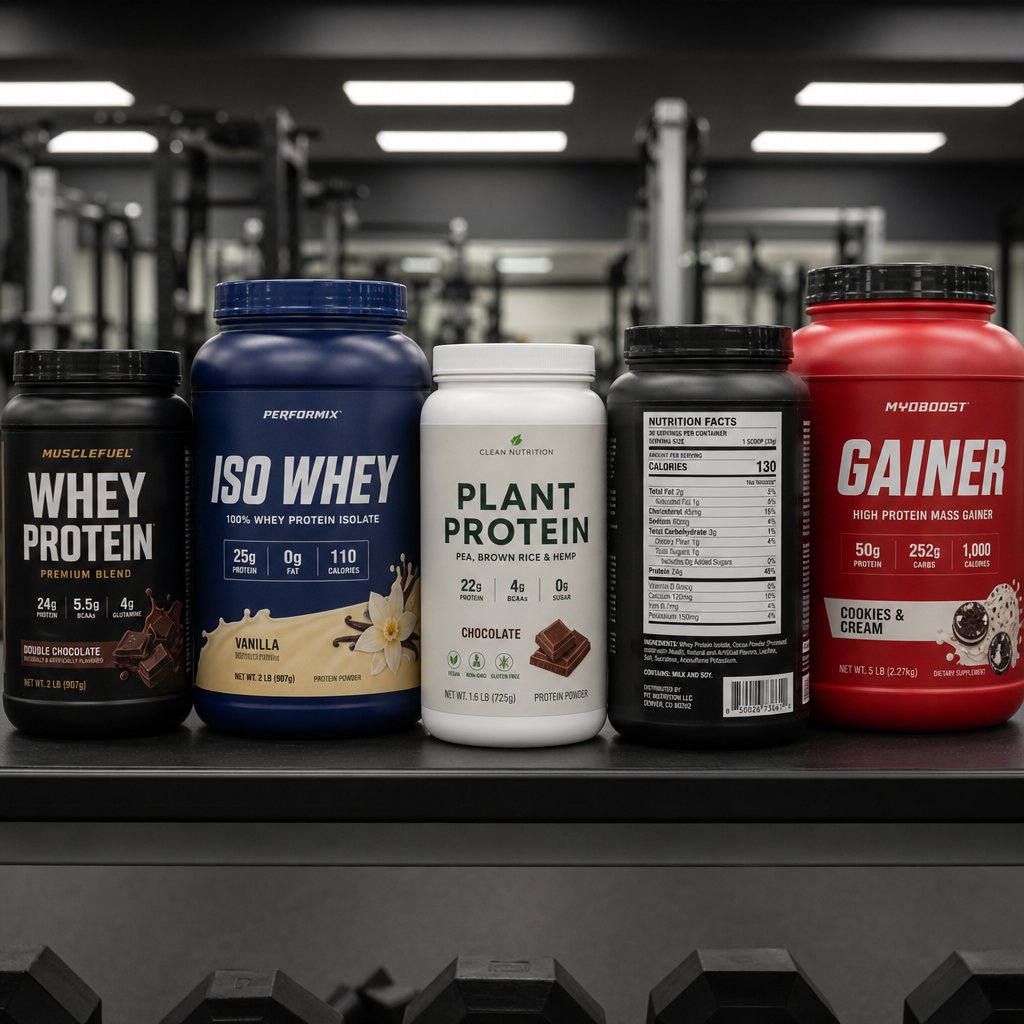
Knowing the theoretical ranges for each protein type is useful, but what really matters is what lands in your shaker from the specific brand you bought. Two products labeled "whey protein" can differ by 6 grams of actual protein per scoop depending on formulation choices. The following comparisons pull directly from current nutrition labels so you can see exactly where your protein powder scoop stands.
Whey Protein Brand Comparison
Optimum Nutrition Gold Standard 100% Whey dominates the market for good reason. With a 31g scoop delivering 24g of protein at 120 calories, 1 scoop of Optimum Nutrition whey protein hits a protein percentage of roughly 77%. That positions it solidly in the upper range for a concentrate-isolate blend. The formula lists whey protein isolate as the primary ingredient, followed by whey concentrate and hydrolysate, which explains why it outperforms many pure concentrate products.
Here is how the most popular whey brands compare side by side:
| Brand | Protein Type | Scoop Weight (g) | Protein Per Scoop (g) | Protein % | Calories Per Scoop |
|---|---|---|---|---|---|
| Optimum Nutrition Gold Standard Whey | Isolate/Concentrate Blend | 31g | 24g | 77% | 120 |
| Transparent Labs 100% Grass-Fed Whey Isolate | Whey Isolate | 32g | 28g | 88% | 130 |
| Dymatize ISO100 | Hydrolyzed Isolate | 30g | 25g | 83% | 120 |
| Naked Whey | Grass-Fed Concentrate | 30g | 25g | 83% | 120 |
| Ghost Whey | Isolate/Concentrate Blend | 35g | 25g | 71% | 130 |
| Muscle Milk 100% Whey | Concentrate/Isolate Blend | 35g | 25g | 71% | 130 |
| Legion Whey+ | Whey Isolate | 31g | 22g | 71% | 120 |
| RAW Nutrition Whey Isolate | Whey Isolate | 31g | 25g | 81% | 130 |
| NOW Sports Whey Isolate | Whey Isolate | 28g | 25g | 89% | 110 |
A few patterns jump out immediately. Transparent Labs leads with 28g of protein per scoop at an 88% protein ratio, which reflects its pure isolate formulation with minimal flavoring additives. NOW Sports achieves an even higher 89% ratio from a smaller 28g scoop because its unflavored version contains virtually nothing besides whey isolate and a trace of sunflower lecithin.
Meanwhile, 1 scoop of ON whey protein sits comfortably in the middle. Its 77% protein percentage is slightly lower than pure isolates because the blend includes concentrate and uses a more complex flavoring system across its 20+ flavor options. That trade-off gives you better taste and lower cost per serving at the expense of a few grams of protein.
Ghost Whey illustrates the other end of the spectrum. Its 35g scoop only delivers 25g of protein (71% ratio) because the brand prioritizes dessert-like flavors that require additional ingredients like cookie pieces and flavor compounds. You are paying for taste experience as much as protein content.
Plant Protein Brand Comparison
Plant-based powders face a tighter margin between scoop weight and protein delivery. Larger scoops are standard, and protein percentages tend to run lower due to the inherent composition of plant sources.
| Brand | Protein Type | Scoop Weight (g) | Protein Per Scoop (g) | Protein % | Calories Per Scoop |
|---|---|---|---|---|---|
| Transparent Labs Organic Plant Protein | Pea + Rice Isolate | 37g | 24g | 65% | 130 |
| Gnarly Nutrition Golden Milk Vegan | Pea + Chia + Cranberry | 50g | 20g | 40% | 200 |
| Orgain Organic Protein | Pea + Rice + Chia | 46g | 21g | 46% | 150 |
| Optimum Nutrition Gold Standard Plant | Pea + Rice + Faba Bean | 40g | 24g | 60% | 150 |
The contrast is stark. Transparent Labs achieves 65% protein density in its plant formula by using isolate-grade pea and rice protein with minimal added ingredients. Gnarly Nutrition drops to 40% because its formula doubles as a functional food, packing in turmeric, probiotics, fiber, and healthy fats alongside the protein. Neither approach is wrong, but they serve very different purposes from the same protein powder scoop.
Why Some Brands Achieve Higher Protein Percentages
The difference between a 77% and 89% protein ratio comes down to three formulation decisions:
- Protein source ratio: Brands using pure isolate (like NOW Sports or Transparent Labs) start with a raw ingredient that is already 90%+ protein. Blends that mix isolate with concentrate (like Optimum Nutrition) dilute the overall percentage because concentrate is only 70-80% protein before any additives.
- Flavoring complexity: Every gram of cocoa powder, cookie crumble, or natural flavoring displaces a gram of protein. Unflavored products consistently score the highest protein percentages. One scoop of ON whey protein in the unflavored version delivers a higher protein ratio than the Double Rich Chocolate variant.
- Filler and thickener load: Ingredients like xanthan gum, guar gum, sunflower lecithin, and cellulose gum improve texture and mixability but add non-protein weight. Budget brands tend to use more of these to mask lower-quality protein sources.
When evaluating any brand, divide protein grams by total scoop weight to get the protein percentage. Anything above 80% signals a lean, protein-focused formula. Between 65-80% is standard for flavored blends. Below 65% means a significant portion of your scoop is something other than protein.
One important caveat: label claims are only as reliable as the testing behind them. Brands carrying third-party certifications like Informed Choice, NSF Certified for Sport, or Informed Sport have their actual protein content independently verified. Products without these certifications may contain less protein than advertised, particularly if they use amino spiking techniques to inflate nitrogen-based protein measurements. When possible, choose brands that publish or link to third-party lab results.
These brand-level differences reveal something deeper about the supplement industry: the protein powder scoop you trust every morning is shaped by manufacturing decisions, ingredient sourcing, and formulation priorities that never appear on the front label. Understanding what drives those choices gives you the tools to read any nutrition panel with confidence.
How to Read Protein Powder Labels Like a Pro
Brand comparisons give you a snapshot, but what happens when you are standing in a store holding a tub you have never tried? The nutrition panel on the back holds every answer you need, if you know where to look and what the numbers actually mean.
Decoding the Nutrition Facts Panel
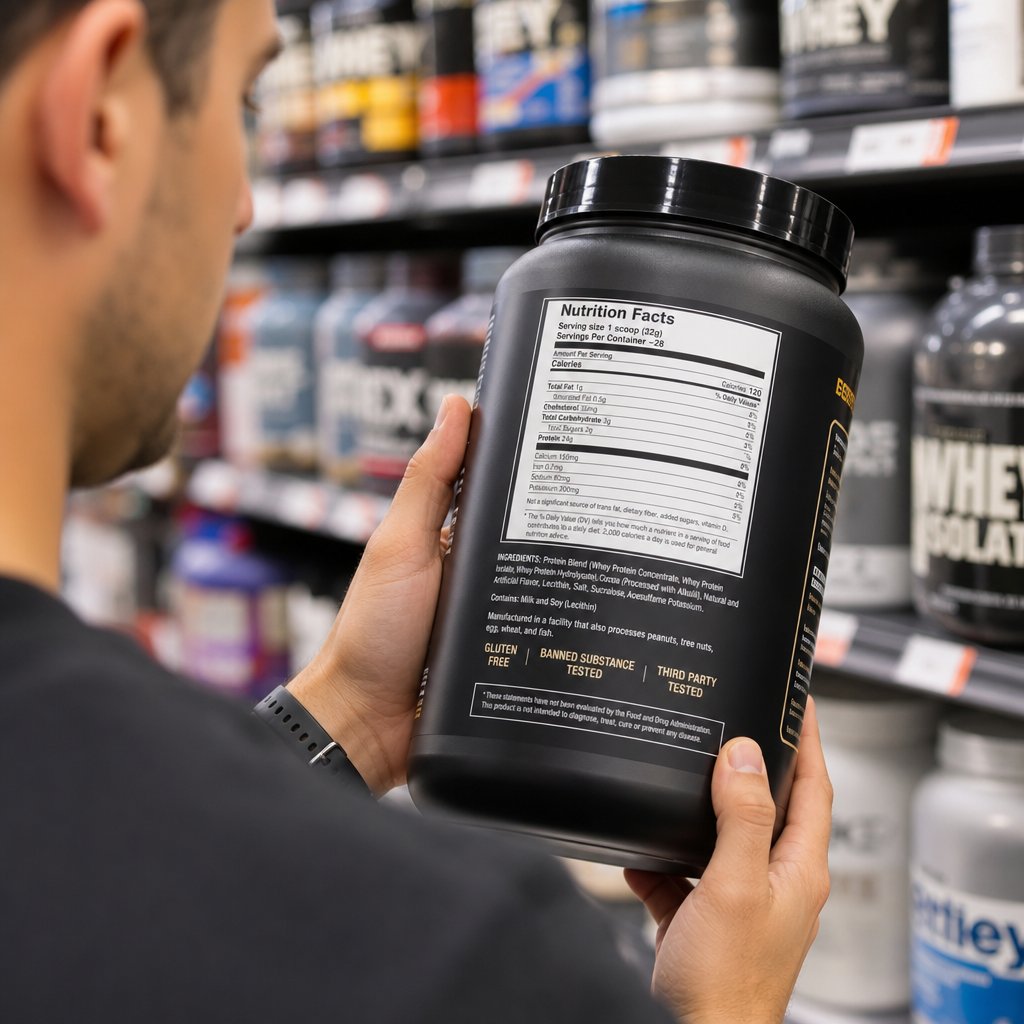
Start at the top of the panel with the protein powder serving size. This line tells you the total weight of powder the manufacturer considers one serving, usually expressed in grams and sometimes in scoops. A label might read "1 scoop (32g)" or "1 rounded scoop (45g)." That total weight is your baseline for calculating protein density.
Directly below, find the protein line. This tells you how many grams of protein exist within that defined serving. Divide protein grams by total serving weight, and you get the protein percentage. A 32g serving delivering 25g of protein gives you a 78% ratio. Simple math, but most buyers never do it.
Here is where confusion creeps in: what is 1 serving? It is whatever the manufacturer decides it is. There is no industry-wide standard for protein powder serving size. One brand calls 30g a serving while another calls 45g a serving. Both might claim "25g of protein per serving" on the front label, but the second product is far less protein-dense. You are getting the same protein from 50% more powder.
Some labels also show values "per 100g," which is especially common on products sold internationally. This column is actually more useful for comparison shopping because it normalizes everything to the same weight. A product showing 80g of protein per 100g is more protein-dense than one showing 60g per 100g, regardless of how big or small their scoops are.
Finally, check the ingredient list. Ingredients appear in descending order by weight. The protein source should always be the first ingredient listed. If you see maltodextrin, sugar, or a creamer blend before the protein source, that scoop of protein powder contains more filler than actual protein.
What Is Amino Spiking and How to Detect It
Even after you verify the protein grams on a label, there is one more trick that can undermine your serving of protein powder. It is called amino spiking (also known as protein spiking), and it exploits how protein content is measured in the first place.
Standard lab testing measures nitrogen content to determine protein levels. Complete proteins contain nitrogen, so higher nitrogen readings equal higher protein claims on the label. The problem? Cheap individual amino acids like glycine, taurine, and creatine also contain nitrogen. Some manufacturers add these inexpensive compounds to inflate the nitrogen reading, making the protein number look higher than the amount of complete, muscle-building protein actually present.
Imagine one scoop of protein powder that claims 25g of protein. If 5g of that comes from added glycine and taurine rather than intact whey protein, your body is only receiving 20g of complete protein with a full essential amino acid profile. The label is technically accurate by nitrogen measurement, but functionally misleading for muscle protein synthesis.
Here are the red flags that suggest a product may be amino spiked:
- Protein percentage falls below 70% of total scoop weight without a clear reason (like added superfoods or fiber)
- Individual amino acids such as L-glycine, L-taurine, or creatine monohydrate appear in the ingredient list separate from the protein source
- Pricing is significantly cheaper than comparable products using the same protein type
- The product lacks third-party testing certifications like NSF Certified for Sport or Informed Choice
- The label uses a proprietary blend that hides exact amounts of each ingredient
A trustworthy product lists its protein source first, discloses exact amounts, and ideally provides independent lab verification confirming that the labeled protein content matches reality. Some brands even publish full amino acid profiles showing exactly how much of each amino acid comes from the intact protein versus any added aminos.
The bottom line: how much is per serving depends not just on the number printed on the panel, but on the quality and completeness of the protein behind that number. A label can show 25g of protein while delivering far less functional value if amino spiking is at play. Reading the ingredient list with the same attention you give the nutrition facts panel is the only way to confirm that your scoop of protein powder delivers what it promises.
With these label-reading skills in hand, the next logical question becomes what else is in that scoop beyond protein, and how the full calorie and macro picture should shape your daily intake decisions.
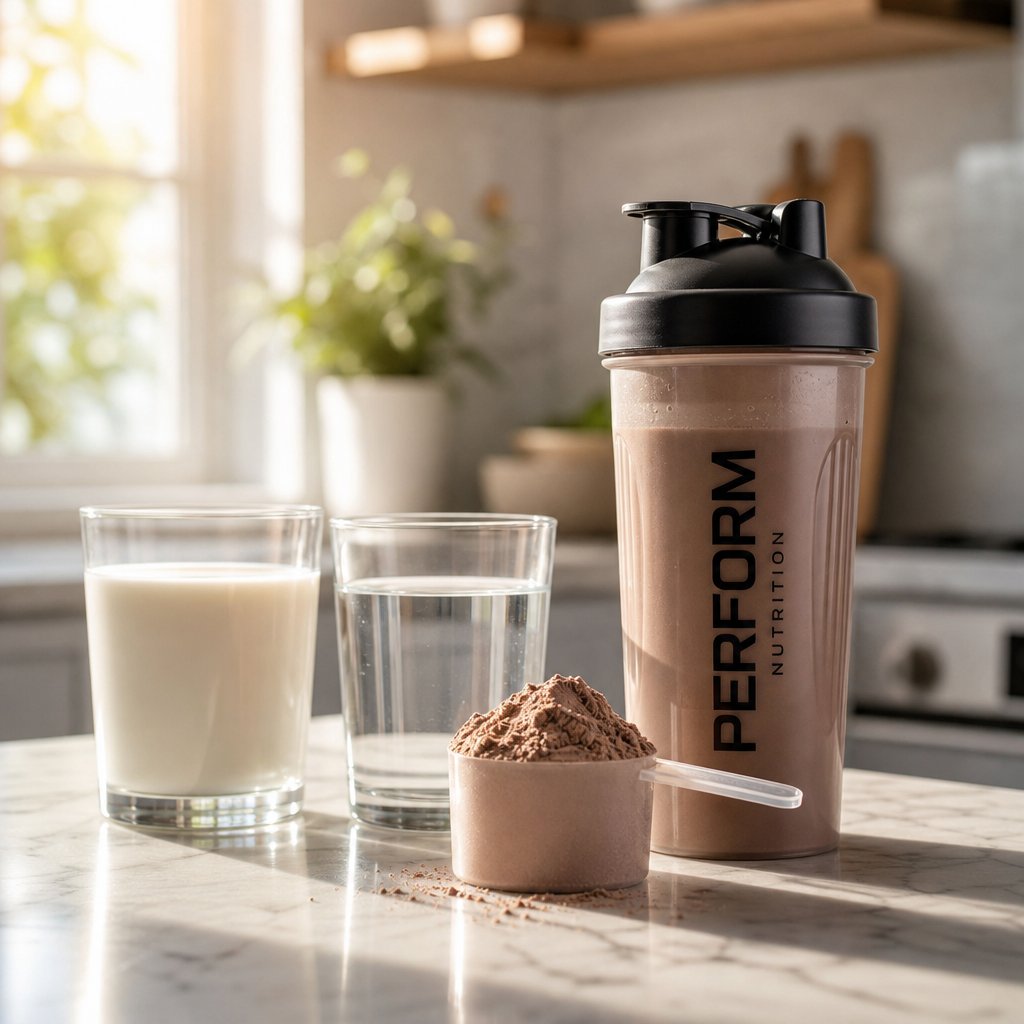
Calories, Macros, and How Many Scoops You Need Daily
Protein grams per scoop only tell part of the story. Every scoop also carries calories, carbohydrates, and fats that either support or undermine your specific fitness goal. Two powders delivering the same 25g of protein can differ by 100+ calories depending on what else is packed into the formula. That caloric context shapes how many scoops you should use each day and when to use them.
Calories and Macros Beyond Just Protein
The calories in one scoop of protein powder vary widely by type. Whey isolate runs the leanest at 100-120 calories per scoop because the extra filtration removes nearly all fat and carbohydrates. Whey concentrate lands slightly higher at 120-150 calories since it retains 3-5g of fat and 3-6g of carbs per serving. Plant blends typically fall in the 110-140 calorie range, with the extra calories coming from naturally occurring fiber and starches in pea or rice protein.
Mass gainers sit in a completely different category. One scoop of protein powder calories from a mass gainer can reach 300-600+ because the formula is designed to deliver a caloric surplus through added carbohydrates (often 80-120g per serving) and fats. The protein itself accounts for only a fraction of those calories.
Here is a quick calorie breakdown by protein type:
- Whey Isolate: 100-120 calories, 0-1g fat, 0-2g carbs per scoop
- Whey Concentrate: 120-150 calories, 2-5g fat, 3-6g carbs per scoop
- Plant Blend (Pea + Rice): 110-140 calories, 2-4g fat, 3-7g carbs per scoop
- Casein: 110-130 calories, 1-2g fat, 2-4g carbs per scoop
- Mass Gainer: 300-650 calories, 5-15g fat, 50-130g carbs per scoop
The calories in one scoop of whey protein (isolate specifically) make it the most efficient option when you want maximum protein with minimum caloric baggage. For every 100 calories consumed, you get roughly 23g of protein from an isolate versus only 8-12g from a mass gainer. That ratio matters enormously depending on whether you are cutting, bulking, or maintaining.
Matching Your Scoop to Your Fitness Goal
Your goal determines which scoop of protein powder calories profile works best for you. Someone in a caloric deficit needs every calorie to count toward satiety and muscle preservation. Someone in a surplus has more flexibility to accept extra carbs and fats alongside their protein.
Cutting (fat loss while preserving muscle): Prioritize whey isolate or a lean plant isolate with the highest protein percentage per scoop. You want 25-30g of protein for under 130 calories. Every unnecessary gram of carbs or fat in your powder eats into your limited daily calorie budget. Mixing with water instead of milk keeps the total serving lean.
Bulking (muscle gain in caloric surplus): Mass gainers or whey concentrate blended with whole milk become practical tools. The extra calories from carbs and fats support the energy surplus needed for muscle growth. A larger scoop delivering 40-50g of protein with 300+ calories fits naturally into a bulking diet.
Maintenance (sustaining current composition): A standard whey concentrate or plant blend works well here. Moderate calories per scoop (120-140) with balanced macros give you flexibility without pushing you into surplus or deficit territory.
How Many Scoops Per Day Based on Body Weight
The question of protein powder how many scoops per day depends on two variables: your total daily protein target and how much protein you already get from whole foods.
Research from Schoenfeld and Aragon (2018) concluded that maximizing muscle growth requires a minimum of 1.6g of protein per kilogram of body weight daily, with an upper range of 2.2g/kg/day for those seeking maximum anabolic potential. They recommend distributing this across at least four meals at roughly 0.4g/kg per meal to optimize muscle protein synthesis at each feeding.
That per-meal threshold of 0.4g/kg translates to 20-40g of protein per sitting for most adults, which aligns perfectly with what a standard protein powder scoop delivers. An 80kg (176 lb) person would target about 32g per meal across four meals to hit 1.6g/kg/day, or 44g per meal to reach the upper 2.2g/kg/day threshold.
Here is how scoops per day map to different goals:
| Goal | Ideal Protein Per Scoop | Recommended Scoops Per Day | Timing Guidance |
|---|---|---|---|
| Fat Loss / Cutting | 25-30g (high % isolate) | 1-2 scoops | Post-workout and as a meal replacement snack |
| Lean Muscle Gain | 25-30g (isolate or concentrate) | 2-3 scoops | Post-workout, between meals, and before bed (casein) |
| Bulking / Mass Gain | 40-50g (mass gainer or double scoop) | 2-3 scoops | Post-workout, mid-morning, and evening |
| General Health / Maintenance | 20-25g (any type) | 1-2 scoops | Whenever convenient to fill dietary gaps |
| Endurance Athletes | 20-25g (fast-absorbing isolate) | 1-2 scoops | Immediately post-training for recovery |
How many scoops whey protein per day should you actually use? For most people eating a balanced diet with adequate whole-food protein sources, 1-2 scoops fills the gap between dietary intake and optimal targets. Athletes or those with very high protein needs (above 2g/kg/day) may benefit from 2-3 scoops spread across the day. Going beyond 3 scoops daily usually signals that whole-food protein sources are being neglected, which means you are missing out on the micronutrients, fiber, and healthy fats that come packaged with real food.
Milk vs. Water: How Your Mixing Liquid Changes the Numbers
One detail that often gets overlooked: the protein content printed on your label reflects the powder alone. What you mix it with changes the total nutritional profile of your shake.
Mixing one scoop of whey protein with 250ml (1 cup) of whole milk adds approximately 8g of protein, 8g of fat, 12g of carbohydrates, and 150 calories to your serving. That means a scoop delivering 25g of protein becomes a 33g protein shake when blended with milk. Using skim milk still adds about 8g of protein and 80 calories with minimal fat.
Mixing with water adds zero additional macros. The 1 scoop of whey protein calories stays exactly as the label states.
This distinction matters for goal alignment:
- Cutting: Mix with water to keep calories minimal and protein percentage high
- Bulking: Mix with whole milk for an easy 150-calorie boost and 8g of extra protein per shake
- Before bed: Milk slows digestion due to its casein content, creating a more sustained amino acid release overnight
The muscle protein synthesis research is clear: what matters most is hitting that 20-40g protein threshold per feeding and reaching your total daily target of 1.6-2.2g/kg. Whether you get there with one scoop mixed in milk or two scoops mixed in water, the anabolic outcome is comparable as long as total intake and distribution are on point.
Calories, macros, and daily scoop count give you the practical framework for using protein powder effectively. But there is another layer that determines whether those numbers on the label actually reflect what is inside the tub: the manufacturing and formulation decisions that happen long before the product reaches your kitchen counter.
Why Protein Content Varies Between Brands
You can pick two protein powders off the same shelf, both claiming 25g per serving, and end up with wildly different products inside. One delivers clean, high-density protein. The other pads that number with cheap fillers and inflated scoop sizes. The difference comes down to decisions made at the manufacturing level, long before the tub gets a label.
So how much protein powder in a scoop actually ends up being real, functional protein? That depends on three factory-floor factors: the quality of the raw protein source, the volume of non-protein additives in the formula, and the production methods used to process everything into a finished powder.
How Fillers and Flavoring Reduce Protein Percentage
Every ingredient that is not protein takes up space in your scoop. The more fillers a manufacturer adds, the less room remains for actual protein. Here are the most common culprits that determine how much in a scoop of protein powder is working for you versus just along for the ride:
- Maltodextrin: A cheap carbohydrate filler with a high glycemic index that adds bulk and weight without contributing any protein. It is one of the most common cost-cutting ingredients in budget powders.
- Thickeners (xanthan gum, guar gum, carrageenan): These create that creamy, thick shake texture consumers associate with quality. They serve no nutritional purpose but occupy measurable weight in each serving.
- Flavoring systems: Cocoa powder, cookie pieces, natural and artificial flavor compounds, and sweeteners like sucralose or acesulfame potassium all displace protein. A heavily flavored product can dedicate 3-6g of each scoop to taste alone.
- Lecithin and emulsifiers: Added to improve mixability, these ingredients take up space that could otherwise be protein.
- Fiber fillers (inulin, tapioca starch): Sometimes marketed as digestive health benefits, these are often just inexpensive ways to increase total scoop weight.
This is why how many grams is a scoop of protein powder matters less than what percentage of those grams is actual protein. A 35g scoop sounds generous until you realize 10g of it is maltodextrin, gums, and flavoring. You are paying protein prices for carbohydrate filler.
Some brands also manipulate how big is a protein powder scoop as a marketing strategy. A larger scoop lets them print a bigger protein number on the front label, even if the protein percentage is mediocre. A 45g scoop delivering 25g of protein (56% ratio) looks impressive at first glance but is far less efficient than a 30g scoop delivering the same 25g (83% ratio).
Manufacturing Quality and What It Means for Your Scoop
The protein source itself sets the ceiling for what any formula can achieve. Whey concentrate starts at 70-80% protein after initial ultrafiltration, while whey isolate undergoes additional microfiltration or cross-flow filtration to reach 90%+ purity. The more refined the starting material, the less filler is needed to create a palatable finished product.
Production methods also matter. Cold-processed whey preserves more of the protein's native structure and amino acid integrity compared to high-heat processing, which can denature proteins and reduce bioavailability. Spray drying parameters, blending precision, and quality control testing all influence whether the final powder matches its label claims consistently from batch to batch.
This is where the supply chain behind your protein powder becomes relevant. Professional OEM/ODM manufacturers, like ZhuFeng, work with nutrition brands to optimize protein-to-filler ratios through customized formulation. Their role is to help brands achieve maximum protein density per scoop while maintaining taste, texture, and stability. With flexible production formats including powder and granule options, manufacturers at this level give brands precise control over how much is a scoop protein powder delivers in actual protein versus non-functional additives.
For consumers, this means the brands investing in quality manufacturing partnerships tend to deliver higher protein percentages because their formulations are engineered for efficiency rather than padded with cheap bulk ingredients. When you see a product hitting 85%+ protein density with good flavor, that is usually the result of deliberate formulation work at the manufacturing level, not accident.
Understanding how much is a protein powder scoop worth in real protein comes down to recognizing these behind-the-scenes decisions. The tub in your pantry reflects choices about raw material quality, additive ratios, and production standards that were locked in months before you ever twisted off the lid. Armed with that knowledge, you can evaluate any product not just by its label claims, but by the formulation philosophy driving those numbers.
Choosing the Right Protein Powder for Maximum Value
Every section of this guide points to one conclusion: the number on the front of the tub is not the whole story. How much is one scoop of protein powder actually worth to your body depends on protein percentage, source quality, bioavailability, and what else is hiding in that formula. The good news? You now have the tools to cut through the noise and make a genuinely informed purchase.
Your Protein Per Scoop Checklist
Before you buy your next tub, run through this checklist. It distills everything covered in this guide into a quick decision-making framework you can use in-store or while shopping online.
- Calculate protein percentage: Divide protein grams by total scoop weight. Aim for 80%+ for whey isolate, 70%+ for whey concentrate, and 60%+ for plant blends. Anything below these thresholds means excessive fillers.
- Check the ingredient list order: The protein source should be the first ingredient listed. If maltodextrin, sugar, or a creamer blend appears before the protein, move on.
- Look for third-party testing: Certifications like NSF Certified for Sport or Informed Sport verify that what is on the label matches what is in the tub. These programs test for both accuracy and banned substance contamination.
- Scan for amino spiking red flags: Individual amino acids (glycine, taurine, creatine) listed separately in the ingredients inflate protein numbers without delivering complete muscle-building protein.
- Match scoop size to your daily target: If you need 25-30g per serving to hit your per-meal threshold of 0.4g/kg body weight, choose a product that delivers that in a single scoop rather than requiring a double serving.
- Calculate cost per gram of protein, not cost per serving: A cheaper tub with lower protein density can actually cost more per gram of usable protein. Use the formula: (price / total servings) / protein per serving = cost per gram. A protein powder value calculator can simplify this comparison across brands.
- Consider bioavailability: A scoop of whey isolate delivering 27g provides more usable protein than a hemp scoop delivering 15g. Factor in PDCAAS/DIAAS scores when comparing across protein types.
- Evaluate your mixing method: If you blend with milk, you can get away with a slightly lower protein-per-scoop product since milk adds 6-8g. If you mix with water, prioritize higher protein density per scoop.
Making a Smart, Informed Choice
How much is 1 scoop worth to you? That depends on context. A competitive athlete who needs verified purity and maximum protein density per calorie will prioritize differently than someone adding a scoop to their morning smoothie for general health. Neither is wrong, but both benefit from understanding what they are actually paying for.
The real metric that matters is not how much is a scoop in total grams. It is how many of those grams are complete, bioavailable protein that your muscles can actually use. A 30g scoop delivering 27g of third-party verified whey isolate at 90% protein density is objectively a better protein investment than a 45g scoop delivering 22g of unverified concentrate padded with maltodextrin, even if the second option costs less per tub.
How much is one scoop protein powder delivering in real value? Run the numbers, read the ingredients, and verify the claims. That three-step habit takes less than 60 seconds per product and saves you from months of overpaying for fillers disguised as protein.
For readers on the brand side of the equation, whether you are a supplement company, private label seller, or nutrition importer looking to launch a protein powder with optimized protein-per-scoop ratios, the formulation and manufacturing partner you choose determines everything discussed in this article. ZhuFeng's OEM/ODM manufacturing services offer customized formulation with scalable production across powder, granule, and multiple other formats, giving brands precise control over protein density, ingredient quality, and cost efficiency from the first batch to full market launch.
Whether you are a consumer choosing your next tub or a brand building one from scratch, the principle is the same: know exactly how much protein in a scoop of protein powder you are getting, verify it independently, and never pay premium prices for filler weight. Your muscles, and your wallet, will thank you.
Frequently Asked Questions About Protein Per Scoop
1. How much protein is in 1 scoop of whey protein powder?
One scoop of whey protein powder typically provides 22-27g of protein depending on the variant. Whey isolate delivers the most at 25-27g per 30-32g scoop due to its 85-90% protein density. Whey concentrate offers slightly less at 22-25g per 32-35g scoop because it retains more fat and lactose. The exact amount varies by brand, with products like Transparent Labs hitting 28g per scoop and Optimum Nutrition Gold Standard delivering 24g per 31g scoop.
2. How many grams of powder are in one scoop of protein powder?
A standard protein powder scoop holds approximately 30-35g of total powder for whey-based products. Plant protein scoops are larger at 35-45g because plant sources are less protein-dense. Mass gainer scoops can exceed 100-170g to accommodate extra carbohydrates. The total scoop weight is always higher than the protein content because sweeteners, flavoring, emulsifiers, and thickeners occupy the remaining weight. If you lose your scoop, a 30g serving equals roughly 2 level tablespoons.
3. How many scoops of protein powder should I take per day?
Most people benefit from 1-2 scoops daily to fill the gap between dietary protein and their optimal target of 1.6-2.2g per kilogram of body weight. Athletes or those with higher protein needs may use 2-3 scoops spread throughout the day. Going beyond 3 scoops usually indicates insufficient whole-food protein intake. The ideal number depends on your fitness goal: 1-2 scoops for cutting or maintenance, and 2-3 for lean muscle gain or bulking phases.
4. What is amino spiking and how does it affect protein per scoop?
Amino spiking is a practice where manufacturers add cheap individual amino acids like glycine, taurine, or creatine to inflate the protein reading on lab tests. Standard testing measures nitrogen content to determine protein levels, and these cheap aminos contain nitrogen without providing complete muscle-building protein. A product claiming 25g of protein might only deliver 20g of complete protein if 5g comes from added aminos. Red flags include individual amino acids listed separately in ingredients, protein percentage below 70%, unusually low pricing, and lack of third-party certifications like NSF or Informed Sport.
5. Does mixing protein powder with milk change the protein content per scoop?
The protein content of the powder itself stays the same regardless of your mixing liquid, but the total shake protein changes significantly. Adding 250ml of whole milk contributes approximately 8g of extra protein, 8g of fat, 12g of carbs, and 150 calories to your serving. A 25g protein scoop becomes a 33g protein shake when blended with milk. Skim milk adds similar protein with fewer calories. Mixing with water adds zero additional macros, keeping the nutritional profile exactly as the label states. Choose water when cutting and milk when bulking for optimal goal alignment.