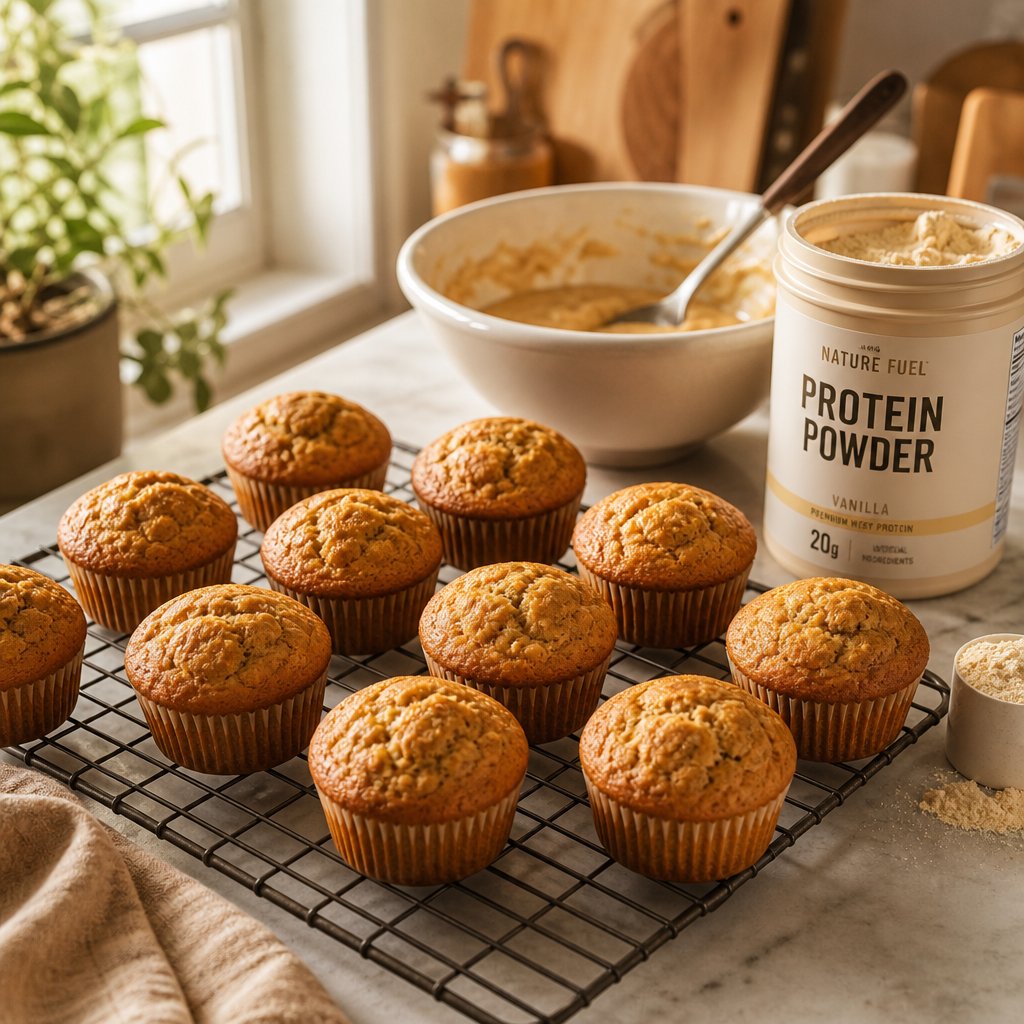
Yes You Can Bake with Protein Powder and Here Is Why It Works
Can you bake with protein powder without ruining its nutritional value? The answer is a clear yes. Protein powder holds up in the oven, and the results can be genuinely delicious once you understand a few ground rules about how it behaves under heat.
The concern behind this question is understandable. You invest in quality protein, and the last thing you want is to watch those amino acids disappear into a puff of oven steam. The good news: that does not happen. Heat changes the shape of protein molecules, a process called denaturation, but it does not break apart the amino acids your body actually uses for muscle repair, hormone production, and tissue maintenance.
The Short Answer to Baking with Protein Powder
Baking with protein powder is safe, effective, and nutritionally sound at standard oven temperatures up to 200 degrees Celsius (400 degrees Fahrenheit). The internal temperature of most baked goods stays well below the threshold where amino acid degradation could occur. Think of it this way: cooking an egg changes its texture completely, yet nobody questions whether a cooked egg still delivers protein. The same principle applies here.
Baking does not destroy protein's amino acid content. Denaturation changes the molecule's 3D shape but leaves the peptide bonds and nutritional value fully intact.
What This Guide Covers and Why It Matters
This guide takes a science-first, brand-agnostic approach to protein baking. You will learn exactly what happens to protein molecules under heat, how different powder types (whey, casein, pea, collagen) behave in the oven, precise flour-to-protein substitution ratios organized by recipe type, and the temperature and moisture adjustments that prevent dry or rubbery results.
Whether you are new to baking with protein powder or you have already tried it and ended up with a crumbly disaster, the information ahead gives you the specific numbers and techniques to get it right. Can you bake protein powder into muffins, cookies, pancakes, and brownies? Absolutely. The difference between a flop and a genuinely enjoyable result comes down to ratios, moisture, and timing, all of which you will find mapped out in the sections that follow.
The real question is not whether protein survives the oven. It does. The real question is how each type of protein powder interacts with flour, liquid, and heat to produce a texture you actually want to eat.

What Actually Happens to Protein Powder When You Heat It
Understanding the chemistry behind cooking with protein powder removes the guesswork and replaces it with confidence. Three distinct processes occur when protein powder meets heat: denaturation, the Maillard reaction, and moisture absorption. Each one affects your final product differently, and none of them destroy the protein you are counting on.
Protein Denaturation Does Not Mean Protein Destruction
Imagine a protein molecule as a tightly wound ball of yarn. Its three-dimensional shape is held together by weak internal bonds that maintain the folds and coils. When heat enters the picture, those weak bonds release, and the ball unwinds into a stretched-out strand. This unfolding process is called denaturation.
Here is the critical distinction: the peptide bonds that link individual amino acids together are far more stable than the bonds maintaining the 3D shape. Normal baking temperatures of 160 to 200 degrees Celsius do not come close to breaking them. Genuine protein degradation, where peptide bonds actually snap, requires temperatures well above 200 degrees Celsius sustained over prolonged periods, combined with strongly acidic or alkaline environments. Your muffin tin at 180 degrees Celsius for 20 minutes does not create those conditions.
The cooked egg is the most intuitive everyday proof. Raw egg white is liquid and translucent. Heat it, and it becomes firm and opaque. The structure changed dramatically, yet a study by Evenepoel et al. using stable isotope techniques confirmed that cooked egg delivers the same amino acids as raw egg and is actually more bioavailable. The same principle applies when you cook with protein powder in any recipe.
Denaturation is the same process that happens during digestion. Your stomach acid unfolds proteins so enzymes can access the amino acids. Baking essentially pre-digests the protein slightly, which can marginally ease absorption rather than hinder it.
So can you cook protein powder without losing its benefits? Yes. Whether you stir it into hot oatmeal at 90 degrees Celsius or bake it into cookies at 175 degrees Celsius, the amino acids your muscles need remain fully intact and ready for absorption.
The Maillard Reaction and What It Means for Nutrition
You have seen the Maillard reaction countless times without knowing its name. It is the browning that occurs on the crust of bread, the golden surface of a pancake, and the toasted edges of a protein muffin. This reaction happens when free amino groups on proteins or amino acids react with reducing sugars under heat, producing new flavor compounds, color, and aroma.
Does this reaction consume your protein? Technically, a small fraction of available amino acids participates in the Maillard reaction. Research on amino acid and sugar model systems shows that the extent of this reaction depends on temperature, time, and the specific amino acids involved. At typical baking temperatures of 160 to 180 degrees Celsius for 15 to 25 minutes, the percentage of amino acids consumed by browning is minimal compared to the total protein content in your batter.
In practical terms, if your recipe contains 25 grams of protein from powder, the Maillard reaction might affect a small fraction of surface-level amino acids. The vast majority remain nutritionally available. The tradeoff is worth it: you get appealing color, complex flavor, and a pleasant aroma while retaining nearly all the protein content. Using protein powder for cooking and baking gives you both nutrition and taste when you manage temperature correctly.
Why Protein Powder Absorbs More Moisture Than Flour
This is where the practical challenges of baking with protein powder begin. Protein powder is strongly hygroscopic, meaning it pulls in and holds significantly more liquid than an equal weight of flour. The molecular structure of protein isolates and concentrates creates more binding sites for water molecules than the starch granules in wheat flour.
When you swap a portion of flour for protein powder without adjusting liquid, the powder absorbs moisture that would normally keep your crumb soft and tender. The result: dry, crumbly, or dense baked goods that nobody wants to eat twice.
This absorption behavior varies by protein type. Plant-based blends of pea, rice, and soy protein tend to be especially hygroscopic. Whey isolate also absorbs heavily due to its high protein concentration and minimal fat content. Casein sits in the middle, absorbing moisture but also contributing a creamier, more cake-like texture because of how it interacts with water during baking.
The fix is straightforward: for every scoop of protein powder you add, increase the liquid in your recipe. Suitable additions include milk, yogurt, mashed banana, applesauce, or a healthy fat like nut butter or coconut oil. These ingredients compensate for the extra absorption while also improving texture and binding. Getting this ratio right is the single biggest factor separating a successful protein bake from a disappointing one, and the exact numbers depend on which type of protein powder you choose.
How Different Protein Powder Types Perform in the Oven
Moisture absorption varies by protein type, and so does everything else: texture, spread, binding strength, and flavor. The different types of protein powder on the market each bring unique properties to baked goods, and choosing the wrong one for your recipe is a fast track to disappointment. Here is how each major category actually behaves once it hits the heat.
Whey Concentrate vs Whey Isolate in Baking
Can you bake with whey protein and get good results? Yes, but the two forms of whey behave quite differently in the oven.
Whey protein concentrate for baking retains a small amount of fat and carbohydrates (typically 1-2g fat and 3g carbs per serving). That extra fat helps cookies spread thinner and can produce a slightly greasy, spongy texture. According to hands-on baking experiments by Cheat Day Design, whey concentrate cookies spread more than isolate versions and showed potential for thin, crispy results when baked at slightly higher temperatures.
Whey protein isolate for baking is a different story. With at least 90% protein and virtually no fat or carbs, isolate absorbs liquid aggressively and produces a drier, grittier texture. Cookies made with pure whey isolate tend to crisp around the edges while staying gummy and underdone in the center. The protein powder flavor also comes through more strongly with isolate because there is less fat to buffer it.
The practical takeaway when baking with whey: isolate needs significantly more added liquid and fat than concentrate. If you prefer soft, chewy baked goods, pure whey isolate alone is not your best bet. A blend of isolate and concentrate, or pairing isolate with casein, produces more balanced results.
Casein and Plant-Based Proteins for Baked Goods
Casein protein is the slow-digesting counterpart to whey, and it behaves almost like coconut flour in baking. It absorbs enormous amounts of water, thickens batters dramatically, and produces dense, cake-like textures with minimal spread. If you want thick, doughy cookies or moist muffins with a tight crumb, casein delivers that structure. The tradeoff is that recipes need considerably more liquid to avoid a dry, chalky result.
A whey-casein blend (commonly sold as milk protein isolate) gives you the best of both worlds: whey keeps things light while casein retains moisture and adds body. This combination is widely considered the most forgiving whey protein powder for baking across multiple recipe types.
Plant-based proteins bring their own challenges. Pea protein is highly absorbent and produces dry, crumbly textures that fall apart easily. It also carries a strong earthy flavor that can overpower lighter recipes. Rice protein behaves similarly but with a slightly grainier mouthfeel and milder taste. Soy protein offers better binding ability than pea or rice and produces a denser crumb, but its distinct flavor limits versatility. All plant-based options typically require extra sweetener and fat to compensate for their drying effect and strong taste profiles.
Collagen and Egg White Protein Behavior in Heat
Can you bake with collagen powder? You can add it, but you cannot rely on it for structure. Collagen completely lacks the binding and structural properties that other proteins provide. In baking experiments, collagen cookies spread completely flat, stayed soft and undercooked, and were impossible to pick up. Collagen simply cannot replace flour or other protein powders in any recipe. Its value lies in boosting protein content without significantly affecting flavor, making it useful as a supplement added alongside a structural protein or regular flour rather than a standalone substitute.
Egg white protein powder behaves like concentrated eggs in the oven. It produces minimal spread, a very chewy interior, and a noticeably eggy flavor once baked. It also tends to be high in sodium, which can throw off the taste balance. Egg white protein works best when used in small amounts alongside flour rather than as a primary replacement.
| Protein Type | Texture Result | Moisture Absorption | Binding Strength | Best Used In | Heat Tolerance |
|---|---|---|---|---|---|
| Whey Concentrate | Thin, spongy, slightly greasy | Moderate | Low | Crispy cookies, thin bars | Good |
| Whey Isolate | Crispy edges, gummy center | High | Low | Pancakes, waffles (with added fat) | Good |
| Casein | Dense, cakey, thick crumb | Very High | Moderate | Muffins, thick cookies, cheesecakes | Excellent |
| Whey-Casein Blend | Soft, balanced, moist interior | High | Moderate-High | Cakes, muffins, cookies, quick breads | Excellent |
| Pea Protein | Dry, crumbly, dense | Very High | Low | No-bake bars, energy balls | Good |
| Rice Protein | Grainy, dry, fragile | High | Very Low | Blended with other proteins, smoothie bakes | Good |
| Soy Protein | Dense, firm crumb | High | Moderate | Breads, dense muffins | Good |
| Collagen | No structure, flat, sticky | Low | None | Added to existing recipes for protein boost | Good (but no structure) |
| Egg White Protein | Chewy, minimal spread, light color | Moderate-High | High | Small additions to cookies, meringue-style bakes | Excellent |
Each protein type creates a fundamentally different end product. Knowing these differences before you start mixing means you can match the right powder to the right recipe, or blend types strategically for the texture you want. The next critical piece is understanding exactly how much flour you can safely replace with any of these powders before your baked goods cross the line from pleasantly protein-rich to unpleasantly dry or rubbery.
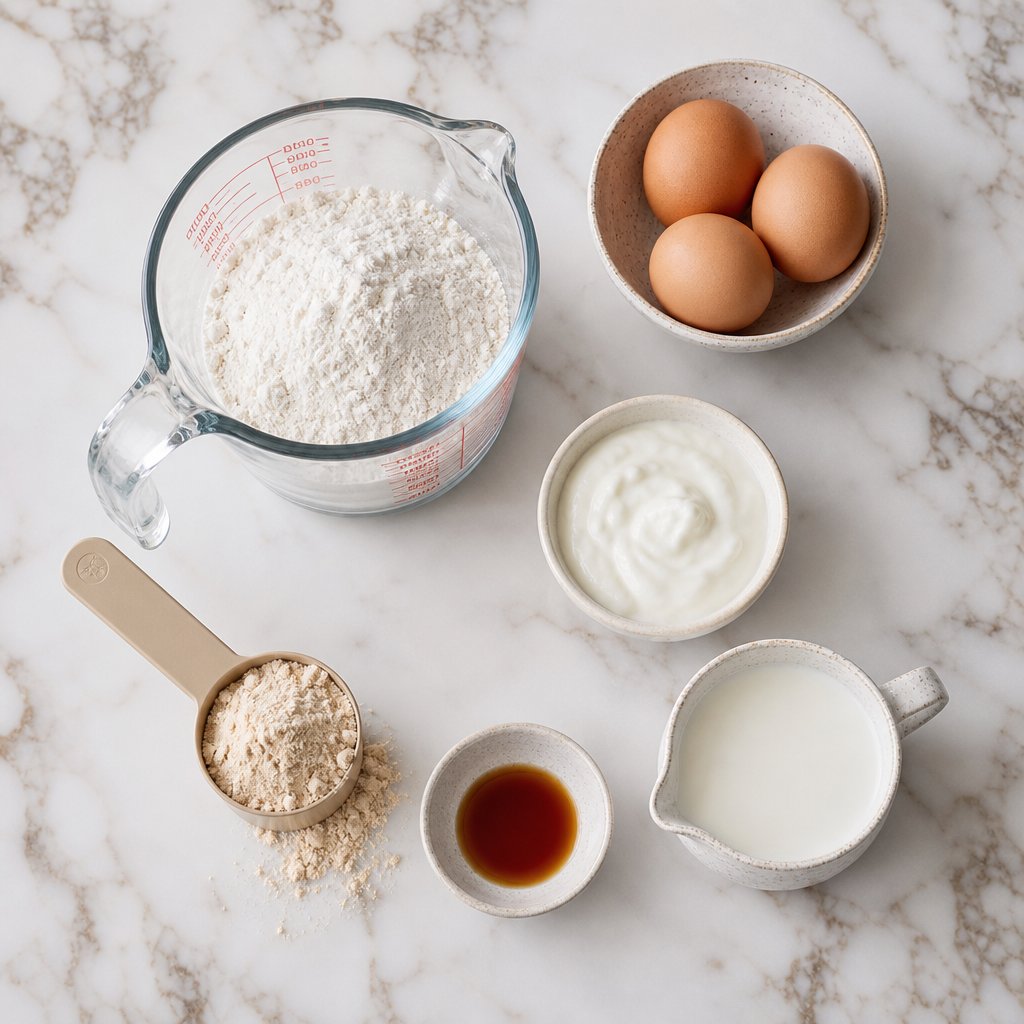
Exact Flour-to-Protein Powder Substitution Ratios by Recipe
Knowing how each protein type behaves is one thing. Knowing exactly how much flour you can replace is where recipes either succeed or fall apart. The most common question people ask is straightforward: can you substitute protein powder for flour? You can, but only partially, and the safe percentage depends entirely on what you are baking.
Protein powder lacks two things that flour provides: gluten and starch. Gluten forms the elastic network that traps air bubbles and gives baked goods their rise and chew. Starch gelatinizes during baking to set the structure and hold moisture. Without these two components, protein powder alone cannot support a crumb, hold a shape, or create the tender bite you expect from a well-made cake or loaf.
Substitution Ratios for Cakes and Muffins
Cakes and muffins rely heavily on a light, airy crumb. That crumb depends on gluten development and starch gelation working together. When substituting protein powder for flour in these recipes, start by replacing no more than 25% of the total flour weight. This gives you a noticeable protein boost without collapsing the structure or drying out the interior.
For example, if your muffin recipe calls for 200 grams of flour, swap in 50 grams of protein powder and keep 150 grams of flour. You will still need to add extra liquid (roughly 2-3 tablespoons) to compensate for the powder's higher moisture absorption. Casein blends handle this ratio especially well because they retain moisture and mimic the dense, tender crumb of a traditional cake.
Ratios for Cookies, Pancakes, and Bread
Cookies are the most forgiving format for protein powder because they already rely more on fat and sugar than on gluten for their structure. You can replace flour with protein powder at ratios up to 50% in drop cookies and bar cookies without a total texture failure. The result will be denser and chewier than a standard cookie, but still enjoyable.
Pancakes sit in the middle ground. A 30-35% replacement works well because the batter format and quick cooking time limit how much drying can occur. The extra egg and milk already present in most pancake recipes help offset the protein powder's thirst for moisture.
Bread is the least forgiving. Gluten development is critical for bread's rise, crumb structure, and chew. Can you replace flour with protein powder in bread? Only at very conservative ratios of 15-20%. Go higher, and you will end up with a dense, flat loaf that crumbles when sliced. The yeast still needs enough starch to feed on, and the dough still needs enough gluten to trap the carbon dioxide that creates an open crumb.
| Baked Good Type | Maximum Flour Replacement | Recommended Starting Ratio | Texture Notes |
|---|---|---|---|
| Cakes | 25-30% | 25% | Denser crumb, slightly drier; add extra liquid and fat |
| Muffins | 30-33% | 25% | Tighter crumb, holds together well with added yogurt or oil |
| Cookies (drop/bar) | 50% | 30-35% | Chewier, less spread; works best with nut butter or extra egg |
| Pancakes/Waffles | 35-40% | 30% | Slightly thicker batter; cook on lower heat to avoid rubbery edges |
| Quick Breads | 25-30% | 20% | Denser loaf, moister center; reduce bake temperature |
| Yeast Bread | 20% | 15% | Reduced rise, tighter crumb; do not exceed or loaf will not hold |
| Brownies | 40-50% | 33% | Fudgier texture; high fat content compensates for dryness |
What Happens When You Replace Too Much Flour
Can you use protein powder instead of flour entirely? In a standard recipe, no. A full 100% replacement produces results that range from inedible to barely tolerable. Without any starch or gluten, the batter cannot set properly. You get a rubbery exterior, a gummy or raw-tasting center, and a texture that bounces back unnaturally when pressed. Whey-based powders dry out into a chalky brick. Casein turns into something resembling play-doh. Plant proteins crumble into sand.
The visual baking experiments at Cheat Day Design demonstrated this clearly: swapping all the flour for protein powder in a cupcake recipe produced extremely dry, stiff, or structureless results across every protein type tested. Even the best-performing blends could not replicate what flour does on its own.
Recipes designed from scratch as high-protein (where protein powder is the primary dry ingredient) solve this differently. They compensate with extra eggs for binding, significantly more fat for moisture, additional leavening agents like baking powder, and sometimes structural aids like xanthan gum or psyllium husk. These are not simple substitutions. They are entirely reformulated recipes built around the protein powder's limitations.
The safest approach if you are adapting an existing recipe: treat protein powder as a protein powder flour substitute that replaces a fraction of the flour, not all of it. Start at the lower end of the recommended range, assess the batter consistency, and adjust upward only after a successful first batch. Substituting protein powder for flour is a ratio game, and patience with that ratio pays off in texture every time.
Getting the ratio right is only half the equation, though. Even a perfectly proportioned batter can fail if the oven temperature, bake time, or liquid balance is off, and protein powder demands different settings than flour on all three fronts.
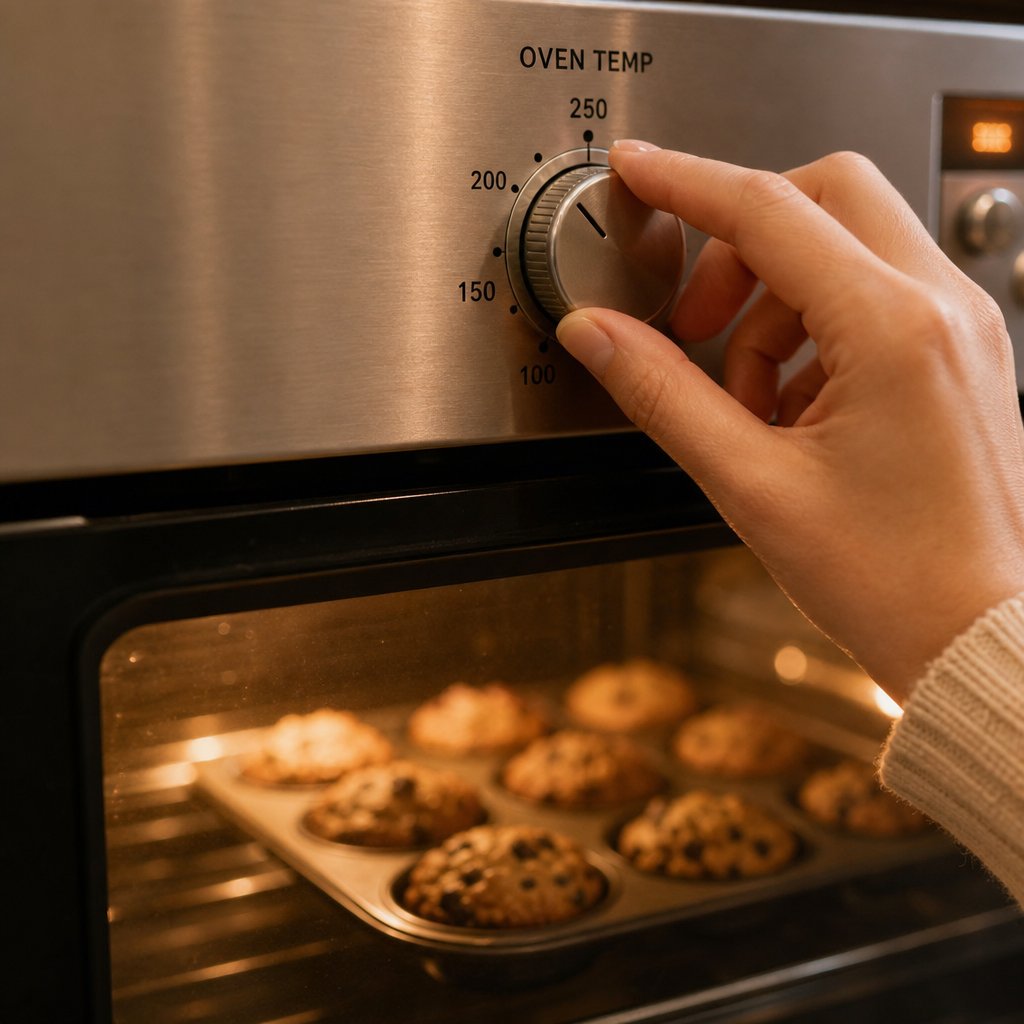
Temperature Time and Moisture Adjustments That Prevent Failure
A perfectly measured batter still flops if you treat it like a standard recipe in the oven. Protein powder baked goods respond to heat differently than flour-based ones, and the adjustments are not optional. They are the difference between a moist, tender result and a rubbery puck with a raw center. Here is exactly how to add protein powder to baked goods without ruining the texture on the back end.
Temperature and Time Adjustments by Protein Type
Protein denatures and sets faster than starch gelatinizes. In plain terms, the outside of your muffin or cookie firms up before the inside has finished cooking. The fix is simple: reduce your oven temperature by 10-15 degrees Celsius (roughly 25 degrees Fahrenheit) compared to the original recipe. This slower, gentler heat allows the center to cook through before the exterior turns rubbery or overly browned.
Whey isolate sets especially fast due to its high protein concentration and low fat content. Drop the temperature a full 15 degrees Celsius for whey isolate recipes. Casein is more forgiving because its moisture-retaining properties buffer against rapid surface hardening, so a 10-degree reduction is usually sufficient. Plant-based proteins like pea and rice fall somewhere in between, though their tendency to dry out means the lower temperature helps preserve what little moisture they hold.
Bake time often increases by 3-5 minutes at the lower temperature. Resist the urge to compensate by cranking the heat back up. The most common mistake when making baked goods with protein powder is overbaking. Protein-enriched batters continue firming significantly as they cool, far more than traditional flour-based goods. Pull them from the oven when the center still looks slightly underdone or when a toothpick comes out with a few moist crumbs attached. They will finish setting on the cooling rack.
Liquid Ratio Fixes to Prevent Dry Results
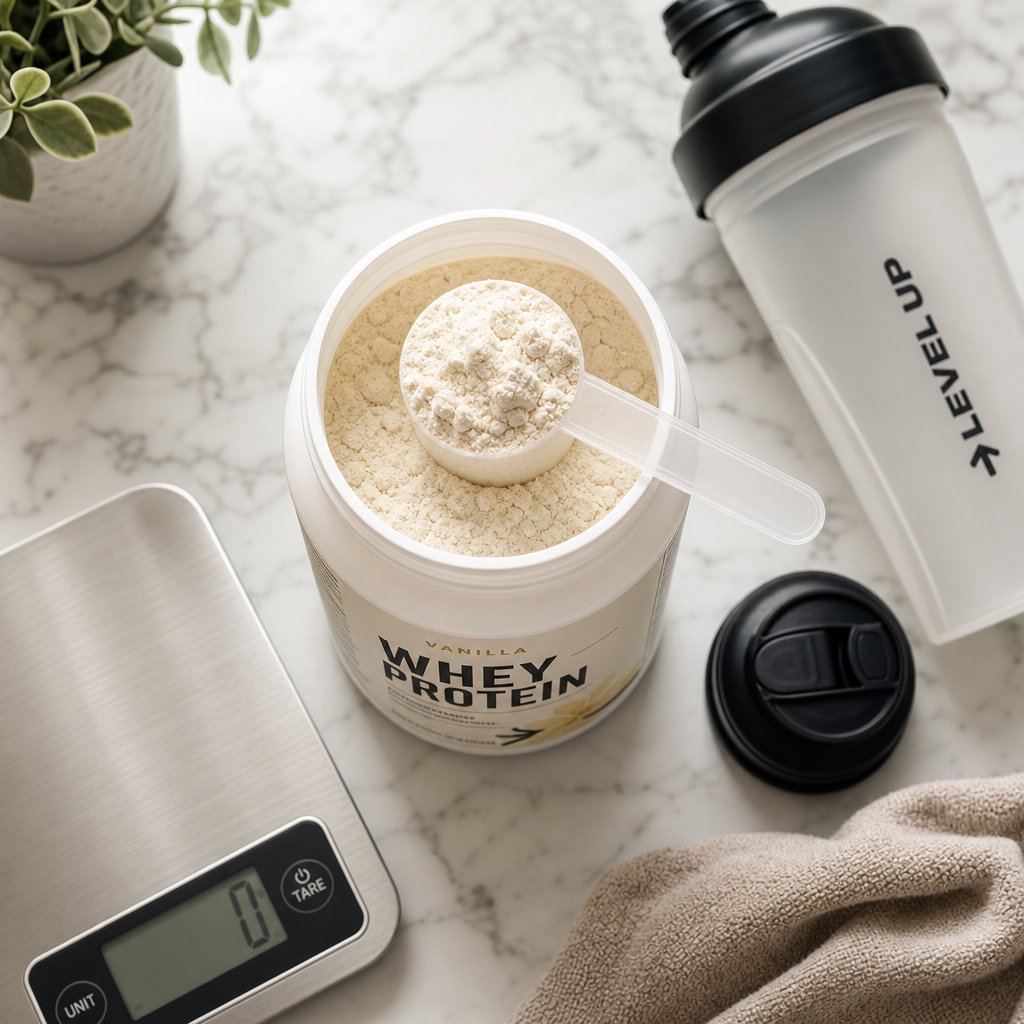
You already know protein powder absorbs more moisture than flour. The practical rule: for every scoop (approximately 30 grams) of protein powder you add to a recipe, increase your total liquid by 25-50%. The exact amount depends on the protein type. Whey isolate and pea protein sit at the higher end of that range, while casein and whey concentrate need less additional liquid because they interact with moisture differently.
What counts as added liquid? Anything wet that integrates into the batter:
- Milk, plant milk, or water (the most straightforward additions)
- Greek yogurt or sour cream (adds moisture plus tenderness)
- Applesauce or mashed banana (moisture plus natural sweetness and binding)
- An extra egg or egg white (liquid plus structural support)
- A tablespoon of oil or melted butter (moisture plus fat for a softer crumb)
A good test before baking: your batter should look slightly wetter than you think it should. If it looks like a normal batter, it is probably too dry once the protein powder finishes absorbing during the bake. Adding protein powder to baked goods always means recalibrating your instincts about batter consistency.
Binding Agents and Structural Support Additions
Protein powder provides no gluten and limited binding on its own. When you replace a portion of flour, you also remove some of the structural glue holding everything together. Compensating with binding agents keeps your baked goods from crumbling apart on the plate.
Effective binding and structural additions include:
- Extra egg or egg white: the single most effective binder for protein baking, adding both moisture and structure
- Nut butters (almond, peanut, cashew): provide fat, binding, and flavor in one ingredient
- Xanthan gum (1/4 teaspoon per cup of protein powder): mimics the elasticity that gluten would normally provide
- Ground flaxseed mixed with water (1 tablespoon flax to 3 tablespoons water): a vegan egg substitute that adds binding and omega-3s
- A small amount of coconut flour (1-2 tablespoons): absorbs excess moisture while adding structural fiber
Can you add protein powder to baked goods without any of these adjustments? Technically yes, but the results will disappoint. The combination of lower temperature, extra liquid, and a binding agent is what transforms protein powder from a dry, chalky additive into a seamless part of your recipe. Understanding how to add protein to baked goods is really about managing these three variables together rather than treating any one of them in isolation.
These mechanical adjustments handle structure and moisture. But there is another factor that determines whether anyone actually wants a second bite: flavor. Protein powder carries taste characteristics that need deliberate management, especially when artificial sweeteners or strong base flavors are involved.
Managing Flavor and Fixing Common Texture Problems
Structure and moisture keep your bake from falling apart. Flavor determines whether anyone reaches for a second piece. Protein powder carries taste characteristics that range from mildly sweet to aggressively artificial, and managing those flavors is a skill worth developing if you want protein baking to become a regular habit rather than a one-time experiment.
Matching Protein Powder Flavors to Recipe Types
Vanilla is the most universally forgiving flavor for baking. It pairs naturally with banana bread, blueberry muffins, sugar cookies, and pancakes without competing against other ingredients. If you are looking for the best tasting vanilla protein powder for baking, prioritize options with subtle sweetness and minimal artificial aftertaste. A quality vanilla whey concentrate blends into nearly any batter without announcing itself.
Chocolate protein powder works beautifully in brownies, dark chocolate cookies, and mocha-flavored cakes where cocoa is already a dominant note. The existing chocolate in the recipe absorbs and complements the powder's flavor rather than clashing with it. Fruity or berry-flavored powders are trickier. They tend to taste artificial once heated and rarely pair well outside of smoothie-style bakes or no-bake bars.
When a recipe calls for vanilla protein powder and you do not have any on hand, a simple substitute for vanilla protein powder is unflavored powder plus one teaspoon of pure vanilla extract. This gives you the flavor without locking you into a specific brand's sweetener profile.
Using Unflavored Powder for Maximum Versatility
Unflavored protein powder for baking is the most flexible option in your pantry. It carries no sweetener, no artificial flavor, and no color, which means it disappears into whatever recipe you add it to. Recipes using unflavored protein powder span the full spectrum from sweet to savory: think protein-enriched pizza dough, herb-seasoned focaccia, savory scones, or even pasta. None of these applications work with a vanilla or chocolate powder.
Unflavored options also let you control sweetness independently. You decide how much maple syrup, honey, or sugar goes in rather than stacking your sweetener on top of whatever the manufacturer already added. For anyone who finds most protein powders cloyingly sweet, unflavored is the reset button.
Ingredients That Mask Unwanted Protein Taste
Even the best vanilla whey protein powder can carry a slight chalkiness or artificial edge that becomes more noticeable once baked. The good news: baking itself mellows the artificial sweetener taste present in many protein powders. Heat breaks down some of the sharper flavor compounds in sweeteners like sucralose and stevia, softening their aftertaste compared to how they taste in a cold shake.
Beyond that natural mellowing, specific ingredients actively mask any remaining off-notes:
- Cocoa powder (1-2 tablespoons): its bitterness and depth overpower chalkiness completely
- Cinnamon or pumpkin spice: warm spices distract the palate from artificial undertones
- Pure vanilla extract (1-2 teaspoons): rounds out flat or chemical-tasting sweetness
- Nut butters (almond, peanut, cashew): their richness coats the mouth and smooths out gritty textures
- Ripe banana: natural sugars and creamy texture mask both taste and dryness
- Honey or maple syrup: complex natural sweetness replaces one-dimensional artificial notes
- Citrus zest (lemon, orange): bright acidity cuts through heaviness and distracts from off-flavors
A vanilla protein powder substitute in any recipe can be as simple as unflavored powder combined with two or three of these masking ingredients. The result often tastes better than using a pre-flavored powder because you control every layer of the flavor profile yourself.
Flavor solved, structure managed, ratios dialed in. The remaining piece is putting all of these principles together into actual recipe frameworks you can use immediately, starting with the simplest formats and scaling up from there.
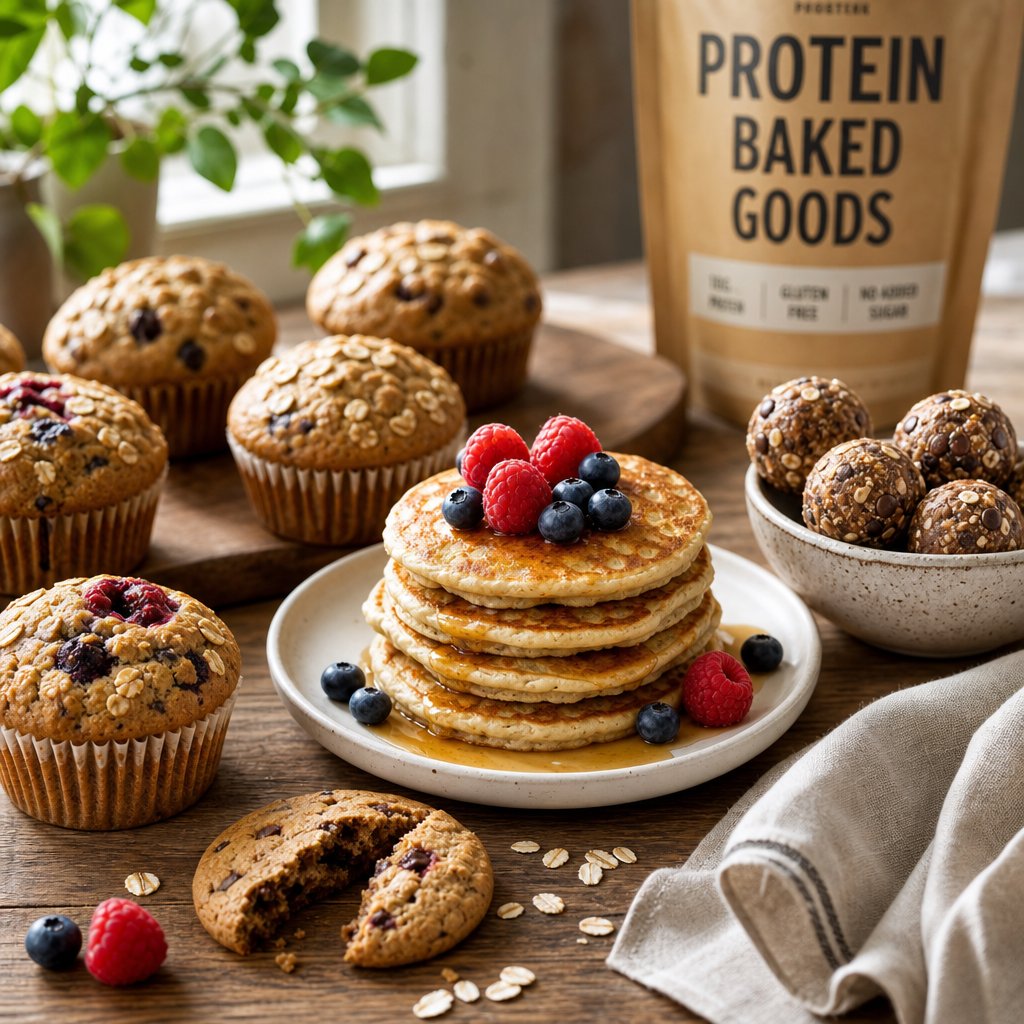
Beginner-Friendly Protein Baking Recipes by Category
Ratios, temperatures, and flavor tricks only matter once you actually mix a batter. The frameworks below give you repeatable formulas for the most popular protein baked goods recipes, organized so you can adapt any existing favorite rather than starting from scratch. Think of these as blueprints, not rigid instructions.
Before diving into specific categories, here is the universal method that applies across all protein powder baking recipes:
- Start with a proven recipe you already enjoy (homemade or boxed mix)
- Replace 25-30% of the flour with protein powder
- Add extra liquid to compensate for moisture absorption (see table below)
- Reduce baking temperature by 10-15 degrees Celsius (25 degrees Fahrenheit)
- Check doneness 3-5 minutes earlier than the original recipe suggests
This five-step process works whether you are making muffins, cookies, pancakes, or brownies. The specifics shift slightly by category, so let's break each one down.
Protein Muffins and Cupcakes Framework
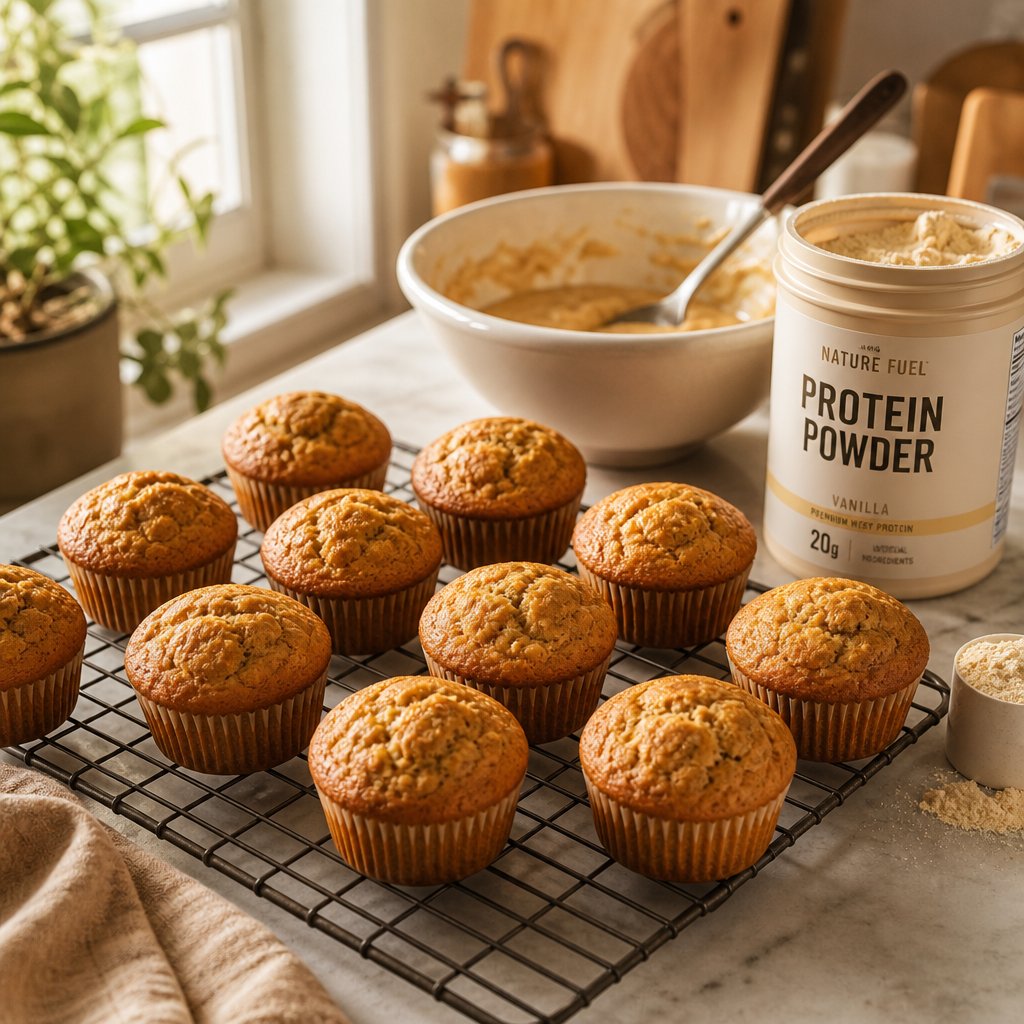
Muffins are one of the most forgiving formats for protein powder because their batter is already thick and their crumb is naturally dense. Can you add protein powder to muffin mix? Absolutely, and boxed mixes are actually the easiest entry point for beginners because the base recipe is already balanced and foolproof.
The basic formula for protein muffins: for every 2 cups of dry ingredients in your recipe, swap out 1/2 cup of flour and replace it with 1/2 cup of protein powder. Add 3-4 tablespoons of extra liquid (milk, yogurt, or applesauce) and one additional egg white for binding. A whey-casein blend works best here because it retains moisture and produces that tight, tender crumb muffins need. Registered dietitians at The Real Food Dietitians confirm this same ratio across their tested muffin recipes, noting it preserves texture while boosting protein by 30-50% per serving.
Protein Cookies and Brownies Framework
Cookies tolerate higher protein ratios because fat and sugar do most of the structural work. The formula for protein powder for cookies: replace up to 1/2 cup of flour with protein powder in a standard batch (roughly 24 cookies). Add 1-2 tablespoons of nut butter or an extra egg yolk to maintain chewiness and prevent crumbling.
For brownies, the high fat content from butter or oil compensates naturally for protein powder's drying effect. Replace 1/3 of the flour with protein powder, keep the fat unchanged, and add 2 tablespoons of extra liquid. Practical testing with protein brookies shows that baking at a lower temperature (150 degrees Celsius or 300 degrees Fahrenheit) and covering loosely with foil halfway through prevents the edges from drying out while the center finishes setting. Pull them when they still look slightly underdone. They firm up completely during a one-hour cooling period as the fats solidify.
Protein Pancakes and Energy Balls Framework
Pancakes cook quickly on direct heat, which limits drying. Replace 30% of the flour with protein powder, add an extra splash of milk until the batter pours easily, and cook on medium-low heat rather than medium-high. Flip when bubbles form on the surface, just like regular pancakes. The result is a slightly thicker, more filling pancake with noticeably more staying power through the morning.
Energy balls require no baking at all, making them the lowest-risk entry point for baking recipes with protein powder. A solid protein ball recipe with protein powder follows this ratio: 1 cup rolled oats, 1/4 to 1/2 cup protein powder, 1/2 cup nut butter, and 2-3 tablespoons of honey or maple syrup. Mix, roll into balls, and refrigerate. Tested formulas from registered dietitians recommend replacing only a portion of the oats rather than all of them to keep the balls holding together properly.
| Recipe Type | Protein Powder Amount | Extra Liquid Needed | Best Protein Type |
|---|---|---|---|
| Muffins/Cupcakes | 1/2 cup per 2 cups dry ingredients | 3-4 tablespoons (milk, yogurt, or applesauce) | Whey-casein blend |
| Cookies | 1/2 cup per standard batch | 1-2 tablespoons (nut butter or extra egg) | Whey-casein blend or whey concentrate |
| Brownies | 1/3 of total flour | 2 tablespoons (milk or applesauce) | Casein blend or chocolate whey |
| Pancakes/Waffles | 30% of flour | 2-3 tablespoons milk until batter pours | Whey isolate or unflavored blend |
| Energy Balls | 1/4 to 1/2 cup per cup of oats | None needed (nut butter provides moisture) | Any type works; vanilla or unflavored best |
A quick note for true beginners: if you have never tried protein powder for baking recipes before, start with a boxed muffin or brownie mix. Add one scoop of protein powder and two extra tablespoons of water or milk. That single adjustment gives you a feel for how protein powder changes batter consistency without risking an entire from-scratch recipe. Once you see how the texture shifts, scaling up to the full frameworks above feels intuitive rather than intimidating.
These frameworks handle the how. The remaining variable is which specific protein powder to buy when baking is your primary goal, because not every tub on the shelf is formulated with heat performance in mind.
How to Choose the Best Protein Powder for Baking
A protein powder that tastes great in a shaker bottle does not automatically perform well in the oven. Sports nutrition formulations are optimized for mixability and post-workout absorption, not for heat stability, moisture interaction, or crumb structure. When your goal is baking, the label deserves a different kind of scrutiny. Here is what separates the best protein powder for baking from one that will leave you with dry, crumbly results.
What to Look for in a Baking-Friendly Protein Powder
Imagine standing in front of a shelf with thirty protein powder options. Which one goes into your muffin batter? The answer lives on the nutrition panel and ingredient list, not the marketing claims on the front. A baking protein powder needs specific characteristics that general-purpose powders often lack.
Key selection criteria to evaluate before buying:
- Protein percentage per serving: Look for at least 70-80% protein by weight. Higher concentration means less filler material interfering with your recipe's structure. The best protein powders for baking deliver 20-25 grams of protein per 30-gram scoop with minimal added bulk.
- Sweetener type and amount: Artificial sweeteners like sucralose and acesulfame-K intensify under heat, sometimes producing bitter or metallic notes. Powders sweetened with stevia, monk fruit, or minimal sugar tend to bake more predictably. Unsweetened options give you full control.
- Filler content: Thickeners like xanthan gum, guar gum, and cellulose gum are added to improve shake texture but can make baked goods gummy or overly dense. Fewer fillers means more predictable baking behavior.
- Solubility and particle size: Fine-milled powders integrate into batters smoothly without leaving gritty pockets. Coarse or clumpy powders create uneven texture in the finished product.
- Flavor neutrality: Even flavored powders should not overpower a recipe. Look for options where the flavor complements rather than dominates. Unflavored protein for baking gives maximum versatility across sweet and savory applications.
A whey-casein blend (often labeled as milk protein isolate) consistently ranks as the best protein powder to bake with across multiple recipe types. The whey component keeps things light while casein retains moisture and prevents that chalky dryness. Devotion Nutrition's baking guide confirms that an 80/20 whey isolate to micellar casein ratio produces the most balanced crumb structure, supporting rise while reducing collapsed centers in muffins and quick breads.
Why Custom Formulations Are Changing Protein Baking
The gap between sports nutrition protein and bakery protein powder is driving a new wave of purpose-built products. Standard protein powders are formulated to dissolve in cold liquid and taste good in a shake. Baking demands the opposite: controlled moisture absorption, heat-stable sweeteners, and flavor profiles that develop rather than degrade under temperature.
This distinction matters for both home bakers and the growing number of entrepreneurs launching protein-enriched food brands. The food science team at 1-2-Taste notes that using sports nutrition grade proteins rather than food-grade, baking-optimized proteins is one of the most common formulation mistakes in commercial bakery products. Particle size, denaturation temperature thresholds, and emulsification behavior all differ between a powder designed for shakes and one engineered for ovens.
The growing demand for baking-optimized protein powders has led manufacturers to offer OEM/ODM services where nutrition brands and private label sellers can develop custom protein powder blends specifically formulated for baking applications. Companies like ZhuFeng provide this type of service, offering tailored moisture absorption profiles, heat stability testing, and flavor customization through scalable production. Their flexible product formats, including powder and granule formulations, allow businesses to create market-ready bakery protein powder lines without building manufacturing infrastructure from scratch. For readers who are brand owners, supplement importers, or functional food entrepreneurs, custom formulation services represent a path to differentiation in an increasingly crowded protein baking market.
Matching Your Goals to the Right Powder Format
Your ideal protein powder for baking depends on what you are actually making and why. Different goals call for different powder characteristics:
If your priority is maximum protein per serving with minimal recipe disruption, a whey isolate or whey-casein blend with at least 80% protein concentration works best. You get the most nutritional impact from the smallest amount of powder, which means less interference with your recipe's original texture and flavor balance.
If you bake primarily savory items like protein bread, pizza dough, or herb scones, unflavored protein powder is non-negotiable. Any residual sweetness from flavored options will clash with savory seasonings. Look for unflavored whey isolate or unflavored pea protein with no added sweeteners of any kind.
If texture is your top concern and you have struggled with dry or crumbly results, casein-dominant blends or milk protein concentrates absorb and retain moisture better than any other option. They produce denser, more cake-like results that stay soft for days rather than drying out overnight.
If you are working within dietary restrictions, plant-based blends of pea and rice protein have improved dramatically in baking performance. Modern processing techniques reduce grittiness and off-flavors that plagued earlier generations of plant protein. The tradeoff remains: plant proteins still require more liquid adjustment and benefit from added binding agents like flax eggs or xanthan gum.
The best protein for baking is ultimately the one that matches your specific recipe type, dietary needs, and flavor preferences. No single powder dominates every category. A home baker who makes weekly muffins needs a different product than someone developing a commercial protein cookie line. Start with the criteria above, test a small batch before committing to a full tub, and remember that the powder is only one variable in a system that includes ratios, temperature, moisture, and time. Get all of those working together, and protein baking becomes a reliable part of your routine rather than a gamble.
Frequently Asked Questions About Baking with Protein Powder
1. Does heating protein powder destroy its nutritional value?
No. Heating protein powder causes denaturation, which unfolds the protein's 3D shape but does not break the peptide bonds holding amino acids together. Your body performs the same unfolding process during digestion. At standard baking temperatures up to 200 degrees Celsius (400 degrees Fahrenheit), amino acids remain fully intact and bioavailable. A small fraction of surface amino acids may participate in the Maillard browning reaction, but the overall protein content stays nutritionally complete.
2. How much flour can I replace with protein powder in a recipe?
The safe replacement depends on what you are baking. Cookies and brownies tolerate up to 50% flour replacement because fat and sugar provide most of the structure. Muffins and cakes work best at 25-30% replacement. Pancakes handle 30-35%. Yeast bread is the least forgiving at only 15-20% because gluten development is critical for rise and crumb structure. Always start at the lower end of the range and increase liquid by 25-50% per scoop of protein powder added.
3. What is the best type of protein powder for baking?
A whey-casein blend (often sold as milk protein isolate) consistently performs best across multiple recipe types. The whey component keeps baked goods light while casein retains moisture and prevents dryness. An 80/20 whey isolate to micellar casein ratio produces balanced crumb structure. For savory baking, unflavored whey isolate works well. Plant-based options like pea protein require more liquid and binding agents but work in energy balls and no-bake recipes.
4. Why do my protein powder baked goods turn out dry or rubbery?
Two common mistakes cause these issues. Dryness happens because protein powder absorbs significantly more moisture than flour, so you need to add 25-50% more liquid per scoop added. Rubbery texture occurs from overbaking at too high a temperature. Reduce oven temperature by 10-15 degrees Celsius and pull items out when the center still looks slightly underdone. Protein-enriched goods continue firming as they cool, so what looks underdone in the oven sets perfectly on the cooling rack.
5. Can I use protein powder instead of flour entirely in a recipe?
Full 100% replacement in standard recipes produces poor results because protein powder lacks gluten for elasticity and starch for structure. The outcome is typically rubbery exteriors with gummy centers, or crumbly textures that fall apart. However, recipes designed from scratch as high-protein formulations compensate with extra eggs for binding, more fat for moisture, additional leavening, and structural aids like xanthan gum or psyllium husk. These are reformulated recipes, not simple substitutions.