Espresso Powder and Instant Coffee Are Not the Same
Is espresso powder the same as instant coffee? No. Despite looking similar in the jar and sharing shelf-stable convenience, these two products differ in how they are made, how they taste, what they are designed for, and how concentrated they are. Using the wrong one can genuinely ruin a recipe.
The Quick Answer
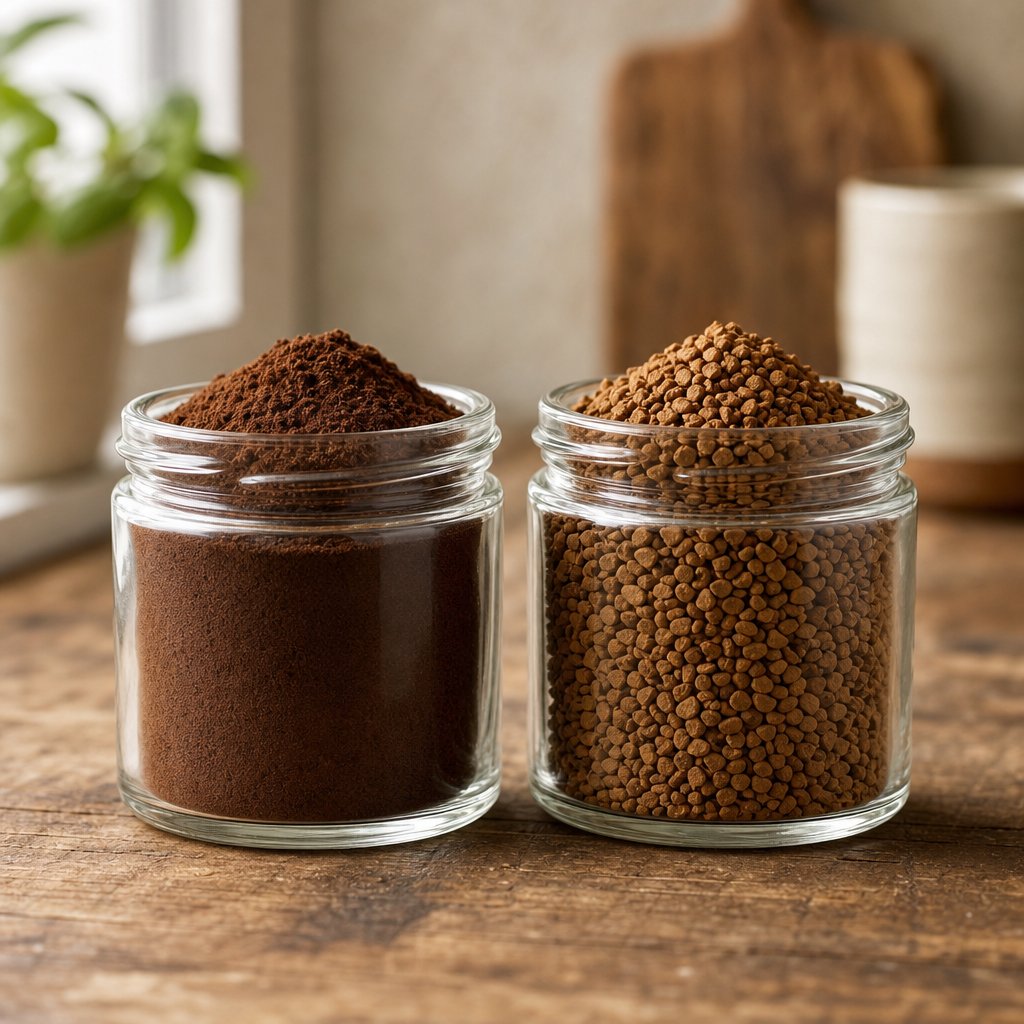
Both products start as brewed coffee that gets dried into a shelf-stable form, but the similarities end there. Espresso powder is made from darkly roasted beans that are brewed under high pressure as espresso, then slowly dehydrated and ground into an ultra-fine, intensely concentrated powder. Instant coffee, on the other hand, is regular brewed coffee that has been spray-dried or freeze-dried into dissolvable granules or crystals designed to reconstitute into a drinkable cup.
The result? Espresso powder delivers a bold, bittersweet punch in tiny amounts, while instant coffee offers a milder, more familiar coffee flavor meant to be stirred into hot water. Their roast levels, brewing methods, particle sizes, and intended applications are fundamentally different, and treating them as interchangeable leads to disappointing results in the kitchen.
Why the Confusion Exists
You'll notice both products dissolve in liquid, come in similar-looking jars, and sit near each other on store shelves. Some brands even blur the line with vague labeling, making the espresso vs instant coffee distinction harder to spot at a glance. When a recipe calls for one and you only have the other, it feels logical to assume they are the same thing.
They are not. The core difference comes down to purpose and concentration. Is espresso powder instant coffee? Not at all. One is a concentrated flavoring ingredient built for baking and cooking. The other is a convenience product built for drinking.
Espresso powder is a concentrated flavoring ingredient; instant coffee is designed to be reconstituted into a drinkable cup.
Understanding this single distinction will save you from flat brownies, bitter cups, and wasted ingredients. The sections ahead break down exactly how each product is made, where each one excels, and when you can safely swap one for the other.
What Espresso Powder Actually Is
So what is espresso powder, exactly? It looks like a dark, fine dust. It smells intensely of roasted coffee. And its name suggests it should make espresso. But the reality is more nuanced than the label implies, and getting this definition right matters for every recipe you use it in.
How Espresso Powder Is Defined
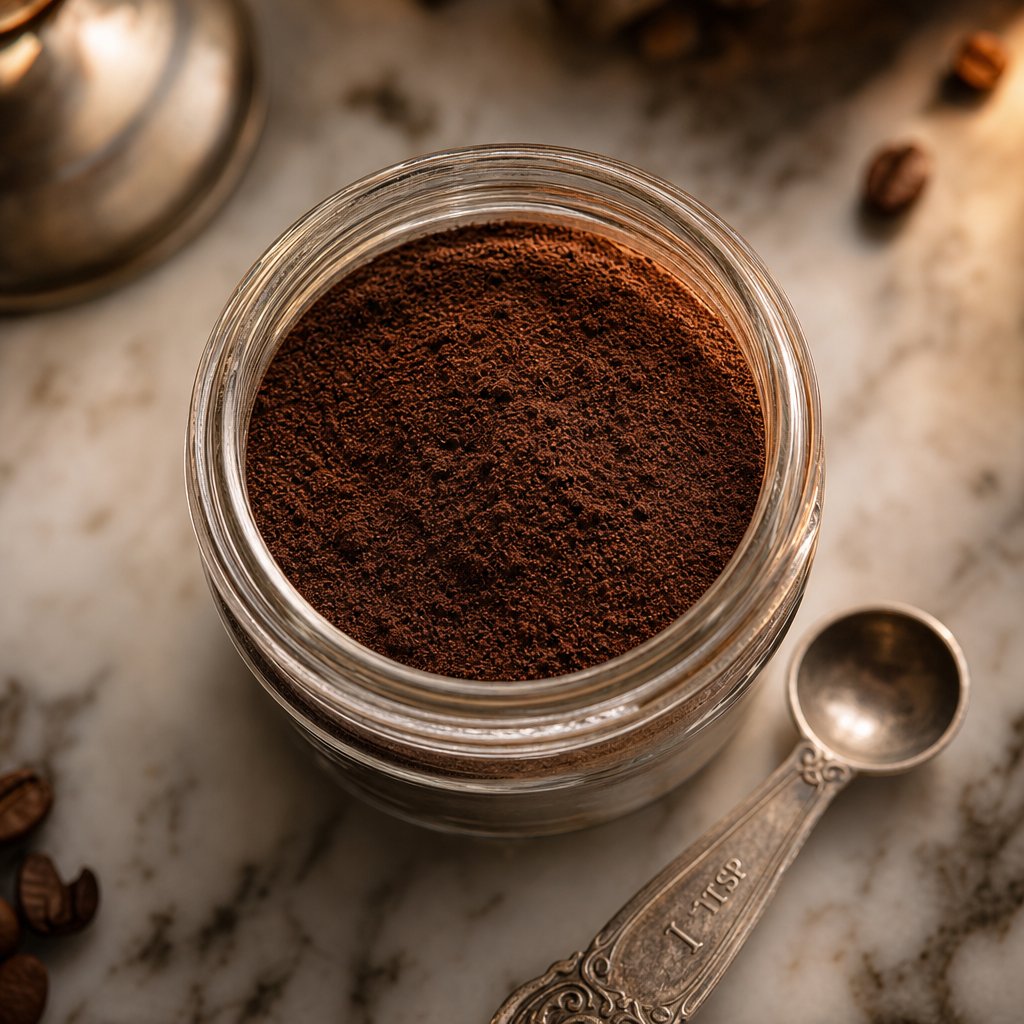
Espresso powder is made from real espresso that has been brewed, dehydrated, and ground into an ultra-fine powder. The process starts with darkly roasted beans, typically high-quality Arabica, that are brewed under high pressure to extract a concentrated shot of espresso. That liquid espresso is then slowly dried, removing all moisture, and the resulting solid is ground down into an extremely fine, almost dust-like consistency.
The end product is intensely concentrated, deeply dark in color, and carries a bold roasted flavor without significant acidity. A single teaspoon packs more flavor punch than a full tablespoon of instant coffee. This concentration is what makes espresso coffee powder so valuable in baking: it delivers depth without adding volume or liquid to your recipe.
Here is the critical point that trips people up: despite the name, espresso powder cannot be used to make a proper espresso drink. It is far too concentrated and bitter for sipping. Imagine dissolving a teaspoon into hot water and expecting a smooth shot of espresso. What you would actually get is an overwhelmingly bitter, unpleasant liquid. This product exists to flavor other things, not to be consumed on its own.
Common Misconceptions About Espresso Powder
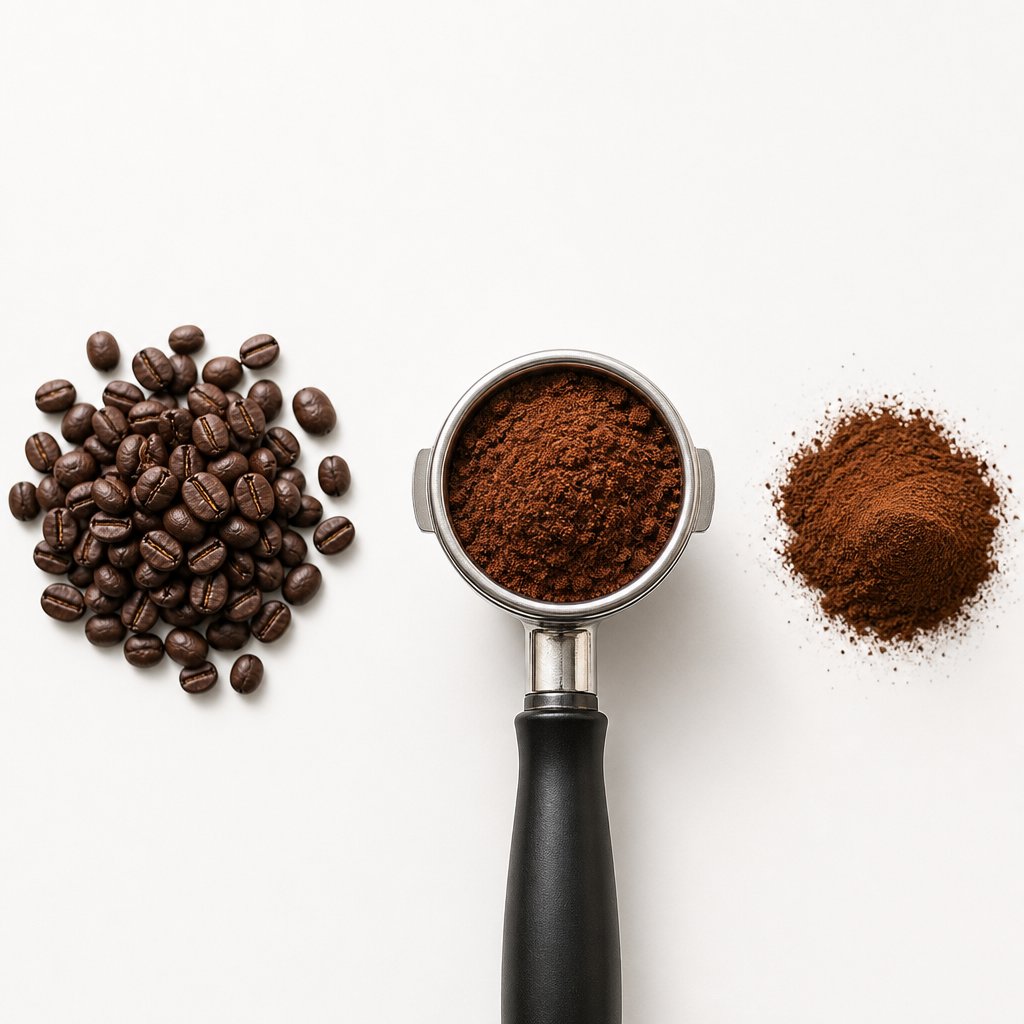
The most widespread myth? That espresso powder is simply finely ground espresso beans. It is not. Ground espresso is raw, unbrewed coffee that you load into a portafilter and run through an espresso machine. Espresso powder has already been brewed and dried. The brewing step fundamentally changes the chemical composition, extracting oils, sugars, and flavor compounds that raw grounds still have locked inside.
This distinction matters practically. If you wonder whether is espresso powder the same as ground espresso, consider what happens when you add each to brownie batter. Ground espresso stays gritty and largely unextracted, leaving crunchy bits and a raw, vegetal taste. Espresso powder dissolves completely, integrating its concentrated flavor seamlessly into the mixture.
Another common mix-up involves the spelling. People often search for "what is expresso powder" with an "x," but the product is the same regardless of how you spell it. Whether you call it espresso or expresso powder, you are looking for that brewed-then-dried product with the ultra-fine texture.
What's espresso powder not? It is not a shortcut to making espresso at home. It is not interchangeable with the pre-ground coffee you buy for your drip machine. And is ground espresso the same as espresso powder? Absolutely not. One is a raw ingredient waiting to be brewed. The other has already completed that journey and come out the other side as a pure flavoring agent.
Recognizing Espresso Powder on Store Shelves
Finding this product in a grocery store can be surprisingly tricky. Unlike instant coffee, which dominates the coffee aisle, espresso powder is often tucked away in the baking aisle alongside vanilla extract, cocoa powder, and food coloring. It is treated as a baking ingredient, not a beverage product.
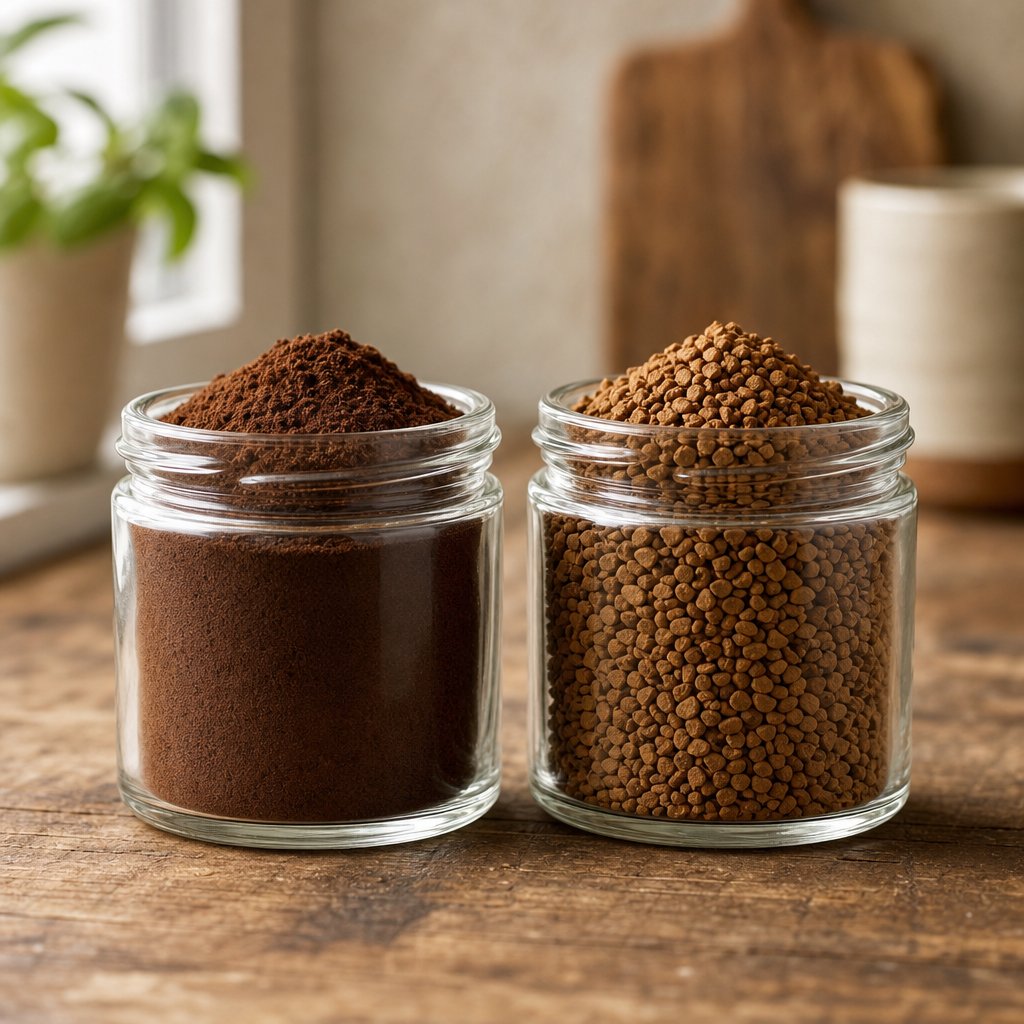
When you pick up a jar, you will notice it looks and feels different from instant coffee granules. Instant coffee tends to have visible crystals or chunky granules with a lighter brown color. Espresso powder is noticeably darker, almost black, and its texture is so fine it resembles cocoa powder more than coffee crystals. The aroma is immediate and intense when you open the container, rich with deep roasted notes rather than the lighter, more acidic smell of standard instant coffee.
Here are the key identifying characteristics to look for:
- Ultra-fine texture, similar to cocoa powder or powdered sugar
- Very dark brown to nearly black color
- Intense, concentrated roasted aroma with low acidity
- Typically sold in small jars (1 to 4 ounces) rather than large canisters
- Often shelved in the baking section, not the coffee aisle
The packaging itself offers clues. Espresso powder usually comes in compact glass jars with labels emphasizing baking use. You will see phrases like "for baking and cooking" or "flavor enhancer" rather than "just add water." The small jar size reflects how the product is used: a teaspoon at a time, not scoops per cup. If you are holding a large container with instructions for making a beverage, you are likely looking at instant coffee or instant espresso, not true espresso powder.
This physical difference between the two products becomes even more important once you understand how instant coffee is manufactured and why its coarser texture and milder flavor profile lead to very different results in the kitchen.
What Instant Coffee Is and How It Differs
Instant coffee is the product most people picture when they think of quick, no-fuss caffeine. Its entire purpose is speed and convenience: add hot water, stir, drink. But the way it gets from bean to jar shapes everything about its flavor, texture, and performance in recipes, and those details explain why instant coffee vs espresso powder is not a trivial distinction.
How Instant Coffee Is Produced
The journey starts in large industrial facilities where roasted coffee beans are brewed in massive batches using conventional methods, similar to a drip coffee maker scaled up to factory size. This produces a concentrated liquid coffee extract. The extract then needs all of its water removed so it can become a shelf-stable, dissolvable product. That dehydration happens in one of two ways.
Spray-drying is the most common method. The liquid coffee extract is sprayed into a stream of hot air at the top of a tall cylindrical tower. As the tiny droplets fall, the water evaporates almost instantly, leaving behind a fine powder by the time it reaches the bottom. The powder may then be texturized into larger granules to make dosing and dissolving easier. According to the Institute for Scientific Information on Coffee, the very fast drying during this process helps preserve aroma and flavor quality.
Freeze-drying takes a gentler approach. The coffee extract is frozen to about -40 degrees Celsius and cut into granules. Those frozen granules are then dried at low temperature under vacuum, which turns the ice directly into vapor without passing through a liquid stage. This preserves more delicate flavor compounds than spray-drying, but it costs more to produce. You will notice freeze-dried instant coffee has chunkier, more angular crystals and often tastes slightly better than its spray-dried counterpart.
A key detail: instant coffee typically uses medium-roast blends, often featuring Robusta beans that are cheaper and more bitter than Arabica. This gives most instant coffee a lighter body, higher acidity, and simpler flavor profile compared to anything made from dark-roasted espresso beans.
Instant Espresso vs Regular Instant Coffee
Here is where things get confusing. Walk down the coffee aisle and you will find jars labeled "instant espresso" sitting right next to regular instant coffee. Is instant espresso the same as instant coffee? Not exactly, though they are close relatives.
What is instant espresso coffee? It is a subcategory of instant coffee made specifically from espresso-roast beans, meaning darker, bolder beans that have been roasted longer. However, it is still manufactured using the same spray-dry or freeze-dry process as regular instant coffee. The beans are brewed in large batches (not under espresso-machine pressure) and then dehydrated into granules.
This makes instant espresso powder a middle ground. Its darker roast gives it a richer, less acidic flavor than standard instant coffee, bringing it closer to espresso powder in taste. But because it skips the high-pressure espresso extraction step and uses industrial dehydration, it lacks the concentrated intensity and ultra-fine texture of true espresso powder. Think of it this way: what is instant espresso coffee powder? It is instant coffee with a darker personality, not a different species altogether.
For bakers wondering whether instant espresso powder vs instant coffee matters in a recipe, the answer is yes. Instant espresso delivers a bolder coffee note and works better as a substitute for espresso powder than regular instant coffee does. But neither instant product matches the sheer concentration of true espresso powder, which means you will always need to adjust quantities when swapping.
| Feature | Instant Coffee | Instant Espresso | Espresso Powder |
|---|---|---|---|
| Roast Level | Medium (often Robusta blend) | Dark (espresso roast, often Arabica) | Dark (high-quality espresso roast) |
| Production Method | Batch brewed, then spray-dried or freeze-dried | Batch brewed, then spray-dried or freeze-dried | Brewed under high pressure as espresso, then slowly dehydrated |
| Primary Use | Making a quick cup of coffee | Drinking or baking | Baking and cooking (flavoring ingredient) |
| Concentration Level | Low to moderate | Moderate | Very high |
| Texture | Coarse granules or crystals | Fine granules | Ultra-fine powder (dust-like) |
The table makes the gradient clear. Regular instant coffee sits at one end, optimized for drinkability. Espresso powder sits at the other, optimized for concentrated flavor impact. Instant espresso occupies the space between, which is exactly why it causes so much confusion in recipe substitutions.
With these definitions established, the real question becomes: what happens during manufacturing that creates such different end products from the same raw material? The answer lies in the brewing pressure, dehydration speed, and temperature choices that each process demands.
How Each Product Is Manufactured
Brewing pressure, dehydration temperature, and grind timing. These three variables separate espresso powder from instant coffee at the molecular level. Both products start with roasted coffee beans, yet the paths they take from bean to jar produce ingredients with completely different flavor profiles, textures, and culinary behaviors. Walking through each manufacturing process step by step reveals why instant espresso vs espresso powder is not just a labeling difference but a fundamental product distinction.
From Bean to Espresso Powder
The production of espresso powder follows a slower, more deliberate path than most people expect. Imagine a process designed to capture the most intense version of coffee flavor and lock it into a shelf-stable form.
It begins with bean selection. Manufacturers choose high-quality, darkly roasted beans, typically Arabica, that have been roasted well past the second crack. This extended roasting develops deep caramel, chocolate, and bittersweet notes while reducing acidity. The beans are then ground to a fine consistency, similar to what you would use in a home espresso machine.
Next comes the brewing step that sets this product apart from everything else on the shelf. Those finely ground beans are brewed under high pressure, just like pulling a shot of espresso at a cafe. This high-pressure extraction, typically around 9 bars, forces hot water through the tightly packed grounds and pulls out oils, dissolved solids, and aromatic compounds that drip brewing simply cannot access. The result is a concentrated liquid espresso rich in body and complexity.
The liquid espresso then enters the dehydration phase. Rather than blasting it with high heat, manufacturers typically use a slow, low-temperature drying process that removes moisture without destroying the volatile flavor compounds extracted during brewing. Some producers use proprietary methods to keep temperatures low enough that the oils and aromatic molecules remain intact. The dried material is then ground one final time into an extremely fine powder, finer than cocoa, finer than powdered sugar.
The entire process is designed around one goal: maximum flavor concentration in minimum volume. Every step, from the dark roast to the pressurized extraction to the gentle dehydration, serves to preserve and intensify rather than dilute.
From Bean to Instant Coffee Granules
Instant coffee takes a fundamentally different manufacturing approach, one built for scale, speed, and solubility rather than concentrated flavor.
The process starts with large batches of roasted beans, often medium-roast blends that include Robusta varieties chosen for their higher yield and lower cost. These beans are ground and brewed in industrial percolators, essentially giant drip coffee makers that extract coffee using hot water at atmospheric pressure. No 9-bar espresso extraction here. The brewing method is closer to what happens in your kitchen drip machine, just scaled up to produce thousands of liters at once.
This produces a liquid coffee extract that then needs to be turned into a dry, shelf-stable product. As described by the Institute for Scientific Information on Coffee, two main drying methods are used:
Spray-drying: The coffee extract is sprayed into a stream of hot air at the top of a tall cylindrical tower. The droplets dry almost instantly as they fall, forming a fine powder at the bottom. This powder is often texturized into larger granules afterward to make it easier to scoop and dissolve. The process is fast and cost-effective, but the high temperatures can degrade some delicate flavor compounds.
Freeze-drying: The extract is frozen to approximately -40 degrees Celsius and cut into granules. Those frozen pieces are then dried under vacuum at low temperature, turning ice directly into vapor. This gentler method preserves more nuanced flavors, which is why freeze-dried instant coffee generally tastes better and costs more.
Either way, the end product is instant espresso coffee granules or standard instant coffee crystals designed to dissolve rapidly in hot water. The particle size is deliberately coarser than espresso powder because the goal is quick dissolution in a cup, not invisible integration into a batter.
Why the Process Matters for End Results
Sounds technical? Here is why it matters in your kitchen. The espresso brewing step extracts a different set of compounds than drip brewing. High-pressure extraction pulls more oils, more dissolved solids, and more of the Maillard reaction products that give espresso its characteristic body and sweetness. Drip brewing at atmospheric pressure extracts a thinner, more acidic profile with less body.
Then the dehydration method compounds the difference. Slow, low-heat drying preserves those extracted oils and aromatics in espresso powder. High-temperature spray-drying partially degrades them in instant coffee. The result is two products that taste, feel, and behave differently even though they started from the same raw material: roasted coffee beans.
When you compare espresso powder vs instant espresso coffee side by side, you are really comparing the cumulative effect of every processing decision. One product went through pressurized extraction and gentle dehydration. The other went through atmospheric brewing and rapid industrial drying. Neither is wrong, but they produce ingredients suited for very different jobs.
Here are the key process differences laid out sequentially:
- Bean selection: Espresso powder uses dark-roasted, high-quality beans. Instant coffee typically uses medium-roast blends, often with Robusta.
- Grinding: Both are ground before brewing, but espresso powder starts with a finer grind suited for pressurized extraction.
- Brewing method: Espresso powder is brewed under approximately 9 bars of pressure. Instant coffee is brewed at atmospheric pressure in large batch percolators.
- Extraction result: Pressurized brewing yields a thicker, oilier, more concentrated liquid. Atmospheric brewing yields a thinner, more acidic extract.
- Dehydration: Espresso powder is dried slowly at low temperatures. Instant coffee is spray-dried at high heat or freeze-dried under vacuum.
- Final grinding: Espresso powder is ground to an ultra-fine dust after drying. Instant coffee is left as granules or crystals optimized for dissolving.
- End product priority: Espresso powder prioritizes flavor concentration and fine texture. Instant coffee prioritizes rapid solubility and drinkability.
Every one of these steps pushes the two products further apart. By the time they reach your pantry, espresso instant coffee powder and true espresso powder are as different as tomato paste and tomato juice: same origin, completely different concentration and purpose.
These manufacturing differences do not just affect how the products look and taste in isolation. They directly shape how each one performs when you add it to food, from the flavor compounds it contributes to the way it interacts with other ingredients like chocolate, sugar, and fat.
Flavor, Caffeine, and Texture Compared
Manufacturing differences are not just academic. They show up the moment you open each jar, and they become impossible to ignore once these products hit your batter, your rub, or your mug. Flavor intensity, caffeine concentration, and physical texture all diverge in ways that directly affect recipe outcomes.
Flavor Profile and Roast Differences
Espresso powder delivers a bittersweet, low-acid flavor loaded with caramel and dark chocolate notes. The combination of dark roasting and high-pressure extraction pulls out Maillard reaction compounds and oils that give espresso its signature depth. When you add a teaspoon to brownie batter, those compounds amplify cocoa without introducing noticeable sourness or a thin, watery coffee taste.
Instant coffee, by contrast, tends to be lighter, more acidic, and less complex. Its medium roast and atmospheric brewing produce a flavor profile closer to a standard drip cup: recognizable as coffee, but without the concentrated richness. In baking, this translates to a milder coffee note that can sometimes bring unwanted acidity to chocolate desserts.
World-renowned pastry chef Adriano Zumbo puts it simply: instant espresso is "a much more concentrated, deep, dark, intense coffee" that provides more punch with less product. He notes that he reaches for espresso powder when he wants a "nice bitter edge" in chocolate cake, while instant coffee works when the goal is a sweeter profile where coffee gently lifts cocoa notes rather than dominating them.
The practical takeaway? Espresso powder vs ground coffee or instant granules is not just a strength difference. It is a flavor-shape difference. Espresso powder rounds out bitterness and adds body. Instant coffee adds brightness and a more familiar, lighter coffee character. Choosing the wrong one shifts the entire flavor balance of a dish.
Caffeine Content Comparison
How much caffeine is in espresso powder compared to instant coffee? The answer depends on brand and serving size, but the general pattern is consistent: espresso powder packs more caffeine per gram because it is more concentrated.
For instant coffee, USDA data shows approximately 28.3 mg of caffeine per teaspoon (0.9 grams). A standard 12-ounce cup made with about 3.4 teaspoons of instant coffee contains roughly 96 mg of caffeine. That is about 30% less than a same-sized cup of brewed drip coffee at 136 mg.
Espresso powder, being a more concentrated product derived from pressurized extraction, contains more caffeine per equivalent weight. A single teaspoon of espresso powder carries a higher caffeine load than a teaspoon of instant coffee granules. However, here is the key nuance: you rarely use the same amount. Most baking recipes call for half a teaspoon to one teaspoon of espresso powder, while instant coffee recipes might call for two to three teaspoons. So the actual caffeine you consume per serving of a finished baked good often ends up in a similar range regardless of which product you used.
Instant espresso caffeine falls somewhere between the two. Its darker roast does not necessarily mean more caffeine (roasting actually reduces caffeine slightly), but because it is used in smaller quantities than regular instant coffee, the per-serving intake stays moderate.
The bottom line: if caffeine sensitivity is a concern, pay attention to how much product a recipe uses rather than fixating on which type it calls for. A recipe using three teaspoons of instant coffee may deliver similar caffeine to one using a single teaspoon of espresso powder.
Texture and Solubility Behavior
Texture is where these products create the most noticeable difference in finished recipes. Is espresso powder the same as ground coffee in how it behaves in batter? Not even close.
Espresso powder has an ultra-fine particle size, comparable to cocoa powder. This means it integrates seamlessly into dry ingredients like flour, sugar, and cocoa without any pre-dissolving step. You can whisk it directly into your dry mix and it disappears completely, distributing flavor evenly throughout the batter. Chef Zumbo recommends blending it with flour or sugar in a food processor to ensure even dispersion, though its fineness often makes this unnecessary for home bakers.
Instant coffee granules and espresso coffee granules behave differently. They are designed to dissolve quickly in hot liquid, which they do well. But when added directly to a dry batter or dough, those coarser particles may not fully dissolve during mixing. The result can be visible specks or a slightly grainy texture in the finished product. The workaround is to dissolve instant coffee in a small amount of hot water first, creating a paste, then fold that paste into your recipe. This adds a small amount of extra liquid, which can affect texture in moisture-sensitive recipes like cookies or shortbread.
Solubility speed also differs in cold applications. Espresso powder dissolves reasonably well in room-temperature liquids and fats, making it useful for no-bake recipes, cold frostings, and ice cream bases. Instant coffee granules struggle in cold liquid and may need heat to fully dissolve.
| Property | Espresso Powder | Instant Coffee |
|---|---|---|
| Flavor Intensity | Very high: bittersweet, caramel, chocolate notes | Moderate: lighter, more acidic, familiar coffee taste |
| Caffeine Concentration (per tsp) | Higher due to concentrated extraction | ~28 mg per teaspoon (USDA) |
| Particle Size | Ultra-fine (comparable to cocoa powder) | Coarse granules or crystals |
| Solubility Speed in Hot Liquid | Fast, dissolves completely | Very fast, designed for instant dissolution |
| Behavior in Dry Batters | Integrates invisibly without pre-dissolving | May leave specks; pre-dissolving recommended |
| Acidity Level | Low | Moderate to high |
These differences in flavor, caffeine, and physical behavior are not just interesting trivia. They directly determine which product belongs in which recipe, and when reaching for the wrong jar means the difference between a dessert that impresses and one that falls flat.
Best Uses for Espresso Powder and Instant Coffee in Baking, Cooking, and Beverages
Knowing the differences between these two products is useful. Knowing exactly when to reach for each one is what actually saves your recipes. The right choice depends entirely on what you are making and what role you need the coffee flavor to play.
Baking Chocolate Desserts and Pastries
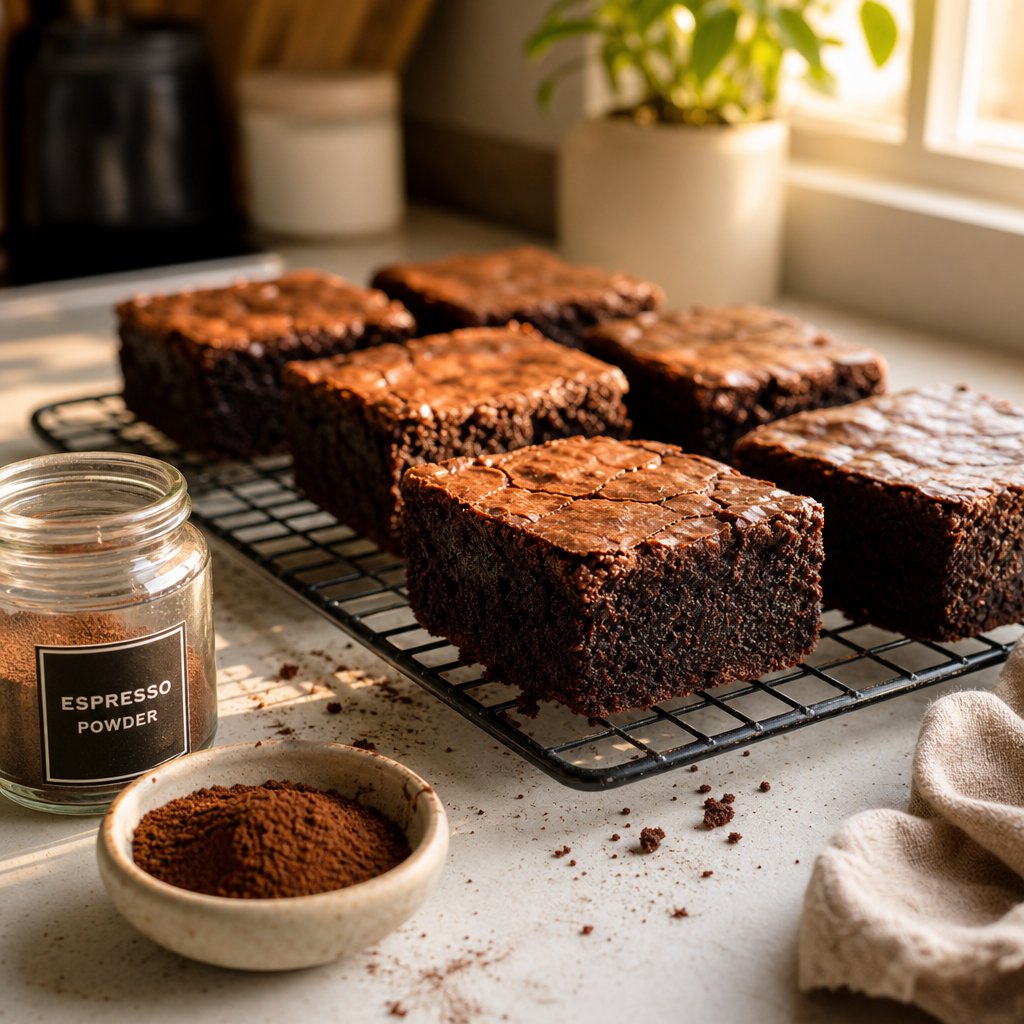
What is espresso powder in baking? It is a flavor amplifier, not a flavor addition. This is the single most important thing to understand about using espresso powder for baking. When you stir half a teaspoon to one teaspoon into brownie batter, chocolate cake, or cookie dough, it does not make the dessert taste like coffee. It makes the chocolate taste more like chocolate.
The dark, bittersweet compounds in espresso coffee powder for baking cut through sweetness and amplify cocoa in a way that nothing else replicates. The Kitchn calls it an ingenious way to bolster the flavor of standard cocoa powder or baking chocolate without needing to buy expensive, high-percentage cacao bars. A single teaspoon disappears into the batter, its ultra-fine texture blending invisibly, while the finished brownie or cake tastes richer and more complex than the recipe has any right to be.
This trick works across the board: chocolate souffles, ganache, hot fudge sauce, tiramisu, and even chocolate frosting. If you want a mocha direction rather than pure chocolate enhancement, simply add another teaspoon or two to bring the coffee flavor forward. The best espresso powder for baking is one with a very fine grind and deep roast, which ensures seamless integration and maximum flavor impact.
Making a Quick Cup of Coffee
Instant coffee wins this category without contest. Its entire reason for existing is to dissolve in hot water and produce a drinkable cup in seconds. Espresso powder is far too concentrated and bitter for this purpose. Attempting to make a cup from it results in an aggressively bitter, unpleasant beverage that no amount of sugar or milk can rescue.
If you want something stronger than regular instant coffee but still drinkable, instant espresso powder is the middle ground. It delivers a bolder, darker cup without crossing into the overwhelming territory of true espresso powder. For drinking, keep espresso powder in the pantry and instant coffee or instant espresso by the kettle.
Savory Cooking and Dry Rubs
Espresso powder excels in savory applications where concentrated flavor needs to integrate without adding liquid. DeLallo highlights espresso-crusted baby back ribs and espresso-chili dry rubs as standout uses, where the powder brings a deep, smoky complexity to meat seasonings. Stirring a tablespoon into simmering chili, barbecue sauce, or mole adds richness and rounds out spice blends without anyone identifying the ingredient as coffee.
Instant coffee can work in these applications, but it requires more volume to achieve similar depth and may introduce unwanted acidity. Its coarser granules also make it a poor choice for dry rubs, where even texture matters for consistent coating on meat surfaces.
Non-Chocolate Baked Goods and Beverages
What is espresso powder for baking when the recipe is not chocolate-based? Here, the answer shifts. For coffee-flavored frostings, ice cream bases, smoothies, or coffee cakes where you want a recognizable coffee taste rather than background depth, instant espresso powder for baking often works better. It dissolves cleanly, provides a familiar coffee flavor without overwhelming bitterness, and integrates smoothly into liquid-heavy mixtures like custards and cream bases.
Coffee powder for baking in these contexts means choosing the product that delivers the flavor profile your recipe needs. Pure espresso powder can overpower delicate vanilla or cream flavors with its intensity, while instant espresso provides a balanced coffee note that plays well with others.
Quick-Reference Decision Guide
When you are standing in your kitchen with both jars in hand, use this guide:
- If you want deeper chocolate flavor without coffee taste, choose espresso powder (1/2 to 1 tsp)
- If you want a quick drinkable cup of coffee, choose instant coffee or instant espresso
- If you want a bold dry rub for meat, choose espresso powder
- If you want coffee-flavored frosting or ice cream, choose instant espresso
- If you want to enhance chili, mole, or barbecue sauce, choose espresso powder
- If you want a mocha flavor in baked goods, choose espresso powder (1 to 2 tsp)
- If you want subtle coffee notes in a light cake or cream, choose instant espresso
The pattern is clear: espresso powder dominates when concentration and invisible integration matter. Instant coffee and instant espresso win when drinkability or a gentler, more recognizable coffee flavor is the goal. Picking the wrong one does not just change the flavor slightly. It can make a recipe taste flat, bitter, or texturally off.
Of course, not everyone has both products on hand. When you only have one and the recipe calls for the other, precise substitution ratios become essential to avoid ruining the final result.
Substitution Ratios and Conversion Guidelines
You have one jar in the pantry and the recipe calls for the other. Can you make it work? In most cases, yes, but only if you adjust the quantity and technique. Treating espresso powder vs instant coffee for baking as a simple 1:1 swap is the fastest way to end up with a flat dessert or an overwhelmingly bitter one. Here is how to convert accurately.
Swapping Espresso Powder for Instant Coffee
Because espresso powder is significantly more concentrated, you need less of it when replacing instant coffee. A reliable starting point: use roughly half the amount. If your recipe calls for 2 teaspoons of instant coffee, start with 1 teaspoon of espresso powder and taste the batter or mixture before adding more.
King Arthur Baking confirms this ratio in reverse, noting that when substituting instant coffee for espresso powder, you need about 50% more. Working backward, that means espresso powder at half the volume delivers equivalent intensity. Keep in mind the flavor profile will shift: espresso powder brings darker, less acidic, more bittersweet notes compared to the lighter character of instant coffee. In chocolate recipes, this shift usually improves the result. In coffee-flavored cakes or frostings where you want a brighter, more recognizable coffee taste, the swap may darken the flavor more than you prefer.
Is espresso powder the same as instant espresso in terms of substitution? Not quite. Instant espresso sits between the two in concentration, so if you are replacing instant espresso with true espresso powder, reduce by about 25% rather than 50%. The products share a similar roast profile, but espresso powder remains more concentrated due to its pressurized extraction and slow dehydration process.
Swapping Instant Coffee for Espresso Powder
Going the other direction, use approximately double the amount of instant coffee to replace espresso powder. A recipe calling for 1 teaspoon of espresso powder needs about 2 teaspoons of instant coffee to approach the same depth of flavor.
Texture matters here. Instant coffee granules are coarser and may not dissolve fully in dry batters. The fix: dissolve the instant coffee in the smallest possible amount of hot water first, just enough to create a smooth paste, then fold that paste into your recipe. This prevents grainy specks in the finished product but does add a small amount of extra liquid. For moisture-sensitive recipes like shortbread or dry cookie doughs, account for that added liquid by slightly reducing another wet ingredient.
The flavor result will be milder and slightly more acidic than the original recipe intended. Is instant espresso the same as espresso powder in this context? Closer, but still not identical. If you have instant espresso on hand instead of regular instant coffee, use about 1.5 times the amount called for rather than doubling it. The darker roast of instant espresso gets you closer to the target flavor without overshooting on volume.
When Substitution Does Not Work Well
Some applications make swapping impractical or counterproductive. Is espresso instant coffee the same as espresso powder when it comes to dry rubs? Definitely not. Instant coffee granules are too coarse for even coating on meat, and their lighter flavor gets lost against bold spices. Espresso powder's dust-like texture is essential for rubs, and no amount of instant coffee replicates that.
Drinking is another no-go zone. Espresso powder dissolved in hot water produces an aggressively bitter liquid that is not meant for sipping. And is instant coffee espresso powder when you need invisible integration into a delicate mousse or ganache? No. The coarser particles and weaker concentration mean you would need so much instant coffee that it alters the liquid balance and introduces graininess.
For recipes where precise texture and concentration matter, stick with what the recipe specifies or skip the substitution entirely.
| Recipe Type | Original Ingredient | Substitute | Ratio | Notes |
|---|---|---|---|---|
| Chocolate Cake | 1 tsp espresso powder | Instant coffee | Use 2 tsp | Dissolve in 1 tsp hot water first; flavor will be milder |
| Chocolate Cake | 2 tsp instant coffee | Espresso powder | Use 1 tsp | Add directly to dry ingredients; deeper chocolate result |
| Cookies | 1 tsp espresso powder | Instant espresso | Use 1.5 tsp | Crush granules fine or dissolve in minimal liquid |
| Tiramisu | 2 tsp espresso powder | Instant coffee | Use 3-4 tsp | Dissolve fully in the soaking liquid; expect lighter flavor |
| Meat Rubs | Espresso powder | Instant coffee | Not recommended | Granules too coarse for even coating; texture suffers |
| Frostings | 1 tsp espresso powder | Instant espresso | Use 1.5 tsp | Dissolve in 1 tsp cream before adding to buttercream |
| Drinking | Instant coffee | Espresso powder | Not recommended | Far too bitter and concentrated for a drinkable cup |
These ratios give you a reliable starting point, but every brand varies slightly in concentration. Taste as you go, especially the first time you make a substitution in a new recipe. A small test batch saves you from committing an entire cake to an untested swap.
Whether you are substituting at home or sourcing these ingredients for larger-scale production, understanding how each product behaves over time, including shelf stability and storage requirements, becomes just as important as getting the ratios right.
Storage Tips and Commercial Product Applications
Getting the right product and using the correct ratio only matters if that product still tastes good when you open the jar. Both espresso powder and instant coffee are shelf-stable, but their longevity depends on how you store them. And for brands thinking beyond the home kitchen, these same storage characteristics shape decisions about commercial formulation and product development at scale.
Shelf Life and Storage for Long-Term Use
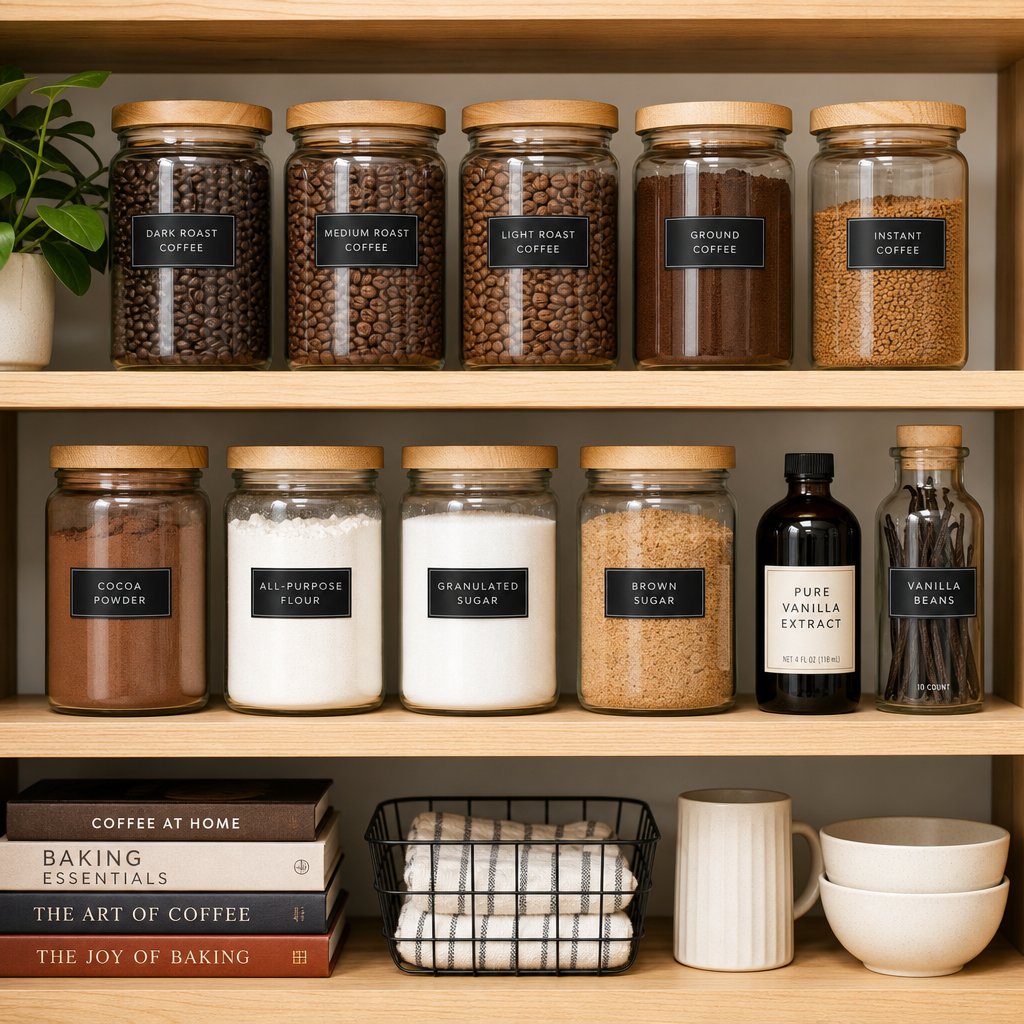
Espresso powder, thanks to its extremely low moisture content and fine particle structure, holds up well over time. Stored in an airtight container away from heat, light, and humidity, it can maintain its flavor intensity for up to two years or longer. The key enemy is moisture. Even a small amount of humidity causes clumping and can dull the concentrated aromatics that make espresso powder valuable in the first place. A tightly sealed glass jar in a cool, dark pantry is ideal. Some bakers keep theirs in the freezer for extended storage, though this is rarely necessary if the seal is good.
Instant coffee follows a similar pattern. WebstaurantStore notes that unopened jars or packages of instant coffee can last up to two years from the date of manufacture. Once opened, it is best to use instant coffee within three to six months for optimal flavor. Over time, the granules can become clumpy or stale, leading to a less desirable taste. The coarser particle size of instant coffee makes it slightly more prone to absorbing ambient moisture than the ultra-fine espresso powder, especially in humid climates.
Practical storage tips for both products:
- Always reseal the container immediately after use
- Store in a cool, dry location away from the stove or dishwasher steam
- Use a dry spoon every time; introducing even a damp utensil accelerates clumping
- If granules or powder have clumped but show no off-odors, they are still safe to use, just less potent
- Transfer from cardboard or thin packaging into airtight glass or metal containers
Where do you find espresso powder that is packaged for longevity? Most specialty brands use small glass jars with tight-fitting lids specifically because the product is used in small quantities over many months. Where can you buy espresso powder for baking? Check the baking aisle of well-stocked grocery stores, specialty food retailers, or online marketplaces that ship in sealed containers. Where do you get espresso powder if local stores do not carry it? Online retailers typically offer the widest selection, and the sealed shipping means the product arrives in peak condition.
For home bakers who use espresso powder infrequently, buying a small 1- to 2-ounce jar makes more sense than a large container. You will use it a teaspoon at a time, and a small jar stays fresh longer because there is less air space inside after each use. If you bake frequently or run a small bakery, larger containers from restaurant supply sources offer better value, just ensure you can reseal them properly.
Scaling Coffee Ingredients for Commercial Health Products
These storage and stability characteristics matter far beyond the home kitchen. For nutrition brands, supplement companies, and private label sellers exploring coffee-flavored functional foods, the distinction between espresso powder and instant coffee becomes a formulation decision with real consequences for product quality, consumer perception, and shelf stability.
Consider the growing market for coffee-based functional products. A 2026 review in the Annual Review of Food Science and Technology highlights that coffee contains bioactive compounds with potential benefits for neuroprotection, metabolic health, and gut microbiota support. The researchers note that coffee and its by-products are sources of unique functional ingredients applicable as functional food beverages, dietary ingredients, and health supplements. This positions coffee-derived ingredients, whether from espresso extraction or standard brewing processes, as valuable components in product development.
Whether a brand is developing caffeinated energy supplements, coffee-flavored protein powders, or functional beverage mixes, the choice between espresso-derived and instant-coffee-derived ingredients affects three critical factors:
- Flavor profile: Espresso-derived ingredients deliver a richer, less acidic taste that pairs well with chocolate, vanilla, and nut flavors common in protein supplements
- Solubility: Instant coffee dissolves faster in cold water, making it better suited for ready-to-mix sachets and shaker-bottle products
- Consumer perception: "Espresso" on a label signals premium quality and intensity, while "coffee" reads as more approachable and familiar
For brands that want to incorporate these ingredients into health-focused products, working with an experienced OEM/ODM manufacturer streamlines the process from concept to market-ready product. Companies like ZhuFeng specialize in helping nutrition brands and private label sellers develop customized formulations with precise ingredient control, offering flexible product formats that accommodate coffee-based functional ingredients across multiple delivery systems.
The range of possible product formats for coffee-based functional foods includes:
- Powder sachets and stick packs (single-serve coffee-protein blends or energy mixes)
- Hard capsules containing concentrated coffee extract with added vitamins or adaptogens
- Tablets combining caffeine from espresso sources with functional compounds
- Gummy supplements with coffee flavor and bioactive compounds
- Oral liquid shots for quick-absorbing caffeinated functional beverages
- Soft capsules with coffee oil extracts and complementary nutrients
Each format presents different requirements for the coffee ingredient. Powder and granule formats need consistent particle size and solubility. Capsules and tablets require precise caffeine dosing. Gummies demand flavor compatibility without grittiness. An OEM/ODM partner with powder and granule formulation expertise can help brands navigate these technical requirements while maintaining scalable production.
Is espresso powder the same as instant espresso coffee when it comes to commercial formulation? The same distinctions that matter in your kitchen, concentration, flavor depth, solubility, and texture, scale directly into product development. A coffee-flavored protein powder using espresso-derived ingredients will taste fundamentally different from one using standard instant coffee, and that difference shapes consumer preference and repeat purchases.
Is espresso powder the same as espresso instant coffee at the ingredient-sourcing level? No. Commercial buyers need to specify exactly which product they want, because manufacturers formulate around the unique properties of each. Getting this wrong at scale means reformulating entire production runs rather than just remaking a batch of brownies.
Whether you are a home baker storing a small jar for weekend projects or a brand developing the next coffee-flavored supplement line, the core lesson remains the same: these products are not interchangeable, and understanding their differences, from flavor to shelf life to functional behavior, is what separates good results from wasted ingredients.
Frequently Asked Questions About Espresso Powder and Instant Coffee
1. Can I use espresso powder to make a cup of coffee?
No, espresso powder is not designed for drinking. It is far too concentrated and bitter to produce a pleasant beverage when dissolved in hot water. Espresso powder exists as a flavoring ingredient for baking and cooking. If you want a quick drinkable cup, use instant coffee or instant espresso instead, both of which are formulated to reconstitute into a balanced, sippable coffee.
2. What is the substitution ratio between espresso powder and instant coffee?
When replacing instant coffee with espresso powder, use roughly half the amount since espresso powder is more concentrated. For example, substitute 1 teaspoon of espresso powder for 2 teaspoons of instant coffee. Going the other direction, double the instant coffee quantity and dissolve it in a small amount of hot water first to prevent graininess in baked goods. Adjust to taste, as brands vary in strength.
3. Is instant espresso the same as espresso powder?
They are similar but not identical. Instant espresso is made from espresso-roast beans but uses the same spray-dry or freeze-dry process as regular instant coffee. True espresso powder is brewed under high pressure and slowly dehydrated at low temperatures, resulting in a finer texture and more concentrated flavor. Instant espresso sits between regular instant coffee and espresso powder in terms of intensity and can serve as a closer substitute in recipes.
4. Why do bakers add espresso powder to chocolate recipes?
Espresso powder amplifies chocolate flavor without making desserts taste like coffee. Its bittersweet, low-acid compounds enhance cocoa depth and cut through sweetness, making brownies, cakes, and ganache taste richer and more complex. Just half a teaspoon to one teaspoon blends invisibly into batter thanks to its ultra-fine texture, boosting chocolate intensity in a way no other ingredient replicates.
5. How should I store espresso powder and instant coffee for maximum freshness?
Both products need airtight containers stored in cool, dry locations away from heat and humidity. Espresso powder can maintain quality for up to two years when sealed properly, while opened instant coffee is best used within three to six months. Always use a dry spoon, reseal immediately after use, and transfer products from thin packaging into glass or metal containers to prevent moisture absorption and clumping.