Why Making Your Own Curry Powder Changes Everything
Open a jar of store-bought curry powder and take a deep breath. If the aroma barely registers, you already know the problem. Commercial blends sit on warehouse shelves and grocery racks for months, sometimes years, before reaching your kitchen. By the time you twist off that cap, the spices inside have lost much of the volatile oils that make curry powder worth using in the first place.
Learning how to make curry powder at home flips that equation entirely. You control the freshness, the ratios, and every single ingredient that goes into the jar. No fillers, no anti-caking agents, no artificial colors trying to compensate for faded turmeric. Just pure spices at peak potency, blended to your exact taste.
Why Homemade Curry Powder Tastes Better
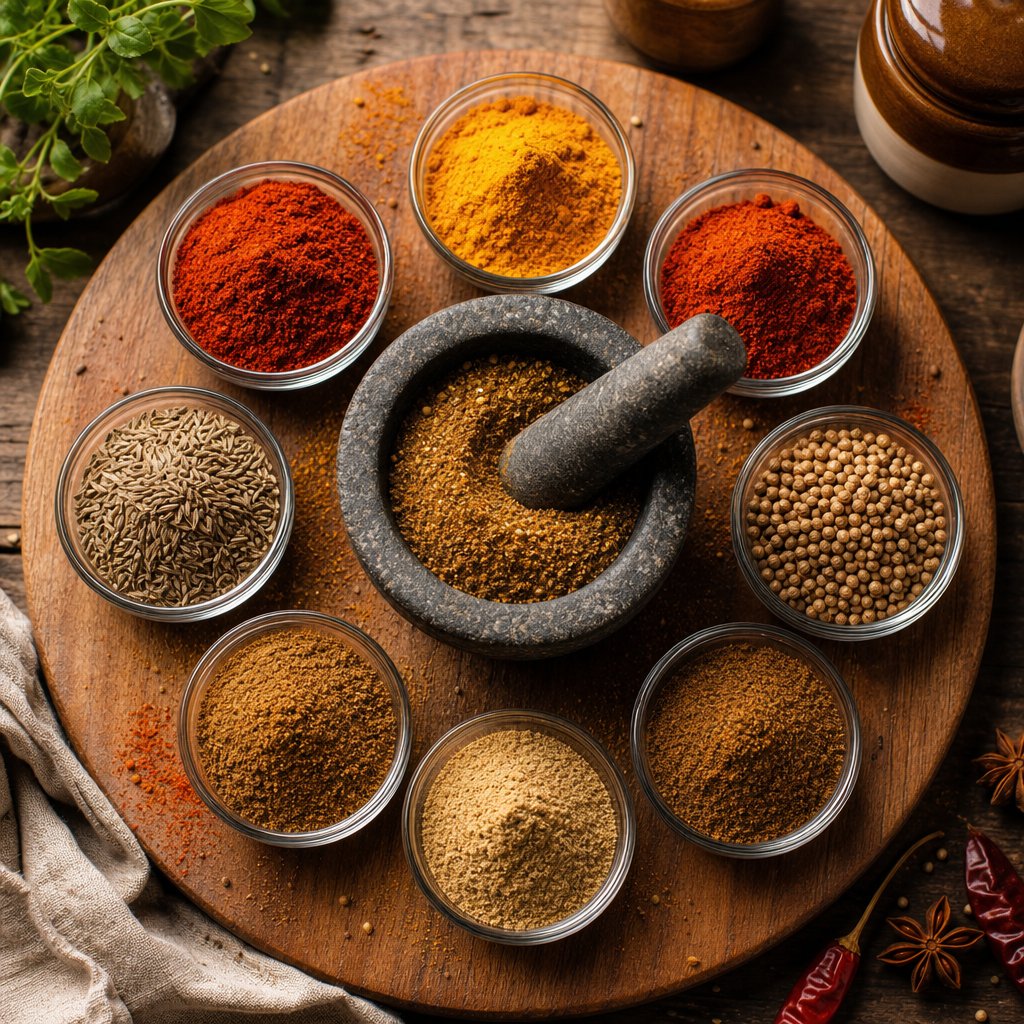
So what is curry powder made of? At its core, it is a blend of ground spices, typically built around coriander, cumin, turmeric, black pepper, ginger, and fenugreek, with warming additions like cinnamon, cardamom, and cayenne. The specific combination varies widely, and that is exactly the point. Commercial brands lock you into a single generic ratio designed for mass appeal rather than depth of flavor.
Homemade curry powder tastes better for one straightforward reason: freshly ground spices contain higher concentrations of essential oils. These oils carry the aroma and flavor compounds that define each spice. Once ground, those oils begin evaporating and oxidizing immediately.
Ground spices lose significant potency within 4 to 6 months. A homemade blend used within weeks of grinding delivers noticeably more aroma and complexity than any shelf-stable commercial version.
Beyond freshness, there is the transparency factor. Many supermarket curry powders include sodium, MSG, or color additives that mask the absence of real spice intensity. When you blend your own, you know exactly what is curry powder in your jar and nothing else.
What You Will Learn in This Guide
Where does curry powder come from as a concept? It originated as a British colonial-era convenience product, a one-size-fits-all shortcut that compressed India's vast and diverse regional spice traditions into a single yellow jar. As chef Chintan Pandya of New York's Dhamaka has noted, curry powder was never something used in traditional Indian kitchens. The British created it to replicate flavors they encountered but did not fully understand, flattening countless distinct spice combinations into one commercial formula.
This guide treats curry powder differently. Rather than handing you a single recipe and sending you on your way, it gives you a framework for building custom blends with confidence. You will learn how spices break into functional categories, how to select and toast them for maximum flavor, and how to adjust ratios for any heat level or regional style. Think of it as a system that makes you self-sufficient in the spice department, not dependent on whatever generic blend happens to be on sale.
The difference between a flat, one-dimensional curry and one that fills the room with fragrance often comes down to a single variable: how fresh and intentional your spice blend is. That variable is entirely within your control.
Step 1 - Understand the Building Blocks of Curry Powder
Knowing that freshness matters is one thing. Knowing which spices to grind and in what proportion is where most people get stuck. If you have ever wondered what spices are in curry powder and why certain blends taste richer than others, the answer lies in how those spices work together as a system rather than a random collection.
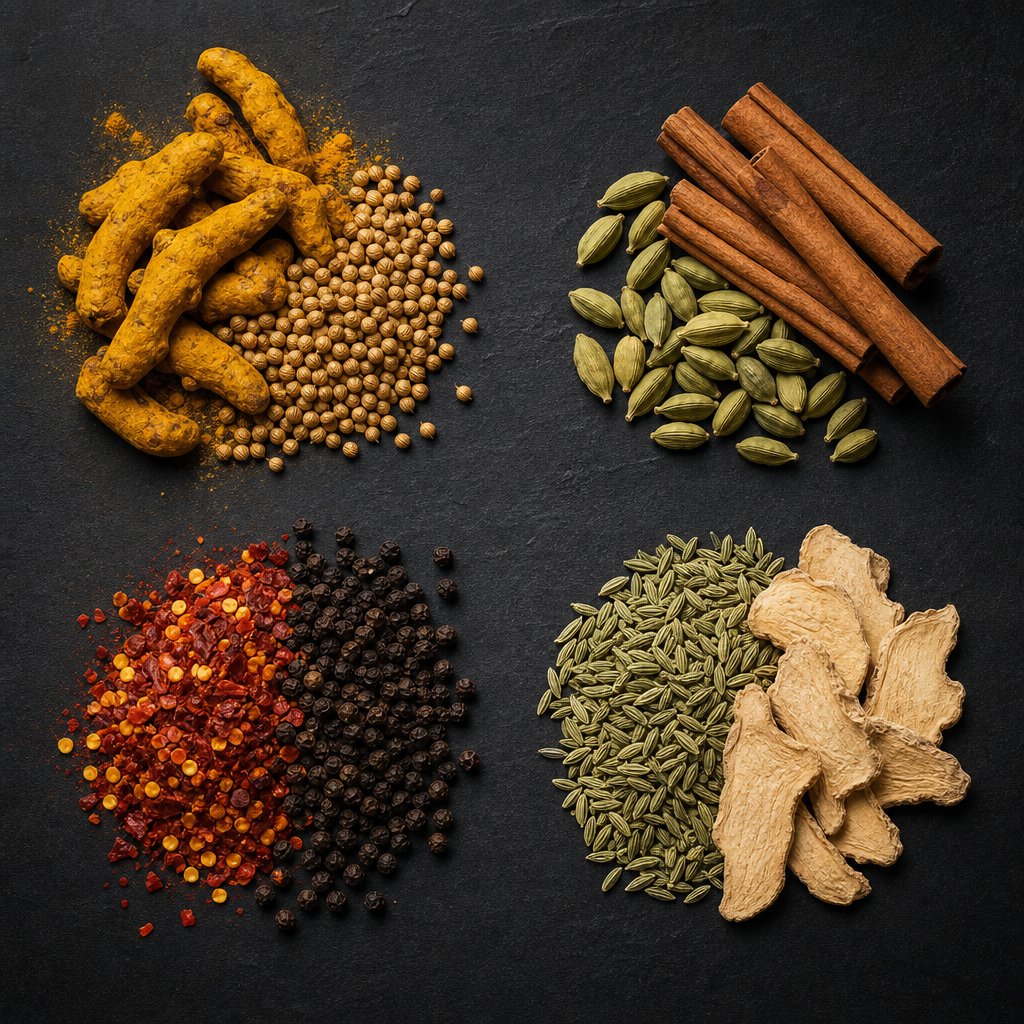
Here is a framework that simplifies everything: every great curry powder blend draws from four functional spice categories. Each category plays a distinct role, and adjusting the balance between them is how you shape the final flavor. Think of it like building a song — you need rhythm, melody, harmony, and dynamics working together.
The Four Spice Categories in Every Curry Blend
The ingredients in curry powder fall into these groups based on what they contribute to the overall taste profile:
- BASE spices — Turmeric, coriander, and cumin. These form the bulk of the blend (typically 60-70%) and establish the foundational flavor.
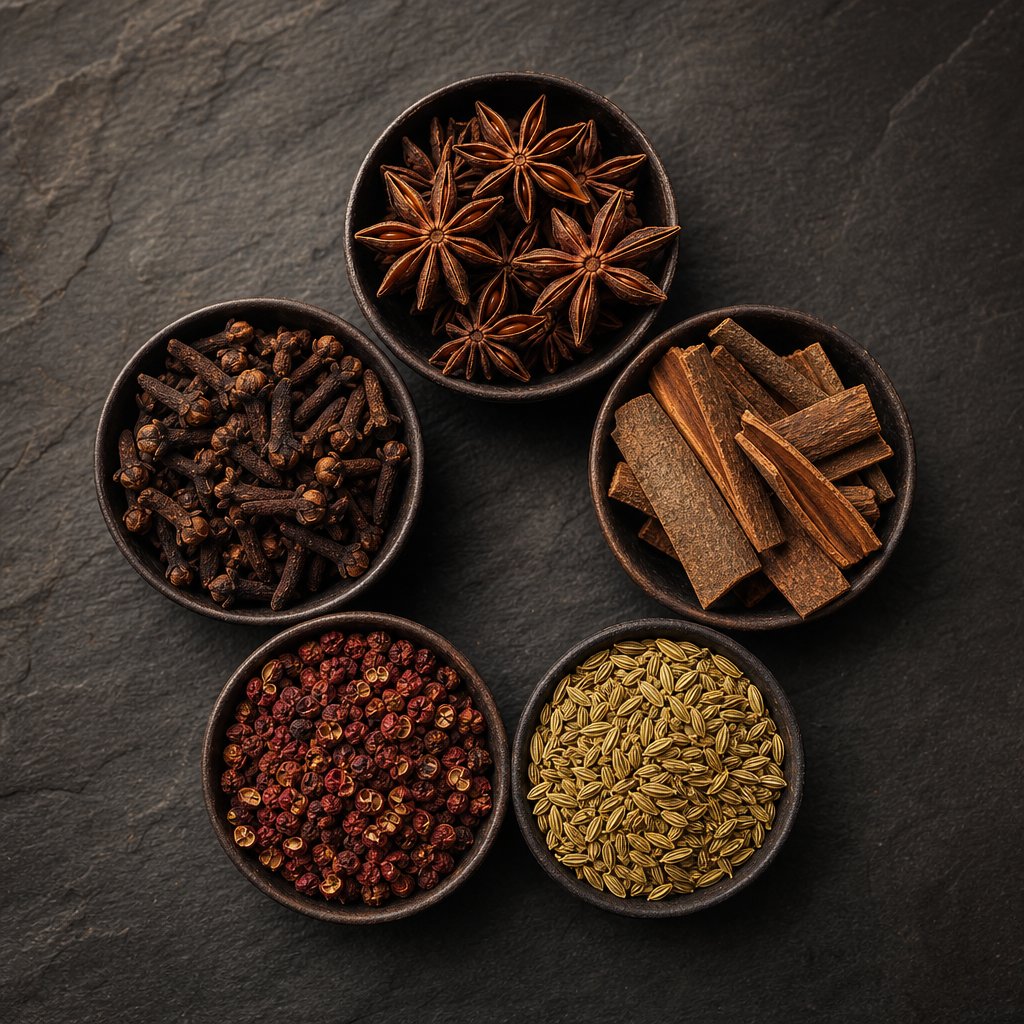
- WARMING spices — Cinnamon, cardamom, and cloves. They add depth, subtle sweetness, and a sense of richness without adding heat.
- HEAT spices — Cayenne, black pepper, and mustard seed. These control the spiciness level and add a sharp, stimulating bite.
- AROMATIC spices — Fenugreek, fennel, and ginger. They contribute complexity, fragrance, and lingering finish notes that make a blend memorable.
When you look at the contents of curry powder through this lens, building a custom blend becomes intuitive. You are not memorizing a recipe — you are making deliberate choices within each category.
| Category | Spices | Flavor Role | Typical % of Blend |
|---|---|---|---|
| Base | Turmeric, Coriander, Cumin | Foundation, body, and bulk | 60-70% |
| Warming | Cinnamon, Cardamom, Cloves | Depth, sweetness, richness | 10-15% |
| Heat | Cayenne, Black Pepper, Mustard Seed | Spiciness and sharpness | 10-15% |
| Aromatic | Fenugreek, Fennel, Ginger | Complexity and fragrance | 5-10% |
What Each Spice Contributes to the Final Flavor
Understanding what is in curry powder at the individual spice level helps you predict how changes will affect your blend. Here is what the key curry powder ingredients bring to the table:
Turmeric delivers earthiness and that signature golden color. It is the visual backbone of most blends, though its flavor is relatively mild — warm, slightly bitter, and musky. Cumin adds smoky warmth with a nutty undertone that anchors savory dishes. It is one of the most recognizable spices in Indian curry powder and carries significant weight in the base layer.
Coriander contributes a bright, citrusy lift that keeps the blend from feeling heavy. It balances the earthiness of turmeric and the smokiness of cumin beautifully. Among the warming spices, cardamom brings a floral, almost eucalyptus-like sweetness, while cinnamon adds woody warmth and cloves deliver an intense, slightly numbing pungency that should be used sparingly.
In the aromatic category, fenugreek is the secret weapon many home cooks overlook. It introduces a maple-like bitterness and a savory depth that commercial blends often lack. Fennel offers a mild anise sweetness, and ginger provides a clean, sharp brightness that lifts the entire blend.
With this framework in mind, you are no longer guessing at ratios or blindly following a single recipe. You understand the architecture behind what spices are in curry and can build confidently from there. The next consideration is sourcing — because even the best framework falls flat if your raw materials have already lost their punch.
Step 2 - Select Fresh Spices and Choose Your Format
A brilliant framework means nothing if the curry spices you pull from your cabinet are stale. Imagine building a playlist with corrupted audio files — the structure is right, but the output sounds flat. The same principle applies here. Selecting quality spice ingredients and choosing the right format (whole vs pre-ground) determines whether your homemade blend sings or falls silent.
How to Tell If Your Spices Are Still Fresh
You do not need a lab to assess freshness. Three quick sensory checks will tell you everything:
- Smell intensity — Open the jar and inhale. Fresh spices hit your nose immediately with a strong, recognizable aroma. If you have to dig your nose into the container to detect anything, those spices have already lost their essential oils. Rub a small pinch between your fingers to release trapped volatiles — if the scent is faint or musty, it is time to replace them.
- Color vibrancy — Fresh turmeric curry powder should be bright gold, not dull brown or washed-out yellow. Paprika should look vivid red, cumin a warm tan. Faded color signals faded flavor because the same compounds responsible for pigment also carry taste.
- Texture — Quality ground spices feel fine and free-flowing. If your powder has clumped together, hardened, or feels gritty in an uneven way, moisture has likely compromised it. Clumping also indicates the jar has been exposed to steam or humidity repeatedly.
A practical rule of thumb: whole spices for curry stay potent for up to 2-4 years when stored properly, while ground spices begin losing strength after 12 to 18 months. If you cannot remember when you bought that jar of cumin for curry, it is probably past its prime.
Whole Spices vs Pre-Ground — Which to Choose
This is the most common fork in the road for anyone gathering spices for curry. Both formats have legitimate advantages, and the right choice depends on how you cook.
Whole spices retain their essential oils sealed inside their natural structure. Those oils only release when you crack, crush, or grind the spice. The result? They stay fresh 2-3 times longer than pre-ground versions and produce noticeably more complex flavor when freshly ground just before blending. Whole coriander seeds, cumin seeds, and peppercorns are the biggest upgrades you can make to any curry spice recipe. The trade-off is that you need a spice grinder or mortar and pestle, plus an extra few minutes of prep time.
Pre-ground spices offer convenience and consistent texture. They blend evenly without extra equipment, and for spices that are difficult to grind at home — like turmeric root or dried ginger — pre-ground is often the practical choice. The sacrifice is peak flavor intensity, since those volatile oils start escaping the moment the spice is milled.
The best approach for most home cooks? A hybrid strategy. Buy your base curry ingredients — coriander, cumin, and black pepper — as whole seeds and grind them fresh. Purchase harder-to-grind spices like turmeric, ginger, and cinnamon in pre-ground form, but from a source with high turnover so the powder is relatively fresh.
Here is a checklist of the essential spices to keep on hand for a versatile curry powder:
- Coriander seeds (whole)
- Cumin seeds (whole)
- Black peppercorns (whole)
- Turmeric (ground)
- Ground ginger
- Mustard seeds (whole)
- Cayenne pepper (ground)
- Cinnamon (ground or sticks)
- Cardamom pods (whole)
- Fenugreek seeds (whole)
With these ten curry spice ingredients stocked and verified fresh, you have everything needed to build any variation covered in this guide. The real transformation, though, happens in the next step — when heat enters the equation and raw spices develop the deep, toasted complexity that separates a good blend from a great one.
Step 3 - Toast Your Spices to Unlock Deep Flavor
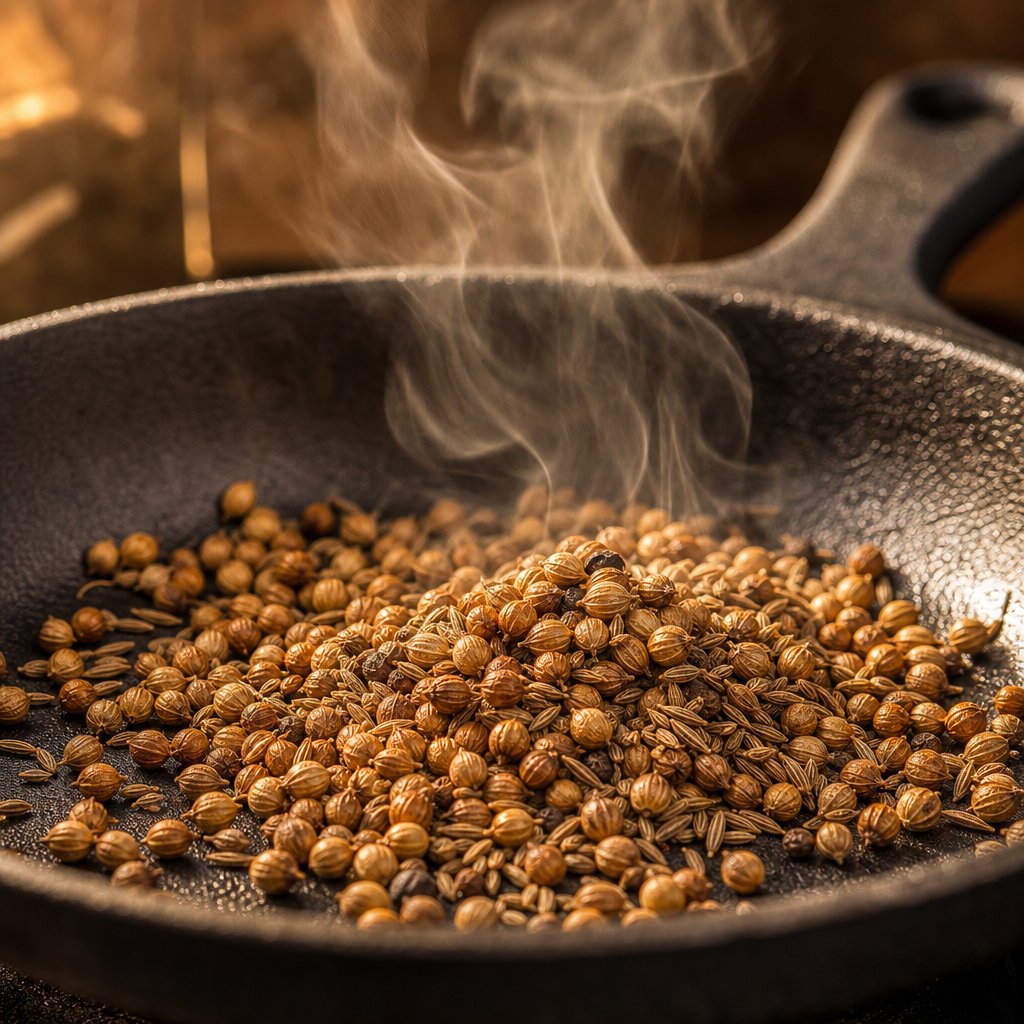
Raw spices are good. Toasted spices are transformative. If you have ever wondered how do you make curry powder that smells rich and layered straight out of the jar, toasting is the technique that bridges the gap between flat and extraordinary.
Heat does something remarkable to spice compounds. It activates volatile oils trapped within the cellular structure, releasing intense aromas and flavors that would otherwise stay locked away. It also triggers Maillard-like reactions between amino acids and sugars present in the spices, creating deeper, nuttier, more complex flavor profiles. Cumin develops a smoky warmth. Coriander turns sweeter. Mustard seeds pop with sharp intensity. This is how curry powder is made when you want genuine depth rather than surface-level flavor.
How to Dry-Toast Spices Without Burning Them
The process is simple, but it demands your full attention. Here is how to make curry powder from spices using proper toasting technique:
- Place a heavy-bottomed skillet (cast iron or stainless steel works well) over medium heat. Do not add oil — dry heat is essential.
- Add your whole spices in a single, even layer once the pan is warm. Avoid overcrowding.
- Stir constantly with a wooden spoon or gently shake the pan every few seconds to ensure even heat exposure.
- Watch for visual and aromatic cues: the spices should darken slightly and release a strong, fragrant aroma. This typically takes 2-3 minutes for most seeds.
- Transfer the toasted spices immediately to a cool plate or bowl. Leaving them in the hot pan, even off the burner, continues cooking and risks bitterness.
- Allow spices to cool completely before grinding. They become more brittle after toasting, which actually makes them easier to grind into a fine powder.
For whole spices, always toast before grinding — this sequence produces the most complex results. If you are working with pre-ground spices, you can still toast them, but reduce the heat to medium-low and limit the time to 60-90 seconds. Pre-ground spices scorch quickly because their increased surface area exposes more material to direct heat.
Common Toasting Mistakes and How to Avoid Them
How can i make curry powder without ruining the spices in the pan? Avoid these three pitfalls that trip up even experienced cooks:
- Overheating — High heat causes spices to burn before their interior oils fully activate. The result is a harsh, acrid bitterness that contaminates your entire blend. Stick to medium heat and trust the process. As Bon Appetit's test kitchen advises, when in doubt, lower the heat and go slow — you can always toast a little more, but you cannot take it back.
- Uneven toasting — Piling spices into a small pan creates hot spots where some seeds char while others remain raw. Use a pan large enough to spread everything in a single layer, and keep stirring consistently.
- Mixing spices with different toasting times — Small, delicate seeds like mustard or fenugreek toast faster than larger ones like coriander or peppercorns. Toast them in separate batches grouped by size and density, then combine after cooling.
One more detail worth noting: your nose is the most reliable timer. The moment the aroma shifts from raw and grassy to warm and fragrant, the spices are done. Waiting for dramatic color change usually means you have already gone too far.
With your spices properly toasted and cooled, they are ready to become powder — and the grinding and mixing process is where your custom blend finally comes together.
Step 4 - Grind and Mix Your Base Curry Powder Recipe
Your toasted spices are cooled and fragrant, sitting on the counter ready for their final transformation. This is the step where loose seeds and pods become a unified curry powder recipe — a single, cohesive blend you can reach for any night of the week.
The grinding and mixing process is straightforward, but a few details separate a gritty, uneven powder from one that feels silky and distributes flavor evenly through every dish it touches.
The Base Curry Powder Recipe with Exact Ratios
This recipe of curry powder produces a balanced, medium-heat blend suitable for most dishes — from chicken curries and lentil soups to roasted vegetables and rice pilafs. It follows the four-category framework covered earlier, with base spices forming the bulk and warming, heat, and aromatic spices layered in for depth.
Here is the how to make curry powder recipe in exact measurements, scaled to produce roughly 10 tablespoons of finished blend:
| Spice | Ratio (Parts) | Tablespoons | Category |
|---|---|---|---|
| Coriander | 3 | 3 Tbsp | Base |
| Cumin | 2 | 2 Tbsp | Base |
| Turmeric | 2 | 2 Tbsp | Base |
| Black Pepper | 1 | 1 Tbsp | Heat |
| Ground Ginger | 1 | 1 Tbsp | Aromatic |
| Mustard Seed | 1 | 1 Tbsp | Heat |
| Cinnamon | 0.5 | 1/2 Tbsp | Warming |
| Cardamom | 0.5 | 1/2 Tbsp | Warming |
| Cayenne | 0.5 | 1/2 Tbsp | Heat |
Notice how the base spices (coriander, cumin, turmeric) account for roughly 70% of the total volume, with heat, warming, and aromatic spices filling the remaining 30%. This ratio keeps the blend versatile — flavorful enough to carry a dish on its own, but not so aggressive that it overwhelms delicate ingredients.
If you prefer working with a simpler mental model, remember: 3-2-2-1-1-1, half-half-half. That sequence covers all nine spices in order and is easy to recall without checking a recipe card every time.
Grinding Tips for the Finest Powder
A dedicated electric spice grinder (also called a blade grinder) is the fastest path to a fine, uniform powder. Pulse in short 5-second bursts rather than holding the button continuously. Continuous grinding generates heat through friction, which can cook the spices further and drive off the volatile oils you worked to preserve during toasting. Five to six pulses, shaking the grinder between each, typically produces the consistency you want.
A mortar and pestle works beautifully for smaller batches and gives you tactile control over texture. You will feel the spices break down under the pestle, and you can stop at a slightly coarser grind if that suits your cooking style. The trade-off is time — expect 5-8 minutes of steady grinding versus 30 seconds in an electric grinder.
A few practical pointers for either method:
- Grind harder spices (peppercorns, mustard seeds, coriander) first, then add softer ones (cardamom seeds removed from pods, dried ginger pieces) to avoid uneven texture.
- If using a blade grinder, never fill it more than two-thirds full. Overcrowding prevents the blades from catching all the material evenly.
- Sift the ground powder through a fine-mesh strainer after grinding. Any coarse bits that remain can go back into the grinder for a second pass. This extra step ensures a consistent, lump-free curry seasoning recipe every time.
One note on equipment: keep your spice grinder separate from your coffee grinder. Cumin-flavored espresso is not the crossover anyone wants. A dedicated blade grinder for spices is inexpensive and saves you from flavor contamination in both directions.
How to Taste-Test Your Blend Before Storing
You have ground and sifted your spices. Before sealing the jar, take 60 seconds to evaluate what you have made. This DIY curry powder is yours to adjust — treat this moment like a chef tasting a sauce before it leaves the kitchen.
Here is the process:
- Combine all ground spices in a dry bowl. Use a whisk or fork to mix thoroughly for 30-45 seconds, ensuring even distribution. You should see a uniform golden-brown color with no visible streaks of individual spices.
- Take a small pinch and rub it between your thumb and forefinger. Bring it close to your nose and inhale. You should detect a layered aroma — earthy turmeric and cumin up front, followed by the warmth of cinnamon and cardamom, with a subtle peppery tingle at the edges.
- Touch the pinch to your tongue. You are not looking for a delicious standalone flavor (raw spice powder will always taste intense). Instead, assess balance: does one note dominate uncomfortably? Does the heat feel appropriate, or does it overwhelm everything else?
- Adjust if needed. If the blend feels too sharp or hot, add another half-tablespoon of coriander to mellow it. If it tastes flat, a pinch more cumin or ginger can lift it. Small additions at this stage make a noticeable difference.
This curry powder mix recipe is a starting point, not a rigid formula. Your palate is the final authority. Some cooks prefer a heavier coriander presence for brightness; others want more ginger for sharpness. The ratio gives you a proven foundation — your taste buds refine it into something personal.
Once you are satisfied, transfer the blend to an airtight jar and you have a recipe for curry powder that is genuinely yours. The real creative freedom, though, comes from learning to push this base in different directions — dialing up heat, leaning into warmth, or shifting the entire profile toward a specific regional style.
Step 5 - Customize Your Blend for Any Flavor Profile
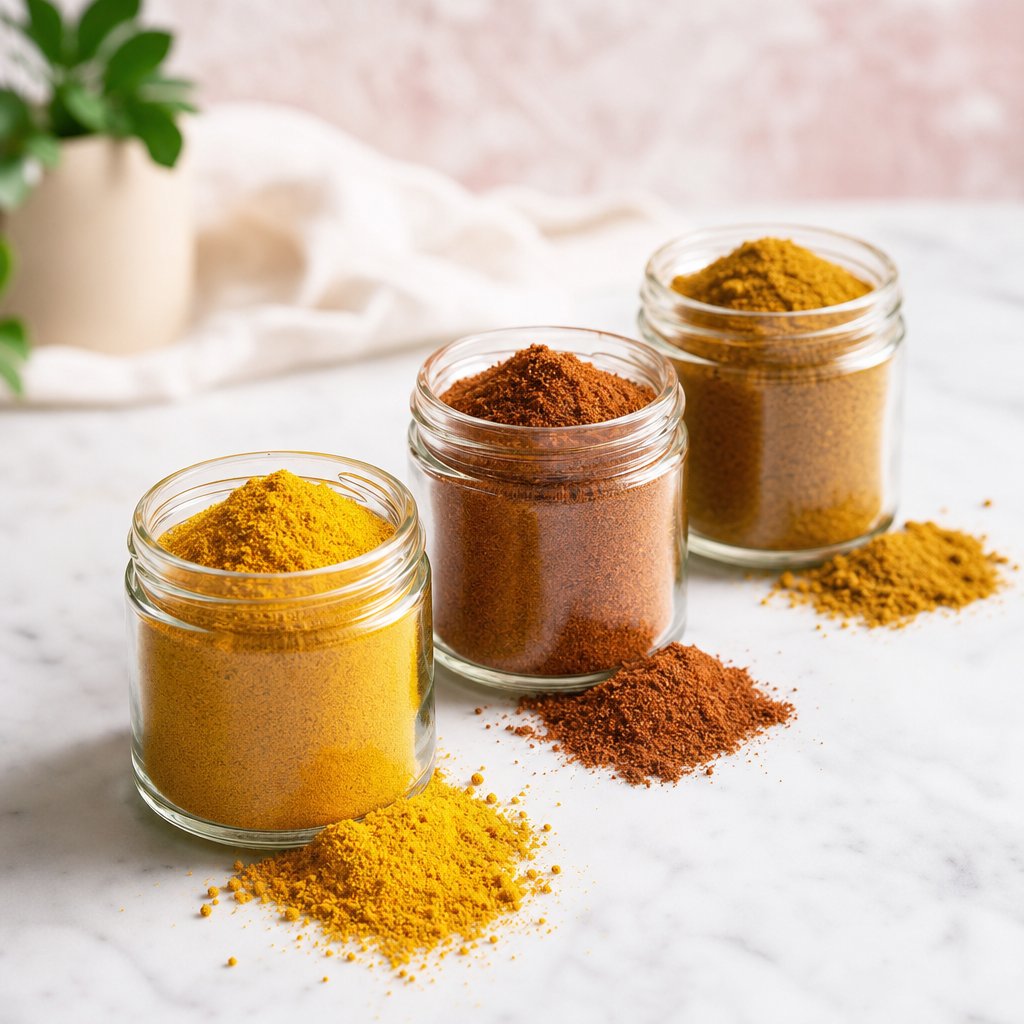
A base recipe gives you a reliable starting point. But the real power of blending your own curry powder is the ability to shape it around a specific dish, mood, or craving. Want something that builds slow heat across the palate? Or a blend that leans into cozy, warming sweetness for a rainy-day soup? The four-category framework from Step 1 makes these adjustments predictable rather than experimental guesswork.
Think of your base blend as a mixing board with four sliders — base, warming, heat, and aromatic. Moving any slider up or down shifts the entire character of the powder without breaking the underlying balance. Here is exactly how to push each direction.
Adjusting Heat Levels from Mild to Fiery
Wondering how to make curry powder spicy enough to match your tolerance? The heat category is your lever. For a noticeable kick, double the cayenne from 1/2 tablespoon to a full tablespoon and add an extra 1/2 tablespoon of black pepper. For serious fire, introduce 1/2 teaspoon of ground chili flakes on top of the doubled cayenne. This creates a spicy curry powder recipe that builds heat in layers — the cayenne hits immediately, the black pepper lingers, and the chili flakes add a slow burn underneath.
Going the other direction is just as simple. For a mild, family-friendly blend, cut the cayenne to 1/4 tablespoon (or omit it entirely) and rely on black pepper alone for gentle warmth. You still get complexity without the sting.
For more warmth and sweetness without added heat, increase cinnamon to a full tablespoon, add an extra 1/2 tablespoon of cardamom, and introduce a pinch of ground cloves (no more than 1/4 teaspoon — cloves are potent). This version works beautifully in butternut squash soups and slow-cooked stews where you want the spices to feel like a warm blanket rather than a punch.
For more brightness and citrus lift, increase coriander by 50% (from 3 tablespoons to 4.5) and add 1/2 tablespoon of ground fennel seed. This lighter profile pairs well with fish, shrimp, and spring vegetables. For a deeper, earthier character, add an extra tablespoon of turmeric and introduce 1/2 tablespoon of ground fenugreek. The result is savory, slightly bitter, and deeply satisfying in lentil dals and root vegetable dishes.
Knowing how to make curry spicy or mellow on demand means you never need multiple store-bought jars for different occasions. One framework, infinite variations.
| Flavor Goal | Spices to Adjust | How Much to Change | Best Used In |
|---|---|---|---|
| More Heat | Cayenne, Black Pepper, Chili Flakes | Double cayenne; add 1/2 Tbsp pepper; pinch of chili flakes | Hearty stews, grilled meats |
| More Warmth | Cinnamon, Cardamom, Cloves | Double cinnamon; +1/2 Tbsp cardamom; 1/4 tsp cloves | Soups, slow-cooked dishes |
| More Brightness | Coriander, Fennel | Increase coriander by 50%; add 1/2 Tbsp fennel | Seafood, light curries, vegetables |
| Earthier Flavor | Turmeric, Fenugreek | +1 Tbsp turmeric; add 1/2 Tbsp fenugreek | Lentil dal, root vegetables |
| Milder Blend | Cayenne (reduce), Coriander (increase) | Halve or omit cayenne; +1 Tbsp coriander | Family meals, roasted veggies |
Spice Substitutions When You Are Missing Ingredients
You are halfway through blending and realize you are out of a key spice. It happens. Rather than abandoning the project or running to the store, use these tested swaps that keep your blend functional. No single missing ingredient should derail the process — a good curry powder alternative for any absent spice exists in most pantries.
- No fenugreek? Add a tiny drop (1/8 teaspoon) of maple extract or a pinch of celery seed. Fenugreek's maple-like bitterness is unique, but these approximations capture its savory-sweet quality in a pinch.
- No cardamom? Combine equal parts cinnamon and nutmeg. You will not replicate cardamom's floral complexity exactly, but the warmth and sweetness fill the same role in the blend.
- No mustard seed? Increase black pepper by the same amount. Both contribute sharp, pungent heat, though mustard seed carries a slightly more acidic bite.
- No coriander? Use ground fennel seed at 75% of the coriander amount. Fennel shares coriander's brightness with a slightly sweeter, anise-forward lean.
- No cumin? Ground caraway seed is the closest substitute for curry powder recipes — it belongs to the same botanical family and shares cumin's earthy warmth, just with a slightly more herbal edge.
These substitutions work as a curry powder replacement strategy for individual components, not the entire blend. Each swap shifts the final flavor slightly, so taste-test after mixing and adjust as needed. The goal is not a perfect replica — it is a blend that still tastes intentional and balanced despite the improvisation.
If you find yourself consistently reaching for the same adjustments — always doubling the heat, always adding fenugreek — that is a signal your personal "house blend" has evolved beyond the base recipe. Write down your preferred ratios. That personalized formula becomes the foundation for exploring regional variations, where entire spice traditions inform how the same building blocks get assembled in dramatically different ways.
Step 6 - Explore Regional Curry Powder Variations
Your personalized house blend is dialed in. But here is something worth considering: the same building blocks you have been working with — base, warming, heat, and aromatic spices — get assembled in wildly different proportions across the globe. Each regional tradition emphasizes different flavors, different heat levels, and different aromatic signatures. Learning these variations gives you a library of distinct blends from a single framework.
Below are four regional styles you can build using the same core spices, with adjusted ratios that reflect each tradition's character. Think of them as presets on your mixing board — each one tuned for a specific culinary context.
Indian Madras Curry Powder Variation
If you want a bold, assertive indian curry powder that fills the kitchen with fragrance, Madras-style is where to start. This variation leans heavily on cumin, coriander, and dried red chili, producing a blend that is hotter and more pungent than the balanced base recipe. Traditional Madras curry powder originated in Tamil cuisine (from the region now called Chennai) and was one of the earliest curry powders sold commercially.
To build an indian curry powder mix from your base recipe, make these adjustments:
- Increase cumin to 3 tablespoons (up from 2)
- Add 1 tablespoon of ground red chili or use 8-10 dried red chilies, toasted and ground
- Add 1/2 tablespoon fenugreek seeds
- Include curry leaves if available (toast until crisp, then grind)
- Reduce cinnamon and cardamom to 1/4 tablespoon each
This indian curry powder recipe produces a blend that is unapologetically hot and deeply savory. It excels in chicken curries, lentil dal, and tamarind-based stews where bold spice needs to stand up against rich, saucy bases. The higher chili content gives it a reddish-gold hue rather than the pure yellow of milder blends.
Jamaican Curry Powder with Allspice and Heat
Jamaican curry tells a different story entirely. When Indian indentured workers arrived in Jamaica in the 19th century, they brought spice knowledge that merged with local Caribbean ingredients — particularly allspice (pimento) and Scotch bonnet peppers. The result is a curry powder that tastes nothing like its Indian cousin despite sharing some of the same base spices.
A jamaican curry powder recipe starts with extra turmeric for that signature bright yellow color, then introduces allspice as the defining aromatic note. Here is how to adjust your base blend for this jamaican curry spice recipe:
- Increase turmeric to 3 tablespoons (the dominant spice by volume)
- Add 1 tablespoon ground allspice
- Add 1/2 teaspoon dried thyme
- Replace cayenne with ground Scotch bonnet or habanero powder (start with 1/4 teaspoon — these are significantly hotter)
- Keep coriander at 3 tablespoons and cumin at 1.5 tablespoons
- Omit cinnamon and cardamom, or reduce to a bare pinch
The allspice gives this blend a warm, almost clove-like sweetness that pairs perfectly with goat curry, oxtail, and rice and peas. Jamaican curry is typically rubbed onto meat and left to marinate overnight before slow cooking in coconut milk — a technique that allows the turmeric and allspice to penetrate deeply.
Mild and Warming British-Style Blend
The mild curry powder that most Western supermarkets stock traces its roots to British colonial-era blends — gentle, approachable, and designed for cooks who wanted curry flavor without intense heat. This style prioritizes coriander and turmeric as the dominant notes, with warming spices turned up and chili dialed way down.
To create a British-style mild blend:
- Increase coriander to 4 tablespoons (the star of this variation)
- Keep turmeric at 2 tablespoons
- Reduce cumin to 1 tablespoon
- Increase cinnamon to 1 tablespoon and cardamom to 3/4 tablespoon
- Use only 1/4 teaspoon cayenne (or omit entirely)
- Add 1/2 tablespoon ground ginger for gentle warmth
This version works beautifully in roasted vegetable dishes, creamy soups, coronation chicken, and anywhere you want curry presence without the burn. It is also an excellent starting point for anyone new to homemade blends who wants to ease into bolder variations over time.
A fourth variation worth exploring is yellow curry powder, which draws from Thai-influenced aromatics. This style pushes turmeric even higher than the Jamaican version (up to 4 tablespoons), doubles the ginger for a sharp, clean bite, and adds ground lemongrass or galangal if available. It skips the heavier warming spices entirely, creating a bright, ginger-forward blend that pairs with coconut-based curries, stir-fries, and noodle soups.
| Regional Style | Key Distinguishing Spices | Heat Level | Best Dish Pairings |
|---|---|---|---|
| Indian / Madras | Extra cumin, red chili, fenugreek, curry leaves | High | Chicken curry, lentil dal, tamarind stews |
| Jamaican / Caribbean | Allspice, Scotch bonnet, thyme, heavy turmeric | Medium-High | Curry goat, oxtail, rice and peas |
| British / Mild | Extra coriander, cinnamon, cardamom, minimal chili | Low | Roasted vegetables, soups, coronation chicken |
| Yellow Curry (Thai-influenced) | Heavy turmeric, double ginger, lemongrass | Medium | Coconut curries, stir-fries, noodle soups |
Each of these variations uses spices you likely already have from building the base recipe. The differences come down to proportion and one or two signature additions — allspice for Jamaican, extra chili for Madras, extra coriander for British, extra ginger for yellow curry. You are not buying entirely new ingredient sets; you are remixing what you already own.
With multiple blends in your rotation, the practical question shifts from "what can I make?" to "how do I keep all of these fresh and organized?" Proper storage and smart pairing decisions determine whether your collection stays vibrant or quietly fades in the back of the cabinet.
Step 7 - Store Your Blend and Pair It with the Right Dishes
You have spent time toasting, grinding, and taste-testing your way to a custom blend. The worst thing you can do now is toss it into a random container near the stove and forget about it. Proper storage is what separates a blend that stays vibrant for months from one that tastes stale within weeks. And knowing which dishes each variation pairs best with ensures all that effort actually translates to better meals on the plate.
How to Store Curry Powder for Maximum Freshness
The enemies of ground spices are simple: air, light, heat, and moisture. Every time your blend encounters one of these, it loses a small fraction of its essential oils. Over time, those losses compound until the powder smells like little more than colored dust. Airtight containers stored in cool, dark conditions are the single most effective way to slow that degradation.
Here is what to keep in mind:
- Use glass jars with tight-fitting lids. Glass is non-reactive and does not absorb odors. Mason jars, small Weck jars, or repurposed spice jars all work perfectly. Avoid plastic containers for long-term storage — they can absorb and transfer flavors over time.
- Store in a cool, dark place. A closed pantry, a drawer, or a cabinet away from the oven and dishwasher is ideal. Avoid the countertop spice rack near the stove — steam and heat from cooking accelerate flavor loss significantly.
- Keep moisture out completely. Never dip a wet spoon into your jar. Even a small amount of moisture causes clumping and can introduce mold over time. Always use dry measuring spoons.
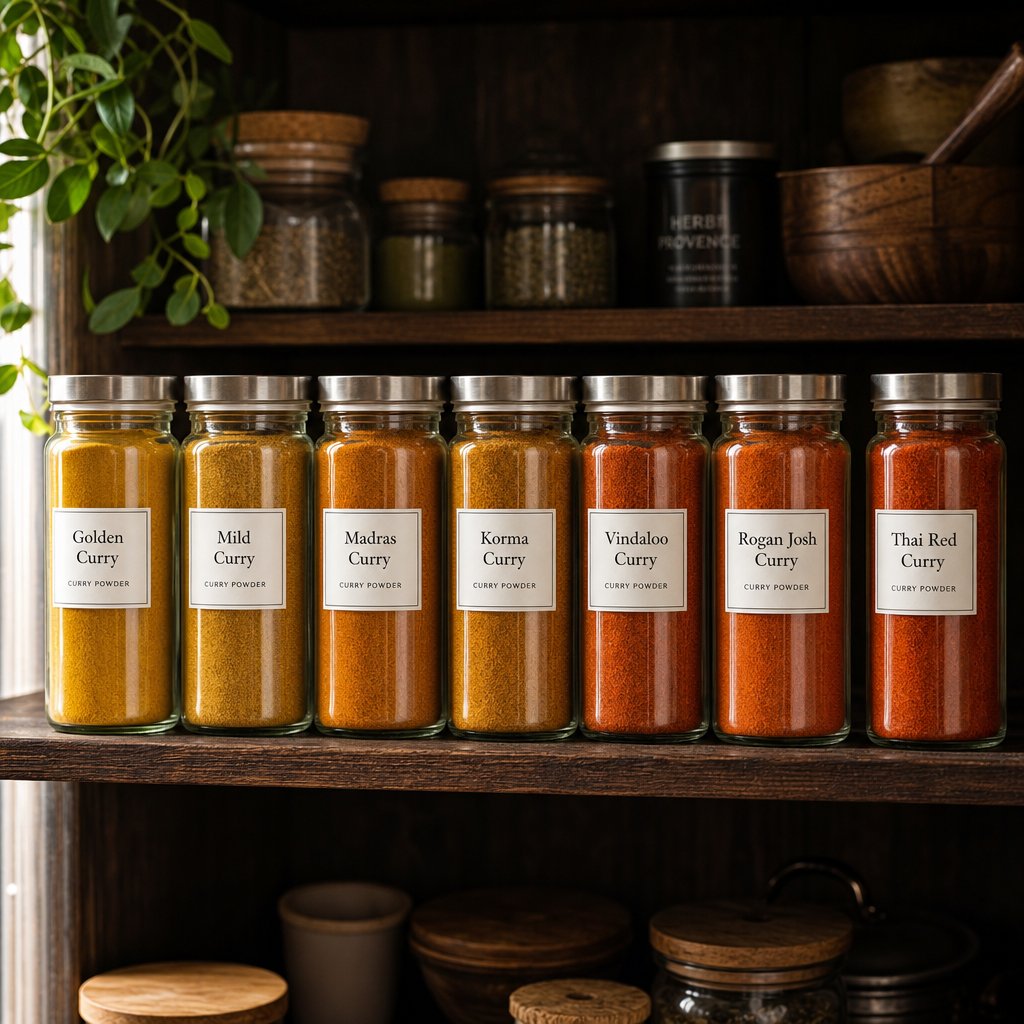
- Label every jar with the blend name and date. This sounds obvious, but it is the habit most people skip. Three months from now, you will not remember whether that golden powder is your Madras variation or the mild British blend. A piece of masking tape and a marker takes five seconds and saves real confusion.
- Make smaller batches more frequently. Homemade curry powder stays at peak potency for 2-3 months. After that, the flavor fades noticeably. Whole spices, by contrast, hold their oils for 6 months to several years. Rather than grinding a massive batch that goes flat before you finish it, blend what you will realistically use within 8-10 weeks.
If you have made multiple regional variations, store each in its own labeled jar. Keeping them organized means you can grab the right blend without second-guessing — Madras for Tuesday's chicken curry powder blend, Jamaican for Saturday's goat stew, mild for a quick weeknight soup.
Which Blend Works Best with Which Dish
Having several blends on hand raises a practical question: how do you decide which one to reach for? The base recipe is genuinely versatile — it works in almost any curry recipe with curry powder as the primary seasoning. But the regional variations shine brightest when matched to dishes that complement their specific strengths.
Here is a quick guide to how much curry powder to use and which blend pairs best with what:
| Blend | Best Dish Pairings | Amount per 4 Servings | Why It Works |
|---|---|---|---|
| Base Blend | Everyday stir-fries, rice dishes, roasted chickpeas, scrambled eggs | 1-2 Tbsp | Balanced and adaptable; does not overpower any protein or vegetable |
| Madras / Indian | Chicken curry, lentil dal, lamb vindaloo, tamarind-based stews | 1.5-2 Tbsp | Bold heat and deep savoriness stand up to rich, saucy preparations |
| Jamaican / Caribbean | Curry goat, oxtail, jerk-spiced proteins, rice and peas | 2-3 Tbsp (often used as a marinade rub) | Allspice and turmeric penetrate meat during long marination |
| Mild / British | Roasted vegetables, creamy soups, coronation chicken, egg salad | 1-1.5 Tbsp | Gentle warmth adds depth without overwhelming delicate flavors |
| Spicy Variation | Hearty beef stews, grilled lamb chops, spiced lentil soup, kebabs | 1-1.5 Tbsp | Layered heat complements fatty, robust proteins and slow-cooked dishes |
A good starting point for most recipes with curry powder is 1-2 tablespoons per 4 servings. From there, adjust based on the dish and your heat tolerance. Creamy coconut-based curries can handle more powder because the fat tempers the spice intensity. Lighter dishes — a simple vegetable stir-fry or a brothy soup — benefit from a lighter hand so the individual ingredients still come through.
When learning how to make curry with curry powder, remember that timing matters too. Adding the powder early in cooking (blooming it in oil for 30-60 seconds before adding liquid) develops deeper, more integrated flavor. Stirring it in at the end produces a brighter, more forward spice presence. Both approaches are valid — it depends on whether you want the curry powder to meld into the background or announce itself.
For chicken curry powder specifically, the Madras blend is the classic match. Its higher cumin and chili content cuts through the richness of dark meat and stands up to long simmering times without fading. Use 2 tablespoons for a 4-serving batch, bloom it in oil with onions and garlic, then build your sauce on top. The result is a curry that tastes like it came from a kitchen that has been perfecting the recipe for years — because, in a sense, it has. Your blend carries the same spice architecture that Tamil cooks have relied on for generations.
Curry powder uses extend well beyond traditional curries, too. Sprinkle the mild blend over roasted cauliflower before it goes in the oven. Stir a teaspoon of the base recipe into mayonnaise for a quick sandwich spread. Dust the spicy variation over popcorn. Mix the Jamaican blend into a dry rub for grilled pork. Once you have fresh, potent powder on hand, you will find yourself reaching for it in places you never expected.
With your blends stored properly and your pairing instincts sharpened, you have everything needed to cook confidently with homemade curry powder for months to come. But some people reach a point where their perfected blend feels too good to keep in a single kitchen — and that is when the conversation shifts from personal recipe to potential product.
Step 8 - Scale Your Custom Curry Powder from Kitchen to Market
Maybe friends keep asking you to make them a jar. Maybe you have tested your curry spice blend at farmers markets and the response surprised you. Whatever the trigger, there is a real path from perfected kitchen recipe to commercially viable product — and it is more accessible than most people assume.
From Kitchen Recipe to Commercial Product
Turning a homemade curry seasoning mix into something you can sell requires a few critical steps beyond just scaling up the batch size:
- Formulation standardization — Your kitchen recipe needs to become a precise, repeatable formula. That means converting "a generous pinch" into exact gram weights and documenting every ratio so the blend tastes identical whether you produce 500 grams or 500 kilograms.
- Food safety compliance — Commercial spice products must meet regulatory standards (FDA, FSSAI, or equivalent depending on your market). This includes testing for contaminants, proper labeling with allergen declarations, and adherence to Good Manufacturing Practices.
- Packaging and shelf-life testing — Your curry blend needs packaging that protects potency during shipping and retail display. Shelf-life studies confirm how long the product maintains quality under real-world conditions.
The private label spice industry has grown significantly as brands increasingly seek custom formulations rather than generic off-the-shelf curry blends. Whether you envision a retail curry mix, a functional food ingredient, or even a supplement-grade turmeric-forward powder, the commercial pathway follows the same general structure.
Finding the Right Manufacturing Partner for Your Blend
Most creators do not need to build their own production facility. OEM/ODM manufacturers specialize in turning your finalized curry powder blend into a market-ready product at scale. They handle sourcing, blending consistency, packaging, and compliance — freeing you to focus on recipe development, branding, and sales.
When evaluating partners, look for manufacturers that offer flexible product formats relevant to your vision. For example, ZhuFeng's OEM/ODM services support powder and granule formats with customized formulation, making them a viable option for creators looking to produce a curry seasoning mix or functional spice product without managing production infrastructure themselves. Their scalable production model suits everyone from small private label sellers to larger nutrition brands exploring spice-based functional foods.
The key questions to ask any manufacturing partner: What are their minimum order quantities? Can they accommodate your exact formulation? Do they hold relevant food safety certifications? And can they scale with you as demand grows?
Your perfected curry spice blend already has the hardest part done — a recipe people genuinely want. The manufacturing side is a logistics problem, and logistics problems have solutions.
Frequently Asked Questions About Making Curry Powder
1. What spices do I need to make curry powder from scratch?
A versatile homemade curry powder requires ten core spices divided into four functional groups. The base layer uses coriander seeds, cumin seeds, and turmeric. Heat comes from black peppercorns, cayenne pepper, and mustard seeds. Warming depth relies on cinnamon and cardamom. Aromatic complexity comes from ground ginger and fenugreek seeds. Buying coriander, cumin, and peppercorns as whole seeds and grinding them fresh produces noticeably stronger flavor than using pre-ground versions.
2. How long does homemade curry powder stay fresh?
Homemade curry powder maintains peak potency for 2 to 3 months when stored in an airtight glass jar in a cool, dark location away from heat and moisture. After that window, the volatile oils responsible for aroma and flavor begin fading noticeably. For comparison, whole unground spices retain their oils for 6 months to several years. Making smaller batches every 8 to 10 weeks rather than one large batch ensures you always cook with vibrant, full-strength powder.
3. Do I need to toast spices before making curry powder?
Toasting is not strictly required, but it dramatically improves flavor depth. Dry-toasting whole spices in a skillet over medium heat for 2 to 3 minutes activates volatile oils and triggers Maillard-like reactions that create nuttier, more complex taste profiles. The key is stirring constantly and removing spices from the pan the moment they become fragrant. If using pre-ground spices, toast briefly at lower heat for 60 to 90 seconds to avoid scorching their increased surface area.
4. What is the difference between Madras curry powder and regular curry powder?
Madras curry powder is a hotter, more pungent variation that originated in Tamil cuisine. It uses significantly more cumin and dried red chili than a standard balanced blend, often incorporating fenugreek seeds and curry leaves for added depth. Regular or mild curry powder prioritizes coriander and turmeric with minimal heat, making it more versatile but less bold. Madras-style excels in rich, saucy dishes like chicken curry and lentil dal where its assertive spice profile can stand up to long cooking times.
5. Can I turn my homemade curry powder into a product to sell?
Yes, scaling a perfected kitchen recipe into a commercial product is achievable through OEM/ODM manufacturing partners. The process involves standardizing your formulation into exact gram weights, meeting food safety compliance for your target market, and conducting shelf-life testing. Manufacturers like ZhuFeng offer powder and granule format production with customized formulation services, handling sourcing, blending consistency, packaging, and regulatory compliance so creators can focus on branding and sales rather than production logistics.