The Five Spices That Define Chinese Five Spice Powder
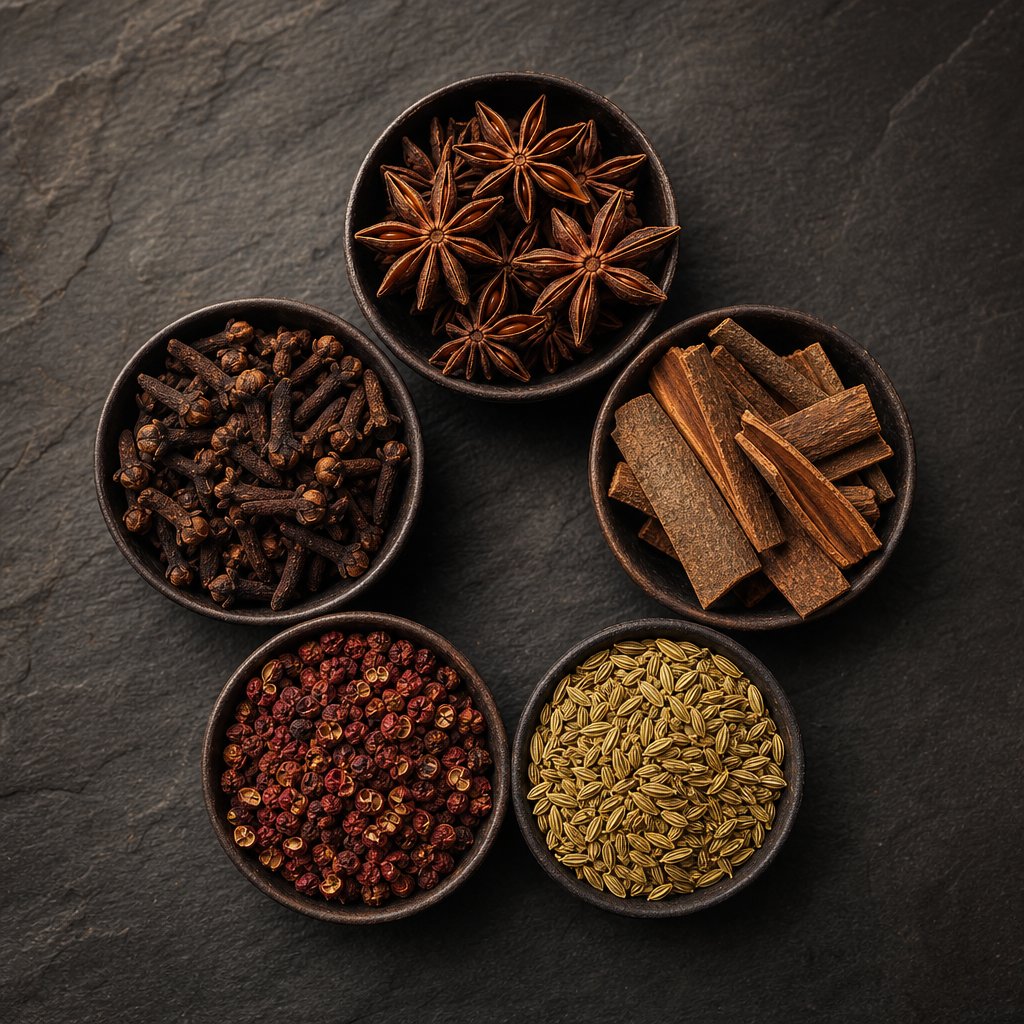
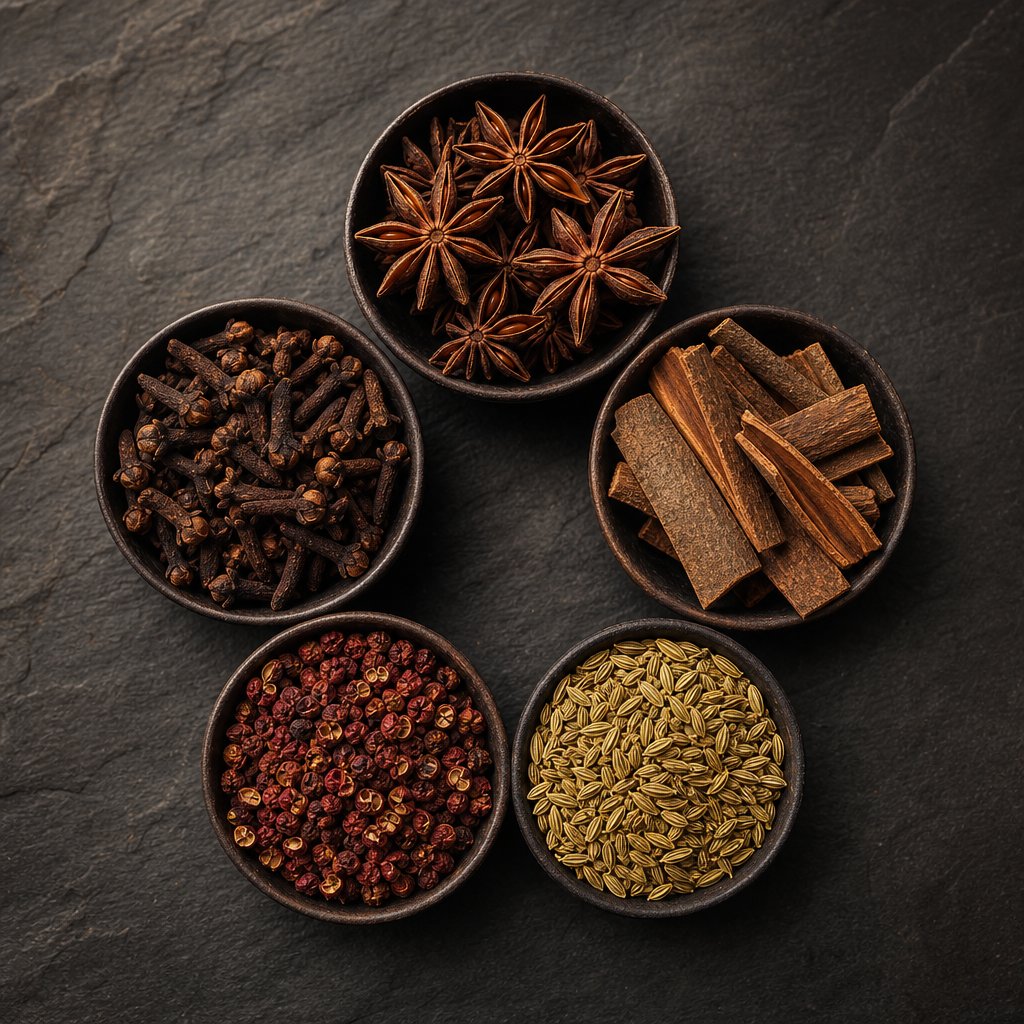
So what are the five spices in Chinese five spice powder? The traditional blend consists of star anise, cloves, Chinese cinnamon (cassia), Sichuan peppercorn, and fennel seeds. These five ingredients combine to create a powder known in Mandarin as wu xiang fen, a seasoning designed to hit every flavor note the palate can perceive: sweet, bitter, pungent, salty, and sour. It is the backbone of dishes like Cantonese roast pork belly (siu yuk), Peking duck, and Taiwanese braised meats, and it works equally well in baked goods like spiced cookies and loaf cakes.
But here is what most quick-answer lists miss: Chinese five spice powder is not just a random collection of aromatics. It is a philosophy ground into powder form. Each spice was chosen to represent one of the five elemental tastes in Chinese culinary tradition, and the goal is not to let any single flavor dominate. The result should taste like something entirely new, a unified entity rather than a sum of parts.
This article goes well beyond naming the ingredients. You will learn how each spice behaves on its own, how ratios shift the character of the blend, and why regional cooks across China and Southeast Asia interpret this formula differently.
The Five Spices Revealed
If you have ever wondered what 5 spices are in Chinese 5 spice, here is the classic lineup at a glance:
- Star Anise — the dominant voice, delivering deep licorice sweetness and warmth
- Cloves — intensely aromatic dried flower buds that add pungent, slightly numbing depth
- Chinese Cinnamon (Cassia) — bolder and spicier than Ceylon cinnamon, providing the woody backbone
- Sichuan Peppercorn — not a true pepper, but the husk of a prickly ash berry that creates a citrusy, electric tingling sensation on the tongue
- Fennel Seeds — a lighter, grassy anise note that lifts and brightens the heavier spices
Some blends swap in extras like dried ginger, nutmeg, Mandarin orange peel, or black peppercorns. As Bon Appetit notes, commercial versions often contain more than five ingredients, and the number in the name actually references the five traditional Chinese elements rather than a strict ingredient count.
Why This Blend Stands Apart
When people ask what is in Chinese five spice, they often expect something similar to Indian garam masala or Moroccan ras el hanout. All three are warm spice blends built from whole toasted spices ground into powder. Yet the philosophy behind each is fundamentally different. Garam masala layers cardamom, cumin, and coriander to build aromatic heat. Ras el hanout can include over twenty ingredients, aiming for complexity through sheer variety. Chinese five spice takes the opposite approach: fewer ingredients, tighter ratios, and a focus on equilibrium.
Chinese five spice powder is designed around balance rather than heat. Where other global blends chase complexity or warmth, this one pursues harmony, ensuring no single flavor overwhelms the others.
That pursuit of harmony is what makes the blend so versatile. It complements rich, fatty proteins like duck and pork belly by cutting through grease with its sweet-spicy aromatics, yet a pinch can transform roasted root vegetables or a simple sugar cookie into something unexpectedly layered. Understanding each ingredient individually reveals why this centuries-old formula still earns its place in kitchens worldwide.
Individual Flavor Profiles of Each Spice
Knowing the spices in Chinese 5 spice is one thing. Understanding how each one smells, tastes, and behaves when it meets heat is something else entirely. Think of this section as a guided tasting. You will learn what each spice brings to the table on its own, and more importantly, how it changes the conversation when blended with the other four.
Star Anise and Fennel Seeds — The Sweet Licorice Foundation
Star anise and fennel seeds share a dominant flavor compound called trans-anethole, which accounts for about 90% of each spice's primary flavor. That shared molecule is why both register as "licorice-y" on the palate. But assume they are interchangeable and you will quickly taste the difference.
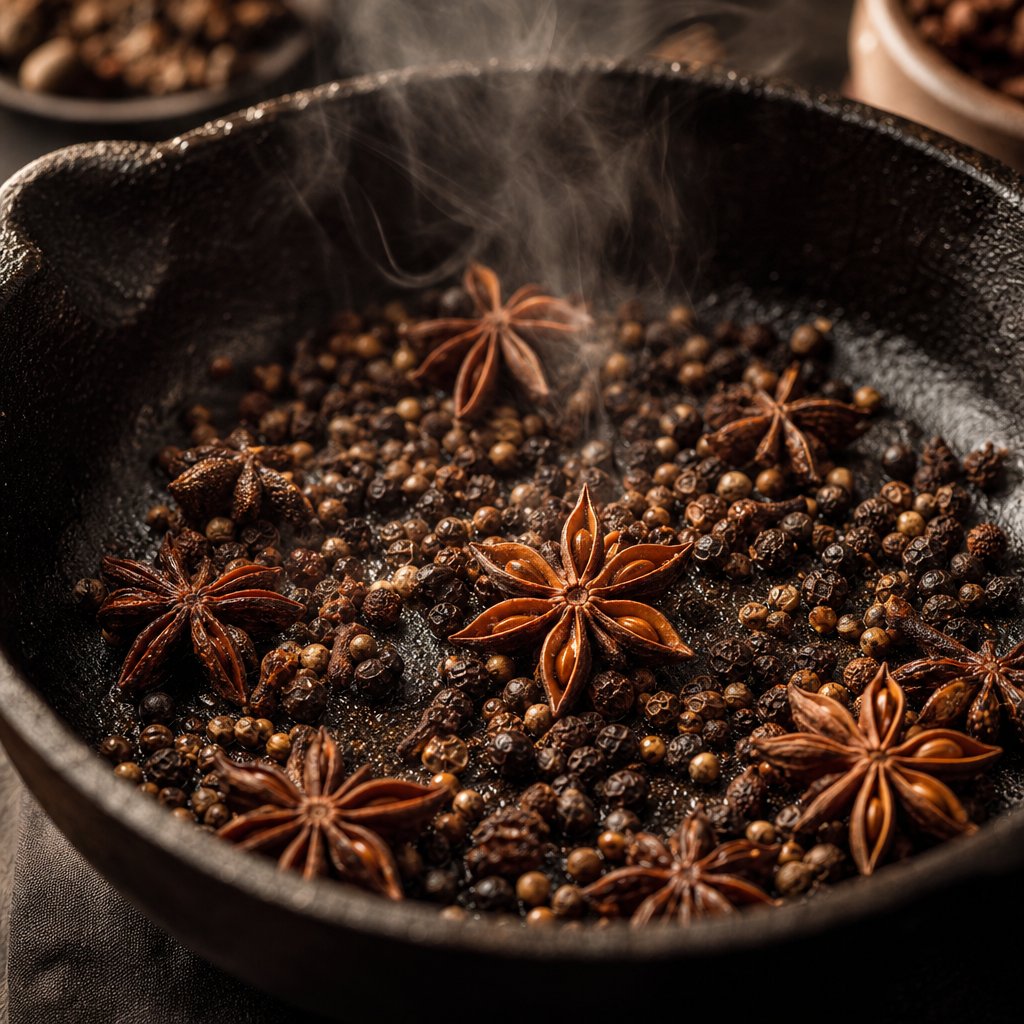
Pick up a whole star anise pod and inhale. You will notice a deep, resinous sweetness layered with herbal, lemony, and woody secondary notes from compounds like limonene and alpha-trans-bergamotene. It smells warm and slightly medicinal, like an old apothecary. Toast it gently in a dry skillet and those woody, citrusy undertones intensify while the raw sharpness mellows into a rounder, almost caramel-like sweetness. In the blend, star anise acts as the anchor. Its flavor is heavy, persistent, and coats the palate with a lingering warmth that carries the other spices forward.
Fennel seeds play a different role. Raw, they smell brighter and greener, with piney, camphor-like notes courtesy of a secondary compound called fenchone. Where star anise pulls you downward into warmth, fennel lifts upward with a crisp, almost minty freshness. Toasting fennel seeds releases their oils quickly. You will see them darken slightly and smell a burst of sweet, grassy aroma before the camphor notes soften. In the finished blend, fennel provides the high note that prevents star anise from becoming too heavy or cloying. Together, they create a licorice foundation that is both deep and bright, warm and refreshing.
Cassia Cinnamon — The Warm Backbone
When you see "cinnamon" listed among the Chinese five spice ingredients, it almost always means cassia, not the delicate Ceylon variety. This distinction matters. Cassia cinnamon (Cinnamomum cassia) is bolder, spicier, and slightly bitter compared to Ceylon's subtle sweetness and floral undertones. It is the variety traditionally used in Chinese cooking and the one that gives five spice its unmistakable woody backbone.
Hold a piece of cassia bark to your nose. The aroma is immediately strong, spicy, and pungent with a warming effect you can almost feel in your sinuses. Ceylon cinnamon, by contrast, smells lighter and sweeter with hints of citrus. Cassia's thicker, harder bark retains its volatile oils longer during cooking, which is why it works so well in slow-braised dishes and long-simmered stocks.
When toasted, cassia bark releases a rush of cinnamaldehyde, the compound responsible for that classic "cinnamon" punch. The bitterness recedes slightly and a richer, almost smoky quality emerges. In the five spice blend, cassia provides structural warmth. Imagine it as the bass line beneath the melody of star anise. It does not demand attention the way cloves do, but remove it and the blend feels hollow, lacking the sustained heat that ties everything together.
Cloves and Sichuan Peppercorn — Intensity and Sensation
These two spices occupy the extreme ends of the sensory spectrum. Cloves deliver penetrating aromatic intensity. Sichuan peppercorn delivers a physical sensation that goes beyond flavor entirely.
Cloves owe their potency to eugenol, the same compound used in dental anesthetics. Crush a single dried clove bud between your fingers and the aroma is immediate, almost aggressive: sharp, sweet, and faintly medicinal. In higher concentrations, eugenol actually numbs the mouth, which is why Chinese and Indian doctors have used cloves to alleviate pain for centuries. Toasting cloves briefly in a dry pan softens their sharpness and brings out a warmer, more rounded sweetness. But go too far and they turn acrid. In the blend, cloves add pungent depth and a lingering aftertaste that keeps the flavor present long after you swallow.
Sichuan peppercorn is something else altogether. These are not true peppercorns but the dried husks of berries from the prickly ash tree. Raw, they smell floral and citrusy with a faint pine quality. Bite into one and you will feel a tingling, buzzing sensation spread across your tongue and lips. This is ma (numbing), caused by a compound called hydroxy-alpha-sanshool that tricks touch receptors into thinking they are vibrating at a high frequency. Imagine novocaine with a side of electric shock, as one food writer describes it. Toasting Sichuan peppercorns amplifies their citrus aroma while slightly taming the numbing intensity. In the blend, they provide the element of surprise: a tangy, electric quality that lifts the heavier spices and prevents the powder from tasting flat or one-dimensional.
The interplay between these two is what makes the blend fascinating. Cloves push flavor deep into the palate with their eugenol intensity. Sichuan peppercorn pulls sensation outward across the tongue's surface. One is aromatic depth; the other is tactile breadth. Together with star anise, fennel, and cassia, they create a powder where every part of the mouth is engaged.
| Spice | Primary Aroma | Taste Contribution | Intensity Level |
|---|---|---|---|
| Star Anise | Warm licorice with herbal, lemony, woody undertones | Deep sweetness, resinous warmth | High (dominant) |
| Fennel Seeds | Bright licorice with piney, camphor-like freshness | Crisp sweetness, grassy lift | Moderate |
| Cassia Cinnamon | Bold, spicy, pungent warmth | Woody heat, slight bitterness | Medium-High |
| Cloves | Sharp, sweet, penetrating eugenol | Pungent depth, lingering aftertaste | High (use sparingly) |
| Sichuan Peppercorn | Floral, citrusy, faintly piney | Numbing tingle, tangy brightness | Medium (sensation-driven) |
What spices are in five spice powder Chinese cooks actually reach for day to day? These same five, but the magic is not in the list. It is in how their individual personalities merge into a single, balanced voice. That balance, as you will see, is rooted in a philosophy far older than any recipe book.
The Philosophy and History Behind the Blend
A philosophy older than any recipe book is exactly what separates this chinese spice blend from every other seasoning on the shelf. The five spice definition most people know stops at a list of ingredients. The real definition lives in a cosmological framework called Wu Xing, the Five Elements theory that has shaped Chinese medicine, martial arts, music, and food for millennia.
The Five Elements Connection
Wu Xing assigns five fundamental elements to all natural phenomena: wood, fire, earth, metal, and water. Each element corresponds to a core taste in Chinese culinary philosophy. When you ask what is Chinese five spice at its deepest level, the answer is this: it is an attempt to place all five elemental tastes on the tongue simultaneously, creating a sensation of completeness and internal harmony.
The components of the mix are thought to represent the five classical flavours of traditional Chinese cuisine. Each spice was selected not just for its aroma but for its energetic quality, whether it warms the body or cools it, whether it stimulates or soothes. Imagine a system where flavor is medicine and seasoning is therapy. That is the world these chinese spices were born into.
| Spice | Element | Taste | Energy |
|---|---|---|---|
| Star Anise | Earth | Sweet | Warming |
| Sichuan Peppercorn | Wood | Sour (tangy/citrusy) | Cooling |
| Cloves | Fire | Bitter | Warming |
| Cassia Cinnamon | Metal | Pungent | Warming |
| Fennel Seeds | Water | Salty (mineral/earthy) | Warming |
Notice the balance at work. Four warming spices are tempered by one cooling element, Sichuan peppercorn, whose citrusy tingle acts as a counterweight to the heavier, hotter aromatics. Sweet opposes bitter. Pungent opposes sour. This is yin-yang thinking applied directly to your spice grinder: opposing forces held in productive tension so that neither dominates.
From Medicine Cabinet to Kitchen Pantry
The blend's roots trace back over 2,000 years to the Han Dynasty (206 BCE to 220 CE), a period when medical texts like the Shennong Bencao Jing documented hundreds of herbs and spices for their therapeutic properties. Early Chinese practitioners combined these aromatics not to season dinner but to treat digestive complaints, improve circulation, and restore energetic balance.
The leap from medicine to cooking happened gradually. Cooks discovered that the same combinations prescribed for wellness also made food taste extraordinary. Sichuan peppercorn's antimicrobial qualities preserved meat. Cassia's warming properties complemented rich, fatty cuts. Star anise masked gamey flavors in wild game. Function and flavor turned out to be the same thing.
By the Tang Dynasty (618 to 907 CE), China's Silk Road and Maritime Spice Routes had connected its ports to Southeast Asia, India, and the Middle East. Five spice traveled along these networks, adapting to local palates and picking up regional variations as it moved. What began as a medicinal formula in a physician's workshop became a culinary staple in imperial kitchens, street food stalls, and eventually home pantries across the country.
This journey from therapeutic prescription to everyday seasoning explains why the blend feels so intentional. It was never assembled by accident or personal preference. It was engineered for wholeness. And that engineering extends to how much of each spice you use, a question of ratios that transforms the blend's character depending on what you are cooking.
Ratios and Proportions for Every Cooking Style
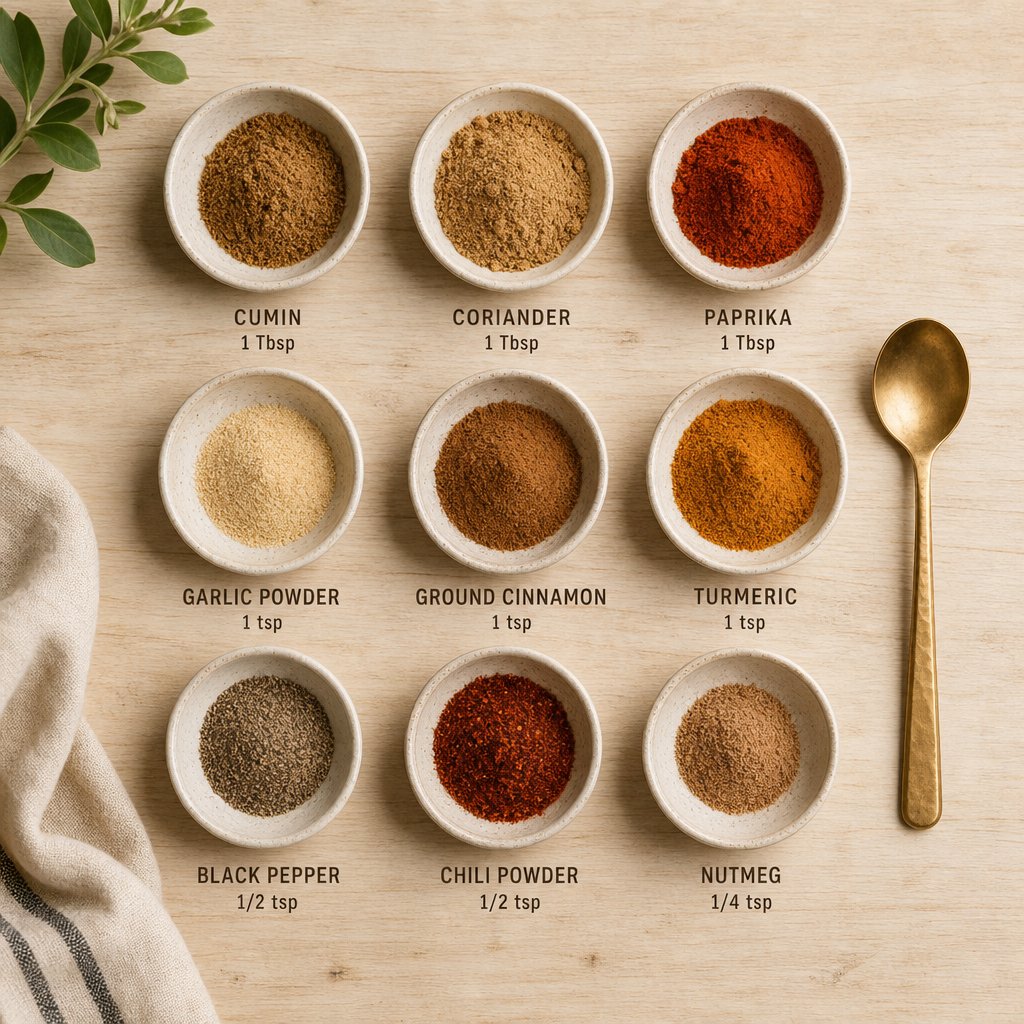
Ratios are where a chinese five spice recipe becomes personal. Two cooks can use the exact same five ingredients and produce powders that taste dramatically different simply by shifting how much of each spice goes into the grinder. There is no single "correct" formula, but there are two dominant schools of thought, and understanding both gives you the freedom to build a blend tailored to whatever is on tonight's menu.
Equal Parts Versus Star Anise-Dominant Blends
The simplest approach is equal parts by weight: one measure of each spice, ground together. This produces a balanced, middle-of-the-road powder where no single flavor dominates. You will taste the licorice, the warmth, the tingle, and the pungency in roughly equal measure. It works well as an all-purpose seasoning when you want five spice character without committing to a particular flavor direction.
Most traditional Chinese kitchens, however, lean toward a star-anise-dominant blend. A common ratio from experienced home cooks uses 1 part star anise, 1 part fennel seeds, 1/2 part Sichuan peppercorn, 1/2 part cassia cinnamon, and 1/5 part cloves. Notice how cloves sit at the bottom. Their eugenol intensity means a little goes a very long way, and too much will bulldoze the other flavors. Star anise and fennel share the top position, giving the blend its signature sweet-licorice identity while the supporting spices add warmth and complexity underneath.
The principle behind every five spice recipe is not precision but proportion: lead with the flavor you want most, support it with complementary notes, and restrain the spices powerful enough to overwhelm.
This means you can shift the lead voice depending on your goal. Want a sweeter, more aromatic powder for braised pork belly or spiced baking? Increase star anise to two parts. Need more numbing heat for a Sichuan-style dry rub? Push Sichuan peppercorn up to a full part. Craving deeper warmth for a winter soup? Let cassia cinnamon share the lead with star anise. The blend responds to these adjustments intuitively once you understand what each spice contributes.
Matching Your Ratio to Your Cooking Method
Different cooking methods expose spices to different temperatures, moisture levels, and cooking times. A 5 spice recipe that works beautifully as a dry rub may taste unbalanced in a quick stir-fry. Here is how to think about ratio adjustments for the most common applications:
- Marinades — Use a star-anise-forward blend (2:1:1:0.5:0.5 ratio of star anise, fennel, Sichuan peppercorn, cassia, cloves). The liquid medium disperses flavor evenly, and the longer contact time lets the sweeter, rounder notes develop fully.
- Dry rubs — Increase Sichuan peppercorn and cassia slightly for more surface-level punch. These spices create immediate impact when they hit direct heat on a grill or in a hot oven.
- Stir-fries — Keep the blend balanced or slightly fennel-heavy. High heat and short cooking times mean you need brighter, more volatile aromatics that release quickly rather than slow-building warmth.
- Baking (cookies, cakes, spiced breads) — Lean heavily on star anise and cassia, reduce Sichuan peppercorn to a whisper. Baked goods benefit from sweet warmth, and the numbing quality can feel out of place alongside sugar and butter.
- Soups and braises — A classic balanced ratio works well here because long simmering times allow every spice to fully express itself. Consider adding whole spices alongside the powder for layered depth.
The beauty of chinese 5 spice recipes is that they reward experimentation. Once you grasp the principle that each spice occupies a role (anchor, lifter, warmer, intensifier, sensation-maker), you stop needing rigid measurements. You start tasting as you go, adjusting a pinch here and a half-measure there until the blend matches your dish and your palate.
Of course, the best ratios in the world mean nothing if your spices are stale or poorly prepared. The difference between a vibrant homemade powder and a flat store-bought jar comes down to one critical step: how you handle the whole spices before they ever reach the grinder.
How to Toast, Grind, and Make Your Own Five Spice Powder Recipe
Handling whole spices before they reach the grinder is the single biggest factor separating a vibrant homemade chinese five spice powder recipe from the flat, dusty jar sitting forgotten in a cabinet. The process is simple: toast, cool, grind. But the science behind each step explains why freshly prepared powder tastes so dramatically different from anything pre-ground.
The Science of Toasting Whole Spices
Why does dry-toasting transform spices so completely? Every whole spice contains volatile aromatic compounds locked inside cellular structures. These oils sit trapped within the spice's matrix, protected by rigid cell walls. When you apply gentle heat, those walls break down and release the aromatic molecules into the air and into the spice's surface. As Serious Eats explains, toasting heats volatile flavor compounds, causing them to change shape and recombine into new, more complex aromas that did not exist in the raw spice.
There is a second benefit: toasting dries spices out slightly, making them brittle and far easier to grind into a fine, consistent powder. Moisture is the enemy of a smooth grind, and even a minute or two in a hot skillet removes enough surface moisture to improve the final texture.
Here is how to do it right:
- Use a dry skillet — no oil, no butter. A heavy-bottomed pan distributes heat evenly and prevents hot spots that scorch individual spices.
- Set heat to medium — too high and the exterior burns before the interior warms through. You want a gentle, even heat that coaxes oils out gradually.
- Toast each spice separately — star anise pods, cassia bark, cloves, fennel seeds, and Sichuan peppercorns all have different densities and moisture levels. Fennel seeds toast in 60 to 90 seconds. Cassia bark needs closer to 3 minutes. Combining them means some will burn while others remain raw.
- Stir and toss constantly — keep the spices moving so every surface gets equal heat exposure.
- Watch for visual and aromatic cues — fennel seeds darken one shade and release a sweet, grassy burst. Star anise pods become slightly glossy as oils rise to the surface. Sichuan peppercorns turn a deeper red-brown and smell intensely citrusy. The moment you smell a strong, fragrant wave of aroma, the spice is ready.
- Transfer immediately to a cool plate — residual heat in the pan continues cooking. Dump the spices onto a room-temperature plate or sheet pan the instant they hit their aromatic peak.
The most common mistake? Walking away. Spices go from perfectly toasted to burnt in seconds. Cloves are especially unforgiving. Over-toasted cloves turn acrid and bitter, ruining an entire batch. Stay at the stove, keep your nose engaged, and pull them early rather than late. You can always toast a bit longer, but you cannot un-burn a spice.
Grinding Techniques and Texture Choices
Once your toasted spices have cooled completely (give them at least five minutes so residual steam does not create moisture in the grinder), it is time to choose your tool and your target texture. Grind size directly affects how and when flavor releases during cooking. A fine powder disperses instantly in marinades and coats meat evenly in dry rubs. A coarser grind releases flavor more slowly, making it ideal for long braises and soups where you want the spice character to build over time.
You have two main options:
- Electric blade grinder (or dedicated coffee grinder) — fast, efficient, and capable of producing a very fine powder in 30 to 60 seconds of pulsing. The downside is less control over consistency. Pulse in short bursts rather than holding the button down, shaking the grinder between pulses to redistribute the spices. This prevents the bottom layer from turning to dust while larger pieces remain on top.
- Mortar and pestle — slower and more labor-intensive, but it offers superior control over texture. The stone-to-stone pounding action crushes cell walls more thoroughly than a blade's slicing motion, releasing more essential oils and producing a slightly moist, intensely aromatic powder. You can stop at any point to check consistency, making it easy to achieve a specific coarseness.
For a standard 5 spice powder recipe intended as an all-purpose seasoning, aim for a fine, talc-like consistency. Sift the ground powder through a fine-mesh strainer and re-grind any large pieces that remain. For a chinese spice powder recipe destined for slow-cooked dishes like red-braised pork or master stock, leave the grind slightly coarse so the spices release their character gradually over hours of simmering.
One practical tip: cassia bark is fibrous and resists grinding. Break it into small pieces before toasting, and if using a blade grinder, grind the cassia first on its own before adding the more brittle spices. This prevents stringy bark fibers from surviving in an otherwise smooth powder.
Sourcing and Selecting Quality Whole Spices
The finest toasting technique cannot rescue stale ingredients. Whole spices retain their aromatic oils far longer than pre-ground versions, but they are not immortal. Knowing how to evaluate quality at the point of purchase saves you from building a five spice powder recipe on a weak foundation.
Here are the freshness indicators to check for each spice:
- Star anise — look for intact, unbroken pods with a deep reddish-brown color. Fresh pods feel slightly oily to the touch and release a strong licorice aroma when you scratch the surface. Avoid pale, brittle pods with missing points.
- Cassia cinnamon — quality cassia bark is thick, tightly rolled, and dark reddish-brown. It should smell pungent and spicy even through packaging. Thin, pale, or papery bark indicates age or inferior variety.
- Cloves — fresh cloves are plump, oily, and dark brown. Squeeze one between your fingernails and you should see a tiny bead of oil emerge. A classic freshness test: drop a clove into water. Fresh cloves float vertically or sink because of their high oil content. Stale cloves float horizontally on the surface.
- Sichuan peppercorns — seek out husks that are a vibrant reddish-pink with an open, flower-like shape. They should smell intensely citrusy and floral. Dull brown husks with many black seeds mixed in indicate lower quality. The seeds themselves carry little flavor; you want mostly husk.
- Fennel seeds — fresh fennel seeds are plump, greenish-yellow, and release a sweet anise scent when rubbed between your fingers. Faded, grayish seeds have lost most of their volatile oils.
Where you buy matters too. Asian grocery stores with high turnover tend to stock fresher whole spices than general supermarkets where jars sit on shelves for months. Spice specialists recommend rubbing a pinch between your fingers as a quick quality test: you should release a strong scent and see color bloom immediately. If you need a deep sniff to detect anything, the spice has already lost significant potency.
A simple rule of thumb: whole spices stay fresh for up to three years when stored properly, while ground spices lose noticeable potency within six to twelve months. This is precisely why making your own chinese 5 spice powder recipe from whole, freshly toasted spices produces results that no pre-ground jar can match. You control the freshness, the toast level, the grind size, and the ratio. Every variable is in your hands.
That said, not every cook in every region uses the same five spices, or even the same proportions. The blend you just learned to make is a starting point, a classic template. Across China's vast geography and throughout Southeast Asia, cooks have been rewriting this formula for centuries, adapting it to local ingredients, regional palates, and entirely different culinary traditions.
Regional Variations of Chinese Five Spice Across China and Asia
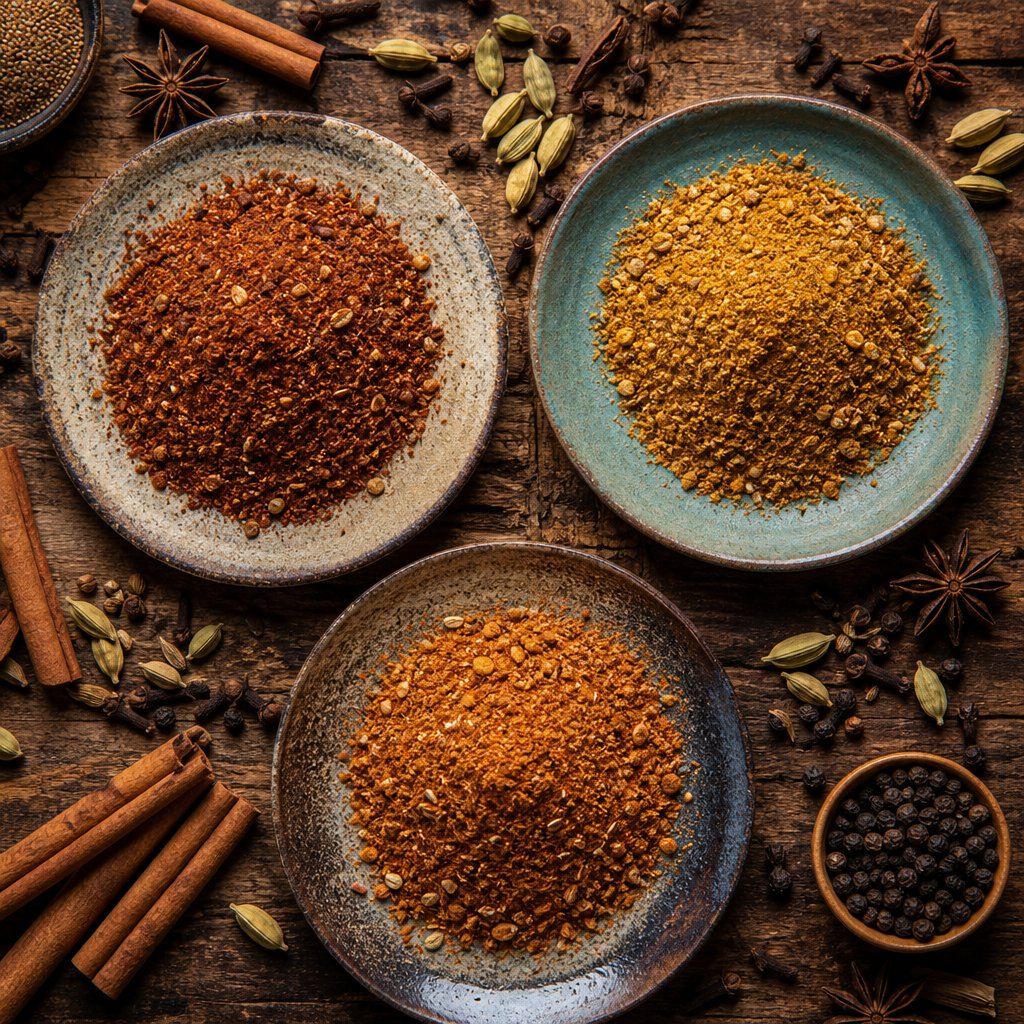
China spans 3.7 million square miles, encompasses dozens of distinct culinary traditions, and grows wildly different local aromatics depending on climate and terrain. It would be strange if a single chinese five spice mixture remained unchanged across all of that. It hasn't. The classic five-ingredient template acts more like a jazz standard than a fixed composition. Every region plays the same tune but improvises freely around it, shifting emphasis, swapping instruments, and sometimes adding entirely new voices to the arrangement.
Regional Chinese Variations
Three regional approaches illustrate how dramatically the blend shifts depending on local cuisine and palate preferences.
In Cantonese cooking, the blend leans sweet and aromatic. Cantonese dishes like char siu (barbecue pork), siu yuk (crispy roast belly), and braised soy sauce chicken rely on a chinese 5 spice powder that foregrounds cassia cinnamon and star anise. The result is a warmer, rounder seasoning that complements the region's preference for subtle sweetness in savory preparations. Some Cantonese blends also fold in a touch of dried tangerine peel, adding a citrus brightness that lifts rich, fatty meats.
Sichuan cooks take the opposite approach. Here, the peppercorn is king. Sichuan-style blends push the numbing, citrusy husk to a co-lead position alongside star anise, creating a powder with more bite and tactile sensation. This makes sense in a cuisine built around the interplay of ma (numbing) and la (spicy heat). The five spice in a Sichuan kitchen often works alongside chili bean paste and dried chilies rather than standing alone.
Fujian province, with its coastal location and long history of maritime trade, produces blends that sometimes stretch beyond five ingredients entirely. Fujian versions may incorporate white pepper, dried ginger, or even sand ginger (galangal) to create a more complex, slightly medicinal profile suited to the region's elaborate braised dishes and soup stocks.
| Region | Dominant Spice Emphasis | Flavor Character | Typical Dishes |
|---|---|---|---|
| Cantonese (Guangdong) | Cassia cinnamon + star anise | Sweet, warm, aromatic | Char siu, siu yuk, soy sauce chicken |
| Sichuan | Sichuan peppercorn (elevated) | Numbing, citrusy, bold | Smoked duck, dry-fried dishes, spiced jerky |
| Fujian | Star anise + additional aromatics (ginger, white pepper) | Complex, slightly medicinal | Braised pork belly (hong shao rou), soup stocks, stewed offal |
You will notice that none of these variations abandons the core philosophy. They all pursue balance. They simply define balance differently based on what sits beside the five spice on the plate.
Five-Spice Influence Across Asian Cuisines
The blend's influence extends well beyond China's borders. Centuries of trade, migration, and cultural exchange carried the chinese 5 spice concept into kitchens across Southeast Asia, where it merged with local spice traditions to create distinct regional cousins.
Vietnamese pho spice sachets share clear DNA with five spice. A typical pho spice bag contains star anise, cloves, cinnamon, coriander seeds, and fennel, swapping Sichuan peppercorn for coriander to create a gentler, more broth-friendly profile. The star anise and clove backbone remains unmistakable.
In Taiwan, lu wei (braised flavor) seasoning builds on the five spice foundation but expands it dramatically. Taiwanese lu wei packets often include ten or more aromatics: the classic five plus bay leaves, dried chili, licorice root, dried orange peel, and sometimes grass jelly herb. The result is a deeply layered braising liquid used for everything from tofu and eggs to duck wings and pig ears at night market stalls.
Malaysian and Singaporean cooks incorporate five spice into rendang spice pastes and bak kut teh (pork bone tea) broths. Here, the blend meets lemongrass, galangal, and turmeric, creating a fusion point where Chinese and Malay spice philosophies overlap. The five spice provides the warm, sweet base while Southeast Asian aromatics add freshness and herbal complexity on top.
Store-Bought Versus Homemade
With all this regional diversity in mind, what exactly is in that generic jar labeled "Chinese Five Spice" at the supermarket? Often, it is hard to say with certainty. Commercial chinese 5 spice powder frequently lists vague ingredients like "spices" without specifying ratios, and many brands pad the blend with cheaper fillers like ground rice or wheat starch to increase volume.
Here is an honest comparison:
- Freshness — Store-bought blends are pre-ground, meaning volatile oils have been evaporating since the moment of milling. By the time a jar reaches your kitchen, it may have sat in a warehouse and on a shelf for months. Homemade powder, toasted and ground the same day, delivers noticeably sharper, more vibrant flavor.
- Flavor intensity — A teaspoon of freshly ground five spice can do the work of a tablespoon from a stale jar. The difference is immediately apparent in simple applications like dry rubs where the spice has nowhere to hide.
- Ingredient transparency — Making your own means you know exactly what went in and in what proportion. No fillers, no mystery "natural flavors," no question about whether the cassia is actually cassia or a cheaper substitute.
- Customization — A jar gives you one fixed ratio. Your own blend adapts to your cooking style, your regional preference, and even the specific dish you are preparing tonight.
That said, store-bought has its place. When you need a pinch of five spice for a quick weeknight stir-fry and your mortar is buried in the back of a cabinet, a decent commercial blend still adds character. The key is buying from brands that list all five spices individually on the label and choosing jars with recent production dates. Treat it as a convenience backup rather than your primary source.
Whether you reach for a regional Cantonese blend, a Sichuan-forward mix, or a jar from the grocery aisle, there will be moments when you cannot find one or more of the core spices. Knowing how to substitute intelligently, spice by spice, keeps the blend's spirit intact even when your pantry falls short.
Smart Substitutions for Every Chinese Five Spice Ingredient
Your pantry is missing one key spice, or maybe you cannot find the blend at all. Does that mean the recipe is off the table? Not at all. A good chinese five spice substitute starts with understanding what each ingredient actually does in the blend, then finding the closest match for that specific role. Swap blindly and you will end up with something unrecognizable. Swap with intention and you will preserve the spirit of the original even when the exact ingredients are unavailable.
Substituting Individual Spices
Each spice in the blend carries a distinct function. When one is missing, you need a replacement that covers the same flavor territory, even if it cannot replicate every nuance. Here is how to handle each gap:
| Original Spice | Best Substitute | Flavor Difference | Ratio Adjustment |
|---|---|---|---|
| Star Anise | Anise seeds | Similar licorice note but flatter, less warm, missing the resinous depth | Use 1.5x the amount to compensate for lower intensity |
| Sichuan Peppercorn | Black pepper + lemon zest | Approximates the citrusy heat but lacks the true numbing ma sensation | Use equal parts black pepper and a pinch of fresh lemon zest |
| Cassia Cinnamon | Ceylon cinnamon | Milder, sweeter, more floral; misses cassia's bold, spicy punch | Use 1.25x to offset the gentler character |
| Cloves | Allspice | Contains eugenol (the same key compound) plus cinnamon and nutmeg notes; less sharp | Use equal amount; allspice is milder so no risk of overpowering |
| Fennel Seeds | Anise seeds or caraway | Anise seeds cover the licorice angle; caraway adds an earthy, slightly bitter alternative | Use 1:1 for anise seeds; use 3/4 amount for caraway (stronger flavor) |
A few things to keep in mind. The Sichuan peppercorn swap is the hardest to nail because no common Western pantry spice replicates that electric, tongue-numbing tingle. Black pepper plus lemon zest gets you in the neighborhood, covering the heat and citrus dimensions, but the physical sensation will be absent. If you can find Tasmanian pepper or grains of paradise, either provides a closer match with a mild numbing quality.
For cloves, allspice works so well because both contain high concentrations of eugenol. The difference is that allspice rounds out the sharpness with warmer, more cinnamon-like undertones. In a blend where cloves already sit alongside cassia, this overlap actually helps rather than hurts.
Whole-Blend Alternatives When You Need a Quick Fix
Sometimes you need a chinese five spice powder alternative right now, no time to assemble individual replacements. These full-blend swaps are ranked from most accurate to least:
- Garam masala + ground star anise — the closest match. Garam masala already contains cinnamon, cloves, and often fennel. Adding star anise fills the biggest gap. Use 3/4 teaspoon garam masala plus 1/4 teaspoon ground star anise per teaspoon of five spice needed.
- Allspice (ground) — the best single-spice stand-in. Its flavor profile naturally echoes cinnamon, cloves, and pepper in one ingredient. Use 1/2 teaspoon allspice per teaspoon of five spice, as it is concentrated. Add a pinch of ground star anise if available.
- Cinnamon + black pepper + star anise — a three-ingredient shortcut that covers the warm, spicy, and sweet dimensions. Equal parts of each, mixed together, gets you roughly 70% of the way there.
- Garam masala alone — usable in a 1:1 swap but noticeably different. It skews earthier and more savory, missing the sweet licorice character. Best reserved for dishes where five spice plays a background role rather than starring.
- Ras el hanout — a last resort. It shares some overlapping spices (cinnamon, cloves) but its paprika, cumin, and turmeric push the flavor in a distinctly North African direction.
When reaching for any chinese 5 spice powder substitute, remember that the original blend is built on balance. A swap that covers three out of five flavor dimensions still tastes closer to authentic than one that nails a single note at high volume. Aim for breadth over intensity, and you will keep your dish in the right flavor family.
The best five spice substitute, of course, is a fresh batch made from quality whole spices. But quality only matters if those spices are stored correctly and used before they fade. How long your blend stays vibrant, and what to do with it while it is at peak potency, determines whether all that toasting and grinding effort actually pays off at the table.
Storage Tips and Cooking Applications for Five Spice Powder
Fresh batch made, beautifully toasted, ground to the perfect consistency. And then what? That jar of homemade five spice powder sits on the counter, slowly losing everything that made it worth making in the first place. Storage is the unglamorous step that determines whether your blend still delivers six months from now or fades into a dusty, flavorless ghost of itself.
Shelf Life and Storage Best Practices
The shelf life gap between whole and ground spices is significant. Whole spices retain most of their flavor for 3 to 4 years, while ground spices and spice blends hold their potency for roughly 2 years under ideal conditions. In practice, most home cooks notice a meaningful drop in five spice powder intensity after 6 to 12 months, especially if storage habits are casual.
Why the difference? Grinding shatters cell walls and exposes volatile oils to oxygen. That increased surface area means faster oxidation, faster evaporation of aromatic compounds, and faster flavor loss. A whole star anise pod keeps its essential oils sealed inside intact cells. The moment you grind it, the clock starts ticking.
Here is how to tell if your 5 spice powder has passed its prime:
- Color test — Fresh five spice powder has a warm, reddish-brown hue. Faded, grayish, or washed-out color signals that pigments and oils have degraded together.
- Aroma test — Rub a pinch between your fingers to activate any remaining oils. Fresh powder releases an immediate, strong wave of licorice and warm spice. If you need to bring it to your nose and inhale deeply to detect anything, potency has dropped significantly.
- Texture test — Quality five spice powder feels slightly oily or tacky between your fingers because of residual essential oils. Stale powder feels dry, dusty, and chalky, like flour rather than a living spice blend.
Keeping your blend vibrant longer comes down to controlling three enemies: air, heat, and light. Each one accelerates the breakdown of volatile compounds.
- Use airtight glass containers — Glass does not absorb or transfer odors the way plastic can. A tight-sealing lid minimizes oxygen exposure between uses. Small jars are better than large ones because less air sits above the powder each time you open them.
- Store away from heat sources — That shelf above the stove is the worst possible location. Heat accelerates oxidation and drives off volatile oils. A cool pantry, cabinet, or drawer away from the oven keeps temperatures stable.
- Keep out of direct light — UV radiation breaks down aromatic compounds and fades color. Opaque containers or a dark cabinet solve this instantly.
- Freeze for extended life — Ground five spice powder stores well in the freezer for up to two years. Cold temperatures dramatically slow oxidation. Use a freezer-safe glass jar with minimal headspace, and let the jar come to room temperature before opening to prevent condensation from introducing moisture.
- Never shake directly over a steaming pot — Steam entering the container introduces moisture, which causes clumping and accelerates flavor breakdown. Measure spices into a separate spoon away from heat.
A practical approach: keep your whole spices in a cool, dark pantry for long-term storage and grind only what you need for the next few weeks. This way you always work with peak-potency powder without worrying about shelf life at all.
Classic and Creative Cooking Applications
With fresh, properly stored five spice powder on hand, the question becomes: what do you actually cook with it? The blend's versatility is remarkable. It works across proteins, vegetables, baked goods, and even drinks, adapting its character depending on how much you use and what it meets in the pan.
Here are the most popular dishes that showcase five spice, ranked by how central the blend is to the final flavor:
- Five spice chicken — Whether roasted whole, grilled as thighs, or fried as Taiwanese popcorn chicken, this is the most accessible entry point. A tablespoon of five spice mixed with salt, white pepper, and a touch of sugar creates a dry rub that transforms ordinary chicken into something aromatic and deeply savory. The blend's sweet-warm character pairs naturally with poultry's mild flavor without overwhelming it.
- Cantonese roast duck — The classic. Five spice powder is rubbed inside the cavity alongside salt and sometimes rice wine before the duck is roasted until the skin shatters. The fat renders slowly, carrying the spice's aroma through every layer of meat. This is the dish that made the blend famous outside China.
- Braised pork belly (hong shao rou) — Low and slow braising in soy sauce, sugar, and rice wine with a generous pinch of five spice. The blend's licorice sweetness and warm cassia notes meld with caramelized sugar to create the signature lacquered glaze. Rich, fatty pork belly is exactly the kind of protein five spice was designed to complement.
- Char siu (Chinese BBQ pork) — The marinade typically includes hoisin, honey, soy, and five spice. Here the powder works in the background, adding aromatic complexity beneath the sweet-salty glaze rather than leading the flavor.
- Vegetable stir-fries — A quarter teaspoon tossed into hot oil before adding vegetables infuses the entire dish with warmth. It works especially well with hearty vegetables like eggplant, mushrooms, and root vegetables that can stand up to the blend's intensity.
- Stir-fried noodles and fried rice — A pinch added during the final toss gives a subtle aromatic lift. The key is restraint. Too much and the licorice note dominates the dish.
- Soups and master stocks — Taiwanese lu wei broth and Cantonese master stock both rely on five spice (often in whole-spice form) simmered for hours to build deep, layered flavor.
Beyond these classics, five spice has found a second life in modern kitchens where cooks push it into unexpected territory:
- Spiced cookies and cakes — Replace or supplement cinnamon in snickerdoodles, shortbread, or spice cake with five spice powder. The star anise and fennel add complexity that straight cinnamon cannot match. Start with half the amount you would use for cinnamon and adjust upward.
- Banana bread and pumpkin pie — A half teaspoon folded into the batter adds an intriguing warmth that guests cannot quite identify but always ask about.
- Chocolate pairings — Five spice and dark chocolate share surprising affinity. The blend's warm, slightly bitter notes complement cacao's intensity. Try it in brownies, hot chocolate, or a ganache glaze.
- Cocktails — A pinch shaken into whiskey sours, rum old-fashioneds, or mulled wine adds aromatic depth. Some bartenders infuse simple syrup with five spice for a ready-to-pour ingredient.
- Spiced nuts and snack mixes — Toss roasted peanuts or cashews with melted butter, five spice, brown sugar, and a pinch of salt for an addictive snack that bridges sweet and savory.
The common thread across all these applications is restraint. Five spice powder is concentrated. A little goes a long way, and the blend is designed to enhance rather than dominate. Start with less than you think you need, taste, and build from there. The goal is that moment when someone takes a bite and pauses, trying to identify what makes the dish so interesting, without being able to pinpoint any single spice.
That same principle of synergy, where individual components create something greater together, extends beyond the kitchen. Each of these five spices carries a long history of medicinal use in Traditional Chinese Medicine, and modern wellness science is beginning to validate what practitioners have known for centuries about their health-supporting properties.
Traditional Medicine Meets Modern Wellness
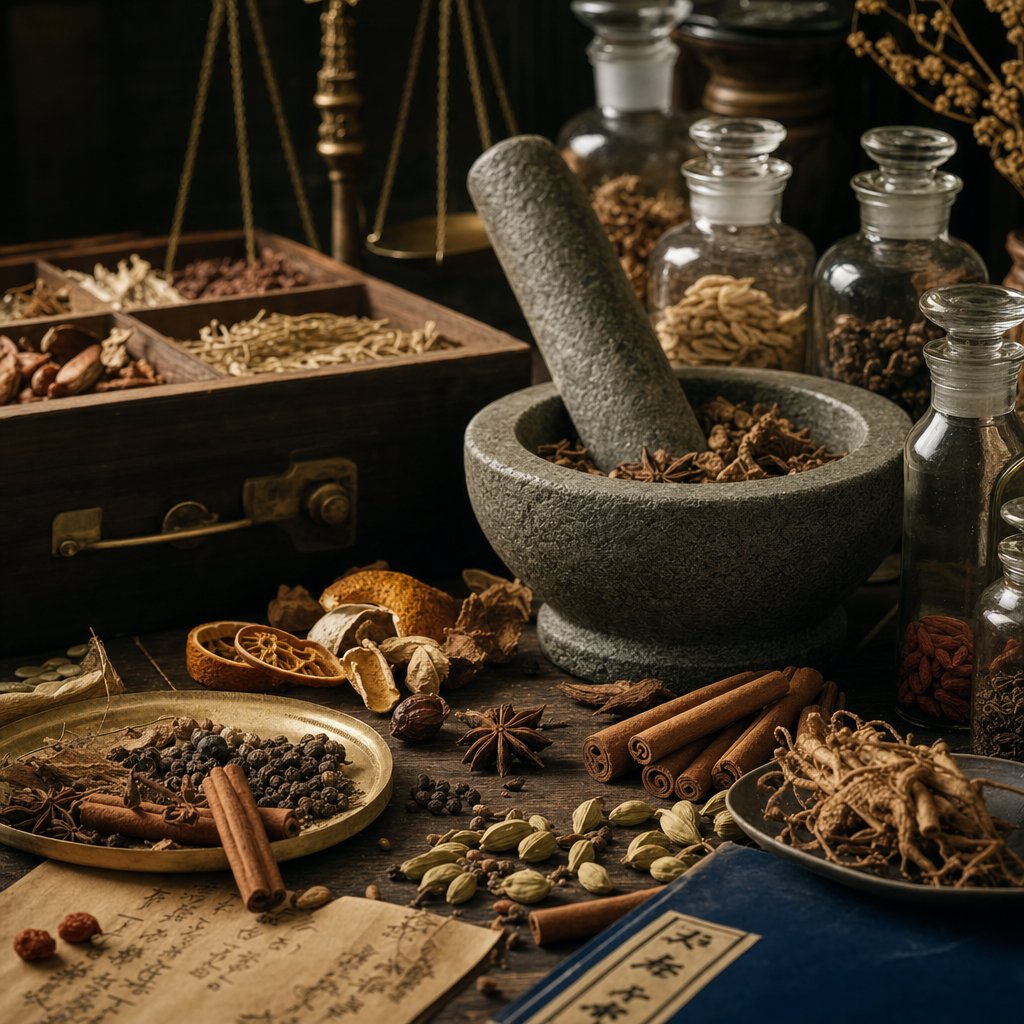
Each of these five spices carries a long history of medicinal use, and that history is not coincidental. When you look at what's in Chinese five spice through the lens of Traditional Chinese Medicine, the blend reads less like a seasoning and more like a carefully balanced prescription. TCM practitioners selected these specific aromatics because each one addresses a different organ system, a different type of imbalance, a different pathway toward restoring the body's equilibrium.
The concept is straightforward: food is medicine. Every ingredient carries an energetic property, warming or cooling, stimulating or calming, that influences how the body functions. What is Chinese 5 spice powder in this context? It is a formula designed to warm the digestive system, move stagnant energy, and support multiple organ meridians simultaneously.
TCM Health Benefits of Each Spice
Each spice in the blend targets a specific therapeutic function that TCM practitioners have documented for centuries:
- Star Anise (digestive support) — Used to warm the body and ease bloating, gas, and digestive discomfort. It supports the spleen and stomach meridians, which TCM considers vital for energy production. Modern research has also identified star anise as a source of shikimic acid, the precursor compound used to synthesize antiviral medications like oseltamivir (Tamiflu).
- Cassia Cinnamon (circulation) — Known as rou gui in TCM, cassia warms the body's channels and invigorates blood flow. It is traditionally prescribed for "cold" conditions including sluggish digestion and fatigue. Contemporary studies support its role in regulating blood sugar and improving insulin sensitivity.
- Cloves (antimicrobial) — Prized for centuries as a warming spice that dispels cold and treats nausea. Their primary compound, eugenol, functions as a potent anti-inflammatory and antioxidant. Clove oil remains in clinical use for oral pain relief, validating what Chinese and Indian healers practiced long before modern dentistry existed.
- Sichuan Peppercorn (pain relief) — Used to warm the digestive tract, relieve pain, and move stagnant qi. The numbing compound hydroxy-alpha-sanshool affects nerve receptors and alters pain sensation, providing medicinal relief for certain digestive and neurological complaints beyond its culinary tingling effect.
- Fennel Seeds (bloating and gut health) — Regarded as a gentle yet effective digestive aid that soothes gas, bloating, and colic. Fennel supports the spleen and stomach meridians and is rich in antioxidants, essential oils, and fiber that promote gut health and reduce inflammation.
What is 5 spice Chinese medicine trying to achieve with this combination? Synergy. The true genius lies not in any single ingredient but in how they work together. Combined, they address warming, moving, digesting, and harmonizing the whole system simultaneously. A person with "cold" symptoms (low energy, poor circulation) benefits from the warming properties of cassia and cloves. Someone with "dampness" (bloating, water retention) finds relief through fennel and star anise's digestive action. The blend covers multiple imbalances in one formula.
From Traditional Blends to Modern Wellness Products
The functional food and supplement industries are paying close attention to these traditional combinations. As Nutraceuticals World reports, brands have significant runway to build on traditional, familiar ingredients to support modern health concerns like digestion, mood, and inflammation. Consumers increasingly seek products rooted in time-tested botanical wisdom rather than synthetic formulations, and the spices within five spice powder fit that demand precisely.
What is in Chinese 5 spice has become more than a culinary question. It is a product development question. Each spice offers documented bioactive compounds: shikimic acid from star anise, eugenol from cloves, cinnamaldehyde from cassia, sanshool from Sichuan peppercorn, and anethole from fennel. These compounds lend themselves to extraction, standardization, and formulation into supplement-grade products like capsules, powders, and functional beverages.
For nutrition brands, supplement importers, and private label sellers exploring TCM-inspired health products, the challenge is scaling traditional formulations into market-ready formats without losing the synergistic philosophy that makes them effective. OEM/ODM manufacturers specializing in health food production, such as ZhuFeng, offer flexible product formats including powder/granules, hard capsules, soft capsules, and gummy candy that align well with botanical supplement formulation. Their customized approach to formulation and scalable production helps brands translate traditional Chinese ingredient combinations into commercially viable wellness products.
The trajectory is clear. What began as a medicinal formula in Han Dynasty apothecaries, evolved into a culinary staple across Asia, and is now re-emerging as a foundation for modern functional health products. The five spices have traveled from medicine cabinet to kitchen pantry and back again, completing a circle that TCM practitioners would find entirely unsurprising. Food was always medicine. The modern wellness industry is simply catching up to what Chinese healers understood two thousand years ago.
Frequently Asked Questions About Chinese Five Spice Powder
1. What are the five spices in Chinese five spice powder?
The traditional blend contains star anise, cloves, Chinese cinnamon (cassia), Sichuan peppercorn, and fennel seeds. Each spice represents one of the five elemental tastes in Chinese culinary philosophy: sweet, bitter, pungent, salty, and sour. Together they create a harmonious powder where no single flavor dominates, making it versatile enough for roasted meats, braised dishes, stir-fries, and even baked goods.
2. What can I use as a substitute for Chinese five spice powder?
The closest whole-blend substitute is garam masala mixed with ground star anise (3/4 teaspoon garam masala plus 1/4 teaspoon star anise per teaspoon needed). Ground allspice works as a single-spice stand-in at half the amount since it naturally echoes cinnamon, cloves, and pepper. For individual spice swaps, use anise seeds for star anise, black pepper plus lemon zest for Sichuan peppercorn, Ceylon cinnamon for cassia, allspice for cloves, and anise seeds or caraway for fennel.
3. How long does Chinese five spice powder last and how should I store it?
Ground five spice powder retains good potency for 6 to 12 months under proper storage, though it can last up to 2 years in ideal conditions. Store it in airtight glass containers away from heat, light, and moisture. For extended shelf life, freeze the powder in a sealed jar with minimal headspace. Whole spices last 3 to 4 years, so grinding small batches as needed ensures maximum freshness and flavor intensity.
4. Is Chinese five spice the same as garam masala?
No, they are fundamentally different blends with distinct philosophies. Chinese five spice pursues balance across five elemental tastes using star anise, cassia, cloves, Sichuan peppercorn, and fennel. Garam masala layers cardamom, cumin, coriander, and other spices to build aromatic warmth. Five spice has a pronounced licorice-forward sweetness and numbing quality, while garam masala skews earthier and more savory. They share some overlapping ingredients like cinnamon and cloves but produce very different flavor profiles.
5. Can Chinese five spice powder be used in health and wellness products?
Yes. Each spice in the blend carries documented health properties rooted in Traditional Chinese Medicine: star anise supports digestion, cassia promotes circulation, cloves offer antimicrobial benefits, Sichuan peppercorn aids pain relief, and fennel soothes bloating. Modern functional food manufacturers are formulating these bioactive compounds into supplement-grade products like capsules, powders, and gummies. OEM/ODM health food manufacturers such as ZhuFeng (https://en.ahzfsw.com/service.html) help brands develop TCM-inspired wellness products with customized formulations and scalable production across multiple product formats.