
Understanding Arnica Tablets Before You Start
You picked up a tube of arnica tablets, and now you're wondering how to take arnica tablets without accidentally undermining their effect. Fair question. But before diving into dosing and timing, there's a critical distinction you need to understand: the arnica tablets sitting in your medicine cabinet are not the same thing as the herbal arnica flower used in creams and oils.
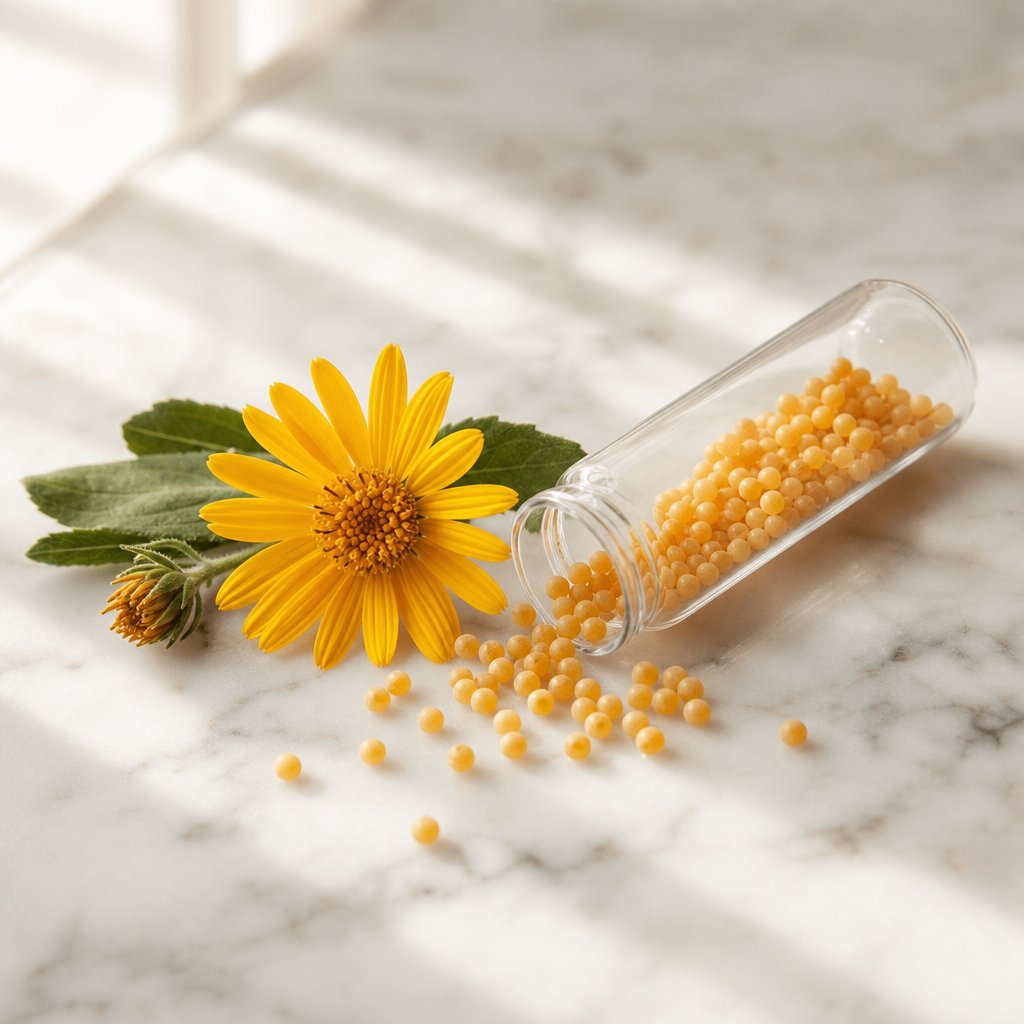
Arnica montana is a perennial plant native to Europe and North America, recognized for its yellow-orange blooms and centuries of use in traditional medicine. The arnica plant uses most people know about involve topical applications for bruises, muscle aches, and joint pain. In its raw herbal form, arnica contains a compound called helenalin, a sesquiterpene lactone that delivers anti-inflammatory effects but is toxic when consumed in large quantities. Flavonoids and phenolic acids round out the plant's pharmacological profile, contributing antioxidant activity.
So how can arnica tablets be safe to swallow? That's where homeopathic preparation changes everything.
Homeopathic Arnica vs Herbal Arnica
Herbal arnica products, sometimes labeled as arnika in European markets, use minimally processed plant material. These creams, gels, and salves are designed strictly for external use because the helenalin concentration remains high enough to cause serious harm if ingested. Symptoms of oral herbal arnica ingestion range from vomiting and rapid heartbeat to organ damage.
Homeopathic arnica tablets, on the other hand, undergo a process called serial dilution. The original plant material is diluted repeatedly in precise ratios (1:10 or 1:100 per step), then vigorously shaken at each stage. By the time you reach common retail potencies like 30C, the concentration of helenalin is negligible or undetectable. This is what makes homeopathic arnica tablets safe for oral use.
Herbal arnica is for external use only and can be poisonous if swallowed. Homeopathic arnica tablets are serially diluted to safe levels and designed specifically for internal use. Never confuse the two.
Why Arnica Tablets Are Safe for Internal Use
The dilution process is the key safety mechanism. Each dilution step reduces the concentration of active plant compounds exponentially. A 30C potency, for example, has been diluted at a 1:100 ratio thirty consecutive times. At these levels, the risk of helenalin toxicity effectively disappears. This is why correctly manufactured homeopathic arnica tablets do not produce the dangerous side effects associated with ingesting raw arnica.
That said, quality matters. Products from less-than-reputable sources may contain inconsistent or improperly diluted material. This is where label verification becomes your safeguard.
What HPUS Means on Your Arnica Label
When you flip over your arnica tablets, look for the initials "HPUS" after the drug name. HPUS stands for Homeopathic Pharmacopoeia of the United States, the official compendium that sets manufacturing standards for homeopathic drugs in the U.S. A product bearing this designation has been prepared according to documented standards for method, potency, and quality assurance.
In practical terms, HPUS on the label tells you the product uses a recognized monograph, follows standardized dilution methods, and meets quality benchmarks. It also means the potency listed on the package reflects an established protocol rather than guesswork. For arnica specifically, the HPUS designates that potencies below 3X are restricted to prescription use due to residual toxicity, while higher dilutions (3X and above) are cleared for over-the-counter sale.
With this foundation in place, knowing what is arnica and why its homeopathic form differs from herbal preparations, you're ready for the practical steps. The potency printed on your label is the first decision point, and choosing the right one depends entirely on what you're using it for.

Step 1: Choose the Right Arnica Potency
You've seen the numbers on the label: 6C, 30C, 200C, 6X, 30X. They look like a code, and honestly, they kind of are. These designations tell you how many times the original arnica montana substance was diluted during manufacturing and at what ratio. Picking the wrong potency won't hurt you, but it can mean the difference between a noticeable response and a lackluster one. Understanding how to take arnica tablets effectively starts right here, with matching potency to purpose.
C vs X Potencies Explained Simply
The letter on your arnica montana pills refers to the dilution ratio used at each step of preparation:
- X (Decimal scale) - Each step dilutes the substance at a 1:10 ratio. One part remedy goes into nine parts diluent.
- C (Centesimal scale) - Each step dilutes at a 1:100 ratio. One part remedy goes into ninety-nine parts diluent.
The number tells you how many times that dilution was repeated. So 6X means six rounds of 1:10 dilution, while 30C means thirty rounds of 1:100 dilution. A common point of confusion: people assume X potencies are stronger because the numbers are sometimes lower. It's actually the opposite. Because the C scale dilutes more aggressively at each step, a 30C potency is considered far more potent in homeopathic terms than a 30X.
In homeopathic philosophy, greater dilution combined with vigorous shaking (succussion) at each step is believed to increase the remedy's energetic action. This is counterintuitive from a conventional chemistry standpoint, but it's the operating principle behind every arnica supplement you'll find on the shelf.
Matching Potency to Your Condition
Here's where it gets practical. Different potencies suit different situations, and the general rule is straightforward: the more intense or widespread the symptoms, the higher the potency you can reach for.
Homeopathic practitioners typically recommend lower potencies like 6C or 6X for localized, mild complaints, things you can point a finger at. A small bruise on your shin, mild muscle stiffness after gardening, or everyday soreness falls into this category. Mid-range potencies such as 12C or 30C address more general symptoms affecting multiple areas, like post-workout achiness or standard bruising from a minor fall. Products like Arnicare tablets commonly use the 30C potency, making them a versatile choice for most acute situations.
Higher potencies, 200C and above, are reserved for significant trauma, major surgery recovery, or situations involving both physical and emotional distress. These are best used under guidance from a practitioner familiar with arnica montana homeopathy uses, especially if you're new to homeopathic remedies.
When to Choose 30C vs 200C
This is the decision most people get stuck on. Imagine you twisted your ankle on a hike. It's swollen, bruised, and sore. A 30C potency of arnicare pills taken several times daily is well-suited here. The injury is acute but moderate.
Compare that to recovering from knee surgery or a significant dental extraction. The trauma is deeper, the tissue disruption more extensive, and the body's healing demand is greater. A 200C potency can be appropriate in these cases, often given less frequently because higher potencies tend to have a longer duration of action per dose.
The table below gives you a quick-reference guide:
| Potency | Strength Level | Recommended Use Cases |
|---|---|---|
| 6X | Low (gentle) | Mild localized soreness, minor bumps, everyday muscle fatigue |
| 6C | Low-moderate | Small bruises, light strains, localized tenderness |
| 12X / 12C | Moderate | General muscle aches, moderate bruising, post-exercise recovery |
| 30X | Moderate-high | Acute injuries with multiple symptoms, general soreness with stiffness |
| 30C | High (standard acute) | Standard bruising, sprains, dental procedures, minor surgery |
| 200C | Very high | Major surgery, significant trauma, deep tissue injury, intense swelling |
A practical tip: if you only have one potency available, use it. The most important factor in homeopathy is choosing the right remedy. Potency selection is fine-tuning. For most day-to-day family health concerns, 30C is the most useful potency to keep on hand, with 200C as a step up for top acute-use situations.
With your potency selected, the next question becomes how many pellets to take and how often, which varies depending on whether you're managing a bruise, prepping for surgery, or recovering from a tough workout.
Step 2: Determine Your Dose by Condition
Potency tells your body what kind of signal to expect. Dosing tells it how often to listen. In homeopathy, how many arnica tablets you take per dose matters less than how frequently you repeat that dose. Five pellets taken once won't accomplish what three pellets taken three times daily can. Frequency is the throttle, not quantity.
This principle confuses people coming from conventional medicine, where a higher milligram count usually means a stronger effect. With arnica montana dosage for adults, the standard single dose is typically 3 to 5 pellets (or 2 tablets, depending on the product format). What changes between conditions is how often you repeat that dose and for how long. Think of each dose as a reminder to the body rather than a larger push.
The protocols below consolidate guidance from clinical practice and dental surgery recommendations. Always defer to your specific product label and healthcare provider when available, but these serve as a reliable starting framework for how much arnica to take across common scenarios.
Dosing for Bruises and Minor Injuries
A bruise from bumping into furniture or a minor fall is the most common reason people reach for arnica tablets for bruising. The goal here is simple: reduce discoloration, limit swelling, and ease tenderness at the site.
- Dose: Take 5 pellets (or 2 tablets) of Arnica 30C.
- Frequency: Repeat 3 times daily (morning, midday, and evening).
- Duration: Continue for 3 to 5 days, or until the bruise visibly fades and tenderness resolves.
- Start time: Begin as soon as possible after the injury occurs. The sooner you start, the less time blood has to pool beneath the skin.
Arnica for bruises works best when initiated within the first few hours of impact. If you notice a bump forming or feel that familiar deep ache that signals a bruise is developing, that's your cue. This bruise treatment plant has a long folk history precisely because early intervention tends to produce the most noticeable results.
Pre-Surgery and Post-Surgery Protocols
Surgical recovery is where dosing protocol becomes more structured. The idea is to prepare your body's inflammatory response before the procedure and then support healing through the critical first days afterward. A dental surgery protocol from Davidson Cosmetic & Family Dentistry recommends starting arnica three days before surgery, while many plastic surgeons suggest beginning 1 to 2 days prior.
- Pre-surgery dose: Take 5 pellets of Arnica 30C, three times daily, starting 2 to 3 days before your scheduled procedure.
- Day of surgery: Take your morning dose as usual (unless your surgeon instructs otherwise due to anesthesia protocols).
- Post-surgery dose: Continue 5 pellets, three times daily, for 5 to 7 days after surgery.
- Tapering: If swelling and bruising are resolving well by day 5, you can reduce to twice daily for the remaining days.
For major procedures like facelifts or body contouring, some practitioners recommend stepping up to 200C potency and extending the post-operative course to 10 to 14 days. A meta-analysis reviewing 30 studies found that post-surgical arnica use showed measurable benefits, reinforcing the importance of continuing doses after the procedure rather than only taking them beforehand.
Your surgeon's personalized instructions always override general guidelines. Discuss arnica use during your pre-operative consultation, especially if you take blood-thinning medications.
Arnica for Dental Work and Cosmetic Procedures
Dental extractions, implant placements, and cosmetic fillers all involve localized tissue trauma that responds well to arnica for pain and swelling management. The protocol is slightly shorter than surgical recovery because the tissue disruption is typically less extensive.
- Pre-procedure dose: Begin 5 pellets of Arnica 30C, three times daily, starting 1 to 2 days before your appointment.
- Post-procedure dose: Continue the same regimen (5 pellets, 3 times daily) for 2 to 3 days after the procedure.
- For cosmetic fillers: Start 2 days before your filler appointment and continue for 2 days after to minimize bruising at injection sites.
If you're wondering how many arnica pills you should take before lip fillers or dermal filler appointments, the answer is the same standard dose repeated more frequently in the acute window. Some practitioners suggest increasing frequency to every 2 to 3 hours on the day of the procedure itself, then returning to three times daily the following day.
Managing Muscle Soreness After Exercise
Post-workout soreness is a different animal. Unlike an acute injury with a clear start point, delayed-onset muscle soreness (DOMS) builds gradually over 24 to 48 hours. The dosing approach here is more flexible and reactive.
- Dose: Take 3 to 5 pellets of Arnica 30C (or 12C for milder soreness).
- Frequency: Take a dose immediately after intense exercise, then repeat 2 to 3 times over the following day as needed.
- Duration: Continue for 1 to 2 days, or until stiffness resolves. There's no need for a multi-day protocol unless soreness persists beyond 48 hours.
- Ongoing use: If you train intensely on a regular schedule, you can take a dose before and after each session rather than maintaining a continuous daily regimen.
For exercise-related use, arnica functions as a recovery tool rather than a treatment course. You don't need to take it on rest days or when you feel fine. Use it when your body tells you it's working harder than usual to repair.
One final note on all these protocols: how many arnica tablets should you take if your product uses a different pellet size or tablet format? Check the label. Some brands count 3 pellets as a dose, others count 5. The numbers above reflect the most common recommendation across 30C pellet products, but your specific product's instructions are the final word on single-dose quantity.
Getting the dose right is half the equation. The other half is how you physically take the tablets, because swallowing them like a vitamin actually works against you.

Step 3: Take Arnica Tablets the Correct Way
You've chosen your potency and figured out your dosing schedule. Here's where most people unknowingly cancel out their own efforts: they pop the arnica pill into their mouth and swallow it like an aspirin. That approach bypasses the entire mechanism homeopathic remedies rely on for absorption. How you physically take arnica tablets matters just as much as how often you take them.
The Sublingual Method Step by Step
Sublingual means "under the tongue." The tissue beneath your tongue is thin, highly vascular, and rich in capillaries. When a substance dissolves there, it absorbs directly through the mucous membranes into the bloodstream without passing through the digestive tract first. This is the same reason nitroglycerin tablets for heart patients are placed under the tongue rather than swallowed.
For arnica pellets, sublingual dissolution is the standard administration method recommended by homeopathic practitioners and clinical protocols alike. Here's how to do it correctly:
- Ensure a clean mouth. Do not eat, drink, smoke, or brush your teeth for at least 15 minutes before taking your dose. Your mouth should be free of competing flavors and residues.
- Dispense the pellets without touching them. Tap the tube or container cap to release the correct number of pellets (typically 3 to 5) into the cap or a clean spoon. Avoid handling them with your fingers.
- Place the pellets under your tongue. Tilt the cap or spoon and let them slide beneath your tongue. Do not place them on top of your tongue or between your cheek and gum.
- Let them dissolve completely. Keep the pellets under your tongue without chewing, crushing, or swallowing. This usually takes 1 to 3 minutes depending on the pellet size and format.
- Wait 15 minutes after the dose. Avoid eating, drinking, or rinsing your mouth for at least 15 minutes after the pellets have fully dissolved. This gives the mucous membranes uninterrupted contact time.
That's it. Five steps, no water needed, no swallowing required. The simplicity is part of what makes arnica sublingual dosing convenient for travel, work, or bedside use.
Pellets vs Tablets and How Each Dissolves
When you shop for arnica, you'll notice two main physical formats: small round pellets (sometimes called globules) and larger flat tablets. Both deliver the remedy sublingually, but they behave a bit differently in your mouth.
Pellets are tiny sugar-based spheres, usually made from sucrose and lactose, coated with the homeopathic dilution. They dissolve quickly, often within 30 to 60 seconds, because of their small size and porous structure. Most tube-dispensed products use this format. A single dose is typically 3 to 5 pellets because each one is so small.
Tablets are larger, compressed discs that take slightly longer to dissolve, usually 1 to 3 minutes. They're denser and often contain binding agents to hold their shape. A single arnica pill in tablet form usually counts as one or two tablets per dose rather than five, simply because each unit is bigger.
Both formats work the same way once dissolved. The key difference is practical: pellets dissolve faster but require you to count out multiple units, while tablets are simpler to dose but take a bit more patience under the tongue. Neither is superior. Choose whichever format your preferred product offers and follow its label for dose count.
Handling Tips to Preserve Potency
Here's a detail that surprises most people learning how to take arnica pills for the first time: you shouldn't touch the pellets with your bare hands. In homeopathic practice, direct skin contact can potentially transfer oils, moisture, or contaminants that may degrade the remedy coating on the pellet's surface.
The easiest workaround is the cap method. Most homeopathic pellet tubes have a built-in dispensing cap. You twist the tube, tap it so pellets fall into the cap's chamber, then pour them directly from the cap into your mouth. No fingers involved. If your product doesn't have this feature, use a clean, dry spoon or the container's lid as an intermediary.
A few additional handling practices worth noting:
- Keep the container closed when not in use. Prolonged air exposure can affect the sugar-based pellets.
- If a pellet falls on the floor or a surface, discard it rather than putting it back in the tube.
- Don't transfer pellets into a different container that previously held another substance, especially one with a strong scent.
These precautions might feel overly careful for something that looks like a sugar bead, but they align with how homeopathic remedies are manufactured and stored at every stage before reaching you. Consistency in handling preserves what the manufacturing process put in place.
The physical technique is straightforward once you do it a few times. The trickier part is getting the timing right, especially when you're coordinating doses around a surgery date, a dental appointment, or the unpredictable moment an injury happens.
Step 4: Time Your Doses for Maximum Effectiveness
Knowing arnica how much to take is only useful if you also know when to take it. Timing is the variable that separates a well-executed protocol from a wasted one. A perfectly chosen potency and correct sublingual technique won't deliver much if you start too late, space doses too far apart, or stop too soon. The body's inflammatory cascade moves fast, and your dosing schedule needs to keep pace with it.
Two fundamentally different timing strategies exist depending on your situation: planned procedures (where you control the start date) and acute injuries (where the clock starts without warning). Each demands a different approach to when you begin, how often you repeat, and how long you continue.
When to Start Before a Procedure
If you have a surgery, dental extraction, or cosmetic filler appointment on the calendar, you have the advantage of preparation time. Starting arnica before the procedure gives your body a head start on managing the inflammatory response that follows tissue disruption.
The general recommendation from plastic surgery protocols is to begin oral arnica 1 to 3 days before your scheduled procedure. Most practitioners settle on 2 days prior as the sweet spot, balancing adequate preparation with practical simplicity. Here's what that looks like in practice:
- Major surgery (facelift, rhinoplasty, body contouring): Start 2 to 3 days before. The greater the expected tissue trauma, the more lead time helps.
- Dental procedures (extractions, implants, wisdom teeth): Start 1 to 2 days before your appointment.
- Cosmetic fillers and injectables: Start 1 to 2 days before treatment. If you're wondering how much arnica to take before fillers specifically, the dose stays the same as any other protocol (3 to 5 pellets per dose), but the pre-treatment window is what matters for bruise prevention.
Why does pre-loading help? By the time a surgeon makes an incision or a needle punctures skin, your body has already received repeated signals from the arnica doses. The idea is that your system is primed to respond to trauma with less excessive swelling and bruising than it otherwise would. A meta-analysis of 30 studies noted that while pre-operative arnica alone showed modest effects, combining pre- and post-operative dosing produced the most consistent benefits.
For patients asking how many arnica tablets should I take before lip fillers, the answer is the same standard dose you'd use for any acute situation. What changes is the start date. Beginning 2 days before your filler appointment gives the remedy time to establish its presence in your system before those tiny needles create micro-trauma at injection sites. Some clinicians recommend continuing for about 48 hours after the procedure, which covers the peak swelling window for most injectable treatments.
Spacing Doses Throughout the Day
How you distribute doses across your waking hours depends on whether you're in an acute phase or a maintenance phase. The distinction is simple: acute means the situation is fresh and intense, maintenance means you're supporting ongoing recovery.
Acute dosing (first 24 to 48 hours after injury or procedure):
- Take a dose every 2 to 4 hours while awake.
- This might mean 4 to 6 doses on the first day.
- You don't need to wake up at night to dose. Sleep is when your body does its heaviest repair work, and interrupting it defeats the purpose.
Maintenance dosing (day 2 or 3 onward):
- Reduce to 3 times daily: morning, midday, and evening.
- Space doses roughly evenly, aiming for 4 to 6 hours between each one.
- Continue this rhythm until symptoms resolve or you reach the end of your planned course.
The transition from acute to maintenance dosing isn't a hard line. If swelling is still intensifying on day 2, stay with the more frequent schedule. If things are clearly calming down by the afternoon after your procedure, you can shift to three times daily sooner. Let your body's response guide the transition rather than rigidly counting hours.
Does arnica help with swelling when dosed this way? The logic is that frequent repetition during the acute phase keeps the remedy's signal active while inflammation is at its peak. Once the body's initial response stabilizes, less frequent dosing maintains support without over-stimulating.
Acute Injury Timing vs Planned Procedure Timing
Here's where the two strategies diverge sharply. With a planned procedure, you control the timeline. With an acute injury, a twisted ankle, a hard fall, an unexpected blow, there's no preparation window. The clock started without your permission.
For acute injuries, the rule is straightforward: take your first dose as soon as possible. The faster you begin, the better positioned your body is to manage the developing bruise or swelling. Ideally, you'd take arnica within the first 30 minutes of injury. Realistically, within the first few hours still offers meaningful support for arnica for bruising situations.
Once you've taken that first dose, shift into the acute spacing protocol: repeat every 2 to 4 hours for the remainder of the day, then reassess the next morning. If the area is still actively swelling or the bruise is darkening, continue acute-frequency dosing for another day. If things have stabilized, drop to three times daily.
The table below consolidates timing protocols across the most common scenarios so you can reference it quickly:
| Scenario | When to Start | Frequency | Duration |
|---|---|---|---|
| Major surgery | 2-3 days before procedure | 3x daily pre-op; every 2-4 hours for first 48 hours post-op, then 3x daily | 7-14 days total |
| Dental extraction or implant | 1-2 days before appointment | 3x daily pre-op; every 3-4 hours day of procedure, then 3x daily | 4-7 days total |
| Cosmetic fillers (lip, cheek, under-eye) | 1-2 days before treatment | 3x daily pre-treatment; every 3-4 hours day of treatment, then 3x daily | 3-5 days total |
| Acute injury (fall, impact, sprain) | Immediately (within minutes to hours) | Every 2-4 hours for first 24-48 hours, then 3x daily | 5-7 days or until resolved |
| Post-exercise muscle soreness | Immediately after intense training | 2-3 doses over the following 24 hours | 1-2 days as needed |
A few practical notes on this table. The "duration" column represents typical courses, not hard limits. Some people recover faster, some slower. The signal to stop is symptom resolution, not a calendar date. And for planned procedures, always confirm your timing with your surgeon or dentist. Some providers prefer a 3-day lead time, others are comfortable with just 1 day. Their guidance supersedes any general chart.
One pattern worth noticing: every scenario front-loads the dosing. Whether you're prepping for a procedure or reacting to an injury, the highest frequency always falls in the earliest window. This reflects how inflammation works. The body's acute response peaks within the first 24 to 48 hours, then gradually tapers. Your dosing schedule mirrors that curve, hitting hardest when the body needs the most support, then easing off as natural healing takes over.
Timing your doses correctly sets you up for the best possible outcome. But even perfect timing can be undermined by what you eat, drink, or apply around those doses, and certain common habits interfere more than you'd expect.
Step 5: Avoid These Common Mistakes
You can nail the potency, dose perfectly, dissolve pellets under your tongue like a pro, and still cancel out the whole effort with a cup of coffee or a stick of peppermint gum. This is the part of how to take arnica tablets that almost nobody talks about, yet it's one of the most common reasons people feel like their remedy "isn't working."
In homeopathic practice, certain substances are believed to antidote remedies, meaning they neutralize or override the remedy's signal before it can do its job. The concept isn't unique to arnica. It applies across all homeopathic medicines. But because arnica is the remedy most people use without practitioner guidance, these mistakes happen constantly.
Foods and Flavors That May Reduce Effectiveness
The 15-minute buffer you maintain before and after each dose isn't just about having a clean mouth. It's about keeping strongly aromatic or stimulating substances away from the remedy during its absorption window. Homeopathic practitioners have long observed that certain substances can interfere with remedy action, particularly in sensitive individuals.
Here's what to avoid within 15 to 30 minutes of taking your arnica tablets:
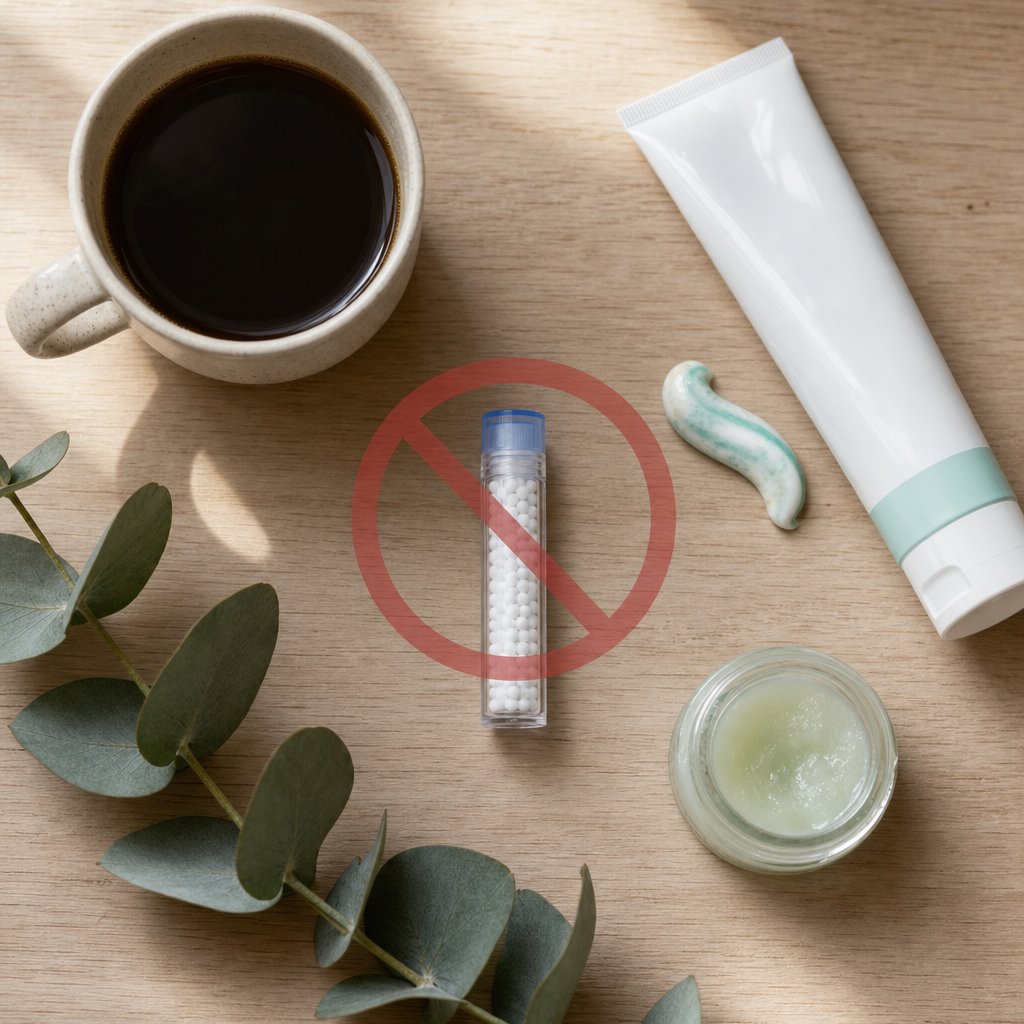
- Mint in all forms - toothpaste, mouthwash, mint gum, peppermint tea, and mint-flavored candies. This is the most frequently cited antidote.
- Coffee - regular, decaf, espresso, instant. It's not the caffeine that's the issue but other compounds in the coffee bean itself.
- Camphor - found in muscle rubs, vapor balms, some lip balms, and certain chest decongestants.
- Eucalyptus - present in cough drops, some mouthwashes, essential oil diffusers, and vapor inhalants.
- Strong essential oils - tea tree, menthol, and other intensely aromatic oils, whether applied topically or inhaled.
- Strongly flavored foods - raw garlic, strong spices, and heavily seasoned dishes consumed immediately around dosing time.
The homeopathic rationale is straightforward: these substances carry strong energetic signatures of their own that may override or confuse the subtle signal of a highly diluted remedy. Dr. Lisa Samet, a naturopathic physician specializing in homeopathy, notes that severe stress, anesthesia, and even brief exposure to strong-smelling substances like essential oils act as fairly universal antidotes regardless of individual sensitivity.
Does this mean you can never drink coffee or brush your teeth? Not at all. Just maintain that 15 to 30 minute window on either side of your dose. Brush your teeth first thing in the morning, wait 15 minutes, then take your arnica. Or take your dose, wait 15 minutes, then have your coffee. It's a scheduling adjustment, not a lifestyle overhaul.
Some people wonder about arnica tea and whether drinking it offers similar benefits. It's worth noting that what is arnica tea good for and the benefits of arnica tea are questions that come up often, but herbal arnica tea is an entirely different product from homeopathic tablets. Arnica tea made from the raw plant carries real toxicity risks and should not be consumed internally. The tablets you're taking are safe precisely because they're diluted far beyond the concentration found in any herbal tea preparation.
Arnica and Blood Thinner Interactions
This is where arnica side effects move from "reduced effectiveness" into genuinely important safety territory. The arnica plant contains coumarin derivatives, specifically scopoletin and umbelliferone, compounds that share a structural relationship with the anticoagulant drug warfarin.
A study published in Evidence-Based Complementary and Alternative Medicine documented cases of INR elevation (a measure of blood-thinning intensity) in patients using arnica products while on warfarin therapy. In one case, a patient taking arnica tablets for muscle pain experienced clinically significant INR elevation after just 10 days. Another patient showed dangerous over-anticoagulation from topical arnica cream alone, suggesting that even external application can introduce enough coumarin compounds to interact with blood thinners.
The interaction between arnica and blood thinners is not theoretical. If you take warfarin, acenocoumarol, heparin, or other anticoagulant medications, using arnica with blood thinners without medical supervision creates a real risk of excessive bleeding. The same caution applies to antiplatelet drugs like aspirin and clopidogrel (Plavix).
The bottom line: anyone on blood-thinning medication must consult their healthcare provider before using arnica in any form, whether tablets, pellets, cream, or gel. This isn't optional caution. It's a clinically documented interaction that can produce serious arnica pills side effects in this population.
Who Should Avoid Arnica Tablets Entirely
Beyond the blood thinner concern, certain groups should skip arnica tablets altogether or use them only under direct medical guidance. Arnica tablets side effects are rare in the general population due to the extreme dilution, but these groups face elevated risk:
- Pregnant and breastfeeding women. One documented case involved a 9-day-old breastfed infant who experienced a significant decrease in red blood cells after the mother consumed arnica extract. Until more safety data exists, avoidance is the prudent choice.
- People with ragweed or Asteraceae family allergies. Arnica belongs to the daisy family. If you react to ragweed, chamomile, marigolds, or chrysanthemums, cross-reactivity is possible even with highly diluted preparations.
- Individuals with inflammatory bowel disease, high blood pressure, or cardiac arrhythmias. These conditions may be aggravated, and the risk-benefit calculation doesn't favor self-treatment.
- Children under 2 years old without practitioner guidance. While many homeopathic products are marketed for children, very young children should only receive remedies under professional direction.
For topical arnica products used alongside your tablets, one additional rule applies: never apply arnica cream or gel to broken skin, open wounds, or areas with active dermatitis. The topical form can cause irritation, rash, and increased pain when applied to compromised skin barriers.
Recognizing what to avoid protects you from undermining your protocol or creating unnecessary risk. The next logical question is how to tell whether your arnica regimen is actually producing results, and when it's time to stop or seek a different kind of help.
Step 6: Monitor Your Results and Know When to Stop
You're dosing correctly, avoiding mint and coffee around your pellets, and keeping your hands off the remedy. But here's the question that lingers after a few days: does arnica work, and how can you actually tell? Unlike popping an ibuprofen and feeling the pain dull within an hour, arnica benefits tend to reveal themselves through what doesn't happen as much as what does. Less swelling than expected. A bruise that shifts from purple to yellow faster than usual. Tenderness that fades a day sooner than your last similar injury.
Tracking your response matters because it tells you when to continue, when to taper off, and when something else entirely might be going on.
Signs That Arnica Tablets Are Working
So what does arnica do when it's doing its job? The signs are subtle but consistent. You won't feel a sudden "kick" the way you would with a conventional painkiller. Instead, look for these indicators over the first 24 to 48 hours:
- Reduced swelling. The area around your injury or surgical site doesn't balloon as much as anticipated. Puffiness peaks lower and resolves faster.
- Faster bruise color progression. A bruise that's working through its color cycle, moving from dark purple to green to yellow, more quickly than you'd expect based on past experience. Arnica can start showing visible bruise reduction within 24 to 48 hours for minor injuries, with more noticeable improvement appearing over 2 to 3 days.
- Decreased tenderness. The area feels less sore to the touch sooner. You might notice you can press lightly on a bruise by day 2 without wincing.
- Less stiffness. Particularly relevant for post-surgical or post-exercise use, joints and muscles regain their range of motion more readily.
- General comfort. Some users report feeling calmer or less "shocked" after trauma, which aligns with how arnica montana is traditionally indicated in homeopathy for the emotional component of physical injury.
These changes are relative. If you've never tracked a bruise's healing timeline before, you might not have a baseline for comparison. A practical tip: take a photo of the affected area each morning. After 3 days, scroll back through the images. The progression often becomes obvious in photos even when it's hard to perceive in real time.
How Long to Continue by Condition
How does arnica work in terms of treatment duration? It depends entirely on what you're using it for. The general principle is simple: continue until you see clear improvement, then stop. Homeopathic remedies aren't meant to be taken indefinitely. They're signals, not supplements.
| Condition | Typical Duration | When to Reassess |
|---|---|---|
| Minor bruises and bumps | 3-5 days | If no visible change by day 3 |
| Acute injuries (sprains, falls) | 5-7 days | If swelling hasn't peaked and begun receding by day 3 |
| Post-surgical recovery (minor procedures) | 5-7 days | If bruising or swelling worsens after day 4 |
| Post-surgical recovery (major procedures) | 10-14 days | If no improvement by day 7 |
| Dental extractions and implants | 4-7 days | If pain intensifies rather than diminishes after day 2 |
| Chronic muscle soreness or stiffness | Up to 2 weeks | If no change after 2 full weeks of consistent use |
For arnica pain relief in acute situations, the first 48 hours are the most telling. If you notice even modest improvement in that window, continue through the full recommended course. If nothing changes at all after 3 to 5 days of consistent dosing, the remedy may not be the right match for your situation, and it's time to reconsider your approach.
One important nuance from homeopathic practice: a brief initial worsening of symptoms (called an aggravation) within the first 24 to 48 hours can actually be a positive sign. It's typically short-lived and often precedes noticeable improvement. If an aggravation lasts longer than 48 hours or feels severe, stop the remedy and consult a practitioner.
When to Stop and See a Doctor
Arnica tablets are a self-care tool, not a substitute for medical evaluation. Knowing when to put the tube down and pick up the phone is just as important as knowing how to take arnica tablets correctly in the first place.
Stop taking arnica and seek medical attention if you experience any of the following:
- A bruise that continues expanding after 48 hours rather than stabilizing
- Swelling that worsens progressively despite consistent dosing
- Signs of infection at a surgical or wound site: increasing redness, warmth, pus, or fever
- Severe or worsening pain that doesn't respond to any intervention
- Numbness, tingling, or loss of function in the affected area
- Bruising that appears spontaneously without any known cause or trauma
- Symptoms of excessive bleeding: nosebleeds, blood in urine or stool, or bleeding gums (especially relevant if you're also taking blood-thinning medications)
- An allergic reaction: hives, facial swelling, difficulty breathing, or widespread rash
These signs suggest something beyond what a homeopathic remedy can address. A bruise that won't stop growing might indicate a clotting disorder. Post-surgical swelling that keeps worsening could signal a hematoma or infection. Arnica is designed to support your body's normal healing process, not override a process that's gone wrong.
Also consider stopping when you've simply reached full resolution. If the bruise is gone, the swelling has disappeared, and you feel no tenderness, there's no reason to keep dosing. Unlike vitamins or supplements, homeopathic remedies aren't maintenance products. Once the job is done, you stop. Continuing past the point of resolution doesn't add benefit and goes against the "minimum dose" principle that homeopathy is built on.
Knowing when your arnica protocol has run its course frees you to focus on the practical side of long-term use: keeping your tablets effective between uses and making sure the product you're reaching for meets real quality standards.

Step 7: Store Properly and Choose Quality Arnica Tablets
Your arnica tablets can sit in a drawer for years and still work exactly as intended, but only if you store them correctly. Homeopathic remedies are remarkably shelf-stable compared to conventional supplements, yet they're also surprisingly sensitive to environmental factors that most people never think about. A bottle tossed into a bathroom cabinet next to essential oils or left on a windowsill in direct sun may lose its effectiveness long before the expiration date arrives.
This final step covers the logistics that keep your remedy potent between uses, how to layer oral and topical arnica for stronger results, and what separates a quality arnica product from one that's just riding the label.
Storage and Shelf Life Best Practices
Homeopathic pellets and tablets are imprinted with their remedy through a liquid dilution applied to a sugar-based carrier. That imprint is stable under normal conditions, but certain exposures can degrade it. Naturopathic practitioners recommend the following storage guidelines to keep remedies effective for years:
- Keep away from strong odors. Store your arnica tablets in a separate location from essential oils, perfumes, cleaning products, camphor-containing balms, and spices. Strong aromatic compounds can penetrate plastic containers and potentially antidote the remedy even while sealed.
- Avoid direct sunlight and heat. A cool, dark drawer or cabinet is ideal. Don't leave tablets on a windowsill, in a hot car, or near a stove. Excessive heat can melt the sugar-based pellets and degrade the remedy coating.
- Store away from electronics and electromagnetic fields. This is a point of debate, but many homeopathic practitioners advise keeping remedies away from cell phones, laptops, microwaves, and Wi-Fi routers. Some families use EMF-shielding bags or boxes for extra protection, though a simple drawer away from electronics works for most people.
- Keep containers tightly sealed. Prolonged air exposure introduces moisture and ambient odors. Always close the cap immediately after dispensing your dose.
- Never transfer pellets into previously used containers. Residual scents from supplements, medications, or foods can contaminate the remedy. Use only the original packaging or brand-new, odor-free containers.
How long do homeopathic arnica tablets actually last? When stored properly, most practitioners consider them effective indefinitely, or at minimum for many years beyond their printed expiration date. The sugar base doesn't spoil in the traditional sense, and the homeopathic imprint remains stable in the absence of antidoting exposures. Manufacturers print expiration dates because regulations require them, but a well-stored remedy from five years ago is generally considered just as viable as one purchased last month.
Traveling with arnica is straightforward. Keep the tube in a toiletry bag away from strong-smelling products. Avoid checking it in luggage that might sit in extreme temperatures in a cargo hold for hours. A carry-on bag at cabin temperature is the safer choice. Airport X-ray machines do not appear to affect homeopathic remedies, though some cautious travelers request a hand inspection.
Combining Tablets with Topical Arnica
Here's a strategy that amplifies your results: use oral arnica tablets and a topical arnica product simultaneously. This dual approach is common practice among surgeons, dermatologists, and homeopathic practitioners, and it makes intuitive sense. The tablets work systemically through sublingual absorption, while a topical arnica cream or arnica ointment delivers concentrated herbal arnica directly to the affected tissue from the outside.
The two forms complement each other rather than duplicating effort. Oral tablets address the body's overall inflammatory response. Topical products like arnicare cream or an arnica salve target the specific site where bruising, swelling, or soreness is concentrated. Think of it as working the problem from both directions at once.
Practical guidelines for combining both forms:
- Apply arnica cream or gel to the affected area 2 to 3 times daily, gently massaging until absorbed.
- Continue your oral tablet protocol on its normal schedule. The two don't interfere with each other.
- Never apply topical arnica to broken skin, open wounds, surgical incisions that haven't closed, or areas with active rash or dermatitis.
- For post-surgical use, wait until your surgeon confirms the incision site is sealed before applying any topical product near it. Use oral tablets alone during the initial healing window.
Among the most popular arnica gel uses is managing bruising after cosmetic injectables, where patients apply the gel directly over filler or Botox injection sites while simultaneously taking oral pellets. Arnica oil is another topical option, though it's less common than cream or gel formulations. The oil format works well for massage into larger muscle groups after intense exercise, while arnica gel and bruising management pairs naturally for more localized injuries where you want quick absorption without a greasy residue.
The arnica cream benefits are well-documented for surface-level bruising and muscle soreness. When you layer this with oral dosing, you're covering both the systemic and local dimensions of recovery. Many patients recovering from facelifts, tummy tucks, or dental implants report that the combination approach produces noticeably faster resolution than either form alone.
What Quality Manufacturing Looks Like
Not all arnica tablets are created equal. The difference between a product that delivers consistent results and one that disappoints often comes down to manufacturing standards you can verify before purchasing. Here's what to look for on the label and behind it:
| Quality Indicator | What It Means | How to Verify |
|---|---|---|
| HPUS designation | Prepared according to Homeopathic Pharmacopoeia of the United States standards | Look for "HPUS" after the active ingredient on the Drug Facts panel |
| GMP-certified facility | Manufactured under Good Manufacturing Practice regulations (21 CFR 210 & 211) | Check for GMP certification from NSF, UL, or equivalent auditors |
| FDA-registered establishment | Facility is registered with FDA and products are listed in the National Drug Code Directory | Search the FDA NDC Directory for the product |
| Clear potency labeling | Specific potency (e.g., 30C, 200C, 30X) is printed on the package | Visible on front label and Drug Facts panel |
| Proper dosing instructions | Label includes dose quantity, frequency, and age-specific guidance | Check the "Directions" section of the Drug Facts panel |
The American Association of Homeopathic Pharmacists (AAHP) outlines that all domestic organizations manufacturing homeopathic drugs must register with the FDA as drug establishments and list their products. HPUS compliance is based on self-certification, meaning manufacturers are responsible for ensuring their products conform to the compendium's monographs for safety, quality, and standardization. FDA inspections verify this compliance, but the initial responsibility falls on the manufacturer.
Beyond regulatory basics, look for additional quality signals: Non-GMO Project verification, gluten-free testing (below 20 ppm), and third-party audits from recognized bodies like NSF or UL. These aren't legally required for homeopathic products, but they indicate a manufacturer that goes beyond minimum compliance.
For brands, supplement importers, or private label sellers exploring the development of their own arnica tablet products, the manufacturing landscape offers flexible pathways. OEM/ODM manufacturers like ZhuFeng provide customized formulation and scalable production across multiple formats, including tablets, hard capsules, and oral liquids, helping nutrition businesses launch market-ready health products without building manufacturing infrastructure from scratch.
Whether you're a consumer choosing between products on a shelf or a brand owner evaluating production partners, the quality markers remain the same: HPUS compliance, GMP-certified facilities, transparent potency labeling, and proper regulatory registration. These aren't marketing buzzwords. They're the infrastructure that ensures the arnica tablet you place under your tongue contains exactly what the label promises, prepared exactly the way homeopathic science requires.
Store your tablets well, pair them with topical application when appropriate, and invest in products backed by verifiable manufacturing standards. These practical details are the final layer that separates a thoughtful arnica protocol from a haphazard one, and they ensure that every dose you take has the best possible chance of doing what you bought it to do.
Frequently Asked Questions About Taking Arnica Tablets
1. Can you swallow arnica tablets with water like regular pills?
No. Arnica tablets should be dissolved under the tongue (sublingually), not swallowed whole with water. The thin tissue beneath your tongue allows direct absorption into the bloodstream through mucous membranes. Swallowing them like conventional medicine bypasses this absorption pathway and may reduce their effectiveness. Place 3 to 5 pellets under your tongue, let them dissolve completely over 1 to 3 minutes, and avoid eating or drinking for 15 minutes before and after your dose.
2. How many days before surgery should I start taking arnica tablets?
Most practitioners recommend starting arnica tablets 2 to 3 days before major surgery and 1 to 2 days before dental procedures or cosmetic fillers. Take 5 pellets of Arnica 30C three times daily during this pre-operative window, then continue the same dose for 5 to 14 days post-surgery depending on the procedure's severity. Always confirm your specific timing with your surgeon, as some providers prefer a longer or shorter lead time based on the procedure type.
3. What is the difference between arnica 30C and 200C potency?
Arnica 30C is a mid-to-high potency suited for standard acute situations like bruises, sprains, dental work, and minor surgeries. Arnica 200C is a very high potency reserved for significant trauma, major surgical recovery, or deep tissue injuries. The 200C potency is typically dosed less frequently because it has a longer duration of action per dose. If you only keep one potency at home, 30C is the most versatile choice for everyday family use.
4. Can I take arnica tablets and use arnica cream at the same time?
Yes, combining oral arnica tablets with topical arnica cream or gel is common practice and recommended by many surgeons and homeopathic practitioners. The tablets work systemically through sublingual absorption while the cream targets the specific injury site externally. Apply the cream 2 to 3 times daily to intact skin while maintaining your oral dosing schedule. Never apply topical arnica to broken skin, open wounds, or unsealed surgical incisions.
5. Does coffee or mint toothpaste cancel out arnica tablets?
In homeopathic practice, strong mint and coffee are believed to antidote remedies by overriding their subtle signal. You do not need to eliminate these entirely from your life, but you should maintain a 15 to 30 minute buffer on either side of each dose. Brush your teeth first, wait 15 minutes, then take arnica. Or take your dose, wait 15 minutes, then have coffee. Camphor, eucalyptus, and strong essential oils should also be avoided within this window.