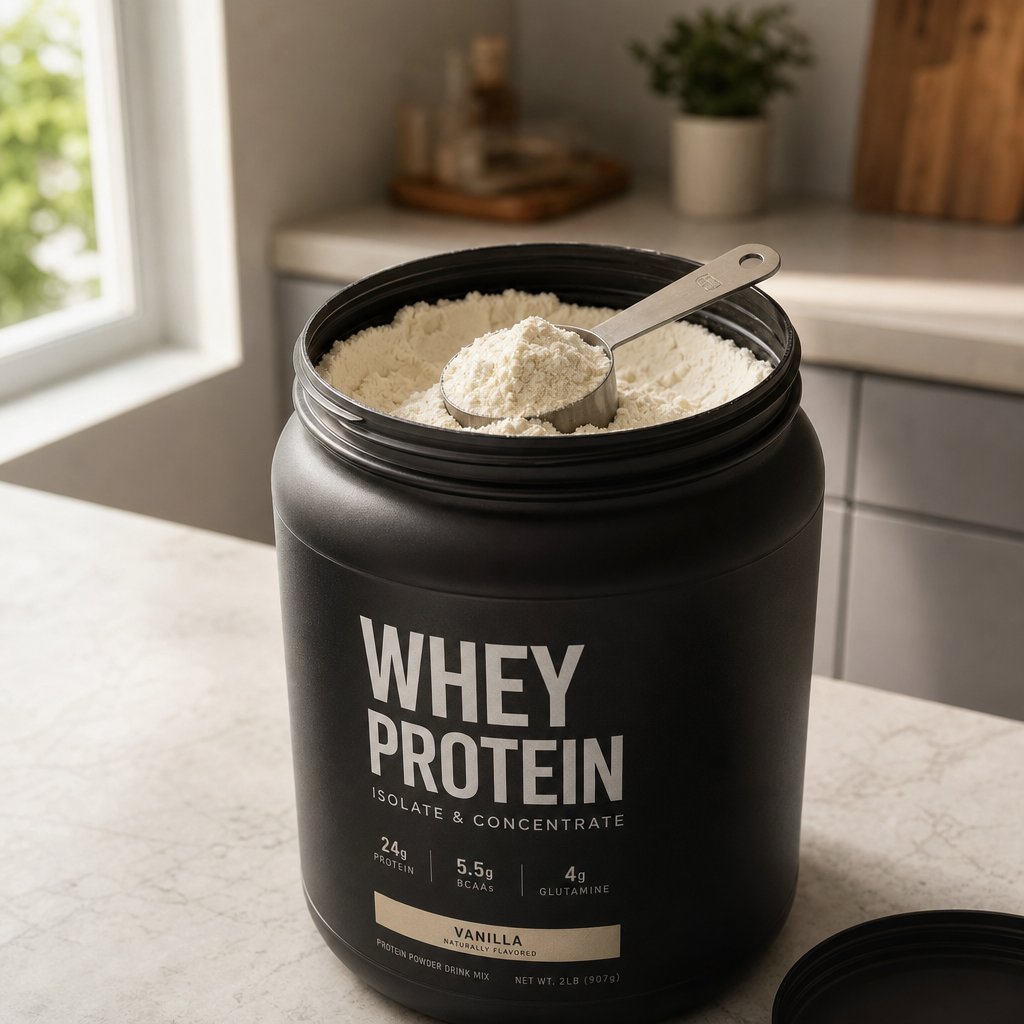
Does Protein Powder Actually Expire or Just Lose Potency
Does protein powder expire? Yes, it does. But that date stamped on your tub probably does not mean what you think it means. Protein powder degrades over time, losing nutritional potency and eventually developing off-flavors or even safety concerns. The catch is that the printed date on most products is a quality marker, not a hard safety deadline. Understanding the difference changes how you handle that half-used container sitting in your pantry.
Yes Protein Powder Expires But Not How You Think
When you ask whether protein powder can expire, the honest answer has layers. The powder does not suddenly become dangerous the day after the printed date. Instead, it undergoes a gradual decline. Amino acids slowly become less bioavailable, fats oxidize, and moisture can invite microbial growth over extended periods. A tub stored in cool, dry conditions may remain perfectly fine for months past its label date, while the same product left near a hot stove could degrade well before that date arrives.
So does protein powder really expire in the way milk or meat does? Not exactly. It is a low-moisture food, which makes it less prone to bacterial growth than perishable items. The real question is not just whether it is safe but whether it still delivers the protein and nutrients you are paying for. That distinction matters more than any single date on the label.
Best By vs Expiration vs Use By Dates Explained
Three types of dates appear on supplement packaging, and they each communicate something different. Here is where most people get confused:
A "best by" date indicates when the manufacturer expects peak flavor and nutritional potency. An "expiration date" suggests the last date the product should be consumed. A "use by" date is the manufacturer's final recommendation for quality. Most protein powders carry a best-by date, not a true expiration date.
The FDA does not require supplement manufacturers to include expiration dates on their products. When companies do print one, they must support it with stability data, but the date typically reflects when potency begins to dip below label claims rather than when the product becomes harmful. This is why do protein powders expire is a more nuanced question than it first appears.
When does protein powder expire in practical terms? That depends on the protein type, how it has been stored, and what additives are in the formula. Throughout this guide, you will learn how to evaluate your specific powder using observable signs, storage history, and science-backed timelines so you can make a confident decision rather than relying on a single printed date.
The Science Behind Protein Powder Going Bad
Protein powder does not spoil the way fresh food does. There is no single moment where it flips from good to bad. Instead, three chemical processes quietly chip away at quality, flavor, and nutritional value from the moment the product is manufactured. Understanding these mechanisms helps you judge whether your powder has simply aged or whether it has genuinely gone off.
Here are the three primary degradation pathways that determine how and when protein powder goes bad:
- The Maillard reaction — amino acids react with residual sugars, reducing bioavailability
- Lipid oxidation — fats in the blend turn rancid, producing off-flavors and harmful byproducts
- Moisture-driven microbial growth — absorbed water enables bacteria and mold to colonize the powder
The Maillard Reaction and Amino Acid Degradation
Imagine a slow-motion version of what happens when you toast bread. The Maillard reaction is a chemical process where amino acids react with residual sugars under heat and humidity. In protein powder, this reaction progresses gradually during storage, causing subtle browning, off-flavors, and a measurable drop in nutritional quality.
The amino acid most vulnerable to this process is lysine. Research published in the Journal of Agricultural and Food Chemistry found that Maillard reaction products like furosine accumulate significantly in whey protein concentrates during processing and storage, with higher levels correlating to greater protein modification. What makes lysine blockage particularly deceptive is that the amino acid still appears on the nutrition label at its original quantity. Chemically, though, it has bonded with sugars and become unavailable for your body to absorb. You are getting fewer usable amino acids than the label promises.
Heat and humidity accelerate this reaction dramatically. A tub stored at room temperature in a dry pantry progresses slowly. The same powder kept in a warm, humid kitchen can protein powder get bad much faster than the printed date suggests.
How Fat Oxidation Affects Protein Blends
Not all protein powders are pure protein. Many blends contain MCT oil, flaxseed, coconut fat, or other lipid-based ingredients for texture and flavor. These fats are sensitive to oxygen and light, and they undergo lipid auto-oxidation — a free-radical chain reaction where unsaturated fatty acids break down into aldehydes, ketones, and other volatile compounds.
You will notice this as a stale, paint-like, or cardboard smell. Beyond unpleasant flavor, lipid oxidation products like malondialdehyde (MDA) can interact with proteins themselves, triggering further structural damage and cross-linking that reduces digestibility. Research confirms that free radicals generated during lipid oxidation attack protein side chains, particularly lysine and cysteine residues, compounding the nutritional losses already caused by the Maillard reaction.
Protein powders with higher fat content — think whey concentrates, mass gainers, or blends with added nut butters — are more susceptible to this pathway than lean isolates or collagen peptides.
Why Bioavailability Drops Before Safety Does
Here is the part that catches most people off guard: can protein powder go bad nutritionally while still being technically safe to consume? Absolutely. The Maillard reaction and oxidation reduce how much usable protein your body actually absorbs long before the powder develops visible mold or dangerous bacterial loads.
This gap between potency loss and safety risk is wide. A powder six months past its best-by date might deliver 10-20% less bioavailable protein while posing no immediate health threat. Both degradation pathways accelerate once you break the seal, because oxygen and ambient moisture fuel the reactions. Every time you open the lid, fresh air enters. Every time a damp scoop goes back in, you are introducing the moisture that drives both Maillard browning and microbial colonization.
The practical takeaway: does protein powder go bad in a way that matters to your goals? Yes, and often sooner than the safety window closes. The type of protein in your tub determines exactly how fast these reactions progress.
How Long Each Type of Protein Powder Lasts
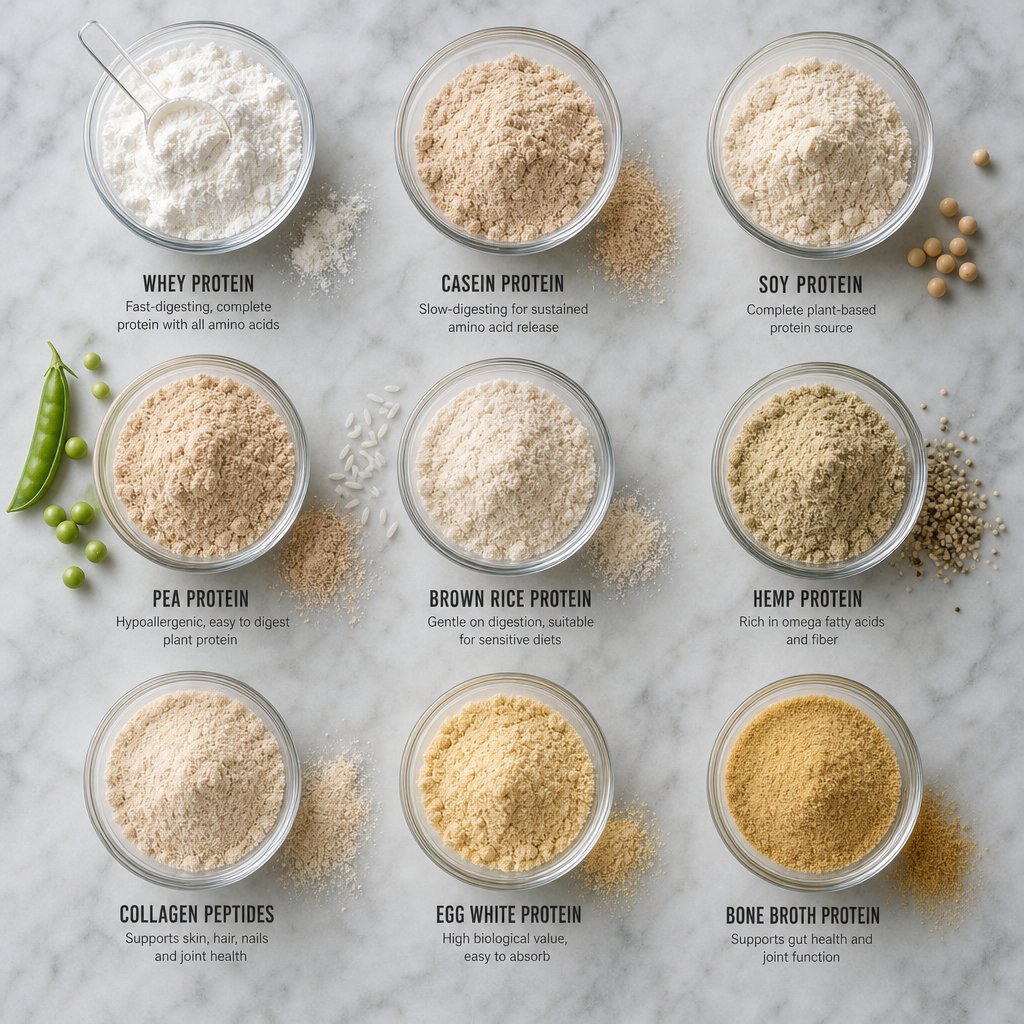
How long does protein powder last? The answer depends almost entirely on what kind of protein is in the tub. Each source carries a different ratio of fat, sugar, and moisture-sensitive compounds, and those ratios dictate how quickly the degradation pathways discussed above take hold. A lean whey isolate and a fat-rich hemp protein do not age at the same rate, even when stored side by side.
Most protein powders carry a printed shelf life of 1 to 2 years from the manufacturing date. Additives like maltodextrin, lecithin, and salt help extend that window, according to Healthline's evidence-based review. But the real-world protein powder shelf life varies significantly by type once you factor in composition and whether the container has been opened.
Whey Concentrate vs Whey Isolate Shelf Life
Does whey protein powder expire faster than other types? It depends on the processing level. Whey concentrate contains anywhere from 30% to 80% protein by weight, with the remainder made up of lactose, fat, and minerals. That higher fat and sugar content gives the Maillard reaction and lipid oxidation more fuel to work with, which shortens the effective shelf life compared to more refined options.
Whey isolate, on the other hand, undergoes additional filtration that strips fat content to less than 1% and virtually eliminates lactose. With fewer reactive substrates available, isolate resists degradation longer. Research in the Journal of Dairy Science found that whey protein stored at room temperature (70°F / 21°C) with moderate humidity maintained stability for at least 18 months. Under less ideal conditions at 95°F (35°C), that window shrank to roughly 9 months.
So how long does whey protein last in practice? Unopened isolate typically holds up for 18 to 24 months, while concentrate is best used within 12 to 18 months. Once opened, both types should ideally be consumed within 3 to 6 months for optimal potency.
Plant-Based and Collagen Protein Longevity
Plant-based proteins like pea and rice are relatively lean and behave similarly to whey isolate in terms of shelf stability. Hemp protein is the outlier here. Its naturally higher fat content, particularly omega-3 and omega-6 fatty acids, makes it more vulnerable to oxidation. You will notice rancid flavors developing sooner in hemp-based powders than in pea or rice varieties.
Collagen peptides tend to have the longest shelf life of any protein powder category. They contain minimal fat, no lactose, and very low residual sugar, which means the Maillard reaction and oxidation have almost nothing to act on. Unopened collagen powders can remain stable for 2 years or more when stored properly.
Egg white protein falls somewhere in the middle. It is naturally low in fat but can contain trace sugars that participate in browning reactions over extended storage. Expect a shelf life comparable to whey isolate when kept sealed and dry.
Opened vs Unopened Timelines by Type
How long is protein powder good for once you crack the seal? Across every type, opening the container introduces oxygen and ambient moisture that accelerate all three degradation pathways. The table below breaks down realistic timelines for each protein source:
| Protein Type | Unopened Shelf Life | Opened Shelf Life | Key Degradation Factor |
|---|---|---|---|
| Whey Concentrate | 12 - 18 months | 3 - 6 months | Higher fat and lactose fuel Maillard reaction and oxidation |
| Whey Isolate | 18 - 24 months | 6 - 9 months | Minimal fat/sugar; oxygen exposure is primary risk |
| Casein | 18 - 24 months | 6 - 9 months | Low fat content similar to isolate; moisture sensitivity |
| Pea Protein | 18 - 24 months | 6 - 9 months | Low fat; stable amino acid profile resists browning |
| Rice Protein | 18 - 24 months | 6 - 9 months | Lean composition; minimal oxidation substrates |
| Hemp Protein | 12 - 14 months | 3 - 5 months | High omega fatty acid content accelerates rancidity |
| Collagen Peptides | 24+ months | 9 - 12 months | Near-zero fat and sugar; extremely low reactivity |
| Egg White Protein | 18 - 24 months | 6 - 9 months | Trace sugars allow slow Maillard browning |
These ranges assume storage at or below room temperature with moderate humidity. If you live in a hot or humid climate, shift every estimate toward the shorter end. Whey protein — how long does it last under poor conditions? Potentially half the timeline listed above.
How long are protein powders good for overall? The pattern is clear: the leaner the protein source, the longer it lasts. Fat and residual sugar are the two biggest liabilities. Knowing your powder's composition gives you a much more accurate shelf life estimate than the printed date alone. But composition only tells part of the story. What happens after you break that seal introduces an entirely different set of variables.
Opened Protein Powder and How Long It Stays Good
You already opened the tub. Maybe it was three weeks ago, maybe four months. The seal is broken, the scoop has been in and out dozens of times, and now you are wondering: how long does protein powder last once opened? The shelf life timelines above assume ideal conditions, but real life rarely cooperates. The moment you peel back that foil seal, a new clock starts ticking.
What Happens After You Break the Seal
An unopened container is a controlled environment. Manufacturers often flush packaging with nitrogen gas to displace oxygen and slow oxidation. Breaking the seal undoes that protection instantly. Every time you open the lid, fresh air rushes in carrying both oxygen and ambient moisture. These two elements fuel every degradation pathway: the Maillard reaction speeds up, fats oxidize faster, and moisture levels creep toward the threshold where microbial growth becomes possible.
Then there is the scoop itself. Reaching in with damp hands or a wet scoop introduces water droplets directly into the powder. Even a small amount of moisture creates localized clumps where bacteria can multiply. Cross-contamination from utensils used elsewhere in the kitchen compounds the risk. That single habit of rinsing your scoop and putting it back without drying it can shave weeks off your powder's usable life.
How long does protein powder last after opening also depends on where you keep it. A tightly sealed tub in a cool, dark pantry behaves very differently from one sitting on the counter next to your stove or dishwasher. Heat radiating from appliances accelerates chemical reactions, and steam from cooking raises the humidity inside a loosely closed container. Research shows that oxidation roughly doubles for every 10°C (50°F) increase in storage temperature, so placement matters more than most people realize.
How Added Ingredients Change the Expiration Equation
Pure protein isolate is relatively stable once opened. But most products on the market are not pure isolate. They contain a cocktail of added ingredients, each with its own vulnerability window. Here is how common additives affect how long protein powder last after opened:
- Probiotics — Live cultures are highly sensitive to heat and moisture. They begin dying off rapidly once the seal is broken, often losing significant viability within 1 to 2 months of opening.
- Creatine — Relatively stable in dry conditions, but creatine monohydrate can convert to creatinine when exposed to moisture, reducing its effectiveness.
- BCAAs (branched-chain amino acids) — Stable on their own, but hygroscopic in nature, meaning they attract moisture from the air and can accelerate clumping throughout the powder.
- Natural flavors and fruit extracts — These contain volatile organic compounds that degrade faster than synthetic alternatives, leading to flavor loss and potential off-notes within weeks of opening.
- MCT oil and added fats — Highly susceptible to oxidation once exposed to air. Powders containing MCT oil or coconut fat can develop rancid flavors in as little as 6 to 8 weeks if stored in warm conditions.
- Digestive enzymes — Enzyme activity declines with heat and humidity exposure, reducing the digestive support they are supposed to provide.
The more complex your powder's ingredient list, the shorter its realistic post-opening window. A simple unflavored whey isolate with no extras can remain good for 6 to 9 months after opening. A flavored blend loaded with probiotics, MCT oil, and natural extracts? You are looking at closer to 2 to 3 months for peak quality.
Practical Storage After Opening
How long is protein powder good for after opening comes down to how well you manage exposure. A few habits make a measurable difference:
Keep the lid sealed tightly after every use. If the original container does not close securely, transfer the powder to an airtight container with a gasket seal. Store it away from heat sources, ideally in a pantry or cabinet where temperatures stay below 75°F (24°C). Keep the scoop dry at all times, or better yet, store it separately outside the tub so it never introduces moisture. If you live in a humid climate, tossing a food-grade silica desiccant packet into the container absorbs ambient moisture before it reaches the powder.
One practical tip that often gets overlooked: write the date you opened the container on the lid with a marker. Memory is unreliable, and knowing exactly how long the tub has been open helps you make a confident call when something smells slightly off three months later. That judgment call, knowing when "slightly off" crosses into "actually spoiled," requires a more specific sensory checklist than most guides provide.
How to Tell If Your Protein Powder Has Gone Bad
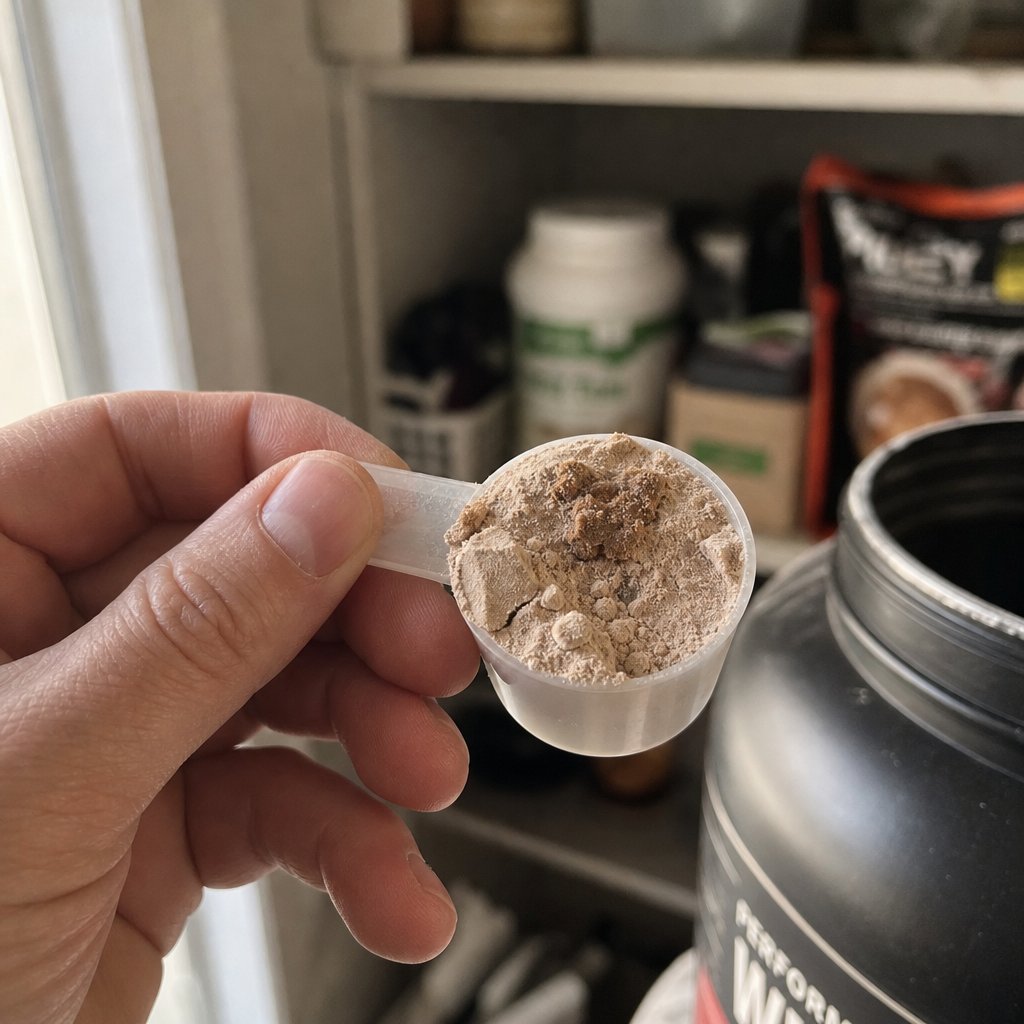
You wrote the opening date on the lid. You stored the tub properly. But something still feels off when you pop the top this morning. Maybe the powder looks different, or there is a faint odor you do not remember from last month. How to tell if protein powder is bad comes down to a systematic sensory inspection rather than guesswork. Your nose, eyes, and fingertips can detect degradation that no printed date will ever communicate.
The following step-by-step sequence moves from the least invasive check to the most direct one. Work through it in order, and stop the moment you hit a clear red flag.
- Open the container and smell the powder from a short distance — do not stir or disturb it first. Initial odors trapped in the headspace are your most honest indicator.
- Visually inspect the surface and sides of the container — look for color changes, spots, or unusual texture on top.
- Scoop a small amount and examine it between your fingers — feel for moisture, grittiness, or hardened chunks.
- Mix a small amount in water and observe how it dissolves — note whether it clumps excessively or leaves residue.
- If everything else passes, taste a tiny amount — this is your final confirmation, not your first test.
Smell Test and What Each Odor Means
Your nose is the most sensitive spoilage detector you have. Different odors point to different degradation pathways, and knowing which smell means what helps you decide whether the powder is merely stale or genuinely unsafe.
Cardboard-like staleness. This flat, papery smell is the hallmark of lipid oxidation. Fats in the blend have broken down into volatile aldehydes, the same compounds responsible for that "old cooking oil" scent. A 2008 study on whey protein storage confirmed that oxidation at elevated temperatures produces these undesirable volatile compounds. Powder with a mild cardboard note is past its prime nutritionally but not necessarily dangerous. Strong cardboard or paint-like sharpness, however, signals advanced rancidity.
Sour or ammonia-like notes. These indicate bacterial or enzymatic activity. Moisture has entered the powder and microorganisms are breaking down amino acids, releasing byproducts that smell acidic or sharp. If you detect ammonia, the powder has crossed from "declining quality" into potential safety concern territory.
Chemical or paint-thinner smell. This is advanced oxidation at its worst. The volatile aldehydes have concentrated to the point where the odor is unmistakably chemical rather than merely stale. Outdated protein powder with this smell should be discarded immediately, no further testing needed.
A useful baseline: open a fresh container of the same product and compare. If you cannot do that, recall what the powder smelled like when you first bought it. Any dramatic departure from that original scent is meaningful.
Visual and Texture Warning Signs
After the smell check, look closely at the powder itself. Color and texture changes reveal what has been happening inside the container over time.
Color shifts. Yellowing or browning in whey protein is a visible marker of the Maillard reaction. The amino acids have been reacting with residual sugars, and the browning you see correlates directly with reduced bioavailability. In plant-based proteins, look for darkening beyond the original shade. Any visible spots of green, white, or black indicate mold colonization. Mold can appear as fuzzy patches on the surface or as small specks scattered throughout. Even a single mold spot means the entire container is compromised, because spores spread invisibly through fine powder.
Clumping and hardening. Soft clumps that break apart easily with a spoon suggest minor moisture absorption. The powder may still be usable if it passes the smell test. Hard, rock-like chunks that resist pressure mean significant water has penetrated the product. These dense clumps create microenvironments where bacteria thrive. If you find hardened sections, especially near the bottom or sides of the container, the powder has been exposed to sustained humidity.
Dissolution behavior. Mix a small scoop into water. Fresh protein powder disperses relatively smoothly with some shaking or stirring. Out of date protein powder that has degraded often refuses to dissolve properly, leaving gritty sediment, floating clumps, or a filmy layer on top of the liquid. This happens because cross-linked proteins from oxidation and Maillard browning lose their solubility.
The Taste Check as a Last Resort
If the powder passes the smell and visual inspections but you still have doubts, a small taste test can confirm or rule out spoilage. This is your final checkpoint, not your starting point. Only proceed here if nothing alarming showed up in the earlier steps.
Bitter or soapy flavor. This is the taste equivalent of oxidation. Rancid fats produce bitter compounds, and degraded proteins can develop a soapy quality that was not present when the product was fresh. Expired whey protein commonly develops this bitterness as lysine undergoes Maillard browning and fats break down simultaneously.
Loss of sweetness or flavor fading. If your chocolate protein powder suddenly tastes like vaguely flavored chalk, the natural or artificial sweeteners and flavor compounds have degraded. This is not dangerous on its own, but it signals that the product is well past peak quality. As food scientists note, a cardboard-like taste is a telltale sign of Maillard browning in action.
Metallic aftertaste. A tinny or metallic sensation on the tongue can indicate advanced oxidation of mineral-fortified powders or interaction between degraded fats and trace metals in the formula. It is unpleasant and a clear sign the product should be replaced.
Sour tang. Any unexpected acidity, particularly in dairy-based powders, points to microbial activity. Bacteria produce lactic acid and other organic acids as metabolic byproducts. If the powder tastes sour, stop consuming it.
How to know if protein powder is bad ultimately comes down to trusting your senses over the printed date. A powder that looks, smells, and tastes normal two months past its best-by date is almost certainly fine. A powder that triggers any of the warning signs above, even if the date has not passed yet, deserves to go in the trash. Spoilage does not wait for calendar permission.
Recognizing these signs is one thing. Understanding what they actually mean for your health, whether a stale-smelling powder will just taste bad or could genuinely make you sick, requires a closer look at the safety side of the equation.
Is Expired Protein Powder Safe to Consume
A stale smell or faded flavor tells you something has changed inside the tub. But the question most people actually want answered is more direct: can you drink expired protein powder without getting sick? The answer splits into two very different scenarios, and confusing them is where real risk enters the picture.
Past the Date vs Actually Spoiled
These two situations look similar on the surface but carry completely different risk profiles. Expired protein powder that has been stored properly in a cool, dry environment and shows no sensory warning signs is almost certainly safe to consume. You are likely getting reduced nutritional value, fewer bioavailable amino acids, and diminished flavor, but you are not putting your health in danger. A 2016 review on food protein stability confirms that protein powders are low-moisture foods, making them inherently resistant to bacterial colonization under proper storage conditions.
Protein powder that shows visible signs of spoilage, regardless of what the date says, is a different matter entirely. Clumping from moisture intrusion, mold spots, sour odors, or an expanded container all indicate that biological or chemical processes have compromised the product beyond simple potency loss. Is expired protein powder safe in this condition? No. The degradation has moved past nutritional decline into territory where harmful organisms or their byproducts may be present.
The date on the label tells you when quality may decline. Your senses tell you when safety has been compromised. Trust the evidence in front of you over the number printed on the packaging.
Can you use expired protein powder that passed every sensory check? In most cases, yes, with the understanding that you are trading some potency for practicality. Can you consume expired protein powder that failed even one of those checks? That gamble is not worth the savings.
Health Risks From Contaminated Protein Powder
When protein powder genuinely spoils, the health consequences range from uncomfortable to serious. Here is what can happen when moisture, heat, or time push a product past the point of safe consumption:
Bacterial contamination. Dairy-based powders like whey and casein carry a small but real risk of harboring Salmonella or E. coli if moisture levels rise high enough to support bacterial growth. These pathogens cause symptoms including severe cramping, diarrhea, vomiting, and fever. While protein powder's low water activity makes this uncommon, a tub that has absorbed significant humidity or had wet utensils repeatedly introduced becomes a viable growth medium.
Mycotoxins from mold. Visible mold is only the surface indicator. Mold colonies produce mycotoxins, toxic secondary metabolites that persist even after the visible growth is removed. Aflatoxins and ochratoxin A are among the most concerning, with potential effects on liver function and immune response over repeated exposure. You cannot scoop around mold and assume the rest is clean. Spores and toxins distribute invisibly through fine powder.
Digestive distress. Even without full-blown pathogenic infection, drinking expired protein powder that has undergone significant oxidation or microbial activity commonly triggers bloating, gas, nausea, and diarrhea. The degraded proteins and rancid fats irritate the gastrointestinal lining, and your body responds by trying to expel the offending material quickly.
Higher risk for vulnerable populations. Immunocompromised individuals, including those undergoing chemotherapy, managing autoimmune conditions, or recovering from surgery, face amplified risk from any of the above. Their systems cannot neutralize low-level bacterial contamination the way a healthy immune system can. For these individuals, is it safe to drink expired protein powder even slightly past date? The conservative answer is to stick strictly within the labeled window and discard anything questionable.
What FDA Regulations Actually Require
Understanding the regulatory landscape helps explain why the burden of judgment falls on you rather than on a government agency. The FDA classifies protein powder as a dietary supplement, not a pharmaceutical or conventional food. This distinction carries significant implications for expiration dating and safety oversight.
Manufacturers are not required to print expiration dates on supplement labels. When they voluntarily include a "best by" or expiration date, they must have stability data supporting that claim, but the FDA does not independently verify or approve those dates before the product reaches shelves. Unlike drugs, which undergo rigorous pre-market testing and must demonstrate safety and efficacy, dietary supplements operate under a post-market enforcement model. The FDA steps in only after a problem is reported, not before.
What manufacturers are required to do is follow current Good Manufacturing Practices (cGMP), which govern identity, purity, strength, and composition during production. They must also report serious adverse events. But no regulation guarantees that a protein powder remains safe or potent beyond its labeled date, because no agency is testing it at that point.
The practical implication: the date on your tub represents the manufacturer's promise that the product meets label claims for potency up to that point. After that date, you are on your own. The powder might be perfectly fine for months, or it might have degraded faster than expected due to storage conditions the manufacturer could not control. This is exactly why proper storage is not just a suggestion but your primary line of defense against both potency loss and genuine spoilage.
Storage Tips That Actually Extend Protein Powder Shelf Life
"Cool and dry place" is the advice printed on every tub, and it is technically correct. It is also vague enough to be nearly useless. Your kitchen, garage, and bathroom cabinet are all "places," but they create wildly different environments for a powder that reacts to heat, humidity, and light. How long can protein powder last depends less on the product itself and more on the conditions you create around it after purchase.
Climate and Humidity Impact on Shelf Life
Humidity is the silent accelerator most people underestimate. When ambient humidity rises above 65%, moisture migrates through packaging seals and into the powder itself, even in containers that appear tightly closed. That absorbed moisture fuels clumping, Maillard browning, and microbial growth simultaneously. If you live in a coastal or subtropical climate, your powder is aging faster than the same product stored in an arid region, full stop.
Hot kitchen environments compound the problem. That cabinet above your stove? It regularly hits 90 to 100°F when you cook. The shelf next to your dishwasher radiates steam every cycle. These micro-climates slash shelf life dramatically. Research confirms that oxidation doubles for every 10°C (50°F) increase in temperature, so a powder stored at 95°F degrades roughly twice as fast as one kept at 70°F.
Garage gyms present a unique challenge. Temperature swings from morning to afternoon can span 30 to 40 degrees in a single day, and seasonal extremes push that range even wider. These fluctuations cause condensation inside the container as air warms and cools repeatedly. How long does it take for protein powder to expire under these conditions? Significantly less time than the label suggests. If your gym is in an uninsulated garage, bring the powder inside after each session.
Best Storage Containers and Practices
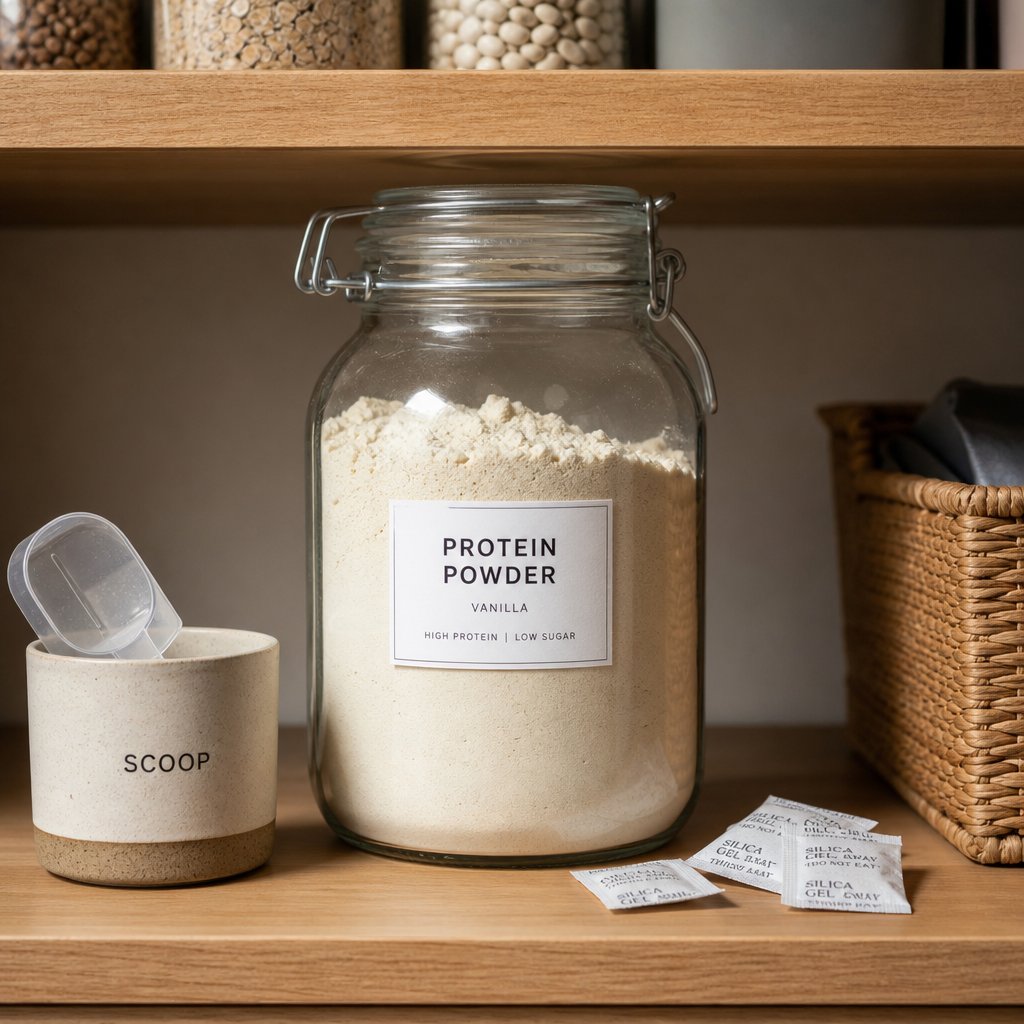
The original tub works fine if it seals tightly and you keep it in the right spot. But many bags and budget containers have weak zip seals that gap after repeated use. When that happens, transferring the powder to a secondary airtight container with a gasket or latch lid makes a measurable difference.
Here is a checklist of storage practices that genuinely extend usable life:
- Use an airtight container — glass jars with rubber gaskets or thick BPA-free plastic with locking lids. Ensure the seal is flush with no gaps.
- Add food-grade silica gel packets — these desiccant packs absorb ambient moisture before it reaches the powder. Replace them every few months.
- Store the scoop outside the tub — keeping it in a separate clean bag or container eliminates the risk of introducing moisture or cross-contamination every time you reach in.
- Keep the container away from direct sunlight — UV light accelerates oxidation of both fats and certain vitamins. A dark pantry or opaque container solves this.
- Choose a location below 75°F (24°C) with stable temperature — interior closets, lower kitchen cabinets away from appliances, or a dedicated pantry shelf all work well.
- Minimize how often you open the container — each opening introduces fresh oxygen and humidity. If you use protein powder daily, consider portioning a week's supply into a smaller jar and keeping the main container sealed.
When Refrigeration Helps and When It Hurts
Refrigeration sounds logical. Cold slows chemical reactions, so putting protein powder in the fridge should extend its life, right? Sometimes. But the answer is more conditional than most people expect.
In consistently humid climates where room temperature storage means constant moisture exposure, refrigeration can help by lowering the ambient humidity around the container. The key word is "consistently." If you take the container out of the fridge to scoop, then put it back, the temperature cycling creates condensation on the inside of the lid and walls. That condensation drips into the powder, introducing exactly the moisture you were trying to avoid. Sudden temperature changes encourage condensation within the packaging and may lead to spoilage faster than room-temperature storage would.
So how long does whey last in the fridge under ideal conditions? If you commit to keeping it refrigerated permanently without cycling it in and out, cold storage can add a few extra months to the opened timeline. But if you are pulling it out daily for your morning shake and returning it, you are likely doing more harm than good. For most people, a cool, dry pantry with proper sealing outperforms the fridge.
The exception: single-serve packets or pre-portioned amounts stored in sealed bags inside the fridge. These never get opened and resealed repeatedly, so condensation is not a factor. If you want the cold-storage benefit without the moisture risk, portion your powder into individual servings and refrigerate those instead of the whole tub.
Storage is the variable you control after purchase. But the longevity of your protein powder was partially determined before it ever reached your shelf, during the manufacturing process itself. How a product is produced, packaged, and preserved at the factory level sets the ceiling for how long any storage strategy can keep it viable.
How Manufacturing Quality Affects Protein Powder Longevity
Everything discussed so far, the degradation pathways, the storage strategies, the sensory checks, operates within a ceiling that was set long before the product reached your shelf. That ceiling is determined at the factory. Two tubs of whey isolate with identical nutrition labels can age at completely different rates depending on how they were manufactured, packaged, and preserved during production. Does whey protein expire at the same rate across all brands? Not even close.
How Nitrogen Flushing and Packaging Preserve Freshness
Oxygen is the primary enemy of shelf stability. It drives lipid oxidation, accelerates Maillard browning, and supports aerobic microbial growth. The most effective countermeasure happens before the container ever leaves the production line: nitrogen flushing.
This process displaces the oxygen inside packaging with inert nitrogen gas just before sealing. Because nitrogen does not react with proteins, fats, or flavor compounds, it creates a chemically neutral atmosphere that dramatically slows degradation. According to packaging research from Levapack, nitrogen-flushed protein powder can maintain optimal freshness for 24 to 36 months or more, compared to just 12 to 24 months for standard sealed tubs that trap residual air inside.
Packaging material matters just as much as what fills the headspace. Consider the differences:
- Opaque containers — block UV light that accelerates fat oxidation and vitamin degradation. Dark or metallic packaging outperforms clear plastic every time.
- Multilayer barrier films — use EVOH or metallized layers to prevent moisture and oxygen from permeating through the walls over time, even when sealed.
- Single-serve sachets — eliminate repeated air exposure entirely. Each serving stays sealed until use, removing the opened-container variable from the equation.
- Large tubs with inner foil seals — provide initial protection but lose their advantage the moment you break the seal and begin daily scooping.
The takeaway: can whey protein go bad faster in a clear plastic bag with a weak zip seal than in a nitrogen-flushed opaque canister? Absolutely. The packaging format is not just marketing. It is a functional preservation system.
Why Manufacturing Quality Determines Real Shelf Life
Beyond packaging, the production process itself bakes longevity into the product or undermines it from day one.
Spray-drying temperature control. Protein powder is created by spray-drying liquid protein into fine particles. The temperature during this step matters enormously. Too much heat denatures proteins excessively and can trigger early-stage Maillard reactions before the product even reaches a container. Manufacturers with precise temperature control produce powder that starts its shelf life in better structural condition, meaning it takes longer to degrade to the point where you notice changes.
Moisture content at packaging. Water activity levels in the finished powder should remain below 0.6 to inhibit microbial growth. Facilities with tight environmental controls, dehumidified production rooms, and accurate moisture testing at the batch level consistently hit this target. Budget operations with less controlled environments may package powder with slightly elevated moisture, giving degradation a head start.
Preservative and stabilizer strategies. Ingredients like tocopherols (vitamin E), rosemary extract, and sunflower lecithin serve dual purposes: they function as antioxidants that slow lipid oxidation while also improving mixability. Their inclusion is a deliberate shelf-life decision made during formulation, not an afterthought.
Does whey protein powder go bad faster from a manufacturer cutting corners on any of these steps? Yes. And you often cannot tell the difference at the point of purchase. The powder looks and tastes identical on day one. The gap reveals itself six or twelve months later when one product still mixes cleanly and the other has gone cardboard-stale.
Choosing Protein Powder Built to Last
Third-party testing and quality certifications are your best proxy for manufacturing rigor when you cannot tour the facility yourself. Look for indicators like:
- GMP (Good Manufacturing Practices) certification — confirms the facility follows standardized protocols for cleanliness, equipment calibration, and batch consistency.
- Third-party lab testing — organizations like NSF International or Informed Sport verify that what is on the label matches what is in the tub, and that contaminant levels fall within safe limits.
- HACCP compliance — indicates the manufacturer has identified and controls critical hazard points throughout production.
- Batch tracking and lot coding — allows traceability and suggests a level of quality infrastructure that correlates with better shelf stability outcomes.
Can whey protein powder go bad even from a top-tier manufacturer? Eventually, yes. But products from facilities with rigorous quality control, proper batch testing, and nitrogen-flushed packaging consistently outlast budget alternatives stored under identical conditions. You are paying for time as much as you are paying for protein.
For brands and private label sellers developing their own protein powder products, this manufacturing discussion is not academic. It is the difference between customer complaints about clumpy, off-tasting powder and a product that holds up through its entire shelf life. Choosing the right production partner determines whether your product reaches consumers with maximum stability built in from the start. OEM/ODM manufacturers like ZhuFeng offer GMP-compliant facilities with scalable powder and granule production, customized formulation, and the kind of controlled processing environment that translates directly into longer real-world shelf life for finished products.
Manufacturing sets the ceiling. Storage determines how close you stay to it. But when both factors align, protein powder can remain viable well beyond what most people assume, which raises a practical final question: what should you actually do with the tub sitting in your pantry right now?
What to Do With Your Expired Protein Powder Now
You have the science, the storage knowledge, and the sensory checklist. The tub is in front of you. Can i use expired protein powder, or is it time to let go? The answer depends on which of three scenarios matches what you are seeing, smelling, and feeling right now.
Use It or Toss It Decision Framework
How long is protein powder good for after expiration date in practical terms? Run through this decision tree to find your answer:
- Past the date but looks, smells, and tastes normal. If your powder passes every sensory check from the previous section, is it ok to use expired protein powder? Generally, yes. You are likely getting reduced potency, perhaps 10 to 20% fewer bioavailable amino acids, but no safety concern. Use it within a few additional months and increase your serving size slightly to compensate for the decline. This applies even if the product is several months past its best-by date, provided storage conditions were solid.
- Showing early degradation signs. Mild clumping that breaks apart easily, a faint staleness, or slightly muted flavor all signal the powder is declining but has not crossed into dangerous territory. Can i drink expired protein shake powder in this condition? It depends on how far past the date you are and your personal risk tolerance. A few weeks past with minor clumping is different from protein powder 2 years out of date with noticeable off-notes. If you are immunocompromised or the product is well beyond its window, err toward discarding it.
- Clear spoilage indicators present. Mold spots, ammonia or chemical odors, hardened chunks, sour taste, or visible discoloration mean the product is done. Does out of date protein powder still work at this stage? No, and consuming it risks digestive distress or worse. Discard immediately regardless of how much remains in the container.
Creative Ways to Repurpose Declining Protein Powder
Powder that has lost potency but shows no spoilage signs does not have to go straight into the trash. A few practical alternatives:
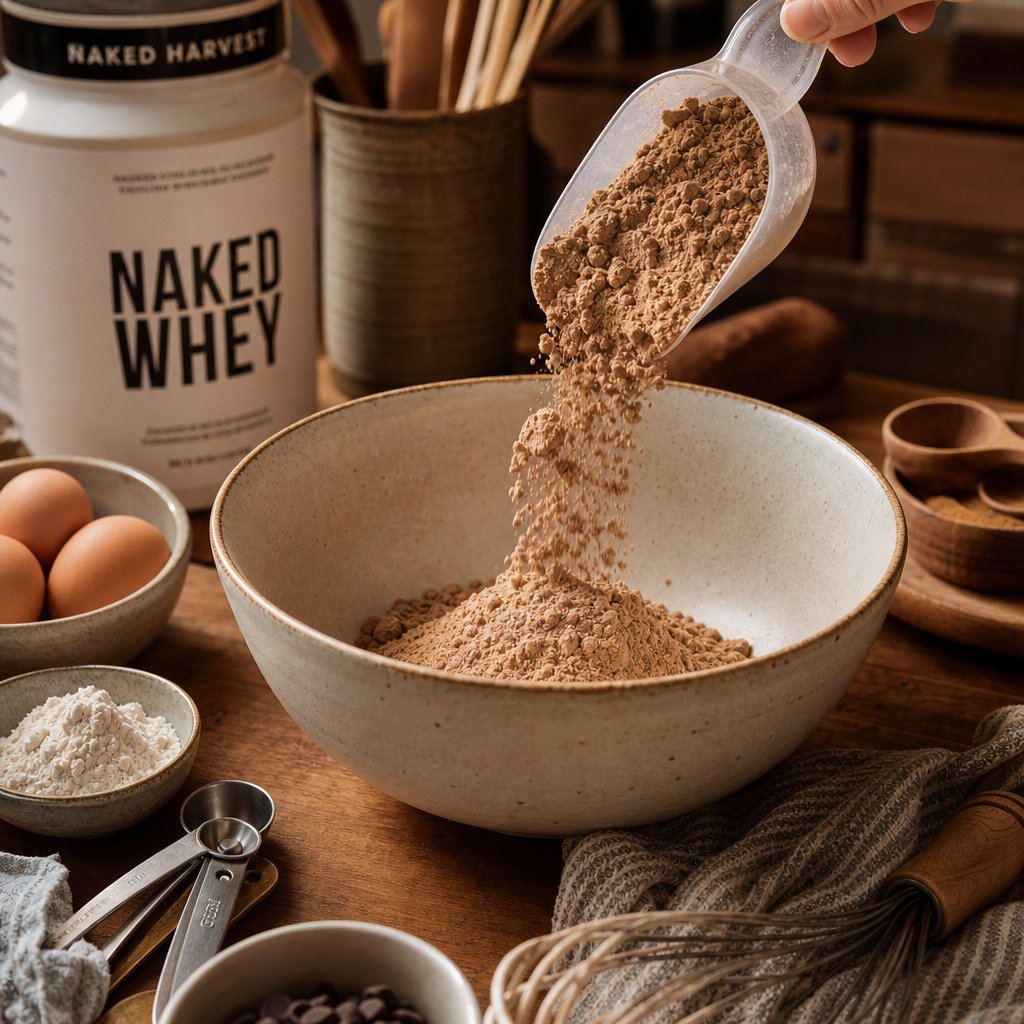
- Baking — protein pancakes, muffins, and energy bars all involve heat that denatures protein anyway. Reduced bioavailability matters less when the powder is one ingredient among many rather than your primary protein source.
- Pet food supplement — small amounts of unflavored, unsweetened protein powder can be mixed into dog food for an amino acid boost. Check with your veterinarian first, especially regarding artificial sweeteners like xylitol, which is toxic to dogs.
- Composting — protein powder breaks down readily in compost bins, adding nitrogen to the mix. Avoid composting flavored varieties near edible gardens if you are concerned about artificial additives leaching into soil.
When to Invest in Fresh Protein Powder
How long can you use protein powder after expiration date before it stops being worth the effort? Once you are compensating with larger scoops, masking off-flavors with extra ingredients, or questioning safety every morning, the cost-benefit has flipped. Fresh powder from a reputable brand delivers full potency, clean flavor, and peace of mind.
Is it ok to use out of date protein powder indefinitely just because it passes a smell test? Not really. Quality only moves in one direction. When you replace your tub, choose products from brands that prioritize manufacturing rigor: nitrogen-flushed packaging, GMP-certified facilities, and third-party testing. These factors determine how long your next purchase stays at peak quality. For readers who are brand owners or supplement entrepreneurs looking to develop protein products with optimized shelf stability from day one, production partners like ZhuFeng offer customized formulation and quality-controlled manufacturing designed to maximize real-world longevity.
The bottom line: trust your senses over the printed date, use the decision framework above to make a confident call, and when in doubt, a fresh tub is always the smarter investment than a gamble on declining powder.
Frequently Asked Questions About Protein Powder Expiration
1. Can you get sick from drinking expired protein powder?
It depends on whether the powder is simply past its best-by date or genuinely spoiled. Protein powder that has been stored properly and passes a smell, visual, and taste check is unlikely to make you sick, though it may deliver fewer bioavailable amino acids. However, powder showing mold, ammonia-like odors, hardened chunks, or sour flavors can harbor bacteria like Salmonella or E. coli, and mycotoxins from mold growth. These can cause cramping, nausea, diarrhea, and more serious issues for immunocompromised individuals. Always trust your senses over the printed date.
2. How long is protein powder good for after the expiration date?
Properly stored protein powder can remain safe for several months beyond its best-by date, though potency gradually declines. Whey isolate and collagen peptides tend to hold up longest due to their low fat and sugar content. As a general guideline, unopened powder in cool, dry conditions may stay usable 3 to 6 months past the date, while opened powder should be evaluated more carefully using sensory checks. The key degradation factors are heat, humidity, and oxygen exposure rather than the calendar date alone.
3. Does protein powder need to be refrigerated after opening?
Refrigeration is not required for most protein powders and can actually backfire if done incorrectly. Taking the container in and out of the fridge causes temperature cycling that creates condensation inside the tub, introducing the very moisture that accelerates spoilage. A cool, dry pantry below 75 degrees F with a tightly sealed container is more effective for most climates. Refrigeration only helps if you commit to keeping the powder cold permanently or pre-portion servings into sealed bags stored in the fridge without repeated opening.
4. What is the best way to store protein powder to make it last longer?
Use an airtight container with a gasket seal, store it away from heat sources and direct sunlight, and keep the scoop outside the tub to prevent moisture introduction. Adding food-grade silica gel packets absorbs ambient humidity before it reaches the powder. Choose a storage location with stable temperatures below 75 degrees F, such as an interior pantry or lower cabinet away from stoves and dishwashers. Minimizing how often you open the container also reduces oxygen and moisture exposure with each use.
5. Does the type of protein powder affect how quickly it expires?
Yes, composition directly determines shelf life. Whey concentrate expires faster than whey isolate because its higher fat and lactose content fuels oxidation and Maillard browning. Hemp protein is particularly vulnerable due to its omega fatty acids, often developing rancidity within 3 to 5 months of opening. Collagen peptides last longest because they contain almost no fat or sugar for degradation reactions to act on. Plant proteins like pea and rice fall in the middle with stability similar to whey isolate when stored properly.