Do Fish Oil Tablets Actually Expire
Yes, fish oil tablets expire. Every bottle has a finite window of potency, and once that window closes, the omega-3 fatty acids inside begin losing their effectiveness. But here is what most guides get wrong: they treat all fish oil products as if they degrade the same way. They don't. A compressed fish oil tablet behaves differently from a liquid-filled softgel or a bottle of pourable oil, and understanding that distinction is the key to knowing whether the tablets in your cabinet are still worth taking.
The Short Answer About Fish Oil Tablet Expiration
Fish oil tablets — the solid, compressed-powder form containing omega-3 concentrate — carry a manufacturer-assigned shelf life, typically ranging from 18 to 36 months from the date of production. That date represents the point at which the manufacturer guarantees full labeled potency. After it passes, the product doesn't suddenly become dangerous, but its omega-3 content may have declined enough to reduce the health benefits you're counting on.
Does fish oil expire in a way that matters? Absolutely. Unlike shelf-stable vitamins such as vitamin C or B12, omega-3 fats are highly susceptible to oxidation — a chemical breakdown triggered by oxygen, light, and heat. This makes expired fish oil a fundamentally different concern than an expired multivitamin. The fats don't just lose strength; they can turn rancid, producing off-flavors and potentially harmful breakdown compounds.
Fish oil tablets typically carry a shelf life of 18-36 months from manufacture, but actual potency loss depends on form, storage, and formulation quality. The expiration date is a potency guarantee, not a binary safety switch.
Why Tablets Deserve Their Own Discussion
Most fish oil content online lumps tablets, softgels, and liquids into one category. That's a problem. Fish oil tablets use compressed powder bound with omega-3 concentrate, which means the oil is distributed within a solid matrix rather than sitting as a free liquid inside a gelatin shell. This structural difference changes how air and moisture interact with the fatty acids over time.
Softgels encapsulate liquid oil inside a sealed gelatin barrier, offering a partial oxygen shield. Liquid fish oil, once opened, exposes a large surface area directly to air. Tablets sit somewhere in between — the binding agents and compressed structure limit direct oil-to-air contact, but they can also introduce variables like moisture absorption that affect stability in their own way. Research confirms that product form is a critical factor for oxidative stability, with capsulated forms generally showing better protection against rancidity than open-air formats during storage.
Can fish oil expire faster in one form than another? Yes, and that's exactly why expired fish oil tablets need to be evaluated on their own terms. In the sections ahead, you'll learn how to read the dates on your bottle, spot the sensory signs of rancidity, and store your tablets so they stay fresh as long as possible.
How Fish Oil Form Affects Shelf Life and Stability
Not all fish oil products age at the same rate. The physical format — whether it's a compressed tablet, a liquid-filled softgel, a pourable oil, or a chewy gummy — determines how much oxygen reaches the omega-3 fats inside and how quickly degradation takes hold. If you've ever wondered whether do fish oil capsules expire at the same pace as tablets or bottled oil, the answer is no. Each delivery system creates a unique microenvironment around those fragile fatty acids, and that environment dictates fish oil shelf life from day one.
Tablets vs. Softgels — Key Structural Differences
Imagine two different containers for the same oil. A fish oil tablet is a compressed matrix — omega-3 concentrate blended with binding agents, fillers, and sometimes a protective coating, then pressed into a solid form. The oil is dispersed throughout the powder rather than pooled as a free liquid. This means there's no single large pocket of exposed fat, but the trade-off is that binding agents can introduce moisture or interact chemically with the omega-3s over time.
A softgel, by contrast, encapsulates liquid oil inside a sealed gelatin shell. The gelatin acts as a semi-permeable barrier, slowing oxygen transfer to the fill. Research published in the Journal of Nutritional Science found that encapsulated, unflavoured fish oil products had significantly lower secondary oxidation and total oxidation (TOTOX) levels compared with bulk oils and flavoured products. That gelatin shell isn't just packaging — it's a functional oxygen buffer that directly extends usable life.
Can fish oil pills expire more slowly in softgel form? Structurally, yes. The one-step encapsulation process injects oil from a closed tank directly into the capsule at low temperature, minimizing air contact during manufacturing. Tablets require additional processing steps — blending, granulation, compression — each introducing brief oxygen exposure that can initiate early-stage oxidation before the product even reaches the shelf.
How Each Form Factor Handles Oxidation
Oxidation vulnerability comes down to one core question: how much surface area is exposed to oxygen, and for how long? Here's how each format stacks up:
| Form Factor | Typical Shelf Life (Unopened) | Oxidation Vulnerability | Storage Sensitivity |
|---|---|---|---|
| Compressed Tablets | 18-30 months | Moderate — oil dispersed in solid matrix limits pooled exposure, but binding agents may absorb moisture | Moderate — sensitive to humidity more than other forms |
| Softgels (Unflavoured) | 24-36 months | Low to moderate — gelatin shell provides partial oxygen barrier; sealed environment protects fill | Moderate — heat can soften shell and compromise seal integrity |
| Enteric-Coated Softgels | 24-36 months | Low — additional coating layer further reduces oxygen permeation | Low to moderate — coating adds protection but is heat-sensitive |
| Liquid Oil (Bottled) | 12-24 months (6-8 weeks once opened) | High — large surface area directly exposed to air each time bottle is opened | High — light, heat, and repeated air exposure accelerate rancidity |
| Gummies | 12-24 months | High — sugar matrix, flavourings, and large surface area increase vulnerability; testing is difficult | High — heat causes melting; humidity degrades texture and potency |
The data pattern is clear. Encapsulated forms — particularly unflavoured softgels — consistently show the lowest oxidation markers. The Canadian study of 171 over-the-counter omega-3 supplements found that 50% of products tested exceeded voluntary oxidation safety limits, but unflavoured softgels performed significantly better than bulk oils and flavoured alternatives. Children's products, often delivered as flavoured liquids or gummies, showed the highest oxidation levels across all categories.
Tablets occupy a middle ground. Their solid structure prevents the rapid surface-area exposure you get with liquid oil, but they lack the sealed, oxygen-limited environment of a softgel. The binding agents used in compression — starches, cellulose derivatives, or silica — can absorb ambient moisture, and that moisture accelerates oxidative reactions within the matrix over time.
Which Format Lasts Longest Unopened
When you're comparing do fish oil pills expire faster in one form versus another, enteric-coated softgels generally hold the advantage for unopened shelf life. The dual-layer protection — gelatin shell plus acid-resistant coating — creates the most robust barrier against environmental oxygen. Standard unflavoured softgels come in a close second.
Liquid fish oil, despite often containing added antioxidants like vitamin E or rosemary extract, has the shortest practical lifespan once the seal is broken. Every time you unscrew the cap, fresh oxygen floods the headspace above the oil. Even unopened, bottled oil typically carries a shorter manufacturer-assigned shelf life than encapsulated forms because the packaging (often plastic or clear glass) offers less protection than individual capsule shells.
Gummies present a unique challenge. Their sugar-based matrix and added flavourings make oxidation testing difficult using standard methods, and the same Canadian research noted that gummy supplements had to be excluded from oxidation analysis entirely because their composition interfered with established testing procedures. That alone should give you pause — if a product can't be reliably tested for rancidity, verifying its freshness becomes guesswork.
The takeaway for consumers: format isn't just about convenience or swallowability. It's a direct predictor of how long your omega-3s will remain potent. And potency, as it turns out, depends on a chemical process that's worth understanding in plain terms — the oxidation cascade that turns healthy fats into something your body no longer benefits from.

The Science Behind Fish Oil Going Bad
You know fish oil expires. You know the format matters. But why does fish oil go bad so much faster than, say, a bottle of vitamin D or a calcium tablet? The answer lives in the molecular structure of omega-3 fatty acids themselves — and once you understand it, the whole expiration question stops feeling arbitrary.
Why Omega-3 Fats Are Uniquely Vulnerable
Picture the backbone of an EPA or DHA molecule. It's a long carbon chain studded with multiple double bonds — EPA has five, DHA has six. Each double bond creates a weak point in the chain, a spot where oxygen can attack and trigger a chemical reaction. The more double bonds a fat contains, the more vulnerable it becomes to oxidative damage.
This is why fish oil tablets go bad in ways that other supplements simply don't. Vitamin C degrades, sure, but it doesn't produce harmful byproducts in the process. Omega-3 fats do. As research on polyunsaturated fatty acid chemistry explains, these fats are "readily susceptible to autoxidation" — a chain reaction initiated by hydrogen abstraction from the positions between double bonds (called bis-allylic positions). Once that first reaction fires, it cascades. One oxidized molecule generates free radicals that attack neighboring molecules, creating a self-perpetuating cycle of degradation.
Compare this to saturated fats like those in coconut oil, which have zero double bonds and can sit on a shelf for years without going rancid. Or even monounsaturated fats like olive oil, with just one double bond per molecule. The more polyunsaturated a fat is, the faster it oxidizes — and EPA and DHA are among the most polyunsaturated fats you'll encounter in any supplement. So when someone asks does omega 3 go bad, the honest answer is: faster and more aggressively than almost any other nutrient you can buy in capsule form.
Primary and Secondary Oxidation Explained Simply
Oxidation doesn't happen all at once. It unfolds in two distinct stages, each producing different compounds and measured by different lab tests.
Stage one is primary oxidation. Oxygen reacts with those vulnerable double bonds to form peroxides — unstable molecules that are the first measurable sign of degradation. Scientists track this using the peroxide value (PV), expressed in milliequivalents per kilogram (mEq/kg). A low peroxide value means the oil is still relatively fresh. A high one signals that oxidation has begun.
But here's the catch: peroxides don't stick around. They're chemically unstable and quickly break down into secondary oxidation products — aldehydes, ketones, and other volatile compounds. These are what produce that unmistakable rancid smell and taste. The anisidine value (AV) measures these secondary breakdown products. A fish oil can have a low peroxide value and still be heavily degraded if the primary oxidation has already progressed into this second stage.
This is exactly what researchers found when testing North American omega-3 supplements. A study of 171 over-the-counter products reported that only 17% exceeded the voluntary peroxide limit of 5 mEq/kg, but 41% exceeded the anisidine limit of 20. The explanation? Many products had already moved past primary oxidation into the secondary stage, where peroxides had decomposed into aldehydes. Low peroxide values, paradoxically, can indicate either a very fresh oil or a very degraded one.
To capture the full picture, the industry uses a combined metric called TOTOX (total oxidation value), calculated as: TOTOX = (2 x peroxide value) + anisidine value. Voluntary safety limits recommended by organizations like the Global Organization for EPA and DHA Omega-3s (GOED), the Council for Responsible Nutrition (CRN), and International Fish Oil Standards (IFOS) set thresholds at a peroxide value below 5 mEq/kg, anisidine value below 20, and TOTOX below 26. In that same study, 50% of all products tested failed at least one of these three markers — and another 18% were approaching the limits with one to three years still remaining before their printed expiration dates.
What does this mean for you? It means do fish oil capsules go bad even before the date on the label says they should? In many cases, yes. The expiration date assumes ideal storage conditions. Real-world conditions — warm kitchens, humid bathrooms, temperature swings during shipping — can push oxidation well ahead of schedule.
Triglyceride vs. Ethyl Ester Stability
Not all fish oil molecules are built the same way, and the molecular form directly affects how quickly oxidation takes hold. The two most common forms in supplements are triglycerides (TAG) and ethyl esters (EE).
Triglycerides are the natural form — three fatty acid chains attached to a glycerol backbone, the same structure found in whole fish. Ethyl esters are a semi-synthetic form created during the concentration process, where fatty acids are detached from glycerol and bonded to an ethanol molecule instead. This makes it easier to concentrate EPA and DHA to higher levels, but it changes the molecule's physical and chemical behavior.
Research published in the Journal of the American Oil Chemists' Society directly compared oxidation rates between these two forms at temperatures ranging from 5 to 60 degrees Celsius. The findings were clear: at all temperatures tested, ethyl ester fish oils oxidized faster than triglyceride fish oils. Rate constants for both peroxide formation and anisidine development were consistently higher in the ethyl ester form.
Why the difference? The glycerol backbone in triglycerides provides a degree of steric protection — the three fatty acid chains are physically arranged in a way that partially shields the reactive double bonds from oxygen attack. Ethyl esters lack this structural shielding. The single fatty acid chain bonded to a small ethanol molecule is more exposed, more accessible to oxygen radicals, and therefore more prone to rapid degradation.
Does omega 3 go bad faster in one molecular form than the other? The research says yes — ethyl esters are measurably less stable. If you're buying a concentrated fish oil supplement (often 60-90% EPA+DHA), it's likely in ethyl ester form unless the label specifically states "triglyceride form" or "rTG" (re-esterified triglyceride). This distinction matters not just for bioavailability but for how long the product stays potent on your shelf.
The practical implication is straightforward: can fish oil go bad even when stored properly? It can, and the molecular form you choose influences how much time you have before degradation becomes meaningful. Triglyceride-form oils offer a built-in stability advantage, while ethyl ester concentrates demand more careful storage and faster consumption to stay within safe oxidation limits.
All of this chemistry plays out invisibly inside a sealed bottle. The only clues available to consumers are the dates printed on the label — but those dates don't all mean the same thing, and misreading them can lead to either unnecessary waste or unknowing consumption of degraded oil.
Understanding the Dates on Your Fish Oil Bottle
Flip your fish oil bottle over and you'll likely find a date stamped somewhere — on the bottom, along the label edge, or near the cap. But what kind of date is it? A fish oil expiration date, a best-by date, and a manufacturing date each carry different implications for your decision to keep or toss. Treating them as interchangeable is one of the most common mistakes consumers make, and it leads to either throwing away perfectly good supplements or holding onto degraded ones too long.
Expiration Date vs. Best-By Date — They Mean Different Things
These two labels look similar on a bottle, yet they communicate fundamentally different promises. Here's what each date type actually means for your fish oil pills expiration decision:
- Expiration Date (EXP): The last date the manufacturer guarantees the product meets its full labeled potency. If your fish oil claims 1,000 mg of EPA+DHA per serving, the expiration date is the point through which that number is backed by stability testing data. After this date, the omega-3 content may have declined below what the label states.
- Best-By Date: A quality recommendation, not a safety cutoff. This date suggests when the product will deliver optimal freshness, flavor, and effectiveness. After it passes, the fish oil may still be safe but could taste fishier, smell stronger, or deliver slightly reduced potency. Think of it as a "peak quality" window rather than a hard deadline.
- Manufacturing Date (MFG or MFD): Simply tells you when the product was made. This is your starting point for calculating actual age. If a bottle shows only an MFG date with no expiration, you'll need to estimate shelf life yourself — typically two to three years for dry tablets and capsules stored in cool, dry conditions.
Does omega 3 expire the moment that printed date arrives? No. The date marks a threshold of guaranteed quality, not an instant transition from safe to unsafe. Potency loss is gradual, and the date represents the manufacturer's conservative estimate of when degradation may become meaningful.
How to Read Manufacturing Dates and Lot Codes
Not every bottle makes it easy. Some brands print a clean "EXP 09/2026" on the label. Others bury the information in cryptic lot codes that require a bit of decoding. Here are the most common formats you'll encounter on fish oil packaging:
- Standard format (MM/YYYY): The simplest to read. "MFG 03/2024" means the product was manufactured in March 2024.
- Four-digit stamp (MMYY or YYMM): Space-saving shorthand. "0924" typically means September 2024, though some brands reverse the order.
- Lot number blend: The date hides inside a longer tracking code. For example, "LOT# 2405AB" often means the first four digits represent year and month — in this case, May 2024.
- Julian date code: Common in bulk manufacturing. "24032" means the 32nd day of 2024 (February 1st). The first two digits are the year; the last three are the day of the year.
If you can't find any date at all, check the bottom of the bottle, the crimp of a blister pack, or the edge of the label where lot codes are often ink-stamped during production. An omega 3 expiration date should be clearly visible — if it isn't, that's worth noting as a transparency concern about the brand.
What Regulations Require on Fish Oil Labels
Here's something that surprises most consumers: in the United States, the FDA does not require dietary supplement labels to include an expiration date. Manufacturers may include one voluntarily, but if they do, the information cannot be misleading — meaning it must be supported by stability testing data that proves the product retains its labeled potency through that date. Under 21 CFR Part 111, printing an unsupported expiration date on a supplement label risks misbranding.
This is why many reputable manufacturers default to printing only the manufacturing date. It's factually accurate, requires no additional testing investment, and avoids making promises the brand can't substantiate. Does omega 3 expire differently depending on where you buy it? Regulatory frameworks vary by market — the EU, Australia, and Canada each have their own labeling requirements, and some mandate expiration dates that the U.S. does not. If you're purchasing imported fish oil, the date format and type may reflect the regulations of the country of origin rather than U.S. standards.
The bottom line: do fish oil supplements expire on the exact date printed? Not in a binary sense. That date is a quality guarantee backed by testing — a line the manufacturer draws to say "we're confident through here." What happens after that line depends on how the product was stored, how it was formulated, and how far past the date you actually are. That gradual decline is worth understanding in practical terms, especially if you've just found a bottle that's a few months past its printed date.
How Long Fish Oil Lasts After the Expiration Date
You've found a bottle in the back of your cabinet. The date says three months ago. Maybe six. Maybe a year. The question isn't really "is this expired?" — you already know it is. The real question is: can you take expired fish oil, or should it go straight in the trash?
Here's the honest answer most sources dance around: fish oil degradation is a slope, not a cliff. There's no molecular switch that flips at midnight on the printed date, turning a healthy supplement into something harmful. Potency declines gradually, and the practical implications depend on how far down that slope your particular bottle has traveled — which is determined by whether it's been opened, how it was stored, and how much time has actually passed.
Opened vs. Unopened — Two Different Timelines
The moment you crack the seal on a fish oil bottle, you reset the degradation clock. An unopened bottle benefits from the manufacturer's original packaging environment — often nitrogen-flushed headspace, intact desiccants, and a sealed barrier between the product and ambient air. Once that seal breaks, oxygen floods in with every opening, and the countdown accelerates.
For unopened fish oil tablets and capsules, the product remains relatively stable past the printed date as long as storage conditions have been reasonable. The manufacturer's expiration date already includes a conservative buffer — most stability testing accounts for some degree of real-world temperature variation. An unopened bottle stored in a cool, dark cabinet is likely to retain meaningful potency for several months beyond its labeled date, though the exact timeframe depends on formulation quality and the antioxidant system used.
For opened bottles, the timeline compresses significantly. Each time you open the cap, fresh oxygen enters the container and contacts the remaining product. ConsumerLab.com notes that the expiration date on a supplement refers to the shelf life of the unopened product stored under label-specified conditions — once opened and exposed to external elements, degradation accelerates. Many manufacturers recommend finishing an opened bottle within two to three months, though few print this guidance prominently on the label.
How long does fish oil last once you've broken the seal? Think weeks to a few months rather than years. Liquid fish oil is the most vulnerable — some brands recommend consumption within six to eight weeks of opening. Tablets and softgels fare better because each individual unit remains somewhat protected until you actually swallow it, but the overall bottle environment still deteriorates with repeated air exposure.
The Gradual Decline of Omega-3 Potency
Imagine a timeline that starts the day your fish oil was manufactured. Degradation doesn't wait for the expiration date — it begins immediately, just at a rate slow enough that the product stays within its labeled potency specifications for the guaranteed period. After that date, the decline continues along the same trajectory. Nothing changes chemically on the expiration day itself.
Here's how that progression typically unfolds:
- Early post-expiration (roughly 1-3 months past date, unopened): Potency loss is minimal and unlikely to be noticeable. The omega-3 content may have dipped slightly below the label claim, but the product still delivers meaningful EPA and DHA. Sensory characteristics — smell, taste, appearance — remain largely normal. For most people, this is the "still fine" window.
- Intermediate decline (roughly 3-12 months past date, depending on storage): Oxidation has progressed enough that effectiveness is noticeably reduced. You might detect a slightly stronger fishy odor when opening the bottle or cutting a capsule. The omega-3 content has declined meaningfully — you're no longer getting what the label promises, and if you're taking fish oil for specific health outcomes, the dose may be insufficient. The product is less effective but generally not dangerous at this stage.
- Advanced degradation (well beyond expiration, poor storage, or opened and forgotten): Secondary oxidation products — aldehydes and other volatile compounds — have accumulated to levels that produce obvious rancid odors and tastes. At this point, the supplement offers little to no omega-3 benefit, and the breakdown compounds themselves become the concern. Research reviews have linked consumption of heavily oxidized fish oil to increased LDL cholesterol and vascular inflammation markers — essentially the opposite of what you're taking omega-3s to achieve.
These timeframes are general guides, not precise cutoffs. A high-quality product with robust antioxidant protection stored in ideal conditions will move through these stages more slowly than a budget product left in a warm kitchen. The point is that degradation exists on a continuum — and your job is to figure out where on that continuum your bottle currently sits.
When Less Effective Becomes Potentially Harmful
Is expired fish oil safe? For a short period past the date, with proper storage and no sensory red flags, the primary risk is reduced benefit rather than active harm. You're essentially paying for omega-3s you're not fully receiving. Health experts note that a slightly past-date capsule showing no signs of rancidity is unlikely to cause severe harm, though its nutritional value may be diminished.
The safety calculus shifts when oxidation reaches advanced stages. Heavily rancid fish oil contains elevated levels of malondialdehyde, 4-hydroxynonenal, and other aldehyde compounds that have demonstrated pro-inflammatory and potentially cytotoxic effects in research settings. One research review found that consuming oxidized fish oil was associated with increased cardiovascular risk markers, including higher LDL cholesterol and vascular changes linked to arterial hardening. Taking a supplement that actively promotes inflammation defeats the entire purpose of omega-3 supplementation.
In practical terms, here's the distinction:
- Less effective but safe: The bottle is slightly past date, has been stored properly, and passes a basic smell and visual check. You're getting reduced potency but unlikely experiencing harm. If you rely on fish oil for therapeutic reasons — prescribed doses for triglyceride management, for example — replace it, because inconsistent dosing matters clinically.
- Potentially harmful: The product smells strongly rancid, tastes bitter or paint-like, shows visible discoloration, or has been stored in heat for extended periods. At this stage, the oxidation byproducts may outweigh any remaining omega-3 benefit. Discard it.
Can i take expired fish oil if it seems fine? You can, understanding that "seems fine" is your sensory assessment and not a lab measurement. If the smell is neutral, the capsules look intact, and you're only a short time past the date, the risk is low. But if you're relying on fish oil for specific health outcomes, replacing an expired bottle is the more reliable choice — the cost of a new bottle is trivial compared to months of unknowingly taking a supplement that no longer delivers its intended dose.
How long does fish oil last in the real world versus on paper? Often less than the label suggests, because few of us maintain laboratory-grade storage conditions. The gap between theoretical shelf life and actual shelf life is where most people's fish oil quietly degrades — and recognizing the sensory signs of that degradation is the most practical skill you can develop as a consumer.
Signs Your Fish Oil Tablets Have Gone Bad
You don't need a chemistry lab to figure out whether your fish oil is still good. Your own senses are surprisingly reliable detectors of oxidation — and a quick check takes less than a minute. If you've just pulled a forgotten bottle from the back of your cabinet, here's exactly what to evaluate before you swallow another capsule.
The Smell and Taste Test for Rancidity
Knowing how to tell if fish oil is rancid starts with your nose. Fresh, high-quality fish oil has a mild, faintly oceanic scent — think clean seafood counter, not fishing dock on a hot afternoon. OmegaQuant's clinical team notes that a mild fishy smell is not unusual for marine-based oils, but when your fish oil stinks like fish "gone bad," it's likely rancid.
For softgels, puncture one capsule with a pin or bite through the shell and squeeze the oil onto a spoon. For tablets, crush or chew one. What you're looking for: a sharp, paint-like chemical odor, an overwhelming rotten-fish stench, or a bitter, acrid taste that makes you recoil. Fresh fish oil should taste clean and slightly briny — not sour, not metallic, and definitely not like old cooking grease.
Excessive fishy burps after swallowing are another signal. While occasional mild burping can happen with any fish oil, persistent rancid-tasting reflux suggests the oil has degraded enough to irritate your digestive tract. If the taste or smell makes you gag, trust that reaction — your body is telling you something useful.
Visual Signs Your Fish Oil Has Degraded
Beyond smell and taste, your eyes can catch degradation that's already underway. Here are the clear signs that your fish oil pills expired in a meaningful way — not just on paper, but chemically:
- Cloudiness or discoloration: Fresh fish oil is typically a clear golden or light amber color. If the oil inside a softgel looks murky, dark brown, or has visible sediment, oxidation has progressed significantly.
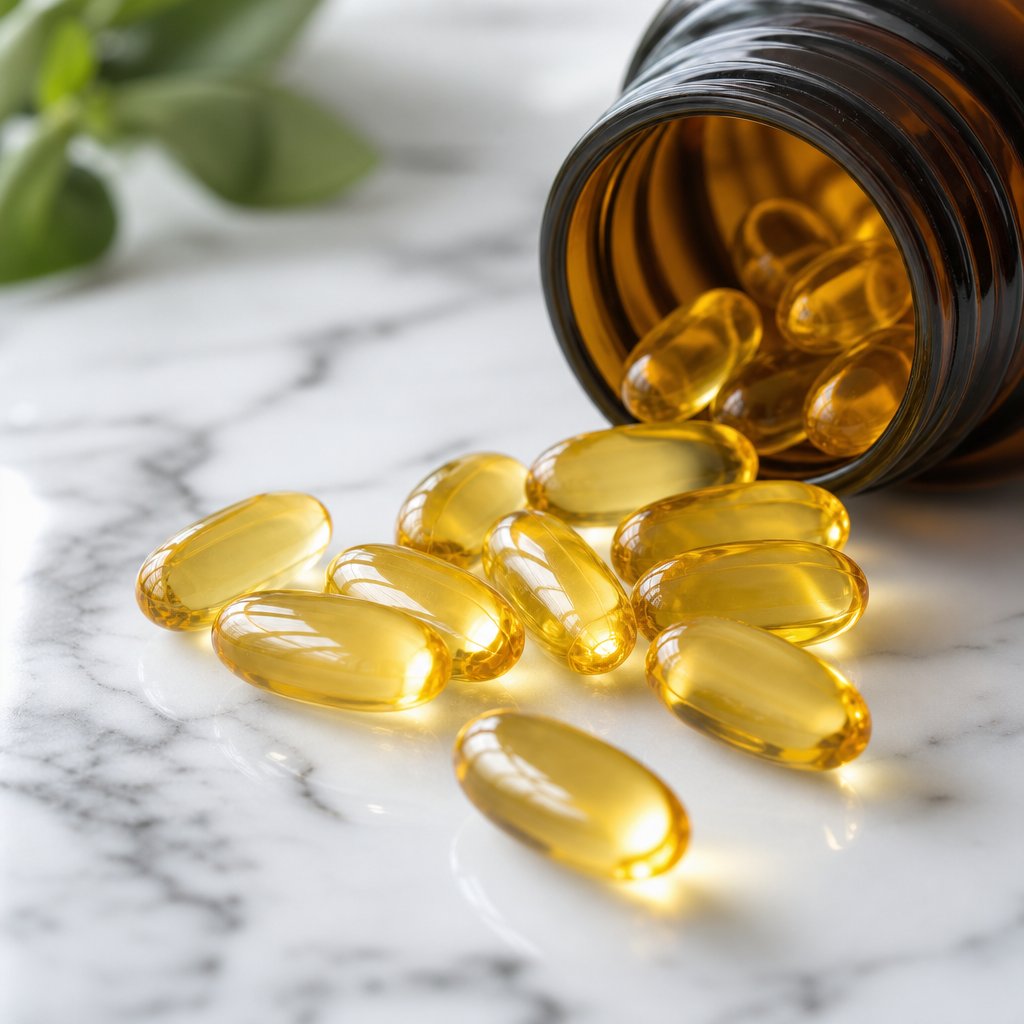
- Capsule shell changes: Softgels that have become sticky, fused together, bloated, or developed a tacky film have likely been exposed to heat or moisture that compromised the gelatin barrier. If your fish oil capsules expired and the shells are visibly degraded, the oil inside has almost certainly followed.
- Tablet surface changes: Compressed tablets that show white spots, crumbling edges, or a powdery residue may have absorbed moisture — a precursor to accelerated oxidation within the matrix.
- Leaking or weeping capsules: Any visible oil on the outside of a softgel means the seal has failed. Oxygen has been in direct contact with the fill, and rancidity is virtually guaranteed.
Does fish oil spoil in ways you can always see? Not necessarily. Early-stage oxidation is invisible — you'll catch it with smell before you catch it with sight. But visible changes confirm what your nose suspects: it's time to toss the bottle.
Environmental Red Flags That Speed Up Spoilage
Where you've been storing your fish oil matters as much as how old it is. A bottle that's only six months past manufacture can be more degraded than one that's two years old, depending on conditions. Does fish oil go bad if not refrigerated? Not automatically — but it goes bad faster when stored in warm, humid, or light-exposed environments.
Consider these common storage mistakes that accelerate rancidity:
- Bathroom cabinet: Steam from daily showers creates repeated humidity spikes. Moisture accelerates oxidation and can degrade tablet coatings and softgel shells.
- Kitchen counter near the stove: Radiant heat from cooking raises the ambient temperature around your supplements by several degrees — enough to meaningfully speed up oxidation reactions.
- Car glove compartment or gym bag: Even one day of sun exposure or storage in a hot car is enough for fish oil to begin oxidizing rapidly.
- Windowsill or open shelf with direct sunlight: UV light is a potent oxidation catalyst. Clear bottles on sunny shelves degrade far faster than those stored in darkness.
Seasonal and climate factors compound these risks. If you live in a hot, humid climate — or if your fish oil sat through a summer without air conditioning — assume degradation has outpaced the timeline on the label. A bottle purchased in January and stored in a Phoenix garage through July has experienced conditions no manufacturer's stability testing accounts for.
The bottom line: if your fish oil fails any sensory test, or if it's been stored in conditions that accelerate spoilage, don't rationalize keeping it. A new bottle costs far less than months of taking a supplement that's delivering oxidation byproducts instead of omega-3 benefits. And if your bottle passes these checks, the next question becomes how to keep it that way — which comes down to deliberate storage habits that work with the chemistry rather than against it.
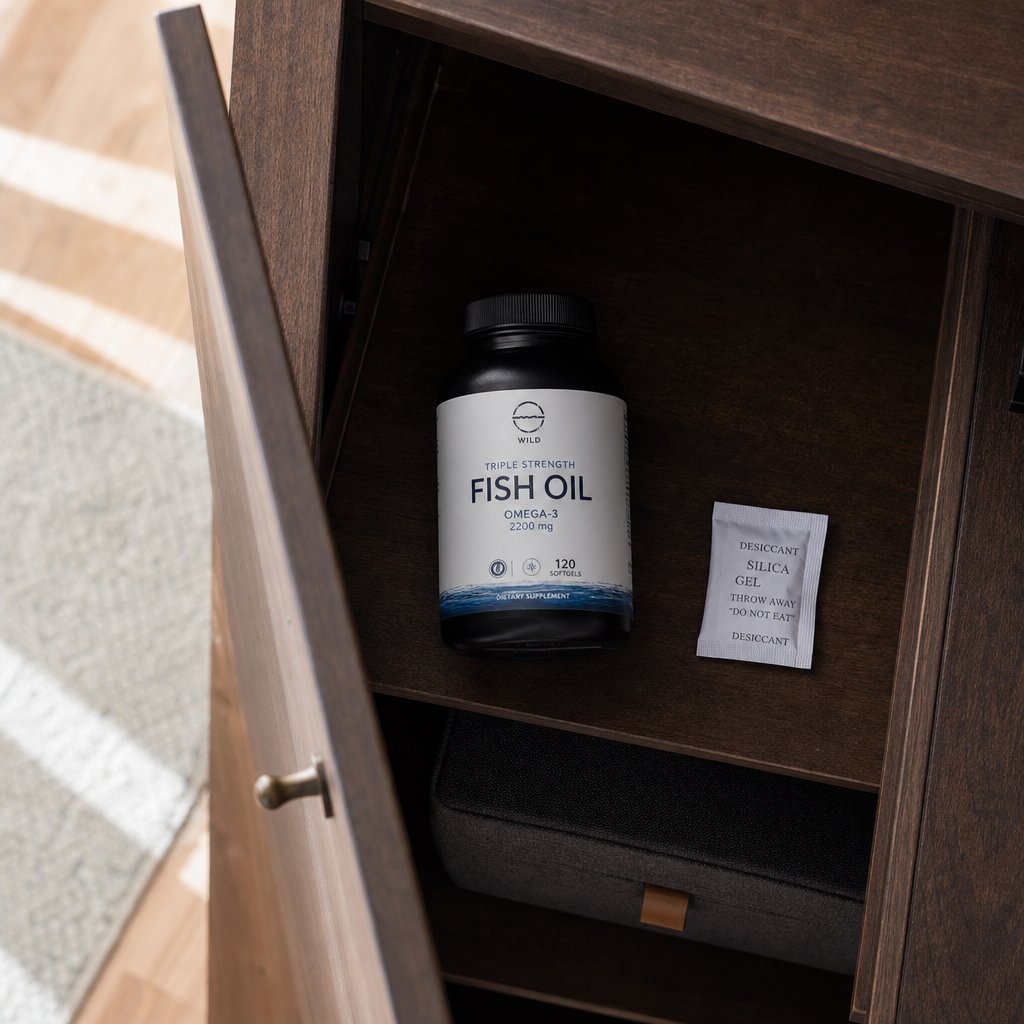
Storage Tips to Keep Fish Oil Fresh Longer
Knowing what rancidity looks like is useful. Preventing it from happening in the first place is better. The good news: a few deliberate storage habits can meaningfully extend how long do fish oil pills last — often by months beyond what careless storage would allow. The chemistry is working against you (oxygen, heat, light, moisture), but you can slow every one of those reactions with practical choices that cost nothing.
Ideal Temperature and Light Conditions
Temperature consistency matters more than hitting a precise number. Fish oil supplements perform best stored between 60-70°F (15-21°C) — a standard room temperature range in climate-controlled homes. The critical rule isn't "keep it cold" but rather "keep it stable." Repeated temperature swings stress the oil and accelerate oxidation faster than a constant slightly-warm environment would.
Light is the other silent accelerator. UV radiation catalyzes free radical formation in polyunsaturated fats, which is why reputable manufacturers package fish oil in opaque or dark-colored containers. Your job is to continue that protection at home. Store bottles inside a closed cabinet, drawer, or pantry — anywhere shielded from both direct sunlight and ambient room lighting. A bedroom closet or hallway linen cabinet works perfectly. A kitchen windowsill or open shelf does not.
Humidity deserves equal attention, especially for compressed tablets. Moisture absorption degrades tablet coatings and promotes oxidation within the compressed matrix. Keep desiccant packets inside the bottle — they're there for a reason — and avoid storing supplements in bathrooms where daily shower steam creates repeated humidity spikes.
Should You Refrigerate Fish Oil Tablets
This is where the advice gets nuanced. Does fish oil need to be refrigerated? It depends entirely on the form.
Many liquid fish oil supplements require refrigeration after opening to slow oxidation of the large exposed surface area. For these products, the fridge is non-negotiable — it extends usable life from weeks to a couple of months. Registered dietitians confirm that cooler temperatures protect delicate omega-3 oils from becoming rancid and slow potential microbial growth.
For tablets and softgels, the picture is different. Should fish oil be refrigerated in capsule or tablet form? It's generally unnecessary if you're storing them in a cool, stable environment. Refrigeration won't harm these forms, but the real risk is temperature cycling — taking a cold bottle out of the fridge daily, exposing it to warm kitchen air, then returning it. That cycle creates condensation inside the container, introducing the very moisture that accelerates degradation in solid forms. If you choose to refrigerate fish oil softgels, commit to keeping them there consistently rather than moving them back and forth.
Here's a practical comparison of how to store fish oil softgels, tablets, and other forms for maximum longevity:
| Storage Method | Best For | Expected Shelf Life Impact |
|---|---|---|
| Cool, dark cabinet (60-70°F) | Tablets, softgels, enteric-coated capsules | Maintains full manufacturer shelf life; no condensation risk |
| Refrigeration (35-40°F) | Liquid fish oil, opened bottles of any form | Extends opened-bottle life by several weeks; slows oxidation significantly |
| Freezer storage | Bulk softgels for long-term storage (unopened) | Can extend life beyond printed date; thaw fully before opening to avoid condensation |
| Room temperature (70-76°F, stable) | Softgels and tablets in climate-controlled homes | Acceptable if consistent; slight acceleration vs. cooler storage |
| Warm or variable environment (above 76°F) | None — avoid for all forms | Accelerates oxidation measurably; can halve effective shelf life |
If you live in a hot climate without reliable air conditioning, refrigeration becomes the better choice for all forms — the condensation risk is lower than the heat-damage risk. In temperate, climate-controlled homes, a dark cabinet is perfectly adequate for tablets and sealed softgels.
Smart Buying Habits That Protect Freshness
Storage starts before you even bring a bottle home. A few purchasing decisions can add months of effective life to your fish oil:
- Check the manufacturing date before buying. A bottle that's already 18 months old on the store shelf gives you far less usable time than one manufactured three months ago. Flip the bottle and look — fresher stock means more runway.
- Buy from high-turnover retailers. Supplements sitting in a warehouse or on a low-traffic store shelf for extended periods have already consumed part of their shelf life under conditions you can't verify. Busy retailers cycle inventory faster, meaning fresher product reaches your hands.
- Size your purchase to your consumption rate. A 300-count bulk bottle is a poor deal if it takes you 10 months to finish. Buy quantities you'll consume within the product's optimal window — typically within 60-90 days of opening for best results.
- Inspect packaging integrity at purchase. Dented bottles, broken seals, or sun-faded labels suggest the product has been mishandled. Choose bottles with intact shrink-wrap and no visible damage.
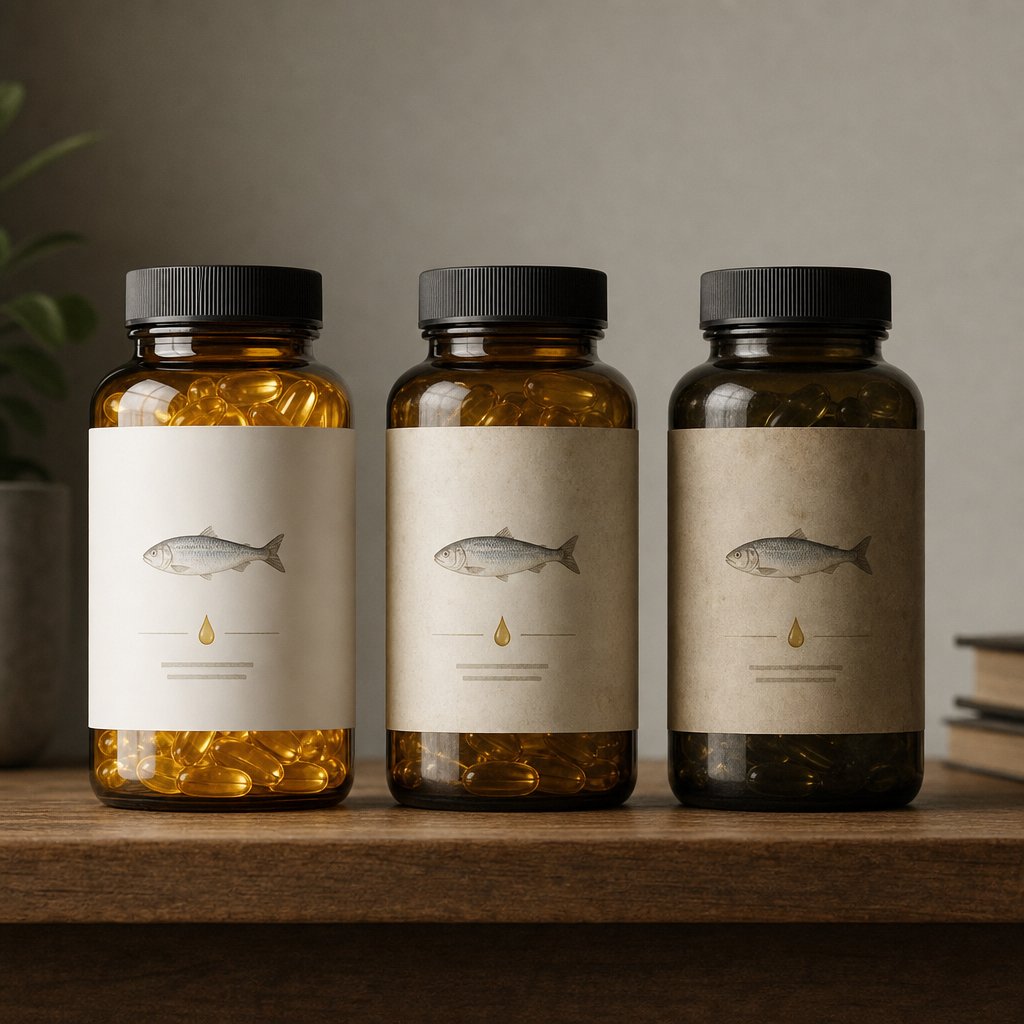
- Prefer opaque or dark-colored containers. Clear bottles expose the product to light during shipping and retail display. Brands that use amber glass, opaque HDPE plastic, or blister packs are making a deliberate choice to protect potency.
How long do fish oil pills last in practice? Under ideal conditions — purchased fresh, stored in a cool dark cabinet, opened and finished within a few months — you'll get the full labeled shelf life and possibly a bit beyond. Under careless conditions, that same product can degrade months ahead of its printed date. The difference between these outcomes is entirely within your control.
Of course, even perfect storage can't save a bottle that's already too far gone. If your fish oil has already failed the sensory tests from the previous section, no amount of careful handling will reverse the damage — and the question shifts from preservation to disposal.
What to Do with Expired Fish Oil Supplements
So your fish oil failed the smell test, the date is long past, or both. The bottle is staying. You are not taking it. The next practical question — what to do with expired fish oil capsules — rarely gets a straight answer online. Here's one.
Safe Ways to Dispose of Expired Fish Oil
Don't flush expired fish oil pills down the toilet or pour oil down the sink. The FDA recommends a simple at-home method for supplements not on their flush list: remove the capsules or tablets from the bottle, mix them with an unappealing substance like coffee grounds, dirt, or cat litter, seal the mixture in a leak-proof bag or container, and place it in your household trash. This prevents accidental ingestion by children or pets and reduces the chance of supplements leaching into water systems through landfills.
If you prefer a more structured option, DEA-authorized drug take-back programs accept dietary supplements at designated drop-off locations, pharmacies, and periodic collection events. Mail-back envelopes are another low-effort alternative available through many retail pharmacies.
Non-Consumption Uses for Old Fish Oil
Not all out of date fish oil capsules need to go straight in the trash. If the oil is mildly past its prime but not aggressively rancid, you can repurpose it for non-dietary uses:
- Leather conditioning: Puncture a few softgels and rub the oil into dry leather boots, bags, or belts. Fish oil softens and conditions leather similarly to mink oil or neatsfoot oil.
- Squeaky hinge lubricant: A drop of fish oil on a stiff hinge or sticky drawer slide works as a temporary lubricant in a pinch.
- Garden pest deterrent: The strong odor of older fish oil can deter rabbits, deer, and some insects when applied around garden borders. Mix with water in a spray bottle and apply to perimeter plants.
What about giving expired fish oil to pets? Exercise real caution here. Research from a 2025 peer-reviewed study found that 45% of popular omega-3 supplements tested positive for rancidity, and oxidized oils can worsen inflammation, compromise immune function, and increase cancer cell formation in animals rather than providing anti-inflammatory benefits. Experts in veterinary nutrition agree that rancid fish oil is worse than no fish oil at all for pets. If you want to supplement your dog or cat with omega-3s, use a fresh product — never out of date fish oil capsules that you've already deemed unfit for yourself.
Is Taking Slightly Expired Fish Oil Worth the Risk
What happens if you take expired fish oil pills that are only slightly past date and show no sensory red flags? In most cases, nothing harmful. The primary consequence is diminished nutritional benefit — you're getting less EPA and DHA than the label claims, which means you may not achieve the health outcomes you're supplementing for. For someone taking fish oil casually for general wellness, a few weeks past the best-by date with no rancid smell is unlikely to cause problems.
What happens if i take expired fish oil that's clearly rancid? That's a different situation. Heavily oxidized oil contains aldehyde compounds linked to increased inflammation and oxidative stress — the opposite of what omega-3 supplementation is meant to deliver. The risk isn't acute poisoning, but chronic consumption of degraded oil can undermine cardiovascular and cellular health over time.
The decision framework is simple: if it smells fine and the date is recent, finishing the bottle is a low-risk choice. If there's any doubt — strong odor, visible changes, unknown storage history — replace it. A fresh bottle costs less than the uncertainty of taking expired fish oil pills that may be working against you rather than for you.
Replacing a degraded product with a fresh one raises a final, forward-looking question: how do you choose fish oil that's engineered to stay potent longer in the first place? That comes down to manufacturing decisions made long before the bottle reaches your shelf.
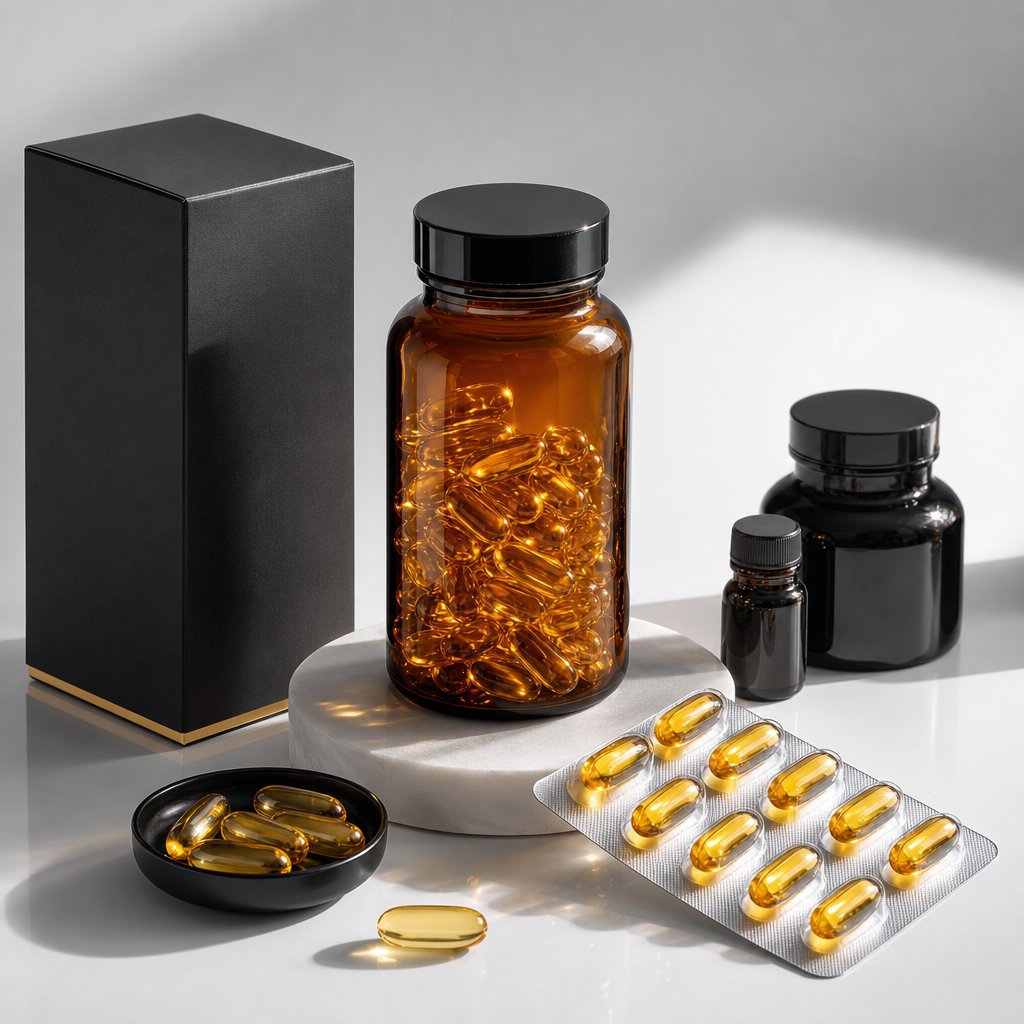
Choosing Fish Oil Products Built for Freshness
Every fish oil supplement begins degrading the moment it's manufactured. The difference between a product that stays potent for its full labeled shelf life and one that arrives already halfway to rancid comes down to decisions made at the formulation and production stage — long before the bottle reaches a store shelf. Do dietary supplements expire at the same rate regardless of how they're made? Not even close. Manufacturing quality is the single biggest variable determining whether your omega-3s deliver real benefits or quietly oxidize into ineffective (or harmful) byproducts.
What Manufacturing Quality Means for Shelf Life
Think about what happens between the moment crude fish oil is refined and the moment a finished capsule lands in your hand. Every step — blending, concentration, encapsulation, packaging, shipping — introduces potential oxygen exposure. High-quality manufacturers minimize that exposure at each stage through closed-system processing, nitrogen blanketing during transfers, and temperature-controlled environments that prevent heat-driven oxidation.
The research is clear on the consequences of poor manufacturing controls: independent testing of 171 over-the-counter omega-3 supplements found that 50% exceeded voluntary oxidation limits for at least one measure, and 39% exceeded the TOTOX safety threshold. These products weren't expired — many had years of shelf life remaining. The oxidation happened during production and supply chain handling, not in the consumer's cabinet.
Can fish oil supplements go bad before you even buy them? The data says yes, frequently. The journey from ocean catch to finished product involves crude oil extraction, international shipping, refining, concentration, and encapsulation — often across multiple countries and facilities. Each handoff is an opportunity for quality to slip. Manufacturers that control more of this chain, or that rigorously test incoming materials and finished products for peroxide value and anisidine value, produce supplements that start fresher and stay fresher.
Look for brands that publish or make available their Certificate of Analysis (CoA) showing TOTOX values below 26, peroxide values below 5 mEq/kg, and anisidine values below 20 — the GOED voluntary monograph limits that represent the industry benchmark for freshness.
Packaging and Formulation Features That Prevent Oxidation
Can supplements go bad even with good raw materials? Absolutely — if the packaging and formulation don't actively protect against ongoing degradation. The best fish oil products incorporate multiple layers of defense that work together from production through the last capsule in the bottle.
Here's what to look for when shopping:
- Third-party freshness certifications: IFOS 5-star rating, GOED compliance, or published TOTOX values demonstrate the manufacturer tests and meets oxidation standards. This is the strongest signal of quality.
- Added antioxidant systems: Mixed tocopherols (natural vitamin E), rosemary extract, or astaxanthin added to the oil formula actively scavenge free radicals and interrupt the oxidation chain reaction. Products listing these ingredients have a built-in defense mechanism that extends potency throughout shelf life.
- Nitrogen-flushed packaging: Displacing oxygen from the bottle headspace with inert nitrogen gas dramatically slows oxidation after sealing. Some brands note this on the label; others mention it on their website or product FAQ.
- Opaque or dark-colored containers: Amber glass, opaque HDPE plastic, or aluminum blister packs block UV light — a potent oxidation catalyst. Clear bottles on brightly lit store shelves are a red flag for light-driven degradation.
- Individual blister packaging: Each capsule sealed in its own foil-backed blister remains protected until the moment you push it through. Unlike a shared bottle opened daily, blister packs prevent repeated air exposure to unused capsules.
- Triglyceride or re-esterified triglyceride (rTG) form: As covered earlier, triglyceride-form omega-3s are measurably more oxidation-resistant than ethyl esters. Products specifying "natural triglyceride form" or "rTG" on the label have a molecular stability advantage.
- Small batch sizes relative to consumption rate: A 60-count bottle you'll finish in a month exposes the product to far less cumulative air than a 360-count bulk jar opened daily for six months.
Do fish oil supplements go bad less often when these features are present? The evidence strongly suggests yes. Research confirms that antioxidant content, oxygen exposure, and packaging all directly influence the rate and degree of omega-3 oxidation. Products engineered with these protections aren't just marketing — they're applying lipid chemistry to a real shelf-stability problem.
Finding Fish Oil You Can Trust to Stay Fresh
For consumers, the checklist above gives you a practical filter when comparing products at the store or online. Prioritize brands that are transparent about their oxidation testing, use protective packaging, and include antioxidant systems in their formulation. A slightly higher price point for these features is almost always justified by the assurance that you're actually getting the EPA and DHA you're paying for.
For supplement brand owners, private label sellers, and importers, the equation is different — you're not just choosing a product off the shelf, you're deciding how it gets made. Formulation choices like antioxidant inclusion, encapsulation technology, molecular form, and packaging format need to be locked in at the manufacturing stage. This is where working with an experienced contract manufacturer becomes critical.
Professional OEM/ODM partners like ZhuFeng help brands build stability into the product from the start — selecting the right delivery format (soft capsules, hard capsules, tablets, or other systems), integrating antioxidant protection into the formulation, and scaling production with quality controls that keep oxidation markers within acceptable limits. For businesses launching fish oil products or reformulating existing lines for better shelf performance, this kind of manufacturing expertise translates directly into products that stay fresh longer and generate fewer customer complaints about rancidity.
Whether you're a consumer reading labels more carefully or a brand owner engineering your next product, the principle is the same: freshness isn't luck. It's a series of deliberate decisions — from molecular form to antioxidant blend to packaging material — that either protect omega-3 potency or leave it vulnerable to the same oxidation chemistry that makes fish oil one of the most perishable supplements on the market.
Frequently Asked Questions About Fish Oil Tablet Expiration
1. Can you take fish oil tablets after the expiration date?
Taking fish oil tablets slightly past the expiration date is generally not dangerous if the product was stored properly and shows no signs of rancidity. However, the omega-3 potency has likely declined below the labeled amount, meaning you may not receive the full health benefits. Perform a smell and taste test before consuming — if the oil smells strongly fishy, paint-like, or bitter, discard it. For therapeutic use such as triglyceride management, always replace expired bottles to maintain consistent dosing.
2. How can you tell if fish oil tablets have gone rancid?
The most reliable method is the smell and taste test. Crush or chew a tablet and check for a sharp, paint-like chemical odor, overwhelming rotten-fish stench, or bitter acrid taste. Fresh fish oil should smell mildly oceanic and taste clean. Visual signs include discoloration, cloudiness, crumbling edges, white spots on tablets, or sticky and fused capsules. Persistent rancid-tasting burps after swallowing also indicate degradation. If any of these signs are present, the fish oil should be discarded.
3. Does fish oil need to be refrigerated to prevent expiration?
It depends on the form. Liquid fish oil should be refrigerated after opening to slow oxidation of the exposed surface area. For tablets and softgels stored in a cool, dark cabinet at 60-70°F, refrigeration is unnecessary. If you do refrigerate capsules, keep them there consistently — moving them between the fridge and warm kitchen creates condensation inside the container, which actually accelerates degradation in solid forms. In hot climates without reliable air conditioning, refrigeration becomes the safer choice for all formats.
4. What happens if you take expired fish oil that is rancid?
Consuming heavily oxidized fish oil introduces aldehyde compounds such as malondialdehyde and 4-hydroxynonenal into your body. Research has linked these breakdown products to increased LDL cholesterol, vascular inflammation, and markers associated with arterial hardening — essentially the opposite of omega-3's intended anti-inflammatory benefits. While a single dose is unlikely to cause acute poisoning, regular consumption of rancid fish oil can undermine cardiovascular and cellular health over time. If your fish oil smells or tastes rancid, discard it immediately.
5. How long do fish oil tablets last once the bottle is opened?
Once opened, fish oil tablets and softgels should ideally be consumed within 60 to 90 days for optimal potency. Each time you open the bottle, fresh oxygen enters and contacts the remaining product, accelerating oxidation. Liquid fish oil has an even shorter window of six to eight weeks after opening. To maximize post-opening shelf life, close the cap tightly after each use, keep the desiccant packet inside, store in a cool dark location, and purchase bottle sizes you can realistically finish within two to three months.