The Quick Answer to How Much Matcha Powder Per Cup
You scooped too much and got a bitter, chalky mess. Or you used too little and ended up with pale green water. Either way, the cup went wrong because the measurement was off. So how much matcha powder per cup actually works? The short answer: 1 to 2 grams, which translates to roughly half a teaspoon up to one level teaspoon, depending on the drink you are making and how strong you like it.
That range covers most preparations, from a simple whisked bowl to a creamy latte. But the ideal amount shifts based on your cup size, the type of liquid you are mixing with, and whether you are drinking it hot or over ice. This guide breaks down the exact ratios for every scenario so you can stop guessing and start enjoying matcha the way it should taste.
The Standard Matcha Serving Size
Across tea shops, Japanese tea ceremony traditions, and matcha brands worldwide, 2 grams per cup is the most widely accepted baseline. That is approximately one level teaspoon of sifted powder dissolved in an 8-ounce (240 ml) cup. This matcha serving size delivers a balanced flavor profile, enough body to taste the natural umami and sweetness without tipping into bitterness or astringency.
Why 2 grams specifically? At this concentration, you get a good balance of antioxidants, a moderate caffeine boost of around 40 to 70 mg, and a smooth mouthfeel. It is also the amount that works well whether you are whisking with water alone or building a milk-based drink. If you have ever wondered how much matcha per serving gives you the full nutritional benefit without overpowering the taste, 2g is that sweet spot.
Why One Number Does Not Fit All Drinks
Here is where it gets interesting. A traditional Japanese thin tea uses 2g in just 2 to 3 ounces of water, producing an intense, concentrated sip. A matcha latte spreads that same powder across 8 to 12 ounces of milk and water, so you may need closer to 2.5 or 3 grams to keep the green tea flavor from disappearing. Iced drinks dilute further as ice melts. Baking calls for tablespoons, not teaspoons.
The serving size of matcha changes with context, and that is exactly why a single number never tells the whole story. Knowing how much matcha powder for one cup of a specific drink type is what separates a vibrant, well-balanced cup from a disappointing one.
2 grams (roughly 1 level teaspoon) is the universal starting point for a standard 8oz cup of matcha. Adjust up or down from there based on your drink type and personal preference.
The sections ahead cover precise conversions, traditional Japanese ratios, latte-specific measurements, iced drink adjustments, and the common mistakes that lead to bitter or watery results. Think of 2g as your anchor point, and everything else as fine-tuning from there.
Matcha Measurement Conversions You Can Actually Use
Knowing that 2 grams is the target is helpful, but what does 2 grams actually look like in your kitchen? Not everyone owns a digital scale, and grabbing a teaspoon from the drawer is the reality for most home matcha drinkers. The problem is that matcha measurements do not follow the same rules as other powders you cook with. Getting the conversion right means understanding what makes matcha different.
Grams to Teaspoons and Tablespoons for Matcha
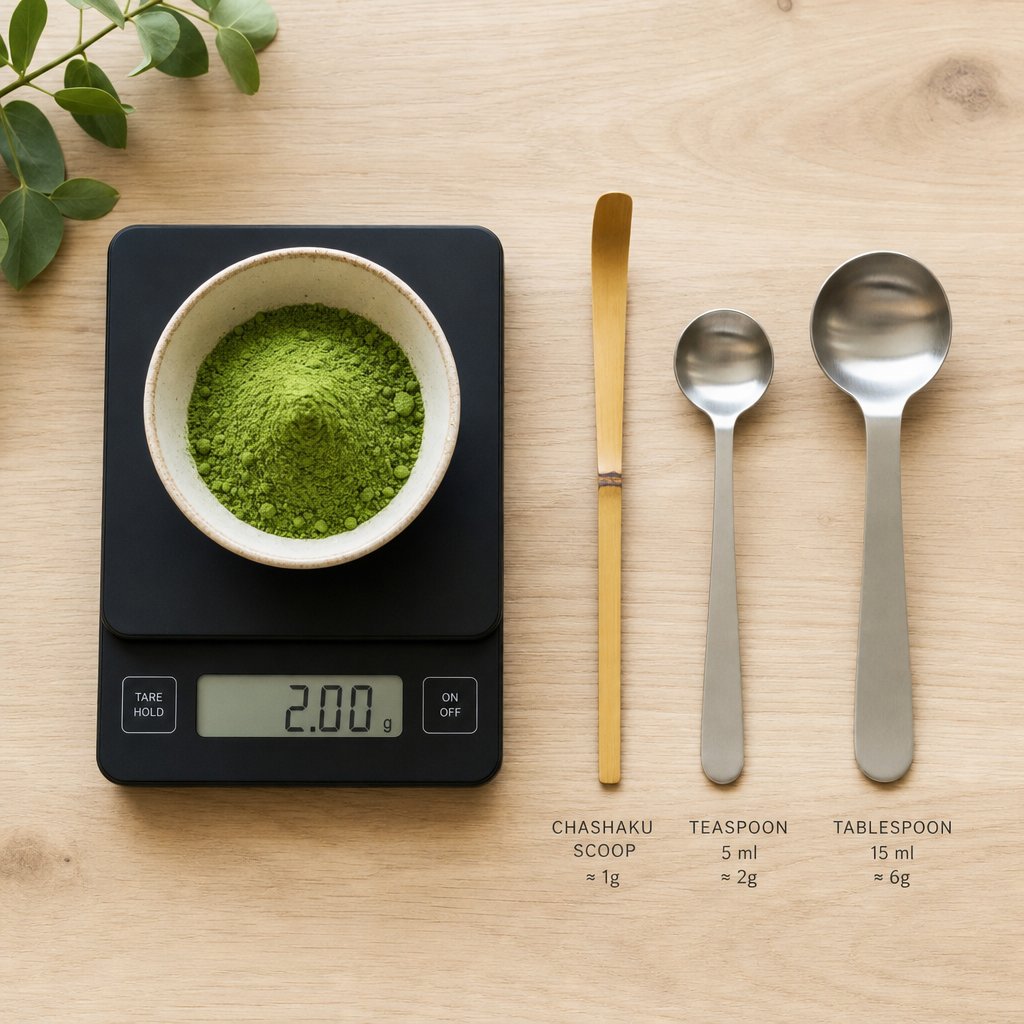
Matcha is stone-ground to an extremely fine particle size, much finer and lighter than granulated sugar, cocoa powder, or all-purpose flour. That means standard cooking conversions do not translate directly. A teaspoon of sugar weighs around 4 grams, but 1 teaspoon of matcha in grams is only about 2 grams when sifted and leveled using the spoon-and-sweep method. Similarly, 1 tablespoon of matcha in grams comes out to roughly 6 grams rather than the 12 to 15 grams you would expect from denser powders.
This lighter density is exactly why eyeballing matcha with baking instincts leads to mistakes. If you treat it like flour and pack the spoon, you could easily double your intended dose and end up with a bitter cup. The key takeaway: always sift first, spoon the powder gently into your measuring spoon, and level the top with a straight edge.
So how many grams of matcha in a teaspoon? For sifted, leveled matcha, the answer is approximately 2 grams. That makes the conversion from 2g matcha to tsp straightforward: one level teaspoon equals one standard serving.
Using a Bamboo Scoop (Chashaku) and Kitchen Scale
If you have a traditional bamboo matcha tea spoon, known as a chashaku, you are working with a tool designed specifically for this powder. One heaping chashaku scoop delivers approximately 1 gram of matcha. Two scoops equal roughly one teaspoon, giving you that 2-gram baseline without needing any other equipment.
For the most reliable results, though, a digital kitchen scale with 0.1-gram precision removes all guesswork. Place your bowl on the scale, press tare to zero it out, and add matcha until you hit your target weight. This is especially useful when you are dialing in personal preferences or working with a new brand whose grind may pack differently.
The table below puts all common matcha measurements side by side so you can convert between tools quickly:
| Grams | Chashaku Scoops | Teaspoons | Tablespoons | Typical Use |
|---|---|---|---|---|
| 1g | 1 scoop | 1/2 tsp | — | Light cup or half serving |
| 2g | 2 scoops | 1 tsp | 1/3 tbsp | Standard single serving |
| 3g | 3 scoops | 1 1/2 tsp | 1/2 tbsp | Strong latte or iced drink |
| 4g | 4 scoops | 2 tsp | 2/3 tbsp | Koicha (thick tea) |
| 6g | 6 scoops | 3 tsp | 1 tbsp | Baking or large batch drinks |
If you have ever searched how many grams in a teaspoon of matcha and found conflicting answers, the variation usually comes down to whether the powder was sifted or packed. Unsifted matcha clumps together, and a packed teaspoon can weigh closer to 3 grams. Sifted and leveled, it consistently lands near 2 grams. Keep this table handy, pick whichever tool you have available, and you will hit your target amount every time.
With conversions sorted, the next question becomes how much liquid pairs with each of these amounts, and that depends entirely on whether you are making a traditional whisked bowl or a modern latte.
Traditional Matcha to Water Ratios Explained
Every matcha recipe you see online traces back to two preparations that Japanese tea masters perfected centuries ago. These traditional methods define the matcha to water ratio at its most precise, and understanding them gives you a framework for building any drink, whether it is a simple whisked bowl or a 16-ounce iced latte.
Usucha (Thin Tea) Ratio and Technique
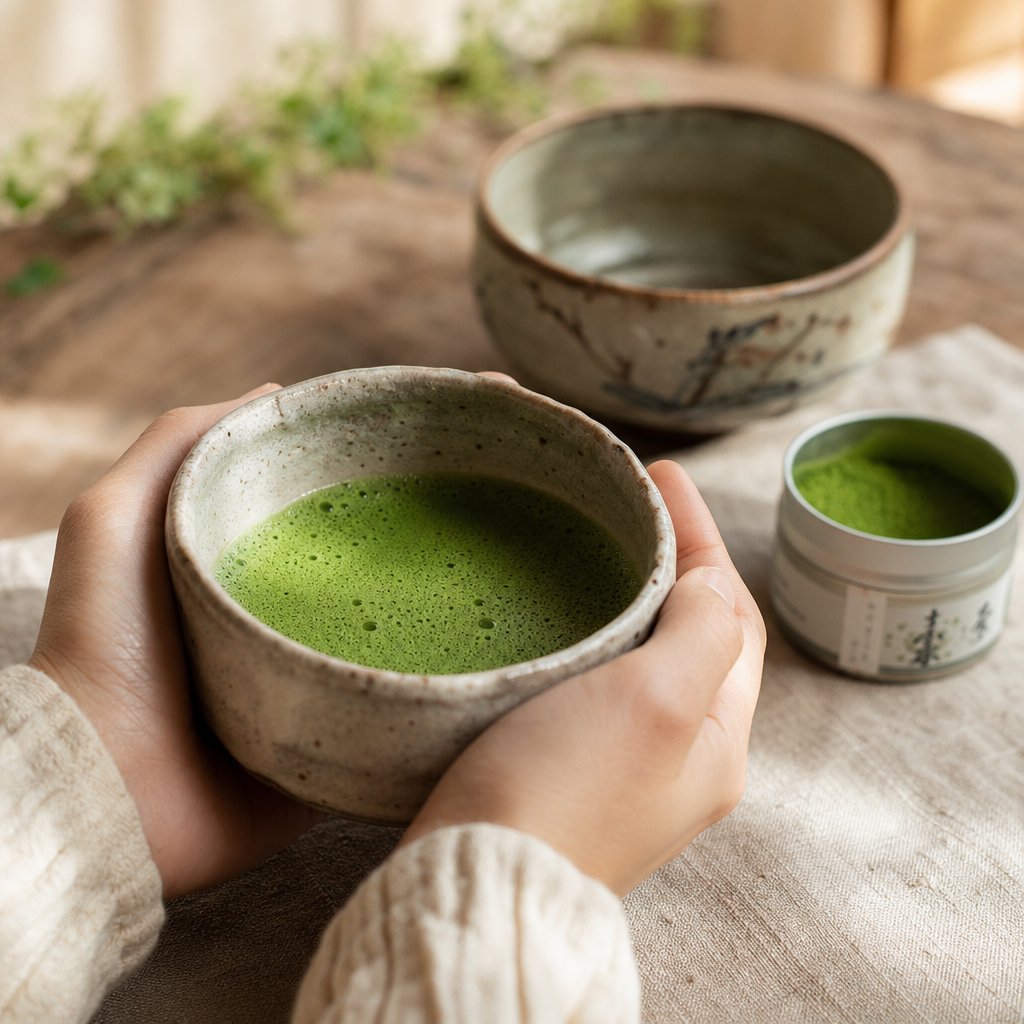
Usucha, meaning "thin tea," is the preparation most Western matcha drinkers replicate at home, even if they do not know it by name. The matcha tea ratio for usucha is straightforward: approximately 2 grams of powder whisked with 60 to 70 ml of hot water, which is roughly 2 to 2.5 ounces. The water temperature should sit between 70 and 80 degrees Celsius (about 160 to 175 degrees Fahrenheit) to avoid scorching the delicate amino acids that give matcha its sweetness.
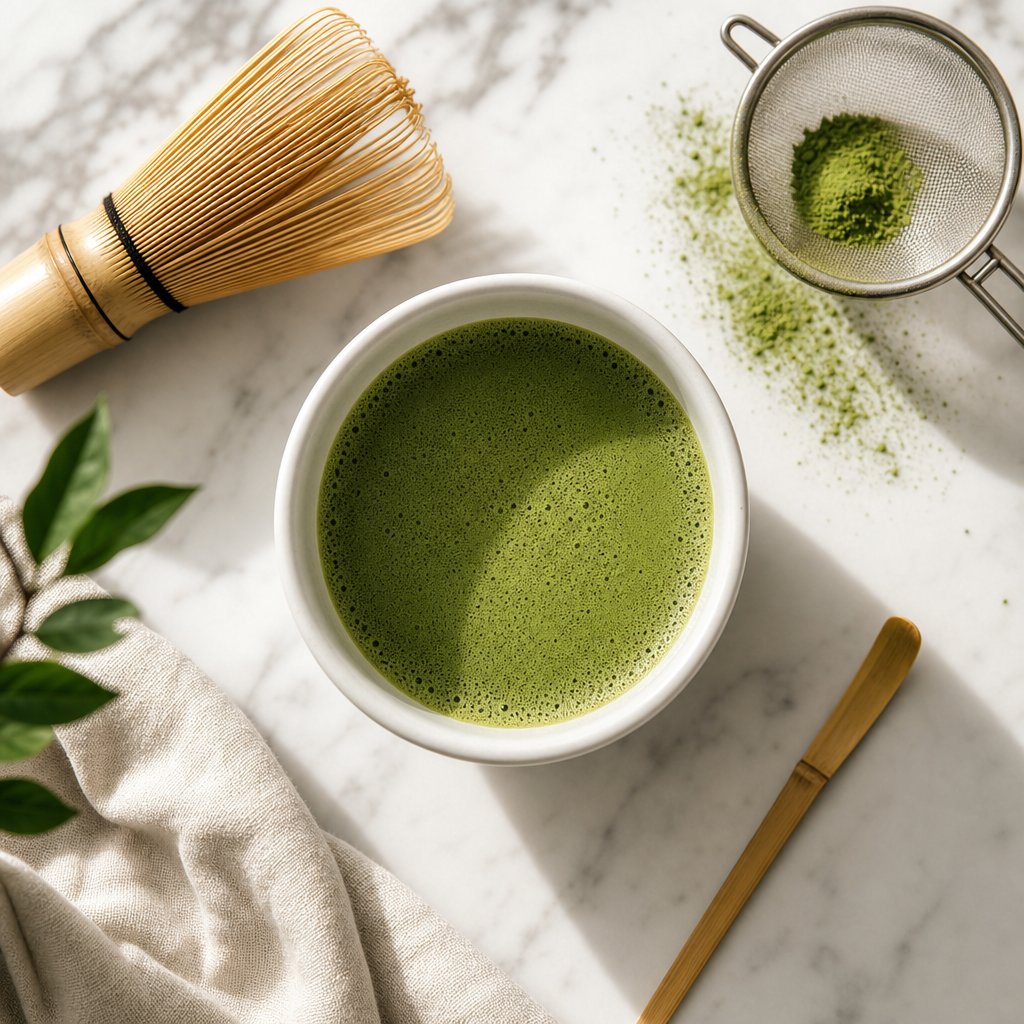
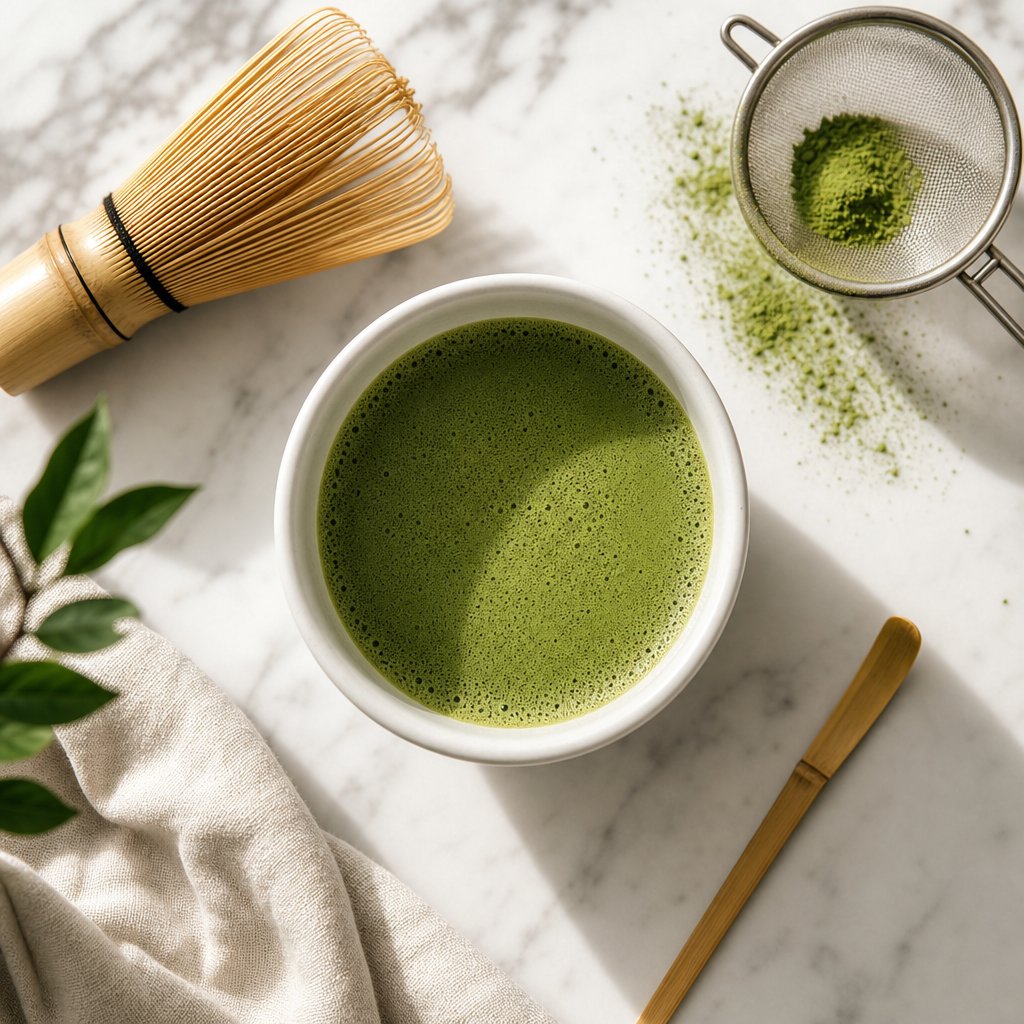
The result is a light, frothy drink with a vibrant green color and a balanced flavor that blends subtle bitterness with natural umami. You whisk briskly in a W or M motion using a bamboo chasen for about 15 to 20 seconds until a fine layer of microfoam covers the surface. That foam is your visual cue that the matcha water ratio is correct and the powder has fully dispersed without clumps.
Usucha works with both ceremonial and high-quality culinary grade matcha, making it the most versatile starting point for daily drinking.
Koicha (Thick Tea) for Concentrated Flavor
Koicha, or "thick tea," flips the ratio dramatically. Here you use 3 to 4 grams of matcha with only 30 to 40 ml of water, creating a dense, paste-like consistency that resembles warm honey. Instead of whisking for froth, you knead the mixture slowly in circular motions until it becomes smooth and uniform, with no bubbles on the surface.
This concentrated tea to water ratio in grams and ml demands premium ceremonial-grade powder. Why? Because the reduced liquid amplifies every flavor characteristic. A high-quality matcha reveals deep umami and sweetness at this concentration, while a lower-grade powder turns overwhelmingly bitter and astringent. If you have ever wondered how much water for matcha when making koicha, think of it as half the water and double the intensity compared to usucha.
Koicha is traditionally reserved for formal tea ceremonies and shared among guests from a single bowl. It is not an everyday preparation, but experiencing it at least once helps you understand the full flavor potential of quality matcha.
Adapting Traditional Ratios to Western Cup Sizes
Here is where tradition meets your morning routine. A Japanese chawan (tea bowl) holds roughly 4 to 6 ounces, while a standard Western mug runs 8 to 12 ounces. If you simply pour 8 ounces of hot water over 2 grams of matcha, you will end up with a diluted, watery cup that barely tastes like green tea.
The solution is a two-step approach. Whisk your 2 grams of matcha with 60 ml of hot water first, exactly as you would for traditional usucha. Then top up with additional hot water to fill your mug. This preserves the proper matcha ratio to water during the whisking stage, ensuring full dispersion and froth, while still giving you a larger volume to sip on.
Some tea enthusiasts refer to this balanced approach as the matcha golden ratio for Western-style cups: concentrate first, dilute second. It keeps the flavor intact without requiring you to double your powder.
Here are the three traditional ratios at a glance:
- Usucha (thin tea): 2g matcha + 60-70 ml water (about 2 oz) — light, frothy, everyday drinking
- Koicha (thick tea): 3-4g matcha + 30-40 ml water (about 1-1.5 oz) — thick, paste-like, ceremonial grade only
- Western mug adaptation: 2g matcha whisked in 60 ml water, then topped with hot water to reach 8-12 oz total volume
These ratios give you the foundation, but they assume you are working with water alone. The moment milk enters the equation, the dynamics shift. Milk is denser, creamier, and mutes matcha flavor differently than water does, which means latte preparations need their own set of numbers.
Matcha Latte Ratios for Any Cup Size
Milk changes everything. It coats the palate, softens bitterness, and adds body, but it also dilutes matcha's flavor in ways that plain water does not. That is why the matcha latte ratio requires more powder than a traditional whisked bowl. If you have ever made a latte that tasted like slightly green milk, the fix is not better matcha. It is better proportions.
How Many Grams of Matcha for a Perfect Latte
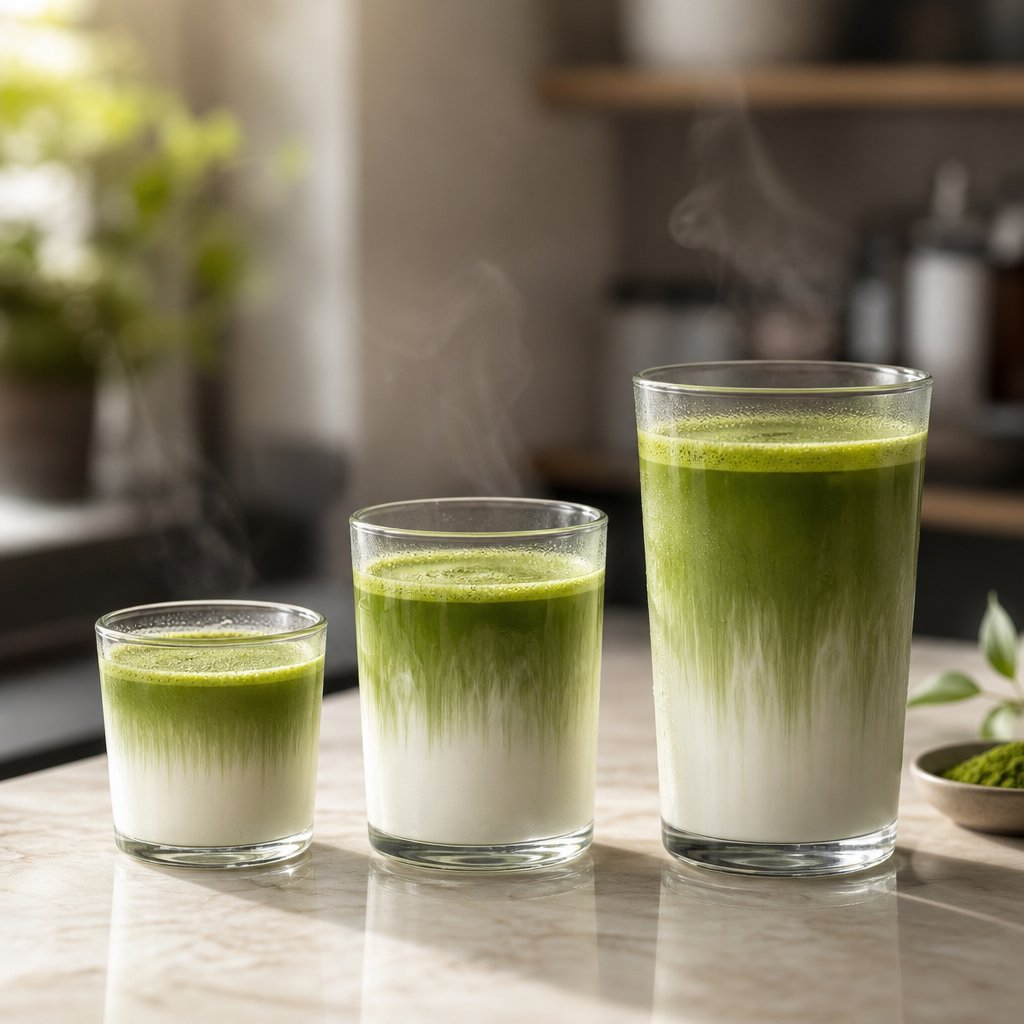
A well-balanced matcha latte uses 2 to 3 grams of powder (1 to 1.5 teaspoons) depending on your cup size and strength preference. The process works in two stages: first, whisk the matcha into 60 ml of hot water at around 70 to 80 degrees Celsius to create a smooth, concentrated base. Then combine that base with 180 to 240 ml of steamed or cold milk.
Why the bump from the standard 2-gram serving? Milk proteins bind to matcha's catechins and flavor compounds, muting their presence on your tongue. That extra half-gram to full gram compensates for this effect, keeping the green tea character front and center rather than buried under creaminess. The perfect matcha latte ratio lands at roughly 2g for a smaller 8-ounce cup and scales up to 3g for a full 16-ounce serving.
Always dissolve the matcha in hot water before adding milk. Whisking directly into cold milk causes clumping, and you will end up chasing gritty pockets of undissolved powder through your drink. The hot water step takes 15 seconds and makes the difference between a silky latte and a lumpy one.
Milk to Matcha Ratio for Different Cup Sizes
Wondering how much matcha for a latte when your mug is bigger than the standard cafe cup? The table below breaks down the best matcha latte ratio by serving size, with matcha latte ratio grams and teaspoon equivalents side by side:
| Cup Size | Matcha (grams) | Matcha (teaspoons) | Hot Water for Dissolving | Milk Volume |
|---|---|---|---|---|
| 8 oz (240 ml) | 2g | 1 tsp | 60 ml (2 oz) | 180 ml (6 oz) |
| 12 oz (360 ml) | 2.5g | 1 1/4 tsp | 60 ml (2 oz) | 240 ml (8 oz) |
| 16 oz (480 ml) | 3g | 1 1/2 tsp | 90 ml (3 oz) | 360 ml (12 oz) |
Notice that the matcha to milk ratio stays relatively consistent across sizes, hovering around 1 gram of matcha per 90 to 120 ml of milk. This proportion keeps the flavor balanced regardless of whether you are sipping from a small ceramic cup or a tall travel tumbler. If you have been searching how many grams of matcha per latte, these numbers give you a reliable starting framework.
Adjusting Strength for Oat, Almond, and Dairy Milk
Not all milks play the same role in a latte. Whole dairy milk has a neutral sweetness and rich fat content that complements matcha without competing with it. The standard matcha ratio for latte works perfectly here without modification.
Plant-based milks are a different story. Oat milk brings its own malty sweetness and thick body, which can overshadow lighter matcha flavors. Coconut milk adds tropical richness that competes for attention. Almond milk runs thin and watery, letting matcha flavor through but offering less creaminess to balance any bitterness.
A practical adjustment: add an extra 0.5 grams of matcha when using oat or coconut milk to keep the green tea flavor present. With almond milk, the standard amount works fine, but you may want to reduce the milk volume by 20 to 30 ml to avoid a watery texture. Soy milk behaves most like dairy and rarely needs any ratio change.
These small tweaks make a noticeable difference. Once you find the combination that suits your preferred milk, you will be able to replicate it consistently every morning without thinking twice.
Iced Matcha and Cold Drink Ratios
Hot lattes follow predictable rules: whisk, steam, pour. Cold drinks throw a curveball. Ice melts and dilutes your cup over time, and cold temperatures suppress your ability to perceive sweetness and aroma. That means the matcha proportions that work beautifully in a warm mug will leave you with a pale, flavorless iced drink if you do not adjust.
Iced Matcha with Water or Milk
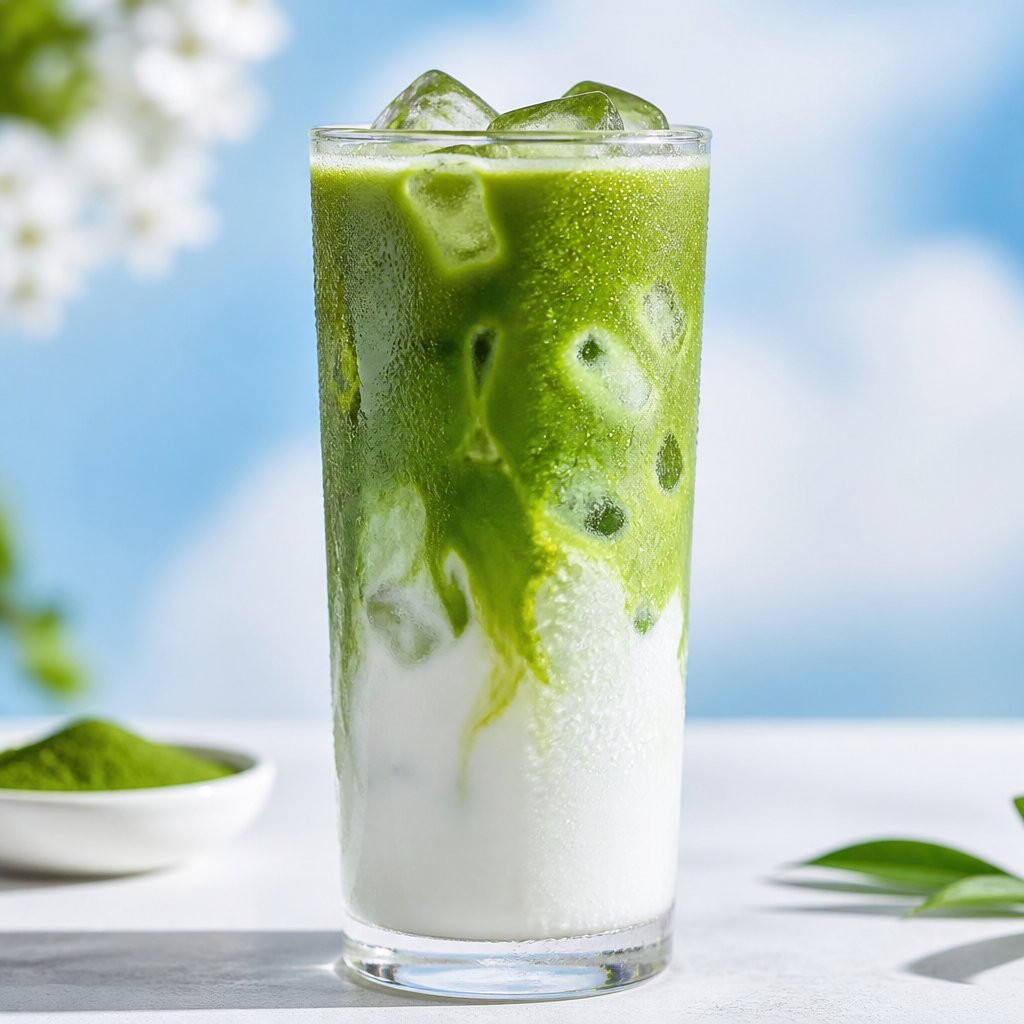
For iced preparations, bump your matcha powder to water ratio up to 2.5 to 3 grams per cup. That extra half-gram to full gram accounts for the dilution that happens as ice melts into your drink and the flavor-muting effect of cold temperatures on your palate. A 16-ounce iced matcha latte performs best at 2.5 to 3.5 grams of matcha, keeping the green tea flavor bright and present even as the ice breaks down.
The technique matters as much as the amount. You cannot dump matcha powder directly into cold liquid and expect it to dissolve. Matcha clumps instantly in cold water or milk, leaving you with gritty pockets of undissolved powder. Instead, dissolve your matcha in about 60 ml (2 ounces) of room-temperature or slightly warm water first. Whisk or shake vigorously until the mixture is smooth and glossy, then pour it over a full glass of ice and add your cold milk or water. This two-step method is the answer to how much water for 1 teaspoon of matcha in iced drinks: just enough warm water to create a concentrated paste, then cold liquid to fill the glass.
If you are making iced matcha with water alone, the same principle applies. Use 2.5 to 3 grams dissolved in a small splash of warm water, then top with 240 ml of cold water and ice. The result is crisp, refreshing, and noticeably more flavorful than trying to whisk directly into a cold glass.
Cold Brew Matcha Method
Cold brewing takes a different approach entirely. Rather than forcing matcha to dissolve quickly, you give it time. Add 2 to 3 grams of sifted matcha to a sealed bottle or mason jar with 240 ml of cold filtered water. Shake vigorously for about 30 seconds to break up initial clumps, then refrigerate for one hour or overnight. The slow extraction pulls flavor gently from the suspended powder, producing a smoother, naturally sweeter result with less bitterness than hot-whisked matcha.
Cold brew matcha works particularly well for people who find standard preparations too astringent. The reduced bitterness comes from cold water extracting fewer tannins while still delivering the full caffeine and L-theanine content. How much water to use in matcha cold brew stays at the standard 240 ml per 2 grams, but you can experiment with longer steep times for a stronger cup rather than adding more powder.
Matcha Smoothie and Baking Measurements
Beyond drinks, matcha shows up in blenders and ovens. The how much water to matcha ratio becomes less relevant here because other ingredients carry the liquid role. Here are the recommended amounts for each cold application:
- Iced matcha (water or milk): 2.5-3g per 8-12 oz glass, dissolved in 60 ml warm water first
- Cold brew matcha: 2-3g per 240 ml cold water, shaken and refrigerated 1-12 hours
- Smoothies: 2-4g per single serving, blended directly with other ingredients
- Baking (per batch): 1-2 tablespoons (6-12g) for an entire recipe, not per serving
For smoothies, how much matcha tea powder per cup depends on what else is in the blender. Strong flavors like banana, peanut butter, or chocolate can mask matcha, so lean toward 3 to 4 grams. Lighter combinations with berries or yogurt let matcha shine at just 2 grams. Blending disperses the powder thoroughly, so clumping is not a concern here.
Baking is the one context where matcha with water ratios do not apply at all. Recipes call for 6 to 12 grams per batch because the flavor distributes across an entire pan of cookies, cake, or bread. That sounds like a lot, but divided among 12 to 16 servings, each piece contains roughly 0.5 to 1 gram of matcha, well within a normal single-serving range.
Getting the amount right is only half the equation. Even with perfect proportions, the wrong powder or a careless measuring technique can throw your results off. The difference between a vibrant cup and a disappointing one often comes down to small preparation details that are easy to overlook.
Common Matcha Measuring Mistakes and How to Fix Them
You have the ratios memorized. You know 2 grams is the baseline. But your cup still tastes off. What gives? In most cases, the issue is not the number itself but how you arrive at it. A slightly heaped matcha teaspoon, an unsifted clump, or the wrong grade of powder can turn a perfectly calculated recipe into something undrinkable. Understanding what goes wrong and why helps you troubleshoot faster and waste less product.
What Happens When You Use Too Much or Too Little
Imagine scooping an extra half-gram of matcha into your cup. It does not sound like much, but at these small quantities, even a 25% overshoot changes the experience dramatically. Too much matcha produces a drink that tastes aggressively bitter, feels gritty on the tongue, and leaves a dry, astringent coating in your mouth. The color shifts from vibrant jade to a dark, murky green. You are also burning through expensive powder faster than necessary, which adds up over weeks of daily drinking.
On the other end, using too little matcha creates a pale, watery cup that barely registers as green tea. The flavor is thin, the health benefits are reduced, and you miss out on the satisfying umami richness that makes matcha worth the effort. A properly measured cup should look like opaque, vivid green paint when whisked, not translucent lime water.
Here are the visual and taste cues that tell you how much matcha to use is dialed in correctly:
- Color: A bright, opaque green indicates proper concentration. Pale or translucent means too little; dark and muddy suggests too much.
- Froth: A fine, even layer of microfoam forms when the ratio is right. No froth usually means insufficient powder or poor whisking technique.
- Taste: Balanced matcha has a smooth umami sweetness with a gentle vegetal note. Overwhelming bitterness signals excess powder or water that was too hot.
- Texture: The liquid should feel silky and uniform. Grittiness means undissolved clumps from either too much powder or skipping the sifting step.
If you are wondering how much matcha should I use when your cup keeps coming out wrong, start by checking your measurement technique before blaming the powder itself.
Why Matcha Grade Changes the Ideal Amount
Not all matcha behaves the same at 2 grams. The grade of your powder directly affects how much matcha powder to use for a pleasant cup. Ceremonial grade matcha is made from the youngest first-flush leaves with higher L-theanine content and lower catechin levels, which translates to a naturally sweeter, smoother flavor with minimal bitterness. At 2 grams per cup, ceremonial grade delivers its full flavor profile without any harshness.
Culinary grade matcha tells a different story. Produced from slightly older leaves with more sun exposure, it contains higher levels of catechins, the compounds responsible for bitterness and astringency. At the same 2-gram concentration, culinary grade can taste sharp and overpowering when whisked with water alone. Many drinkers find that reducing to 1.5 grams with slightly more liquid, or blending it into a latte where milk proteins soften the bitter edge, produces a far more enjoyable result.
This is why matcha how many scoops you need is not a fixed answer. Two chashaku scoops of ceremonial grade give you a smooth, balanced bowl. The same two scoops of culinary grade might need the cushion of steamed oat milk to taste right. Matching your measurement to your matcha grade prevents the most common disappointment new drinkers face: assuming all matcha powder performs identically at the same dose.
A practical rule of thumb: if your matcha tastes harsh at 2 grams with water, try dropping to 1.5 grams or switching to a latte preparation before concluding you dislike matcha altogether. The grade, not just the amount, shapes the experience.
Sifting and Preparation Tips That Affect Measurement
Here is a detail that trips up even experienced matcha drinkers: your matcha spoon measurement can vary significantly depending on whether you sift the powder first. Matcha is hygroscopic, meaning it absorbs moisture from the air and forms tiny clumps over time. These clumps pack tightly into a teaspoon, making a single scoop weigh more than you expect.
Sifting matcha before measuring can change the volume by up to 30% compared to packed, unsifted powder. A teaspoon of clumpy matcha may weigh close to 3 grams, while the same teaspoon of freshly sifted powder weighs the intended 2 grams.
That 30% difference is enough to push your cup from balanced into bitter territory. Always pass your matcha through a fine mesh sieve or dedicated matcha sifter before spooning it into your measuring tool. The powder should look fluffy and uniform, with no visible lumps.
A few more preparation habits that keep your matcha teaspoon accurate and your results consistent:
- Use a dry scoop: Any moisture on your chashaku or spoon causes matcha to clump on contact, throwing off your measurement before it even reaches the bowl.
- Level, do not heap: A heaped teaspoon of matcha can hold 3 grams or more. Run a straight edge across the top for a true level measurement.
- Store properly: Keep matcha in an airtight, opaque container away from heat and light. Stale matcha loses flavor potency, which sometimes tempts people to add more powder per cup, creating a cycle of over-measuring and bitterness.
- Measure before adding liquid: It sounds obvious, but adding matcha to a wet bowl makes it clump instantly, and you cannot accurately gauge how much you have used.
These small habits take seconds but eliminate the most common source of inconsistency. When your matcha spoon measurement is reliable, you can trust the ratios from earlier sections and reproduce the same great cup every single time.
Measurement precision also matters beyond taste. Every gram of matcha carries a specific amount of caffeine, and knowing exactly how many scoops of matcha you consume helps you manage your daily intake responsibly.
Caffeine and Safe Daily Matcha Intake
Every gram of matcha you add to your cup carries a measurable caffeine payload. That connection between serving size and stimulant intake is worth understanding, especially if you drink matcha daily or combine it with other caffeinated beverages. The same precision that gives you a great-tasting cup also lets you manage your energy levels and sleep quality with confidence.
Caffeine Content Per Gram of Matcha
How much caffeine is in a cup of matcha? The answer depends directly on how much powder you use. Matcha contains approximately 19 to 44 mg of caffeine per gram, with the wide range reflecting differences in growing region, shade duration, harvest timing, and powder grade. Shade-grown ceremonial matcha tends to land on the higher end of that spectrum because extended shading increases caffeine concentration in the leaves.
A standard 2-gram serving, the baseline we have used throughout this guide, delivers roughly 38 to 88 mg of caffeine. For context, an 8-ounce cup of drip coffee contains about 95 to 200 mg. That puts a single cup of matcha at roughly half the caffeine of a standard coffee, though the actual number shifts depending on your specific powder. How much caffeine in matcha powder ultimately comes down to grade and origin, but the per-gram range gives you a reliable way to estimate your intake based on how much you scoop.
This is where your measuring habits from earlier sections pay off. If you know you are using exactly 2 grams, you can confidently estimate your caffeine intake. If you are eyeballing a heaped teaspoon that actually weighs 3 grams, your caffeine math is off by 50% before you even take a sip.
How Many Cups of Matcha Per Day Is Safe
The FDA recommends that healthy adults stay under 400 mg of caffeine per day to avoid negative effects like anxiety, insomnia, elevated heart rate, and digestive discomfort. Using the midpoint of matcha's caffeine range (roughly 30 to 65 mg per gram), that translates to about 3 to 5 standard 2-gram cups per day for most people.
How much matcha powder per day you can safely consume also depends on what else is in your diet. If you drink a morning coffee alongside your matcha, those milligrams stack. A single espresso adds 63 to 75 mg, and a drip coffee adds 95 to 200 mg. Factor those in before pouring a third or fourth cup of matcha.
Matcha does have a built-in advantage over coffee when it comes to how caffeine feels in your body. The amino acid L-theanine, present in significant amounts in shade-grown matcha, promotes calm alertness and smooths out the jittery edge that caffeine alone can produce. This is why how much matcha can i drink a day often feels like a higher number than coffee: two cups of matcha rarely produce the same anxious buzz as two cups of coffee, even at similar total caffeine levels. L-theanine does not reduce caffeine's stimulant effect, but it modulates the experience, making it steadier and longer-lasting without the sharp crash.
For caffeine-sensitive individuals, pregnant women, or anyone managing anxiety, one cup per day at 1 to 2 grams is a reasonable ceiling. The table below connects common serving sizes to estimated caffeine content so you can plan your daily intake with precision:
| Matcha Serving | Estimated Caffeine (Low) | Estimated Caffeine (High) | Coffee Equivalent |
|---|---|---|---|
| 1g (1/2 tsp) | 19 mg | 44 mg | About 1/4 cup of drip coffee |
| 2g (1 tsp) | 38 mg | 88 mg | About 1/2 cup of drip coffee |
| 3g (1 1/2 tsp) | 57 mg | 132 mg | About 3/4 cup of drip coffee |
| 4g (2 tsp) | 76 mg | 176 mg | About 1 cup of drip coffee |
Notice how much caffeine in 4g of matcha can reach up to 176 mg. That is a meaningful dose, approaching the caffeine content of a full cup of strong coffee. If you are making koicha-style thick tea or doubling up on a large latte, the 4g matcha caffeine level is something to be aware of, especially later in the day. Most sleep researchers recommend finishing your last caffeinated drink at least six hours before bedtime, and at 4 grams per serving, even a single afternoon cup could interfere with sleep quality.
The practical takeaway: how much caffeine per gram of matcha varies, but the range is well-established. Multiply your serving size by 19 to 44 mg, compare the result against your personal daily limit, and you have a clear picture of how much matcha fits comfortably into your routine. For most healthy adults drinking standard 2-gram servings, three cups spread throughout the morning and early afternoon keeps caffeine well within safe territory while delivering the full spectrum of matcha's flavor and functional benefits.
Knowing your limits per cup and per day is the final piece of the measurement puzzle. With ratios, conversions, and caffeine math all covered, the next step is pulling everything together into a single reference you can use at a glance.
Complete Matcha Measurement Cheat Sheet
All the ratios, conversions, and adjustments from this guide distilled into one place. Bookmark this section, screenshot it, or tape it to your kitchen cabinet. Whether you are wondering how many grams of matcha per cup for a traditional bowl or scaling up for a large iced latte, the table below has your answer.
Complete Matcha Ratio Reference by Drink Type
This table covers every common preparation so you can find the perfect matcha ratio for whatever you are making. The grams and teaspoon columns let you use whichever measuring tool you have on hand.
| Drink Type | Matcha (grams) | Matcha (teaspoons) | Liquid Volume | Notes |
|---|---|---|---|---|
| Usucha (thin tea) | 2g | 1 tsp | 60-70 ml water | Whisk briskly for froth; everyday preparation |
| Koicha (thick tea) | 3-4g | 1.5-2 tsp | 30-40 ml water | Knead gently; ceremonial grade only |
| Hot Latte (8 oz) | 2g | 1 tsp | 60 ml water + 180 ml milk | Dissolve in water first, then add steamed milk |
| Hot Latte (12 oz) | 2.5g | 1 1/4 tsp | 60 ml water + 240 ml milk | Add 0.5g extra for oat or coconut milk |
| Hot Latte (16 oz) | 3g | 1 1/2 tsp | 90 ml water + 360 ml milk | Best matcha ratio for large cafe-style drinks |
| Iced Matcha | 2.5-3g | 1 1/4 - 1 1/2 tsp | 60 ml warm water + 240 ml cold liquid + ice | Extra powder compensates for ice dilution |
| Cold Brew Matcha | 2-3g | 1-1.5 tsp | 240 ml cold water | Shake and refrigerate 1-12 hours; smoother result |
| Smoothie | 2-4g | 1-2 tsp | Varies by recipe | Use more with strong flavors like banana or chocolate |
| Baking (per batch) | 6-12g | 3-6 tsp (1-2 tbsp) | N/A | Divided across 12-16 servings; culinary grade works well |
If you have been asking how many tsp of matcha per cup, the answer for most drinks is 1 to 1.5 teaspoons. The only exception is baking, where you are measuring for an entire recipe rather than a single cup of matcha.
Quick Tips for Dialing In Your Perfect Cup
Numbers on a chart get you close. These five steps get you to your personal best every time you put matcha in a cup:
- Start with 2g. This is the universal baseline. Make one cup, taste it, and decide if you want more or less intensity before changing anything.
- Sift before measuring. Clumpy powder packs heavier into a teaspoon. Sifting keeps your measurement accurate and your drink smooth.
- Adjust by 0.5g increments. Small changes produce noticeable differences at these quantities. Going from 2g to 2.5g is a 25% increase in flavor strength.
- Watch the color. A lighter, more translucent green usually means weaker concentration. Vibrant, opaque jade signals the right amount of matcha how much you need is dialed in.
- Use a scale for consistency. Once you find your ideal ratio, a 0.1g kitchen scale lets you replicate it perfectly every morning without second-guessing how many g of matcha per cup you actually used.
These five habits turn guesswork into a repeatable routine. And once your daily cup tastes exactly the way you want it, the only variable left is the quality of the powder itself, which determines whether those carefully measured grams deliver vibrant flavor or fall flat.
Choosing Quality Matcha Powder for Consistent Results
Your ratios are dialed in, your scale is calibrated, and your technique is solid. But if the powder itself varies from batch to batch or has degraded on the shelf, those carefully measured grams will not deliver the same cup twice. How much matcha powder you use only matters if the powder performs consistently every time you open the tin.
How Powder Fineness and Freshness Affect Your Measurements
Not all matcha grinds the same way. Ceremonial-grade matcha is typically stone-ground to a particle size of 5 to 10 microns, producing an ultra-fine powder that sits lightly in a teaspoon. Coarser culinary grades, often processed with industrial ball mills, can have larger and less uniform particles that pack more densely into the same spoon. The result? A teaspoon of coarse matcha may weigh closer to 2.5 or 3 grams, while the same teaspoon of ultra-fine ceremonial powder holds the expected 2 grams. This difference in matcha green tea serving size is invisible to the eye but obvious on the palate.
Freshness compounds the issue. Matcha is a living ingredient that degrades the moment it contacts air, light, and moisture. Opened matcha stays at peak quality for roughly 30 to 60 days, after which the color shifts from bright jade toward olive, the aroma flattens, and the flavor loses its umami sweetness. Stale matcha does not just taste worse; it tastes weaker. That muted flavor tempts you to add an extra half-gram per cup, quietly increasing your matcha dose and caffeine intake without realizing it.
A few storage habits keep your matcha tea serving size consistent over time:
- Seal immediately: Close the tin or bag right after scooping. Every second of air exposure accelerates oxidation.
- Store dark and cool: An opaque, airtight container in a cupboard away from heat sources is ideal. Avoid glass jars that let light in.
- Finish within 1 to 2 months: Buy smaller quantities you can use up quickly rather than bulk bags that sit open for months.
- Refrigerate sealed tins in warm climates: Let the container reach room temperature before opening to prevent condensation from clumping the powder.
When your matcha is fresh and finely ground, how many grams of matcha you measure with a teaspoon stays predictable. When it is stale or coarse, the same scoop delivers inconsistent results no matter how careful your technique.
Sourcing Consistent Matcha for Brands and Businesses
For individual drinkers, buying fresh and storing well solves most consistency problems. For nutrition brands, supplement importers, and private label sellers building matcha-based products, the challenge scales dramatically. When your matcha green tea dosage needs to be identical across thousands of single-serve packets or capsules, consumer-level storage tips are not enough. You need manufacturing-level control over particle size, potency, and batch uniformity.
This is where the dosage matcha question shifts from personal preference to product specification. A consumer can adjust by half a gram if their cup tastes off. A brand shipping 50,000 units cannot. Every sachet, every capsule, every stick pack must deliver the same flavor intensity and nutritional profile that the label promises. Inconsistent particle size means inconsistent weight per scoop. Inconsistent potency means inconsistent customer experience.
Working with an experienced OEM/ODM manufacturer solves this at the formulation stage. Companies like ZhuFeng, which specialize in health food manufacturing across formats like powder and granule products, hard capsules, and gummy supplements, help brands lock in precise per-serving specifications during product development. Their customized formulation process ensures that each unit contains the exact matcha dose printed on the label, with scalable production that maintains consistency whether you are producing a pilot batch or a full commercial run.
For businesses entering the matcha space, the takeaway is straightforward: the same measurement principles that make a great home-brewed cup apply at industrial scale, but they require a manufacturing partner with the equipment and quality control systems to guarantee uniformity. Getting how much matcha powder goes into each serving right is not just a recipe question for brands. It is a manufacturing specification that determines whether customers trust your product enough to reorder.
Frequently Asked Questions About Matcha Powder Per Cup
1. How many teaspoons of matcha powder should I use per cup?
For a standard 8-ounce cup, use 1 level teaspoon of sifted matcha powder, which equals approximately 2 grams. If you are making a latte, increase to 1.25-1.5 teaspoons to compensate for milk dilution. For iced drinks, use 1.25-1.5 teaspoons since ice melt and cold temperatures reduce flavor perception. Always sift your matcha before measuring, as unsifted clumps can make a teaspoon weigh up to 3 grams instead of the intended 2 grams.
2. Is 1 teaspoon of matcha a day too much?
One teaspoon (about 2 grams) of matcha per day is well within safe limits for most healthy adults. This serving delivers roughly 38-88 mg of caffeine, which is about half a cup of coffee. Health guidelines suggest adults can safely consume up to 400 mg of caffeine daily, meaning 3-5 cups of matcha at standard serving sizes is generally acceptable. However, caffeine-sensitive individuals or pregnant women may want to limit intake to one cup daily.
3. Why does my matcha taste bitter even when I measure correctly?
Bitter matcha usually results from one of three issues beyond measurement: water temperature that is too hot (above 80 degrees Celsius scorches the powder), using culinary-grade matcha at full concentration without milk to soften it, or stale powder that has oxidized. Try reducing water temperature to 70-80 degrees Celsius, switching to a latte preparation if using culinary grade, or checking that your matcha is fresh and stored in an airtight, opaque container away from heat and light.
4. How much matcha powder do I need for a 16 oz iced latte?
A 16-ounce iced matcha latte works best with 2.5-3 grams of matcha (about 1.25-1.5 teaspoons). Dissolve the powder in 60 ml of room-temperature or slightly warm water first, whisk until smooth, then pour over a full glass of ice and add 300-360 ml of cold milk. The extra powder compared to a hot latte compensates for ice dilution and the flavor-muting effect of cold temperatures on your palate.
5. What is the difference between matcha measurements for ceremonial vs culinary grade?
Ceremonial-grade matcha performs well at the standard 2 grams per cup because its higher L-theanine content and lower catechin levels produce a naturally smooth, sweet flavor. Culinary-grade matcha contains more bitter catechins, so it can taste harsh at the same concentration. Reduce culinary grade to 1.5 grams with extra liquid, or use it in lattes where milk proteins soften the bitterness. Additionally, ceremonial grade is ground finer (5-10 microns), so it packs lighter in a teaspoon than coarser culinary grades.