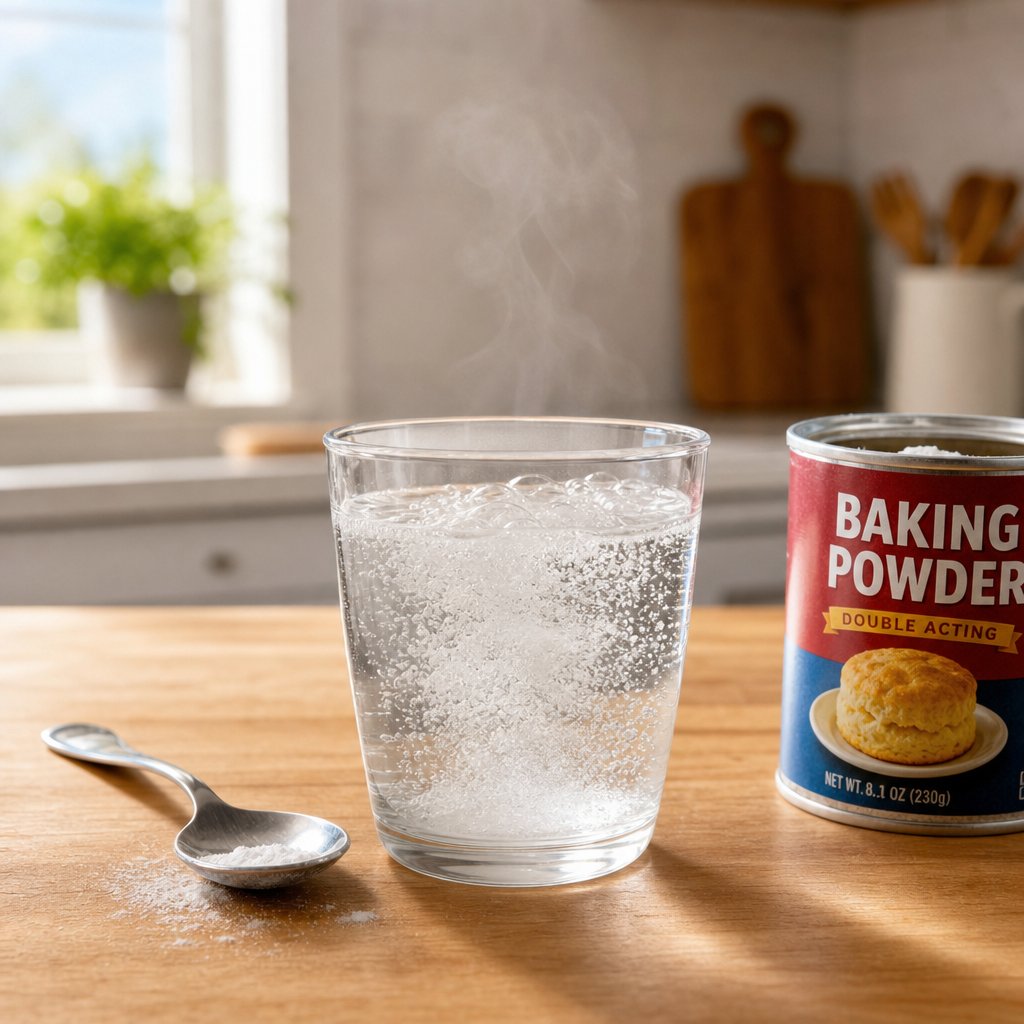
Why Testing Baking Powder Before Baking Matters
You followed the recipe exactly. Measured twice, mixed carefully, preheated the oven to the right temperature. Yet the cake came out flat, dense, and disappointing. Sound familiar? In many cases, the culprit is not your technique or your oven. It is the can of baking powder sitting in your pantry, quietly losing its strength without any visible warning signs.
Why Flat Cakes and Dense Muffins Happen
Baking powder is a chemical leavener responsible for producing the carbon dioxide gas that makes your baked goods rise. Over time, exposure to air and humidity triggers a slow reaction inside the container, gradually depleting its leavening power. A 10-month baking test by Serious Eats found that baking powder begins losing noticeable strength around the six-month mark after opening, producing biscuits roughly half the height of those made with fresh powder by month ten. The tricky part is that the powder looks and smells perfectly fine the entire time.
Baking powder loses potency gradually, not all at once. Partial expiration is the most common and most confusing scenario home bakers face, because the powder still reacts, just not strongly enough to leaven your recipe.
The good news: learning how to test baking powder takes under 30 seconds and can save an entire batch of batter from going to waste.
What This Guide Covers
This guide walks you through multiple methods to check whether your baking powder is still good, including hot water and room temperature tests. You will also learn how to tell if baking powder is still good by reading the intensity of the reaction, how do you test baking powder versus baking soda, how to adjust recipes when potency is borderline, and how proper storage extends shelf life significantly. Each step builds on the last, giving you a complete system for catching weak leaveners before they ruin your next bake.
First, though, it helps to understand what is actually happening inside that can, because the chemistry determines which test method gives you the most accurate answer.
Step 1 - Understand How Baking Powder Actually Works
Imagine a tiny chemical factory packed inside a can. Every time you scoop baking powder into a recipe, you are combining three carefully balanced ingredients that work together to produce gas bubbles on demand. Understanding these components is the key to knowing how to check baking powder is active and why certain test methods work better than others.
The Acid-Base Reaction Inside the Can
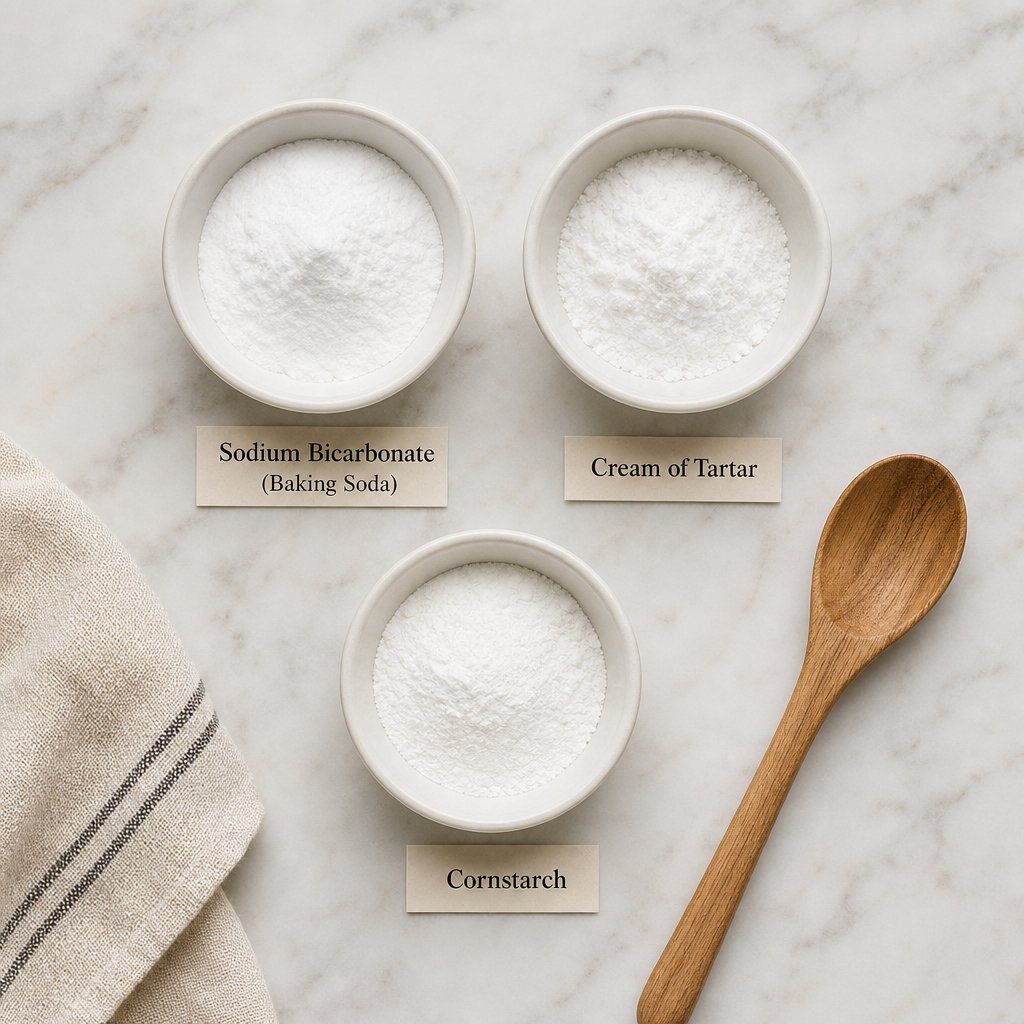
All baking powders contain three core ingredients:
- Baking soda (sodium bicarbonate) - the base that releases carbon dioxide gas when it reacts with an acid
- A dry acid - commonly cream of tartar (potassium bitartrate) or sodium aluminum sulfate, which triggers the CO2-producing reaction
- Cornstarch - a buffer that absorbs ambient moisture and keeps the acid and base from reacting prematurely inside the container
When you add liquid to your batter, the acid and base dissolve, meet, and react to produce carbon dioxide gas. Those tiny CO2 bubbles get trapped in the batter's structure, expanding as the oven heats up and creating the lift that turns dense dough into a fluffy cake. The chemical reaction between sodium bicarbonate and cream of tartar also produces water and a neutral salt, both harmless byproducts that do not affect flavor.
Here is the important part for testing: if the acid or base has already been partially consumed by moisture exposure in your pantry, less CO2 will be available when you actually need it. The cornstarch buffer can only absorb so much humidity before the reaction starts happening on its own, slowly, inside the sealed can.
Single-Acting vs Double-Acting Baking Powder
Not all baking powders activate the same way. The type you have determines how to activate baking powder properly and which freshness test gives you the most complete picture.
Single-acting baking powders contain a fast-reacting acid that dissolves and produces CO2 the moment it contacts liquid. All the leavening happens at room temperature, which means you need to get your batter into the oven quickly before the bubbles escape.
Double-acting baking powders, the standard variety in most North American grocery stores, contain an acid (such as monocalcium phosphate or sodium aluminum sulfate) that reacts in two stages. A small amount of CO2 releases when the powder gets wet, and a second, larger burst of gas releases when the batter reaches oven temperatures. This two-stage design gives bakers more flexibility because the batter does not lose all its rising power if it sits for a few minutes before baking.
| Feature | Single-Acting Baking Powder | Double-Acting Baking Powder |
|---|---|---|
| Activation trigger | Moisture only | Moisture + heat (two stages) |
| Timing | Reacts immediately when wet | Partial reaction when wet, full reaction in oven |
| Common uses | Donuts, recipes baked immediately | Cakes, muffins, biscuits, cookie dough held overnight |
| Best freshness test | Room temperature water (triggers full reaction) | Hot water (triggers both acid stages for complete reading) |
| Pantry availability | Specialty stores, less common | Standard in most grocery stores |
Because double-acting powder is what most home bakers have on hand, the hot water test covered in the next section is the most reliable way to check whether your specific can still has full leavening power. Room temperature water only activates the first-stage acid, giving you an incomplete picture of what the powder can actually do.
So why does baking powder go bad at all? The cornstarch buffer is not a perfect shield. Every time you open the can, humid air enters. Over time, that moisture slowly triggers the acid-base reaction inside the container, releasing CO2 before the powder ever reaches your batter. An opened can typically maintains full potency for about six months, then gradually weakens. The powder does not suddenly stop working. It fades, which is exactly why testing matters more than checking expiration dates.
With this chemistry in mind, you can see why simply looking at or smelling your baking powder tells you nothing useful. The only reliable approach is to trigger the reaction yourself and observe how vigorously it responds.
Step 2 - Perform the Hot Water Freshness Test
Here is where you put that chemistry knowledge to work. The hot water test is the fastest, most reliable baking powder freshness test available, and it takes less time than waiting for your oven to preheat. All you need is boiling water, a teaspoon, and a small bowl or cup.
What You Need for the Hot Water Test
Gather these items before you start:
- A kettle or small pot of water heated to a rolling boil (or very close to it)
- A measuring spoon
- 1 teaspoon of baking powder from the can you want to test
- A small glass or bowl that holds at least 1/3 cup of liquid
Why hot water specifically? Remember that double-acting baking powder, the kind most likely in your pantry, contains two types of acid. One reacts at room temperature when it contacts moisture, and the second only activates at elevated temperatures. Hot water triggers both acid stages simultaneously, giving you a complete picture of remaining potency. If you only used cold water, you would miss the heat-activated component entirely and could mistakenly think a perfectly good powder is weak.
This is what makes the hot water method the gold standard test for baking powder. It simulates both conditions your powder will face inside a real batter: getting wet during mixing and getting hot inside the oven.
Performing the Test Step by Step
Ready? The whole process takes about 10 seconds of active observation:
- Heat your water. Bring water to a boil or near-boil. You do not need a thermometer. If steam is rising and small bubbles are forming at the bottom of the pot, the water is hot enough.
- Measure the baking powder. Scoop 1 teaspoon of baking powder from your container. Level it off with a knife or your finger for a consistent amount.
- Add powder to water. Pour roughly 1/3 cup of the hot water into your bowl, then stir or drop the measured teaspoon of baking powder directly into the water.
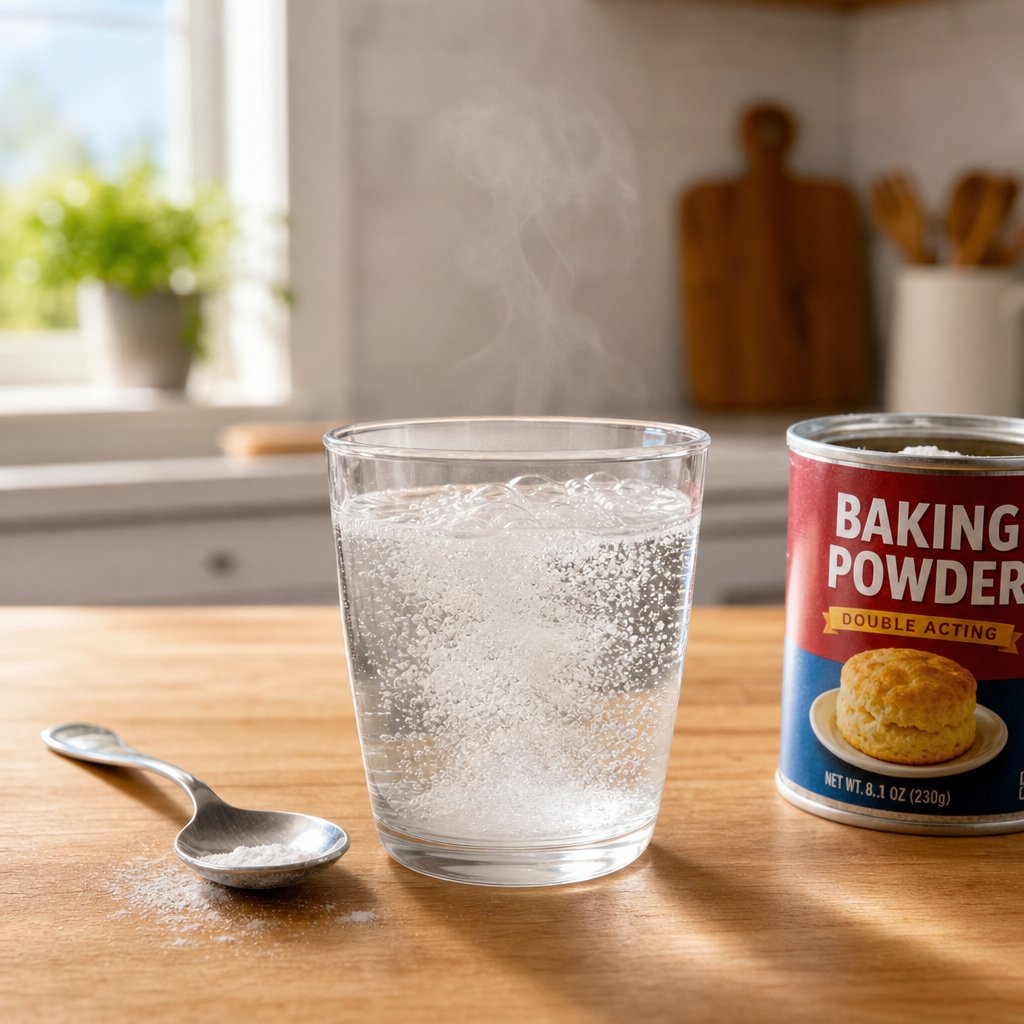
- Observe the reaction within 10 seconds. Watch immediately. A fresh, fully active powder will produce vigorous bubbling and foaming the instant it hits the hot water. The surface should fizz energetically, with foam rising visibly above the waterline.
A positive result is unmistakable. You will see an enthusiastic burst of tiny bubbles, similar to dropping an effervescent tablet into water. The mixture foams up quickly and noticeably. There is no ambiguity when testing baking powder that still has full strength.
A negative result is equally clear. If the powder sinks into the water with little to no visible reaction, maybe a few lazy bubbles drifting to the surface, the leavening agents inside have already been spent. That can belongs in the trash, not your next recipe.
The reaction should be immediate and enthusiastic. A slow, weak fizz indicates partial degradation. If you have to wait and wonder whether something is happening, your baking powder has already lost significant leavening power.
One detail worth noting: the bubbling will subside fairly quickly, usually within 15 to 20 seconds. That is normal. What matters is the initial intensity of the reaction, not how long it lasts. A strong, immediate burst followed by a quick fade is the sign of healthy powder. A faint trickle that never really gets going is the warning sign.
This test for baking powder works reliably regardless of brand, container size, or whether the can has been opened for two weeks or two years. The chemistry does not change. Either the acid and base react vigorously when given the right conditions, or they do not.
But what if your result falls somewhere in between? A moderate fizz that is clearly present but not exactly vigorous? That gray area is where most home bakers get stuck, and it requires a slightly different interpretation approach.
Step 3 - Try the Room Temperature Water Test
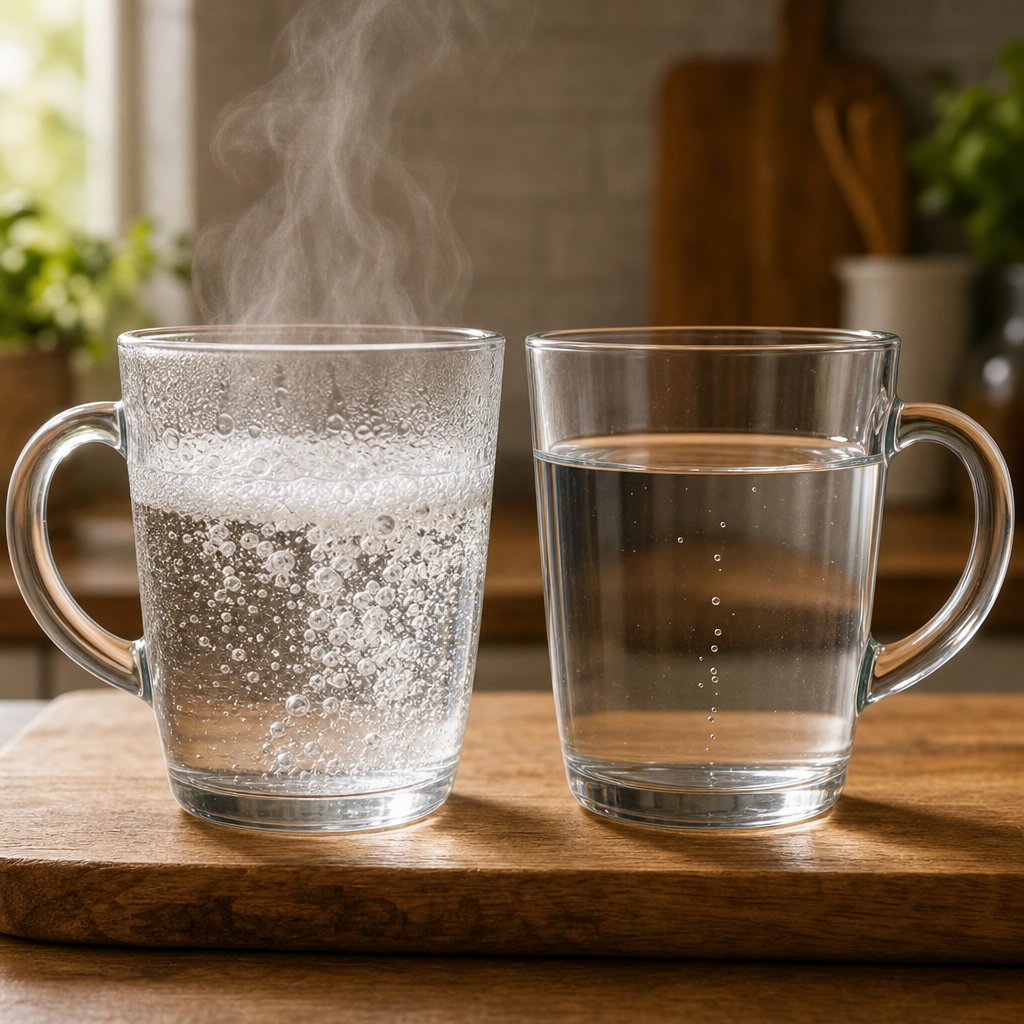
The hot water method gives you the full picture, but sometimes you want to isolate just one piece of the puzzle. That is where the room temperature water test comes in. This secondary method specifically targets the first-rise acid in double-acting baking powder, the component that reacts the moment liquid touches it during mixing. By running both tests side by side, you can check baking powder potency at each stage of its leavening cycle and pinpoint exactly where degradation has occurred.
When to Use the Room Temperature Method
Think of this test as a diagnostic tool rather than a pass-or-fail check. You would use it when:
- The hot water test produced a moderate reaction and you want to understand why
- You are curious whether the first-rise acid or the heat-activated acid has weakened more
- You bake recipes that rely heavily on initial batter rise before reaching the oven, like pancakes poured onto a griddle or muffins that need to dome quickly
The procedure is nearly identical to the hot water version. Measure 1 teaspoon of baking powder and stir it into 1/3 cup of room temperature tap water. Watch for bubbling within the first 10 seconds. Because you are only activating the moisture-sensitive acid, the reaction will naturally be less dramatic than the hot water test, even with perfectly fresh powder. You are looking for moderate, steady bubbling rather than the vigorous foam you saw with boiling water.
Why does this matter? In a real baking scenario, the first-rise acid creates initial gas bubbles that get trapped in your batter during mixing. These bubbles establish the structure that the second rise, triggered by oven heat, will expand. If the first-rise acid is depleted but the heat-activated acid is still intact, your batter might look flat on the counter yet still rise somewhat in the oven. The opposite scenario, strong first rise but weak heat activation, means your batter looks bubbly during mixing but collapses or stalls once baked.
Running both tests gives you a way to test baking powder freshness with more precision than a single method alone.
Comparing Results Between Hot and Cold Tests
The real value of the room temperature test emerges when you compare it directly against your hot water results. Here is how to read the combination:
| Test Scenario | Room Temp Water Result | Hot Water Result | What It Means |
|---|---|---|---|
| Fully active powder | Moderate, steady bubbling | Vigorous, immediate foam | Both acid stages intact. Use as directed in any recipe. |
| First-rise acid weakened | Faint or minimal bubbles | Moderate to strong bubbling | Heat-activated acid still works. Recipes baked immediately in a hot oven may still turn out fine. |
| Heat-activated acid weakened | Moderate bubbling | Only slightly more reaction than room temp | First-rise acid intact but oven boost is diminished. Expect less spring during baking. |
| Both acids depleted | No visible reaction | No visible reaction | Discard immediately. This powder will not leaven anything. |
The most common scenario for partially expired powder is the first row shifting toward the second: room temperature reaction fades while the hot water test still shows decent activity. This happens because the moisture-sensitive acid is the first to degrade from ambient humidity entering the container every time you open it. The heat-activated acid, which requires higher temperatures to dissolve and react, tends to survive longer.
If your room temperature test produces clear bubbles and your hot water test produces significantly more, your powder is still good for most everyday baking. The two-stage system is working as designed. If neither test produces much of a reaction, it is time to replace the can entirely.
These side-by-side results also help you decide how aggressively to compensate in a recipe. A powder that still fizzes well in hot water but barely reacts at room temperature might work perfectly for a cake baked right away, yet struggle in a recipe where batter sits before baking. That kind of nuance is impossible to detect with a single test alone, which is why the comparison approach gives you a more complete way to test for baking powder freshness.
Of course, knowing your powder is partially degraded raises an immediate follow-up question: how do you actually read the intensity of that reaction and decide whether to use it, increase it, or toss it?
Step 4 - Interpret Your Results Accurately
You ran the test. The powder hit the water. Something happened, but it was not the dramatic eruption you expected. It was not nothing either. Just a few bubbles, maybe a faint hiss. This is the moment where most home bakers freeze, staring at the cup and wondering: is this good enough?
The reality is that baking powder rarely dies overnight. It fades. And that middle ground between "perfectly fresh" and "completely dead" is where the vast majority of real-world test results land. Knowing how to know if baking powder is still good means learning to read the intensity of the reaction, not just whether a reaction exists at all.
Fully Active vs Partially Degraded vs Dead
Every test result falls into one of three categories. Think of them as a traffic light for your baking powder:
Fully active (green light): The powder produces an immediate, vigorous fizz the instant it contacts hot water. Foam rises visibly above the waterline, the surface churns with tiny bubbles, and the reaction is obvious from across the kitchen. No squinting required. This powder will perform exactly as your recipe expects.
Partially degraded (yellow light): Some bubbling occurs, but it is noticeably weaker or slower than what fresh powder produces. You might see scattered bubbles rising to the surface, a thin layer of foam that does not climb, or a brief fizz that dies out almost immediately. The reaction is present but underwhelming. This is the category that trips people up because the powder is technically still doing something.
Dead (red light): The powder sinks into the water and sits there. No bubbles, no fizz, no foam. The surface stays flat and still. Maybe one or two stray bubbles appear after several seconds, but nothing that resembles an active chemical reaction. This powder has already spent its leavening power inside the can and will do nothing useful in your batter.
Here is the part that matters: most cans of baking powder that have been open for several months fall squarely into that yellow-light zone. The powder is not dead, but it is not operating at full strength either. How do you know if baking powder is still good enough to use? You need to look more closely at what the bubbles are actually telling you.
Reading Bubble Intensity Like a Pro
The difference between usable and unreliable often comes down to subtle visual cues. When you run your hot water test, pay attention to these specific indicators:
- Vigorous foam rising above the waterline - This means full potency, roughly 90-100% of original strength. The powder is reacting completely and will leaven any recipe without adjustment. You will hear a faint hissing sound and see the foam climb the sides of the cup.
- Moderate bubbling that stays at or just below the surface - This indicates approximately 70-80% potency. The reaction is clearly visible but contained. Suitable for most everyday baking, though delicate recipes like chiffon cakes may underperform slightly.
- Small, scattered bubbles with no cohesive foam - This signals 50-70% potency. Individual bubbles rise to the surface one at a time rather than forming a unified fizz. The powder still has some life, but it will struggle with anything that demands significant lift.
- A flat surface with no visible movement - Replacement is needed immediately. Even if one or two bubbles eventually appear after 10 or 15 seconds, the leavening power is effectively gone.
If you have to squint to see bubbles, your baking powder will not reliably leaven anything taller than a pancake.
One practical tip: if you have a fresh, unopened can available, run the test side by side with your older powder. Seeing the contrast in real time makes the difference unmistakable. A side-by-side comparison between fresh and expired powder shows that stale powder produces only a few lazy bubbles while fresh powder dissolves immediately with vigorous fizzing.
The key takeaway for how to test baking powder is still good: trust your eyes, not your hopes. A weak reaction does not become stronger once it is inside your batter. If anything, the dilution of a full recipe makes the problem worse. That faint fizz in a concentrated teaspoon-to-water test translates to even less gas production when spread across two cups of flour, eggs, sugar, and butter.
So what do you actually do when your powder lands in that yellow-light zone? You have two options: increase the amount to compensate for lost strength, or replace the can entirely. The right choice depends on what you are baking and how much potency remains.
Step 5 - Adjust Recipes for Weakened Baking Powder
Your test showed a yellow-light result. The powder is not dead, but it is clearly not at full strength. Do you toss it and run to the store, or can you work with what you have? The answer depends entirely on what you are about to bake.
How Much Extra Baking Powder to Use
The general compensation rule is straightforward: if your baking powder shows weak but visible activity during the hot water test, increase the amount by 25-50% to make up for lost potency. A recipe calling for 1 teaspoon would get bumped to 1 1/4 or 1 1/2 teaspoons instead.
Sounds simple enough, right? There is a catch. Baking powder contains more than just leavening agents. It also includes sodium, acid salts, and starch. Dumping in extra means introducing more of those compounds into your batter, and beyond a certain threshold, you will notice a distinctly metallic or bitter aftertaste in the finished product. This is why over-leavening creates off flavors rather than simply more lift. The standard ratio of about 1 to 1 1/4 teaspoons per cup of flour exists for a reason, and pushing much beyond 1 1/2 teaspoons per cup risks ruining the taste even if the rise improves.
A practical guideline: if your test showed scattered bubbles with no cohesive foam (that 50-70% potency range), a 50% increase is reasonable for forgiving recipes. If you saw moderate bubbling just below the surface (70-80% potency), a 25% bump is usually enough. If you saw almost nothing, skip the math and buy a fresh can.
Recipes That Demand Full-Strength Leavening
Not every baked good reacts the same way to weakened leavening. Some recipes have built-in forgiveness, thick batters, short rise requirements, or structural support from eggs and fat that compensate for less gas production. Others rely almost entirely on chemical leavening for their signature texture and have zero margin for error.
Angel food cake is the classic example of extreme sensitivity. As noted by Handle the Heat, angel food cake contains no fat and no egg yolks, relying on whipped egg whites and precise chemical reactions for its impossibly light structure. Any weakness in your leavening system, whether from stale cream of tartar or partially expired baking powder in other delicate cakes, means the difference between a towering slice and a collapsed disappointment. Souffles and chiffon cakes fall into the same category. These recipes are not the place to gamble on borderline ingredients.
On the other end of the spectrum, pancakes and waffles are remarkably forgiving. They bake quickly on direct heat, require only modest rise, and taste great even when slightly denser than ideal. If you want to know how to test if baking powder is still good enough for Saturday morning pancakes, the bar is lower than it would be for a birthday layer cake.
Here is a quick reference for deciding when to compensate versus when to replace:
| Sensitivity Level | Recipe Examples | Action for Weakened Powder |
|---|---|---|
| High sensitivity | Angel food cake, chiffon cake, souffles, popovers | Always use fresh powder. Do not compensate. |
| Medium sensitivity | Quick breads, scones, layer cakes, biscuits | Increase by 25%. Replace if potency is below 70%. |
| Low sensitivity | Pancakes, waffles, dense muffins, cornbread | Increase by up to 50%. Usable down to roughly 50% potency. |
One more consideration: even in forgiving recipes, there is a ceiling. If you find yourself adding more than 50% extra baking powder to get acceptable results, the metallic taste will likely become noticeable. At that point, replacement is the better path regardless of what you are making. A fresh can costs a few dollars. A ruined batch of ingredients costs more, plus your time and patience.
The bottom line for how to check if baking powder is still good enough to use without replacement: match your test results to your recipe's sensitivity. High-stakes bakes deserve fresh leavening every time. Casual weekday cooking can tolerate a modest bump in quantity. And if you ever find yourself wondering how to test baking powder if it is still good enough for a specific recipe, run the hot water test and compare the reaction intensity against the table above.
Of course, baking powder is not the only leavener in your pantry that can quietly lose its punch. Baking soda and yeast degrade too, but they require completely different testing methods to evaluate.
Step 6 - Test Baking Soda and Yeast the Right Way
Baking soda and yeast sit right next to baking powder in most pantries, and they degrade just as silently. But here is where people trip up: the hot water method that works perfectly for baking powder will not tell you anything useful about baking soda. Each leavener has its own chemistry, which means each one needs its own test.
The fundamental difference comes down to composition. Baking powder already contains both a base and an acid, so water alone triggers the reaction. Baking soda, on the other hand, is pure sodium bicarbonate, a base with no built-in acid. It needs an external acid source to react. And yeast? It is not a chemical at all. It is a living organism that operates on a completely different timeline. So no, yeast and baking powder are not the same, even though both produce carbon dioxide and make dough rise.
The Vinegar Test for Baking Soda
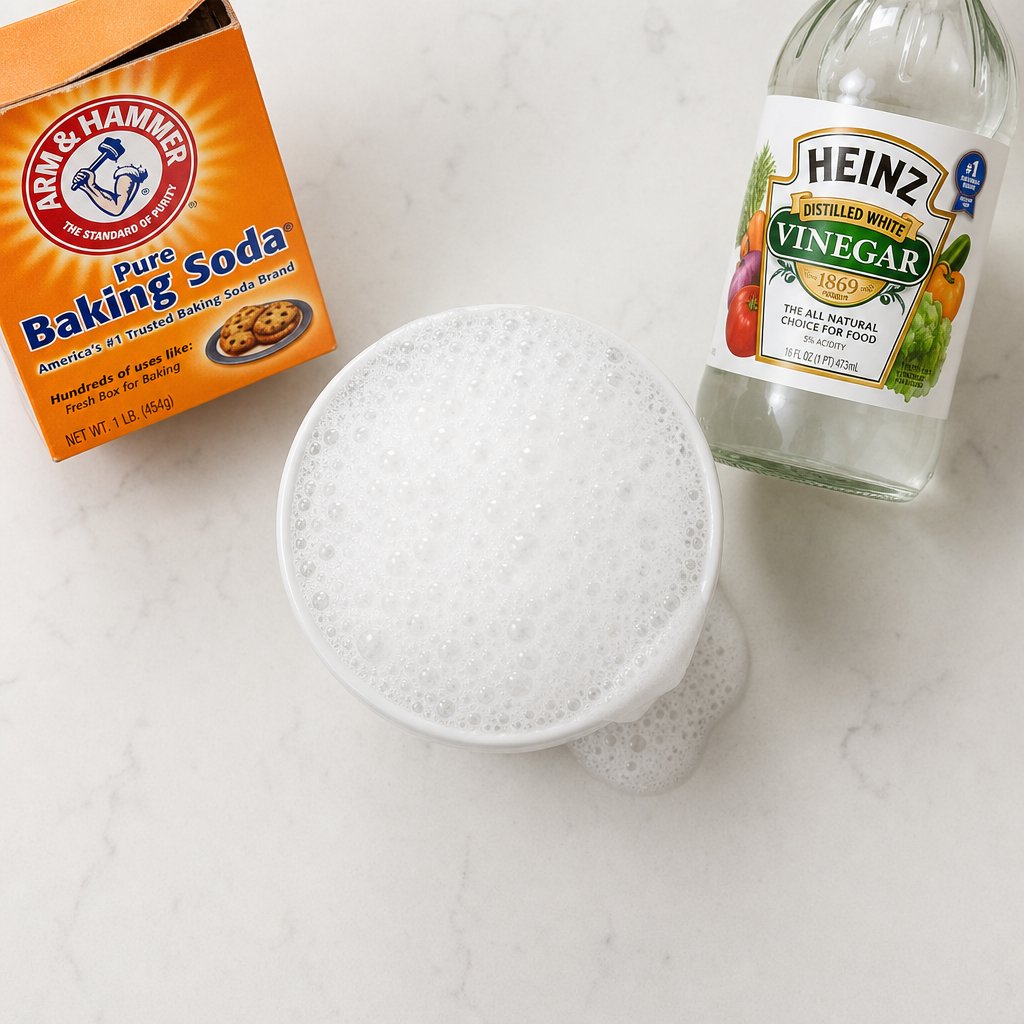
How do you test baking soda for freshness? You give it the acid it craves. Vinegar is the fastest, most accessible option. Here is the process:
- Pour 2 tablespoons of white vinegar into a small bowl. Any vinegar works, but white distilled gives you the clearest visual since there is no color to obscure the reaction.
- Add 1 teaspoon of baking soda directly into the vinegar. Do not stir beforehand. Drop it in and step back slightly.
- Look for immediate, aggressive fizzing. Fresh baking soda reacts on contact, producing a rapid, vigorous eruption of bubbles that foams up quickly and audibly hisses.
The reaction when testing baking soda should be dramatic and instantaneous. As King Arthur Baking notes, if the two do not fizz on contact, or the fizzing is gentle and minimal, it is time to replace the box. Unlike baking powder, there is less of a gray area here. Baking soda either reacts aggressively with acid or it does not. A weak response means the sodium bicarbonate has already absorbed moisture and partially converted, leaving less available to leaven your cookies, muffins, or quick breads.
You can also test baking soda with lemon juice or cream of tartar dissolved in water. Any acid will trigger the same base-plus-acid reaction. Vinegar is simply the most convenient option already in most kitchens.
Testing Yeast Is a Different Process Entirely
Yeast does not respond to acid or hot water the way chemical leaveners do. It is a single-celled organism that needs food, warmth, and time to prove it is alive. The process, called proofing, takes about 10 minutes rather than 10 seconds.
To test yeast for freshness, dissolve 1/2 teaspoon of sugar in 1/2 cup of warm water (around 105-110 degrees Fahrenheit). Stir in one packet of active dry yeast or 2 teaspoons of instant yeast. Walk away for 10 minutes. When you return, the mixture should be foamy, domed, and clearly expanding. If it sits flat with no visible activity after 10 minutes, the yeast is dead and will not raise your bread.
The key distinction between baking soda and yeast, aside from one being chemical and the other biological, is time. Chemical leaveners react in seconds. Yeast needs minutes to wake up, feed, and start producing CO2 through fermentation. This is why you cannot substitute one for the other without fundamentally changing your recipe's timing and structure.
Here is a quick-reference comparison of all three leavening agents and their respective freshness tests:
| Leavening Agent | What It Is | How to Test Freshness | Expected Positive Result | Time to Observe |
|---|---|---|---|---|
| Baking powder | Base + acid + buffer (complete system) | Stir 1 tsp into 1/3 cup hot water | Immediate vigorous bubbling and foam | 5-10 seconds |
| Baking soda | Pure sodium bicarbonate (base only) | Add 1 tsp to 2 tbsp vinegar | Instant aggressive fizzing on contact | 1-3 seconds |
| Yeast | Living single-celled organism | Dissolve in warm water with sugar, wait | Foamy, domed surface with visible expansion | 10-15 minutes |
This comparison highlights why mixing up test methods leads to confusion. If you try to test baking soda with plain water, nothing happens, not because the soda is bad, but because there is no acid present to trigger the reaction. Similarly, dumping yeast into boiling water kills it rather than activating it. Each leavener plays by its own rules.
Whether you need to test baking powder, test baking soda, or proof yeast before a big bake day, the principle is the same: give the ingredient exactly what it needs to react, then observe whether it responds with the expected intensity. A 30-second investment in testing beats hours of troubleshooting a flat, dense result.
Freshness testing solves the immediate question of whether your leaveners still work. But the longer-term question, how to keep them working as long as possible, comes down to how and where you store them after opening.
Step 7 - Store Baking Powder Properly and Maintain Quality at Scale
Knowing how to tell if baking powder is good only solves half the problem. The other half is preventing degradation in the first place. Every time you open the can, humid air rushes in and starts a slow countdown on your powder's remaining potency. Smart storage habits can stretch that timeline significantly, keeping your leavener at full strength for months longer than careless handling allows.
Storage Rules That Maximize Shelf Life
The enemies of baking powder freshness are moisture, heat, and air exposure. Each one accelerates the premature acid-base reaction happening inside the container. Control these three factors and you control how quickly your powder fades.
- Keep the lid sealed tightly after every use. Even a slightly loose cap allows ambient humidity to creep in. If your can's plastic lid does not snap firmly, transfer the powder to a small airtight glass jar or place the entire can inside a sealed zip-top bag.
- Store in a cool, dry cabinet away from the stove and dishwasher. The cabinet directly above your oven is the worst possible location. Steam from cooking and radiant heat accelerate moisture absorption. Choose a pantry shelf or a cabinet on the opposite side of the kitchen.
- Never dip a wet or damp spoon into the container. A single drop of water trapped inside the can triggers a localized reaction that spreads over time. Always use a completely dry measuring spoon, and never hold the open can over a steaming bowl.
- Write the opening date on the can with a marker. You will not remember when you opened it three months from now. A date label removes the guesswork entirely.
- Buy smaller containers if you bake infrequently. A large can that takes 18 months to use up will lose potency long before you reach the bottom. Smaller cans cycle through faster, keeping your supply fresh.
How can i tell if baking powder is still good without running a test every time? General shelf life benchmarks give you a baseline. An unopened can typically lasts up to 18 months (some manufacturers claim up to three years under ideal conditions). Once opened, expect reliable performance for 6 to 12 months depending on your local humidity and how carefully you reseal the container. In humid climates like coastal regions or tropical areas, that window shrinks closer to 6 months. In dry climates with low ambient moisture, you may get a full year of strong performance.
Environmental factors matter more than most bakers realize. Controlled testing by Serious Eats showed measurable decline in leavening power starting at the six-month mark, with biscuits baked using 10-month-old powder rising to roughly half the height of those made with fresh powder. That degradation happened in a normal kitchen environment with standard storage. In a hot, humid kitchen without climate control, the timeline compresses further.
The takeaway: how do you tell if baking powder is still good without testing? You cannot, not with certainty. But proper storage buys you time between tests and ensures that when you do scoop powder into a recipe, the odds are strongly in your favor.
Quality Control for Commercial and Scaled Production
For home bakers making a weekend cake, a quick hot water test and a tightly sealed can are enough. But what happens when you scale beyond a single kitchen? Home bakers selling at farmers markets, small bakeries producing hundreds of units per week, or entrepreneurs developing shelf-stable baking mixes all face a fundamentally different challenge: ingredient quality control across larger volumes, longer storage timelines, and multiple production batches.
At scale, the same principles apply but the stakes multiply. A partially degraded can of baking powder at home ruins one cake. A degraded bulk supply in a commercial operation ruins an entire production run, wastes raw materials, and damages customer trust. Research on powdered food manufacturing emphasizes that quality assurance for dry ingredients must be specific to the product formulation, its manufacturing process, and its distribution conditions. Environmental factors like humidity and temperature in the production area directly affect powder stability and finished product consistency.
This is where the gap between home testing and professional quality systems becomes clear. A teaspoon-in-hot-water test works for a single can. It does not scale to verifying potency across 50-kilogram bulk shipments of leavening agents, functional powders, or supplement blends. Businesses moving from kitchen-scale to commercial production, whether for baking mixes, functional food powders, or nutritional supplements, need systematic quality verification built into their manufacturing process.
For brands developing powder-based products where chemical stability directly affects performance, partnering with an experienced OEM/ODM manufacturer provides the infrastructure that home testing cannot replicate. ZhuFeng's health food manufacturing services, for example, offer customized formulation and scalable production across formats like powder and granule products, tablets, capsules, and oral liquids. Their professional quality systems verify ingredient potency at the manufacturing stage, ensuring that active compounds, whether leavening agents in a baking mix or functional nutrients in a supplement blend, maintain their specified strength through production and into the finished product. For nutrition brands, supplement importers, or private label sellers working with powder-based formulations, this kind of built-in quality control is the commercial-grade answer to the same freshness problem home bakers solve with a cup of hot water.
Whether you are testing a single can in your kitchen or managing ingredient quality across a full production line, the underlying principle stays the same: powder-based products are only as good as the chemical stability of their active ingredients. Test at home, verify at scale, and store properly at every level.
Frequently Asked Questions About Testing Baking Powder
1. How do you test baking powder to see if it is still good?
Stir 1 teaspoon of baking powder into 1/3 cup of hot (near-boiling) water. If the mixture immediately produces vigorous bubbling and foam that rises above the waterline, the powder is fully active. A weak or delayed fizz means partial degradation, while no reaction at all means it should be discarded. The hot water method works best because it triggers both acid stages in double-acting baking powder, giving you a complete reading of remaining potency.
2. How long does baking powder last after opening?
An opened can of baking powder typically maintains full leavening strength for 6 to 12 months, depending on storage conditions and local humidity levels. In humid climates, expect closer to 6 months of reliable performance. In dry environments with careful storage, you may get up to a year. Unopened cans can last 18 months or longer. Writing the opening date on the can helps you track freshness without relying on memory alone.
3. What is the difference between testing baking powder and testing baking soda?
Baking powder contains its own acid, so it reacts with plain hot water during testing. Baking soda is pure sodium bicarbonate and requires an external acid like vinegar to trigger a reaction. To test baking soda, add 1 teaspoon to 2 tablespoons of white vinegar and look for immediate aggressive fizzing. Using the wrong test method for either ingredient will give you misleading results because the underlying chemistry is different.
4. Can you still use baking powder that only fizzes a little?
Yes, but only for forgiving recipes. If your baking powder shows weak activity (scattered bubbles without cohesive foam), you can increase the amount by 25-50% for low-sensitivity items like pancakes, waffles, and dense muffins. However, delicate recipes such as angel food cake, chiffon cake, and souffles always require fresh, full-strength powder. Adding too much weakened powder to compensate can introduce a metallic or bitter taste.
5. Why does baking powder lose its strength over time?
Baking powder contains a base (baking soda) and a dry acid separated by a cornstarch buffer. Every time you open the container, humid air enters and slowly triggers the acid-base reaction inside the can, releasing carbon dioxide before the powder reaches your batter. The cornstarch buffer absorbs some moisture, but it has limits. Over months, enough of the reactive components get consumed that the powder can no longer produce sufficient gas to leaven baked goods properly.