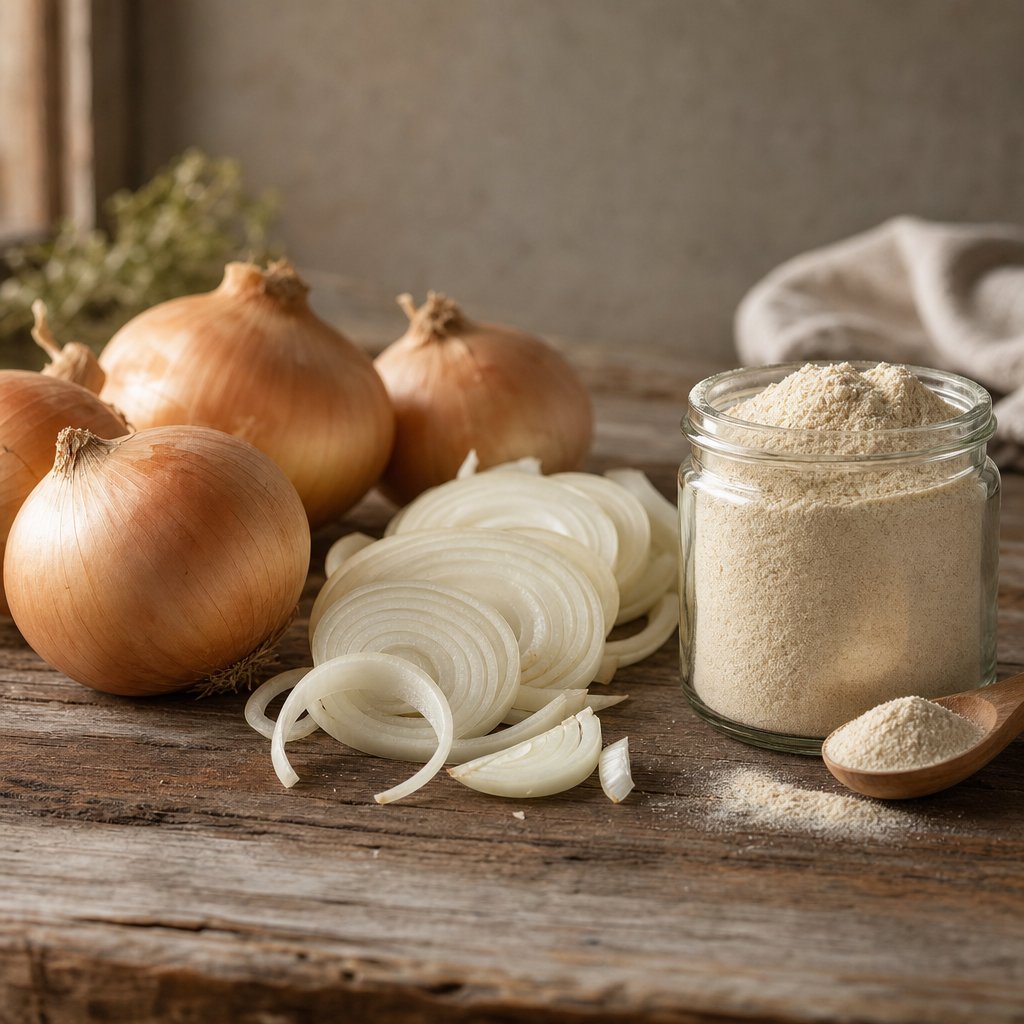
What Onion Powder Is and How It Gets Made
Ever wonder what is onion powder, really? You reach for it almost every time you cook, but the journey from a raw bulb to that fine, aromatic dust in your spice jar involves more science and engineering than most people realize.
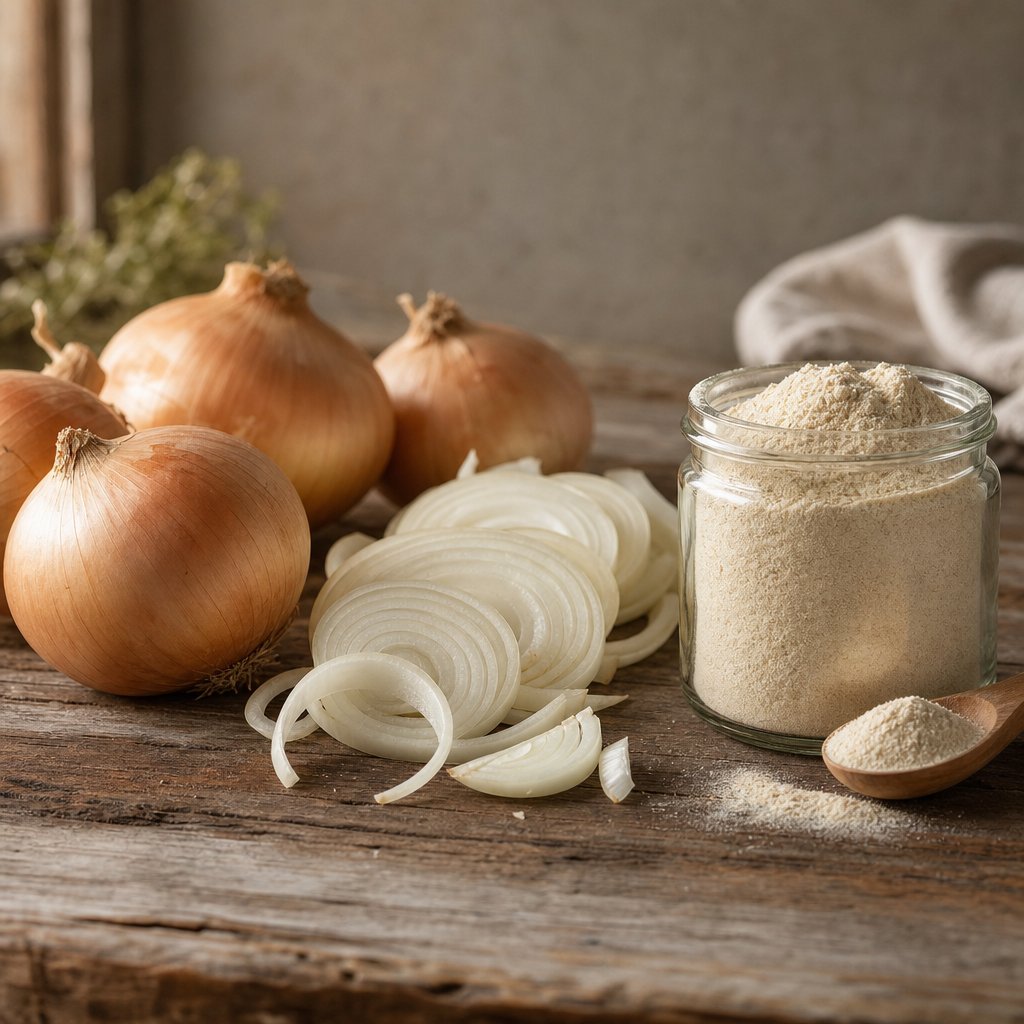
Onion powder is a dehydrated, finely ground spice made from fresh onions. It delivers concentrated onion flavor in a shelf-stable form, serving as a pantry staple and a core ingredient in countless seasoning blends worldwide.
So what is onion powder made of? At its simplest, the ingredients in onion powder are just onions and nothing else. Fresh bulbs are dried until nearly all moisture is removed, then milled into a uniform powder that dissolves easily into sauces, rubs, and dressings. When stored properly in a sealed container, it can last up to two years, making it one of the most practical seasonings in any kitchen.
What Is Onion Powder
Think of onion powder as fresh onion with the water taken out. During production, roughly 96 percent of the onion's moisture is removed, concentrating its flavor compounds into a lightweight, shelf-stable form. The result retains the savory depth of a raw bulb without the peeling, chopping, or tears. What is in onion powder from a reputable brand? Typically just dehydrated onion, with no added sodium, fillers, or preservatives. That single-ingredient simplicity is part of what makes it so versatile in everything from soups and stews to dry rubs and dips.
Two Paths to the Same Product
How is onion powder made depends largely on scale. Two distinct paths lead to the same product sitting on your shelf:
- Commercial manufacturing relies on industrial dehydration systems, automated peeling lines, and precision milling equipment to process thousands of pounds of onions per day. Factories control temperature, airflow, and particle size down to exact specifications.
- Home kitchen methods use food dehydrators, conventional ovens, or even open-air drying to achieve the same basic transformation, just at a smaller, more hands-on scale.
Both approaches follow the same core sequence: harvest, clean, peel, slice, dehydrate, and grind. The differences lie in speed, consistency, and the equipment involved. This article walks you through both perspectives, giving you the factory-floor details that manufacturers rarely share alongside a practical DIY guide you can follow this weekend.
The gap between these two worlds is smaller than you might think, but the details matter. Temperature control, slice thickness, and grinding technique all influence whether you end up with a vibrant, flavorful powder or a dull, clumpy disappointment. Understanding the science behind each step is what separates a mediocre result from a great one.
The History and Origins of Onion Powder Production
Onions have been cultivated for roughly 5,000 years, originating in Central Asia before spreading across ancient Egypt, Greece, Rome, and beyond. Yet powdered onion as a commercial product is a far more recent invention. The leap from fresh bulb to dry onion powder required industrial dehydration technology that simply didn't exist until the early twentieth century. Understanding where this onion spice came from helps explain why it's produced the way it is today.
Early Dehydration and Wartime Demand
Before the 1900s, preserving onions meant sun-drying, pickling, or storing whole bulbs in root cellars. These methods worked for households, but they couldn't deliver the consistency or scale that militaries and food manufacturers needed. By the early twentieth century, food scientists developed industrial dehydration processes using controlled heat and airflow to remove moisture while preserving flavor and nutritional value.
World War II accelerated everything. Governments needed lightweight, shelf-stable rations that could feed troops across multiple theaters of war. Drying was especially attractive because it didn't require rationed materials like sugar, metal, or rubber seals the way canning did. Onions, once dehydrated and ground, offered concentrated flavor in a fraction of the weight and volume of fresh bulbs. Military ration kits could include powdered onion without worrying about spoilage, refrigeration, or breakage.
This wartime demand pushed dehydration facilities to scale rapidly. Factories that had been processing modest quantities of dried vegetables suddenly operated around the clock. The infrastructure built during those years laid the groundwork for the commercial onion spice industry that followed. After the war ended, consumer demand for convenient, shelf-stable seasonings kept those production lines running, and powdered onion transitioned from a military necessity into a household staple.
Major Onion-Growing Regions and Raw Material Quality
Where is onion powder native to? The product itself is a modern invention, but the raw material traces back to Central Asia. Today, China, India, and the United States rank among the largest producers of dehydrated onion products, supplying both domestic markets and international buyers year-round.
Here's what most people don't realize: the flavor of the finished powder depends heavily on the onions that go into it. Variety selection, climate, and soil chemistry all shape pungency and taste. Research from the University of Georgia demonstrates that sulfur availability in the soil directly influences onion pungency. Factors like soil clay content, claypan depth, pH, and organic matter all affect how much sulfur the plant absorbs, which in turn determines the intensity of those characteristic volatile compounds.
Imagine two batches of onions to onion powder: one grown in sulfur-rich soil produces a sharp, pungent result, while another from low-sulfur sandy loam yields a milder, sweeter powder. Variety matters too. Some cultivars naturally produce lower levels of pyruvic acid, the compound linked to pungency, regardless of growing conditions. Manufacturers who understand these variables can select raw materials that match their target flavor profile, whether that's a bold, savory punch or a gentler background note.
This interplay between agriculture and processing is what separates a generic powdered onion from a premium one. The science doesn't start at the factory door. It starts in the field, with the soil, the seed, and the climate shaping the raw material long before any dehydration equipment gets involved.
The Food Science Behind Dehydrating Onions
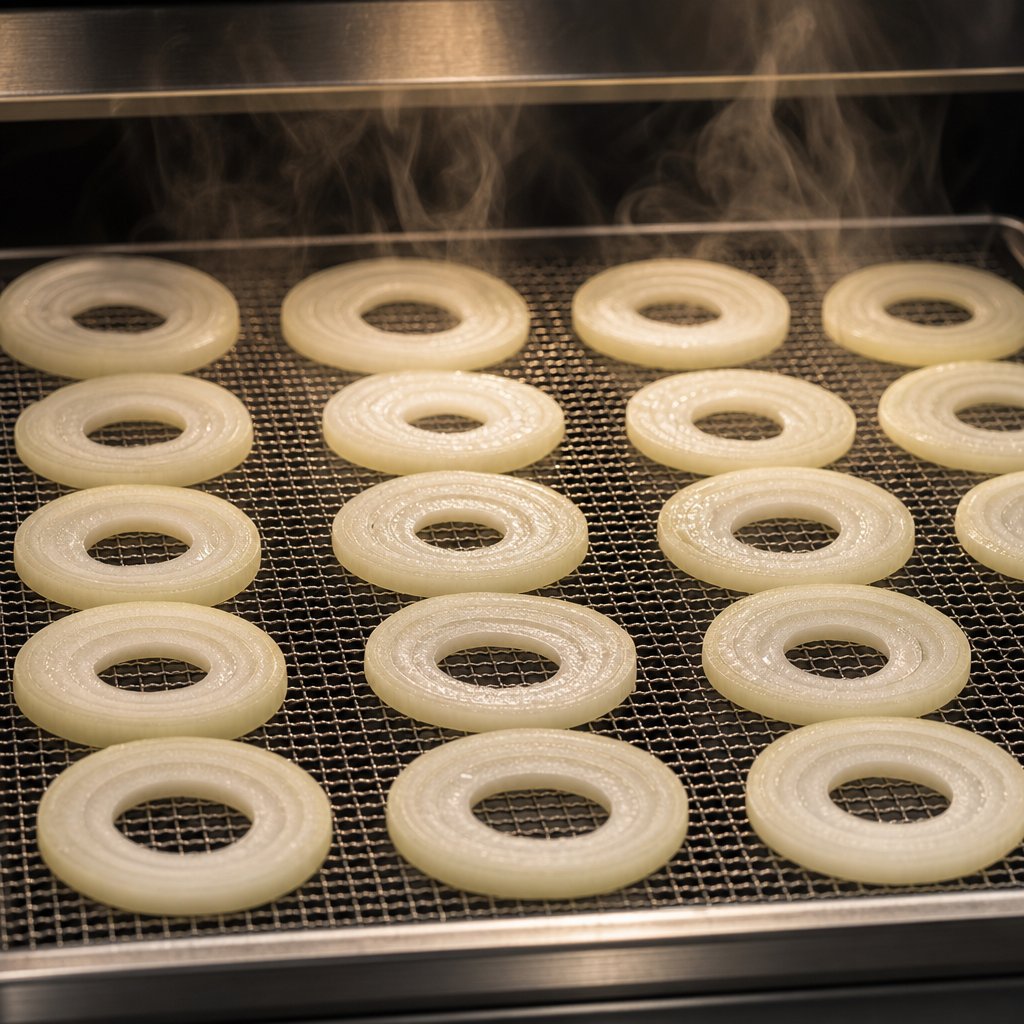
Soil and seed selection set the stage, but the real transformation happens during dehydration. Whether you dehydrate onion powder at home or process tons in a factory, the same food science principles govern the outcome. Temperature, slice geometry, and moisture targets all interact in ways that determine whether your finished product tastes vibrant or flat. Understanding these variables is how to prepare onion powder that actually delivers.
Why Uniform Slicing Matters for Even Drying
Imagine placing a 2mm onion ring next to a 5mm chunk on the same dehydrator tray. The thin ring dries in a few hours, potentially over-drying and losing volatile flavor compounds. The thick chunk still holds moisture at its center long after the surface feels crisp. That residual moisture creates a perfect environment for mold growth and makes clean grinding nearly impossible.
Research on onion dehydration kinetics confirms that slice thickness is one of the dominant variables affecting drying rate and final product quality. Thinner, uniform slices allow moisture to migrate evenly from the center to the surface, where airflow carries it away. When thickness varies across a batch, you end up with some pieces that brown from excessive heat exposure while others remain rubbery and prone to spoilage. A mandoline slicer set to roughly 3mm (about 1/8 inch) gives you the consistency needed for predictable results, whether you're dehydrating onions and garlic side by side or processing onions alone.
Moisture Content and How to Verify Dryness
Fresh onions contain approximately 86 percent water. To produce stable dehydrated onion powder, you need to bring that figure down to around 7 percent or less. At this level, microbial activity halts, the dried pieces snap cleanly rather than bending, and grinding produces a fine, free-flowing powder instead of a sticky paste.
How do you verify dryness without lab equipment? Use the snap test: a properly dried onion slice should break crisply between your fingers with no flexibility or soft spots. If it bends, it needs more time. If it crumbles to dust at the slightest touch and looks tan or brown rather than off-white, it may have over-dried at too high a temperature.
Residual moisture above that safe threshold causes clumping during storage because onion powder is hygroscopic, meaning it readily absorbs water from the surrounding air. This is also why understanding how much dried onion equals fresh matters for recipe conversions. Since roughly 86 percent of the original weight is water, one tablespoon of properly dried powder concentrates the flavor of a much larger volume of fresh onion.
Preserving Flavor Compounds During Dehydration
Onion's characteristic taste comes from volatile sulfur-containing compounds, primarily thiosulfinates and their breakdown products. These molecules are heat-sensitive. Low-temperature drying, generally between 50 and 70 degrees Celsius, preserves them effectively. Push the temperature higher and two problems emerge simultaneously.
First, the Maillard reaction accelerates. This is the same chemical process that browns bread crusts and seared meat, a reaction between amino acids and reducing sugars that produces new flavor compounds, color changes, and eventually bitterness. Studies on dehydrated onion and garlic show that non-enzymatic browning follows a zero-order reaction rate that intensifies with rising temperature and peaks at water activity levels between 0.60 and 0.70. That mid-range moisture zone is exactly where onions spend significant time during the drying process, making temperature control critical during this vulnerable window.
Second, volatile flavor compounds escape more rapidly at elevated temperatures. Interestingly, research by Mazza and LeMaguer found that higher dehydration temperatures can actually trap some volatiles by forming a dry surface layer faster, reducing diffusion at the evaporating surface. The trade-off is real: slightly higher temperatures may retain certain flavor compounds but simultaneously trigger browning reactions that produce off-flavors.
The practical takeaway? Keep drying temperatures moderate and consistent. For home producers, that means setting your dehydrator between 125 and 135 degrees Fahrenheit (52-57 degrees Celsius). For commercial operations, multi-stage drying protocols that start slightly warmer and finish cooler offer the best balance between efficiency and flavor preservation. Either way, the goal is the same: remove water without cooking the onion or triggering the chemical reactions that turn a bright, pungent spice into something dull and bitter.
How Onion Powder Is Made in Commercial Factories
Those food science principles don't change at scale, but the equipment and precision involved look nothing like your kitchen setup. So how do they make onion powder in a real factory? The process follows a tightly controlled sequence: receiving, washing, peeling, slicing, dehydrating, milling, sieving, and packaging. Each stage is engineered to maximize yield, maintain food safety, and deliver a consistent product batch after batch.
It starts at the receiving dock. Bulk onions arrive from contracted farms, sorted by variety and size. Workers and automated systems inspect for rot, sprouting, or physical damage. Accepted loads move into high-pressure washing stations that strip away soil, debris, and surface contaminants. From there, the onions enter industrial peeling machines that use self-adjusting floating knives or compressed air to remove skins without damaging the usable layers underneath. Minimizing waste at this stage directly impacts profitability, so peeling efficiency is a major focus for manufacturers.
Peeled onions then pass through mechanical slicers calibrated to produce uniform rings or dices, typically 3-5mm thick. As covered earlier, consistency here prevents uneven drying downstream. The sliced pieces are spread across conveyor belts in a single, even layer and fed into the dehydration system.
Industrial Dehydration Methods
Most large-scale facilities rely on tunnel or belt dryers for making onion powder. These are long, insulated enclosures where sliced onions travel continuously on a mesh conveyor belt through multiple temperature zones. The first zone pre-heats the product to the evaporation point. Middle zones handle the bulk moisture removal at controlled temperatures, typically between 55 and 70 degrees Celsius. A final cooling zone stabilizes the product before it exits. High-velocity fans circulate heated air around and through the mesh belt, stripping moisture from every surface. Modern tunnel dryers use PLC-controlled automation that adjusts belt speed and temperature in real time based on sensor readings, ensuring no wet product ever reaches the next stage.
Vacuum drying serves a different purpose. By reducing atmospheric pressure inside a sealed chamber, water evaporates at much lower temperatures. This method is reserved for heat-sensitive applications where preserving delicate flavor volatiles or color is the top priority. It's slower and more expensive, but the quality difference is measurable.
Spray drying takes a completely different approach. Onion juice concentrate is atomized into a hot air chamber, where the fine droplets lose moisture almost instantly and fall as a fine powder. This method produces an ultra-soluble onion powder ideal for instant soups, snack seasonings, and liquid flavor systems. It's how factories make onion powder in forms that dissolve on contact.
Milling, Sieving, and Quality Control
Once dried to target moisture levels (typically below 5 percent), the onion pieces move to the milling stage. Factories use two primary grinding technologies. Hammer mills use rapidly rotating hammers to pulverize dried pieces against a perforated screen, producing a range of particle sizes depending on screen aperture. Pin mills operate differently, using rotating discs with protruding pins that impact particles at high speed for finer, more uniform results. Pin mills generate less heat during grinding, which helps preserve volatile flavor compounds in the finished powder.
After milling, the powder passes through vibrating sifters that separate it into target particle size fractions. Material that's too coarse gets recirculated for additional grinding. Quality control labs then test each batch for moisture content, color consistency, microbial load, and flavor intensity before clearing it for packaging.
Packaging happens under controlled atmosphere conditions, often with nitrogen flushing to displace oxygen and prevent oxidation during storage. This is how onion powder is made at the commercial level: a chain of precisely calibrated steps where every variable is monitored and adjusted.
For brands interested in developing onion-based or allium-derived health food products at commercial scale, OEM/ODM manufacturers like ZhuFeng offer powder and granule production lines with customized formulation and scalable processing. Their flexible manufacturing capabilities, spanning everything from powder blends to capsules and tablets, make them a practical resource for businesses that understand how the process works and want to bring a product to market without building their own facility.
How to Make Onion Powder at Home
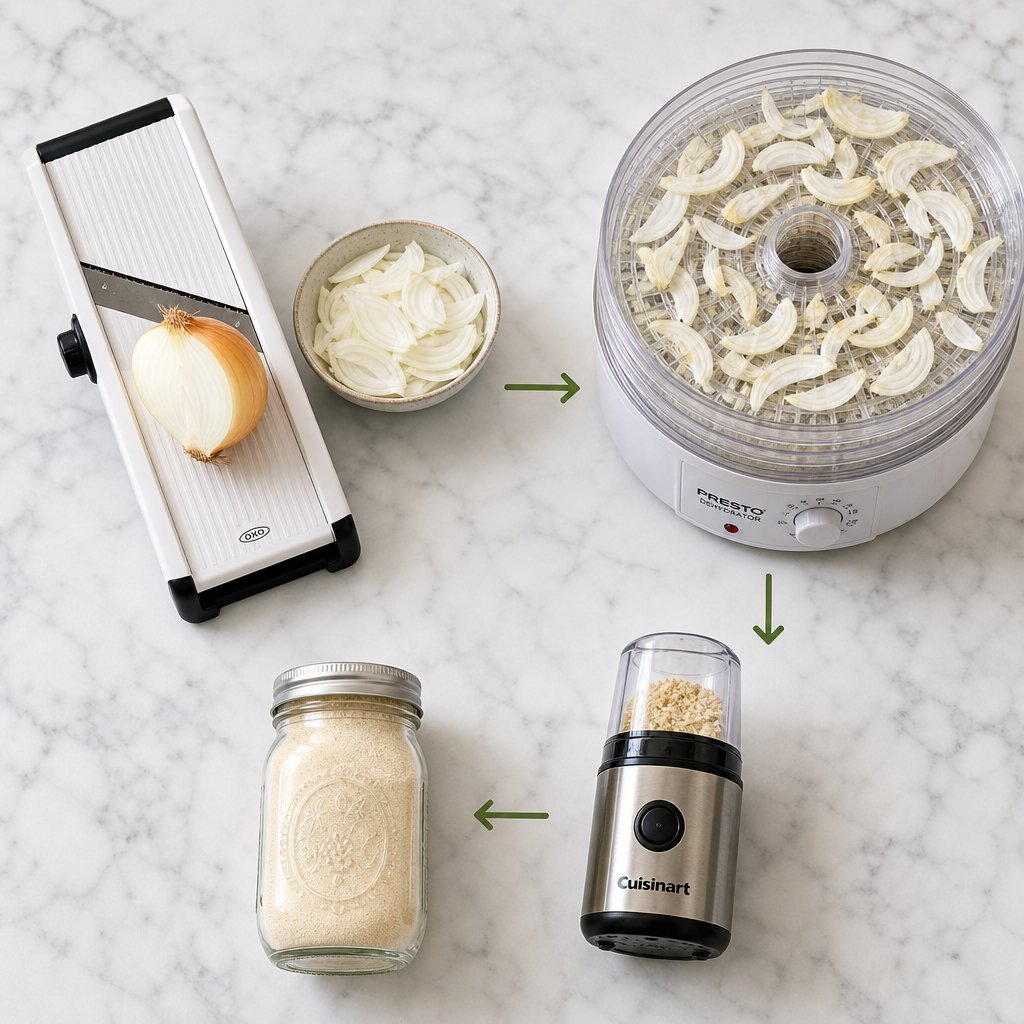
You don't need a tunnel dryer or a pin mill to produce quality onion powder. The same core sequence that factories follow, slice, dehydrate, grind, works perfectly in a home kitchen with basic equipment. The difference is hands-on attention replaces automated sensors. Here's a complete onion powder recipe you can follow this weekend.
Choosing and Preparing Your Onions
How do you make onion powder that actually tastes good? It starts with the right bulb. Yellow onions deliver the most versatile, all-purpose flavor and are the standard choice for homemade onion powder. Red onions work well too, producing a slightly sweeter red onion powder with a subtle color tint. For a milder, more delicate result, green onion tops and scallions yield a light green onion powder that's excellent in dressings and dips.
You can even use parts most people throw away. Curious about how to make onion powder from onion skins? The dry, papery outer layers contain concentrated flavonoids and can be dehydrated and ground separately for a nutrient-rich addition to broths and seasoning blends, though the flavor is more bitter and earthy than powder made from the fleshy layers.
Regardless of variety, prep is straightforward: peel, trim the root end, and slice to a uniform 1/8-inch thickness. A mandoline makes this fast and consistent. For green onion stems, cut into thin rounds or short strips. Uniformity matters here just as much as it does in a factory, because even slices dry at the same rate and grind into a consistent powder.
Dehydrator Method Step by Step
A food dehydrator is the most reliable way to make onion powder at home. It offers consistent low heat, good airflow, and a set-it-and-forget-it workflow. Here's the process:
- Arrange sliced onions in a single layer on dehydrator trays. Pieces can touch side by side but should not overlap.
- Set the temperature to 125-135 degrees Fahrenheit (52-57 degrees Celsius). Lower settings around 100-110 degrees Fahrenheit preserve more enzymes and antioxidants but take longer.
- Dry for 10 to 24 hours, rotating trays halfway through if your dehydrator has uneven airflow.
- Check doneness with the snap test: dried slices should break crisply in half with no flexibility. If they bend, keep drying.
- Allow dried pieces to cool completely before grinding.
One practical tip: onions smell intensely pungent during dehydration. If possible, run your dehydrator in a garage or well-ventilated room with an open window.
Oven and Air-Drying Alternatives
No dehydrator? You can still make homemade onion powder using your oven. Set it to the lowest possible temperature, typically 140-150 degrees Fahrenheit, and spread sliced onions on parchment-lined baking sheets in a single layer. Prop the oven door open slightly to allow moisture to escape. Stir and rotate the sheets every 30 minutes. Expect the process to take 6 to 12 hours depending on your oven and slice thickness.
Air drying is the most passive method and works best in dry, warm climates with low humidity. Spread slices on mesh screens in a shaded, well-ventilated area and allow several days for complete drying. The trade-off is time and unpredictability. Humid conditions can stall the process entirely, and exposure to dust or insects requires protective netting. Quality-wise, air drying preserves flavor compounds well since no heat is applied, but consistency is harder to control.
Grinding to Your Desired Texture
Once your onion slices are completely dry and cooled, it's time to grind. You have several options:
- Spice or coffee grinder: Best for small batches. Produces a fine, uniform powder quickly. Work in small loads to avoid overheating.
- High-speed blender: Handles larger volumes and delivers a super-fine, fluffy result. A Vitamix or similar blender works well here.
- Mortar and pestle: Gives you full control over texture but requires more effort. Best for small quantities or when you want a coarser grind.
The key technique is pulsing rather than running the grinder continuously. Extended grinding generates friction heat that can degrade flavor compounds, the same issue factories solve by using pin mills with minimal heat buildup. Pulse in short bursts, shake the container to redistribute, and repeat until you reach your target consistency.
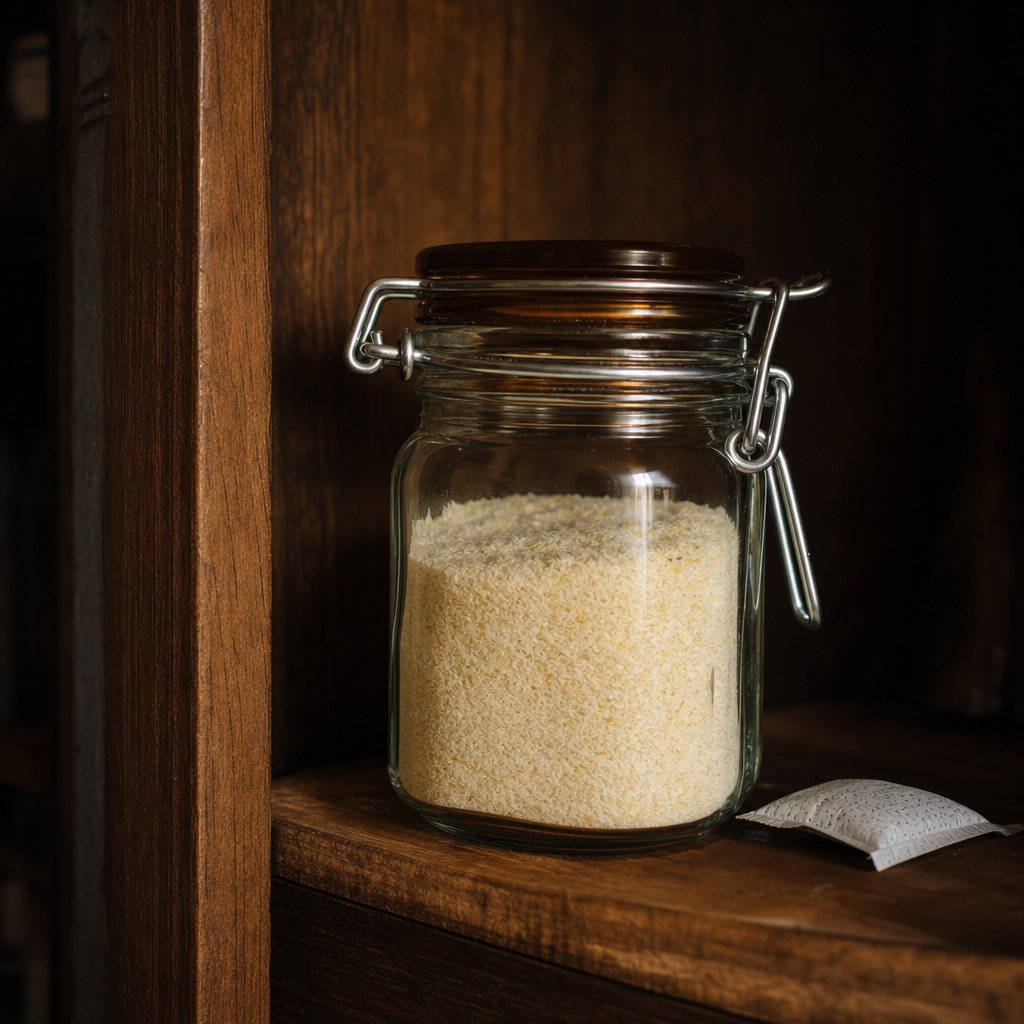
If the finished powder feels slightly clumpy, it may contain residual moisture. Return it to the dehydrator for another 4 to 8 hours, cool, and grind again for a finer result. Transfer your how to make homemade onion powder success into an airtight glass jar, like a mason jar, and store in a cool, dark place.
With the right method dialed in, the next question becomes which drying approach actually gives you the best results for your situation, budget, and climate.
Comparing Drying Methods Side by Side
Each drying method covered so far has trade-offs in time, cost, and flavor quality. Seeing them all in one place makes the decision much easier, especially if you want to make onion powder at home and aren't sure which approach fits your setup.
Drying Methods Compared
| Method | Temperature Range | Approx. Drying Time | Equipment Cost | Flavor Preservation | Best Use Case |
|---|---|---|---|---|---|
| Food Dehydrator | 125-135°F (52-57°C) | 10-24 hours | $40-$200 | Very good | Regular batches with consistent results |
| Conventional Oven | 140-170°F (60-77°C) | 6-12 hours | $0 (existing appliance) | Good | Occasional batches without extra equipment |
| Air Drying | Ambient (no heat applied) | 3-7 days | $0-$20 (screens, netting) | Good to very good | Dry climates, herbs, and green onion tops |
| Sun Drying | 85-110°F (30-43°C) | 2-4 days (15-17 hours active sun) | $0-$30 (trays, covers) | Moderate | Hot, arid regions with strong sunlight |
| Freeze Drying | -40°F then gradual warming under vacuum | 20-40 hours | $2,000-$5,000+ | Excellent | Maximum nutrient and flavor retention |
A few things stand out. Sun drying and air drying cost almost nothing, but research on onion dehydration shows sun-dried samples required up to 17 hours of active sunshine and remain vulnerable to contamination from airborne dust and insects. Controlled methods like a homemade onion powder dehydrator or oven eliminate those risks. Freeze drying removes up to 99 percent of moisture while preserving original color, texture, and volatile flavor compounds far better than any heat-based method, but the equipment investment puts it out of reach for most home producers.
Which Method Suits Your Situation
Choosing comes down to four factors: climate, batch size, budget, and how much you care about flavor fidelity.
- Dry, hot climate with limited budget: Sun drying or air drying works if you can protect the product from pests and dust. This is also how to dry green onions without dehydrator, since their thin structure dries quickly in open air.
- Moderate climate, regular batches: A food dehydrator offers the best balance of cost and consistency. You'll get predictable results every time, and the unit pays for itself within a few batches compared to running your oven for hours.
- No extra equipment, occasional use: Your oven handles the job. It's how to make onion powder without dehydrator when you only process a batch or two per year. Just account for higher energy costs and the need to monitor more closely.
- Maximum quality, no budget constraint: Freeze drying preserves the most nutrients, antioxidants, and volatile sulfur compounds. If you already own a freeze dryer for other preservation projects, onion powder is a natural addition.
For most people looking to make your own onion powder on a regular basis, a mid-range dehydrator in the $50-$150 range hits the sweet spot. It delivers consistent low-temperature drying, handles multiple trays at once, and frees up your oven for actual cooking. Pair it with a decent spice grinder and you have a complete production setup for under $100.
Whichever method you choose, the grind level you target after drying opens up another set of decisions, because flakes, granules, and fine powder each behave differently in recipes.
Understanding Grind Levels from Flakes to Fine Powder
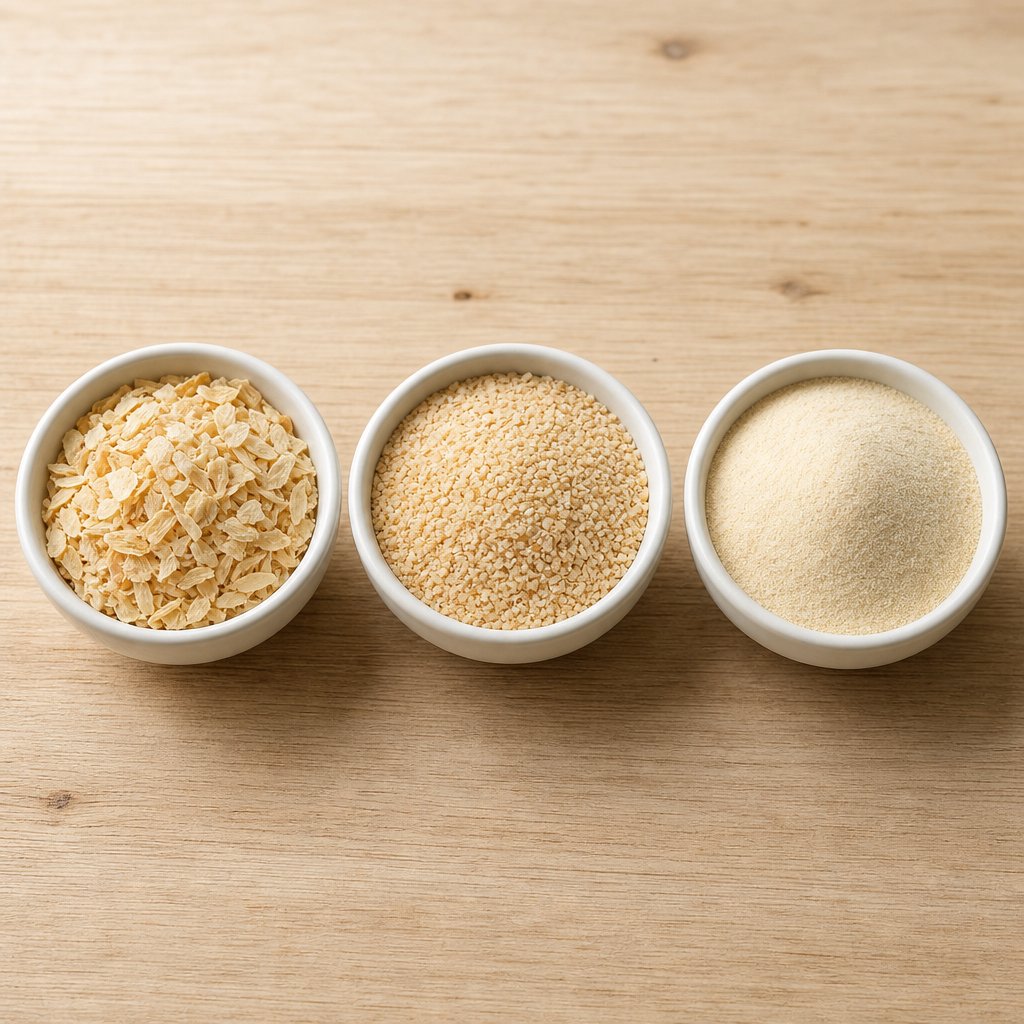
Flakes, granules, and fine powder all start from the same dried onion pieces, but the way they perform in a recipe couldn't be more different. Particle size controls how quickly flavor releases, how visibly the onion shows up in a dish, and whether the texture blends seamlessly or adds a noticeable bite. Knowing which grind level to reach for, and how to convert between them, saves guesswork and wasted seasoning.
Flakes, Granules, and Fine Powder Defined
The distinction comes down to how finely the dried onion is ground and sieved. Each level occupies a specific range on the particle size spectrum, and that size difference drives everything else.
- Onion flakes (3-5mm): Flat, irregular pieces that look like small chips of dried onion. They retain visible shape and rehydrate in hot liquid over 3-8 minutes, softening to a texture resembling cooked onion. Surface area is relatively low, so flavor release is gradual.
- Granulated onion (16-40 mesh): Coarse, gritty particles similar in appearance to cornmeal or coarse sand. Onion granules flow freely, resist clumping better than fine powder, and dissolve reasonably well in wet applications. They deliver a moderate, steady flavor release without disappearing instantly.
- Fine onion powder (80-100 mesh): A flour-like dust that disperses almost completely in liquid. The dramatically increased surface area means volatile sulfur compounds become available immediately, producing a concentrated, instant flavor hit. It integrates invisibly into smooth sauces and coatings.
So is granulated onion the same as onion powder? Not quite. They share the same single ingredient, but the particle size difference changes how they behave in food. Granulated onion powder sits in that middle zone: coarser than fine powder, finer than flakes. Think of it as the difference between table salt and kosher salt. Same substance, different physical form, different performance.
When to Use Each Grind Level in Cooking
Matching grind level to application is where most home cooks can immediately improve their results.
Flakes shine in dishes with liquid and time. Soups, stews, slow-cooker recipes, and instant noodle mixes all benefit from flakes because the pieces rehydrate during cooking and contribute both flavor and visible texture. They're also a solid choice for pizza toppings and bread doughs where you want recognizable onion pieces in the finished product.
Granulated onion is the go-to for dry rubs, barbecue seasonings, and spice blends. The coarse particles mix evenly with other similarly sized spices like cracked pepper and garlic granules, creating a visually consistent blend that flows smoothly from a shaker. Onion granulated products also work well in marinades and burger patty seasoning, where they hydrate quickly enough to integrate but still provide a subtle textural presence.
Fine powder belongs wherever invisible integration matters. Gravies, smooth sauces, salad dressings, snack coatings, and seasoning blends that need to adhere evenly to surfaces all call for the finest grind. It dissolves on contact with moisture and coats food uniformly, which is why chip manufacturers and snack producers rely on 80-100 mesh powder exclusively.
Conversion Ratios Between Grind Levels
Recipes don't always specify which form they mean, and you might only have one type on hand. A reliable onion powder conversion between grind levels keeps you from over- or under-seasoning.
The general rule for substituting granulated onion to onion powder:
| If the recipe calls for | Substitute with |
|---|---|
| 1 teaspoon fine onion powder | 2 teaspoons granulated onion |
| 1 tablespoon fine onion powder | 2 tablespoons granulated onion |
| 1 teaspoon granulated onion | 1/2 teaspoon fine onion powder |
Why the 2:1 ratio? Fine powder packs more densely into a measuring spoon because the tiny particles fill gaps that granules leave open. You need roughly twice the volume of granules to match the same flavor intensity per measure.
For the onion powder to onion ratio when substituting for fresh, a common guideline is that one tablespoon of fine onion powder equals roughly one medium fresh onion in flavor contribution. Granulated onion requires about two tablespoons to achieve the same equivalence, since the coarser particles deliver flavor less efficiently per unit volume.
These ratios are starting points. Taste and adjust, because pungency varies between brands and homemade batches depending on the onion variety and drying method used. The important thing is understanding that grind level isn't just cosmetic. It fundamentally changes how much flavor reaches your palate and how fast it gets there.
Even with the right grind dialed in, home producers often run into issues like clumping, uneven texture, or off-flavors that undermine the final product. Most of these problems trace back to a handful of common mistakes that are easy to fix once you know what's causing them.
Troubleshooting Common Onion Powder Problems
You followed every step, ground your dried onions into a beautiful powder, and sealed the jar. Two weeks later you open it and find a solid brick. Or maybe the powder came out brown and bitter instead of pale and pungent. These frustrations are incredibly common with diy onion powder, but every one of them traces back to a specific, fixable cause.
Preventing Clumping and Moisture Reabsorption
Why does onion powder get hard? The answer is simple: onion powder is hygroscopic, meaning it actively pulls moisture from the surrounding air. Even a small amount of residual water left in the dried pieces before grinding, or humidity that sneaks in through a loose lid, causes fine particles to bond together into clumps that eventually harden into a solid mass.
The fix starts before you grind. Make sure your dried onion pieces pass the snap test with zero flexibility. Then condition them: store the dried pieces in a sealed jar for five to seven days, flipping the jar daily and checking for any condensation on the glass. If moisture appears, return the pieces to the dehydrator for a few more hours. Only grind once conditioning confirms they're fully dry.
After grinding, protect your onion powder homemade batch with these storage practices:
- Transfer immediately to an airtight glass jar with a tight-fitting lid. Zip-top bags are not airtight and allow moisture to permeate over time.
- Drop a food-safe desiccant packet (silica gel) into the jar to absorb ambient moisture each time you open it.
- Add half a teaspoon of arrowroot powder per pint jar as a natural anti-caking agent that prevents pressure clumping without altering flavor.
- Store in a cool, dark, dry location away from the stove, dishwasher, or any heat source that generates steam.
- Never shake the jar directly over a steaming pot. Measure with a dry spoon instead.
Fixing Uneven Drying and Burnt Edges
Open your dehydrator after 12 hours and you might find some pieces bone-dry while others are still leathery. Or worse, edges that have turned dark brown while centers remain soft. This inconsistency ruins the entire batch because you can't grind wet and dry pieces together and expect a uniform result.
The usual culprits:
- Inconsistent slice thickness. A knife produces slices that vary from 2mm to 6mm across the same onion. Use a mandoline set to 1/8 inch for uniform results every time.
- Overcrowded trays. Overlapping pieces block airflow, trapping moisture underneath. Arrange slices in a single layer with small gaps between them.
- Hot spots. Ovens and some dehydrators have uneven heat distribution. Rotate trays every two to three hours, moving bottom trays to the top and front sheets to the back.
- Forgetting to check early. Thinner pieces near the edges of a tray dry faster. Remove finished pieces as they're done rather than waiting for the entire batch.
Avoiding Bitter or Off Flavors
Bitterness in diy onion powder almost always points to one problem: too much heat. When drying temperatures climb above 155-160 degrees Fahrenheit, the Maillard reaction and caramelization accelerate. Sugars and amino acids in the onion react to produce brown pigments and sharp, acrid flavors that overpower the natural sweetness and pungency you're trying to preserve.
Stay within the 125-135 degree Fahrenheit range for dehydrators. If using an oven, verify the actual temperature with an oven thermometer since many ovens run 10-20 degrees hotter than the dial indicates. Prop the door open to prevent heat buildup and allow moisture to escape rather than recirculating inside the cavity.
Quick-reference rule: if your dried onion pieces look tan or golden rather than off-white to pale cream, the temperature was too high. Properly dried onions should be light in color with a strong, sharp aroma.
Here's a condensed troubleshooting checklist to keep near your workspace:
- Clumping or hardening: Incomplete drying or humid storage. Re-dry, condition, and add a desiccant packet.
- Uneven texture after grinding: Mixed moisture levels from inconsistent slicing. Use a mandoline and remove pieces as they finish.
- Brown color and bitter taste: Temperature too high. Lower heat and verify with a thermometer.
- Weak or flat flavor: Over-drying at high heat drove off volatile compounds. Dry low and slow next time.
- Mold in storage: Residual moisture above safe levels. Discard the batch, sanitize the jar, and extend drying time on future batches.
Most of these issues disappear once you nail two fundamentals: consistent slice thickness and patient, low-temperature drying. Get those right, and your homemade powder will stay loose, flavorful, and shelf-stable for months, which raises the next practical question: exactly how long will it last, and how do you know when it's past its prime?
Storage, Shelf Life, and Nutritional Value
A jar of onion powder that tastes vibrant on day one can turn flat and lifeless within months if stored carelessly. Knowing how long your powder will last, what degrades it, and whether it's still delivering nutritional value separates a well-managed pantry from one full of expired spices you keep meaning to replace.
How Long Homemade vs Store-Bought Onion Powder Lasts
Store-bought onion powder typically carries a best-by date of two to three years from the packaging date. Commercial products benefit from nitrogen-flushed packaging, anti-caking agents, and tightly controlled moisture levels below 5 percent, all of which extend usable life significantly. Homemade onion powder, by contrast, generally stays at peak quality for 6 to 12 months when stored properly. The difference comes down to packaging precision and the fact that home-dried batches often retain slightly more residual moisture than factory-processed products.
Several factors accelerate degradation regardless of origin:
- Moisture: Even small amounts of humidity cause clumping, microbial growth, and flavor dilution. Every time you open the jar, ambient air introduces water vapor.
- Light: UV exposure breaks down color pigments and volatile compounds. Clear glass jars on open shelves lose potency faster than opaque containers in a closed cabinet.
- Heat: Storing powder near the stove, oven, or dishwasher exposes it to temperature fluctuations that accelerate chemical degradation and encourage condensation inside the container.
- Container type: Airtight glass jars with rubber-sealed lids outperform plastic containers, which are slightly permeable to moisture and can absorb odors over time.
Signs your powder has passed its prime include noticeable color fading from off-white or cream to dull gray, a weak or musty aroma when you open the jar, visible clumping that doesn't break apart easily, and a flat taste that requires double or triple the usual amount to register in a dish. Degraded onion powder won't make you sick, but it won't contribute much flavor either.
Store onion powder in an airtight glass jar with a food-safe desiccant packet, inside a cool, dark cabinet away from any heat source. This single habit can double the usable life of both homemade and commercial powder.
Nutritional Value of Onion Powder
Is onion powder healthy? The short answer is yes, with some caveats about what survives the drying process and what doesn't. Dehydration removes water but concentrates everything else on a per-gram basis. That means fiber, minerals like potassium, calcium, and iron, and certain phytochemicals all become more concentrated in the dried form compared to an equal weight of fresh onion.
A tablespoon of onion powder contains roughly 24 calories, 5.6 grams of carbohydrates, and 0.9 grams of fiber. How much sodium in onion powder? Pure onion powder contains only about 3-5 milligrams of sodium per teaspoon, which is negligible. There is no added salt in onion powder unless the label specifically says otherwise. This is where the distinction between onion salt vs onion powder becomes important. Onion salt is a blend of onion powder and table salt, typically at a ratio of one part onion to three parts salt. Is onion salt the same as onion powder? Absolutely not. If you're watching sodium intake, is onion powder the same as onion salt? No, and confusing the two can dramatically over-salt a dish or blow past daily sodium targets.
The more interesting nutritional story involves quercetin, a flavonoid antioxidant found abundantly in onions. Research published in Nutrients examined the effects of daily quercetin-rich onion powder intake over 12 weeks and found that subjects with lower HDL cholesterol showed significantly reduced visceral fat area compared to a placebo group. The same study observed improved liver function markers (lower ALT levels) in the quercetin-rich onion group. Quercetin survives dehydration well because it's heat-stable relative to water-soluble vitamins, making onion powder a practical delivery vehicle for this antioxidant.
What does diminish during drying? Heat-sensitive vitamins like vitamin C degrade substantially during dehydration, especially at higher temperatures. B vitamins also decline to some degree. This is a trade-off inherent to the process: you gain shelf stability and concentrated minerals but lose some micronutrient content. For most people, onion powder serves as a flavoring agent rather than a primary nutrient source, so these losses are acceptable. The best onion powder from a nutritional standpoint is one dried at low temperatures to preserve as many bioactive compounds as possible.
Evaluating Quality by Color, Aroma, and Texture
You don't need a lab to assess whether your onion powder is still worth using. Three sensory benchmarks tell you everything you need to know.
Color: Fresh, high-quality onion powder ranges from off-white to pale cream with a slight yellow tint. If it's turned gray, dark tan, or developed brown spots, oxidation and Maillard browning have degraded the product. The best onion powder maintains a consistent, light color throughout the jar with no visible discoloration or dark specks.
Aroma: Open the jar and inhale. Quality powder hits you immediately with a sharp, pungent onion scent that's unmistakable. If you have to bring the jar to your nose and concentrate to detect anything, or if the smell is musty, stale, or faintly cardboard-like, the volatile sulfur compounds have dissipated. Strong aroma correlates directly with strong flavor.
Texture: The powder should flow freely when you tilt the jar, with individual particles separating easily. A fine, silky feel between your fingers indicates proper drying and grinding. Hard clumps, a gritty or gummy consistency, or powder that sticks to the sides of the jar all signal moisture contamination. Minor clumps that break apart with a tap are normal in humid environments, but solid masses that resist a fork mean the batch has absorbed too much water to be reliable.
When you find a batch that scores well on all three, that's your benchmark. Compare future batches against it. Over time, you'll develop an intuitive sense for quality that helps you evaluate both your own homemade production and commercial products on the shelf. This kind of quality awareness becomes especially critical if you're considering moving beyond personal use and into small-batch or commercial production, where consistency isn't just nice to have but a requirement for building a brand.
Scaling Up from DIY to Commercial Production
Quality awareness is one thing. Turning that awareness into a sellable product is an entirely different challenge. Maybe you've perfected your garlic and onion powder blend at home, friends keep asking to buy jars, and you're wondering whether this hobby could become a business. The gap between a kitchen experiment and a market-ready onion powder seasoning involves regulatory hurdles, equipment upgrades, and production decisions that most DIY guides never mention.
From Home Kitchen to Small-Batch Production
Selling food products commercially means meeting standards that go far beyond making something that tastes good. The transition from home hobbyist to licensed producer involves several concrete steps, and skipping any of them creates legal and financial risk.
Food safety certifications. In the United States, commercial food production requires FDA facility registration, a written food safety plan based on HACCP principles (Hazard Analysis and Critical Control Points), and compliance with Good Manufacturing Practices (GMPs). Regulatory frameworks vary by product type and jurisdiction, but most dried spice operations fall under FDA oversight at the federal level plus state and local health department requirements. You'll need local health permits, zoning approval for food manufacturing at your location, and periodic inspections.
Commercial kitchen requirements. Most states prohibit selling food produced in a residential kitchen, though some cottage food laws allow limited sales of low-risk products. For serious production, you'll need access to a licensed commercial kitchen with separate prep areas, proper ventilation, stainless steel surfaces, and documented sanitation protocols. Shared commercial kitchens offer a lower-cost entry point, letting you rent time in a fully licensed facility without building your own.
Labeling regulations. Every retail food product needs compliant labeling: product name, net weight, ingredient list, allergen declarations, nutritional facts panel, and your business name and address. For an onion seasoning product, this seems straightforward since the ingredient list is short. But if you're blending garlic onion powder mixes or adding anti-caking agents, every component must appear on the label in descending order by weight.
Batch consistency. Home batches vary naturally. One week your onions are sharper, the next batch dries slightly longer. Customers expect the same flavor, color, and texture every time they open a jar. Achieving this requires standardized processes, documented SOPs for every step, and quality checks on each batch before it ships. About 70% of consumers prefer companies that demonstrate rigorous hygiene and handling standards, so consistency isn't just about flavor. It's a trust signal that drives repeat purchases.
Partnering with Contract Manufacturers for Scalable Production
Building your own production facility requires significant capital: industrial dehydrators, hammer or pin mills, sieving equipment, packaging lines, climate-controlled storage, and the physical space to house it all. For many entrepreneurs, especially those launching garlic powder and onion powder blends or onion-based supplement products, partnering with an established contract manufacturer makes more financial sense than building from scratch.
OEM/ODM manufacturers handle the heavy lifting. You provide the formulation concept and branding; they handle sourcing, processing, quality control, and packaging at scale. This model works particularly well for onion garlic powder seasoning blends, functional food products incorporating allium-derived compounds like quercetin, and private-label spice lines where you want to focus on marketing rather than production infrastructure.
When evaluating potential manufacturing partners, consider these key factors:
- Production capabilities and format flexibility: ZhuFeng, for example, offers OEM/ODM health food manufacturing with powder and granule production lines alongside other formats like capsules, tablets, and gummy products. Their customized formulation services and scalable processing make them a practical option for brands developing onion-based or allium-derived health food products at commercial scale.
- Minimum order quantities (MOQs): Some manufacturers require massive runs that don't suit a startup. Look for partners willing to work with smaller initial batches while offering room to scale as demand grows.
- Quality certifications: Verify that the facility holds relevant food safety certifications (GMP, HACCP, ISO 22000) and can provide certificates of analysis for each batch covering moisture content, microbial testing, and heavy metal screening.
- Formulation support: If you're developing a unique onion and garlic powder blend or a functional supplement incorporating concentrated onion extracts, you want a partner with R&D capabilities who can help optimize your formula for stability, flavor, and bioavailability.
- Packaging and labeling services: End-to-end partners handle everything from bulk powder production through retail-ready packaging, reducing the number of vendors you need to coordinate.
The economics shift dramatically once you move past hobby scale. A contract manufacturer's industrial equipment processes in hours what would take your home dehydrator weeks. Their bulk purchasing power on raw materials, their existing compliance infrastructure, and their established quality systems all reduce your per-unit cost while eliminating the need for massive upfront capital investment.
Whether you're launching a garlic and onion seasoning line for retail shelves or developing a quercetin-rich onion extract supplement, the path from understanding how onion powder is made to actually selling a commercial product runs through these same decision points: get certified, standardize your process, and choose whether to build or partner. For most new brands, partnering gets product to market faster and with far less risk than going it alone.
Frequently Asked Questions About How Onion Powder Is Made
1. What are the ingredients in onion powder?
Pure onion powder contains a single ingredient: dehydrated onions. Fresh onion bulbs are sliced, dried until approximately 96% of their moisture is removed, then ground into a fine powder. Reputable brands add no sodium, fillers, anti-caking agents, or preservatives. If a product label lists additional ingredients, it is technically a seasoning blend rather than pure onion powder. This simplicity is what makes it so versatile across cuisines and dietary preferences.
2. How long does it take to make onion powder at home?
The total time depends on your drying method. A food dehydrator set to 125-135 degrees Fahrenheit takes 10 to 24 hours. A conventional oven at its lowest setting requires 6 to 12 hours with the door propped open. Air drying in a warm, dry climate can take 3 to 7 days. After drying, grinding takes only a few minutes with a spice grinder or blender. Factor in an additional 30 minutes for prep work including peeling, trimming, and slicing onions to a uniform 1/8-inch thickness.
3. Is granulated onion the same as onion powder?
No. Both come from the same dried onion, but they differ in particle size and culinary behavior. Fine onion powder (80-100 mesh) has a flour-like texture that dissolves instantly in liquids and integrates invisibly into sauces and dressings. Granulated onion (16-40 mesh) resembles coarse sand, flows more freely, resists clumping, and releases flavor more gradually. When substituting, use roughly twice the volume of granulated onion to replace fine powder, since the coarser particles pack less densely into a measuring spoon.
4. Why does my homemade onion powder clump and get hard?
Onion powder is hygroscopic, meaning it actively absorbs moisture from the air. Clumping happens when residual moisture remains in the dried pieces before grinding, or when humidity enters the jar during storage. To prevent this, ensure slices pass a snap test before grinding, condition dried pieces in a sealed jar for 5-7 days checking for condensation, store finished powder in airtight glass containers with a food-safe desiccant packet, and never shake the jar over a steaming pot. Adding half a teaspoon of arrowroot powder per pint jar also acts as a natural anti-caking agent.
5. Can you scale homemade onion powder into a commercial product?
Yes, but the transition requires food safety certifications (FDA registration, HACCP plans, GMP compliance), access to a licensed commercial kitchen, compliant product labeling, and standardized batch processes. Many entrepreneurs partner with OEM/ODM contract manufacturers like ZhuFeng, which offers powder and granule production lines with customized formulation and scalable processing. This approach eliminates the need for massive capital investment in industrial equipment while providing established quality systems, bulk raw material purchasing power, and end-to-end services from formulation through retail-ready packaging.