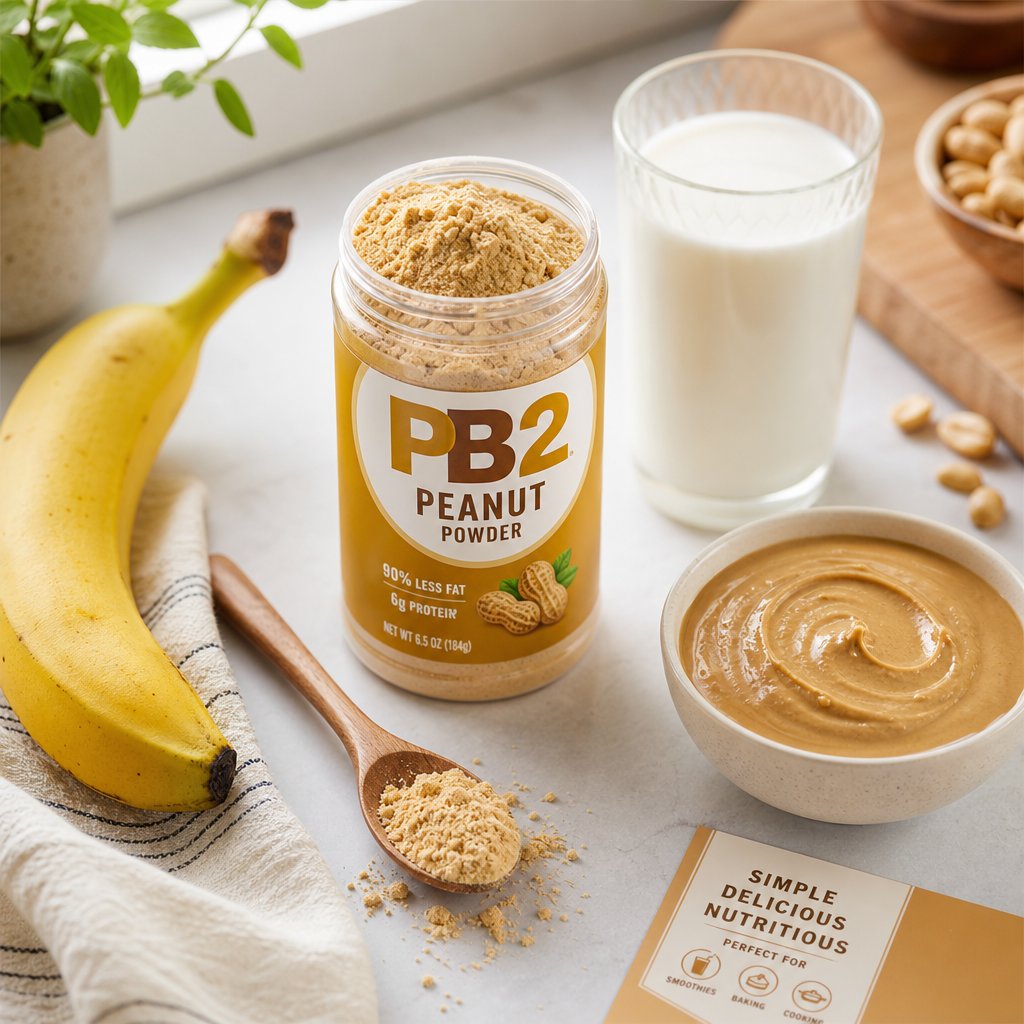
Step 1 - Learn What Peanut Butter Powder Actually Is
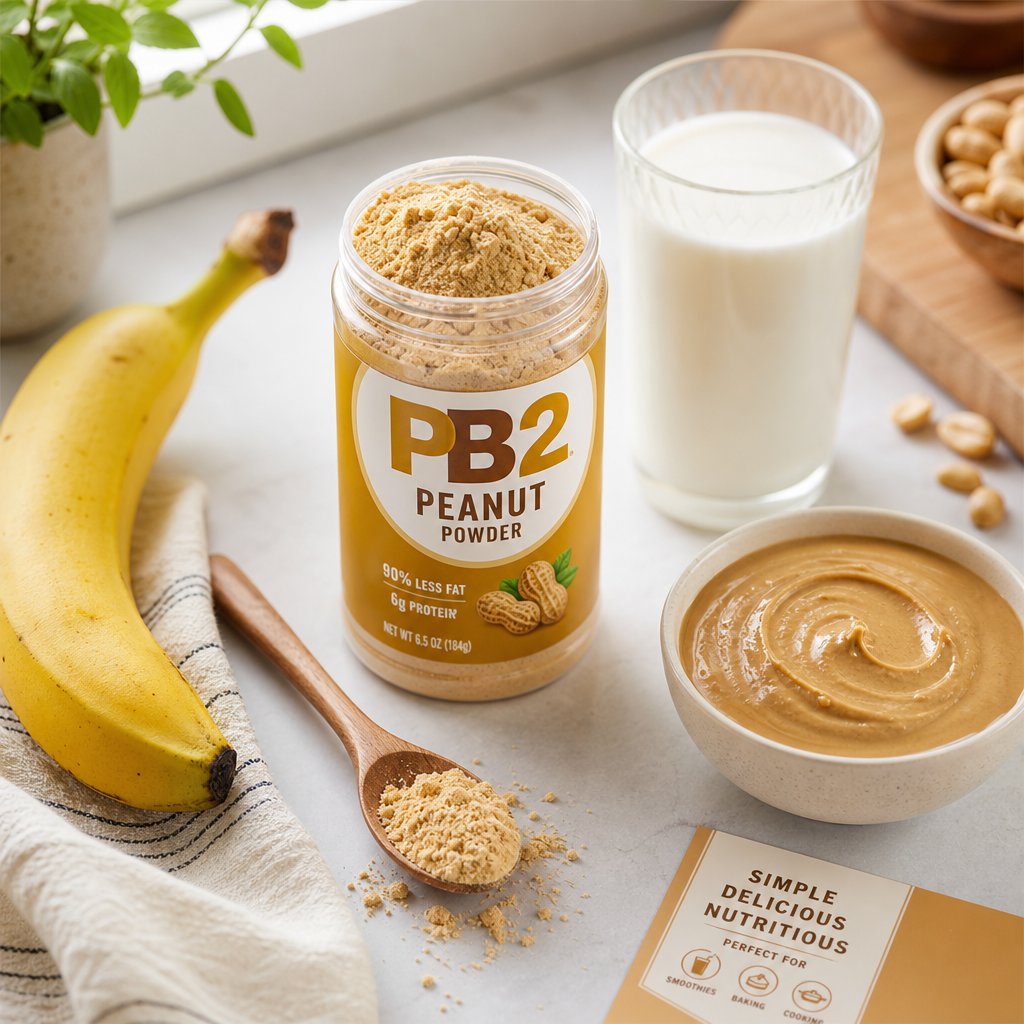
You have probably seen jars of powdered peanut butter on grocery shelves and wondered what it actually is. Is it just dehydrated peanut butter? A protein supplement? Something entirely different? Understanding what is peanut butter powder and how it is produced will help you figure out how to use peanut butter powder in ways that genuinely taste good rather than leaving you disappointed.
How Peanut Butter Powder Is Made
The process behind how to make peanut butter powder is surprisingly straightforward. It starts with roasted peanuts, just like traditional peanut butter. Those roasted peanuts are ground into a natural peanut butter paste containing all their original oils and flavor. Then comes the key step: the paste is placed under incredibly high mechanical pressure that squeezes out most of the natural oil. What remains is a dry, protein-rich "peanut cake." That cake is then ground a second time into a fine, fluffy powder.
The extracted oil gets used for other applications, while the powder retains the roasted peanut flavor, protein, and fiber from the original nut. Most brands add just a touch of sugar and salt to round out the taste. That is essentially how to make powdered peanut butter at a commercial scale, and it is why the ingredient list stays short: peanuts, sugar, and salt.
Why It Behaves Differently Than Regular Peanut Butter
Peanut butter powder retains the protein and flavor of peanuts while removing roughly 85-90% of the fat, fundamentally changing how it interacts with other ingredients.
Fat is what gives regular peanut butter its thick, creamy body and rich mouthfeel. When you remove that fat, you are left with concentrated peanut flavor in a form that dissolves into liquids, blends into dry ingredients, and mixes into batters without coating your blender or weighing down a recipe.
This means powdered pb excels in applications where regular peanut butter struggles: smoothies, baked goods, sauces, and dry toppings. However, it also means that reconstituted powdered peanut butter will never perfectly replicate the lush, spreadable richness of the jarred version. The texture is thinner, the mouthfeel is lighter, and the fat-driven satisfaction is simply not there.
That is not a flaw. It is a feature, once you know how to work with it. The trick to making powdered peanut butter taste good is using it where its strengths shine rather than forcing it into roles it was never designed to fill. And that starts with understanding exactly what you are gaining nutritionally when you swap out the fat.
Step 2 - Compare the Nutrition to Regular Peanut Butter
So is peanut butter powder healthy, or are you just eating a stripped-down version of something that was already good for you? The answer depends on what you are trying to accomplish with your diet. The nutritional profile of powdered peanut butter looks dramatically different from the jarred version, and those differences matter when you are deciding how to use it.
Calories, Fat, and Protein Per Serving
The numbers tell a clear story. When you remove 85% of the fat from peanuts, you slash the calorie count but keep most of the protein and fiber intact. Here is how a standard 2-tablespoon serving compares across three common options:
| Nutrient (per 2 tbsp) | Peanut Butter Powder | Regular Peanut Butter | Natural Peanut Butter |
|---|---|---|---|
| Calories | 50-60 | 190 | 180 |
| Total Fat | 1.5 g | 16 g | 16 g |
| Protein | 5-6 g | 7-8 g | 7-8 g |
| Fiber | 1-2 g | 2 g | 2 g |
| Sugar | 1 g | 3 g | 1 g |
Data sourced from PB2 nutrition labels and USDA food composition data. Exact values vary by brand, so always check your specific product's label.
You will notice that protein stays relatively close between the two. That is because protein lives in the solid peanut matter, not the oil. The fat, however, drops from 16 grams down to about 1.5 grams. This single change is what makes low fat peanut butter powder so appealing for calorie-conscious eaters: you get peanut flavor and a protein boost at roughly one-third the calories.
Here is a practical way to think about PB2 nutrition. Because the powder is so low in calories, you could eat four tablespoons and still come in under the calorie count of a single serving of regular peanut butter, while getting around 12 grams of protein. That ratio is hard to beat when you are building meals around protein targets.
Where Powder Fits in Your Diet
Is powdered peanut butter healthy in a broader sense? It depends on context. The benefits of peanut butter powder are real and specific:
- Calorie-controlled diets: Powder lets you add peanut flavor to meals without burning through a large chunk of your daily calorie budget. A smoothie with two tablespoons of powder adds 50 calories instead of 190.
- High-protein meal plans: The protein-to-calorie ratio in powder is significantly better than regular peanut butter. You get more protein per calorie spent, which matters when you are trying to hit 100+ grams of protein daily.
- Low-fat approaches: If you are following a dietary framework that limits fat intake, powder gives you a way to enjoy peanut flavor without the 16 grams of fat per serving.
But here is the honest trade-off. The fats in peanuts are predominantly monounsaturated, the same heart-healthy type found in olive oil and avocados. These fats support satiety, help your body absorb fat-soluble vitamins like vitamin E, and contribute to long-term cardiovascular health. Regular peanut butter provides about 14% of the daily recommended intake of vitamin E per serving, while powdered versions likely contain very little due to the defatting process.
Is pb powder healthy enough to replace regular peanut butter entirely? Not quite. Think of it as a complement rather than a substitute. Use powder where you want flavor and protein without extra fat, like smoothies, oatmeal, and baked goods. Keep regular peanut butter in your rotation for times when you want satisfying richness and those beneficial fats, like on toast or in a snack with apple slices.
Is powdered peanut butter good for you? Yes, within its lane. It delivers plant-based protein, fiber, and concentrated peanut flavor at a fraction of the caloric cost. It just cannot do everything regular peanut butter does nutritionally. The real power comes from knowing when to reach for each one, and that starts with understanding exactly how much powder to mix and what consistency you are aiming for.
Step 3 - Master the Reconstitution Ratios
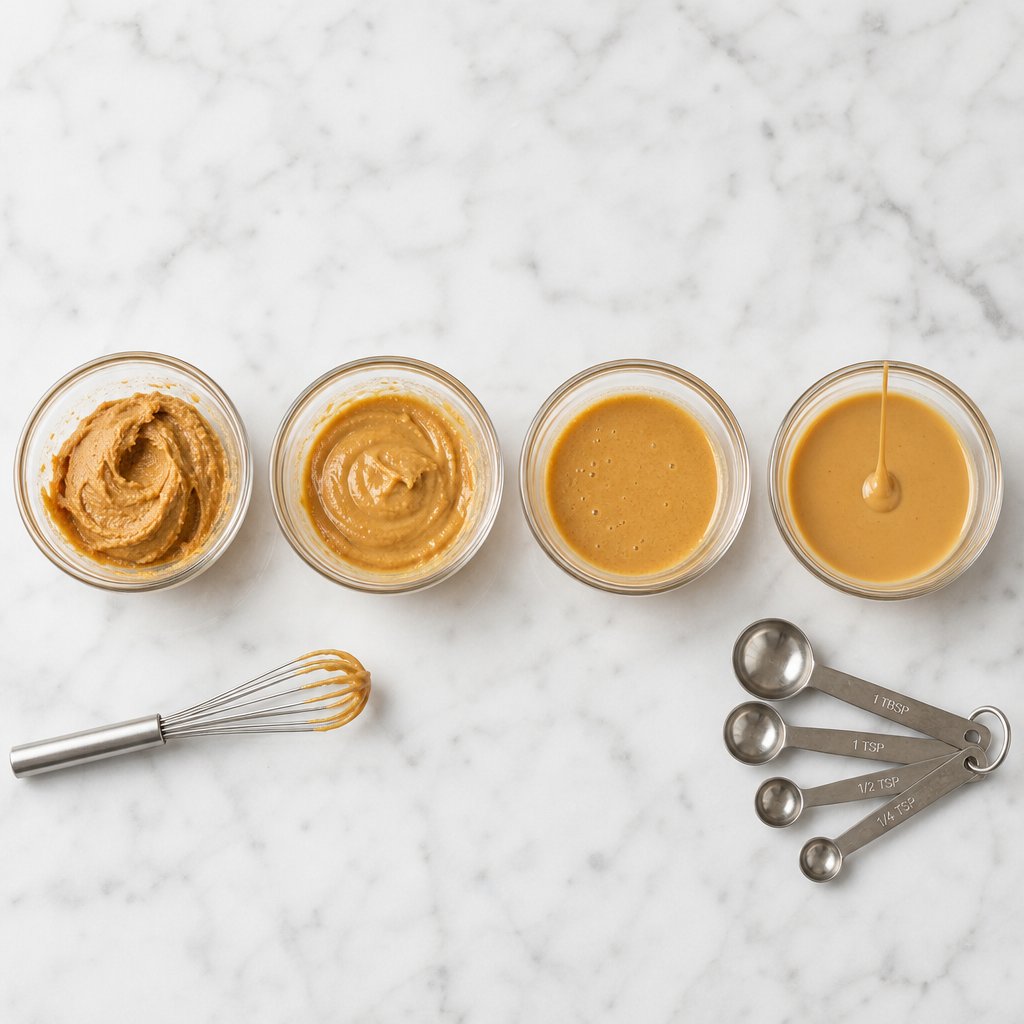
Here is where most people go wrong with powdered peanut butter: they follow the package directions, get a thin, watery paste, and decide the product is not worth using. The problem is not the powder. It is that a single ratio cannot serve every purpose. How do you use peanut butter powder for toast the same way you use it in a smoothie? You don't. Different applications demand different consistencies, and once you dial in the right ratio for each one, the results improve dramatically.
Exact Ratios for Four Consistencies
Think of reconstitution as a spectrum. At one end, you have a thick, scoopable spread. At the other, a pourable liquid that disappears into a blender. The table below gives you exact starting points for how to use powdered peanut butter across four common applications:
| Consistency | Powder Amount | Liquid Amount | Recommended Liquid | Best Used For |
|---|---|---|---|---|
| Thick Spread | 2 tbsp | 1 tbsp | Water or milk | Toast, sandwiches, celery sticks |
| Thin Drizzle | 2 tbsp | 2 tbsp | Maple syrup, honey, or water | Oatmeal topping, fruit dip, yogurt swirl |
| Baking Paste | 2 tbsp | 1.5 tbsp | Melted coconut oil or neutral oil | Cookie dough, brownie batter, energy bars |
| Liquid Blend | 2 tbsp | Added directly (no pre-mix) | Smoothie liquid base | Smoothies, shakes, sauces |
These ratios come from testing and community feedback. PB2 recommends 2 tablespoons of powder to 1.5 tablespoons of water as a general starting point, but many users find adjusting up or down by half a tablespoon makes a noticeable difference in texture. If you are wondering how to use PB2 powder specifically, start with their suggested ratio and tweak from there based on your target consistency.
How Different Liquids Change the Result
Water is the default, but it is also the least interesting option. The liquid you choose affects both flavor and mouthfeel in ways that can make or break the final product:
- Water produces a clean peanut flavor but a slightly chalky texture. Best for applications where other ingredients carry the richness.
- Milk or plant milk adds creaminess and body. Oat milk works especially well because its natural sweetness complements the roasted peanut flavor.
- Maple syrup or honey creates a sweet drizzle that clings to oatmeal and fruit. The viscosity of the sweetener thickens the mixture naturally.
- Melted coconut oil reintroduces fat, giving you a richer mouthfeel closer to actual peanut butter. This is the move for baking applications where you need the paste to behave more like traditional PB in dough.
How do you use PB2 to make something that actually tastes like peanut butter on a sandwich? Swap the water for a blend of half milk and half melted coconut oil. The fat rounds out the flavor and eliminates that thin, watery quality that disappoints most first-time users.
Hot vs Cold Mixing Techniques
Temperature matters more than most people realize when learning how to use pb powder. Warm liquids dissolve the powder almost instantly because heat breaks down the starch particles and allows them to hydrate evenly. Stir a tablespoon into hot coffee or warm oatmeal and it integrates in seconds with minimal effort.
Cold liquids are a different story. Pour cold water or chilled milk onto the powder and you will get clumps, tiny dry pockets surrounded by liquid that refuse to break down no matter how hard you stir. The fix is simple: add the liquid gradually, about a teaspoon at a time, while stirring or whisking constantly. Build the paste in stages rather than dumping all the liquid in at once. Alternatively, sift the powder through a fine mesh strainer before mixing to break up any compressed clumps.
For smoothies and shakes, this is a non-issue. The blender does the work for you. Just toss the powder in with your other ingredients and let the blades handle it. No pre-mixing required, which is one reason how to make peanut butter from peanut powder in a smoothie is the easiest application of all.
A quick tip if you are still getting grainy results: let your mixed paste sit for about two minutes after stirring. The powder continues to hydrate and soften during that rest period, smoothing out any remaining texture. This small pause makes a surprising difference, especially with the thick spread ratio where less liquid means slower hydration.
With your ratios locked in and your mixing technique sorted, the next question is where to put all this peanut goodness. Smoothies and drinks are the most natural starting point, and they happen to be where powdered peanut butter delivers its biggest advantage over the jarred version.
Step 4 - Blend It Into Smoothies and Drinks
Anyone who has tried adding regular peanut butter to a smoothie knows the frustration: half of it clings to the blender walls, the rest forms stubborn clumps that never fully incorporate, and cleanup takes longer than making the drink itself. Peanut butter powder smoothies eliminate all of that. The powder dissolves directly into liquid, distributes evenly through the blend, and leaves your blender clean enough to rinse in seconds. This is the application where powder genuinely outperforms the jarred version.
Smoothie Blending Technique and Amounts
You do not need to pre-mix or reconstitute the powder before blending. Just add it straight to the blender with everything else. The key is getting the order of operations right:
- Pour your liquid base in first (milk, plant milk, coconut water, or juice).
- Add the peanut butter powder along with any other dry ingredients like protein powder or cocoa.
- Drop in soft ingredients such as fresh banana or yogurt.
- Add frozen fruit and ice last, on top.
This layering keeps the powder close to the liquid so the blades can hydrate it immediately rather than flinging dry powder up the sides of the container. Start with 2 tablespoons of powder per smoothie and adjust from there. Want a stronger peanut flavor? Go to 3 tablespoons. Keeping it subtle? One tablespoon adds a background nuttiness without dominating other flavors.
Here are five pb powder smoothie combinations that pair naturally with peanut butter powder:
- Banana-Chocolate: Frozen banana, cocoa powder, oat milk, and 2 tbsp peanut butter powder for a dessert-like treat.
- Berry-Oat: Mixed berries, rolled oats, Greek yogurt, and peanut butter powder for a filling breakfast blend.
- Green Spinach: Spinach, frozen mango, almond milk, and peanut butter powder where the nuttiness masks any vegetal taste.
- Tropical Mango: Frozen mango, pineapple, coconut water, and a tablespoon of powder for a Thai-inspired twist.
- Coffee-Date: Cold brew, Medjool dates, almond milk, and peanut butter powder for a caffeinated morning shake.
Each of these works as a solid peanut butter powder smoothie recipe foundation. Adjust sweetness, swap fruits, or change your liquid base to make them your own. The powder is forgiving enough that you can experiment freely without worrying about texture issues.
Protein Shakes and Hot Beverages
Peanut butter powder doubles as a peanut butter protein powder of sorts, delivering 5-6 grams of plant-based protein per 2-tablespoon serving. Stack that on top of a scoop of whey or plant protein and you are looking at 30+ grams of protein per shake with a flavor profile that tastes like a peanut butter cup rather than a chalky supplement. This makes it a go-to pb2 recipe for post-workout nutrition: blend powder with a frozen banana, a scoop of vanilla protein, milk, and ice for a shake that supports recovery without excess fat slowing digestion.
Hot beverages are another underrated use. Molly Yeh's Peanut Butter Mocha Mix calls for just one tablespoon of peanut butter powder whisked with cocoa powder, espresso, and steamed milk. The result is a rich, nutty latte at only 166 calories. You can simplify even further: stir a tablespoon into your morning coffee or hot chocolate for a subtle peanut undertone without any added fat. The warm liquid dissolves the powder instantly, so there is no clumping or grit.
Whether you are building powdered peanut butter smoothie recipes for meal prep or just stirring a spoonful into your afternoon coffee, drinks are where this ingredient earns its place in your pantry. The real question is what happens when you move beyond the blender and into the oven.
Step 5 - Bake and Cook With Peanut Butter Powder
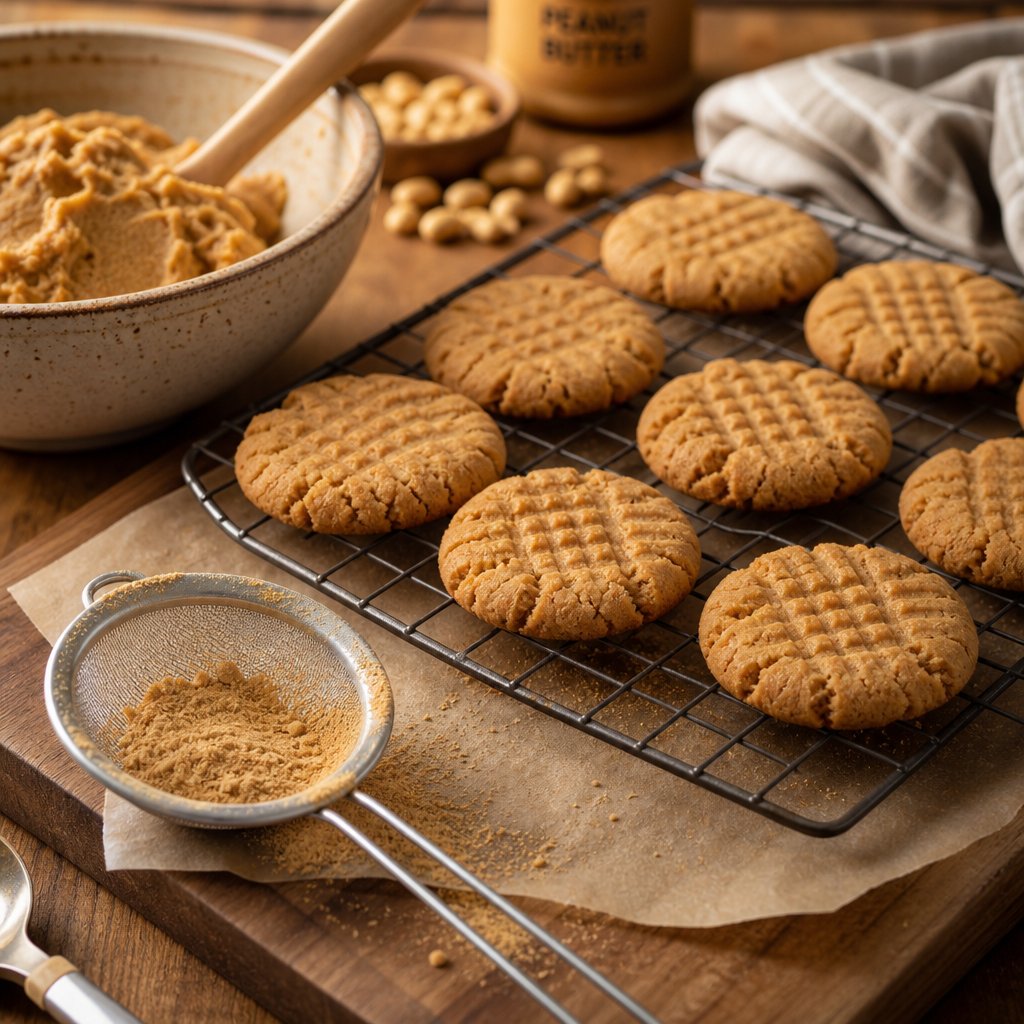
Baking is where peanut butter powder reveals a trick that regular peanut butter simply cannot pull off. You can sift it directly into your dry ingredients, flour, baking powder, cocoa, whatever the recipe calls for, and infuse peanut flavor throughout the batter without adding a single gram of extra fat or moisture. That means it will not throw off the fat-to-flour ratio the way a half cup of jarred peanut butter would. Your cookies still spread correctly, your muffins still rise properly, and your pancakes still cook evenly. The powder just rides along with the dry team, contributing flavor and protein without disrupting the chemistry.
Adding Powder to Dry Ingredients in Baking
The principle is simple: treat peanut butter powder like a flavored flour. When a recipe calls for 1 cup of all-purpose flour, swap 2 to 4 tablespoons of that flour for an equal amount of powder. This keeps the total dry volume consistent while layering in a roasted peanut taste. It works in muffins, pancakes, waffles, banana bread, and energy bars without any other adjustments.
One thing to know about how powder behaves when heated: the flavor intensifies. Roasted peanut compounds concentrate as moisture evaporates during baking, which means the peanut taste comes through stronger in the finished product than it does in raw batter. The powder can also brown faster than plain flour, so for delicate baked goods like thin cookies or light muffins, reduce your oven temperature by about 15-20 degrees Fahrenheit and watch closely during the last few minutes. This prevents over-browning on the edges while the center finishes cooking.
Peanut Butter Powder Cookies Method
Peanut butter powder cookies are one of the most popular powdered peanut butter recipes for good reason. They deliver that classic nutty, slightly salty cookie flavor at a fraction of the calories. The technique is slightly different from traditional peanut butter cookies because the powder lacks the binding fat that regular PB provides. Here is the method that produces soft, chewy peanut butter cookies with powdered peanut butter every time:
- Preheat your oven to 340 degrees Fahrenheit (about 15-20 degrees lower than a standard cookie recipe) and line a baking sheet with parchment paper.
- Cream softened butter (or vegan butter) with sugar until light and fluffy, then beat in an egg and vanilla extract until smooth.
- Sift the peanut butter powder together with your flour and baking powder. Sifting prevents clumps and ensures even distribution of peanut flavor throughout the dough.
- Fold the dry mixture into the wet ingredients and stir until a soft dough forms. Do not overmix.
- Scoop tablespoon-sized portions, roll into balls, and place on the prepared sheet with space between each one.
- Press each ball with a fork in a criss-cross pattern. This step is essential because powdered peanut butter dough does not spread the way traditional peanut butter cookie dough does.
- Bake for 8-10 minutes until just barely golden at the edges. Pull them out while they still look slightly underdone. They firm up as they cool on the sheet.
The result? Cookies that clock in under 100 calories each with about 4 grams of protein, compared to 200+ calories for a standard peanut butter cookie. You can push the peanut flavor even further by using chocolate peanut butter powder or folding in a tablespoon of cocoa powder for a chocolate-peanut variation.
Sauces, Dressings, and Savory Applications
Powdered pb recipes do not have to stay in the dessert lane. The powder dissolves beautifully into warm sauces, making it ideal for savory cooking where regular peanut butter tends to clump. Whisk 2-3 tablespoons into coconut milk with soy sauce, lime juice, garlic, and a pinch of chili flakes for a quick peanut satay sauce. Stir it into curry broth to add body and nutty depth. Traditional peanut soups and stews from West African, Thai, and Indian cuisines all adapt well when you use powder instead of paste, and the sauce comes together smoother because the powder integrates without leaving oily separation on the surface.
For cold applications, blend the powder into salad dressings with rice vinegar, sesame oil, and ginger for an Asian-inspired vinaigrette. Or mix it into hummus for a peanut-forward dip. These recipes with peanut butter powder work precisely because the defatted powder dissolves into emulsions rather than fighting them.
Between pb powder recipes for baking and savory sauces, you have covered the most common cooked applications. But there is an entirely different approach that skips reconstitution altogether, using the powder completely dry for a lighter, more concentrated hit of peanut flavor.
Step 6 - Use It Dry Without Reconstituting
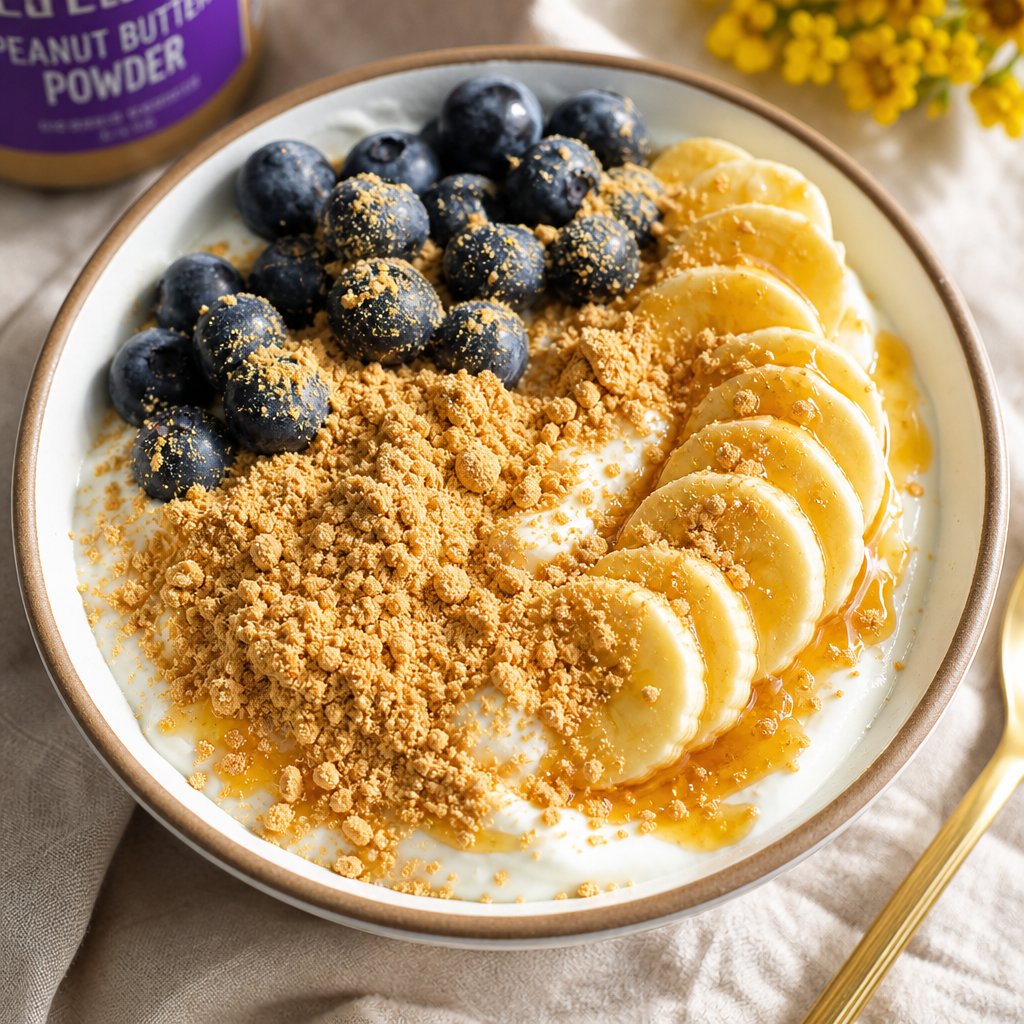
Most guides on what to do with peanut butter powder focus entirely on mixing it into a paste. That is only half the story. Some of the best peanut butter powder uses skip liquid altogether, treating the powder as a finishing ingredient, a coating, or a dry mix-in that delivers concentrated peanut flavor in tiny amounts without changing the texture of whatever you are adding it to.
Sprinkle It on Yogurt, Oatmeal, and Bowls
Imagine dusting a tablespoon of powder over a bowl of warm oatmeal or swirling it into Greek yogurt. The powder clings to moist surfaces and dissolves slowly as you eat, giving you bursts of roasted peanut flavor in every bite. On acai bowls, it works like a savory-sweet seasoning that complements granola and fresh fruit without adding liquid or extra fat. You get the taste without diluting the textures you already built.
This dry approach preserves the powder's light, airy quality. A single tablespoon sprinkled on top delivers more noticeable peanut flavor than the same amount stirred into a full smoothie, because it stays concentrated on the surface where your taste buds hit first.
Use It as a Coating and Dry Mix-In
Once you start thinking of peanut butter powder as a pantry seasoning rather than something that needs reconstituting, the uses for powdered peanut butter multiply fast. Here are eight ways to use powdered peanut butter in its dry form:
- Yogurt and cottage cheese topping: Sprinkle 1-2 tablespoons over plain Greek yogurt for instant peanut flavor and a protein bump.
- Oatmeal dust: Stir into hot oats right before serving so it partially dissolves into a nutty swirl.
- Energy bite coating: Roll finished dough balls or energy bites in powder for a dry, flavor-packed outer layer that prevents sticking.
- Granola mix-in: Toss powder with oats, nuts, and sweetener before baking for peanut-flavored clusters throughout.
- Pancake and waffle batter: Whisk 2-3 tablespoons into your dry flour mixture for peanut-flavored breakfast without extra moisture.
- Popcorn seasoning: Dust freshly popped popcorn with powder and a pinch of salt for a savory-sweet snack that tastes like a peanut butter cup.
- Fruit dip base: Mix powder with cinnamon and a touch of powdered sweetener, then use it as a dry dip for banana slices or apple wedges.
- Smoothie bowl finish: Sprinkle over the top of thick smoothie bowls alongside seeds and coconut flakes for added crunch contrast.
These ways to use powdered peanut butter work because the powder is already shelf-stable, finely milled, and ready to eat as-is. No cooking, no mixing, no cleanup. Just open the jar and sprinkle.
What to do with powdered peanut butter when you want maximum flavor with minimum effort? Keep it dry. The concentrated taste hits harder, the calorie cost stays low, and you avoid the texture compromises that come with reconstitution. Of course, there are times when you want to swap powder directly into a recipe that originally calls for regular peanut butter, and that requires a slightly different strategy.
Step 7 - Substitute Powder for Regular Peanut Butter in Recipes
You found a recipe you love, but it calls for regular peanut butter and you want to cut the fat and calories. Can you just swap in powder? Sometimes yes, sometimes no. The difference between powdered peanut butter vs peanut butter comes down to one thing: structural fat. Regular PB contributes moisture, binding, and richness to recipes. Powder contributes flavor and protein. Knowing which role peanut butter plays in a given recipe tells you whether the peanut butter powder substitute will work seamlessly or need some help.
The Basic Substitution Formula
Here is the ratio that works as a universal starting point: for every 2 tablespoons of regular peanut butter a recipe calls for, use 2 tablespoons of powder plus 1 tablespoon of water. PB2 recommends a similar ratio of 2 tablespoons powder to 1.5 tablespoons water for a general spread consistency, so adjust the liquid up or down depending on whether you need a thicker paste or a thinner blend.
That formula handles the flavor side. But because the powder lacks fat, some recipes need you to add a small amount back in. If the original recipe relies on peanut butter for richness or binding, stir in half a teaspoon to one teaspoon of melted coconut oil, butter, or neutral oil per 2-tablespoon swap. This reintroduces just enough fat to maintain the expected texture without defeating the calorie savings entirely.
Wondering how to make peanut butter from PB2 that actually behaves like the real thing in a recipe? The oil addition is the key. Without it, you get peanut flavor but not peanut butter behavior. With it, you get a substitute for peanut butter powder that performs close enough for most cooked and blended applications.
Recipes That Substitute Well vs Those That Don't
Not every recipe treats peanut butter the same way. In a smoothie, peanut butter is purely a flavor ingredient. In a no-bake fudge bar, it is the structural glue holding everything together. That distinction determines whether your swap succeeds or falls flat. Here is how common recipe types break down:
| Works Well | Needs Adjustment |
|---|---|
| Smoothies and protein shakes | No-bake bars and fudge (fat provides structure) |
| Oatmeal and overnight oats | Peanut butter frosting (needs fat for creaminess) |
| Peanut sauces and dressings | Fat bombs and keto snacks (fat is the point) |
| Protein bars and energy bites | Buckeye candies (requires thick, moldable paste) |
| Pancake and waffle batter | Peanut butter pie filling (fat creates silky texture) |
| Cookies and muffins (with added oil) | No-bake cheesecake layers (needs binding fat) |
| Curry and stir-fry sauces | Homemade peanut butter cups (shell needs solid fat) |
The pattern is clear. Recipes using powdered peanut butter succeed when peanut butter serves as a flavoring agent or a secondary ingredient. They struggle when peanut butter is the primary structural component, the thing holding the recipe together physically. If you remove the fat from those recipes, they literally fall apart.
How to make peanut butter with PB2 for recipes in the "needs adjustment" column? You can still make it work, but you will need to compensate with additional fat from another source, coconut oil, butter, or cream cheese, which partially offsets the calorie savings. At that point, ask yourself whether the swap is worth the trade-off or whether that particular recipe is better served by the real thing.
Being honest about these limitations actually makes the powder more useful, not less. When you know exactly where it excels, you stop forcing it into roles where it disappoints. And when you do run into texture issues or unexpected results, a few simple fixes can get you back on track.
Step 8 - Troubleshoot Common Problems and Store It Right
Even with the right ratios and techniques, things occasionally go sideways. Maybe your paste turned into a lumpy mess, or the flavor fell flat, or you mixed a batch three days ago and now it looks like it is separating in the fridge. These issues are fixable, and most of them come down to one small misstep in technique or timing. Here is how to diagnose and solve the five most common problems people run into with peanut butter powder.
Fix Clumping, Graininess, and Separation
- Clumping: You added the powder too quickly into cold liquid, and now you have dry pockets surrounded by paste that refuse to break down. The fix is prevention: sift the powder through a fine mesh strainer before mixing, or add your liquid a teaspoon at a time while whisking constantly. If clumps have already formed, press them against the side of the bowl with the back of a spoon, or transfer everything to a small blender cup and pulse for five seconds. As Natural Force notes about protein powders generally, hydrophilic molecules grab onto moisture and clump when liquid is introduced too fast, and the same principle applies to peanut butter powder.
- Grainy texture: The paste feels sandy or gritty on your tongue. This usually means you did not add enough liquid or did not give the mixture enough time to hydrate. The solution is simple: let your mixed paste sit undisturbed for 2 full minutes after stirring. The powder particles continue absorbing liquid and softening during that rest period. If it is still grainy after resting, add another half teaspoon of liquid and stir again. Patience solves this one more than technique does.
- Separation: You reconstituted a batch, stored it in the fridge, and came back to find a layer of liquid sitting on top. This happens because powdered peanut butter lacks the natural oils that keep regular PB emulsified. The quick fix is to stir it back together before each use. For a longer-lasting solution, mix in a quarter teaspoon of melted coconut oil or olive oil when you first reconstitute. That small amount of fat acts as an emulsifier and holds the paste together during storage.
- Too thin: You overshot the liquid and now your spread is more like a sauce. Do not start over. Add more powder in small increments, about a teaspoon at a time, stirring after each addition until you reach the consistency you want. It is much easier to thicken a thin paste than to thin out a thick one, so when in doubt, start with less liquid than you think you need.
- Bland flavor: The paste tastes flat and watery, like peanut-scented water rather than actual peanut butter. This is the most common complaint, and it almost always traces back to using plain water as your liquid. Water dilutes the roasted peanut flavor without adding anything back. Switch to milk or plant milk for body and natural sweetness. Then add a pinch of salt and a small drizzle of honey or maple syrup. Salt amplifies the peanut flavor dramatically, and a touch of sweetness rounds out the taste profile. You will notice the difference immediately.
Storage Guidelines and Shelf Life
One of the biggest advantages of peanut butter powder is how long it lasts compared to the jarred version. Because most of the fat has been removed, the powder is far less susceptible to the oxidation that makes regular peanut butter go rancid. Does powder peanut butter go bad? Eventually, yes, but the timeline is generous.
Here is what you need to know about peanut butter powder shelf life:
- Unopened powder: Lasts 12 to 24 months when stored in a cool, dry place away from direct sunlight. Some brands with minimal ingredients and proper packaging can last even longer, with certain powdered peanut butter products rated for up to 4-5 years unopened.
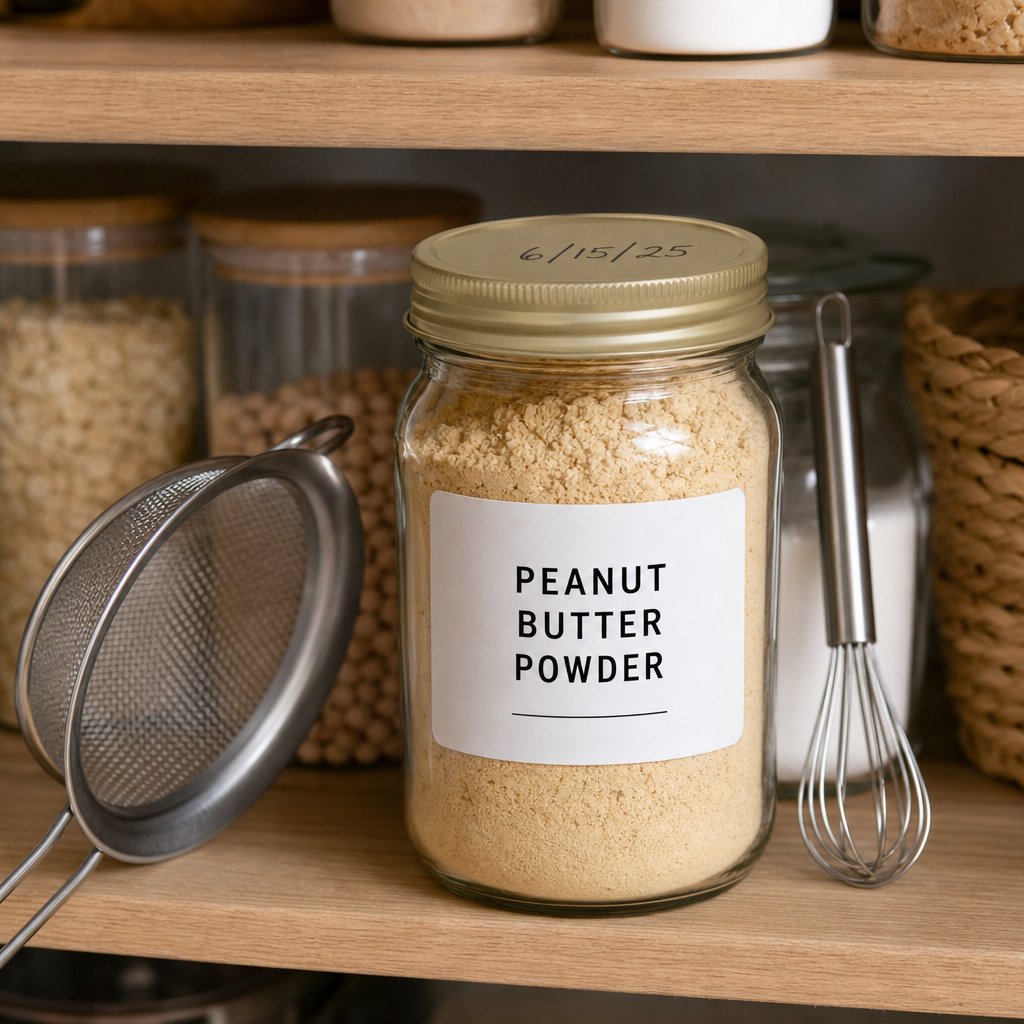
- Opened powder: Use within 6 to 12 months. Once the seal is broken, the powder is exposed to air and ambient moisture, which gradually degrades flavor and freshness. Keep the lid tightly closed between uses and store in a cool, dry cabinet rather than near the stove or in direct light.
- Reconstituted paste: Refrigerate immediately and use within one week. Without preservatives or the protective fat layer that regular peanut butter has, reconstituted powder is more vulnerable to bacterial growth. Only mix what you plan to use in the next few days.
- Silica packets: If your container came with a silica gel packet, leave it in. It absorbs ambient moisture and helps prevent the powder from clumping or degrading during storage.
How long does powdered peanut butter last once you notice something is off? It does not. If you detect any of these signs, discard the powder:
- A rancid or bitter smell instead of the normal roasted peanut aroma
- Noticeable color change, particularly darkening or yellowing
- An off or sour taste when you sample a small amount
- Visible moisture, mold, or hard clumps that do not break apart with shaking
The powdered peanut butter shelf life is forgiving, but it is not infinite. A good habit is to write the date you opened the container on the lid with a marker. That way you are never guessing whether the jar in the back of your pantry is six months old or two years old.
With your troubleshooting toolkit in place and your storage sorted, the last variable that affects your results is the quality of the powder itself. Not all brands are created equal, and what is on the ingredient label matters more than most people realize.
Step 9 - Choose the Best Peanut Butter Powder for Flavor and Quality
The difference between powder that tastes like cardboard and powder that tastes like freshly roasted peanuts often comes down to two things: what is on the ingredient label and how carefully the product was manufactured. You can nail every ratio and technique from the previous steps, but if the powder itself is low quality, the results will always disappoint.
What to Look for on the Label
So what is in powdered peanut butter that actually tastes good? Flip the jar around and look for the shortest ingredient list possible. The gold standard is just roasted peanuts. Naked PB, for example, contains a single ingredient: crushed roasted peanuts. Most other quality brands like PB Fit and PB2 use three ingredients: peanuts, sugar, and salt. Both approaches work well, though the added sugar and salt do round out the flavor for spreading and snacking applications.
What you want to avoid: hydrogenated oils, artificial sweeteners, preservatives, or long lists of additives you cannot pronounce. These fillers signal a product that is compensating for poor base ingredients or sloppy processing. A quality peanut powder does not need them.
Pay attention to the protein-per-serving ratio as well. Compare the serving size (usually 12-16 grams) against the protein content. PB Fit powder delivers 8 grams of protein per 16-gram serving, while others offer 5-6 grams per 12-13 grams. Higher protein relative to serving size generally indicates more thorough defatting and less filler. Flavored peanut butter powder varieties, like chocolate or vanilla, expand your recipe options significantly but tend to include a few extra ingredients for the flavoring. Check that those additions are cocoa powder or natural vanilla rather than artificial flavors.
Why Manufacturing Quality Matters
Two brands can list identical ingredients and still produce noticeably different results in your kitchen. The difference is manufacturing precision. Properly calibrated roasting develops deeper flavor. Thorough, even pressing removes fat consistently without leaving oily pockets. Fine milling produces a powder that hydrates smoothly rather than staying gritty no matter how long you stir. These steps require specialized equipment and quality control at every stage, which is why the best pb powder brands invest heavily in their production processes.
PB2, for instance, recently completed a vertical integration project bringing their entire process under one roof in Tifton, Georgia, specifically to maintain tighter control over roasting, pressing, and milling consistency.
For readers who have moved beyond consumer curiosity into business territory, whether you are a nutrition brand owner, supplement importer, or private label seller looking to develop your own branded peanut powder product, manufacturing quality becomes even more critical. Partnering with an experienced OEM/ODM manufacturer gives you access to calibrated equipment, customized formulation, and scalable production without building a facility from scratch. ZhuFeng, for example, offers flexible health food manufacturing across formats including powder and granules, tablets, and gummy candy, making them a practical starting point for businesses looking to launch peanut-based functional food products with consistent quality and custom recipes.
Whether you are picking a jar off the shelf for your morning smoothie or sourcing a manufacturing partner for your own product line, the principle is the same: quality inputs and careful processing determine whether peanut butter powder tastes like something you want to eat every day or something that sits forgotten in the back of your pantry.
Frequently Asked Questions About Peanut Butter Powder
1. What is the best ratio for mixing peanut butter powder with water?
The ideal ratio depends on your intended use. For a thick spread suitable for toast, mix 2 tablespoons of powder with 1 tablespoon of water. For a thinner drizzle over oatmeal or fruit, use equal parts powder and liquid. For baking, combine 2 tablespoons of powder with 1.5 tablespoons of melted coconut oil to reintroduce some fat. Using milk or plant milk instead of water significantly improves both flavor and texture, eliminating the chalky mouthfeel that plain water can produce.
2. Is peanut butter powder as healthy as regular peanut butter?
Peanut butter powder offers different nutritional advantages rather than being universally healthier. It contains roughly 50-60 calories per 2-tablespoon serving compared to 190 calories in regular peanut butter, with only 1.5 grams of fat versus 16 grams. Protein remains comparable at 5-6 grams per serving. However, regular peanut butter provides heart-healthy monounsaturated fats and vitamin E that the powder lacks. The powder works best as a complement for calorie-conscious or high-protein diets rather than a complete replacement.
3. Can you substitute peanut butter powder for regular peanut butter in any recipe?
Not all recipes accept the swap equally. Peanut butter powder works well in smoothies, oatmeal, sauces, pancake batter, and cookies where peanut butter serves primarily as a flavoring agent. It struggles in recipes where peanut butter provides structural fat, such as no-bake bars, fudge, peanut butter cups, or pie fillings. For the basic substitution, use 2 tablespoons of powder plus 1 tablespoon of water for every 2 tablespoons of regular peanut butter, adding a small amount of oil if the recipe needs fat for texture.
4. How long does peanut butter powder last after opening?
Opened peanut butter powder stays fresh for 6 to 12 months when stored in a cool, dry cabinet with the lid tightly sealed. Unopened containers last 12 to 24 months, with some brands rated for up to 4-5 years. Once reconstituted into a paste, refrigerate it and use within one week. Discard the powder if you notice a rancid or bitter smell, color darkening, off taste, or visible moisture and mold. Writing the opening date on the lid helps track freshness over time.
5. Why does my peanut butter powder taste bland or watery?
Bland results almost always trace back to using plain water as the mixing liquid, which dilutes roasted peanut flavor without contributing anything back. Switch to milk or plant milk for added body and natural sweetness. Then add a pinch of salt, which amplifies peanut flavor dramatically, and a small drizzle of honey or maple syrup to round out the taste. Oat milk works particularly well because its inherent sweetness complements the roasted notes. Letting the paste rest for two minutes after mixing also allows flavors to develop more fully.