What Protein Powder Is Actually Made Of
The Short Answer to What Protein Powder Is Made Of
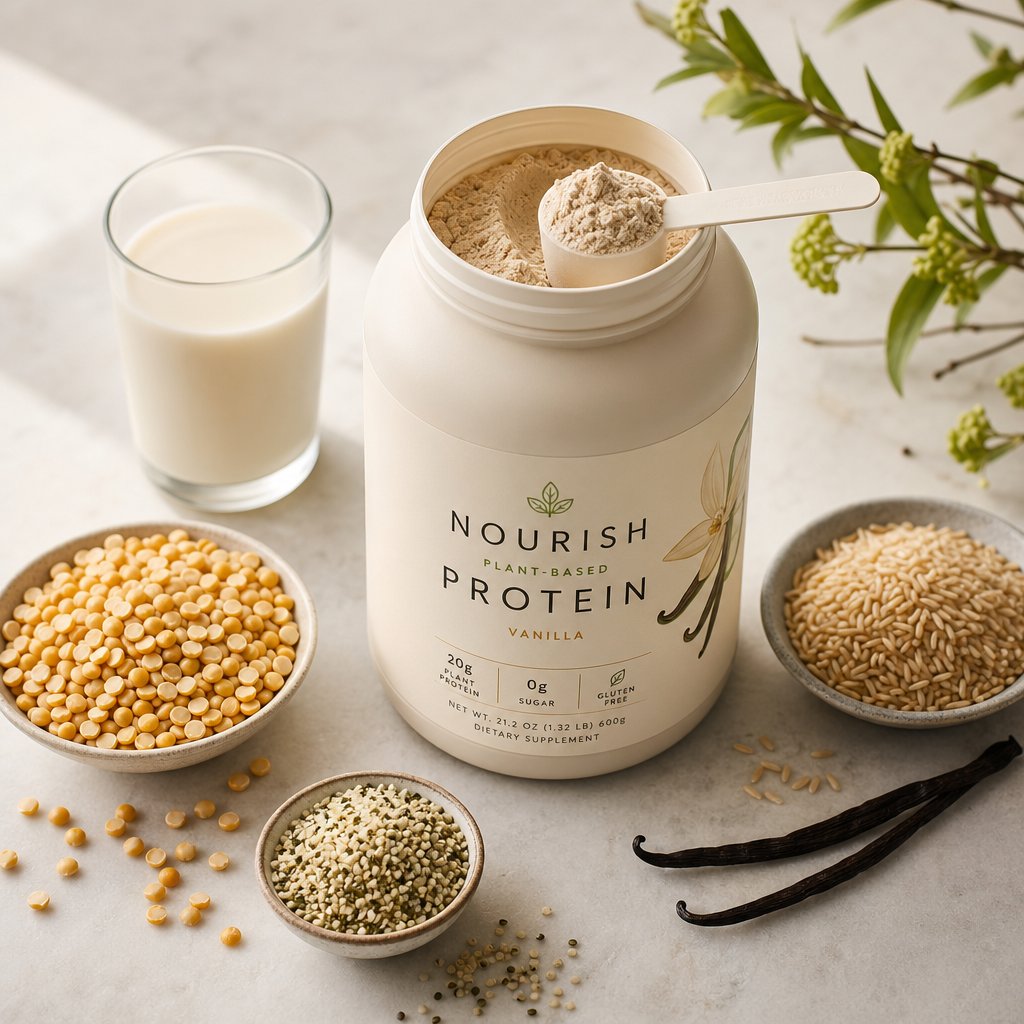
So, what is protein powder made of? At its core, protein powder is a concentrated dietary supplement created by extracting protein from animal or plant sources, purifying it through filtration, and converting it into a dry, shelf-stable powder through processes like spray drying. Common sources include cow's milk (whey and casein), eggs, soybeans, peas, rice, and hemp. The protein is separated from fats, carbohydrates, and fiber in the raw material, then dried into the scoopable powder you find on store shelves.
That definition covers the basics, but it barely scratches the surface. When you flip a tub over and scan the ingredient panel, you'll notice the list extends well beyond a single protein source. A typical label includes sweeteners (sucralose, stevia, or monk fruit), thickeners (xanthan gum, guar gum), emulsifiers (sunflower or soy lecithin), natural and artificial flavoring agents, anti-caking agents, and sometimes added vitamins, minerals, or digestive enzymes like lactase and protease. Each of these ingredients plays a specific role in how the powder tastes, mixes, dissolves, and is absorbed by your body.
Protein powder is not a single ingredient. It is a formulated product with multiple functional components, each chosen to affect nutrition, texture, mixability, flavor, or shelf stability.
Why the Full Ingredient List Matters More Than the Protein Source
Most people shopping for protein powder focus on one question: whey or plant-based? That matters, but it is only one piece of the puzzle. Where does protein powder come from is a question that leads to animal farms, cheese production facilities, and crop fields, but how protein powder is made involves industrial-scale extraction, ultrafiltration, and carefully controlled drying. These manufacturing steps determine the purity, digestibility, and safety of the final product just as much as the raw source does.
The non-protein ingredients deserve equal attention. Mayo Clinic Press notes that some protein powders contain added sugars, sugar alcohols that may cause gastrointestinal discomfort, and even trace heavy metals from contaminated raw materials. Understanding what is protein powder made out of, down to every line on the label, is the difference between choosing a product that supports your goals and one that quietly works against them.
Wondering about protein powder what does it do beyond supplying amino acids? The answer depends entirely on the full formulation. A powder with added digestive enzymes behaves differently in your gut than one loaded with artificial sweeteners. A product with third-party purity testing offers a different safety profile than one hiding behind a proprietary blend. This article walks through every category of ingredient found in protein powders, from the primary protein sources and how they are processed, to the sweeteners, thickeners, and quality markers that separate a well-made product from a questionable one.
Animal-Based Protein Sources Explained
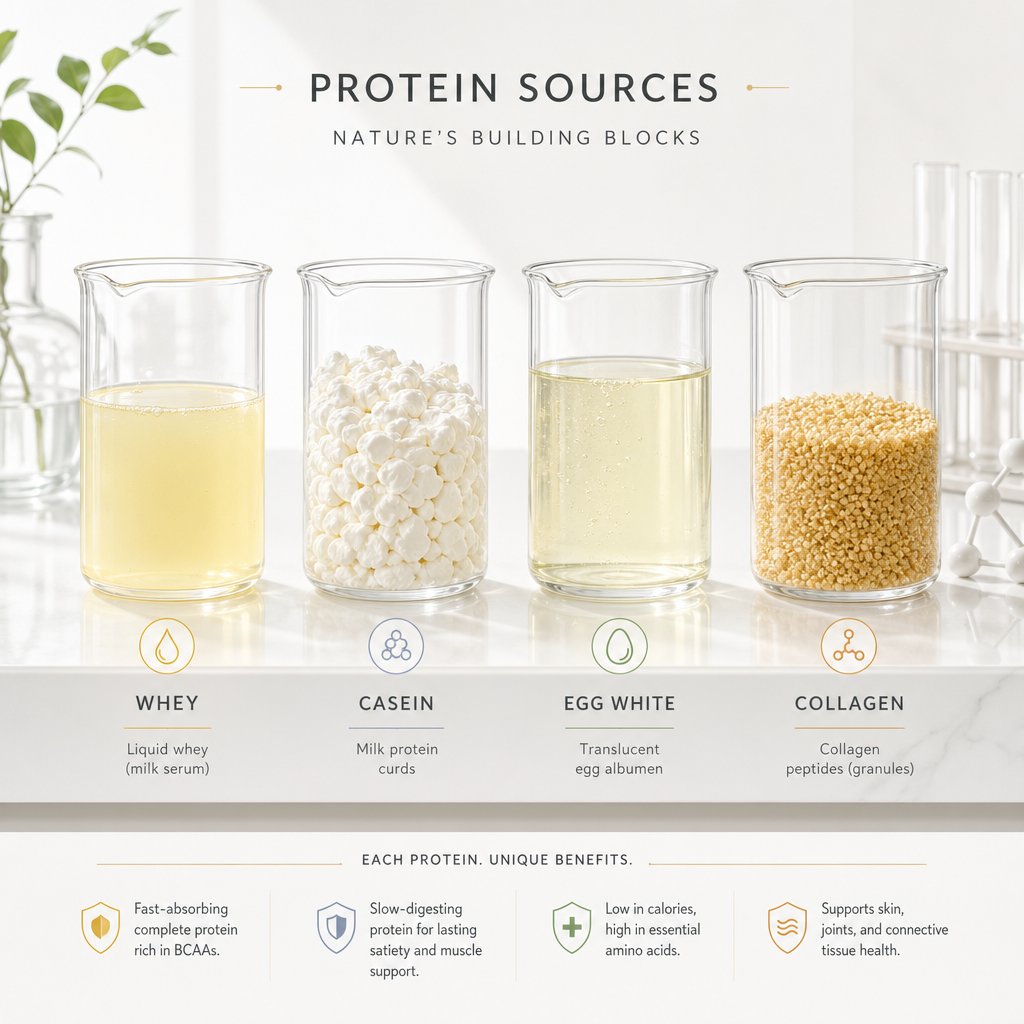
The protein source listed at the top of an ingredient panel shapes everything that follows: the amino acid profile, how fast your body absorbs it, and who can safely use it. Four animal-based proteins dominate the supplement market, and each one starts from a very different raw material.
Whey Protein and Where It Comes From
If you have ever asked "whats whey," the answer begins in a cheese factory. When enzymes or acids are added to milk to make cheese, the milk separates into solid curds (mostly casein) and a thin, watery liquid. That liquid is whey. So to define whey simply: it is the protein-rich byproduct left over after milk coagulates during cheese production.
Not all whey is identical, though. Sweet whey comes from enzymatic coagulation used in hard cheeses like cheddar and mozzarella. It has a mild flavor and a near-neutral pH of 6.0 to 6.5, which makes it easier to process into whey protein concentrate and whey isolate protein powder. Acid whey results from acid-coagulated products like Greek yogurt and cottage cheese. Its lower pH (around 4.0 to 4.5) and higher mineral content make it harder to refine into high-protein powders, so the vast majority of whey protein powder on shelves originates from sweet whey.
What makes whey protein powder so popular? Speed and amino acid quality. Whey digests rapidly and delivers a high concentration of branched-chain amino acids (BCAAs), especially leucine, the key trigger for muscle protein synthesis. Is whey a dairy product? Yes. It comes directly from cow's milk, which means it naturally contains some lactose, though the amount varies depending on whether the final product is a concentrate or an isolate.
Casein, Egg White, and Collagen Protein Sources
Casein is the other major milk protein, making up roughly 80% of the total protein in cow's milk compared to whey's 20%. Where whey is fast-acting, casein protein powder takes a different approach. It forms a gel-like structure in the acidic environment of your stomach, slowing digestion and releasing amino acids gradually over several hours. That slow-drip delivery is why casein is often used before bed or during long gaps between meals.
Egg white protein offers a dairy-free animal-based alternative. Made by spray-drying pasteurized egg whites, it delivers a complete amino acid profile without any lactose. It sits at a moderate digestion speed, faster than casein but slower than whey, and works well for people who need to avoid dairy entirely but still want a high-quality animal protein.
Collagen stands apart from the other three because it is not a complete protein. Sourced from the connective tissues, bones, and hides of animals (typically bovine or marine), collagen is rich in glycine, proline, and hydroxyproline, amino acids that are scarce in most diets and critical for joint, skin, and gut health. However, it lacks tryptophan entirely, which is why its PDCAAS score is effectively 0. Collagen works best as a complement to a complete protein source rather than a standalone supplement.
How Animal-Based Proteins Compare on Bioavailability
Not every gram of protein your body ingests gets fully used. Bioavailability, the degree to which your body can digest, absorb, and utilize a protein, varies significantly across sources. The Protein Digestibility-Corrected Amino Acid Score (PDCAAS) is the FDA-recognized standard for measuring this. It scores proteins on a scale from 0 to 1.0, where 1.0 means the protein meets human amino acid requirements with high digestibility.
| Protein Source | Source Origin | Digestion Speed | Amino Acid Completeness | PDCAAS | Common Use Cases | Lactose Content |
|---|---|---|---|---|---|---|
| Whey | Liquid byproduct of cheese production (cow's milk) | Fast (absorbed within 1-2 hours) | Complete, high in BCAAs | 1.0 | Post-workout recovery, muscle building | Low (concentrate) to trace (isolate) |
| Casein | Solid curd fraction of cow's milk | Slow (absorbed over 4-7 hours) | Complete | 1.0 | Overnight recovery, sustained amino acid release | Low to moderate |
| Egg White | Pasteurized, dried egg whites | Moderate (absorbed within 2-3 hours) | Complete | 1.0 | Dairy-free muscle support, baking-friendly formulas | None |
| Collagen | Bovine or marine connective tissue, bones, hides | Fast (hydrolyzed peptides absorb quickly) | Incomplete (lacks tryptophan) | 0 | Joint support, skin health, gut lining repair | None |
Whey, casein, and egg white all earn a perfect PDCAAS of 1.0, meaning they provide every essential amino acid in adequate amounts with excellent digestibility. Collagen's score of 0 does not mean it is useless. It means collagen cannot serve as your sole protein source, but it fills amino acid gaps that even high-scoring proteins leave behind.
A newer scoring method called DIAAS (Digestible Indispensable Amino Acid Score) measures amino acid absorption at the small intestine rather than relying on fecal digestibility. Unlike PDCAAS, DIAAS is not capped at 1.0, which allows it to differentiate between proteins that PDCAAS groups together at the top. For example, whole egg scores a DIAAS of 1.12 to 1.13, while whey scores 0.96, revealing nuances that PDCAAS cannot capture. DIAAS has not yet replaced PDCAAS in FDA regulations, but it is increasingly referenced in nutrition science.
Animal-based proteins clearly set a high bar for bioavailability and amino acid completeness. Yet a growing number of consumers need or prefer to avoid animal products altogether, which raises a practical question: can plant-based sources match these scores, and if not, how do formulators close the gap?
Plant-Based Protein Sources and How They Compare
Plant based protein powder has moved well beyond niche health food stores. Whether you follow a vegan diet protein powder is now a mainstream category, and dairy free protein shakes line the same shelves as whey. Four plant sources appear most often on ingredient labels: pea, rice, hemp, and soy. Each brings a distinct amino acid profile, digestibility score, and set of trade-offs that directly affect how well the powder supports your goals.
Pea, Rice, Hemp, and Soy Protein Breakdown
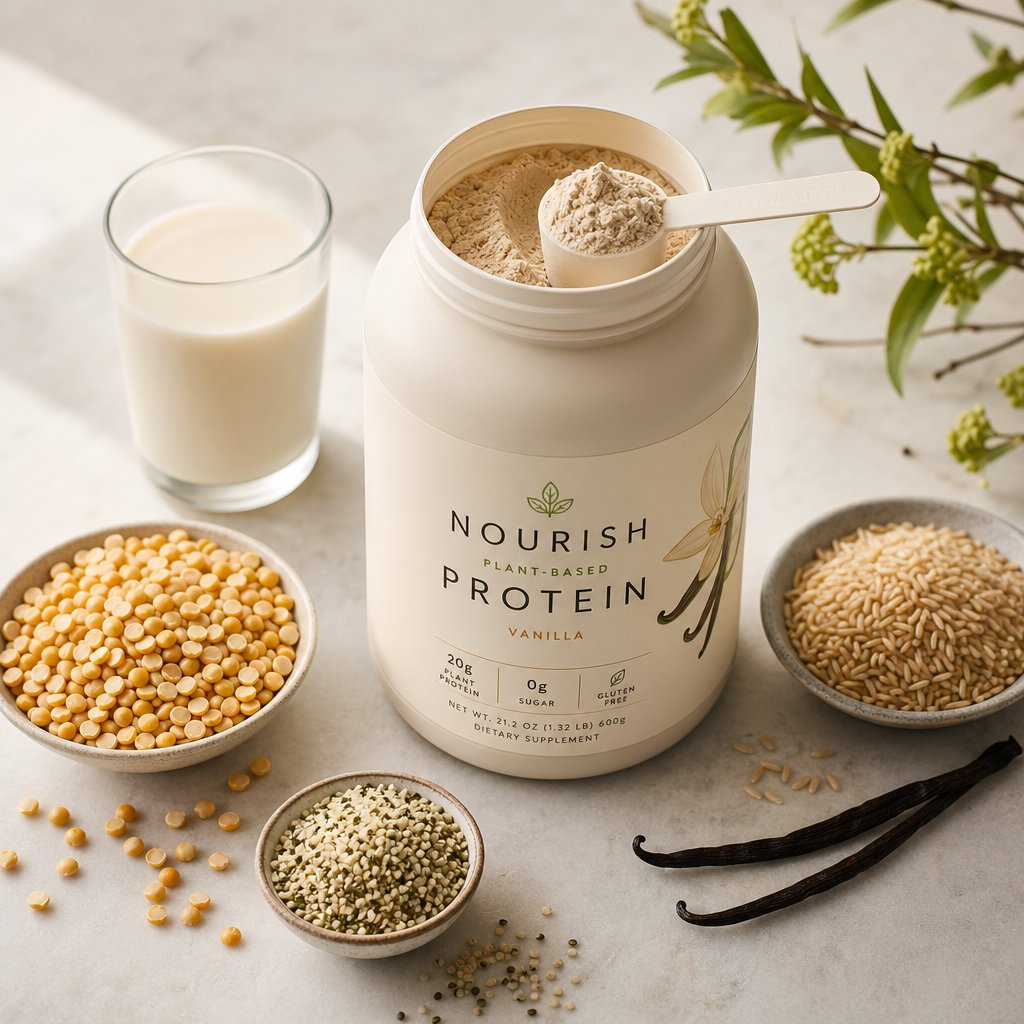
Pea protein is derived from yellow split peas and has quickly become the most popular plant-based option on the market. Sold primarily as pea protein isolate, it delivers roughly 80-85% protein content with a relatively neutral taste that blends easily into shakes and smoothies. It is naturally rich in branched-chain amino acids (BCAAs) and lysine, an essential amino acid that many other plant proteins lack. Pea protein is also free from the eight major food allergens, including dairy, soy, gluten, and tree nuts, making it a go-to for people with sensitivities. And if you are wondering is pea protein fattening, the answer is straightforward: pea protein isolate is low in fat and carbohydrates, so it adds protein to your diet without significant extra calories.
Rice protein comes from sprouted brown rice. Enzymes separate the carbohydrate and protein fractions, and the protein is then isolated into a powder. It contains all nine essential amino acids, but its lysine content is too low to qualify as a complete protein on its own. Where rice protein shines is in its high methionine and cysteine levels, exactly the amino acids that pea protein lacks. It is also hypoallergenic and easy to digest, which makes it a solid choice for people with sensitive stomachs.
Hemp protein is made from ground hemp seeds and typically contains around 50% protein, lower than isolates from pea or soy. What sets hemp apart is its nutritional breadth. It delivers omega-3 and omega-6 fatty acids, fiber, and minerals alongside its protein content. Its amino acid profile is reasonably balanced but slightly low in lysine, similar to rice. Hemp protein appeals to people who want a whole-food supplement that supports overall wellness rather than just muscle recovery.
Soy protein isolate stands out as the only widely available plant based protein powder that qualifies as a complete protein. It contains all nine essential amino acids in adequate proportions and earns a PDCAAS of 1.0, putting it on equal footing with whey and casein. Soy is also well-studied: research published in the British Journal of Nutrition confirms that soy protein isolate has high standardized ileal digestibility for most indispensable amino acids. Common consumer questions about soy often center on phytoestrogens, but the current body of evidence supports soy protein as safe for the general population when consumed in normal dietary amounts. For anyone seeking a protein powder that does not contain soy, pea, rice, and hemp options provide effective alternatives.
| Plant Protein | Protein Completeness | Key Amino Acid Strengths | Allergen Considerations | Taste Profile | Common Blending Partners |
|---|---|---|---|---|---|
| Pea Protein Isolate | Incomplete (low in methionine) | High in lysine, BCAAs (leucine, isoleucine, valine) | Free from all 8 major allergens | Mild, slightly earthy | Rice protein, hemp protein |
| Brown Rice Protein | Incomplete (low in lysine) | High in methionine and cysteine | Free from all 8 major allergens | Mildly grainy, neutral | Pea protein |
| Hemp Protein | Incomplete (low in lysine) | Balanced profile, rich in arginine; also provides omega fatty acids and fiber | Free from all 8 major allergens | Nutty, earthy | Pea protein, rice protein |
| Soy Protein Isolate | Complete (all 9 essential amino acids) | High in glutamine and arginine; strong overall balance | Contains soy (top-8 allergen) | Beany, slightly bitter when unflavored | Often used standalone |
Why Plant Proteins Are Blended for Complete Amino Acid Profiles
You will see "plant protein blend" on many vegan protein labels, and there is a clear nutritional reason behind it. Most individual plant proteins are incomplete, meaning they fall short on at least one essential amino acid. Your body needs all nine essential amino acids available simultaneously to efficiently drive muscle protein synthesis and tissue repair. A single incomplete source creates a bottleneck.
The classic example is the pea and rice combination. Pea protein is rich in lysine but low in methionine. Rice protein is the mirror image: high in methionine, low in lysine. Combining them in roughly a 50/50 ratio fills each source's amino acid gap, producing a complete protein profile that rivals animal-based options. This complementary pairing is the same principle behind traditional food combinations like beans and rice, applied at the supplement level.
Is whey protein a complete protein? Yes, and that single-source completeness is one reason whey has dominated the market for decades. Plant-based formulations close that gap through strategic blending rather than relying on a single ingredient. The best vegan protein powder products use this approach deliberately, pairing two or three sources to deliver a complete amino acid spectrum without any animal-derived ingredients.
Protein quality scoring reinforces why blending matters. Under the PDCAAS system, soy protein isolate scores a perfect 1.0, but pea protein concentrate scores lower, and wheat protein drops significantly due to its lysine deficiency. The newer DIAAS method, which measures amino acid digestibility at the ileal (small intestine) level rather than through total tract analysis, tends to produce lower scores for plant proteins than PDCAAS does. This suggests that PDCAAS may overestimate the quality of some plant sources. DIAAS values highlight exactly where a plant protein falls short, making it easier for formulators to design blends that compensate for specific amino acid weaknesses.
The practical takeaway: a well-designed plant protein blend can deliver a complete protein that supports muscle building, recovery, and general daily nutrition. The key is understanding which sources complement each other and verifying that the blend provides adequate levels of all essential amino acids, especially leucine for muscle synthesis and lysine for overall protein quality.
Knowing the raw protein source is only half the story, though. Whether a powder starts as pea, rice, whey, or soy, the processing method applied to that raw material fundamentally changes the protein concentration, digestibility, and even the lactose or carbohydrate content of the finished product.
How Processing Methods Change the Protein You Get
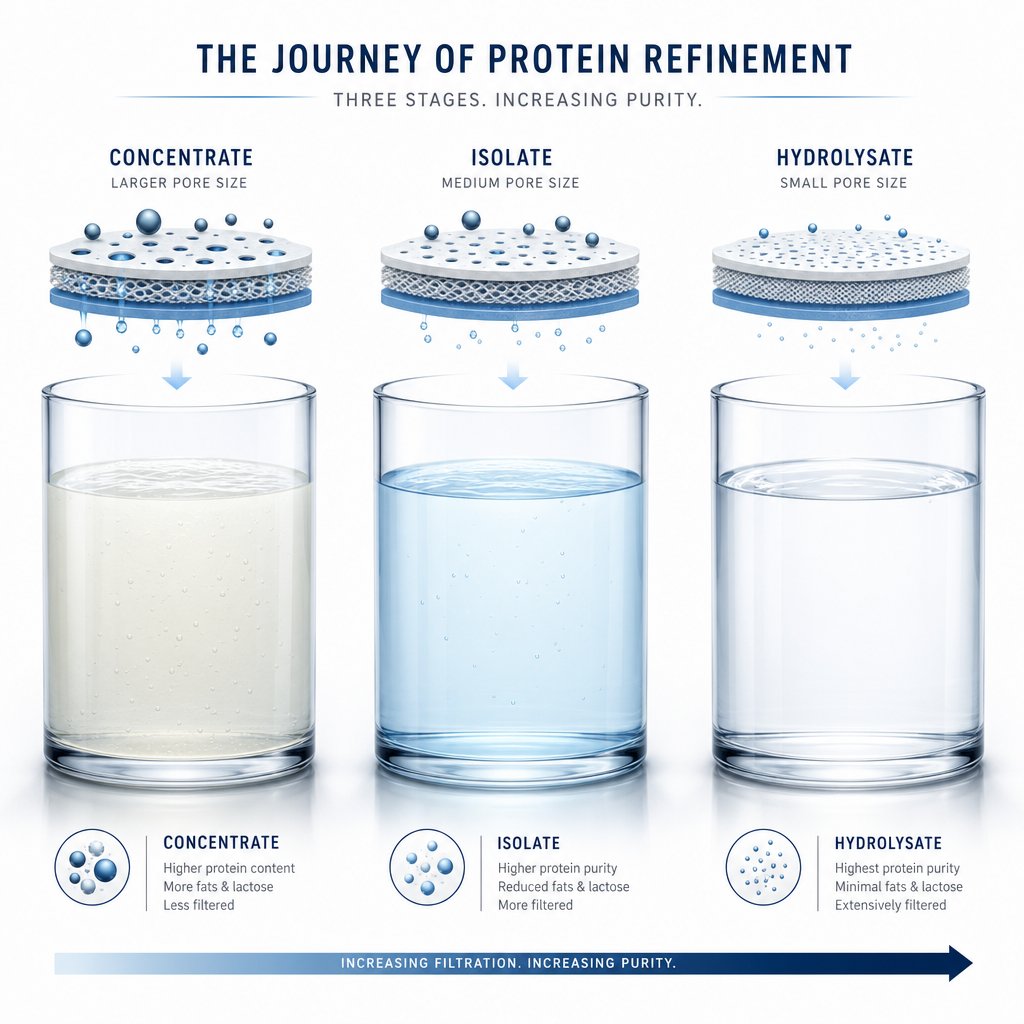
Two protein powders can start from the exact same raw material and end up with dramatically different nutritional profiles. The difference comes down to how protein supplements are made after the initial extraction. Processing determines how much protein ends up in each scoop, how much lactose or carbohydrate remains, how quickly your body absorbs it, and how much you pay per tub. Three processing levels define the different types of protein powder on the market: concentrate, isolate, and hydrolysate.
Concentrate vs. Isolate vs. Hydrolysate
Think of these three forms as a spectrum of refinement. Each step removes more non-protein material and changes the powder's behavior in your body.
So what is whey protein concentrate, exactly? It is the least processed form. After the raw protein source is extracted, whether that is liquid whey from cheese production or a protein-rich slurry from yellow split peas, it undergoes basic filtration to remove some fat, carbohydrates, and moisture. The result is a powder that typically contains 70-85% protein by weight, with the remaining percentage made up of naturally occurring fats, lactose (in dairy sources), and minerals. That retained fat and lactose is actually why concentrate tends to taste creamier and richer than more refined forms.
Isolate takes filtration further. Additional processing stages strip away nearly all remaining fat, carbohydrates, and lactose, pushing protein content to 90% or higher. For anyone comparing whey iso to standard whey concentrate, the practical difference is significant: isolate delivers more protein per gram of powder with fewer calories from non-protein sources. It is also the reason whey isolate is often marketed as a lactose free protein powder option, since the extra filtration reduces lactose to trace levels that most lactose-sensitive individuals can tolerate.
Hydrolysate is produced by taking a concentrate or isolate and applying enzymatic hydrolysis, a process that breaks long protein chains into shorter peptides. This pre-digestion means faster absorption, but it comes with a trade-off: hydrolyzed protein has a naturally bitter taste that manufacturers must mask with stronger flavoring systems.
Here is how the three levels compare across the factors that matter most:
- Protein content per serving: Concentrate delivers 70-85% protein, isolate reaches 90%+, and hydrolysate varies depending on whether the base material was a concentrate or isolate.
- Fat and carbohydrate content: Concentrate retains some fat and carbs. Isolate and hydrolysate contain very little of either.
- Lactose levels (dairy sources): Concentrate has the most. Isolate has trace amounts. Hydrolysate from an isolate base has virtually none.
- Digestion and absorption speed: Concentrate and isolate are both fast-digesting, but hydrolysate absorbs the quickest due to its pre-broken peptide structure.
- Taste and mixability: Concentrate is the richest and creamiest. Isolate is clean and light. Hydrolysate tends toward bitter without added flavoring.
- Cost: Concentrate is the most affordable. Isolate is mid-to-premium. Hydrolysate is typically the most expensive due to the additional enzymatic processing step.
These distinctions apply across both animal-based and plant-based categories. Pea protein isolate, for example, undergoes the same principle of extended filtration as whey protein isolate to push protein purity above 90%. Plant-based concentrates similarly retain more starch and fiber, just as dairy concentrates retain more lactose and fat.
How Filtration and Spray Drying Shape the Final Product
The whey protein ingredients or plant protein ingredients you see on a label are shaped by specific filtration technologies applied during manufacturing. Microfiltration uses fine membrane filters to physically separate protein molecules from fat and bacteria based on particle size, preserving the protein's natural structure. Ultrafiltration uses even smaller membrane pores to remove lactose and minerals while retaining protein. Cross-flow filtration, a variation where liquid flows parallel to the membrane rather than being forced through it, reduces clogging and helps maintain consistent protein quality across large production batches. For whey protein isolate specifically, ion exchange chromatography may be used alongside membrane filtration to achieve the highest protein purity.
After filtration, the concentrated or isolated protein is still a liquid. Spray drying converts it into the powder form you recognize. The liquid protein is atomized into microscopic droplets and sprayed into a chamber of hot air, where moisture evaporates in seconds. Inlet air temperatures range from 150-200 degrees Celsius, while outlet temperatures stay below 80 degrees Celsius to prevent the protein from denaturing and losing its biological activity. The rapid evaporation time is what preserves amino acid integrity despite the high heat involved.
Understanding whey protein and what it does in your body starts with recognizing that these processing choices, made long before the powder reaches your kitchen, define the product's protein density, digestibility, allergen profile, and price point. A concentrate, an isolate, and a hydrolysate made from the same batch of milk will perform differently in your shake and in your gut.
Processing explains the protein itself, but it does not account for everything else in the tub. Flip past the protein source on any ingredient label and you will find sweeteners, thickeners, emulsifiers, and other additives that shape the taste, texture, and shelf life of the finished product.
Every Other Ingredient on the Label Explained
Protein gets top billing on the tub, but it is rarely the longest section of the ingredient list. Scan the panel on most protein products and you will find a supporting cast of sweeteners, thickeners, emulsifiers, flavoring agents, anti-caking compounds, and added micronutrients. Each one serves a specific functional purpose, and understanding what are in protein shakes beyond the protein itself is what separates an informed purchase from a blind one.
Sweetener Systems in Protein Powders
Sweeteners do more than add sweetness. In flavored protein powders, they mask the natural bitterness of protein concentrates and isolates, smooth out flavor transitions from first sip to finish, and help maintain a consistent taste across production batches. Three categories dominate the ingredients of protein supplements:
Artificial sweeteners like sucralose and acesulfame potassium (often listed as Ace-K) remain the most common choices. They deliver intense sweetness in tiny amounts, stay stable during processing and storage, and cost less to formulate with. Market-wide ingredient analysis shows sucralose and Ace-K are still the dominant pairing in mainstream protein powders, especially in chocolate and vanilla flavors where their taste profile blends most naturally. The trade-off: some users report a lingering bitter finish or taste fatigue over time.
Natural sweeteners like stevia (listed as stevia extract, rebaudioside A, or steviol glycosides) and monk fruit (luo han guo extract or mogrosides) are plant-derived alternatives that have improved significantly in recent years. Modern extraction techniques have reduced the licorice-like aftertaste that once made stevia polarizing. These sweeteners align with clean-label preferences and tend to be well tolerated digestively, though they require more formulation work to deliver balanced flavor.
Sugar alcohols such as erythritol, xylitol, and maltitol bridge the gap between artificial and natural options. They add mild sweetness with fewer calories than sugar, but higher intakes can cause bloating and gastrointestinal discomfort in sensitive individuals. If you notice digestive issues after your shake, the sugar alcohol content is worth checking before blaming the protein itself.
For people who want to sidestep the sweetener question entirely, unflavored protein powder skips all sweetening agents. It mixes well into smoothies, oatmeal, or recipes where fruit and other whole foods provide natural flavor.
Thickeners, Emulsifiers, and Digestive Enzymes Decoded
Ever wonder why some shakes feel creamy and smooth while others turn thin and watery? Thickeners and emulsifiers are the reason.
Thickeners like xanthan gum and guar gum are the most common texture agents in protein powders. Xanthan gum, produced by fermenting sugar with Xanthomonas campestris bacteria, stabilizes emulsions and prevents the shake from separating after mixing. Even small amounts create a noticeable difference in consistency, which is why gums typically appear near the end of the ingredient list. Guar gum, derived from guar beans, performs a similar thickening role. The European Food Safety Authority has evaluated xanthan gum and concluded it is safe, including for children. That said, some individuals experience bloating or gas from gum additives because gut bacteria ferment them in the large intestine. If that sounds familiar, gum-free formulas are available.
Emulsifiers solve a different problem: helping powder dissolve evenly in liquid. Soy lecithin and sunflower lecithin are the two most common options. They reduce surface tension between the powder particles and water, preventing clumps and improving mixability. Sunflower lecithin has gained popularity as a soy-free alternative for consumers avoiding soy allergens.
Digestive enzymes are a functional addition found in many whey protein powder ingredients lists. Lactase, the enzyme that breaks down lactose, is added to help lactose-sensitive users digest dairy-based powders more comfortably. Protease blends help break protein into smaller peptides for easier absorption. As Cleveland Clinic gastroenterologist Dr. Alison Schneider explains, digestive enzymes like protease, lipase, and amylase are responsible for breaking down major dietary components, and they are vital to nutrient absorption. Including them in a protein formula can reduce the bloating and heaviness some people feel after a protein-dense shake.
Anti-Caking Agents and Added Micronutrients
Two more categories round out the typical label. Anti-caking agents like silicon dioxide and tricalcium phosphate prevent the powder from clumping during storage. They absorb moisture and keep the product free-flowing so each scoop measures consistently. You will find them in small quantities near the bottom of the ingredient list.
Added micronutrients turn some protein products into partial meal replacements. Vitamins like B12, D3, and iron are common additions, especially in plant-based formulas where these nutrients may be harder to obtain from diet alone. Some brands also add electrolytes or greens blends. These extras can be genuinely useful, but they also make it more important to cross-reference the protein powder nutritional information panel with your existing supplement routine to avoid exceeding recommended daily intakes.
The table below maps every major non-protein ingredient category, what to look for in protein powder labels, and the consumer considerations worth knowing:
| Ingredient Category | Common Examples | Function in the Product | Consumer Considerations |
|---|---|---|---|
| Artificial Sweeteners | Sucralose, acesulfame potassium (Ace-K) | Provide intense sweetness without added sugar or calories | Well-tolerated by most; some report bitter aftertaste or prefer to avoid for clean-label reasons |
| Natural Sweeteners | Stevia extract (Reb A), monk fruit (mogrosides) | Plant-derived sweetness; mask protein bitterness | Improved taste profiles in modern extracts; generally well tolerated digestively |
| Sugar Alcohols | Erythritol, xylitol, maltitol | Add mild sweetness with fewer calories than sugar | Can cause bloating or GI discomfort at higher doses in sensitive individuals |
| Thickeners | Xanthan gum, guar gum, cellulose gum | Stabilize emulsions; create smooth, creamy texture | Safe per regulatory review; may cause gas or bloating in some people due to gut fermentation |
| Emulsifiers | Soy lecithin, sunflower lecithin | Improve powder dissolution and prevent clumping in liquid | Soy lecithin is an allergen concern for soy-sensitive users; sunflower lecithin is soy-free |
| Flavoring | Natural flavors, artificial flavors, cocoa powder | Create the target flavor profile (chocolate, vanilla, etc.) | "Natural flavors" is a broad regulatory term; check for specifics if you have sensitivities |
| Anti-Caking Agents | Silicon dioxide, tricalcium phosphate | Prevent clumping and maintain scoop consistency | Used in very small amounts; generally no consumer concerns |
| Digestive Enzymes | Lactase, protease blends, bromelain | Aid digestion of lactose and protein; reduce bloating | Helpful for lactose-sensitive users and those who experience heaviness after shakes |
| Added Micronutrients | Vitamin D3, B12, iron, calcium, electrolytes | Supplement nutritional gaps, especially in plant-based formulas | Cross-check with existing supplements to avoid exceeding daily limits |
With a clear picture of every ingredient category on the label, the next logical question is whether those ingredients are actually present in the amounts claimed, and whether the product is free from contaminants that never appear on the label at all.
Quality Concerns and How to Verify What You Are Getting
Knowing every ingredient category on a protein powder label is valuable, but it assumes the label is telling the truth. The supplement industry has a transparency problem, and it starts with how these products are regulated. Are protein powders safe? Most are, but the answer depends on factors that no amount of label reading can reveal on its own: contamination from heavy metals, deceptive formulation practices, and whether anyone independent has actually verified what is inside the tub.
Heavy Metal Contamination and Why It Happens
One of the most serious cons of protein powder is something you will never see listed on the ingredient panel: heavy metals. Lead, arsenic, cadmium, and mercury can all be present in finished protein products, sometimes at levels that raise genuine health concerns.
How do heavy metals end up in a dietary supplement? The contamination typically starts at the source. Plants absorb minerals from the soil they grow in, and if that soil contains elevated levels of heavy metals from industrial runoff, pesticides, or natural geological deposits, the harvested crop carries those metals into the manufacturing process. This is why plant-based protein powders tend to show higher contamination rates than animal-based options in independent testing. A Clean Label Project study that screened 134 protein products for 130 types of toxins found that many contained detectable levels of lead, arsenic, cadmium, mercury, and even bisphenol-A (BPA). One product contained 25 times the allowed limit of BPA. Harvard Health Publishing highlighted these findings, noting that manufacturing processes themselves can introduce additional contaminants when quality controls are insufficient.
The protein powder lead issue is not limited to obscure brands. Testing has flagged products across price points and market segments. That does not mean every protein powder is contaminated, but it does mean contamination risk is a real factor in evaluating whether a product is safe, especially for people who consume protein shakes daily over months or years.
Amino Spiking and Proprietary Blend Red Flags
Heavy metals are an invisible contamination problem. Amino spiking is a deliberate formulation trick. Also called nitrogen spiking, this practice involves adding cheap, nitrogen-rich compounds like glycine, taurine, or creatine to a protein powder to inflate the measured protein content on the nutrition label. Standard protein testing methods, such as the Kjeldahl method, measure total nitrogen rather than actual intact protein. Since these added amino acids contain nitrogen, they register as protein during testing even though they do not deliver the same muscle-building benefits as a complete protein source.
The result: a label might claim 30 grams of protein per serving, but a significant portion of that number comes from inexpensive filler amino acids rather than the whey, casein, or pea protein you are paying for. A well-documented case involved a popular whey protein brand whose independent testing revealed only 21.5 grams of actual whey protein per serving despite a label claim of 30 grams. The gap was filled by added glycine and taurine, leading to a class-action lawsuit.
Proprietary blends create a related transparency issue. When a label lists a "proprietary protein blend" or "amino acid matrix" without disclosing the exact amount of each protein source, you have no way to verify how much of the blend is high-quality protein versus cheap fillers. The total weight of the blend may be listed, but the individual breakdown is hidden.
Here are the red flags to watch for on any protein powder label:
- Individual amino acids (glycine, taurine, glutamine) listed separately in the ingredient panel, especially near the top of the list
- Vague terms like "proprietary blend," "protein matrix," or "amino acid complex" without gram-by-gram disclosure
- A protein claim that seems unusually high relative to the serving size weight
- Creatine listed as an ingredient without being marketed as a creatine-containing product
- No published amino acid profile or third-party test results available from the brand
If a brand publishes a full amino acid profile showing the breakdown of each essential and non-essential amino acid per serving, that is a strong signal of transparency. Brands that spike their protein have little incentive to share that data.
Third-Party Certifications That Actually Matter
Are protein shakes bad for you? Not inherently, but the regulatory framework that governs them leaves more room for problems than most consumers realize.
Protein powders are classified as dietary supplements under U.S. law. Unlike prescription drugs or food additives, the FDA does not require pre-market approval, safety testing, or efficacy verification before a protein powder goes on sale. Manufacturers are responsible for evaluating their own products' safety and labeling accuracy.
That regulatory gap is exactly why third-party certifications exist. They fill the verification role that federal oversight does not. But not all certification logos carry the same weight. Here is what the major programs actually test for:
NSF Certified for Sport is one of the most rigorous programs available. NSF certification involves extensive product testing, material analyses, and unannounced plant inspections. The Certified for Sport program specifically screens for over 290 substances banned by major athletic organizations, plus contaminant testing for heavy metals and other toxins. Certification is not a one-time event: NSF conducts regular re-testing and facility audits, and products that fail to meet standards face enforcement actions including recall or de-certification.
Informed Sport tests every single batch of a certified product for banned substances before it ships. This batch-level testing model is particularly valued by competitive athletes who face anti-doping consequences from contaminated supplements.
USP Verified confirms that a product contains the ingredients listed on the label in the declared amounts, that it does not contain harmful levels of contaminants, and that it will break down and release its contents properly in the body. The USP mark is well established in the broader supplement industry.
Clean Label Project focuses specifically on environmental and industrial contaminants, including heavy metals, pesticide residues, and plasticizers like BPA. Their testing addresses the contamination risks that standard nutritional testing does not cover.
Does protein powder actually work? The protein itself is well supported by decades of research for muscle recovery, satiety, and meeting daily protein needs. But whether a specific product delivers on its label claims depends on the integrity of its formulation and manufacturing. A third-party certification is the closest thing to an independent guarantee that what is printed on the label matches what is inside the tub.
Weighing the pros and cons of protein powder comes down to choosing products that are transparent about their formulation and verified by independent testing. The side effects of powder protein, from digestive discomfort to long-term heavy metal exposure, are largely avoidable when you know what to look for. The next step is learning how to read the label itself, line by line, so you can apply these quality checks every time you pick up a new product.
How to Read a Protein Powder Label Like a Pro
Spotting red flags is one thing. Knowing how to systematically evaluate every line on a protein powder label turns that awareness into a repeatable skill. Whether you are comparing protein powder types on a store shelf or vetting a new brand online, the same label-reading sequence applies. Here is how to work through it step by step.
Serving Size, Protein Content, and the Math That Matters
The first number most people look at is protein per serving. But that number only tells part of the story. How much protein in protein powder actually depends on the relationship between protein grams and total serving size grams, and those two figures often tell very different stories.
Imagine two products side by side. Product A lists 25 grams of protein from a 30-gram scoop. Product B also lists 25 grams of protein, but from a 45-gram scoop. Both make the same headline claim, yet Product A is 83% protein by weight while Product B is only 56%. That 27-point gap means Product B is packed with significantly more non-protein material: sweeteners, thickeners, fillers, or added carbohydrates. As Supp.co's protein label guide explains, serving size is not standardized across brands, so manufacturers can define it however they choose, and a larger scoop can mask a less protein-dense formula.
Calculating protein percentage yourself takes about three seconds: divide protein grams by serving size grams, then multiply by 100. This single calculation is the fastest way to compare protein powder nutrition across brands, regardless of scoop size or marketing claims.
A quality protein powder should deliver at least 75-80% protein by weight. If the protein percentage falls well below that range, you are paying more per gram for non-protein ingredients than for the protein itself.
Follow this sequence every time you pick up a new product:
- Check the serving size in grams — not scoops. One brand's scoop may hold 30 grams while another holds 44 grams. The gram weight is the only reliable baseline.
- Read the protein per serving and divide it by the serving size to calculate protein percentage. Anything above 80% signals a lean formula; below 60% warrants a closer look at what else is filling the scoop.
- Scan the calorie and macronutrient breakdown. Healthy protein powders derive the majority of their calories from protein, not from added sugars or fats. If a serving has 130 calories but only 15 grams of protein (60 calories from protein), nearly half the calories come from other macros.
- Identify the protein source. The ingredient list names the specific form: whey protein concentrate, whey protein isolate, pea protein isolate, and so on. This tells you the processing level and gives you a baseline expectation for protein density and digestibility.
- Review the sweetener system. Note whether the product uses artificial sweeteners, natural sweeteners, sugar alcohols, or a combination. If you have experienced digestive discomfort from shakes before, this line often holds the answer.
- Check for thickeners and emulsifiers. Xanthan gum, guar gum, sunflower lecithin, and soy lecithin are standard. Their presence is normal, but if a thickener appears unusually high on the ingredient list, the formula may rely heavily on texture agents to compensate for a thin protein base.
- Read the allergen declaration. U.S. labeling law requires major allergens (milk, soy, eggs, wheat, tree nuts, peanuts, fish, shellfish, sesame) to be clearly identified. This line is essential if you have sensitivities or are choosing between protein powder vs protein shake products that use different base ingredients.
- Note any added functional ingredients. Digestive enzymes, vitamins, greens blends, or BCAAs listed separately from the main protein source can add value, but they also add cost and complexity. Cross-reference these with supplements you already take.
Ingredient Order and What It Tells You About Quality
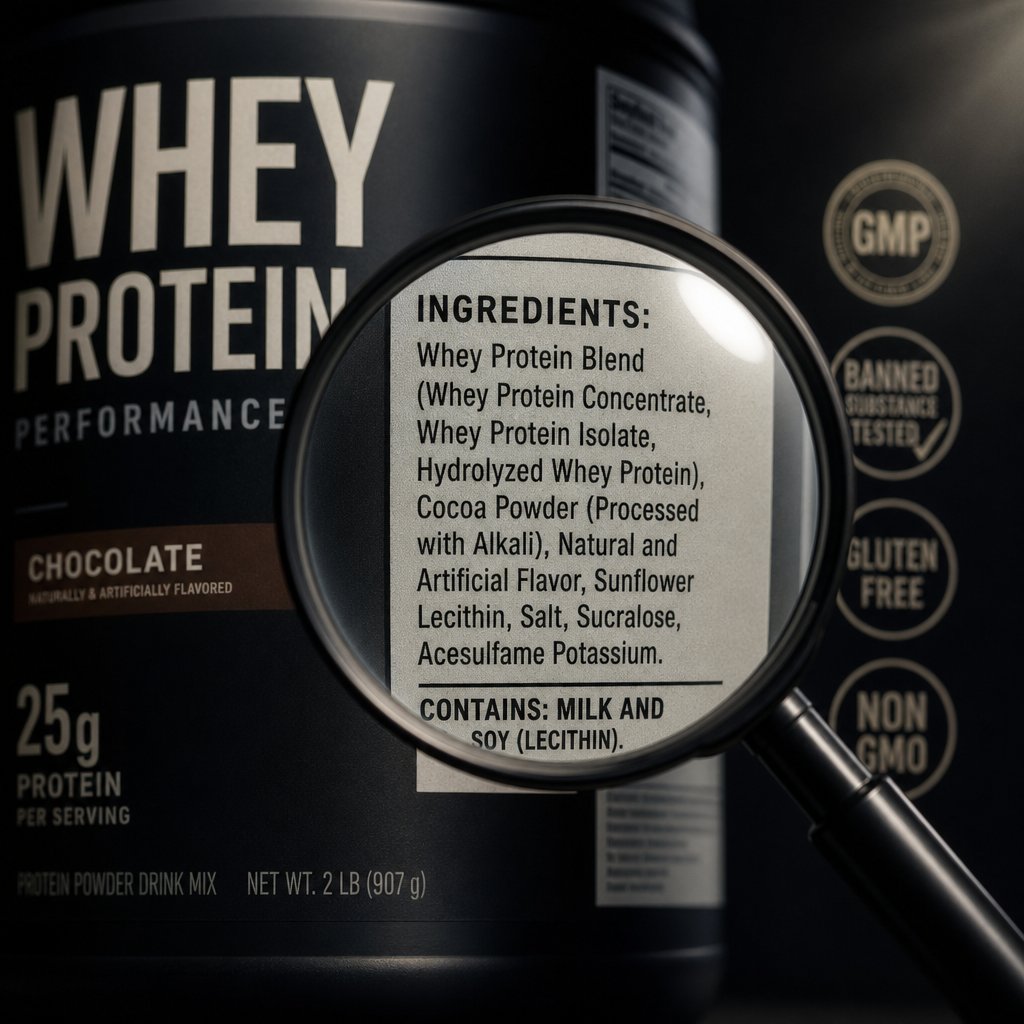
The FDA requires that ingredients be listed in descending order by weight. The first ingredient makes up the largest proportion of the product, and each subsequent ingredient contributes less. In a well-formulated protein powder, the protein source should always appear first. If a sweetener, thickener, or flavoring agent sits near the top of the list, the formula prioritizes taste or texture over protein density.
This ordering rule also helps you evaluate blends. When a label lists "protein blend (whey protein concentrate, whey protein isolate, hydrolyzed whey protein)," the first source in the parentheses is the dominant one. A blend that leads with concentrate and lists isolate second is primarily a concentrate product, even if the front of the package emphasizes "isolate" in its branding. Checking a whey protein nutrition chart or amino acid profile published by the brand can confirm whether the blend delivers the quality the packaging implies.
So what are good protein powders, practically speaking? They are the ones where the math checks out: high protein percentage per serving, a protein source listed first on the ingredient panel, a transparent sweetener and additive system, a clear allergen declaration, and ideally a third-party certification backing it all up. No single label trick replaces this full read-through, but once you have done it a few times, it takes less than a minute per product.
Reading the label tells you what ended up in the tub. Understanding how it got there, from raw material to sealed container, reveals why certain products consistently deliver on their claims while others fall short.
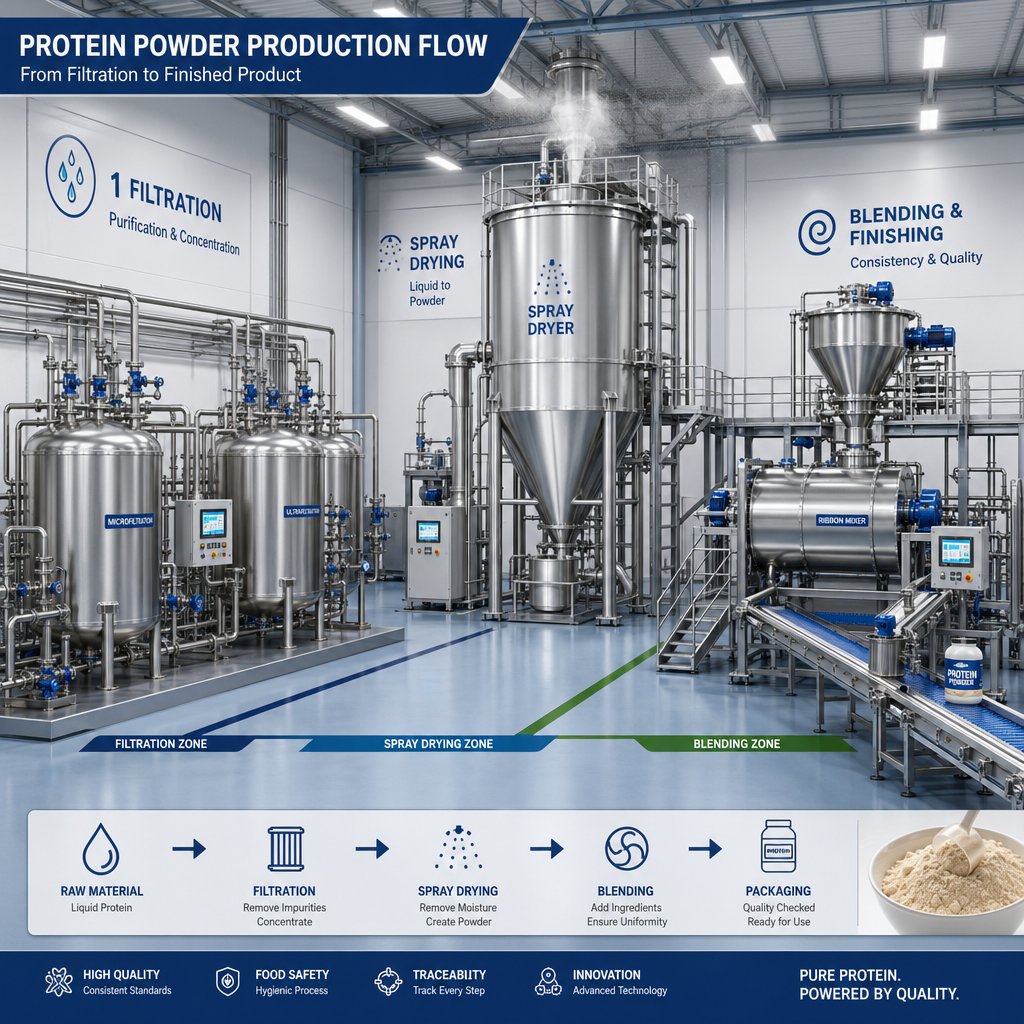
The Manufacturing Journey From Source to Scoop
A label tells you what is in the tub. The manufacturing process explains why it is there and whether you can trust it. How protein powder is made involves a chain of tightly controlled steps, each one shaping the purity, taste, and safety of the finished product. That chain looks different depending on whether the raw material is milk from a dairy farm or yellow peas from an agricultural field, but the core logic is the same: extract the protein, purify it, dry it, blend it, test it, and package it.
From Raw Material to Protein Concentrate or Isolate
Every protein supplement starts with sourcing. For whey and casein, the journey begins at dairy farms where cows produce milk containing roughly 3.5% protein, 4% fat, and 4.6% lactose. That milk is collected, cooled in refrigerated tankers, and transported to a processing facility where it is pasteurized at 155-175 degrees Fahrenheit to eliminate harmful bacteria. Is milk a complete protein? Yes, it contains all nine essential amino acids, and the two proteins within it, whey and casein, each retain that completeness after separation.
What constitutes whey at this stage is simply the liquid left behind after cheese production. Enzymes like rennet cause the milk to coagulate into solid curds (destined for cheese) and liquid whey. Nearly nine pounds of whey are produced for every pound of cheese made, which means the raw protein powder supply chain is deeply intertwined with the global cheese industry. That liquid whey then enters membrane filtration, where microfiltration, ultrafiltration, or cross-flow filtration removes fat, lactose, and bacteria while retaining the protein fraction. Ion exchange methods can further purify the stream into a high-purity isolate.
Plant-based proteins follow a parallel but distinct path. Yellow split peas, brown rice, soybeans, or hemp seeds are the starting raw materials. For pea protein, the process typically begins with dry milling to remove the outer hull, followed by wet extraction. The peas are ground into flour, mixed with water, and the protein is separated from starch and fiber through a combination of alkaline solubilization and acid precipitation. The extraction method directly affects protein concentration, flavor profile, color, and functionality, meaning two pea protein isolates from different manufacturers can behave quite differently in a finished shake. Rice protein follows a similar wet extraction process, where enzymes break down the starch fraction of sprouted brown rice to isolate the protein component.
Whether the source is dairy or plant, the extracted protein at this stage is still a liquid concentrate or slurry. It needs to be dried, flavored, tested, and packaged before it becomes the nutrition powder you scoop into a blender.
Blending, Drying, and Packaging at Scale
Spray drying is the industry-standard method for converting liquid protein into powder form. The concentrated protein liquid is atomized into fine droplets and sprayed into a large drying chamber filled with hot air. Moisture evaporates in seconds, leaving behind dry protein particles. Inlet air temperatures typically range from 150 to 200 degrees Celsius, while outlet temperatures stay below 80 degrees Celsius to preserve the protein's amino acid integrity and biological activity. Some manufacturers use drum drying as an alternative, where the liquid is spread across heated rotating drums, but spray drying dominates commercial production because it offers better control over particle size, moisture content, and powder flowability.
The resulting raw protein powder is a blank canvas. Before it becomes a finished product, it moves into the blending phase. Flavoring agents, sweetener systems, thickeners, emulsifiers, anti-caking agents, and any added micronutrients or digestive enzymes are combined with the base protein in industrial ribbon blenders or V-blenders. Flavor development is a critical step: manufacturers test for mouthfeel, mixability, and taste consistency to ensure the powder delivers a smooth drinking experience across every batch. Plant-based formulas face extra challenges here, since pea and rice proteins can carry earthy, grassy, or bitter notes that require more sophisticated flavor masking than dairy-based powders.
Quality testing happens before and after blending. Incoming raw materials are checked against specifications for protein content, moisture, microbial counts, and contaminant levels. Finished batches undergo additional testing for potency, purity, heavy metals, and label accuracy. The powder is then filled into tubs, pouches, or sachets using automated packaging lines, sealed in air-resistant containers to prevent moisture absorption and clumping, and labeled with lot numbers for traceability. Manufacturing scale matters here: facilities with robust quality management systems, validated cleaning protocols, and batch-level traceability produce more consistent and safer products than operations cutting corners on any of these steps.
How OEM and ODM Manufacturing Brings Custom Formulas to Market
Building a protein powder from scratch requires specialized equipment, food science expertise, regulatory knowledge, and significant capital investment. Most nutrition brands, supplement importers, and private label sellers do not own spray dryers, ribbon blenders, or analytical testing labs. Instead, they partner with contract manufacturers who operate under OEM (Original Equipment Manufacturing) or ODM (Original Design Manufacturing) models.
In an OEM arrangement, the brand provides its own formula and the manufacturer produces it to specification. In an ODM model, the manufacturer handles formulation development as well, working with the brand to select protein sources, design flavor profiles, choose functional additives, and optimize the formula for the target market. The typical process starts with a consultation to define the product's goals, target audience, and unique positioning. From there, ingredient selection, sample development, flavor testing, regulatory compliance checks, and packaging design all happen before full-scale production begins.
This contract manufacturing model is how the majority of protein products reach store shelves. Manufacturers like ZhuFeng, which offers OEM/ODM health food manufacturing across flexible product formats including powder and granule production, enable brands to move from concept to market-ready product without building their own facilities. Their model supports customized formulation and scalable production, which is particularly relevant for brands entering the protein powder space or expanding into new formats. Whether the brief calls for a whey isolate, a plant-based blend, or a fortified nutrition powder with added vitamins and enzymes, the manufacturing partner's capabilities in sourcing, blending, drying, testing, and packaging determine the quality of the final product.
The takeaway for consumers: the brand on the front of the tub is not always the company that made the powder inside it. Understanding that contract manufacturing drives much of the industry helps explain why third-party certifications and published test results matter so much. The brand chooses the formula and the manufacturer, but independent testing is what confirms the finished product matches the label.
With a clear picture of how protein powders move from farm or field to finished product, the remaining question is the most practical one: which type of protein powder actually fits your specific goals, and what should you verify before buying?
Choosing the Right Protein Powder for Your Needs
You now know the protein sources, the processing methods, the additives behind the flavor and texture, the quality risks hiding beneath the label, and the manufacturing chain that brings it all together. The question left is the one that matters most: which protein powder actually fits your life? The answer depends on what you are trying to accomplish, because the best protein powder for muscle gain looks nothing like the best protein powder for weight loss, and both differ from what someone with a dairy sensitivity should reach for.
Matching Protein Powder Ingredients to Your Goals
Muscle building and strength training. If your primary goal is hypertrophy and recovery, prioritize fast-digesting proteins with high leucine content. Whey protein isolate or hydrolysate checks both boxes: rapid absorption, a PDCAAS of 1.0, and leucine levels that consistently trigger muscle protein synthesis. Research from the International Society of Sports Nutrition recommends 1.4 to 2.0 grams of protein per kilogram of body weight daily for active individuals, and a whey isolate delivering 25+ grams per serving makes hitting that target straightforward. If you train fasted or need post-workout fuel that absorbs quickly, hydrolysate offers the fastest route, though the bitter taste means you will want a well-formulated flavor system.
Weight management. The best protein powder for weight loss is one that maximizes protein per calorie while keeping added sugars and fats to a minimum. Look for products with a protein percentage above 80% by weight, minimal sugar alcohols, and a clean sweetener system based on stevia or monk fruit rather than calorie-contributing sugars. Research confirms that protein promotes satiety more effectively than fats or carbohydrates, so a high-protein, low-calorie formula helps you stay in a caloric deficit without constant hunger. Whey isolate and pea protein isolate both work well here, since both deliver lean protein without excess macros.
Dairy-free and plant-based needs. For anyone avoiding dairy due to lactose intolerance, milk allergies, or dietary preference, a pea and rice protein blend is the most reliable path to a complete amino acid profile. As covered earlier, pea protein supplies the lysine that rice lacks, and rice protein fills the methionine gap in pea. BarBend's testing of over 100 protein powders found that top-performing dairy-free options deliver 20 to 25 grams of protein per serving with complete amino acid coverage when blended correctly. Soy protein isolate is another strong option with a perfect PDCAAS score, though consumers seeking a protein powder that does not contain soy will want to stick with the pea-rice combination.
General daily nutrition. Should i take protein powder if I am not a serious athlete? If your diet consistently falls short on protein, yes. A concentrate or multi-source blend with added vitamins, digestive enzymes, and moderate calorie content works well as a daily nutritional supplement rather than a performance product. Concentrates retain more naturally occurring fats and minerals, which gives them a creamier taste and a slightly broader nutrient profile. Added digestive enzymes like lactase and protease can make daily use more comfortable, especially if you are new to protein supplementation.
Should i use protein powder as a meal replacement? It depends on the formula. A standard protein powder provides protein and little else. Products with added fiber, healthy fats, vitamins, and minerals come closer to a balanced meal, but most single-ingredient protein powders are designed to supplement your diet, not replace whole meals.
Your Pre-Purchase Quality Checklist
Every section of this article has built toward one practical skill: evaluating a protein powder before you buy it. Are protein powders good for you? They can be, but only when the product behind the label is transparent, well-formulated, and verified. Use this checklist every time you pick up a new tub or click "add to cart":
- Calculate protein percentage. Divide protein grams by serving size grams. Aim for 75-80% or higher. Below 60% means you are paying mostly for fillers, sweeteners, and thickeners.
- Verify the protein source. Confirm whether the product uses concentrate, isolate, or hydrolysate. If it lists a blend, remember the first source in the parentheses is the dominant one by weight.
- Check the sweetener system. Identify whether the formula uses artificial sweeteners, natural sweeteners, sugar alcohols, or a combination. If you have experienced digestive discomfort from shakes before, sugar alcohols like erythritol or sorbitol are a common culprit.
- Look for third-party certification. NSF Certified for Sport, Informed Sport, USP Verified, or Clean Label Project logos indicate independent testing for label accuracy, banned substances, and contaminants. No certification means no independent verification.
- Watch for proprietary blends. If the label hides individual ingredient amounts behind a "proprietary blend" or "protein matrix," you cannot confirm how much of each protein source is actually in the product.
- Scan for amino spiking signals. Individual amino acids like glycine, taurine, or glutamine listed separately on the ingredient panel can inflate the protein number without delivering complete protein benefits.
- Review the allergen declaration. Confirm the product is free from any allergens relevant to you. Check whether it is manufactured in a facility that processes common allergens, since cross-contamination is possible even in products that do not list allergens as ingredients.
- Cross-reference added nutrients. If the formula includes vitamins, minerals, or functional ingredients, compare them against supplements you already take to avoid exceeding recommended daily intakes.
Is protein powder good for you in the long run? When you choose a product that passes these checkpoints, the benefits of protein powder, from supporting muscle recovery and satiety to filling daily protein gaps, are well supported by nutrition science. The risks emerge when products cut corners on formulation, skip independent testing, or obscure their ingredient profiles behind vague labeling.
For readers on the consumer side, this checklist is your filter. For those on the business side, nutrition brand owners, supplement importers, and private label sellers looking to develop their own protein powder products, the formulation and quality knowledge covered throughout this article is exactly what separates a product that earns consumer trust from one that gets called out in independent testing. Turning a product concept into a market-ready powder requires a manufacturing partner with the sourcing, blending, drying, and testing infrastructure to deliver on label claims at scale. ZhuFeng's OEM/ODM manufacturing services support customized protein powder formulation and scalable production, offering a practical path from concept to finished product for brands ready to enter or expand in this space.
Whether you are scooping protein into a shaker bottle or building the next product to sit on the shelf, the same principle applies: know what is inside, verify it independently, and match the formula to the goal. That is how you decode every scoop.
Frequently Asked Questions About Protein Powder Ingredients
1. What is protein powder actually made out of?
Protein powder is a formulated product made from a concentrated protein source (such as whey from cheese production, pea isolate, rice, hemp, or soy) combined with functional additives. These additives include sweeteners like sucralose or stevia, thickeners such as xanthan gum, emulsifiers like sunflower lecithin for mixability, anti-caking agents, flavoring, and sometimes digestive enzymes or added vitamins. The protein itself is extracted from the raw source through filtration, purified to remove fats and carbohydrates, and spray-dried into powder form. Each ingredient serves a specific role in nutrition, texture, taste, or shelf stability.
2. Is protein powder safe to consume daily?
Most protein powders are safe for daily use when you choose products verified by third-party certifications like NSF Certified for Sport, Informed Sport, or USP Verified. The primary safety concerns are heavy metal contamination (especially in plant-based powders that absorb metals from soil), amino spiking where cheap fillers inflate protein claims, and proprietary blends that hide actual ingredient amounts. To minimize risk, select products with transparent labeling, published amino acid profiles, and independent testing. People with kidney conditions or specific medical concerns should consult a healthcare provider before daily supplementation.
3. What is the difference between whey concentrate, isolate, and hydrolysate?
These three forms represent increasing levels of processing refinement. Whey concentrate undergoes basic filtration and contains 70-85% protein with some remaining fat and lactose, offering a creamier taste at a lower price. Whey isolate uses additional filtration to reach 90%+ protein purity with trace lactose, making it suitable for lactose-sensitive individuals. Hydrolysate takes concentrate or isolate and applies enzymatic hydrolysis to break proteins into smaller peptides for the fastest absorption, though this creates a bitter taste that requires stronger flavoring. The same concentrate-to-isolate principle applies to plant-based proteins like pea protein.
4. How can I tell if a protein powder is high quality?
Calculate the protein percentage by dividing protein grams by serving size grams. Quality products deliver 75-80% or higher protein by weight. Check that the protein source appears first on the ingredient list, since ingredients are listed by weight. Look for third-party certification logos (NSF, Informed Sport, USP, Clean Label Project) confirming independent testing. Watch for red flags like proprietary blends that hide individual amounts, separately listed amino acids like glycine or taurine that may indicate amino spiking, and unusually high protein claims relative to scoop size. Brands that publish full amino acid profiles demonstrate transparency.
5. Are plant-based protein powders as effective as whey protein?
Individual plant proteins like pea or rice are incomplete, meaning they lack adequate amounts of at least one essential amino acid. However, strategic blending solves this problem. A pea and rice combination in roughly equal proportions creates a complete amino acid profile because pea is high in lysine (where rice is low) and rice is high in methionine (where pea is low). Soy protein isolate is the exception, scoring a perfect PDCAAS of 1.0 as a standalone complete protein. Well-designed plant blends can effectively support muscle building and recovery comparable to whey, though the newer DIAAS scoring method suggests some plant sources may have slightly lower digestibility at the intestinal level.