Baking Cocoa and Cocoa Powder Are the Same Thing, With One Catch
The Quick Answer to the Baking Cocoa Question
You have a recipe open, a canister in your hand, and one question: is baking cocoa the same as cocoa powder? The short answer is yes. Baking cocoa is cocoa powder. Both come from roasted cacao beans that have been pressed to remove most of their cocoa butter, then ground into a fine, unsweetened powder. When you see "baking cocoa" on a label, you are looking at a cocoa powder equivalent meant for recipes rather than hot drink mixes.
Here is the catch. The term "baking cocoa" often signals a specific type of cocoa powder, usually Dutch-processed. Dutch-process cocoa has been treated with an alkaline solution to neutralize its natural acidity, which gives it a darker color and a smoother, mellower flavor. Not every brand follows this convention, though, and that is where the real confusion begins.
Baking cocoa is cocoa powder. The real question is which type of cocoa powder it is — natural or Dutch-processed — and that distinction matters for your recipe.
Why the Labels Cause So Much Confusion
The problem is not the product itself. It is the packaging. Manufacturers have no single standard for how they use the words "baking cocoa" versus "cocoa powder." Some brands reserve "baking cocoa" for their Dutch-processed line. Others slap the same label on natural, unalkalized cocoa powder. A few use both terms interchangeably across their product range.
When you compare baking cocoa vs cocoa powder on a store shelf, you are often comparing identical products with different marketing language. The distinction that actually affects your brownies, cake, or cookies is whether the powder inside is natural (acidic, pairs with baking soda) or Dutch-processed (neutral, pairs with baking powder). That is a chemistry question, not a labeling one.
This also differs from the cocoa powder vs cacao debate, where processing level and roasting temperature create meaningful nutritional gaps. With baking cocoa, the gap is narrower. You are still working with roasted, defatted cocoa solids. The variable is pH, and pH determines how your leavening agents behave in the oven.
So if you are mid-recipe and wondering whether your canister of baking cocoa will work, it almost certainly will. You just need to confirm one detail: has it been processed with alkali? That single line on the ingredient list tells you everything the front label does not.
What Is Cocoa Powder and What Is Baking Cocoa
What Cocoa Powder Actually Is
Understanding the cocoa vs cocoa powder distinction starts at the source. Cocoa powder is the dry solid left behind after cocoa butter gets pressed out of chocolate liquor, which itself is just finely ground roasted cacao beans. Picture a hydraulic press squeezing a thick paste until roughly half the fat separates as golden cocoa butter. What remains is a compressed disc called press cake. That press cake is then cooled, pulverized, and sifted into the fine powder you scoop into brownie batter.
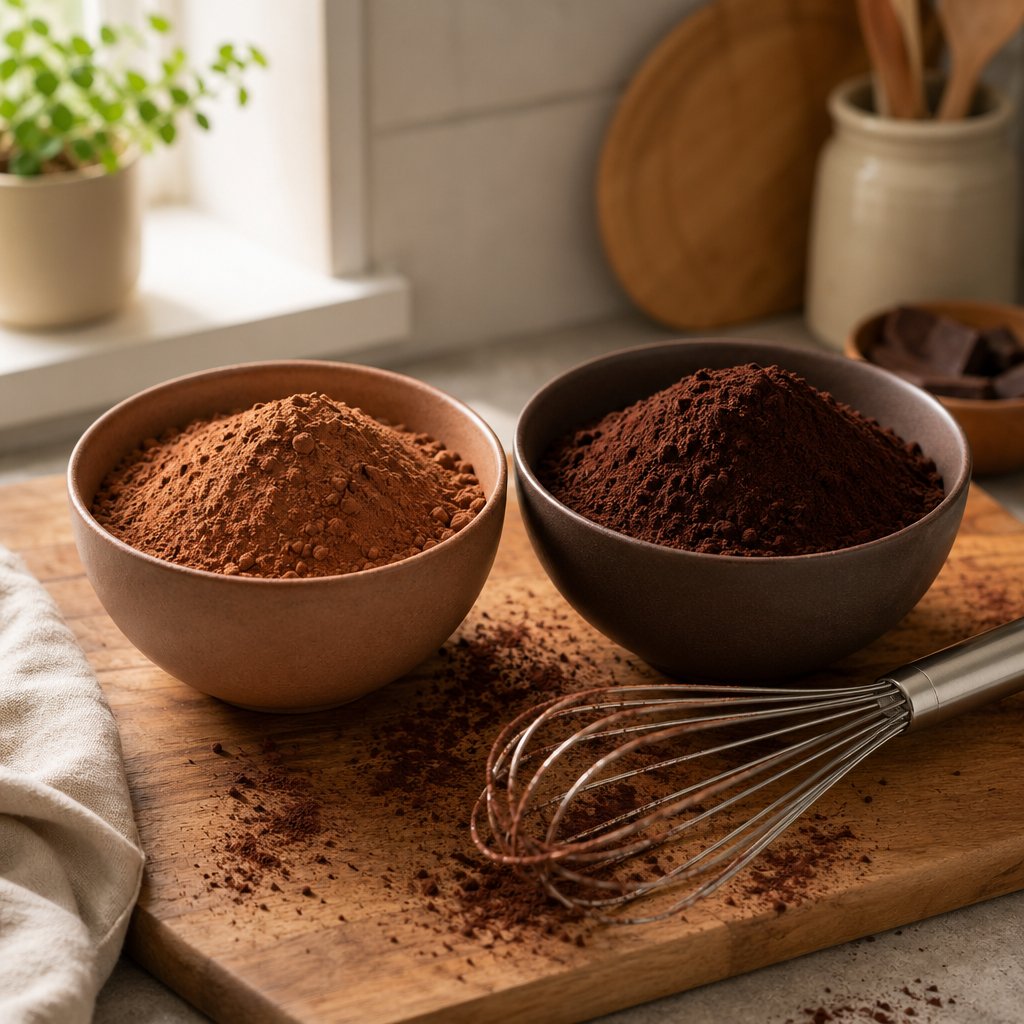
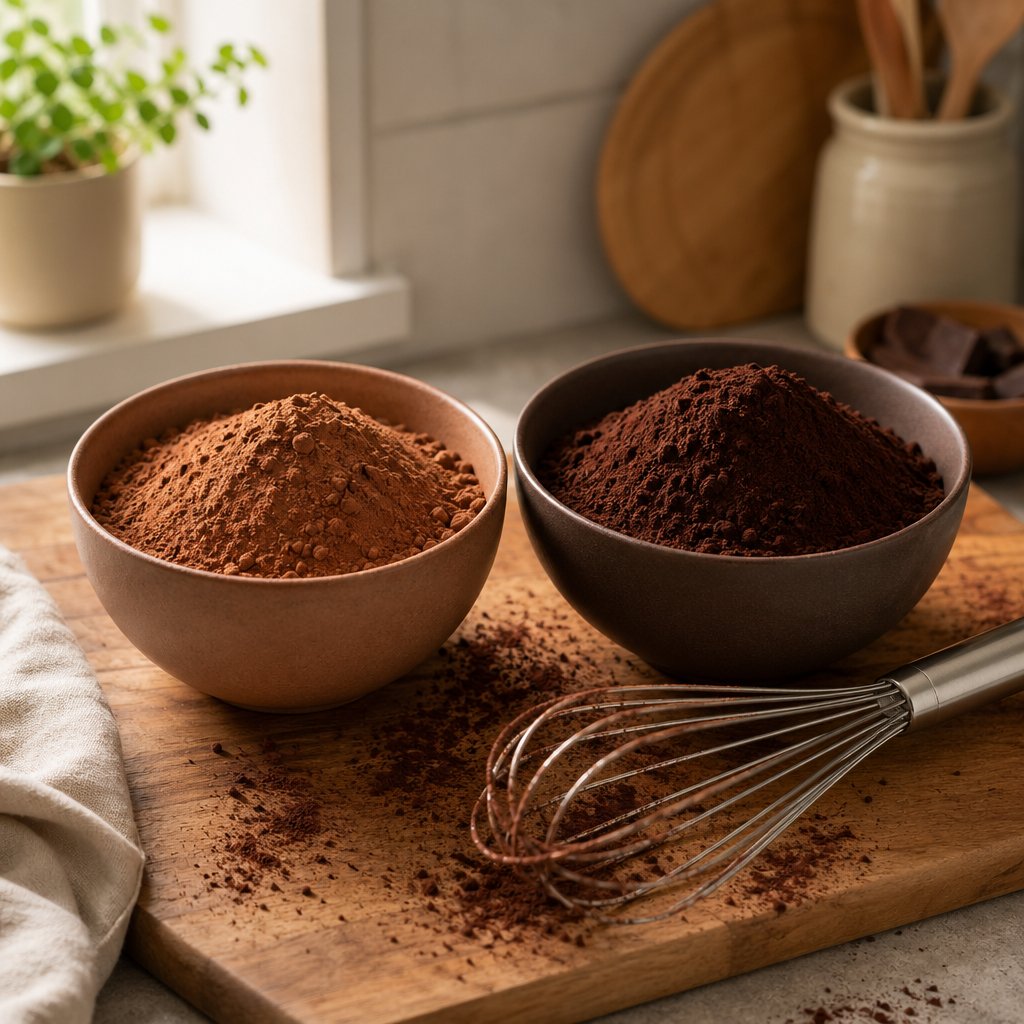
This powder comes in two main forms. Natural cocoa powder is acidic, light brown, and sharp in flavor, with a pH around 5.5. Dutch-processed cocoa powder has been treated with an alkaline solution to raise its pH to a neutral 7 or 8, resulting in a darker color and a smoother, mellower taste. Both are unsweetened. Both are pure cocoa. The difference is chemistry, not quality.
What the Baking Cocoa Label Means
When you see "baking cocoa" on a canister, you are looking at unsweetened cocoa powder packaged specifically for recipes rather than drinking. It contains no added sugar, no milk powder, and no flavorings. Think of it as a shelf-placement decision: the brand wants you to know this product belongs in your cake batter, not your mug.
The tricky part is that some brands use "baking cocoa" to specifically indicate Dutch-processed cocoa, while others use it as a catch-all for any unsweetened cocoa powder. If a recipe calls for natural cocoa powder for baking and you grab a canister labeled "baking cocoa" that happens to be Dutch-processed, your leavening balance shifts. That is why the front label alone is never enough information.
Why Brands Label Identical Products Differently
The confusion is not your fault. Major brands follow completely different naming conventions for the same types of products. Substituting cocoa powder becomes unnecessarily complicated when one brand calls its Dutch-processed product "baking cocoa" and another uses that exact phrase for natural cocoa.
Here is how the labeling typically breaks down across common brand categories:
| Brand Category | Natural Cocoa Label | Dutch-Processed Cocoa Label |
|---|---|---|
| Hershey's | "Cocoa" (unsweetened, natural) | "Special Dark" (Dutch-processed blend) |
| Ghirardelli | Not typically offered separately | "Premium Baking Cocoa" (Dutch-processed) |
| Store brands (generic) | "Cocoa Powder" or "Baking Cocoa" | "Baking Cocoa" (check for alkali note) |
| Specialty brands | Clearly labeled "Natural" | Clearly labeled "Dutch-Process" |
Notice the overlap in the store brand row. The same phrase, "baking cocoa," can point to either type depending on the manufacturer. Specialty brands tend to be the most transparent, while mass-market labels leave you guessing. The best cocoa for baking is whichever type your recipe actually needs, and the only reliable way to confirm what you have is to flip the canister around and read the ingredient list.
That ingredient list holds one critical clue: whether the cocoa has been processed with alkali. This single detail, often buried in small print, reveals the chemical identity that the front label obscures. And it is that chemical identity, specifically the pH level, that determines how your substitute for cocoa powder will behave once heat enters the equation.
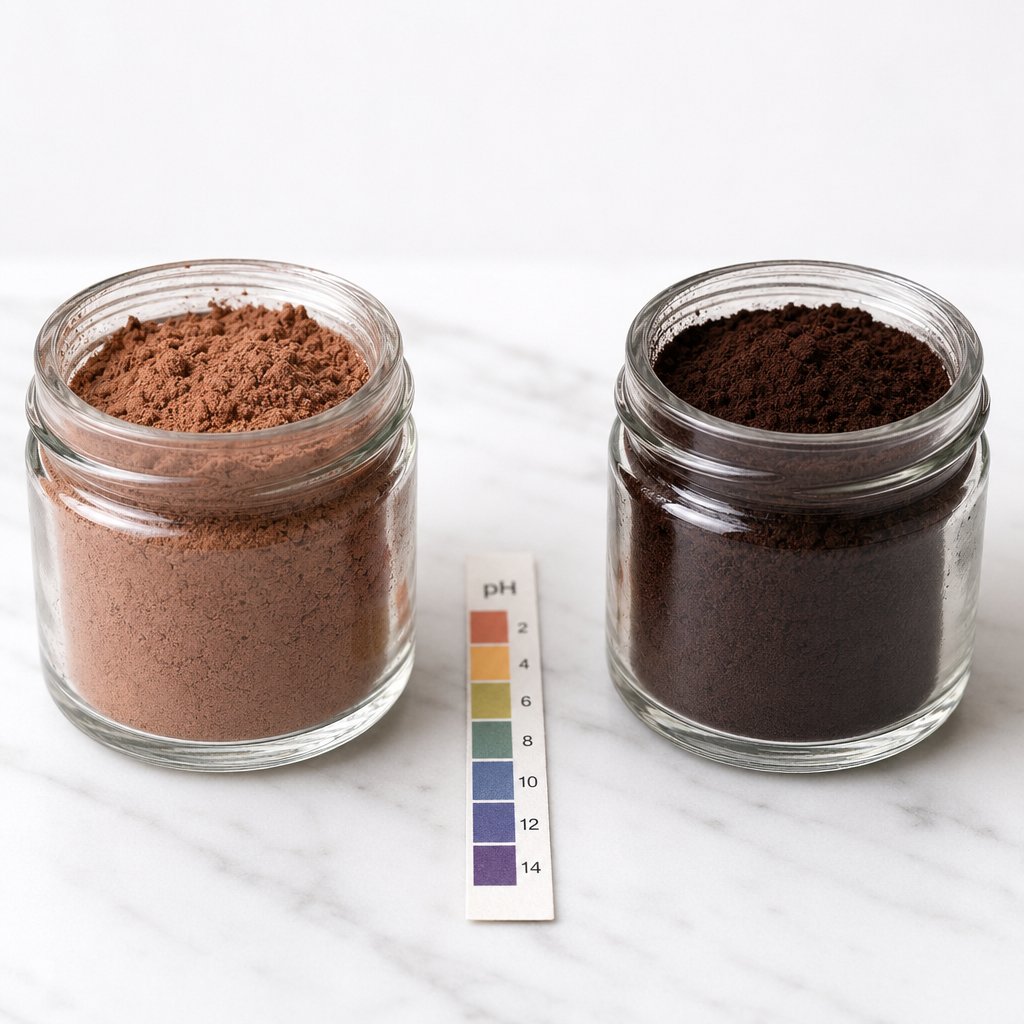
How Alkalization Creates Two Different Cocoa Powders
How the Dutch Process Changes Cocoa Powder
Imagine taking a sharp, tangy cocoa powder and running it through a chemical bath that strips away the bite. That is essentially what alkalization does. During the Dutch process, cocoa solids are washed in a potassium carbonate solution that neutralizes the natural acids present in roasted cacao. The result is a powder that looks, tastes, and behaves differently in your recipes, even though it started as the exact same raw material.
Here is what happens in practical terms. Natural cocoa powder sits at a pH of roughly 5 to 6, making it noticeably acidic. The alkaline wash pushes that pH up to around 7, which is neutral, and in some heavily Dutched products all the way to 8. This shift does three things you can observe without any lab equipment:
- The color deepens from a reddish-brown to a rich, dark brown
- The sharp, almost citrusy bitterness mellows into smooth, earthy tones
- The powder dissolves more easily into liquids
This is the single most important distinction hiding behind the question of whether baking cocoa is the same as cocoa powder. The front label might say "unsweetened baking cocoa," but what matters is whether that powder went through alkalization. A Dutch-processed product and a natural product are both cocoa powder, yet they interact with your other ingredients in fundamentally different ways.
pH, Flavor, and Color Differences at a Glance
Why does pH matter so much in baking? Because leavening agents are pH-sensitive. Baking soda is a base that needs an acid to trigger the carbon dioxide reaction responsible for lift. Natural cocoa powder provides that acid. Dutch-processed cocoa does not, which is why recipes built around it typically rely on baking powder instead, a leavener that carries its own built-in acid and activates independently.
When you grab a canister of unsweetened baking cocoa and the ingredient list mentions "processed with alkali," you are holding a neutral powder. Use it in a recipe designed for acidic natural cocoa, and the baking soda has nothing to react with. Your cake stays flat. Use natural cocoa in a recipe designed for Dutch-processed, and excess acid can throw off the flavor balance or create an uneven rise.
The table below lays out the key differences side by side so you can quickly identify which type you are working with and what it pairs best with:
| Attribute | Natural Cocoa Powder | Dutch-Processed Cocoa Powder |
|---|---|---|
| pH Level | 5 to 6 (acidic) | 7 to 8 (neutral to slightly alkaline) |
| Color | Light reddish-brown | Dark brown to nearly black |
| Flavor Profile | Sharp, bitter, slightly fruity | Smooth, mellow, earthy |
| Best Leavening Pairing | Baking soda (needs acid to activate) | Baking powder (self-contained reaction) |
| Common Label Terms | "Unsweetened cocoa," "natural cocoa" | "Baking cocoa," "European-style," "alkalized" |
You will notice the bottom row connects directly back to the labeling problem. Many brands default to calling their Dutch-processed product "baking cocoa" while labeling their natural version simply "cocoa powder." This is not a universal rule, but it is common enough that when you see "baking cocoa" without further clarification, there is a good chance alkalization is involved.
The cocoa powder vs cocoa debate often circles around flavor preferences, but in leavened baking the stakes are structural. A substitute for cocoa that does not match the original's pH can quietly sabotage texture, rise, and taste. Knowing which side of the pH line your powder falls on is the difference between a recipe that works and one that puzzles you with unexpected results.
That pH distinction also explains why the cocoa product landscape is broader than just two options. Between raw cacao, lightly roasted natural cocoa, standard Dutch-processed, and heavily alkalized black cocoa, there is an entire spectrum of processing levels, each with its own color, flavor, and functional behavior in a recipe.
Every Type of Cocoa Powder Mapped Out
The spectrum does not stop at natural and Dutch-processed. When you line up every cocoa product available to home bakers, five distinct categories emerge, each with its own processing method, flavor fingerprint, and best use case. Understanding where each one sits helps you answer not just whether baking cocoa and cocoa powder are the same, but which specific product belongs in your recipe.
Raw Cacao Powder and How It Differs
Raw cacao powder sits at the least-processed end of the spectrum. It is made from cacao beans that have been cold-pressed at low temperatures, typically below 118 degrees Fahrenheit, without traditional roasting. The result is a powder that retains more of the bean's natural flavanols, antioxidants, and volatile flavor compounds.
Can i substitute cacao powder for cocoa powder? Technically yes, but expect differences. Raw cacao tastes more bitter and astringent than roasted natural cocoa, with pronounced earthy and slightly grassy notes. It also behaves differently in baked goods because its fat structure and particle size are not identical to conventionally processed cocoa. In recipes where cocoa is a background flavor, like a smoothie or energy ball, the swap works fine. In a precisely leavened cake, the results may be unpredictable.
The cocoa vs cacao powder distinction comes down to heat. Cacao powder skips roasting. Cocoa powder does not. That single processing step changes flavor, color, and how the powder interacts with sugar and fat in a recipe. If you are comparing them side by side, cacao is lighter in color, more acidic, and sharper on the palate than even natural cocoa powder.
Natural vs Dutch-Processed Cocoa Powder
These two occupy the middle of the spectrum and represent the products most bakers encounter daily. Natural cocoa powder is roasted, pressed, and ground without any chemical treatment. It keeps the inherent acidity of the cacao bean, giving it a sharp, fruity bite and a light reddish-brown color. Sally's Baking Addiction notes that natural cocoa is the standard supermarket product in the US, with brands like Hershey's regular cocoa falling into this category.
Dutch-processed cocoa, as covered earlier, has been alkalized to raise its pH. The flavor shifts toward smooth, rounded chocolate notes with less complexity. King Arthur Baking describes it as having a more pronounced "base" chocolate flavor with fewer fruity nuances. Color deepens significantly, and the powder dissolves more readily into liquids, making it a favorite for beverages and frostings.
For anyone still wondering is baking cocoa and cocoa powder the same, this is the fork in the road. Both natural and Dutch-processed are cocoa powder. Both can appear under the "baking cocoa" label. The processing method is what separates them functionally.
Black Cocoa Powder and Specialty Variants
Black cocoa takes alkalization to an extreme. Where standard Dutch-processed cocoa receives a moderate alkaline treatment, black cocoa undergoes a much heavier dose of potassium carbonate, pushing its pH well above 8. The result is a jet-black powder with a dramatically different flavor profile.
If you have ever eaten an Oreo cookie, you have tasted black cocoa. King Arthur Baking describes it as "a whole different animal," noting that it does not taste like traditional chocolate to many palates. The flavor is intensely dark, almost smoky, with the fruity and acidic notes of the original bean completely stripped away. It is increasingly available in specialty baking aisles and online, offered by brands like King Arthur in both pure black cocoa and blended versions like their Double Dark product.
Black cocoa is not a cocoa powder substitute for general baking. It absorbs more liquid than standard cocoa, which can dry out batters if used as a straight swap. Most bakers blend it with natural or Dutch-processed cocoa to get the dramatic color without sacrificing moisture or structure. Think of it as a specialty tool rather than an everyday staple.
One common point of confusion: chocolate baking powder is not a type of cocoa. It is a leavening agent, sometimes flavored, and unrelated to the cocoa spectrum. If a recipe calls for cocoa powder, no baking powder product will serve as a replacement.
Where the Baking Cocoa Label Falls on the Spectrum
Here is the full picture. The table below places all five cocoa product categories side by side so you can see exactly how they compare and, critically, where the "baking cocoa" label fits in:
| Type | Processing Method | Flavor | Color | Acidity (pH) | Common Uses |
|---|---|---|---|---|---|
| Raw Cacao Powder | Cold-pressed, unroasted | Bitter, earthy, grassy | Pale tan to light brown | ~5 (acidic) | Smoothies, raw desserts, health foods |
| Natural Cocoa Powder | Roasted, pressed, no alkali | Sharp, fruity, bitter | Light reddish-brown | 5 to 6 (acidic) | Cakes with baking soda, cookies, classic brownies |
| Dutch-Processed Cocoa | Roasted, pressed, alkali-treated | Smooth, mellow, earthy | Dark brown | 7 to 8 (neutral) | Cakes with baking powder, frostings, hot cocoa |
| Black Cocoa Powder | Heavily alkalized | Intense, smoky, Oreo-like | Jet black | 8+ (alkaline) | Sandwich cookies, wafers, visual-impact baking |
| "Baking Cocoa" (label) | Varies by brand (natural OR Dutch-processed) | Depends on processing | Depends on processing | 5 to 8 (check label) | General baking, as directed by specific recipe |
Notice the bottom row. "Baking cocoa" is not a distinct product category. It is a marketing label that can land anywhere between natural and Dutch-processed on the spectrum. This is why you cannot treat it as a reliable cocoa powder substitute without first checking the ingredient list for an alkali processing note.
If you need to substitute cocoa for baking chocolate, the conversion works regardless of whether your cocoa is natural or Dutch-processed: three tablespoons of cocoa powder plus one tablespoon of fat (butter or oil) replaces one ounce of unsweetened baking chocolate. The type of cocoa you choose for that swap still needs to match your recipe's leavening system.
With the full spectrum mapped, the practical question shifts from "what is this product?" to "how do I confirm which one I actually have?" The answer lives on the back of the package, in details most people never think to check.
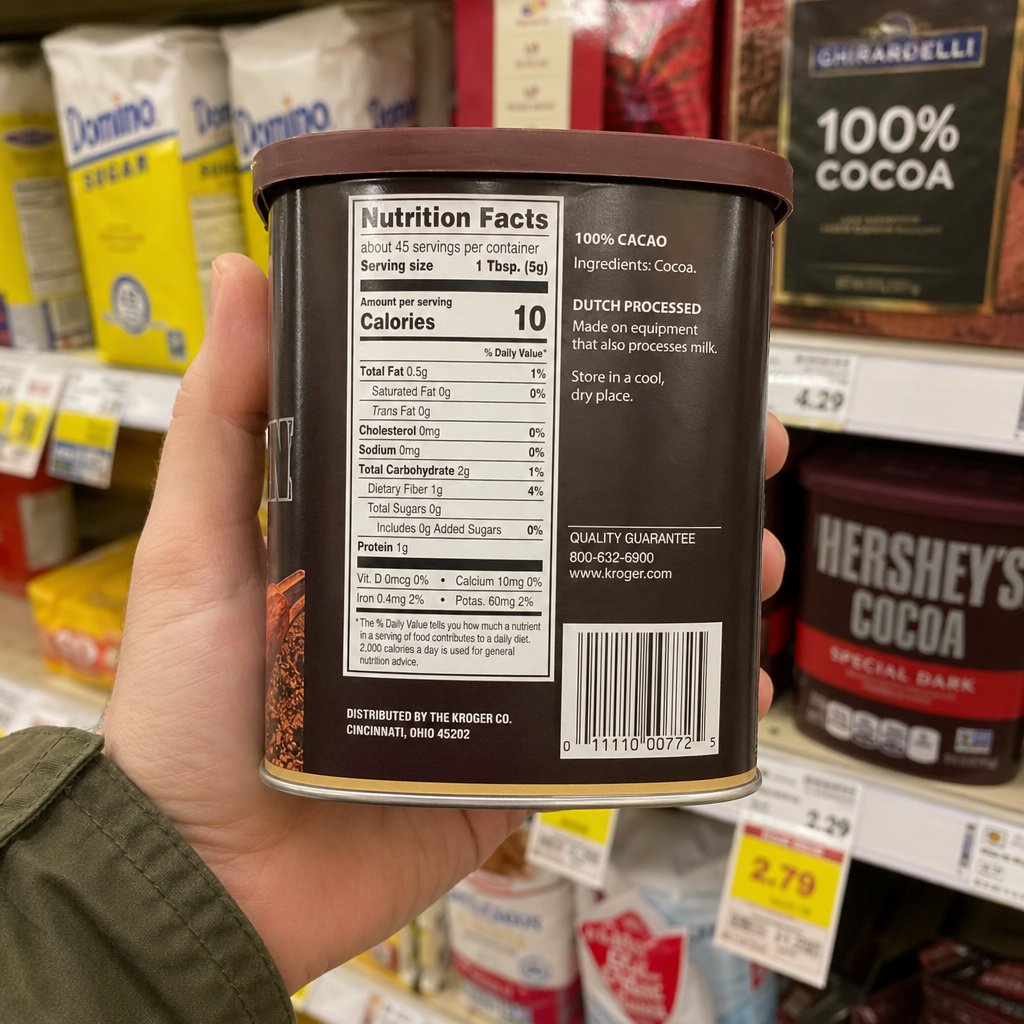
How to Read Cocoa Labels and Know What You Have
You are standing in the baking aisle, or maybe staring at a canister that has been in your pantry for months. The front says something vague like "premium cocoa" or "unsweetened baking cocoa." Nothing on the front tells you whether this is natural or Dutch-processed. So how do you figure it out? The answer is always on the back of the package, and it takes about ten seconds once you know where to look.
Three Things to Check on Any Cocoa Label
Whether you are shopping for the best cocoa powder for baking or trying to identify what you already own, these three checks will tell you exactly what type of cocoa you are dealing with:
- Read the ingredient list for the word "alkali." This is the single most reliable indicator. If the ingredients say "cocoa processed with alkali" or "cocoa (processed with potassium carbonate)," you have Dutch-processed cocoa. If the ingredient simply reads "cocoa" with no mention of alkali, you have natural cocoa powder. This line is often small and easy to miss, but it is the only detail that matters.
- Look at the color of the powder. If you can see the product through a window on the packaging, or if the canister is already open at home, color gives you a strong visual clue. Natural cocoa powder is a light reddish-brown, similar to milk chocolate in tone. Dutch-processed cocoa is noticeably darker, closer to dark chocolate or espresso. This is not a foolproof test on its own, but combined with the ingredient check, it confirms what you are working with.
- Check for the word "natural" on the front label. If the packaging specifically says "natural cocoa powder," you can trust that it has not been alkalized. However, the absence of the word "natural" does not automatically mean it is Dutch-processed. Many brands skip this descriptor entirely and just print "unsweetened cocoa powder" or "cocoa powder for baking," which tells you nothing about the processing method. You still need to flip to the ingredient list.
How to Identify What You Already Have at Home
Imagine you are mid-recipe and the canister in your pantry has a faded label or you tossed the outer packaging long ago. Here is a quick way to narrow it down. Spoon a small amount onto a white plate. If it looks pale and reddish-brown, it is almost certainly natural. If it looks deep brown or nearly black, it has been Dutch-processed or heavily alkalized. You can also taste a tiny pinch. Natural cocoa hits your tongue with a sharp, almost sour bitterness. Dutch-processed tastes smoother and more muted, without that acidic edge.
One critical point that trips up many bakers: the phrase "unsweetened cocoa powder" on a label does not tell you whether the product is natural or Dutch-processed. Both types are unsweetened. "Unsweetened" only means no sugar has been added. It says nothing about alkalization. If you are looking for a substitute for baking cocoa and your recipe specifies a type, "unsweetened" alone is not enough information to make the right choice. You need the alkali note.
The same applies to the cacao vs cocoa powder distinction on labels. Some brands market raw cacao powder alongside traditional cocoa powder for baking, and the packaging can look nearly identical. Raw cacao will typically say "raw" or "cold-pressed" and will not mention roasting. If neither of those terms appears, you are holding conventional cocoa powder.
Regional labeling adds another layer of complexity. In the US, the FDA requires disclosure if cocoa has been alkalized, which is why American products almost always include the "processed with alkali" note in the ingredient list. In the UK and EU, this disclosure is not mandatory. Manufacturers can sell Dutch-processed cocoa without specifying the alkaline treatment on the label. Australian labeling follows a similar pattern to the UK, where the processing method may be omitted entirely. If you are working with a European or Australian brand and the label does not mention alkali, you cannot assume it is natural. The darker the color and the milder the flavor, the more likely it has been Dutched.
For anyone shopping internationally or using imported cocoa powder for baking, the safest approach is to look for brands that explicitly state their processing method. Specialty brands tend to be the most transparent regardless of country of origin. Mass-market products, especially those sold under store-brand labels, are the ones most likely to leave you guessing.
Armed with these label-reading skills, you can confidently identify what you have and determine whether it matches what your recipe needs. And when it does not match, the next question becomes practical: can you swap one type for the other, and what adjustments keep the recipe on track?
Substitution Ratios and Leavening Adjustments That Actually Work
So you know what is baking cocoa, you have identified what type is in your pantry, and it does not match what your recipe calls for. What now? The cocoa itself swaps at a 1:1 ratio every time. The leavening agent is where things get tricky, and skipping that adjustment is the single most common baking mistake when switching between natural and Dutch-processed cocoa.
Here is the core rule. Natural cocoa powder is acidic (pH 5 to 6) and pairs with baking soda, a base that needs acid to produce the carbon dioxide bubbles responsible for rise. Dutch-processed cocoa is neutral (pH 7 to 8) and pairs with baking powder, which contains its own acid and activates independently. Swap the cocoa without adjusting the leavener, and the chemical reaction either fizzles or goes haywire.
Swapping Natural Cocoa for Dutch-Processed
When your recipe calls for Dutch-processed cocoa and baking powder, but you only have natural cocoa on hand, you are introducing acid into a system that was not designed for it. The fix is straightforward: use the same amount of natural cocoa, but replace the baking powder with half the amount of baking soda. So if the recipe calls for 1 teaspoon of baking powder, swap it for 1/2 teaspoon of baking soda. The natural cocoa's acidity provides the reaction partner that baking soda needs, and the proportions stay balanced.
This substitution works well in most cakes, brownies, and cookies. You will notice a slightly lighter, more reddish color and a sharper chocolate flavor compared to the Dutch-processed original, but the structure and rise should remain intact. Iowa State University Extension confirms that substituting may result in a slightly different product in color, rise, and flavor, but the recipe will still function correctly with the leavening adjustment.
Swapping Dutch-Processed for Natural Cocoa
The reverse scenario is more common. Your recipe calls for natural cocoa and baking soda, but you have a canister of baking cocoa powder that is Dutch-processed. Without the cocoa's acidity, the baking soda has nothing to react with. The solution: replace the baking soda with twice the amount of baking powder. If the recipe uses 1/2 teaspoon of baking soda, swap in 1 teaspoon of baking powder.
This adjustment, recommended by King Arthur Baking, ensures your batter still gets adequate lift. The trade-off is a darker color and a smoother, less complex chocolate flavor. In recipes where other acidic ingredients are present, like buttermilk, yogurt, or brown sugar, you may not need the full leavening swap since those ingredients can partially activate the baking soda on their own.
Substituting Unsweetened Baking Chocolate for Cocoa Powder
What can i use instead of cocoa powder when the pantry is truly bare? Unsweetened baking chocolate is the closest cocoa powder alternative, but it is not a simple 1:1 swap. Unsweetened chocolate contains roughly 55% cocoa butter, while cocoa powder has only 10 to 12% fat. That difference in fat content changes the texture, moisture, and structure of your baked goods if you do not compensate.
Baking expert Paula Figoni developed a formula based on these fat ratios, as detailed by Serious Eats: one ounce of unsweetened chocolate equals approximately 3 tablespoons of cocoa powder plus 1 tablespoon of added fat (butter, oil, or shortening). Working in reverse, if your recipe calls for 1/4 cup of cocoa powder and you want to use baking chocolate instead, you would use about 1.3 ounces of unsweetened chocolate and reduce the recipe's fat by roughly 1 tablespoon.
The difference between cocoa powder and cacao powder matters here too. Raw cacao has a different fat content and particle structure than standard cocoa, so the conversion ratios above do not apply cleanly to cacao substitutions. Stick with conventional cocoa powder or unsweetened baking chocolate for the most predictable results.
The table below summarizes every common swap scenario with the exact adjustments needed:
| Substitution Scenario | Cocoa/Chocolate Amount | Leavening Adjustment | Fat Adjustment |
|---|---|---|---|
| Natural cocoa replacing Dutch-processed | 1:1 (same amount) | Replace baking powder with half the amount of baking soda | None needed |
| Dutch-processed replacing natural cocoa | 1:1 (same amount) | Replace baking soda with twice the amount of baking powder | None needed |
| Cocoa powder replacing unsweetened chocolate | 3 Tbsp cocoa per 1 oz chocolate | Match cocoa type to recipe's leavener | Add 1 Tbsp fat per 1 oz chocolate replaced |
| Unsweetened chocolate replacing cocoa powder | 1 oz chocolate per 3 Tbsp cocoa | No change needed | Reduce recipe fat by 1 Tbsp per 1 oz chocolate used |
A quick note on recipes that use no leavening at all, like frostings, hot fudge sauce, or drinking chocolate. In those cases, the replacement cocoa powder you choose is purely a flavor and color decision. Natural cocoa gives a sharper, more acidic bite. Dutch-processed delivers a smoother, rounder chocolate flavor. Neither will cause structural problems because there is no leavening reaction to disrupt. Use whichever matches your taste preference.
These adjustments keep your recipe functional, but they do not make the results identical. Every swap introduces subtle shifts in flavor, color, and texture. The closer your cocoa type matches the original recipe's intent, the closer your results will be to what the recipe developer tested. When precision matters most, matching the cocoa type is always better than compensating after the fact.
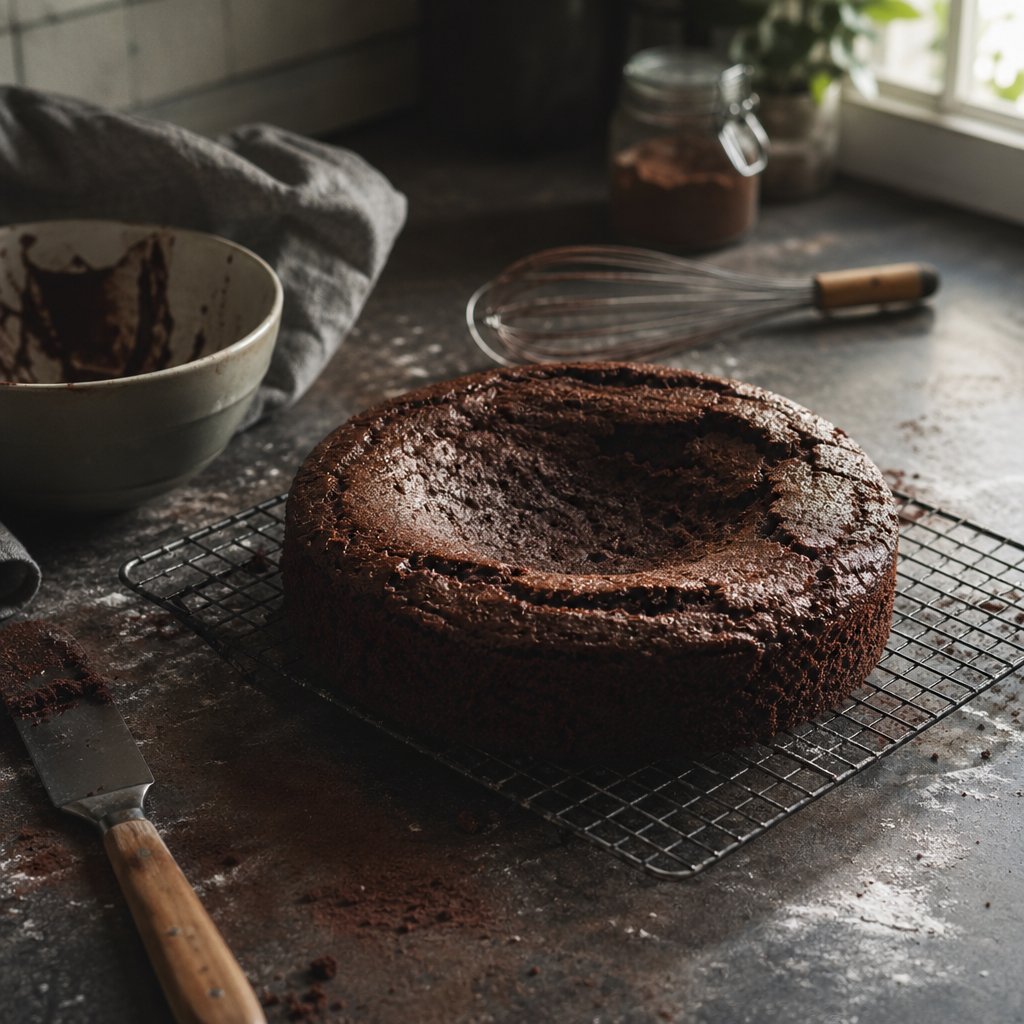
What Goes Wrong When You Use the Wrong Cocoa
Substitution ratios and leavening adjustments work when you catch the mismatch before the batter goes into the oven. But what if you did not catch it? Maybe you grabbed the wrong canister, assumed baking cocoa and cocoa powder were interchangeable without checking the alkali note, or followed a recipe that never specified a type. The results show up in flavor, texture, and color, and each symptom points back to a specific chemical imbalance.
Metallic Taste and Soapy Flavor Explained
This is the most unpleasant failure, and it happens when too much baking soda sits in a batter without enough acid to neutralize it. Picture this scenario: a recipe calls for Dutch-processed cocoa and baking powder, but you use natural cocoa without adjusting the leavener. The natural cocoa's acidity partially reacts with the baking powder's built-in base, but if the recipe also contains a small amount of baking soda as a secondary leavener, that soda now has excess acid to work with. The reaction overshoots, leaving behind unreacted sodium bicarbonate. That residue tastes metallic or soapy, a flavor Sally's Baking Addiction describes as a "bitter soapy flavor" that ruins an otherwise good recipe.
The reverse version of this problem is subtler but equally disappointing. When Dutch-processed cocoa goes into a recipe designed for natural cocoa, the baking soda has no acid partner. Instead of reacting fully, some of it lingers in the crumb. You might not taste full-on soap, but there is an off-putting alkaline bitterness that does not belong in chocolate cake. If you have ever bitten into a brownie and thought "something is wrong but I cannot name it," unreacted baking soda is a likely culprit.
Flat Textures and Failed Rises
Beyond flavor, the wrong cocoa powder replacement wrecks structure. Baking soda produces carbon dioxide only when it meets an acid. Dutch-processed cocoa is neutral, so pairing it with baking soda in a recipe that relied on natural cocoa's acidity means the leavening reaction never fully fires. The result is a dense, flat baked good that should have been light and airy.
You will notice this most in cakes and cupcakes, where rise is critical to the final texture. Cookies are more forgiving because they are meant to be denser, but even cookies can come out unexpectedly compact and heavy when the leavening chemistry is off. The difference between cocoa vs dark cocoa in this context is not just color. It is whether your batter has the chemical fuel it needs to expand in the oven.
What can you use in place of cocoa powder if you realize mid-bake that you grabbed the wrong type? Unfortunately, once the batter is mixed, the chemistry is set. The time to make adjustments is before combining wet and dry ingredients. If you catch the error early, refer back to the leavening swaps: replace baking soda with double the baking powder when using Dutch-processed, or replace baking powder with half the baking soda when using natural.
Unexpected Color Changes in Your Baked Goods
Color shifts are the most visible sign of a cocoa mismatch, and they are not just cosmetic. Natural cocoa powder produces warm, reddish-brown tones in baked goods. This is exactly why traditional red velvet cake recipes call for natural cocoa. The reddish hue of the cocoa, combined with a small amount of food coloring and the acid-base reaction between natural cocoa and baking soda, creates that signature color. Swap in Dutch-processed cocoa and the cake turns a flat, muddy brown instead of the expected warm red.
Dutch-processed cocoa yields darker, more uniformly brown results across all baked goods. If your chocolate cake came out nearly black when you expected a medium brown, you likely used a heavily alkalized product. Is cacao powder the same as cocoa powder in terms of color? Not at all. Raw cacao produces the palest results of any cocoa product, while black cocoa creates the darkest. Standard natural and Dutch-processed fall between those extremes, but the gap between them is still wide enough to change the entire appearance of a finished dessert.
Here is a quick troubleshooting reference. If your baked goods show any of these symptoms, a cocoa mismatch is the likely cause:
- Metallic or soapy aftertaste: Unreacted baking soda due to insufficient acid, typically caused by using Dutch-processed cocoa in a recipe designed for natural
- Flat, dense texture with poor rise: Baking soda had no acid to react with, meaning Dutch-processed cocoa replaced natural without a leavening adjustment
- Overly dark or muddy color: Dutch-processed or black cocoa used where natural cocoa was intended, eliminating the warm reddish tones
- Unexpectedly pale or reddish crumb: Natural cocoa used where Dutch-processed was called for, producing lighter color than the recipe intended
- Sunken center in cakes or cupcakes: Incomplete leavening reaction caused the initial rise to collapse during baking
- Harsh, overly acidic bite: Natural cocoa's acidity was not fully neutralized because the recipe's leavening was calibrated for neutral Dutch-processed cocoa
Each of these symptoms traces back to the same root cause: a pH mismatch between the cocoa powder and the leavening system. The fix is never to add more sugar or frosting to mask the problem. The fix is to match the cocoa type to the recipe's chemistry from the start, or adjust the leavening agent before the batter is mixed.
These failures are frustrating, but they are also entirely preventable. And the prevention extends beyond your home kitchen. The same pH sensitivity that causes a cake to fall flat or taste metallic applies at any scale, whether you are baking a single layer cake or formulating a cocoa-based product for commercial production.
Cocoa Powder Beyond the Kitchen and Into Nutrition Products
A flat cake or a soapy-tasting brownie is annoying. A poorly formulated protein powder or supplement that delivers fewer antioxidants than its label implies is a different kind of problem entirely. The same natural vs Dutch-processed distinction that determines whether your cupcakes rise also shapes the nutritional profile, flavor, and marketability of commercial cocoa-based products, from functional beverages to gummy supplements.
Why Cocoa Type Matters in Health and Nutrition Products
Cocoa's health reputation rests largely on its flavanol content. Flavanols are a subclass of flavonoids, the polyphenol antioxidants linked to cardiovascular benefits, improved blood flow, and reduced inflammation. Here is where processing method becomes critical: the more a cocoa powder is alkalized, the fewer flavanols survive.
A study published in the Journal of Agricultural and Food Chemistry measured this decline across commercial cocoa powders at different alkalization levels. Natural, nonalkalized cocoa powders averaged 34.6 mg/g of total flavanols. Lightly alkalized powders dropped to 13.8 mg/g. Medium-processed powders fell to 7.8 mg/g. Heavily alkalized cocoa, the type used in black cocoa and some powdered baking cocoa products, retained just 3.9 mg/g. That is roughly a 90% reduction from natural to heavily Dutched.
So what is the difference between cocoa powder and cacao powder when it comes to nutrition? Raw cacao, which skips roasting entirely, sits at the top of the antioxidant ladder. Natural cocoa powder follows closely behind, with roasting reducing some flavanol content but preserving the majority. Dutch-processed cocoa ranks last by a significant margin. As Forks Over Knives notes, the alkalization process destroys 60% or more of natural cocoa's antioxidants, and heavily Dutched products lose even more.
This hierarchy matters far beyond your mixing bowl. Protein powder brands, functional food companies, and supplement formulators all face the same decision: which cocoa type delivers the right balance of flavor, color, and nutritional value for their specific product?
Dutch-processed cocoa is often the default in commercial food manufacturing. Its neutral pH plays well with other ingredients, its dark color looks appealing on packaging, and its smooth, mild flavor blends easily into chocolate-flavored products without the sharp acidity of natural cocoa. You will find it in most chocolate protein powders, meal replacement shakes, and flavored snack bars. The trade-off is that those products carry significantly fewer of the flavanols that make cocoa nutritionally interesting in the first place.
On the other side, brands positioning themselves in the health and wellness space increasingly reach for raw cacao or natural cocoa. These powders let marketers make stronger claims about antioxidant content and minimal processing, which resonates with consumers who read ingredient lists carefully. The challenge is flavor. Raw cacao's bitter, astringent profile does not disappear behind a scoop of whey protein the way Dutch-processed cocoa does. Formulators need to balance taste against nutritional integrity, and that balance shifts depending on the product format.
Choosing the Right Cocoa Powder for Any Application
Whether you are a home baker picking between two canisters or a brand developing a new chocolate powder substitute for a supplement line, the selection criteria follow the same logic. You are weighing flavor, color, pH behavior, and nutritional content against the demands of your specific end use.
For brands, supplement companies, or private label sellers developing cocoa-based health products, working with an experienced OEM/ODM manufacturer can simplify these formulation decisions considerably. ZhuFeng, for example, offers flexible production formats including powder and granule products, gummy candy, tablets, and capsules, allowing businesses to match the right cocoa type to the right product format with customized formulations and scalable production. That kind of manufacturing flexibility means a brand can use natural cocoa in a powdered drink mix for maximum flavanol retention, then switch to Dutch-processed in a gummy line where flavor smoothness matters more.
What can you substitute for cocoa powder in a commercial formulation? The same rules apply as in home baking, just at scale. You can sub cocoa powder types freely as long as you account for pH interactions with other ingredients, adjust flavor profiles accordingly, and verify that nutritional claims still hold up after the swap. A product marketed for its antioxidant content cannot quietly switch from natural to Dutch-processed cocoa without undermining the very benefit it advertises.
Here are the key considerations when selecting cocoa powder for different end uses:
- Home baking: Match cocoa type to your recipe's leavening system. Natural cocoa pairs with baking soda, Dutch-processed pairs with baking powder. Flavor and color are secondary to getting the chemistry right.
- Beverages and hot cocoa: Dutch-processed cocoa dissolves more easily and delivers a smoother drinking experience. Natural cocoa works but produces a sharper, more acidic cup. What is chocolate powder in most commercial drink mixes? Almost always Dutch-processed cocoa blended with sugar and sometimes milk solids.
- Protein powders and meal replacements: Dutch-processed dominates for flavor compatibility, but brands focused on health benefits should consider natural cocoa or cacao to preserve flavanol content.
- Supplements and functional foods: Raw cacao or natural cocoa retains the most bioactive compounds. Product format matters: a powdered supplement can use minimally processed cocoa more easily than a tablet or capsule, where flavor is less of a concern but concentration and stability are critical.
- Confections and snack bars: Color and flavor consistency drive the choice. Dutch-processed cocoa provides uniform dark color batch after batch, which is why it is the industry standard for chocolate-flavored coatings and fillings.
The question that started this article, whether baking cocoa is the same as cocoa powder, turns out to have implications well beyond a single recipe. From your kitchen counter to a commercial production line, the answer always comes back to the same detail: check the pH, check the processing method, and match the cocoa to the job it needs to do. Get that right, and everything else, flavor, color, rise, and even nutritional value, falls into place.
Frequently Asked Questions About Baking Cocoa and Cocoa Powder
1. Can I use baking cocoa and cocoa powder interchangeably in recipes?
Yes, but with a caveat. Baking cocoa is cocoa powder, so a 1:1 swap works for the cocoa itself. The critical step is checking whether your baking cocoa is Dutch-processed (alkalized) or natural. If you swap types without adjusting the leavening agent, your baked goods may fall flat or develop off-flavors. Replace baking soda with double the amount of baking powder when using Dutch-processed, or replace baking powder with half the amount of baking soda when using natural cocoa.
2. How can I tell if my cocoa powder is natural or Dutch-processed?
Flip the container and read the ingredient list. If it says 'processed with alkali' or 'cocoa processed with potassium carbonate,' you have Dutch-processed cocoa. If the ingredient simply reads 'cocoa' with no alkali mention, it is natural. Color offers a secondary clue: natural cocoa is light reddish-brown, while Dutch-processed is noticeably darker. In the US, FDA labeling requires alkali disclosure, but UK and Australian products may omit this detail.
3. What happens if I use Dutch-processed cocoa instead of natural cocoa powder?
Without a leavening adjustment, your baked goods will likely come out flat and dense because baking soda needs acid to produce carbon dioxide for rise. Dutch-processed cocoa is pH-neutral, so it cannot activate baking soda. You may also notice a darker color, smoother flavor, and in some cases a faint metallic or alkaline aftertaste from unreacted baking soda lingering in the crumb.
4. Is raw cacao powder a good substitute for cocoa powder in baking?
Raw cacao can technically replace cocoa powder, but results vary. Cacao skips roasting, so it tastes more bitter and astringent with earthy, grassy notes. Its fat structure and particle size also differ from conventional cocoa. In smoothies or no-bake recipes, the swap works well. In precisely leavened cakes or cookies, the outcome may be unpredictable in terms of texture and flavor. For reliable baking results, standard natural or Dutch-processed cocoa is the safer choice.
5. Does the type of cocoa powder affect nutritional value in health products?
Significantly. Natural cocoa retains far more flavanols and antioxidants than Dutch-processed cocoa. Research shows heavily alkalized cocoa loses up to 90% of its flavanol content compared to natural cocoa. Raw cacao sits at the top of the antioxidant scale. For brands developing supplements or functional foods where health claims matter, cocoa type directly impacts whether the product delivers the advertised nutritional benefits. An experienced OEM/ODM manufacturer like ZhuFeng can help match the right cocoa type to the right product format across powders, gummies, tablets, and capsules.