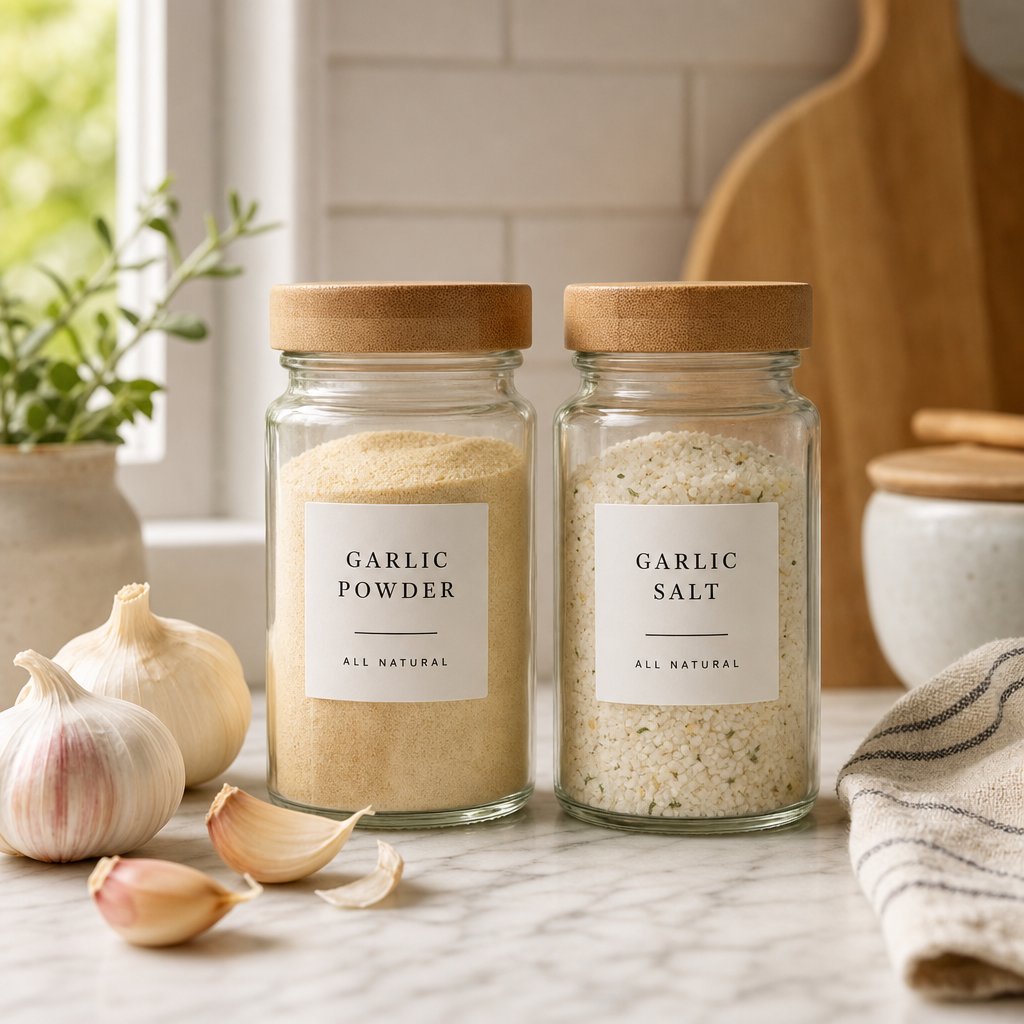
Garlic Salt and Garlic Powder Are Not the Same Thing
Is garlic salt the same as garlic powder? No, and confusing the two is one of the fastest ways to over-salt a perfectly good meal. These products sit side by side on spice racks, look similar in their jars, and even smell alike. But their composition, flavor impact, and role in cooking are fundamentally different.
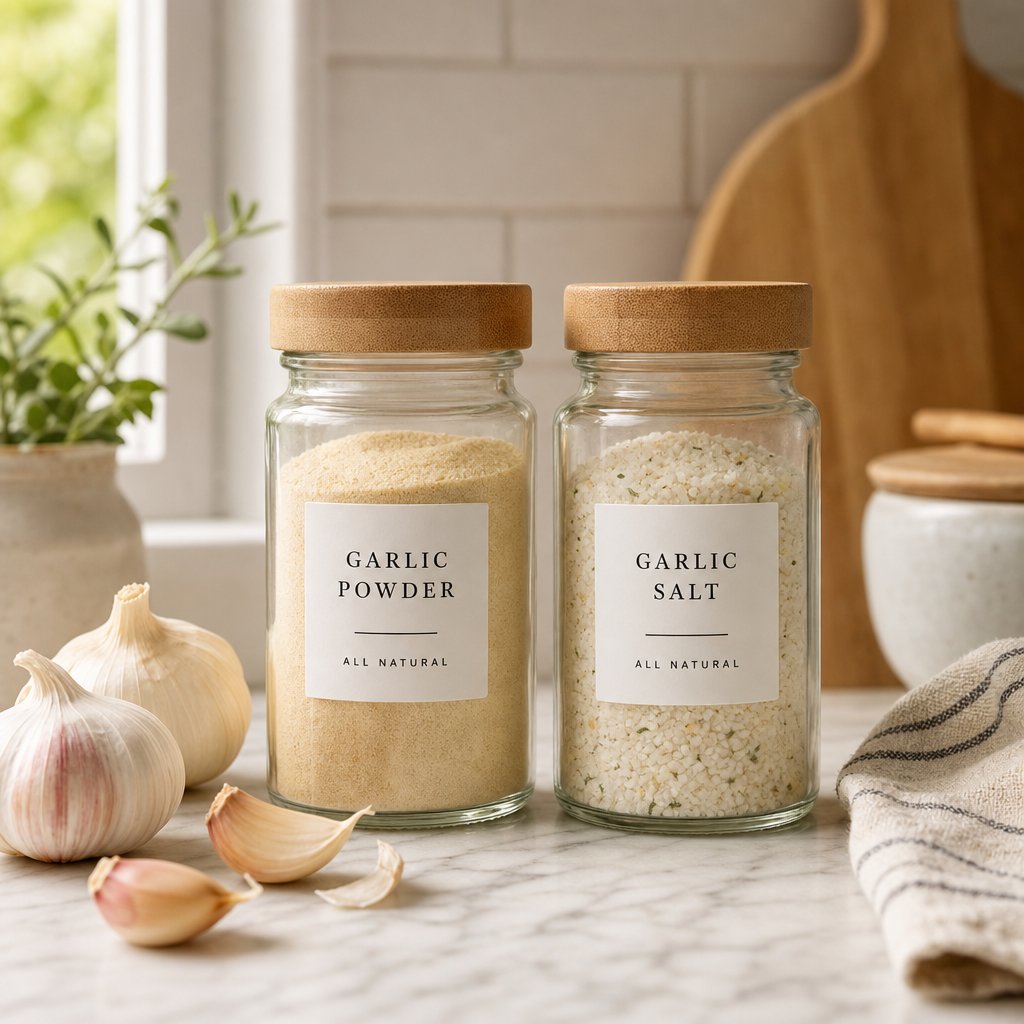
Garlic powder is pure dehydrated garlic ground into a fine powder. Garlic salt is a blend of garlic powder and salt, typically mixed at a 3-to-1 ratio of salt to garlic. That means roughly 75% of what you shake out of a garlic salt container is just salt. When you understand that distinction, you'll see why grabbing the wrong jar can wreck your dish or quietly spike your sodium intake without adding much garlic flavor at all.
So is garlic salt and garlic powder the same thing? Not even close. One gives you concentrated garlic flavor with zero sodium. The other gives you mostly salt with a hint of garlic. The difference matters for flavor control, recipe accuracy, and health.
What Is Garlic Powder
Garlic powder is 100% dehydrated garlic with no additives, fillers, or salt. Fresh garlic cloves are dried through air, oven, or freeze-drying methods and then ground into a very fine texture that dissolves easily into liquids and clings well to food surfaces.
Because there is nothing diluting it, garlic powder delivers a concentrated punch. Only about 1/4 teaspoon provides the equivalent flavor of one fresh garlic clove. That potency makes it incredibly versatile. You can stir it into sauces, fold it into dough, dust it over roasted vegetables, or blend it into marinades, all while maintaining full control over how much salt goes into your food separately. Registered dietitian Lauren Harris-Pincus notes that garlic powder works wonderfully when you do not have fresh garlic at home or face time constraints in the kitchen.
What Is Garlic Salt
Garlic salt is a seasoning blend, not a single ingredient. So what is garlic salt made of? It combines garlic powder with table salt or sea salt, and the garlic salt ingredients vary slightly by manufacturer. Most brands follow a 3:1 salt-to-garlic ratio, though some adjust that proportion. A homemade version typically calls for 6 tablespoons of sea salt to 2 tablespoons of garlic granules, maintaining that same 3:1 balance.
The result is a convenience seasoning. It adds a subtle garlic note alongside saltiness in a single shake. But because salt dominates the blend, you will hit your sodium ceiling long before you reach a strong garlic flavor. Is garlic salt and garlic powder the same? The answer becomes obvious once you taste them side by side: garlic powder tastes like garlic, garlic salt tastes like flavored salt.
Garlic salt contains salt. Garlic powder does not. This single difference affects flavor intensity, sodium intake, recipe accuracy, and how much control you have over your food.
Understanding this distinction is the foundation for every cooking decision that follows, from substitution math to choosing the right product for a specific dish.
Key Differences Between Garlic Salt and Garlic Powder
The difference between garlic powder and garlic salt goes deeper than one ingredient on a label. These two products behave differently in your food, hit your body differently, and deliver wildly different value for the money you spend. Let's break it down across the dimensions that actually matter in your kitchen.
Composition and Flavor Intensity
When you compare garlic salt versus garlic powder, the flavor gap is significant. Garlic powder is undiluted garlic. Every grain carries concentrated allium punch. A quarter teaspoon can transform a sauce, a dressing, or a pan of roasted vegetables with bold garlic presence.
Garlic salt, on the other hand, dilutes that punch with 75% or more salt filler. You're getting roughly one part garlic flavor spread across three or four parts sodium. To match the garlic intensity of a single teaspoon of garlic powder, you'd need to use three to four teaspoons of garlic salt, and by then your dish would be inedibly salty.
Timing matters here too. When garlic powder is added early in cooking, it blooms in fat and builds deep, savory flavor throughout the dish. Used as a finishing touch, it delivers a brighter garlic note on the surface. Garlic salt behaves differently at both stages because the salt component affects moisture release, browning speed, and how other flavors develop around it. In marinades, for example, the salt in garlic salt draws moisture from proteins before you even start cooking, which changes texture in ways you may not want.
Sodium Content Per Serving
This is where the difference between garlic salt and powder becomes a health concern. Does garlic powder have sodium? Barely. Pure garlic powder contains roughly 1 to 2 mg of sodium per teaspoon, a negligible amount.
Garlic salt tells a very different story. Brand-by-brand sodium data reveals just how much salt you're actually shaking into your food. McCormick Garlic Salt delivers approximately 2,160 mg of sodium per teaspoon. Lawry's and Morton's Garlic Sea Salt come in around 1,400 mg per teaspoon. Even Trader Joe's, one of the lower-sodium options, still packs 760 mg per teaspoon. For context, the American Heart Association recommends no more than 2,300 mg of sodium for an entire day.
So what's the difference between garlic salt and garlic powder in practical terms? One teaspoon of certain garlic salt brands can nearly max out your daily sodium allowance in a single shake.
Cost-effectiveness adds another layer. Garlic salt is mostly inexpensive table salt with a small amount of garlic powder mixed in. You're paying garlic prices for a product that's three-quarters salt. Garlic powder delivers far more garlic flavor per dollar because every gram is actual garlic.
| Category | Garlic Powder | Garlic Salt |
|---|---|---|
| Ingredients | 100% dehydrated garlic | Salt (75%) + garlic powder (25%) |
| Sodium per teaspoon | 1-2 mg | 760-2,160 mg (varies by brand) |
| Garlic concentration | Full strength | Diluted (roughly 1/4 strength) |
| Best use case | Any recipe where you want garlic flavor with separate salt control | Quick seasoning when salt and garlic are both needed |
| Cost-effectiveness | High (100% garlic per dollar) | Low (paying garlic price for mostly salt) |
What is the difference between garlic powder and garlic salt? It comes down to control. Garlic powder lets you decide exactly how much garlic and how much salt goes into your food as separate decisions. Garlic salt locks you into a fixed ratio that favors salt over flavor, and that ratio varies from brand to brand, making consistent results harder to achieve.
These differences become even more pronounced when you add a third product to the comparison: granulated garlic, which shares garlic powder's purity but behaves differently in recipes due to its coarser texture.
Granulated Garlic vs Garlic Powder vs Garlic Salt
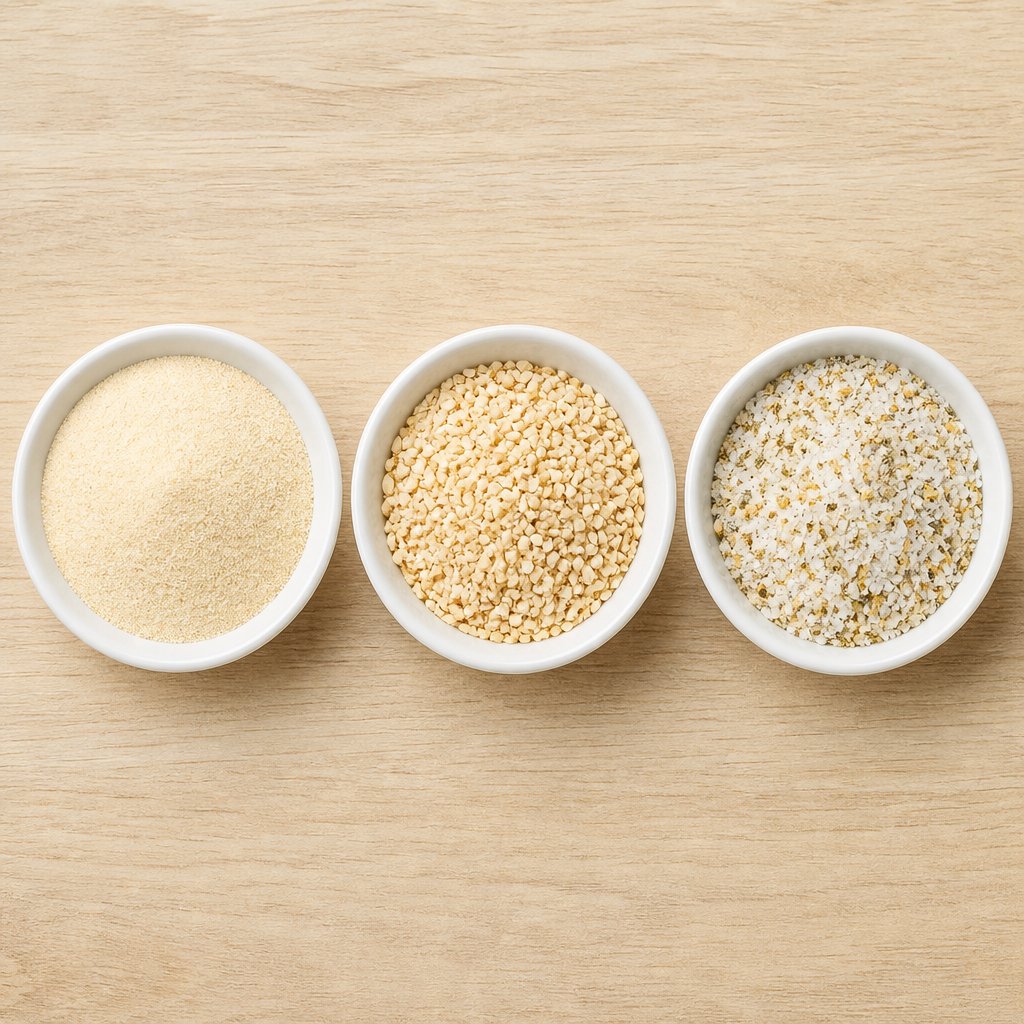
A third jar often sits right next to garlic powder and garlic salt on the spice rack, and it causes just as much confusion. Is granulated garlic the same as garlic powder? Not quite. Is granulated garlic the same as garlic salt? Definitely not. All three come from the same bulb, but grind size and added ingredients create products that behave very differently in your cooking.
How Granulated Garlic Differs from Garlic Powder
The difference between granulated garlic and garlic powder comes down to one thing: how finely the dehydrated garlic is ground. Think of it like the difference between cornmeal and cornstarch. Granulated garlic has a coarser, sand-like texture, while garlic powder is ground to a flour-fine consistency. Both are 100% pure garlic with no salt or additives.
That texture gap changes how each product performs in recipes. Garlic powder dissolves almost instantly into liquids, sauces, and batters. Granulated garlic needs more time to hydrate and release its flavor, which makes it better suited for dishes with longer cook times. On the flip side, granulated garlic is less prone to clumping in the bottle and mixes more evenly with other spices in dry blends because its coarser grains don't slip around the way fine powder does.
Flavor intensity differs too. When comparing garlic granules vs powder, the powder delivers a more concentrated punch per teaspoon because its smaller particles expose more surface area to oxygen, releasing more of the sulfur compounds responsible for that bold garlic taste. You'll need roughly double the amount of granulated garlic to match the flavor strength of garlic powder in any recipe.
Choosing Between All Three Forms
Each form has a sweet spot where it outperforms the others:
- Garlic powder excels in sauces, dressings, marinades, and baked goods where you need instant dissolution and no detectable texture. It's also the best choice when you want a quick pop of garlic flavor without waiting for hydration.
- Granulated garlic shines in dry rubs, spice blends, and dishes where texture matters. Its coarser grain adheres well to meat surfaces and holds up through high-heat cooking without burning as quickly as fine powder.
- Garlic salt works for quick, all-in-one seasoning when you want both garlic and salt in a single shake, like finishing fries or seasoning popcorn.
When comparing granulated garlic vs powdered garlic for something like a steak rub, the granulated version wins because it blends evenly with other coarse spices and creates better surface adhesion. For a smooth butternut squash soup, garlic powder is the clear choice since granulated garlic can leave a slightly gritty mouthfeel.
| Category | Granulated Garlic | Garlic Powder | Garlic Salt |
|---|---|---|---|
| Texture | Coarse, sand-like (similar to cornmeal) | Ultra-fine (similar to flour or cornstarch) | Fine to medium (depends on base used) |
| Salt content | None | None | 75% salt (approximately) |
| Best applications | Dry rubs, spice blends, long-cooking dishes, pizza topping | Sauces, dressings, marinades, baked goods, quick dishes | Finishing seasoning, fries, popcorn, quick grilling |
| Conversion to 1 fresh clove | 1/4 teaspoon | 1/8 teaspoon | 1/2 teaspoon (adds 3/8 tsp salt) |
| Conversion between forms | 2 tsp = 1 tsp garlic powder | 1 tsp = 2 tsp granulated garlic | Not directly interchangeable (salt variable) |
Notice the conversion column carefully. Because garlic powder is denser than granulated garlic, the clove-to-powder math is different from the clove-to-granule math. One fresh clove equals about 1/8 teaspoon of garlic powder but 1/4 teaspoon of granulated garlic. If you swap one for the other without adjusting, you'll either double or halve the garlic intensity in your dish. Granulated garlic versus garlic powder is not a 1:1 trade.
With all three forms clarified, the next question is which one your body actually prefers, especially if sodium intake is something you're watching closely.
Health Implications of Garlic Salt vs Garlic Powder
Flavor aside, the choice between these two products carries real consequences for your body. Is garlic salt healthy? That depends entirely on how much you use and what your baseline sodium intake looks like. Is garlic powder good for you? The research points strongly toward yes, and not just as a seasoning.
Sodium Intake and Blood Pressure Concerns
Regular use of garlic salt can quietly push your daily sodium well past recommended limits. The USDA recommends healthy adults consume less than 2,400 milligrams of sodium daily, and high blood pressure affects one in four Americans. A single teaspoon of garlic salt from popular brands delivers anywhere from 760 to 2,160 mg of sodium. Use it two or three times across a day's meals and you've blown past your limit before accounting for sodium already present in other ingredients.
For anyone managing hypertension or following a low-sodium diet, this matters enormously. UK HealthCare specifically recommends using garlic powder instead of garlic salt as one of their top strategies for reducing sodium intake and lowering blood pressure risk.
So does garlic powder have salt in it? No. Is there salt in garlic powder? None added. How much salt is in garlic powder? Essentially zero. Pure garlic powder contains only the naturally occurring trace sodium found in garlic itself, roughly 1 to 2 mg per teaspoon. That's negligible by any dietary standard. Is garlic powder salt? Absolutely not. It's a completely salt-free seasoning that lets you add bold flavor without any sodium penalty.
People often ask "do garlic powder have sodium" when scanning nutrition labels. The answer is that any sodium present is naturally occurring and so minimal it rounds to zero on most packaging. Garlic powder is the healthier default for virtually everyone, but especially for those watching their cardiovascular health.
Garlic Powder as a Functional Health Ingredient
Beyond the kitchen, garlic powder plays a growing role in health and wellness products. The reason comes down to one compound: allicin. This bioactive organosulfur metabolite forms when garlic cells are disrupted, and it's responsible for many of garlic's documented health benefits. A 2025 review published in Frontiers in Pharmacology found that allicin exhibits antimicrobial, hepatoprotective, neuroprotective, cardioprotective, and anticancer properties across numerous pre-clinical studies.
Garlic powder preserves allicin's precursor (alliin) in a stable, shelf-ready form. When consumed, the conversion to allicin and its metabolites can still occur, making garlic powder a popular base ingredient in dietary supplements and functional food formulations. Is garlic salt good for you in this context? Not particularly. The salt dilution means you'd need to consume far more product to get meaningful allicin levels, bringing excessive sodium along for the ride.
- Sodium impact: Garlic salt adds 760-2,160 mg sodium per teaspoon; garlic powder adds virtually none
- Allicin preservation: Garlic powder retains alliin at full concentration; garlic salt dilutes it by 75%
- Suitability for restricted diets: Garlic powder fits low-sodium, heart-healthy, and renal diets; garlic salt does not
- Role in functional foods: Garlic powder serves as a base for supplements, capsules, and health-focused blends due to its purity and concentrated bioactive profile
For brands developing garlic-based health supplements or functional food products, proper formulation matters. Working with an experienced OEM/ODM manufacturer like ZhuFeng ensures garlic powder is formulated into formats such as tablets, capsules, or powder/granules with controlled dosing and quality standards. Their flexible production capabilities span hard capsules, soft capsules, gummy formats, and oral liquids, allowing nutrition brands to bring garlic-based health products to market with consistent potency across every batch.
Whether your goal is simply seasoning dinner with less sodium or sourcing garlic powder for a supplement line, the takeaway is the same: pure garlic powder gives you both the flavor and the functional compounds without the sodium baggage that garlic salt carries. That purity is exactly what makes substitution math so important when a recipe calls for one and you only have the other.
How to Substitute Garlic Salt for Garlic Powder in Recipes
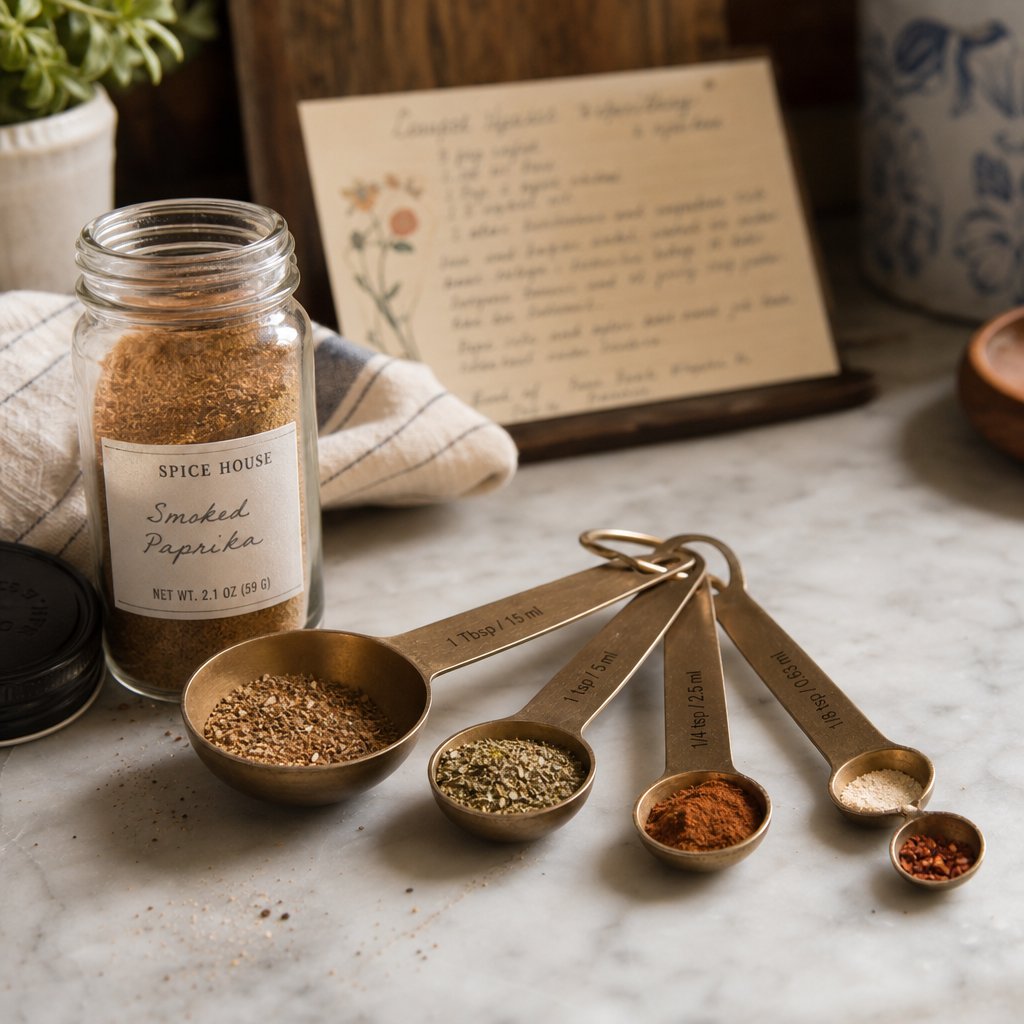
You're mid-recipe, the pan is hot, and you realize you grabbed the wrong jar. Or maybe you only own one of these products and the recipe calls for the other. Can you use garlic salt instead of garlic powder? Yes, but only if you adjust the salt elsewhere. Can you substitute garlic powder for garlic salt? Also yes, and that swap is actually simpler. Here's the math that keeps your dish on track.
Substituting Garlic Powder for Garlic Salt and Vice Versa
The key ratio to remember is that garlic salt is roughly 75% salt and 25% garlic powder. Every teaspoon of garlic salt contains about 1/4 teaspoon of actual garlic powder and 3/4 teaspoon of salt. That ratio is your conversion formula in both directions.
When a recipe calls for garlic salt and you only have garlic powder:
- Divide the amount of garlic salt by four to get the garlic powder needed. For 1 teaspoon garlic salt, use 1/4 teaspoon garlic powder.
- Multiply the original garlic salt amount by 3/4 to determine how much salt to add separately. For 1 teaspoon garlic salt, add 3/4 teaspoon salt.
- Combine the garlic powder and salt into your dish at the same stage the recipe specifies for garlic salt.
- Taste and adjust. You now have full control over both elements independently.
This is the easiest garlic salt substitute: garlic powder plus salt measured separately. You get the same flavor profile with more precision.
When a recipe calls for garlic powder and you only have garlic salt:
- Multiply the garlic powder amount by four to determine how much garlic salt to use. If the recipe calls for 1/2 teaspoon garlic powder, use 2 teaspoons garlic salt.
- Calculate the salt you're adding with that garlic salt. Those 2 teaspoons of garlic salt bring approximately 1-1/2 teaspoons of salt into your dish.
- Reduce or eliminate other salt sources in the recipe by that same amount. Cut table salt, reduce soy sauce, or use unsalted broth to compensate.
- Taste before adding any additional salt. The garlic salt may have already provided enough.
This is the critical caveat when you use garlic salt as a garlic powder substitute: you must account for the sodium it carries. If you simply swap garlic salt for garlic powder at a 1:1 ratio, you'll barely taste garlic and your dish will be under-seasoned. If you use enough garlic salt to match the garlic intensity, you'll over-salt everything unless you pull sodium from somewhere else in the recipe.
Can I substitute garlic salt for garlic powder without any other changes? Only in recipes that don't contain other salt sources and where you're comfortable with a milder garlic flavor. In practice, that's rare. The garlic salt substitute for garlic powder always requires recalculating your total sodium.
Fresh Garlic to Powder Conversion
How much garlic powder equals one clove? The Spruce Eats recommends using 1/8 teaspoon of garlic powder per fresh clove. That tiny amount reflects just how concentrated the dehydrated form is. One fresh clove produces about 1 teaspoon of chopped garlic or 1/2 teaspoon minced, but once all the water is removed and the garlic is ground ultra-fine, 1/8 teaspoon delivers equivalent flavor strength.
For multiple cloves, the math scales linearly:
- 2 cloves = 1/4 teaspoon garlic powder
- 4 cloves = 1/2 teaspoon garlic powder
- 8 cloves = 1 teaspoon garlic powder
If you only have garlic salt on hand and need to replace fresh cloves, use 1/2 teaspoon of garlic salt per clove. That delivers the garlic equivalent but adds approximately 3/8 teaspoon of salt per clove replaced, so reduce other salt in the recipe accordingly.
| Conversion | Amount | Notes |
|---|---|---|
| 1 fresh clove → garlic powder | 1/8 teaspoon | No salt added; most concentrated form |
| 1 fresh clove → granulated garlic | 1/4 teaspoon | No salt added; coarser grind requires more volume |
| 1 fresh clove → garlic salt | 1/2 teaspoon | Adds ~3/8 tsp salt; reduce other sodium |
| Garlic powder → garlic salt | 1 tsp powder = 4 tsp garlic salt | Reduce recipe salt by 3 tsp to compensate |
| Garlic salt → garlic powder | 1 tsp garlic salt = 1/4 tsp powder + 3/4 tsp salt | Add salt separately for control |
| Granulated garlic → garlic powder | 2 tsp granulated = 1 tsp powder | Density difference; powder is twice as concentrated |
Keep this table handy and you'll never be stuck wondering whether to substitute garlic powder for garlic salt or vice versa. The conversions work in any direction as long as you respect the salt math. You can always add salt, but you cannot take it away, which is exactly why knowing what to do when you accidentally grab the wrong jar matters just as much as knowing the ratios.
Best Uses for Garlic Powder and Garlic Salt by Dish Type
Knowing the ratios is one thing. Knowing which jar to grab for a specific dish is where that knowledge actually pays off. Garlic powder and garlic salt each have situations where they shine, and picking the right one saves you from mid-recipe corrections. Here's a dish-by-dish breakdown so you can season with confidence.
Rubs, Marinades, and Grilling
Garlic salt works well for quick dry rubs when you're firing up the grill and want garlic and salt in one shake. It's convenient for summer cookouts where speed matters and you'd be adding salt anyway. A simple rub of garlic salt, black pepper, and paprika gets burgers or chicken thighs seasoned in seconds.
Marinades are a different story. Most marinades already contain high-sodium ingredients like soy sauce, Worcestershire, or fish sauce. Adding garlic salt on top of those pushes the dish into over-salted territory fast. Garlic powder seasoning gives you the concentrated garlic flavor you want while letting the soy sauce or other salty components handle the sodium. You stay in control of both elements independently.
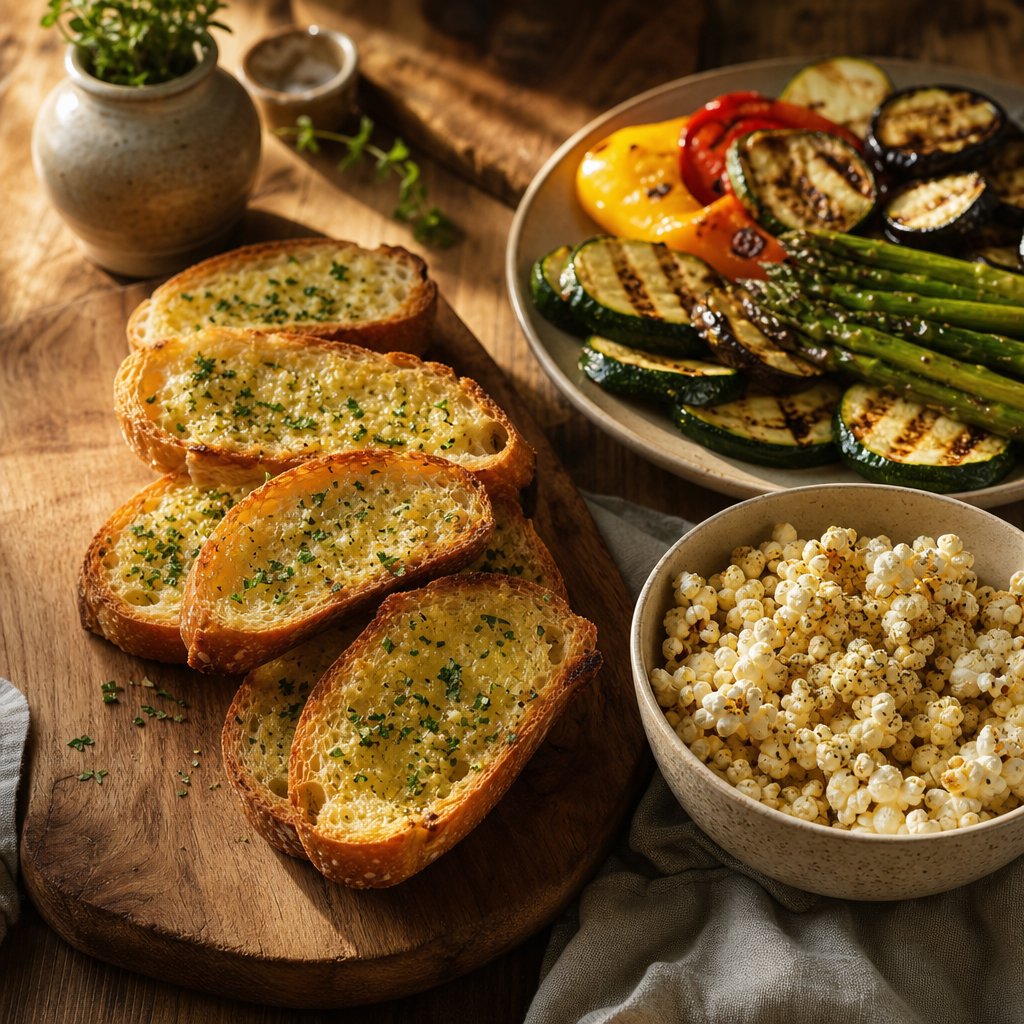
For grilled vegetables, garlic powder mixed into olive oil before tossing creates even coverage without the risk of salt pulling moisture out of the produce too early. Garlic salt applied before grilling can draw out liquid and leave you with limp, soggy vegetables instead of charred, caramelized ones.
Soups, Baked Goods, and Finishing
Soups and stews benefit from garlic powder added early in the cooking process. It dissolves into the liquid and builds deep background flavor over time. Since most soup recipes already call for salt at specific stages, introducing garlic salt throws off that careful balance. A pinch of garlic powder stirred in when the broth goes in, then another small addition near the end, gives you layered garlic depth without sodium surprises.
Baking is where the choice becomes critical. Should you use garlic powder or garlic salt for garlic bread? Food Republic recommends garlic powder as the better option. Garlic bread using garlic powder mixed into melted butter gives you a smooth, even coating with pure garlic flavor. You control the salt separately, which matters because if your recipe already includes salted butter or parmesan cheese, garlic salt can push the bread into inedibly salty territory. The powder's fine texture also blends seamlessly into butter, creating a consistent spread across every slice.
Garlic salt or garlic powder for garlic bread ultimately comes down to what else is in the recipe. If you're using unsalted butter and no cheese, garlic salt can work in a pinch. But for most garlic bread recipes with multiple savory components, garlic powder is the safer and tastier choice.
Finishing is where garlic salt earns its keep. Sprinkling it over hot fries, freshly popped popcorn, or roasted vegetables right before serving adds both salt and garlic in one motion. These are situations where you'd be reaching for the salt shaker anyway, so having garlic flavor ride along makes sense.
Here's a quick-reference guide by dish category:
- Garlic bread and savory pastries: Use garlic powder. Salt ratios in baking are precise, and garlic salt can easily over-salt the final product.
- Marinades with soy sauce or Worcestershire: Use garlic powder. These liquids already carry heavy sodium loads.
- Quick dry rubs for grilling: Garlic salt works when convenience matters and no other salty ingredients are present.
- Soups and stews: Use garlic powder for layered flavor control throughout long cook times.
- Popcorn, fries, and roasted vegetables (finishing): Garlic salt delivers both elements in one shake at the table.
- Scrambled eggs and omelets: Use garlic powder. Eggs need very little salt, and garlic salt overwhelms them quickly.
- Mashed potatoes: Use garlic powder stirred into butter and milk. Add salt separately after tasting.
- Salad dressings and vinaigrettes: Use garlic powder. It dissolves instantly and lets you balance acidity and salt independently.
The pattern is clear. Whenever a dish already contains salt and garlic from other sources, reach for garlic powder. Whenever you're doing a quick finish and need both flavors at once with no other salty ingredients competing, garlic salt is fair game. You can always swap garlic salt for garlic powder in simple applications, but you can't undo the sodium once it's there.
Of course, knowing which product to use doesn't help much if you've already made the wrong choice and your dish tastes like a salt lick. That's a fixable problem, and the rescue strategy depends on which direction the mistake went.
What to Do When You Grab the Wrong Jar
It happens fast. You're stirring a sauce, reach for the garlic powder, and shake in a generous amount before realizing you grabbed the garlic salt instead. Your dish just received three-quarters of a teaspoon of pure salt for every teaspoon you added. The good news? This mistake is fixable. The bad news? The fix depends on how far along you are and what type of dish you're making.
Fixing an Over-Salted Dish
When garlic salt was used instead of garlic powder, you've introduced far more sodium than intended. The garlic flavor itself isn't the problem. It's the salt riding along with it. Here's how to substitute garlic salt for garlic powder after the fact and still save your meal:
- Add acid to shift perception. A squeeze of lemon juice or a splash of apple cider vinegar won't remove salt, but acid changes how your taste buds perceive saltiness, making it less dominant. Start with half a teaspoon of citrus juice or vinegar, taste, and repeat until the salt recedes into the background. This works especially well in sauces, soups, and marinades.
- Increase the volume with unsalted ingredients. Dilution is the most straightforward rescue. Add unsalted broth, water, or mild vegetables like cauliflower, broccoli, or wilted greens to spread the salt across a larger volume of food. Make a fresh unseasoned batch and slowly combine the salty version into it until the flavor balances out.
- Introduce a starchy element. Cooked unseasoned rice, pasta, or quinoa absorbs surrounding liquid and takes on the existing seasoning, effectively thinning out the salt concentration. For soups, dropping in a peeled raw potato and simmering until tender can pull some sodium from the broth.
- Balance with a touch of sweetness. A pinch of sugar, a drizzle of honey, or a small spoonful of brown sugar creates a counterpoint that rounds out excessive saltiness. Savory and sweet compete on the palate, and that competition makes the salt less aggressive. Start with tiny amounts and taste after each addition.
- Add fat to coat the palate. A pat of unsalted butter, a splash of heavy cream, or a drizzle of olive oil won't reduce sodium content, but fat coats your tongue and acts as a barrier that softens the salty hit. This works particularly well in cream-based sauces and mashed potatoes.
The key principle across all these methods: you're not removing salt. You're either diluting its concentration or masking its perception through competing flavors. Use moderation with each fix. Over-correcting with too much acid or sugar creates a new problem.
When You Used Garlic Powder but Needed Garlic Salt
This mistake is far less stressful. If you do not have garlic salt and used garlic powder instead, you simply have a dish with garlic flavor and no added salt. The fix? Add salt to taste separately. That's it.
This is actually the less problematic direction because you can always add salt, but you cannot remove it. Sprinkle in kosher salt or sea salt a pinch at a time, tasting between additions, until the seasoning level feels right. Your dish will taste exactly as intended because you've effectively done what garlic salt does, just in two steps instead of one.
Can you use garlic salt instead of garlic powder next time to avoid the extra step? Sure, but you lose the ability to fine-tune. Keeping them separate gives you precision. Combining them gives you convenience. Neither approach is wrong as long as you're making the choice intentionally rather than accidentally.
If you find yourself reaching for garlic salt often and want better control over the ratio, consider making your own. Learning how to make garlic salt with garlic powder and salt at home takes about thirty seconds and lets you customize the blend to your taste. The standard commercial ratio is 1 part garlic powder to 3 parts salt, but homemade versions give you freedom to adjust.
Here's how to make garlic salt from garlic powder and salt with a custom ratio:
- Mild garlic flavor (1:4 ratio): 1 tablespoon garlic powder + 4 tablespoons fine salt. This mimics most store-bought brands.
- Medium garlic flavor (1:3 ratio): 1 tablespoon garlic powder + 3 tablespoons fine salt. A good all-purpose blend for everyday cooking.
- Strong garlic flavor (1:2 ratio): 1 tablespoon garlic powder + 2 tablespoons fine salt. Ideal if you want garlic to be the star rather than the background note.
Mix thoroughly, store in an airtight jar, and label it clearly so you don't end up back in the wrong-jar situation. Use sea salt or kosher salt for a cleaner flavor than iodized table salt. You can also add a pinch of dried parsley or onion powder to create a more complex seasoning blend.
Making garlic salt from garlic powder at home also means you know exactly what's inside. No anti-caking agents, no mystery additives, and a garlic-to-salt proportion that matches how you actually cook. Once you have your custom blend dialed in, the next question is how to keep both products fresh and potent for as long as possible.
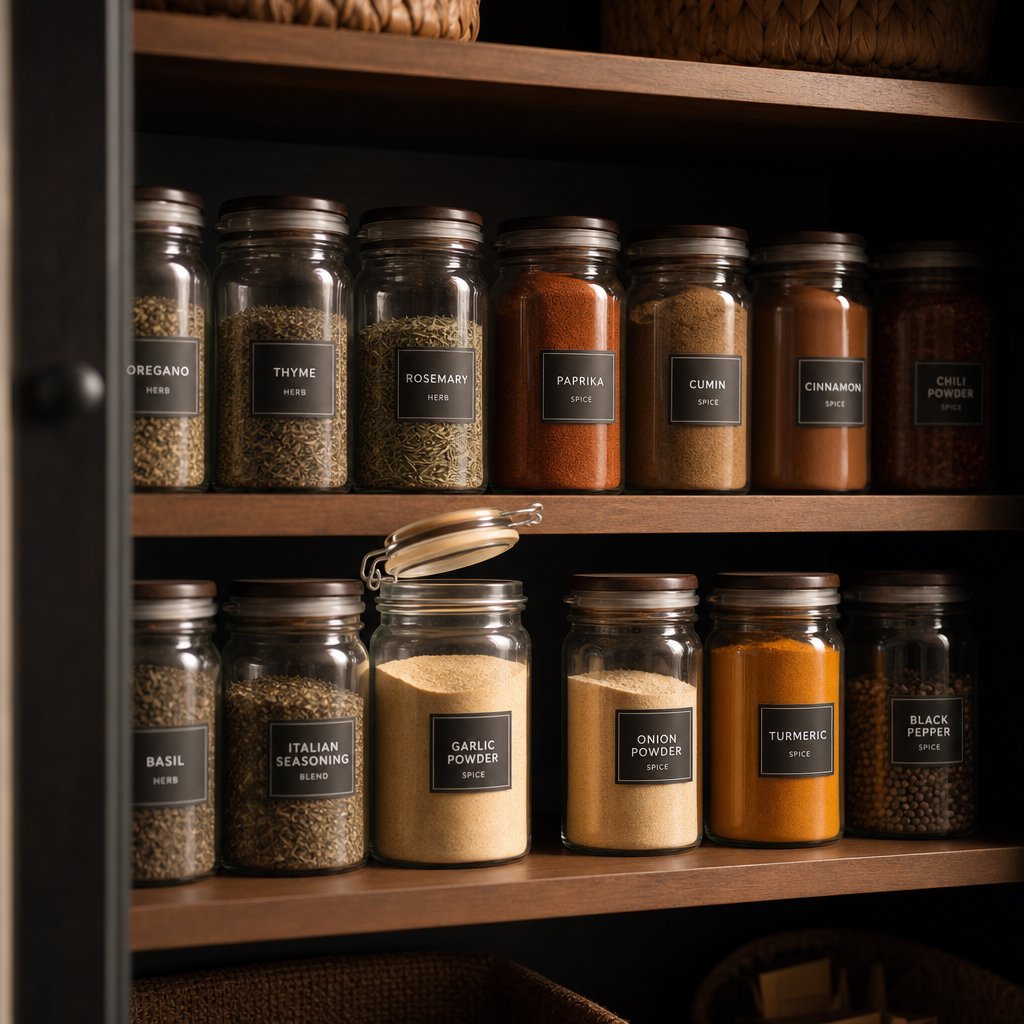
Storage Tips and Shelf Life for Both Products
You've picked the right product, nailed the conversion math, and even made a custom blend. But none of that matters if the garlic powder sitting in your cabinet has been slowly losing its punch for the past three years. Both garlic powder and garlic salt have impressively long shelf lives compared to fresh garlic, but "long-lasting" doesn't mean "lasts forever." Potency fades. Flavor dulls. And if you're not storing these products correctly, that decline happens much faster than you'd expect.
Shelf Life and Freshness Indicators
How long does garlic powder last? Under ideal conditions, garlic powder maintains its best flavor for one to two years. After that window, it won't make you sick, but it gradually loses the aromatic oils and sulfur compounds that give it that bold garlic kick. You'll need to use more and more to get the same result, which defeats the purpose of a concentrated seasoning.
Research on garlic powder storage confirms just how much conditions matter. A shelf life study published in the Journal of Food Science and Technology found that garlic powder stored at domestic conditions (40 degrees Celsius, 90% relative humidity) lasted only 24 days to 7 months depending on packaging material. Under controlled industrial conditions (5 degrees Celsius, 70% relative humidity), that same powder remained stable for 1.3 to 7.3 years. The takeaway? Temperature and humidity are everything.
Garlic salt tends to hold its flavor stability slightly longer than pure garlic powder. Salt is a natural preservative that inhibits moisture absorption and slows microbial activity. The salt component in garlic salt creates a less hospitable environment for the degradation processes that weaken garlic powder over time. That said, the garlic portion of garlic salt still loses potency on the same timeline. You just notice it less because salt flavor remains constant regardless of age.
Is garlic powder a spice? Technically, it's classified as a dried seasoning derived from a vegetable (garlic is in the allium family), but it behaves like ground spices in terms of shelf life and degradation patterns. The same freshness rules that apply to cumin, paprika, or chili powder apply here.
Here's how to tell if either product has passed its prime:
- Faded color: Fresh garlic powder has a pale yellow to light tan hue. If it looks washed out or grayish, the aromatic compounds have broken down.
- Weak aroma: Open the jar and take a sniff. Strong garlic powder smells pungent and immediately recognizable. If you get little more than a faint, dusty scent, it's lost its potency.
- Clumping or hardening: Garlic powder is especially prone to absorbing moisture from the air. If it's formed solid chunks or feels sticky, humidity has compromised it. Garlic salt clumps less because salt absorbs some of that moisture first, but it's not immune.
- Flat taste: Pinch a small amount and taste it directly. If it tastes bland or stale rather than sharp and garlicky, it's time to replace the jar.
None of these signs mean the product is unsafe to eat. Expired garlic powder and garlic salt won't harm you. They'll just leave your food tasting flat, which means you're adding volume to a dish without adding flavor.
Proper Storage to Maximize Potency
The difference between garlic powder that stays vibrant for two years and garlic powder that fades in six months comes down to how you store it. Moisture, heat, light, and air exposure are the four enemies. Eliminate those, and you'll get the full lifespan out of every jar.
The biggest mistake people make? Storing spices directly above the stove or next to the dishwasher. Steam rises every time you cook, and that repeated moisture exposure accelerates clumping and flavor loss in garlic powder faster than almost anything else. The research backs this up: garlic powder stored at high humidity (90% RH) degraded in weeks, while the same product at 70% RH lasted years.
Another common error is dipping a wet measuring spoon into the jar. Even a small amount of moisture introduced directly into the container creates localized clumping that spreads over time. Always use dry utensils, or shake the powder out rather than scooping.
Follow this checklist to keep both garlic powder and garlic salt at peak performance:
- Store in a cool, dark, dry location. A closed pantry or cabinet away from the stove, oven, and dishwasher is ideal. Aim for room temperature or below.
- Use airtight containers. If the original jar doesn't seal tightly, transfer to a glass jar with a rubber-gasket lid or a metal tin with a snug closure. Air exposure oxidizes the volatile oils that carry garlic flavor.
- Keep away from direct sunlight. UV light accelerates color fading and breaks down aromatic compounds. A closed cabinet solves this automatically.
- Never introduce moisture. Use only dry spoons or shake directly from the container. Never hold an open jar over a steaming pot.
- Write the purchase date on the jar. You won't remember when you bought it six months from now. A quick date label tells you exactly when to start checking for freshness decline.
- Buy appropriate quantities. A massive bulk container seems economical, but if it takes you three years to finish, you're using flavorless powder for the last year. Buy what you'll realistically use within 12 to 18 months.
For garlic salt specifically, the salt component makes it slightly more forgiving in humid environments, but the garlic portion still degrades on the same schedule. Store it with the same care you'd give pure garlic powder.
With proper storage habits in place, both products will deliver consistent flavor every time you reach for them. That reliability is part of what makes the final pantry decision easier: when you know your garlic powder will stay potent for a year or more, stocking it as your go-to becomes a no-brainer.
Which One Should You Keep in Your Pantry
If you only have room (or budget) for one garlic product on your shelf, which earns the spot? By now the answer to "is garlic powder and garlic salt the same" should be obvious: they're fundamentally different tools. But one of them can do everything the other does, and the reverse isn't true.
The Versatility Argument for Garlic Powder
Garlic powder wins the pantry staple contest for one simple reason: you can always add salt separately, but you can never remove salt from garlic salt. That asymmetry makes garlic powder the more flexible choice in virtually every cooking scenario.
Can you use garlic powder instead of garlic salt? Every single time. Just add a pinch of salt alongside it and you've replicated garlic salt on the spot. The reverse doesn't work nearly as cleanly. Using garlic salt in place of garlic powder forces you to recalculate sodium across the entire recipe, and if you overshoot, there's no undo button.
Garlic powder also delivers better value. Every gram is pure garlic flavor rather than 75% filler salt you could buy for pennies. It fits low-sodium diets, works in baking where salt ratios are critical, dissolves into dressings and sauces, and doubles as a base for homemade spice blends. Is garlic powder and garlic salt the same thing in terms of versatility? Not even close. One adapts to any situation. The other locks you into a fixed ratio.
When Garlic Salt Still Makes Sense
Garlic salt has its place for convenience-focused cooks who want a single shake over popcorn, fries, or a quick weeknight protein. If your cooking style leans toward simple seasoning with minimal measuring, keeping a jar around isn't unreasonable. Just treat it as flavored salt rather than a garlic source, and you'll use it appropriately.
Is there a difference between garlic salt and garlic powder that matters beyond the kitchen? Absolutely. For those interested in custom garlic seasoning blends or exploring garlic powder in health-focused applications like supplements and functional foods, sourcing high-quality garlic powder is essential. Businesses looking to develop garlic-based health products, whether powder/granule supplements, capsules, or functional food blends, can partner with manufacturers like ZhuFeng that offer customized formulation and scalable production across multiple product formats including tablets, gummies, and oral liquids. Garlic powder's versatility extends well beyond the kitchen into the health and wellness industry, where purity and consistent potency drive product quality.
Are garlic salt and garlic powder the same? No. Are garlic powder and garlic salt the same in terms of what they offer your cooking? Not at all. One gives you control, flexibility, and concentrated flavor. The other gives you convenience at the cost of precision. For the garlic salt vs powder debate, the winner depends on what you value most, but only one product can handle every job.
Keep garlic powder as your pantry staple. It does everything garlic salt does (just add salt), costs less per unit of actual garlic flavor, works in every recipe without sodium math, and supports both culinary and health applications. You can always add salt. You can never take it away.
Frequently Asked Questions About Garlic Salt and Garlic Powder
1. Can I use garlic salt instead of garlic powder in a recipe?
Yes, but you must adjust the salt in your recipe. Since garlic salt is roughly 75% salt and 25% garlic powder, use four times the amount of garlic salt to match the garlic intensity, then reduce or eliminate other salt sources by the equivalent amount. For example, if a recipe calls for 1/2 teaspoon garlic powder, use 2 teaspoons garlic salt and cut about 1-1/2 teaspoons of salt from elsewhere in the dish. Without this adjustment, your food will taste over-salted with weak garlic flavor.
2. How much sodium is in garlic powder compared to garlic salt?
Pure garlic powder contains only 1 to 2 mg of sodium per teaspoon, which is nutritionally negligible. Garlic salt, however, ranges from 760 mg to over 2,160 mg of sodium per teaspoon depending on the brand. McCormick Garlic Salt sits at the higher end, while Trader Joe's version is lower. For anyone monitoring blood pressure or following a heart-healthy diet, garlic powder is the clear choice since it delivers bold garlic flavor without any meaningful sodium contribution.
3. What is the conversion ratio between garlic powder and fresh garlic cloves?
One fresh garlic clove equals approximately 1/8 teaspoon of garlic powder. This small amount reflects how concentrated dehydrated garlic becomes once all moisture is removed. For granulated garlic, which has a coarser grind, you need 1/4 teaspoon per clove. If substituting with garlic salt, use 1/2 teaspoon per clove but reduce other salt in the recipe by about 3/8 teaspoon to compensate for the added sodium.
4. Is granulated garlic the same as garlic powder?
No. Both are 100% pure dehydrated garlic with no salt added, but they differ in grind size. Garlic powder has a flour-fine texture that dissolves instantly into liquids, while granulated garlic has a coarser, sand-like consistency similar to cornmeal. Because of this density difference, you need twice as much granulated garlic to match the flavor strength of garlic powder. Granulated garlic works best in dry rubs and spice blends, while garlic powder excels in sauces, dressings, and baked goods.
5. How long does garlic powder last and how should I store it?
Garlic powder maintains peak flavor for one to two years under ideal storage conditions. Keep it in an airtight container in a cool, dark, dry location away from the stove and dishwasher. Avoid introducing moisture with wet spoons, and never hold an open jar over a steaming pot. Signs of degradation include faded color, weak aroma, clumping, and flat taste. Garlic salt lasts slightly longer because salt acts as a preservative, but the garlic component still loses potency on the same timeline.