Granulated Onion and Onion Powder Are Not the Same
No, granulated onion is not the same as onion powder. Both come from dehydrated onions, but they differ in grind size, texture, flavor concentration, and how they behave in your cooking. Treating them as identical will throw off your recipes in ways you can taste.
The Direct Answer Home Cooks Need
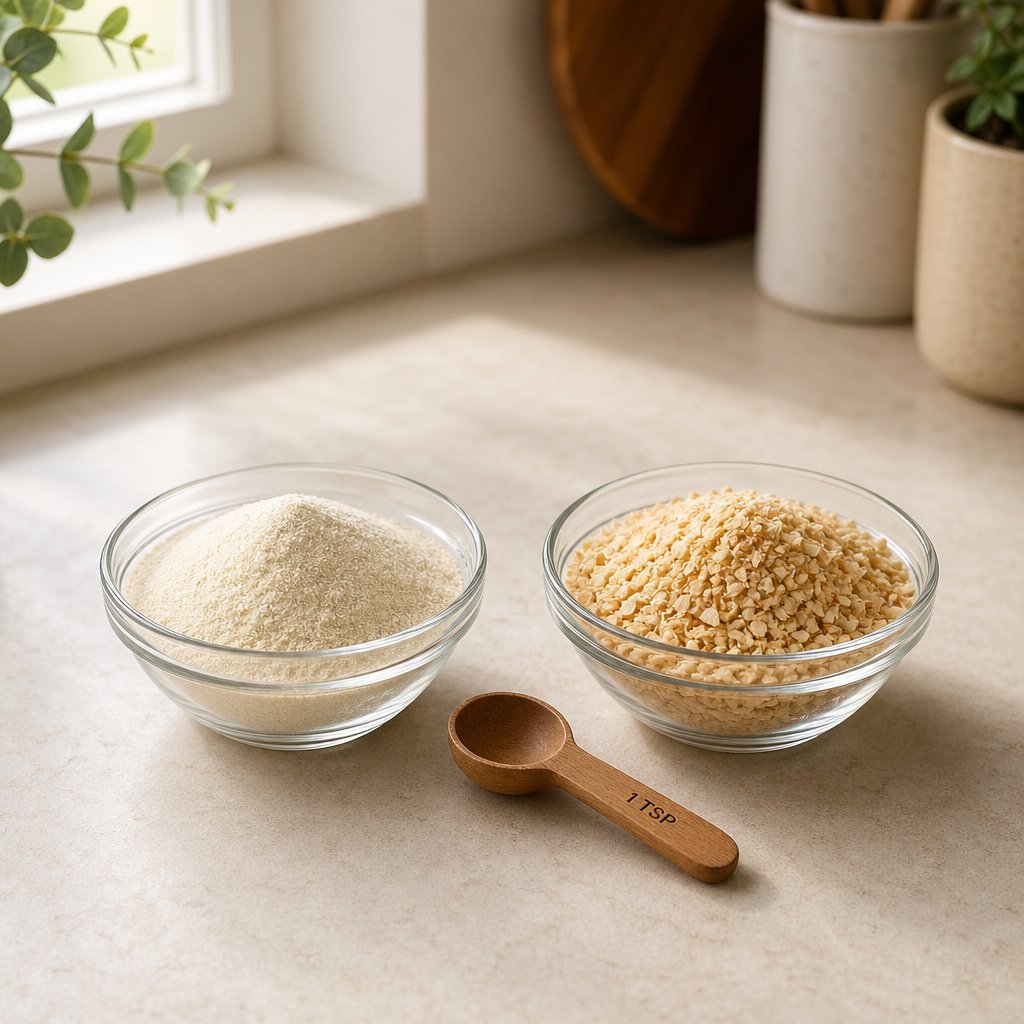
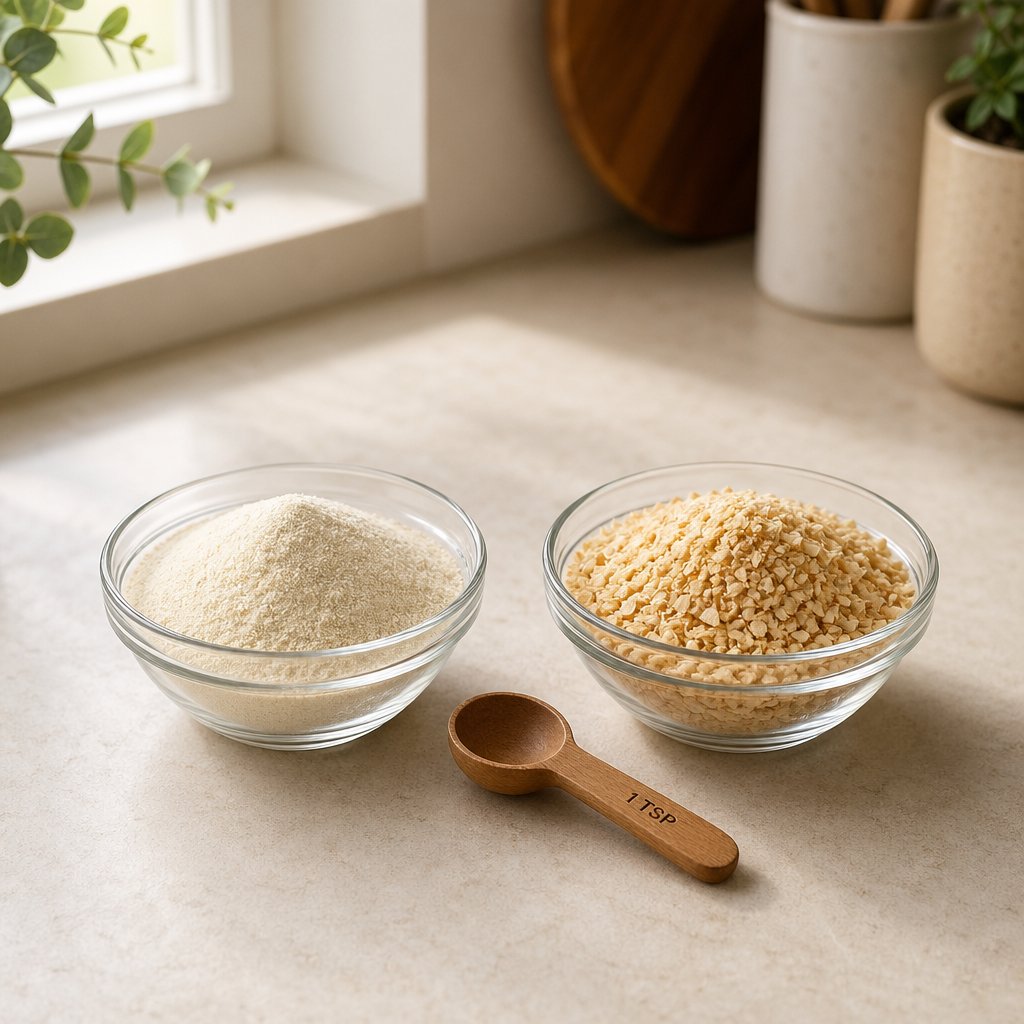
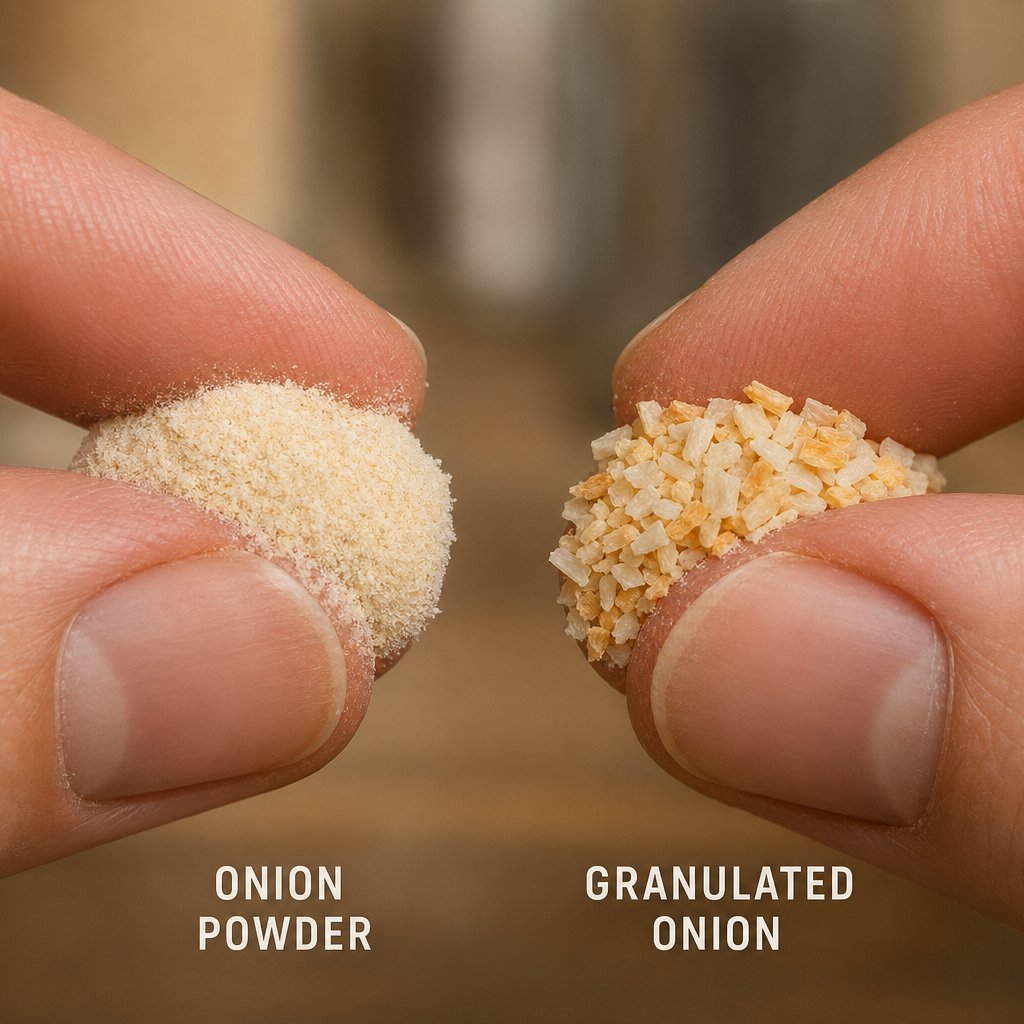
The distinction is straightforward once you see it. Onion powder is ground into an ultra-fine, flour-like consistency that dissolves almost instantly into liquids. Granulated onion, by contrast, has a coarser texture closer to cornmeal or fine sand. When you rub each one between your fingers, the difference is obvious. Powder feels silky and smooth. Granulated feels gritty and distinct.
That texture gap changes everything about how these two products perform in a recipe. Onion powder delivers a more concentrated, immediate burst of onion flavor per teaspoon because its tiny particles pack more densely into a measuring spoon. Granulated onion releases its flavor more slowly and holds up better in dry mixes without clumping. So when you compare granulated onion vs onion powder, you are really comparing two different tools built for different jobs.
Why the Confusion Exists
It makes sense that so many cooks wonder whether onion powder vs granulated onion is a real distinction or just marketing. Both products start from the same raw ingredient: fresh onions that have been peeled, sliced, and dehydrated. They sit side by side on store shelves in nearly identical jars, and some brands even use the term "granulated onion powder" on their labels, blurring the line further.
Here is the honest truth. You can substitute one for the other in a pinch, and your dish will still taste like it has onion in it. But a straight 1:1 swap will produce noticeably different results. Use too much powder where granulated was called for, and you risk an overpowering onion hit and a gummy texture in dry rubs. Use granulated where powder belongs, and your cream sauce might end up with a faint grittiness instead of a smooth finish.
Same ingredient, different grind, different behavior in your food.
Understanding that single principle is the key to choosing the right form every time. And the differences go deeper than just texture, reaching into how each product is made, how it dissolves, and which recipes it genuinely improves.
What Onion Powder and Granulated Onion Actually Are
Before you can confidently reach for the right jar, it helps to know exactly what is inside each one. Both products live in the dried onion family, but their individual profiles shape how they taste, feel, and perform in a dish. Here is a closer look at each.
What Is Onion Powder
Onion powder is dehydrated onion ground down to an ultra-fine, almost talc-like consistency. Imagine the texture of all-purpose flour between your fingertips. That is roughly what you are working with. The particles are so small that they dissolve nearly on contact when stirred into a liquid, which is why onion powder blends seamlessly into sauces, batters, dressings, and gravies without leaving any trace of grittiness.
Because those tiny particles pack tightly into a measuring spoon, onion powder delivers a more concentrated onion flavor per teaspoon than any coarser form. A little goes a long way. That potency, combined with its ability to vanish into smooth textures, makes it one of the most common pantry spices worldwide. You will find it listed as a key ingredient in everything from ranch seasoning to curry powder blends.
What Is Granulated Onion
Granulated onion starts from the same dehydrated base but stops short of a full grind. The result is a coarser product with a texture resembling fine sand or cornmeal. Pick up a pinch and you will feel individual particles rolling between your fingers, each one noticeably larger than what you would get from the powdered version.
That larger particle size changes the way granulated onion behaves in your cooking. It releases flavor more gradually, giving long-simmered dishes a steady onion presence rather than an upfront punch. It also resists clumping in dry environments, which is why spice blenders and BBQ rub makers tend to prefer it. When mixed into a dry seasoning blend, granulated onion flows freely and distributes evenly without caking together the way a fine powder can in humid conditions. There is also a subtle textural presence. In a dry rub or breading, you can sometimes feel that slight, pleasant grit on the surface of the food.
What About Onion Granules and Onion Flakes
If you have seen the term "onion granules" on a label and wondered what it means, the answer is simple. Onion granules is just another name for granulated onion. Same product, same grind, same uses. The terminology varies by brand and region, but there is no practical difference between the two.
Onion flakes, on the other hand, are a distinctly different product. These are small, visible pieces of dehydrated onion that rehydrate noticeably during cooking, adding both flavor and a soft, recognizable onion texture to soups, casseroles, and dips. Dried minced onion falls somewhere between flakes and granules in size, offering slightly more texture than granules but less visual presence than full flakes.
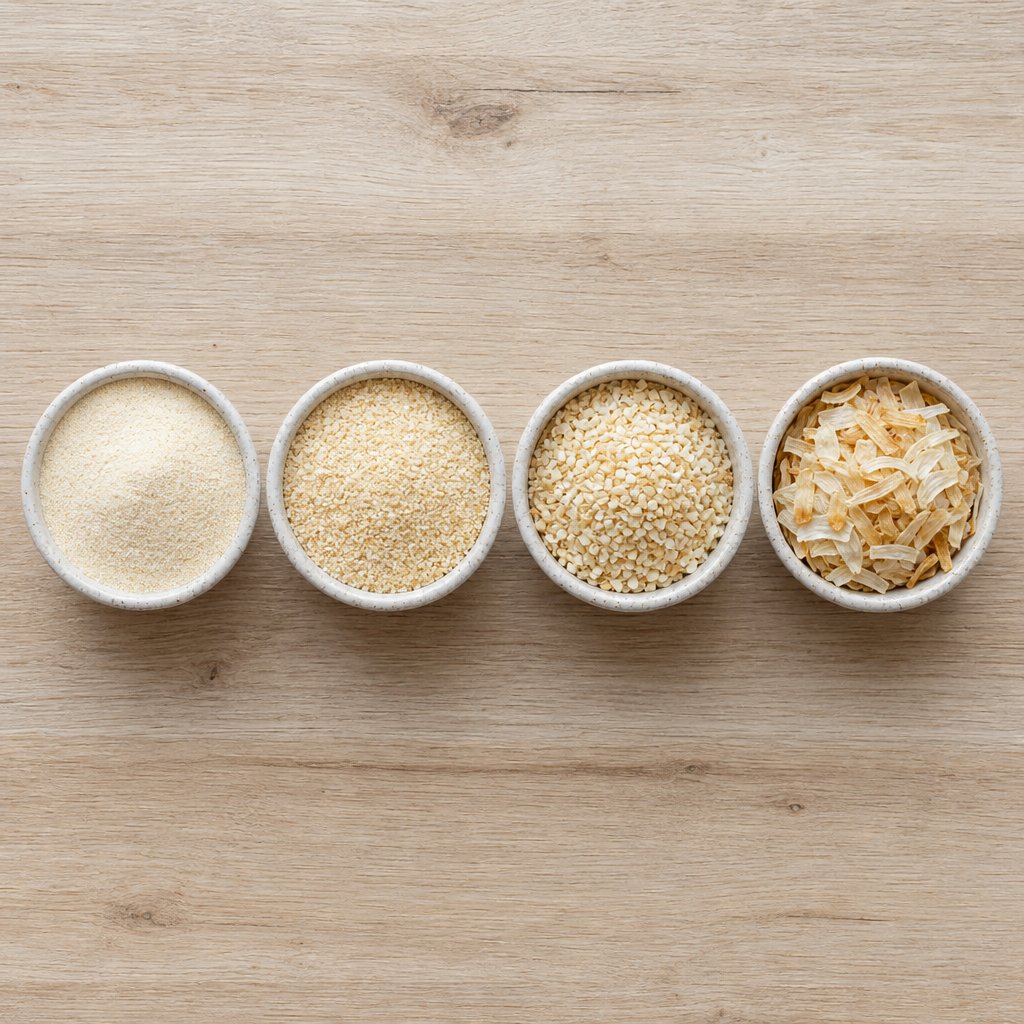
Think of it as a spectrum from finest to coarsest:
- Onion powder - ultra-fine, flour-like (typically 80-100 mesh)
- Granulated onion (onion granules) - coarse, sand-like (typically 40-60 mesh)
- Dried minced onion - small chips, visible pieces (roughly 1-3 mm)
- Onion flakes - larger dehydrated pieces that rehydrate into soft onion bits
Every form on this list starts from the same raw ingredient. The only variable is how finely it gets processed after dehydration. That processing step, the milling and grinding that turns a dried onion slice into powder, granules, or anything in between, is where the real differences are born.
How Dehydration and Milling Create Two Different Products
So what is onion powder made of, exactly? The same thing as granulated onion: fresh, real onions. No skins, no fillers, no mystery ingredients. The journey from bulb to bottle follows an identical path for both products until one critical fork in the road. Understanding that fork explains why these two seasonings behave so differently in your kitchen.
From Fresh Onion to Dehydrated Base
The process starts in the field. Fresh onions are harvested at peak maturity, then transported to a processing facility where they are cleaned and inspected. Next comes peeling, which removes the papery outer skin and any tough layers beneath it. If you have ever wondered whether is onion powder made from onion skins, the answer is no. Industrial peeling equipment strips away those dry outer scales to expose only the fresh, flavorful flesh underneath.
Once peeled, the onions are sliced into uniform pieces and loaded into dehydrators. Dehydrating onions at controlled temperatures, typically low enough to avoid cooking the slices, removes moisture while preserving the volatile flavor compounds that give onions their punch. Key among these are thiosulfinates and pyruvate, organosulfur compounds responsible for onion pungency and many of its associated health properties. The dehydration step also concentrates fructo-oligosaccharides and quercetin, both naturally present in the raw bulb.
Here is the important part: this dehydration stage is identical whether the end product will be powder or granules. The dried onion pieces coming out of the dehydrator are the same raw material. The divergence happens next.
How Milling and Grind Size Change Everything
After dehydrating onion slices to a stable, low-moisture state, the dried pieces move to milling equipment. This is where the two products split apart.
For onion powder, the dried onion is ground aggressively through multiple milling stages until it reaches an ultra-fine consistency, often in the 80-100 mesh range. For granulated onion, the milling is less intensive, producing coarser particles that typically fall in the 40-60 mesh range. That difference in particle size is not cosmetic. It drives real performance differences:
- Surface area and flavor release - Finer particles expose more surface area to moisture and heat, which means faster hydration, quicker aroma release, and a stronger immediate flavor impact. Powder hits fast. Granules unfold gradually.
- Clumping and flow - Greater surface area also means more exposure to ambient moisture. Powder absorbs humidity from the air faster, leading to caking and hard clumps. Granulated onion resists this, flowing freely in dry blends and maintaining consistency during storage.
- Dissolution behavior - Powder vanishes into liquids almost instantly. Granules hold their shape longer, which can add subtle texture or cause grittiness depending on the application.
These are not minor nuances. They determine whether your spice blend stays loose in the jar, whether your sauce finishes smooth, and whether your dry rub adheres evenly to a brisket.
Achieving consistent particle size at scale requires precision milling equipment and strict moisture control throughout the process. This is one reason commercial-grade dried onion products deliver uniform results that home dehydration cannot easily replicate. Professional OEM/ODM manufacturers like ZhuFeng, for example, produce both powder and granule formats for nutrition brands and functional food businesses, using calibrated milling and environmental controls to ensure every batch meets exact particle specifications. That level of consistency matters when a product needs to perform identically across thousands of units.
For home cooks, the takeaway is simpler: the grind is the variable. Same onion, same dehydration, different mill setting, completely different kitchen behavior. And that behavior gap only becomes more apparent when you put the two products side by side.
Granulated Onion vs Onion Powder Side by Side
Knowing that grind size creates two distinct products is useful, but what does that actually look like, taste like, and feel like when you are cooking? Putting onion granules vs powder head to head across every dimension that matters in the kitchen makes the choice much clearer.
Texture and Appearance Compared
Pick up a pinch of onion powder and rub it between your thumb and forefinger. It feels like flour, silky and almost weightless, leaving a fine film on your skin. Do the same with granulated onion and you will feel individual particles rolling around, closer to the sensation of fine sand or raw sugar. Visually, powder looks pale and dusty, while granules have a slightly more golden, crystalline appearance with visible structure.
That tactile difference translates directly to your food. Powder disappears into whatever it touches. Granules hold their shape and can leave a faint, pleasant grit on the surface of a dry rub or breading. If you have ever compared minced onion vs onion powder, the contrast is even more dramatic, but the granules vs powder gap is enough to change the mouthfeel of a finished dish.
Flavor Intensity Per Teaspoon
Here is where the surface area principle from the milling process shows up on your palate. Because onion powder particles are so much finer, they pack more tightly into a measuring spoon. A level teaspoon of powder contains more actual onion material by weight than the same teaspoon of granulated onion, where air gaps sit between the coarser particles.
The result? Onion powder delivers a stronger, more immediate onion flavor hit per measured teaspoon. Granulated onion tastes milder at the same volume, not because it is a weaker product, but because you are simply getting less onion mass in each spoonful. This is why a straight 1:1 swap between the two always skews the seasoning balance. Onion powder vs onion granules is not a matter of quality. It is a matter of density and how quickly flavor compounds reach your taste buds.
How They Behave in Recipes
Dissolution speed is the practical dividing line. Stir onion powder into a warm sauce and it vanishes within seconds, distributing flavor evenly throughout the liquid. Granulated onion needs more time. In a quick pan sauce or cold dressing, those coarser particles can linger and create a slightly gritty texture if the dish is not given enough time or heat to hydrate them fully.
On the flip side, that slower dissolution is an advantage in dry applications. Granulated onion flows freely when blended with other spices, resists clumping in humid kitchens, and adheres to meat surfaces without forming a pasty layer the way powder sometimes can.
The table below pulls all of these differences into one scannable reference:
| Dimension | Onion Powder | Granulated Onion |
|---|---|---|
| Texture | Ultra-fine, flour-like | Coarse, sand-like or cornmeal-like |
| Flavor Intensity per Teaspoon | Stronger and more concentrated | Milder at the same measured volume |
| Dissolution Speed | Near-instant in liquids | Slower; needs heat or time to fully hydrate |
| Clumping Risk | Higher; absorbs moisture quickly | Lower; coarser particles resist caking |
| Best For | Sauces, gravies, dressings, batters, smooth dips | Dry rubs, spice blends, breading, slow-cooked dishes |
| Shelf Stability | Slightly more prone to moisture damage | Slightly more resilient in storage |
Keep this chart handy the next time you reach for either jar. The real question is not which product is better overall. It is which one fits the specific recipe in front of you, and that depends on whether you need smooth integration or textural presence, fast flavor or slow release.
When to Use Granulated Onion vs Onion Powder in Cooking
A side-by-side comparison is helpful, but the real test happens when you are standing at the stove with a recipe in front of you. Which jar do you grab? The decision framework is simpler than you might think: if the dish is liquid-based and you want onion flavor to disappear into the background, reach for powder. If the dish is dry or benefits from a bit of texture, granulated onion is your pick. Here is how that plays out across the most common recipe categories.
Smooth Sauces, Dressings, and Dips
Imagine stirring a spoonful of fine sand into your homemade ranch dip. Not appealing, right? That is essentially what happens when you use granulated onion in a recipe that needs to stay silky. For cream sauces, salad dressings, gravies, smooth soups, and dips, onion powder is the clear winner. Its flour-like particles dissolve on contact, distributing onion seasoning evenly throughout the liquid without leaving any gritty residue.
This matters most in cold preparations. A vinaigrette or yogurt-based dip does not get the benefit of prolonged heat to break down coarser particles. Powder integrates instantly, even at refrigerator temperatures. If a recipe calls for a dry onion soup mix and you are building your own substitute for onion soup mix from scratch, onion powder gives you that smooth, fully dissolved flavor base without any textural surprises.
Dry Rubs, Spice Blends, and Meat Coatings
Flip the scenario. You are mixing up a BBQ rub for ribs or blending a custom taco seasoning to keep in the pantry. Here, granulated onion earns its place. The coarser particles flow freely when combined with other dry spices like paprika, garlic, cumin, and black pepper. They resist clumping, even if your spice cabinet runs a little humid, and they distribute more evenly across a dry blend than powder does.
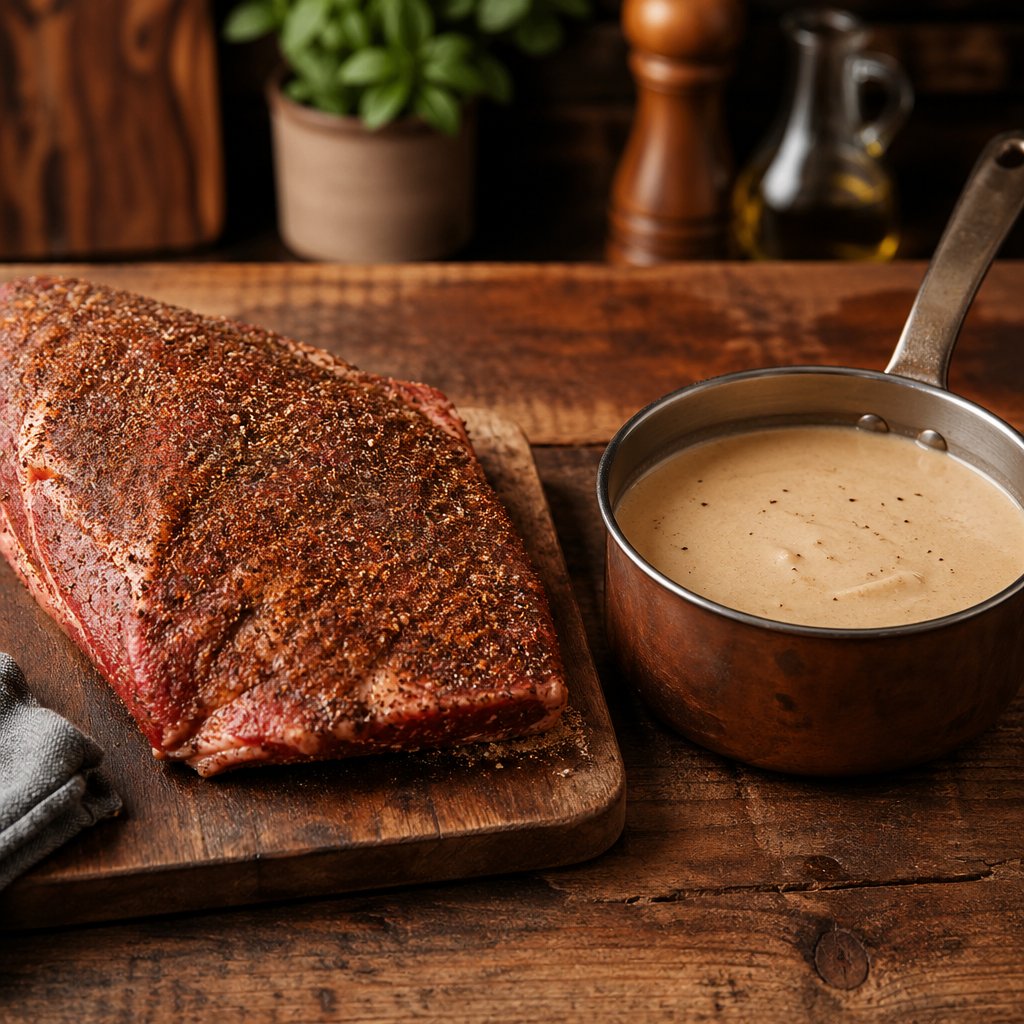
When you press a dry rub onto a brisket or pork shoulder, granulated onion adheres to the meat surface without forming the pasty layer that fine powder sometimes creates when it meets moisture on raw protein. The result is a more uniform crust with better texture after cooking. For breading mixtures and seasoned flour coatings, the same logic applies. Granulated onion stays distinct within the coating rather than dissolving into it, giving you a more consistent onion presence in every bite. If you need a granulated onion substitute in a rub and only have powder on hand, it will work, but reduce the amount and expect a slightly different texture on the finished crust.
Soups, Stews, and Marinades
Long-cooking liquid dishes are the one category where either form performs well. A beef stew simmering for two hours will fully hydrate both powder and granules, so the end result tastes similar regardless of which you choose. The difference is timing. Powder releases its flavor within the first few minutes, contributing to the base of the broth early in the cooking process. Granulated onion takes longer to hydrate and releases flavor more gradually, which some cooks prefer for building layered depth over a slow simmer.
For marinades, the choice depends on consistency. A thin, liquid marinade benefits from powder since it dissolves completely and coats the protein evenly. A thicker, paste-style marinade can handle granulated onion without any textural issues. If you are working with a recipe that calls for onion flakes and you do not have any, granulated onion works as a reasonable substitute for onion flakes in most soups and stews, though you will lose the visible rehydrated onion pieces.
Here is a quick-reference decision guide to keep things simple:
- Cream sauce, gravy, or smooth soup - use onion powder
- Salad dressing or cold dip - use onion powder
- Batter or breading - use onion powder for smooth batters, granulated for crunchy coatings
- Dry rub or BBQ seasoning - use granulated onion
- Spice blend for the pantry - use granulated onion
- Slow-cooked stew or chili - either works; powder for faster integration, granulated for gradual release
- Marinade - powder for thin liquids, granulated for thick pastes
- Homemade dry onion soup mix - combine both for depth, using powder as the flavor base and granulated for body
- Meatloaf or burger patties - onion powder blends invisibly into the meat mixture
- Roasted vegetables - granulated onion clings to surfaces and caramelizes lightly
Toasted Granulated Onion as a Specialty Option
There is one more form worth knowing about. Toasted granulated onion goes through an additional step after milling: the granules are gently roasted until they develop a deeper, caramelized sweetness. The flavor profile shifts from sharp and pungent to rich and savory, almost like the difference between a raw onion slice and a slowly caramelized one.
This specialty onion seasoning is worth seeking out for specific applications. It adds remarkable depth to burger seasoning blends, roasted root vegetables, popcorn toppings, and savory snack coatings. A pinch stirred into caramelized onion dip amplifies the roasted character without adding moisture. If you enjoy building custom spice blends, toasted granulated onion pairs especially well with smoked paprika, brown sugar, and garlic for a versatile all-purpose rub.
Knowing which form fits which recipe is the practical half of the equation. The other half, getting the measurements right when you need to swap one for the other, requires a reliable conversion reference.
The Complete Onion Substitution and Conversion Chart
Swapping between dried onion forms is easy once you have the right ratios. The tricky part is that most recipes only list one form, leaving you to guess when your pantry holds something different. This section pulls every common conversion into a single reference so you never have to wing it again.
Granulated Onion to Onion Powder Conversion
Since powder packs more densely into a measuring spoon than granules do, a teaspoon of onion powder carries more onion material by weight than a teaspoon of granulated onion. That density gap means you need to adjust the volume whenever you swap one for the other.
Here is the general guideline:
- To replace 1 teaspoon of granulated onion, use roughly 3/4 teaspoon of onion powder.
- To replace 1 teaspoon of onion powder, use about 1-1/3 teaspoons of granulated onion.
The reasoning is straightforward. Powder's ultra-fine particles settle into a spoon with very few air gaps, so each teaspoon delivers a more concentrated hit of flavor. Granulated onion's coarser particles leave more space between them, meaning you need a slightly larger volume to match the same flavor intensity. These are not exact scientific conversions since brands vary slightly in grind size, but they are reliable enough to keep your seasoning balanced in virtually any recipe. When converting granulated onion to onion powder or vice versa, start with these ratios and taste as you go.
Fresh Onion to Dried Onion Conversion Chart
The question home cooks ask most often is simple: how much onion powder equals one onion? The answer depends on the size of the onion and which dried form you are reaching for. A medium onion yields roughly 1 cup of chopped fresh onion, and that single cup concentrates down dramatically once moisture is removed through dehydration.
According to widely used kitchen conversion guidelines, 1 cup of fresh chopped onion can be replaced by 1 tablespoon of onion powder or 3 tablespoons of dried minced onion. Those ratios scale up and down predictably based on onion size. The table below maps out the most common fresh-to-dried equivalencies across all major forms:
| Fresh Onion Amount | Onion Powder | Granulated Onion | Dried Minced Onion | Onion Flakes | Onion Salt* |
|---|---|---|---|---|---|
| 1 medium onion (about 1 cup chopped) | 1 tablespoon | 1-1/3 tablespoons | 3 tablespoons | 3-4 tablespoons | 4 teaspoons |
| 1 small onion (about 1/2 cup chopped) | 2 teaspoons | 2-2/3 teaspoons | 1-1/2 tablespoons | 2 tablespoons | 2 teaspoons |
| 1/2 cup chopped | 2 teaspoons | 2-2/3 teaspoons | 1-1/2 tablespoons | 2 tablespoons | 2 teaspoons |
| 1/4 cup chopped | 1 teaspoon | 1-1/3 teaspoons | 2-1/4 teaspoons | 1 tablespoon | 1 teaspoon |
| 1 large onion (about 1-1/2 cups chopped) | 1-1/2 tablespoons | 2 tablespoons | 4-5 tablespoons | 5-6 tablespoons | 2 tablespoons |
*When using onion salt, reduce other salt in the recipe accordingly (see notes below).
A few things to keep in mind. These are practical kitchen guidelines, not laboratory-precise measurements. Onion size varies, moisture content differs between varieties, and even the brand of dried onion you use can shift the potency slightly. Start with the amounts listed, then taste and adjust. That approach works better than treating any conversion chart as gospel.
If you are wondering how much dried minced onion equals one onion, the answer for a medium onion is about 3 tablespoons. For a large onion, bump that up to 4 or 5 tablespoons. Dried minced onion rehydrates and expands during cooking, so it delivers a closer textural match to fresh onion than powder or granules do, though it will never fully replicate the softness of a sauteed fresh onion.
The onion to onion powder ratio is the most dramatic conversion on the chart. One medium onion, roughly 6 ounces of fresh produce, condenses into just 1 tablespoon of powder. That concentration factor is why onion powder is considered about three times more potent than dried minced onion by volume. A little truly goes a long way, and overshooting the measurement is one of the most common seasoning mistakes home cooks make.
Onion Salt Substitution Notes
Onion salt is not a standalone onion product. It is a blend of onion powder and table salt, typically mixed at a ratio of about three parts salt to one part onion powder. That means roughly 75% of what you are spooning out of an onion salt jar is plain salt, with only about 25% contributing actual onion flavor.
This matters whenever a recipe calls for onion powder or granulated onion and you only have onion salt on hand. If you substitute onion salt at the same volume, you are adding far less onion flavor and far more sodium than the recipe intended. The fix is a two-step adjustment:
- Increase the volume - You will need more onion salt to match the onion flavor of pure powder, since only a fraction of each teaspoon is actual onion.
- Reduce added salt - For every teaspoon of onion salt you add, reduce the recipe's other salt by about 3/4 teaspoon to avoid over-salting.
Going the other direction is simpler. If a recipe calls for onion salt and you want to use pure onion powder instead, use about 1/4 of the called-for amount as onion powder and add salt separately to taste. This gives you much more control over the final sodium level, which is especially useful if you are cooking for someone watching their salt intake.
The conversion from 1 onion to onion powder, or from powder to granules, or from any dried form to onion salt, always comes back to the same principle: each form packs a different amount of actual onion flavor into the same measured volume. Nail the ratios, and swapping between forms becomes second nature. Get them wrong, though, and the results range from bland to overpowering, which brings up a handful of common mistakes that are surprisingly easy to avoid.
Common Mistakes When Swapping Onion Forms
Having the right conversion ratios is only half the battle. Even cooks who know the numbers still run into problems because of how they handle the swap in practice. These four mistakes show up constantly in home kitchens, and each one is easy to fix once you know what to watch for.
- Using a straight 1:1 swap ratio
This is the most common error by far. You run out of granulated onion, grab the powder instead, and measure the same amount. The dish comes out noticeably stronger than expected, or you do the reverse and wonder why your seasoning tastes flat. The reason goes back to density. Onion powder's ultra-fine particles pack tightly into a measuring spoon, delivering more onion material per teaspoon than the coarser granulated form. A level teaspoon of powder is not the same as a level teaspoon of granules, even though they look like roughly the same volume in the spoon.
The fix is simple. When you substitute onion powder for onion granulated, use about 3/4 teaspoon of powder for every 1 teaspoon of granulated. Going the other direction, use roughly 1-1/3 teaspoons of granulated to replace 1 teaspoon of powder. Start there, then taste and adjust. Can i substitute onion powder for onion in a recipe that calls for fresh? You can, but the conversion gap is even wider. One medium onion equals only about 1 tablespoon of powder, so measuring by instinct rather than ratio almost always leads to over-seasoning or under-seasoning.
- Adding onion powder directly to hot oil
Picture this: you heat oil in a skillet, toss in a spoonful of onion powder, and within seconds the kitchen smells acrid and bitter instead of savory. Fine onion powder burns much faster than granulated onion when it hits hot fat. The reason ties back to surface area. Those tiny particles have enormous exposure to heat relative to their mass, and they scorch in as little as 30 to 60 seconds on high heat. Granulated onion, with its larger particles, tolerates a bit more time in hot oil before crossing into bitter territory, though it is not immune either.
The substitution for onion powder in a hot-oil situation is straightforward: do not add it directly to the fat. Instead, stir powder into a liquid component of the recipe, like broth, tomato sauce, or a marinade, where the moisture buffers it from direct heat. If you must add it to the pan, lower the heat to medium-low first and stir constantly. Better yet, add it after moisture-rich ingredients like onions or tomatoes are already in the pan, since the water content regulates the temperature and prevents scorching.
- Ignoring clumping in humid conditions
You reach for the onion powder jar and find a solid brick instead of a free-flowing seasoning. Sound familiar? Onion powder absorbs moisture from the air significantly faster than granulated onion because its finer particles have far greater surface area exposed to ambient humidity. Once moisture gets in, the powder forms hard clumps that do not dissolve evenly when added to food. You end up with pockets of concentrated onion flavor in some bites and none in others.
Granulated onion is more forgiving here, but it is not bulletproof. Both products benefit from the same storage practices: keep them in airtight containers, store in a cool and dark location, and always use a completely dry spoon. Dipping a damp measuring spoon into the jar, even once, introduces enough moisture to start the clumping process. If you sub onion powder into a recipe and it comes from a clumped jar, break the clumps apart and sift the powder before measuring. Otherwise your teaspoon of powder is partly compressed solid and partly air, making the actual amount unpredictable.
- Forgetting to adjust salt when using onion salt
This mistake does not just throw off onion flavor. It can make an entire dish inedibly salty. Onion salt is roughly three parts table salt to one part onion powder, which means about 75% of every spoonful is pure sodium. When a recipe calls for onion powder or granulated onion and you reach for onion salt instead, you are flooding the dish with salt while barely adding any onion flavor at all.
The fix requires a two-part adjustment. First, increase the volume of onion salt to compensate for its diluted onion content. Second, and more importantly, reduce or eliminate any other salt the recipe calls for. For every teaspoon of onion salt you add, cut about 3/4 teaspoon of salt from elsewhere in the recipe. If you are looking for a reliable onion powder substitute and onion salt is all you have, this adjustment keeps the seasoning balanced. Just remember that onion salt is a blend, not a direct stand-in, and treat it accordingly.
Each of these mistakes comes down to the same root issue: treating all dried onion products as if they are identical. They are not. Different grinds, different densities, and different compositions mean different rules for handling, measuring, and cooking. Getting those details right protects the flavor of your food, but flavor is only one piece of the picture. How you store these products and what they contribute nutritionally matters too, especially if you use them as often as most home cooks do.
Nutrition, Storage, and Keeping Your Dried Onion Products Fresh
You probably reach for onion powder or granulated onion several times a week without thinking much about what those teaspoons contribute beyond flavor. But if you use dried onion products regularly, their nutritional profile and how well they hold up in storage both deserve a closer look.
Nutritional Differences Between Granulated Onion and Onion Powder
Both products come from the same raw ingredient, so their nutritional profiles per weight are nearly identical. The same vitamins, minerals, and plant compounds present in a fresh onion carry through the dehydration process in concentrated form. Where things get slightly tricky is measurement by volume rather than weight.
A single teaspoon of onion powder contains roughly 8.33 calories, 1.94 grams of carbohydrates, and 0.24 grams of protein. Those numbers may appear marginally higher than the same teaspoon of granulated onion, but the reason is purely mechanical. Powder's finer grind packs more tightly into a measuring spoon, so you are physically fitting more onion material into the same volume. Per gram, the two products are nutritionally equivalent.
One question that comes up constantly: does onion powder have sodium? The answer is barely any. Pure onion powder contains only about 1.3 mg of sodium per teaspoon. That is negligible by any dietary standard. Granulated onion is equally low. So if you are wondering does onion powder have salt in it, the answer is no, not in any meaningful amount, unless the label specifically says "onion salt." The confusion between onion salt vs onion powder is where sodium concerns actually become relevant. Onion salt blends roughly three parts table salt with one part onion powder, which means how much sodium in onion powder labeled as "onion salt" jumps dramatically compared to the pure product.
Is onion powder good for you beyond basic seasoning? Onions are a natural source of quercetin, a flavonoid with antioxidant properties that survives the dehydration process. Dried onion products also retain potassium (about 22.6 mg per teaspoon of powder), small amounts of calcium, iron, and folate, plus trace dietary fiber. The onion powder benefits are modest per teaspoon since you are using small quantities, but for cooks who season generously across multiple daily meals, those micronutrients add up over time without contributing significant calories, fat, or sodium.
Storage and Shelf Life Best Practices
Here is where the grind-size difference shows up in a way that has nothing to do with flavor. Onion powder's greater surface area makes it more vulnerable to moisture absorption from the air. In a humid kitchen, an improperly sealed jar of powder can turn into a solid brick within weeks. Granulated onion's coarser particles give it slightly better resistance to caking, though neither product is immune to poor storage conditions.
Ground or powdered spices typically maintain peak quality for 2 to 3 years when stored properly. After that window, they do not become unsafe to eat, but they gradually lose aroma, flavor potency, and color. You will notice the onion punch fading long before any safety concern arises. The same timeline applies to granulated onion, though its slightly lower surface-area-to-volume ratio may give it a marginal edge in retaining potency over extended storage.
To get the longest useful life from both products, follow these practices:
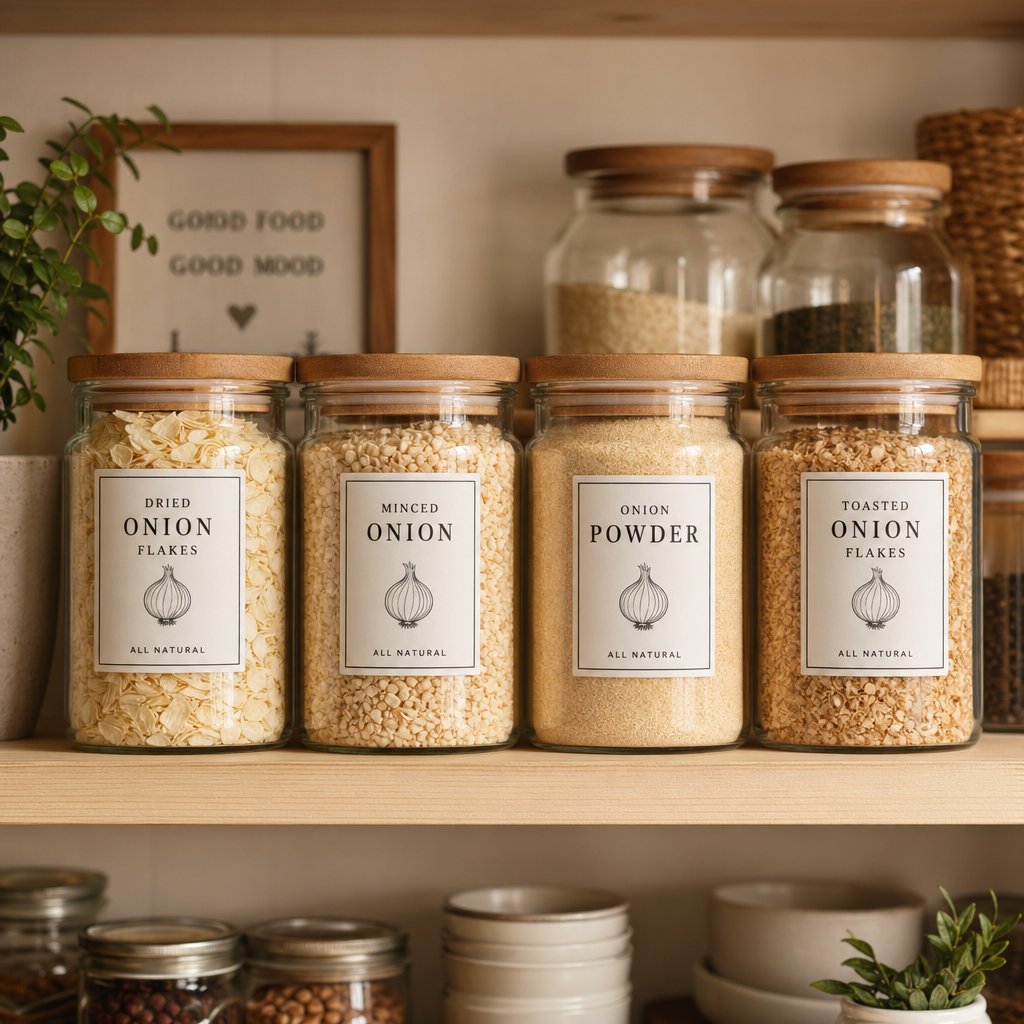
- Use airtight containers - Glass jars with tight-fitting lids or ceramic containers work best. Plastic is acceptable but can absorb odors over time and may not seal as effectively.
- Store in a cool, dark location - A pantry, drawer, or cupboard away from the stove is ideal. Heat accelerates flavor degradation, and light breaks down color compounds.
- Always use a dry spoon - Even a slightly damp measuring spoon introduces enough moisture to trigger clumping in powder. Keep utensils completely dry before dipping into the jar.
- Never sprinkle directly from the container over a steaming pot - The rising steam enters the jar and creates moisture buildup inside. Measure into a dry spoon first, then add to the dish.
- Check for clumping or off-odors periodically - If the powder has hardened into chunks or lost its sharp onion aroma, it is past its useful life for seasoning purposes.
Proper moisture control during manufacturing is just as critical as home storage. For businesses developing onion-based seasoning products, supplements, or functional food blends at commercial scale, maintaining consistent moisture levels across thousands of units requires professional-grade environmental controls. An experienced OEM/ODM manufacturer like ZhuFeng addresses this through customized formulation across formats including powder, granules, capsules, and gummy candy, ensuring that each batch meets strict moisture specifications for shelf stability. That kind of precision matters when a product needs to arrive at the consumer with the same quality it had on the production line, whether it ships domestically or internationally.
For home cooks, the takeaway is more straightforward. Treat your dried onion products like the concentrated flavor investments they are. A well-sealed jar stored in the right spot will reward you with consistent, punchy onion flavor for years. A neglected jar left open near the stove will give you a flavorless brick and a trip back to the grocery store far sooner than necessary.
Frequently Asked Questions About Granulated Onion and Onion Powder
1. Can I use granulated onion instead of onion powder in a recipe?
Yes, you can substitute granulated onion for onion powder, but you need to adjust the amount. Use about 1-1/3 teaspoons of granulated onion to replace 1 teaspoon of onion powder. The coarser grind of granulated onion means it packs less densely into a spoon, so you need more volume to match the same flavor intensity. Keep in mind that granulated onion dissolves more slowly, so it works best in dishes with longer cooking times or dry applications like rubs and spice blends.
2. How much onion powder equals one fresh onion?
One medium fresh onion (about 1 cup chopped) equals approximately 1 tablespoon of onion powder. For a small onion (about 1/2 cup chopped), use 2 teaspoons of powder. This dramatic concentration happens because dehydration removes all the water content, leaving only the concentrated flavor compounds. Always start with the recommended amount and taste before adding more, since onion powder delivers a much more immediate and intense flavor hit than fresh onion does.
3. What is the difference between onion salt and onion powder?
Onion salt is a blend of approximately 75% table salt and 25% onion powder, while pure onion powder contains only ground dehydrated onion with negligible sodium (about 1.3 mg per teaspoon). If you substitute onion salt for onion powder at the same volume, you will get far less onion flavor and significantly more sodium. To use onion salt in place of pure powder, increase the volume and reduce other salt in the recipe by about 3/4 teaspoon for every teaspoon of onion salt added.
4. Does onion powder go bad or expire?
Onion powder does not become unsafe to consume, but it gradually loses flavor potency, aroma, and color over time. When stored properly in an airtight container in a cool, dark location, onion powder maintains peak quality for 2 to 3 years. After that, you will notice the onion punch fading. Signs it is past its useful life include hardened clumps, loss of sharp onion smell, or a dull, flat taste. Granulated onion has a slightly longer effective shelf life due to its lower surface area and better moisture resistance.
5. Why does my onion powder clump and how do I prevent it?
Onion powder clumps because its ultra-fine particles absorb moisture from the air rapidly due to their large surface area. Common causes include storing near the stove, using a damp spoon, or sprinkling directly over a steaming pot. Prevent clumping by keeping powder in an airtight glass container, storing it away from heat and humidity, always using completely dry utensils, and measuring into a spoon before adding to hot dishes. Granulated onion resists clumping better due to its coarser texture, making it a practical alternative for humid kitchen environments.