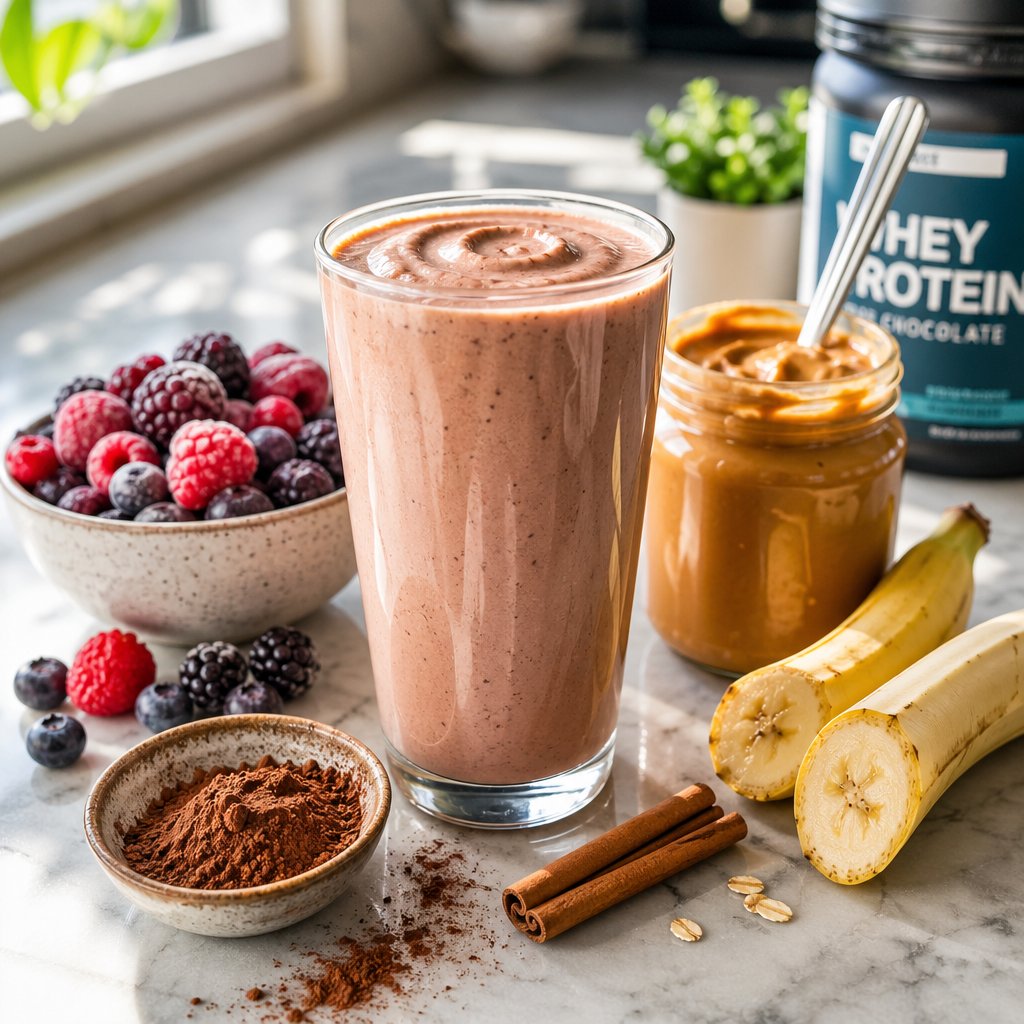
Why Protein Powder Tastes Bad and What You Can Do About It
You scoop, you shake, you take a sip, and your face twists into something between regret and betrayal. Chalky, bitter, weirdly sweet, or all three at once. If you have ever white-knuckled your way through a protein shake just to hit your macros, you are far from alone. The good news? Learning how to make protein powder taste better starts with understanding why it tastes so bad in the first place. And once you know the cause, every fix in this guide will make a lot more sense.
The Real Reason Your Protein Shake Tastes Bad
Protein itself is not a single flavor. It is a chain of amino acids, and some of those amino acids, particularly leucine and valine, carry naturally bitter or metallic notes. When manufacturers process raw protein into powder, those compounds get concentrated.
Three common processing methods shape the final taste:
- Ion exchange uses chemical reagents to isolate protein. It yields a high protein percentage but strips away beneficial compounds and can leave a flat, slightly chemical taste.
- Cross-flow microfiltration (CFM) filters protein under low temperature and gentle pH conditions, preserving more of the whey's natural bioactive components and generally producing a cleaner, milder flavor.
- Hydrolysis breaks protein into smaller peptides for faster absorption, but those smaller peptides taste noticeably more bitter. It is a direct trade-off: the more "pre-digested" the protein, the harsher the flavor.
Beyond processing, three texture problems show up over and over. Chalkiness comes from poor solubility and large particle size, meaning the powder never fully dissolves. Bitterness traces back to hydrolyzed peptides and high concentrations of specific amino acids. Grittiness is usually the result of incomplete mixing or protein that has been partially denatured by heat or moisture exposure. Each of these has a targeted fix, which the steps ahead will walk through one by one.
A Quick Protein Powder Type Taste Guide
Not all protein powders start from the same flavor baseline. The source of the protein, whether dairy, plant, or animal collagen, determines the taste you are working with before you add a single ingredient. This table breaks down what to expect from each major type so you can figure out how to make protein shakes taste better based on what is already in your pantry.
| Protein Type | Typical Flavor | Common Complaints | Ease of Flavor Masking |
|---|---|---|---|
| Whey Isolate | Mild, slightly milky | Thin mouthfeel, mild aftertaste | Easy |
| Whey Concentrate | Creamier, heavier | Can taste "heavy" or overly dairy-like | Easy |
| Casein | Thick, pudding-like | Sometimes bitter, very dense texture | Moderate |
| Pea Protein | Earthy, slightly beany | Distinct "green" taste, chalky finish | Moderate |
| Soy Protein | Chalky, beany | Persistent beany aftertaste | Moderate to Hard |
| Rice Protein | Gritty, mild | Sandy texture, bland flavor | Easy (texture is the challenge) |
| Hemp Protein | Nutty, grassy | Strong earthy flavor, gritty | Hard |
| Collagen | Neutral, thin | Watery mouthfeel, slight gelatin note | Very Easy |
Bookmark this table. It will help you pair the right fix with the right powder as you work through the steps below. Collagen and whey isolate are the easiest to work with, while hemp and soy require more aggressive flavor masking. If you have ever wondered how can I make protein shakes taste better, the answer partly depends on which row of this table your powder falls into.
Sweetener Aftertaste Decoded
Even when the protein base itself is mild, the sweetener system can ruin the experience. Here is a quick breakdown of the usual suspects:
- Sucralose delivers upfront sweetness but often leaves a lingering, slightly chemical aftertaste that builds with each sip.
- Acesulfame potassium (Ace-K) is frequently paired with sucralose. Research shows it activates bitter taste receptors, which explains that sharp, metallic edge some shakes have.
- Stevia is marketed as natural, but its extraction process often involves chemical solvents. The result can be a licorice-like bitterness, especially at higher concentrations.
- Monk fruit tends to be the most sugar-like of the zero-calorie options. When used in moderation, most people find it nearly indistinguishable from real sugar, though it is more expensive and therefore less common in budget powders.
If your shake tastes fine for the first few sips and then turns unpleasant, the sweetener is almost certainly the culprit. The steps ahead cover specific tricks, from acid splashes to salt pinches, that neutralize each type of aftertaste. Understanding how to make a protein shake taste better means tackling both the protein source and the sweetener system, because they create two completely different flavor problems.
With the science out of the way, the single fastest upgrade you can make does not involve buying anything new. It starts with rethinking the liquid already sitting in your fridge.
Step 1: Pick the Right Liquid Base for Your Protein Shake
Most people spend weeks researching the perfect protein powder and then dump it into plain water without a second thought. That one decision undoes a lot of the effort. The liquid you mix with is the single biggest taste lever you have, and swapping it is free, instant, and requires zero extra ingredients. Whether you are learning how to prepare protein shake drinks that actually taste good or just trying to stop dreading your post-workout routine, this is where to start.
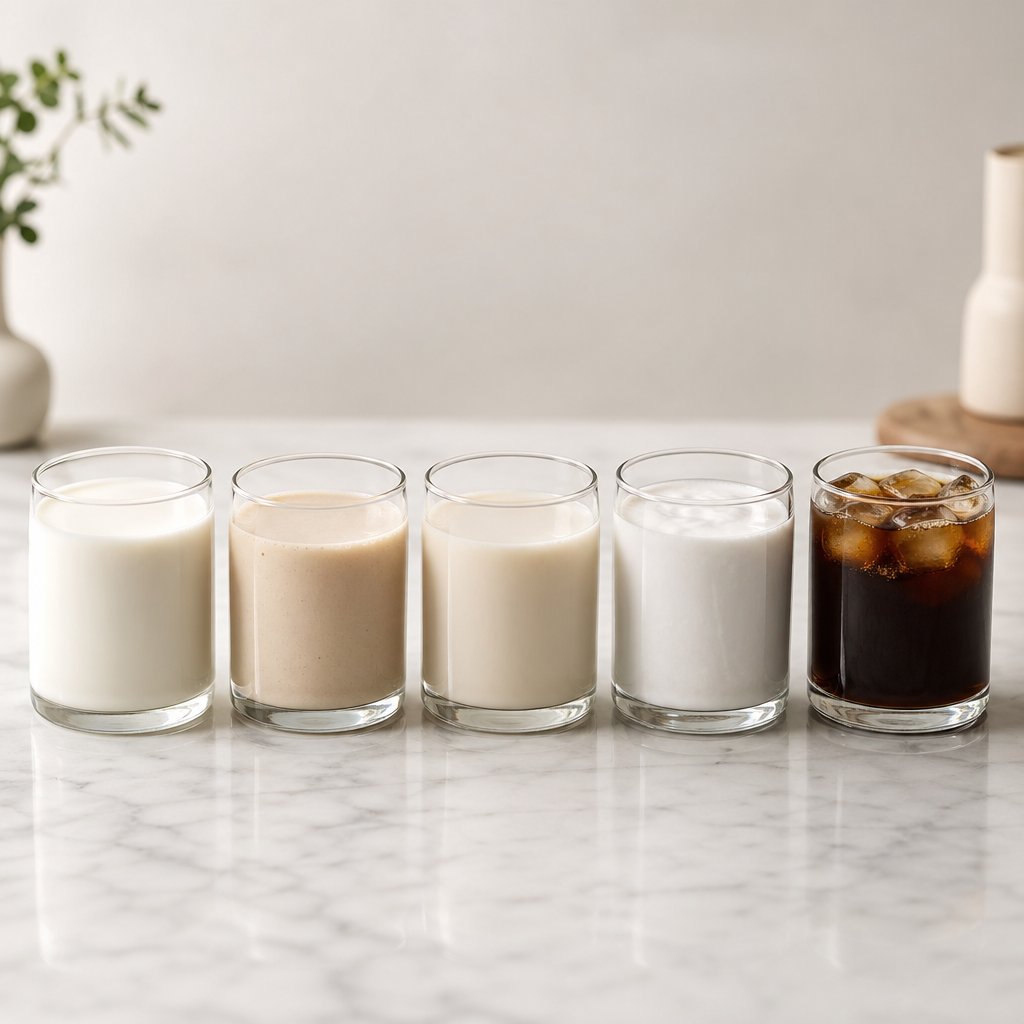
Water vs Milk vs Plant Milk Comparison
Each liquid base brings a different combination of flavor, texture, and calorie impact. Water is the most convenient option, but it also exposes every flaw your powder has. Milk and plant milks, on the other hand, add body and natural sweetness that smooth out rough edges. Here is how the most common options compare side by side.
| Liquid Base | Flavor Impact | Texture Impact | Best Paired With | Calorie Add (8 oz) |
|---|---|---|---|---|
| Plain Water | None; exposes all flavor flaws | Thin, watery | Well-flavored powders only | 0 cal |
| Whole Milk | Rich, creamy; masks bitterness | Thick, smooth | Chocolate, vanilla, cookies and cream | ~149 cal |
| Oat Milk | Naturally sweet; smooths chalkiness | Creamy, slightly thick | Vanilla, cinnamon, unflavored | ~120 cal |
| Almond Milk (unsweetened) | Light, mild nutty undertone | Thin but smoother than water | Berry, vanilla, chocolate | ~30 cal |
| Coconut Milk | Tropical richness; high fat rounds flavor | Velvety, full-bodied | Tropical, vanilla, chocolate | ~45-80 cal |
| Cold Brew Coffee | Bitter-on-bitter cancellation effect | Thin, similar to water | Chocolate, mocha | ~5 cal |
Why does fat content matter so much? Fat molecules bind to bitter compounds in the liquid, preventing them from reaching your taste receptors as intensely. That is why whole milk, with roughly 8 grams of fat per cup, does such a thorough job of masking harsh protein flavors. Coconut milk works on the same principle. Even a moderate-fat option like oat milk helps, because its natural sugars reduce perceived bitterness through a separate mechanism: sweetness and bitterness suppress each other at the receptor level.
For anyone tracking macros, the calorie column in that table is worth a close look. Unsweetened almond milk sits at roughly 30 calories per cup, making it a solid middle ground between the zero-calorie emptiness of water and the richness of whole milk. If your main complaint is chalkiness rather than bitterness, oat milk is often the better pick because its slightly thicker consistency coats the palate and hides gritty textures.
The Cold Brew and Juice Hack
Beyond the usual dairy and plant milk options, a few unconventional bases can completely transform how to make protein shake taste better without adding much complexity.
- Cold brew coffee + chocolate or mocha protein: The natural bitterness of coffee creates a "bitter-on-bitter cancellation" effect. Instead of tasting two separate bitter notes, your palate reads the combination as a rich, mocha-like depth. A simple ratio of 6 oz cold brew plus 2 oz milk per scoop of protein gives you the best balance of flavor and mixability.
- Tart cherry juice + vanilla protein: The acidity in tart cherry juice brightens plant-based powders and cuts through that flat, chalky finish. Use about 4 oz of juice mixed with 4 oz of water to keep sugar in check.
- Coconut water + tropical-flavored protein: Coconut water adds mild natural sweetness and electrolytes without the heaviness of coconut milk. It pairs especially well with mango or pineapple-flavored powders.
As a starting baseline, use 8 oz of liquid per 1 scoop of protein. If your powder is particularly thick or dense, like casein or some plant blends, bump that up to 10 oz. You can always add less liquid for a thicker shake, but starting too thick usually means clumps and a paste-like texture that is hard to fix after the fact.
Temperature plays a bigger role than most people realize. Research published in Chemical Senses found that cold temperatures attenuate bitter taste perception, with bitterness at 10 degrees Celsius significantly lower than at warmer temperatures for multiple bitter compounds. In practical terms, keeping your liquid between 35-45 degrees Fahrenheit consistently improves palatability by dulling those bitter receptors. Cold liquid also firms up the shake's texture slightly, giving it a more satisfying mouthfeel.
One important caution: hot liquids above 160 degrees Fahrenheit can denature whey protein and cause clumping. If you want a warm protein drink, like a protein hot chocolate or latte, keep the temperature below that threshold and whisk slowly rather than shaking. Warm drinks are absolutely doable, but they require a different mixing approach, which is exactly what the next step covers.
Step 2: Master Your Mixing Technique and Temperature
You have picked a great liquid base, maybe even splurged on oat milk or brewed a fresh batch of cold brew. But if your mixing method is working against you, all that effort gets buried under lumps and chalky mouthfeel. Technique is the one taste upgrade that costs absolutely nothing, yet most people never think twice about it. The difference between a gritty shake and protein shakes that taste good often comes down to how you mix, not what you mix.
Shaker Bottle vs Blender vs Spoon Stirring
Not all mixing methods deliver the same result, and the gap between them is bigger than you might expect.
A shaker bottle with a wire whisk ball is the go-to for most people, and for good reason. Thirty seconds of vigorous shaking breaks down the majority of clumps and produces a perfectly drinkable shake. It is fast, portable, and easy to clean. For a straightforward mix of protein powder plus liquid, a $10 shaker bottle handles about 80% of protein shake needs without any fuss.
A blender, though, takes things to a different level. Blending incorporates air into the liquid, creating a lighter, more aerated texture that reduces perceived chalkiness and makes the shake feel closer to a milkshake than a chalky drink. If you are adding frozen fruit, ice cubes, nut butter, or leafy greens, a shaker bottle simply cannot break those ingredients down. A personal blender in the $80 range crushes ice and frozen fruit easily, and for daily use, the investment pays for itself quickly. The smoother the texture, the less your brain fixates on off-flavors.
Spoon stirring is the worst option and, unfortunately, the most common reason people end up with lumpy shakes. A spoon cannot generate enough force to fully dissolve protein powder, especially in cold liquid. You end up with a wet clump stuck to the bottom and a thin, uneven drink on top. If a spoon is truly all you have, add about a quarter of your liquid first, stir the powder into that small amount vigorously to create a paste, smash any remaining clumps, and then add the rest of your liquid. It is a workaround, not a solution.
The takeaway is simple: if you want to know how do you make protein shakes taste better without spending a dime on new ingredients, upgrade your mixing tool. A blender is ideal, a shaker bottle is solid, and a spoon is a last resort.
Temperature and Timing Tricks That Cost Nothing
Temperature does not just affect flavor perception, it changes how protein powder physically behaves in liquid.
- Cold liquids (35-45 degrees Fahrenheit) are the sweet spot for taste and texture. Cold dulls bitter taste receptors, improves palatability, and gives the shake a firmer, more satisfying mouthfeel. This is the range you want for everyday shakes.
- Room temperature liquids dissolve powder faster and reduce clumping, but the resulting shake tastes flatter. The bitterness and sweetener aftertaste come through more clearly without the cold to suppress them.
- Warm liquids (under 160 degrees Fahrenheit) work well for protein hot chocolate or a protein latte, but they require slow whisking rather than shaking. Vigorous shaking of a warm liquid in a sealed bottle creates pressure and a mess. More importantly, hot liquids can cause protein to clump or denature, so mixing with room-temperature or cold liquid first and then adding to a warm drink often gives better results.
Beyond temperature, two timing tricks make a noticeable difference. The first is the rest and re-shake technique: after your initial 30 seconds of shaking or blending, let the shake sit for 2-3 minutes. During that pause, stubborn clumps absorb liquid and soften. A quick second shake breaks them down completely, and you end up with a noticeably smoother texture. It takes almost no extra effort, but the improvement is real.
The second trick is the ice method. Toss 4-5 ice cubes into a blender along with your protein and liquid, then blend for 30-45 seconds. The ice creates a milkshake-like thickness that masks off-flavors through two mechanisms at once: the cold suppresses bitterness, and the thicker texture coats your palate so harsh notes do not linger. This single trick is often enough to make protein powder taste good even when the powder itself is mediocre.
Mixing Order Matters
Here is a mistake that sabotages shakes before the first sip: dumping powder in first. Protein powder that hits a dry container forms a sticky layer at the bottom that no amount of shaking fully dislodges. You end up drinking a thin shake while a cement-like paste clings to the base of your bottle. The fix is dead simple, and the correct sequence looks like this:
- Add your liquid base to the shaker bottle or blender first.
- Add the protein powder on top of the liquid.
- Drop in any extras: ice cubes, frozen fruit, nut butter, cocoa powder.
- Seal and shake vigorously for 30-60 seconds, or blend until smooth.
- Let it rest for 2-3 minutes, then shake or blend briefly one more time.
This order ensures the powder disperses into the liquid immediately instead of clumping against a dry surface. It is a small habit change that eliminates the most common mixing complaint overnight.
Solid technique and the right temperature get you a smooth, drinkable shake. But smooth and drinkable is just the baseline. The real flavor transformation happens when you start adding specific ingredients in the right amounts, which is exactly where precise recipes and ratios come in.
Step 3: Add Flavor Boosters With Exact Recipes and Ratios
"Add some fruit" or "try nut butter" is the kind of vague advice that fills most protein shake guides. It sounds helpful until you are standing in your kitchen wondering how much peanut butter turns a shake creamy versus how much turns it into spackle. The difference between a good protein shake and a great one comes down to exact measurements, not guesswork. These five recipes use specific ratios designed to solve the most common flavor problems, from chalky plant protein to overly sweet whey.
Five Protein Shake Recipes With Exact Measurements
Each recipe below targets a different flavor profile and protein type. Grab a blender, follow the amounts precisely, and adjust from there once you know your baseline.
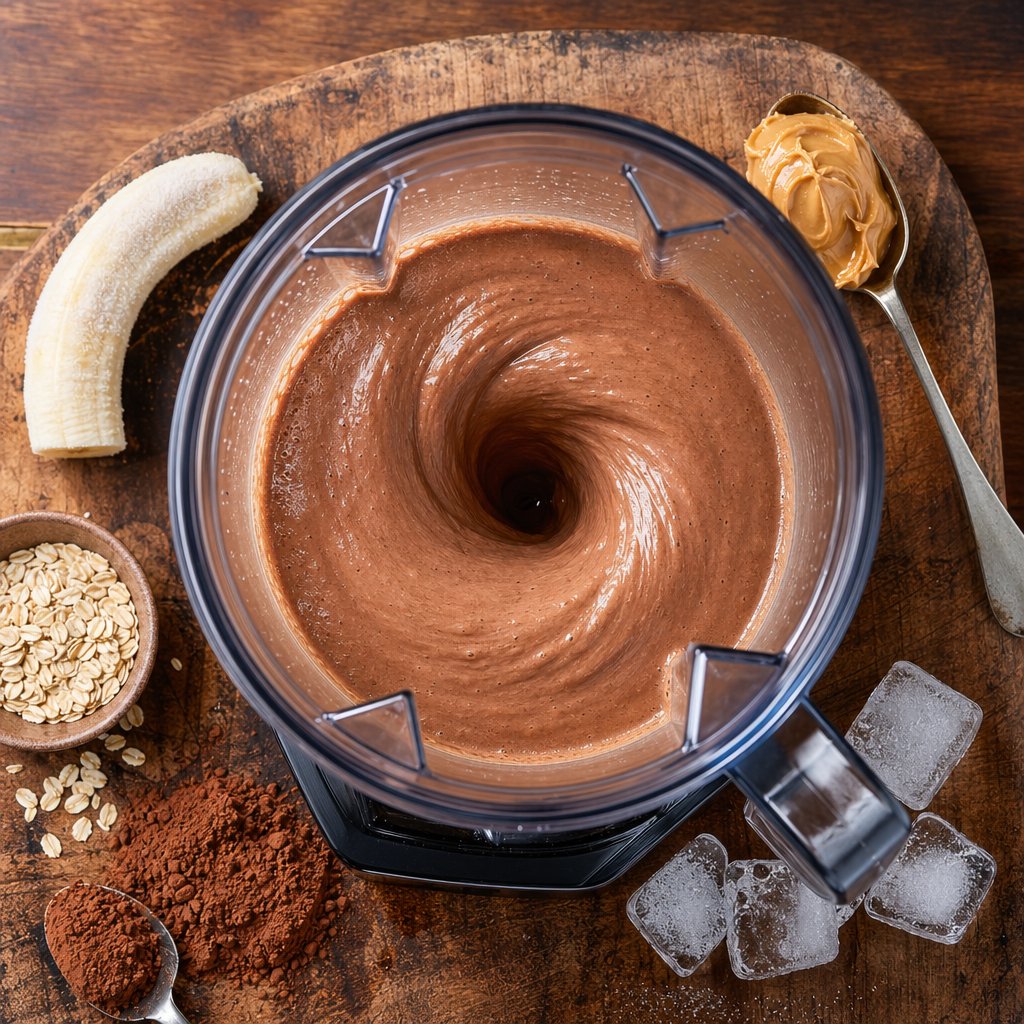
- Chocolate Peanut Butter Banana
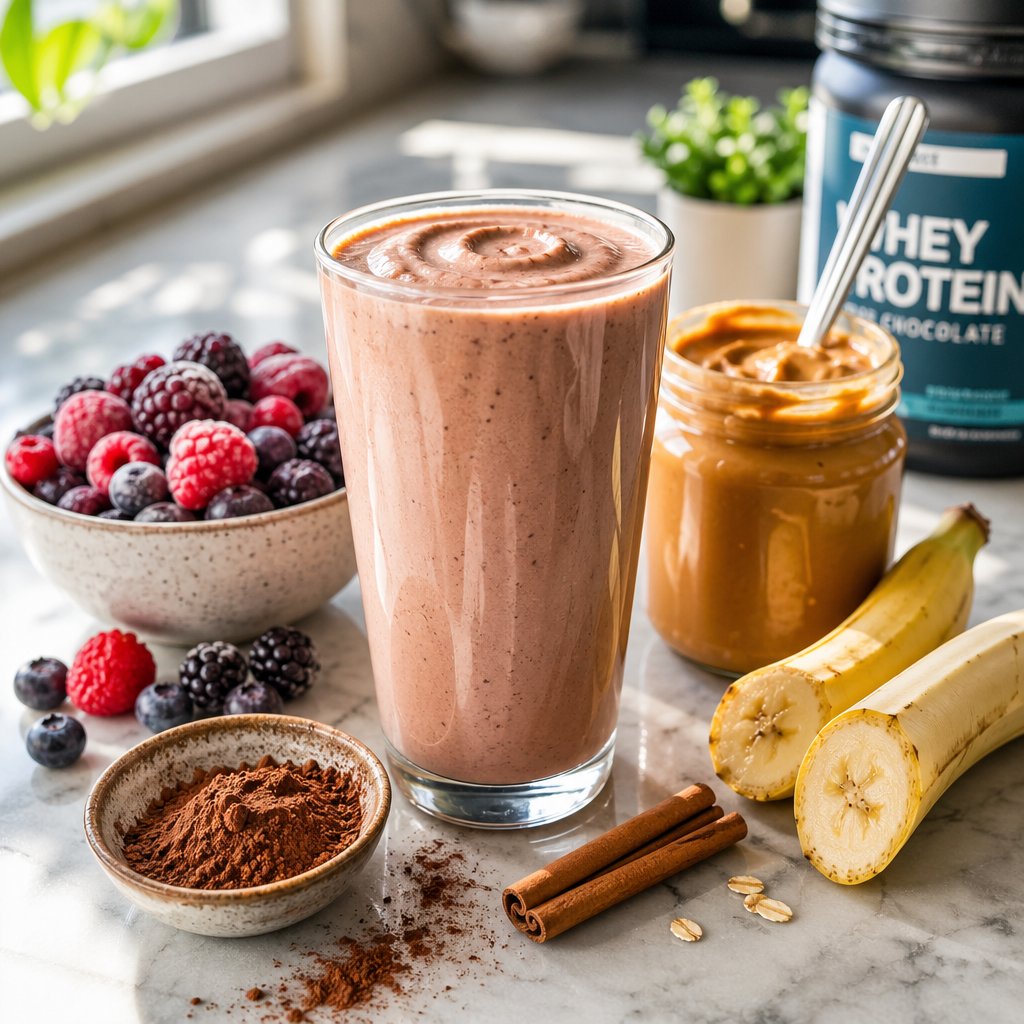
1 scoop chocolate whey protein + 8 oz oat milk + 1 tbsp natural peanut butter + half a frozen banana + 4 ice cubes. Blend for 45 seconds.
This is the crowd-pleaser. The frozen banana adds natural sweetness and body, while the peanut butter rounds out any harsh whey aftertaste. Oat milk smooths the chalkiness that water would expose. Allrecipes reviewers consistently praise this combination for its creamy texture and rich taste, with many noting that using a frozen banana instead of ice cubes produces an even thicker, milkshake-like consistency. - Vanilla Berry Blast
1 scoop vanilla whey protein + 8 oz almond milk + 1/2 cup frozen mixed berries + 1 tsp honey + pinch of cinnamon. Blend for 60 seconds.
The berries bring natural acidity that brightens vanilla protein and cuts through sweetener aftertaste. Cinnamon adds aromatic warmth without a single extra calorie. The extra 15 seconds of blending breaks down berry seeds for a smoother finish. - Mocha Protein Shake
1 scoop chocolate protein + 6 oz cold brew coffee + 2 oz whole milk + 1 tsp cocoa powder + 4 ice cubes. Blend for 30 seconds.
Cold brew creates that bitter-on-bitter cancellation effect covered in Step 1, turning what would be two harsh flavors into a rich, cafe-style depth. The splash of whole milk adds just enough fat to smooth the edges without turning it heavy. If you want to know how to make a good protein shake that doubles as a morning pick-me-up, this is it. - Tropical Plant Protein
1 scoop vanilla pea protein + 6 oz coconut water + 1/4 cup frozen mango + 1/4 cup frozen pineapple + squeeze of lime. Blend for 45 seconds.
Pea protein's earthy, beany flavor is one of the hardest to mask. The tropical fruit and lime acidity work together to push that earthiness into the background, while coconut water adds mild sweetness and electrolytes. This recipe is specifically built to make plant-based shakes drinkable. - Cookies and Cream
1 scoop vanilla whey protein + 8 oz whole milk + 1 tbsp cocoa powder + 1 tbsp crushed graham cracker + pinch of salt. Blend for 30 seconds.
The graham cracker adds a subtle baked sweetness and slightly thicker texture. The pinch of salt is the secret weapon here, suppressing bitterness at the receptor level so the cocoa and vanilla come through cleanly. Whole milk ties everything together into something that genuinely tastes like dessert.
Every recipe above follows the same structure: 1 scoop of protein, 6-8 oz of liquid, and 2-3 flavor add-ins. Once you get comfortable with these ratios, swapping ingredients becomes intuitive. Prefer cashew butter over peanut butter? Same amount. Want to thicken a protein shake further? Add an extra quarter of a frozen banana or a couple more ice cubes. The framework stays the same.
The Science of Flavor Boosters
These recipes are not random combinations. Each add-in solves a specific taste or texture problem, and understanding why they work helps you improvise confidently on your own.
Fat from nut butters does more than add calories. Fat molecules coat your tongue and bind to bitter compounds, physically preventing them from reaching taste receptors as intensely. That is why even 1 tablespoon of peanut butter can transform a harsh shake into something smooth and rounded. The improved mouthfeel also makes the shake feel more substantial, which tricks your brain into perceiving it as richer and more satisfying.
Acid from citrus or berries brightens plant-based shakes that tend to taste flat or muddy. A squeeze of lime or a handful of frozen berries introduces tartness that lifts the overall flavor profile. Research on bitter taste receptor responses shows that pH changes can modulate how strongly bitter compounds activate taste receptors, which helps explain why a little acidity goes a long way in taming earthy pea or hemp protein.
A pinch of salt (1/16 tsp) is the most underrated trick in this entire guide. Sodium suppresses bitterness at the receptor level. Studies published in the Journal of Agricultural and Food Chemistry found that sodium chloride reduces the activation of specific human bitter taste receptors, confirming what chefs have known for centuries: salt does not just add saltiness, it actively blocks bitter flavors. You will not taste the salt at 1/16 of a teaspoon, but you will notice the bitterness fade.
Cinnamon and vanilla extract add aromatic complexity that tricks your brain into perceiving sweetness without any sugar. Your sense of smell accounts for a large portion of what you experience as "taste," so ingredients with strong, pleasant aromas make a shake taste sweeter and more complex even when the actual sugar content stays the same.
Frozen fruit pulls double duty. It thickens the shake's texture, which is how to make protein shake thicker without adding calorie-dense thickeners, and it contributes natural sugars that offset bitterness. Frozen bananas are especially effective because their starch converts to sugar as they ripen, and freezing them creates a creamy, ice-cream-like consistency when blended.
Not every add-in needs to be expensive. Here is a quick breakdown by budget:
- Budget-friendly boosters: frozen bananas, table salt, cinnamon, cocoa powder, ice cubes, vanilla extract, honey, frozen store-brand berries
- Premium boosters: natural nut butters (almond, cashew), fresh berries, coconut cream, sugar-free flavor drops, matcha powder, collagen creamers
The budget-friendly list alone covers every major flavor problem: bitterness, chalkiness, thin texture, and sweetener aftertaste. Premium add-ins refine the experience further, but they are not required to make a shake you actually look forward to drinking.
Of course, even the best recipe cannot fix a problem you have not identified. If your shake still tastes off after trying these combinations, the issue might be something more specific, like a gritty plant protein that needs extra hydration time or an artificial sweetener that no amount of fruit can fully mask. Pinpointing the exact taste problem is the fastest path to the right solution.
Step 4: Fix Specific Taste Problems Like Chalky, Bitter, or Gritty
Generic tips and shakes advice only gets you so far. If your shake still tastes wrong after choosing a good liquid base, nailing your mixing technique, and adding flavor boosters, the problem is probably something specific. A chalky shake and a bitter shake are two completely different issues with two completely different fixes. Treating them the same way is like putting a bandage on a splinter you have not removed yet.
The chart below flips the usual approach. Instead of starting with a list of random suggestions, it starts with what you are actually tasting and works backward to the cause and the cure.
Troubleshooting Chart for Common Protein Taste Problems
| Taste Problem | Likely Cause | Quick Fix | Advanced Fix |
|---|---|---|---|
| Chalky | Large particle size or poor solubility | Switch to a blender and use cold milk instead of water | Try a whey isolate with finer micronization for smoother dissolving |
| Bitter | Hydrolyzed protein or high concentrations of amino acids like leucine | Add 1/16 tsp salt and 1 tsp cocoa powder to suppress bitterness | Switch to a non-hydrolyzed formula; hydrolysis creates bitter peptides by design |
| Too Sweet | Excess sucralose or acesulfame potassium in the formula | Dilute with 2-3 extra oz of liquid or stir in unsweetened cocoa powder | Try unflavored protein and add your own sweetener at a level you control |
| Gritty | Insoluble fiber in plant proteins or incomplete mixing | Blend with half a frozen banana to add creaminess that masks the texture | Let the shake rest for 5 minutes so plant proteins fully hydrate, then re-blend |
| Artificial Aftertaste | Stevia or monk fruit compounds lingering on taste receptors | Add a squeeze of lemon juice or a splash of vanilla extract | Switch to a naturally sweetened or completely unflavored powder |
| Bland / Flat | Unflavored or lightly flavored powder with no depth | Stir in 1 tsp instant coffee, cocoa powder, or a handful of frozen fruit | Use a flavored liquid base like chocolate oat milk as your starting point |
You will notice that some fixes overlap. Salt shows up for bitterness, cocoa powder appears in multiple rows, and frozen banana solves both grittiness and thinness. That is not a coincidence. These ingredients are multi-purpose flavor tools, which is why they appeared in the recipes in Step 3 as well. The difference here is knowing exactly which problem you are solving so you can apply the right fix in the right amount instead of throwing everything into the blender and hoping for the best.
A few of these problems deserve extra context. Grittiness in plant-based powders, for example, is not just a mixing issue. Plant proteins contain insoluble fiber that does not dissolve in water, so no matter how long you blend, some texture remains. The hydration rest is critical here: giving pea, hemp, or rice protein 5 minutes to absorb liquid softens those fiber particles significantly. Blending after that rest period produces a noticeably smoother result than blending alone. If you have ever wondered what does protein taste like when it is done right, the answer is that you should barely notice the protein at all. The texture should be smooth, the flavor should come from your add-ins, and the protein itself should fade into the background.
For bitterness, the salt trick from Step 3 is your first line of defense. But if you are dealing with a hydrolyzed whey or casein, the bitterness is baked into the protein at the molecular level. Protein concentrates and isolates have been stripped of the fats and carbs that make food taste good, and hydrolysis breaks the remaining protein into smaller peptides that taste even more bitter. In that case, the advanced fix, switching to a non-hydrolyzed formula, is genuinely the better long-term solution rather than fighting the flavor with add-ins every single day.
Special Fix for Unflavored Protein Powder
Unflavored protein powder is a different challenge entirely. There is no sweetener aftertaste to neutralize and no artificial flavor competing with your add-ins. It is a blank canvas, which is both its biggest advantage and its biggest frustration for people who open the bag expecting it to taste like something.
The simplest starting point: mix 1 scoop of unflavored protein into 8 oz of a strongly flavored liquid. Chocolate milk, orange juice, or flavored oat milk all work well because they bring enough sweetness and flavor depth to carry the protein without any extra effort. From there, you can build. A teaspoon of cocoa powder and a pinch of cinnamon turn chocolate milk into something close to a dessert shake. A splash of vanilla extract in flavored oat milk adds aromatic complexity that makes the shake taste intentional rather than improvised.
Unflavored protein powder also blends seamlessly into recipes like oatmeal, yogurt, soups, and baked goods without competing with the dish's existing flavors. If you find that no liquid base makes your unflavored powder enjoyable as a shake, cooking and baking with it is often the better path, and that is exactly what the next step covers in detail.
Step 5: Cook and Bake With Protein Powder to Transform the Taste
Some protein powders fight you no matter what you do. You have tried better liquids, dialed in your mixing technique, added every flavor booster in the pantry, and the shake still tastes like a chore. Here is the thing most guides never mention: you do not have to drink your protein at all. Cooking and baking with protein powder buries the flavor entirely because the surrounding ingredients, eggs, oats, nut butter, cocoa, take over the taste profile. Even a powder you cannot stand in a shaker becomes invisible inside a pancake or energy ball. This is how to make protein shakes taste good by skipping the shake altogether.
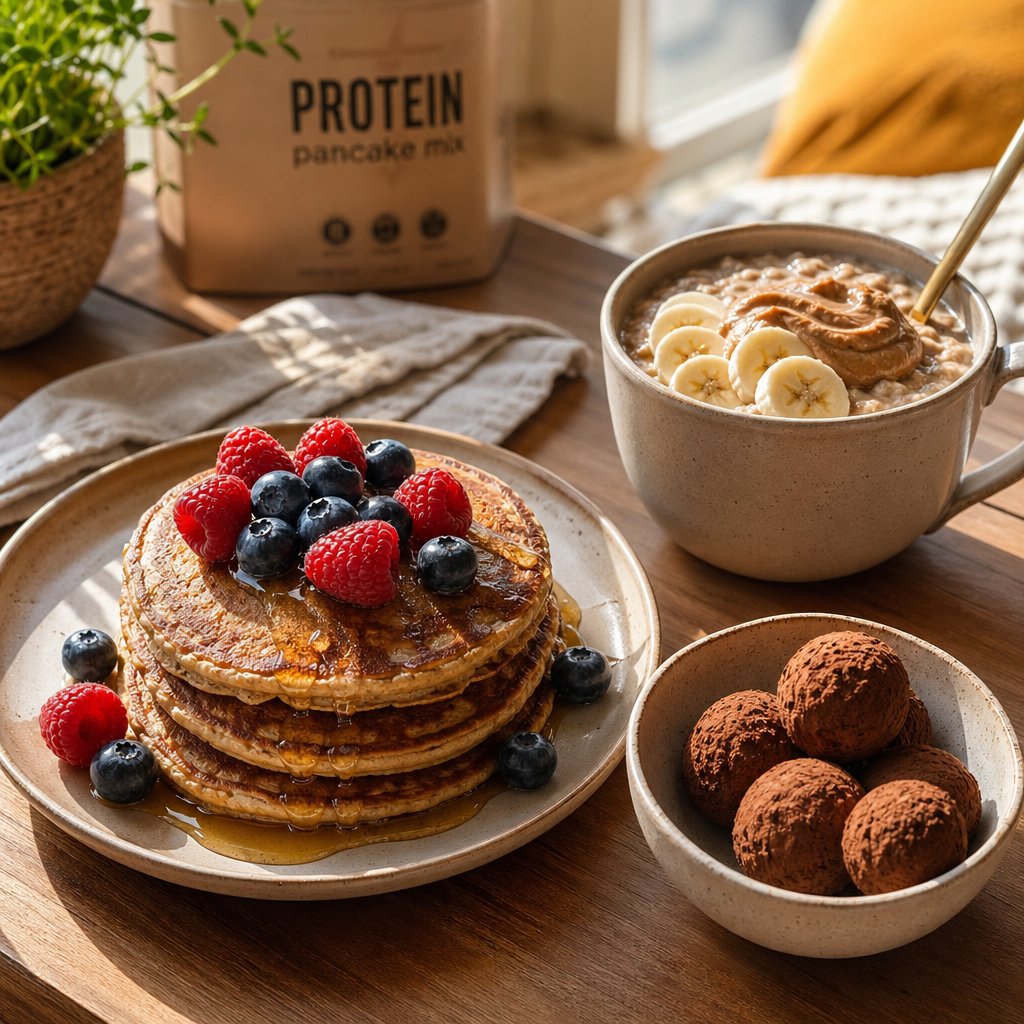
Four Easy Protein-Packed Recipes Beyond Shakes
Each recipe below uses simple pantry staples and takes under ten minutes of active prep. These are not fussy baking projects. They are practical, high-protein foods you can batch-prep or make on the spot.
- Protein Pancakes
1 scoop vanilla protein + 1 mashed ripe banana + 2 eggs + 1 tbsp oat flour. Mix until smooth. Cook on a lightly greased pan over medium-low heat for 2-3 minutes per side, flipping when bubbles form on the surface.
The banana provides moisture and natural sweetness, while the eggs give structure that protein powder alone cannot create. These come out soft and slightly dense, closer to a thick crepe than a fluffy diner pancake, but the flavor is genuinely good. Top with a drizzle of honey or a handful of berries. - Protein Mug Cake
1 scoop chocolate protein + 1 egg + 2 tbsp almond milk + 1 tbsp cocoa powder + 1/2 tsp baking powder. Stir in a microwave-safe mug until smooth. Microwave for 60-90 seconds, checking at the 60-second mark.
This is one of the fastest protein shake add ins alternatives out there. The cocoa powder deepens the chocolate flavor so the protein fades into the background, and the baking powder gives it just enough lift to avoid a rubbery texture. The Protein Chef notes that the key is watching your microwave time closely: too long and the cake dries out, but at the right timing it comes out light and fluffy. - Protein Oatmeal
Cook 1/2 cup rolled oats in water according to package directions. Remove from heat, then stir in 1 scoop vanilla or cinnamon protein + 1 tbsp nut butter + sliced banana.
The critical detail here is removing the oats from heat before adding the protein. Stirring powder into boiling oatmeal creates rubbery clumps that ruin the texture. Off-heat mixing lets the residual warmth blend the protein smoothly into the oats while the nut butter adds richness. This is an easy way to learn how to mix protein shake powder into meals you already eat. - Protein Energy Balls
1 scoop chocolate protein + 1 cup rolled oats + 1/2 cup peanut butter + 2 tbsp honey + 2 tbsp mini chocolate chips. Mix everything in a bowl, roll into 12 balls, and refrigerate for 30 minutes.
No cooking required. The peanut butter and honey bind the mixture while completely masking the protein flavor. These keep in the fridge for up to a week, making them one of the most practical grab-and-go options for anyone who wants to know how to make whey protein taste better without touching a blender.
Key Rules for Cooking With Protein Powder
Protein powder does not behave like flour. It absorbs more liquid, lacks gluten, and reacts differently to heat. Ignore these differences and you end up with dry, rubbery, or crumbly results. Follow these rules and the recipes above will turn out right every time.
- Never add protein powder to boiling liquid. Dropping powder into a rolling boil causes the proteins to seize up instantly, forming tough, rubbery clumps that no amount of stirring can fix. Always remove your pot from heat first, or mix the powder into room-temperature ingredients before cooking.
- Stir protein into oatmeal after removing from heat. Residual warmth is enough to blend the powder smoothly. Direct heat turns it gummy.
- Reduce other flour by one-third when substituting protein powder in baking. Protein powder absorbs significantly more liquid than regular flour, so a 1:1 swap produces something dry and dense. Replacing roughly a quarter to a third of the flour and adding a splash of extra liquid keeps the texture closer to what you expect.
- Casein and whey concentrate hold up better in baking than whey isolate. Casein's thicker consistency helps retain moisture, and it can replace up to one-third of flour without major texture changes. Whey isolate works too, but it dries out faster, so keep substitution closer to one-quarter of the flour and consider adding a fat source like nut butter or coconut oil.
- Expect denser textures than standard recipes. Without gluten to create an elastic structure, protein-powder baked goods will always be heavier than their traditional counterparts. That is normal, not a sign you did something wrong.
One common misconception keeps people from cooking with protein powder at all: the belief that heat destroys the protein. It does not. Heating protein above 170 degrees Fahrenheit changes its molecular structure through a process called denaturation, the same thing that happens when you cook an egg white from clear to solid. But as Protealpes explains, denaturation does not reduce the nutritional value of the protein. The amino acids remain intact and fully available for your body to use. Humans have been eating cooked, denatured protein since the discovery of fire. Your protein pancakes are no different.
Cooking and baking give you a permanent escape route from shakes you dread. But even if you stick with liquid protein, the experience does not have to feel repetitive. The format you choose, whether it is a warm winter mug, a thick smoothie bowl, or a quick cold shake, shapes how enjoyable the habit stays over time.
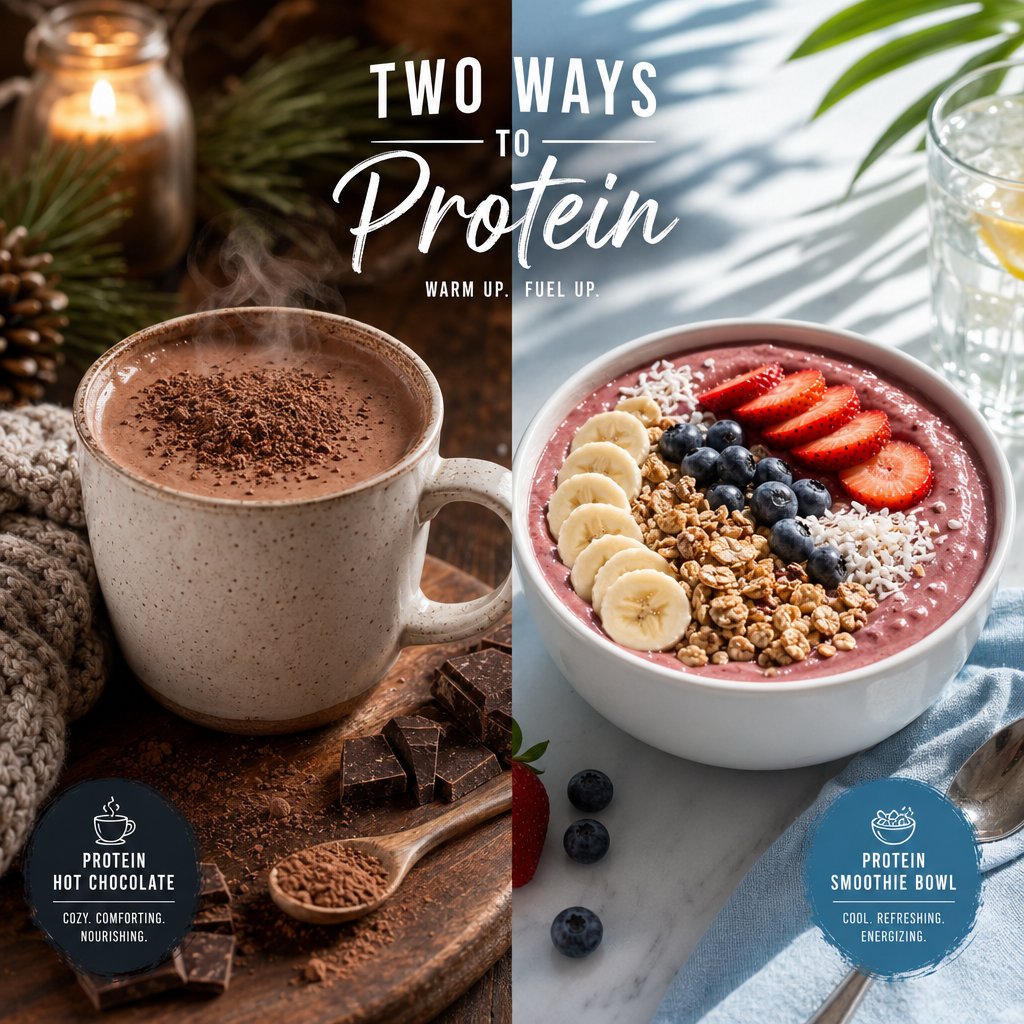
Step 6: Match Your Shake to the Season and Occasion
Imagine drinking the exact same cold chocolate shake every single day for six months. Monday morning before work, the same shake. Friday evening after a long week, the same shake. Mid-January when it is 20 degrees outside, the same shake. Even if that shake tastes great on day one, by week three it starts to feel like a chore. This is shake fatigue, and it is the number one reason people give up on protein shakes entirely. The fix is not a better recipe. It is matching the format to the moment.
A protein shake that tastes good in July might feel completely wrong in December. A thick smoothie bowl that is perfect for a lazy Sunday morning is impractical when you have 90 seconds between your last set and your commute. Context matters more than most people realize, and rotating your approach based on the season and the situation keeps the habit fresh enough to stick with long-term.
Warm Protein Drinks for Cold Weather
Cold-weather months are where most protein routines fall apart. Nobody craves an icy shake when the wind is howling outside. But warm protein drinks are absolutely doable as long as you respect one rule: keep the temperature below 150-160 degrees Fahrenheit. Above that threshold, whey protein clumps and denatures in ways that wreck both texture and taste. A kitchen thermometer helps, but a practical shortcut is to heat your liquid until it is comfortably hot to sip, not steaming or bubbling.
Here are three warm recipes that turn your protein into something you actually look forward to on cold mornings.
Protein Hot Chocolate
1 scoop chocolate protein + 8 oz warm milk (under 150 degrees Fahrenheit) + 1 tsp cocoa powder. Whisk slowly until fully combined. The key is whisking rather than shaking. A sealed shaker bottle with hot liquid builds pressure and creates a mess, and vigorous agitation at high temperatures causes clumping. Slow, steady whisking incorporates the powder smoothly. The cocoa deepens the chocolate flavor so it tastes like a real hot chocolate rather than a protein drink pretending to be one. Kathy Smith's warming shake recipes use a similar approach, combining cocoa with coconut oil or milk for extra richness on snowy mornings.
Protein Coffee Latte
1 scoop vanilla protein + 6 oz warm coffee (brewed and cooled slightly to around 140-150 degrees Fahrenheit) + 2 oz frothed milk. Stir the protein into the coffee first, then top with frothed milk. This works especially well if you want to know how to make vanilla protein shakes taste better, because coffee's natural bitterness and roasted depth give vanilla protein a sophisticated, cafe-style flavor it cannot achieve on its own. The frothed milk adds a creamy layer on top that makes the whole drink feel indulgent.
Protein Chai
1 scoop vanilla protein + 8 oz warm chai tea (brewed and cooled to under 150 degrees Fahrenheit) + splash of oat milk. Whisk the protein into the chai slowly, then add the oat milk for extra body. Chai spices like cinnamon, cardamom, and ginger create aromatic complexity that masks any residual protein taste. The oat milk's natural sweetness rounds out the spice blend without needing extra sugar. This is a particularly good option for plant-based protein powders, where the earthy notes blend right into the spice profile instead of clashing with it.
For all three recipes, one practical tip makes a big difference: mix the protein powder into a small amount of room-temperature liquid first to create a smooth paste, then slowly add the warm liquid while whisking. This two-step method prevents the clumping that happens when powder hits hot liquid all at once.
Quick Post-Workout vs Leisurely Breakfast Options
Season is one variable. Time of day and how much time you actually have is the other. A shake you make at 6 AM before the gym serves a completely different purpose than one you blend at 10 AM on a Saturday. Matching the format to the scenario keeps things practical and prevents the routine from feeling stale.
| Scenario | Best Format | Equipment | Key Ingredients | Prep Time |
|---|---|---|---|---|
| Post-Workout | Quick cold shake | Shaker bottle | Cold water or milk, 1 scoop protein, half a banana | 30 seconds |
| Morning Smoothie Bowl | Thick blended bowl | Blender | Frozen fruit base, protein, topped with granola and seeds | 5 minutes |
| Afternoon Pick-Me-Up | Iced protein coffee | Blender or shaker | Cold brew coffee base, protein, ice | 2 minutes |
| Evening Dessert Shake | Thick blended shake | Blender | Frozen banana, cocoa, milk, blended thick like ice cream | 3 minutes |
The post-workout window is all about speed. You are tired, you are sweaty, and you do not want to wash a blender. A shaker bottle with cold milk and a scoop of protein gets the job done in 30 seconds flat. Keep it simple. Toss in half a banana if you want a little extra sweetness, but do not overcomplicate it. The goal is fast fuel, not a culinary experience.
Morning smoothie bowls are the opposite end of the spectrum. When you have five minutes and a blender, you can turn protein powder into something that feels like breakfast rather than a supplement. Blend a scoop of protein with a cup of frozen mixed berries and just enough liquid to get the blender moving, around 4-6 oz. Pour the thick mixture into a bowl and top with granola, chia seeds, sliced banana, or a drizzle of honey. The thicker consistency is how to thicken protein shakes to the point where they feel like a meal, and eating with a spoon changes the psychological experience entirely. It feels like food, not medicine.
The afternoon pick-me-up combines caffeine and protein into one drink. Cold brew coffee, a scoop of chocolate or vanilla protein, and a handful of ice cubes blended for 30 seconds gives you an iced latte with 20-plus grams of protein built in. It replaces both your afternoon coffee and your protein serving in a single glass.
Evening dessert shakes lean into indulgence. A frozen banana, a tablespoon of cocoa powder, 8 oz of milk, and a scoop of chocolate protein blended until thick creates something closer to soft-serve ice cream than a protein shake. This is the format that makes people say their protein shake that tastes good enough to replace actual dessert. Freezing the banana for at least two hours beforehand is what gives it that creamy, ice-cream-like body.
The real point of rotating through these formats is sustainability. Drinking the same shake the same way every day leads to burnout faster than almost anything else. Variety in preparation, temperature, and texture keeps the habit interesting enough that you never give up protein shakes out of sheer boredom. You do not need to use all four formats every week. Even alternating between two or three is enough to keep things fresh.
Of course, every add-in and format swap comes with a calorie and macro cost. A thick smoothie bowl with granola and honey hits differently on a nutrition label than a plain shaker-bottle shake with water. Knowing exactly what each upgrade costs you nutritionally is the difference between improving your shake and accidentally derailing your diet.
Step 7: Balance Taste Upgrades With Your Calorie and Macro Goals
A shake loaded with peanut butter, frozen banana, oat milk, and honey tastes incredible. It also adds roughly 290 calories on top of your protein powder. If you are in a caloric surplus and trying to gain weight, that is a feature, not a bug. But if you are cutting, those extras can quietly eat up a quarter of your daily budget before lunch. The best way to use protein shakes effectively means knowing exactly what each taste upgrade costs you so you can make informed trade-offs instead of accidental ones.
Most guides tell you to "add nut butter" or "throw in a banana" without ever mentioning the nutritional impact. That is a problem for anyone tracking macros, and it is the reason good tasting protein shakes sometimes feel like they are working against your goals rather than supporting them. The fix is not to strip your shake back to powder and water. It is to pick the right add-ins for your calorie budget.
Calorie Cost of Common Protein Shake Add-Ins
This table breaks down the most popular flavor boosters by their exact nutritional cost per serving. Keep it handy when building your shake so you can mix and match without guesswork.
| Add-In | Serving Size | Calories Added | Protein Added | Fat Added | Carbs Added |
|---|---|---|---|---|---|
| Peanut Butter | 1 tbsp | ~95 cal | 4g | 8g | 3g |
| Frozen Banana | Half (about 60g) | ~53 cal | 0.6g | 0.2g | 13g |
| Oat Milk | 8 oz | ~120 cal | 3g | 5g | 16g |
| Water | 8 oz | 0 cal | 0g | 0g | 0g |
| Honey | 1 tsp | ~21 cal | 0g | 0g | 6g |
| Cocoa Powder (unsweetened) | 1 tsp | ~5 cal | 0.3g | 0.2g | 1g |
| Frozen Mixed Berries | 1/2 cup | ~35 cal | 0.5g | 0.2g | 8g |
| Unsweetened Almond Milk | 8 oz | ~30 cal | 1g | 2.5g | 1g |
| Whole Milk | 8 oz | ~149 cal | 8g | 8g | 12g |
A few things stand out. Peanut butter is calorie-dense relative to its volume, but it also contributes 4 grams of protein and enough fat to meaningfully improve mouthfeel. Frozen berries, on the other hand, add natural sweetness and acidity for just 35 calories per half cup, making them one of the most efficient flavor upgrades available. Cocoa powder is practically free at 5 calories per teaspoon, yet it does heavy lifting against bitterness and sweetener aftertaste. The USDA FoodData Central database is a reliable resource for looking up exact values if you want to verify numbers for a specific brand or product.
The liquid base choice alone creates the biggest calorie swing. Shaking protein shake powder into 8 oz of water versus 8 oz of whole milk is a 149-calorie difference, and that gap adds up fast over a week of daily shakes. Unsweetened almond milk sits at roughly 30 calories, making it a practical middle ground for people who want some creaminess without the full calorie load of dairy.
Three Taste Tiers Based on Your Calorie Budget
Not every shake needs every upgrade. Organizing your options into tiers based on calorie impact makes it easy to build a shake that fits your current goals, whether you are in a deficit, at maintenance, or bulking.
- Zero-Calorie Fixes (0 cal added)
- Ice cubes (4-5 for milkshake-like thickness)
- Pinch of salt (1/16 tsp to suppress bitterness)
- Cinnamon (aromatic sweetness without sugar)
- Vanilla extract (a few drops add perceived sweetness)
- Improved mixing technique (blender over shaker, correct order)
- Temperature optimization (cold liquid between 35-45 degrees Fahrenheit)
- Low-Calorie Fixes (under 50 cal added)
- Unsweetened cocoa powder, 1 tsp (~5 cal)
- Frozen mixed berries, 1/2 cup (~35 cal)
- Squeeze of lemon or lime (~1 cal)
- Sugar-free flavor drops (~0 cal)
- Unsweetened almond milk as the base instead of water (~30 cal)
- Higher-Calorie Fixes (50-150 cal added)
- Peanut or almond butter, 1 tbsp (~95 cal)
- Half a frozen banana (~53 cal)
- Oat milk as the base (~120 cal)
- Honey, 1 tsp (~21 cal)
- Coconut cream, 1 tbsp (~50 cal)
- Whole milk as the base (~149 cal)
If you are in a caloric deficit, start with the zero-calorie tier. You will be surprised how much difference ice, salt, cinnamon, and proper mixing technique make on their own. These fixes address texture, bitterness, and temperature without adding a single calorie to your daily total. Does protein shake taste good with just these tweaks? For a well-formulated powder, often yes. For a mediocre one, the low-calorie tier fills the remaining gaps. Cocoa powder and frozen berries together add roughly 40 calories and solve most aftertaste and blandness issues.
The higher-calorie tier is where shakes start tasting like dessert. Nut butters, banana, oat milk, and honey transform even a bad powder into something genuinely enjoyable. If you are in a bulking phase or simply not tracking calories closely, use all three tiers freely. The extra 100-150 calories from these add-ins are negligible when your daily target is 2,800 or higher, and the improved taste makes it far easier to hit your protein goals consistently.
For people somewhere in the middle, at maintenance or in a moderate deficit, mixing tiers is the practical approach. Use a low-calorie base like unsweetened almond milk, add one item from the higher-calorie tier (half a banana or a tablespoon of nut butter), and lean on zero-calorie fixes for the rest. That combination typically lands between 80-130 extra calories while delivering a shake that genuinely tastes good.
The best-tasting shake is one you actually drink consistently. A 50-calorie upgrade that keeps you on track with your protein goals every day is worth far more than a zero-calorie shake you skip three times a week. Find the tier that fits your goals and stick with it.
Calorie awareness keeps your taste upgrades aligned with your nutrition plan. But sometimes the real issue is not what you add to the shake. It is the powder itself. A poorly formulated product with cheap sweeteners, low-quality protein, and no emulsifiers will fight you at every step, no matter how many flavor boosters you pile on. When the foundation is the problem, the solution starts before the powder ever reaches your kitchen.
Step 8: Start With a Better-Formulated Protein Powder
Every step in this guide, better liquids, smarter mixing, precise recipes, calorie-conscious add-ins, works on the assumption that your protein powder is at least halfway decent. But what if it is not? What if the powder itself is so poorly made that no amount of frozen banana, cocoa powder, or cold brew can rescue it? That is more common than you might think. A protein powder with cheap sweeteners, coarse particle size, and no emulsifiers is fighting you from the moment it hits the liquid. At some point, the most effective upgrade is not what you add to your shake. It is what you put in the scoop.
Understanding what separates whey protein that tastes good from powder you can barely choke down comes down to a handful of manufacturing decisions that happen long before the tub reaches a store shelf. These are the details that matter when you are shopping for your next protein, and they are almost never printed on the front of the label.
What to Look for When Choosing a Better Protein Powder
The ingredient list and a few key label details tell you more about how a protein powder will taste than any marketing claim on the front of the package. Here is what to look for in a protein shake powder before you buy it.
- Check for lecithin or other emulsifiers. Sunflower lecithin and soy lecithin help protein powder dissolve smoothly in liquid instead of clumping into chalky lumps. If a powder lists an emulsifier, it will almost always mix better in a shaker bottle without needing a blender. No emulsifier usually means you are in for a grittier experience, especially with plant-based proteins.
- Look for naturally flavored options if artificial aftertaste is your issue. As the FlavCity label guide points out, "natural flavors" high on the ingredient list can be a red flag, since the term covers dozens of processed compounds. Look for specific flavor sources instead: real vanilla powder, organic cocoa, actual fruit powders. These create a cleaner, more authentic taste than vague "natural flavor" blends.
- Consider whey isolate over concentrate for a cleaner taste. Whey isolate undergoes additional filtration that removes most of the lactose and fat, producing a milder, less "dairy-heavy" flavor. If your current powder tastes thick, heavy, or leaves a coating in your mouth, isolate is often the fix. The trade-off is a slightly thinner mouthfeel, but that is easy to correct with a splash of milk or half a frozen banana.
- Try single-ingredient plant proteins before blends. Multi-source plant blends (pea + rice + hemp, for example) can create unpredictable flavor combinations where each protein's worst qualities compound. A single-source pea protein or rice protein gives you a consistent flavor baseline that is easier to mask and adjust. Once you know how a single source tastes, you can decide whether a blend adds value or just adds problems.
- Read reviews specifically mentioning taste and mixability. Star ratings alone do not tell you much. Filter for reviews that describe the actual drinking experience: does it dissolve easily? Is there an aftertaste? Does it need a blender or work in a shaker? These details predict your real-world experience far better than a brand's own marketing copy.
- Watch for excessive sweetener stacking. Some powders combine sucralose, acesulfame potassium, and stevia in the same formula. Each sweetener has its own aftertaste profile, and layering them together often creates a cloying, chemical sweetness that lingers long after the last sip. A single, well-dosed sweetener, or better yet, sweetness from real food ingredients like banana powder, typically produces a more natural taste.
These criteria are not about finding the most expensive powder on the shelf. Plenty of mid-priced options check every box. The goal is to avoid the formulation shortcuts that create the taste problems you have been spending seven steps trying to fix. What should I add to my protein shake becomes a much easier question when the base powder is not working against you.
Why Formulation Quality Matters More Than Brand Hype
Flashy packaging, influencer endorsements, and bold front-of-label claims tell you almost nothing about how a protein powder actually tastes. The flavor experience is largely determined during manufacturing, in decisions most consumers never see: the quality of the raw protein source, the precision of the flavoring and sweetener system, the particle size achieved during spray drying, and whether the production process includes proper emulsification for mixability.
The protein powder manufacturing process involves multiple stages where taste can go right or go wrong. During spray drying, for instance, the size of the atomized droplets directly affects the final powder's solubility and texture. Finer particles dissolve more easily and produce a smoother shake, while coarser particles create that familiar chalky, gritty mouthfeel. Temperature control during drying preserves amino acid integrity and prevents the off-flavors that come from protein denaturation. The flavoring stage is where sweetener balance, bitter-masking agents, and texture modifiers like xanthan gum or guar gum are dialed in. Get any of these steps wrong, and the consumer ends up searching for ways to make their shake drinkable.
This is why the same protein type, say whey isolate, can taste completely different across two brands. The raw ingredient might be identical, but the manufacturing execution creates the gap. One brand invests in finer micronization, careful sweetener dosing, and proper emulsifier inclusion. The other cuts corners on flavoring and skips the emulsifier to save cost. The result is two products with the same nutrition label but wildly different taste experiences.
For nutrition brands, supplement importers, and private label sellers reading this, the lesson is clear: the taste problem your customers complain about almost always starts at the formulation and manufacturing stage, not in their kitchen. Working with an experienced OEM/ODM manufacturer that offers customized formulation for powder and granule products allows you to fine-tune flavor profiles, sweetener systems, particle size, and texture before a single unit ships. ZhuFeng's health food manufacturing services, for example, integrate flexible product formats including powder and granule formulations with scalable production, giving brands the ability to iterate on taste during development rather than relying on consumers to fix it with add-ins after the fact. That kind of formulation control is what separates a protein powder people recommend from one they quietly replace after the first tub.
For individual consumers, the practical takeaway is simpler: if you have tried every trick in this guide and your shake still tastes bad, the powder is the problem. Switch to a product that was formulated with taste as a priority, not an afterthought. Look for the criteria listed above, buy a small size or sample pack before committing to a full tub, and trust your palate. A well-made protein powder should taste good with minimal effort, maybe just cold milk and a shaker bottle. Everything else in this guide is optimization on top of a solid foundation.
The best protein shake starts with a well-formulated powder. Mixing tricks, flavor boosters, and creative recipes can elevate a good product, but they cannot rescue a bad one. Invest in the foundation first, then optimize from there.
Frequently Asked Questions About Making Protein Powder Taste Better
1. Why does my protein shake taste so chalky and gritty?
Chalkiness typically comes from large particle size and poor solubility in your protein powder, while grittiness is often caused by insoluble fiber in plant-based proteins or incomplete mixing. To fix chalkiness, switch from a shaker bottle to a blender and use cold milk instead of water. For gritty plant proteins like pea or hemp, let the shake rest for 5 minutes after mixing so the fiber particles fully hydrate, then blend again. Adding half a frozen banana also helps mask gritty texture by introducing creaminess. If the problem persists, look for a whey isolate with finer micronization or a powder that includes emulsifiers like sunflower lecithin for smoother dissolving.
2. What can I add to my protein shake to make it taste better without adding too many calories?
Several zero-calorie and low-calorie fixes dramatically improve protein shake taste. Zero-calorie options include a pinch of salt (1/16 tsp) to suppress bitterness, cinnamon for aromatic sweetness, vanilla extract for perceived sweetness, ice cubes for milkshake-like thickness, and simply using colder liquid (35-45 degrees Fahrenheit) to dull bitter taste receptors. For under 50 calories, unsweetened cocoa powder adds just 5 calories per teaspoon while masking aftertaste, frozen berries contribute natural sweetness at roughly 35 calories per half cup, and a squeeze of lemon neutralizes stevia or monk fruit aftertaste for essentially no caloric cost.
3. Can I cook or bake with protein powder without losing its nutritional value?
Yes, heating protein powder above 170 degrees Fahrenheit changes its molecular structure through denaturation, the same process that turns a raw egg white solid, but it does not reduce the protein's nutritional value. The amino acids remain intact and fully bioavailable. However, cooking with protein powder requires specific techniques: never add it to boiling liquid (it creates rubbery clumps), stir it into oatmeal only after removing from heat, and reduce other flour by one-third when substituting in baking recipes. Casein and whey concentrate hold up better in baked goods than whey isolate, which tends to dry out faster.
4. How do I make unflavored protein powder taste good?
Unflavored protein powder is a blank canvas that works best when mixed into strongly flavored liquids or cooked into food. Start by mixing one scoop into 8 oz of chocolate milk, orange juice, or flavored oat milk, which provide enough sweetness and depth to carry the protein without extra effort. From there, add a teaspoon of cocoa powder and a pinch of cinnamon for a dessert-like shake. Unflavored powder also excels in cooking applications: stir it into oatmeal after removing from heat, blend it into smoothie bowls with frozen fruit, or use it in protein pancakes and energy balls where surrounding ingredients completely mask any residual taste.
5. What should I look for when buying a protein powder that actually tastes good?
Check the ingredient list for lecithin or other emulsifiers, which ensure smooth mixing without clumping. Avoid powders that stack multiple artificial sweeteners like sucralose, acesulfame potassium, and stevia together, as layered sweeteners create cloying aftertaste. Choose whey isolate over concentrate for a cleaner, less dairy-heavy flavor. For plant proteins, try single-source options before blends, since multi-source blends can compound each protein's worst flavor qualities. Read reviews that specifically mention taste and mixability rather than relying on star ratings alone. Brands that work with experienced OEM/ODM manufacturers like ZhuFeng invest in finer micronization, balanced sweetener systems, and proper emulsification during production, resulting in powders that taste good with minimal effort.