What Are Alka-Seltzer Tablets and What Makes Them Different
You have probably seen the fizzing glass on a kitchen counter or heard someone mention dropping a tablet into water after a heavy meal. But what is Alka-Seltzer, really? It is one of those products nearly everyone recognizes yet surprisingly few people fully understand.
Alka-Seltzer is an effervescent over-the-counter (OTC) medication that dissolves in water and is used to relieve heartburn, acid indigestion, headaches, and minor body aches. It works by combining an antacid with a pain reliever in a single fizzing tablet.
That dual-action formula is exactly what sets Alka-Seltzer tablets apart from most other remedies in your medicine cabinet. Instead of choosing between a pain reliever and a stomach soother, you get both in one glass. The tablet contains three active ingredients: aspirin (a pain reliever and anti-inflammatory), sodium bicarbonate (an antacid), and citric acid (the agent responsible for the fizz). When the tablet hits water, those ingredients dissolve into a drinkable solution that can start working faster than a standard pill you swallow whole.
A Quick Definition of Alka-Seltzer
So what does Alka-Seltzer do in practical terms? It neutralizes excess stomach acid while simultaneously addressing pain and inflammation. That combination makes it a go-to choice for people dealing with an upset stomach paired with a headache, or heartburn that comes with general achiness. If you have ever wondered how do you spell Alka-Seltzer, note the hyphen between "Alka" and "Seltzer." The name itself hints at its function: "Alka" references alkalinity (the antacid action), and "Seltzer" nods to the bubbly, carbonated water it creates.
From 1931 to Medicine Cabinets Everywhere
The story behind these tablets is rooted in a flu epidemic. In 1928, Hub Beardsley, president of Miles Laboratories in Elkhart, Indiana, discovered that a local newspaper staff had avoided the flu by taking a simple mixture of aspirin and baking soda. He brought the idea back to his head chemist, Maurice Treneer, who developed the effervescent formula we know today. Miles Laboratories launched Alka-Seltzer in 1931, and it quickly became a household staple. The brand's iconic tagline, "Plop, plop, fizz, fizz, oh what a relief it is," turned it into a piece of American pop culture, now owned by Bayer.
Here is the detail that catches most people off guard: Alka-Seltzer contains aspirin. The original formula includes 324 mg of aspirin per tablet, which is equivalent to a full-dose aspirin tablet. Many consumers treat it purely as an antacid without realizing they are also taking a drug that affects blood clotting, interacts with other medications, and carries real risks for certain groups. That hidden aspirin content changes the safety conversation entirely, and it is worth understanding exactly what each ingredient does before you reach for that next tablet.
Alka-Seltzer Ingredients Explained in Plain Language
Knowing a product contains three active ingredients is one thing. Understanding what each one actually does inside your body is another. A lot of people asking whats in Alka-Seltzer expect a simple antacid. The reality is more complex, and the alka-seltzer ingredients list carries implications that deserve a closer look.
The table below breaks down each active ingredient in the Original formula, its function, and the one thing you should keep in mind before taking it.
| Ingredient | Function | Key Consumer Consideration |
|---|---|---|
| Aspirin (325 mg per tablet) | Pain reliever and anti-inflammatory (NSAID) | Interacts with blood thinners and other NSAIDs; not safe for children under 12 |
| Sodium Bicarbonate (1,916 mg per tablet) | Antacid that neutralizes stomach acid | Delivers 567 mg of sodium per tablet, a concern for people on low-sodium diets or managing high blood pressure |
| Anhydrous Citric Acid (1,000 mg per tablet) | Effervescent agent that triggers the fizzing reaction and aids rapid dissolution | Also classified as an antacid on the label; drives the fast-dissolving delivery mechanism |
Each ingredient plays a distinct role. Together, they create the buffered aspirin solution that makes Alka-Seltzer different from a plain antacid or a standalone pain reliever. Let's walk through them one at a time.
Aspirin as a Pain Reliever and Anti-Inflammatory
Aspirin is the alka seltzer active ingredient that surprises the most people. At 325 mg per tablet, it is a full-strength dose of a nonsteroidal anti-inflammatory drug (NSAID). When you take two tablets as directed, you are consuming 650 mg of aspirin, comparable to two regular aspirin pills.
How does it work? Aspirin inhibits enzymes called cyclooxygenases (COX-1 and COX-2), which produce prostaglandins. Prostaglandins are chemicals your body releases in response to injury or irritation. They trigger pain signals, promote inflammation, and sensitize nerve endings. By blocking their production, aspirin reduces headaches, body aches, and minor inflammation.
Here is where the risk enters the picture. Aspirin also affects platelet function, meaning it makes your blood less likely to clot. That property is useful in low-dose heart therapy, but it becomes dangerous when combined with prescription blood thinners like warfarin, apixaban (Eliquis), or clopidogrel (Plavix). Taking Alka-Seltzer alongside these medications can significantly raise the risk of serious bleeding. The same applies if you are already using another NSAID such as ibuprofen or naproxen. Stacking NSAIDs without realizing it is more common than you might think, especially with combination OTC products.
Sodium Bicarbonate and the Sodium Content You Should Know
Sodium bicarbonate is essentially baking soda, and it serves as the primary antacid in the formula. When it reaches your stomach, it reacts with hydrochloric acid (the acid your stomach naturally produces) and neutralizes it. The result is a rapid rise in stomach pH, which is why many people feel relief from heartburn and acid indigestion within minutes of drinking the solution.
The trade-off? Each tablet contains 567 mg of sodium. A standard two-tablet dose delivers over 1,100 mg of sodium before you eat or drink anything else that day. For context, the American Heart Association recommends no more than 2,300 mg of sodium per day, with an ideal limit of 1,500 mg for most adults. A single dose of Alka-Seltzer can account for nearly half to three-quarters of that daily ceiling.
If you are managing hypertension, heart disease, kidney disease, or following a sodium-restricted diet, this is not a minor detail. The product label itself advises asking a doctor before use if you have high blood pressure or are on a sodium-restricted diet. Many people overlook this because they associate sodium concerns with food, not medication.
Citric Acid and Its Role in the Fizz
Anhydrous citric acid is the third active ingredient, listed at 1,000 mg per tablet. Its primary job is to react with sodium bicarbonate when the tablet hits water, producing carbon dioxide gas. That reaction is what creates the signature fizz. But citric acid does more than put on a show. It also functions as an antacid, and the fizzing process is what dissolves the aspirin and bicarbonate into a liquid solution you can drink.
This matters because a dissolved solution does not need to break apart in your stomach the way a solid pill does. The alka seltzer contents are already in liquid form by the time they reach your digestive system, which is a key reason the product is associated with faster relief. The citric acid essentially acts as the delivery engine for the other two ingredients.
The biggest misconception about these three ingredients is that Alka-Seltzer is "just" an antacid. It is not. It is a combination drug that includes a full-dose NSAID, a high-sodium antacid, and an effervescent acid. That combination is powerful and effective for the right situation, but it also means the product carries more risks than a simple antacid like calcium carbonate. Understanding exactly what is in Alka-Seltzer is the first step toward using it safely, and the way those ingredients interact with water is what makes the tablet's delivery system genuinely unique.
How the Effervescent Fizzing Mechanism Actually Works
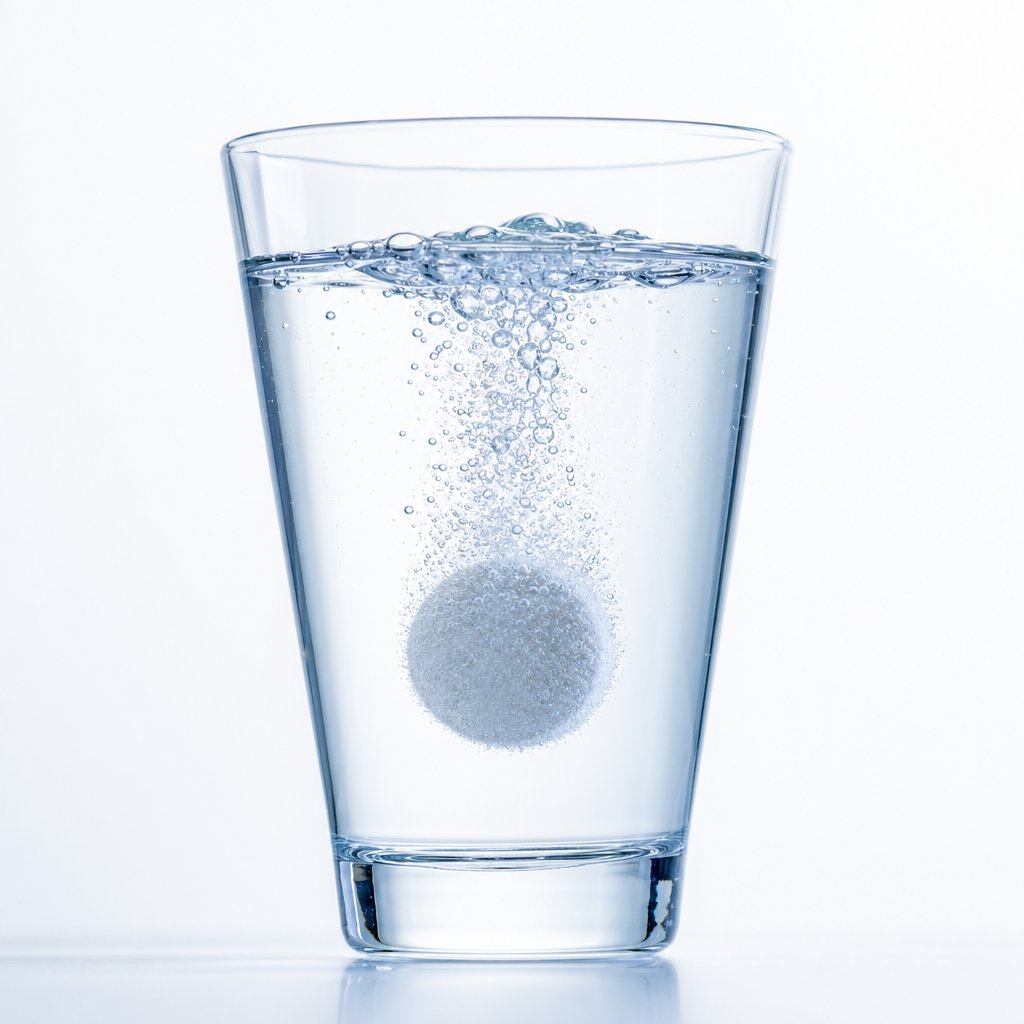
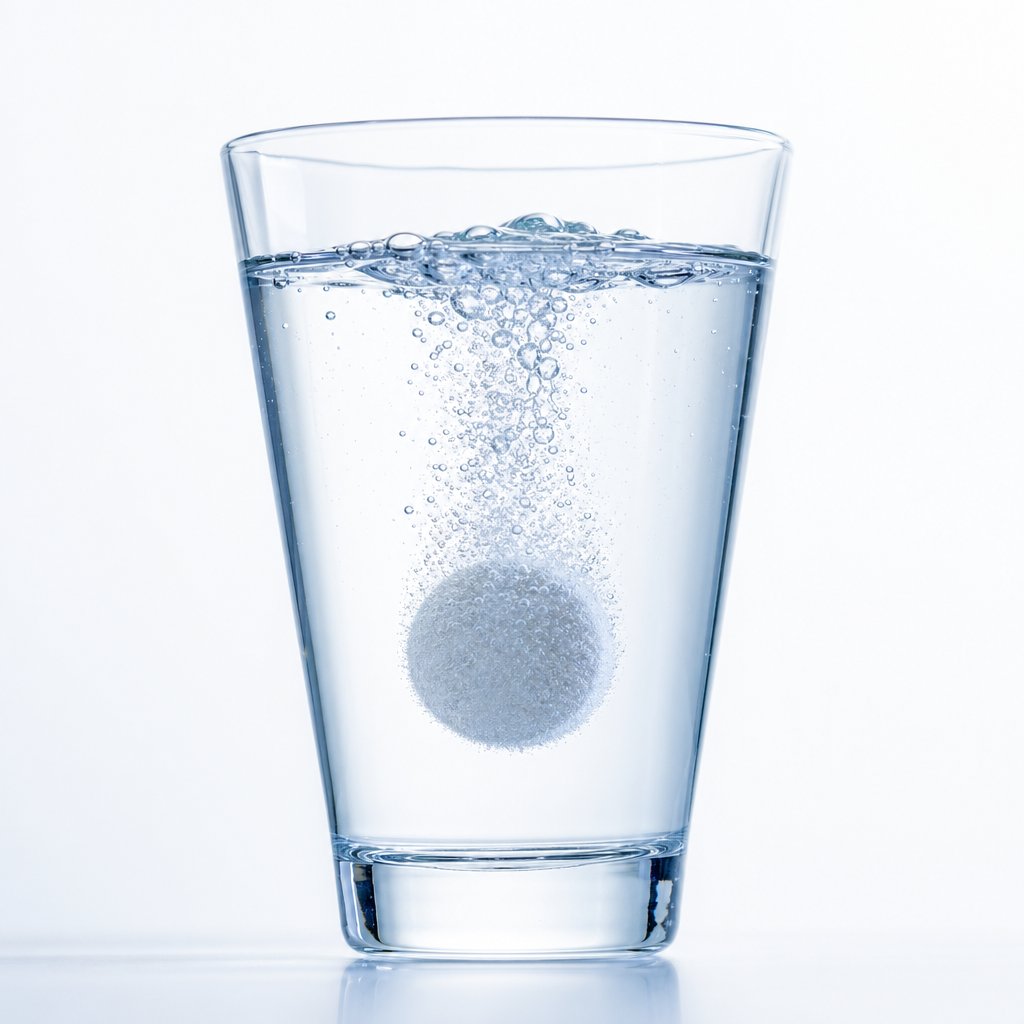
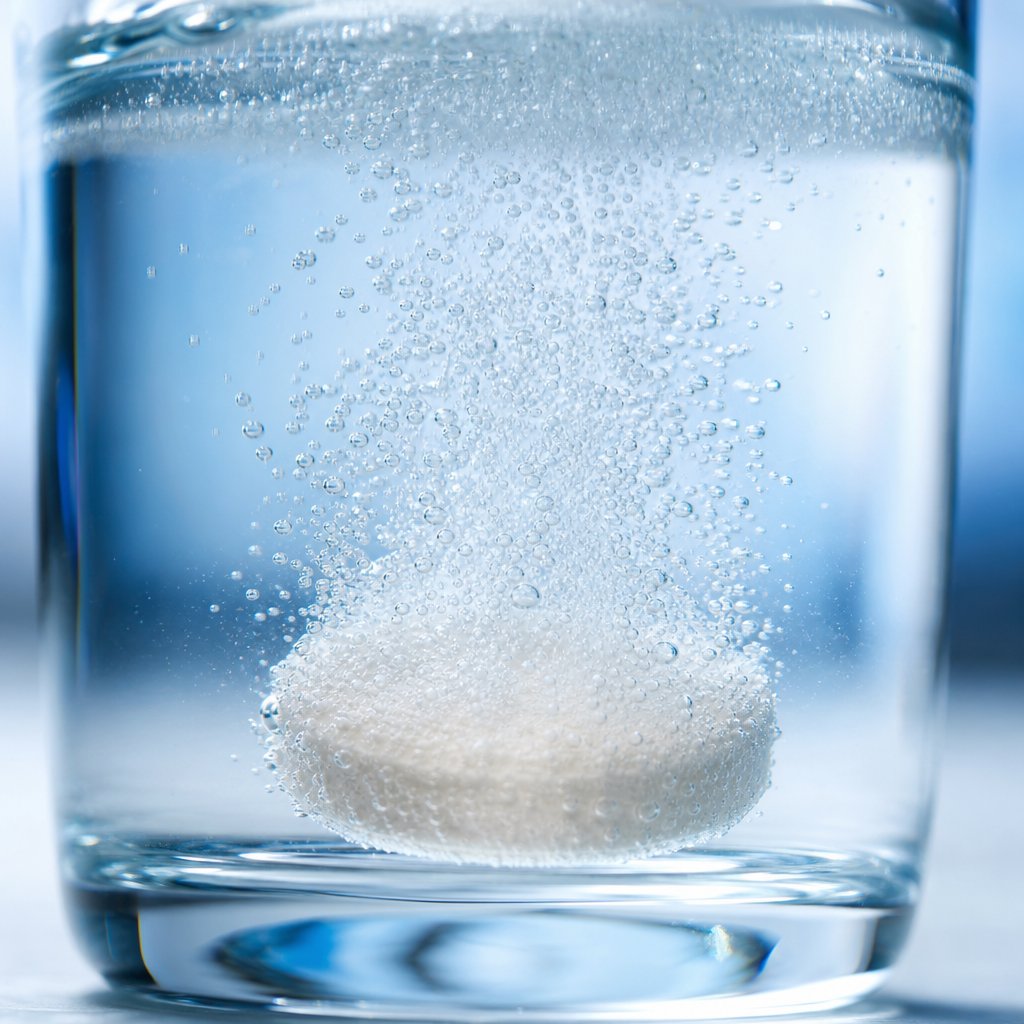
That dramatic fizz is not just for show. The bubbling reaction you see when an Alka-Seltzer tablet hits water is a carefully engineered chemical process, and it directly affects how quickly the medicine starts working. So how does Alka-Seltzer work at the molecular level? It comes down to a simple acid-base reaction that happens in your glass before you take a single sip.
The Chemical Reaction Behind the Bubbles
The moment an Alka-Seltzer tablet touches water, the citric acid and sodium bicarbonate packed inside begin to react. Citric acid is a solid acid, and sodium bicarbonate is an alkaline salt. In dry tablet form, they sit side by side without interacting. Water changes everything. It dissolves both compounds and allows them to react, producing three things: carbon dioxide gas (CO2), sodium citrate, and water.
The carbon dioxide is what creates the visible bubbles. As Science in School explains, when sodium bicarbonate and a solid acid like citric acid come into contact with water, they react with one another, ultimately forming water and CO2. This is the same basic chemistry behind baking powder making a cake rise or a fizzy vitamin C tablet dissolving in a glass.
While the bubbles grab your attention, the real work is happening around them. As the CO2 escapes, it agitates the solution and helps break the tablet apart faster. Meanwhile, the aspirin and sodium bicarbonate dissolve completely into the water, turning a solid alka seltzer tablet into a clear, drinkable liquid containing all three active ingredients in solution.
Why Dissolved Ingredients Absorb Faster
This is where the fizzing mechanism earns its keep. When you swallow a standard solid pill, your stomach has to do extra work. The tablet needs to disintegrate, the coating or compressed powder must break apart, and the active ingredients have to dissolve in gastric fluid before your body can absorb them. That process takes time.
Effervescent tablets skip most of those steps. By the time you drink the solution, the active ingredients are already fully dissolved. Your stomach receives a ready-to-absorb liquid rather than a solid chunk it needs to process first.
Because the active ingredients in effervescent tablets are pre-dissolved in water, they can be absorbed faster than conventional solid pills, leading to a quicker onset of relief.
Research supports this advantage. A 2025 review published in RSC Pharmaceutics notes that effervescent tablets offer an improved pharmacokinetic profile compared to conventional solid oral formulations, specifically because of their ability to be rapidly dissolved in water. The review also highlights that this format enables faster therapeutic efficacy and fewer adverse effects such as gastrointestinal irritation, since the buffered solution is gentler on the stomach lining than an undissolved aspirin pill sitting in one spot.
This is why many users report feeling relief within minutes of finishing the glass. The dissolved aspirin begins addressing pain and inflammation quickly, while the sodium bicarbonate neutralizes stomach acid almost immediately upon contact. You are not waiting for a pill to break down. The chemistry already happened in your glass.
The effervescent delivery format is far from exclusive to Alka-Seltzer. It is used across a wide range of OTC medications and dietary supplements worldwide, from vitamin C effervescent pills to electrolyte hydration tablets and cold remedies. As Tablets & Capsules reports, the market for effervescent products continues to grow rapidly, with consumers embracing the format for its convenience, rapid delivery of benefits, and suitability for people who have difficulty swallowing traditional tablets. An estimated 40 percent of US adults report trouble swallowing pills, making effervescent tablets a practical alternative that also happens to work faster.
The speed advantage is real, but speed alone does not determine whether a product is the right fit. Knowing what conditions Alka-Seltzer actually treats, and which ones it does not, matters just as much as understanding how fast it dissolves.
What Alka-Seltzer Is Used For and When It Helps Most
A fast-dissolving formula is only useful if it targets the right symptoms. So what is Alka-Seltzer used for? The short answer: it covers a surprisingly wide range of everyday complaints, thanks to its dual-action combination of an antacid and a pain reliever. Here is a quick look at the primary use cases:
- Heartburn and acid indigestion
- Headaches and minor body aches
- Upset stomach and nausea
- Hangover symptom relief
- Gas and bloating
Each of these maps directly to one or more of the active ingredients in the tablet. Let's break them down by category so you know exactly what is Alka-Seltzer good for in each situation.
Heartburn, Indigestion, and Stomach Relief
This is the use case most people think of first. When excess hydrochloric acid irritates your esophagus or stomach lining, you feel that familiar burning sensation. The sodium bicarbonate in Alka-Seltzer neutralizes that acid quickly, raising your stomach's pH and calming the irritation. Because the ingredients are already dissolved in water before you drink them, many users notice relief within a few minutes rather than waiting for a solid tablet to break down.
Can you take it on an empty stomach? Yes, and many people do, especially when heartburn strikes between meals. The buffered solution is generally gentler than swallowing a dry aspirin pill, though the aspirin component can still irritate the stomach lining with repeated use. If you are reaching for Alka-Seltzer for upset stomach relief more than a couple of times a week, that pattern is worth discussing with a doctor. Frequent heartburn or indigestion may signal an underlying condition like GERD that needs more than occasional OTC treatment.
Headaches, Body Aches, and Hangover Recovery
The aspirin in each tablet is a full-strength NSAID, which means it addresses pain and inflammation the same way a regular aspirin pill would. Tension headaches, minor muscle aches, and general soreness all fall within its range. The effervescent delivery simply gets the aspirin into your system faster.
Hangover relief is one of the most searched reasons people reach for this product, and the Alka-Seltzer hangover use case actually makes pharmacological sense. A hangover typically involves a headache from dehydration and inflammation, plus stomach irritation from alcohol's effect on your gastric lining. The aspirin targets the headache and body aches, while the sodium bicarbonate settles the acid-driven stomach discomfort. WebMD notes that the brand even offers a dedicated Hangover Relief formulation containing aspirin and caffeine, designed for adults 18 and older, dosed every 6 hours as needed. The caffeine adds mild pain-relief support and helps counteract fatigue.
Is it a hangover cure? No. It treats the symptoms, not the underlying cause. Rehydration and time remain the only real remedies, but Alka-Seltzer can make the wait more bearable.
Gas, Bloating, and Nausea
Will Alka-Seltzer help with nausea? The Original formula can ease nausea tied to excess stomach acid or indigestion, since neutralizing that acid often calms the queasy feeling. However, if your nausea stems from something unrelated to stomach acid, like motion sickness or a viral infection, the relief may be limited.
As for gas and bloating, the answer depends on which product you choose. The Original Alka-Seltzer does not contain an anti-gas ingredient. If you specifically need Alka-Seltzer for gas relief, look for the Heartburn + Gas ReliefChews variant, which includes simethicone, an ingredient that breaks up gas bubbles in the digestive tract. Does Alka-Seltzer help with gas in its classic effervescent form? Not directly, though some people find the carbonation itself provides a mild sense of relief.
Across all of these use cases, one point stays constant: Alka-Seltzer is designed for temporary, symptomatic relief. It is not a daily preventive, and it does not treat the root cause of any condition. If symptoms persist beyond a few days or keep coming back, that is your body signaling something deeper that an effervescent tablet cannot fix. The real question then becomes which specific Alka-Seltzer product matches your symptoms, because the lineup is broader than most people realize.
Every Alka-Seltzer Variant Compared Side by Side
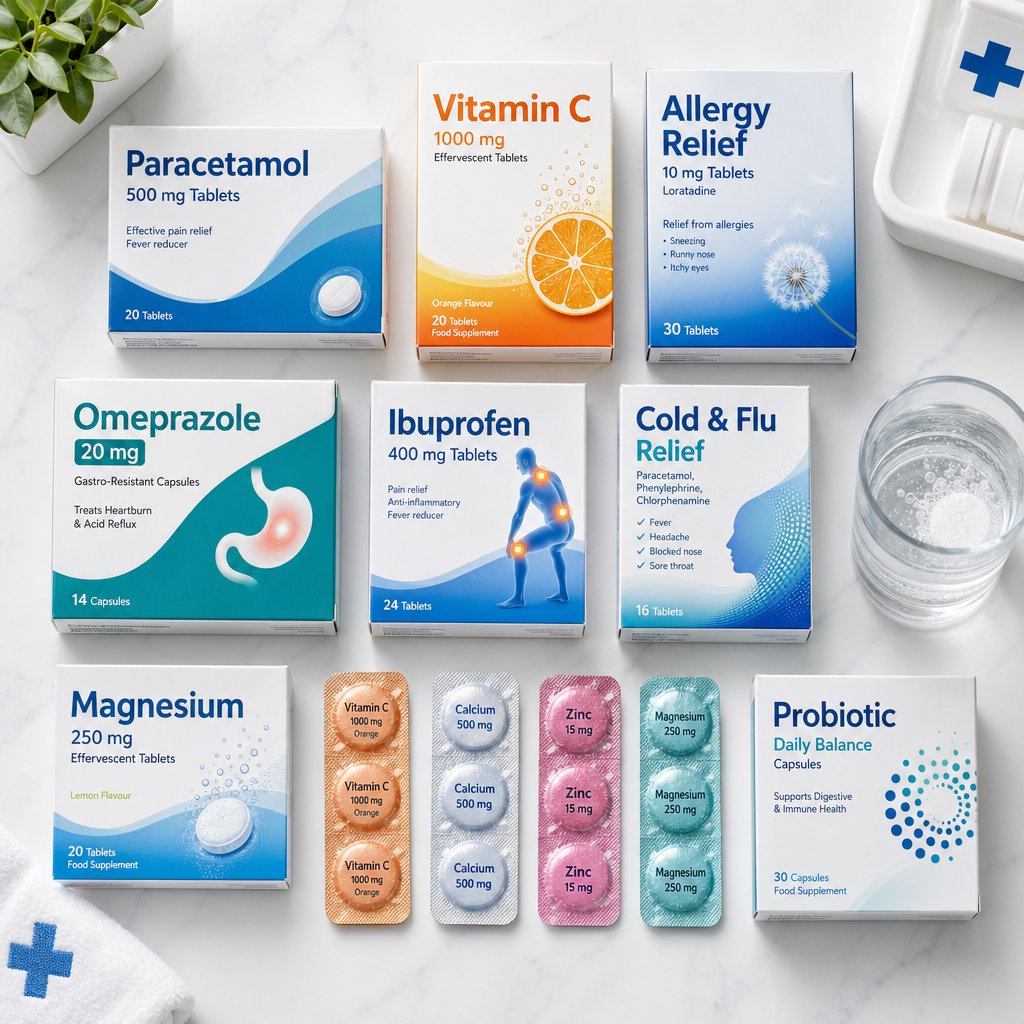
The Alka-Seltzer brand is not a single product. It is an entire family of formulations, each built around a different combination of active ingredients. Picking the wrong one means you could be taking aspirin when you do not need it, missing a decongestant when you do, or loading up on sodium without realizing it. The table below puts every major variant in one place so you can match the right product to your specific symptoms.
| Variant Name | Active Ingredients | Primary Use | Contains Aspirin? | Key Differentiator |
|---|---|---|---|---|
| Alka-Seltzer Original | Aspirin (325 mg), sodium bicarbonate (1,916 mg), anhydrous citric acid (1,000 mg) | Heartburn, acid indigestion, headache, body aches | Yes | The classic dual-action formula combining antacid + pain reliever in one effervescent tablet |
| Alka-Seltzer Extra Strength | Aspirin (500 mg), sodium bicarbonate (1,985 mg), anhydrous citric acid (1,000 mg) | Heartburn with stronger pain relief | Yes | Higher aspirin dose (500 mg vs. 325 mg) for more intense headache or body ache relief |
| Alka-Seltzer Gold | Anhydrous citric acid (1,000 mg), potassium bicarbonate (344 mg), sodium bicarbonate (1,050 mg) | Heartburn, acid indigestion, sour stomach | No | Aspirin-free; pure antacid formula safe for people who cannot take NSAIDs |
| Alka-Seltzer Heartburn Relief (Lemon Lime) | Anhydrous citric acid (1,000 mg), sodium bicarbonate (1,940 mg) | Heartburn and acid indigestion | No | Aspirin-free effervescent antacid with a flavored option; focused purely on stomach acid relief |
| Alka-Seltzer Plus Severe Cold & Flu | Acetaminophen (250 mg), chlorpheniramine maleate (2 mg), dextromethorphan HBr (10 mg), phenylephrine HCl (5 mg) | Cold and flu symptoms: fever, body aches, cough, congestion, runny nose | No | Uses acetaminophen instead of aspirin; adds antihistamine, cough suppressant, and nasal decongestant |
Original and Extra Strength for Everyday Relief
Alka-Seltzer Original is the product most people picture when they hear the brand name. It pairs aspirin with sodium bicarbonate in an effervescent tablet designed for the overlap between stomach discomfort and pain. If you are dealing with alka seltzer heartburn relief alongside a headache or mild body aches, this is the variant built for that exact scenario.
The Alka-Seltzer Extra Strength version bumps the aspirin from 325 mg to 500 mg per tablet. That higher dose targets more stubborn pain while still delivering the same antacid benefit. Keep in mind that two extra strength tablets means 1,000 mg of aspirin per dose, which is a significant amount. If you are sensitive to aspirin or already taking other pain relievers, the original strength may be the safer starting point.
Alka-Seltzer Gold Without Aspirin
This is the variant that changes the conversation for a large group of consumers. Alka-Seltzer Gold contains no aspirin at all. Its active ingredients are citric acid, potassium bicarbonate, and sodium bicarbonate, all classified as antacids. The product label explicitly states: "this product does not contain aspirin."
Why does that matter? If you take blood thinners, have a history of stomach ulcers, are allergic to aspirin, or need to avoid NSAIDs for any reason, Alka-Seltzer Gold gives you the effervescent antacid experience without the risks tied to aspirin. It is also the only variant in the classic effervescent line that children under 12 can use (1 tablet every 4 hours, as directed by a doctor), since the Reye's syndrome concern is linked specifically to aspirin. Each Gold tablet contains 309 mg of sodium and 135 mg of potassium, so people on sodium- or potassium-restricted diets should still consult a healthcare provider before use.
Plus Cold and Flu Formulations
The Alka-Seltzer Plus line is a completely different product category. These are not antacids. They are multi-symptom cold and flu remedies that happen to use the same effervescent delivery format. The Alka-Seltzer Plus Severe Cold & Flu effervescent tablets, for example, contain acetaminophen (pain reliever/fever reducer), chlorpheniramine maleate (antihistamine for runny nose and sneezing), dextromethorphan HBr (cough suppressant), and phenylephrine HCl (nasal decongestant).
Notice what is missing: there is no aspirin and no sodium bicarbonate antacid. The alka seltzer cold and flu line swaps the entire ingredient profile to target respiratory and flu symptoms instead of digestive ones. That means reaching for an Alka-Seltzer Plus product when you have heartburn will not help, and taking the Original when you have a stuffy nose and cough will not address those symptoms either.
The Plus lineup also comes in liquid gels, chewable FizzyChews, and hot drink mix-in packets, giving you format options beyond the classic effervescent tablet. Each sub-variant targets a slightly different symptom combination, from sinus congestion and pain to cough with chest congestion. The brand's product page lists over 20 distinct Alka-Seltzer Plus products, so reading the active ingredients on the box is essential every time you buy one.
The bottom line: the name on the box may say Alka-Seltzer across the entire lineup, but the formulas inside vary dramatically. Choosing the right variant starts with identifying your symptoms first, then checking the active ingredients to confirm the product actually targets them. That careful matching becomes even more important when you factor in how to take these tablets correctly and what the dosage limits look like.
How to Take Alka-Seltzer Tablets the Right Way
Matching the right variant to your symptoms is only half the equation. Taking the product incorrectly can reduce its effectiveness or, worse, put you at unnecessary risk. Alka-Seltzer tablets are not swallowed like a regular pill, and the dosing rules are stricter than many people assume. Whether you are a first-time user or someone who has been dropping tablets into a glass for years, a quick review of the proper method is worth your time.
Step-by-Step Dissolving Instructions
The process is simple, but each step matters. Here is how to take an alka-seltzer tablet correctly from start to finish:
- Fill a glass with about 4 ounces of water. That is roughly half a standard drinking glass. Room temperature or cool water works best. You do not need a full glass, just enough liquid for the tablets to dissolve completely.
- Drop 2 tablets into the water. The standard adult dose for Alka-Seltzer Original is 2 tablets per dose. Place both tablets in the glass at the same time.
- Wait for the tablets to dissolve fully. You will see vigorous fizzing as the citric acid and sodium bicarbonate react. Do not drink the solution until the fizzing has stopped and the tablets have completely dissolved. Drinking too early means you may leave undissolved medication at the bottom of the glass.
- Drink the entire solution. Once the liquid is clear and the fizzing has settled, drink it all. The active ingredients are evenly distributed throughout the solution, so leaving liquid behind means leaving medicine behind.
A few practical notes that trip people up: do not chew or swallow Alka-Seltzer pills whole. They are specifically designed to dissolve in water first. Swallowing them dry defeats the effervescent delivery mechanism and can cause throat or stomach irritation from the concentrated citric acid and sodium bicarbonate reacting in your digestive tract instead of in a glass. Also, if a tablet does not fizz when it hits water, do not use it. A tablet that has lost its effervescence may have been exposed to moisture or is past its expiration date, and its potency cannot be guaranteed. Always store alka seltzer tabs at room temperature and avoid excessive heat to preserve their effectiveness.
Dosage Limits and Timing Between Doses
How many Alka-Seltzer per day can you safely take? The answer depends on your age, and the limits are firm. Here is the dosing breakdown based on the official product labeling:
| Age Group | Dose | Frequency | Maximum in 24 Hours |
|---|---|---|---|
| Adults and children 12 years and over | 2 tablets dissolved in 4 oz of water | Every 4 hours, as needed | 8 tablets (4 doses) |
| Adults 60 years and over | 2 tablets dissolved in 4 oz of water | Every 4 hours, as needed | 4 tablets (2 doses) |
| Children under 12 years | Do not use | Consult a doctor | N/A |
Notice the significant difference for adults 60 and over. Their maximum daily limit is cut in half, from 8 tablets down to 4. This reduced ceiling reflects the higher risk of stomach bleeding associated with aspirin use in older adults, a risk the FDA-approved labeling highlights explicitly. Children under 12 should not use the Original formula at all due to the aspirin content and the associated risk of Reye's syndrome.
How often do you take Alka-Seltzer Plus products? The timing varies by formulation. The Original effervescent follows the every-4-hours schedule above, but the Plus Cold and Flu line may use different intervals, such as every 4 or 6 hours depending on the specific product. Always check the box for the variant you are using rather than assuming the same rules apply across the entire brand.
Do not exceed 8 tablets in 24 hours for adults under 60, or 4 tablets in 24 hours for adults 60 and over. Exceeding the recommended dosage increases the risk of serious side effects, including stomach bleeding.
One more thing worth remembering: Alka-Seltzer is meant for short-term, occasional use. If you find yourself reaching for it daily or your symptoms persist beyond 10 days, that is a signal to consult a healthcare provider rather than increase the dose. The dosing limits keep you safe for temporary relief, but they are not designed to support ongoing, repeated use, and the safety risks that come with exceeding them deserve a closer look.
Safety Warnings, Side Effects, and Who Should Avoid It
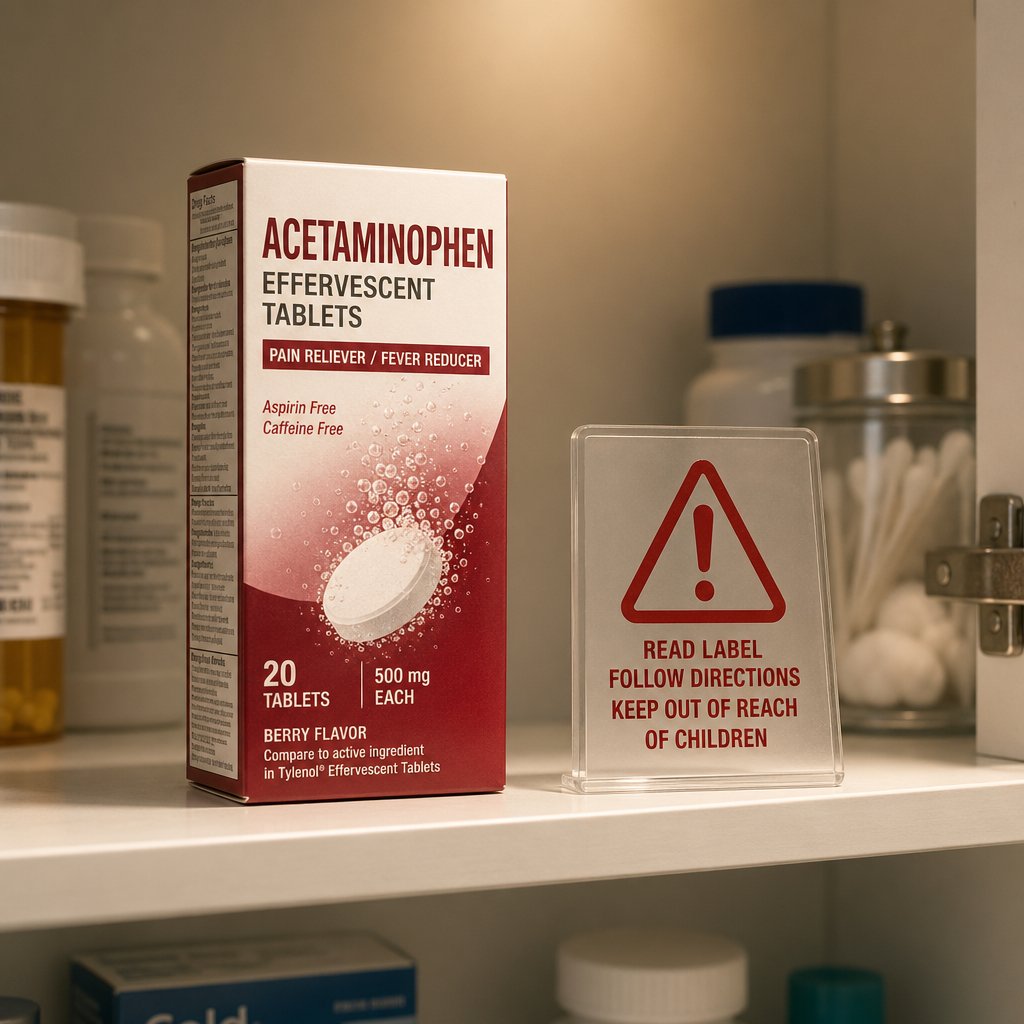
Dosing limits exist for a reason, and the reasons go beyond a simple upset stomach. Because the Original formula contains aspirin, the safety profile is more complex than most people expect from an over-the-counter product. So is Alka-Seltzer bad for you? Not inherently, but for certain groups of people, it carries risks that range from uncomfortable to genuinely dangerous. Here is everything you need to know before your next dose.
Who Should Not Take Alka-Seltzer
Does Alka-Seltzer contain aspirin? Yes, the Original and Extra Strength formulas both do. That single fact drives most of the safety concerns below. The following groups should avoid Alka-Seltzer Original unless a healthcare provider specifically says otherwise:
- Children and teenagers under 12. Aspirin-containing products are linked to Reye's syndrome, a rare but serious condition that causes swelling in the liver and brain. It typically develops after a viral infection like the flu or chickenpox. The Mayo Clinic warns that aspirin should not be given to children or teenagers recovering from viral illnesses, and notes that aspirin can appear in unexpected products, including Alka-Seltzer.
- People with aspirin or NSAID allergies. If you have experienced hives, facial swelling, wheezing, or asthma attacks after taking aspirin, ibuprofen, or naproxen, Alka-Seltzer Original is off the table. Allergic reactions to one NSAID often extend to others.
- Pregnant women, especially in the third trimester. Can you take Alka-Seltzer while pregnant? The product labeling is clear: do not take it during the third trimester of pregnancy. Aspirin use late in pregnancy can cause complications for both the mother and the baby, including problems with labor and excessive bleeding. Earlier in pregnancy, the decision should involve your doctor.
- People who take blood thinners. Aspirin inhibits platelet function, which means it reduces your blood's ability to clot. Combining it with prescription anticoagulants like warfarin, apixaban, or clopidogrel significantly raises the risk of serious or uncontrollable bleeding.
- Adults over 60. Older adults face a higher risk of stomach ulcers and gastrointestinal bleeding from aspirin. The official side effect information notes that this risk increases with age, prior history of stomach problems, and concurrent use of other medications.
- Anyone with active stomach ulcers or a history of GI bleeding. Aspirin can irritate the stomach lining and worsen existing ulcers, potentially causing bleeding that may occur without warning signs.
- People on sodium-restricted diets or managing hypertension, heart failure, or kidney disease. The sodium bicarbonate in each tablet delivers a significant sodium load that can affect blood pressure and fluid retention.
Drug Interactions and the Hidden Aspirin Risk
The biggest safety gap is not the product itself. It is the fact that many people do not realize does Alka-Seltzer have aspirin in it. That lack of awareness leads to accidental "stacking," where someone takes Alka-Seltzer for heartburn and then pops an ibuprofen for a headache an hour later, unknowingly doubling up on NSAIDs.
Alka-Seltzer's aspirin component interacts with a long list of medications. According to Drugs.com, the sodium bicarbonate in the formula can also interfere with the absorption of other drugs if taken too close together. Specific timing rules apply to antibiotics like ciprofloxacin (at least 6 hours apart), antifungals like ketoconazole (at least 3 hours apart), and tetracycline antibiotics (at least 3 to 4 hours apart). As a general rule, take Alka-Seltzer at least 1 to 2 hours before or after any other oral medication.
Always consult a healthcare provider before combining Alka-Seltzer with prescription medications, especially blood thinners, other NSAIDs, diabetes drugs, or gout treatments.
Common alka seltzer side effects at normal doses are generally mild: nausea, vomiting, mild stomach pain, heartburn, and increased thirst. These often resolve on their own. However, serious side effects, though rare with occasional use, include bloody or black tarry stools, vomiting blood or material resembling coffee grounds, ringing in the ears, confusion, and signs of an allergic reaction like swelling of the face, lips, or throat. Any of these warrant immediate medical attention.
Sodium Content and Blood Pressure Concerns
This risk flies under the radar because people associate sodium with food, not medicine. Each Original tablet contains 567 mg of sodium. A standard two-tablet dose delivers over 1,100 mg, which is nearly half the American Heart Association's recommended daily limit of 2,300 mg. For someone already consuming a typical American diet, adding Alka-Seltzer can easily push total sodium intake well past safe thresholds.
Excess sodium causes the body to retain water, which increases blood volume and raises blood pressure. For people already managing hypertension, heart failure, or chronic kidney disease, that extra sodium load is not trivial. Even the product label advises asking a doctor before use if you are on a sodium-restricted diet. If you need an effervescent antacid but want to limit sodium exposure, Alka-Seltzer Gold uses a lower sodium bicarbonate dose (1,050 mg per tablet versus 1,916 mg) and adds potassium bicarbonate instead, though it still contains meaningful sodium.
None of these risks mean the product is unsafe for everyone. For a healthy adult using it occasionally and within the recommended dosage, Alka-Seltzer remains an effective option. The danger lies in assumptions: assuming it is just an antacid, assuming it is safe to combine with anything, or assuming the sodium content does not matter. Knowing exactly what you are taking, and what it interacts with, is what separates safe use from an avoidable trip to the emergency room. That same awareness helps when deciding whether Alka-Seltzer is the best choice compared to other OTC options sitting on the same pharmacy shelf.
Alka-Seltzer vs Other OTC Remedies and When to Choose Each
Knowing the risks of any single product is important, but it only tells half the story. The real decision happens when you are standing in the pharmacy aisle staring at a shelf full of options. Is Alka-Seltzer an antacid, a pain reliever, or both? And when does a different over the counter heartburn medicine or pain reliever make more sense?
The answer depends entirely on your symptoms. The table below puts five of the most common OTC choices side by side so you can compare them at a glance.
| Product | Active Ingredient | Best For | Contains Aspirin? | Antacid Effect | Pain Relief | Key Limitation |
|---|---|---|---|---|---|---|
| Alka-Seltzer Original | Aspirin, sodium bicarbonate, citric acid | Heartburn + headache or body aches at the same time | Yes | Yes | Yes | High sodium content; aspirin risks for certain groups |
| Tums | Calcium carbonate | Occasional heartburn and acid indigestion | No | Yes | No | No pain relief; can cause constipation and gas with repeated use |
| Pepto-Bismol | Bismuth subsalicylate | Nausea, diarrhea, upset stomach, heartburn | No (but contains a salicylate) | Mild | No | Not for children under 12; can turn tongue and stool black |
| Ibuprofen (Advil, Motrin) | Ibuprofen | Pain with inflammation: sprains, muscle aches, menstrual cramps | No | No | Yes | Can cause GI bleeding and kidney issues; not for people on blood thinners |
| Acetaminophen (Tylenol) | Acetaminophen | Headaches, mild pain, fever | No | No | Yes | No anti-inflammatory effect; risk of liver damage if overused |
Alka-Seltzer vs Tums and Pepto-Bismol
If your only symptom is heartburn, a pure antacid like Tums handles the job without exposing you to aspirin or excess sodium. Tums neutralizes stomach acid quickly, typically within 20 minutes, and its calcium carbonate base is straightforward. The trade-off is that it offers zero pain relief. So if heartburn hits alongside a pounding headache, Tums only solves half the problem.
Pepto-Bismol covers a wider range of digestive symptoms. It targets nausea, diarrhea, heartburn, and general stomach upset, making it a versatile choice when your gut is acting up in multiple ways. However, it does not address headaches or body aches, and its active ingredient, bismuth subsalicylate, is chemically related to aspirin. That means it carries its own Reye's syndrome risk for children under 12 and should be used cautiously by anyone sensitive to salicylates.
The heartburn Alka-Seltzer advantage is that dual-action formula: antacid plus pain reliever in a single fast-absorbing drink. No other product in this comparison does both. But if you do not need pain relief, you are taking on aspirin's risks for no added benefit.
When a Standard Pain Reliever Is the Better Choice
Imagine you have a headache but your stomach feels fine. Reaching for the Alka-Seltzer antacid combo in that scenario means ingesting sodium bicarbonate and over 1,100 mg of sodium you do not need. A standard pain reliever is the cleaner option.
Ibuprofen is the stronger pick when inflammation is involved, such as a sprained ankle, sore muscles, or menstrual cramps. It works on the same COX enzyme pathway as aspirin but does not come bundled with an antacid or sodium load. Acetaminophen is the gentler alternative for tension headaches, mild pain, and fever. It is easier on the stomach and safer for people who cannot tolerate NSAIDs, though it carries a liver toxicity risk if taken in excess.
For people managing GERD, the picture shifts again. Using Alka-Seltzer for acid reflux on occasion may provide temporary relief, but GERD requires more sustained acid suppression. H2 blockers like famotidine or proton pump inhibitors (PPIs) like omeprazole are considered first-choice treatments for GERD because they reduce acid production over hours rather than simply neutralizing what is already there. A GERD Alka-Seltzer approach works in a pinch, but it is not a substitute for medications designed to manage chronic reflux under a doctor's guidance.
Matching the Right OTC Product to Your Symptoms
The simplest decision framework is this: identify your symptoms first, then pick the product that targets them without adding ingredients you do not need. Heartburn alone? Tums or an H2 blocker. Nausea and diarrhea? Pepto-Bismol. Pain without stomach issues? Ibuprofen or acetaminophen. Heartburn and a headache hitting at the same time? That is where Alka-Seltzer Original earns its place.
Over the counter gas relievers like simethicone-based products (Gas-X) or combination antacids like Mylanta fill yet another niche, targeting bloating and gas pressure specifically. Even effervescent antacid brands popular in other markets, such as Eno antacid, follow the same principle: match the active ingredient to the symptom.
Defaulting to one product for everything is where mistakes happen. Each of these remedies has a specific strength and a clear limitation. The comparison also reveals why so many misconceptions surround Alka-Seltzer in particular, because its dual-action formula blurs the line between antacid and pain reliever in ways that most people never stop to think about.
Common Misconceptions and the Bigger Picture of Effervescent Health Products
That blurred line between antacid and pain reliever is exactly where most of the confusion starts. Alka-Seltzer has been around since 1931, and nearly a century of familiarity has bred a surprising number of assumptions that simply are not true. Some are harmless. Others can lead to real safety problems. Let's clear them up, then zoom out to look at where the effervescent format is headed beyond the medicine cabinet.
Five Myths About Alka-Seltzer Debunked
If you have ever repeated any of the following, you are not alone. These are among the most common misconceptions about what is the Alka-Seltzer and what is Alka-Seltzer for.
- Myth 1: Alka-Seltzer is just an antacid. This is the single most widespread misunderstanding. The Original formula contains 325 mg of aspirin per tablet, a full-dose NSAID that relieves pain and reduces inflammation. Treating it as a simple stomach soother ignores the aspirin entirely, which means ignoring its drug interactions, bleeding risks, and contraindications. If you only need an antacid, products like Tums or Alka-Seltzer Gold are designed for that purpose without the aspirin component.
- Myth 2: All Alka-Seltzer products contain aspirin. They do not. Alka-Seltzer Gold is an aspirin-free effervescent antacid, and the entire Plus Cold and Flu line uses acetaminophen instead. Assuming every box on the shelf contains aspirin, or assuming none of them do, leads to dosing mistakes. Always check the active ingredients panel on the specific product you are buying.
- Myth 3: It is safe for children. The Original formula is not recommended for children under 12. Aspirin use in children recovering from viral infections like the flu or chickenpox is associated with Reye's syndrome, a rare but potentially fatal condition affecting the brain and liver. This risk is serious enough that the FDA requires a warning on every aspirin-containing OTC product. Parents who remember the "plop, plop, fizz, fizz" jingle from their own childhood may not realize the product was never intended for kids.
- Myth 4: More fizz means it is working better. The fizzing is the delivery mechanism, not the medicine itself. Those bubbles are carbon dioxide gas produced by the reaction between citric acid and sodium bicarbonate. A vigorous fizz simply means the chemical reaction is proceeding normally. A tablet that fizzes less aggressively in cold water is not weaker; the reaction just runs slower at lower temperatures. The therapeutic effect comes from the dissolved aspirin and bicarbonate in the solution, not from the intensity of the bubbles.
- Myth 5: It is a good daily preventive for heartburn. Alka-Seltzer is formulated for occasional, short-term use. Taking it daily exposes you to repeated doses of aspirin and significant sodium intake, both of which carry cumulative risks. The product labeling advises that adults should not use it for more than 10 consecutive days, and older adults should limit use to 5 days, without consulting a doctor. Chronic heartburn occurring two or more times per week may indicate GERD or another condition that requires evaluation and a different treatment strategy altogether.
A related misconception worth addressing: the idea that Alka-Seltzer and hangovers are a perfect match. The product can ease hangover symptoms, specifically the headache (via aspirin) and the stomach acid irritation (via sodium bicarbonate). But Alka-Seltzer hangover relief is symptomatic, not curative. It does not rehydrate you, replenish lost electrolytes, or speed up alcohol metabolism. Pairing it with water and rest is far more effective than relying on the tablet alone, and people who take blood thinners or have sensitive stomachs should avoid the aspirin-containing formula even when hungover.
The Growing Demand for Effervescent Health Products
Here is what is interesting about all five of those myths: they exist partly because Alka-Seltzer made the effervescent tablet format so iconic that people stopped questioning what was actually inside. The fizz became the brand. And that same fizz has now spread far beyond heartburn and headache relief into an entirely different industry.
The global effervescent tablet market is experiencing substantial growth. According to a Technavio market report, the market is projected to grow by USD 4.80 billion between 2024 and 2028, expanding at a compound annual growth rate of 8.36%. Separate research from Zion Market Research valued the market at USD 6.45 billion in 2024 and projects it to reach approximately USD 11.59 billion by 2034. The drivers are straightforward: consumers prefer fast-acting, easy-to-consume formats, and an estimated 40 percent of US adults have difficulty swallowing traditional pills.
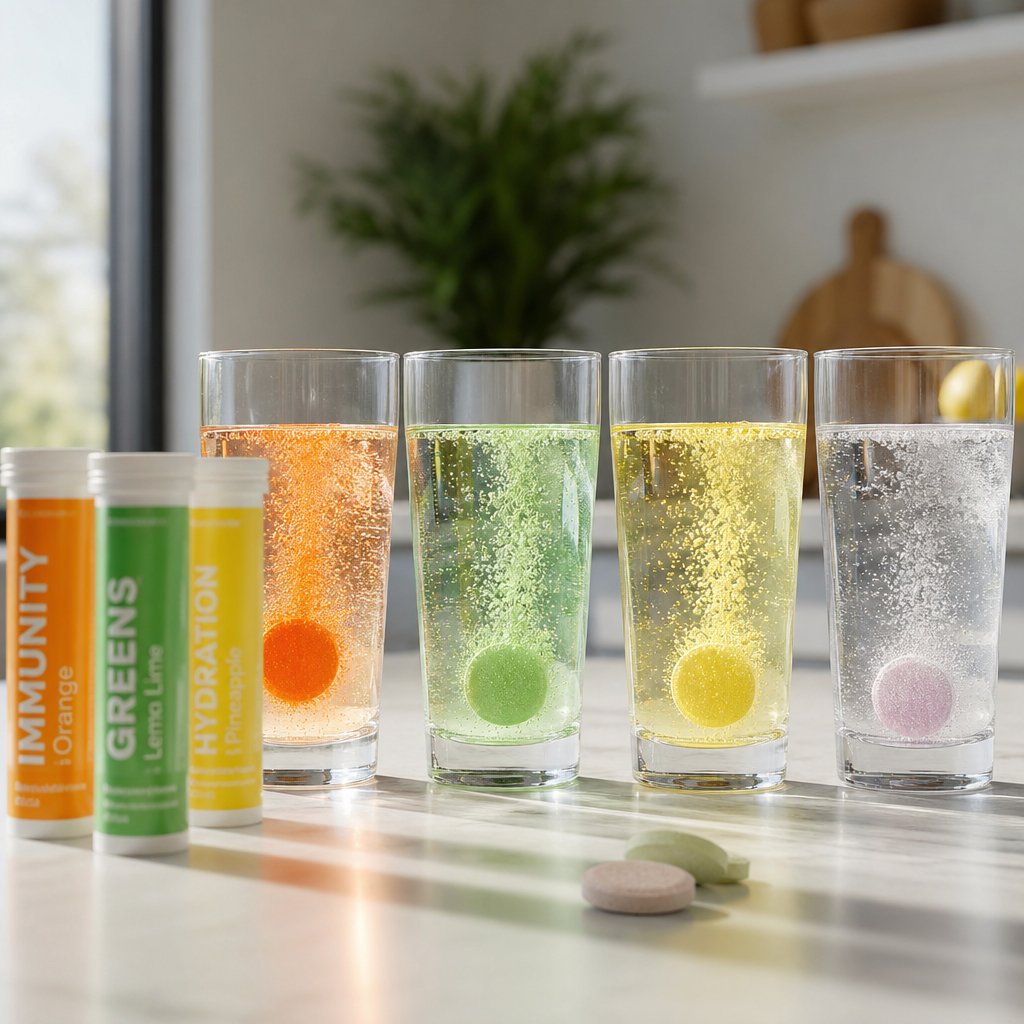
That consumer preference has created a wave of demand that extends well beyond pharmaceuticals. Effervescent vitamins, electrolyte hydration tablets, collagen supplements, immune support formulas, and functional wellness drinks now use the same dissolve-in-water delivery that Alka-Seltzer popularized decades ago. Nutrition brands, supplement importers, and private label sellers increasingly see effervescent tablets as a way to differentiate their product lines and meet consumer expectations for convenience and rapid absorption.
For businesses looking to enter this space, the manufacturing side is where complexity lives. Effervescent tablet production requires specialized equipment, precise moisture control during processing, and careful formulation to ensure stability and consistent fizz. That is why many brands turn to OEM/ODM manufacturers who already have the infrastructure and expertise in place. Companies like ZhuFeng, for example, offer scalable production of effervescent tablets alongside other health product formats such as powder and granules, hard capsules, and oral liquids, with customized formulations tailored to each client's target market. For nutrition brands and functional food businesses that want to bring a market-ready effervescent product to consumers without building a production facility from scratch, that kind of full-service OEM/ODM partnership can significantly shorten the path from concept to shelf.
The format Alka-Seltzer made famous is no longer just about relieving a headache after a big meal. It has become a delivery platform that shapes how millions of people take their daily vitamins, recover after workouts, and manage their wellness routines. Whether you are a consumer choosing the right effervescent product for your symptoms or a brand exploring the format for your next product launch, the principle stays the same: understand what is inside the tablet, not just the fizz around it.
Frequently Asked Questions About Alka-Seltzer Tablets
1. Does Alka-Seltzer contain aspirin?
Yes, the Original and Extra Strength formulas contain aspirin (325 mg and 500 mg per tablet, respectively). This means a standard two-tablet dose delivers 650 mg to 1,000 mg of aspirin. However, not all products in the Alka-Seltzer lineup include aspirin. Alka-Seltzer Gold is an aspirin-free effervescent antacid, and the Plus Cold and Flu line uses acetaminophen instead. Always check the active ingredients panel on the specific product you purchase to confirm whether aspirin is present, especially if you take blood thinners or other NSAIDs.
2. Can you take Alka-Seltzer on an empty stomach?
Yes, you can take Alka-Seltzer on an empty stomach. Many people use it between meals when heartburn strikes. Because the tablet dissolves in water before you drink it, the buffered solution is generally gentler on the stomach lining than swallowing a dry aspirin pill. However, the aspirin component can still cause irritation with repeated use, so occasional use is recommended. If you experience stomach discomfort after taking it, try having a small snack beforehand or consider an aspirin-free alternative like Alka-Seltzer Gold.
3. How quickly does Alka-Seltzer start working?
Many users report feeling relief within minutes of finishing the dissolved solution. This speed advantage comes from the effervescent delivery mechanism. Because the active ingredients are already fully dissolved in water before you drink them, your body can absorb them faster than a conventional solid pill that must first disintegrate in your stomach. The sodium bicarbonate neutralizes stomach acid almost immediately on contact, while the dissolved aspirin begins addressing pain and inflammation shortly after absorption.
4. Is Alka-Seltzer safe for children?
No, the Original and Extra Strength formulas should not be given to children under 12. These products contain aspirin, which is linked to Reye's syndrome, a rare but potentially fatal condition affecting the brain and liver that can develop after viral infections like the flu or chickenpox. The only classic effervescent variant that children under 12 may use is Alka-Seltzer Gold (aspirin-free), and only as directed by a doctor. For the Plus Cold and Flu line, age restrictions vary by product, so always read the label carefully.
5. What is the difference between Alka-Seltzer Original and Alka-Seltzer Gold?
The key difference is aspirin. Alka-Seltzer Original contains aspirin (325 mg per tablet), sodium bicarbonate, and citric acid, making it both an antacid and a pain reliever. Alka-Seltzer Gold contains no aspirin at all. Its active ingredients are citric acid, potassium bicarbonate, and sodium bicarbonate, all functioning purely as antacids. Gold is the appropriate choice for people who need to avoid NSAIDs, take blood thinners, have aspirin allergies, or need an effervescent antacid for children under 12 (with doctor guidance). Gold also has a lower sodium content per tablet (309 mg vs. 567 mg).