Is Onion Powder Gluten Free and Safe for Celiac Diets
You grabbed a jar of onion powder off the shelf, flipped it over, and now you're wondering: does onion powder have gluten? The quick answer might surprise you with how simple it is.
The Short Answer About Onion Powder and Gluten
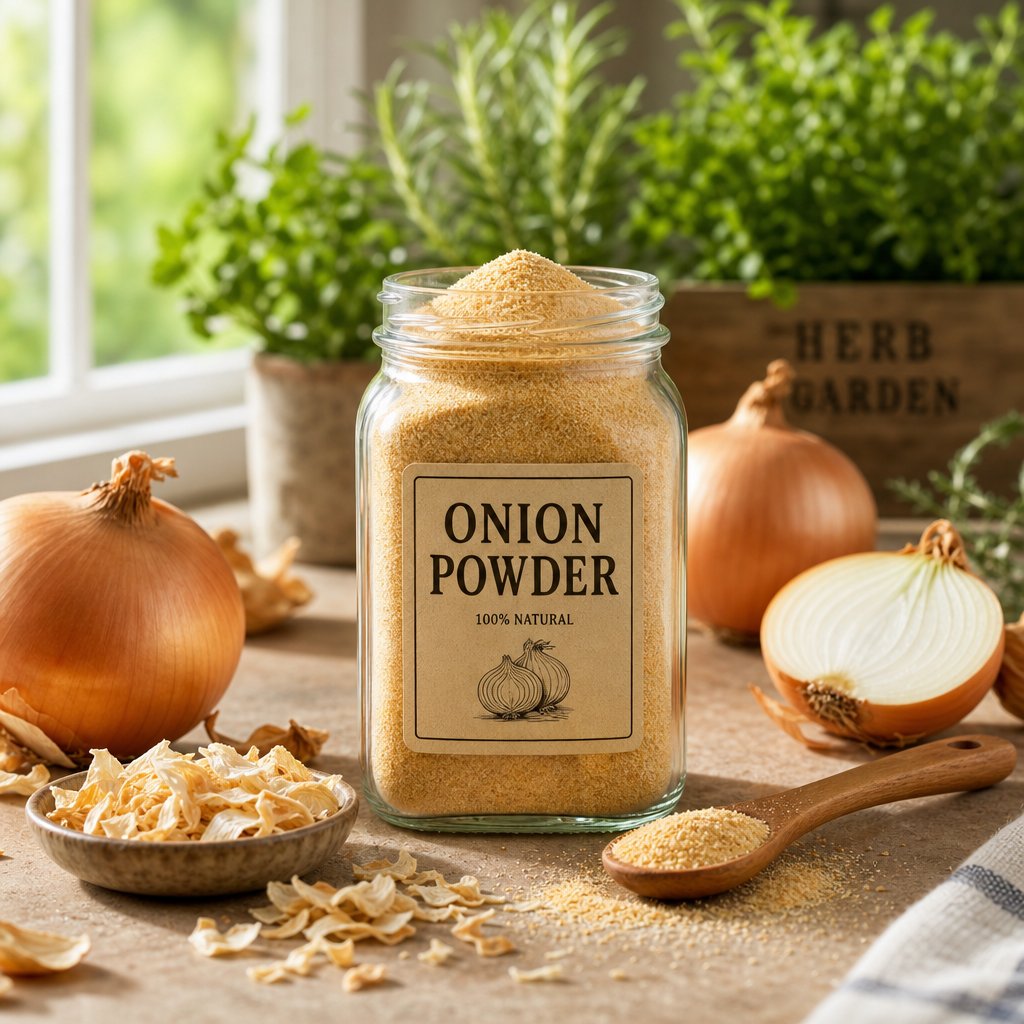
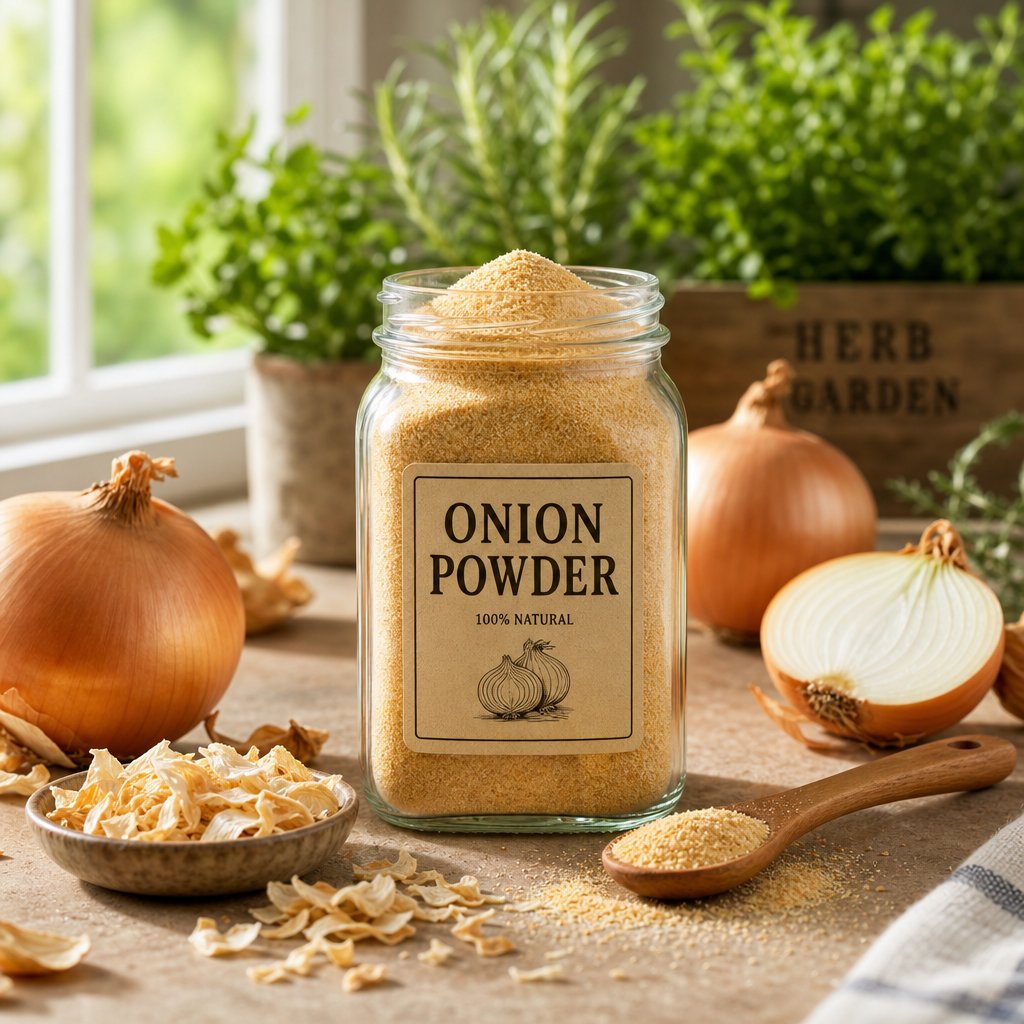
Pure onion powder is naturally gluten free. Onions are a vegetable, and vegetables contain zero gluten-forming proteins. Gluten only exists in specific grains like wheat, barley, and rye. Since onion powder in its simplest form is nothing more than dehydrated onion ground into a fine consistency, there is no biological mechanism for gluten to be present in the ingredient itself. Are onions gluten free? Absolutely, in every form from raw bulb to dried flake to powdered spice.
Single-ingredient onion powder listing only "onion" or "dehydrated onion" on the label is inherently gluten free and safe for celiac diets.
This fact is supported by Beyond Celiac, which confirms that raw, single-ingredient spices made from plants are gluten free. Onion powder falls squarely into that category.
Why the Full Picture Matters for Celiac Safety
Here's where it gets more nuanced. While gluten free onion powder exists as a straightforward concept, the product sitting in your pantry may tell a different story. The real risks come from what happens between the onion field and your spice rack: shared manufacturing equipment, anti-caking additives, and seasoning blends that use onion powder alongside questionable fillers.
A Canadian Food Inspection Agency survey found that 26% of ground spice and herb samples contained at least one undeclared allergen or gluten. That statistic alone explains why a simple yes-or-no answer isn't enough for anyone managing celiac disease or gluten sensitivity.
Whether your onion powder is truly safe depends on three factors: is it a pure single-ingredient product or part of a blend, what facility produced it, and does the label carry any allergen warnings? The sections ahead break down each of these variables so you can confidently evaluate any onion powder product you encounter, from major grocery brands to bulk-bin options you should avoid entirely.
How Onion Powder Is Made and Why the Process Matters
Knowing that onions themselves are gluten free is one thing. Understanding what actually happens during production gives you a much clearer picture of where risk enters, or doesn't. When you trace the journey from a fresh onion bulb to the fine powder in your spice jar, you'll notice something important: no grain touches the product at any stage of a standard manufacturing process.
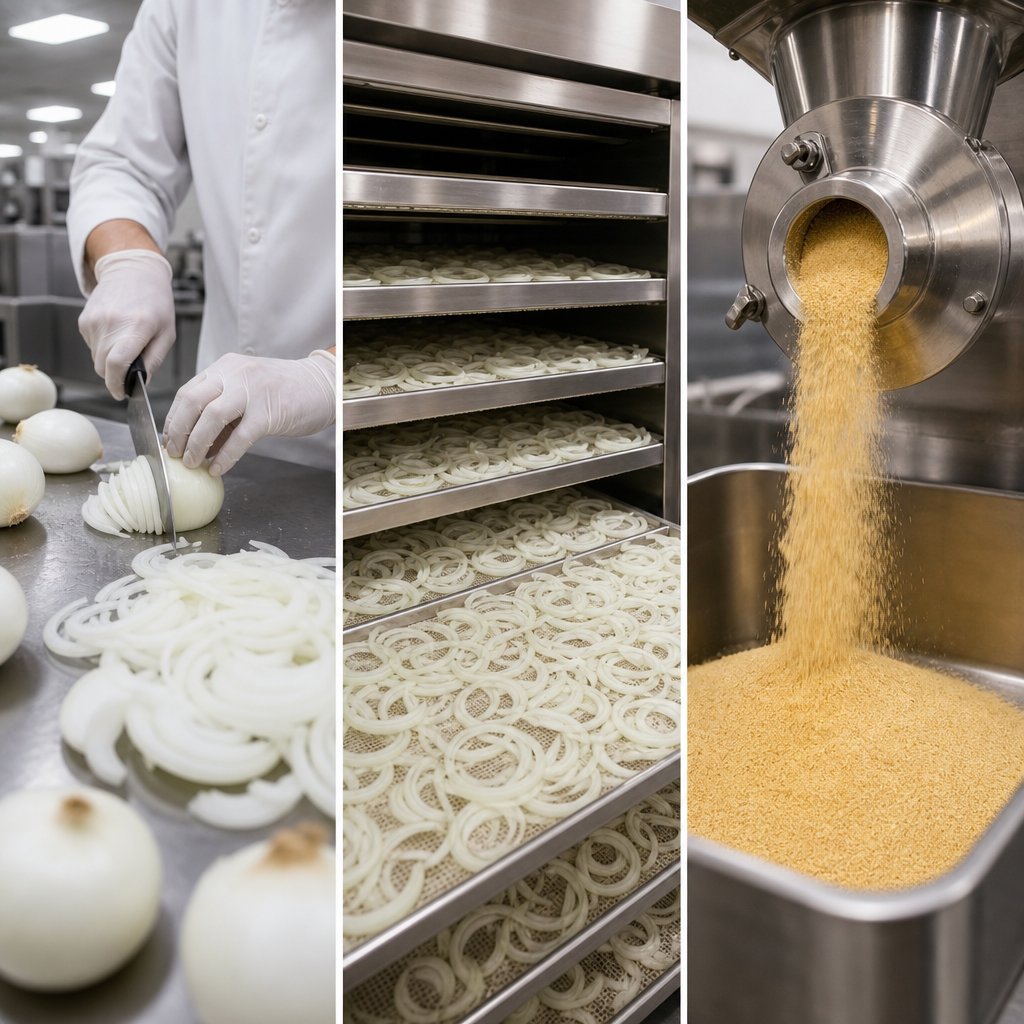
From Fresh Onion to Powder in Three Steps
Commercial onion powder production follows a straightforward sequence. Whether a manufacturer processes red, white, or pink onion varieties, the core steps remain consistent across the industry.
- Selection, peeling, and slicing. Fresh onions are inspected for quality, washed to remove dirt and impurities, peeled, and then cut into thin, uniform slices or flakes. Consistency in thickness matters here because it ensures even drying in the next stage.
- Dehydration at controlled temperatures. The sliced onions enter industrial drying equipment where temperatures are maintained between 50-70°C for 8-10 hours. This low-heat process evaporates moisture without cooking the onion, preserving its pungent aroma and flavor while extending shelf life significantly. The result is crisp, dry onion flakes.
- Grinding into fine powder. Once fully dehydrated, the onion flakes pass through a pulverizer that crushes them into a smooth, lump-free powder. The finished product is then packaged in airtight containers to prevent moisture reabsorption.
That's it. Three steps, one ingredient. As Mevive International notes about their dehydrated onion production: "We create it from scratch, and there are no preservatives or additives." This reflects standard practice for pure onion powder manufacturers worldwide.
Why the Dehydration Process Is Inherently Gluten Free
Do onions have gluten at any point during this transformation? No. The dehydration and grinding process introduces nothing new to the product. You're simply removing water and reducing particle size. No wheat flour acts as a drying agent. No barley malt serves as a binder. No rye-based ingredient enters the equation. The relationship between spices and gluten is fundamentally about what gets added during or after production, not about the core process itself.
This is why the question "do spices have gluten" has a layered answer. Single-ingredient spices derived from plants, vegetables, seeds, or bark are naturally gluten free. The plant biology hasn't changed just because you dried it and ground it up. Gluten proteins exist exclusively in wheat, barley, rye, and their derivatives. A dehydrator and a grinder cannot create gluten where none existed before.
Industrial-scale production and home dehydration follow the same principle. If you slice onions, dry them in a food dehydrator at home, and pulse them in a spice grinder, you've made gluten free onion powder with zero contamination risk. The difference with commercial production isn't the process itself but the environment surrounding it: what else runs through that same equipment, and what shares floor space in that facility.
This distinction between process and environment is exactly where the conversation shifts. A manufacturing method can be perfectly gluten free on paper while the finished product still picks up trace contamination from neighboring production lines. Do spices contain gluten because of how they're made? Almost never. But they can contain gluten because of where and alongside what they're made.
Pure Onion Powder vs Blends That May Hide Gluten
The environment surrounding production is only half the equation. The other half lives right on the ingredient label, and it comes down to one critical distinction: is your onion powder a single-ingredient product, or is it part of a blend masquerading as simple onion powder?
Single-Ingredient Onion Powder vs Seasoning Blends
Flip over your jar and look at the ingredient list. Pure onion powder should display exactly one item: "onion" or "dehydrated onion." Nothing else. When you see that single word, you're holding a product that is gluten free by nature. The risk profile is minimal, limited only to potential cross-contamination during manufacturing rather than intentional gluten-containing additions.
Seasoning blends tell a very different story. Many products on store shelves contain onion powder as one component among several, and those additional ingredients are where gluten can hide. Think about it: a gluten free chicken seasoning you trust might list onion powder alongside garlic, paprika, and salt. That's fine. But another brand's version of the same product might sneak in wheat starch, modified food starch of unspecified origin, or maltodextrin derived from wheat.
The same logic applies to any multi-ingredient spice product. A gluten free italian seasoning blend made from pure dried herbs like basil, oregano, and thyme carries almost no gluten risk. But a cheaper version might bulk up the blend with fillers that introduce contamination. The number of ingredients on the label directly correlates with the number of potential gluten entry points.
Here's a practical comparison of what you'll encounter on store shelves:
| Product Type | Typical Ingredients | Gluten Risk Level | What to Watch For |
|---|---|---|---|
| Pure onion powder | Dehydrated onion | Very low | Cross-contamination only |
| Onion salt | Salt, dehydrated onion, silicon dioxide | Low | Check anti-caking agent source |
| Onion soup mix | Onion, salt, cornstarch, sugar, caramel color, natural flavors | Moderate | "Natural flavors" may contain gluten carriers |
| All-purpose seasoning with onion | Salt, spices, onion, garlic, wheat starch, maltodextrin | High | Wheat starch is a direct gluten source |
| Breading/coating mixes | Wheat flour, onion powder, garlic powder, spices | Not gluten free | Wheat flour listed as primary ingredient |
Anti-Caking Agents and Fillers That May Contain Gluten
Even products that seem close to pure onion powder often include anti-caking agents to prevent clumping in humid conditions. Most of these additives are completely safe for gluten free seasonings. Silicon dioxide, calcium silicate, and sodium aluminosilicate are mineral-based compounds with no connection to grain proteins whatsoever.
The problem arises when manufacturers use wheat starch as an anti-caking or flow agent. As Gourmend Foods notes, wheat starch is one of the common gluten sources found specifically in garlic powder and onion powder products. It's inexpensive, effective at preventing clumping, and completely invisible to anyone who doesn't read the fine print.
Maltodextrin is another ingredient that deserves scrutiny. In the United States, most maltodextrin is derived from corn and is gluten free. However, maltodextrin can also be produced from wheat. Under FDA rules, wheat-derived maltodextrin must be declared on the label, but not every manufacturer complies perfectly, and imported products may follow different standards. If you see maltodextrin listed without a source specified, the safest approach for celiac patients is to contact the manufacturer directly or choose a different product.
Other fillers to watch for in gluten free spice mixes and seasoning blends include:
- Modified food starch - safe when corn-based, risky when the source isn't specified
- Hydrolyzed vegetable protein - sometimes derived from wheat
- Dextrin - can be wheat-sourced in some formulations
- "Natural flavors" - an umbrella term that occasionally masks gluten-containing flavor carriers
The takeaway is straightforward. When you're shopping for gluten free seasoning blends or individual spice products, the ingredient list length tells you a lot about risk. A one-ingredient onion powder is almost certainly safe. A fifteen-ingredient seasoning mix containing onion powder requires careful evaluation of every single additive before you can call it safe for a celiac diet.
Knowing which specific ingredients pose a threat is useful, but it raises a bigger question: where else does gluten hide in the spice aisle beyond what's printed on the label?
Hidden Gluten Sources in Spices and Seasonings
The ingredient list only tells part of the story. Gluten in seasonings can come from places you'd never think to check, and some of the most common culprits don't even sound like grain-based ingredients. If you've ever wondered what spices have gluten or what seasonings have gluten, the answer often has less to do with the spice itself and more to do with what's added to it or what shares its production line.
Wheat Starch and Maltodextrin as Hidden Culprits
Wheat starch is the most direct hidden threat. Manufacturers sometimes use it as a flow agent or filler to keep powdered spices from clumping, and it introduces gluten proteins directly into an otherwise safe product. Unlike silicon dioxide or calcium silicate, wheat starch is a grain derivative that contains enough gluten to trigger a reaction in sensitive individuals.
Maltodextrin sits in a grayer area. Most maltodextrin produced in the United States comes from corn, making it safe. But wheat-derived maltodextrin does exist, particularly in imported products. The processing of wheat maltodextrin removes most gluten protein, yet it still raises concern for anyone managing celiac disease at strict thresholds.
Hydrolyzed wheat protein is another ingredient that shows up in seasoning blends as a flavor enhancer. It delivers umami depth, similar to how Maggi seasoning uses hydrolyzed wheat protein as its base. When you see this on a spice label, the product is definitively not gluten free.
Here are the most common hidden gluten sources found in spice products:
- Wheat starch - used as an anti-caking or bulking agent
- Wheat-derived maltodextrin - a filler that may not specify its grain source
- Hydrolyzed wheat protein - added for savory flavor enhancement
- Wheat flour - used as a thickener in seasoning blends and rubs
- Soy sauce powder - typically contains wheat as a fermentation ingredient
- Malt extract or malt flavoring - derived from barley
- Unspecified "natural flavors" - may use gluten-containing carriers or substrates
Do seasonings have gluten by default? No. But any multi-ingredient blend becomes suspect until you've verified every component. Even a product like italian seasoning prompts the question: does italian seasoning have gluten? A pure herb blend of basil, oregano, and thyme won't. But a version with added flavor enhancers or starch-based fillers might.
Cross-Contamination Risks in Shared Facilities
Beyond intentional ingredients, spices with gluten contamination often pick up trace amounts from shared equipment. Many spice manufacturers process dozens of products on the same lines, including flour-based breading mixes, seasoned coating blends, and gravy packets that contain wheat as a primary ingredient.
As Food Safety Magazine details, allergen cross-contamination is a primary chemical risk in spice manufacturing. Facilities must implement dedicated production lines, validated cleaning protocols, and robust allergen control programs to prevent cross-contact. Not every manufacturer invests in these safeguards equally.
Imagine a grinding machine that pulverized a wheat-flour coating mix during the morning shift, then switches to pure onion powder in the afternoon. Even with cleaning between runs, residual flour particles can remain in crevices, hoppers, and conveyor systems. This is how seasonings with gluten contamination reach store shelves despite having clean ingredient lists.
The risk intensifies with smaller manufacturers and store-brand products that may lack the infrastructure for thorough allergen changeover procedures. Facilities processing both wheat-containing products and pure spices on shared equipment represent the highest contamination risk for celiac patients, regardless of what the ingredient panel says.
This gap between what's listed on a label and what actually ends up in the jar is precisely why regulatory standards and third-party certifications exist. They provide the verification layer that ingredient lists alone cannot offer.
FDA Labeling Rules and Gluten-Free Certifications for Spices
Regulatory standards and third-party certifications serve as the safety net between you and a contaminated product. But not all labels carry the same weight, and understanding the differences can mean the difference between confidence and a glutening episode. When you're scanning the spice aisle for gluten free spices, knowing what each seal and claim actually guarantees puts you in control.
FDA Rules and the 20 PPM Threshold
The FDA's gluten-free labeling rule establishes a clear standard: any food product bearing a "gluten-free" claim must contain less than 20 parts per million (ppm) of gluten. This threshold applies to all packaged foods sold in the United States, including spices, seasonings, and onion powder.
Why 20 ppm? This number was originally set as an analytical threshold, meaning it reflected what testing technology could reliably detect at the time the rule was finalized. Research also supported that most celiac patients can tolerate gluten at levels below 20 ppm without triggering intestinal damage. The standard aligns with international guidelines, including those set by the Codex Alimentarius, making it consistent with gluten-free thresholds in most countries worldwide.
Here's what many people miss: placing "gluten-free" on a label is entirely voluntary. No manufacturer is required to make this claim. However, once a company does print it on their packaging, the claim becomes legally binding. The FDA can take enforcement action against products labeled gluten-free that test above 20 ppm. This means a jar of onion powder displaying "gluten-free" on its label has a legal obligation to meet that threshold, even without third-party verification.
What about products that don't carry the claim? A single-ingredient onion powder with no gluten-free label isn't necessarily unsafe. It simply means the manufacturer hasn't voluntarily committed to the FDA's standard on their packaging. The product might test well below 20 ppm but the company chose not to make the claim, perhaps to avoid the testing costs or liability associated with the declaration.
The limitation of the FDA standard is enforcement. The agency conducts periodic sampling and responds to complaints, but it doesn't pre-approve products or require routine testing before a gluten-free claim goes on the label. Manufacturers self-certify compliance. This is where third-party certification programs fill a critical gap for anyone asking what spices are gluten free with real confidence.
GFCO and NSF Certifications Explained
Third-party certifications go beyond the FDA baseline by requiring independent verification, regular testing, and facility audits. Two organizations dominate the certified gluten free spices landscape: GFCO and NSF International.
The Gluten-Free Certification Organization (GFCO) sets its threshold at 10 ppm, half the FDA limit. Why the stricter number? According to Laura Allred, PhD, GFCO's regulatory manager, the 10 ppm standard accounts for analytical variability in gluten testing methods. A validated test method showing acceptable recovery levels of 50 to 150 percent means a sample containing 20 ppm could read anywhere from 10 to 30 ppm depending on the test run. By requiring products to test below 10 ppm, GFCO builds in a safety buffer that ensures products genuinely stay under the 20 ppm regulatory ceiling even when testing variability is factored in.
GFCO certification involves annual facility audits, product testing, and ingredient review. Manufacturers must demonstrate their allergen control programs, cleaning validation procedures, and supply chain management. The GFCO seal on a spice jar tells you that an independent body has verified the product meets a stricter standard than what the law requires.
NSF International's gluten-free certification takes a slightly different approach. Their program requires finished goods to test below 15 ppm and mandates robust cross-contamination controls, facility auditing, and ongoing product inspection. NSF is widely recognized in food safety circles for their testing rigor across multiple certification programs, and their gluten-free mark carries significant credibility with both consumers and retailers.
When you're evaluating gluten-free spices on the shelf, here's how these three standards compare:
| Standard | Gluten Threshold | Testing Requirements | Auditing | Reliability Level |
|---|---|---|---|---|
| FDA "Gluten-Free" Label | Less than 20 ppm | Self-certified by manufacturer; no mandatory pre-market testing | No routine audits; enforcement-based | Baseline legal standard |
| GFCO Certification | Less than 10 ppm | Independent product testing; ingredient verification | Annual facility audits | High - accounts for analytical variability |
| NSF Gluten-Free Certification | Less than 15 ppm | Finished product testing; cross-contamination controls verified | Regular facility inspections | High - rigorous third-party verification |
For most people avoiding gluten by choice, the FDA's 20 ppm standard on a label provides adequate assurance. For diagnosed celiac patients shopping for gluten-free spices, certified products from GFCO or NSF offer a measurably higher level of confidence. The independent testing and facility audits catch problems that self-certification might miss, particularly cross-contamination from shared equipment that wouldn't show up on an ingredient list.
These certifications matter most when you're buying from brands you haven't researched individually. A familiar brand with transparent allergen policies and a single-ingredient product might not need third-party certification to earn your trust. But a new brand, a store-brand product, or a multi-ingredient seasoning blend? That certification seal becomes your shortcut to safety without needing to call the manufacturer's quality team yourself.
Knowing what these labels and seals mean gives you the framework. The next step is applying that knowledge to specific brands you'll actually find on store shelves.
Popular Onion Powder Brands and Their Gluten-Free Status
Frameworks and certifications are useful, but at some point you're standing in the spice aisle holding a specific jar and asking a specific question: is this one safe? Let's look at the brands you're most likely to encounter and what their allergen policies actually promise.
McCormick Onion Powder Gluten-Free Status
Is McCormick onion powder gluten free? Yes. McCormick's onion powder lists a single ingredient: onion. No anti-caking agents, no fillers, no maltodextrin. When a McCormick product has no ingredient statement on the label, the company's FAQ confirms that "the product is as it appears in the product name." For a jar labeled "Onion Powder," that means you're getting dehydrated onion and nothing else.
The broader question of whether McCormick is gluten free as a brand requires more nuance. McCormick does not operate dedicated gluten-free facilities. However, their allergen policy is notably transparent: gluten-containing grains, including wheat, barley, rye, oats, spelt, triticale, and kamut, will always be declared on the label and never hidden under "spices" or "natural flavors." Their facilities maintain allergen sanitation programs, and employees follow strict changeover procedures to minimize cross-contact.
Here's the key detail: if any McCormick product carries a gluten-free claim on the packaging, "the product and the manufacturing line has been validated gluten-free." This means are McCormick spices gluten free when labeled as such? Absolutely, with line-level validation behind the claim. For products without the explicit label, like their standard onion powder, the single-ingredient composition and allergen protocols still make it a low-risk choice.
People often ask related questions like is McCormick garlic powder gluten free, and the answer follows the same logic. Check the mccormick garlic powder ingredients on the jar: if it lists only "garlic," you're in the clear. The same applies to their other single-ingredient spices. You might also wonder is McCormick Montreal seasoning gluten free or is Montreal seasoning gluten free in general. Montreal Steak Seasoning contains spices, salt, garlic, and other flavor components. Check the specific label for any gluten declarations, since blends carry more variables than single-ingredient products.
Other Trusted Brands for Gluten-Free Onion Powder
McCormick dominates shelf space, but several other brands offer reliable options with varying levels of assurance:
- Simply Organic - USDA certified organic, single-ingredient onion powder. Some Simply Organic products carry GFCO gluten-free certification, though not all products in their line are certified. Check for the certification seal on the specific jar you're buying.
- Morton & Bassett - All products are certified gluten free through NSF International. Their onion powder is a single ingredient with third-party verification, making it one of the safest commercial options for celiac patients.
- Spice Islands - Owned by the same parent company as McCormick. Their single-ingredient onion powder contains only dehydrated onion. Check labels for gluten-free claims, as availability of certified products varies.
- Badia Spices - Labeled gluten free across their extensive line, including onion powder. An affordable option with clear allergen labeling.
- Great Value (Walmart) and Good & Gather (Target) - Store-brand single-ingredient onion powders typically contain only dehydrated onion. Neither brand makes gluten-free claims on their spice lines, so you're relying on the single-ingredient composition and the store's advisory statements rather than any formal validation.
To verify any brand's current allergen policy, visit their website and look for an allergen or FAQ page. McCormick's is particularly detailed. For store brands, the manufacturer's phone number is usually printed on the label, and a quick call can confirm whether the product runs on shared lines with wheat-containing items.
The safest approach? Choose a single-ingredient onion powder from a brand that either carries a gluten-free certification seal or has a published allergen policy you can verify. When you combine brand-level transparency with the label-reading skills covered next, you'll have a reliable system for evaluating any spice product with confidence.
How to Read Spice Labels and Spot Hidden Gluten
Brand reputation and certification seals give you a strong starting point, but the final decision always comes down to what's printed on the jar in your hand. Learning to read a spice label quickly and accurately turns every grocery trip into a confident one, whether you're evaluating onion powder, a seasoning blend, or any other product in the spice aisle. So what seasonings are gluten free, and how can you tell just by looking at the packaging? It all comes down to three distinct sections of the label.
Ingredient Lists and What Each Line Means
Start with the ingredient list. This is the most straightforward piece of information on any food package. For pure onion powder, you should see exactly one item: "onion" or "dehydrated onion." That's it. One ingredient, zero ambiguity.
When additional items appear, each one needs evaluation. Some are harmless: silicon dioxide is a mineral-based anti-caking agent with no gluten connection. Others demand caution. If you spot wheat starch, wheat flour, hydrolyzed wheat protein, malt extract, or soy sauce powder, the product contains gluten. Period.
Trickier entries include maltodextrin, modified food starch, and "natural flavors." Under FDA allergen labeling rules, wheat must be declared whenever it's intentionally added to a product. So if maltodextrin comes from wheat, the word "wheat" must appear somewhere on the label, either in parentheses after the ingredient or in a separate allergen statement. If you see maltodextrin listed without any wheat mention, it's almost certainly corn-derived and safe. The same principle applies to modified food starch.
"Natural flavors" is the wildcard. This umbrella term can technically include gluten-containing carriers, though it's uncommon in simple spice products. For single-ingredient onion powder, natural flavors shouldn't appear at all. If it does, you're looking at a blend, not a pure product.
Allergen Statements vs Advisory Warnings
Below or adjacent to the ingredient list, you may find two very different types of wheat-related statements. Understanding the distinction between them is critical because they carry different legal weight and different implications for safety.
The first type is the mandatory allergen declaration. It reads "Contains: wheat" or places "(wheat)" in parentheses directly after a wheat-derived ingredient. The Gluten Intolerance Group explains that this statement is required by the FDA whenever wheat is intentionally added to a product. If you see "Contains: wheat" on any spice jar, that product has a wheat-based ingredient and is not safe for celiac diets unless it also carries a gluten-free claim with the additional FDA-required processing statement.
The second type is the voluntary advisory statement. These sound like "may contain wheat," "processed in a facility that also processes wheat," or "made on shared equipment with wheat." These are not regulated by the FDA and are not required. Manufacturers place them voluntarily to be transparent about potential cross-contact risks. A product with this advisory statement but no "Contains: wheat" declaration means wheat is not an intentional ingredient, but trace amounts could be present from shared production environments.
Here's what catches people off guard: the absence of both statements doesn't guarantee zero cross-contamination. It simply means the manufacturer chose not to disclose shared-facility risks. Some companies are more transparent than others. A missing advisory warning could mean the product is made in a dedicated facility, or it could mean the company doesn't voluntarily disclose cross-contact possibilities. This is exactly where third-party certifications and brand-specific allergen policies fill the gap.
Single-ingredient onion powder with no allergen declarations and no advisory warnings represents the safest commercial option for celiac patients who aren't purchasing certified products.
Ready to put this into practice? Use this checklist every time you pick up a spice product at the store:
- Read the ingredient list first. Look for a single ingredient: "onion" or "dehydrated onion." If multiple ingredients appear, evaluate each one for gluten sources like wheat starch, malt, or hydrolyzed wheat protein.
- Check for a "Contains" allergen statement. Look directly below the ingredient list for "Contains: wheat" or wheat listed in parentheses. If present, the product includes a wheat-derived ingredient and is not safe unless a verified gluten-free claim accompanies it.
- Look for advisory or "may contain" statements. Phrases like "may contain wheat" or "processed on shared equipment with wheat" indicate cross-contact risk. Assess your personal sensitivity level to decide if this risk is acceptable.
- Look for a gluten-free claim or certification seal. A printed "gluten-free" label means the product must meet the FDA's less-than-20-ppm standard. A GFCO or NSF seal means independent testing has verified an even stricter threshold.
- Verify the product matches the brand's published allergen policy. If you're unsure about what spices contain gluten in a particular brand's lineup, check their website or call the number on the label for confirmation.
This five-step process works for any spice or seasoning, not just onion powder. Whether you're wondering are seasonings gluten free in general or evaluating a specific product you've never purchased before, the same label anatomy applies. What seasonings contain gluten becomes a much easier question to answer when you know exactly where to look and what each statement legally means.
Onion powder is just one product in a family of onion-based ingredients, though, and not all of them share the same clean safety profile. Some related products carry significantly higher risk than you might expect.
Related Onion Products and Whether They Contain Gluten
Not every onion product on the shelf follows the same simple, single-ingredient formula. Some are just as safe as pure onion powder. Others contain wheat flour as a core ingredient and will absolutely trigger a reaction. Knowing which is which saves you from assumptions that could cost you.
Onion Salt and Granulated Onion Safety
Granulated onion is essentially the same product as onion powder, just ground to a coarser texture. It's dehydrated onion and nothing else. The gluten risk profile is identical: very low for single-ingredient versions, dependent on manufacturing environment. If you use garlic onion powder blends in your cooking, the same rule applies. Check that the only ingredients listed are "garlic" and "onion" with no fillers or starch-based additives.
Onion salt combines dehydrated onion with salt and sometimes an anti-caking agent like silicon dioxide or calcium silicate. These mineral-based additives are gluten free. The product becomes a concern only if the manufacturer uses wheat starch as the anti-caking agent instead, which is uncommon but not impossible. A quick glance at the ingredient list tells you everything you need to know.
Onion flakes, sometimes labeled "minced onion" or "dried onion," are simply larger pieces of dehydrated onion. Single-ingredient versions carry the same minimal risk as pure powder. They're a staple in soups and slow-cooker recipes, and as long as the label shows only "dehydrated onion," you're in safe territory.
French Fried Onions and Other Risky Onion Products
Here's where the safety profile flips entirely. French fried onions, the crispy toppings you find on green bean casseroles, are almost never gluten free. Major brands like French's and Fresh Gourmet use wheat flour as a primary ingredient to create that signature crunch. According to Tasting Table, even store brands from Whole Foods Market and Target's Good & Gather line contain gluten. The wheat flour is what gives these products their crispy coating, making it a structural ingredient rather than a trace contaminant.
A few specialty brands do produce gluten-free crispy onions using alternatives like rice flour or buckwheat. Natural Earth, Good Graces, and Full Circle Market offer options that replace wheat flour entirely. But these require intentional seeking out, either online or in dedicated gluten-free aisles. If you grab the standard canister of crispy fried onions without checking, you're almost certainly getting wheat.
Here's how common onion-based products compare at a glance:
| Product | Typical Ingredients | Gluten Risk | Notes |
|---|---|---|---|
| Onion powder | Dehydrated onion | Very low | Safe as single ingredient; check for fillers in blends |
| Granulated onion | Dehydrated onion | Very low | Coarser grind, same safety profile as powder |
| Onion flakes/minced onion | Dehydrated onion | Very low | Larger pieces, typically single ingredient |
| Onion salt | Salt, dehydrated onion, anti-caking agent | Low | Verify anti-caking agent is mineral-based, not wheat starch |
| French fried onions | Onions, wheat flour, palm oil, salt | High - contains gluten | Most brands use wheat flour; seek specialty GF versions |
| Onion ring batter mix | Wheat flour, onion powder, salt, leavening | Not gluten free | Wheat flour is the primary ingredient |
Garlic Powder, Garlic Salt, and Companion Spices
Once you've sorted out your onion products, the next question is usually about garlic. Is garlic gluten free? Yes, just like onions, garlic is a plant with no gluten proteins. Is garlic powder gluten free? In its pure, single-ingredient form, absolutely. The same dehydration and grinding process applies, and a jar listing only "garlic" contains nothing that could introduce gluten.
Does garlic powder have gluten when it comes from major brands? Not if the ingredient list shows garlic alone. Beyond Celiac confirms that garlic powder and granulated garlic are gluten free as single-ingredient spices. The same caution about anti-caking agents and shared facilities applies here as it does with onion powder, but the base ingredient carries zero risk.
Is garlic salt gluten free? Typically yes. Garlic salt is a simple blend of salt, garlic powder, and sometimes granulated garlic with an anti-caking agent. As long as no wheat-based filler appears on the label, garlic salt gluten free status holds. Beyond Celiac lists garlic salt among common seasoning mixes that are generally safe, noting it usually contains just salt, garlic powder, granulated garlic, and occasionally pepper or lemon zest.
The pattern is consistent across the allium family and common companion spices. Pure, single-ingredient products derived from plants, whether that's gluten free garlic powder, onion powder, paprika, cumin, or black pepper, are inherently safe. Risk enters through additives, blends, and shared production environments rather than through the spice itself.
With a clear picture of which products are safe and which demand caution, the remaining question is practical: what should you actually buy based on your specific level of sensitivity?
Choosing Safe Onion Powder Based on Your Sensitivity Level
Not everyone managing gluten avoidance faces the same level of risk. Someone cutting gluten for general wellness has very different needs than a celiac patient who reacts to trace amounts below 20 ppm. Your buying strategy should match your sensitivity, and the good news is that safe options exist at every tier.
Safety Tiers Based on Your Sensitivity Level
Think of gluten-free onion powder selection as a spectrum. The stricter your requirements, the more control you need over sourcing and production. Here's how to approach it based on where you fall:
- General gluten avoidance (lifestyle choice or mild intolerance): Any single-ingredient onion powder from a reputable brand works. Check that the label lists only "onion" or "dehydrated onion" with no wheat-based fillers. At this sensitivity level, cross-contamination from shared equipment is unlikely to cause noticeable symptoms. Most seasoning salt brands offering single-ingredient spices meet this threshold comfortably.
- Diagnosed celiac disease (medical necessity, under 20 ppm): Choose products carrying a gluten-free label or, better yet, GFCO or NSF certification. Stick to brands with published allergen protocols like McCormick or Morton & Bassett. Avoid bulk bins entirely. When building a gluten free seasonings list for your kitchen, prioritize certified products and single-ingredient spices from manufacturers with documented allergen controls.
- Extreme sensitivity or refractory celiac (reacting below 10 ppm): Source from manufacturers with dedicated gluten-free production lines, or make your own. At this level, even advisory statements like "processed in a facility that also handles wheat" represent unacceptable risk. Your safest commercial options are brands operating entirely gluten-free facilities, or you can eliminate all uncertainty by producing onion powder at home.
What seasoning is gluten free with absolute certainty? The one you make yourself or the one verified by independent testing in a dedicated facility. Everything else involves some degree of trust in the manufacturer's protocols.
Homemade Onion Powder as a Guaranteed Safe Option
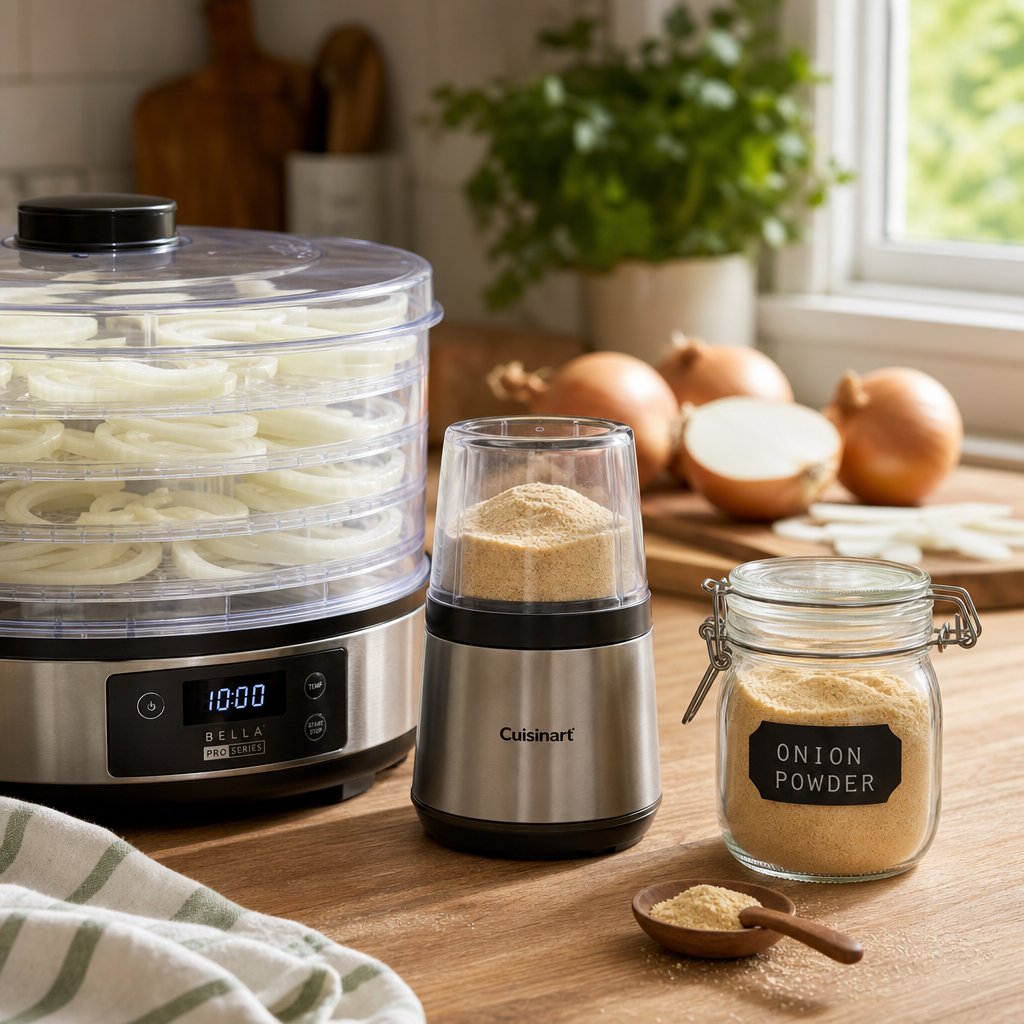
Making onion powder at home is surprisingly simple and gives you complete control over the process. You need three things: fresh onions, a dehydrator (or an oven set to its lowest temperature), and a spice grinder or coffee grinder.
Here's the process, based on The Purposeful Pantry's method:
- Prep the onions. Wash, peel, and slice into thin, uniform pieces. Thinner slices dry faster and more evenly.
- Dehydrate. Spread slices on dehydrator trays and dry at 125°F (52°C) for 10 to 18 hours. The onions are done when they snap cleanly after cooling to room temperature. If using an oven, set it below 200°F with the door cracked to allow moisture to escape.
- Condition. Place dried pieces in a jar and shake daily for 5 to 7 days. Watch for clumping or moisture buildup. If you see either, return the onions to the dehydrator for additional drying.
- Grind. Pulse the fully dried onion pieces in a coffee grinder or blender until a fine powder forms. Store in an airtight container.
One small onion yields roughly 1.5 tablespoons of powder. To prevent clumping during storage, add about 1 teaspoon of arrowroot powder per cup of finished onion powder. This approach also works if you want to make seasoning salt at home by combining your homemade onion powder with salt, garlic powder, and other verified gluten-free spices. You'll know exactly what's in your all purpose seasoned salt because you built it from scratch.
The same DIY method applies to gluten free seasoning salt blends, gluten free seasoned salt mixes, or any custom spice combination. When you control every ingredient and every surface it touches, cross-contamination becomes impossible.
Sourcing Gluten-Free Ingredients for Product Development
For individual consumers, homemade powder or certified retail products solve the problem. But what about businesses? If you're developing a gluten free seasoning salt blend, a functional food product, or a supplement line that incorporates onion powder, the challenge scales up considerably. Retail-grade spices don't meet commercial production needs, and sourcing bulk ingredients without contamination controls puts your entire product line at risk.
Seasoning mix brands with clean ingredients succeed because they partner with manufacturers operating dedicated production environments. A shared facility that also processes wheat-based products introduces the same cross-contamination risks at commercial scale that individual consumers face at the retail level, just multiplied across thousands of units.
For nutrition brands, supplement importers, private label sellers, and functional food businesses developing powder or granule-based products, working with a dedicated OEM/ODM manufacturer provides the controlled environment needed to guarantee gluten-free integrity. ZhuFeng's health food manufacturing services offer customized formulation and scalable production across formats including powder and granule products, with the kind of dedicated production lines that prevent cross-contact issues inherent in multi-use facilities. This matters whether you're launching a gluten free seasoned salt, a functional spice blend, or a supplement product where even trace contamination disqualifies the batch.
The principle is the same whether you're filling one jar for your kitchen or producing ten thousand units for retail distribution: control the environment, verify the ingredients, and eliminate shared-line risk. Your sensitivity level determines how far you need to go, but safe options exist at every point on that spectrum.
Frequently Asked Questions About Onion Powder and Gluten
1. Can celiac patients safely use onion powder?
Yes, celiac patients can safely use pure, single-ingredient onion powder that lists only 'onion' or 'dehydrated onion' on the label. For added confidence, choose products carrying GFCO certification (tested below 10 ppm) or NSF gluten-free certification (tested below 15 ppm). Avoid bulk-bin onion powder and multi-ingredient blends unless every additive has been verified. Patients with extreme sensitivity should consider homemade onion powder or brands operating dedicated gluten-free production lines to eliminate any cross-contamination risk.
2. Does McCormick onion powder contain gluten?
McCormick onion powder does not contain gluten. The product lists a single ingredient: onion. McCormick's allergen policy states that gluten-containing grains will always be declared on the label and never hidden under terms like 'spices' or 'natural flavors.' While McCormick does not operate dedicated gluten-free facilities, their manufacturing lines undergo validated allergen sanitation procedures. Any McCormick product carrying an explicit gluten-free claim on the packaging has undergone line-level validation to confirm compliance with FDA standards.
3. What spices and seasonings are not gluten free?
Spices and seasonings that commonly contain gluten include products with wheat starch as an anti-caking agent, blends containing hydrolyzed wheat protein for flavor enhancement, seasonings with soy sauce powder (which typically contains wheat), and any product listing malt extract or malt flavoring derived from barley. French fried onion toppings almost always contain wheat flour. Multi-ingredient seasoning mixes, gravy packets, and breading blends frequently include wheat-based thickeners. Always check for 'Contains: wheat' allergen statements and advisory warnings about shared equipment.
4. Is there a difference between gluten-free labeled and gluten-free certified spices?
There is a meaningful difference. A 'gluten-free' label on spices means the manufacturer self-certifies the product contains less than 20 ppm of gluten per FDA rules, but no independent testing is required before the claim goes on the package. Certified gluten-free spices from organizations like GFCO (below 10 ppm) or NSF International (below 15 ppm) undergo independent product testing, ingredient verification, and annual facility audits. Certification provides a verified safety buffer that accounts for analytical variability in gluten testing methods.
5. How can I make gluten-free onion powder at home?
Slice fresh onions thinly and spread them on dehydrator trays at 125 degrees F (52 degrees C) for 10 to 18 hours until they snap cleanly when cooled. Condition the dried pieces in a sealed jar for 5 to 7 days, shaking daily and watching for moisture. Once fully dry, pulse in a coffee grinder or spice grinder until a fine powder forms. Add about 1 teaspoon of arrowroot powder per cup to prevent clumping. This method guarantees zero cross-contamination and works equally well for creating custom seasoning blends with verified ingredients.