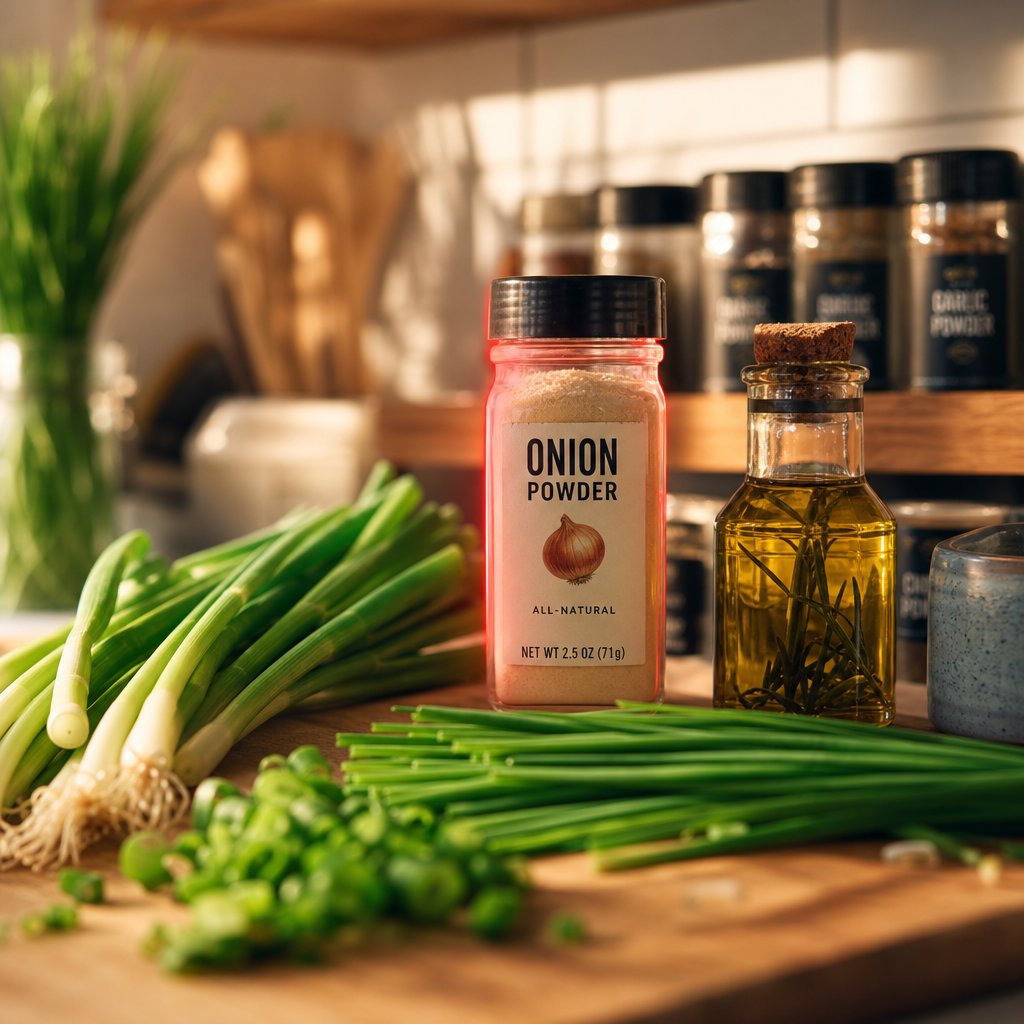
Is Onion Powder Low FODMAP and Why It Matters for IBS
Imagine you have just spent weeks carefully planning your low FODMAP meals. You are cooking at home, avoiding obvious triggers, and feeling cautiously optimistic. Then a simple dash of seasoning from your spice rack sends your gut into chaos. What went wrong? The culprit hiding in plain sight: onion powder.
The Short Answer About Onion Powder and FODMAPs
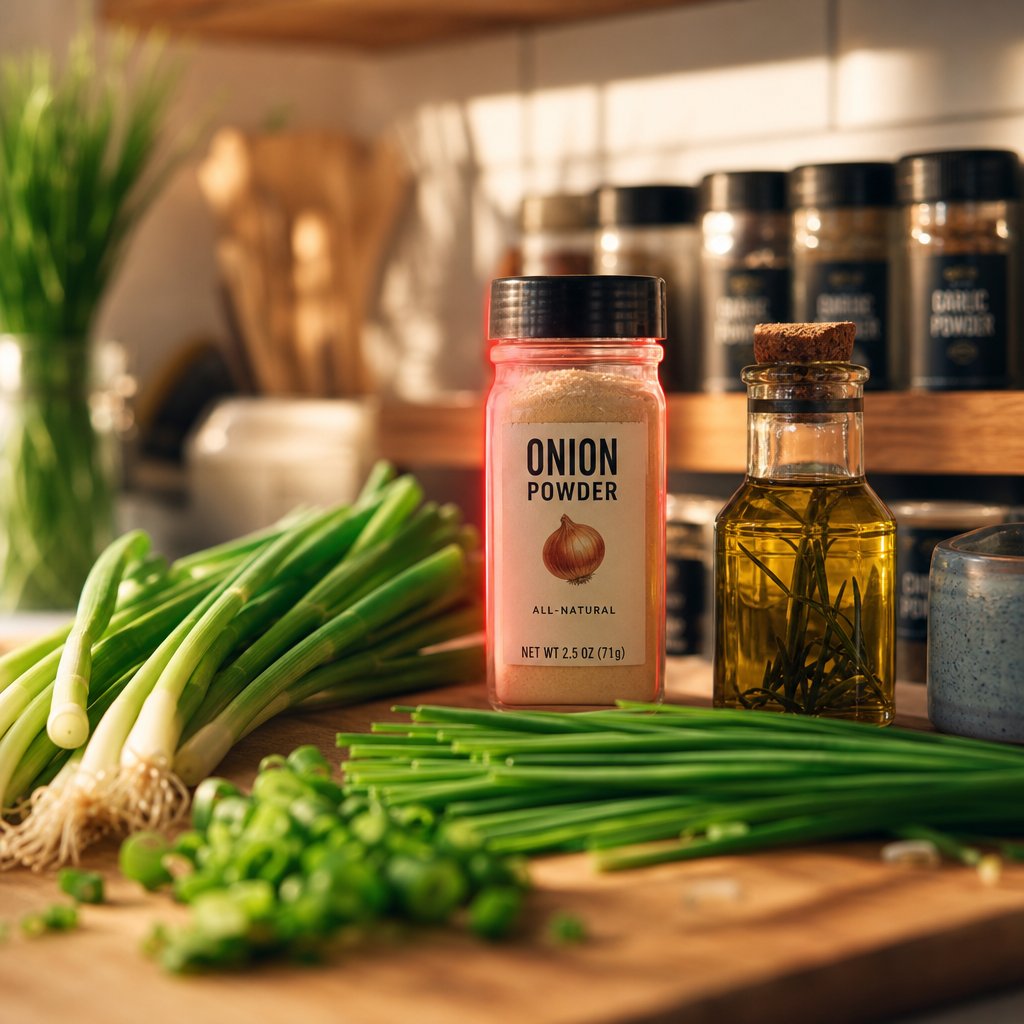
Is onion powder low FODMAP? No, it absolutely is not. Onion powder is classified as high FODMAP due to its significant fructan content, and it should be strictly avoided during the elimination phase of the low FODMAP diet. FODMAPs, short for Fermentable Oligosaccharides, Disaccharides, Monosaccharides, and Polyols, are a group of short-chain carbohydrates that are poorly absorbed in the small intestine. Fructans, a type of oligosaccharide, are the specific FODMAP responsible for making all forms of onion a problem for sensitive guts. Monash University, the gold-standard research authority on the FODMAP diet, is unequivocal on this point.
Onion powder is rated high FODMAP at all typical serving sizes. Even very small amounts contribute significantly to the overall FODMAP load of a food, making it one of the few ingredients with no safe threshold during the elimination phase.
This classification applies regardless of how the powder is used, whether stirred into a marinade, sprinkled over roasted vegetables, or baked into a casserole. The onion FODMAP issue does not disappear with heat or dilution.
Why This Matters for IBS Management
Here is where things get tricky. Onion powder is one of the most common hidden ingredients in the modern food supply. It lurks inside seasoning blends, stock cubes, sauces, salad dressings, snack seasonings, and countless processed foods. Many IBS sufferers who believe they are eating safely are unknowingly consuming fructans through these hidden sources. As Monash University's label-reading guide warns, onion and garlic products, including powder forms, are among the main exceptions to the general rule that small amounts of high FODMAP ingredients listed low on a label might be tolerable. Even tiny quantities of these ingredients will add meaningfully to a food's FODMAP load.
So is onion low FODMAP in any form? The answer is nuanced. While onions low FODMAP options do exist in very specific forms, such as the green tops of spring onions, the overwhelming majority of onion products, and especially concentrated forms like powder and flakes, remain firmly in the high FODMAP category.
In the sections ahead, you will learn exactly why dehydration makes onion powder even more potent than fresh onion, how to compare FODMAP levels across every allium form, the three most dangerous myths that trip up IBS sufferers, and the best flavor alternatives that let you cook without compromise. The answers start with the science of fructans themselves.
The Science Behind Onion Powder and Fructan Content
Knowing that onion powder fodmap status is high is one thing. Understanding why gives you the power to make smarter decisions across your entire diet, not just with this single ingredient.
What Are Fructans and How They Trigger IBS Symptoms
Fructans are chains of fructose molecules linked together by bonds that the human digestive system simply cannot break. We lack the specific enzyme needed to split these chains apart. Unlike simple sugars that get absorbed in the small intestine, fructans pass through completely intact until they reach the large intestine.
This is where the trouble starts. Your gut bacteria treat these undigested fructans as a feast. They ferment them rapidly, producing hydrogen and methane gas as byproducts. In people with a sensitive gut or IBS, this fermentation triggers a cascade of symptoms: bloating, abdominal distension, cramping, pain, and altered bowel habits. The reaction is not an allergy or intolerance in the traditional sense. It is a mechanical and osmotic response. Fructans also draw water into the intestinal lumen through osmosis, which can contribute to diarrhea in some individuals.
Onion is one of the most concentrated dietary sources of fructans in the Western diet, which is precisely why the fodmap onion powder classification sits so firmly in the red zone.
How Dehydration Concentrates FODMAPs in Onion Powder
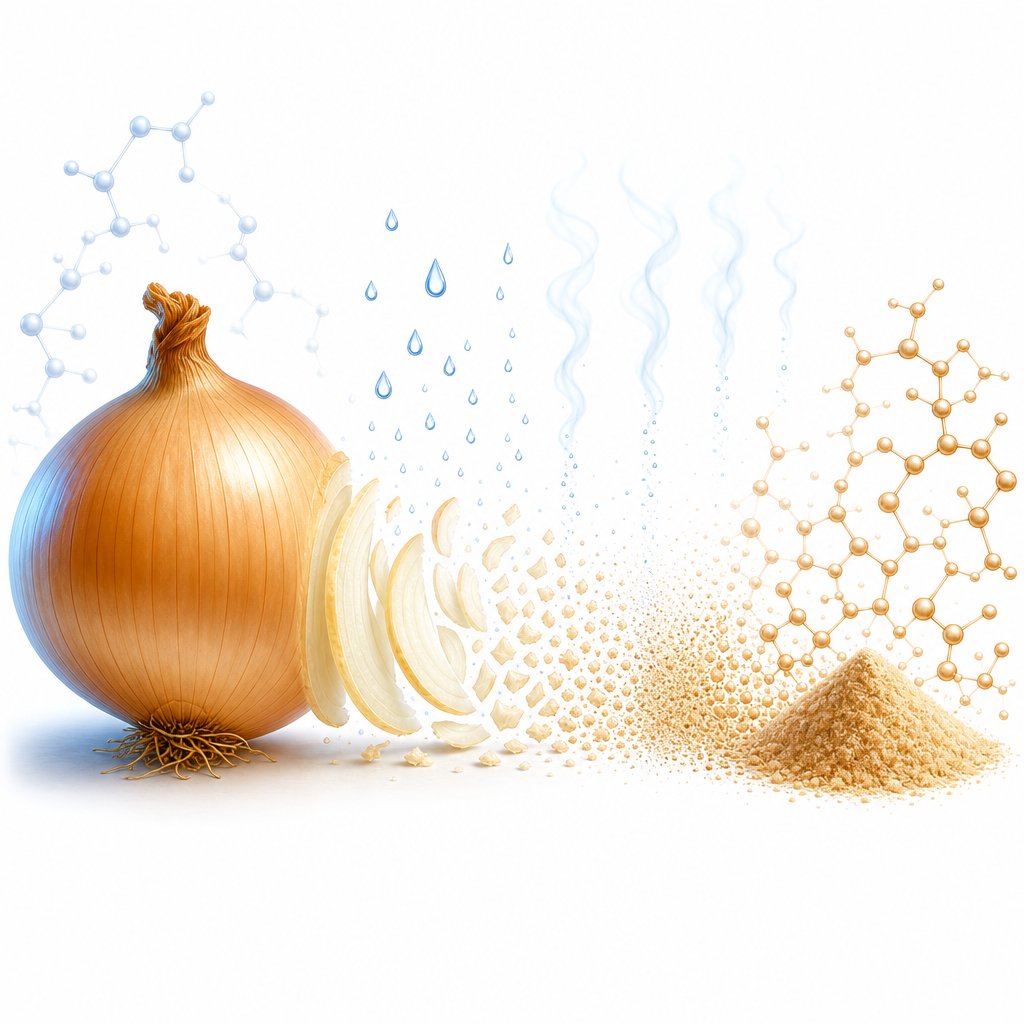
Fresh onion already contains problematic levels of fructans. When you dehydrate that onion and grind it into powder, you remove the water but the fructans stay behind. The result? A dramatically more concentrated source of FODMAPs per gram.
To put this in perspective, one small onion equals how much onion powder? Roughly one teaspoon. That tiny amount of powder packs the entire fructan load of a whole small onion into a fraction of the volume. This concentration effect is why even a seemingly insignificant sprinkle of onion powder can deliver a substantial fructan hit, far more than you would expect from such a small quantity. There is no such thing as a low fodmap onion powder serving size during the elimination phase because the concentration is simply too high.
Many people assume that cooking must neutralize the problem. After all, heat transforms so many food compounds. Fructans, however, are heat-stable carbohydrates. They do not break down, denature, or evaporate during cooking.
Fructans are not destroyed by heat. Whether onion powder is used raw in a dip, simmered in a sauce, or baked at high temperatures, its FODMAP content remains unchanged.
This is a critical point that Monash University confirms directly: the fructan content in onion and garlic is not reduced through thermal processing. Cooked onion fodmap levels remain just as high as raw onion fodmap levels. Boiling, roasting, sauteing, or dehydrating changes the texture and flavor, but the fructan molecules stay structurally intact throughout.
There is one important nuance, though. Fructans are water-soluble but not fat-soluble. This means they will leach into water-based cooking liquids like soups and stocks, but they will not transfer into oil. This single chemical property opens the door to some clever workarounds, but it also means that any water-based dish containing onion powder will have fructans distributed throughout the liquid. You cannot simply fish them out.
With this chemistry in mind, the question shifts from whether onion powder is safe to how its concentrated fructans interact with everything else on your plate, a concept known as FODMAP stacking that catches many careful eaters off guard.
FODMAP Comparison Across All Onion and Allium Forms
Not all alliums are created equal when it comes to fructan content. Some forms will wreck your gut in a single teaspoon, while others can be used generously without consequence. The difference comes down to which part of the plant you are eating and how concentrated it is. Understanding where each allium form falls on the FODMAP spectrum lets you make confident choices instead of avoiding the entire family out of fear.
FODMAP Ratings Across Different Onion Forms
The table below draws on data from the Monash University FODMAP app and FODMAP Friendly certification guidelines. It covers the most common onion and allium forms you will encounter in cooking and processed foods.
| Allium Form | FODMAP Category | Key FODMAP Type | Low FODMAP Status |
|---|---|---|---|
| Onion powder | High FODMAP | Fructans (Oligosaccharides) | No safe serving during elimination |
| Dried onion flakes | High FODMAP | Fructans (Oligosaccharides) | No safe serving during elimination |
| Onion salt | High FODMAP | Fructans (Oligosaccharides) | No safe serving during elimination |
| Fresh white/brown onion | High FODMAP | Fructans (Oligosaccharides) | High FODMAP at typical servings; FODMAP Friendly shows 26 g as low FODMAP |
| Red onion | High FODMAP | Fructans (Oligosaccharides) | Low FODMAP at 10 g (Monash); high FODMAP at typical cooking amounts |
| Shallots | High FODMAP | Fructans (Oligosaccharides) | No low FODMAP serving found by Monash; 1 g low FODMAP per FODMAP Friendly |
| Spring onion (green tops only) | Low FODMAP | Minimal fructans | Yes, low FODMAP up to 75 g per serving |
| Spring onion (white bulb) | Moderate to High FODMAP | Fructans (Oligosaccharides) | Low FODMAP at 20-32 g depending on source; use cautiously |
| Chives | Low FODMAP | No FODMAPs detected | Yes, low FODMAP at generous servings |
| Leeks (green leaves only) | Low FODMAP | Minimal fructans | Yes, low FODMAP up to 75-100 g per serving |
A clear pattern emerges here. The concentrated, dehydrated forms, onion powder, dried onion flakes, and onion salt, sit at the very top of the risk scale. They have no recognized safe serving size during the elimination phase. Fresh bulb onions in all their varieties (white, brown, red) are also high FODMAP at the amounts typically used in cooking, though some lab testing shows very small quantities may technically fall below the threshold.
Understanding Safe Portions of Allium Vegetables
You will notice that the green parts of certain alliums consistently test as safe. Why? Fructans concentrate in the bulb and white portions of these plants, not in the green leaves. This is a botanical quirk that works in your favor. The green tops of spring onions (scallions) and the green leaves of leeks contain minimal fructans because these carbohydrates are stored in the underground or white basal structures where the plant reserves its energy.
Are green onions low FODMAP? Yes, but only the green parts. The white bulb of a spring onion still contains fructans, though at lower levels than a full-sized onion. Are chives low FODMAP? Absolutely. Both Monash University and FODMAP Friendly testing detected no FODMAPs in chives whatsoever, making them one of the safest allium options available.
Are leeks low FODMAP? The answer depends entirely on which part you use. The leeks fodmap situation mirrors spring onions: green leaves are safe in generous portions (up to 75-100 g), while the white bulb becomes moderate at just 14 g according to Monash. For practical cooking, this means finely slicing leek greens gives you a mild, onion-like flavor without the fructan load.
Are shallots low FODMAP? Monash University found no low FODMAP serving size for shallots in their testing, making them one of the riskier options. FODMAP Friendly identified just 1 g as low FODMAP, which is essentially unusable in real cooking.
When it comes to fodmap onions as a whole category, the critical takeaway is this: color and cooking method do not change the fructan content. Red onion, white onion, cooked onion, caramelized onion, they all remain high FODMAP at standard serving sizes. The only reliable way to get onion flavor safely is to use the specific plant parts where fructans do not accumulate.
The scallions fodmap profile deserves special attention because these are your most versatile kitchen ally. With up to 75 g of green tops considered low FODMAP per meal, you can use them freely as a garnish, sauteed base, or finishing touch. That is roughly one and a half cups of chopped greens, more than enough to build real flavor in a dish.
Knowing which allium forms are safe and which are not is essential, but it only solves part of the puzzle. The real-world challenge is that misinformation about onion and FODMAPs runs deep, and three persistent myths continue to lead IBS sufferers into avoidable flare-ups.

Three Dangerous Myths About Onion Powder and IBS
Misinformation spreads fast in online IBS communities. Well-meaning advice gets repeated until it sounds like fact, and people end up suffering through flare-ups they could have avoided. The relationship between onions and IBS is surrounded by confusion, and three myths in particular keep tripping people up. Let's dismantle each one.
Myth One - Cooking Destroys FODMAPs in Onion Powder
- The myth: If you cook onion powder long enough at high heat, the FODMAPs break down and become safe to eat.
- The reality: Fructans are heat-stable carbohydrates. No amount of cooking, baking, roasting, or frying will alter their molecular structure. Are cooked onions low FODMAP? They are not. A casserole simmered for hours, a slow-cooked stew, or a pizza baked at 450 degrees will all retain the same fructan content as the raw ingredient. The heat changes flavor and texture, but the FODMAP molecules remain completely intact.
This myth likely persists because cooking does reduce certain other problematic compounds in foods, such as lectins in beans or oxalates in spinach. People assume the same logic applies to FODMAPs. It does not. Monash University has confirmed that thermal processing has no effect on fructan levels in onion or garlic products. Whether you sprinkle onion powder into a cold dip or stir it into a boiling soup, the fructan load reaching your large intestine is identical.
Myth Two - A Small Pinch Cannot Cause Symptoms
- The myth: Such a tiny amount of onion powder cannot possibly matter. A pinch here and there is harmless.
- The reality: Because onion powder is a concentrated, dehydrated product, even a small pinch delivers a meaningful dose of fructans. More importantly, that pinch rarely exists in isolation. It combines with every other fructan source in your meal and throughout your day.
Think about a typical dinner. A seasoning blend with a pinch of onion powder, a bread roll containing wheat-based fructans, a sauce with a trace of garlic, and perhaps some cashews on a salad. Individually, each source might seem negligible. Together, they push your total fructan intake past your personal threshold. This cumulative effect, known as FODMAP stacking, is why people with IBS and onion sensitivity often cannot pinpoint a single trigger. The "tiny pinch" was never tiny in context. Are onions high FODMAP even in small amounts? For concentrated forms like powder, the answer is effectively yes during the elimination phase.
Myth Three - Onion Flavor Always Means High FODMAP
- The myth: If a product tastes like onion, it must contain high FODMAP onion ingredients and should be avoided.
- The reality: Onion flavor and onion fructans are not the same thing. Some certified low FODMAP products achieve onion flavor through infused oils, where the aromatic compounds transfer into fat but the fructans do not.
This distinction comes down to solubility. Fructans are water-soluble but not fat-soluble. When onion is infused into oil, the flavor compounds dissolve into the fat while the problematic carbohydrates stay behind in the solid plant material. The result is an oil that tastes like onion but carries no measurable FODMAP load. This is fundamentally different from adding onion powder directly to a product.
The FODMAP Friendly certification program addresses this directly. Their laboratory testing evaluates the final product as consumed, not just the ingredient list. A product can list onion as an ingredient and still pass certification if the manufacturing process, such as oil infusion or extreme dilution, results in fructan levels below the established threshold per serving. As their testing has demonstrated, some snack products containing onion powder in trace amounts have passed laboratory analysis because the final per-serve fructan content fell within acceptable limits.
The key distinction? You cannot replicate this at home by simply using less onion powder and hoping for the best. Certified products have been lab-tested to confirm safety. Your homemade spice blend has not. During the elimination phase, the safest approach is to avoid onion powder entirely and rely on proven alternatives like infused oils and green allium tops.
These myths highlight a broader challenge: onion powder does not just appear in your spice jar. It hides inside dozens of everyday products under names you might not recognize, and its fructan contribution stacks silently alongside other sources throughout your day.
FODMAP Stacking and Hidden Onion Powder in Processed Foods
Picture this scenario. You have carefully avoided adding onion powder to your cooking. You chose a store-bought spice rub labeled "all-natural seasonings." You grabbed a stock cube for your soup, spread some salad dressing on your lunch, and snacked on flavored rice crackers. Each product seemed harmless on its own. Yet by evening, your gut is in full revolt. The problem is not any single food. It is the invisible accumulation of fructans from multiple sources hitting your system simultaneously.
What Is FODMAP Stacking and Why It Matters
FODMAP stacking refers to the cumulative effect of consuming multiple FODMAP-containing foods in one sitting or within a short time window. Even when individual foods contain amounts below your personal trigger threshold, their combined load can exceed what your gut can handle. Research cited by Monash University demonstrates that symptoms are induced to a greater extent when people consume multiple FODMAPs in one sitting compared to a single FODMAP source alone.
Here is how this plays out in practice. Your spice rub contains a small amount of onion powder. Your stock cube lists dehydrated onion as the fifth ingredient. Your salad dressing includes garlic powder. Your bread contains wheat, which is another source of fructans. And those cashews on your afternoon snack? They contribute GOS, a different FODMAP subgroup that adds to the overall fermentable load. None of these individual exposures would necessarily cause a problem in isolation. Together, they push your total FODMAP intake past the tipping point.
The garlic powder fodmap situation compounds this risk significantly. Garlic powder is high FODMAP for the same fructan-based reasons as onion powder, and the two frequently appear together in processed foods. A single meal containing both hidden onion powder and garlic powder delivers a double fructan hit that many IBS sufferers cannot tolerate. Understanding fodmap garlic risks alongside onion powder risks is essential because these two ingredients are rarely found apart in commercial seasoning blends.
Monash University's research team notes that their FODMAP cut-off values were set conservatively, meaning most people can safely combine several green-rated foods in one meal without stacking becoming an issue. However, for those who are particularly sensitive to fructans, or who are unknowingly consuming hidden high FODMAP ingredients, stacking becomes the invisible mechanism behind unexplained flare-ups. As Monash explains, spacing meals 2-3 hours apart allows food to be digested between eating occasions and slows the rate at which the gut is exposed to FODMAPs.
How Hidden Onion Powder Contributes to Fructan Overload
The real danger of FODMAP stacking is that onion powder rarely announces itself clearly on a label. It hides behind a range of names and descriptions that most people would never think to question. During the elimination phase, you need to treat every processed food label as a potential minefield.
Watch for these common names and descriptions that may indicate the presence of onion powder or onion-derived fructans in a product:
- Onion powder - the most obvious listing, but easily missed in long ingredient panels
- Onion extract - a concentrated form that carries the same fructan load
- Dehydrated onion or dried onion - functionally identical to onion powder in FODMAP terms
- Onion flavoring - may be derived from actual onion rather than synthetic sources
- Natural flavoring or natural flavors - can legally contain onion or garlic in many countries
- Seasoning or seasoning blend - frequently includes onion and garlic powders as base ingredients
- Vegetable powder or dehydrated vegetables - often contains onion as a primary component
- Bouillon or stock powder - almost universally contains onion and garlic
- Herb and spice powder - a vague term that may mask onion or garlic content
- Chicken salt - typically contains onion powder as a flavoring agent
As FODMAP label-reading guides point out, in the United States, onion and garlic cannot legally be hidden under the term "spices" on ingredient labels. However, they can appear under "natural flavors" or "seasoning." In other countries, regulations differ, and onion may be bundled into generic terms like "spices" without specific disclosure. When in doubt, contact the manufacturer directly.
Certain product categories are repeat offenders. If you are trying to identify fodmap spices to avoid, start with these common culprits:
- Pre-made spice blends - taco seasoning, curry powder, barbecue rubs, Italian seasoning mixes, and Chinese five spice frequently contain onion and garlic powder
- Stock cubes and liquid stocks - nearly all commercial varieties list onion as a core ingredient
- Marinades and sauces - teriyaki, barbecue, stir-fry sauces, and pasta sauces almost always contain onion in some form
- Salad dressings - ranch, Caesar, and vinaigrettes commonly include onion powder or garlic powder
- Snack seasonings - flavored chips, crackers, nuts, and popcorn seasonings rely heavily on onion and garlic for savory depth
- Processed meats - sausages, deli meats, and burger patties often contain onion powder as a binding flavor agent
- Gravy mixes and soup packets - these are among the most concentrated sources of hidden onion
Is garlic high FODMAP in these same products? Yes. Garlic powder appears alongside onion powder in the vast majority of these categories, doubling the fructan exposure from a single product. A low fodmap garlic powder alternative does not exist any more than a safe onion powder does. Both must be avoided during elimination and identified through careful label reading.
The practical advice here is straightforward but demanding: during the elimination phase, read every single ingredient list on every processed food you buy. Ingredients are listed in order of weight, so items appearing earlier in the list are present in larger quantities. However, with concentrated ingredients like onion powder and garlic powder, even a listing near the end of the panel delivers enough fructans to matter, especially when multiple products containing trace amounts are consumed across the same meal.
If label reading feels overwhelming, the simplest strategy is to cook from whole, unprocessed ingredients where you control exactly what goes in. When you do buy packaged foods, look for products carrying official Monash University or FODMAP Friendly certification, which guarantees laboratory-tested FODMAP levels per serving.
Identifying the problem is only half the battle. Once you know where hidden fructans lurk, the next question becomes practical: what do you actually use instead to build flavor without the gut consequences?
Best Low FODMAP Onion and Garlic Substitutes Ranked
Giving up onion powder does not mean giving up flavor. The right substitutes for onion powder can deliver that savory, aromatic depth your cooking depends on, without sending fructans to your large intestine. Each low FODMAP onion substitute below works for a specific scientific reason, whether it is the plant part where fructans do not accumulate, the solubility chemistry that keeps FODMAPs locked away, or a naturally low fructan profile.
Ranked Low FODMAP Onion Substitutes by Flavor Match
The following list ranks your best options from closest onion flavor match to more subtle alternatives. Are scallions low FODMAP? The green parts absolutely are, and they top this list for good reason.
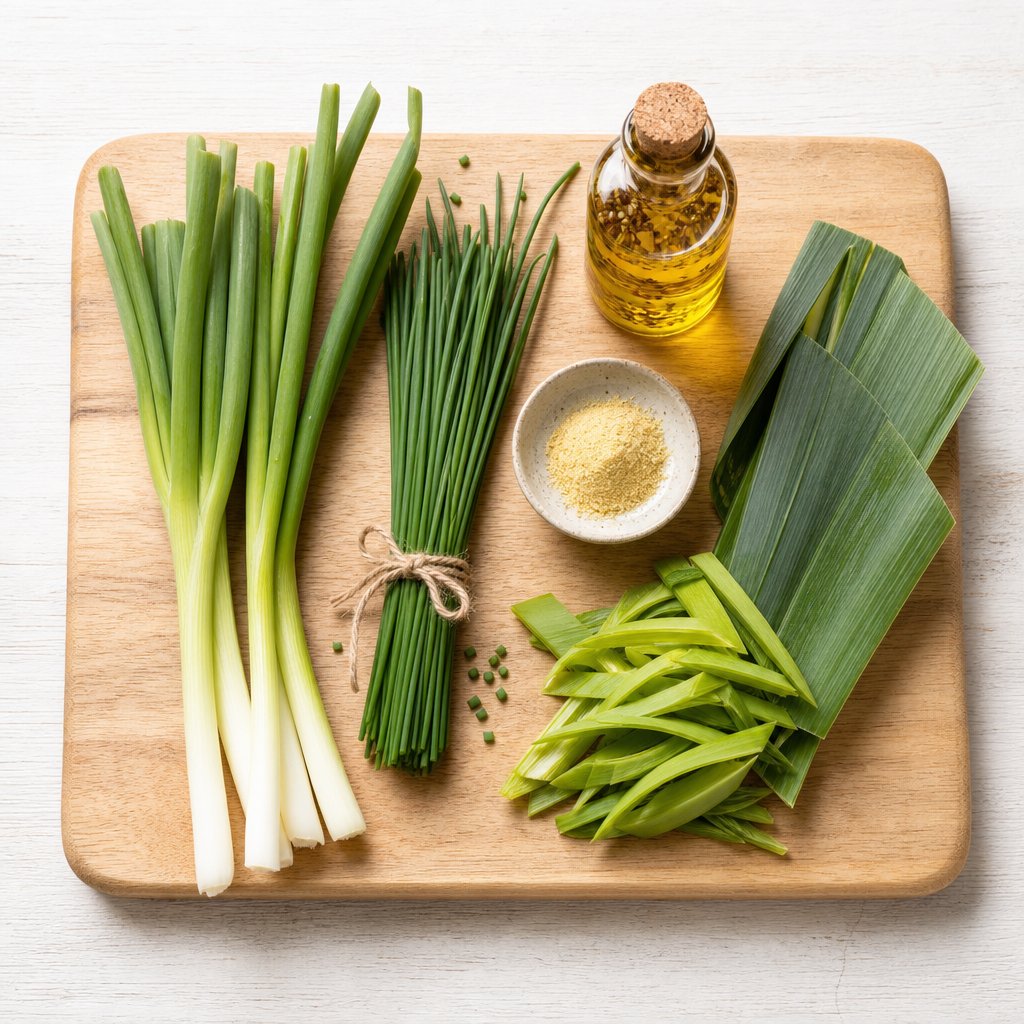
- Green tops of spring onions (scallions) - The closest thing to real onion flavor you can get on the low FODMAP diet. Fructans concentrate in the white bulb, not the green leaves, so the tops are safe at up to 75 g per serving according to Monash University. Use them raw as a garnish, sauteed as a base, or stirred into soups and stir-fries.
- Chives - A mild, delicate onion flavor with no detectable FODMAPs. FODMAP Friendly testing found nil FODMAPs in chives, meaning you can use them freely without measuring. Best added fresh at the end of cooking or as a garnish.
- Onion-infused oil - Delivers virtually identical onion flavor because the aromatic compounds transfer into fat while fructans, being water-soluble, stay trapped in the solid plant material. The oil carries flavor without FODMAPs. This is the gold-standard onion substitute low FODMAP dieters rely on for cooked dishes.
- Asafoetida (hing) powder - A dried resin used extensively in Indian cooking that provides a pungent onion-garlic depth when bloomed in hot oil. Monash University has tested it as low FODMAP at servings up to 1/4 teaspoon. The raw smell is strong, but it mellows beautifully with heat.
- Leek leaves (green parts only) - A sweeter, milder onion flavor that works well in cooked dishes. Like spring onions, fructans accumulate in the white bulb while the green leaves remain safe at up to 75 g or more per serving. Slice thinly and saute until soft for the best results.
- Garlic-infused oil - When you need combined garlic-onion depth, this oil provides the garlic side of the equation through the same solubility science. Pair it with onion-infused oil or scallion greens for a complete savory base.
- Fennel bulb - Offers a subtle sweetness reminiscent of caramelized onion. Naturally low in fructans at standard servings, fennel works best roasted or sauteed where its mild anise notes soften into something closer to cooked onion.
How to Use Infused Oils for Onion and Garlic Flavor
Infused oils deserve special attention because they solve the biggest frustration for IBS sufferers: getting authentic allium flavor without any FODMAP consequence. The science is simple. Fructans are carbohydrates that dissolve in water but cannot dissolve in fat. When fresh onion or garlic steeps in pure oil, the flavor compounds migrate into the fat while the fructans remain locked inside the plant cells. Remove the solids completely, and you have a FODMAP-free flavoring agent.
Is garlic powder low FODMAP? No, it is high FODMAP for the exact same fructan reasons as onion powder. This makes garlic-infused oil the primary low FODMAP garlic substitute available. As FODMAP Everyday notes, the fructans in garlic and onion are water-soluble but not oil-soluble, so their flavor remains in the oil without any FODMAPs transferring.
A few practical tips for using infused oils effectively:
- Replace regular cooking oil one-to-one with garlic or onion-infused oil at the start of any recipe
- Do not add water-containing ingredients to the pan while raw garlic or onion pieces are still present, as fructans will leach into the liquid
- Store homemade infused oils in the refrigerator and use within 3 days, or freeze for longer storage to prevent botulism risk
- Keep both olive oil-based and neutral oil-based versions on hand for different cooking applications
- Look for certified low FODMAP brands if you prefer the convenience of store-bought options
For anyone searching for a garlic substitute low fodmap dieters can trust, the combination of garlic-infused oil for cooked dishes and fresh chives for garnishing covers the vast majority of recipes. These two ingredients together replicate much of what garlic powder and onion powder would normally provide.
The table below summarizes each low FODMAP onion alternative with its flavor profile, best uses, and safety considerations to help you choose the right substitute for any recipe.
| Alternative | Flavor Profile | Suggested Use | FODMAP Safety Notes |
|---|---|---|---|
| Spring onion green tops | Closest to fresh onion; mildly pungent | Stir-fries, soups, garnishes, sauteed bases | Low FODMAP up to 75 g; fructans stay in the white bulb |
| Chives | Mild onion with subtle garlic notes | Fresh garnish on eggs, potatoes, soups, dressings | No FODMAPs detected; eat freely per FODMAP Friendly |
| Onion-infused oil | Authentic onion flavor in a fat base | Sauteing, roasting, dressings, any cooked dish | Fructans are not oil-soluble; certified products available |
| Asafoetida (hing) | Pungent onion-garlic depth; mellows with heat | Curries, lentil dishes, sauteed vegetables | Low FODMAP at 1/4 tsp; some brands contain wheat flour |
| Leek leaves (green only) | Sweet, mild onion; less pungent | Soups, stews, sauteed as an aromatic base | Low FODMAP up to 75-100 g; avoid white bulb portion |
| Garlic-infused oil | Rich garlic flavor without sharpness | Pasta, roasted vegetables, marinades, dipping oil | Fructans do not transfer to oil; remove all solids before use |
| Fennel bulb | Subtle sweetness; hints of caramelized onion | Roasted, sauteed, or raw in salads | Low FODMAP up to 49 g per Monash; naturally low in fructans |
Having the right substitutes on hand is only part of the equation. The real challenge is knowing how to deploy them strategically across the different phases of the low FODMAP diet, from strict elimination through careful reintroduction, where your personal fructan threshold gradually comes into focus.
Using Onion Alternatives During Elimination and Reintroduction
Knowing which substitutes exist is one thing. Knowing when and how to use them across the different phases of the low FODMAP diet is what actually keeps your gut calm while your meals stay interesting. The elimination and reintroduction phases each demand a different strategy, and getting the timing right determines whether you spend months unnecessarily restricting foods or confidently expand your diet based on real data about your body.
Navigating the Elimination Phase Without Onion Powder
The elimination phase typically lasts 2 to 6 weeks. During this window, onion powder must be completely removed from your diet, no exceptions, no "just a tiny bit." This strict approach is not about punishment. It is about creating a clean baseline so you can accurately identify your triggers during reintroduction. If fructans are still sneaking in through hidden sources, your symptoms never fully resolve, and the entire process loses its diagnostic value.
Practical meal prep makes this phase far more manageable than it sounds. A few simple habits will keep your cooking flavorful without any onion replacement fodmap worries:
- Batch-make onion-infused oil - Prepare a jar at the start of each week by gently heating sliced onion in olive oil for 10-12 minutes, then straining out all solids completely. Store in the refrigerator and use within 3 days, or freeze portions in ice cube trays for longer shelf life.
- Keep chives and spring onion greens as kitchen staples - Buy fresh bunches weekly and store them wrapped in a damp paper towel inside a sealed container. Pre-chop a batch and freeze in small portions so you always have a low FODMAP alternative to onion ready to go.
- Build a custom spice blend with asafoetida - Combine a pinch of asafoetida with cumin, paprika, salt, and pepper for an all-purpose seasoning that mimics the savory depth of onion and garlic without any fructan content. This single blend can replace most commercial seasonings that would otherwise contain hidden onion powder.
- Stock your pantry with certified products - Look for stock cubes, sauces, and seasonings carrying the Monash University or FODMAP Friendly certification logo. These have been laboratory-tested to confirm safe FODMAP levels per serving.
Some people also explore low fodmap garlic scape powder as a creative alternative during elimination. Garlic scapes are the green shoots of the garlic plant, and like the green tops of spring onions, they contain significantly fewer fructans than the bulb. Dried and powdered garlic scapes can provide a mild garlic flavor that works well in spice blends, though availability varies and you should confirm any product carries proper low FODMAP certification before relying on it.
Reintroducing Fructans and Finding Your Tolerance Threshold
Once your symptoms have stabilized during elimination, the reintroduction phase begins. This is where you systematically test individual FODMAP subgroups to map your personal tolerance. For fructans, the process follows a structured approach:
- Start with fresh onion, not powder - Begin reintroduction with a small measured amount of fresh onion (typically starting at around 8-10 g) rather than concentrated onion powder. Fresh onion gives you more control over dosing because the fructan content per gram is lower and easier to scale incrementally.
- Increase gradually over 3 days - A standard fructan challenge involves eating a small portion on day one, a moderate portion on day two, and a larger portion on day three, while monitoring symptoms for up to 24 hours after each exposure.
- Keep the rest of your diet low FODMAP - During each challenge, continue eating strictly low FODMAP otherwise. This isolates the variable you are testing and prevents FODMAP stacking from confusing your results.
- Record everything - Track the type, amount, and timing of the food consumed alongside any symptoms, their severity, and when they appeared. This data becomes your personal fructan tolerance map.
What people discover during reintroduction varies enormously. Some find they can tolerate a tablespoon of cooked fresh onion without issue but react to even a quarter teaspoon of onion powder due to its concentrated fructan load. Others remain highly sensitive to all forms of onion and need to rely on their low fodmap garlic and onion substitute toolkit permanently. A smaller group discovers surprisingly generous tolerance and can reintroduce moderate amounts of fresh onion into regular cooking.
The key insight is that reintroduction is not pass-or-fail. It reveals a spectrum. You might tolerate fresh onion at 15 g but not 30 g. You might handle cooked onion better than raw. You might find that onion powder remains off-limits even when fresh onion becomes manageable, simply because the concentration factor makes dosing too unpredictable.
Working with a FODMAP-trained dietitian during reintroduction is strongly recommended. They can help you design challenge protocols, interpret ambiguous results, and build a personalized long-term diet that maximizes variety without triggering symptoms. Many dietitians now recommend keeping a core set of low fodmap alternatives as permanent kitchen staples regardless of reintroduction outcomes, simply because they provide reliable flavor insurance on days when your gut feels unpredictable.
The growing demand for IBS-friendly products has expanded the market for certified low FODMAP seasonings and gut-health supplements considerably. For nutrition brands and supplement companies developing low FODMAP product lines to serve this audience, manufacturers like ZhuFeng offer OEM/ODM services with flexible formats including powder and granule formulations, enabling brands to create custom low FODMAP seasoning blends or gut-health supplements with scalable production and formulation expertise.
Whether you end up with broad fructan tolerance or need to maintain strict avoidance long-term, the practical framework remains the same: know your threshold, keep your substitutes stocked, and build meals around ingredients you have personally verified as safe. The final piece is pulling all of this knowledge into a clear, actionable plan you can follow without second-guessing every meal.
Practical Steps for an Onion Powder Free Low FODMAP Life
You have the science. You know the myths. You understand the substitutes. The question now is simple: what do you actually do with all of this information when you are standing in your kitchen at 6 PM trying to make dinner taste good without wrecking your gut?
Key Takeaways for Managing Onion Powder on a Low FODMAP Diet
The core answer has not changed from the first paragraph of this article: onion powder is definitively high FODMAP due to concentrated fructans, and no preparation method, cooking temperature, or serving size makes it safe during the elimination phase. That single fact drives every decision below.
Here is your action checklist for managing a low fodmap onion strategy that actually works in daily life:
- Eliminate onion powder completely during the elimination phase - No pinches, no dashes, no exceptions. This includes onion salt, dried onion flakes, onion extract, and any seasoning blend listing onion in any form. If you are wondering what can I use in place of onion powder, your primary go-to options are spring onion greens, chives, onion-infused oil, and asafoetida.
- Read every processed food label before purchasing - Check for onion powder, dehydrated onion, natural flavors, seasoning blends, bouillon, and vegetable powder. When a product does not clearly disclose its ingredients, skip it or contact the manufacturer.
- Account for FODMAP stacking across your entire meal - A trace of onion powder in your spice rub plus garlic in your sauce plus wheat fructans in your bread can exceed your threshold even when each source seems small individually. Space meals 2-3 hours apart and limit fructan sources per sitting.
- Stock your kitchen with proven substitutes - Keep onion-infused oil, garlic-infused oil, fresh chives, spring onion greens, and asafoetida as permanent pantry staples. These cover the vast majority of recipes that would normally call for onion or garlic powder. A good substitute for dried onion flakes is simply more spring onion greens, finely chopped and sauteed until softened. A reliable substitute for onion salt is a blend of salt with a pinch of asafoetida and dried chives.
- Choose certified low FODMAP products when buying packaged foods - Products carrying the Monash University or FODMAP Friendly certification logo have been laboratory-tested to confirm safe FODMAP levels per serving. This removes the guesswork from label reading.
- Work with a FODMAP-trained dietitian for reintroduction - Monash University's dietitian directory lists professionals who have completed specialized training. They can design fructan challenge protocols tailored to your history and help you interpret results accurately, so you expand your diet as broadly as your gut allows.
- Reintroduce fructans using fresh onion first, not powder - The concentration factor in onion powder makes dosing unpredictable. Start reintroduction with small measured amounts of fresh onion where you can control the fructan load more precisely.
Building a Flavorful Low FODMAP Kitchen
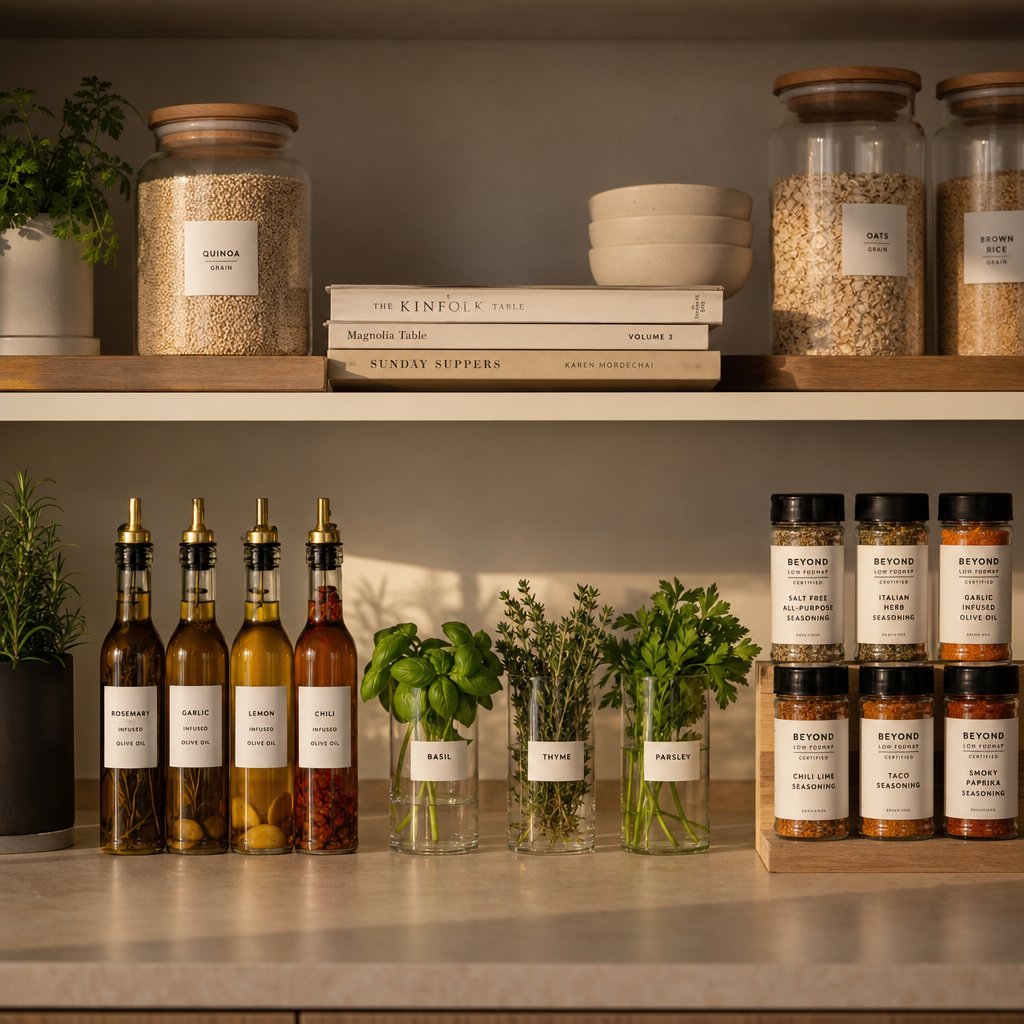
Living without onion powder does not mean living without flavor. It means building a different toolkit. Once you stock your kitchen with the right alternatives and develop the habit of checking labels, cooking becomes second nature again. Many people find that their low FODMAP cooking actually tastes better because they are using fresh herbs, quality infused oils, and whole ingredients rather than relying on a generic powder for depth.
What can i substitute for onion powder in any given recipe? Match the context. For cooked dishes, start with onion-infused oil as your base fat. For raw applications like dressings or dips, reach for finely minced chives or spring onion greens. For spice rubs and dry blends, asafoetida combined with dried herbs fills the gap. For soups and stews, sauteed leek greens provide a sweet, mild onion backbone that builds over time.
The low FODMAP product market continues to expand rapidly, with certified seasonings, stocks, sauces, and snacks increasingly available in mainstream grocery stores. For those who want convenience without the label-reading burden, these products offer genuine peace of mind backed by laboratory analysis. For private label sellers and functional food businesses looking to enter the growing gut-health market, OEM/ODM partners such as ZhuFeng provide end-to-end manufacturing across formats like hard capsules, gummy candy, tablets, and oral liquids, helping brands launch market-ready digestive health products with customized formulations tailored to IBS-conscious consumers.
The onion low fodmap challenge is real, but it is entirely manageable. Your spice rack may have betrayed you in the past, but armed with the right knowledge, the right substitutes, and a clear understanding of your personal tolerance, you can build meals that satisfy your palate and your gut in equal measure. The fodmap substitute for onion exists in multiple forms. You just need to choose the ones that fit your cooking style and keep them within arm's reach.
Frequently Asked Questions About Onion Powder and FODMAPs
1. Can I use a small amount of onion powder on a low FODMAP diet?
No. Even a small pinch of onion powder delivers a concentrated dose of fructans because dehydration removes water while preserving all the FODMAPs. One teaspoon of onion powder contains roughly the same fructan load as an entire small onion. During the elimination phase, there is no recognized safe serving size. Additionally, small amounts from multiple sources stack throughout a meal, pushing your total fructan intake past your tolerance threshold even when each individual source seems negligible.
2. Does cooking onion powder reduce its FODMAP content?
No. Fructans are heat-stable carbohydrates that remain structurally intact regardless of cooking method or temperature. Whether onion powder is baked into a casserole at high heat, simmered in a slow cooker for hours, or sprinkled raw onto a salad, the fructan molecules do not break down. Monash University has confirmed that thermal processing has zero effect on fructan levels in onion and garlic products. The only property that matters for safe alternatives is solubility: fructans dissolve in water but not in oil, which is why onion-infused oil works as a substitute.
3. What is the best substitute for onion powder on a low FODMAP diet?
The top substitutes ranked by flavor similarity are: green tops of spring onions (safe up to 75 g), chives (no FODMAPs detected), onion-infused oil (fructans cannot transfer into fat), and asafoetida powder (low FODMAP at up to 1/4 teaspoon). For dry spice blends, combine asafoetida with cumin, paprika, salt, and dried chives to replicate the savory depth onion powder normally provides. For cooked dishes, starting with onion-infused oil as your base fat delivers the most authentic onion flavor without any gut consequences.
4. Are green onions (scallions) safe on the low FODMAP diet?
The green tops of spring onions are low FODMAP and safe at generous servings up to 75 g per meal, which equals roughly one and a half cups of chopped greens. However, the white bulb portion still contains fructans and should be used cautiously or avoided during elimination. The reason for this difference is botanical: fructans concentrate in the bulb where the plant stores energy, not in the green leaves. This makes scallion greens the most versatile and closest-tasting onion substitute available to IBS sufferers.
5. How can I identify hidden onion powder in processed foods?
Check ingredient labels for these terms: onion powder, onion extract, dehydrated onion, dried onion, onion flavoring, natural flavors, seasoning, vegetable powder, bouillon, and chicken salt. Common culprits include pre-made spice blends, stock cubes, marinades, salad dressings, snack seasonings, processed meats, and gravy mixes. In the US, onion cannot hide under the term 'spices' but can appear under 'natural flavors' or 'seasoning.' When uncertain, choose products with Monash University or FODMAP Friendly certification, which guarantees laboratory-tested FODMAP levels per serving.