Is Protein Powder Really Made from Worms
You have probably seen the videos. A clip shows small, squirming larvae being crushed into a fine powder, mixed into a glass of milk, and served up as a protein shake. The caption screams something like "This is what's really in your protein powder." It looks convincing, it feels alarming, and it spreads like wildfire. So, is protein powder made from worms? The short answer is no. Mainstream protein powders, whether whey, casein, or vegan protein powder options like pea and soy, are derived from dairy or plant sources and have nothing to do with worms or insects.
The Short Answer to the Worm Protein Claim
Standard protein supplements on store shelves get their protein from well-established sources. Whey protein comes from the liquid byproduct of cheese production. Casein is another milk-derived protein. Plant-based powders pull their protein from yellow peas, soybeans, brown rice, or hemp. That viral footage of larvae being ground into powder? It shows the production of mealworm protein powder, a niche product that is clearly labeled and intentionally marketed to a specific audience. It is not how mainstream protein supplements are made.
The vast majority of protein powders available today are made from dairy (whey and casein) or plant sources (pea, soy, rice). They do not contain worms, insects, or any hidden animal-derived ingredients beyond what is listed on the label.
Why This Question Keeps Coming Up
If the answer is so straightforward, why does the question refuse to go away? A big part of the problem is how social media works. A fact-check by TeluguPost traced one viral Instagram video back to footage of a Korean mealworm processing facility, originally published by a YouTube channel called King Food. The video was reposted with misleading captions that implied all protein powder is made this way. Millions of viewers saw the clip without that context.
There is also a naming problem that makes the confusion worse. "Mealworms" are not actually worms at all. They are insect larvae, the juvenile stage of the darkling beetle. But when people hear the word "worm," they picture earthworms, and the disgust factor skyrockets. Combine a misleading name with an algorithm that rewards shocking content, and you get a myth that feels impossible to shake.
This article takes a science-first approach to the question. You will learn exactly how protein powder is made step by step, what separates real worms from insect larvae, where the myth originated, and how to read a label so you can verify every ingredient yourself. The goal is simple: replace confusion with clarity so you can choose your protein with confidence.
The real story, though, starts with understanding where this claim came from in the first place and why a single out-of-context video managed to convince so many people.
Where the Worm Protein Myth Actually Started
Every viral myth has a patient zero, and the claim that protein is made from worms can be traced to a specific piece of footage. A fact check by Lead Stories identified the original source: a YouTube video published on March 16, 2022, titled "This is a protein thug! Future Food Edible Insect, Mealworm / Korean food factory." The video documented a single facility in South Korea operated by a company called Omo, which specializes in insect-based snacks and dietary supplements. It had nothing to do with mainstream whey or plant protein production.
That distinction vanished almost immediately once the footage left its original context.
Viral Videos That Sparked the Rumor
By September 2022, a cropped and shortened version of the Omo factory footage appeared on an Arabic-language YouTube channel with the translated title "Dangerous video: making protein from worms." All references to South Korea and the specific company were stripped out. Within days, the clip surfaced on TikTok and X (formerly Twitter), where it spread rapidly with captions implying this is how all protein powder is made.
The pattern repeated across platforms. On Facebook, a March 2024 repost showed a man reacting to the sped-up factory footage and exclaiming, "That's maggots? They get the protein from the maggots? You be putting it into your milkshakes at the gym!" The video racked up massive engagement, and viewers had no way of knowing they were watching a niche mealworm flour operation, not a whey protein factory.
Here is what compounded the confusion: mealworms are not worms at all. They are the larval stage of the darkling beetle, an insect. But the word "worm" in the name triggers an immediate mental image of earthworms, which amplifies the disgust response and makes the claim far more shareable. When people ask "is whey protein powder made from worms," they are often reacting to this exact biological mix-up without realizing it.
How Algorithms Turn Confusion into Conviction
A single misleading video would not normally reshape public perception. But social media algorithms are designed to prioritize content that generates strong emotional reactions, and few emotions drive engagement like disgust. Research from McGill University published in The Conversation highlights how nutrition misinformation thrives in this environment, noting that food-related claims can become deeply tied to personal identity and tribal loyalty once they gain traction online.
The feedback loop works like this: a shocking clip gets high watch time and shares, so the algorithm pushes it to more feeds. New viewers react with their own commentary videos, which generate fresh engagement and surface the claim again. Within weeks, someone casually scrolling sees the same narrative from multiple unrelated accounts and assumes it must be true. A 2022 review of over 60 studies on online nutrition content found that roughly half of the information assessed was low quality, confirming that platforms are flooded with unreliable dietary claims.
The timing made things worse. Legitimate insect protein startups have been growing steadily, and their marketing materials, featuring cricket farms and mealworm processing lines, provided a visual library that content creators could repurpose out of context. When viewers see real footage of insects being turned into powder alongside the question "what is protein powder made of," the leap to believing all protein supplements come from bugs feels surprisingly short.
The myth, then, is not a single lie. It is a chain of small distortions: real footage from one niche facility, stripped of context, amplified by algorithms, and reinforced by a misleading common name. Understanding how protein powder is actually made, step by step, reveals just how far removed the real manufacturing process is from anything involving worms or insects.
Worms vs Insect Larvae and Why the Difference Matters
A single word sits at the center of this entire myth: "worm." When you hear "mealworm protein powder," your brain probably conjures an image of slimy earthworms wriggling through garden soil. That mental picture is wrong, and the mix-up is not your fault. The common name "mealworm" is a biological misnomer that has been confusing people long before social media got involved. To understand how protein powder is made from worms (or rather, why it is not), you first need to understand what a worm actually is and why mealworms do not qualify.
What Are Worms and What Are Insect Larvae
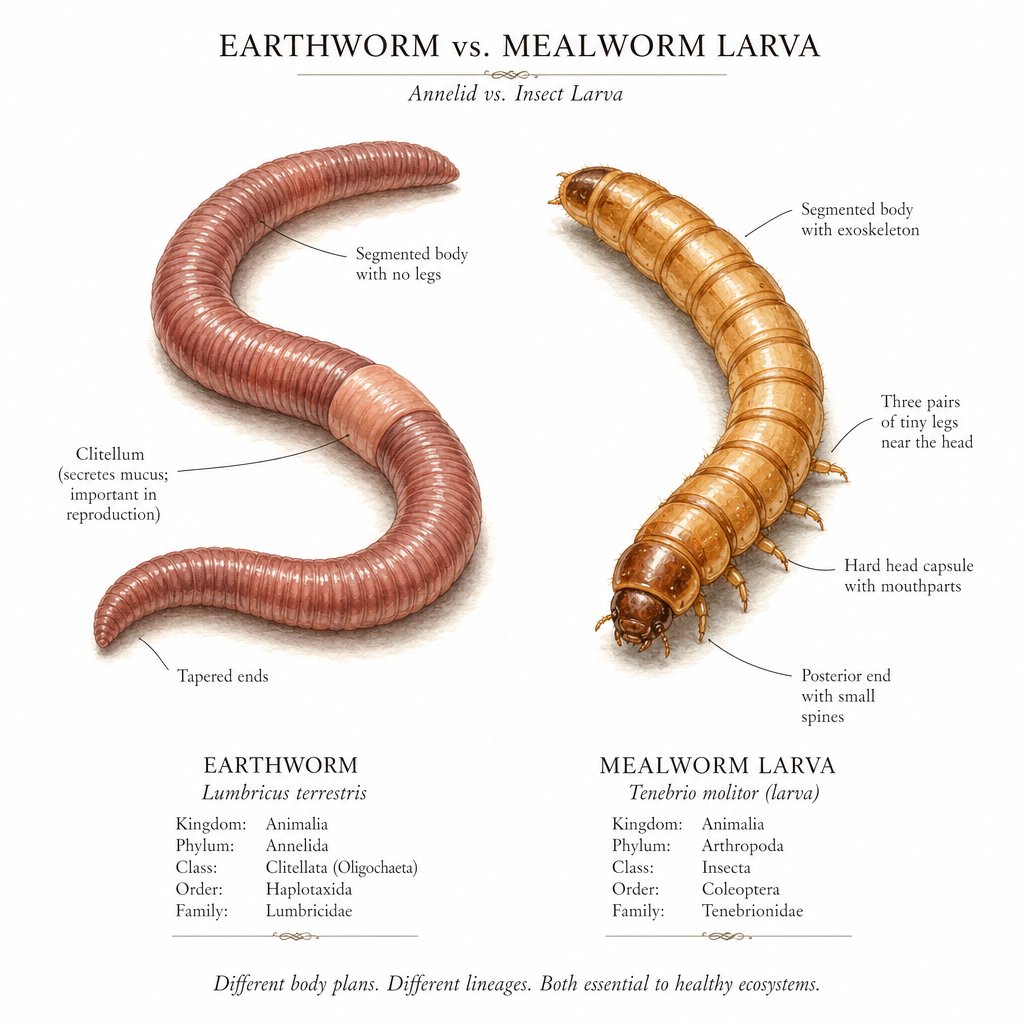
In biology, the word "worm" describes a specific body plan, not a single group of related animals. True worms, like earthworms, belong to the phylum Annelida. These are segmented, soft-bodied invertebrates with no legs, no exoskeleton, and no eyes. They breathe through their skin and move by contracting muscles along their segmented bodies. Earthworms spend their lives burrowing through soil, breaking down organic matter.
Mealworms, on the other hand, are not worms in any scientific sense. They are the larval stage of the darkling beetle (Tenebrio molitor), an insect in the phylum Arthropoda. There are over 20,000 species of darkling beetles, and the mealworm is simply one phase in a four-stage life cycle: egg, larva, pupa, and adult beetle. During the larval stage, which lasts about eight to ten weeks, the organism has a hard exoskeleton, visible legs, and will molt ten to twenty times as it grows. It eventually pupates and transforms into a winged adult beetle, something no earthworm will ever do.
Black soldier fly larvae follow a similar pattern. They are the juvenile form of the black soldier fly (Hermetia illucens), another insect. Like mealworms, they are sometimes loosely called "worms" because of their elongated shape, but they share no closer relationship to earthworms than you do to a jellyfish.
Both organisms are protein-dense, which is part of why they get lumped together in casual conversation. Dried mealworms contain roughly 53% protein by weight, making them a genuinely concentrated protein source. Earthworms are also high in protein, with studies reporting similar ranges. But belonging to the same nutritional conversation does not make them the same kind of animal, any more than chicken and chickpeas are the same because both contain protein.
Why the Naming Confusion Matters for Consumers
This is not just a trivia problem. The mealworm misnomer is the engine that powers the viral myth. Imagine you see a headline that says "mealworm powder used in protein supplements." If you do not know that a mealworm is a beetle larva, your mind fills in the gap with the only "worm" you know: the soft, slimy earthworm from your backyard. That mental image triggers a much stronger disgust response than a picture of a small, dry, segmented insect larva with legs and an exoskeleton.
This disgust gap is exactly what makes misleading social media content so effective. A video captioned "protein powder made from worms" hits differently than one captioned "protein powder made from beetle larvae," even though the second description is the accurate one. The emotional reaction comes first, and by the time someone thinks to question the biology, the myth has already taken root.
Here are the key biological differences worth remembering:
- Phylum: Earthworms belong to Annelida. Mealworms and black soldier fly larvae belong to Arthropoda, the same phylum as crabs, spiders, and butterflies.
- Body structure: Earthworms are soft-bodied with no legs or exoskeleton. Mealworms have six legs, a hard exoskeleton, and molt multiple times as they grow.
- Life cycle: Earthworms grow larger but remain worms their entire lives. Mealworms undergo complete metamorphosis, transforming from larva to pupa to adult beetle.
- Habitat: Earthworms live in soil and feed on decaying organic matter. Mealworms are typically found in stored grain and are commercially farmed in controlled environments.
- Relation to "worm": Earthworms are true worms. Mealworms are insects with a misleading common name.
Once this distinction clicks, the viral claim loses most of its power. Mealworm powder is an insect product, not a worm product, and it exists in a completely separate supply chain from the whey and plant proteins that dominate store shelves. The real question, then, is not whether worms end up in your protein shake. It is how those mainstream powders are actually manufactured, and what each step in the process looks like from raw ingredient to finished product.
How Protein Powder Is Actually Made Step by Step
Knowing that mealworms are insects and not worms clears up the biology. But biology alone does not answer the practical question people really want settled: what is protein powder made from, and could worms or insects somehow end up in the process? The most convincing way to put that concern to rest is to walk through the actual manufacturing steps. When you see how whey, casein, and plant-based powders are produced, you will notice there is simply no point in the supply chain where worms, insects, or larvae enter the picture.
How Whey and Casein Protein Powders Are Produced
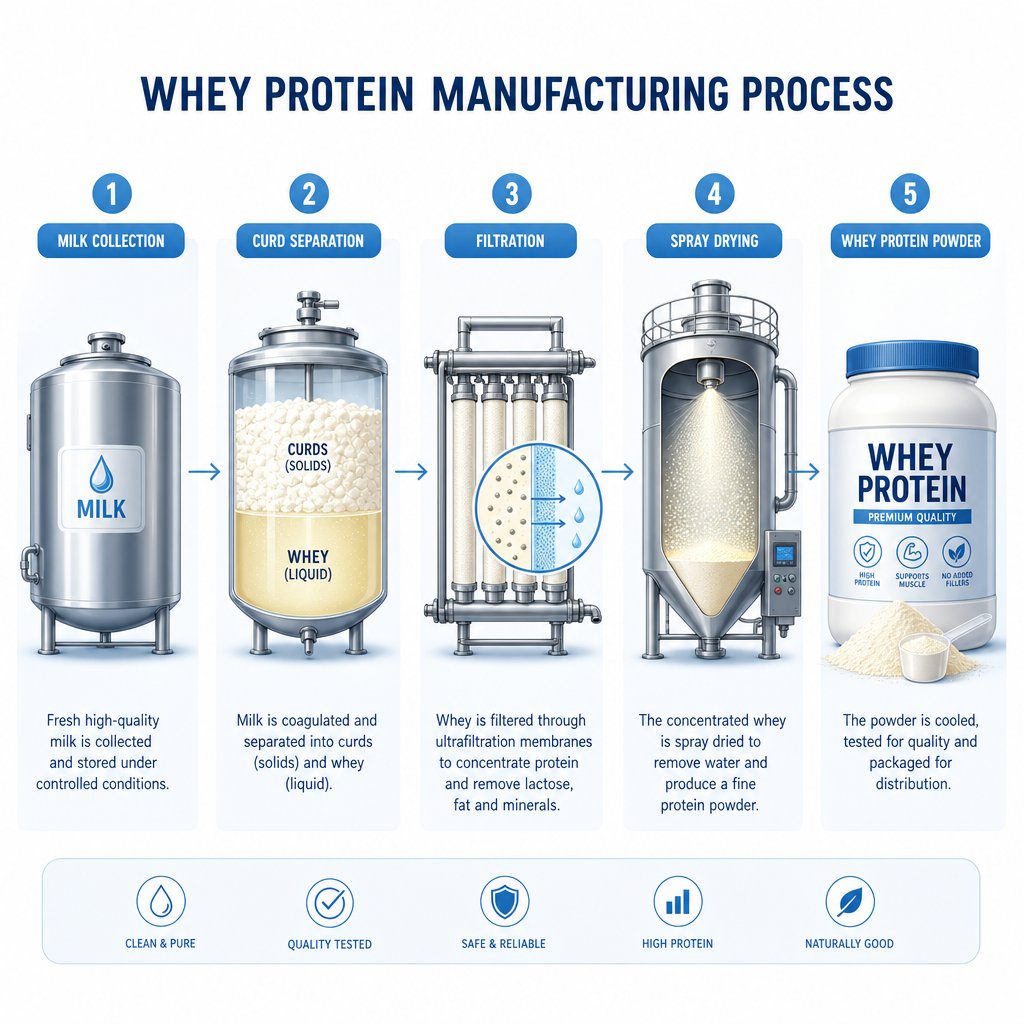
Whey and casein both start in the same place: a dairy farm. Whey protein is derived from the liquid byproduct of cheese production after milk is pasteurized. When enzymes or acid are added to milk to make cheese, the milk separates into solid curds (casein) and a thin, yellowish liquid (whey). That liquid still contains proteins, lactose, minerals, and a small amount of fat. Turning it into the powder you scoop into a shaker bottle requires several precise steps.
- Milk collection and pasteurization: Raw milk is sourced from certified dairy farms and pasteurized to eliminate harmful bacteria.
- Cheese production and whey separation: During cheese making, milk curdles into solid casein and liquid whey. The two are physically separated.
- Filtration: The liquid whey passes through microfiltration or ultrafiltration membranes that remove fats, lactose, and other non-protein components. For whey protein isolate, an additional ion exchange step pushes protein concentration to around 90% or higher. Whey protein concentrate, by comparison, retains about 70 to 80% protein.
- Concentration: The filtered liquid is concentrated to increase protein density while reducing water content.
- Spray drying: The concentrated liquid is sprayed into a drying chamber where hot and cold air convert the droplets into a fine, shelf-stable powder. Cold-processed whey protein is often considered superior because lower temperatures help preserve heat-sensitive amino acids.
- Blending and flavoring: Manufacturers add sweeteners, flavorings, thickeners, and sometimes vitamins or minerals to create the final product.
- Quality control and packaging: The finished powder undergoes testing for contaminants, microbial presence, and nutritional accuracy before being sealed and shipped.
Casein follows a parallel path. Instead of starting with the liquid whey fraction, casein production uses the solid curds that form during cheese making. Those curds are washed, dried, and milled into powder. Like whey, casein is a complete protein containing all nine essential amino acids, but it digests more slowly, which makes it popular for sustained amino acid delivery and overnight recovery.
Every step in both processes is dairy-based. There is no stage where insect or worm material is introduced, blended in, or substituted. The raw input is milk, and the output is a concentrated milk protein powder.
How Plant-Based Protein Powders Are Manufactured
Plant-based protein powders follow a different route, but the principle is the same: isolate protein from a whole food source and convert it into a dry, mixable powder. The most common plant proteins on the market are pea, soy, and rice, each with its own extraction process.
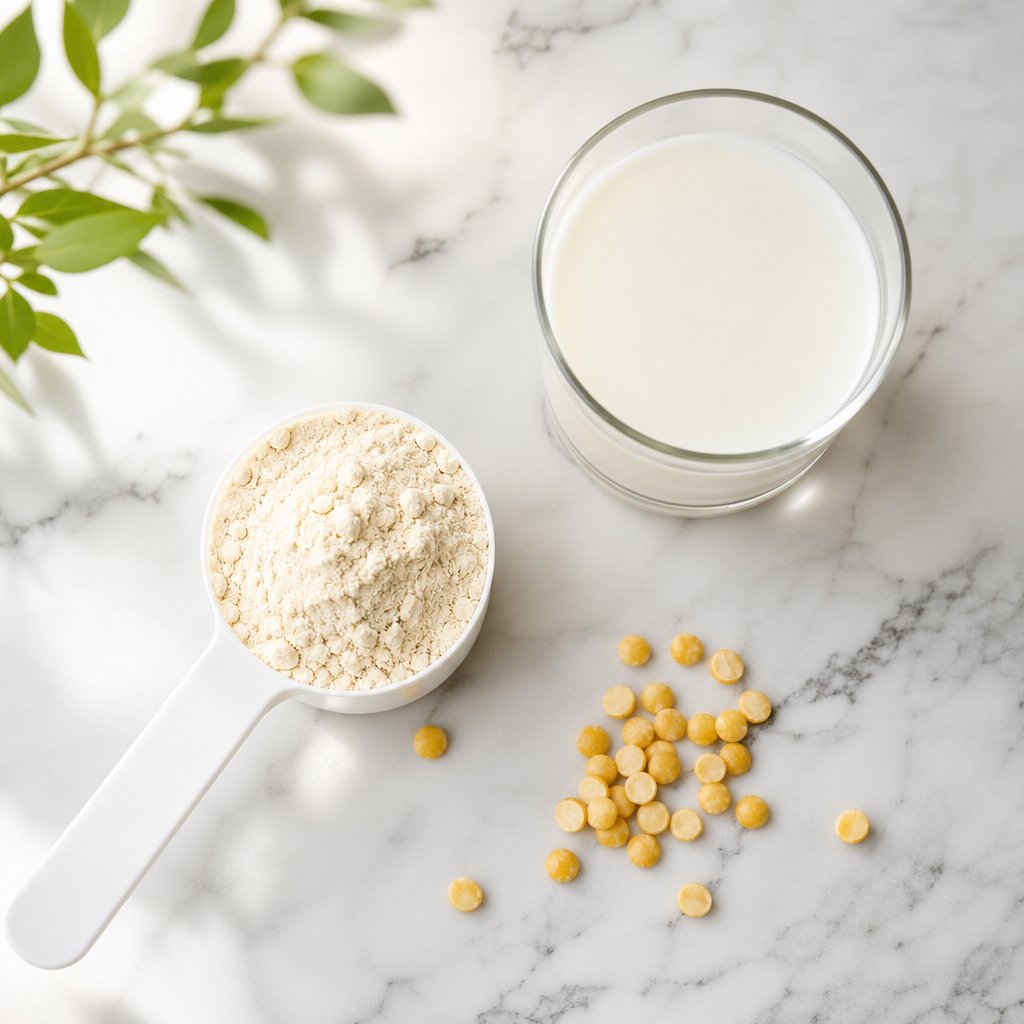
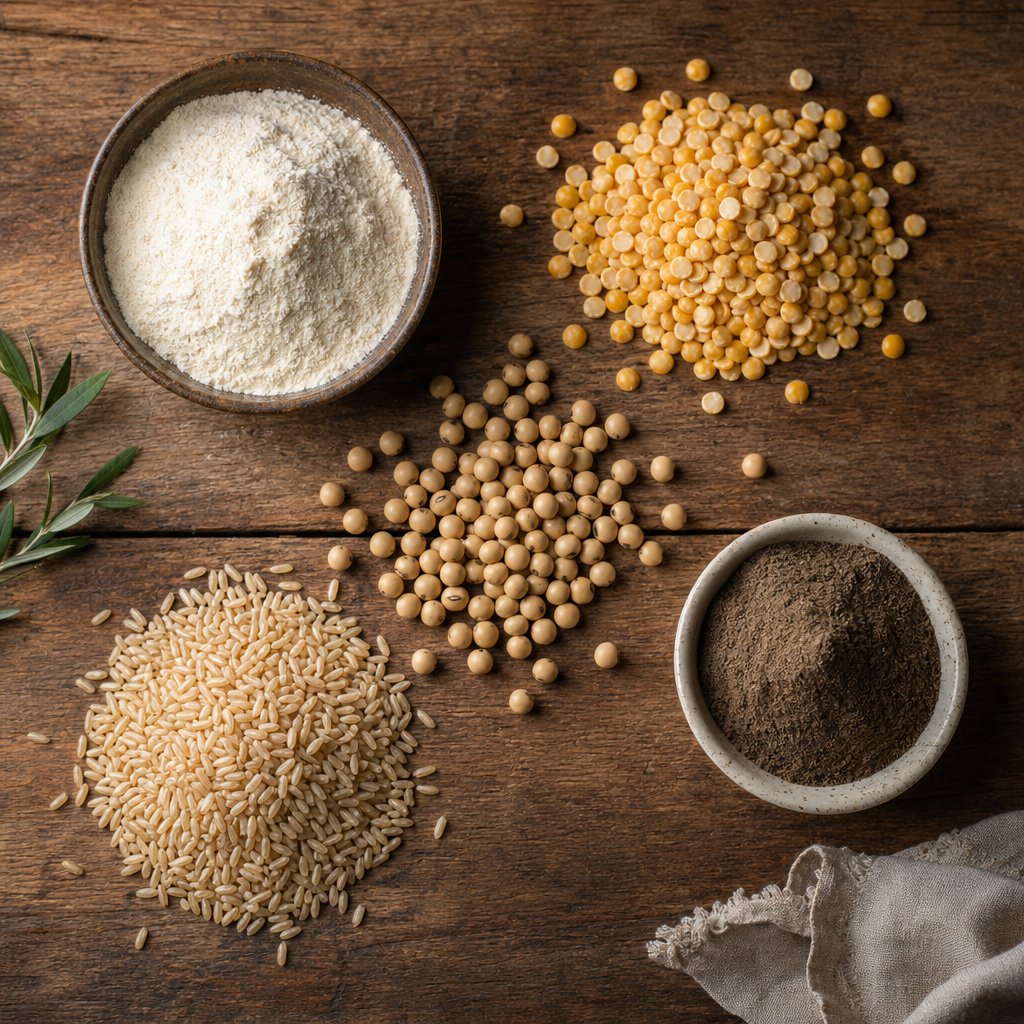
Pea protein starts with yellow split peas. The peas are milled into flour, then mixed with water to create a slurry. Through a process called wet fractionation, the protein is separated from the starch and fiber. The protein-rich liquid is then dried, typically by spray drying, to produce pea protein isolate. Research published in Food & Function notes that pea protein contains all nine essential amino acids and is rich in branched-chain amino acids, making it one of the more complete plant-based options available.
Soy protein follows a similar extraction logic. Soybeans are dehulled, flaked, and defatted to remove oils. The remaining material undergoes alkaline extraction, where proteins dissolve in an alkaline solution and are then precipitated at their isoelectric point (around pH 4.5). The precipitated protein is washed, neutralized, and spray dried. Soy protein isolate typically contains over 90% protein and provides a complete amino acid profile.
Rice protein takes a slightly different approach because rice is naturally lower in protein (about 7 to 9% in milled rice). Enzymatic extraction is commonly used to break down the starch and fiber surrounding the protein, freeing it for collection. The isolated protein is then dried and often blended with other plant proteins, like pea, to compensate for its lower lysine content and create a more balanced amino acid profile.
None of these processes involve animal-derived ingredients of any kind, let alone worms or insects. The supply chains are entirely plant-based, from field to finished powder.
Why These Processes Leave No Room for Worm Ingredients
Beyond the manufacturing steps themselves, there is a regulatory safeguard worth understanding. FDA regulations require that all ingredients in a dietary supplement be declared on the label, either in the Supplement Facts panel or in the "Other Ingredients" list beneath it. This means every protein source, filler, sweetener, and additive must be disclosed. If a protein powder contained mealworms, cricket flour, or any insect-derived ingredient, it would have to appear on the label by law.
So the question "is protein powder made from mealworms" has a clear, process-level answer: not unless the label explicitly says so. Whey comes from milk. Casein comes from milk. Pea protein comes from peas. The manufacturing infrastructure, raw material sourcing, and regulatory requirements for each category are completely distinct from the facilities and supply chains used by insect protein producers.
That said, insect-based protein powder does exist as a real, intentional product category. It is not hidden, and it is not a secret. Understanding what those products actually are, and why they are marketed so differently from conventional protein supplements, is the next piece of the puzzle.
Insect Protein Powder as a Separate Product Category
Insect-based protein powder is not a conspiracy. It is a real, rapidly growing product category with its own supply chain, its own customer base, and its own shelf space. The critical distinction is that no one is sneaking it into your whey or pea protein. Companies producing insect protein want you to know exactly what you are buying, because the insect content is the entire point. If you have ever wondered whether protein powder made from worms is hiding in mainstream supplements, the answer becomes obvious once you see how openly these products are marketed.
Cricket, Mealworm, and Black Soldier Fly Protein Products
Three insect species dominate the edible protein market, each with distinct characteristics and processing methods. Think of them as entirely separate ingredients, the way whey, pea, and soy are separate ingredients in the conventional protein world.
Cricket protein is the most established of the three. Cricket powder contains all nine essential amino acids, along with vitamin B12, iron, calcium, zinc, and dietary fiber. The production process starts at specialized cricket farms where the insects are raised in climate-controlled facilities. After harvesting, the crickets are cleaned, roasted or freeze-dried, and then milled into a fine powder often marketed as "cricket flour" or by the scientific name "Acheta protein." A typical serving delivers around 60 to 70% protein by dry weight, making it comparable to whey isolate in protein density. You will find it in protein bars, baked goods, pasta, and standalone powder tubs.
Mealworm protein powder has gained significant traction, particularly in Europe following regulatory approval. As Tetra Pak's food technology team notes, mealworms are native to mainland Europe and require minimal heat, space, or water to cultivate, making them an attractive option for high-protein beverages and food integration. The processing follows a similar path: farming in controlled environments, harvesting, drying, and milling. Purity during the drying stage is especially important. Under-dried mealworms can harbor mold or bacteria, while over-drying degrades the nutritional value of the finished powder. The milling fineness also varies depending on the end product. Powder destined for liquid applications like shakes needs a much finer grind than flour used in bread or pancakes.
Black soldier fly (BSF) larvae represent the fastest-growing segment. These insects are remarkably efficient converters of organic waste into protein. BSF larvae can extract up to 70% of proteins from waste materials used as feed, which gives them a strong sustainability advantage. While much of the BSF market currently serves animal feed and aquaculture, human-grade BSF protein products are entering the market as processing technology improves. The larvae are harvested, separated from their feed substrate, dried, and defatted before being milled into powder or pressed for oil extraction.
Each of these insect protein sources operates through a distinct supply chain with specialized farming facilities, dedicated processing equipment, and separate distribution channels. None of it overlaps with the dairy plants producing whey or the extraction facilities isolating pea protein. The edible insects market is projected to reach $28.54 billion by 2035, growing at a compound annual growth rate of 28.1%, which signals just how intentional and organized this industry has become.
Why Insect Protein Is Intentional and Clearly Labeled
Here is the detail that dismantles the myth entirely: companies selling insect protein do not hide what is in their products. They highlight it. The insect content is their value proposition, the reason a customer picks their product over conventional whey or plant protein. Imagine a craft brewery trying to hide the fact that it makes beer. It would defeat the purpose. The same logic applies to worm protein powder and cricket flour brands. Their packaging, websites, and marketing campaigns all center on the insect-based ingredient as a feature, not a secret.
Some brands use scientific nomenclature like "Acheta domesticus protein" (house cricket) on their labels, partly to gradually introduce consumers to the concept and partly because regulatory frameworks require precise ingredient identification. Whether the label says "cricket powder," "Acheta protein," or "Tenebrio molitor flour" (mealworm), the insect source is always disclosed.
The consumers buying these products fall into specific groups: sustainability-focused buyers drawn to the lower environmental footprint, fitness enthusiasts seeking nutrient-dense alternatives, and early adopters who enjoy exploring novel food categories. None of them are being tricked. They are making a deliberate choice.
Here is a quick overview of the three main insect protein sources and what sets them apart:
- Crickets (Acheta domesticus): Most widely available insect protein. Complete amino acid profile. Used in powders, bars, baked goods, and snacks. Mild, slightly nutty flavor.
- Mealworms (Tenebrio molitor): Growing popularity in Europe. Requires minimal farming resources. Well-suited for liquid applications like protein shakes when finely milled. Approved as a novel food by EFSA.
- Black soldier fly larvae (Hermetia illucens): Fastest-growing segment. Exceptional feed conversion efficiency. Primarily used in animal feed, with expanding human-grade applications. Strong sustainability credentials due to waste-to-protein conversion.
So is whey protein made from worms? No. Is insect protein a real product you can buy? Absolutely. The two categories exist in parallel, clearly separated by their ingredients, their manufacturing processes, and their labeling. The confusion only arises when someone strips away that context and presents one as the other.
Seeing these products side by side, with their actual nutritional profiles and price points, makes the separation even clearer. A direct comparison across every major protein type reveals not just what each source offers, but why choosing between them comes down to personal goals rather than fear of hidden ingredients.
Nutritional Comparison of Every Major Protein Type
Listing protein sources in separate sections is helpful, but it does not give you the full picture until you see them side by side. When you compare whey, casein, pea, soy, rice, cricket, and mealworm protein across the dimensions that actually matter, the differences and similarities become impossible to ignore. More importantly, you will see that the question of worms in protein powder dissolves entirely once you understand what each source brings to the table nutritionally, financially, and environmentally.
Protein Sources Compared Side by Side
The table below covers seven of the most common protein powders available, organized from the most widely used dairy-based options through plant proteins and into insect protein powder products. Where reference data provides specific figures, those numbers are included. Where exact values vary by brand and processing method, general ranges are used instead.
| Protein Source | Typical Protein Per Serving (30g scoop) | Amino Acid Profile | DIAAS Score | Common Allergens | Typical Price Range | Sustainability Rating |
|---|---|---|---|---|---|---|
| Whey (Concentrate) | 21-25g | Complete (all 9 EAAs) | 1.09 (isolate) | Milk, lactose | $0.04-0.06/g protein | Moderate |
| Casein | 22-25g | Complete (all 9 EAAs) | 1.00 | Milk, lactose | $0.05-0.08/g protein | Moderate |
| Pea Protein Isolate | 20-24g | Complete (low in methionine) | 0.82 | Pea (rare) | $0.04-0.07/g protein | High |
| Soy Protein Isolate | 22-27g | Complete (all 9 EAAs) | 0.90 | Soy | $0.04-0.06/g protein | Moderate-High |
| Rice Protein Concentrate | 18-22g | Incomplete (low in lysine) | 0.37 | None common | $0.04-0.06/g protein | High |
| Cricket Protein | 19-22g | Complete (all 9 EAAs) | High (comparable to dairy) | Shellfish cross-reactivity, dust mite allergy | $0.12-0.18/g protein | Very High |
| Mealworm Protein | 16-20g | Complete (all 9 EAAs) | High (comparable to dairy) | Shellfish cross-reactivity, dust mite allergy | $0.13-0.20/g protein | Very High |
A few notes on the data. The DIAAS (Digestible Indispensable Amino Acid Score) is the current gold standard for measuring protein quality. It evaluates how well a protein source delivers each essential amino acid in a form the body can actually absorb. Whey protein isolate leads with a DIAAS of 1.09, meaning it exceeds the minimum threshold for a "high quality" protein. Soy follows at 0.90, pea at 0.82, and rice trails significantly at 0.37, which is why rice protein is almost always blended with pea or other sources to fill the lysine gap.
Cricket protein, with roughly 65g of protein per 100g of dry weight, delivers a complete amino acid profile that rivals dairy. Mealworms offer a similar nutritional density along with an omega-3 content comparable to fish. Both score well on protein quality metrics, but their price tells a different story. At roughly $0.15 per gram of protein, cricket powder costs more than twice as much as common whey protein powder, which sits around $0.06 per gram. That premium reflects the smaller scale of insect farming operations and the higher cost of specialized processing.
On sustainability, the gap flips. Insect protein generates approximately 0.9kg of CO2 equivalent per 100g of protein, placing it among the lowest-emission animal protein sources available. For comparison, peas produce just 0.4kg of CO2e per 100g of protein, while beef generates a staggering 49.9kg. Whey and casein fall in the moderate range because they are tied to dairy farming, which carries the methane emissions associated with cattle.
What the Comparison Tells Us About Choosing a Protein
Several patterns emerge when you read across the rows rather than down a single column.
Whey and casein dominate on amino acid completeness, digestibility, and cost-effectiveness. If your primary goal is muscle protein synthesis and recovery, dairy-based protien powders remain the most researched and most affordable option. Whey's fast absorption makes it ideal post-workout, while casein's slow-release profile suits overnight recovery.
Plant proteins offer something dairy cannot: allergen flexibility and alignment with vegan dietary needs. Soy delivers a complete amino acid profile at a competitive price, while pea protein comes close and avoids the soy allergen concern. Rice protein is the weakest standalone option due to its low DIAAS score, but it shines when blended with pea protein to create a complementary amino acid profile.
Insect protein powder occupies a unique position. Cricket and mealworm powders match dairy on amino acid completeness and beat it on sustainability, but they cost significantly more and carry allergen risks that most consumers are not aware of. They are a strong choice for sustainability-focused buyers who specifically seek them out, not a hidden substitute lurking inside conventional products.
And that is the key takeaway from this entire comparison. None of these seven protein sources secretly contain worm-derived ingredients. Each one has a distinct raw material, a distinct manufacturing process, and a distinct label. There are no worms in protein powder unless the product is explicitly designed, marketed, and labeled as an insect-based supplement.
Choosing a protein source is about matching your goals, dietary needs, and values to the right product, not about avoiding hidden ingredients that were never there in the first place.
The comparison also surfaces a detail that deserves its own discussion: the allergen column for cricket and mealworm protein. That "shellfish cross-reactivity" note is not a minor footnote. For millions of people with shellfish or dust mite allergies, it represents a genuine safety concern, one that connects directly to how these products are regulated and tested before they reach store shelves.
Safety, Allergens, and Regulatory Standards You Should Know
That "shellfish cross-reactivity" flag in the comparison table is easy to skim past, but for roughly 2 to 4% of the adult population and up to 8 to 9% of children living with food allergies, it could be the most important detail in this entire article. Whether you are curious about insect protein as a sustainable alternative or simply want to understand what is protein powder made out of at every level, the safety and regulatory picture matters. It is also the piece of the puzzle that most discussions about protein powder made from bugs completely ignore.
Allergen Risks and Cross-Reactivity with Shellfish Allergies
Here is the core issue: insects and shellfish are more closely related than most people realize. Both belong to the phylum Arthropoda, which means they share certain structural proteins. The most significant one for allergy sufferers is a muscle protein called tropomyosin. If your immune system reacts to the tropomyosin in shrimp, crab, or lobster, it may also react to the tropomyosin found in crickets, mealworms, or black soldier fly larvae.
This is not speculation. A 2020 study published in Molecular Nutrition & Food Research by researchers at the University of Nebraska-Lincoln investigated IgE cross-reactivity between shellfish tropomyosin and edible insect species. The study found distinct patterns of IgE cross-reactivity across different insect species, confirming that people sensitized to shellfish can mount an immune response to insect-derived proteins. Interestingly, the researchers also discovered that the level of cross-reactivity varied between insect species, meaning some insects may present significantly less allergenic risk than others. The variation was not simply a matter of how much tropomyosin each insect contained. Instead, minor differences in the protein's amino acid sequence and three-dimensional structure appeared to drive the differences in immune response.
Dust mite allergy adds another layer. Dust mites are also arthropods, and their tropomyosin is structurally similar to the versions found in both shellfish and edible insects. Someone who sneezes around dust but has never eaten shrimp might still carry IgE antibodies that react to cricket or mealworm protein. This cross-reactivity pathway is less well-known but equally documented in food science literature.
What does this mean in practical terms? If you fall into any of the following groups, insect protein powder deserves extra caution:
- Shellfish allergy: Allergic reactions to shrimp, crab, lobster, or other crustaceans indicate IgE sensitivity to tropomyosin, which is also present in crickets, mealworms, and black soldier fly larvae.
- Dust mite allergy: Sensitization to house dust mites involves similar tropomyosin proteins, creating a potential cross-reactive pathway to edible insect proteins.
- Mollusk allergy: Some individuals allergic to mollusks (such as squid or snails) may also carry cross-reactive IgE antibodies, though this pathway is less commonly studied.
- Previous insect sting reactions: While sting allergies involve different proteins (primarily venom components), individuals with multiple arthropod sensitivities should exercise caution and consult an allergist before trying insect-based foods.
The important distinction here is that conventional protein powders, whether whey, casein, pea, or soy, do not carry this particular risk. Tropomyosin cross-reactivity is specific to arthropod-derived proteins. So if you have a shellfish allergy and you are using a standard whey or plant-based protein, there is no tropomyosin concern. The risk only applies if you intentionally choose an insect-based product, which brings us to the regulatory systems designed to keep consumers informed.
FDA and EFSA Regulatory Status for Insect Protein
How are protein supplements made and sold legally? The answer depends on where you live, but both the United States and the European Union have regulatory frameworks that govern what can go into food products and how it must be labeled.
In the United States, insect-based foods fall under the oversight of the Food and Drug Administration (FDA). The FDA treats edible insects the same way it treats any other food ingredient: they must be safe for consumption, produced under sanitary conditions, and accurately labeled. There is no separate "insect food" approval process in the US. Instead, manufacturers must ensure their products comply with existing food safety regulations, including Current Good Manufacturing Practices (cGMPs) and accurate ingredient disclosure on the label. If a protein powder contains cricket flour or mealworm protein, that ingredient must appear in the ingredient list. Period.
The European Union takes a more structured approach. Under the EU's Novel Food Regulation, any food that was not consumed to a significant degree in Europe before May 15, 1997, requires a formal safety evaluation before it can be sold. The European Food Safety Authority (EFSA) conducts these evaluations, assessing each insect species for safety, allergenicity, and nutritional impact. As of early 2025, EFSA has authorized several insect species as novel foods, including dried Tenebrio molitor larvae (yellow mealworm) in multiple forms, frozen and dried Locusta migratoria (migratory locust), frozen and dried Acheta domesticus (house cricket), and Alphitobius diaperinus (lesser mealworm).
Each authorization comes with specific conditions of use and mandatory labeling requirements. The European Commission's Q&A on insect novel food approvals explicitly states that EFSA concluded insect protein consumption "may potentially lead to allergic reactions," particularly in people with pre-existing allergies to crustaceans and dust mites. As a result, every authorized insect food product in the EU must carry allergen warnings on its label. Additionally, allergens from the insect's feed, such as gluten, may end up in the final product, requiring further disclosure.
This regulatory structure reinforces a point that runs through this entire article: insect protein cannot be hidden in conventional products. Both the FDA and EFSA require full ingredient transparency. A whey protein powder cannot secretly contain mealworm flour any more than a bottle of orange juice can secretly contain apple juice. The labeling rules simply do not allow it.
Third-Party Testing and Quality Assurance
Regulations set the floor, but third-party certification programs raise the bar. If you want an extra layer of confidence that your protein powder contains exactly what the label says, and nothing it does not, look for products that carry independent certification marks.
NSF's Certified for Sport program is one of the most rigorous. It tests dietary supplements for over 290 banned substances, verifies that the product's formulation matches its label, and conducts unannounced facility inspections to ensure ongoing compliance. MLB, NHL, and CFL clubs are only permitted to provide and recommend products carrying this certification. The program covers everything from product testing and formulation review to production facility and supplier inspections, giving athletes and everyday consumers alike a high degree of assurance.
Informed Sport is another widely recognized certification, particularly popular in the UK and Europe. Like NSF, it tests every batch of a certified product for substances prohibited in sport, and it verifies label accuracy. Both programs operate independently from the manufacturers they certify, which is what gives their marks credibility.
For consumers who are not competitive athletes but still want peace of mind, these certifications serve as a practical shortcut. A protein powder carrying an NSF or Informed Sport seal has been independently verified to contain what it claims and nothing else. No hidden insects, no undisclosed fillers, no mystery ingredients. You do not need to take the manufacturer's word for it because a third party has already checked.
Between government regulations requiring full ingredient disclosure and independent certification programs verifying those claims, the protein supplement industry operates under multiple layers of oversight. The question is not whether the system can catch hidden ingredients. It is whether you, as a consumer, know how to use the information already printed on every label. That skill, reading a protein powder label with confidence, turns out to be the most practical tool you can take away from this entire discussion.
How to Verify Exactly What Is in Your Protein Powder
Regulations exist. Third-party certifications exist. But none of that helps if you do not know how to use the information already sitting on the back of every protein powder container. The supplement facts panel and ingredient list are not decorative. They are a consumer protection tool, and learning to read them takes about five minutes. Once you do, the question of whether bug protein powder or any other undisclosed ingredient is hiding in your supplement answers itself every time you pick up a tub.
How to Read a Protein Powder Label Like a Pro
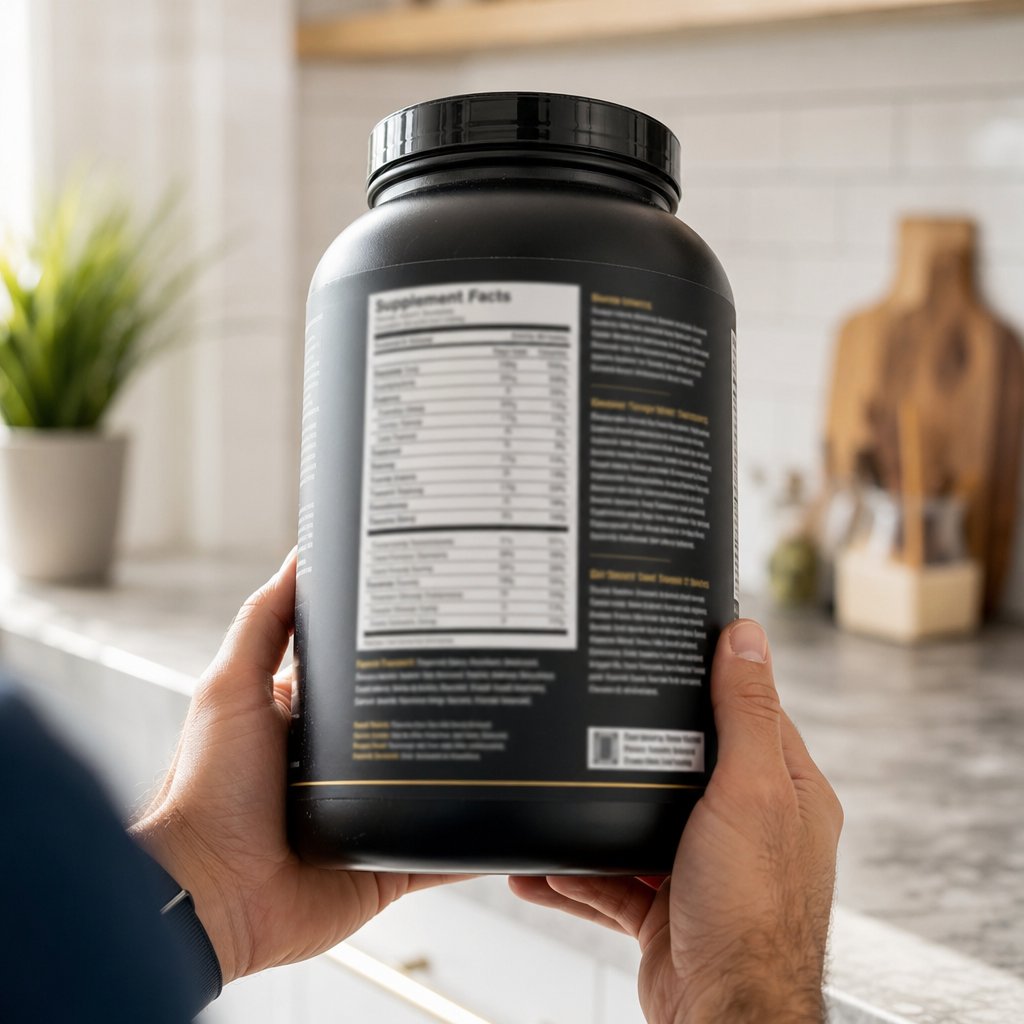
Every dietary supplement sold in the United States is required to carry a Supplement Facts panel. This panel follows a standardized format governed by FDA labeling regulations, which means the information is presented in the same order regardless of brand. Knowing where to look and what each section tells you is the fastest way to confirm exactly how protein powder is made for any specific product.
Here is a step-by-step checklist you can use the next time you are shopping for a protien powder, whether online or in-store:
- Check the protein source in the ingredient list. Scroll past the Supplement Facts panel to the full ingredient list printed below it. The protein source will be one of the first items listed because ingredients are ordered by predominance, meaning whatever the product contains the most of appears first. You should see terms like "whey protein concentrate," "pea protein isolate," "soy protein isolate," or "micellar casein." If the product contains insect-derived protein, you will see entries like "Acheta domesticus powder" (cricket), "Tenebrio molitor flour" (mealworm), or "cricket protein." No ambiguity, no hidden codes.
- Review the "Other Ingredients" section. Below the main ingredient list, manufacturers disclose additives, fillers, sweeteners, flavoring agents, and binders. Common entries include lecithin, natural flavors, sucralose, stevia, cellulose, and silicon dioxide. If anything unfamiliar appears, a quick search will tell you whether it is a standard additive or something worth questioning.
- Look for allergen declarations. The Food Allergen Labeling and Consumer Protection Act requires that labels disclose the presence of major food allergens, including milk, eggs, soy, wheat, peanuts, tree nuts, fish, and shellfish. A whey protein will always declare "Contains: Milk." An insect protein product should note potential shellfish cross-reactivity. If a product claims to be dairy-free but lists no allergen declaration for milk, that is consistent. If it lists milk but claims to be plant-based, something is off.
- Verify serving size and protein per serving. Check the serving size at the top of the Supplement Facts panel. Some brands use a 30g scoop while others use 40g or more. A product advertising "30g of protein per serving" from a 45g scoop is less protein-dense than one delivering 25g from a 30g scoop. This ratio tells you how much of the powder is actual protein versus fillers and flavoring.
- Look for third-party certification seals. Scan the label for marks from NSF International, USP, BSCG, Informed Sport, or ConsumerLab. These seals indicate the product has undergone independent testing for label accuracy, contaminant screening, and in some cases banned substance verification. A certification seal does not make a product perfect, but it does mean someone other than the manufacturer has verified the claims.
- Check for a Certificate of Analysis (COA). Some brands provide a QR code on the label that links to a COA for that specific batch. The COA confirms third-party testing results for potency, purity, and contaminant levels. If no QR code is present, check the manufacturer's website or contact them directly to request one.
That six-step process takes less time than reading the marketing copy on the front of the container. And it gives you something no viral video can: firsthand verification of every ingredient in your protein powder.
What to Look for When Choosing a Manufacturer You Can Trust
Labels tell you what is inside the container. But behind every label is a manufacturer, and the quality of that manufacturer determines whether the label is accurate in the first place. This is where transparency in the supply chain becomes your strongest quality signal.
Brands that work with established OEM/ODM health food manufacturers benefit from standardized production processes, regulatory compliance infrastructure, and documented quality control at every stage. These contract manufacturers operate under Current Good Manufacturing Practices (cGMPs) as required by FDA regulation 21 CFR Part 111, which governs everything from raw material qualification to finished product testing, facility sanitation, and recordkeeping.
A reputable contract manufacturer does more than just mix and package. They manage ingredient sourcing with traceable supply chains, conduct identity testing on raw materials, validate production processes, and maintain batch records that allow full traceability from raw input to finished product. For example, ZhuFeng offers OEM/ODM health food manufacturing with flexible product formats, including powder and granule formulations, customized formulation development, and scalable production. This kind of partnership gives nutrition brands and private label sellers a transparent, traceable supply chain where every ingredient and process step is documented and verifiable.
The difference between a trustworthy product and a questionable one often comes down to whether the brand can tell you who made it and how. If a company cannot name its manufacturer or provide documentation of its production standards, that silence speaks louder than any marketing claim on the front of the package.
If a protein powder's manufacturer and ingredient sourcing are transparent, consumers can trust what is on the label. Opacity is the real red flag, not worms.
With these label-reading skills and an understanding of what manufacturing transparency looks like, you have everything you need to evaluate any protein product on the market. The final step is putting it all together: matching the right protein source to your specific goals, dietary needs, and values so you can buy with confidence rather than confusion.
Choosing the Right Protein Powder with Confidence
You started this article with a question: is protein powder made of worms? You now know the answer is no, and more importantly, you know why the answer is no. The myth traces back to a single out-of-context video from a Korean mealworm processing facility. Mealworms are not worms at all but beetle larvae belonging to a completely different biological phylum. Whey, casein, and plant-based protein powders are manufactured through dairy and plant supply chains that have zero overlap with insect protein production. And every ingredient in a dietary supplement must be disclosed on the label by law. The claim was never about hidden ingredients. It was about missing context.
So where does that leave you when it is time to actually pick a protein powder? With clarity instead of confusion. The right choice depends on what you are trying to accomplish, what your body tolerates, and what matters to you beyond macros.
Matching Your Protein Choice to Your Goals
Every protein source covered in this article serves a different purpose. Rather than defaulting to whatever has the flashiest packaging or the most Instagram ads, match your selection to the outcome you are working toward. Here is a practical breakdown:
- Muscle building and post-workout recovery: Whey protein isolate or concentrate remains the gold standard. With a DIAAS score of 1.09 and rapid absorption, it delivers the leucine and branched-chain amino acids your muscles need to kickstart protein synthesis. Casein is a strong complement for overnight recovery because it digests slowly, providing a sustained amino acid release while you sleep.
- Vegan or dairy-free needs: A pea and rice protein blend creates a complete amino acid profile without any animal-derived ingredients. Soy protein isolate is another solid option, offering all nine essential amino acids on its own. Forbes recommends looking for blends with minimal additives and third-party testing, since plant-based powders can absorb contaminants from soil during cultivation.
- Sustainability-focused consumers: Insect protein, particularly cricket and black soldier fly larvae, offers the lowest carbon footprint among animal-derived protein sources. This is an intentional choice for people who specifically seek it out, not something hidden in conventional products. Expect to pay a premium, roughly two to three times the cost per gram compared to whey.
- Budget-conscious buyers: Whey protein concentrate is the most cost-effective option on the market, typically running between $0.04 and $0.06 per gram of protein. It delivers a complete amino acid profile, mixes easily, and is available in dozens of flavors from virtually every supplement brand.
- Sensitive stomachs and allergen concerns: Pea protein isolate is hypoallergenic and easy to digest. If you have a shellfish or dust mite allergy, avoid insect-based protein entirely due to tropomyosin cross-reactivity. For dairy sensitivities, any plant-based option sidesteps the lactose issue completely.
Notice that none of these recommendations involve worrying about what is protein powder made from in some secret, undisclosed way. The ingredient list tells you everything. Your job is simply to match the source to your situation.
Building Confidence in Your Supplement Choices
Confidence in a protein powder does not come from trusting a brand's marketing. It comes from verifying three things: what is in the product, who made it, and whether anyone independent has checked the claims.
Start with the label. Use the six-step checklist from the previous section to confirm the protein source, review the allergen declarations, and check the protein-to-serving-size ratio. This takes less than a minute and eliminates guesswork entirely.
Then look for third-party certification seals. Products carrying NSF Certified for Sport, Informed Sport, or USP marks have been independently tested for label accuracy, contaminant screening, and in some cases over 290 banned substances. These certifications exist precisely because the supplement industry has faced scrutiny over quality control. Choosing a certified product is the simplest way to close the trust gap between what a label claims and what the powder actually contains.
Finally, consider the manufacturer behind the brand. Transparent companies can tell you where their protein is sourced, how it is processed, and which facility produces it. Brands that partner with established OEM/ODM manufacturers benefit from cGMP-compliant production, traceable supply chains, and documented quality control at every stage. For brands and entrepreneurs looking to create their own protein products, working with a reputable contract manufacturer like ZhuFeng, which supports formats ranging from powders and capsules to gummy candy and oral liquids, ensures formulation integrity and regulatory compliance from the start. That level of manufacturing transparency is what separates products you can trust from products that rely on marketing alone.
The protein powder industry is regulated, labeled, and increasingly transparent. The worm myth thrives only in the absence of information, and you now have plenty of it. You understand the biology that separates true worms from insect larvae. You can trace the manufacturing process for whey, casein, and plant proteins step by step. You know that insect protein is a legitimate, clearly labeled product category that exists alongside, not inside, conventional supplements. And you have the label-reading skills to verify every claim for yourself.
Is protein powder made of worms? No. And now you do not just have to take someone's word for it. You have the knowledge to confirm it every time you pick up a tub.
Frequently Asked Questions About Protein Powder and Worms
1. Is whey protein powder made from worms or insects?
No. Whey protein is derived entirely from the liquid byproduct of cheese production. Milk is pasteurized, enzymes separate it into curds and whey, and the whey undergoes filtration, concentration, and spray drying to become powder. No insects or worms are involved at any stage. FDA regulations require full ingredient disclosure, so any non-dairy ingredient would have to appear on the label. If you want extra assurance, look for third-party certifications like NSF Certified for Sport or Informed Sport, which independently verify label accuracy.
2. What is protein powder actually made from?
Mainstream protein powders come from two primary categories: dairy and plants. Whey and casein are extracted from milk during cheese production. Plant-based options use pea, soy, rice, or hemp as raw materials, processed through wet fractionation or enzymatic extraction to isolate the protein. Insect-based protein powder (from crickets or mealworms) does exist as a separate, clearly labeled product category, but it is never mixed into conventional whey or plant supplements. Reputable OEM/ODM manufacturers like ZhuFeng maintain traceable supply chains and cGMP-compliant facilities to ensure every ingredient is documented and verifiable.
3. Are mealworms the same as regular worms?
No, and this biological confusion is the root of the viral myth. Mealworms are the larval stage of the darkling beetle (Tenebrio molitor), an insect belonging to the phylum Arthropoda. True worms like earthworms belong to the phylum Annelida. Mealworms have six legs, a hard exoskeleton, and undergo complete metamorphosis into adult beetles. Earthworms are soft-bodied, legless, and remain worms their entire lives. The misleading common name 'mealworm' triggers a disgust response that makes the protein powder myth more believable than it should be.
4. Is insect protein powder safe for people with shellfish allergies?
Potentially not. Insects and shellfish both belong to the phylum Arthropoda and share a structural protein called tropomyosin. Research confirms that people with IgE sensitivity to shrimp, crab, or lobster may experience cross-reactive allergic responses to cricket or mealworm protein. Dust mite allergy sufferers face a similar risk. Both the FDA and EFSA require allergen warnings on insect-based food products. If you have any arthropod-related allergy, consult an allergist before trying insect protein and stick with dairy or plant-based alternatives that carry no tropomyosin risk.
5. How can I verify what is really in my protein powder?
Read the Supplement Facts panel and full ingredient list on the back of the container. Ingredients are listed by predominance, so the protein source appears first. Look for clear terms like 'whey protein concentrate' or 'pea protein isolate.' Check allergen declarations, verify the protein-to-serving-size ratio, and look for third-party certification seals from NSF, USP, or Informed Sport. You can also request a Certificate of Analysis from the manufacturer. Brands that partner with transparent contract manufacturers, such as ZhuFeng's OEM/ODM health food services, maintain full batch traceability from raw material to finished product.