
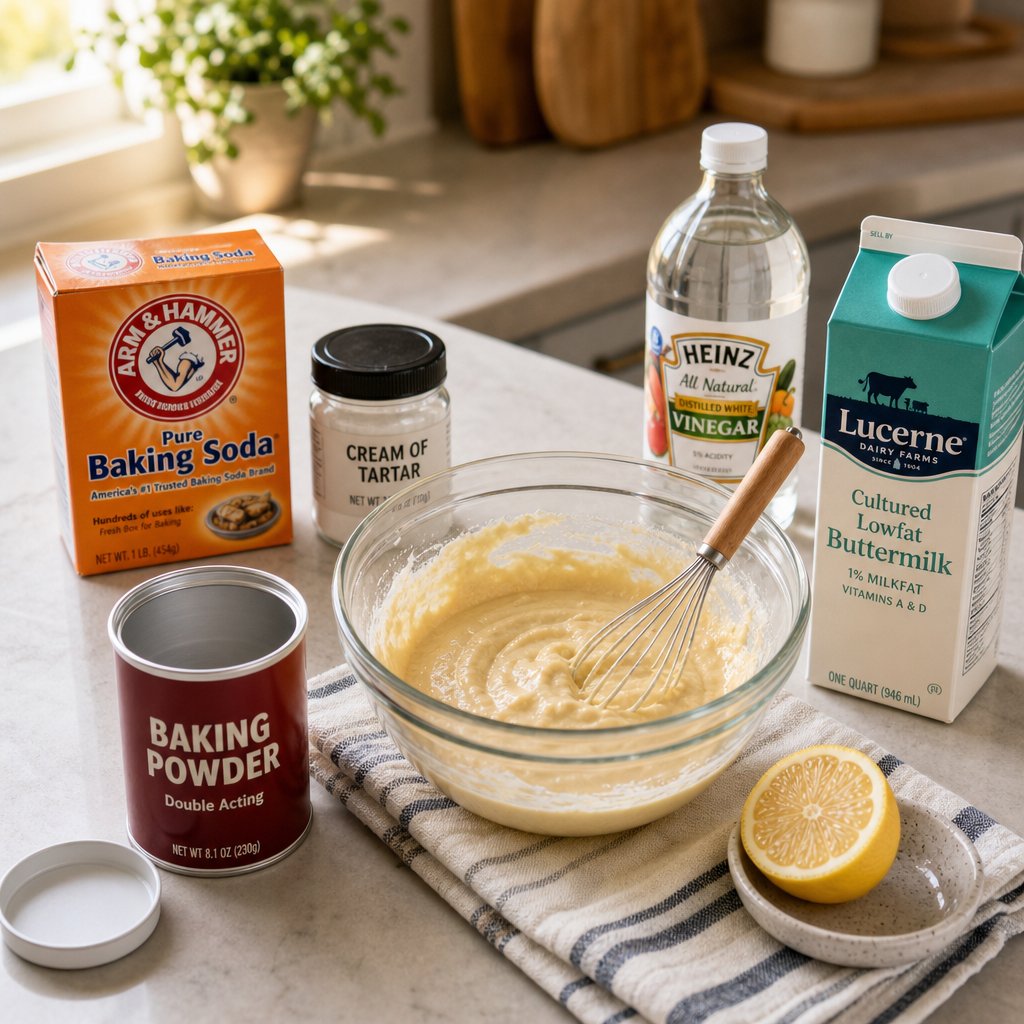
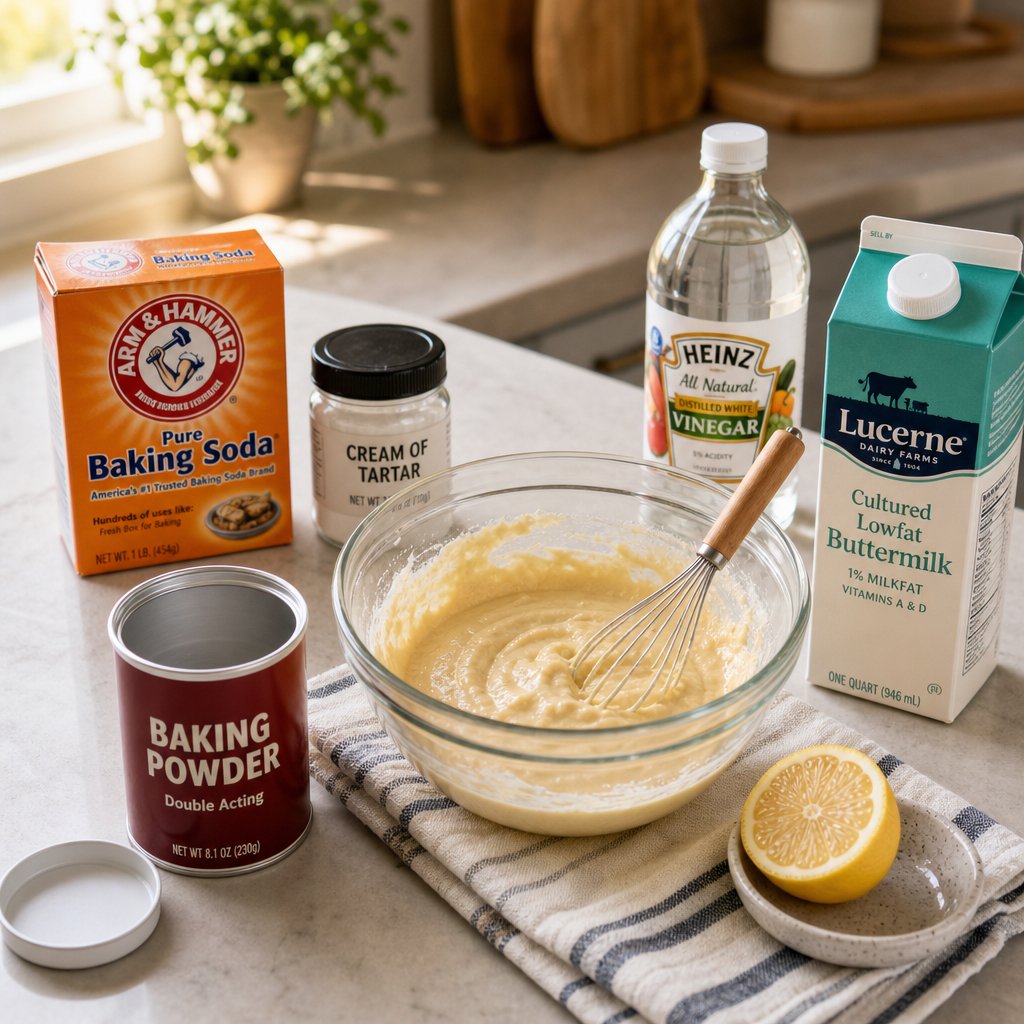
Run Out of Baking Powder?
Imagine this: your dry ingredients are measured, your oven is preheating, and you reach for the baking powder only to find an empty container. Before you abandon the recipe or make a last-minute grocery run, take a breath. If you're wondering what can I use instead of baking powder, the answer is surprisingly simple. Several effective substitutes are likely sitting in your pantry right now, ready to save your bake.
The key to choosing the right baking powder substitute starts with understanding what baking powder actually does. It's a chemical leavening agent. When combined with liquid and heat, it triggers an acid-base reaction that releases carbon dioxide gas. Those tiny CO2 bubbles get trapped in your batter, causing it to expand and rise into something light and tender. Every cake, muffin, and pancake relies on this gas production for its texture.
Why Your Recipe Needs a Leavening Agent
Without a leavening agent, baked goods turn out flat, dense, and heavy. The gas bubbles created during leavening are what give bread its open crumb, cakes their soft bounce, and biscuits their flaky layers. Skip the leavener entirely, and you're left with something closer to a hockey puck than a treat. So instead of baking powder, what can I use? Anything that replicates that same gas production or air incorporation.
Any effective substitute for baking powder must replicate the gas production or air incorporation that baking powder provides. Match the function, and your baked goods will still rise.
How This Guide Helps You Choose the Right Substitute
Not every sub for baking powder works in every situation. A pancake recipe calls for a different approach than a layered cake. That's why this guide organizes your options across three categories of leavening: chemical (baking soda paired with an acid), mechanical (whipped egg whites or creaming), and biological (yeast). You'll find specific ratios, recipe-type recommendations, and troubleshooting tips so you can confidently pick what is a substitute for baking powder based on what you have available and what you're baking. The right replacement depends on your ingredients, your recipe, and how much rise you need.
The Science Behind How Baking Powder Works
Choosing the right substitute becomes much easier when you understand what's actually inside that can. So what is in baking powder? At its core, it's a precise blend of just three components: a base, an acid, and a buffer. Each plays a specific role in creating the rise you depend on.
The base is baking soda (sodium bicarbonate). The acid is typically cream of tartar or sodium aluminum sulfate. The buffer is cornstarch, which absorbs ambient moisture and prevents the acid and base from reacting prematurely during storage. When you know these two key constituents of baking powder — the base and the acid — you can essentially reverse-engineer your own leavening system from pantry staples.
| Component | Role | Common Examples |
|---|---|---|
| Base (alkaline) | Reacts with acid to produce CO2 gas | Baking soda (sodium bicarbonate) |
| Acid salt | Triggers the chemical reaction with the base | Cream of tartar, sodium aluminum sulfate, monocalcium phosphate |
| Buffer (starch) | Absorbs moisture to prevent premature reaction | Cornstarch, potato starch |
The Acid-Base Reaction That Makes Batter Rise
When you add liquid to your batter, the acid and base dissolve and come into contact with each other. This triggers a chemical reaction that releases carbon dioxide gas. Those CO2 bubbles get trapped within the batter's structure, inflating it from the inside out. It's the same basic chemistry you'd see if you mixed vinegar and baking soda in a glass — just controlled and contained within your dough or batter.
A common question people ask is whether baking soda is the same as baking powder. It's not. Baking soda is only the alkaline component. It needs a separate acid source — like buttermilk, yogurt, or vinegar — to produce that gas. Baking powder already contains both the acid and the base in one convenient package. That's the fundamental difference between baking powder and baking soda, and it's why they aren't directly interchangeable without adjustments.
Single-Acting vs Double-Acting and Why It Matters
Most baking powder sold in stores is double-acting, meaning it produces gas in two stages. The first burst of CO2 happens at room temperature the moment liquid hits the powder. The second burst occurs when the batter reaches oven heat — typically above 170 degrees Fahrenheit. This two-phase design gives you a safety net. Even if your batter sits for a few minutes before baking, that second rise in the oven compensates for any gas lost during the wait.
Single-acting baking powder, by contrast, releases all its gas the instant it gets wet. There's no second chance in the oven. This distinction matters when you're building a homemade substitute. Combining baking soda with cream of tartar, for example, creates a single-acting leavener. The reaction starts immediately on contact with liquid, so you'll need to get your batter into the oven quickly. Delay too long, and those bubbles escape before the structure sets.
Understanding baking powder vs soda — and whether your substitute acts once or twice — is what separates a fluffy result from a flat one. With this chemistry in mind, you can confidently pair baking soda with the right acid source and know exactly how fast you need to move.
Baking Soda Plus Acid
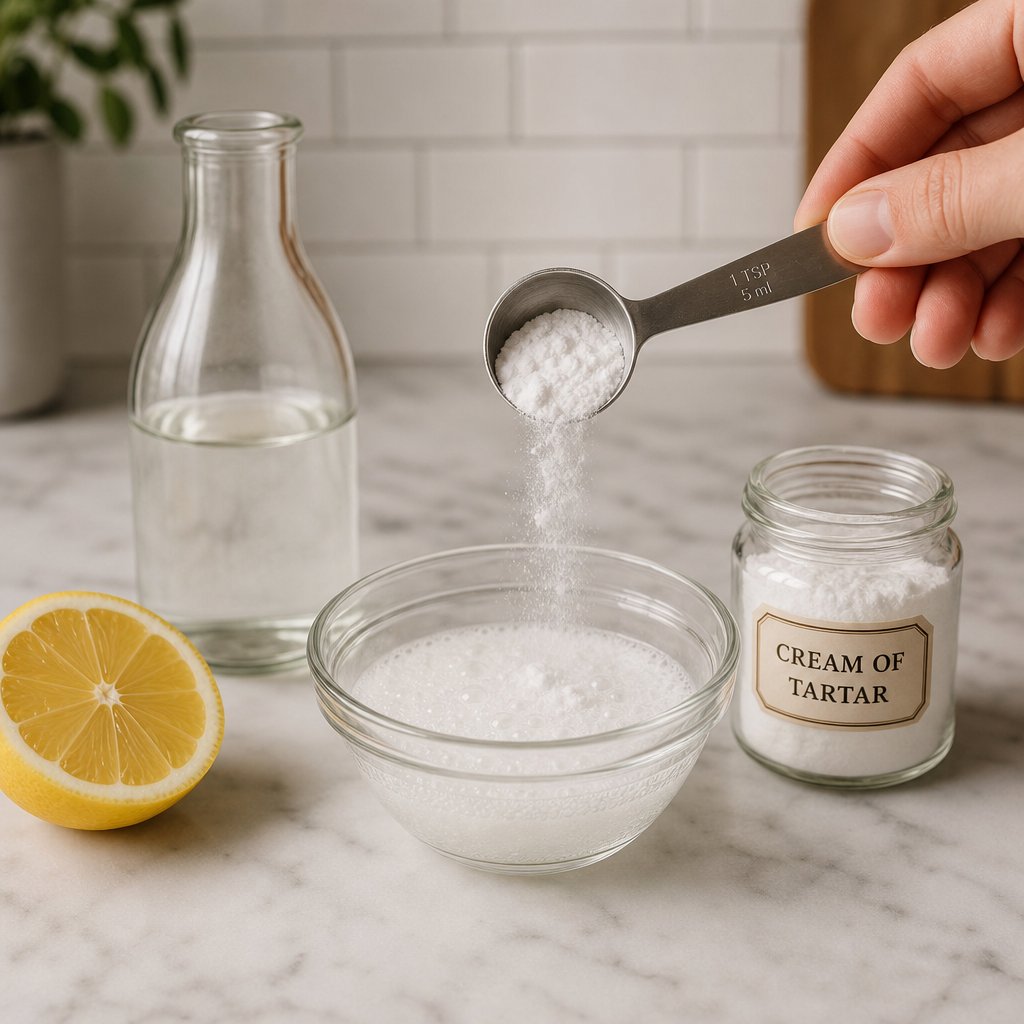
Since baking powder is really just baking soda plus an acid held together by a starch buffer, the most dependable way to replace it is to recreate that pairing yourself. If you have a box of baking soda in your pantry, you're already halfway there. All you need is an acidic ingredient to trigger the CO2-producing reaction, and you can effectively make baking powder from scratch.
The core formula to substitute baking soda for baking powder is straightforward: for every 1 teaspoon of baking powder your recipe calls for, use 1/4 teaspoon of baking soda combined with 1/2 teaspoon of an acid. The acid you choose depends on what's available and how it will affect the flavor of your finished bake.
Cream of Tartar Plus Baking Soda — The Classic DIY Baking Powder
If you want to know how to substitute baking soda for baking powder with the least impact on flavor, cream of tartar and baking soda is your best bet. Cream of tartar (potassium acid tartrate) is a dry, flavor-neutral acid that produces clean, reliable results. It's the same acid used in many commercial baking powders, which makes this combination the closest replica you can create at home.
The ratio is simple: 1/4 teaspoon baking soda plus 1/2 teaspoon cream of tartar replaces 1 teaspoon of baking powder. Because both ingredients are dry, you won't need to adjust any liquids in your recipe. This is the go-to method when you want to make baking powder that behaves almost identically to the store-bought version.
One thing to keep in mind: this creates a single-acting leavener. The reaction begins the moment your dry and wet ingredients combine, so mix quickly and get the batter into the oven without delay.
Lemon Juice and Vinegar as Acid Sources
No cream of tartar? Liquid acids work just as well for triggering the reaction. Using lemon juice and baking soda for baking powder is a popular option, especially in recipes where a hint of citrus complements the flavor profile. For each teaspoon of baking powder, combine 1/4 teaspoon baking soda with 1/2 teaspoon fresh lemon juice.
White vinegar follows the same ratio — 1/4 teaspoon baking soda plus 1/2 teaspoon vinegar per teaspoon of baking powder. White vinegar has a more neutral taste than lemon juice, making it a better choice for recipes where you don't want any citrus notes. Apple cider vinegar works too, though it can add a faint fruity undertone.
Because these are liquid acids, the reaction starts instantly and vigorously. You'll notice fizzing the second the acid meets the baking soda. That means baking soda instead of baking powder with a liquid acid demands speed — get your batter mixed and into the oven within a minute or two, or you'll lose the lift before the structure sets.
Yogurt and Buttermilk Combinations
Dairy-based acids like plain yogurt and buttermilk bring both acidity and moisture to the equation. Their lactic acid content reacts with baking soda to produce CO2, while also contributing tenderness and a subtle tang to baked goods.
To replace 1 teaspoon of baking powder, use 1/4 teaspoon baking soda combined with 1/2 cup of buttermilk or plain yogurt. Here's the critical adjustment: because you're adding a significant volume of liquid, you need to reduce other liquids in your recipe by the same amount. If your recipe calls for 1 cup of milk and you're adding 1/2 cup of buttermilk as your acid source, cut the milk down to 1/2 cup.
These combinations work especially well in pancakes, muffins, and quick breads where the extra moisture and slight tanginess enhance the final product rather than competing with it.
| Acid Source | Amount per 1 tsp Baking Powder | Baking Soda Needed | Flavor Impact | Timing Notes |
|---|---|---|---|---|
| Cream of tartar | 1/2 tsp | 1/4 tsp | Neutral — no noticeable taste | Single-acting; bake immediately after mixing |
| Lemon juice | 1/2 tsp | 1/4 tsp | Mild citrus; best in small amounts | Reacts instantly; bake within 1-2 minutes |
| White vinegar | 1/2 tsp | 1/4 tsp | Minimal if amount is small; can taste sour in larger quantities | Reacts instantly; bake within 1-2 minutes |
| Buttermilk | 1/2 cup | 1/4 tsp | Slight tang; adds tenderness | Reduce other liquids; bake promptly |
| Plain yogurt | 1/2 cup | 1/4 tsp | Mild tang; adds moisture | Reduce other liquids; bake promptly |
Regardless of which acid you choose, the timing principle stays the same. Every one of these combinations is single-acting — the chemical reaction fires as soon as liquid and base meet. Unlike double-acting baking powder, there's no second rise waiting for you in the oven. Prepare your pan and preheat your oven before you combine wet and dry ingredients, so you can transfer the batter immediately. That urgency is the one real trade-off when converting baking soda to baking powder with a DIY approach, but the results are well worth the hustle.
Substitutes When You Have No Baking Soda Either
Baking soda paired with an acid is the most direct replacement for baking powder, but what can I use if I don't have baking powder or baking soda? Maybe your box of baking soda is empty too, or perhaps dietary restrictions rule out sodium bicarbonate entirely. You still have options. The leavening world extends beyond chemical reactions into mechanical and biological territory, and each method can deliver real lift when you know how to use it.
Here's a quick overview of each baking powder alternative and where it shines:
- Self-rising flour — Best when you can swap your recipe's flour entirely; already contains leavening and salt.
- Club soda or sparkling water — Best for thin batters like pancakes, crepes, and waffles where gentle lift is enough.
- Whipped egg whites — Best for cakes and souffles where volume and lightness are the priority.
- Yeast — Best for recipes where you can allow proofing time, like some quick breads and pancakes.
Self-Rising Flour as a Built-In Solution
Self-rising flour is regular all-purpose flour pre-mixed with baking powder and salt — typically about 1.5 teaspoons of baking powder and 1/4 teaspoon of salt per cup of flour. If you have a bag in your pantry, you already have a built-in baking powder replacement. Simply swap it 1:1 for the all-purpose flour in your recipe, then omit any baking powder and salt the recipe calls for. The leavening is already there.
The catch: if your recipe relies on a specific flour type (like cake flour or whole wheat), self-rising flour changes the protein content and texture. It works best in biscuits, simple cakes, and quick breads where all-purpose flour was the original choice.
Club Soda and Sparkling Water for Gentle Lift
When you have no baking powder and no baking soda, carbonated water offers a surprisingly effective workaround. Club soda and sparkling water contain dissolved carbon dioxide — the same gas that chemical leaveners produce through a reaction. By replacing some or all of the liquid in your recipe with carbonated water, you introduce CO2 directly into the batter.
The lift is gentler than what chemical leaveners provide, but for thin batters it makes a noticeable difference. Sparkling water creates pockets of air as batter bakes, producing lighter pancakes, crispier waffles, and more delicate crepes. Swap it 1:1 for any water or milk in the recipe. One tip: mix gently. Aggressive stirring knocks the carbonation out before it can do its job.
Whipped Egg Whites for Mechanical Leavening
Mechanical leavening skips chemistry altogether. Instead of generating gas through a reaction, you physically trap air inside the batter by whipping egg whites to stiff peaks. Those air bubbles expand in the oven's heat, lifting the batter just like CO2 would.
To use this as an alternative to baking powder, separate the eggs in your recipe and beat the whites until they hold firm peaks. Then fold — don't stir — the whipped whites into your batter at the very end. Gentle folding preserves the air pockets. This technique is what gives angel food cake and chiffon cake their height without any chemical leavener at all. It works well in pancakes and lighter cakes too, though the texture will be slightly different — more delicate and airy than what baking powder produces.
Yeast as a Biological Alternative
Yeast is a living organism that produces CO2 through fermentation rather than a chemical reaction. It's the slowest option on this list, requiring proofing time (usually 5 to 10 minutes in warm water) plus a rest period for the dough to rise. That makes it impractical for most quick-bake situations, but it's a legitimate replacement for baking powder in recipes where you can afford the wait.
Yeasted pancakes, for example, use a batter that rests for 30 minutes to an hour before cooking, and the result is a tangier, chewier pancake with excellent rise. Some quick bread recipes also adapt well to yeast. Use about 1 teaspoon of instant dry yeast per cup of flour and allow the batter to rest until visibly buffy and expanded.
Together, these four options represent the full spectrum of what can be used instead of baking powder: chemical leavening (self-rising flour's built-in powder), physical leavening (carbonation from sparkling water), mechanical leavening (whipped egg whites), and biological leavening (yeast). The right choice depends less on which method is "best" and more on what you're actually baking — a question that deserves its own closer look.

Which Substitute Works Best for Your Specific Recipe
Knowing your options is one thing. Knowing which one to grab when you're staring at a bowl of pancake batter versus a cake pan full of carefully creamed butter — that's where the real value lies. The best substitute for baking powder in baking depends entirely on what you're making, because different recipes tolerate different types of lift, texture, and timing.
A pancake only needs moderate rise across a thin layer of batter. A layer cake demands consistent, even volume throughout a much thicker structure. Cookies actually benefit from less lift. Each recipe type has a sweet spot, and matching your substitute to that sweet spot is what separates a successful workaround from a disappointing result.
Best Substitutes for Pancakes and Waffles
Pancakes and waffles are forgiving. They're thin, they cook quickly, and they don't need dramatic height to taste great. That makes them ideal candidates for gentler substitutes for baking powder that might fall short in thicker batters.
Club soda is your easiest option here. Replace the milk or water in your pancake recipe with an equal amount of club soda, and you'll get noticeably fluffier results. The dissolved CO2 creates small air pockets throughout the thin batter, and since pancakes cook in just a few minutes on a hot griddle, the carbonation doesn't have time to escape before the structure sets.
Whipped egg whites are another strong choice. Separate the eggs your recipe already calls for, beat the whites to medium-stiff peaks, and fold them into the batter last. You'll notice the pancakes puff up more on the griddle and have a lighter, almost souffle-like interior. This is a popular substitute for baking powder in pancakes among home cooks who want extra fluffiness without any chemical leavener at all.
Expected rise compared to baking powder: about 70-85%. You'll get lighter-than-flat results, though perhaps not quite as uniformly puffy as a standard recipe with baking powder. Most people won't notice the difference once syrup is involved.
What Works for Cookies and Bars
Here's a scenario where less leavening can actually work in your favor. Cookies benefit from a denser, chewier texture and more horizontal spread. Too much rise produces cakey cookies — which some people enjoy, but it's not the classic result most bakers are after.
If you have baking soda, try using it alone at a reduced amount: about 1/4 teaspoon of baking soda for every 1 teaspoon of baking powder the recipe calls for. Without an added acid, the baking soda will react with whatever natural acidity exists in your dough — brown sugar, chocolate, molasses, or vanilla extract all contribute trace acidity. The result is a cookie that spreads slightly more, browns a bit deeper, and has that satisfying chewy center.
For bar cookies and brownies, you can often skip the leavener entirely. These dense, fudgy treats rely more on eggs and fat for structure than on chemical lift. If your brownie recipe calls for just 1/2 to 1 teaspoon of baking powder, omitting it will produce a slightly denser bar — which many people actually prefer. This is a solid substitute for baking powder in cookies and bars when you want to keep things simple.
Expected rise compared to baking powder: 50-70% for cookies (which is often desirable), and minimal difference for dense brownies and blondies.
Keeping Cakes Light Without Baking Powder
Cakes are where the stakes feel highest. Volume, tenderness, and an even crumb all depend on reliable leavening distributed throughout a thick batter. So what to substitute for baking powder when a fluffy cake is on the line?
Cream of tartar plus baking soda is your safest bet. The 2:1 ratio (1/2 teaspoon cream of tartar to 1/4 teaspoon baking soda per teaspoon of baking powder) produces consistent, flavor-neutral lift that won't compete with delicate cake flavors like vanilla or almond. Because both ingredients are dry powders, they integrate evenly into your flour mixture without creating wet spots or uneven reactions.
For cakes that already contain eggs, combining the cream of tartar method with whipped egg whites gives you a two-pronged approach. Use the baking soda and cream of tartar for chemical lift, then separate one or two of the recipe's eggs and fold in the beaten whites for additional mechanical volume. This layered strategy gets you closest to the full rise that double-acting baking powder provides.
One important note: mix your cake batter gently once the leavening is incorporated, and transfer it to the oven immediately. You're working with a single-acting system, so every minute of delay costs you bubbles. Preheat the oven and grease your pans before you start combining wet and dry ingredients.
Expected rise compared to baking powder: 80-95% with the combined method, 70-85% with cream of tartar and baking soda alone.
Muffins and Quick Breads — Moisture Meets Rise
Muffins and quick breads occupy a middle ground between pancakes and cakes. They need a solid dome and open crumb, but they're also more forgiving of slight density than a delicate layer cake. What can I substitute for baking powder in these recipes? Yogurt or buttermilk paired with baking soda is the ideal match.
These dairy acids do double duty. The lactic acid reacts with baking soda to produce CO2 for lift, while the liquid itself adds moisture and tenderness to the crumb. Muffins made with buttermilk have a subtle tang that complements fruit, nuts, and spices beautifully. Use 1/4 teaspoon baking soda plus 1/2 cup buttermilk or plain yogurt for each teaspoon of baking powder, and reduce other liquids accordingly.
Quick breads like banana bread and zucchini bread respond well to this swap because they already tend toward moist, dense textures. The yogurt or buttermilk enhances that quality while still providing enough rise for a nicely domed loaf. You can also add a tablespoon of vinegar or lemon juice to the wet ingredients as extra insurance if your recipe calls for more than 2 teaspoons of baking powder.
Expected rise compared to baking powder: 75-90%. Muffins may have slightly flatter tops, and quick bread loaves might not crack across the top as dramatically, but the interior texture remains tender and well-aerated.
| Recipe Type | Recommended Substitute | Expected Rise vs Baking Powder | Special Notes |
|---|---|---|---|
| Pancakes and waffles | Club soda (replace liquid) or whipped egg whites | 70-85% | Cook immediately; carbonation escapes quickly on the griddle |
| Cookies and bars | Baking soda alone (1/4 tsp per 1 tsp baking powder) or omit entirely for brownies | 50-70% | Less rise often improves texture; expect more spread and chewiness |
| Cakes | Cream of tartar + baking soda; optionally add whipped egg whites | 80-95% | Flavor-neutral; bake immediately since it's single-acting |
| Muffins and quick breads | Yogurt or buttermilk + baking soda | 75-90% | Reduce other liquids; adds moisture and subtle tang |
These percentages aren't exact science — your specific recipe, oven calibration, and mixing technique all play a role. But they give you a realistic picture of what to expect so you're not disappointed when results differ slightly from the original. The goal isn't a perfect replica. It's a bake that still tastes great and rises enough to satisfy.
Getting the right substitute matched to your recipe is half the battle. The other half? Nailing the measurements, especially when you're scaling up a batch or converting between baking soda and baking powder in larger quantities.
Exact Measurement Ratios and Conversion Guide
Ratios are everything when you're swapping leaveners. Too little baking soda and your batter stays flat. Too much acid and you'll taste it in every bite. The formulas below give you a reliable reference whether you're replacing a single teaspoon or scaling up for a double batch of muffins.
Standard Conversion Ratios You Can Trust
The foundational ratio is simple enough to memorize: 1 tsp baking powder to baking soda converts as 1/4 teaspoon baking soda plus 1/2 teaspoon of an acid source. This works because baking soda is roughly three to four times stronger than baking powder as a leavening agent. You need far less of it, but you must pair it with enough acid to fully neutralize it — otherwise you'll end up with a metallic, soapy aftertaste.
Here's the full conversion table for common amounts:
| Baking Powder Amount Called For | Baking Soda Needed | Acid Amount (Cream of Tartar) | Notes |
|---|---|---|---|
| 1 tsp | 1/4 tsp | 1/2 tsp | Standard single substitution; bake immediately |
| 1.5 tsp | 3/8 tsp (scant 1/2 tsp) | 3/4 tsp | Common in muffin recipes; measure carefully |
| 2 tsp | 1/2 tsp | 1 tsp | Consider splitting acid sources to avoid off-flavors |
| 1 Tbsp (3 tsp) | 3/4 tsp | 1.5 tsp | Large batch; strongly recommend combining two acid types |
If you're using a liquid acid like lemon juice or vinegar instead of cream of tartar, the same volume applies — 1/2 teaspoon of liquid acid per 1/4 teaspoon of baking soda. Just remember to reduce other liquids in the recipe slightly when scaling up, since larger amounts of liquid acid add noticeable moisture.
Scaling Substitutes for Larger Batches
Doubling or tripling a recipe doesn't change the ratio itself — you still use 1/4 teaspoon baking soda per teaspoon of baking powder being replaced. What changes is the risk of flavor problems. When a recipe calls for 2 to 3 teaspoons of baking powder, the substitute for 1 tsp baking powder simply multiplies. But using 1.5 teaspoons of cream of tartar or vinegar in a single batch can push the flavor toward sour or metallic territory.
The solution? Split your acid sources. For a recipe calling for 3 teaspoons of baking powder, try this approach:
- Use 3/4 teaspoon baking soda total (the base stays consistent)
- Combine 3/4 teaspoon cream of tartar with 3/4 teaspoon lemon juice as your acid
- Or use 1 teaspoon cream of tartar plus 1/4 cup yogurt (reducing other liquids accordingly)
Splitting the acid across two sources keeps any single flavor from dominating. Cream of tartar handles the bulk of the work with its neutral taste, while a small amount of lemon juice or yogurt fills the gap without becoming detectable. This strategy also applies when halving recipes — a half batch calling for 1/2 tsp baking soda to baking powder conversion still follows the same 1:2 soda-to-acid proportion, just in smaller increments.
Converting Between Baking Soda and Baking Powder
Sometimes the question runs in the opposite direction: can I use baking powder instead of baking soda? You can, but the swap requires significantly more volume. Because baking powder is weaker — it's diluted by its built-in acid and starch — you need about three times as much. The conversion of 1 tsp baking soda to baking powder equals roughly 3 teaspoons (1 tablespoon) of baking powder. McCormick's substitution guide confirms this 1:3 ratio as the standard replacement.
That's a lot of baking powder. At higher volumes, it can introduce a slightly bitter or chalky taste. If you go this route, reduce any salt in the recipe by at least half, since baking powder contains sodium. Also consider cutting back on acidic ingredients like buttermilk or lemon juice — the baking powder already brings its own acid to the party, and doubling up creates excess tanginess.
Can I substitute baking powder for baking soda in every recipe? Technically yes, but it's not ideal. Recipes that rely on baking soda for browning and flavor development — think chocolate chip cookies or gingerbread — lose some of that characteristic depth when you switch to baking powder. The alkaline environment baking soda creates helps Maillard browning happen faster, which baking powder can't replicate at the same intensity.
One critical rule for recipes that call for both baking soda and baking powder: only substitute the baking powder portion. The baking soda in those recipes serves a dual purpose — it neutralizes acidic ingredients (like buttermilk or brown sugar) while also contributing to browning. Replacing it would throw off the recipe's acid balance entirely. Leave the baking soda amount untouched and apply your conversion only to the baking powder called for.
With these ratios locked in, you have a reliable baking soda to baking powder conversion system that scales cleanly from a single teaspoon to a full tablespoon. The math stays consistent. What can trip you up, though, isn't the measurement itself — it's what happens when something goes wrong during baking. Flat results, off-flavors, and uneven textures all have specific causes, and most of them are fixable once you know what to look for.
Troubleshooting Common Failures with Substitutes
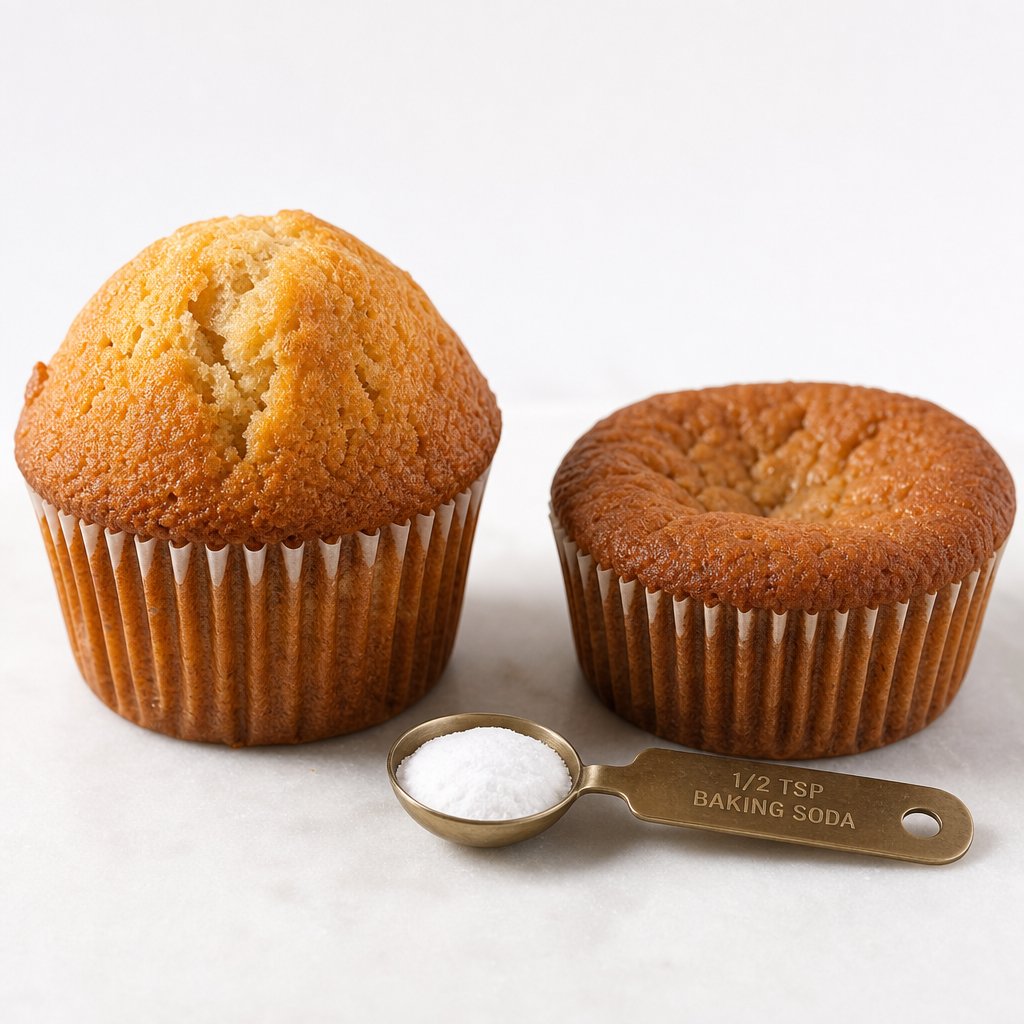
You measured carefully, picked the right substitute, and got the batter into the oven fast. But something still went wrong. Maybe the muffins taste metallic, or the cake came out flat despite your best efforts. When you sub baking soda for baking powder, the margin for error is thinner than with store-bought leavening. Each problem, though, has a specific cause — and a straightforward fix.
Fixing Metallic Taste from Too Much Baking Soda
This is the most common complaint when substituting baking soda for baking powder. That unpleasant metallic or soapy flavor means there's unreacted baking soda left in your batter. The acid you added wasn't enough to fully neutralize the base, so excess sodium bicarbonate lingers and you taste it in every bite.
- Problem: Metallic, soapy, or bitter aftertaste in the finished bake.
- Cause: Too much baking soda relative to the acid source. Even a small overshoot — an extra 1/8 teaspoon — can produce noticeable off-flavors.
- Fix: Reduce the baking soda by a pinch, or increase your acid. If you used 1/4 teaspoon baking soda with 1/2 teaspoon cream of tartar and still got a metallic note, bump the cream of tartar to 5/8 teaspoon next time. Alternatively, add a splash of lemon juice or vinegar to your wet ingredients as supplemental acid.
- Prevention: Measure baking soda with a proper measuring spoon, leveled off with a straight edge. Heaping spoons are the number one cause of this issue.
As Cake by Courtney notes, baking soda is much stronger than baking powder, and without enough acidic ingredient to neutralize it, your baked goods end up with that bitter, soapy taste. The fix is always the same: balance the equation by either reducing the base or increasing the acid.
Why Your Batter Went Flat and How to Prevent It
You did everything right on paper, but the result is dense and squat. Can you use baking soda instead of baking powder and still get good rise? Absolutely — but timing is the variable most people underestimate.
- Problem: Batter didn't rise in the oven; finished product is flat and dense.
- Cause: The acid-base reaction happened before the batter reached the oven. All the CO2 escaped while you were greasing pans, filling liners, or answering the phone. Homemade substitutes are single-acting — once the fizzing starts, the clock is ticking.
- Fix: Keep wet and dry ingredients in separate bowls until your oven is fully preheated and your pans are ready. Combine them at the last possible moment, mix briefly, and transfer to the oven within 60 to 90 seconds.
- Prevention: Prep everything before you start mixing. Oven preheated, pans greased, liners in place. Treat the moment you combine wet and dry as the starting gun.
- Problem: Batter rose initially but collapsed or sank in the center.
- Cause: Too much leavener. Excess baking soda creates a burst of gas that inflates the batter beyond what its structure can support. The bubbles pop, the structure collapses, and you're left with a sunken middle. Nordic Ware's baking guide confirms that too much leavening causes muffins to rise fast then collapse dramatically.
- Fix: Stick precisely to the 1/4 teaspoon baking soda per 1 teaspoon baking powder ratio. More is not better here — it's worse.
Can baking soda replace baking powder reliably? Yes, but only when you respect the single-acting nature of the substitute. Speed is your best friend.
Solving Dense Texture and Uneven Rise
Sometimes the bake rises but the texture is off — gummy, heavy, or unevenly domed. These issues usually trace back to mixing technique or ingredient distribution rather than the substitute itself.
- Problem: Dense, gummy, or tough crumb despite adequate rise.
- Cause: Over-mixing after adding the leavening. Once baking soda meets acid, the reaction produces gas immediately. Vigorous stirring pops those bubbles and overdevelops gluten simultaneously — a double penalty that leaves you with a chewy, heavy result.
- Fix: Fold wet into dry with a spatula using as few strokes as possible. Stop mixing when you still see a few small streaks of flour. Those streaks will hydrate in the oven. Lumpy batter is better than overworked batter.
- Problem: Uneven rise — one side of the muffin or cake is taller than the other, or some spots are airy while others are dense.
- Cause: The substitute wasn't distributed evenly through the dry ingredients. Unlike commercial baking powder (which includes cornstarch to help it disperse), plain baking soda can clump, especially in humid kitchens.
- Fix: Sift or whisk your baking soda together with the flour and other dry ingredients before adding any liquid. This ensures even distribution so every spoonful of batter gets the same amount of leavening.
- Problem: Overly tangy or sour flavor in the finished product.
- Cause: Too much vinegar or lemon juice used as the acid source. Liquid acids are potent, and their flavor carries through baking more than dry acids do.
- Fix: Switch to cream of tartar, which is virtually flavor-neutral. If you don't have cream of tartar, reduce the liquid acid slightly and accept a marginally lower rise in exchange for better taste. You can also split the acid between vinegar and yogurt to dilute the sharpness.
Testing If Your Baking Powder Is Still Active
Before you commit to a substitute, it's worth checking whether your baking powder has simply lost its potency. Can you substitute baking soda for baking powder if the real issue is just an expired can? You might not need to.
Here's the quick test: drop 1 teaspoon of baking powder into 1/3 cup of hot water. If it fizzes vigorously and immediately, the powder still has life in it. If the reaction is weak — just a few lazy bubbles — it's time to replace it or reach for a substitute.
One caveat: testing by Serious Eats found that this bubble test only confirms the powder can still react — not how strongly it reacts. Their 10-month study showed baking powder begins losing meaningful leavening strength around the six-month mark after opening, even when it still passes the water test. If your can has been open for more than six months, a substitute will likely outperform it regardless of what the bubbles suggest.
Write the opening date on your baking powder container. Replace it every six months for consistent results. And store it in a cool, dry cabinet — humidity triggers premature reactions that weaken the powder over time.
Most substitute failures come down to one of these five issues: too much soda, too slow to the oven, too much mixing, uneven distribution, or too much liquid acid. Fix the specific cause, and your next attempt will rise the way it should. The trickier question is which substitutes work for specific dietary needs — dairy-free, egg-free, vegan, or low-sodium — where the usual go-to options might not all be on the table.
Dietary Considerations for Every Substitute
Not every baker is working with the same set of ingredients on the table. Dairy allergies, egg sensitivities, vegan lifestyles, and sodium restrictions all narrow the field of available substitutes. The good news? Every dietary category still has reliable leavening options. You just need to know which ones fit your situation.
Dairy-Free and Vegan Leavening Options
If dairy is off-limits, the buttermilk and yogurt combinations covered earlier won't work for you. That still leaves plenty of effective choices. Here's what qualifies as a dairy-free baking soda substitute when paired with an acid:
- Lemon juice + baking soda — Fully dairy-free and vegan. Provides reliable chemical lift with a mild citrus note.
- White vinegar + baking soda — Dairy-free, vegan, and nearly flavor-neutral in small amounts. Works in cakes, muffins, and quick breads.
- Apple cider vinegar + baking soda — Dairy-free and vegan. Adds a faint fruity undertone that pairs well with spiced bakes.
- Club soda or sparkling water — Contains no animal products. Best for thin batters like pancakes and crepes.
- Whipped egg whites — Dairy-free but not vegan. Excellent mechanical leavening for cakes and souffles.
For bakers following a fully vegan diet, eggs are also off the table. That eliminates whipped egg whites as an option, but the acid-plus-soda combinations remain your strongest tools. Vinegar and baking soda or lemon juice and baking soda deliver the same chemical reaction regardless of dietary restrictions. Club soda works as a gentle alternative to baking powder in vegan pancake and waffle batters. And yeast — a living organism, not an animal product — provides biological leavening for recipes where proofing time is acceptable.
If you're wondering what to use instead of baking soda in a vegan context, potassium bicarbonate serves as a direct replacement for baking soda itself. It reacts with cream of tartar the same way sodium bicarbonate does, producing CO2 without any animal-derived ingredients. The ratio stays the same — just swap it 1:1 for baking soda in any acid-base combination.
Egg-free bakers have the broadest range of chemical options available:
- All acid + baking soda combinations — Cream of tartar, vinegar, lemon juice, buttermilk, and yogurt pairings are all egg-free.
- Club soda — No eggs involved. Replace liquid in the recipe 1:1.
- Self-rising flour — Contains no eggs. Swap for all-purpose flour and omit added leaveners.
- Yeast — Biological leavening with no egg dependency. Requires proofing time but works well in pancakes and some quick breads.
Low-Sodium Alternatives for Health-Conscious Baking
Here's something most bakers don't realize: standard baking powder contains sodium. Every teaspoon delivers roughly 350 to 500 milligrams of sodium from the baking soda inside it. For people managing hypertension or following a heart-healthy diet, that adds up — especially in recipes calling for 2 to 3 teaspoons.
If you're looking for a substitute for baking soda and baking powder that reduces sodium, these options keep the salt content low:
- Whipped egg whites — Zero sodium. Pure mechanical leavening through trapped air. Best for cakes and lighter batters.
- Club soda — Contains minimal sodium (about 75 mg per cup versus 350+ mg in a teaspoon of baking powder). Provides gentle carbonation-based lift.
- Potassium bicarbonate + cream of tartar — A true sodium-free chemical leavener. Use the same ratio as regular baking soda: 1/4 teaspoon potassium bicarbonate plus 1/2 teaspoon cream of tartar replaces 1 teaspoon of baking powder. This is a reliable replacement for baking soda and powder for anyone on a strict sodium-restricted diet.
What can I use in place of baking soda when sodium is the concern? Potassium bicarbonate is the direct answer. It behaves identically in acid-base reactions but contributes potassium instead of sodium. You can find it online or in health food stores, and it stores just as well as regular baking soda. The only difference you might notice is a very slight mineral taste at higher quantities, which cream of tartar's neutral flavor helps mask.
Recipes That Work Without Any Leavening Agent
Sometimes the simplest solution is skipping the leavener entirely. Not every baked good needs chemical lift to taste great. Dense, rich, or flat-by-design recipes often perform just fine — or even better — without any baking powder at all.
Recipes that tolerate omitting leavening altogether:
- Fudgy brownies — Rely on eggs, butter, and chocolate for structure. Omitting baking powder produces a denser, more intensely fudgy result that many bakers prefer.
- Shortbread cookies — Designed to be dense and crumbly. Butter and flour do all the structural work.
- Flatbreads and tortillas — Meant to stay thin and pliable. No rise needed or wanted.
- Thin, crispy cookies — Lace cookies, tuiles, and pizzelle get their texture from sugar and fat, not leavening.
- Flourless chocolate cake — Eggs provide all the lift through whipping. No chemical leavener required.
If your recipe falls into one of these categories, you can skip the substitute hunt entirely. The absence of baking powder won't ruin the result — it might even improve it by creating a denser, more concentrated flavor and texture. This is an alternative to baking soda and baking powder that requires zero extra ingredients: just leave it out and let the recipe's other components do the work.
Dietary restrictions don't have to mean compromised results. Whether you're baking dairy-free, egg-free, vegan, or low-sodium, at least two or three reliable leavening methods remain available to you. The key is matching your restriction to the right substitute and adjusting your expectations for texture accordingly. For home bakers, these workarounds handle virtually any situation. But when precision and consistency need to scale beyond a single kitchen — into commercial production or formulated health products — the challenge shifts from finding a substitute to engineering a complete leavening system from the ground up.
From Home Baking to Scalable Health Food Formulation
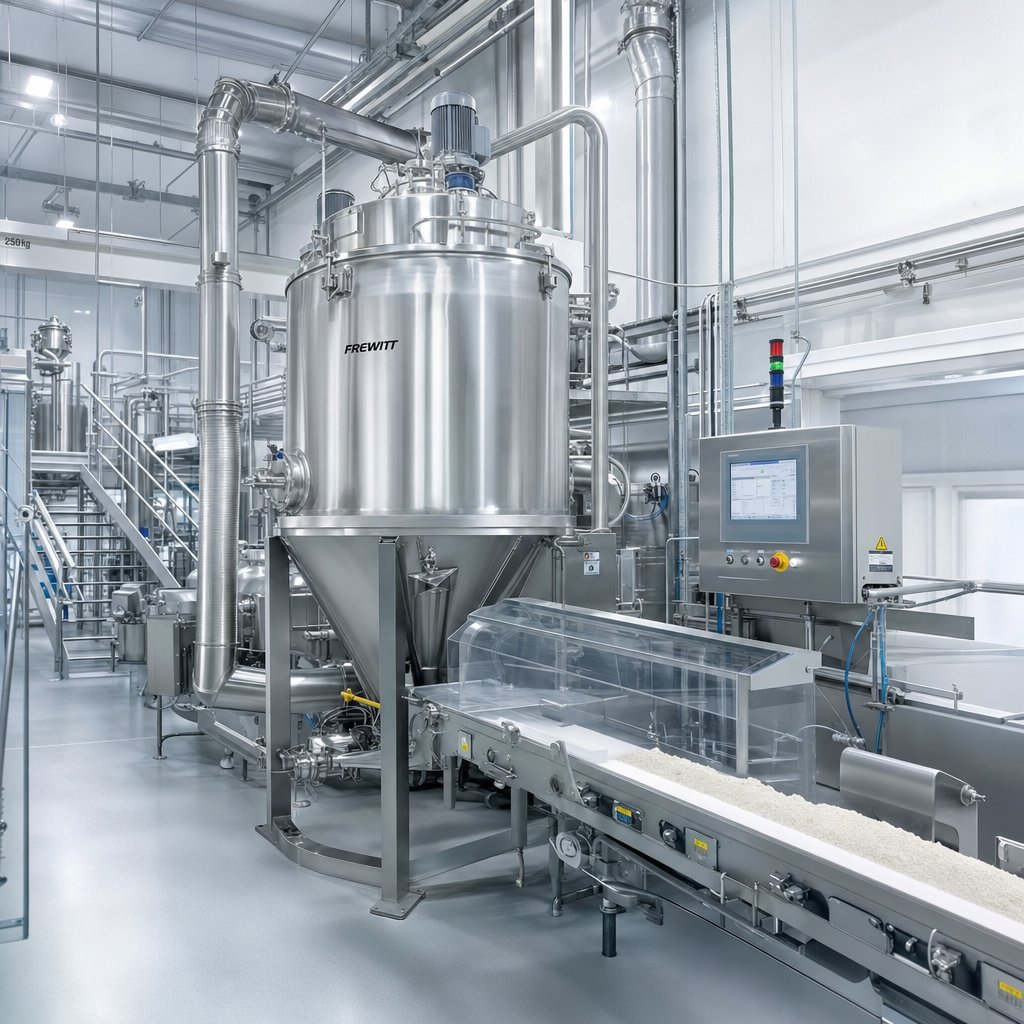
A home baker asking what can you use in place of baking powder can solve the problem with a quick trip to the pantry and a measuring spoon. But imagine scaling that same improvisation to a production line turning out 10,000 protein muffins per day. Suddenly, "a pinch of this and a splash of that" doesn't cut it. Commercial baking and functional food development demand leavening systems that perform identically batch after batch, across varying ambient temperatures, ingredient lots, and processing speeds.
Why Consistent Leavening Matters Beyond the Home Kitchen
In commercial production, the optimal leavening system varies by application. The rate of gas release, the neutralization value of each acid, and the timing of CO2 production all need to be calibrated to the specific product's moisture content, bake time, and desired crumb structure. As industry experts note, unbalanced leavening systems affect appearance, flavor, and texture — producing coarse crumb, soapy off-flavors, or insufficient volume at scale. Even switching between two baking powders with identical ingredient labels can yield different results because raw material sourcing affects reaction rates.
For brands developing functional baked goods — think high-protein bars, fiber-enriched muffins, or low-sugar baking mixes — the challenge intensifies. Dense protein powders and viscous fiber additives alter batter viscosity and moisture absorption, which directly impacts how leavening agents perform. What can replace baking powder in these formulations isn't a single pantry swap. It's a tailored system designed through testing, where specific leavening acids are selected for their controlled release profiles and compatibility with functional ingredients.
Custom Formulation for Health-Focused Baked Products
The growing demand for health-conscious bakery products — items enriched with proteins, fibers, and whole grains — means that leavening is just one piece of a larger formulation puzzle. Nutrition brands, supplement importers, and private label sellers developing market-ready baking mixes or powder-format health foods need every ingredient working in concert: the leavening system, the protein source, the sweetener, and the binding agents all influence each other.
This is where OEM/ODM manufacturing partners become valuable. Rather than reverse-engineering leavening chemistry through trial and error, businesses can leverage specialized manufacturers like ZhuFeng for custom formulation and scalable production of powder and granule-based health products. Their flexible format capabilities — spanning everything from baking mix powders to capsules and gummies — let brands focus on market positioning while the formulation science is handled at the production level.
For the home baker, knowing what can you substitute for baking powder is a practical kitchen skill. For a business launching a functional baking line, it's a formulation decision that determines product consistency, shelf stability, and consumer satisfaction across thousands of units. Whether your needs stop at a single batch of muffins or extend to a full product launch, the underlying principle remains the same: understand the chemistry, match the method to the application, and get the ratios right.
Frequently Asked Questions About Baking Powder Substitutes
1. Can I just skip baking powder in a recipe?
It depends on what you're baking. Dense treats like fudgy brownies, shortbread cookies, flatbreads, and flourless chocolate cake perform well without any chemical leavening. However, recipes that rely on lift for their texture — cakes, muffins, and fluffy pancakes — will turn out flat and heavy without a leavening agent or suitable substitute.
2. What is the best substitute for baking powder in cakes?
Cream of tartar combined with baking soda delivers the most reliable results for cakes. Use 1/2 teaspoon cream of tartar plus 1/4 teaspoon baking soda per teaspoon of baking powder. This combination is flavor-neutral and integrates evenly into dry ingredients. For extra volume, fold in whipped egg whites alongside the chemical substitute to achieve 80-95% of the rise that standard baking powder provides.
3. How much baking soda do I use to replace 1 teaspoon of baking powder?
Use 1/4 teaspoon of baking soda plus 1/2 teaspoon of an acid source such as cream of tartar, lemon juice, or white vinegar. Baking soda is roughly three to four times stronger than baking powder, so you need far less. The acid is essential — without it, unreacted baking soda leaves a metallic or soapy taste in your baked goods.
4. Can I use self-rising flour instead of adding baking powder?
Yes. Self-rising flour already contains approximately 1.5 teaspoons of baking powder and 1/4 teaspoon of salt per cup. Swap it 1:1 for all-purpose flour and omit any baking powder and salt your recipe calls for. It works best in biscuits, simple cakes, and quick breads that originally use all-purpose flour. Avoid it when a recipe requires cake flour or whole wheat flour, as the protein content differs.
5. Are there sodium-free alternatives to baking powder for health-conscious baking?
Potassium bicarbonate is a direct sodium-free replacement for baking soda in any acid-base leavening combination. Use it at the same 1/4 teaspoon ratio with 1/2 teaspoon cream of tartar per teaspoon of baking powder replaced. Whipped egg whites and club soda also provide leavening with minimal sodium. For commercial health food brands needing consistent sodium-free formulations at scale, OEM/ODM manufacturers like ZhuFeng offer custom powder-format production with precisely calibrated leavening systems.