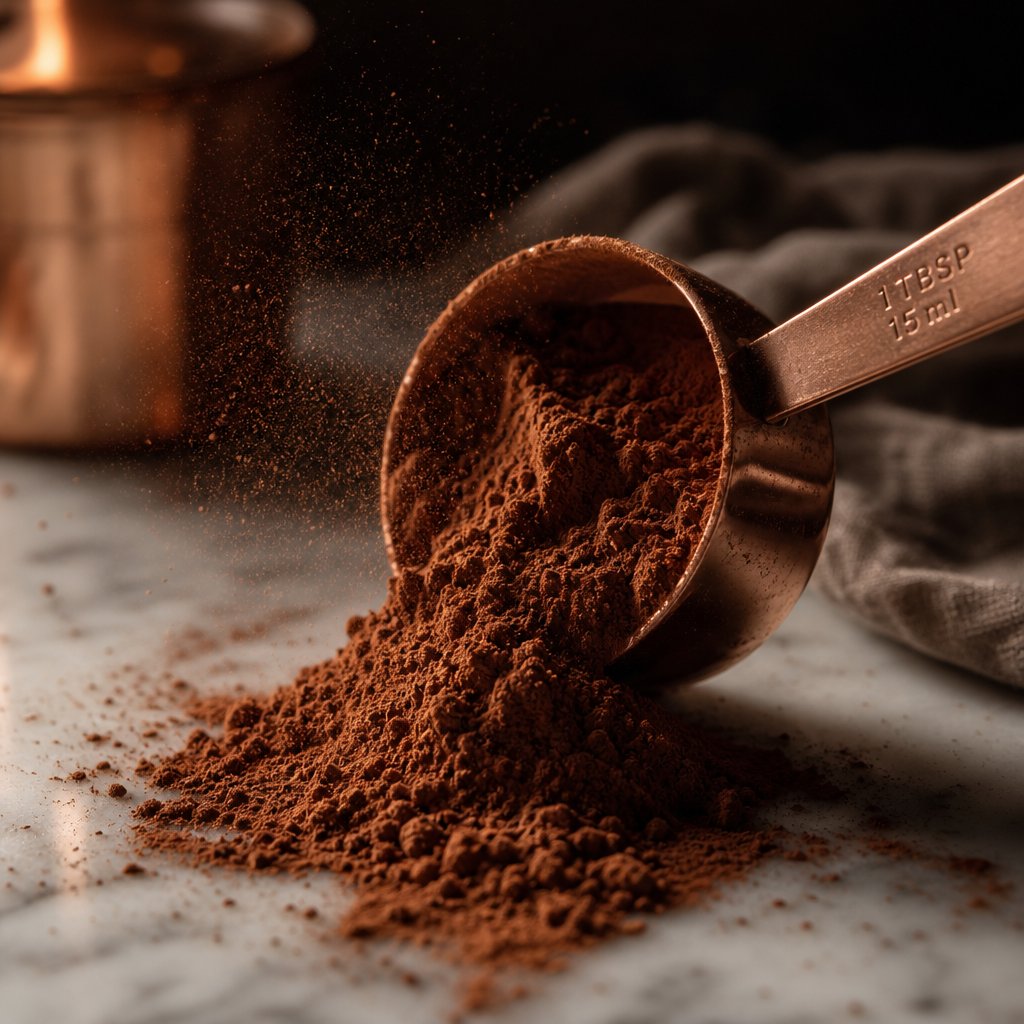
Dutch Cocoa Powder Defined and Demystified
You grab a tin of cocoa powder at the store, flip it over, and spot the phrase "processed with alkali." What does that actually mean for your brownies, your hot chocolate, your go-to cake recipe? Understanding what is dutch cocoa powder comes down to one key chemical treatment that changes everything about how cocoa behaves in your kitchen.
A Clear Definition of Dutch Cocoa Powder
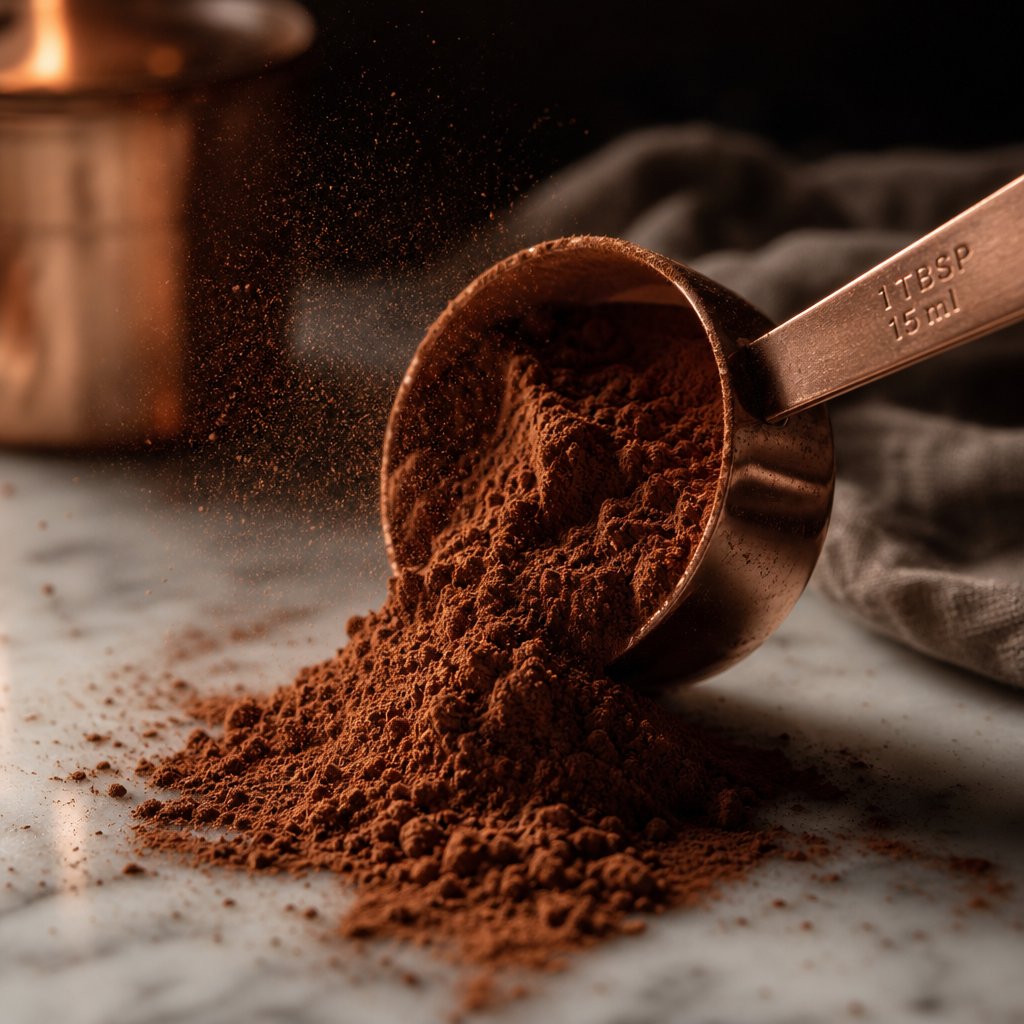
Dutch cocoa powder is cocoa that has been treated with an alkaline solution (typically potassium carbonate) to neutralize its natural acidity, resulting in a darker color, milder flavor, and improved solubility compared to natural cocoa powder.
That single processing step shifts the pH from the 5-6 range found in natural cocoa up to a neutral or slightly alkaline 7-8. The result? A powder that dissolves more easily in liquids, carries a smooth and earthy flavor profile rather than sharp fruitiness, and produces that rich, deep brown color you associate with European-style chocolate desserts.
So what is dutch process cocoa powder in practical terms? It is cocoa with the bite taken out. The alkalization mellows tannins, reduces bitterness, and triggers chemical reactions that deepen both color and complexity. Dutch process cocoa powder pairs differently with leavening agents, behaves differently in batters, and delivers a distinctly mellow chocolate character that natural cocoa simply cannot replicate.
Why It Is Called Dutch Process
Here is a common misconception worth clearing up right away: "Dutch" does not mean the cocoa beans come from the Netherlands. The name refers entirely to the processing method, which was invented by a Dutch chemist in the 19th century. Any cocoa bean from any origin, whether grown in West Africa, South America, or Southeast Asia, can become dutch processed cocoa through this alkalization technique.
When you see what is dutch cocoa on an ingredient label or in a recipe, you are looking at a description of how the powder was made, not where it was grown. This distinction matters because it means dutching is a spectrum. Manufacturers can apply lighter or heavier alkalization to the same beans, producing a wide range of colors, flavors, and pH levels from a single origin.
This guide covers the full journey, from the historical invention that started it all, through the chemistry of alkalization, to practical kitchen applications and commercial sourcing. The story begins with a 19th-century innovator whose twin inventions didn't just create a new ingredient. They reshaped the entire chocolate industry.
The History Behind Dutch Process Cocoa
Imagine drinking chocolate in the early 1800s. It was thick, greasy, and gritty, a fatty beverage made by grinding cacao beans into a paste and stirring it into hot water. The natural cocoa butter, which makes up roughly 53% of the cacao mass, refused to blend smoothly with liquid. The drink was acidic, bitter, and expensive enough to remain a luxury for the wealthy. That was the state of chocolate before one Dutch chemist changed everything.
Coenraad van Houten and the 1828 Invention
In 1828, Coenraad Johannes van Houten patented a hydraulic press in the Netherlands that could squeeze most of the cocoa butter out of processed cacao. His press reduced the fat content from about 53% down to roughly 27%, leaving behind a dry cake that could be pulverized into a fine, lightweight powder. But Van Houten didn't stop there. He treated that powder with alkaline salts to neutralize its harsh acidity and improve its ability to dissolve in liquid. This alkalization step is the dutch process, and it gave the world what we now call dutch chocolate.
His dual innovations solved two problems at once. The press made cocoa powder physically possible. The alkaline treatment made it actually pleasant to drink, smooth, mild, and easy to mix into milk or water without clumping.
How Dutch Processing Changed the Chocolate Industry
Van Houten's inventions triggered a chain reaction across the entire confectionery world. The cocoa butter he pressed out became a valuable byproduct. Chocolate makers discovered that adding extra cocoa butter back into ground cacao created a smoother, more moldable substance, one that could be shaped into bars and filled confections. Without the press, solid eating chocolate as we know it would not exist.
So what is dutched chocolate in a broader sense? It is the foundation of modern chocolate culture. Dutch process cocoa made chocolate affordable and accessible to ordinary people across Europe, transforming it from an elite beverage into an everyday ingredient. The dutch process chocolate industry that followed, from milk chocolate bars to cocoa-dusted truffles, traces its lineage directly back to Van Houten's Amsterdam workshop.
His chemical insight also set the stage for a deeper question: what exactly happens inside cocoa powder during alkalization, and how do different levels of treatment produce such dramatically different results?
How the Alkalization Process Works
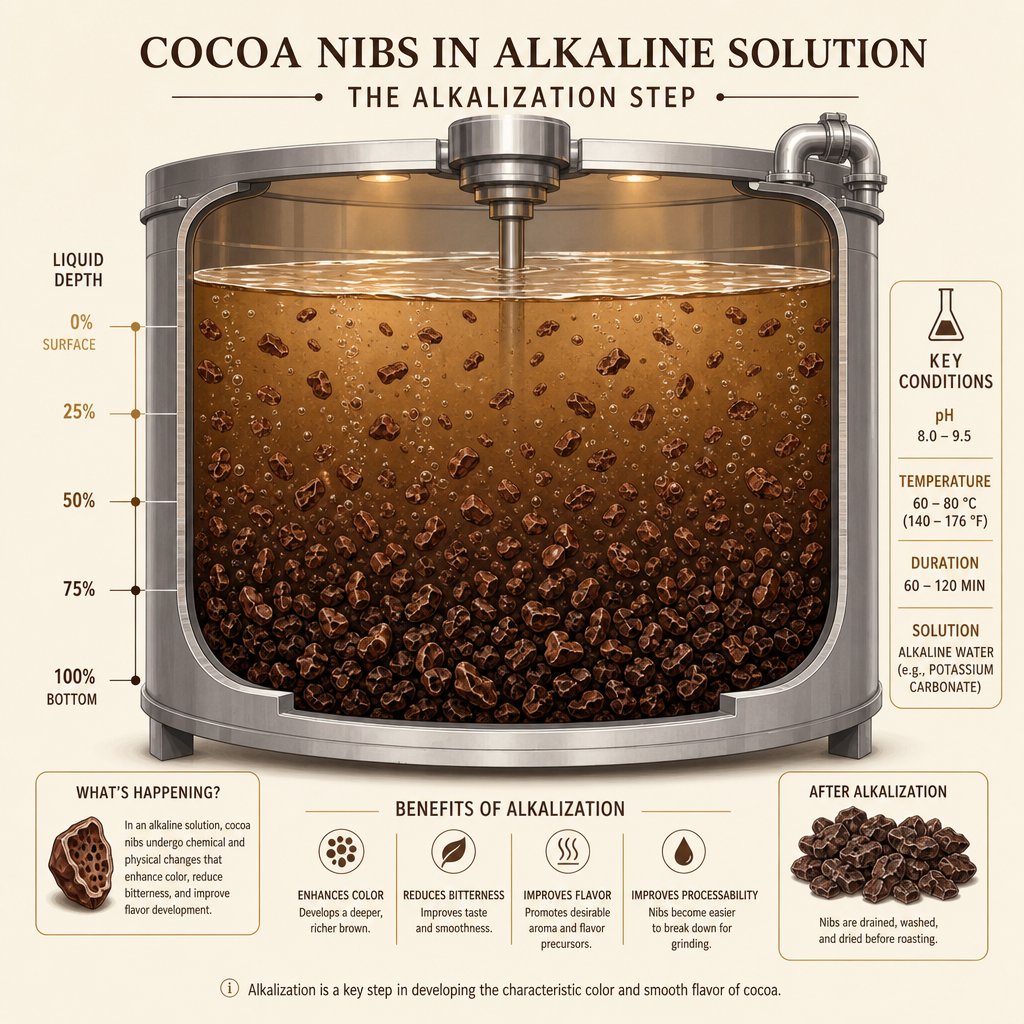
Van Houten's alkaline treatment sounded simple in concept: add a base to an acid and neutralize it. In practice, the process involves precise chemistry, careful timing, and multiple variables that determine whether the finished powder turns out mellow and reddish-brown or intensely dark and nearly flavorless. Understanding how is cocoa powder made through the Dutch process means following the bean from harvest through a series of transformations, each building on the last.
Step-by-Step Alkalization Explained
The journey starts long before any alkali enters the picture. Cocoa beans are first fermented for several days to develop flavor precursors, then dried and shipped to processing facilities. There, the beans are roasted at temperatures typically between 115 and 120 degrees Celsius, cracked open, and separated from their shells to produce cocoa nibs.
Here is where the Dutch process diverges from natural cocoa production. The nibs, or sometimes the pressed cocoa cake, are treated with an alkaline solution. The two most common alkalizing agents are potassium carbonate and sodium hydroxide. Potassium carbonate is the industry standard, producing a reddish-brown to dark brown powder with a smooth, chocolate-forward flavor. Sodium hydroxide is more aggressive, reserved for creating ultra-dark black cocoa powders with very high pH levels.
During treatment, the nibs or cake soak in the alkaline solution at elevated temperatures (around 80 to 100 degrees Celsius) for a controlled duration, often 60 to 80 minutes. The concentration of the solution, the temperature, and the reaction time all interact to determine the final result. After alkalization, the material is dried, pressed to remove cocoa butter, and milled into the fine powder you find on store shelves. When you see "processed with alkali" on a label, this is the step it refers to.
The Chemistry of Color and Flavor Changes
So what does processed with alkali mean at a molecular level? Several reactions happen simultaneously when the alkaline solution meets cocoa solids.
First, the alkali neutralizes naturally occurring organic acids, primarily acetic acid (formed during fermentation) and citric acid. Research on cocoa processing shows that raw fermented beans start at a pH around 5.5, and alkalization with potassium carbonate raises that to 7.5-8.0. This acid neutralization is what removes the sharp, tangy bite of natural cocoa.
Second, the elevated pH triggers Maillard reactions between amino acids and sugars in the cocoa. These reactions generate new flavor compounds, particularly pyrazines and esters, while simultaneously deepening the color of the powder. The same study found that pyrazines, which contribute nutty, roasty, and chocolate-like aromas, form primarily during roasting but are influenced by the pH environment that alkalization creates.
Third, alkalization modifies tannin structures. Tannins are responsible for the astringent, mouth-drying sensation in natural cocoa. The alkaline treatment breaks down and restructures these polyphenols, reducing bitterness and creating a smoother mouthfeel. It also improves solubility by breaking down cell walls and reducing particle clumping, which is why alkali processed cocoa powder dissolves so much more readily in liquids than its natural counterpart.
pH Levels and What They Mean
Alkalized cocoa powder is not a single product. Different alkalization intensities produce distinctly different powders, and manufacturers control this by adjusting the concentration of the alkalizing agent, the treatment temperature, and the reaction duration. Even a shift of 0.3 pH units can noticeably affect color, flavor, and how the powder behaves in a recipe.
The table below breaks down the relationship between alkalization level, pH range, and the resulting characteristics of cocoa powder processed with alkali:
| Alkalization Level | pH Range | Color Outcome | Flavor Profile |
|---|---|---|---|
| Natural (no alkalization) | 5.0 - 5.8 | Light tan to medium brown | Sharp, fruity, acidic |
| Lightly Dutched | 6.0 - 7.2 | Reddish-brown | Chocolatey, round, some fruity undertones retained |
| Standard / Medium Dutched | 7.0 - 8.0 | Deep brown | Smooth, earthy, balanced chocolate flavor |
| Heavily Dutched (Black Cocoa) | 8.0+ | Very dark brown to near-black | Very mellow, nearly neutral, minimal bitterness |
You'll notice that the ranges overlap slightly. That's intentional. A powder at pH 7.0 could be classified as either lightly or standard dutched depending on the manufacturer's labeling conventions. What matters most is the practical outcome: lighter alkalization preserves more of the bean's original character, while heavier treatment prioritizes color depth and mildness at the expense of complexity.
For home bakers, this spectrum explains why two products both labeled "alkalized cocoa" can look and taste quite different. For food manufacturers, it means specifying an exact pH target is essential for batch-to-batch consistency. The degree of dutching doesn't just change aesthetics. It fundamentally alters how the powder interacts with other ingredients, particularly the leavening agents that make your cakes rise.
Dutch Process vs Natural Cocoa Powder
That interaction between cocoa pH and leavening agents is exactly where the dutch process vs regular cocoa debate gets practical. Pick the wrong powder for your recipe, and you could end up with a flat cake, a soapy aftertaste, or cookies that refuse to spread. The differences between these two powders go far beyond color on a spoon.
Flavor and Color Differences
Side by side, the contrast is obvious. Natural cocoa powder is light tan to medium brown with a sharp, fruity, almost citrusy bite. It tastes intensely of chocolate but with an acidic edge that can feel bright and assertive on the palate. Dutch process cocoa, by comparison, is deep brown to near-black, with a smooth, earthy, mellow flavor. The sharpness is gone, replaced by a rounded chocolate character that many describe as "fudgy" or "bittersweet."
Color carries through to the finished product. A cake made with natural cocoa powder will be lighter, more reddish-brown. The same recipe made with Dutch cocoa will look noticeably darker and richer. This visual difference is purely cosmetic in some applications, but in others, like a dramatic chocolate layer cake, it defines the entire presentation.
Solubility is another practical gap. Dutch cocoa dissolves readily into liquids because the alkalization process breaks down cell walls and reduces particle clumping. Natural cocoa tends to clump and resist mixing, which is why blooming it in hot liquid is a common technique to improve dispersion in batters.
Leavening Chemistry in Baking
Here is where choosing between dutch processed cocoa powder vs cocoa powder (natural) truly matters. It comes down to acid-base chemistry.
Natural cocoa is acidic, sitting around pH 5.5. When paired with baking soda (a base), the two react to produce carbon dioxide bubbles. Those bubbles are what make your muffins rise and your cookie dough spread into thin, crispy rounds. The reaction also neutralizes the cocoa's acidity, smoothing out its sharp flavor in the finished bake.
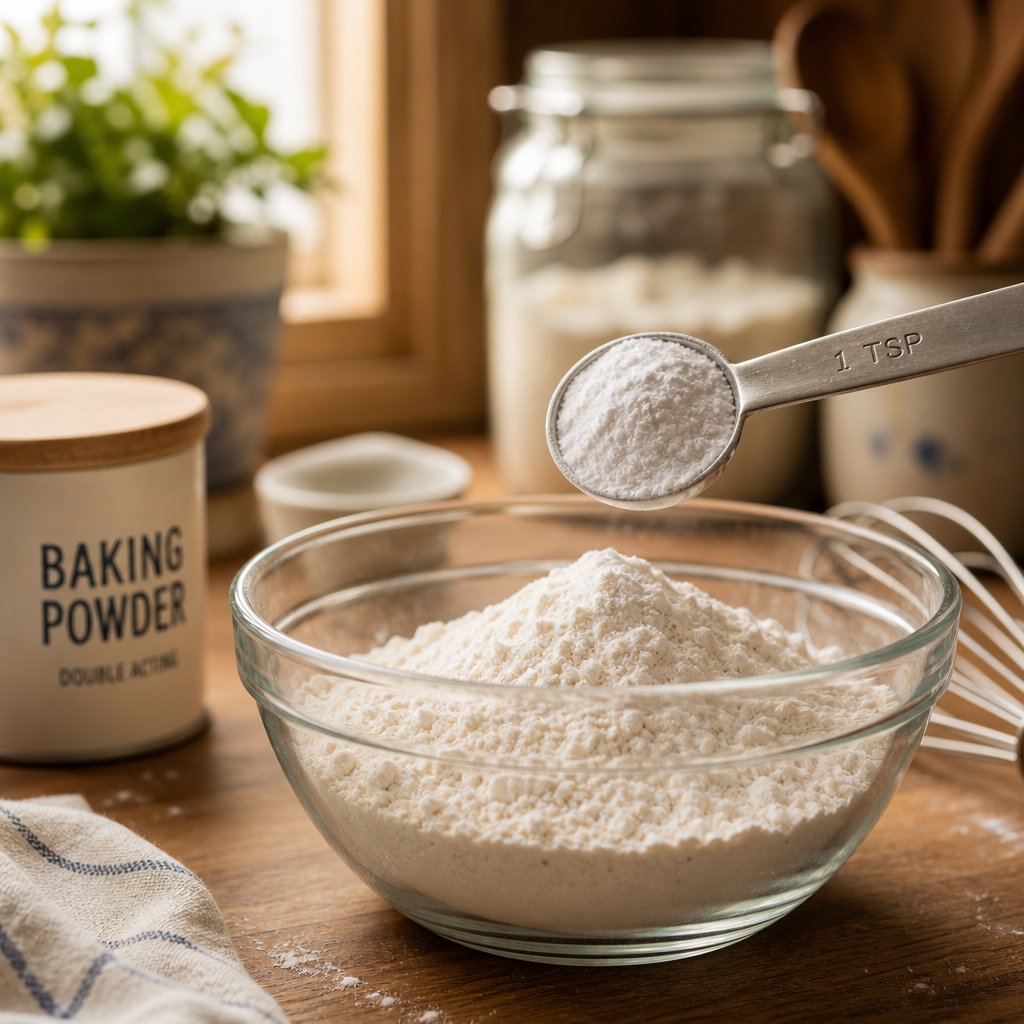
Dutch process cocoa has already been neutralized. Its pH hovers around 7-8, so it has no acid left to react with baking soda. Recipes built around Dutch cocoa rely on baking powder instead, which contains its own internal acid and only needs liquid and heat to activate. If you drop Dutch cocoa into a recipe designed for natural cocoa and baking soda, you lose that acid-base reaction. The result? Less rise, denser texture, and potentially a metallic or soapy taste from unreacted baking soda.
When You Can and Cannot Substitute
The honest answer: they are not always interchangeable. Any recipe that depends on the cocoa's acidity for leavening, think classic American chocolate cakes, quick breads, and cookies leavened solely with baking soda, needs natural cocoa powder to function correctly.
However, substitution is straightforward in recipes that use baking powder or no chemical leavener at all. Frostings, puddings, ice cream bases, hot chocolate, and brownies without leavening agents are all safe territory for a cocoa powder substitute swap. You will get a different color and flavor profile, but the structure won't collapse.
If you must substitute in a leavened recipe, King Arthur Baking recommends this adjustment: when replacing natural cocoa with Dutch process, swap the baking soda for twice the amount of baking powder. Going the other direction, replace baking powder with half the amount of baking soda. These ratios compensate for the missing or excess acidity and keep your rise intact.
The table below summarizes the key differences between dutch cocoa vs regular cocoa at a glance:
| Category | Natural Cocoa Powder | Dutch Process Cocoa Powder |
|---|---|---|
| pH | 5.0 - 5.8 (acidic) | 7.0 - 8.0 (neutral to alkaline) |
| Color | Light tan to medium brown | Deep brown to near-black |
| Flavor Notes | Sharp, fruity, bright, assertive | Smooth, earthy, mellow, fudgy |
| Leavening Pairing | Baking soda | Baking powder |
| Best Uses | American-style cakes, cookies, frostings | European pastries, dark cakes, hot chocolate |
| Solubility | Lower; clumps in cold liquids | Higher; dissolves readily |
Keep in mind that dutch cocoa powder vs regular is not just a pH story. Fat content also varies between brands and styles, and that affects moisture, texture, and richness in ways that go beyond leavening chemistry alone.
The Spectrum of Dutching Levels
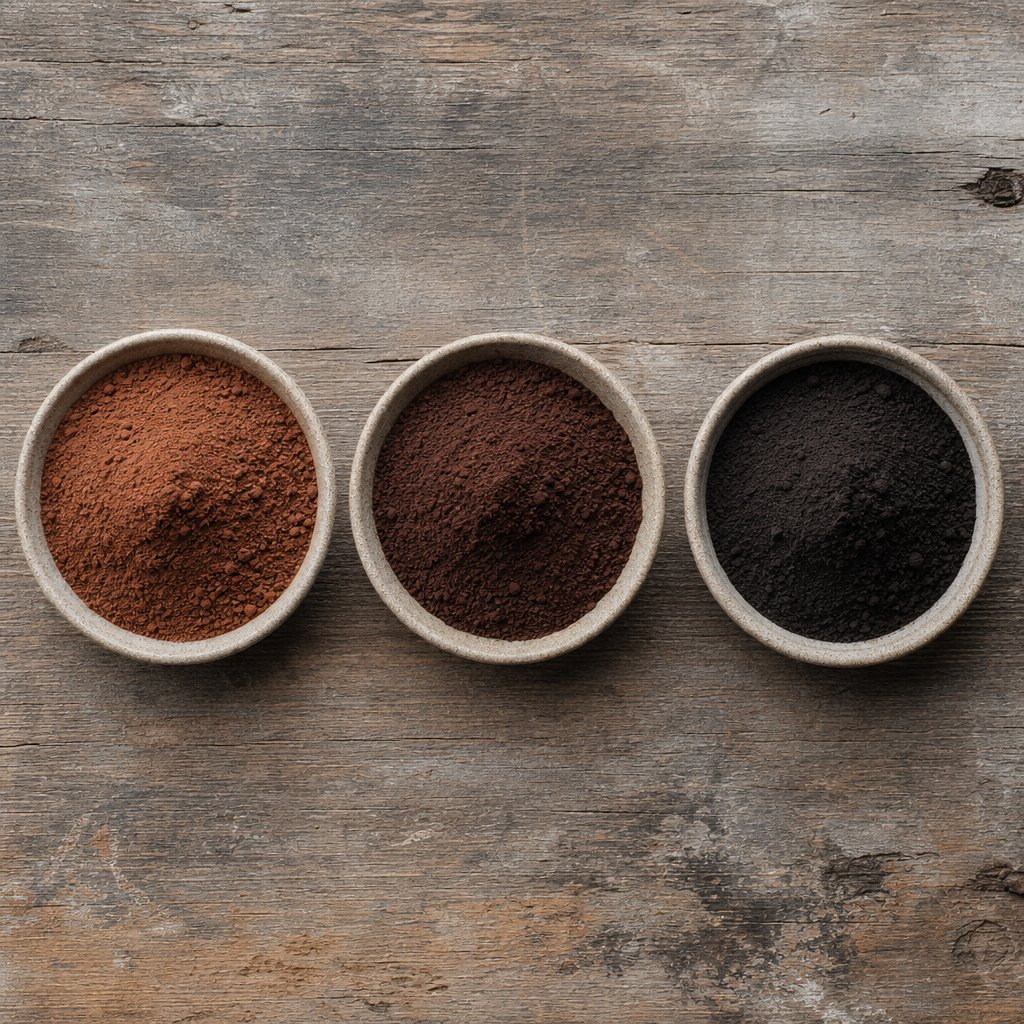
That fat content variation hints at a broader truth: dutched cocoa powder is not a single, uniform product. It exists on a wide spectrum, from barely alkalized powders that retain much of the bean's original personality to ultra-heavily treated black cocoa that looks like charcoal and tastes almost nothing like chocolate. Understanding what is dutched cocoa really means understanding where a particular powder falls on this scale, because the dutching level determines everything from color and flavor to how the powder performs in your recipe.
Light, Medium, and Heavy Dutching
Think of dutching as a dial, not a switch. Manufacturers can turn it just slightly or crank it all the way up, and each position on that dial produces a meaningfully different ingredient. The dutched meaning shifts depending on how far the alkalization goes.
- Lightly Dutched (pH 6.0 - 7.2) — These powders receive a gentle alkaline wash that softens the sharpest acidic edges while preserving much of the bean's natural character. The color is warm reddish-brown, and the flavor retains some fruity complexity alongside a rounded chocolate note. Lightly dutched cocoa is the traditional choice for European drinking chocolate, where you want smoothness without losing depth. It dissolves well in hot milk and carries enough personality to stand on its own in a simple cup.
- Standard / Medium Dutched (pH 7.0 - 8.0) — This is the most common dutch-processed cocoa powder on store shelves and the one most recipes mean when they call for "Dutch process cocoa." The color is a rich, deep brown. The flavor is balanced, earthy, and unmistakably chocolatey without any sharp or fruity notes. It performs reliably in cakes, brownies, sauces, and frostings. Brands like Droste, a classic Dutch heritage brand, and Bensdorp fall into this category. When a recipe simply says "Dutch process," this is your default.
- Heavily Dutched / Black Cocoa (pH 8.0+) — At the far end of the spectrum, heavy alkalization produces a powder so dark it appears almost black. The flavor is extremely mild, nearly neutral, with very little of what most people would recognize as "chocolate taste." What remains is a deep, slightly mineral, toasty quality. The visual impact, however, is dramatic. This is the cocoa responsible for the iconic color of Oreo cookies, which contain about 4.5% heavily alkalized cocoa powder to achieve their near-black appearance without any added dye.
What Is Black Cocoa Powder
Black cocoa deserves its own discussion because it behaves so differently from standard dutched cocoa. The production process uses higher temperatures (up to 135 degrees Celsius), longer treatment times, and more concentrated alkaline solutions than standard dutching. The result is a powder with a pH above 8, sometimes reaching 8.5 or higher.
What is black cocoa powder good for? Visual drama, primarily. Bakers use it for Oreo-style sandwich cookies, jet-black velvet cakes, and any application where a striking dark appearance matters more than intense chocolate flavor. As chocolate expert Alice Medrich notes, black cocoa "does not taste like chocolate" to her palate. She describes it as "a whole different animal," a novelty flavor produced by subjecting cocoa beans to a massive dose of potassium carbonate.
Because black cocoa absorbs more moisture and has almost no acidity left, it can make baked goods drier and denser if used as a full replacement for standard cocoa. Most experienced bakers blend it, using 25-50% black cocoa mixed with regular Dutch process or natural cocoa to get the dark color while maintaining better texture and a more recognizable chocolate flavor.
How Bean Origin Affects the Result
Here is something that often gets overlooked: the same alkalization process applied to different beans produces different results. A single-origin Ecuadorian cocoa with naturally high fruity acidity will respond differently to dutching than a West African Forastero blend with a more neutral baseline flavor.
Lightly dutched single-origin beans can retain some of their terroir, those distinctive floral, fruity, or nutty notes that reflect where and how the cacao was grown. Heavy dutching, on the other hand, tends to erase origin character entirely. The more aggressive the alkalization, the more all cocoa powders converge toward the same mellow, generic chocolate profile regardless of where the beans started.
This is why premium cocoa brands often specify both origin and dutching level. A lightly dutched Peruvian cocoa will taste noticeably different from a lightly dutched Ghanaian one. But push both to black cocoa territory, and those distinctions largely disappear.
Recognizable brands illustrate this spectrum well. Is Hershey's cocoa dutched? Their standard unsweetened cocoa is actually natural (not alkalized), but their "Special Dark" product is a blend of natural and Dutch process powders, landing somewhere in the middle of the spectrum. Droste, by contrast, is a fully Dutch-processed cocoa from a heritage Dutch brand. And King Arthur's Double Dark blends Dutch process with black cocoa for bakers who want deep color without going fully to the extreme.
Knowing where your cocoa sits on this spectrum is half the battle. The other half is understanding which recipes actually benefit from each level, and what happens when you reach for the wrong one.
Baking and Cooking with Dutch Cocoa Powder
Reaching for the wrong cocoa can mean the difference between a showstopper cake and a flat, oddly colored disappointment. Certain recipes don't just prefer Dutch cocoa powder, they depend on it. The neutral pH, deeper color, and smoother flavor profile make it the only logical choice in specific baking contexts where acidity would interfere with chemistry, color, or taste.
Classic Recipes That Require Dutch Cocoa
Why do some recipes insist on Dutch process? It comes down to what the cocoa needs to do beyond adding chocolate flavor. In these applications, the powder's pH interacts directly with other ingredients to produce a specific visual or structural result.
- Red velvet cake — This is the classic example. Red velvet relies on the reaction between acidic buttermilk and vinegar to develop its signature reddish hue. Dutch cocoa's neutral pH stays out of the way, allowing that acid reaction to do its work without interference. Use natural cocoa for red velvet cake instead, and its own acidity competes with the buttermilk, muting the red color and pushing the crumb toward plain brown. This is exactly why bakers in the 19th century started adding food coloring after Dutch processed cocoa became widespread.
- Dark chocolate layer cakes — Recipes leavened with baking powder rely on Dutch cocoa for that deep, dramatic brown color and a smooth, fudgy flavor without any sharp or tangy edge. Substituting natural cocoa lightens the color noticeably and introduces a fruity bite that clashes with rich ganache or buttercream frostings.
- European-style pastries and tortes — Sachertorte, opera cake, and chocolate mousse cake all call for Dutch cocoa. These recipes often use minimal or no chemical leavener, relying instead on whipped eggs for structure. The cocoa is there purely for flavor and color, and Dutch process delivers both without adding unwanted acidity.
- Fudgy brownies — Brownie recipes that skip leavening agents entirely are ideal territory for baking cocoa powder with Dutch processing. The mellow flavor and superior solubility produce a denser, more intensely chocolatey result.
- Chocolate sauces and ganache — Dutch cocoa dissolves cleanly into warm cream or milk without clumping, producing a glossy, smooth sauce. Natural cocoa's lower solubility and sharper flavor make it a less reliable choice here.
What happens if you ignore the specification and use natural cocoa in these recipes? Three things: the color shifts lighter and more reddish-brown, the flavor picks up a tangy edge, and in leavened recipes, you risk structural failure if baking soda isn't present to react with the cocoa's acid.
Understanding Fat Content in Cocoa Powder
Beyond pH, fat content is the other variable that separates adequate cocoa powder for baking from the best cocoa powder for baking. The FDA requires a minimum of 10% cocoa butter in cocoa powder, and most grocery store brands sit right at that floor. But premium Dutch process cocoas often contain 20-24% fat, more than double the standard amount.
Why does this matter? Higher fat cocoa powder produces noticeably moister cakes, fudgier brownies, and smoother frostings. The low-fat powders are starchier and can absorb up to 100% of their weight in moisture, leading to dry, crumbly textures. When you wonder what is baking cocoa that professionals use versus what you find in a standard grocery aisle, fat content is often the hidden difference.
Is baking cocoa the same as cocoa powder? Technically yes, they refer to the same product. But the term "baking cocoa" on packaging sometimes signals a higher-fat, higher-quality product intended for serious baking rather than casual use. Always check the nutrition label: look for 1 gram or more of fat per 5-6 gram serving to confirm you have a high-fat cocoa.
How to Tell What Your Recipe Needs
When a recipe simply says "cocoa powder" without specifying a type, you need to read the surrounding ingredients for clues. Here is a quick guide:
- If the recipe uses baking soda only (no baking powder), it almost certainly expects natural cocoa. The soda needs the cocoa's acid to activate.
- If the recipe uses baking powder only, Dutch process is the intended choice. Baking powder provides its own acid internally.
- If the recipe uses both baking soda and baking powder, check for other acidic ingredients like buttermilk, yogurt, or vinegar. If those are present, Dutch cocoa works well because the other acids handle the soda activation.
- If the recipe uses no chemical leavener (mousse, frosting, sauce, pudding), use whichever you prefer. The distinction between baking cocoa and cocoa powder becomes purely about flavor and color preference in these contexts.
One more consideration: older American recipes written before Dutch process cocoa was widely available in the U.S. almost always assumed natural cocoa, even when they didn't specify. King Arthur Baking recommends defaulting to natural cocoa for these vintage recipes unless you are prepared to adjust the leavening.
Fat content and pH together determine how your cocoa performs. But Dutch cocoa's advantages extend well beyond the oven. Its superior solubility and mellow flavor open up an entirely different set of applications in beverages, savory cooking, and even wellness products.

Beyond Baking with Dutch Cocoa Powder
That superior solubility isn't just a convenience factor for batters. It's the reason dutch chocolate cocoa dominates in beverages, savory kitchens, and an expanding category of functional wellness products. When cocoa powder needs to disappear seamlessly into a liquid or blend into a complex spice profile, the alkalization advantage becomes impossible to ignore.
Hot Chocolate and Beverage Applications
Ever stirred natural cocoa into cold milk and watched it float stubbornly on the surface? Dutch process cocoa doesn't do that. The alkalization breaks down cell wall structures and reduces the hydrophobic particle clumping that makes natural cocoa resist mixing. The result is a chocolate powder that disperses evenly in both hot and cold liquids without requiring aggressive whisking or pre-blooming in hot water.
This makes Dutch cocoa the best chocolate powder for any drink application where smooth texture matters. You'll find it in:
- Classic hot chocolate — Whisk 2 tablespoons of Dutch cocoa into warm milk with a touch of sugar for a rich, European-style cup. The mellow flavor means you don't need to mask bitterness with excessive sweetener.
- Cafe mochas and coffee drinks — Baristas prefer unsweetened cocoa powder for coffee because it blends cleanly into espresso without grit or acidic clash. Dutch process integrates into both hot lattes and iced drinks without separating.
- Protein shakes and smoothies — The neutral pH won't curdle dairy or plant-based proteins the way acidic natural cocoa sometimes can. It adds chocolate flavor without altering the shake's intended texture.
- Chocolate milk (hot or cold) — Commercial chocolate milk producers overwhelmingly choose alkalized cocoa for its consistent color, smooth dissolution, and mild flavor that appeals to broad palates.
The functional beverage market has taken notice. Alkalized cocoa powder leads in ready-to-drink formats due to its reliable performance across both hot-fill and cold-brew production methods, where inconsistent dissolution would create visible quality defects at scale.
Savory Cooking with Dutch Cocoa
Chocolate in savory food sounds unusual until you taste what it does. Dutch processed cacao adds depth, richness, and a subtle bittersweet complexity to dishes that already rely on layered, earthy flavors. Its mellow profile blends into savory contexts without screaming "chocolate" the way sharp natural cocoa would.
- Mole sauce — Mexico's national dish combines dried chilis, spices, nuts, and unsweetened cocoa into a complex, velvety sauce for poultry and pork. Dutch cocoa's smoothness integrates without adding unwanted acidity to the already carefully balanced flavor profile. A tablespoon of cocoa powder alongside dark chocolate creates that characteristic sweet-savory-smoky depth in under 30 minutes.
- Chili con carne — A tablespoon stirred into a pot of chili rounds out the heat from peppers and adds a dark, meaty undertone without any identifiable chocolate taste.
- Spice rubs for meat — Combined with smoked paprika, cumin, brown sugar, and black pepper, Dutch cocoa creates a bark on grilled or smoked brisket that caramelizes into a deep mahogany crust.
- Pan sauces and gravies — A teaspoon whisked into a red wine reduction adds body and color, complementing beef or venison without sweetness.
The key in all these applications: Dutch cocoa acts as a background flavor enhancer, not a featured ingredient. Its job is to deepen what's already there.
Functional Food and Wellness Uses
Premium cocoa powder is increasingly showing up in contexts that have nothing to do with dessert. The functional food industry values Dutch cocoa for three properties: consistent dark color, smooth dissolution, and a mild flavor that doesn't overpower other active ingredients in a formulation.
Sports nutrition brands are embedding cocoa into protein powders, pre-workout supplements, and recovery shakes where it serves double duty as both a flavoring agent and a source of minerals like magnesium and iron. The cocoa-based polyphenols market reached USD 97.4 million in 2024, with functional beverages accounting for the largest revenue share at 32.9%, a figure that reflects how seriously formulators take cocoa as more than just a taste component.
Beyond ingestible products, Dutch cocoa appears in natural cosmetics and DIY skincare. Its fine particle size and rich color make it a popular ingredient in homemade face masks, natural bronzers, and tinted lip balms. The same solubility that makes it ideal for beverages also means it rinses cleanly from skin without leaving gritty residue.
Whether you're stirring it into a morning latte, rubbing it onto a brisket, or formulating a functional protein blend, Dutch cocoa's versatility stems from that single processing decision made nearly 200 years ago. But versatility raises a fair question: does the alkalization that makes Dutch cocoa so user-friendly come at a nutritional cost?
Health and Nutritional Considerations
The short answer is yes. Alkalization improves flavor, color, and solubility, but it comes at a measurable nutritional cost. The very compounds that make cocoa a health-food darling, flavanols and polyphenols, are significantly reduced during Dutch processing. For anyone choosing cocoa as a functional ingredient rather than just a flavoring, this trade-off deserves a closer look.
How Alkalization Affects Antioxidants and Flavanols
Cocoa beans are naturally rich in flavanols, a subclass of flavonoids with potent antioxidant activity linked to cardiovascular health, improved blood flow, and cognitive function. The problem? These compounds are highly sensitive to pH changes. When alkali raises the pH during Dutch processing, flavanols degrade in a predictable, linear pattern.
A study published in the Journal of Agricultural and Food Chemistry measured flavanol content across commercial cocoa powders at different alkalization levels. The findings were stark: natural unsweetened cocoa powder averaged 34.6 mg/g of total flavanols, lightly processed powders dropped to 13.8 mg/g, medium processed fell to 7.8 mg/g, and heavily alkalized cocoa retained just 3.9 mg/g. That means heavily dutched cocoa keeps roughly 10-11% of the original flavanol content, while even lightly processed versions lose about 60%.
The same research showed that total polyphenols and ORAC (oxygen radical absorbance capacity, a measure of antioxidant strength) followed the same downward trend. The higher the pH of the finished powder, the lower its antioxidant capacity. This decline isn't subtle. The alkalization process destroys 60% or more of natural cocoa's antioxidants, with heavily dutched varieties losing the most.
A comprehensive review of clinical trials on flavanol-rich cocoa consumption found beneficial effects on cardiovascular health and cognitive function at doses ranging from 45 to 1,078 mg of flavanols per day. Achieving those doses with heavily alkalized cocoa would require consuming impractical quantities, while natural cocoa or minimally processed cacao can deliver meaningful flavanol levels in just 1-2 tablespoons.
Minerals and Macronutrient Profile
The good news? Not everything disappears during alkalization. Minerals remain relatively stable through the Dutch process because they are inorganic elements unaffected by pH-driven chemical reactions. Both natural and Dutch process cocoa deliver meaningful amounts of magnesium (around 500 mg per 100 g), iron (13-14 mg per 100 g), zinc (6-7 mg per 100 g), and potassium. These values shift only marginally between alkalized and non-alkalized versions.
Macronutrients also stay consistent. A standard serving of either type provides roughly 12 calories, 1 gram of fat (in low-fat varieties), and 3 grams of fiber per tablespoon. And for anyone wondering: is cocoa powder dairy free? Yes, pure cocoa powder, whether natural or Dutch processed, contains no dairy. It is simply ground cocoa solids with most of the cocoa butter removed. Always check labels on flavored or sweetened cocoa mixes, which may add milk powder, but the base ingredient itself is plant-derived.
People also ask: what is the difference between cocoa powder and cacao powder? Both come from the same bean. Cacao powder is cold-pressed from raw or lightly roasted beans, preserving the highest flavanol levels. Cocoa powder is roasted at higher temperatures before pressing. Dutch process cocoa adds the alkalization step on top of roasting. So the spectrum runs from cacao (most antioxidants, most bitter) to natural cocoa (moderate antioxidants, less bitter) to Dutch process (fewest antioxidants, mildest flavor). Is cacao powder the same as cocoa powder? Not quite. The processing intensity differs, and so does the nutritional payoff.
| Nutritional Attribute | Natural Cocoa Powder | Dutch Process Cocoa Powder | Cacao Powder (Raw) |
|---|---|---|---|
| Total Flavanols (mg/g) | 34.6 | 3.9 - 13.8 | 40 - 50 (estimated) |
| ORAC Antioxidant Capacity | High | Low to Moderate | Highest |
| Magnesium (per 100 g) | ~500 mg | ~500 mg | ~500 mg |
| Iron (per 100 g) | ~13 mg | ~13 mg | ~14 mg |
| Zinc (per 100 g) | ~6.8 mg | ~6.8 mg | ~7 mg |
| Fat Content | 10 - 24% | 10 - 24% | 10 - 15% |
| Fiber (per tbsp) | ~3 g | ~3 g | ~3 g |
| Dairy Content | None | None | None |
Choosing Cocoa for Health-Focused Products
This creates a clear decision framework. If your primary goal is antioxidant intake, cardiovascular support, or cognitive benefits backed by clinical research, non dutched cocoa powder or raw cacao delivers substantially more of the bioactive compounds responsible for those outcomes. The cacao powder vs cocoa powder debate tilts heavily toward less-processed options when health is the priority.
For supplement formulators and functional food brands, the distinction is critical. A cocoa-flavored protein powder marketed for its antioxidant content needs non dutch processed cocoa powder or cacao as its base, not a heavily alkalized variety that looks great but delivers a fraction of the active compounds. Clinical trials showing cardiovascular and cognitive benefits consistently used high-flavanol cocoa preparations, not standard Dutch process products.
The practical trade-off? Dutch cocoa wins on taste, solubility, and visual appeal. Natural and cacao powders win on nutritional density. Many health-conscious consumers split the difference by using cacao vs cocoa powder strategically: raw cacao in smoothies and overnight oats where flavor is masked by other ingredients, and Dutch process in recipes where taste and texture are paramount. Neither choice is wrong. It depends on whether you are optimizing for pleasure or for polyphenols.
Understanding this nutritional landscape becomes especially important when you move from personal kitchen choices to commercial product development, where selecting the right cocoa grade, sourcing reliably, and reading labels accurately can make or break a product's credibility with health-conscious consumers.
Choosing and Sourcing Quality Dutch Cocoa Powder
Selecting the right cocoa grade starts at the label, whether you're a home baker scanning shelves for the best dutch cocoa powder or a product developer evaluating bulk samples for a new functional beverage line. Not all Dutch process cocoas are created equal, and the details printed on that tin or spec sheet tell you more than you might expect.
Reading Labels and Identifying Quality
When you pick up a container of cocoa powder, a few key indicators separate a premium product from a generic one. Here's what to look for:
- "Cocoa processed with alkali" — This FDA-required statement confirms you're holding Dutch process cocoa. If it's absent, the powder is natural (non-alkalized), regardless of how dark it appears.
- Fat percentage — Check the nutrition panel. A serving with 1 g or more of fat per 5-6 g serving indicates a higher-fat cocoa (20-22%), which delivers richer mouthfeel and moister baked goods. Lower-fat versions (10-12%) work better in dry blends and beverages where calorie targets matter.
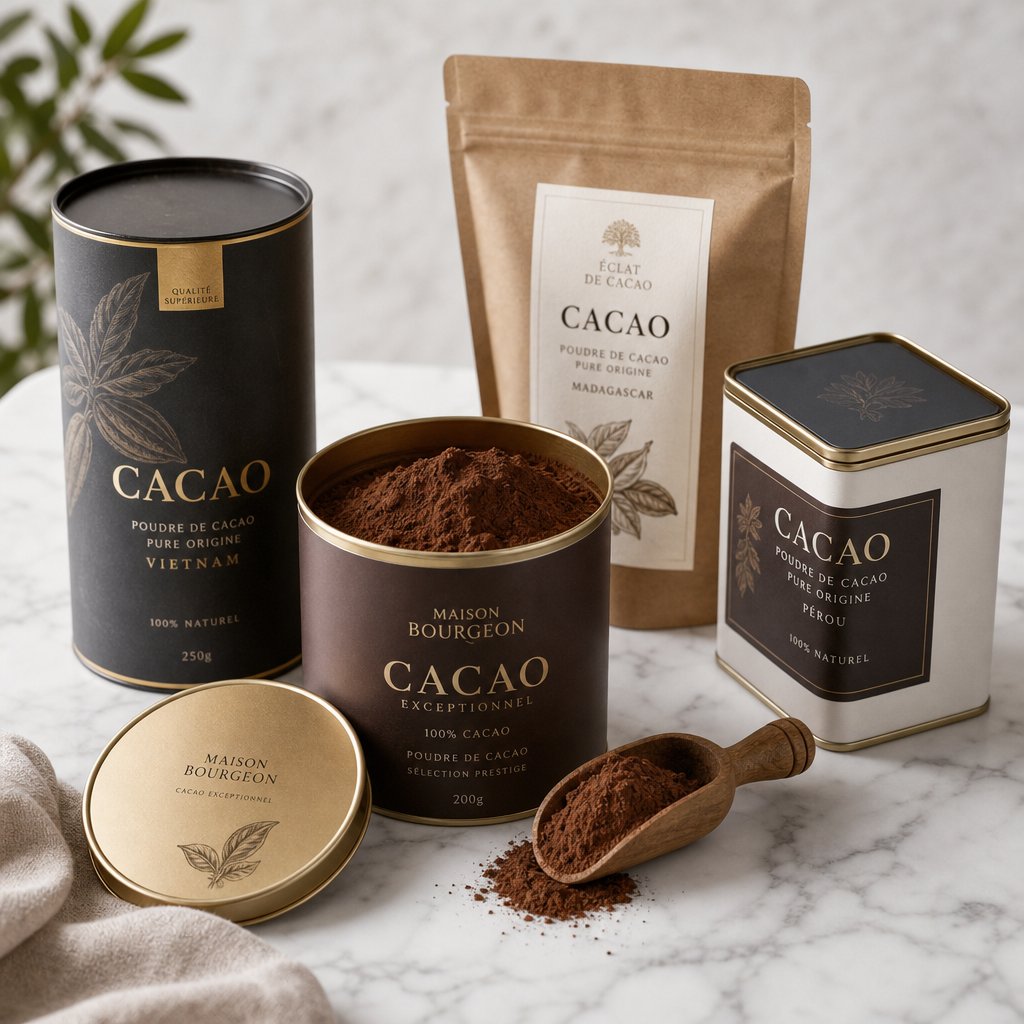
- Single-origin vs. blends — Single-origin powders from specific regions (Peru, Ghana, Ecuador) retain more distinctive flavor character, especially at lighter alkalization levels. Blends offer consistency batch to batch, which matters more for commercial production than home use.
- Certifications — Organic, Fair Trade, and Non-GMO Project Verified labels indicate supply chain transparency. CIRANDA notes that allergen-free facility certification adds another layer of assurance for formulators working with sensitive consumer bases.
- Color and aroma — Quality Dutch cocoa should have a uniform, deep brown color without grey streaks or uneven patches. The aroma should be clean and chocolatey, not musty, stale, or chemically sharp. If you can smell the sample before buying, a rounded, warm chocolate scent indicates proper processing and fresh stock.
Among well-known dutch process cocoa brands, Ghirardelli dutch process cocoa powder is widely available in U.S. grocery stores and offers a reliable medium-dutched profile at accessible pricing. Droste and Valrhona sit at the premium end, while King Arthur's Double Dark appeals to bakers who want deeper color. Searching for dutch cocoa powder near me? Specialty baking shops and natural food stores typically carry a wider selection than standard supermarkets, and online retailers offer access to the best cocoa powders from European and artisan producers that don't distribute broadly in physical retail.
Storage and Shelf Life Tips
Dutch cocoa powder is remarkably shelf-stable. According to Iowa State University Extension, an unopened package of unsweetened cocoa powder, whether natural or Dutch process, has a nearly indefinite shelf life. Once opened, it retains best quality for about three years when stored properly.
The rules are straightforward: keep it in an airtight container, away from heat, moisture, and strong odors. Cocoa butter, even at the low percentages found in pressed powder, absorbs nearby flavors readily. A cool, dark pantry between 65 and 70 degrees Fahrenheit with humidity below 55% is ideal. Refrigeration is unnecessary and can introduce moisture that degrades quality over time.
You'll know your cocoa has passed its prime not by spoilage but by potency loss. If the aroma fades and the color looks dull, the powder is still safe but won't deliver the depth your recipes need. Replace it.
Commercial Sourcing for Product Development
For brands developing cocoa-based health products, the sourcing conversation shifts from "which tin looks good on my shelf" to "which supplier can deliver consistent pH, fat content, and particle size at scale." Functional food companies, supplement brands, and private label sellers need a recommended cocoa powder grade that performs identically across thousands of production runs, not just one batch of brownies.
The global cocoa powder market, valued at USD 2.7 billion and projected to reach USD 3.6 billion by 2035, reflects surging demand from functional food, nutraceutical, and plant-based sectors. Exporters increasingly offer lab data on flavonoid content, heavy metal concentrations, and batch-level traceability to meet the expectations of health-focused buyers.
When you've locked in your cocoa specification, the next challenge is turning that ingredient into a finished product. Brands looking to launch cocoa-flavored supplements, functional powders, or wellness gummies need manufacturing partners who understand both the ingredient and the format. ZhuFeng's OEM/ODM health food manufacturing services offer flexible product formats, including powder/granules and gummy candy, with customized formulation and scalable production designed for nutrition brands, supplement importers, and private label businesses. For companies exploring cocoa-ingredient product development, their powder and gummy capabilities streamline the path from bench formulation to market-ready product without requiring in-house manufacturing infrastructure.
Whether you're choosing the best dutch processed cocoa powder for your weekend baking or sourcing dutch processed cocoa powder near me for a commercial product line, the selection process follows the same logic: define your target pH, fat level, and flavor profile first, then find the supplier or brand that delivers those specs consistently. Quality cocoa is the foundation. Everything else, from recipe performance to product credibility, builds on that choice.
Frequently Asked Questions About Dutch Cocoa Powder
1. Is Dutch process cocoa powder the same as regular cocoa powder?
No. Dutch process cocoa has been treated with an alkaline solution that raises its pH from around 5-6 to 7-8, making it neutral rather than acidic. This changes its color (darker), flavor (smoother and less bitter), and how it interacts with leavening agents. Regular natural cocoa is acidic and pairs with baking soda, while Dutch cocoa pairs with baking powder. They are not always interchangeable in recipes that rely on chemical leavening.
2. Can I substitute Dutch cocoa for natural cocoa in baking?
It depends on the recipe's leavening system. In recipes using only baking soda, natural cocoa's acidity is needed for the rise, so substituting Dutch cocoa can cause flat results. If you must swap, replace each teaspoon of baking soda with two teaspoons of baking powder. In recipes using baking powder, no leavener, or those like frostings and sauces, substitution is straightforward with only flavor and color differences.
3. Does Dutch process cocoa have less health benefits than natural cocoa?
Yes, alkalization significantly reduces flavanol and polyphenol content, the antioxidant compounds linked to cardiovascular and cognitive benefits. Heavily dutched cocoa may retain only 10-11% of the original flavanol content. However, mineral levels including magnesium, iron, and zinc remain stable through processing. If antioxidant intake is your priority, natural cocoa or raw cacao powder delivers substantially more bioactive compounds per serving.
4. How do I know if my cocoa powder is Dutch processed?
Check the ingredient list for the phrase 'cocoa processed with alkali' or 'alkalized cocoa.' The FDA requires this disclosure on U.S. labels. Dutch process cocoa also tends to be noticeably darker in color (deep brown to near-black) compared to the lighter tan-brown of natural cocoa. If neither the label nor the color gives a clear answer, the recipe context and leavening agents listed can help you determine which type you need.
5. What is black cocoa powder and how is it different from regular Dutch cocoa?
Black cocoa is an ultra-heavily alkalized cocoa powder with a pH above 8.0, processed at higher temperatures and longer durations than standard Dutch cocoa. It appears nearly charcoal-colored and has a very mild, almost neutral flavor with minimal chocolate taste. It is used primarily for dramatic visual impact, such as in Oreo-style cookies. Most bakers blend it at 25-50% with standard Dutch or natural cocoa to maintain better texture and recognizable chocolate flavor.