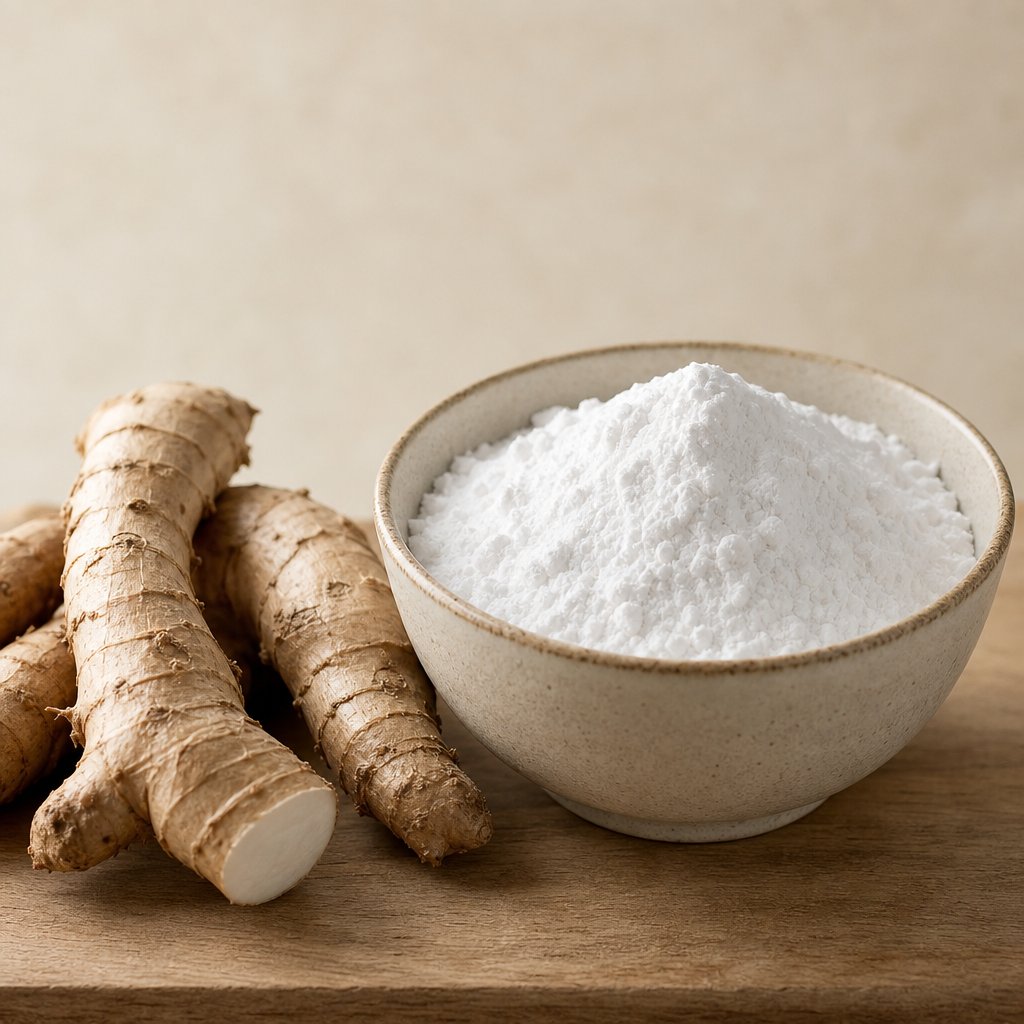
Arrowroot Powder at a Glance
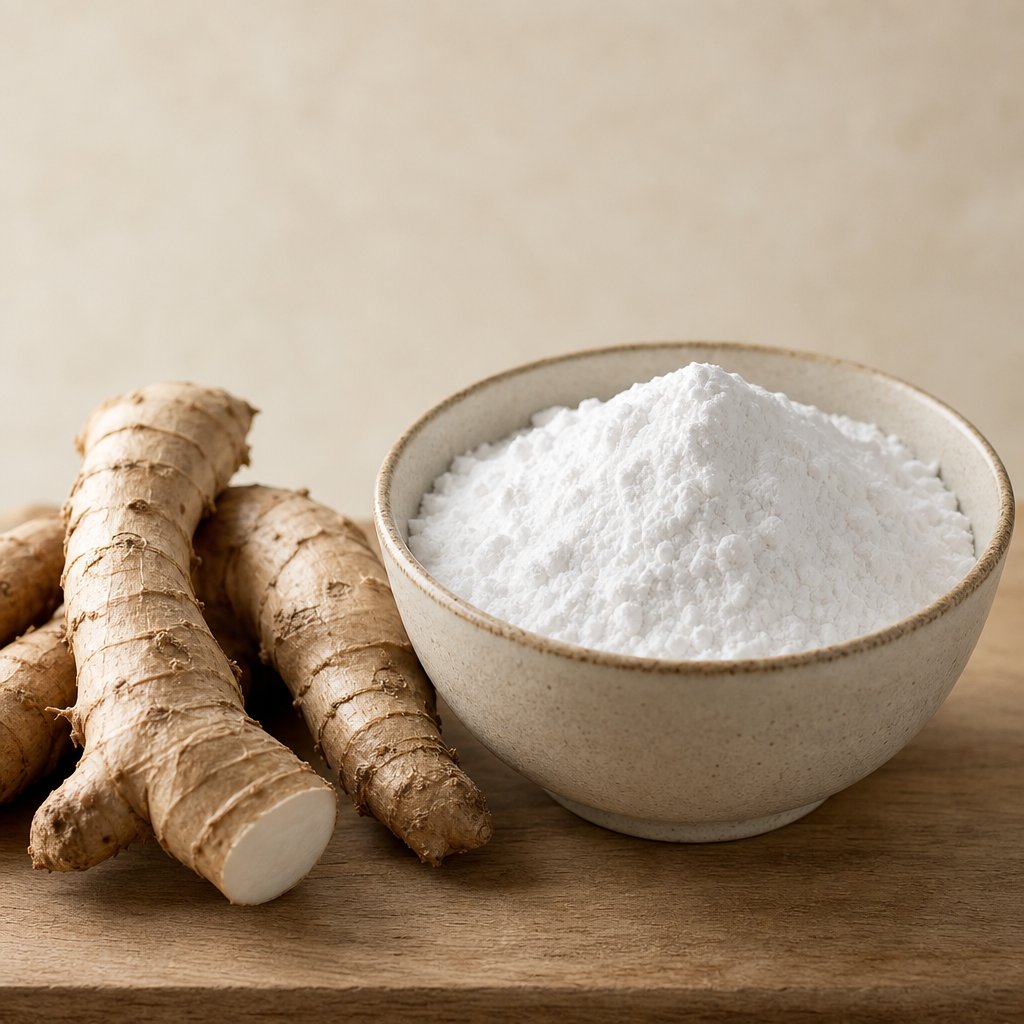
When you flip over a bag of arrowroot powder and scan the ingredient list, you should find exactly one thing: starch extracted from the rhizomes of the Maranta arundinacea plant. No fillers, no binders, no mysterious additives. That simplicity is precisely what makes this ingredient so appealing, and so misunderstood.
So what is in arrowroot powder at its core? It is a nearly pure carbohydrate, a fine white starch isolated from the underground rootstocks of a tropical herbaceous perennial native to Guyana and western Brazil. The Maranta arundinacea plant belongs to the Marantaceae family and has been cultivated for centuries across tropical regions specifically for the easily digestible starch its rhizomes produce.
Arrowroot Powder Defined
What is a arrowroot, exactly? The term refers to any plant in the genus Maranta, but it most commonly describes the starch derived from M. arundinacea, also known as genuine or West Indies arrowroot. Unlike multi-ingredient powders you might find in the baking aisle, true arrowroot powder contains only one component: the starch granules separated from the plant's fibrous rhizome tissue through a water-washing process.
This single-ingredient identity is what sets arrowroot apart from blended flours and modified starches. There are no proteins, no significant fats, and no gluten. What remains after processing is a concentrated, neutral-tasting starch with over 88% purity, according to laboratory analyses of arrowroot starch composition.
Three Layers of Composition
Most resources treat arrowroot powder as a simple kitchen swap for cornstarch. This article goes deeper. Understanding what is the arrowroot powder really made of requires looking at three distinct layers:
- Nutritional composition - the calories, macronutrients, vitamins, and minerals present per serving
- Chemical starch structure - the amylose-to-amylopectin ratio and granule characteristics that determine how arrowroot behaves in recipes and in your digestive system
- Commercial label purity - what should and should not appear on a product label, and how to spot adulteration
Pure arrowroot powder is a single-ingredient product: starch from Maranta arundinacea, with no additives, preservatives, or blending agents.
Each of these layers tells a different part of the story. The nutritional panel reveals why arrowroot powder works as a functional ingredient rather than a nutrient-dense food. The starch chemistry explains why it thickens sauces without cloudiness and digests more gently than grain-based alternatives. And the label analysis helps you distinguish genuine arrowroot from cheaper imitations cut with potato or tapioca starch.
That composition, down to the molecular level, drives every practical benefit arrowroot delivers in your kitchen, your body, and your skincare routine.
Complete Nutritional Breakdown of Arrowroot Powder
The nutritional panel is the first layer of composition worth examining. When you look at arrowroot powder nutrition facts, one thing becomes immediately clear: this is a starch-dominant ingredient with almost no protein or fat to speak of. That profile is not a flaw. It is the direct result of the extraction process that strips away everything except pure carbohydrate.
Macronutrient Profile Per Serving
Arrowroot carbs account for virtually all of its caloric content. Per 100 grams, arrowroot powder delivers 357 calories and 88.15 grams of total carbohydrates, with only 0.3 grams of protein and 0.1 grams of fat. In practical kitchen terms, a single tablespoon (about 8 grams) contains roughly 29 calories, almost entirely from carbs in arrowroot powder.
Dietary fiber sits at 3.4 grams per 100 grams, which is modest but notable for a refined starch. This residual fiber comes from trace plant material that survives the washing process. Still, at typical serving sizes of one to two tablespoons, you are getting less than half a gram of fiber per use.
The calorie breakdown tells the full story: approximately 99% carbohydrate, 0% fat, and 0% protein. Arrowroot powder is not a food you eat for balanced macronutrients. It is a functional ingredient, a thickener, a binder, a texture enhancer that happens to carry a clean nutritional profile.
Vitamins and Minerals in Arrowroot
What about micronutrients? The arrowroot powder nutritional information reveals small amounts of several minerals, though none in quantities that would make it a meaningful dietary source at standard serving sizes. Per 100 grams, you will find 40 mg of calcium (3% DV), 0.33 mg of iron (2% DV), and 11 mg of potassium (less than 1% DV).
The raw arrowroot root before processing contains more impressive micronutrient levels, including significant folate, phosphorus (17% DV per cup), iron (15% DV), and potassium (11% DV). The extraction process concentrates the starch but dilutes these nutrients considerably. By the time you are using the finished powder, most of those vitamins and minerals exist only in trace amounts.
For anyone searching for arrowroot powder nutrition info to determine whether this ingredient contributes meaningfully to daily micronutrient intake, the honest answer is: not really. The nutrition of arrowroot powder positions it squarely as a functional food ingredient rather than a nutrient supplement. Its value lies in what it does in recipes and how gently it interacts with your digestive system, not in delivering vitamins or minerals.
| Nutrient | Per Tablespoon (~8g) | Per 100g | % Daily Value (per 100g) |
|---|---|---|---|
| Calories | 29 kcal | 357 kcal | 18% |
| Total Carbohydrates | 7.1 g | 88.15 g | 32% |
| Dietary Fiber | 0.3 g | 3.4 g | 12% |
| Protein | 0.02 g | 0.3 g | <1% |
| Total Fat | 0.008 g | 0.1 g | <1% |
| Calcium | 3.2 mg | 40 mg | 3% |
| Iron | 0.03 mg | 0.33 mg | 2% |
| Potassium | 0.9 mg | 11 mg | <1% |
| Sodium | 0.16 mg | 2 mg | <1% |
| Cholesterol | 0 mg | 0 mg | 0% |
These numbers paint a clear picture. Arrowroot nutrition is defined by what is absent as much as by what is present: no cholesterol, virtually no sodium, no fat, and no allergens. That absence is exactly what makes it compatible with so many dietary frameworks and so gentle on sensitive systems. The question then becomes: what is it about the starch itself, at the molecular level, that gives arrowroot its distinctive functional properties?
The Starch Science Behind Arrowroot Powder
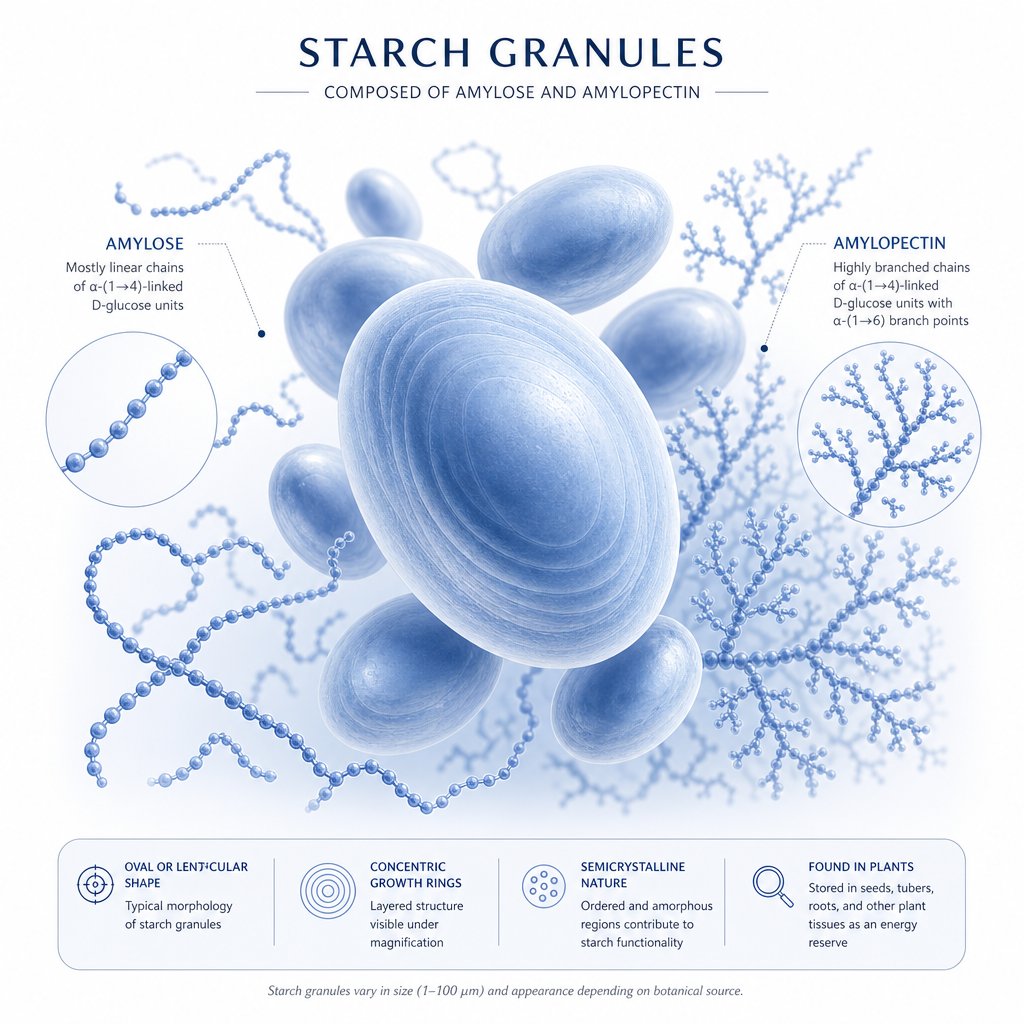
Knowing that arrowroot is 88% carbohydrate tells you what it contains. But it does not explain why arrowroot starch behaves so differently from cornstarch or tapioca in a sauce, a baked good, or your gut. That answer lives at the molecular level, in the ratio of two glucose polymers that make up every starch granule: amylose and amylopectin.
Amylose and Amylopectin Ratio
All starches are built from the same two macromolecules. Amylose is a predominantly linear chain of glucose units linked by alpha-1,4 bonds, forming a tight helical structure. Amylopectin is highly branched, with alpha-1,6 linkages creating a tree-like architecture that spreads outward. The proportion of these two molecules determines nearly everything about how a starch performs.
Arrowroot starch contains approximately 24.95% amylose, placing it in the "high amylose" category for root and tuber starches. Research across multiple growing regions reports arrowroot amylose content ranging from 20% to 35%, depending on cultivation conditions and plant maturity. By comparison, tapioca starch typically contains 17-20% amylose, while regular corn starch sits around 20-25% and waxy corn starch drops below 5%.
Why does this ratio matter? Amylose molecules, being linear, align closely with one another and form hydrogen bonds that create ordered, compact structures within the granule. This molecular arrangement directly influences three properties you will notice in the kitchen and in your body:
- Gel clarity - higher amylose content produces clearer, more transparent gels when the starch is cooked and cooled
- Digestibility - the linear amylose chains are more accessible to digestive enzymes than the dense crystalline regions formed by amylopectin branches
- Thickening behavior - amylose leaches out of granules during heating, creating viscosity without the heavy, paste-like opacity that high-amylopectin starches produce
The relatively high amylose content also contributes to arrowroot's excellent freeze-thaw stability. Unlike potato or corn starch, which release water (syneresis) after freezing and thawing, arrowroot maintains gel integrity across multiple temperature cycles. This is a direct consequence of how amylose molecules reassociate during cooling without forming the rigid, water-expelling crystalline networks that amylopectin-heavy starches create.
Why Starch Structure Determines Function
Imagine you are thickening a fruit glaze. You want clarity, not cloudiness. You want a light, silky mouthfeel, not a heavy, stodgy paste. The reason arrowroot delivers these outcomes while cornstarch often does not comes down to two structural factors: granule size and molecular composition.
Arrowroot starch granules are large, measuring approximately 31-45 micrometers in width and length. These oval and spherical granules swell significantly when heated in water, absorbing moisture and releasing amylose into the surrounding liquid. The result is a smooth, glossy thickening effect. Because arrowroot granules are low in protein (under 0.8%) and fat (under 0.3%), there is nothing to scatter light or create opacity in the finished gel. Protein on starch granule surfaces actually prevents full swelling and reduces viscosity, so arrowroot's near-absence of protein allows its granules to expand freely and produce maximum thickening power at lower concentrations.
This is why arrowroot works so well as a thickening agent in clear sauces, glazes, and pie fillings where visual transparency matters. When you use arrowroot for thickening, you are leveraging its molecular purity: large, protein-free granules that swell fully and release linear amylose chains into solution without introducing cloudiness.
The digestibility story follows the same structural logic. Arrowroot starch exhibits A-type crystallinity, meaning its amylopectin branches are arranged in a compact helical pattern with shorter chain lengths. Research published in Frontiers in Nutrition confirms that gelatinized A-type starch is more digestible than B-type starch, because the compact arrangement breaks down more readily under enzymatic action. Arrowroot's relatively low gelatinization temperature (onset around 62-75 degrees Celsius) means it requires less heat to cook fully, and once gelatinized, its structure is readily accessible to pancreatic amylase in the small intestine.
Arrowroot's high amylose content combined with A-type crystallinity creates a starch that forms clear, stable gels while remaining highly digestible, a combination rarely found in common cooking starches.
The viscosity of arrowroot starch, measured at approximately 7,660 centipoise in laboratory conditions, confirms its strong gel-forming ability. Yet unlike heavy-bodied starches, arrowroot as a thickening agent produces a lighter texture because its gels do not retrograde aggressively. The amylose molecules reassociate gently during cooling rather than forming the rigid, dense networks that make cornstarch-thickened sauces feel heavy on the palate.
This combination of high clarity, gentle digestibility, and light texture is not accidental. It is the direct, measurable consequence of what is in arrowroot powder at the molecular level: large, pure starch granules with a high amylose ratio and A-type crystalline packing. Every functional property, from the glossy finish on a fruit tart to the ease with which your body breaks it down, traces back to this specific structural fingerprint.
The starch that reaches your kitchen shelf, however, only achieves this purity through a specific extraction process. The raw rhizome contains fiber, protein, and moisture that must be systematically removed to isolate the starch granules responsible for these properties.
How Arrowroot Powder Is Made From Raw Root
A fresh arrowroot rhizome is not the same thing as the silky white powder in your pantry. The raw root contains moisture, fiber, protein, and plant pigments that all need to go before you are left with pure, functional starch. Understanding this transformation explains why arrow root powder is almost entirely carbohydrate and why its composition differs so dramatically from the whole arrowroot plant it came from.
From Fresh Rhizome to Finished Powder
The arrowroot plant produces fleshy, cylindrical rhizomes that grow 20 to 45 centimeters below the soil surface. These rhizomes contain roughly 23-25% starch on a fresh weight basis, with the remainder being water, fiber, and small amounts of protein and fat. The goal of extraction is to isolate that starch while discarding everything else.
Whether done by hand in a home kitchen or scaled up with mechanical equipment, the core process follows the same logic: break open the plant cells, wash the starch free from the fibrous matrix, and dry it. Here is the sequence from harvest to finished maranta arundinacea root powder:
- Harvesting - Mature rhizomes are uprooted after 10 to 12 months of growth, when starch content peaks.
- Washing - Soil and debris are removed with clean water.
- Peeling - The outer skin is stripped away. This step is critical because the peel contains compounds that cause disagreeable flavor and discoloration in the finished starch. Once peeled, the white flesh oxidizes rapidly, turning reddish-brown within minutes.
- Pulping or grating - The peeled rhizomes are crushed, grated, or mechanically milled into a fine pulp. Smaller particle size means more starch granules are released from the plant cells.
- Water washing and straining - The pulp is mixed with water and squeezed through fine cloth or mesh filters. Starch granules pass through with the water while fiber and plant matter are trapped and discarded. This step is often repeated two or three times to maximize yield.
- Settling or centrifugation - The starchy water is left undisturbed so the heavy starch granules sink to the bottom. In modern facilities, centrifugal separation speeds this process considerably.
- Drying - The settled starch is sun-dried or oven-dried at controlled temperatures, then sifted into a fine, uniform powder.
Modern extraction methods have introduced ultrafiltration and enzymatic pretreatment to improve purity and yield. Studies report starch purity levels above 95% with these techniques, producing arrow root powder with minimal ash and protein contamination, ideal for food-grade applications.
How Processing Affects Nutritional Content
The difference between raw arrow roots and the finished powder is substantial. Fresh rhizomes from the arrow roots plant contain appreciable fiber (around 1.3-1.5%), meaningful protein (0.2-0.5%), and significant moisture (roughly 70-75% water by weight). They also carry minerals like potassium at approximately 454 mg per 100 grams of fresh root, along with B vitamins and small amounts of vitamin C.
Processing systematically removes nearly all of these non-starch components. The peeling discards the fiber-rich skin. The repeated water washing separates soluble proteins, minerals, and pigments from the insoluble starch granules. The straining eliminates structural fiber. What remains after drying is a concentrated starch product: 88% carbohydrate, less than 0.3% protein, and less than 0.2% fat.
This is not a nutritional loss in the traditional sense. It is a deliberate purification. The entire point of the extraction process is to isolate the starch fraction and remove everything that would interfere with its functional properties, its clarity, its neutral taste, and its smooth thickening behavior. The trade-off is straightforward: you gain a pure, versatile ingredient but lose the modest micronutrient content present in the whole root.
That purity is what makes arrow root powder so functionally consistent. But it also raises an important question: how does this purified starch compare, gram for gram, against the other starches competing for space in your kitchen?
Arrowroot Powder vs Other Starches Side by Side
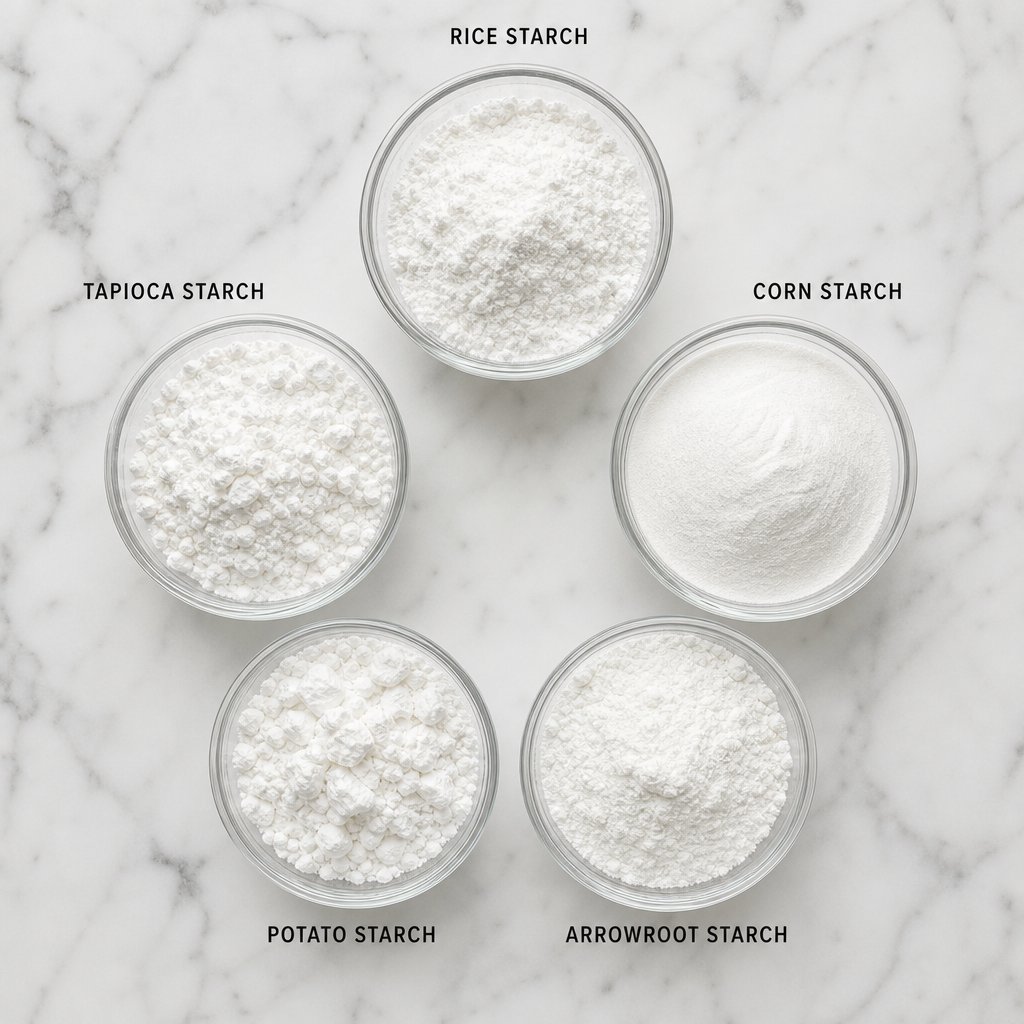
Is arrowroot the same as cornstarch? Not even close. They look similar in the jar, both fine white powders, but their internal composition tells a completely different story. The differences in molecular structure, protein content, and granule size translate directly into how each starch performs in your recipes, how it interacts with your body, and who can safely eat it.
Nutritional Comparison Across Common Starches
At the calorie level, most pure starches land in a similar range. They are all concentrated carbohydrates, after all. But the small differences in protein, fiber, and mineral content reveal meaningful distinctions, especially for people managing allergies or following restrictive diets.
When you compare arrowroot powder vs cornstarch on a per-100-gram basis, the calorie counts are nearly identical (357 vs 381 kcal). The real separation happens in protein content. Cornstarch retains about 0.3 grams of protein per 100 grams, while wheat flour carries a substantial 10-13 grams, including gluten proteins. Tapioca starch is the leanest of the group at roughly 0.2 grams of protein, making it another low-allergen option alongside arrowroot.
Potato starch sits in an interesting middle ground. It delivers 333 calories per 100 grams with virtually no protein or fat, but its mineral profile differs from arrowroot. Potato starch contains more potassium (roughly 10 mg per 100g) and phosphorus than arrowroot, though neither qualifies as a meaningful dietary source of any micronutrient at typical serving sizes.
The table below puts these numbers in context:
| Starch Type | Calories (per 100g) | Carbs (g) | Protein (g) | Gluten Status | Gel Clarity | Freeze-Thaw Stability |
|---|---|---|---|---|---|---|
| Arrowroot Powder | 357 | 88.2 | 0.3 | Gluten-free | High (clear, glossy) | Excellent |
| Cornstarch | 381 | 91.3 | 0.3 | Gluten-free | Moderate (slightly opaque) | Poor |
| Tapioca Starch | 360 | 88.7 | 0.2 | Gluten-free | High (glossy) | Good |
| Potato Starch | 333 | 83.1 | 0.1 | Gluten-free | High (translucent) | Poor |
| Wheat Flour (all-purpose) | 364 | 76.3 | 10.3 | Contains gluten | Low (opaque, matte) | Moderate |
Functional Differences Based on Composition
Numbers on a nutrition label only tell part of the story. The real question when evaluating arrowroot starch vs cornstarch is: how do they actually behave in food?
Three compositional factors drive the functional gap between these starches:
- Amylose content - Arrowroot's approximately 25% amylose produces clear, light-bodied gels. Cornstarch has a similar amylose percentage but its smaller granule size and higher protein content create a denser, more opaque result. Tapioca, with only 17-20% amylose, produces stretchy, sticky gels that work well in chewy applications like boba pearls but poorly in delicate sauces.
- Granule size - Arrowroot and potato starch both have large granules (30-45+ micrometers) that swell dramatically in water, producing high viscosity at lower concentrations. Cornstarch granules are smaller (5-20 micrometers), requiring more product to achieve the same thickening effect. As The Kitchn notes, root and tuber starches gelatinize at lower temperatures than grain starches, thickening faster but tolerating less prolonged cooking.
- Protein and fat presence - Wheat flour contains 10%+ protein, which scatters light and creates the characteristic opaque, matte appearance of a roux-thickened sauce. Arrowroot's near-zero protein allows full granule swelling and produces the transparent, silky finish preferred in fruit glazes and Asian-style sauces.
Freeze-thaw stability deserves special attention. Research from the International Center for Tropical Agriculture confirms that gels from normal root and tuber starches show significantly lower syneresis (water release) after refrigeration and freeze-thaw cycles compared to cereal starches. Cornstarch gels break down and weep liquid after freezing, which is why cornstarch-thickened sauces turn watery when reheated from frozen. Arrowroot maintains its gel structure across multiple freeze-thaw cycles, making it the better choice for meal prep and frozen desserts.
So when you weigh arrowroot starch vs corn starch for a specific recipe, the decision comes down to context. Need a sauce that will cook for 30 minutes? Cornstarch handles prolonged heat better. Need a glossy glaze that stays stable in the freezer? Arrowroot wins decisively. Making a pie filling for someone with grain sensitivities? Arrowroot powder vs corn starch is not even a contest, since arrowroot carries zero risk of corn allergen exposure.
These compositional differences do more than affect recipe outcomes. They also determine which diets and health conditions each starch is compatible with, a connection that becomes especially important for people choosing arrowroot specifically because of what it does not contain.
Health Benefits Rooted in What Arrowroot Contains
Every arrowroot powder benefit traces back to a specific compositional fact. It is not magic, and it is not marketing. When you understand what is in arrowroot powder at the molecular and nutritional level, the health advantages become self-evident rather than something you take on faith.
The composition covered in previous sections, nearly pure starch with high amylose content, A-type crystallinity, negligible protein, zero gluten, and minimal fiber, creates a unique functional profile. That profile is what makes arrowroot powder healthy for specific populations and compatible with an unusually wide range of dietary frameworks.
Digestive Friendliness Explained by Composition
Why is arrowroot so gentle on the stomach? The answer is not a single factor but a convergence of several compositional traits working together:
High amylose, easy enzymatic access. Arrowroot's approximately 25% amylose content and A-type crystalline structure mean that once the starch is cooked (gelatinized), pancreatic amylase can break it down efficiently in the small intestine. Unlike resistant starches that ferment in the colon and produce gas, gelatinized arrowroot starch is largely absorbed before reaching the large intestine. For people with sensitive stomachs or those recovering from illness, this translates to energy without bloating.
Near-zero protein content. At 0.3 grams per 100 grams, arrowroot powder contains virtually no protein. This matters because food proteins are the primary triggers for immune-mediated digestive reactions, from celiac disease to food protein-induced enterocolitis. Removing protein from the equation removes the most common source of gut inflammation in reactive individuals.
Low fiber at serving size. While fiber is generally beneficial, people with IBS, inflammatory bowel disease flares, or post-surgical recovery often need low-residue foods that minimize mechanical irritation to the gut lining. A tablespoon of arrowroot delivers less than 0.3 grams of fiber, making it functionally residue-free at typical use levels.
No irritating compounds. Unlike grain starches that may carry trace lectins, phytates, or saponins, arrowroot's water-washing extraction process removes these plant defense compounds. The finished powder is compositionally inert, unlikely to trigger any inflammatory or irritant response in the digestive tract.
Historically, arrowroot was prescribed as a recovery food for invalids and infants in Victorian-era medicine precisely because of this digestive gentleness. Modern understanding of starch chemistry simply confirms what empirical observation established centuries ago: the benefits of arrowroot powder for digestion are a direct consequence of its purity and molecular structure.
Allergen and Diet Compatibility
Is arrowroot gluten free? Absolutely. But the dietary compatibility story goes far beyond gluten. Arrowroot's composition, defined as much by what is absent as by what is present, makes it one of the most universally safe starches available.
Arrowroot is it gluten free in the strictest sense? Yes. It contains no wheat, barley, rye, or any gluten-forming proteins whatsoever. The Maranta arundinacea plant is a tropical herbaceous perennial unrelated to any cereal grain. There is zero cross-reactivity risk for people with celiac disease or non-celiac gluten sensitivity, provided the product has not been contaminated during manufacturing.
The FODMAP Friendly certification program has tested arrowroot and confirmed it as a safe PASS at 50 grams per serving, meaning it contains no detectable fermentable oligosaccharides, disaccharides, monosaccharides, or polyols at that dose. This is significant for the estimated 10-15% of the global population managing IBS symptoms through dietary FODMAP restriction.
Here is how arrowroot's specific composition maps to each major dietary framework:
- Paleo - Arrowroot is grain-free and derived from a whole-food plant source. Its minimal processing (water extraction only, no chemical modification) aligns with paleo principles. Paleo diet resources consistently list it as an approved starch.
- Autoimmune Protocol (AIP) - AIP eliminates grains, legumes, nightshades, nuts, seeds, and eggs. Arrowroot passes every exclusion criterion: it is a tuber starch with no seed proteins, no lectins, and no alkaloids.
- Whole30 - This program permits arrowroot as a compliant thickener because it is a single-ingredient, unprocessed starch with no added sugars, sulfites, or carrageenan.
- Low-FODMAP - Certified low in all FODMAP categories at standard serving sizes. The starch composition means no fructans, no galacto-oligosaccharides, and no polyols are present.
- Vegan - Entirely plant-derived with no animal products or byproducts used in processing.
- Grain-free and corn-free - For individuals allergic to corn (a surprisingly common sensitivity), arrowroot provides thickening function without any corn protein exposure. Its botanical origin is completely unrelated to grasses or cereal grains.
- Top-8 allergen free - Arrowroot contains none of the eight major allergens (milk, eggs, fish, shellfish, tree nuts, peanuts, wheat, soy). This makes it safe for school environments and allergen-controlled food manufacturing.
The arrow root powder benefits for dietary compatibility are not about clever marketing or trend-chasing. They are the inevitable result of a composition that reads like a checklist of "things that cause problems for people" with every box left unchecked. No gluten, no common allergens, no FODMAPs, no grain proteins, no chemical additives.
Is arrowroot powder gluten free and safe for celiac patients? Yes. Is arrowroot powder healthy for someone on a recovery diet? Its easy digestibility and clean composition make it one of the gentlest starch options available. Are the arrowroot benefits limited to digestion? Not at all. The same compositional traits that make it gut-friendly also make it functionally versatile, a connection that becomes clear when you look at how people actually use this ingredient in their kitchens and daily routines.
Practical Uses Based on Arrowroot's Composition
Composition dictates function. Every practical application of arrowroot powder, whether in a saucepan or a cosmetics jar, connects directly to a specific structural or chemical trait covered in earlier sections. When you know what is arrowroot powder used for across different contexts, you start to see the same compositional logic playing out in surprisingly diverse ways.
Culinary Uses and Thickening Applications
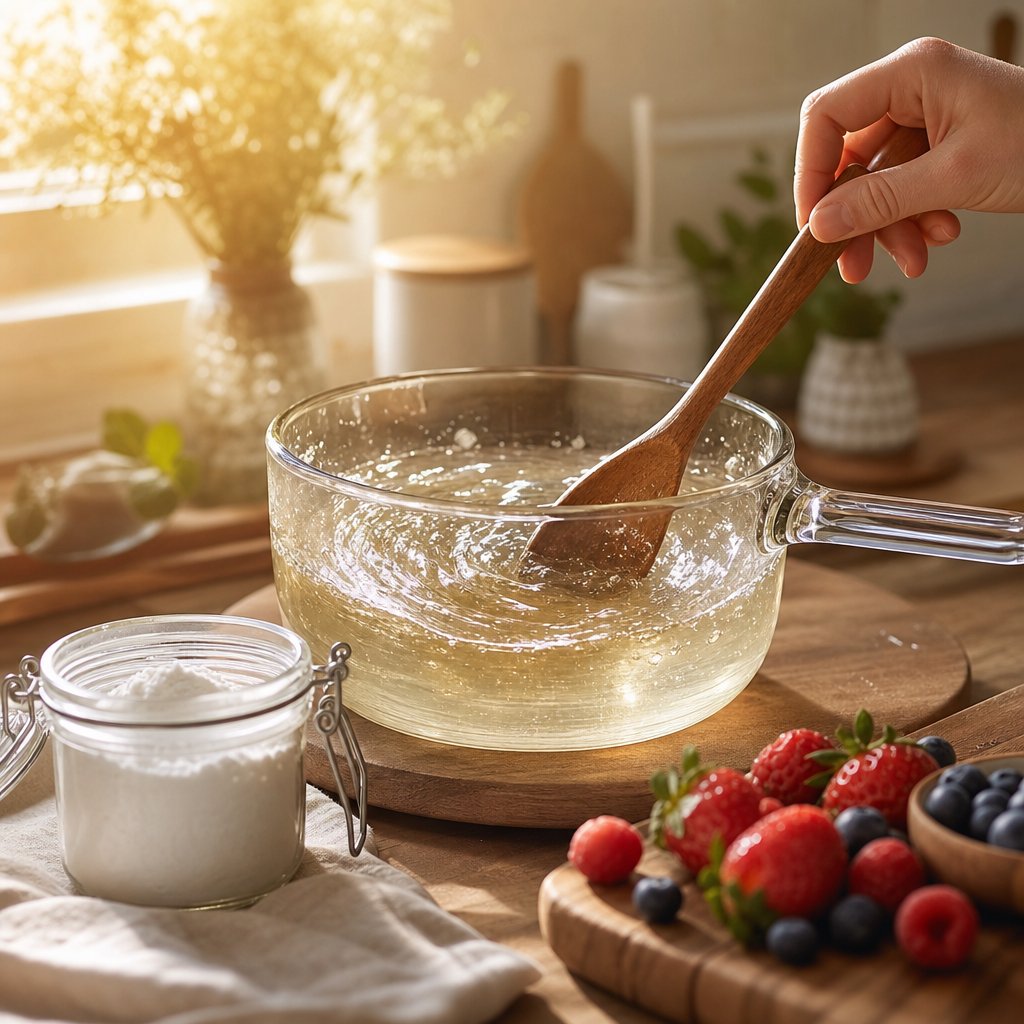
The most common arrowroot powder uses in the kitchen revolve around its thickening ability. Remember those large, protein-free starch granules with high amylose content? They are the reason arrowroot produces clear, glossy sauces instead of cloudy, heavy ones. Using arrowroot powder as a thickener means you get maximum viscosity with minimal product and zero flavor interference.
The technique is straightforward. Mix arrowroot with a small amount of cold liquid to form a slurry, then stir it into your dish at the very end of cooking. Unlike cornstarch, which needs several minutes of boiling to lose its raw taste, arrowroot activates quickly and breaks down at higher temperatures if overcooked. Add it right before serving for the best results.
Here are the primary culinary uses for arrowroot powder:
- Sauce and gravy thickening - Produces a silky, transparent finish ideal for pan sauces, stir-fry glazes, and fruit coulis. Its neutral taste lets other flavors shine.
- Pie fillings and fruit glazes - The clear gel showcases fruit color without the milky haze cornstarch creates. Excellent freeze-thaw stability means frozen pies hold their texture.
- Soup and stew body - A tablespoon of slurry adds velvety thickness to broth-based soups without altering flavor or creating a starchy mouthfeel.
- Crispy coatings - Dusting vegetables or proteins with arrowroot before baking or frying creates a light, crunchy exterior. The low moisture content promotes browning and crispness.
- Gluten-free baking - Blended with almond flour, coconut flour, or tapioca flour, arrowroot adds structure and a tender crumb to breads, scones, and crumble bars. It lightens dense grain-free batters without introducing allergens.
- Egg-free binding - Mixed with water, arrowroot creates a gel that helps hold ingredients together in vegan baking where eggs are omitted.
A useful substitution ratio to keep in mind: two teaspoons of arrowroot replaces one tablespoon of cornstarch, and one teaspoon replaces one tablespoon of wheat flour for thickening purposes. The higher thickening efficiency per gram is a direct result of those large granules swelling more completely than smaller cereal starch granules.
Skin Care and Cosmetic Applications
What is arrowroot used for beyond the kitchen? Its physical and chemical properties make it remarkably well-suited for topical personal care products. The same traits that create a smooth, neutral powder in cooking, fine particle size, high absorbency, zero allergens, and no fragrance, translate perfectly into skin and body applications.
Arrowroot powder for skin works primarily through moisture absorption. Each starch granule can absorb several times its weight in moisture, pulling sweat and oil away from the skin surface without clogging pores or causing irritation. Because the powder contains no proteins, fragrances, or chemical additives, the arrowroot powder skin benefits extend to people with eczema, contact dermatitis, and fragrance sensitivities who cannot tolerate conventional cosmetic ingredients.
The most popular arrowroot powder uses for skin and body care include:
- Natural deodorant base - Arrowroot absorbs underarm moisture while remaining gentle on sensitive skin. It replaces talc and baking soda (which can cause irritation) in DIY and commercial natural deodorant formulas.
- Dry shampoo - The fine white powder absorbs excess scalp oil between washes. Its neutral scent and lightweight texture prevent the heavy, caked-on feeling that heavier powders create.
- Body powder and talc alternative - Arrowroot provides the same silky, friction-reducing feel as talcum powder without the safety concerns associated with talc mining contamination. Safe for use on babies and adults alike.
- Mattifying face powder - A light dusting absorbs facial oil and reduces shine without the synthetic ingredients found in commercial setting powders. Works as a translucent base in DIY mineral makeup.
- Soothing skin paste - Mixed with water or coconut oil, arrowroot creates a gentle paste applied to minor skin irritations, rashes, or insect bites to absorb moisture and reduce friction.
The hypoallergenic nature of arrowroot powder for skin applications is not a marketing claim. It is a compositional fact. With no gluten, no common allergens, no fragrance compounds, and no chemical residues from processing, there is simply nothing present in the powder to trigger a reaction in most people. The particle size (30-45 micrometers) is large enough to sit on the skin surface rather than penetrating pores, which further reduces irritation risk.
Whether you are whisking it into a berry glaze or patting it under your arms, the same ingredient performs reliably because its composition is consistent and pure. That consistency, however, depends entirely on what is actually in the product you buy, and not every bag labeled "arrowroot" contains what it should.
Purity and Quality in Commercial Arrowroot Products
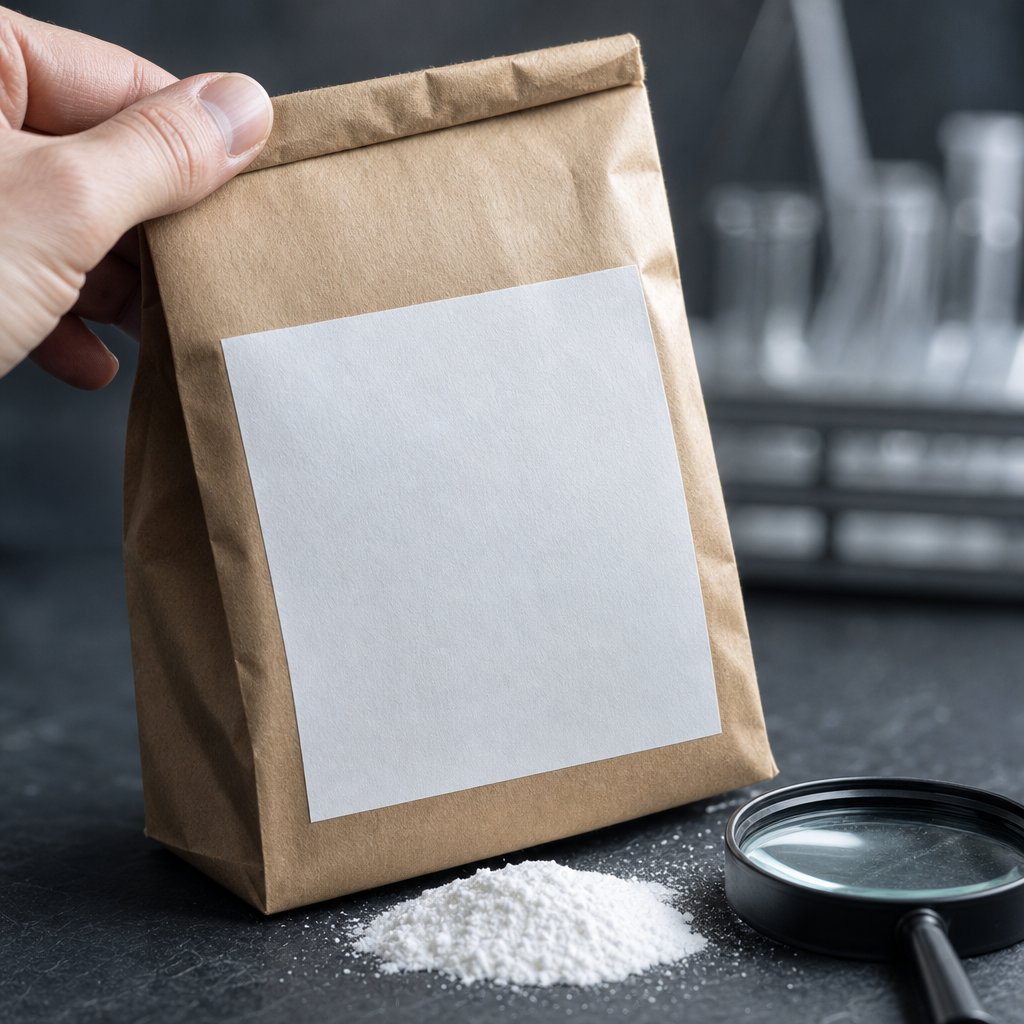
You now know what should be in arrowroot powder: pure starch from Maranta arundinacea, nothing else. The uncomfortable reality is that not every product on the shelf delivers that purity. Arrowroot's relatively high market price compared to other starches creates a financial incentive for adulteration, and the visual similarity between different white starch powders makes fraud nearly impossible to detect with the naked eye.
Identifying Pure Arrowroot Powder
A genuine arrowroot product should have exactly one item on its ingredient list: arrowroot starch (or Maranta arundinacea starch). No anti-caking agents, no preservatives, no "starch blend" language, and no secondary ingredients of any kind. If you see silicon dioxide, calcium silicate, or any flow agent listed, the product has been modified beyond simple extraction.
The bigger concern is not additives you can read on a label but cheaper starches substituted without disclosure. Research published in Polysaccharides found that commercial arrowroot products are frequently adulterated with cassava starch, a far less expensive alternative that looks and feels identical to arrowroot powder. The study used Raman spectroscopy combined with chemometric analysis to identify mixed products, and the results were striking: several commercial samples labeled as pure arrowroot were actually blends of arrowroot and cassava, or in some cases, predominantly cassava with minimal arrowroot content.
This is not a minor quality issue. As Bob's Red Mill notes, some companies add potato starch to arrowroot starch to create a more cost-effective product. Potato starch behaves differently in recipes, breaks down under different conditions, and does not share arrowroot's superior freeze-thaw stability or digestive gentleness. You are paying a premium for arrowroot's specific composition, and adulteration means you are not getting what you paid for.
A common source of confusion: is arrowroot flour and powder the same thing? Yes. The terms "arrowroot flour," "arrowroot starch," and "arrowroot powder" all refer to the same product, the extracted starch from Maranta arundinacea rhizomes. What is arrowroot flour? It is simply another name for arrowroot powder. Unlike the wheat world where "flour" and "starch" describe different products with different protein contents, is arrowroot powder and flour the same applies here because the extraction process removes everything except starch. If a product is labeled "arrowroot flour" but contains added ingredients or blended starches, the naming does not change the fact that it has been adulterated.
What to Look for on Commercial Labels
Finding where can i buy arrowroot powder that is genuinely pure requires knowing what to look for and what to avoid. Here are the markers that distinguish authentic organic arrowroot from compromised products:
Signs of a pure, high-quality product:
- Single ingredient listed: "Arrowroot Starch" or "Maranta arundinacea starch"
- USDA Organic certification, which prohibits synthetic processing aids and requires supply chain traceability
- Non-GMO Project Verified seal, confirming no genetically modified organisms in the supply chain
- Certificate of Analysis (COA) available upon request, showing purity testing results
- Gluten-free certification from a third-party organization, indicating dedicated facility testing
- Clear country of origin and botanical species identification on packaging
Red flags that suggest adulteration or low quality:
- Ingredient list includes "starch" without specifying the botanical source
- Unusually low price point compared to market average for genuine arrowroot
- Vague labeling like "arrowroot blend" or "arrowroot-type starch"
- Anti-caking agents (silicon dioxide, calcium silicate) added to the powder
- No certifications, no COA availability, and no traceability information
- Product behaves differently than expected: cloudy gels, heavy texture, or poor freeze-thaw performance may indicate substitution with potato or cassava starch
The Raman spectroscopy research highlights a critical point: visual inspection and even basic sensory evaluation cannot distinguish pure arrowroot from adulterated products. The physical and sensory similarities between cassava and arrowroot starches make consumer-level detection essentially impossible. This places the burden on certifications, supplier transparency, and third-party testing rather than your own senses.
For businesses developing product lines that include arrowroot, whether in functional foods, supplements, or personal care formulations, sourcing integrity becomes even more critical. Brands need suppliers who can provide documented purity verification at scale. OEM/ODM manufacturers like ZhuFeng offer customized formulation with powder and granule formats, ensuring ingredient purity through documented quality control while providing scalable production for private label health products. This type of manufacturing partnership gives brands confidence that the arrowroot starch in their finished products is genuinely what the label claims.
Whether you are a home cook checking labels at the grocery store or a brand owner vetting ingredient suppliers, the principle is the same: is arrowroot powder the same as arrowroot flour on the label matters less than whether the powder inside the bag is actually pure Maranta arundinacea starch. Price, certifications, and supplier transparency remain your most reliable indicators of authenticity in a market where adulteration is both profitable and difficult to detect without laboratory analysis.
Making Informed Choices About Arrowroot Powder
Knowing what is in a product and what should never be there puts you in a fundamentally different position as a buyer. You are no longer relying on brand claims or packaging aesthetics. You are reading composition like a language you actually speak.
Key Composition Takeaways
So what does arrowroot powder do that other starches cannot? The answer lives in three layers of composition that this article has unpacked:
- Nutritional profile - A nearly pure carbohydrate (88% starch) with negligible protein, fat, and allergens. What is arrow root powder from a dietary standpoint? It is a functional ingredient, not a nutrient source, valued for what it lacks as much as what it contains.
- Starch structure - High amylose content (~25%), large granules (31-45 micrometers), and A-type crystallinity produce clear gels, light texture, and easy digestibility. These molecular traits explain every functional advantage arrowroot holds over grain-based starches.
- Label purity - Genuine arrowroot powder contains one ingredient: Maranta arundinacea starch. Anything else, whether anti-caking agents, undisclosed cassava, or potato starch fillers, compromises the very properties you are paying for.
Is arrowroot good for you? That depends on what you need from it. For digestive gentleness, allergen avoidance, and clean-label cooking, few starches match its compositional profile. What does arrowroot taste like? Essentially nothing. Its neutral flavor is a feature, not a limitation, allowing it to thicken, bind, and absorb without altering the taste of your food or skincare formulations.
Choosing the Right Arrowroot Product for Your Needs
Different goals call for different priorities when selecting arrowroot:
- Home cooks - Look for certified organic, single-ingredient arrowroot powder. Test freeze-thaw performance with a small batch before committing to a brand for meal prep. If a recipe calls for cornstarch and you need a substitute for arrowroot powder in reverse, use cornstarch at a 1:1 ratio but expect less clarity and poorer freezer stability.
- Health-conscious consumers - Prioritize third-party certifications (organic, non-GMO, gluten-free) and verify the botanical species on the label. What is arrowroot good for in your diet? Gentle thickening for recovery foods, baby meals, and low-FODMAP cooking where other starches may trigger symptoms.
- DIY skincare enthusiasts - Choose food-grade arrowroot with no anti-caking agents. Silicon dioxide and calcium silicate may be safe to ingest but can feel gritty in body powders and deodorants. The finer the grind, the better the skin feel.
- Brands and product developers - Sourcing verified-pure arrowroot at scale requires documented supply chain traceability. Whether you are formulating a digestive supplement, a clean-label baking mix, or a natural cosmetic line, an arrowroot substitute will not deliver the same performance profile. Brands looking to incorporate arrowroot into supplement or functional food lines can work with OEM/ODM partners like ZhuFeng for customized formulations across multiple product formats, from powder sachets to capsules, with scalable production that maintains ingredient integrity.
Understanding composition transforms arrowroot powder from a generic white powder into a precision ingredient. When you know what should be in it, what should never be in it, and why its molecular structure matters, every decision you make, from brand selection to recipe substitution, becomes grounded in fact rather than guesswork.
An arrowroot powder substitute like tapioca or cornstarch can fill a gap in a pinch, but no single alternative replicates arrowroot's full combination of clarity, freeze-thaw stability, digestive gentleness, and allergen safety. That unique convergence of properties is not accidental. It is the direct, measurable result of what is in arrowroot powder, and nothing else.
Frequently Asked Questions About Arrowroot Powder Composition
1. Is arrowroot powder the same as arrowroot flour?
Yes, arrowroot powder, arrowroot flour, and arrowroot starch all refer to the same product: the extracted starch from Maranta arundinacea rhizomes. Unlike wheat, where flour and starch are different products with different protein levels, arrowroot extraction removes all non-starch components, so the terms are interchangeable. If a product labeled arrowroot flour lists multiple ingredients, it may be adulterated with cheaper starches like cassava or potato.
2. What nutrients does arrowroot powder contain?
Arrowroot powder is almost entirely carbohydrate, containing 88.15 grams of carbs, 0.3 grams of protein, and 0.1 grams of fat per 100 grams. It provides 357 calories per 100g with trace amounts of calcium (40 mg), iron (0.33 mg), and potassium (11 mg). It contains zero cholesterol and virtually no sodium. At typical serving sizes of one tablespoon, it contributes roughly 29 calories and 7 grams of carbs, making it a functional thickening ingredient rather than a significant nutrient source.
3. Why is arrowroot powder easier to digest than other starches?
Arrowroot's digestibility stems from three compositional factors working together. Its high amylose content (~25%) and A-type crystalline structure allow pancreatic enzymes to break it down efficiently in the small intestine before it reaches the colon. Its near-zero protein content (0.3g per 100g) eliminates the most common trigger for immune-mediated gut reactions. Additionally, the water-washing extraction process removes irritating plant compounds like lectins and phytates that remain in grain-based starches.
4. How can you tell if arrowroot powder is pure or adulterated?
Pure arrowroot powder should list only one ingredient: Maranta arundinacea starch. Look for USDA Organic certification, Non-GMO Project verification, and third-party gluten-free testing. Red flags include vague terms like 'starch blend,' unusually low pricing, anti-caking agents such as silicon dioxide, or no botanical species identification. Laboratory research using Raman spectroscopy has confirmed that many commercial products labeled as pure arrowroot actually contain cassava or potato starch fillers that are visually undetectable.
5. Can arrowroot powder replace cornstarch in all recipes?
Arrowroot can replace cornstarch in most applications using a 2:1 ratio (two teaspoons arrowroot per one tablespoon cornstarch), but context matters. Arrowroot excels in clear sauces, fruit glazes, and frozen dishes due to superior gel clarity and freeze-thaw stability. However, cornstarch handles prolonged high-heat cooking better, as arrowroot breaks down with extended boiling. Arrowroot also does not thicken dairy-based sauces as effectively. For allergen-sensitive individuals, arrowroot eliminates corn protein exposure entirely.