Why Make Your Own Baking Powder from Baking Soda
When You Need Baking Powder but Only Have Baking Soda
You are mid-recipe, eggs cracked, flour measured, and you reach for the baking powder only to find an empty can. Or maybe the can is not empty at all, but you have been reading ingredient labels and noticed aluminum compounds or additives you would rather skip. Either way, the question lands the same: how do you make baking powder from baking soda?
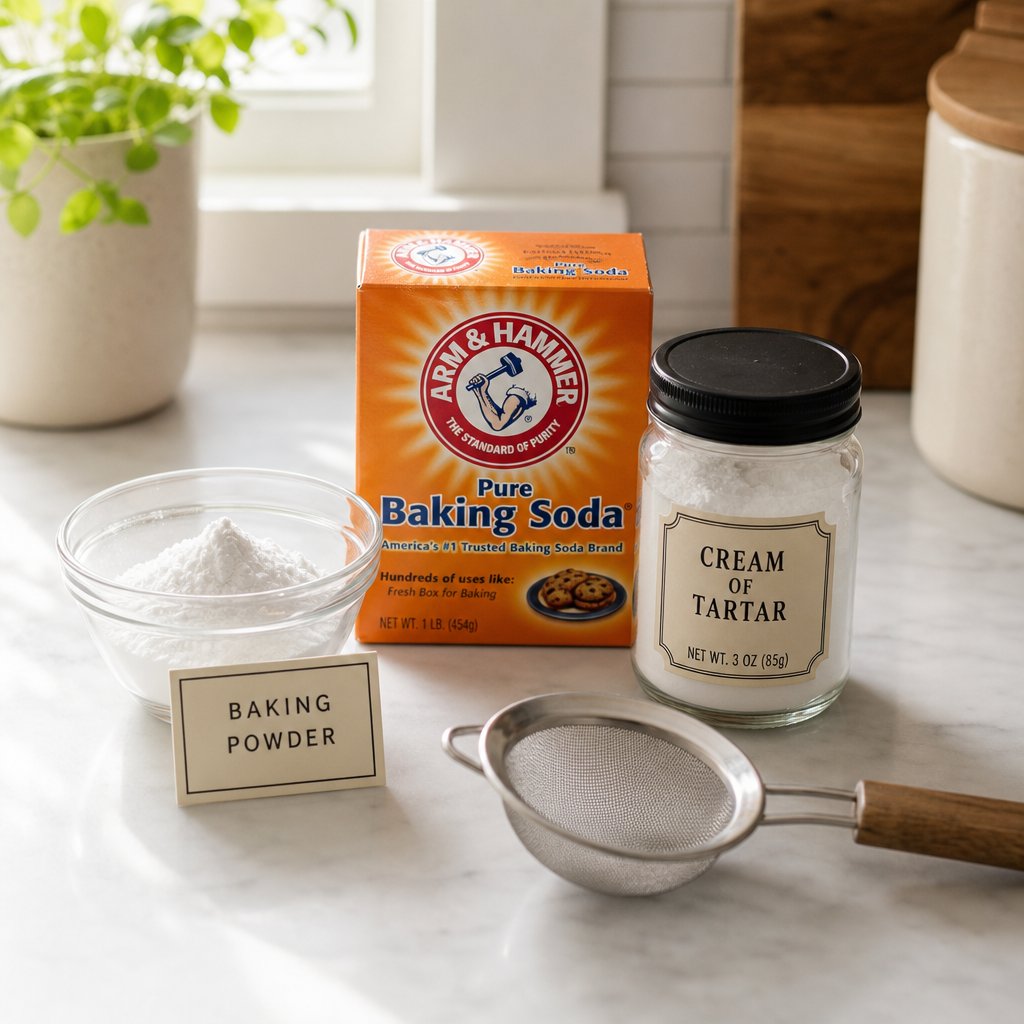
The good news is that turning baking soda into a working baking powder substitute requires just one additional ingredient, an acid. This is not a desperate kitchen hack. It is the same acid-base chemistry that commercial manufacturers use, stripped down to two components you likely already have in your pantry. When baking soda (a base) meets a dry acid like cream of tartar, the pair produces carbon dioxide gas on contact with liquid, giving your batter the lift it needs.
What This Guide Covers and Why It Matters
This guide walks you through how to make baking powder at home, from the exact ratios and mixing technique to alternative acids, storage tips, and troubleshooting flat results. Whether you need a quick sub for baking powder right now or you want to substitute baking powder permanently with a cleaner homemade version, every step is here.
Think of homemade baking powder as both an emergency fix and a long-term pantry strategy. You control the ingredients, avoid unwanted fillers, and always have a reliable leavener on hand as long as you stock baking soda to baking powder conversion basics in your memory.
Homemade baking powder = baking soda + acid + optional starch buffer. That is the entire formula.
The real difference between store-bought and DIY comes down to how and when the chemical reaction fires. Understanding that distinction is what separates a perfectly risen muffin from a dense, disappointing one.
Understand the Science Behind Baking Powder vs Soda
That formula from the previous section, baking soda plus acid, is not a shortcut. It is literally what baking powder is made of at the molecular level. Before you measure anything, a quick look at the chemistry will help you understand why ratios matter and why timing changes everything once liquid hits the bowl.
How Baking Soda and Acid Create Carbon Dioxide
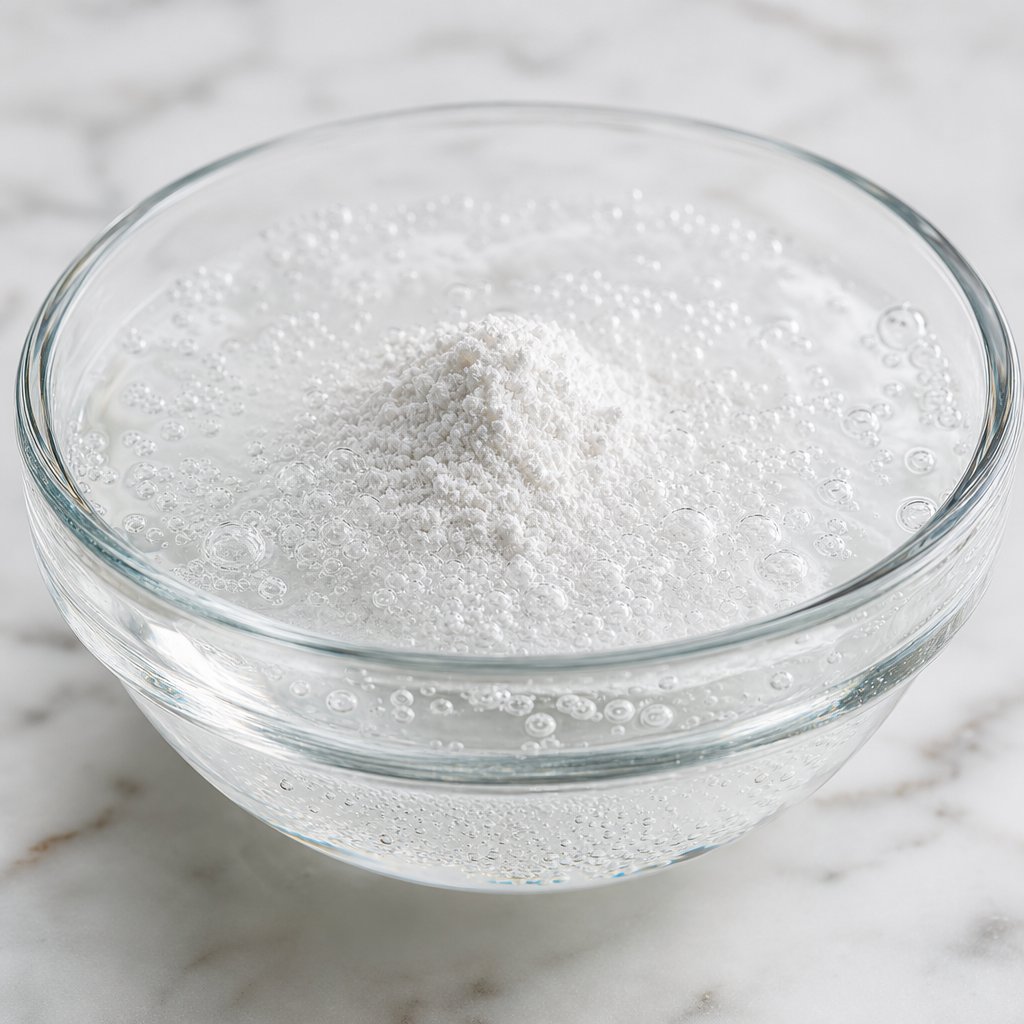
Baking soda is pure sodium bicarbonate, a base. On its own, it just sits there. It needs an acid partner to trigger a reaction that releases carbon dioxide gas, the tiny bubbles responsible for lift in muffins, pancakes, and cakes. When you stir baking soda into a batter containing an acidic ingredient like buttermilk or lemon juice, the two react immediately, producing CO2 that expands existing air bubbles in the batter and pushes the structure upward as it bakes.
So are baking powder and baking soda the same thing? Not quite. Baking powder packages both the base and a dry acid into one product so the reaction happens automatically when you add liquid. Baking soda is only the base half of that equation. You supply the acid separately, either through recipe ingredients or by mixing it in yourself.
Here is what baking powder is made of at its simplest:
- Base: Sodium bicarbonate (baking soda) - produces CO2 when it reacts with acid
- Acid: A dry acid salt such as cream of tartar, monocalcium phosphate, or sodium aluminum sulfate - triggers the gas-producing reaction
- Buffer (optional): Cornstarch or another starch - absorbs moisture to prevent premature reaction during storage
That is it. When you compare baking soda vs powder, the difference is packaging. Baking powder simply pre-combines the two reactive ingredients so you do not have to think about acid balance in your recipe. The reaction itself is identical: acid meets base, CO2 forms, your bake rises.
One important detail from Pastry Arts Magazine: chemical leaveners do not create new air bubbles. They enlarge bubbles that already exist from creaming butter, whipping eggs, or simply stirring. Without those pre-existing pockets to trap the gas, CO2 would rise to the surface and escape, much like fizz leaving an open soda can.
Single-Acting vs Double-Acting and Why It Matters
This is where the baking powder and baking soda distinction gets practical. When you make baking powder at home using cream of tartar and baking soda, you create a single-acting powder. It reacts once, the moment liquid touches it. All the CO2 releases during mixing, which means your batter needs to get into a hot oven quickly before those bubbles escape.
Commercial baking powder from the grocery store is almost always double-acting. It contains two different acids that react at different stages. The first acid activates when the batter gets wet, giving an initial rise during mixing. The second acid, often an aluminum-based or heat-sensitive compound, does not fully react until it reaches oven temperatures. This two-stage gassing profile gives bakers flexibility. You can mix a batter, let it rest, and still get a full rise because the second reaction is waiting for heat.
Why does this matter for your homemade version? A DIY single-acting powder expands roughly 75% of its leavening power before the batter even enters the oven. If you dawdle between mixing and baking, you lose lift. Double-acting powder holds some of that power in reserve, releasing it mid-bake when the structure needs it most.
Practically speaking, single-acting homemade powder works beautifully for pancakes, quick breads, and muffins where you mix and bake right away. It becomes riskier for recipes that sit, rest, or require long assembly times. Bakeries often favor double-acting products specifically because they can mix batter one day and bake it the next without losing potency.
The takeaway: your homemade baking powder is chemically sound, but it plays by slightly different timing rules than the store-bought version. Knowing this upfront means you can adjust your workflow, not your expectations, and still get excellent results.
Gather Ingredients and Learn the Baking Soda to Baking Powder Ratio
Timing rules only matter if the chemistry is right in the first place, and that starts with precise measurements. The baking powder formula is forgiving in concept but unforgiving in execution. Too much baking soda relative to acid leaves a bitter, soapy taste. Too little means flat results. Getting the baking soda to baking powder ratio correct is the single most important step in this entire process.
The Standard Ratio You Need to Memorize
The classic baking powder recipe uses a 2:1 ratio of cream of tartar to baking soda for immediate use. If you plan to store your homemade powder, add a third component at a 2:1:1 ratio, cream of tartar to baking soda to cornstarch.
Here is the breakdown for replacing 1 teaspoon of baking powder:
- 1/2 teaspoon cream of tartar (the acid)
- 1/4 teaspoon baking soda (the base)
- 1/4 teaspoon cornstarch or arrowroot powder (optional, for storage only)
Notice that without the starch, you are only adding 3/4 teaspoon of powder to replace 1 full teaspoon. That is correct. The starch does not contribute to leavening. It simply acts as a moisture buffer to keep the acid and base from reacting prematurely in the jar. If you are mixing and baking immediately, skip it.
This baking powder baking soda conversion stays consistent no matter how much you need. Double the recipe? Double every ingredient. The ratio never changes.
Measurement Conversions for Common Batch Sizes
Most baking powder to baking soda conversion guides stop at a single teaspoon. That works for one batch of muffins, but what if your recipe calls for a tablespoon or more? The table below scales the baking soda to baking powder conversion across common amounts so you can mix exactly what you need without doing mental math mid-bake.
| Amount of Baking Powder Needed | Cream of Tartar | Baking Soda | Cornstarch (for storage) |
|---|---|---|---|
| 1 teaspoon | 1/2 tsp | 1/4 tsp | 1/4 tsp |
| 1 tablespoon (3 tsp) | 1-1/2 tsp | 3/4 tsp | 3/4 tsp |
| 1/4 cup (12 tsp) | 2 Tbsp | 1 Tbsp | 1 Tbsp |
| 1/2 cup (24 tsp) | 4 Tbsp (1/4 cup) | 2 Tbsp | 2 Tbsp |
A quick tip from Sally's Baking Addiction: when measuring baking soda and cream of tartar, lightly scoop with a measuring spoon and level off with the back of a knife. Both ingredients can settle and compact over time, so a gentle stir in the container before scooping ensures accuracy.
For the baking powder to soda conversion in reverse, if a recipe calls for baking soda and you only have baking powder, you would need roughly four times the amount of baking powder to match the leavening strength of pure baking soda. But that introduces extra acid and starch into your recipe, which is why the soda-to-powder direction covered here is far more practical and reliable.
With your ratios locked in, the next question is technique. Measuring correctly is only half the job. How you combine these ingredients determines whether every spoonful delivers consistent lift or whether some bites rise while others fall flat.
Mix the Classic Cream of Tartar and Baking Soda Formula
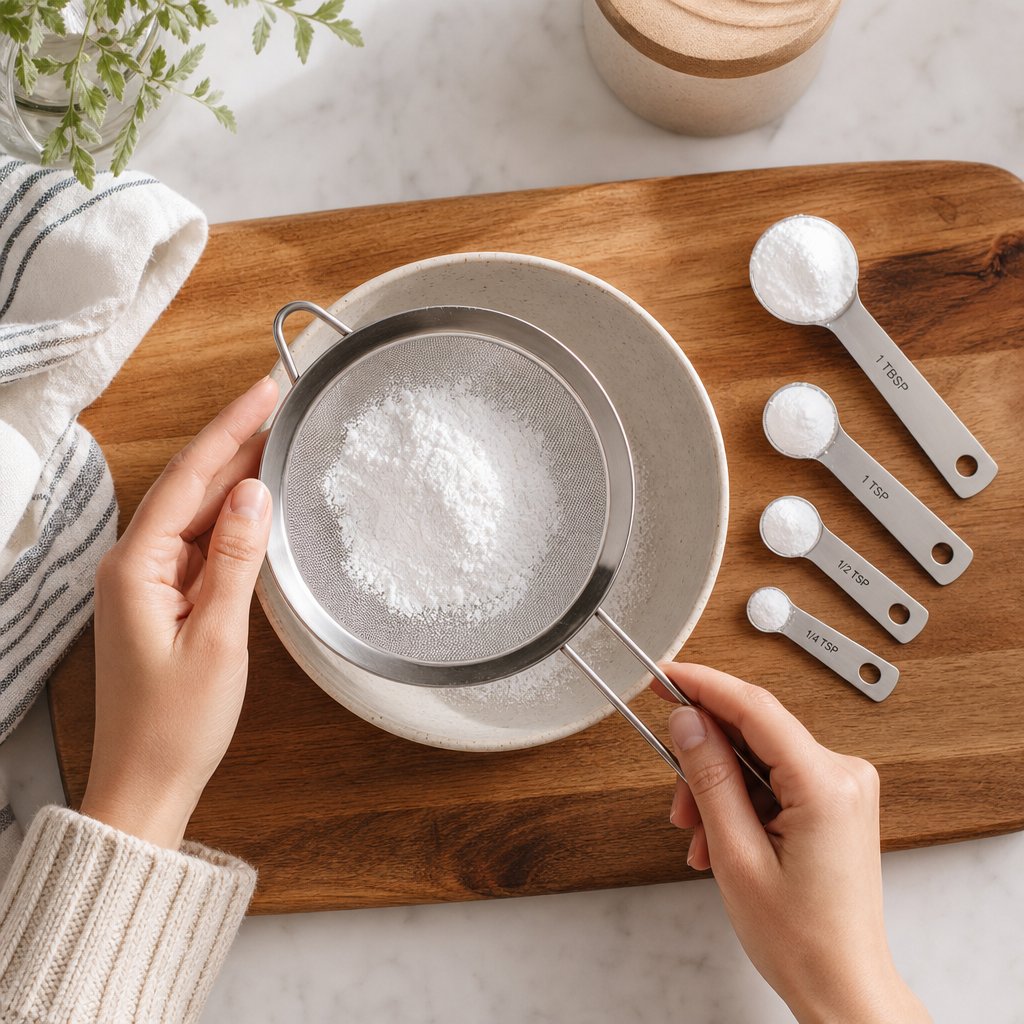
Ratios give you the right proportions, but technique determines whether those proportions actually perform. A poorly mixed baking powder from cream of tartar delivers uneven results, some spoonfuls packed with acid, others heavy on base. The fix is simple: sift thoroughly, keep everything bone dry, and work quickly once liquid enters the picture.
Sift and Combine for Even Distribution
Imagine scooping a spoonful of your homemade cream of tartar baking powder into a muffin batter, only to find that particular spoonful contained mostly baking soda and barely any acid. The result? A bitter, flat muffin while the rest of the batch rises fine. This happens when dry ingredients are stirred together casually instead of sifted.
Sifting breaks up micro-clumps and forces the fine particles of each ingredient to intersperse evenly. As Begin with Butter explains, sifting eliminates dense spots and ensures every portion of your dry mix behaves identically. For a baking powder substitute cream of tartar blend, even distribution is not optional. It is the difference between consistent lift and a guessing game.
Here is the step-by-step process:
- Start with a completely clean, dry bowl and dry measuring spoons. Even a trace of moisture can trigger a premature reaction between the baking soda cream of tartar mixture before it ever reaches your batter.
- Measure your cream of tartar and baking soda according to the 2:1 ratio (1/2 tsp cream of tartar to 1/4 tsp baking soda per teaspoon of baking powder needed).
- Place both ingredients into a fine-mesh sieve held over your bowl.
- Sift the mixture through the sieve, then scoop it back up and sift again. Repeat for a minimum of three passes. More is better.
- If adding cornstarch, include it from the first pass so it distributes evenly alongside the active ingredients.
Three passes is the minimum. Five passes produces a noticeably more uniform blend, especially when making larger batches. A fine-mesh strainer works perfectly here. You do not need a specialized flour sifter.
With or Without Cornstarch and When Each Version Works
Making baking powder with cream of tartar gives you two options depending on timing. If you plan to use the powder immediately in a recipe, skip the cornstarch entirely. The cream of tartar and baking soda will react the moment they contact liquid, and since you are baking right away, there is no risk of premature activation.
Cornstarch earns its place when you want to mix a batch ahead of time. It absorbs ambient moisture from the air, creating a physical barrier between the acid and base particles. Without it, humidity in your kitchen can trigger a slow reaction inside the jar, gradually weakening the powder before you ever open it. The starch also standardizes the strength of each spoonful, making your cream tartar baking powder behave more predictably across multiple uses.
One critical reminder: this produces a single-acting powder. The entire leavening reaction fires the instant liquid touches the blend. Get your batter mixed and into a preheated oven as quickly as possible. Letting it sit on the counter for even ten minutes means CO2 escaping into the air instead of lifting your bake.
With your powder mixed and ready, the natural next question is what happens if cream of tartar is not in your pantry either. Several other acids can fill the same role, though each one changes the equation in ways worth understanding before you pour.
Explore Alternative Acid Ingredients as a Baking Powder Substitute
Cream of tartar is the gold standard for homemade baking powder, but it is not exactly a pantry staple for everyone. If you do not have it on hand, several other acidic ingredients can pair with baking soda to produce the same leavening reaction. The key difference? Most of these alternatives are liquids, which changes how you handle your recipe.
Liquid Acid Options and How They Affect Your Recipe
When you ask what can I substitute for baking powder and cream of tartar is not an option, liquid acids like lemon juice, vinegar, buttermilk, yogurt, and molasses all deliver the acidity baking soda needs to produce CO2. The chemistry is identical. The practical challenge is different.
Liquid acids add volume to your batter. Every tablespoon of buttermilk or yogurt you introduce is extra moisture that was not in the original recipe. If you do not reduce other liquids to compensate, you end up with a thin, wet batter that bakes unevenly or takes longer in the oven. Dry cream of tartar avoids this problem entirely because it contributes zero liquid.
The other limitation: liquid acids cannot be pre-mixed with baking soda and stored. The reaction starts immediately on contact. You must combine them fresh, right when you are ready to mix your batter. This makes them a true in-the-moment baking powder alternative rather than a make-ahead pantry solution.
Choosing the Right Acid for Your Specific Bake
So what can you substitute for baking powder when cream of tartar is unavailable? It depends on what you are baking. Each acid brings a distinct flavor profile and liquid volume that suits certain recipes better than others. Lemon juice pairs naturally with citrus-forward bakes. Vinegar works where you need neutrality. Dairy-based acids shine in recipes already built around buttermilk or yogurt.
If you are wondering what can I use in place of baking powder for a specific recipe, this comparison table breaks down each option with exact amounts, flavor notes, and ideal applications. All measurements listed replace 1 teaspoon of baking powder.
| Acid Type | Amount per 1/4 tsp Baking Soda | Flavor Impact | Best Used In | Can Be Pre-Mixed Dry? |
|---|---|---|---|---|
| Cream of Tartar | 1/2 tsp | Neutral | Any recipe | Yes |
| Lemon Juice | 1/2 tsp | Mild citrus tang | Pancakes, scones, lemon quick breads | No |
| White Vinegar | 1/2 tsp | Minimal when used in small amounts | Chocolate cake, recipes needing little baking powder | No |
| Buttermilk | 1/2 cup (reduce other liquids) | Slight tang, adds richness | Biscuits, cornbread, waffles | No |
| Plain Yogurt | 1/4 cup (reduce other liquids) | Mild tang, adds moisture | Muffins, coffee cake, banana bread | No |
| Molasses | 1/4 cup (reduce sugar and liquids) | Strong, sweet, caramel-like | Gingerbread, spice cookies, dark breads | No |
A few practical notes on what to use instead of baking powder from this list. Betty Crocker recommends using vinegar only when the recipe calls for a small amount of baking powder, since larger quantities can introduce a noticeable sour taste. Buttermilk and yogurt require the biggest liquid adjustments, so they work best in recipes that already call for dairy. Molasses adds both liquid and sweetness, meaning you need to reduce sugar alongside other liquids.
The bottom line: what can I use instead of baking powder depends entirely on what is already in your recipe and what flavors you want. Cream of tartar remains the cleanest substitute for baking powder because it behaves like a dry ingredient and stores well. Liquid acids are reliable backups, but they demand recipe adjustments that cream of tartar does not.
Whichever acid you choose, the leavening power is real. The bigger question becomes how long your homemade blend stays active and how to tell when it has lost its punch.
Store Your DIY Baking Powder Properly and Test for Freshness
You have mixed a perfect batch of baking powder from baking soda and cream of tartar. It works beautifully today. But what about next week? Next month? This is where homemade baking powder behaves very differently from the commercial can sitting on store shelves, and understanding that gap can save you from a flat, disappointing bake down the road.
How Long Homemade Baking Powder Actually Lasts
Here is the honest answer most guides skip: baking powder homemade without cornstarch should be used immediately. Mix it, add it to your batter, and bake. It has no shelf life because there is nothing preventing ambient moisture from slowly triggering the acid-base reaction inside your container.
With cornstarch added as a moisture buffer, your home made baking powder lasts roughly one to two weeks in an airtight container stored in a cool, dry place. That is it. Compare that to commercial baking powder, which stays active for six to twelve months after opening and up to 18 months unopened.
Why such a dramatic difference? Commercial manufacturers use encapsulated acid particles coated in protective layers that only dissolve under specific conditions like heat or full hydration. They also employ industrial drying processes that strip virtually all moisture from the finished product before sealing it in airtight metal cans. Your kitchen, no matter how clean and dry, cannot replicate those conditions. Humidity creeps in every time you open the jar. Temperature fluctuations in a cabinet accelerate degradation. The cream of tartar and baking soda slowly find each other through microscopic moisture bridges, and each tiny reaction weakens the overall potency.
This short shelf life is not a flaw. It is simply the tradeoff for a cleaner, additive-free baking powder replacement. The practical solution? Mix only what you need for a specific recipe, or prepare small batches you will use within a week or two. Write the date on the container so you are never guessing.
The Simple Freshness Test Before You Bake
Whether you are using a homemade replacement for baking powder or checking a commercial can that has been sitting in the pantry for months, the freshness test is identical. It takes thirty seconds and costs you one teaspoon of powder. That is a small price compared to wasting an entire batch of ingredients on a bake that refuses to rise.
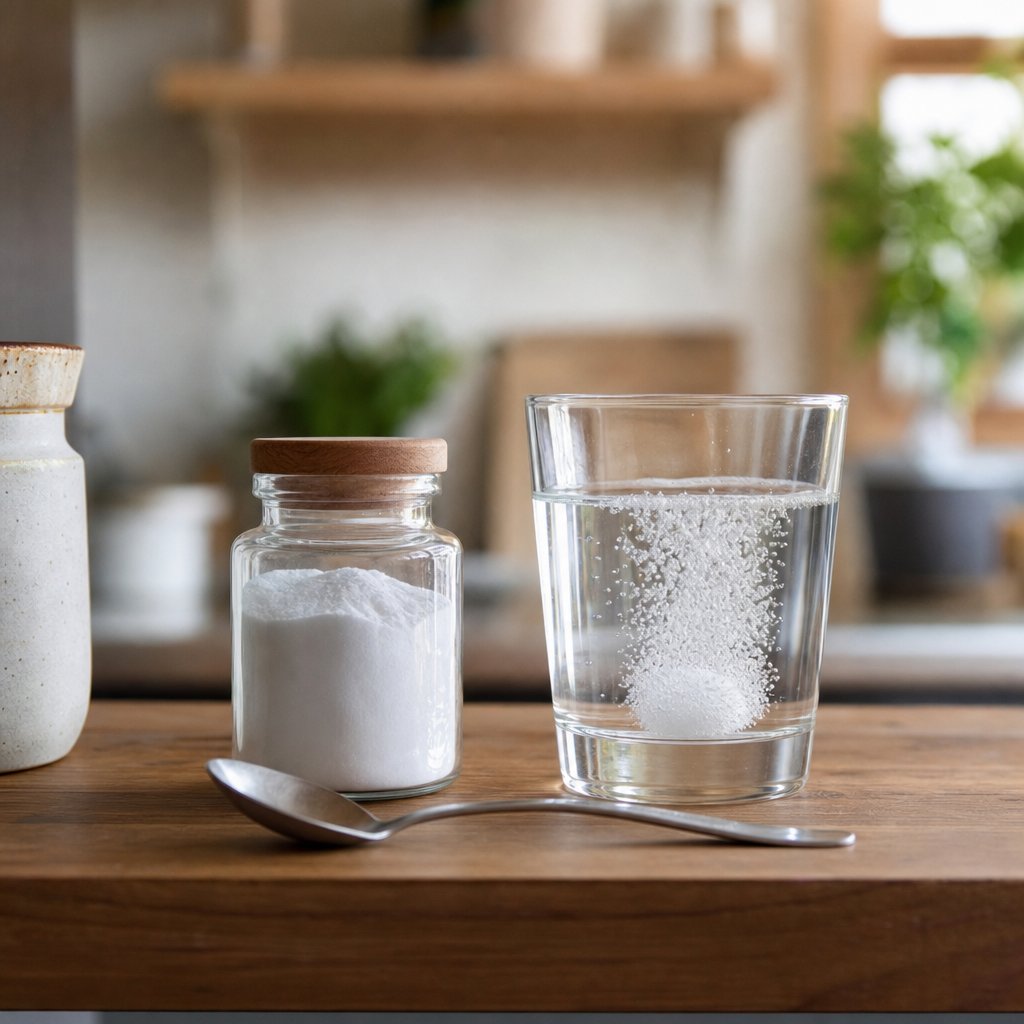
Drop 1 teaspoon of your baking powder into 1/3 cup of hot water. If it bubbles vigorously and immediately, the powder is active and ready to use. If the reaction is weak, slow, or absent, the powder has lost potency and should be replaced.
Cookbook author David Lebovitz and the team at King Arthur Baking both recommend this test as standard practice before committing to a recipe. The reaction should be obvious and enthusiastic. A few lazy bubbles drifting to the surface is not enough. You want an immediate, fizzy eruption that tells you the acid and base are still fully reactive.
For substitutes for baking powder made at home, run this test every time you pull out a batch that is more than a few days old. The cost of one teaspoon is negligible. The cost of a failed cake, wasted butter, eggs, and an hour of your time, is not.
A few storage tips to maximize the life of your DIY baking powder:
- Use a small glass jar with a tight-sealing lid rather than a plastic container, which can retain static and attract moisture
- Store away from the stove, dishwasher, or any heat source that creates steam
- Keep a small silica gel packet inside the jar if you live in a humid climate
- Never dip a wet spoon into the container
Even with perfect storage, expect your homemade blend to weaken noticeably after two weeks. When in doubt, test it. When the test fails, mix a fresh batch. The whole process takes under a minute.
Freshness testing protects you from the most common baking failure: a recipe that looks right going into the oven but comes out dense and flat. That failure, along with several others unique to homemade leaveners, has specific causes and specific fixes worth knowing before your next bake.
Troubleshoot Common Baking Failures with Homemade Baking Powder
You tested your powder, it fizzed on cue, and you followed the ratio exactly. Yet something still went wrong. The muffins came out flat, the cake tastes metallic, or one side rose higher than the other. These failures are not random. Each one traces back to a specific, fixable cause, and most of them relate to how homemade single-acting powder behaves differently from the double-acting version you are used to.
Why Your Bake Fell Flat and How to Fix It
When you substitute baking soda for baking powder using the cream of tartar method, the margin for error shifts. Timing becomes critical, ratios must be exact, and mixing technique matters more than it does with commercial powder. The table below covers the four most common failures, what causes them, and how to prevent them next time.
| Problem | Likely Cause | Solution |
|---|---|---|
| Flat baked goods with no rise | Powder lost potency during storage, or batter sat too long before baking (CO2 escaped) | Run the freshness test before every bake. Get batter into a preheated oven within 2-3 minutes of combining wet and dry ingredients. |
| Metallic or bitter aftertaste | Too much baking soda relative to acid. Unreacted soda leaves an alkaline, soapy flavor. | Double-check your 2:1 ratio (cream of tartar to baking soda). Never eyeball measurements. Level every spoonful with a knife. |
| Uneven rise (one side higher, pockets of dense crumb) | Ingredients not sifted thoroughly enough. Concentrated pockets of acid or base react inconsistently. | Sift the mixture at least 3-5 times through a fine-mesh sieve. For larger batches, increase to 6-8 passes. |
| Dense, heavy texture in cakes | Single-acting powder reacted fully during mixing. By the time batter reached the oven, most CO2 had already escaped. | Prepare all other ingredients first. Combine wet and dry at the last possible moment. Avoid overmixing, which releases trapped gas. |
That bitter taste deserves extra attention because it is the most common complaint when people first learn how to substitute baking soda for baking powder. The issue is almost always a measurement problem. If you are wondering how much baking soda to replace baking powder, remember: you need only one-quarter teaspoon of baking soda per teaspoon of baking powder. Using more does not create more lift. It creates more bitterness because the excess soda has no acid to react with.
Conversely, if a recipe originally calls for baking soda and you want to go the other direction, how much baking powder to replace baking soda? You would need roughly four times the volume. But that reverse swap introduces extra acid and starch, which is why the soda-plus-acid approach covered in this guide is far more reliable.
How Homemade Powder Performs in Different Recipes
Can baking soda replace baking powder in every recipe? Technically yes, as long as you pair it with the right acid. Practically, some baking categories handle single-acting leavening better than others. The difference comes down to how long the batter sits between mixing and heat exposure.
Recipes where homemade powder excels:
- Pancakes and waffles - batter goes straight onto a hot griddle, minimal CO2 loss
- Quick breads and muffins - short mixing time, immediate oven entry
- Drop biscuits - mixed and baked within minutes
- Single-layer snack cakes - simple batters with fast assembly
Recipes where homemade powder is riskier:
- Multi-layer cakes - filling multiple pans takes time, and the last pan loses lift while waiting
- Cookies with long creaming steps - extended mixing allows gas to escape before baking
- Refrigerated doughs - resting time lets the single-acting reaction finish before the oven ever fires
- Recipes requiring piping or decorating raw batter - the delay between mixing and baking is too long
If you can i substitute baking soda for baking powder in a delicate layer cake? You can, but you need to adjust your workflow. Mix dry ingredients in one bowl, wet in another, and combine them only after the oven is fully preheated and your pans are greased and ready. Work fast. Do not answer the phone. Do not let that batter sit.
As Cadbury Desserts Corner notes, allowing batter to sit too long before baking results in a loss of rising power, and this effect is amplified with single-acting formulas where there is no second heat-triggered reaction waiting in reserve.
How do you substitute baking soda for baking powder successfully across all these categories? Speed is the universal answer. The faster your batter moves from bowl to oven, the closer your results will match what commercial double-acting powder delivers. For recipes where speed is not possible, you will need a different strategy entirely, one that accounts for the single-acting limitation rather than fighting against it.
Know When Homemade Baking Powder Works and When It Does Not
Speed solves most single-acting problems, but some recipes simply do not allow speed. Knowing where homemade powder hits its ceiling saves you from wasted ingredients and disappointing results. Can you use baking soda instead of baking powder in every situation? The honest answer is no, not without accepting tradeoffs in certain categories of baking.
When Homemade Baking Powder Is Not the Right Choice
The single-acting nature of your DIY blend means all leavening power fires the instant liquid touches the mixture. Any recipe that builds in a delay between mixing and baking will lose lift before heat can set the structure. Here are the scenarios where homemade powder struggles:
- Refrigerated doughs - cookie doughs or scone doughs that chill for 30 minutes or overnight lose all their CO2 before baking
- Batters that rest - crepe batters, some waffle batters, and any recipe instructing you to let the batter sit
- Complex layer cakes - filling three or four pans sequentially means the last pan sits while the first bakes, and that sitting time kills the rise
- Piped or shaped batters - madeleines, choux-adjacent recipes, or anything requiring transfer to molds after mixing
- Large-batch production - baking multiple trays in rotation where later trays wait 20+ minutes
For these situations, commercial double-acting baking powder is necessary. Its heat-activated second acid ensures a rise even after extended resting, something no conversion from baking soda to baking powder at home can replicate.
On the other hand, here is where turning baking soda into baking powder works reliably:
- Pancakes and waffles - batter hits the hot surface immediately
- Quick breads and muffins - short assembly, straight into the oven
- Drop biscuits and scones baked fresh - no resting required
- Single-layer sheet cakes - one pan, fast transfer, done
- Emergency substitutions - when you just need to finish the recipe in front of you
Practical Workarounds for the Single-Acting Limitation
Can you substitute baking soda for baking powder in borderline recipes, the ones that are not quite quick breads but not quite complex layer cakes? Yes, with workflow adjustments that protect your leavening window:
- Preheat first, always. Your oven should be at full temperature before you combine wet and dry ingredients. No exceptions.
- Prep everything in advance. Grease pans, line sheets, measure all ingredients, and set out your tools. The moment liquid meets your homemade powder, the clock starts.
- Keep wet and dry separate until the last second. Mix your baking soda-acid blend into the dry ingredients in one bowl. Combine all liquids, eggs, and fats in another. Merge them only when you are ready to pour into pans and bake.
- Avoid overmixing. Stir just until the batter comes together. Every extra fold releases trapped CO2 that you cannot get back.
- Fill pans simultaneously. If making multiple layers, pour all pans at once and load them into the oven together rather than sequentially.
These adjustments will not make single-acting powder behave identically to double-acting, but they close the gap significantly for most home baking. Understanding how much baking soda for baking powder your recipe needs, combined with disciplined timing, delivers results that are difficult to distinguish from commercial powder in quick-bake applications.
Scaling Beyond the Home Kitchen
Learning how to make baking powder from baking soda at home is a valuable skill for any baker. But some readers are thinking bigger. Maybe you are developing a proprietary pancake mix, a clean-label baking blend, or a functional food product that requires precise, consistent leavening at scale. Home kitchen methods do not translate directly to commercial production, where shelf stability, uniform particle distribution, and regulatory compliance all come into play.
For entrepreneurs and brands looking to move from DIY formulation to market-ready products, OEM/ODM manufacturers specializing in powder and granule formats can bridge that gap. ZhuFeng, for example, offers customized formulation services for nutrition brands, private label sellers, and functional food businesses that need scalable production of powder-based products. Their flexible format options allow you to develop proprietary blends, whether baking mixes or other functional powders, with professional-grade consistency that home mixing cannot achieve.
Whether you make baking powder from baking soda for tonight's muffins or you are formulating a commercial product line, the underlying chemistry stays the same. What changes is the precision, scale, and quality control required to deliver consistent results batch after batch. For the home baker, a fine-mesh sieve and careful measuring get the job done. For the food entrepreneur, professional manufacturing turns that same knowledge into a shelf-stable, market-ready product.
Frequently Asked Questions About Making Baking Powder from Baking Soda
1. What is the exact ratio of baking soda to cream of tartar for homemade baking powder?
The standard ratio is 2 parts cream of tartar to 1 part baking soda. For one teaspoon of baking powder, combine 1/2 teaspoon cream of tartar with 1/4 teaspoon baking soda. If you want to store it, add 1/4 teaspoon cornstarch as a moisture buffer, making the ratio 2:1:1. This ratio scales linearly, so for a tablespoon you would use 1-1/2 teaspoons cream of tartar and 3/4 teaspoon baking soda.
2. Can I use lemon juice or vinegar instead of cream of tartar to make baking powder?
Yes, both lemon juice and white vinegar provide the acidity baking soda needs to produce CO2. Use 1/2 teaspoon of either per 1/4 teaspoon of baking soda to replace one teaspoon of baking powder. The key difference is that liquid acids add moisture to your batter, so you may need to reduce other liquids in the recipe. They also cannot be pre-mixed and stored like cream of tartar can, meaning you must combine them fresh at the moment of baking.
3. How long does homemade baking powder last compared to store-bought?
Homemade baking powder without cornstarch should be used immediately. With cornstarch added, it lasts roughly one to two weeks in an airtight container stored in a cool, dry spot. Commercial baking powder lasts 6 to 12 months after opening because manufacturers use encapsulated acid particles and industrial drying processes that home kitchens cannot replicate. Always run a freshness test by dropping one teaspoon into 1/3 cup hot water. Vigorous bubbling means it is still active.
4. Why does my homemade baking powder leave a bitter or metallic taste?
A bitter or soapy aftertaste almost always means too much baking soda relative to acid. Unreacted sodium bicarbonate is alkaline and leaves a distinct unpleasant flavor. The fix is precise measurement: use exactly 1/4 teaspoon baking soda per 1/2 teaspoon cream of tartar. Never eyeball these amounts. Level every spoonful with the flat edge of a knife, and sift the mixture at least three times to ensure even distribution throughout your batter.
5. Is homemade baking powder single-acting or double-acting, and why does it matter?
Homemade baking powder made with cream of tartar is single-acting, meaning it releases all its CO2 the moment liquid touches it. Commercial baking powder is typically double-acting, with a second acid that activates only when heated in the oven. This matters because single-acting powder requires you to get batter into a preheated oven immediately after mixing. If the batter sits, the gas escapes and your bake falls flat. For recipes requiring rest time or delayed baking, commercial double-acting powder is the better choice.